Several members and some spouse helpers planted three Bur Oaks in April on Earth Day, and they are still alive – so far. They are planted at Cameron City Park, Orchard Park and Wilson Ledbetter Park. I see the Orchard Park tree on a daily basis. I see the Cameron City Park tree about every two weeks. The last one not so often.
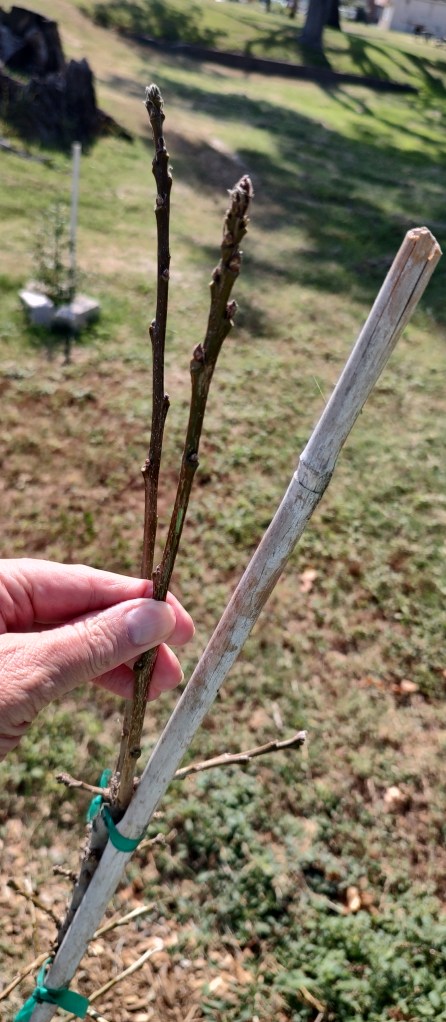
Cameron City Park tree with no leaves
They all took a serious wind storm hit about a week (or so) after they were planted. It caused two of them to lean notably, but a little action was taken to try and set them upright. The Wilson Ledbetter Park tree was nearly on the ground. They did seem to recover from that event. Then came the heat. About three weeks ago, I drove by the city park to take a look at it and found it leafless. The leaves had died on the tree and fallen around it. This was a surprise because it seemed to be doing very well. It didn’t even lean over in the storm. I got out of my car to take a closer look. It appeared like it was going to bud out again. A week later it had new leaves. I don’t know what made the leaves die, but the theory is transplant shock.
Same tree with what I thought were going to be new leavesOne week later, it is putting out new leavesSame tree with many more leaves
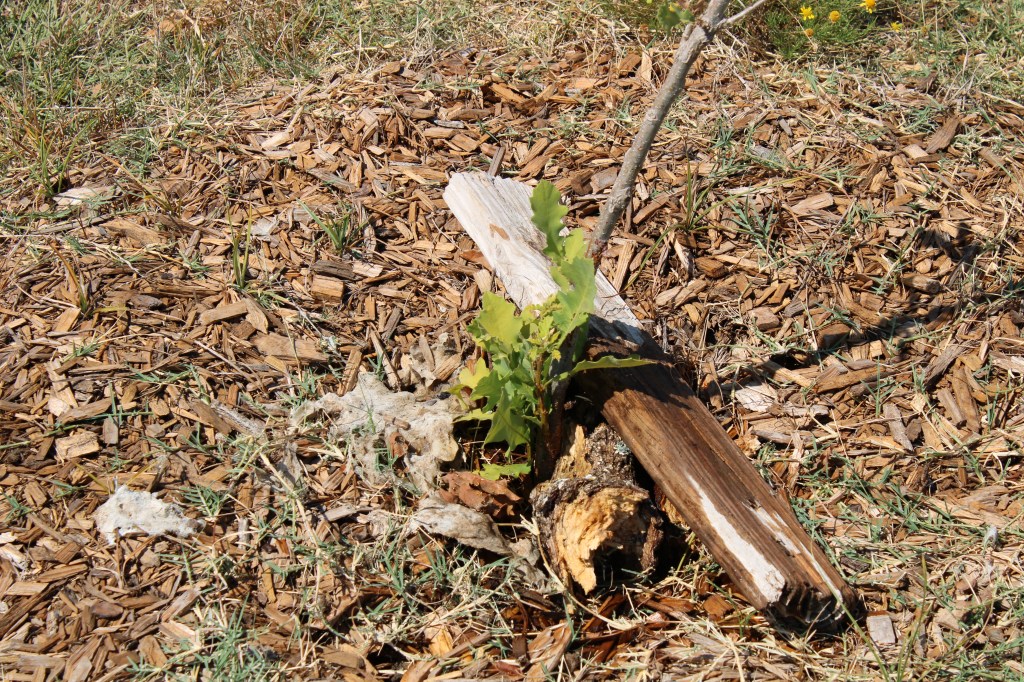
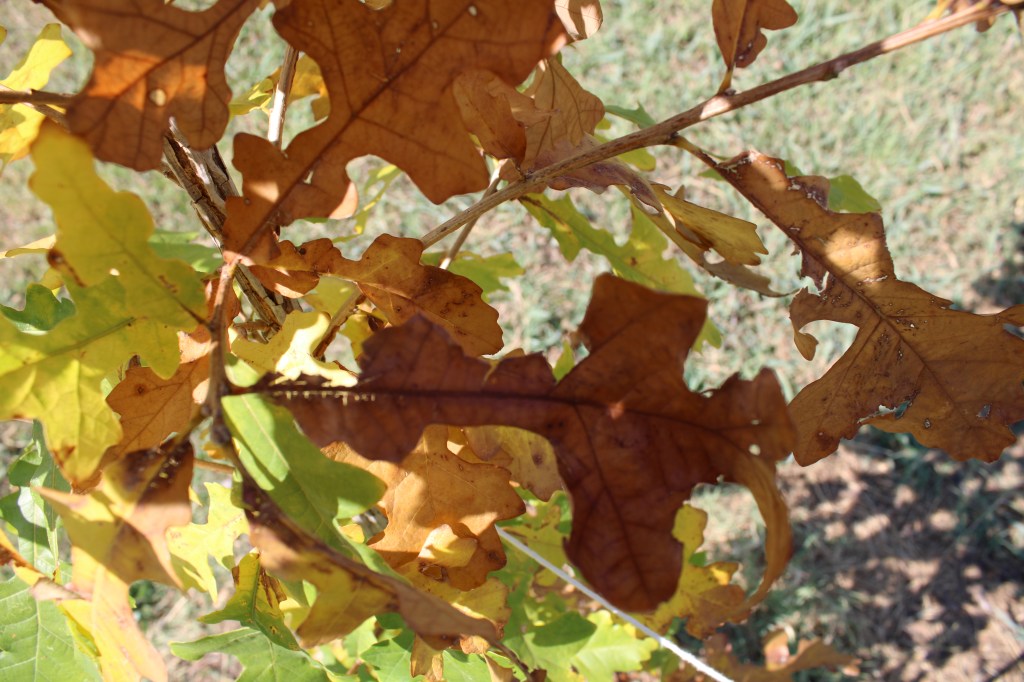
The Orchard Park tree has looked very good until just this week. It is losing some leaves. On close inspection, it looks like some of them are being eaten by something. There are still mostly green leaves on it. The Wilson Ledbetter tree is the one that was laid over from that storm. It still leans a lot, but it is putting up new leaves from the ground. I’m not sure what to do about the still leaning part. The tilt is about a 45 degree angle.
What they all need right now is regular watering. If you volunteered, please don’t forget to take them a drink as often as you can. Wilson Ledbetter Park has a working faucet right by the American Legion, or you can dip it from the little lake. The Orchard Park tree is right beside the pond, so it can be dipped from there. The Cameron City Park requires transporting the water. If they have made it this far, I think some regular watering can get them through to cooler, wetter weather.
Wilson Ledbetter Park TreeClose up of Wilson Ledbetter tree new growthClose up of leaves at Orchard Park
By Carolyn Henderson, with additional photos from Catherine Johnson
Sweltering heat couldn’t stop the nine Texas Master Naturalist El Camino Real chapter members from sprucing up the El Camino Real Wildscape at the Bird and Bee Farm and finding a few “treasures” in the process on Saturday, July 15.
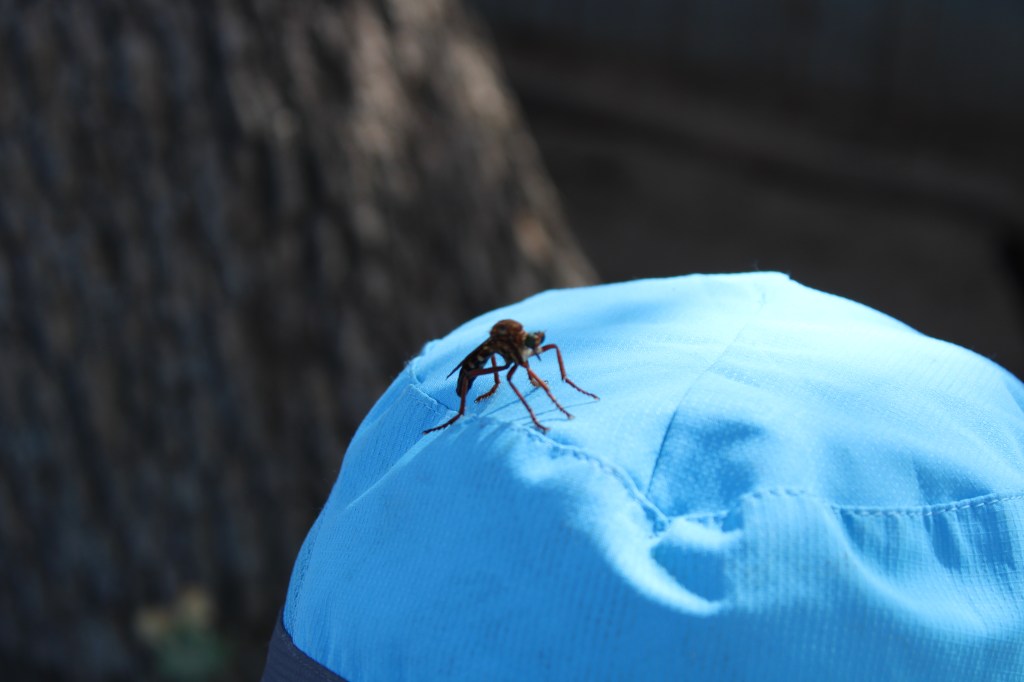
Most of us wouldn’t consider a horsefly a treasure, but one did visit Debi Sorenson’s hat.Tropical milkweed
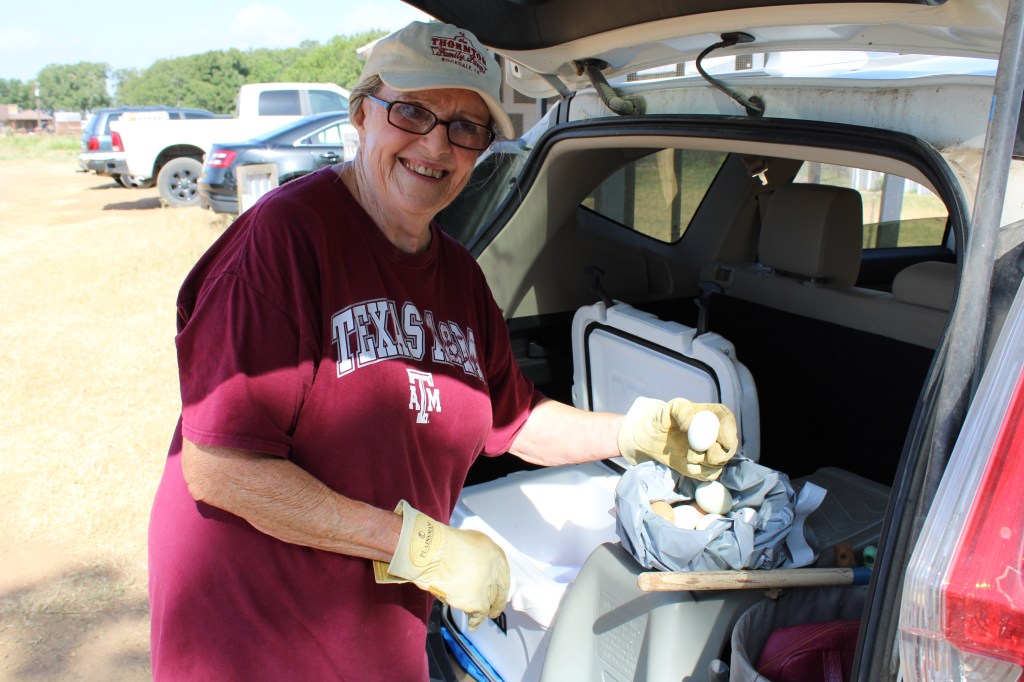
A lot of work was done to clean up the area where meetings are held at the site when large groups come for events. It was hot, but the area is shaded by trees and a nice breeze helped. In the midst of the cleanup, Jackie Thornton found a nice nest of chicken eggs. She took them home (and we didn’t get photos).
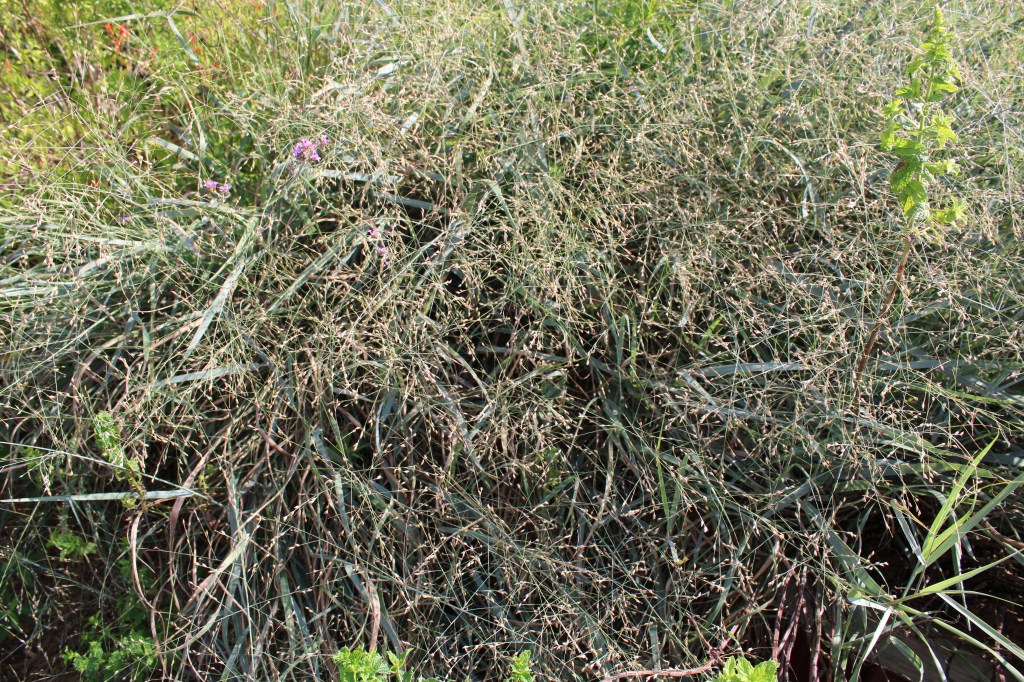
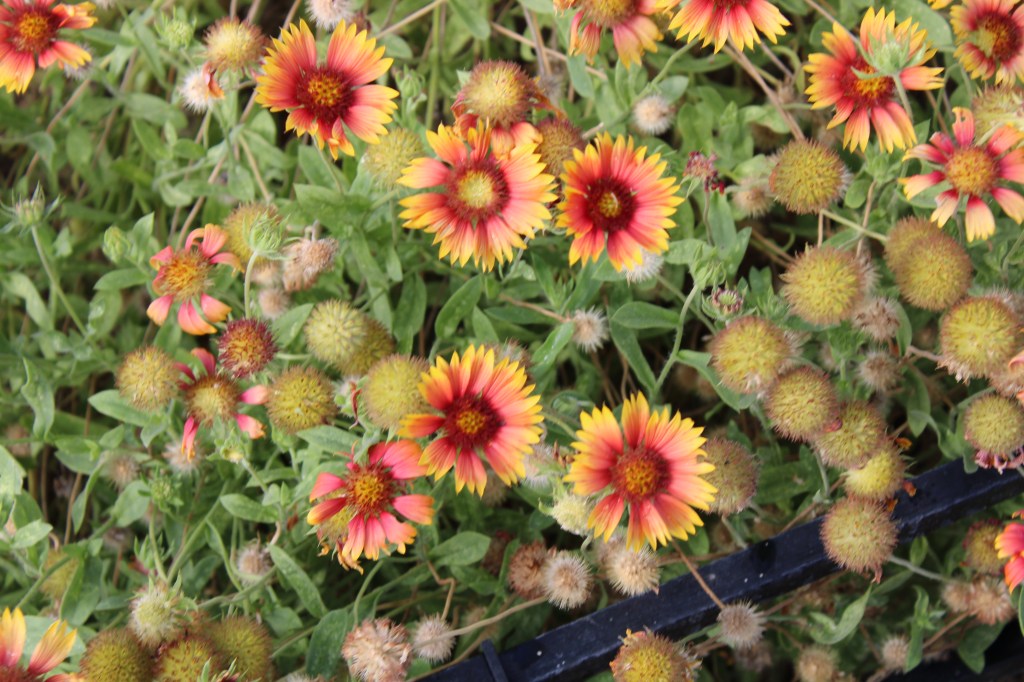
SwitchgrassIndian blanket
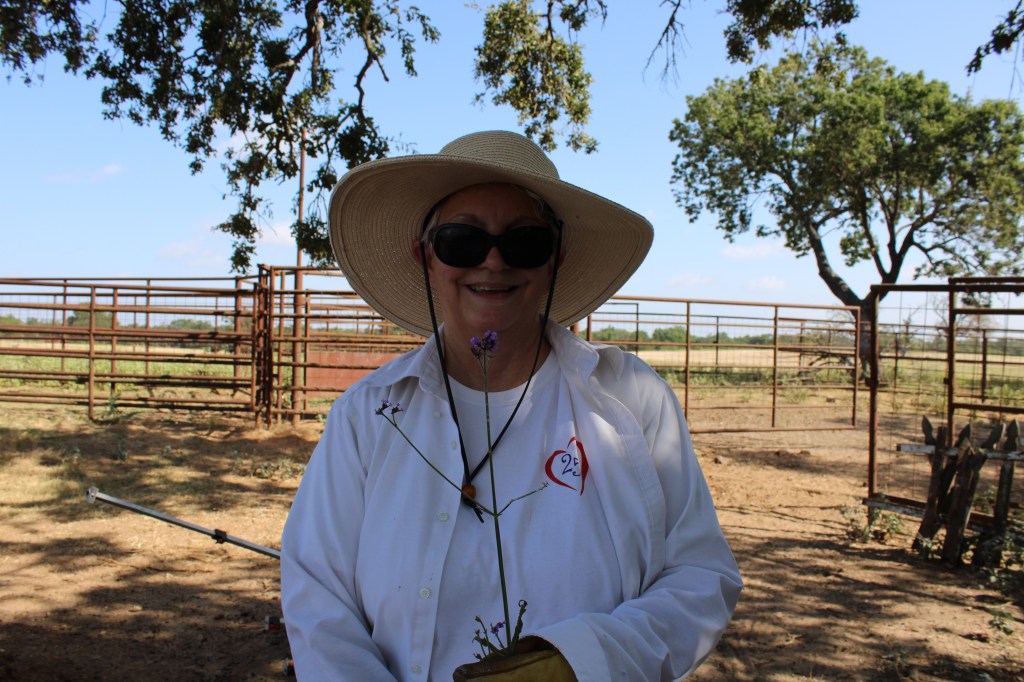
Phyllis Shuffield found the invasive scourge Vervain growing in a few places in the wildscape. It was not put there intentionally. Phyllis proceeded to remove them all. The wildscape acquired several non-native plants this year. An early one was a red poppy. Maximillian Sunflowers were rampant this year and will require some control measures. Other plants also showed up either by birds, wind or hitching a ride in a plant intentionally purchased and planted.
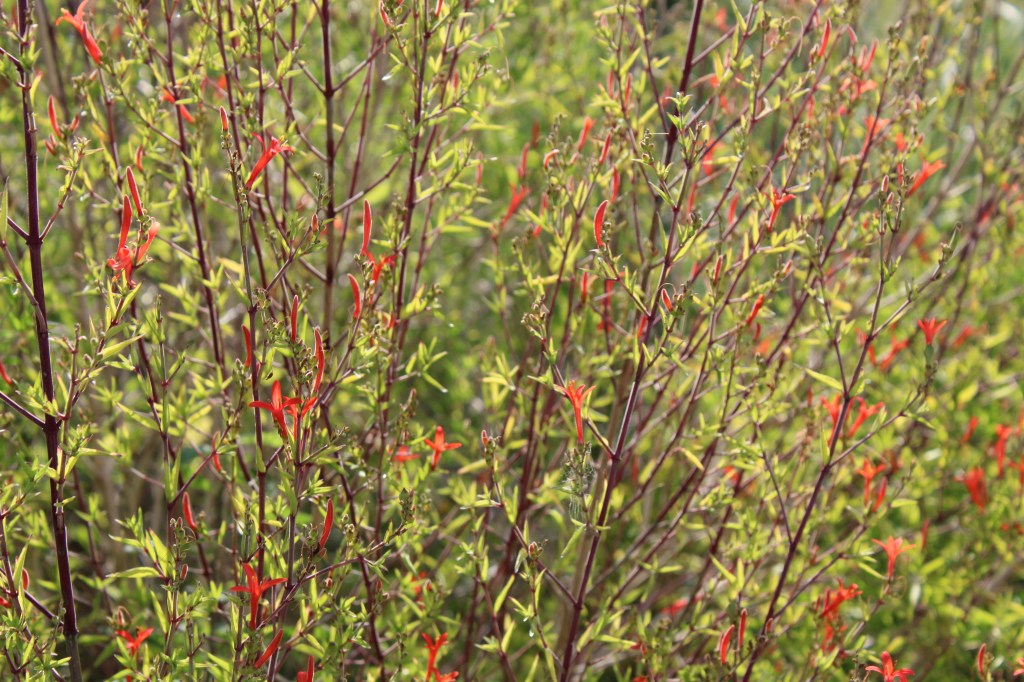
Flame acanthus
Carolyn Henderson found the Cypress Vine with pretty red flowers over-growing and choking everything in its vicinity. It completely took over the arch which had Malabar Spinach growing all over it. It literally choked that out. It was starting to overtake the Coral Vine growing around the covered picnic table and it was wrapping around the storage building. The local mouse hunter did try to help pull it up or at least push it out of the way.
Turk’s cap, not an invasive plant
It was decided that this vine, a Texas native that is seriously invasive, will require serious efforts to stop. It may overtake everything if not removed.
The invasive cypress vine
The color palette has also changed. The purples had mostly gone to seed, and oranges, yellows and reds have taken over. Three to four types of bees and Gulf Fritillaries were enjoying the blooms.
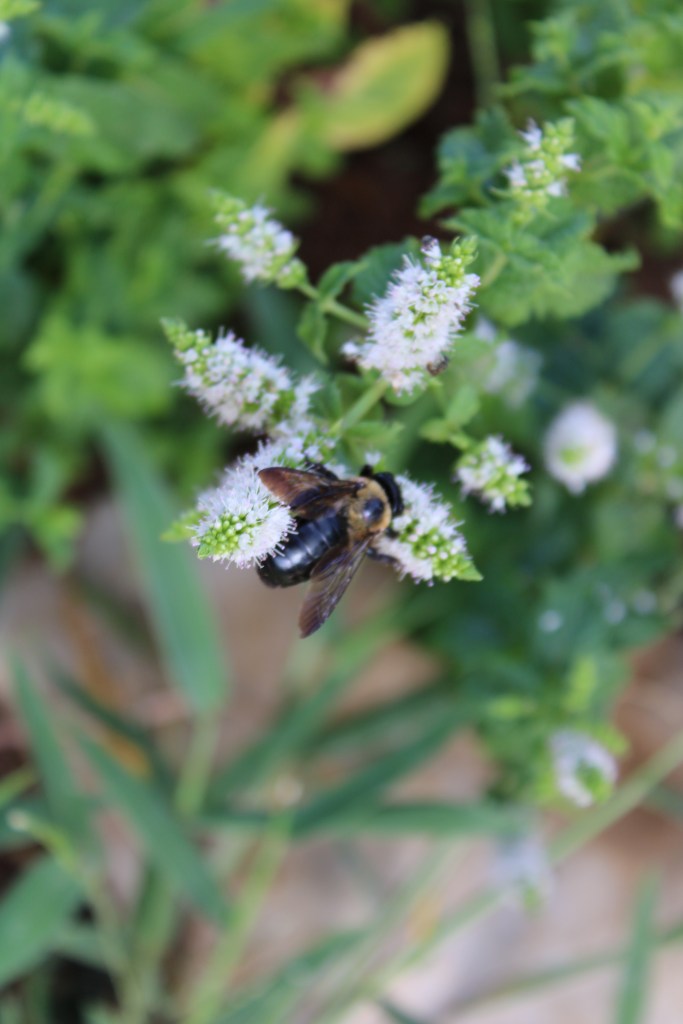
A carpenter bee on a mint plant
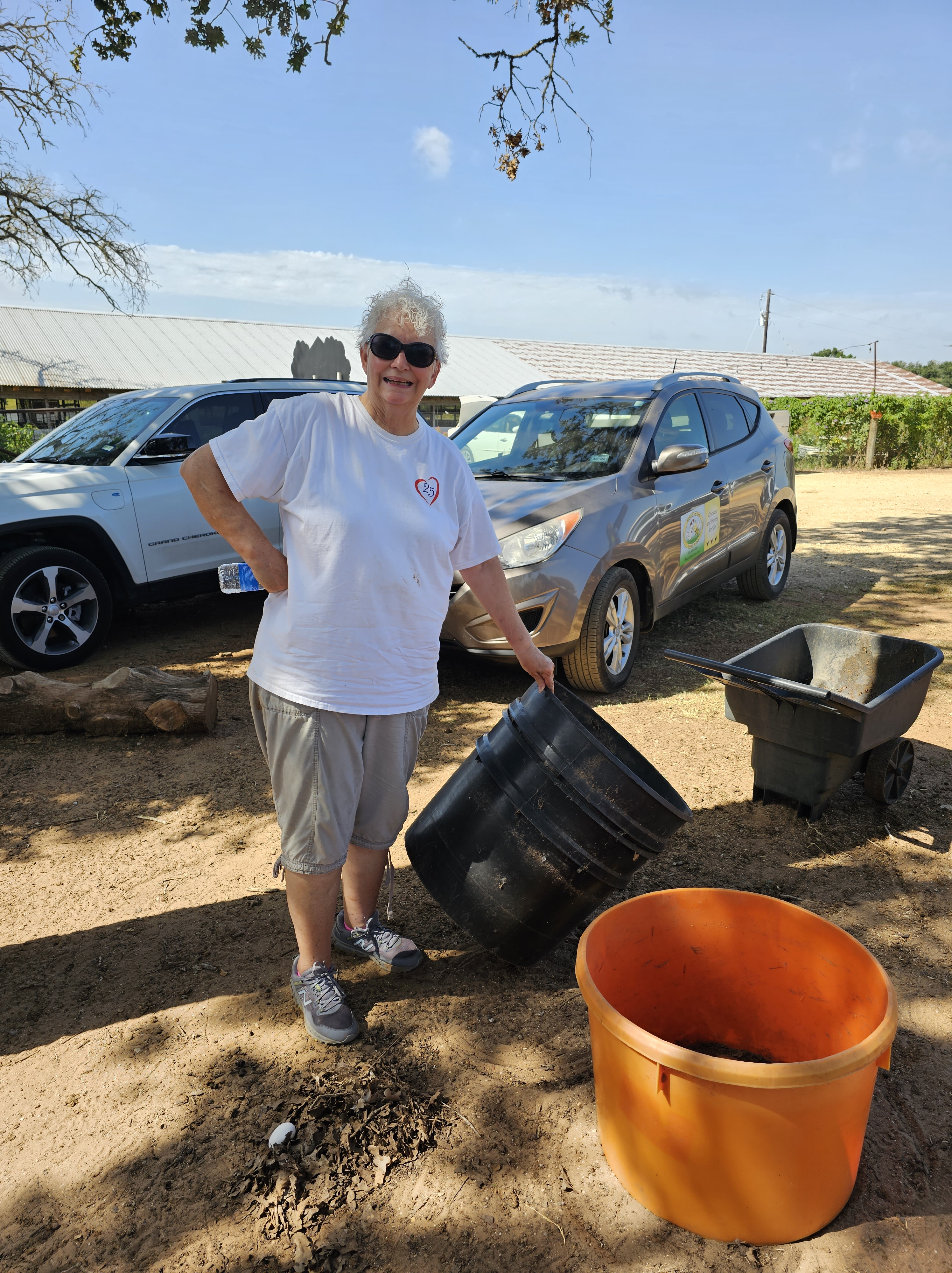
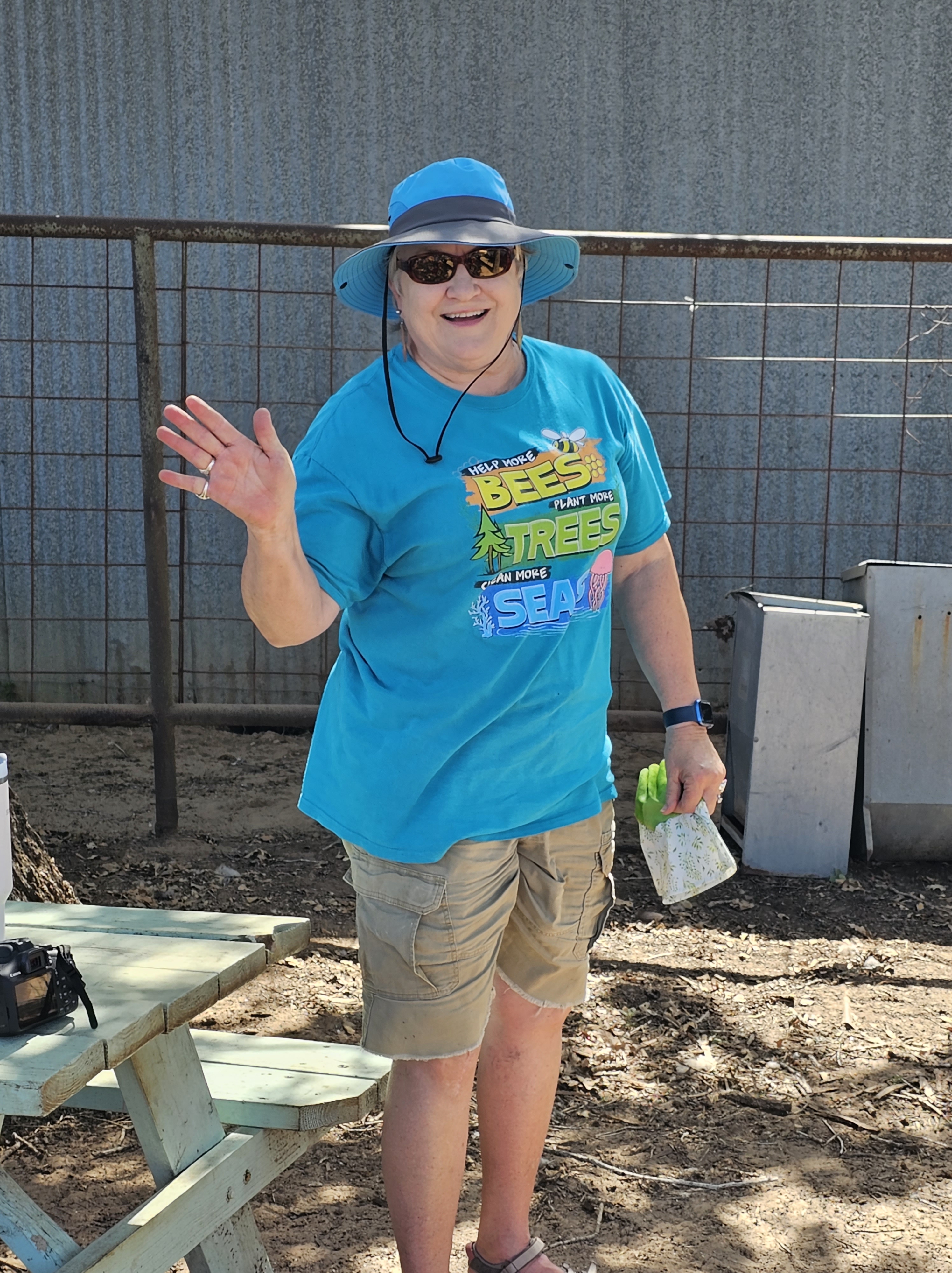
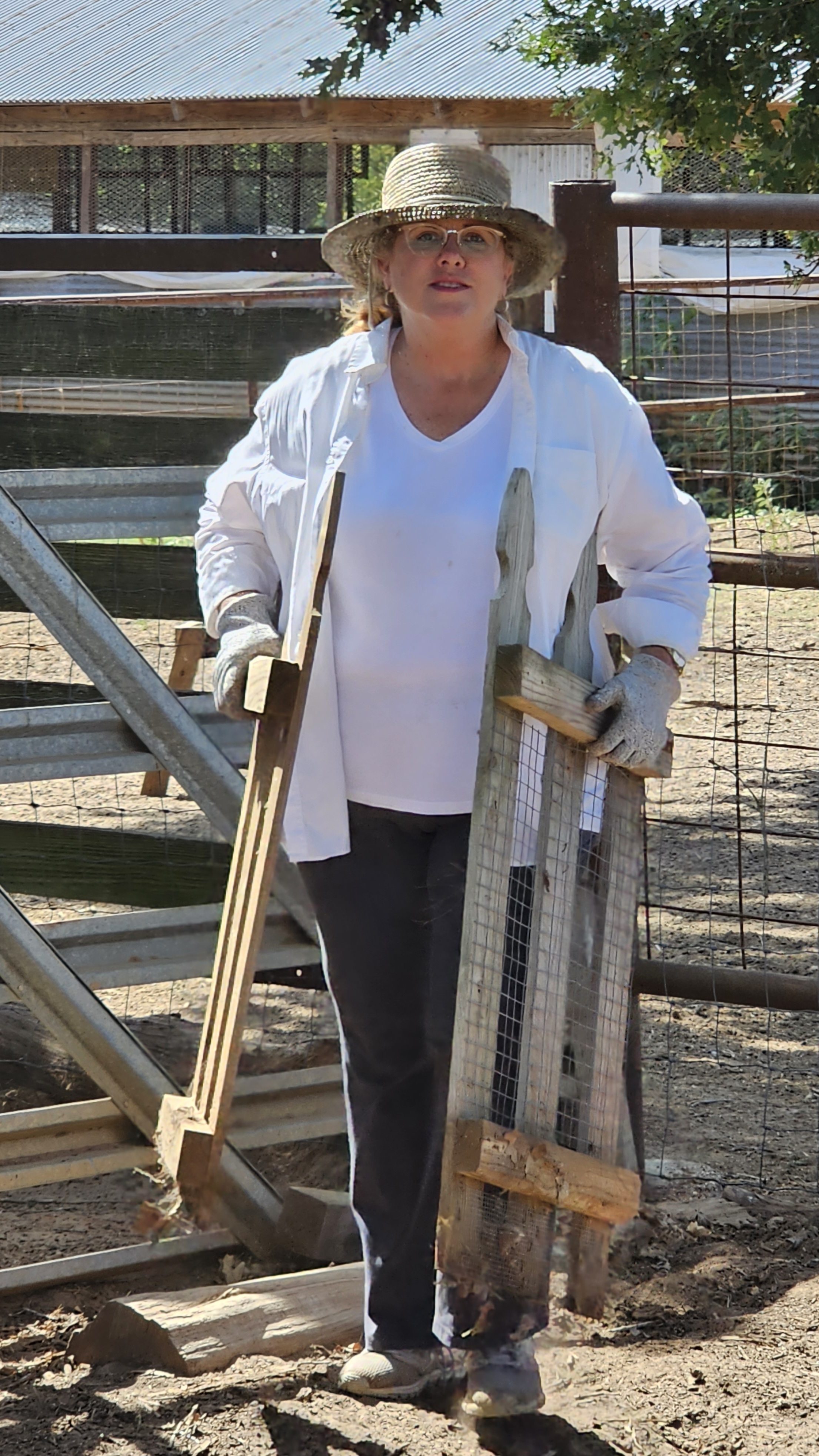
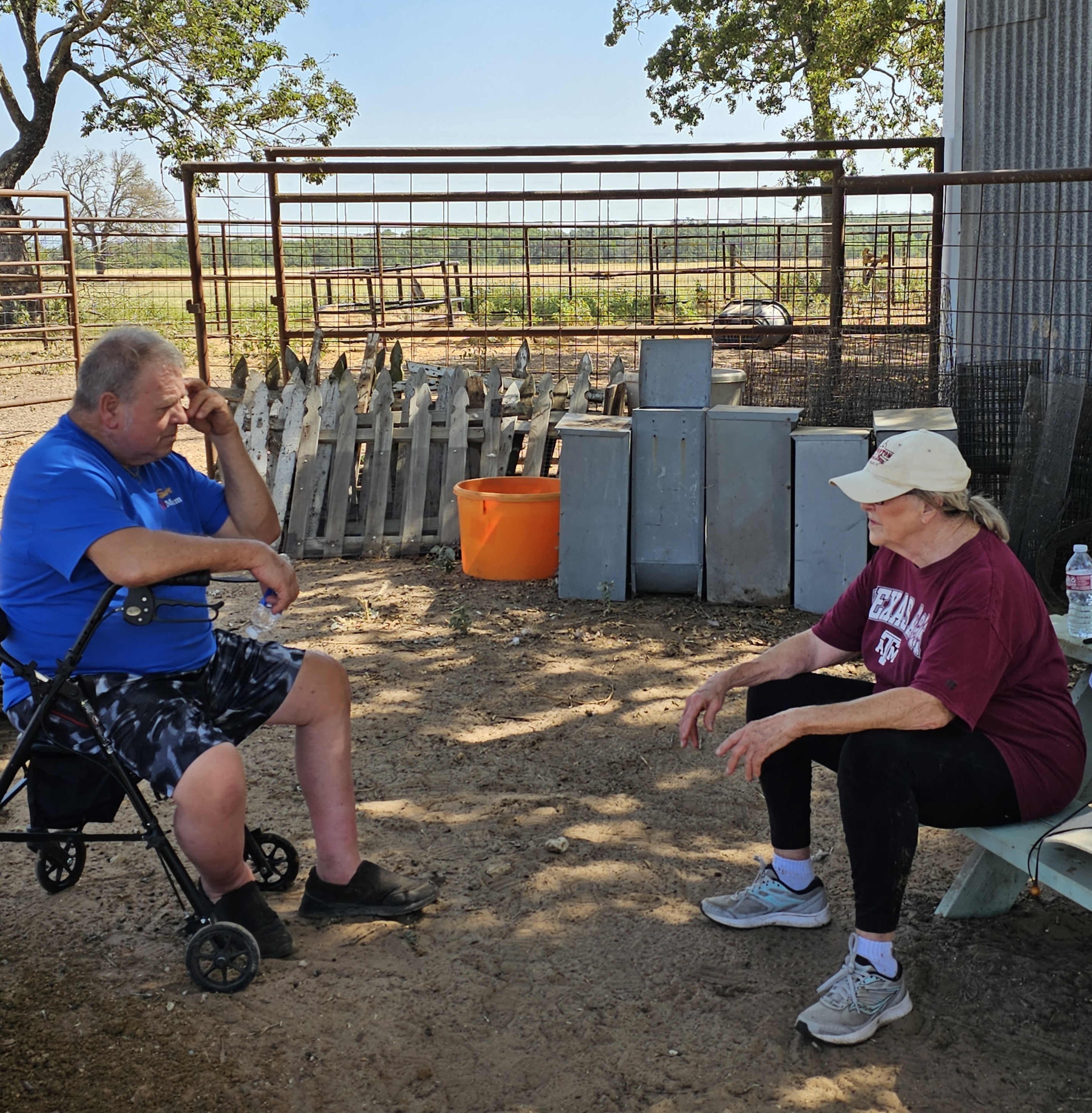
More plans were made for August beautification. Afterward, Catherine Johnson, Patsy Coombs, Neil Wettstein, Debra Sorenson, Pamela Neeley, Sandra Dworaczyk, Jackie and Carolyn recovered from the heat at Corona’s in Rockdale. Here are some photos of the crew.
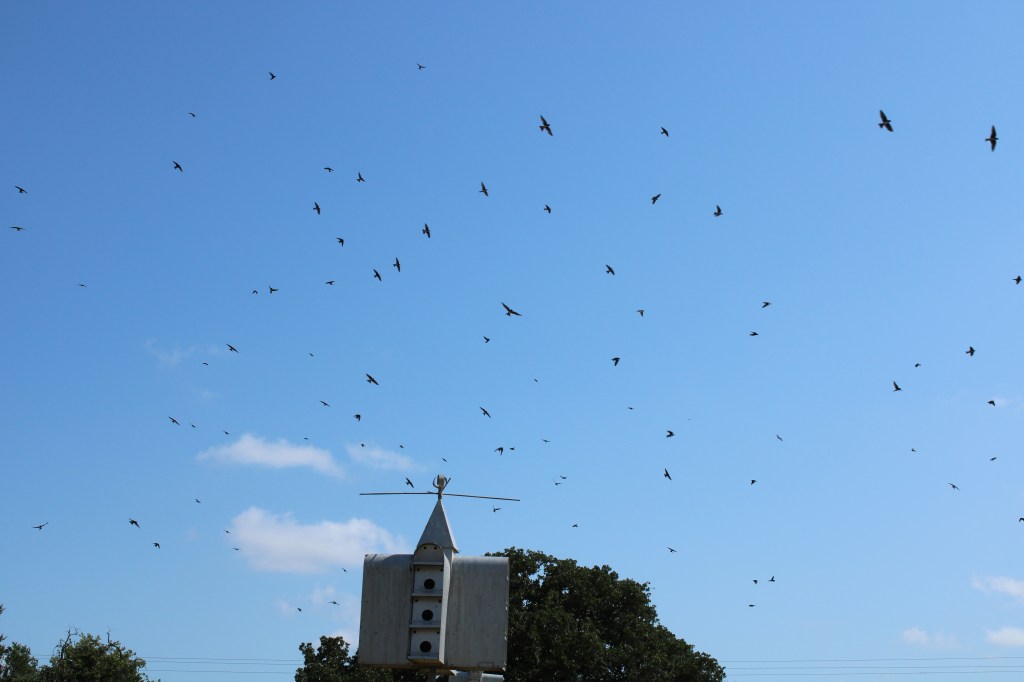
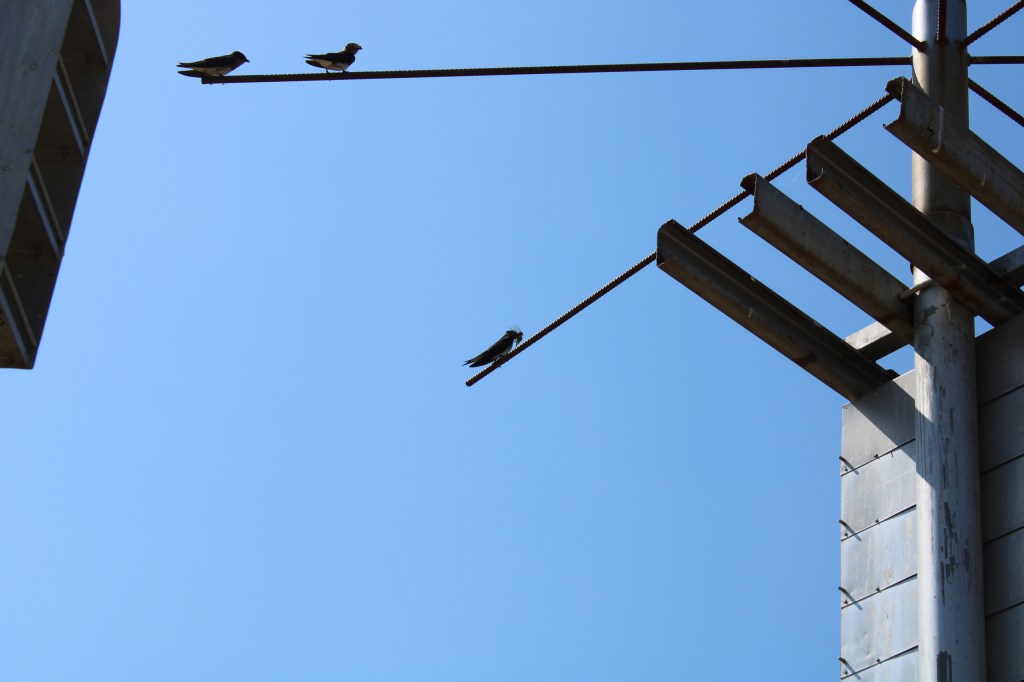
The skies over Mike McCormick’s ranch were awash in Purple Martins on Saturday, June 24. He estimates that he has 800 adults that have laid 3 to 8 eggs per pair – most of which have hatched. When the babies are air born, they may black out the blue above.
A small, but resolute group of El Camino Real Texas Master Naturalist braved the heat to get an annual report on the expansive Purple Martin breeding grounds a few miles outside Buckholts. Thankfully, there was a nice breeze and shade up on the hill where the birds take up residence in the specially made houses on the McCormick place.
McCormick made all the houses in his workshop. He also created an impressive trap house for English Starlings and sparrows. Starlings are notorious for taking over Purple Martin houses. Sparrows are known to do it, too. Apparently, starlings and sparrows are just too curious for their own good when they see others of their kind. The trap is somewhat large and made to let them in but not out. He keeps a few as “pets” so the newcomers will see them eating and join them in the cage.
McCormick told the group about Meteorologist Andy Anderson, formerly of KCEN, telling him that two years in the 2008 to 2010 range, the Purple Martins were “seen” on his radar because of how thick and black they looked when they do their daily hunting circles. The radar picked it up as a moving dark cloud.
He did state that he would be making some more to be sold soon.
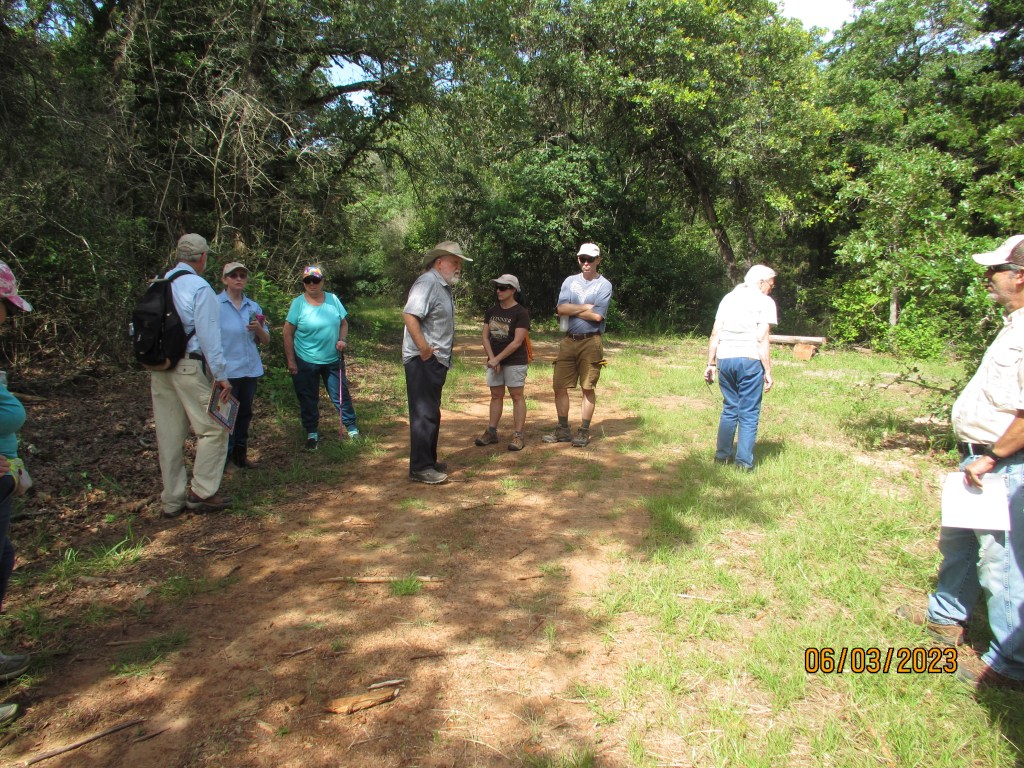
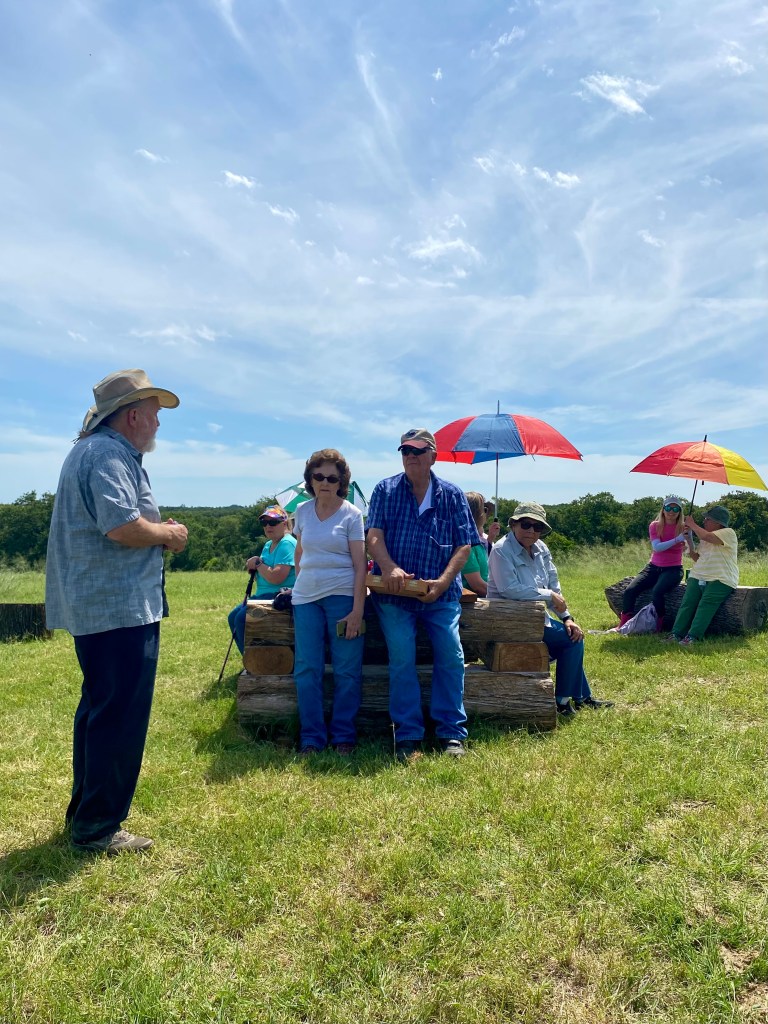
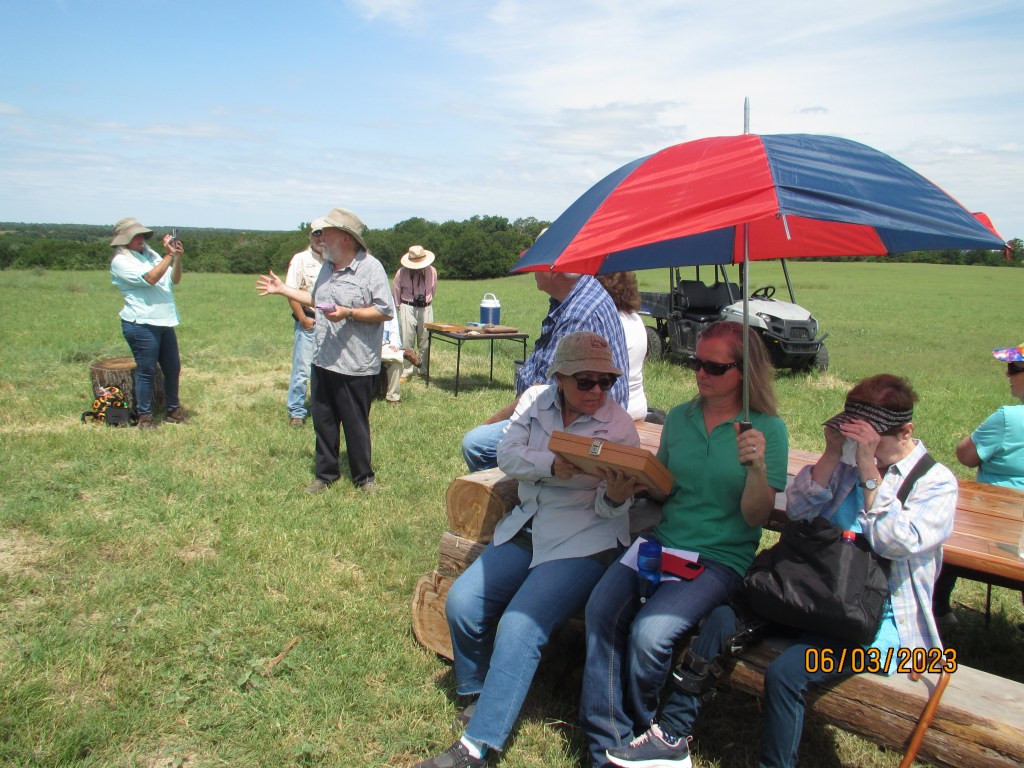
To walk where Spanish settlers walked hundreds of years ago and native tribes lived their lives, even thousands of years ago is an inspiring experience. Members of the El Camino Real chapter Texas Master Naturalist and El Camino Real de los Tejas National Trail Association got to experience it firsthand Saturday in a guided tour of a trail in development.
The group after their hike
The trail is part of the El Camino Real Trail that spans a good part of Texas. The part travelled Saturday, June 2, runs across the Cedar Hill Preserve, owned by Mike and Joyce Conner, and the Baumann Ranch. The Conner property is being developed as a native flora and fauna preserve, and the adjoining Baumann ranch is still a working cattle ranch. It is now part of the National Trail Association, and it is being prepared for study and hiking for organized groups in the future.
The trail head
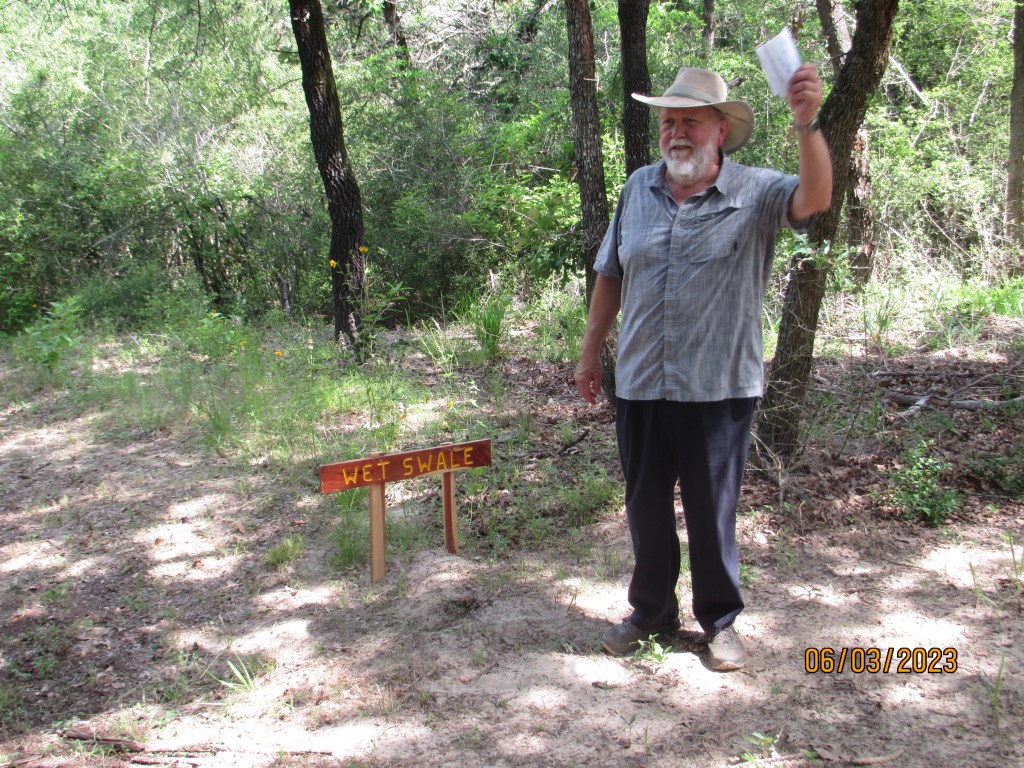
The wet swales were probably formed by water traveling in a path through the area in wet seasons then later used by travelers.
Mike Conner talks about the wet swale
The trail head begins in a woody area on sandy loam soil complete with a fancy new outhouse somewhat like your grandparents had in this area. In many areas a hiker can actually see the trodden path taken by Spaniards and Native Americans dating back hundreds and probably thousands of years ago. They are most discernable by swales that bank the path. A swale is a buildup of land running along each side of the ancient trail. It looks a bit like a street curb might look today. There are both dry swales and wet swales. The dry swales were strictly roads/paths taken by travelers.
Dry Swale (photo by Michelle Lopez)
There also are signal trees believed to have been formed by the native tribes to give direction then later used by the Spaniards. Artifacts from both groups have been identified by archaeologists studying the area. Post Oak trees primarily were used to form these trees.
Signal Tree
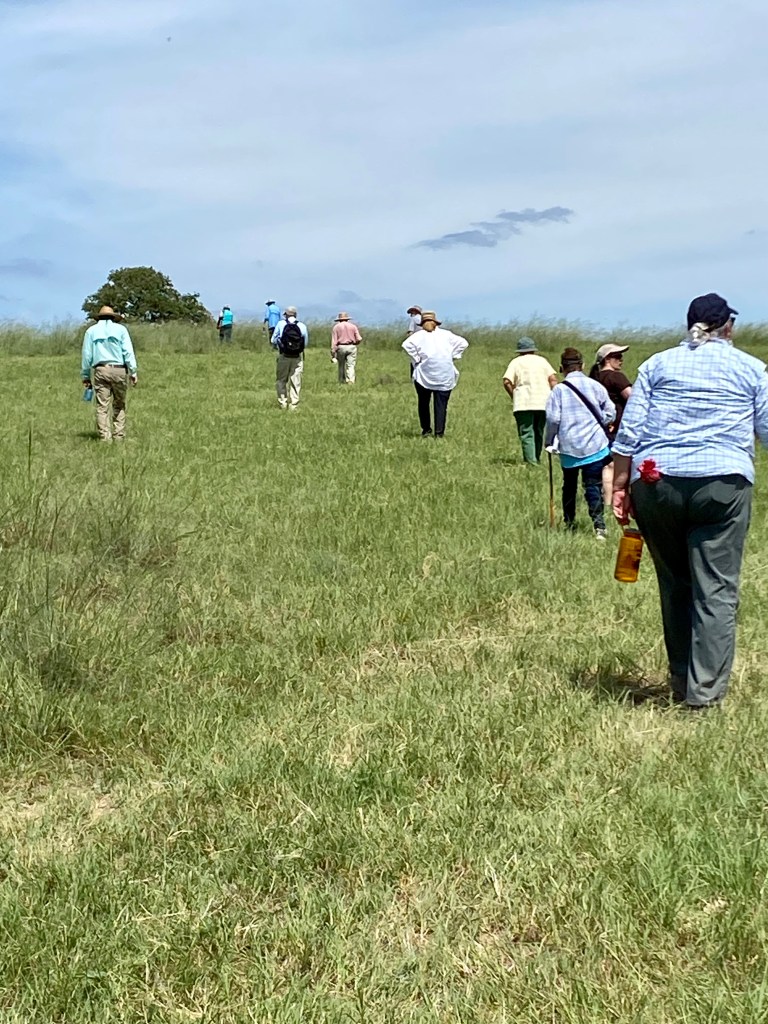
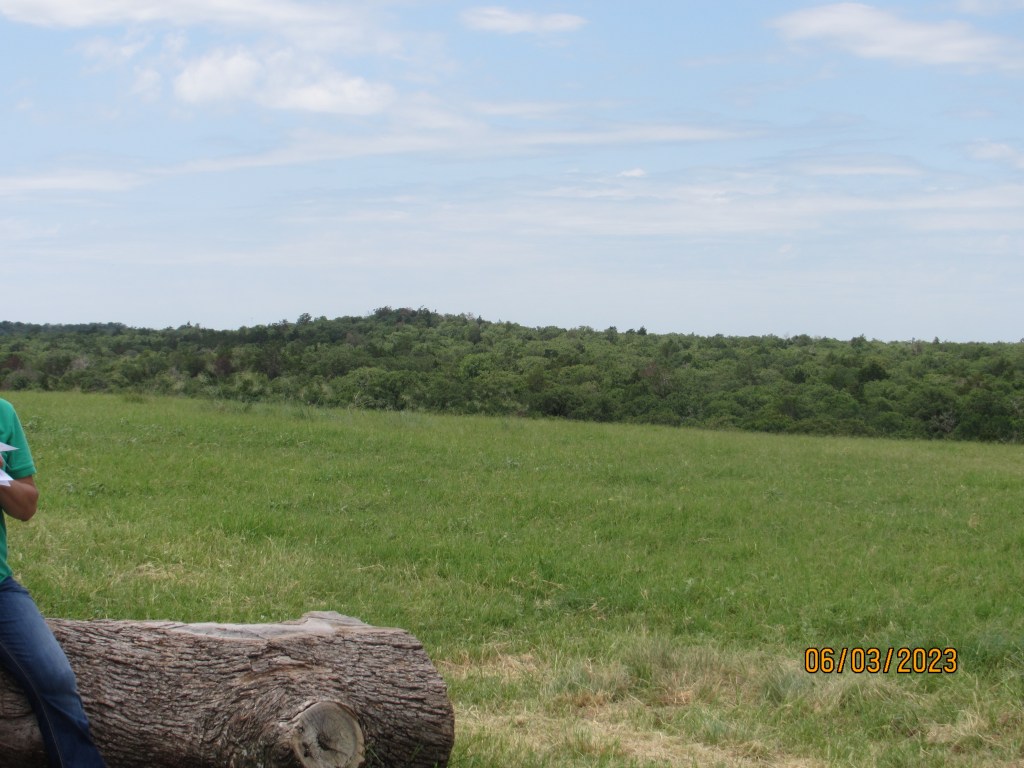
When you come out of the wooded area, you are then on an uphill stretch to reach the very high hilltop. The top of the hill is like a meadow looking out at the woods below and nearby hills or “mountains.” Sugar Loaf Mountain is very near and visible from this hilltop. It is believed that this hilltop where we were was a village for a native tribe or tribes over the years. Tonkawa artifacts have been identified from the area. There was a great deal of speculation by the hikers that the different tribes sent smoke signals to each other from these hill tops. A visit to Sugar Loaf Mountain has long been a rite of passage for area high schoolers.
Hiking up the hill (photo by Michelle Lopez)John Pruett teaching at the hilltopHill top view with pretty clouds (photo by Michelle Lopez)REcovering at the topDistant view
This area is part of the Rancheria Grande Los Brazos de Dios. An archaeological dig in the area around Alligator Creek and Pin Oak Creeks, both of which cross these properties, a few years ago found evidence of very early Spanish settlements.
Trail loop
Mike Conner and Dr. John Pruett, tour guides for the adventure, and Mr. and Mrs. Baumann, explained the history and discoveries while the rest of us recovered from the climb. Joyce Conner etched a map of the trail into a homemade tabletop. It sits at the top of the hill.
Joyce Conner’s tabletop map
Going downhill was easier, but one could certainly feel the rising midday temperature. An appreciation of what people had to go through to get anywhere hundreds and thousands of years ago is brought home when hiking this trail.
The Baughmans (center)
There is a book titled The Archaeology of Rancheria Grande Los Brazos de Dios, written by Sergio A. Iruegas, archeologist, and Melinda T. Iruegas, about the discoveries in the area. It is currently out of print, but there are copies at the Cameron and Rockdale libraries. If you own land in that area, you may be sitting on artifacts.
Mike Conner talks about the trail
Addendum
by Mike Conner
I would like to clear up a little confusion about swales.
Swales are u-shaped, linear depressions in the ground formed by many years of foot and hoof steps. They are never formed by water but may be damaged by water once they are formed. This is happening to some extent to Hidden Swale. Both the Dry and Wet Swales have been certified by archeologists to have been used during Spanish colonial times but may have been used for thousands of years before. The somewhat confusing names for these two swales come from the fact that the Dry Swale leads directly to the historic village site and cuts through a small valley that would only be passable is fairly dry weather. The Wet Swale leads in a less direct route to the historic village site that goes around the edge of the valley and would be passable in wet weather.
The El Camino Real Texas Master Naturalist Wildscape is awash in purple blooms on flowers, bushes and trees. And all types of bees are all over them. Honeybees, Mason bees and Carpenter bees covered most of the blooms.
The favorite for the bees was Wild Bergamot growing in cultivation in the Wildscape.
Wild Bergamot
Its sister plant the Lemon Bee Balm growing in the wild in the surrounding pasture was a very close second.
Lemon Bee Balm
Gene Rek, owner of Bird and Bee Farm where the wildscape is located, said the wild Lemon Bee Balm provided the most nectar for his bee farm. They had found the Wild Bergamot, too.
Huge Wild Bergamot
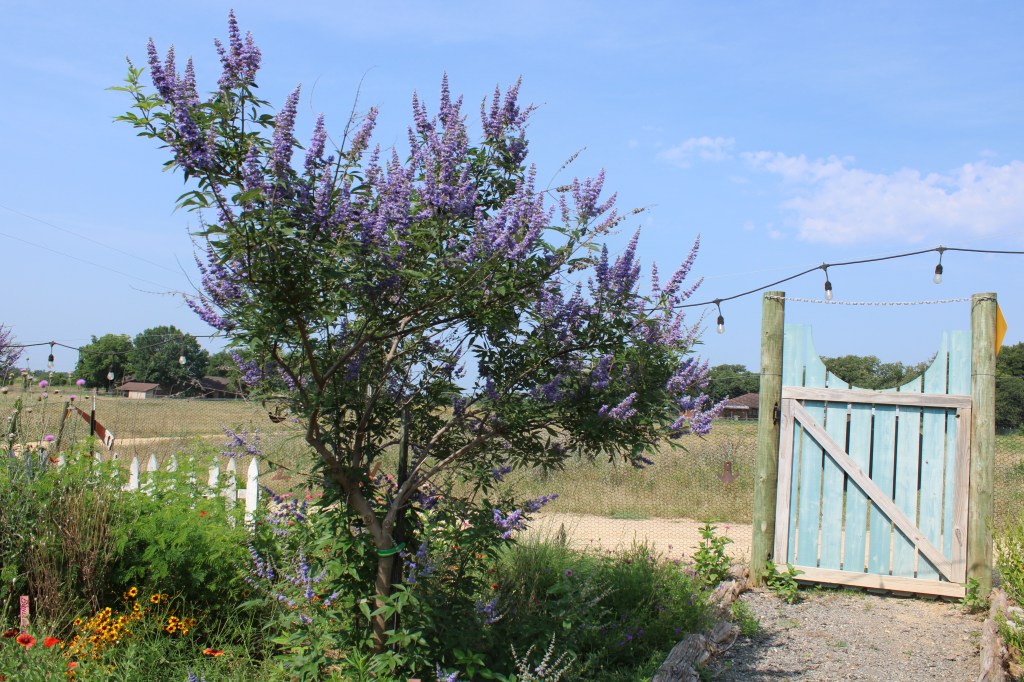
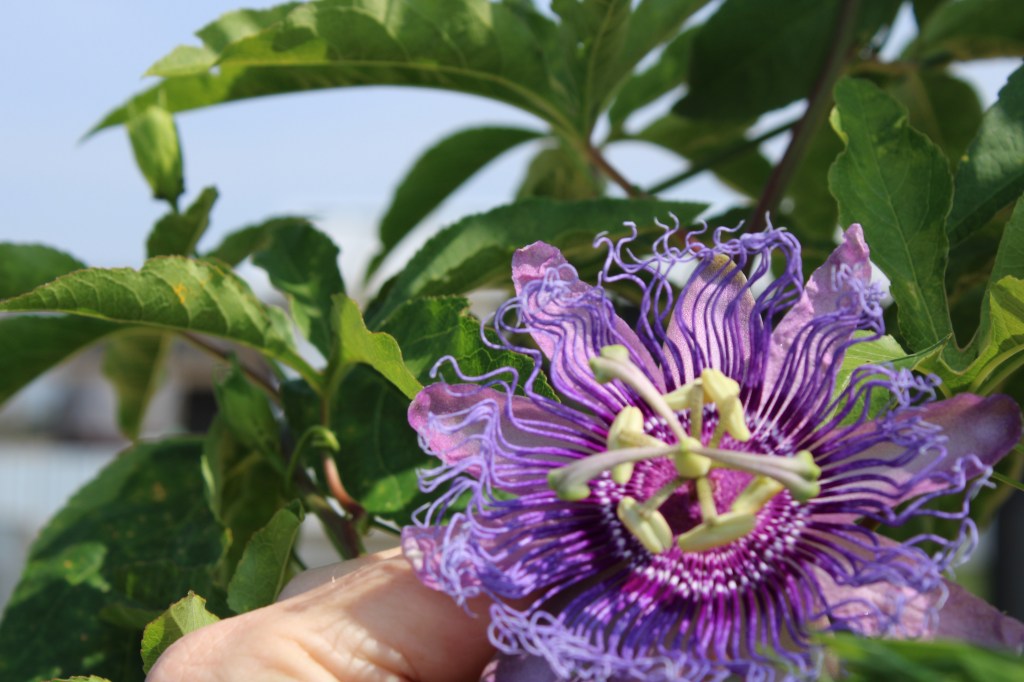
Close in line was a Lilac Chaste Tree, Mealy Blue Sage and Purple Passionflower. Plenty of other plants also are in bloom. Many of those are new to the Wildscape.
Lilac chaste tree
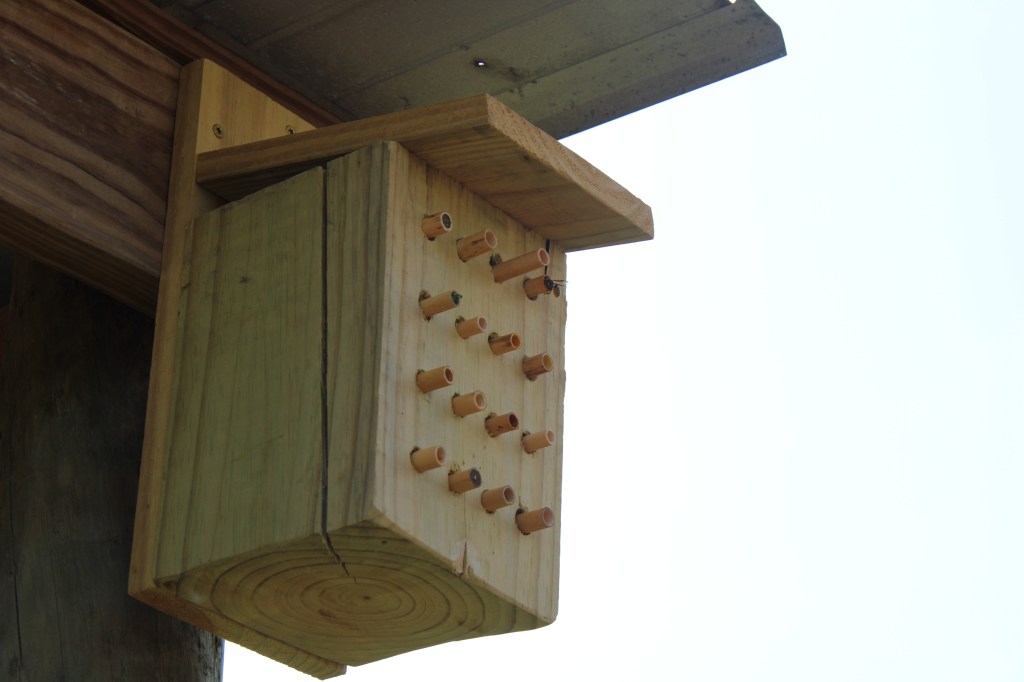
The Mason Bees were also filling up the new bee houses put up by some Eagle Scouts.
Mason bee house
If you’d like to grow native Texas plants, this is an excellent place to see many of them in bloom. Members of the El Camino Real chapter Texas Master Naturalist will be there on June 17, from 10 to 12. Catherine Johnson, member in charge of the Wildscape, always gives away free starters to anyone interested. It’s located on Fm 334.
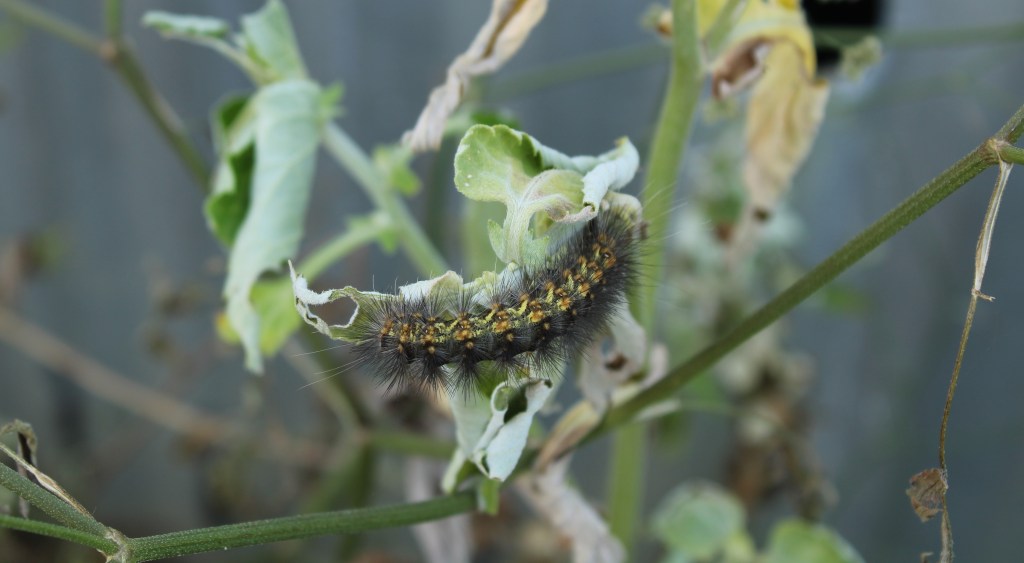
Mealy blue sagePurple passionflowerCaterpillar feeding on wilting Lemon Bee Balm, working to produce a Salt Marsh MothMore purple flowers and their friends.




















 Nature Along the El Camino Real