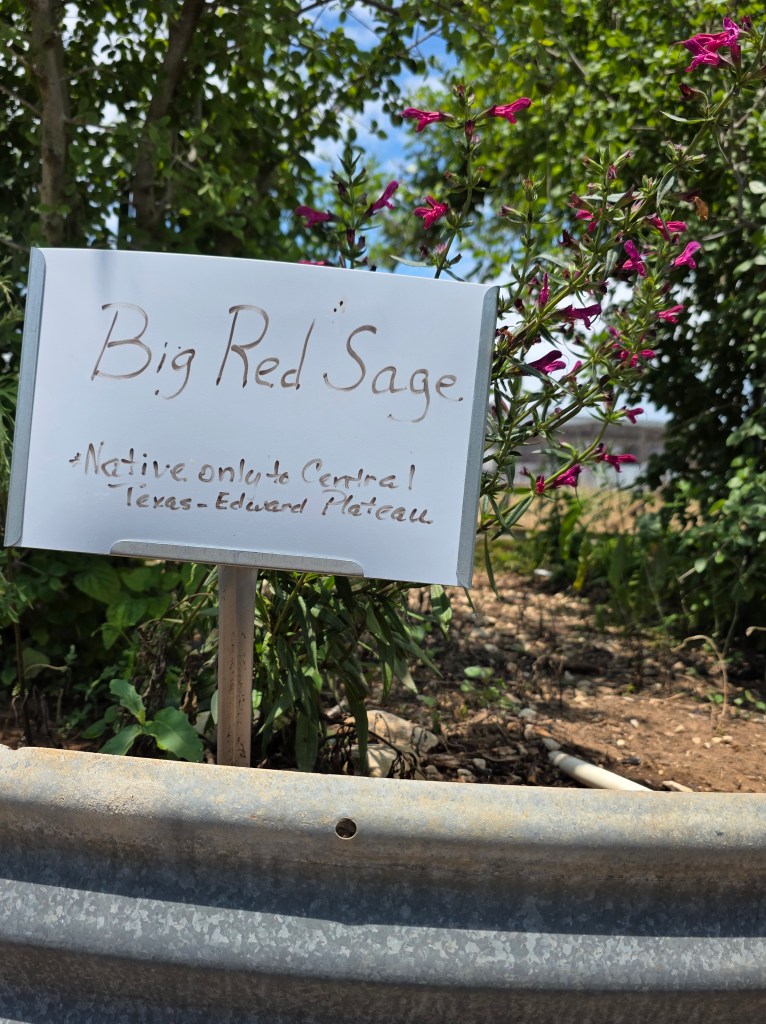
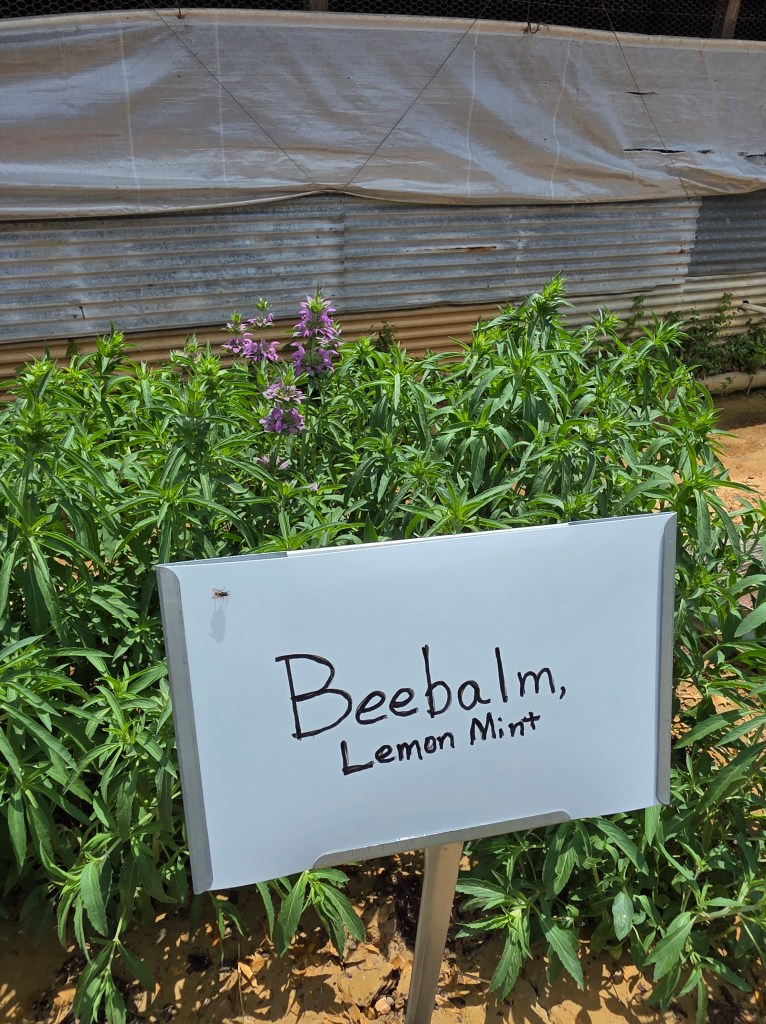
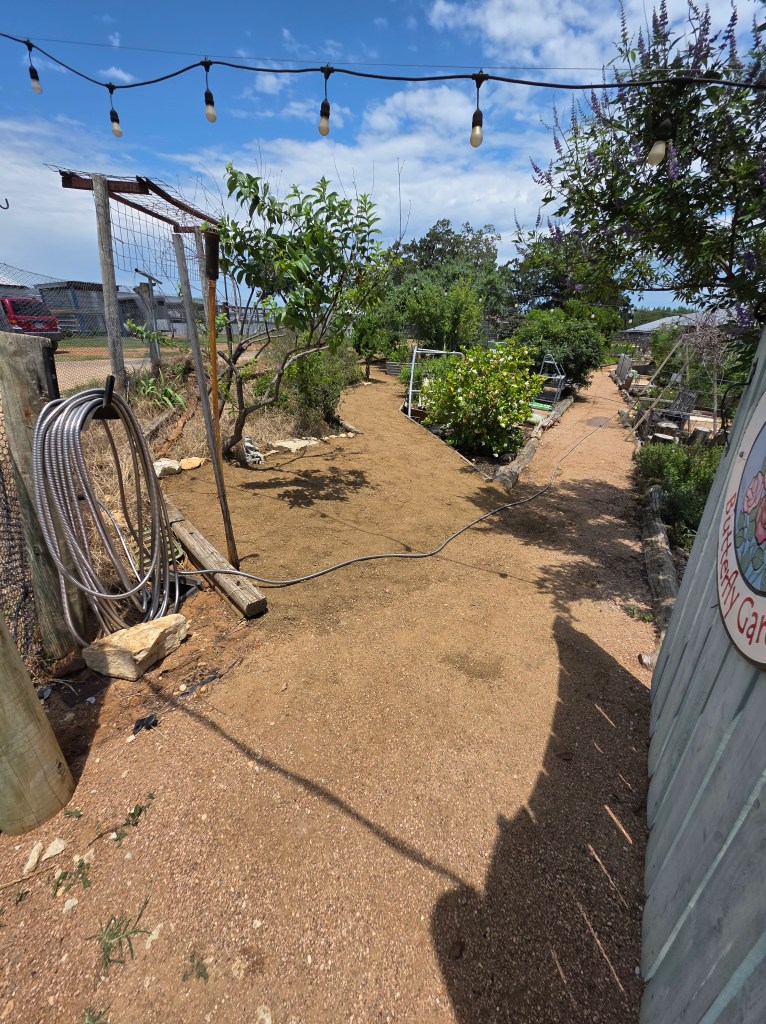
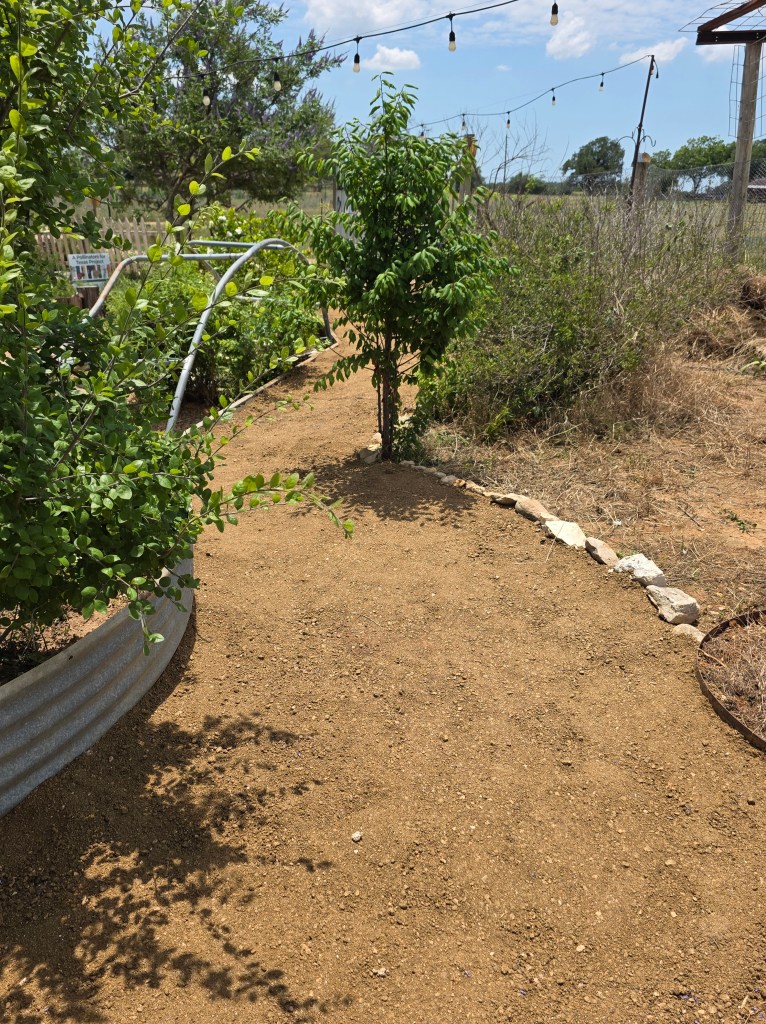
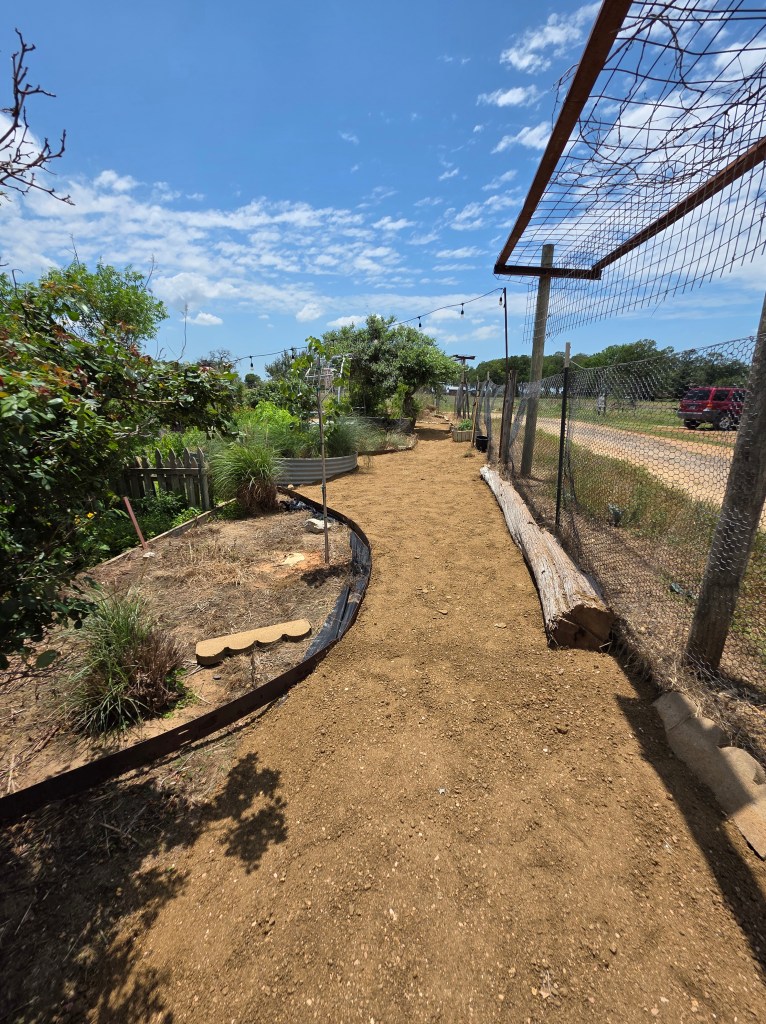
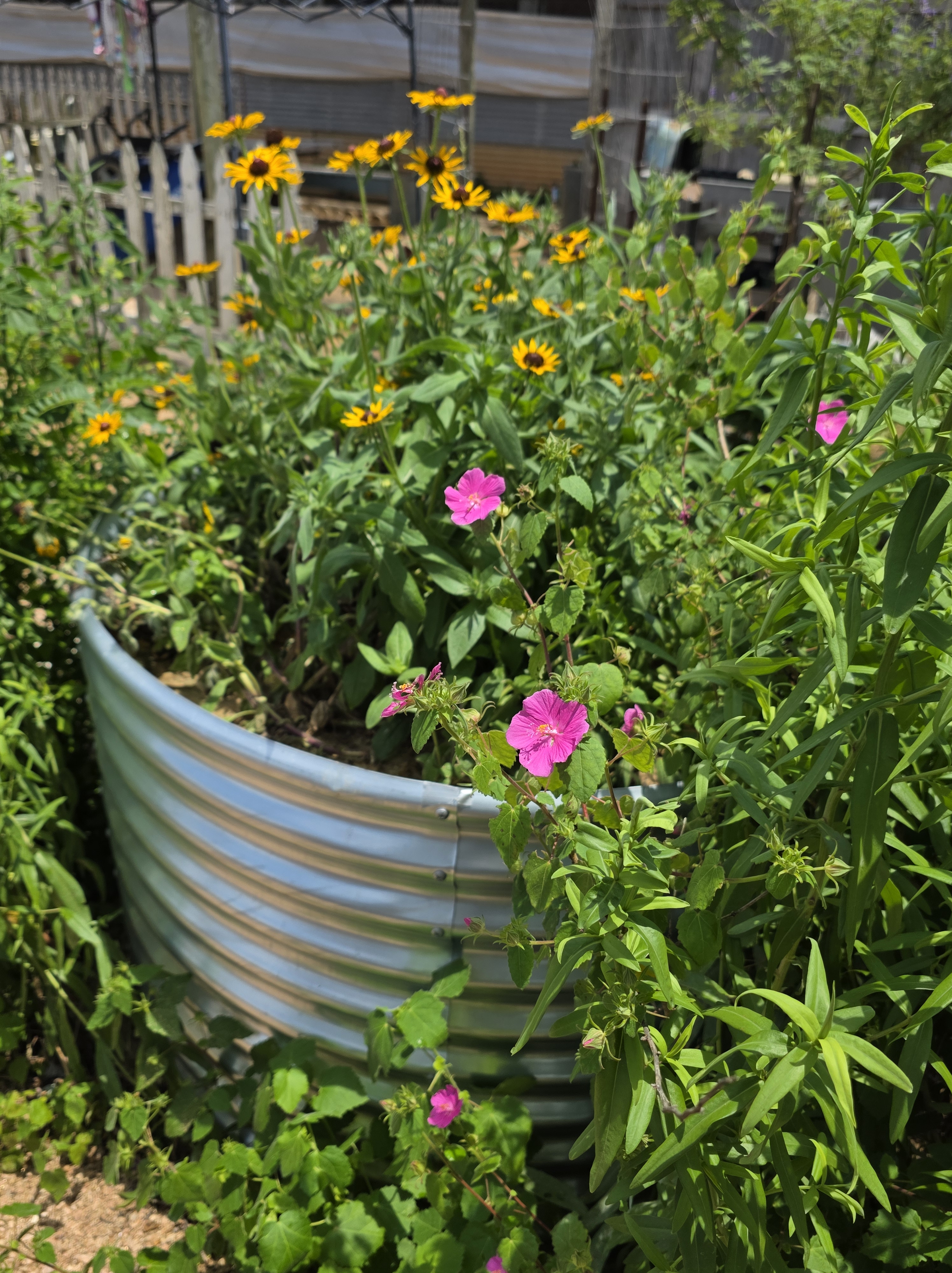
Chapter members’ work is paying off with blooms in the new barrels with signage.
The budget approved by H-E-B included funds for last minute strenuous labor which Mitchell Henderson has been doing. He has been shoveling gravel and landscaping the upper pathway for easy access and greatly reduced weeding.
New construction will enable people to get close to Pollinators and native plants they are connected to.
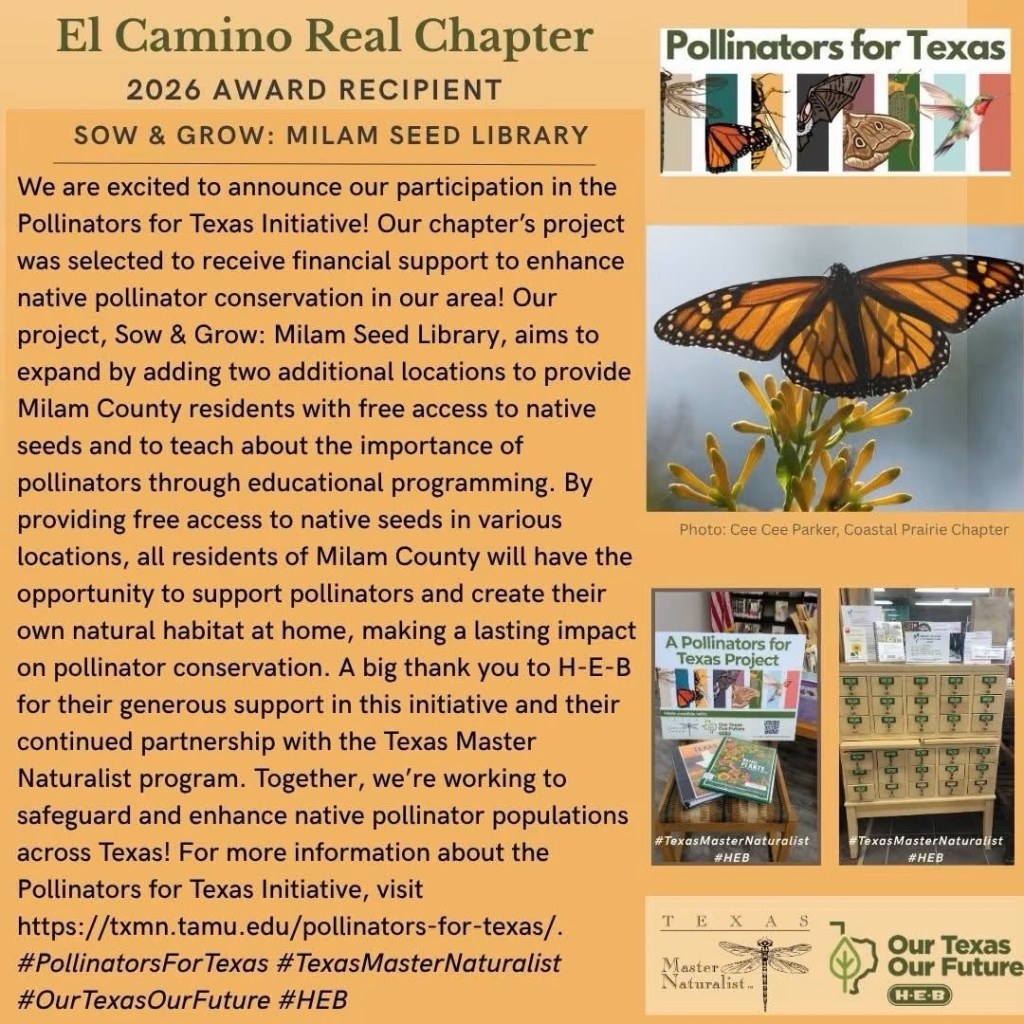
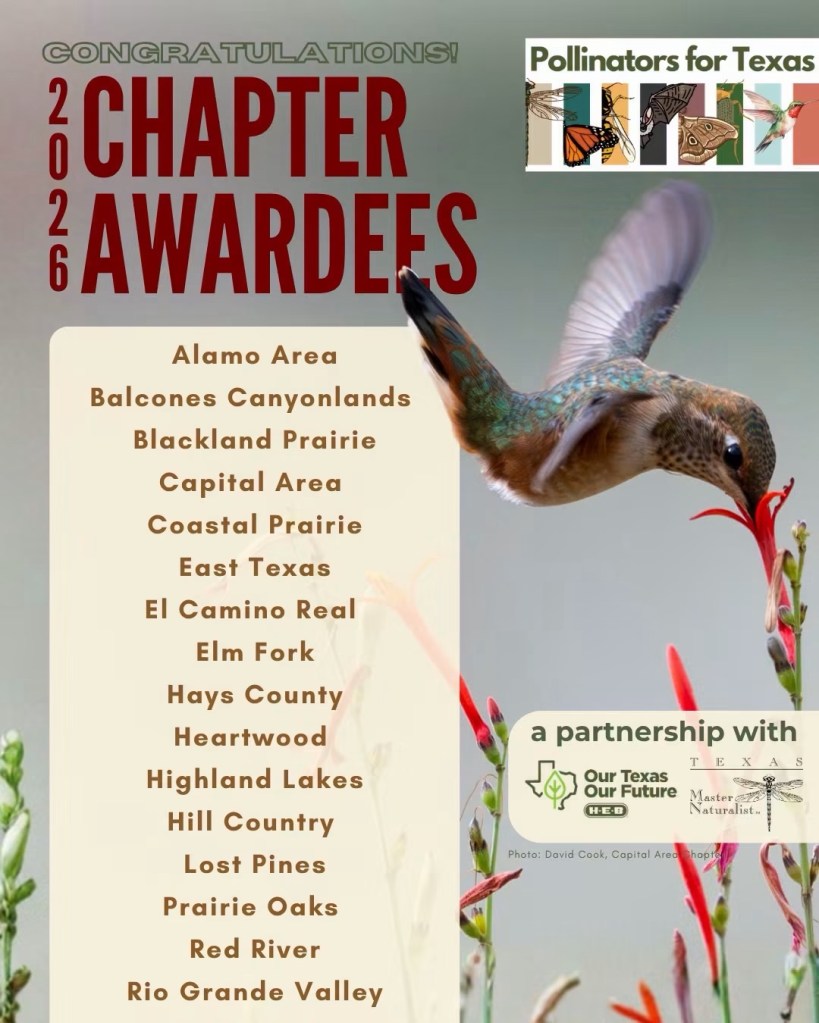
The Pollinators for Texas project is a collaborative effort with H-E-B and the Texas Master Naturalist (TMN) Program focused on enhancing native pollinator conservation across the state by promoting awareness, conservation efforts and creating sustainable pollinator environments. The initiative aims to engage communities in supporting pollinator-friendly practices through funding TMN chapter-led projects and programs.
Wildflowers that were removed to make way for paths have returned and native trees are thriving after the rains. Work on the H-E-B grant is nearing the end and we are looking forward to Blooms and Pollinators.
The Pollinators for Texas project is a collaborative effort with H-E-B and the Texas Master Naturalist (TMN) Program focused on enhancing native pollinator conservation across the state by promoting awareness, conservation efforts and creating sustainable pollinator environments. The initiative aims to engage communities in supporting pollinator-friendly practices through funding TMN chapter-led projects and programs.
As part of our grant from the H-E-B Pollinators Across Texas Project, members of our chapter spent the morning at the Milam Wildscape making sure invasives have been removed and preparing for planting the native plants we hope will attract the set of pollinators we want to document over the coming months.
Common Buckeye on trailing lantana
Chad, Scott, Bill, Liz, and Kit shoveled and moved a whole lot of crushed granite. Luckily, we had multiple shovels and wheelbarrows to get the work done.
In progressHappy to see the last load
Meanwhile, Tina, Catherine, and Carolyn spread the gravel and stomped on it. It was quite satisfying to stomp, and the rose bush did not permanently injure any volunteers. The end result is beautiful and will make the area safer for visitors.
Rose bush trying to attack CarolynShe dominatedHard at workThe area was well prepared
Don’t worry, we need more gravel spread- for our chapter members who missed the opportunity!
Two views of the team
Patsy and Sue Ann recorded the whole event for reporting purposes. They even found a few pollinators lurking around the Wildscape.
Patsy had a real cameraSue Ann took a phoneCarpenter beeAnother one!
Donna, Ann, and Kim greeted visitors who wondered just what we were doing. The visitors got free wildflower seeds and pollinator brochures to answer all their questions.
Charming the visitors Donna and KimDonna and Ann
The most impressive achievement of the morning was that the excessively aggressive (though native) Cypress vine that took over the awning was removed – again. Kit, Tina, Liz, Scott, Chad and Carolyn slayed it – for the moment. This will probably need to be repeated. The vine is beautiful but very aggressive.
That vine was toughDone!
We look forward to sharing the progress of this project and are grateful to H-E-B for the Pollinators across Texas grant.
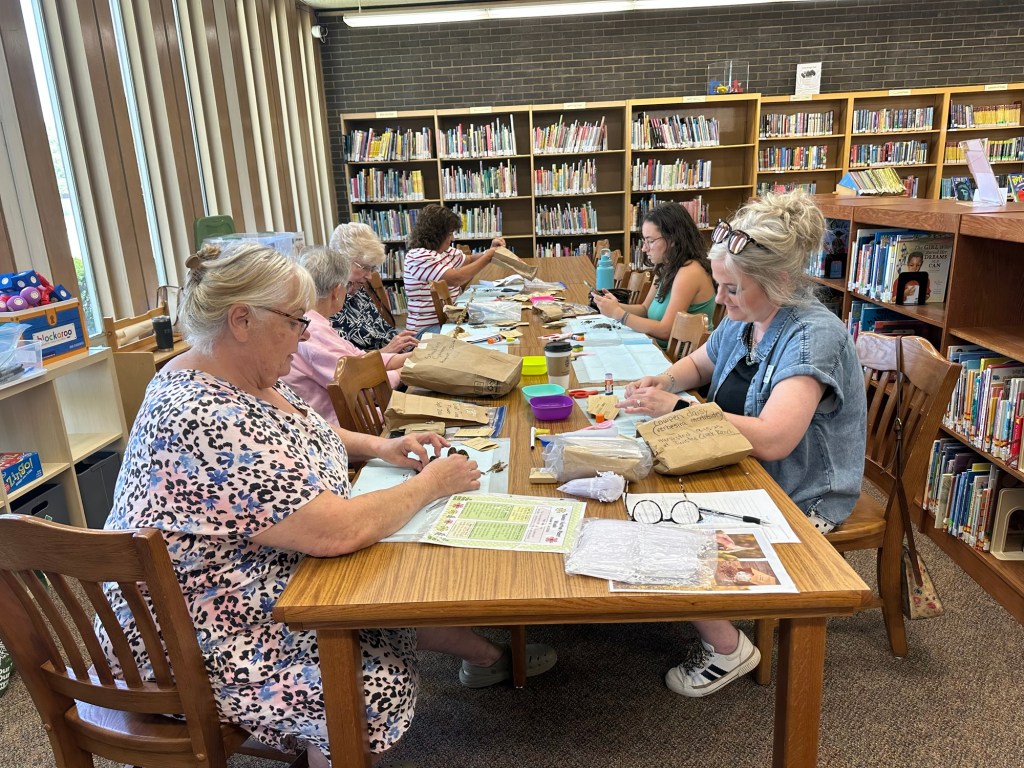
This past Tuesday, the El Camino Real Master Naturalists and the Little River Basin Master Gardeners came together to contribute to a shared volunteer opportunity. We meet the third Tuesday of each month to package native and adapted wildflower seeds, herb and garden seeds, and some landscaping plant seeds…..all for the Free Seed Library located in the Cameron Public Library.
We are sharing stories, getting to know one another, and providing free seeds to the residents of Milam County. It’s become a great opportunity to learn and grow from each other’s expertise….. and there’s a wealth of knowledge in these two organizations!
The Famous Endangered Houston Toad also attended the Wildlife & Woodlands Post Oak Savannah Landowner Workshop, where our chapter had a booth last week.
The male toad saying hello.
The pair traveled in customized carriers with their chauffeur, back to the Ft Worth Zoo (a 2.5 to 3 -hour trip each way). I only managed one photo of his handsomeness. This species is leading the resistance against riparian and native species destruction.
A few live in the southern part of Milan County. The Brazos River splits this county. I’m on North side of the river, and the soil is Blackland. South of River is sandy soil and that’s where our small Houston Toad population lives.
I enjoyed getting to see their huge back feet, which are all the better for excavating their holes while moving backwards! They don’t have to turn around to watch their world!