Hello, friends. This blog is where the El Camino Real Chapter, Texas Master Naturalists shares news, articles, and reflections. You’ll find our posts right under this introduction. We encourage your comments and likes, and of course, shares!
Our chapter meets monthly on the second Thursday of the month in the fellowship hall at All Saints Episcopal Church, 200 North Travis Avenue, Cameron, Texas. Presentations begin at 6 pm, after a potluck meal. All are welcome to attend.
Our Mission: To develop a corps of well-informed volunteers to provide education, outreach, and service dedicated to the beneficial management of natural resources and natural areas within their communities for the State of Texas.
Sometimes the most extraordinary discoveries happen quietly—right under our feet.
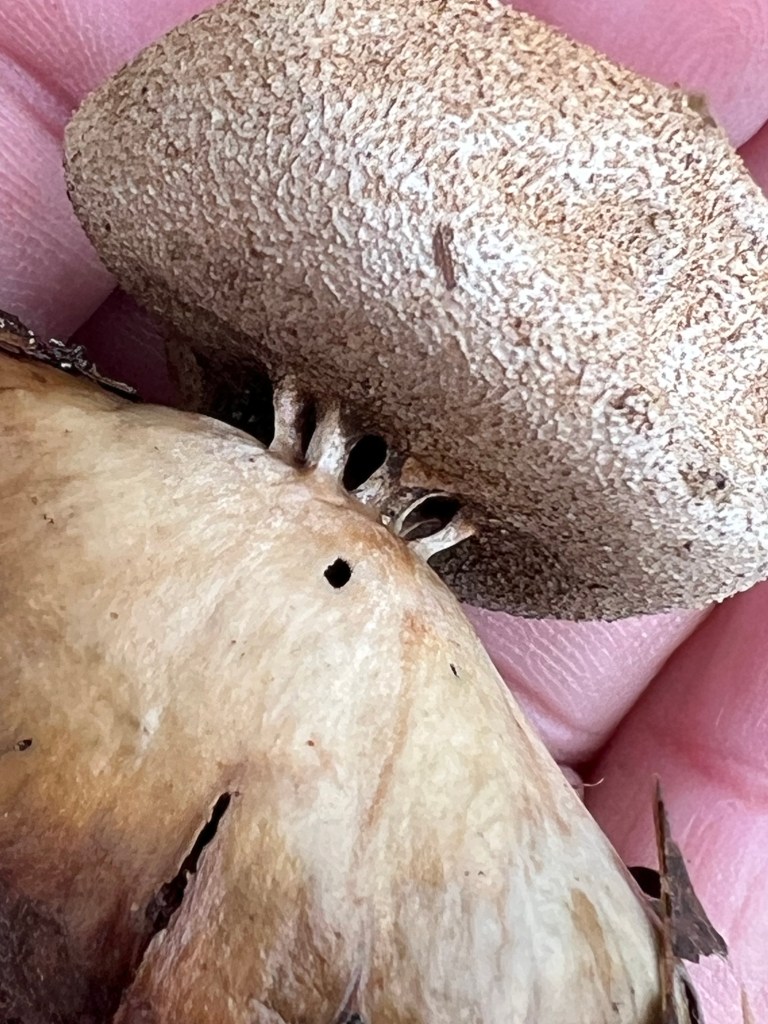
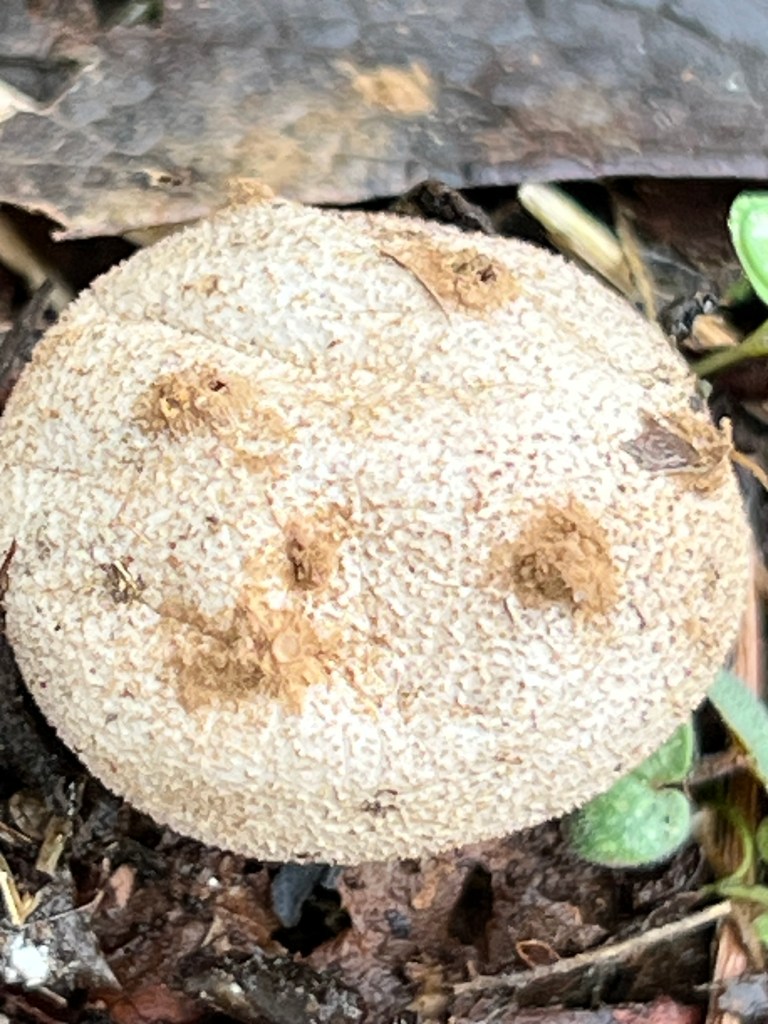
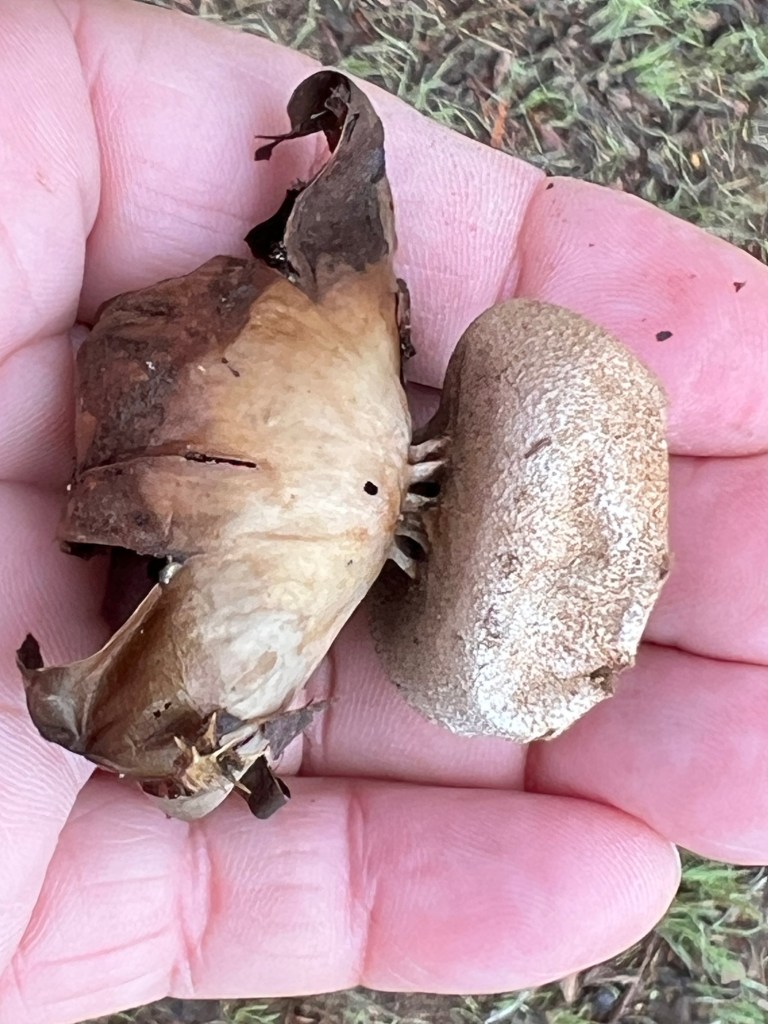
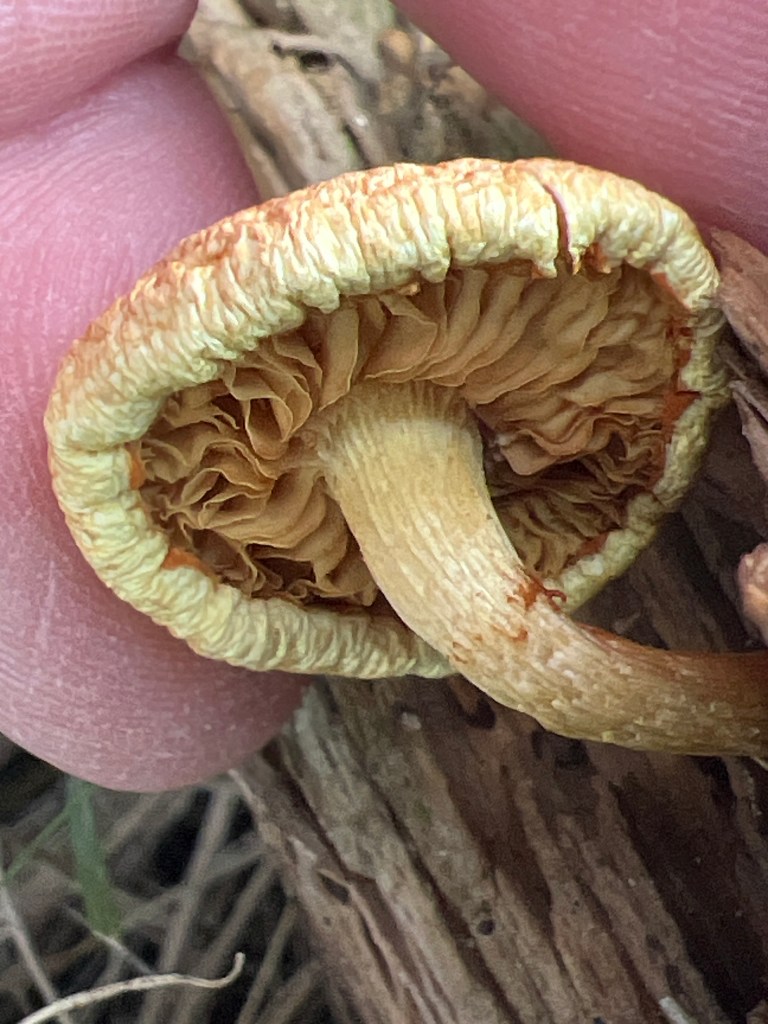
While exploring Twisted Creek Ranch, I came across an unfamiliar mushroom growing beneath a mix of native trees. At first glance, it didn’t resemble the common fungi we see after rains. Its clustered form and unusual structure immediately stood out, prompting a deeper look and documentation.
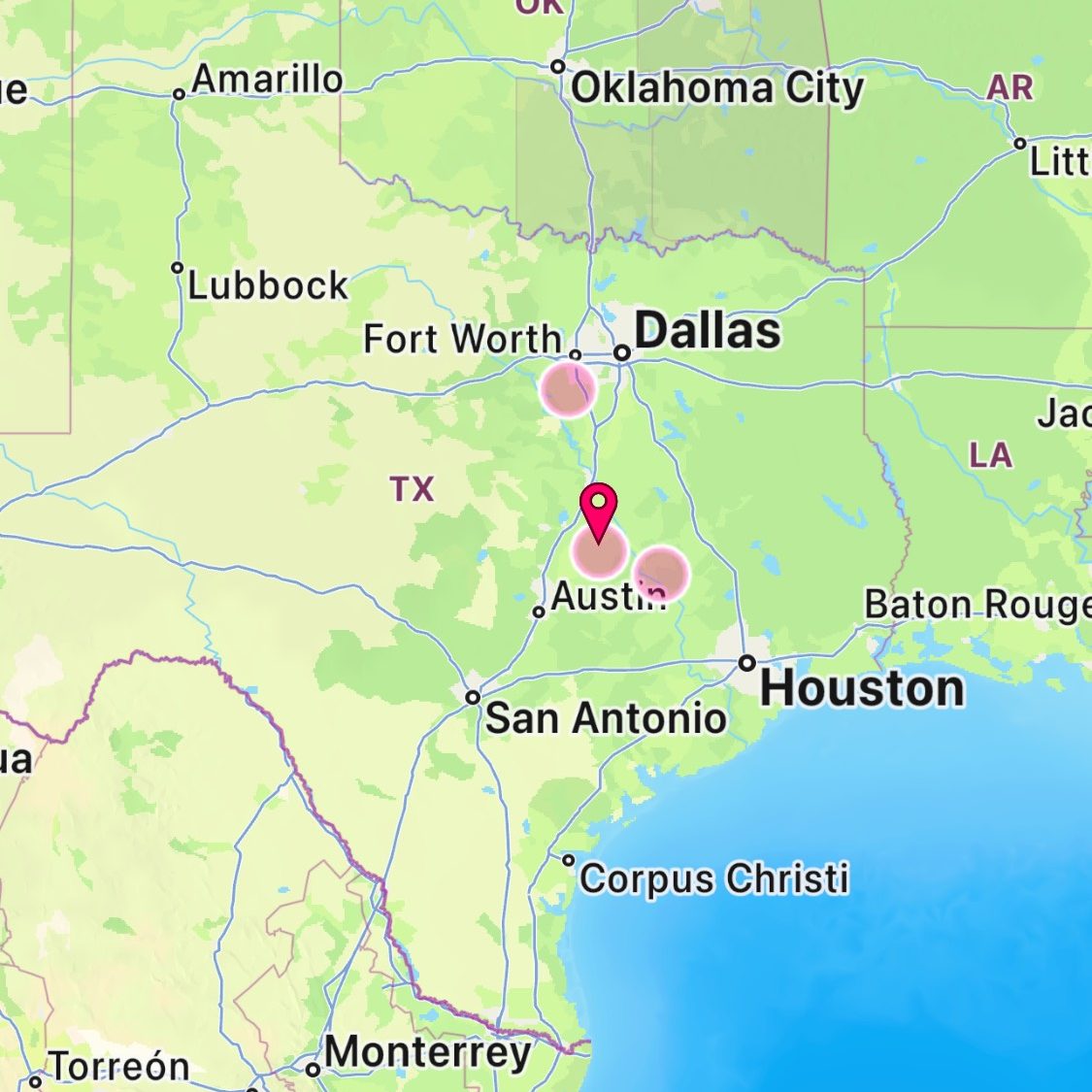
After careful observation, photo documentation, and consultation, the mushroom was identified as the Pepper Pot mushroom—a species with only around 820 documented sightings worldwide. Even more exciting, this appears to be the first recorded sighting in Milam County, Texas.
Why This Find Matters
Pepper Pot mushrooms are not just rare; they are indicators of something larger. Fungi play a critical role in ecosystems—breaking down organic matter, recycling nutrients, and supporting soil health. The presence of such a rarely documented species suggests a healthy, functioning habitat with intact ecological relationships.
Twisted Creek Ranch is a National Wildlife Federation–certified wildlife habitat, and discoveries like this reinforce the importance of preserving native landscapes. Undisturbed leaf litter, mature trees, and minimal chemical inputs all create the conditions fungi need to thrive—but that are increasingly hard to find.
The Value of Paying Attention
This find is a reminder of how much there still is to discover, even in places we walk every day. Fungi often go unnoticed, emerging briefly and disappearing just as quickly. Without slowing down, looking closely, and being curious, moments like this are easy to miss.
As Master Naturalists, documenting these occurrences—especially rare ones—is invaluable. Each observation adds to our collective understanding of species distribution and habitat health.
I’ve included photos from the original discovery to help document this sighting and to encourage others to keep their eyes on the forest floor. You never know when your next walk might turn into a county first—or even a global rarity.
Discoveries like this are why I’ll always advocate for leaving the leaves, protecting native spaces, and staying curious.
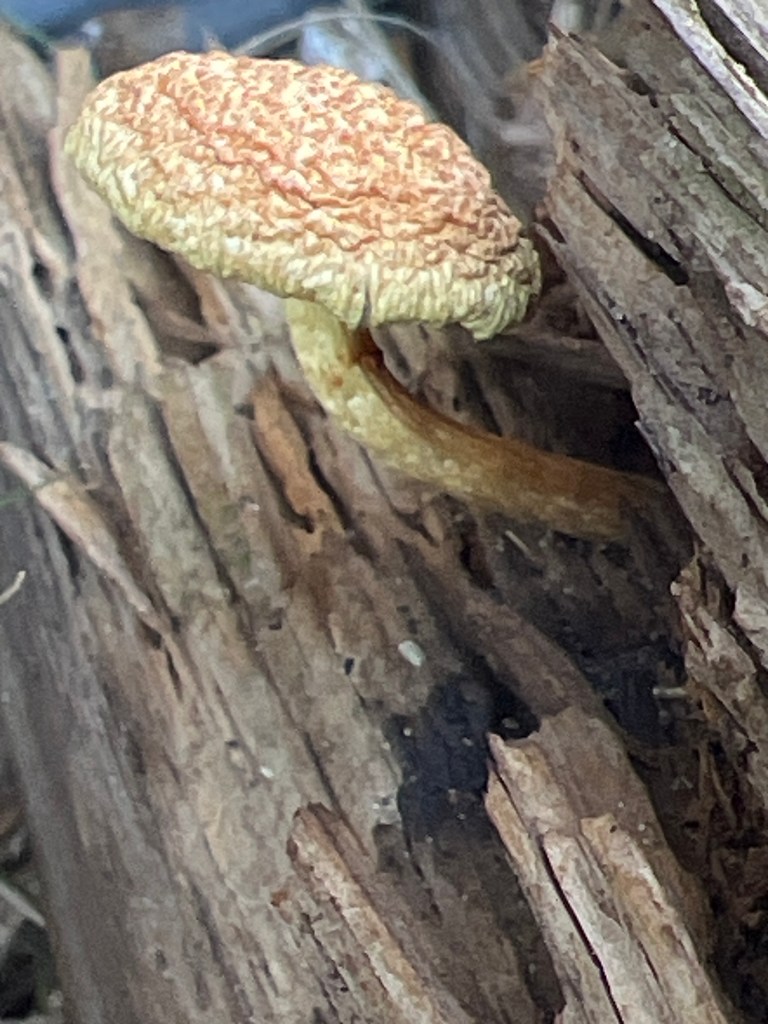
I was standing behind the barn the other day, not looking for anything in particular, when I happened to glance down at an old board on the ground. Growing right out of it was a small, unassuming mushroom—one of those moments where something ordinary suddenly asks you to pay closer attention.
Of course, I did what any curious naturalist would do: I took a photo and uploaded it to iNaturalist.
That’s when the surprise came.
The mushroom turned out to be Pleuroflammula tuberculosa, a species with only 527 documented observations worldwide—and just two prior sightings in the entire state of Texas. Mine became the third.
Finding something so rare without intentionally searching for it feels like a quiet gift from the land. It’s a reminder that nature doesn’t always announce itself with fanfare. Sometimes it waits patiently for us to slow down, look down, and notice what’s right at our feet.
Moments like this are why I love spending time outdoors. Nature never disappoints. There is always something interesting happening—fungi recycling old wood, birds passing through unseen, insects going about their lives—if we’re willing to stop and observe.
Who knows how many rare, beautiful, or important things we walk past every day without realizing it? This little mushroom was a good reminder to keep my eyes open and my curiosity alive.
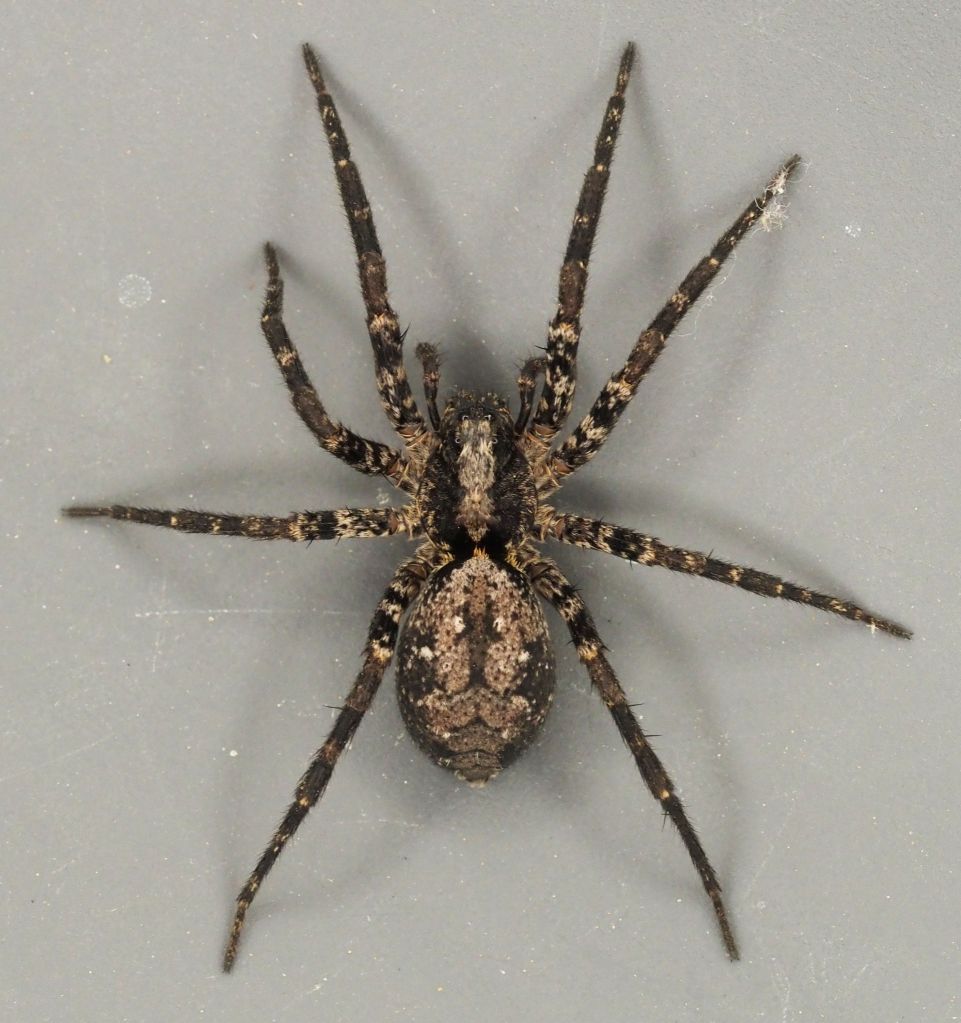
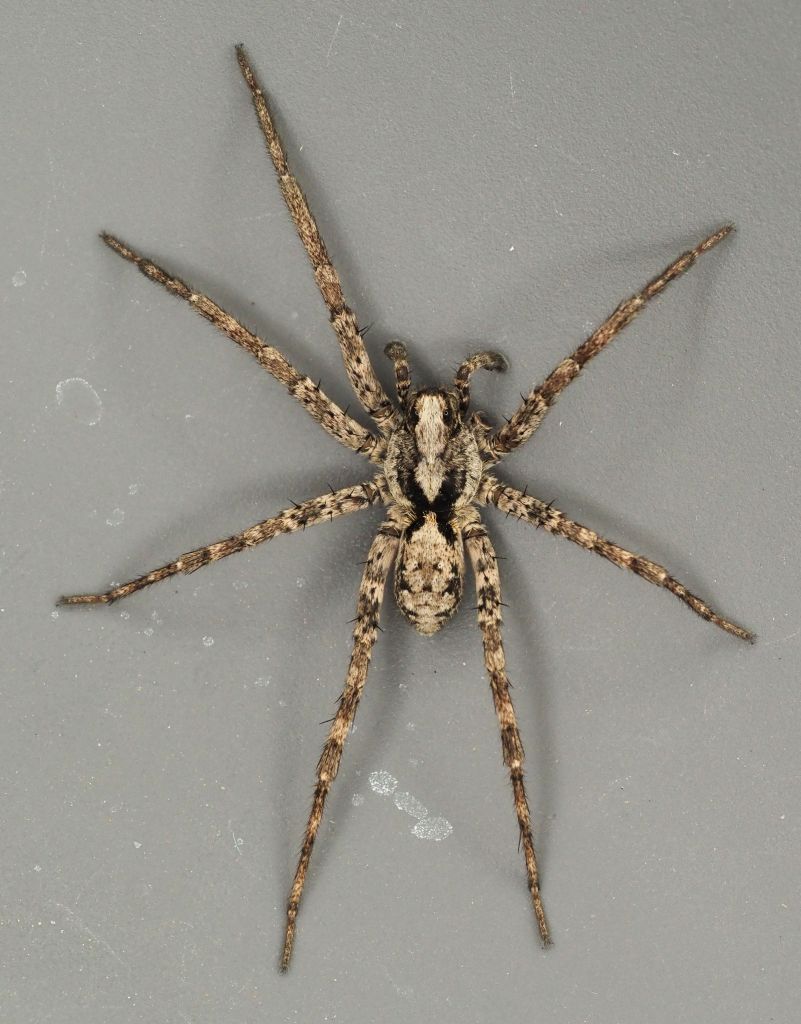
Finding wolf spiders during winter is a challenge since favorable temperatures are uncommon and often short lived. It’s a good time of year for me to concentrate on local species that need better photo coverage. One such species is Gladicosa pulchra, the contrary wolf spider that dwells in the treetops. They seem to be absent from the Blackland Prairie, and I’m only aware of them being at one location in each of Burleson and Milam Counties.
Female – dark
On December 25, I visited the Cedar Hill Nature Preserve, and on January 7 I visited Edwards Ranch. Spotlighting was the easiest way to find them. I quickly discovered they are more plentiful than I expected, and that December-January is the height of their mating season. I also found that while they live in the canopies of post oaks most of the time, they all follow the leaves down to the ground where they became a lot easier to catch for my photos of several adult females, some already gravid, and two adult males.
Male – light
Gladicosa pulchra was first described in 1877, spent time in several different genera, and was ultimately put into a new Gladicosa genus by Brady in 1987. Regarding the color, he wrote,
“The range of color in G. pulchra is greater than that of G. gulosa. I have noted light forms and dark forms of pulchra. These do not represent a genetic polymorphism but are the extremes in a color continuum. There is no discernible correlation between geographic locality and color pattern among the specimens examined. The darker forms are much more numerous than the light colored ones.”
With my recent observations, I believe I have a natural explanation for the two forms, and it’s most certainly genetic polymorphism though of the sexual dimorphism variety. A little field work certainly paid off. True to the last sentence, I saw more dark females than pale males which is typical of most species since males don’t live as long as females as adults. Females may even delay egg production while waiting for better conditions.
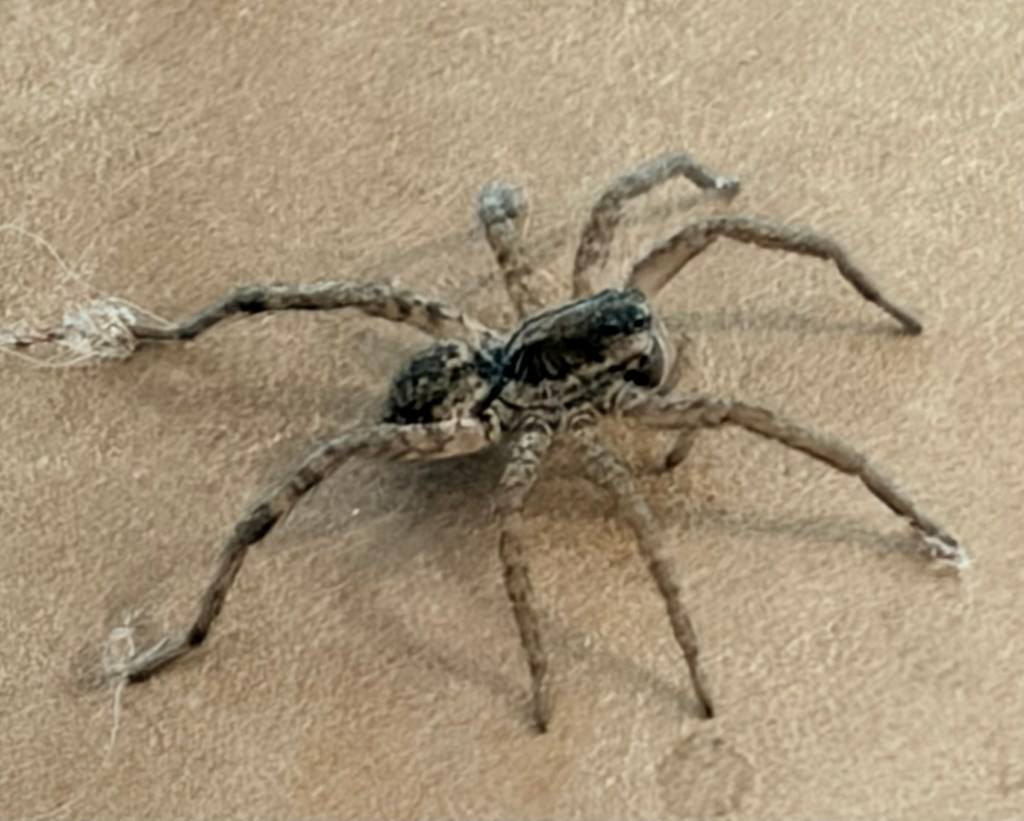
Addendum: Coincidentally, as I was getting this blog ready to upload, I looked over and there was a Hogna antelucana watching me. I took this friend outside to a warm spot — Sue Ann Kendall
My phone doesn’t take as clear photos as Eric’s camera and lighting.
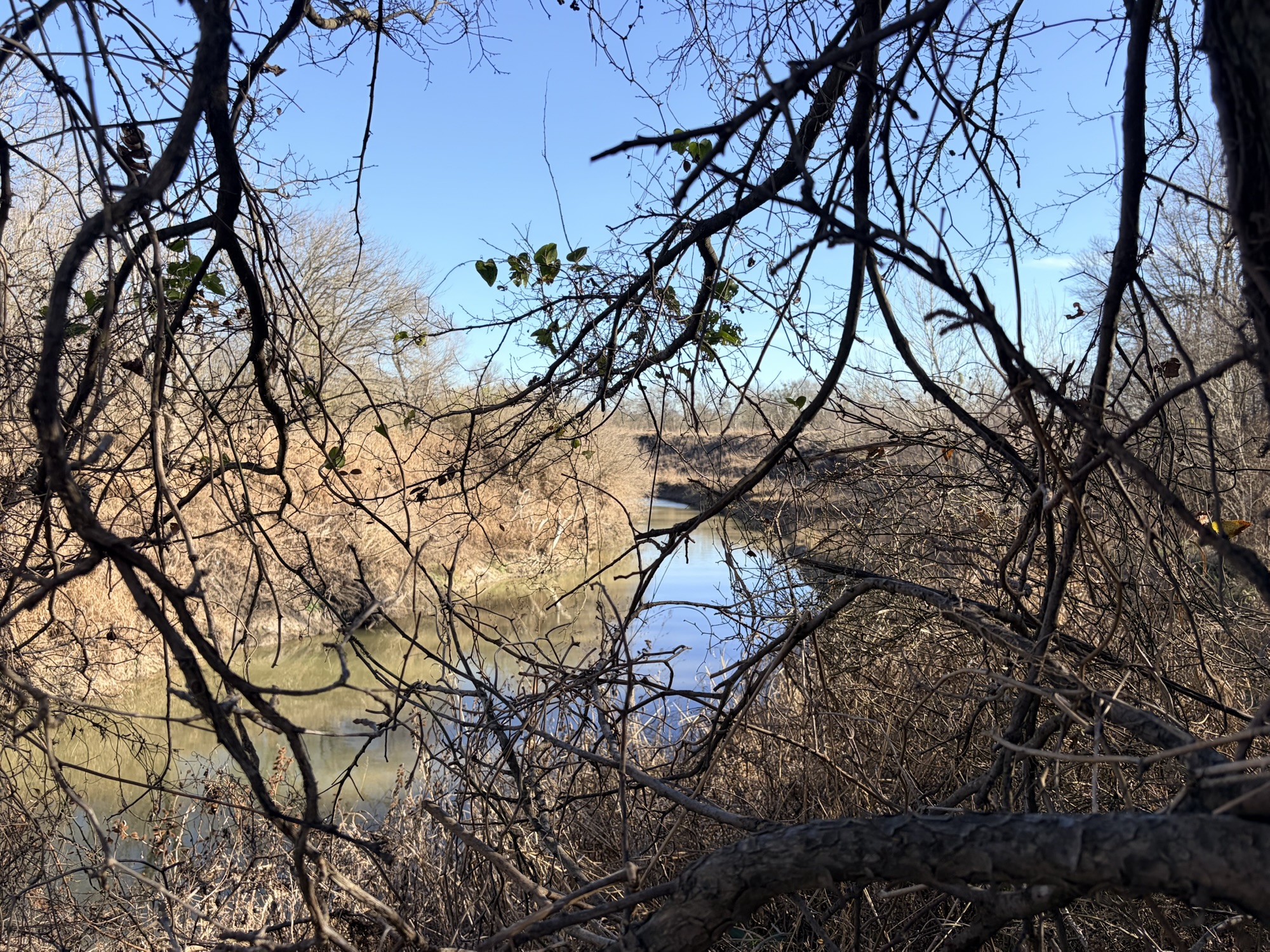
It turns out, the answer is yes, though I am sure many of you already know that. I went on a great adventure on Friday with my fellow Master Naturalist to see for ourselves. We escaped to the wilderness known as her property outside of Cameron and searched for a rumored beaver dam on the spring-fed creek that runs through the land. It was a beautiful warm day for exploring. (Note that I am not providing the exact location to maintain the beavers’ and property owner’s privacy.)
Proof that it was a beautiful day in Milam County
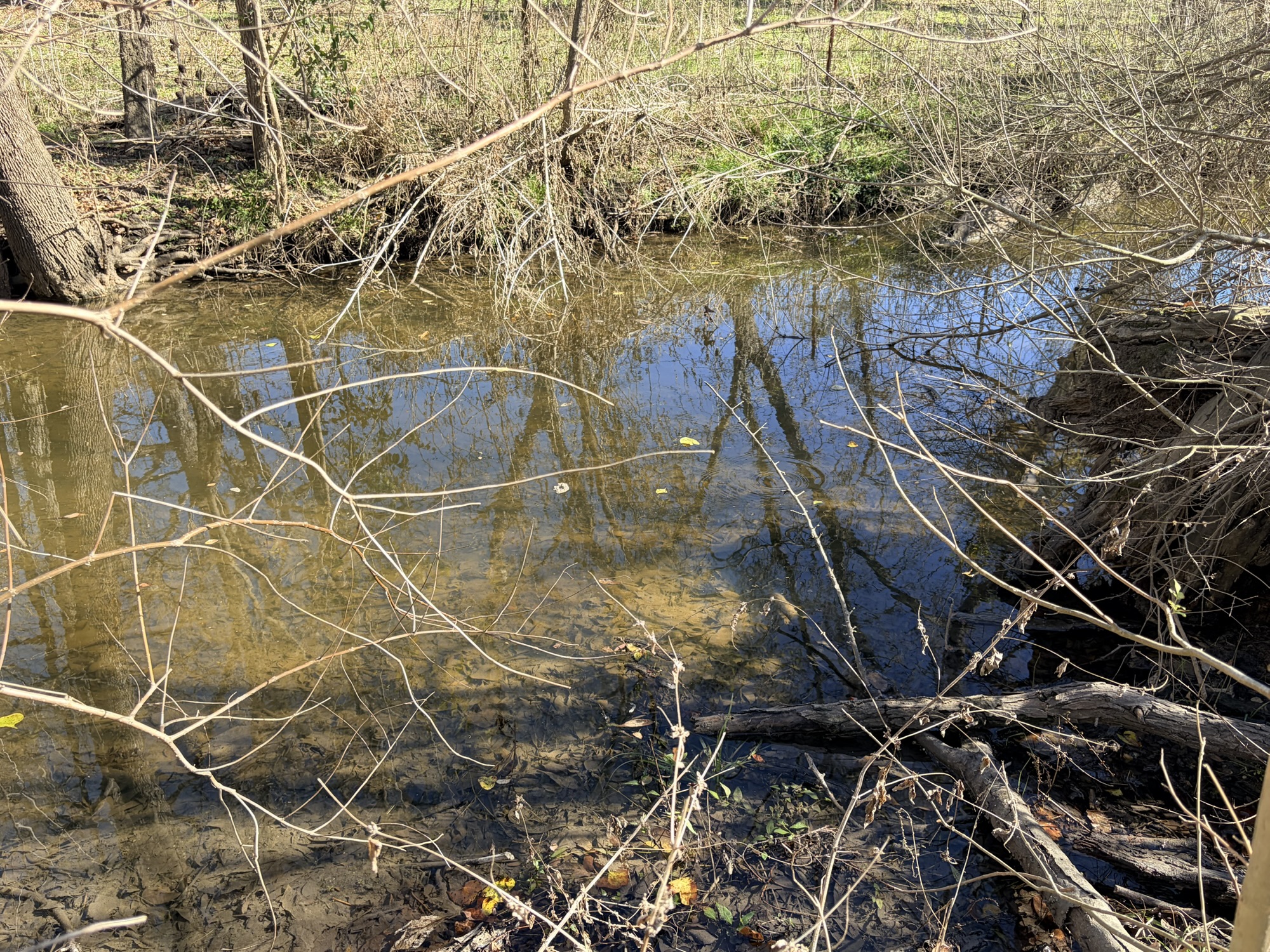
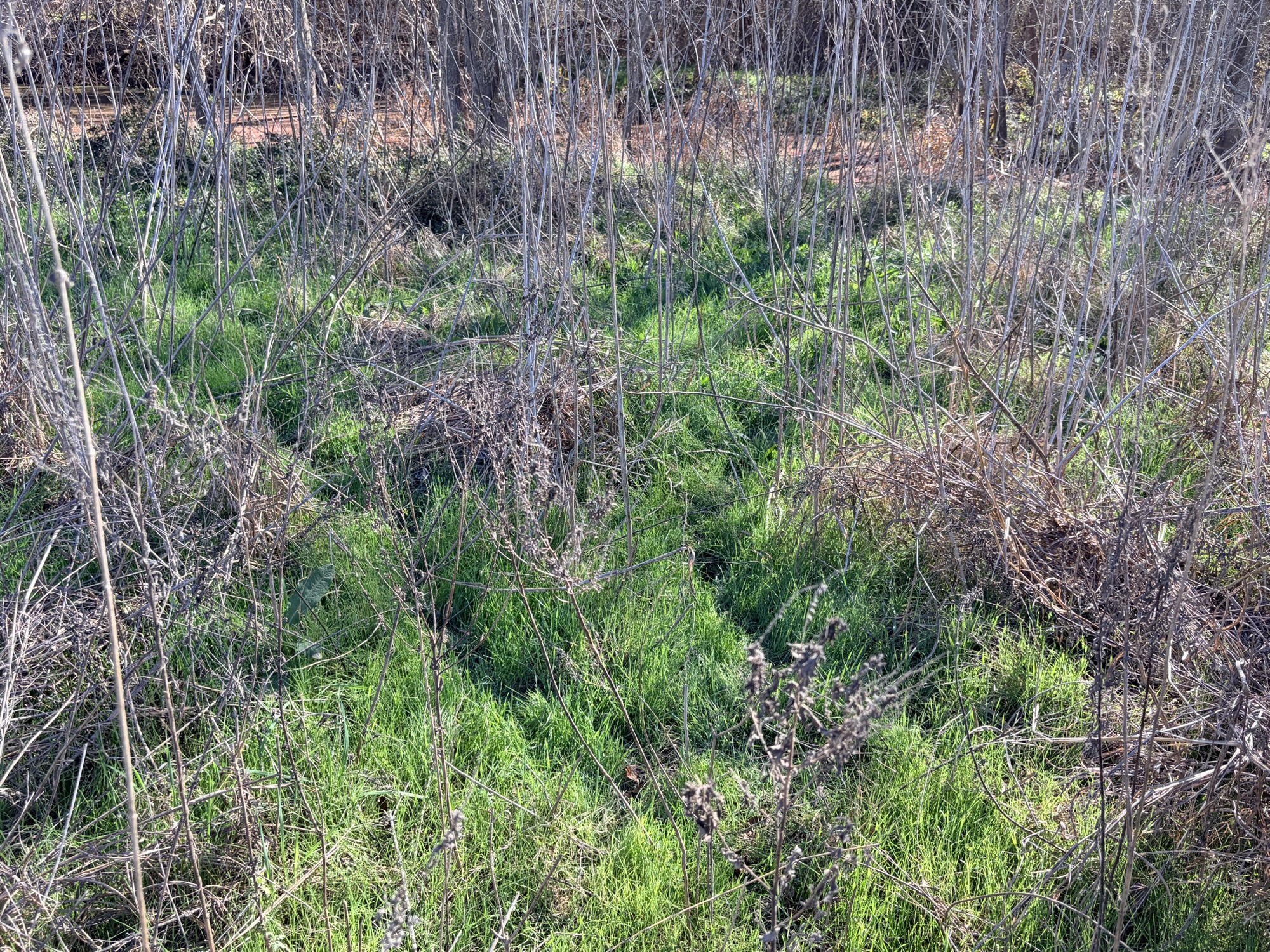
We got into the truck and took off for the spring-fed creek that runs from the property to Big Elm Creek. At first we looked in the wrong place and got attacked by much greenbrier and dewberry vines that tried very hard to trip us (I later determined that I got a tick on my head – darn nature). I did determine that the water was not out of its banks and was very clean.
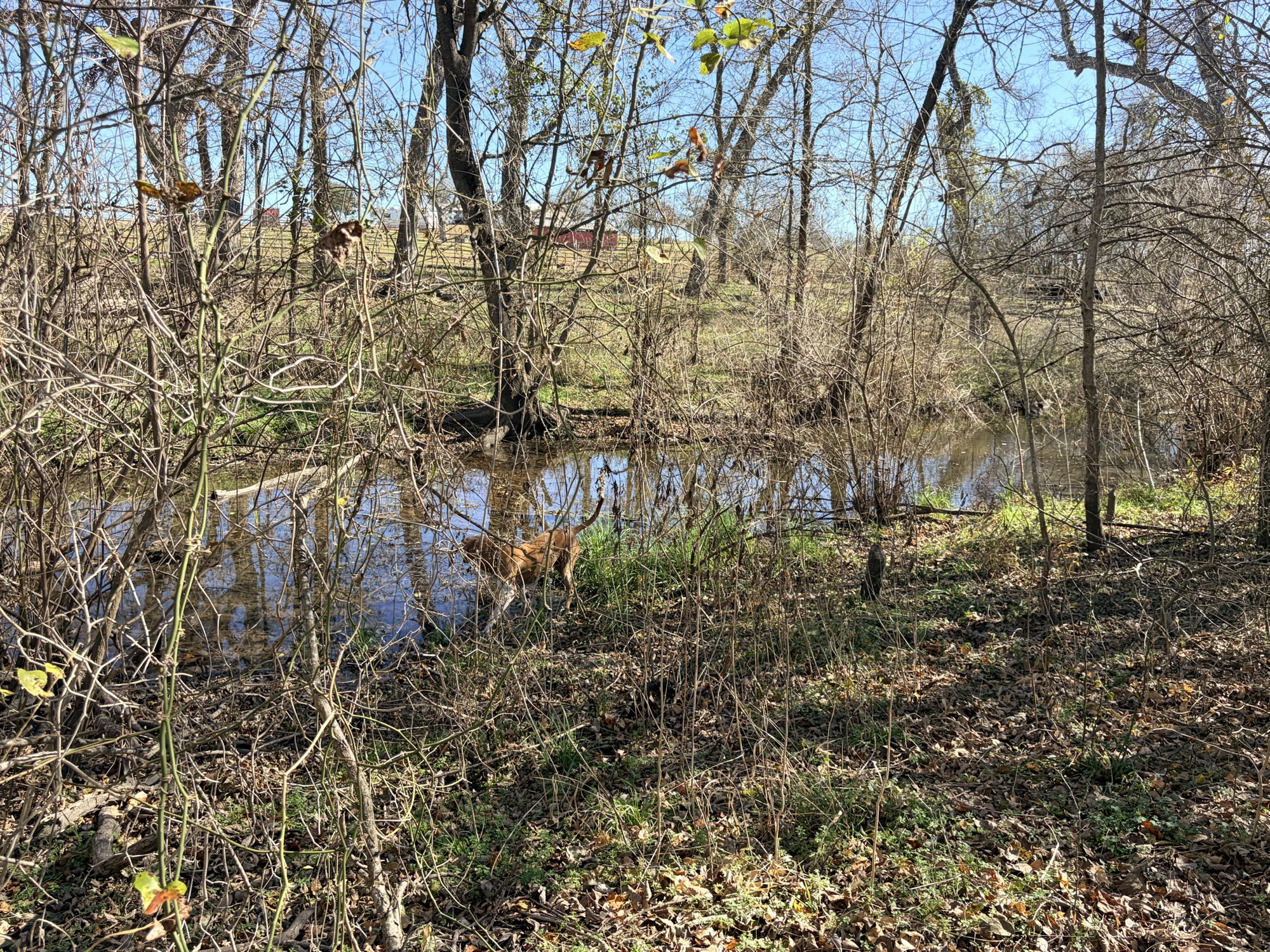
creek not floodedmany sticky plants in here, mainly Smilax bona nox and dewberrt
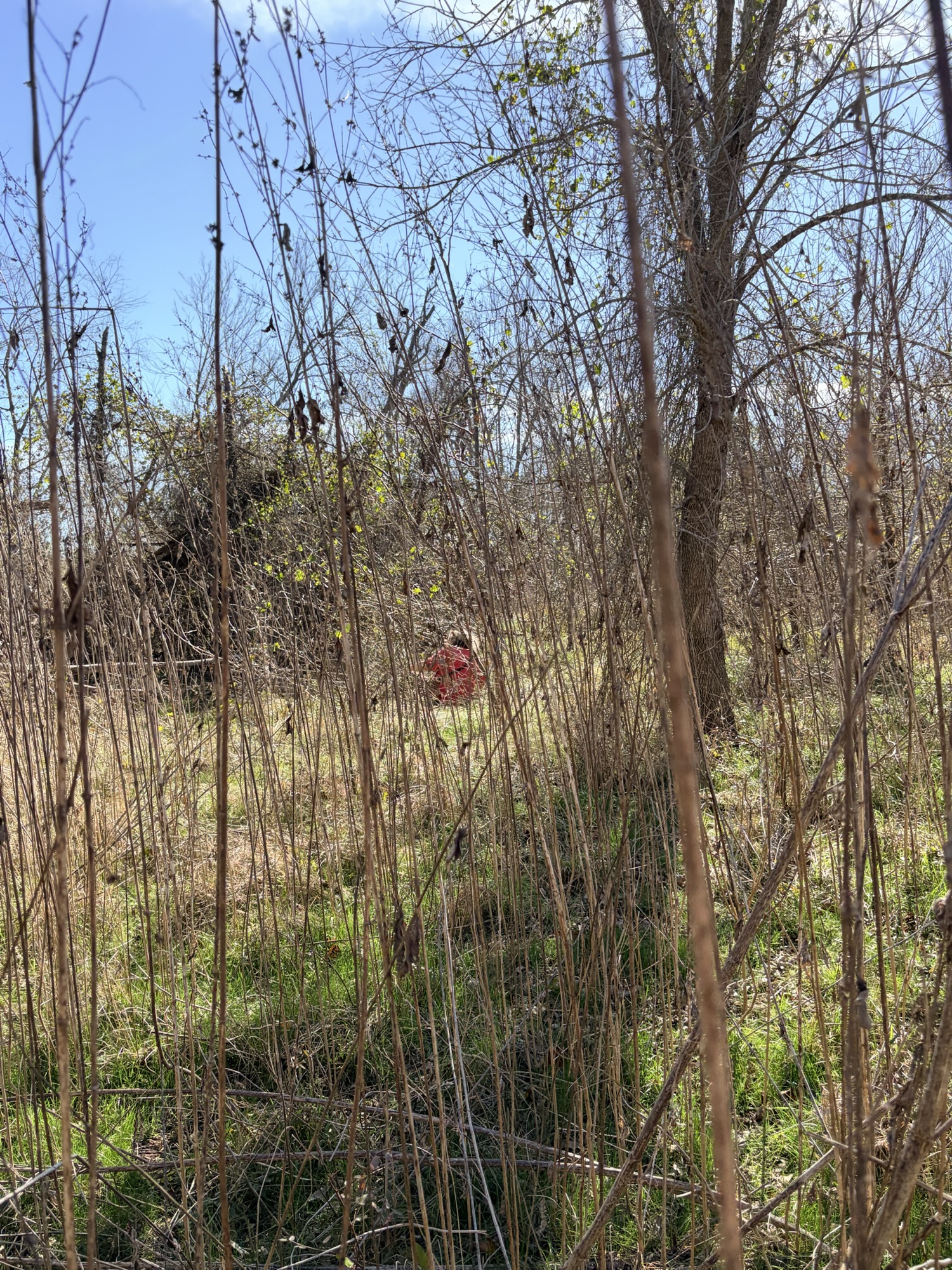
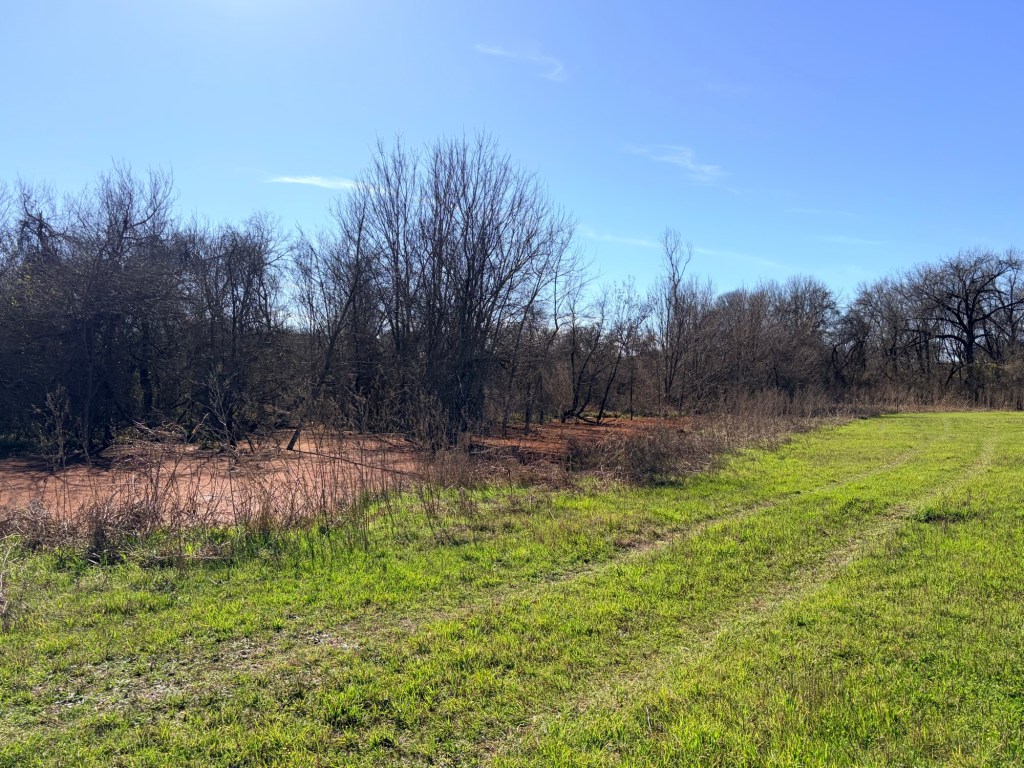
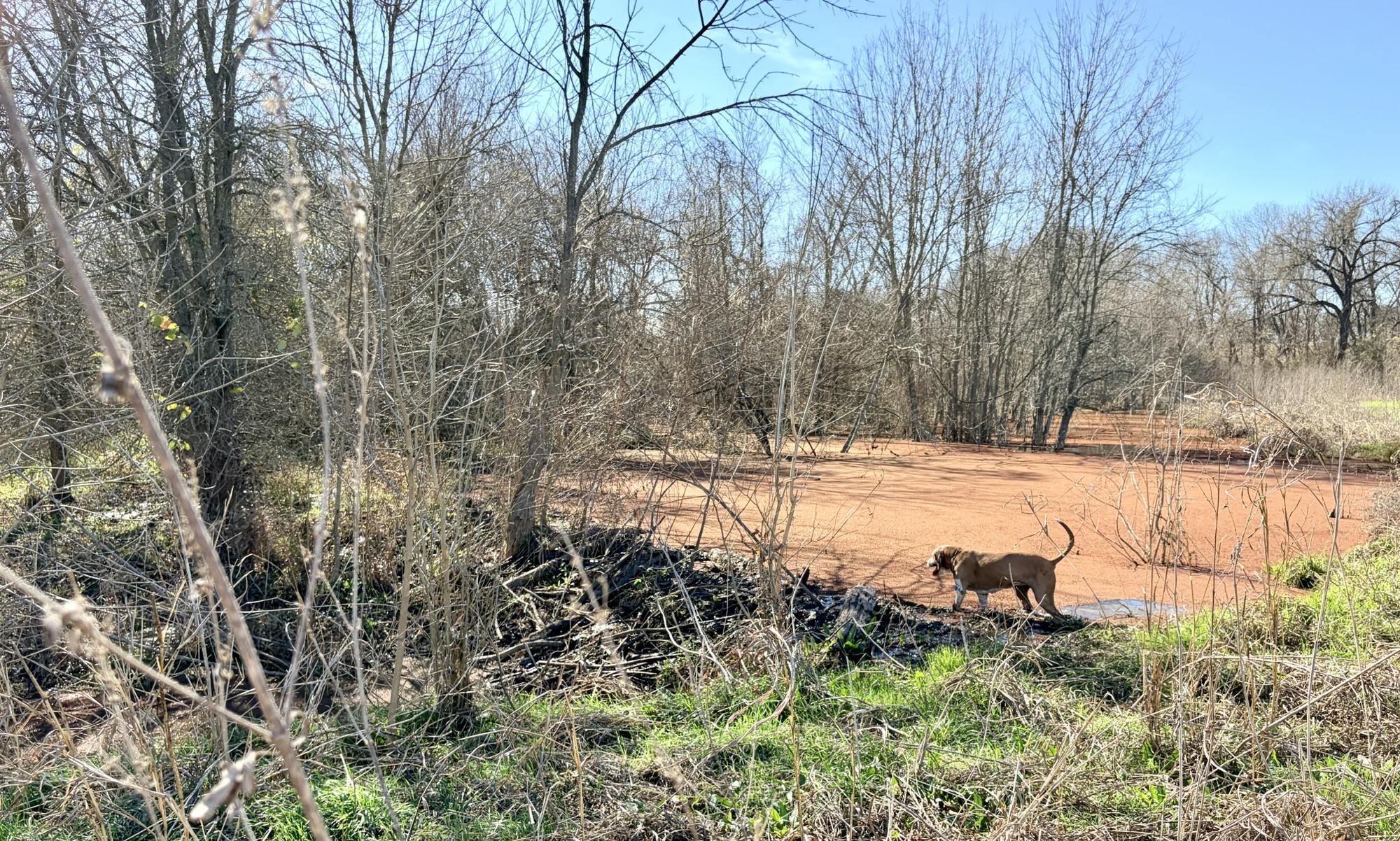
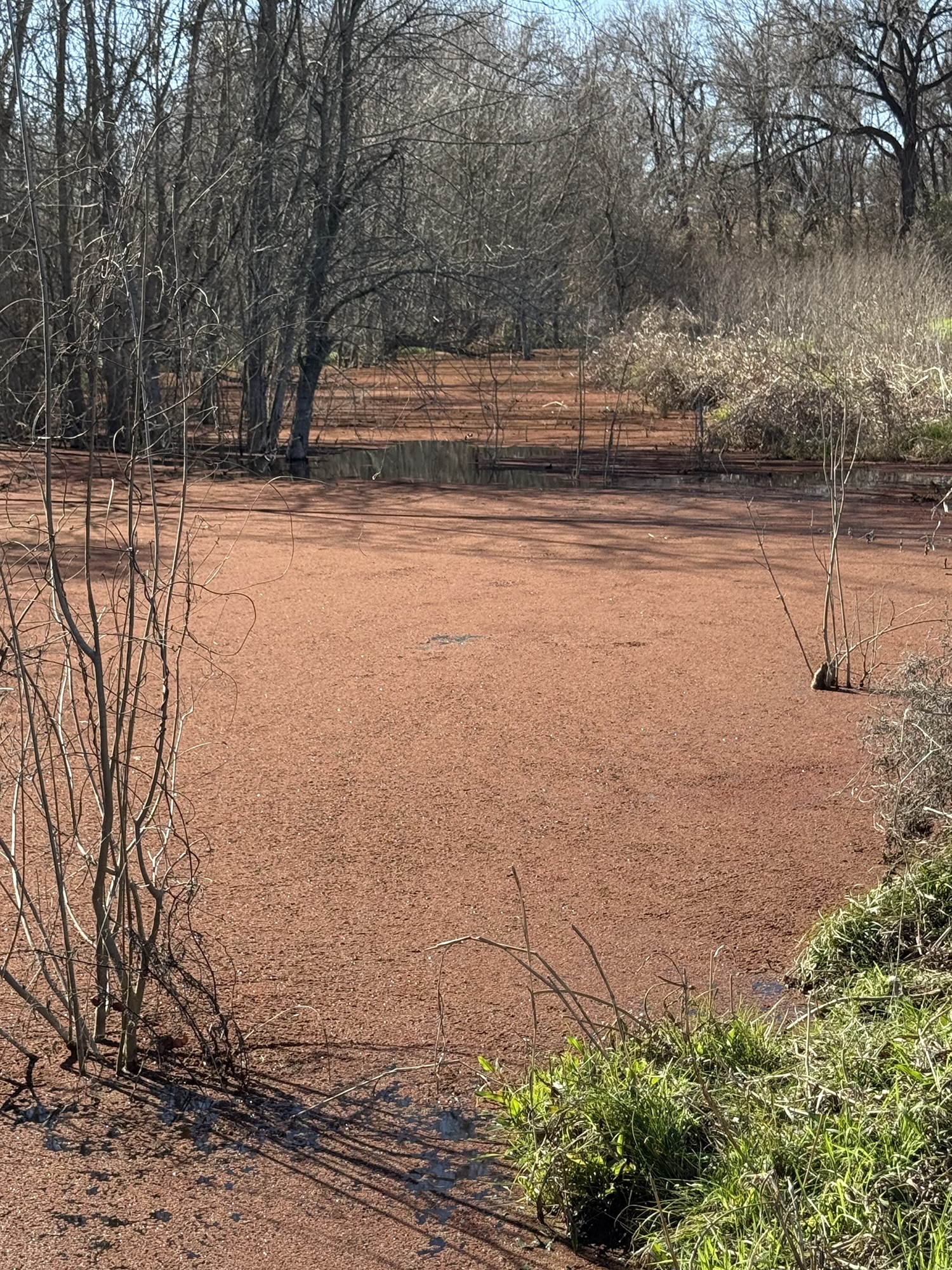
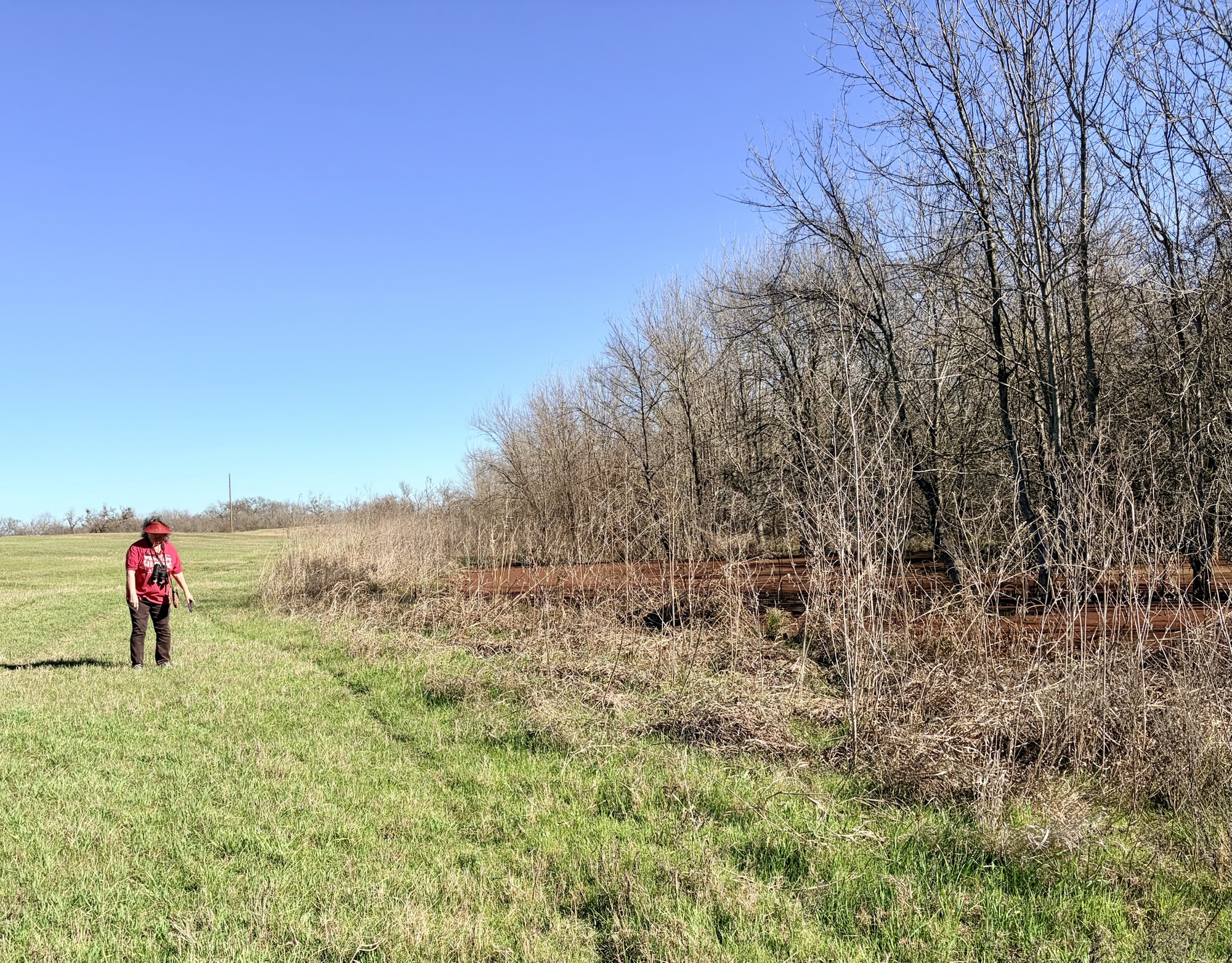
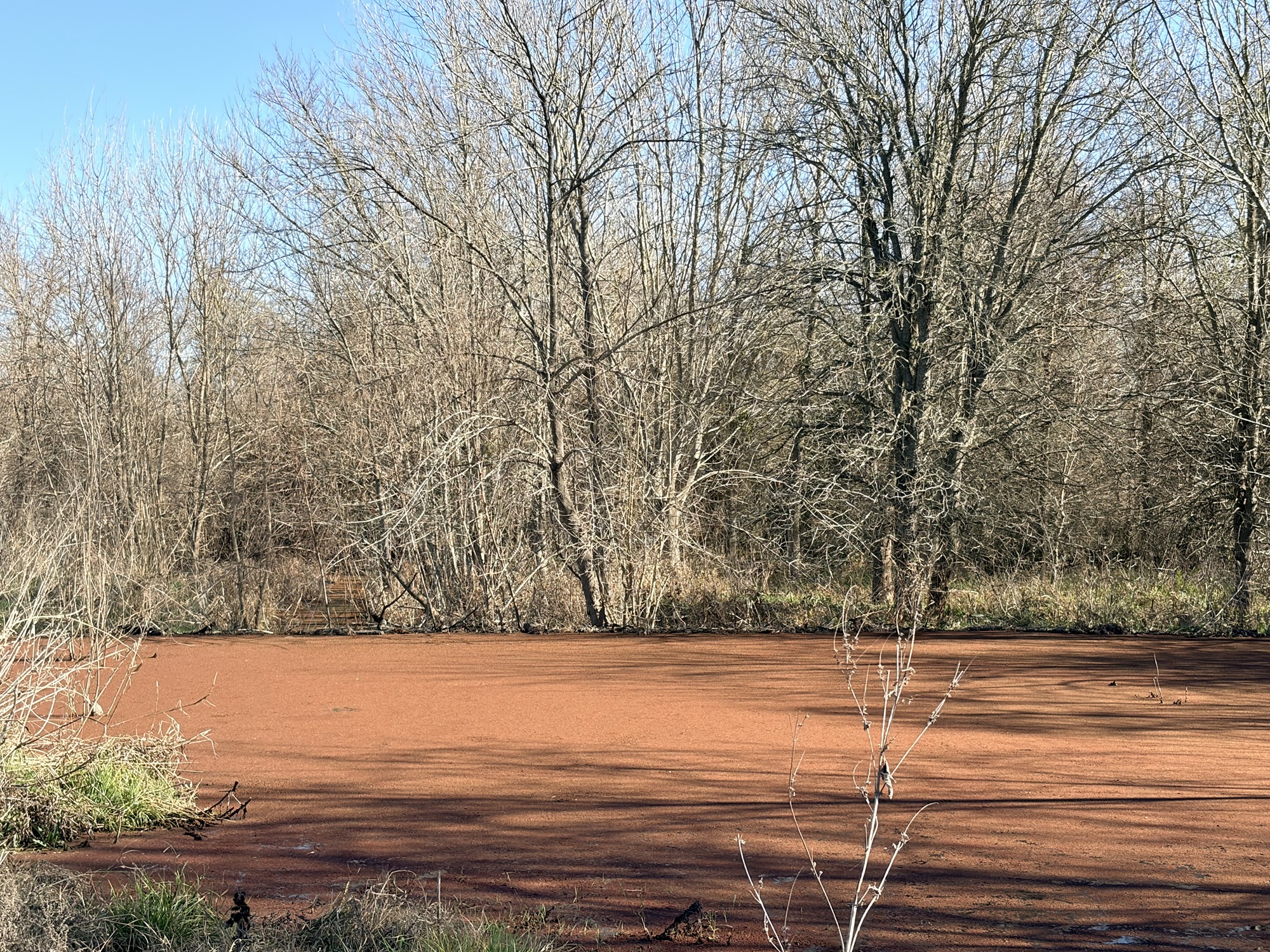
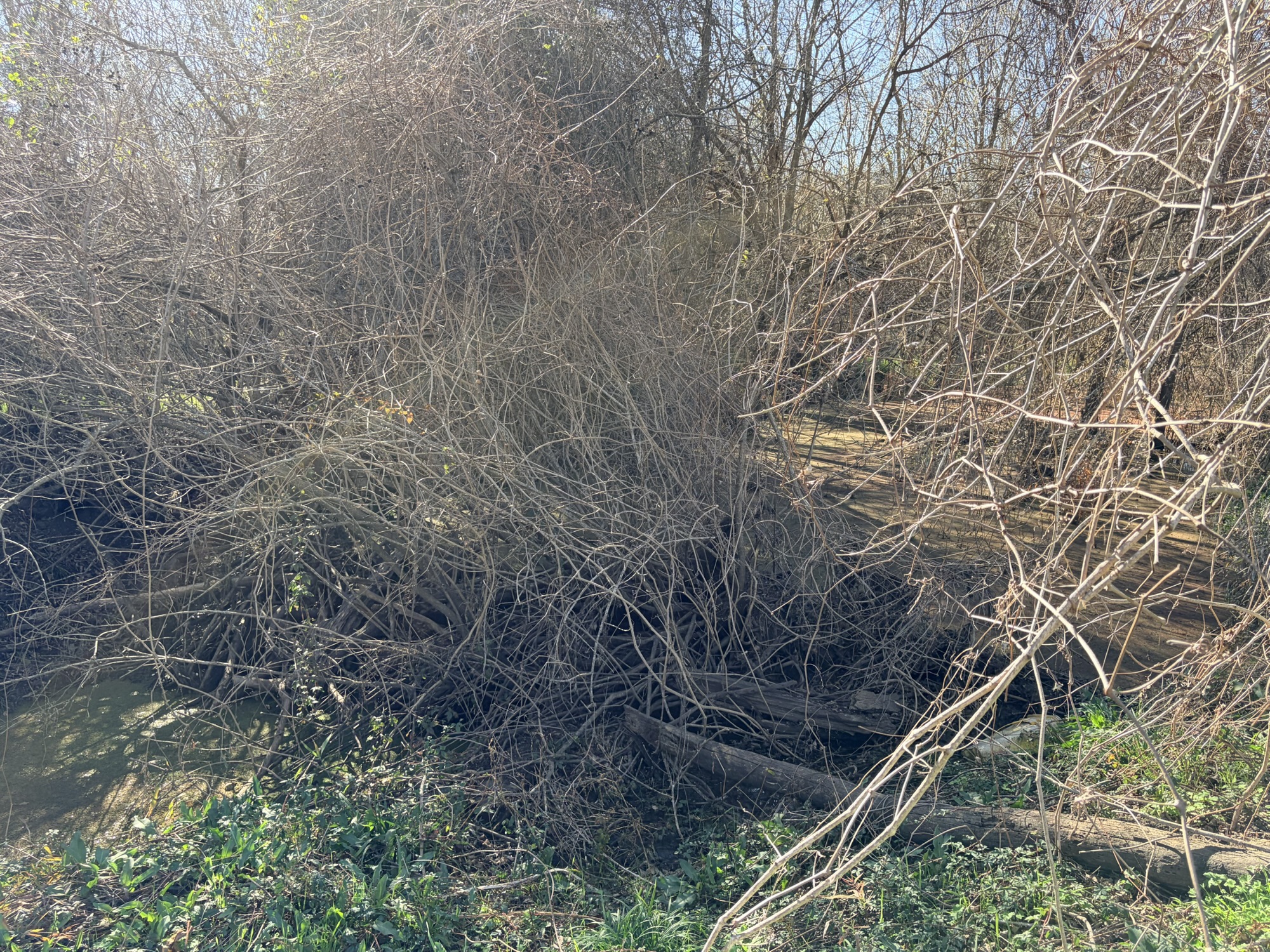
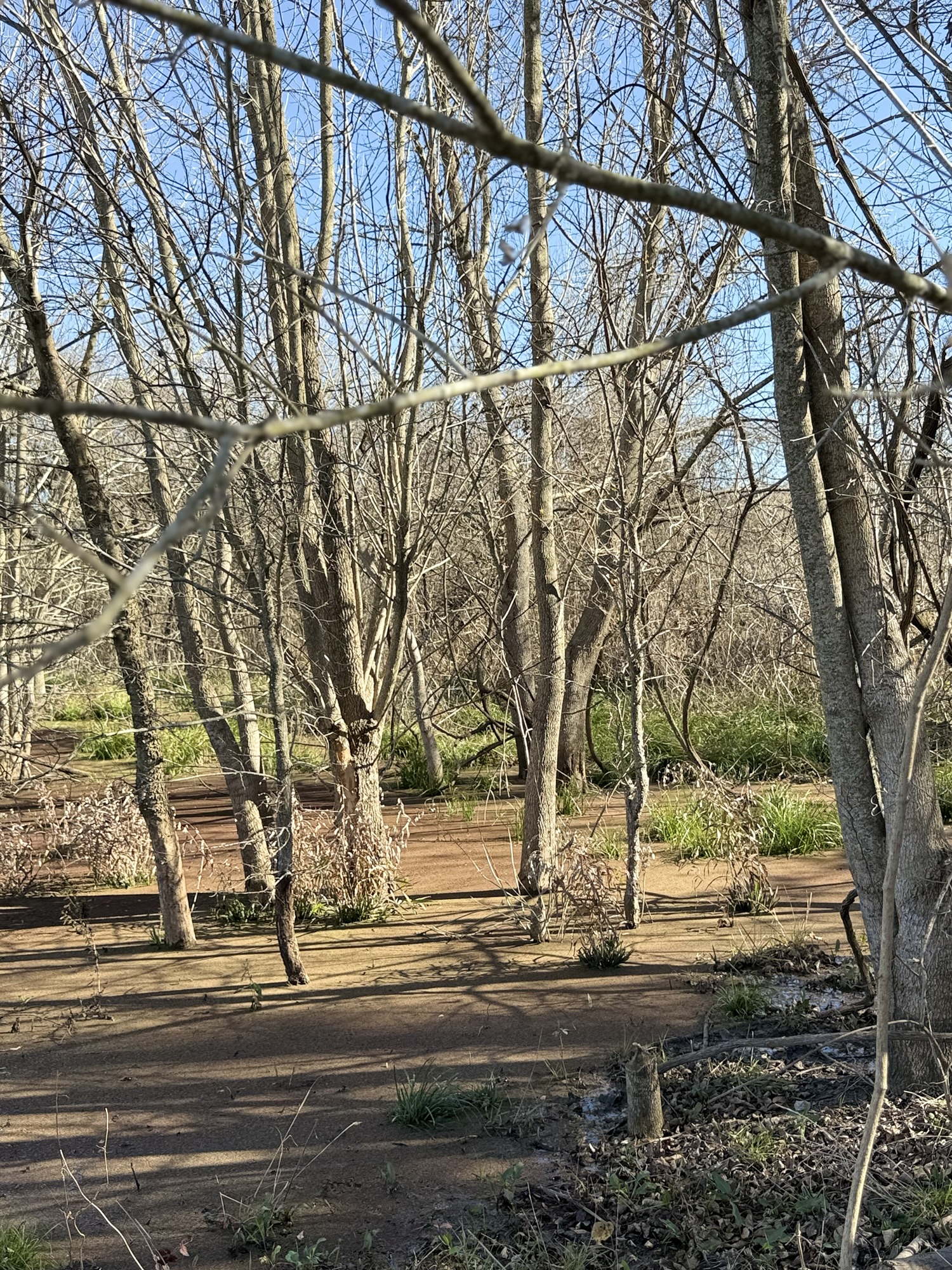
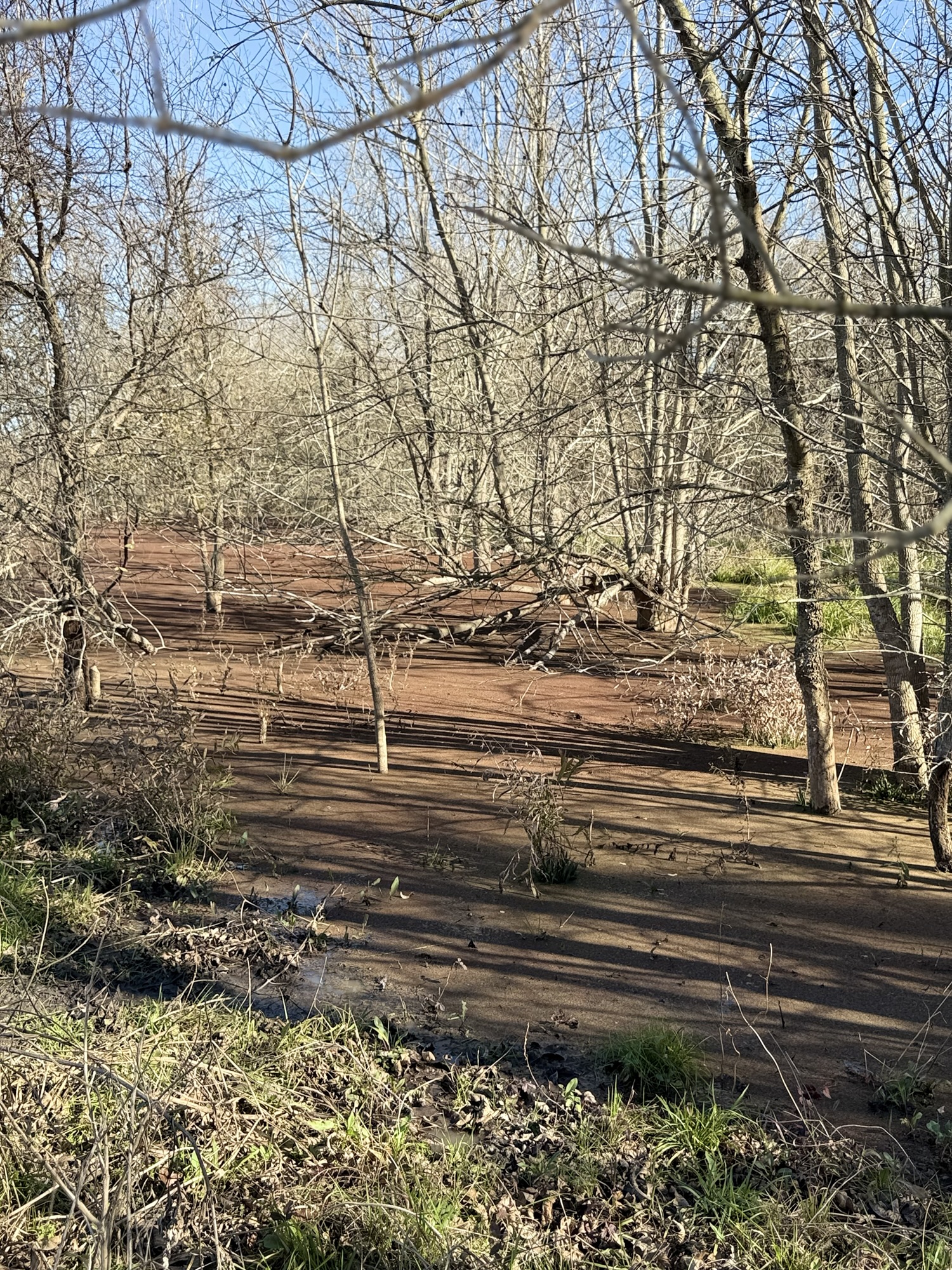
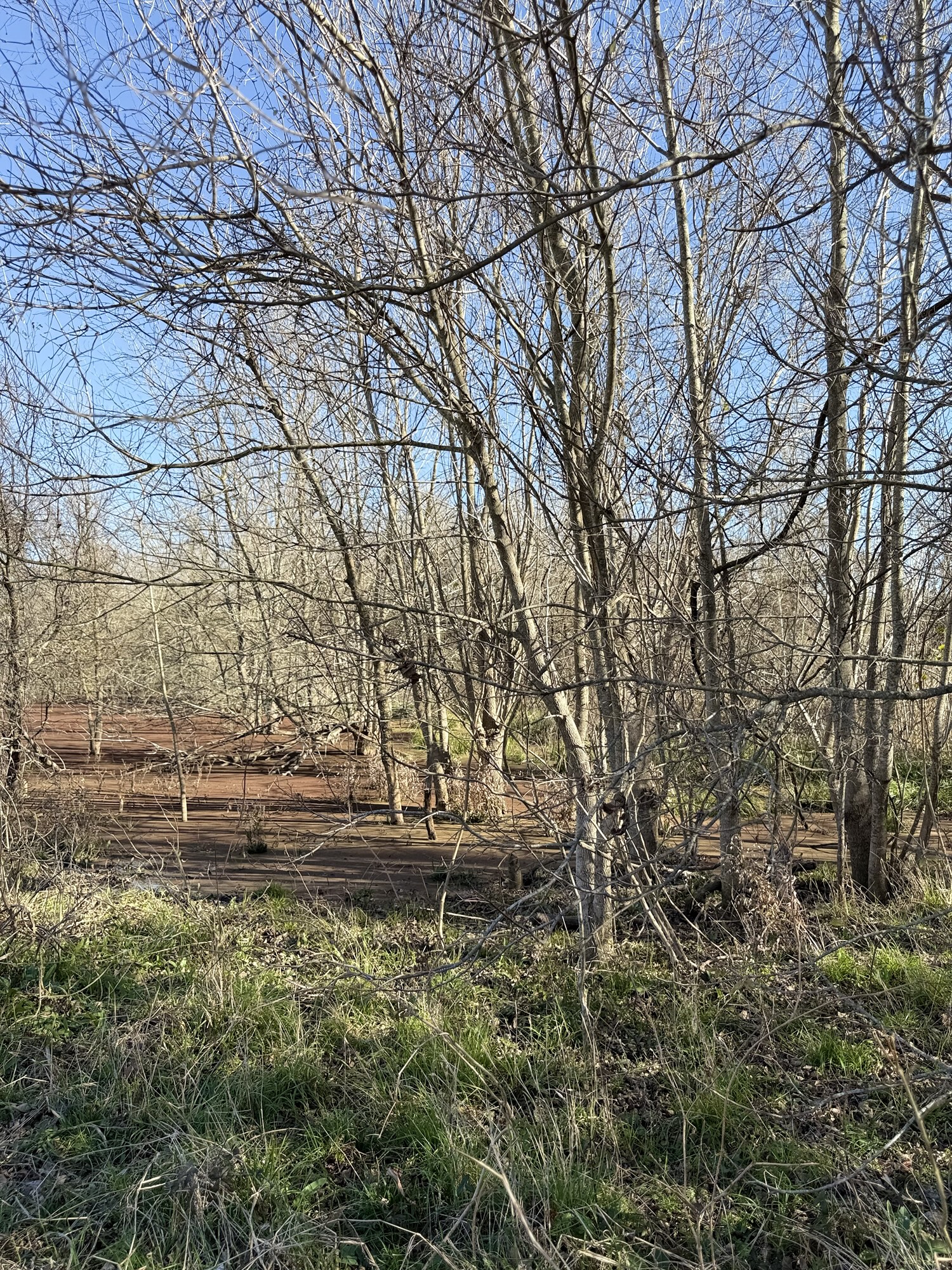
My friend called the folks who’d been on the property monitoring their deer lease or something, and they redirected us upstream. There we found what appeared to be weird flat areas with brown vegetation.
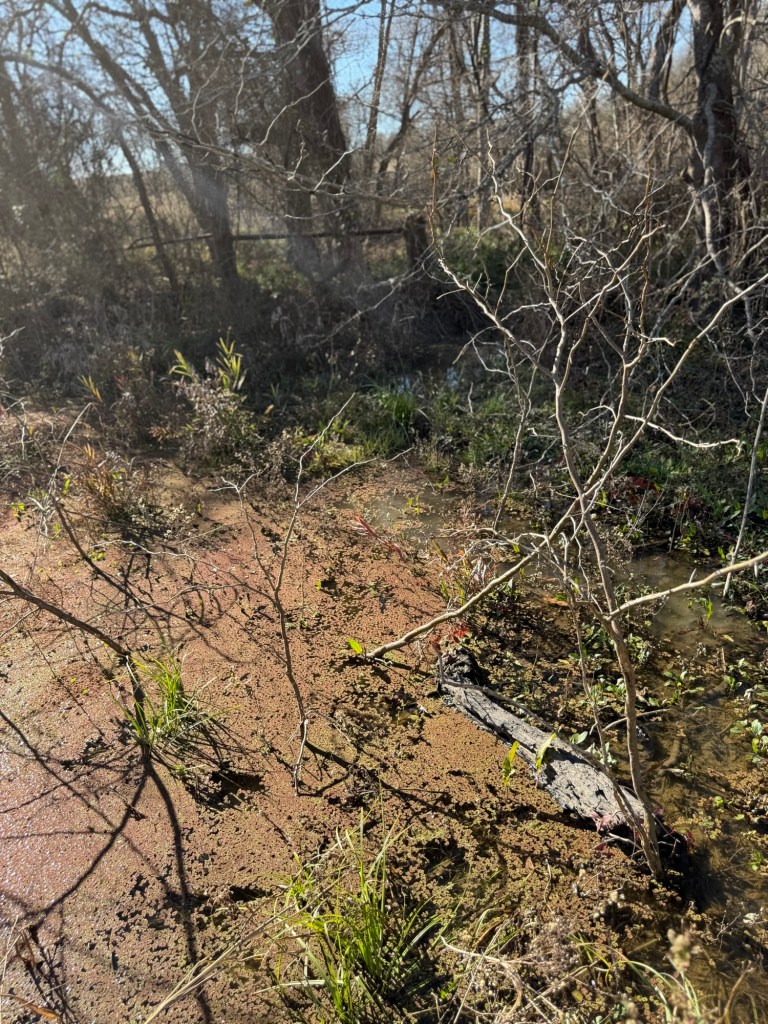
looks like a brown patch of dirt
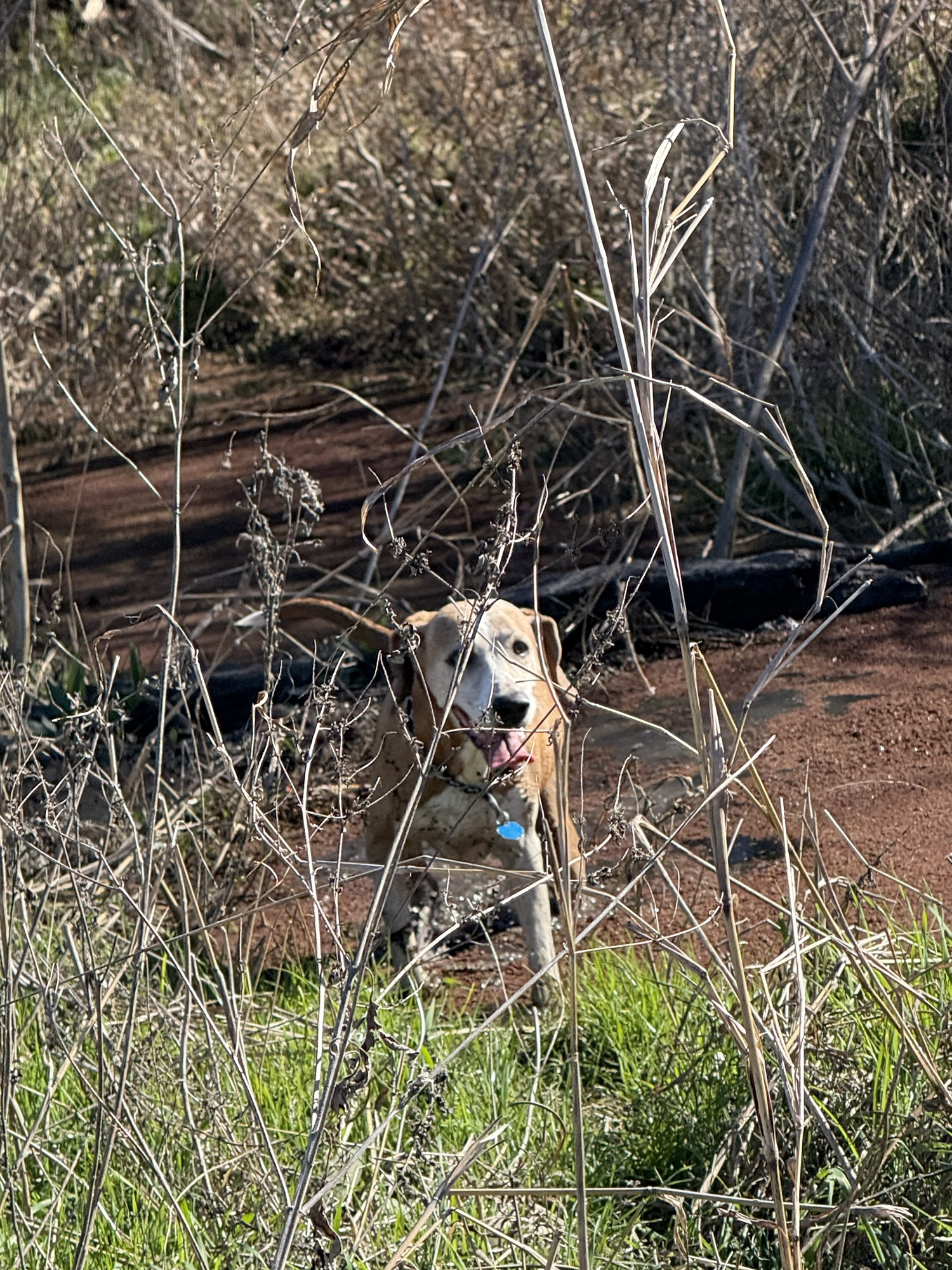
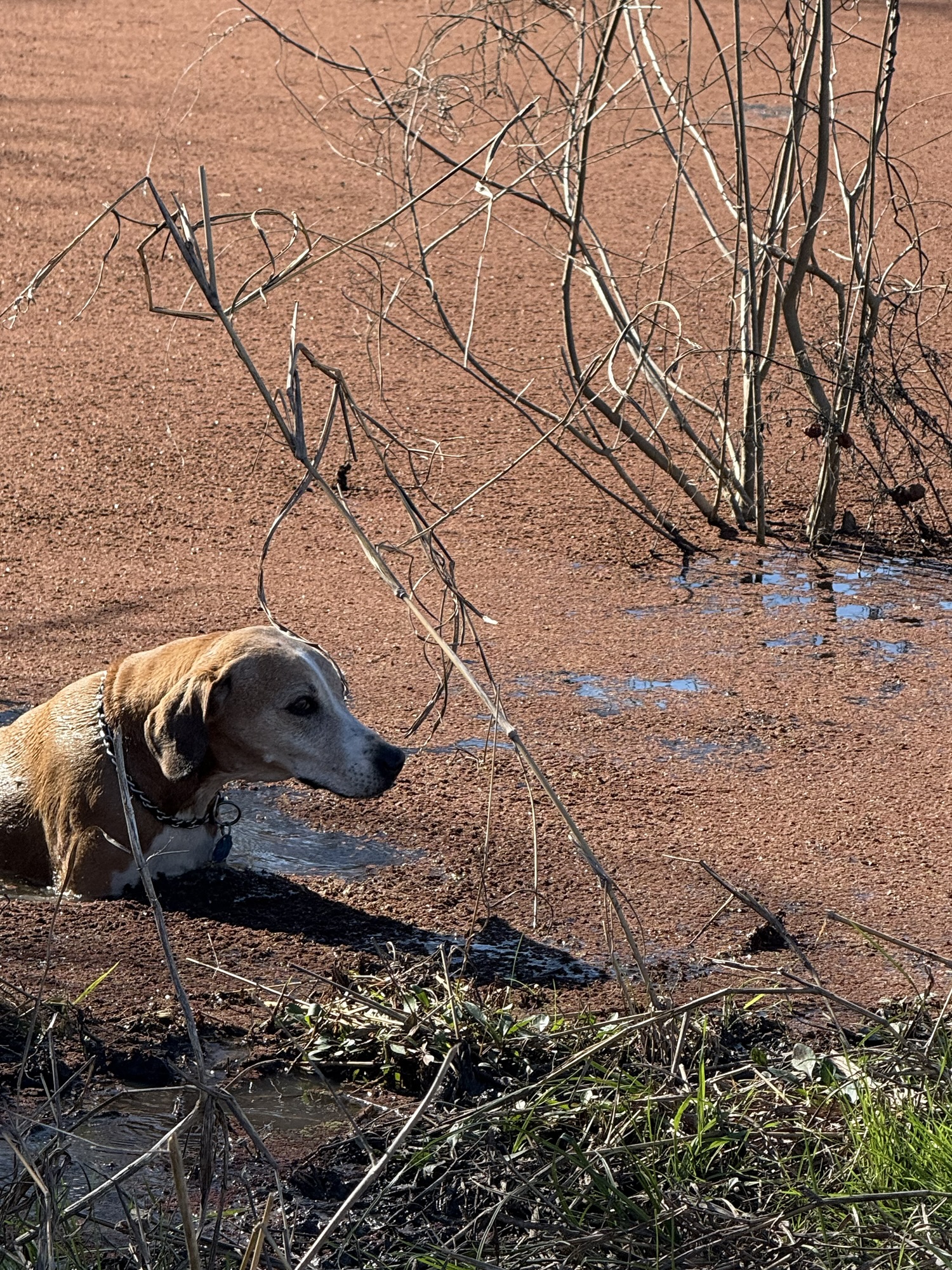
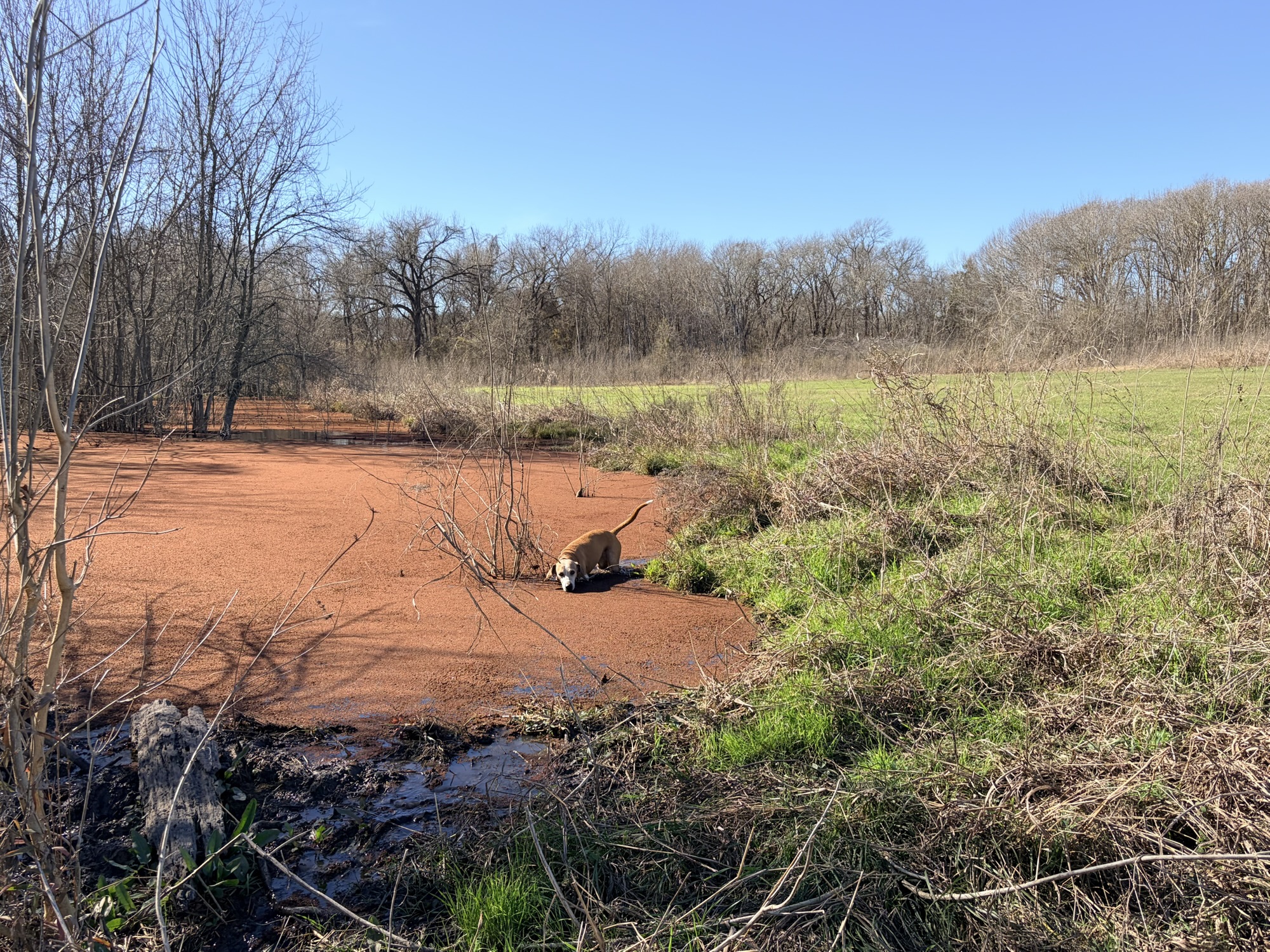
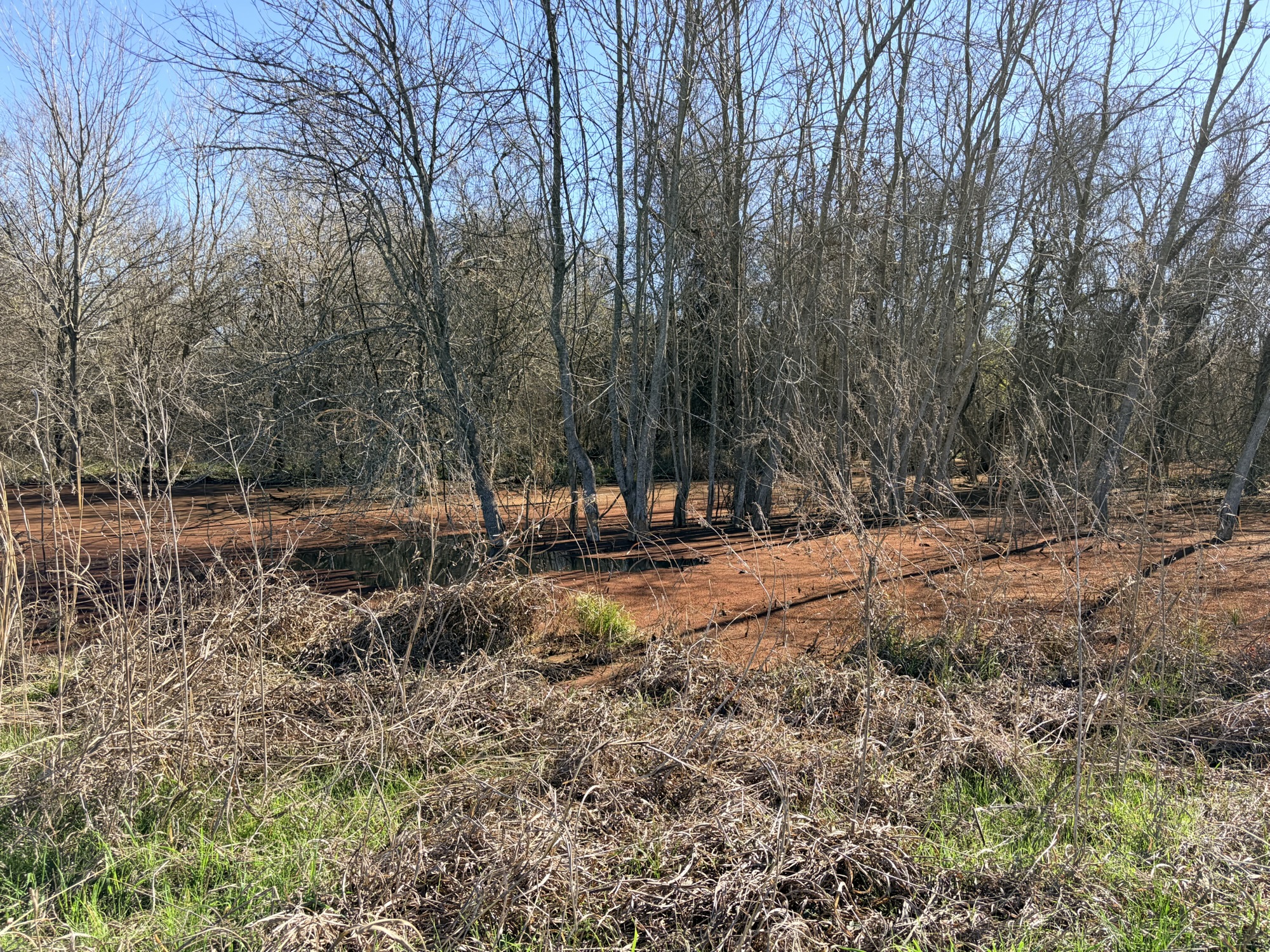
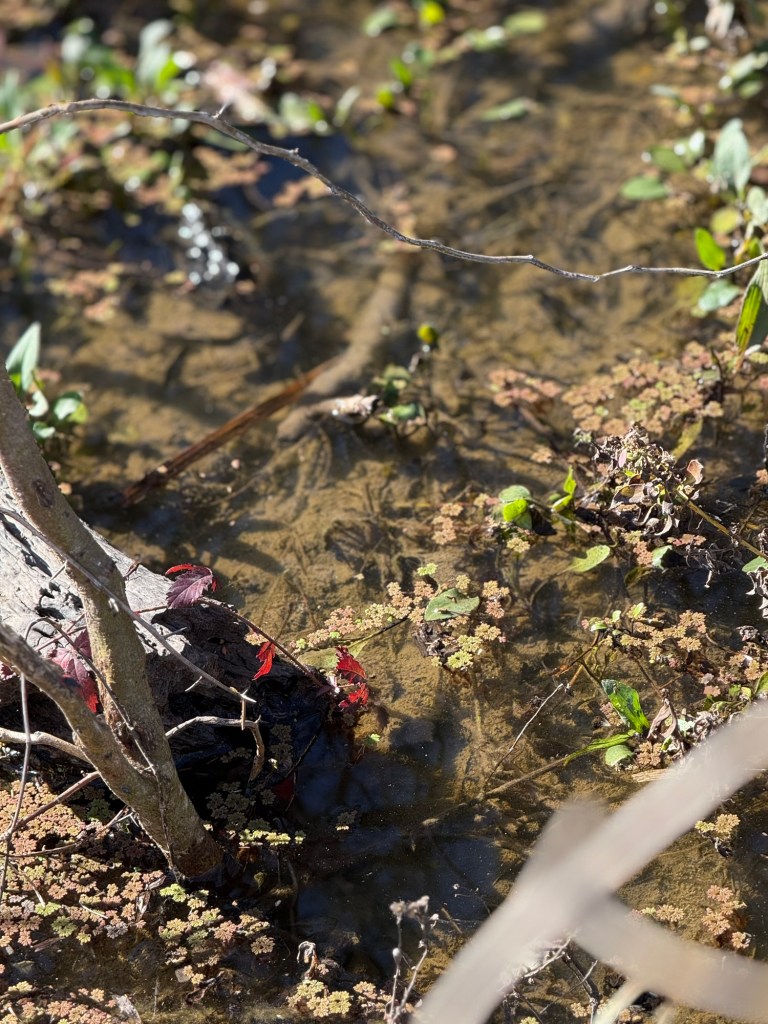
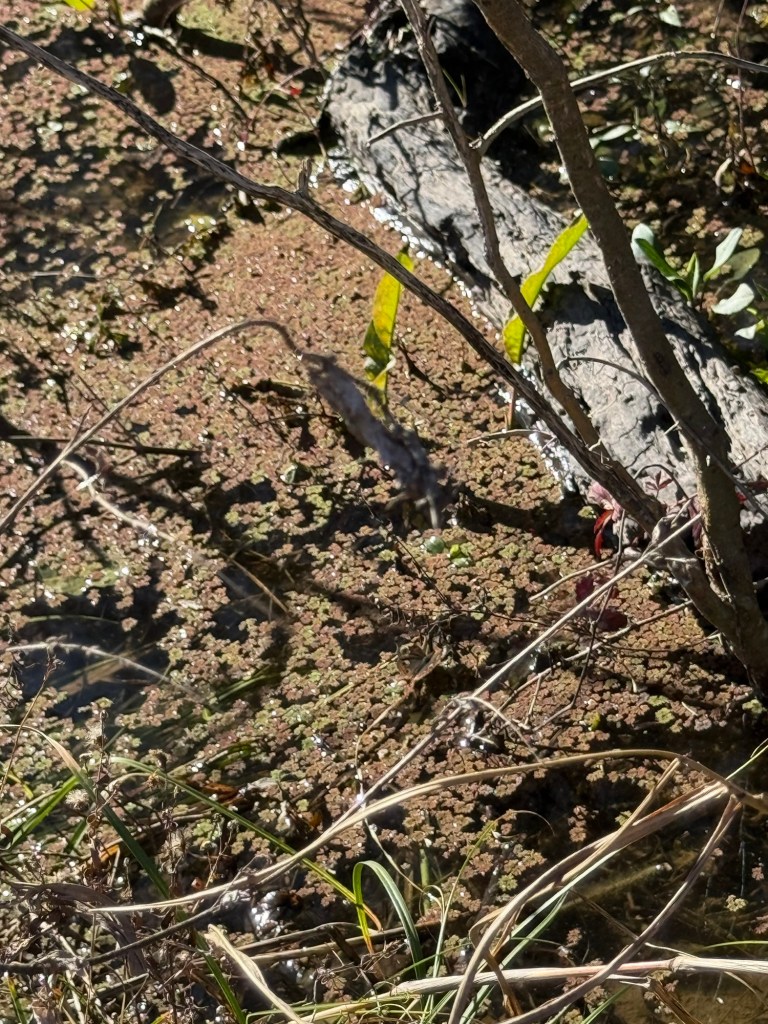
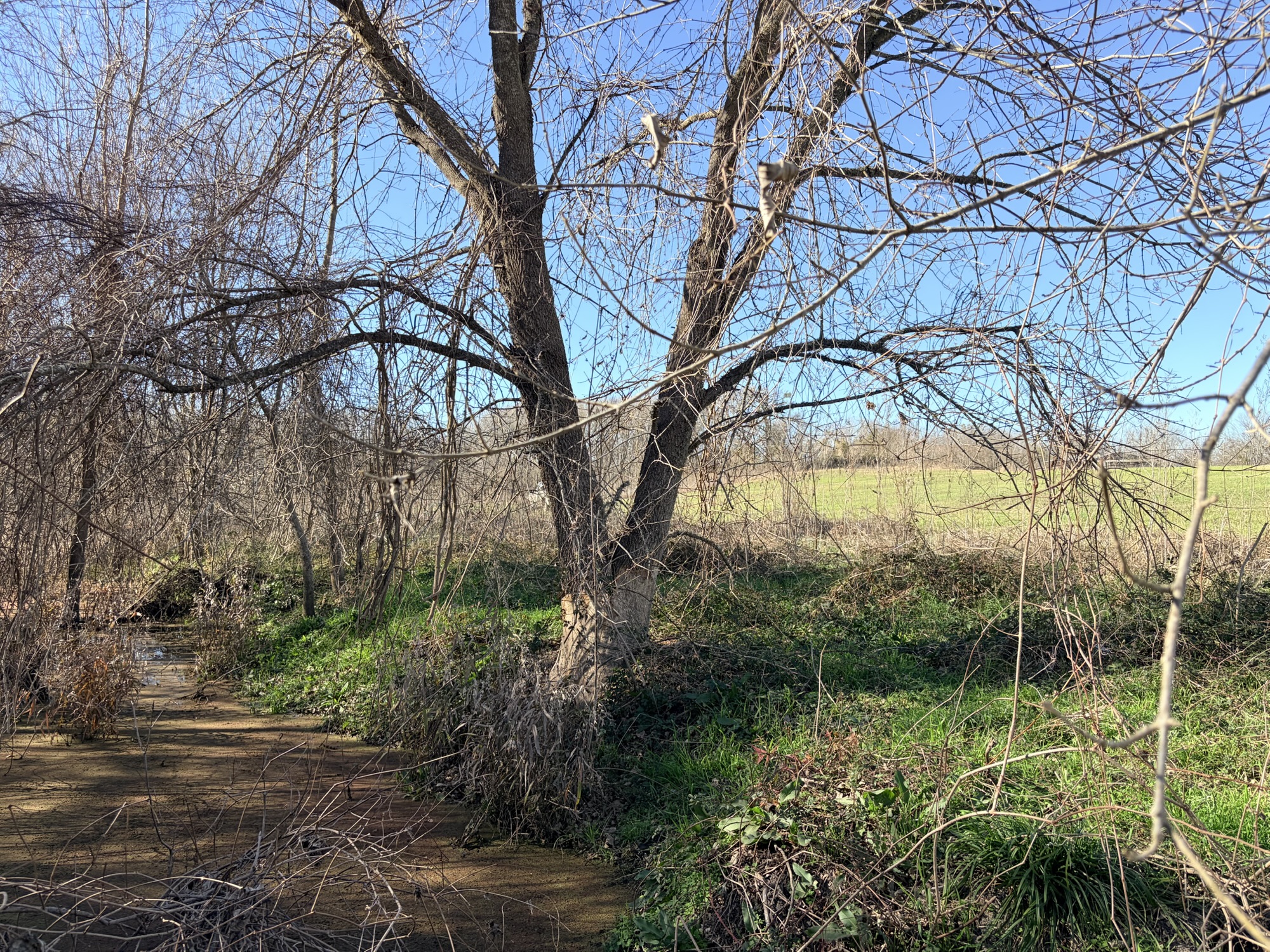
The brown stuff was actually duckweed on a big ole beaver pond! To say I was excited would be an understatement. The dog was also excited and immediately went swimming.
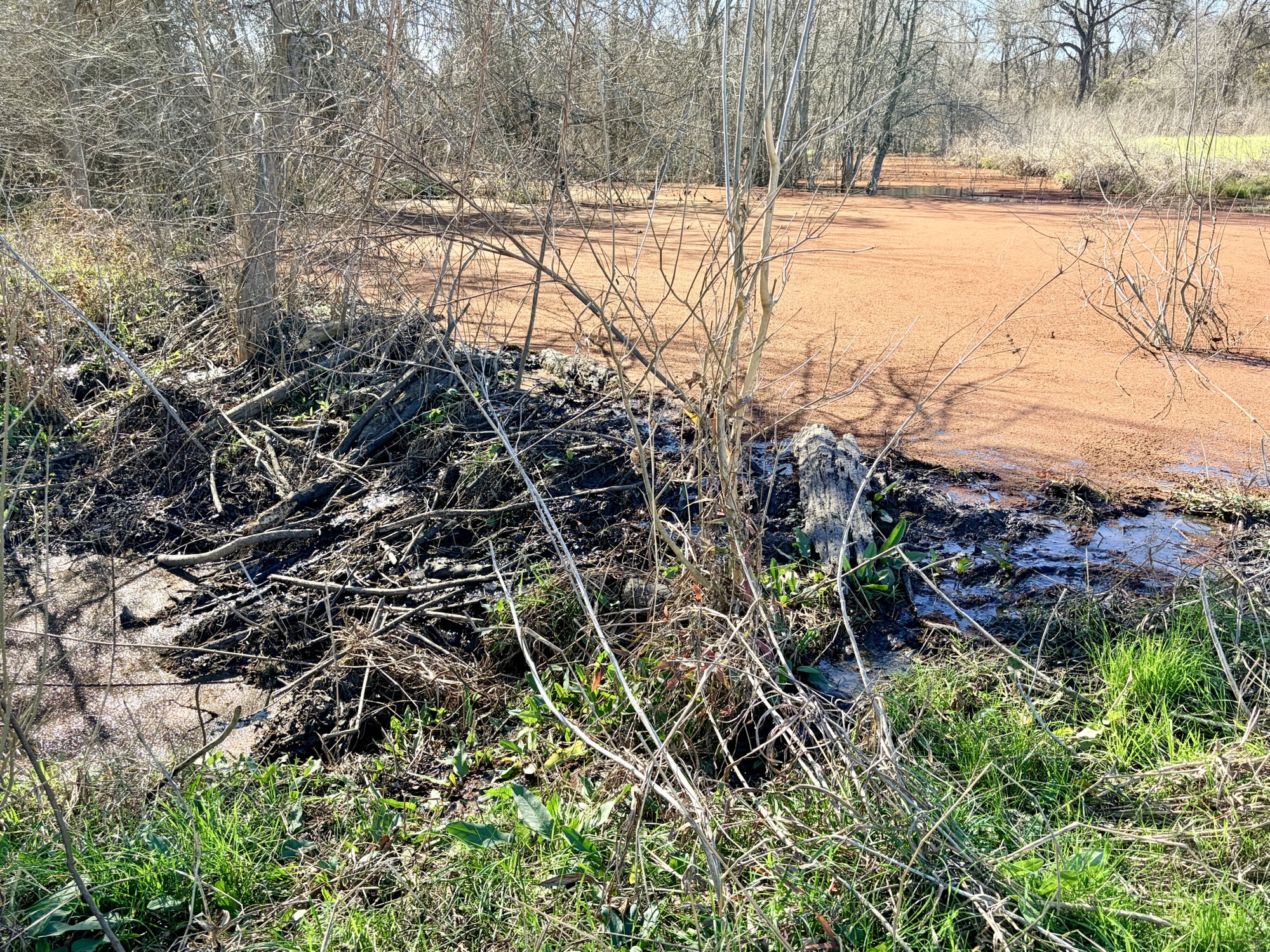
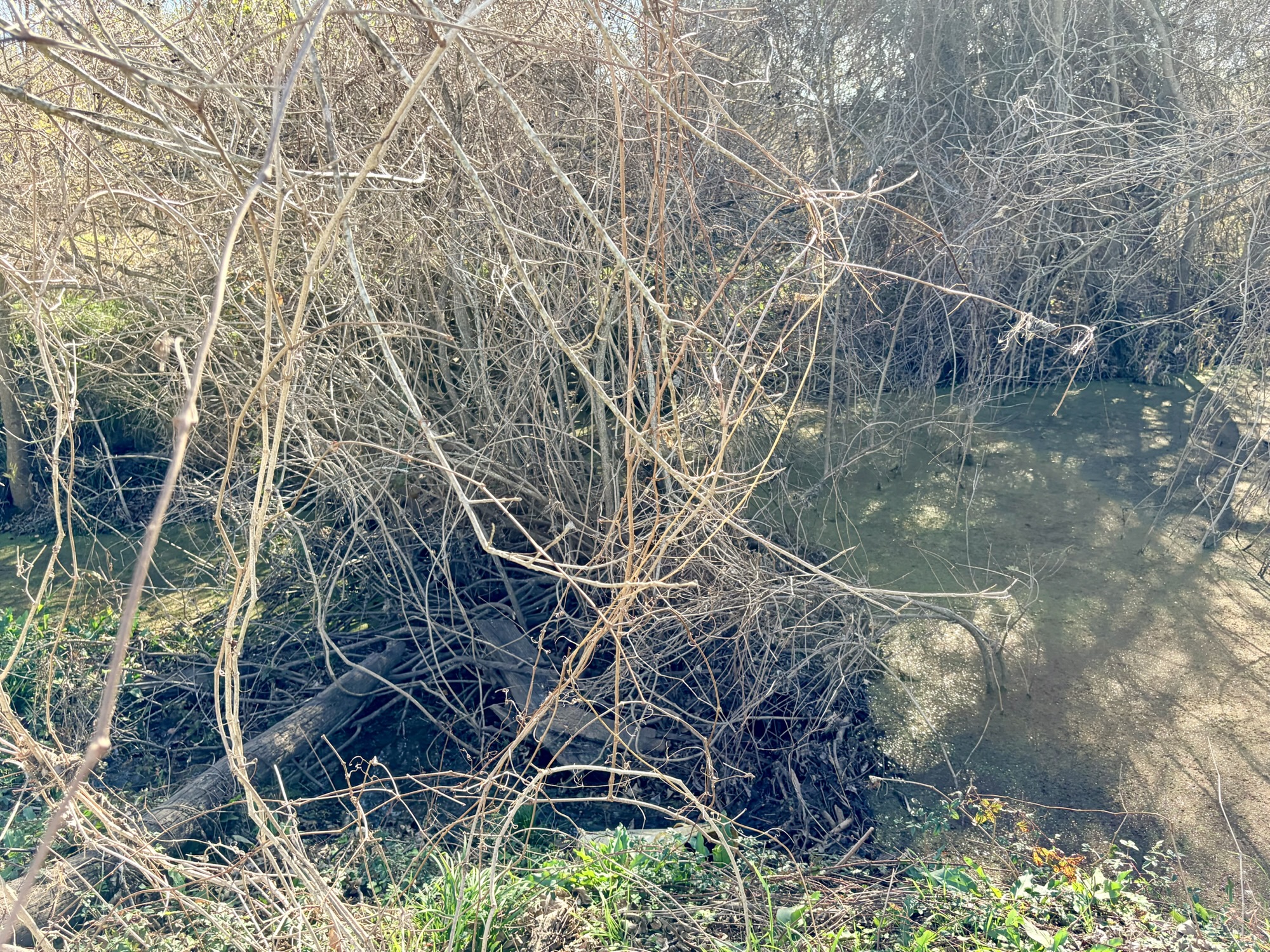
The middle dam and pond
I enjoyed investigating the dam construction and listening to the water trickling through the spillways. It’s hard to believe animals can do this, even though I read a book all about beavers recently (and I highly recommend it to any fellow nature lover).
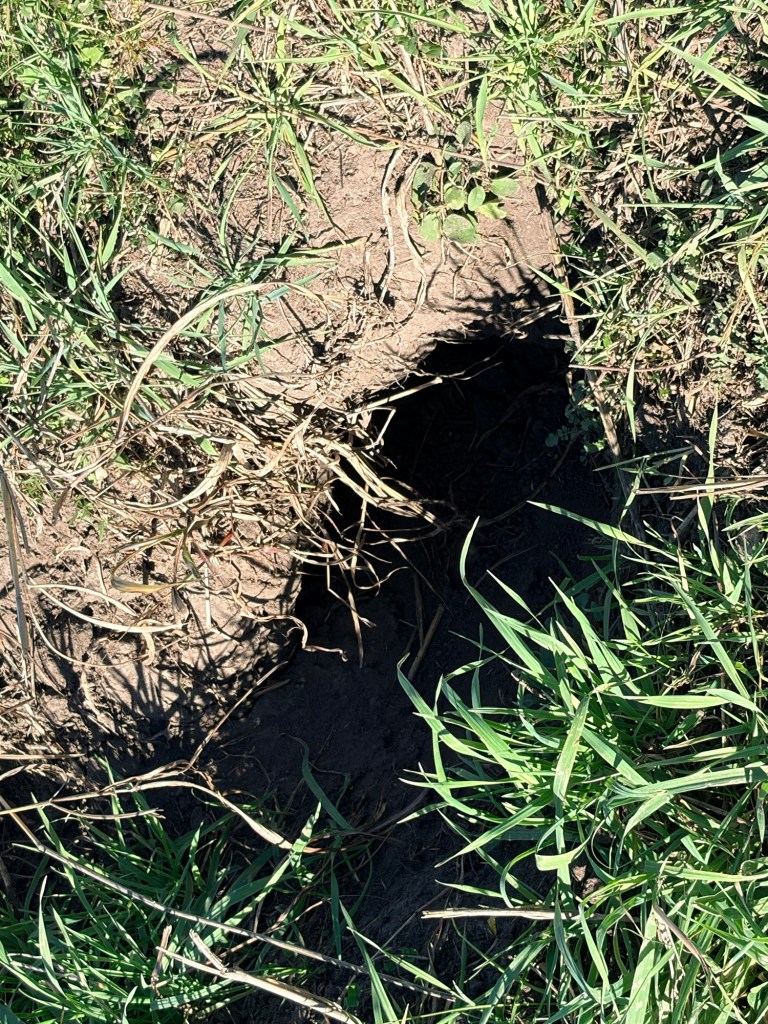
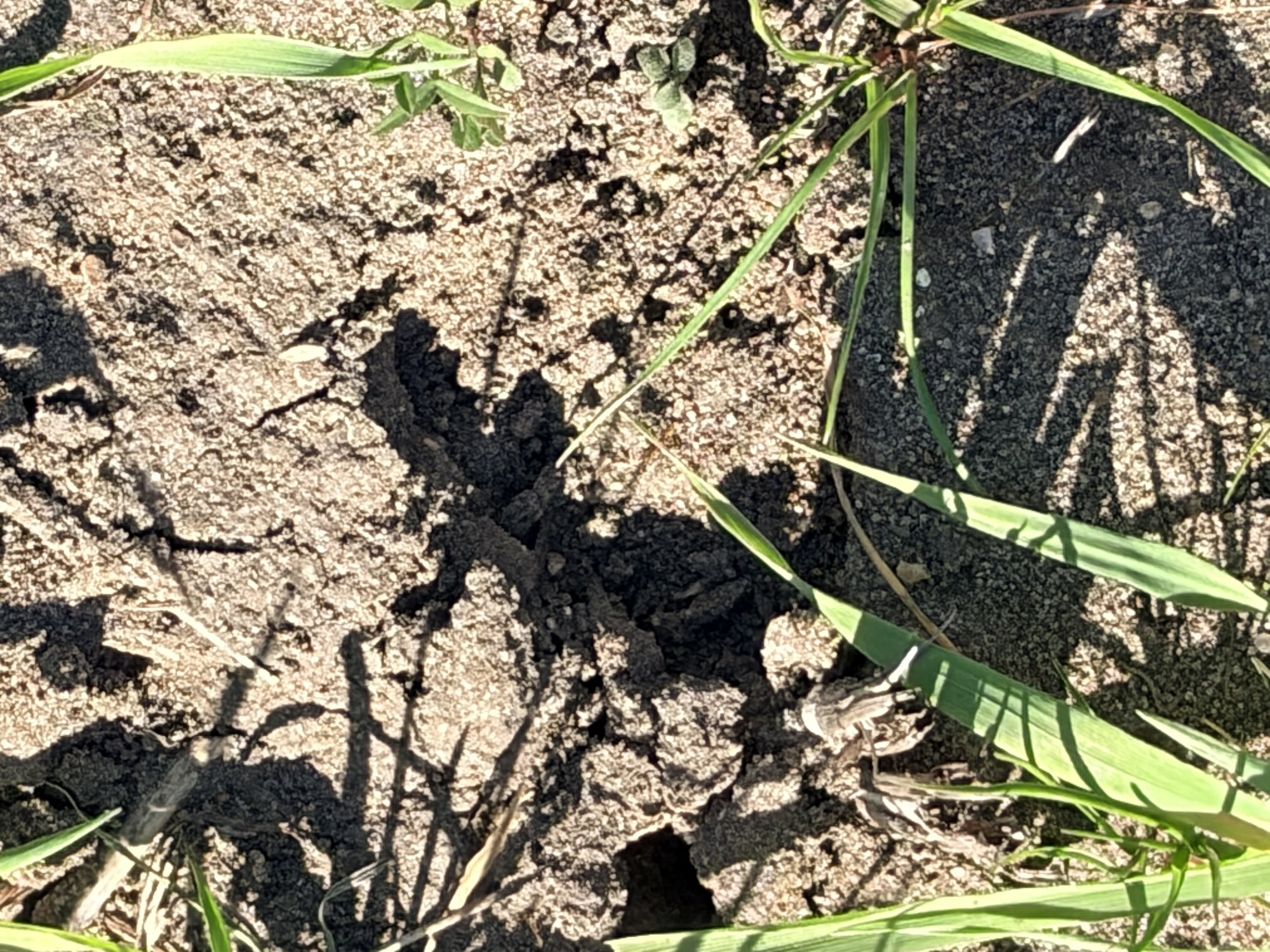
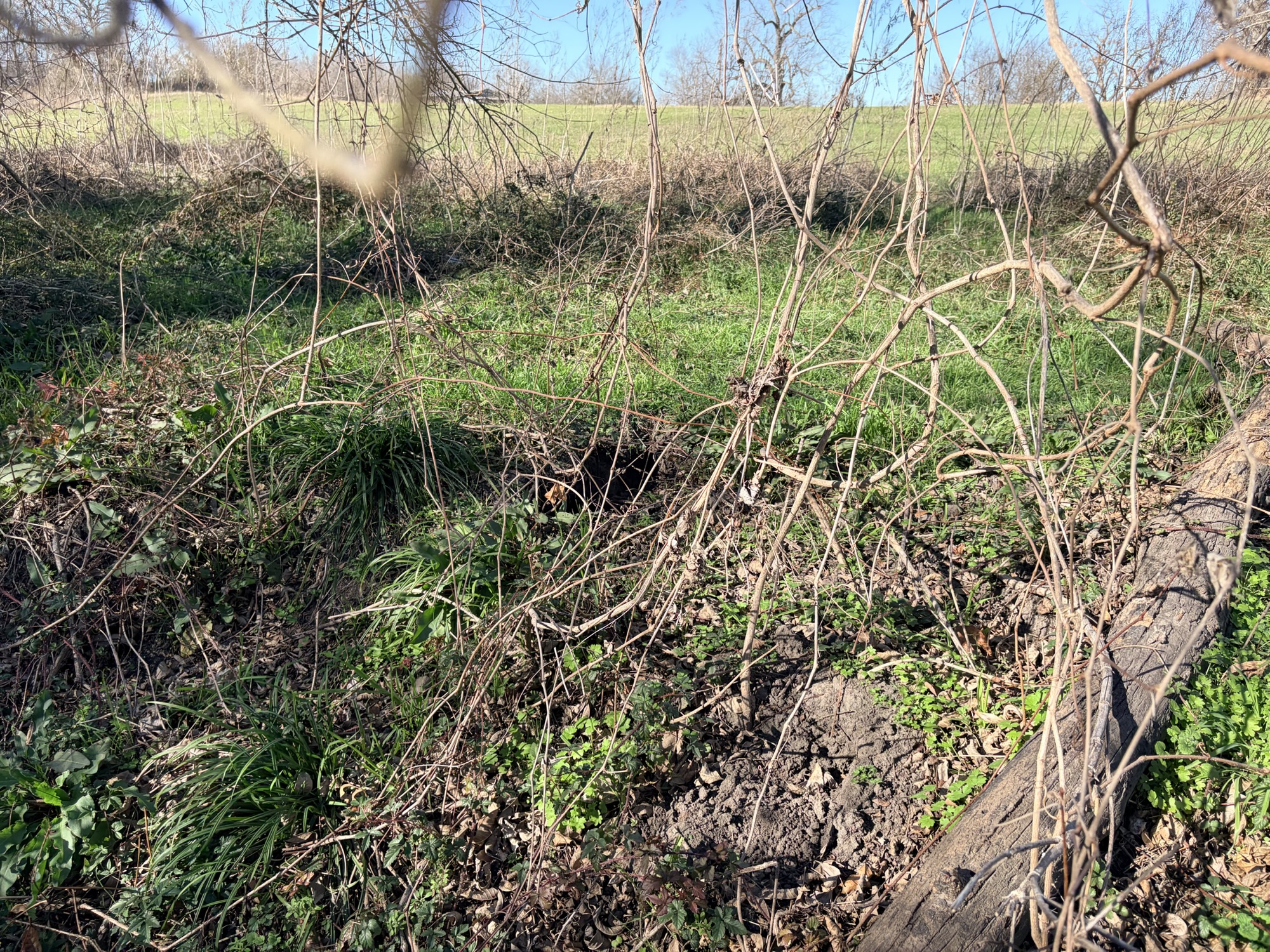
Also they build a lot of tunnels. Here is an entrance.
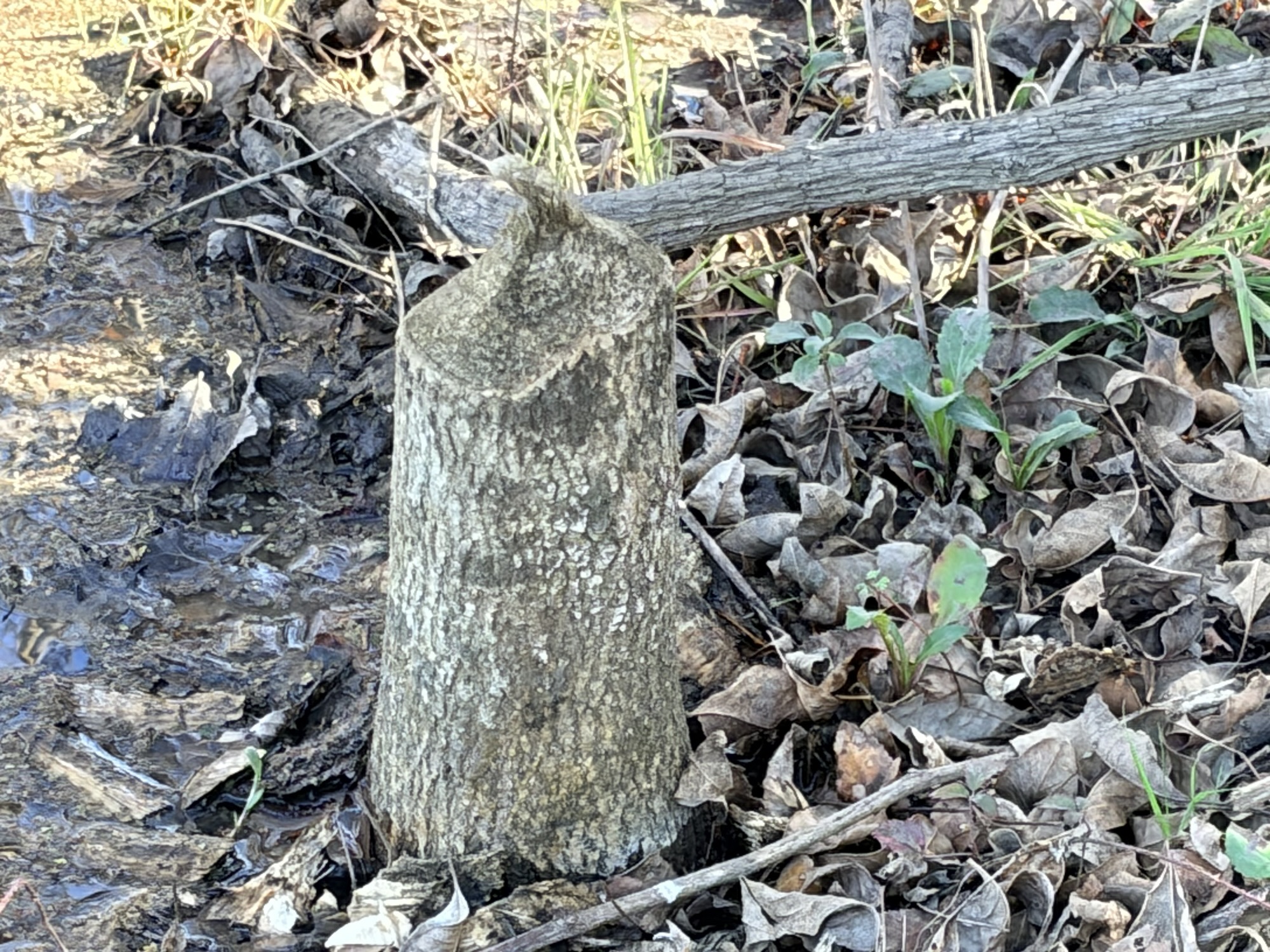
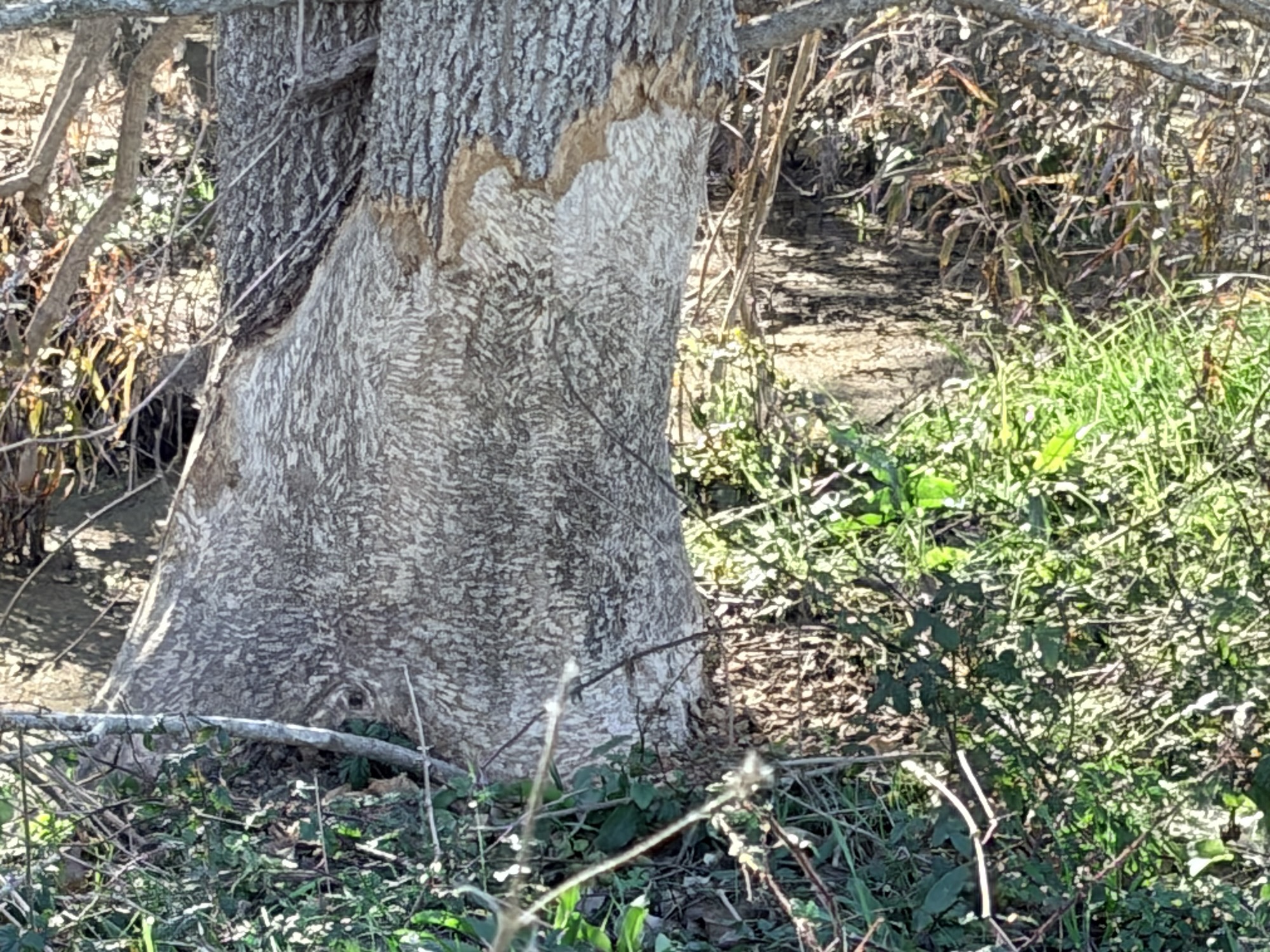
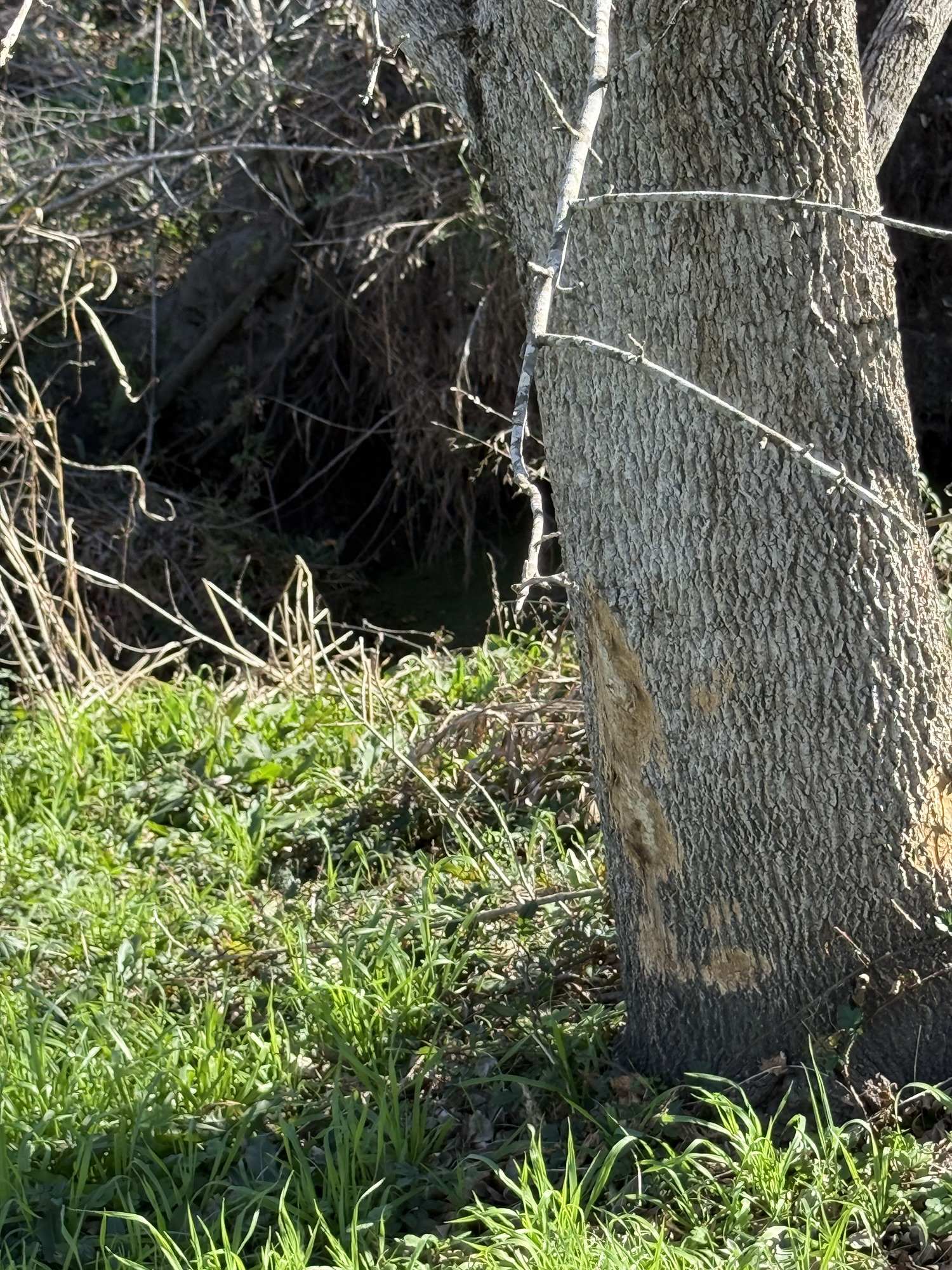
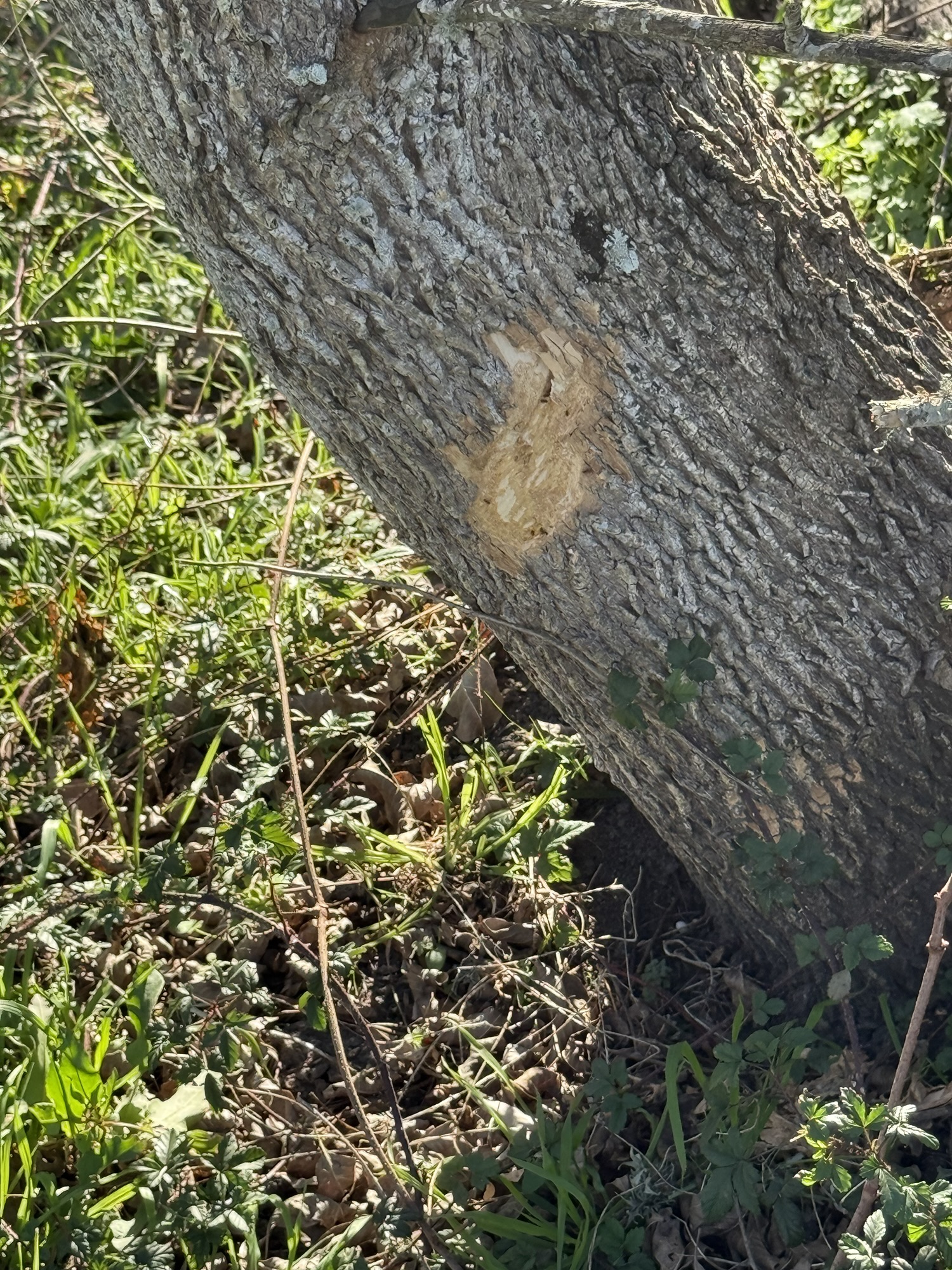
We found trees that had been gnawed by beavers (some from the previous dam a few years back). There were also trees whose bark had been gnawed. This definitely points to beavers!
Gnawed trees
We moved upstream some more and found a second dam, which has created a magical pond full of fish, butterflies, and plants. One of the things beavers do is provide an environment for wetland plants, increasing diversity and creating more fertile soil after the dams are abandoned. It was hard to pull myself away from the tranquility.
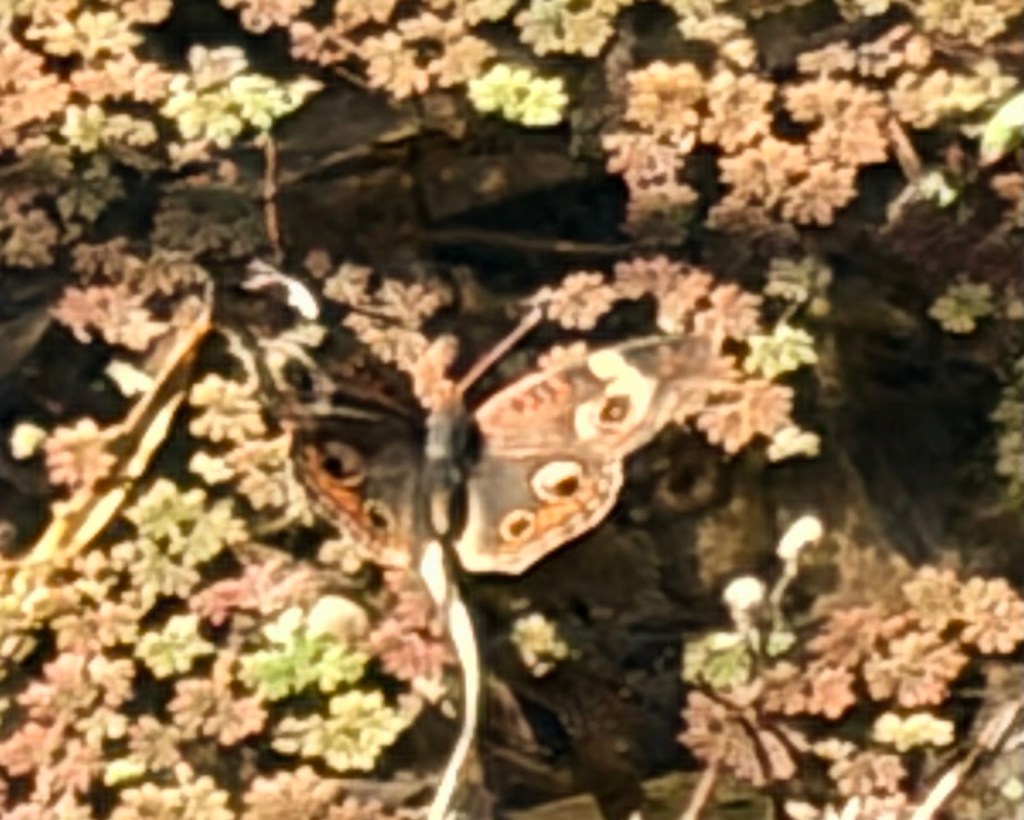
BuckeyeUpper pond
This is my favorite upper pond photo
I wanted to see if there was a third dam below the first one we found. Sure enough, following the cool beaver trails led to another one that my friend thinks is a reconstruction of the original dam.
beaver trailsperhaps a beaver trackdamdaman entrance hole
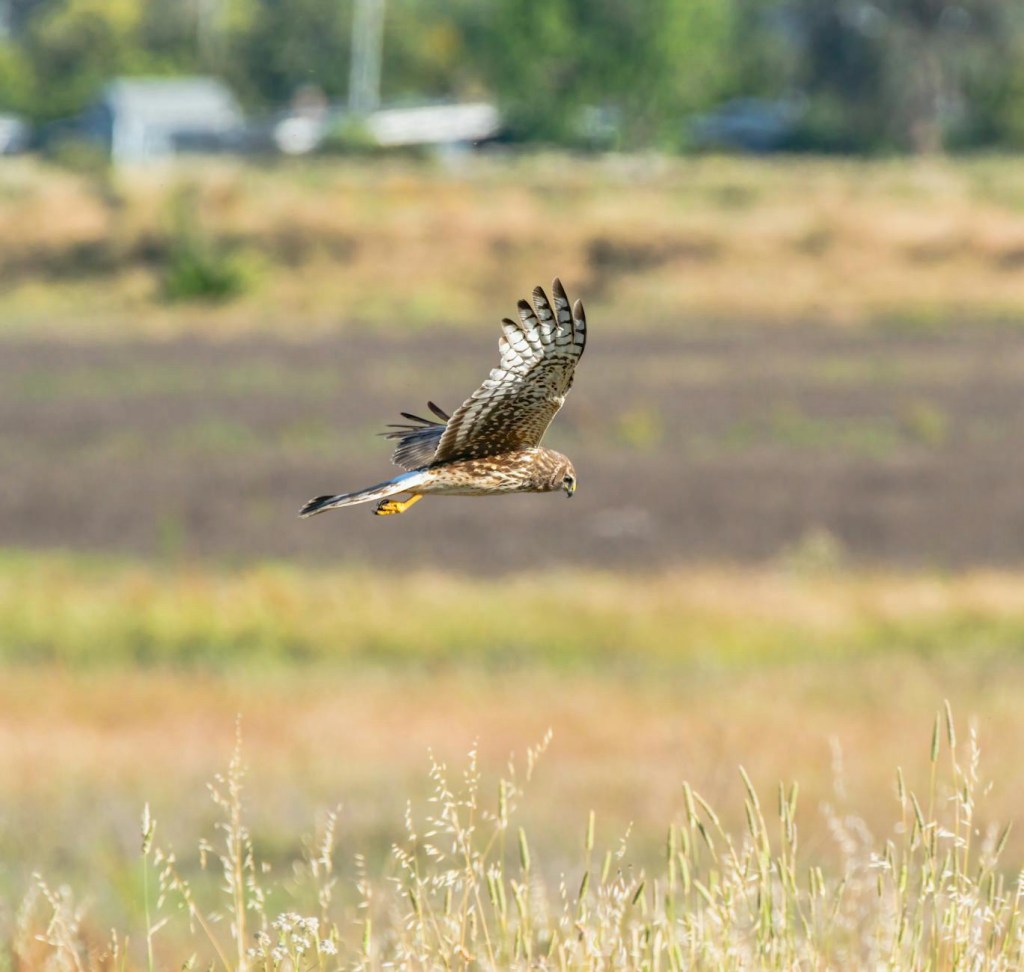
Since we had time and a truck, we went off exploring other parts of the property, which are mostly hay fields. We stopped and got to see a spectacular Northern Harrier fly right in front of us when we both had our binoculars. They’re beautiful hawks with a white patch just above their tail.
Northern Harrier from Pexels photo library
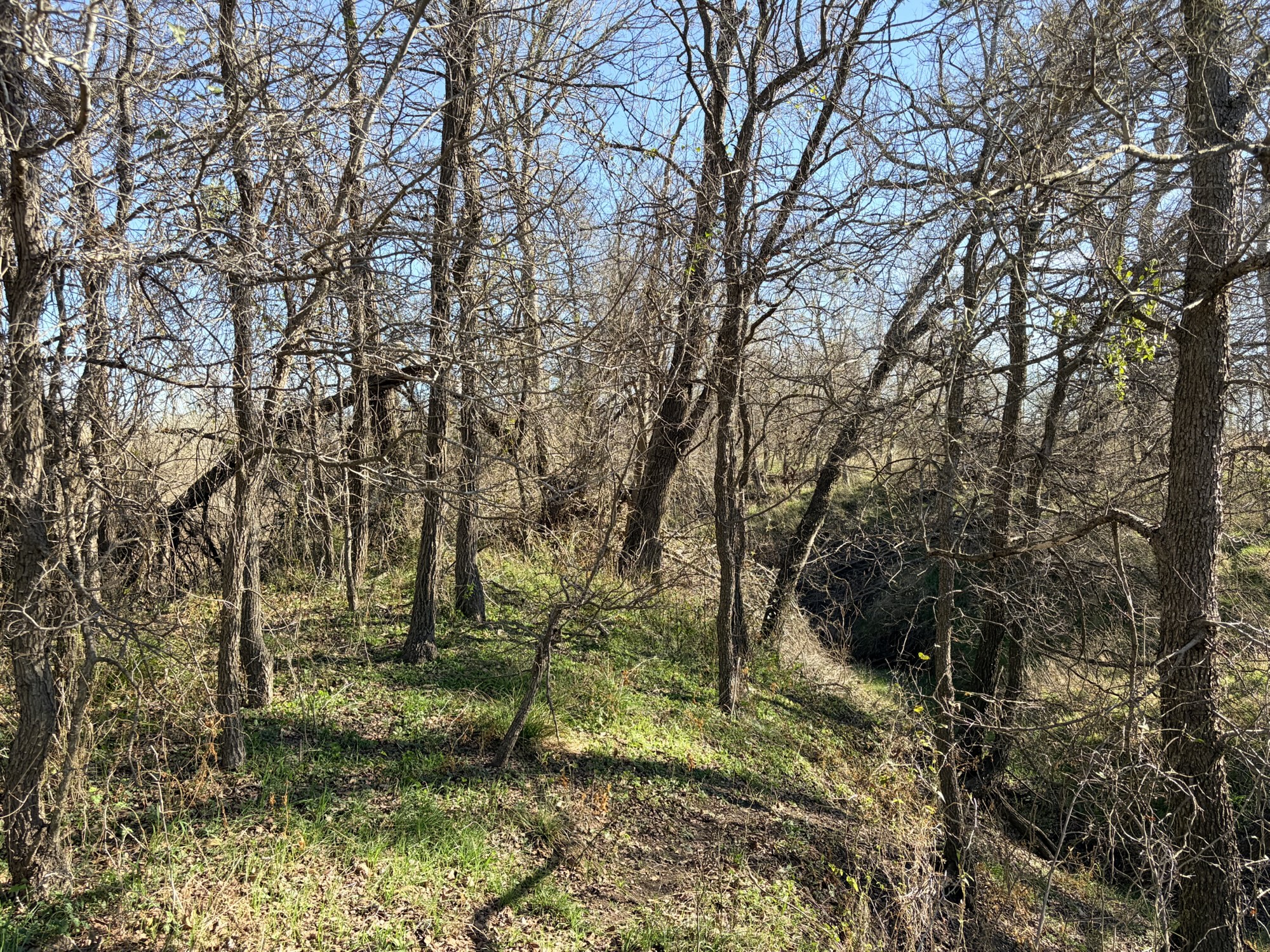
We then explored a ravine that lead to the big creek and observed how the creek is slowly moving northward. I did not fall down when I clambered down the embankment. I held onto trees.
You can see where the creek used to be closer to the embankment
We ended our exciting afternoon doing some more birding back by my friend’s house and enjoying each other’s photos. I’m so pleased to cross another mammal off my list of Milam County sightings, even if I didn’t see an actual beaver. All my beaver knowledge really helped me see the signs of them. I’m sure the beavers are glad the prowling humans and dogs are gone!
The wolf spider world never shuts down in Texas if you know where to look. About a dozen species from a number of genera mature over winter when they can hide among fallen leaves. They can be quite active at night during rare warm spells. They all look generally similar and are often hard to tell apart unless you know exactly what details to look for.
Here we have the obscure S. perplexa, which I’ve written about before. Turn it over and the white on black abdomen pattern makes identification easy. This is a juvenile male just one molt away from adulthood.
The other is Varacosa avara. I had found some a couple of weeks earlier and speculated they were this species mostly because of the strongly pinched carapace medial band at the posterior lateral eyes. This time it was another adult male, and I was able to confirm it from the spine lengths on the underside of tibia I thanks to a better image. The pinched medial band is a lot easier to see than the translucent spines, but the medial band pinching isn’t mentioned in the literature. Body lengths of both spiders are a little over 8 mm (a third of an inch).
Also seen was a much larger Tigrosa georgicola. The presumed female has been in about the same place for over a month. Previously she had retreated into her burrow as I approached but this time she held her ground. I didn’t attempt to capture her for photos since I already have a lot of photos of that species.









 Nature Along the El Camino Real