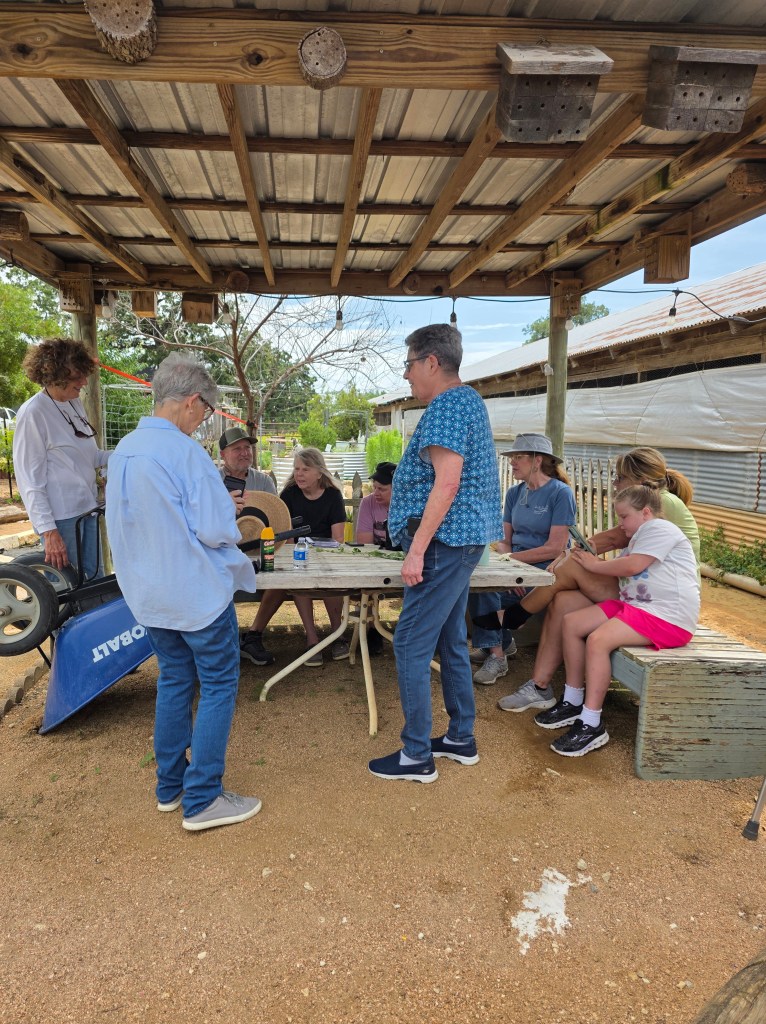
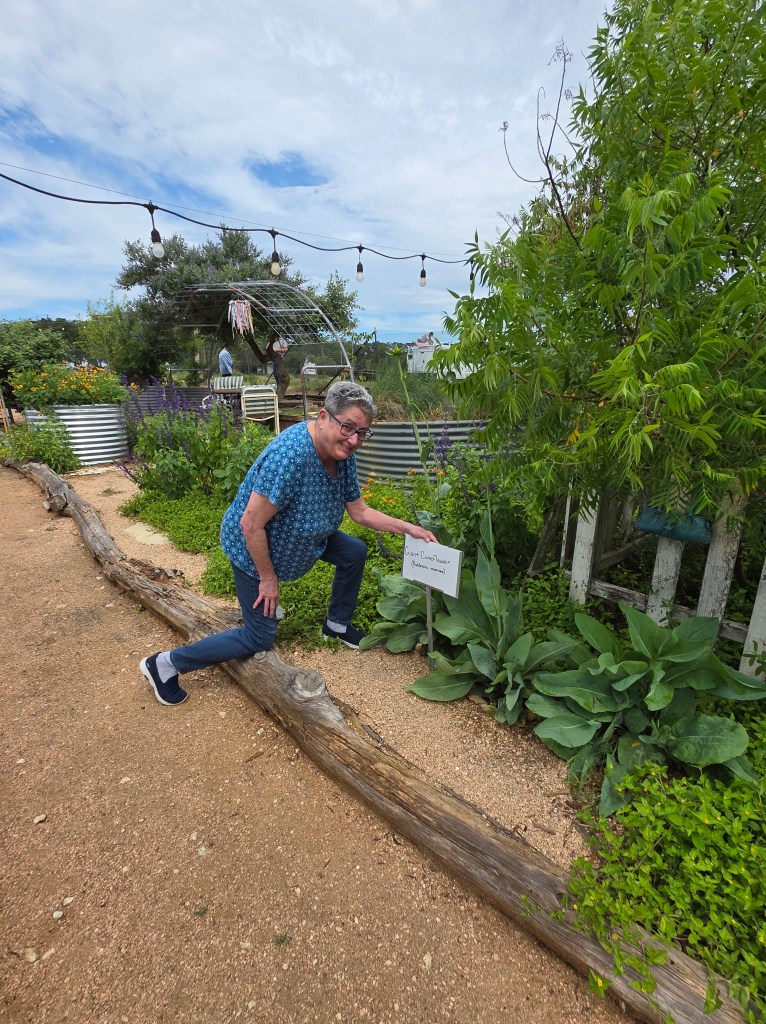
Members pruned, weeded, and watered in the Wildscape. They also took pictures of pollinators and worked on signs.
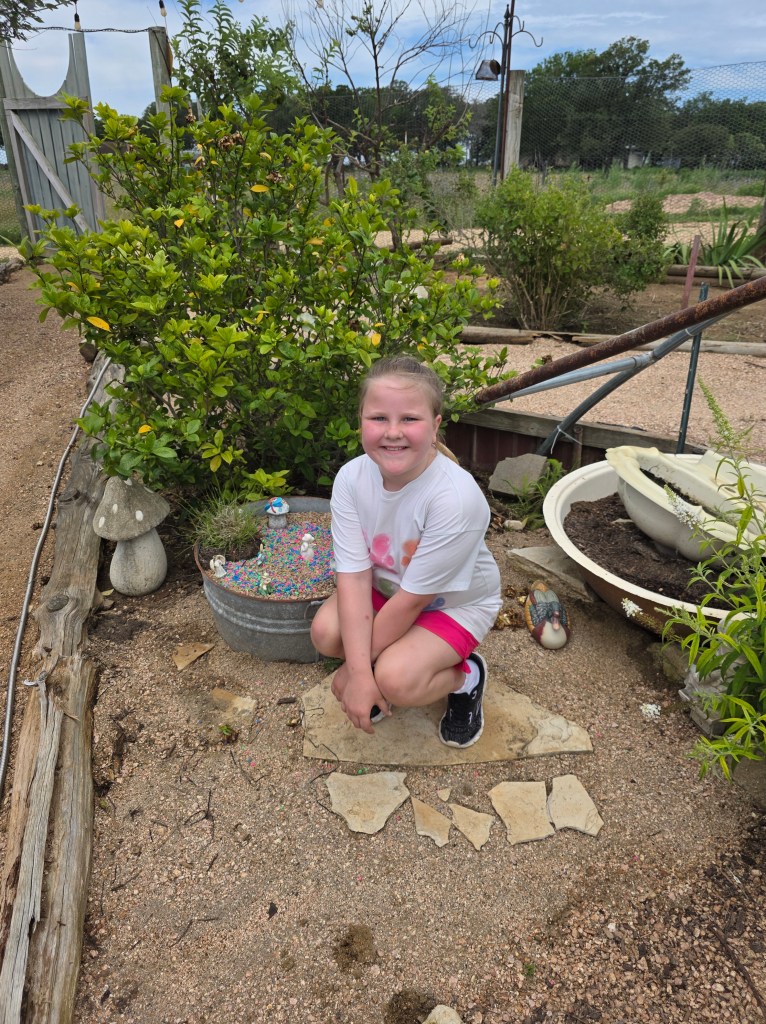
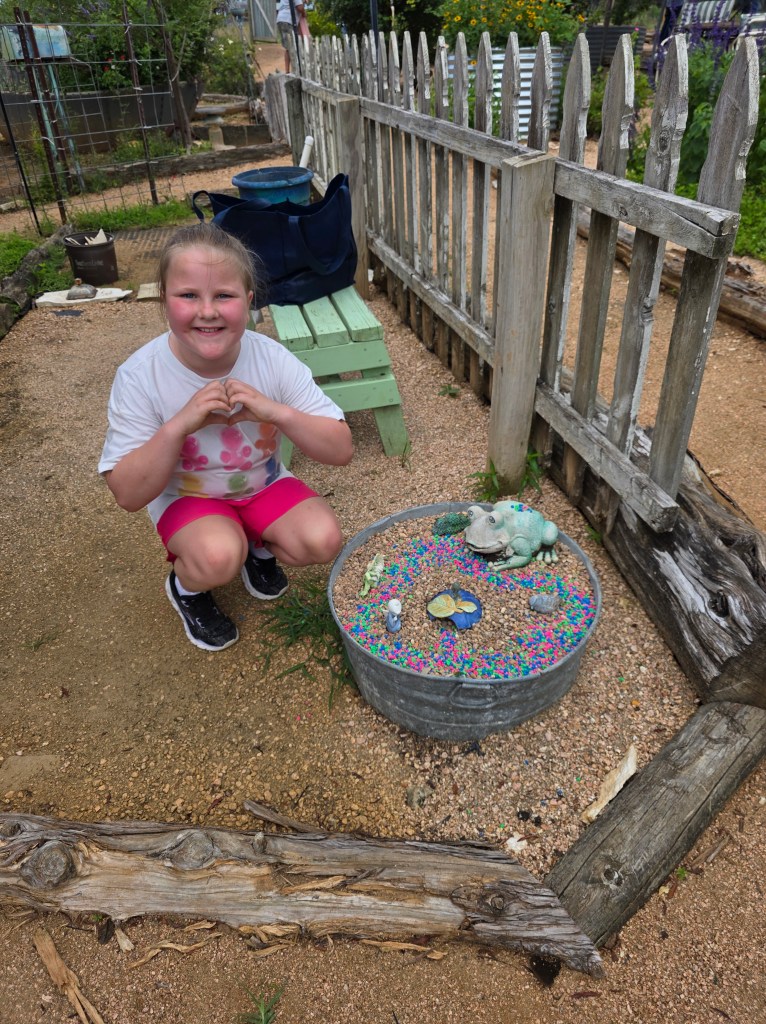
The highlight was seeing three Fairy Gardens designed and installed by Friend of the Wildscape, Jordan: Town Square, Frogs & Fairies, and Mushroom Valley.
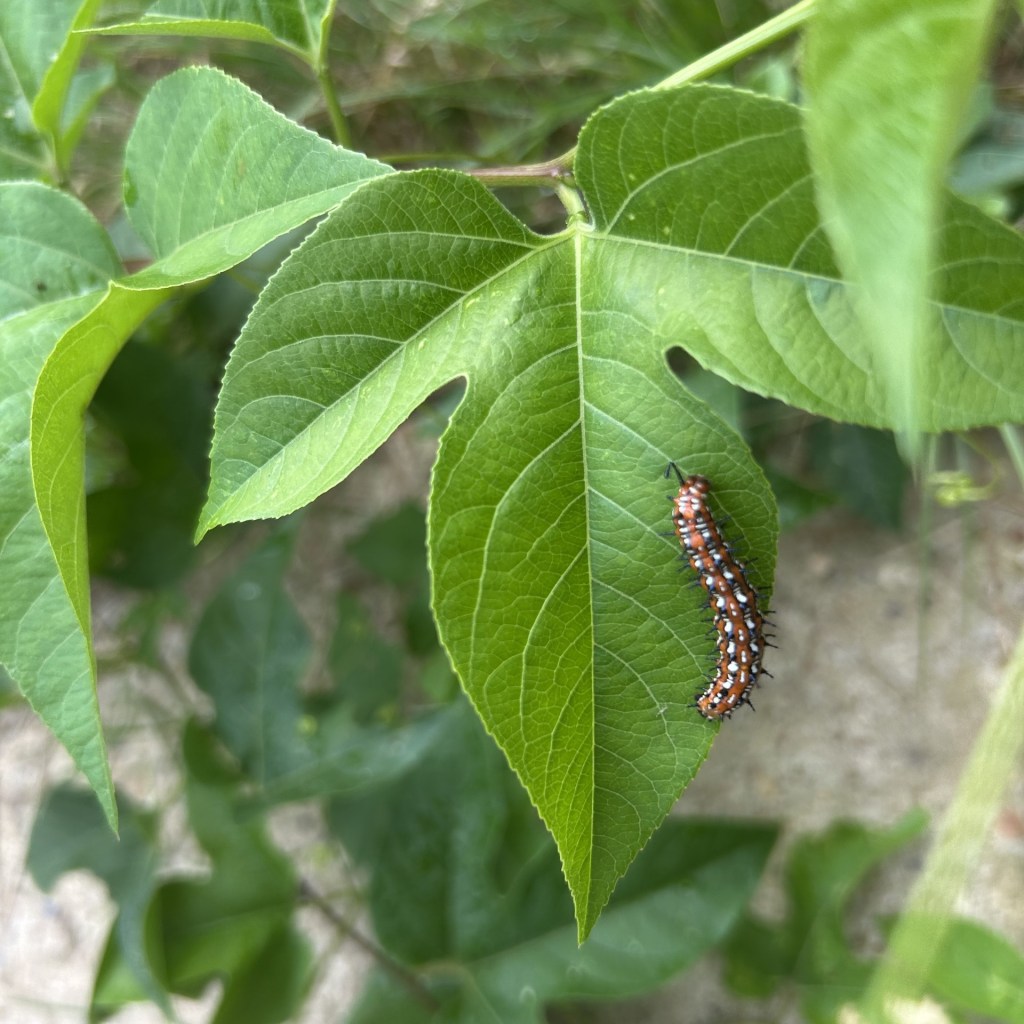
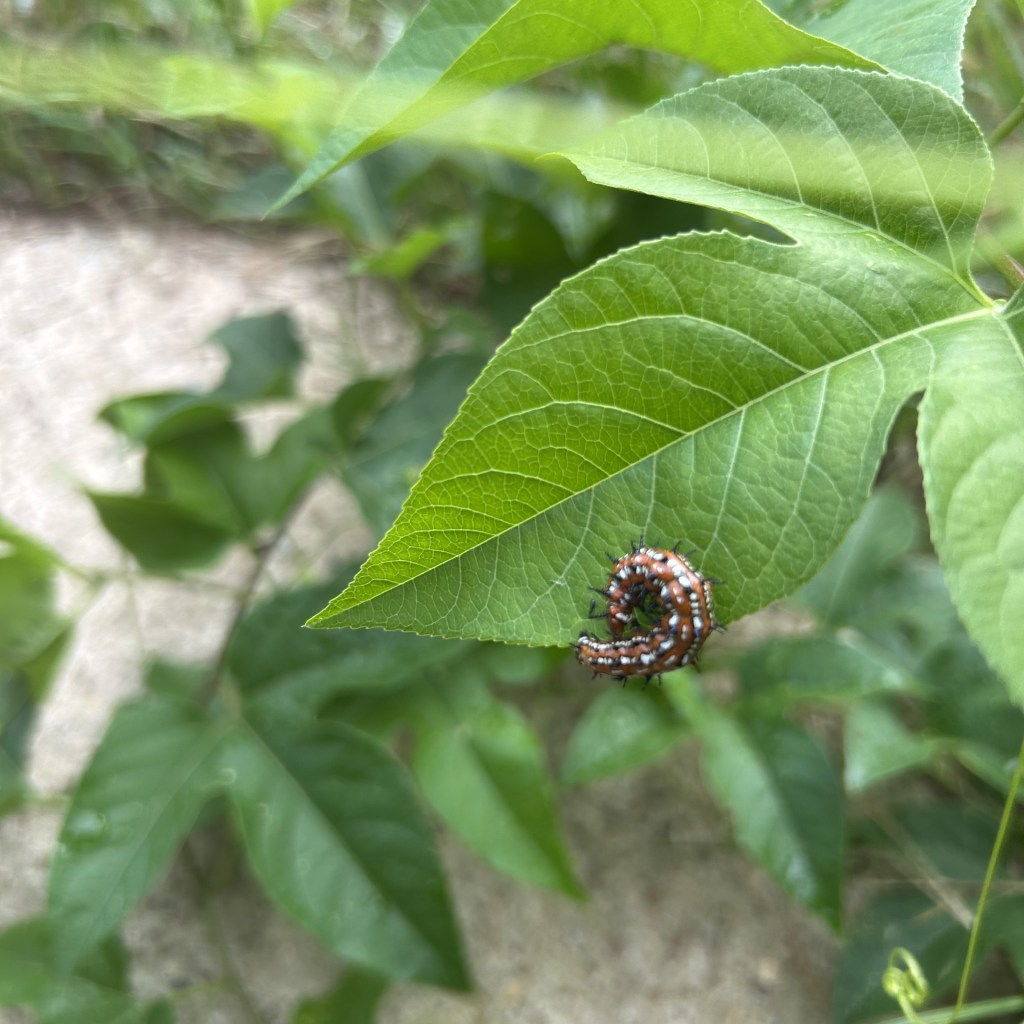
I was just about to think the fritillary butterflies weren’t going to show this year. (They lay their eggs on native Passion Vines and I’ve been trying to grow those vines especially for them.) Last year the fritillary caterpillars ate my passion vines to the ground and I never even saw a bloom. This year, though, the passion vines have come back really strong and have multiplied like crazy. I’m hoping to see a bloom or two, but I’ll definitely settle for butterflies instead.
On a side note, I also planted some more passion vine in a different location. However, that passion vine must have been modified and the butterflies evidently knew that because they left those vines completely alone. I saw the butterflies flying around checking those vines out closely and noticed they never stayed long at all. Even though those vines were beautiful, I choose to stick with native plants, because our native wildlife require them to multiply, and I choose to share.
Hint: I was thinking if you watch nature closely, you could come up with some great science ideas and experiments.
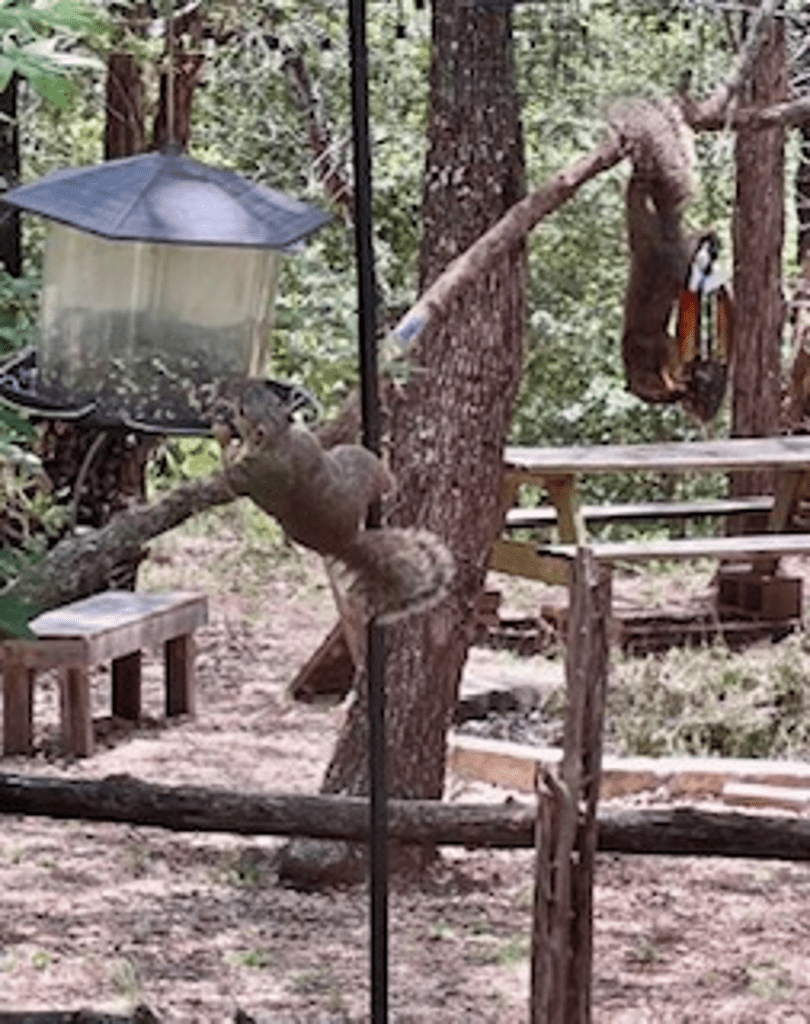
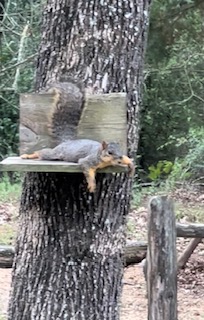
This time of year brings so much nature right to our front AND back door. Songbirds singing and flowers blooming. Hummingbirds dive bombing each other over ownership of the sugar water feeder. And snakes, spiders and other creepy crawlers around every corner and under your feet. But every year about this time I also get a fun surprise from that pesky critter, the squirrel. I have A LOT of squirrels. Mostly Eastern Fox Squirrels. They entertain me as much as the hummingbirds. Always finding ways to get their share of bird seed from the feeders.
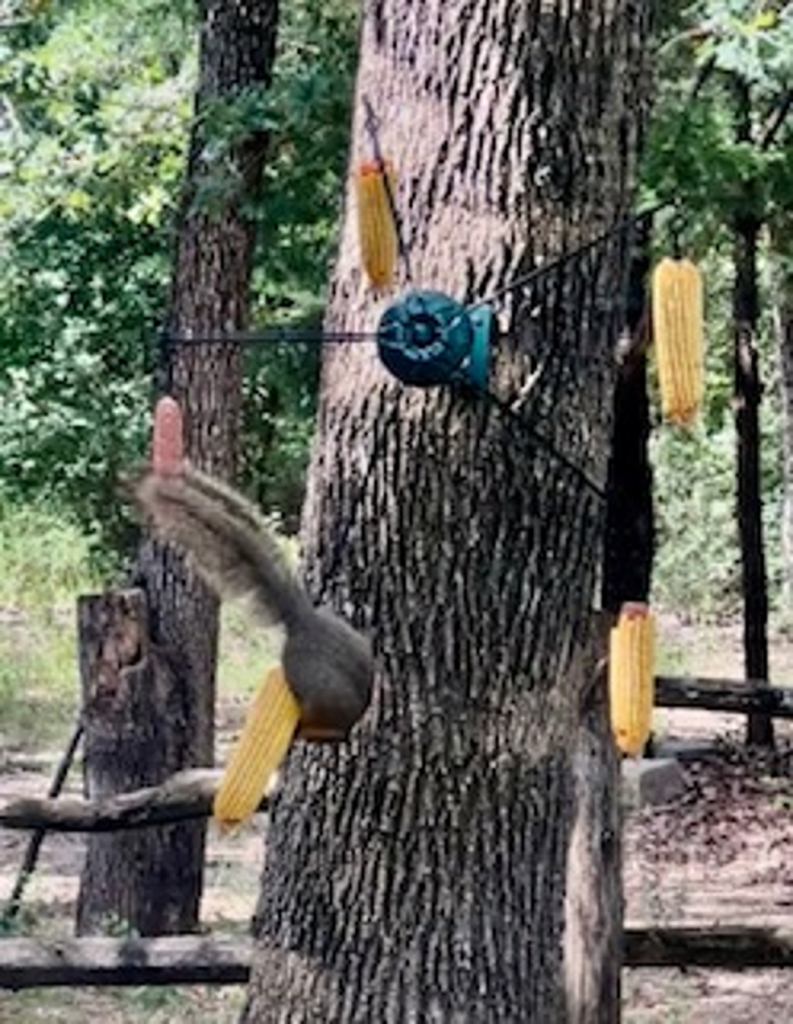
I put up a corncob wheel spinner and they don’t have any trouble getting that corn.
I had one in Florida and those squirrels would jump on and spin round and round, even getting thrown off trying to get it. But they weren’t as large as Texas squirrels.
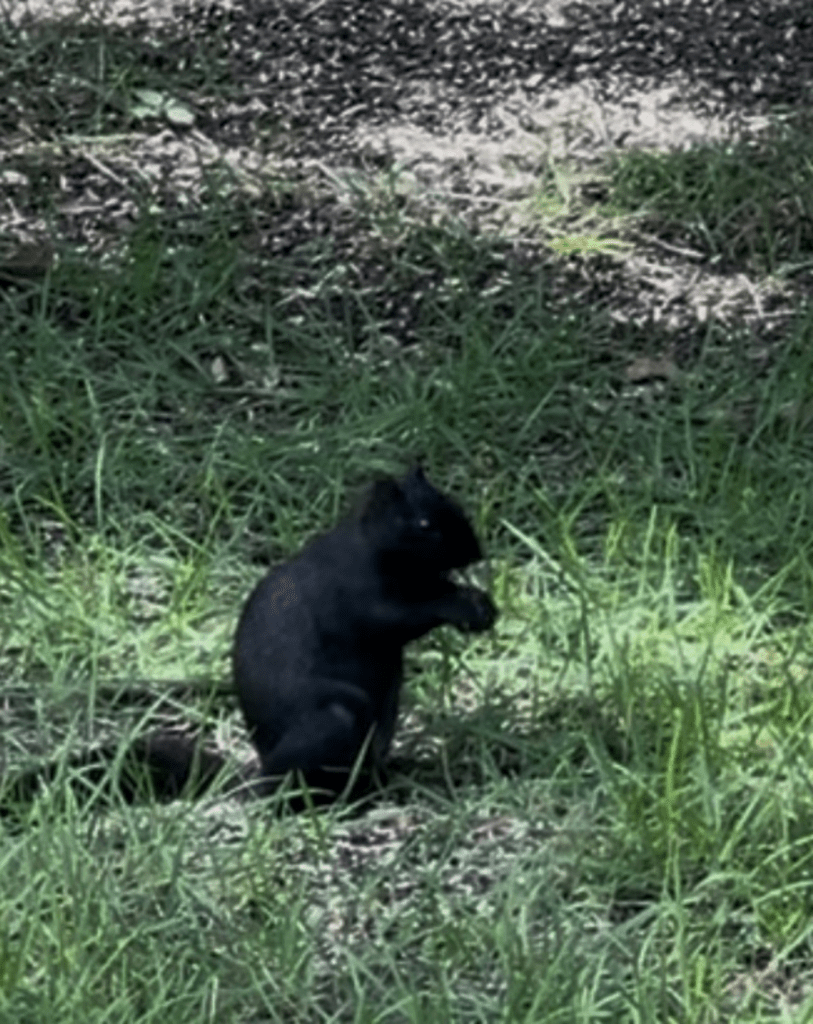
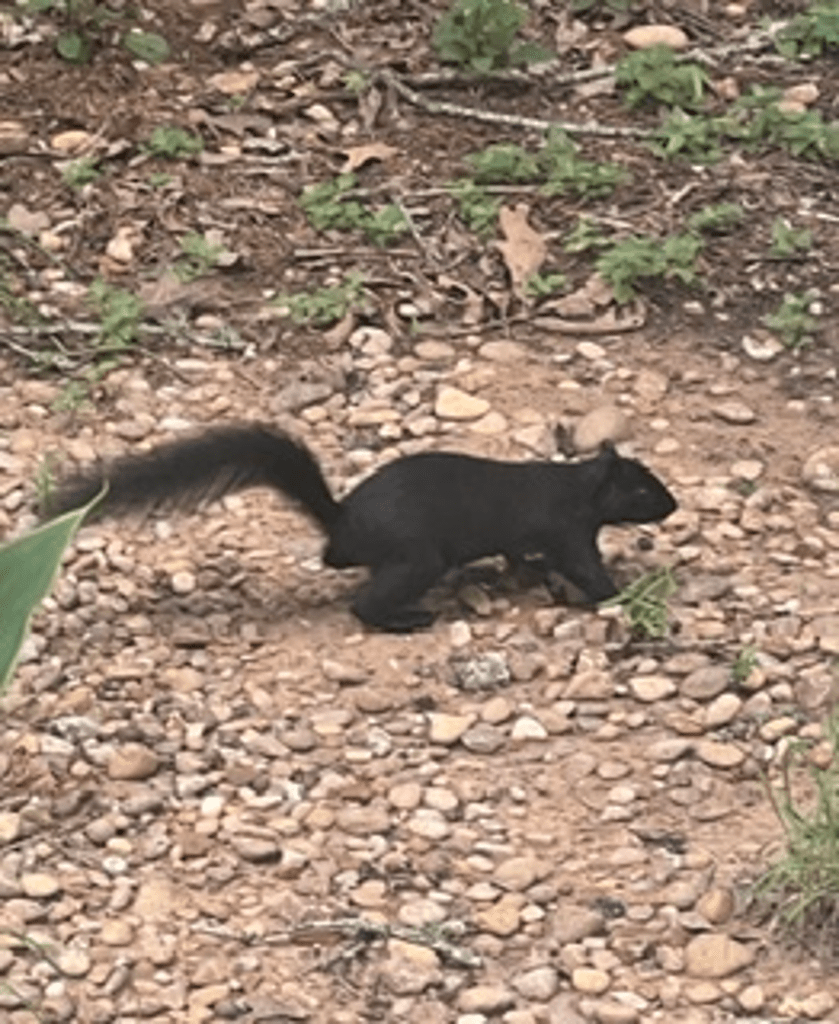
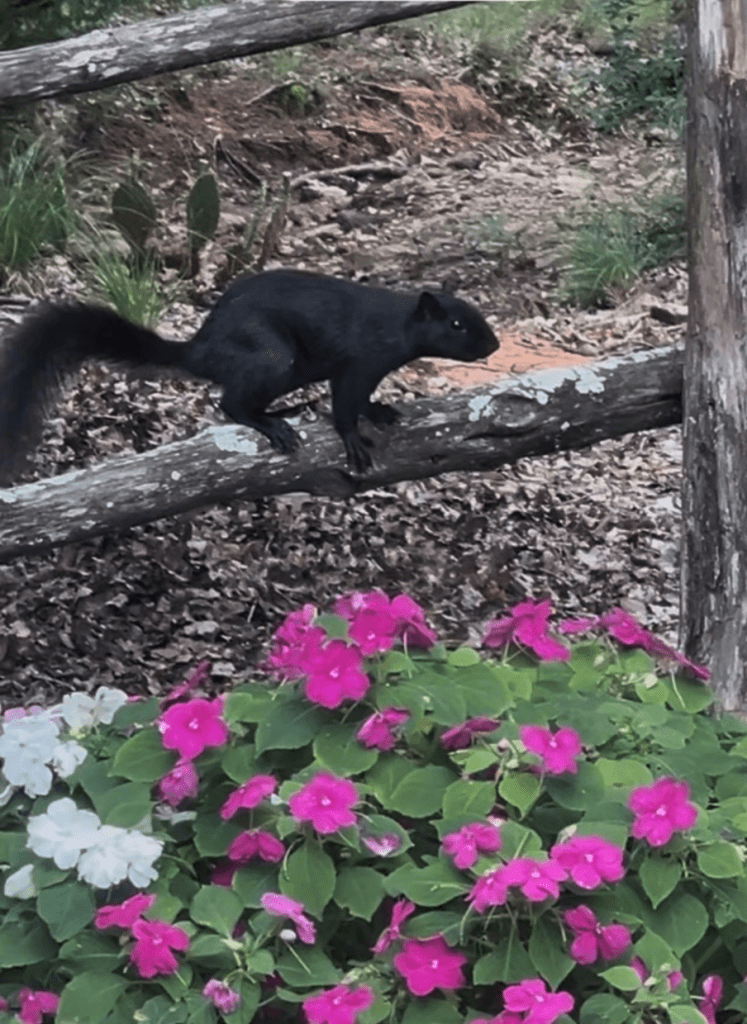
Last summer I had this fellow show up.
I had never seen jet-black fur on a squirrel. I put it on iNat and no one made a peep about it. I looked it up to find out that it is the result of a rare genetic mutation causing excess pigmentation and that the odds of seeing one are estimated at only 1 in 10,000!
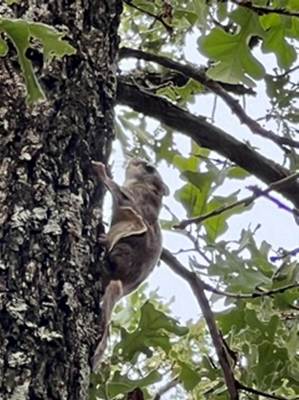
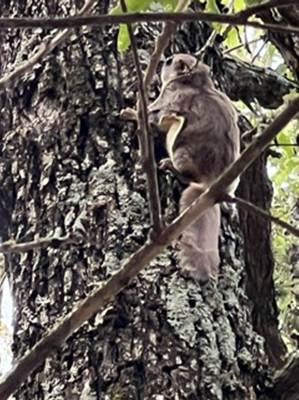
Then just today I was heading back to fill a deer feeder and passed a bird house with a cute little guy with big black eyes starring out at me. Baby squirrel, I thought, and grabbed my phone but only got pictures as it climbed the oak tree.
Once I got back inside and looked at the pictures, I found, to my surprise:
A Southern Flying squirrel!
I had never seen one. Research told me that they are mostly found in the eastern portion of our state, where mature hardwood forests are more common. They rely on natural tree hollows or old woodpecker cavities, or I guess an unused bird box for nesting. Their diet is omnivorous and includes nuts, seeds, fungi, berries, insects and probably the same treats I leave for my birds and ground squirrels. They can breed up to twice a year producing small litters of 2-6 young. And because of their nocturnal habits and small size, flying squirrels often go unnoticed by humans. I probably woke this guy up.
I am going to have to keep an eye out for them and my camera ready, as my husband said he wants proof of the flying action.
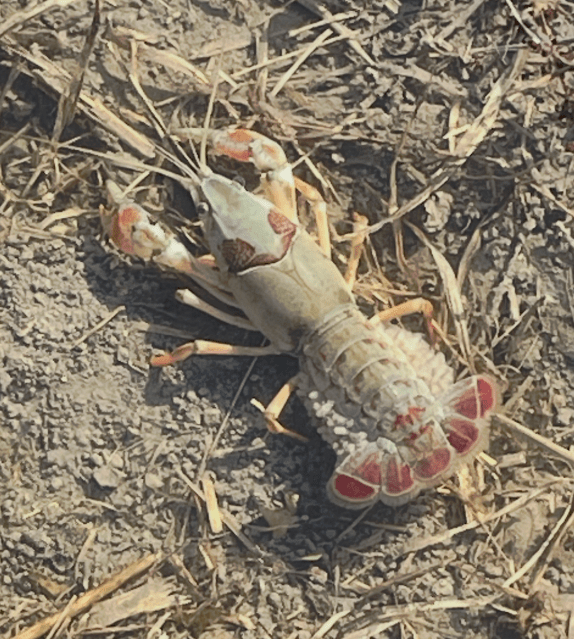
A few days after winter storm Fern hit central Texas I spotted this XLLL crayfish putting the pedal to the metal in a “stream” of ice melt that was flowing to one of my stock tanks. I posted her on iNaturalist (naturally). Don Johnson, a crawdad aficionado, noted that this was a female with young.
This summer hasn’t been as bad in the heat and rain department as last summer, so I’m not complaining one bit. But there sure have been some interesting developments in the sky, many directly over my head.
Some overhead things are cool, like this Red-tailed Hawk I got to listen to yesterday.
I’ll start with the most interesting one. For the past week or two I’d been noticing a lot of honeybees around my legs. It seemed like the earth was buzzing. Upon closer examination, I saw dozens of bees crawling on the tiny blossoms of the grass (I think it’s Dallis grass) that is blooming now. The bees were all very busy, zipping from flower to flower (not leisurely sipping as they usually do), and they were loaded with pollen.
My lame attempts at photographing zippy bees.
This went on for a few days. Yesterday, there was no buzzing as I walked along the field in my daily bird-watching patrol. Then, late in the afternoon I was over by the trees listening to a Yellow-billed Cuckoo when I heard something that sounded like one of those annoying drones people fly these days. I looked up and didn’t see a drone. I saw a large mass of tiny things moving along at a rapid clip. It was hundreds and hundreds of bees swarming. I guess they were moving on to better pastures. I’m not sure where their hive was before, because I hadn’t heard one in a couple of years. I hope they find a nice new dead tree!
FAKE NEWS! The blog software generated this image when I asked for “swarm of flying bees.” I don’t think they actually swarm in a giant ball.
Moving along, I’ve also been dealing with birds overhead, specifically the beautiful but omnipresent Barn Swallows. Now, normally they hang out on our porches, building mud nests, raising babies and pooping. They also eat numerous insects, so they get to stay (also it’s ILLEGAL to mess with a nest of wild birds; you can ask Mike Mitchell about it if you don’t believe me). We coexist just fine, looking into or out of the windows at each other, and enjoying the swimming pool area.
Swallows on the pond.
However, lately, the little darlings have not been at all happy with me. They aren’t nesting anymore, just flying around the ponds and in the air catching food. They are always there, and for some reason they resent my presence. When I go for my morning or afternoon walks, I often hear a very loud CHIRP, with a Doppler effect as the chirper moves away. The swallows ambush me from behind, for the most part, but occasionally they fly right at me and veer off just before they make contact with my head.
There are so many!
I have absolutely no clue as to why they are dive-bombing me. I’ve had Mockingbirds and Red-winged Blackbirds do this when they are nesting nearby. But, hey, do they think I want to home in on their mosquitos?
Creepy? Why, yes, it is. Never trust AI to draw an insect. Or a horse. They always have five legs.
Other things in the sky have been more benign. I was a bit surprised to see both Black and Turkey Vultures in the air and in my trees until I realized the Mighty Hunter (Goldie the Great Dane) had eliminated yet another armadillo that had wandered into the fenced-in area. I wish they’d read my signs that say “Armadillos and Possums: Keep out! Killer Dog! This means YOU!”
All real vultures in real trees and the real sky. Left is Black Vulture looking like it’s skulking, middle are Turkey Vultures pretending to be Christmas ornaments.
Other flying friends include the usual Green Herons, Great Blue Herons, and Great Egrets, along with some hardy butterflies and a smaller-than-usual number of dragonflies. I’m going to pretend the flying Differential grasshoppers don’t exist.
Great EgretFemale Roseate SkimmerVariegated Fritillary
Yep, the skies around here are busy. Always look up in case bees or swallows are coming for you!



 Nature Along the El Camino Real