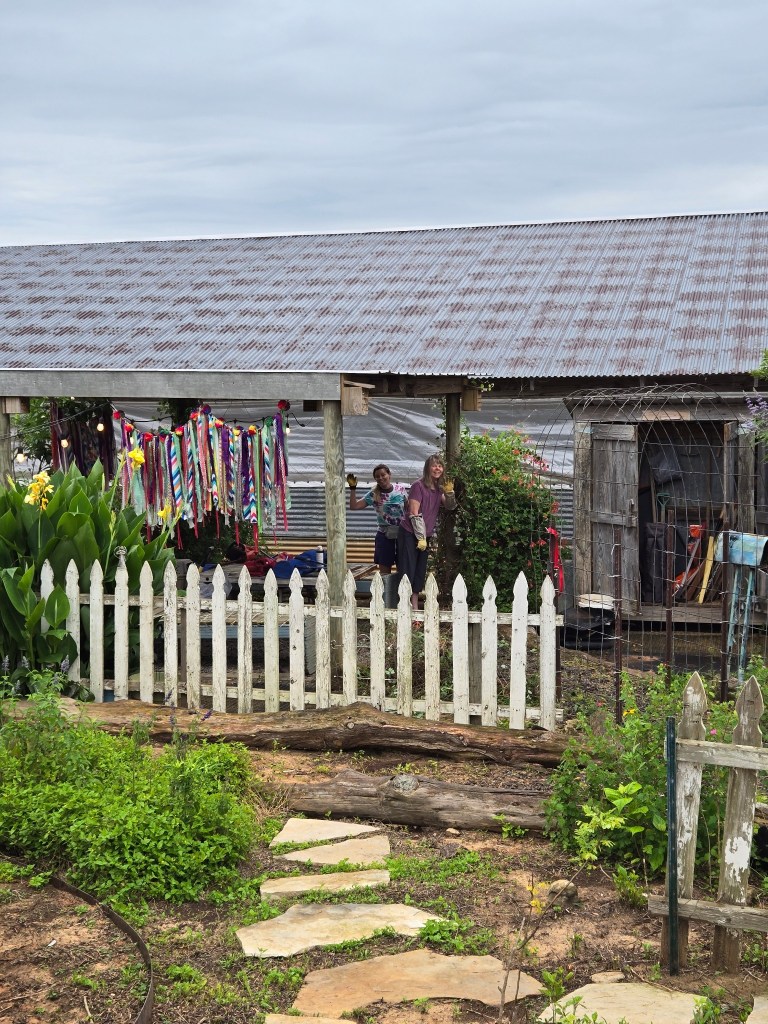
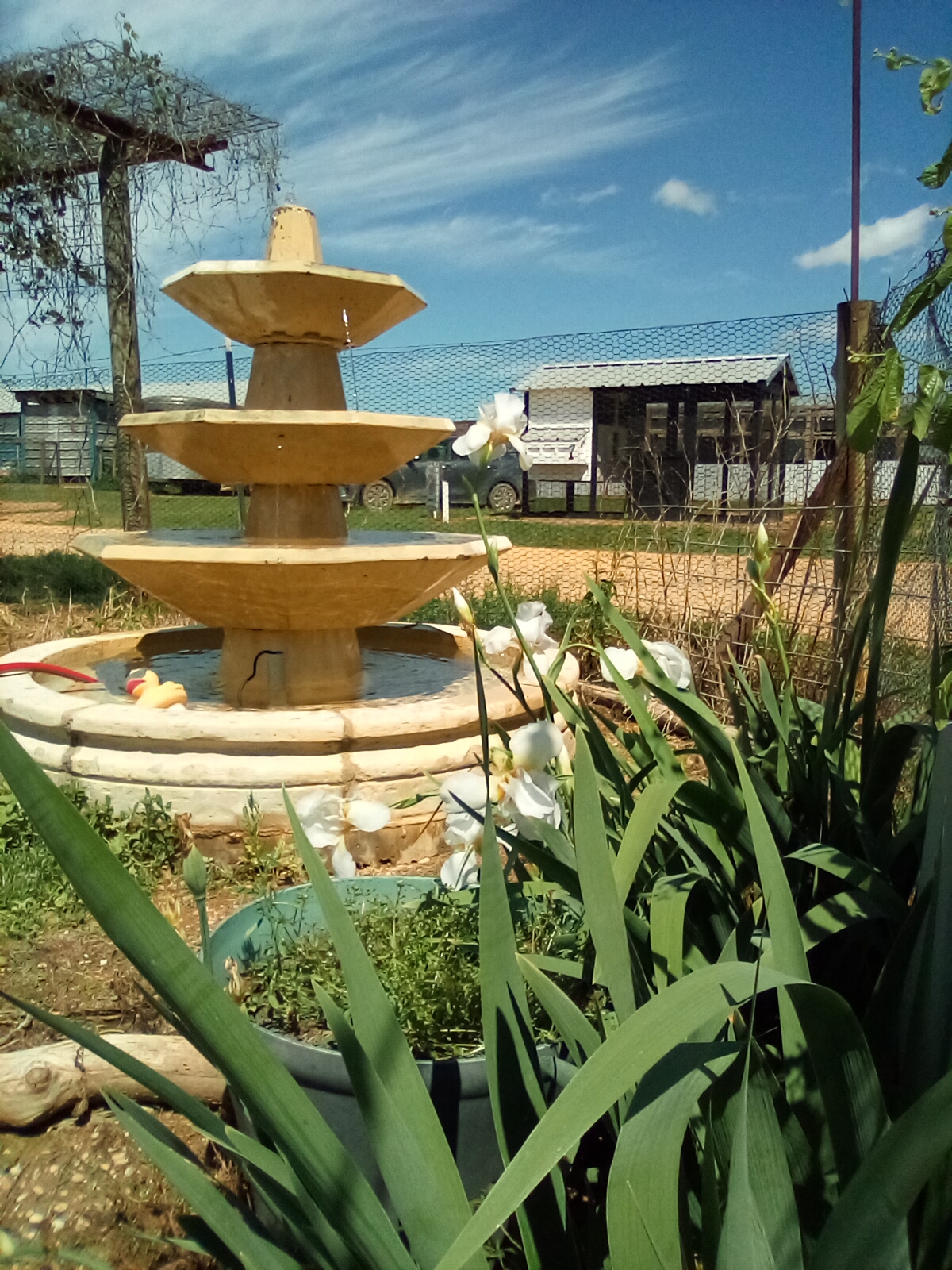
The Wildscape had a major facelift thanks to the Reks and employee Brandon.
Upcoming events include a full moon gathering to observe moths and nature at night. The improved space will be easier for people to walk thru each month learning about the Master Naturalist program.
Birds have built nests in the mailboxes and the Mason bees are active.
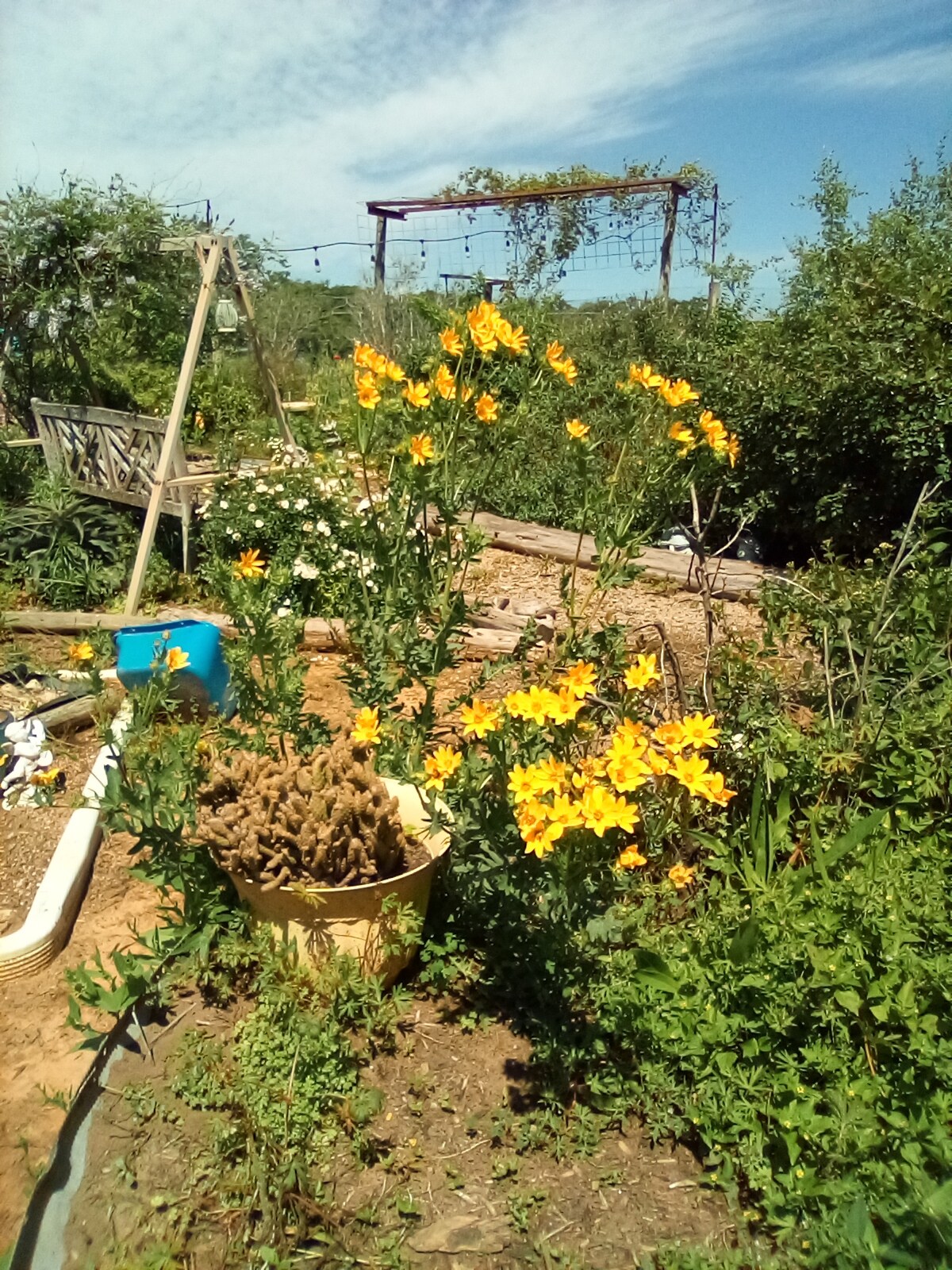
The pictures include our State grass, Sideoats Grama. It is a short clump grass that provides nutrition for wildlife and erosion control. It is drought tolerant, with oat-like seeds and orange and purple flowers.
Honeysucklesideoats gramaGray hairstreakThere are lots of chickens at this chicken farm!
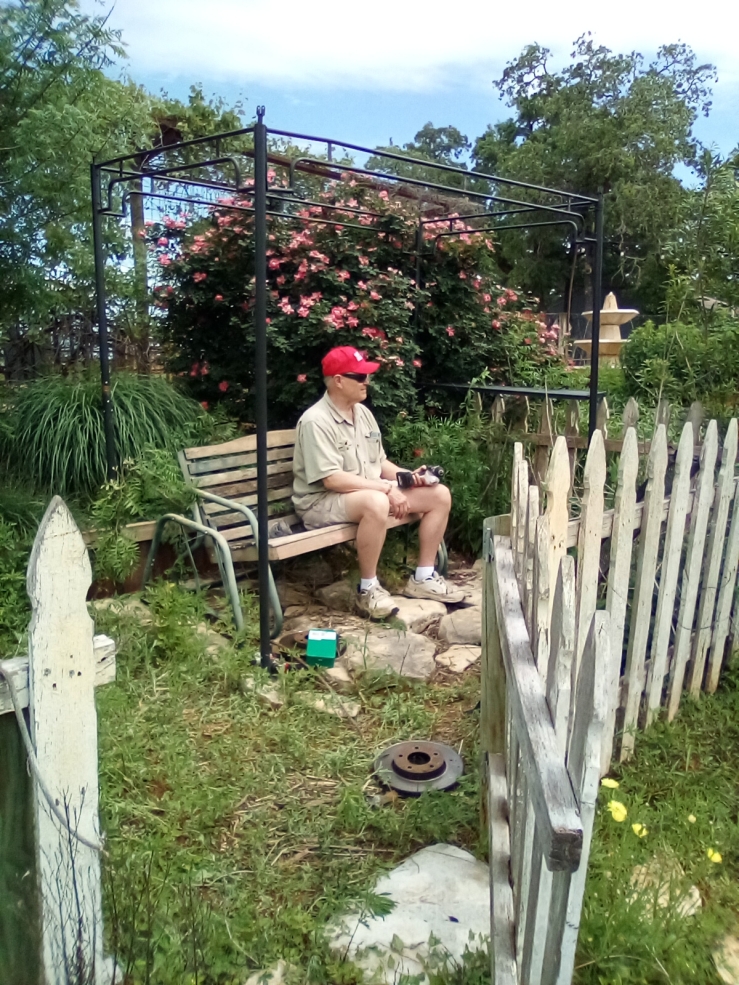
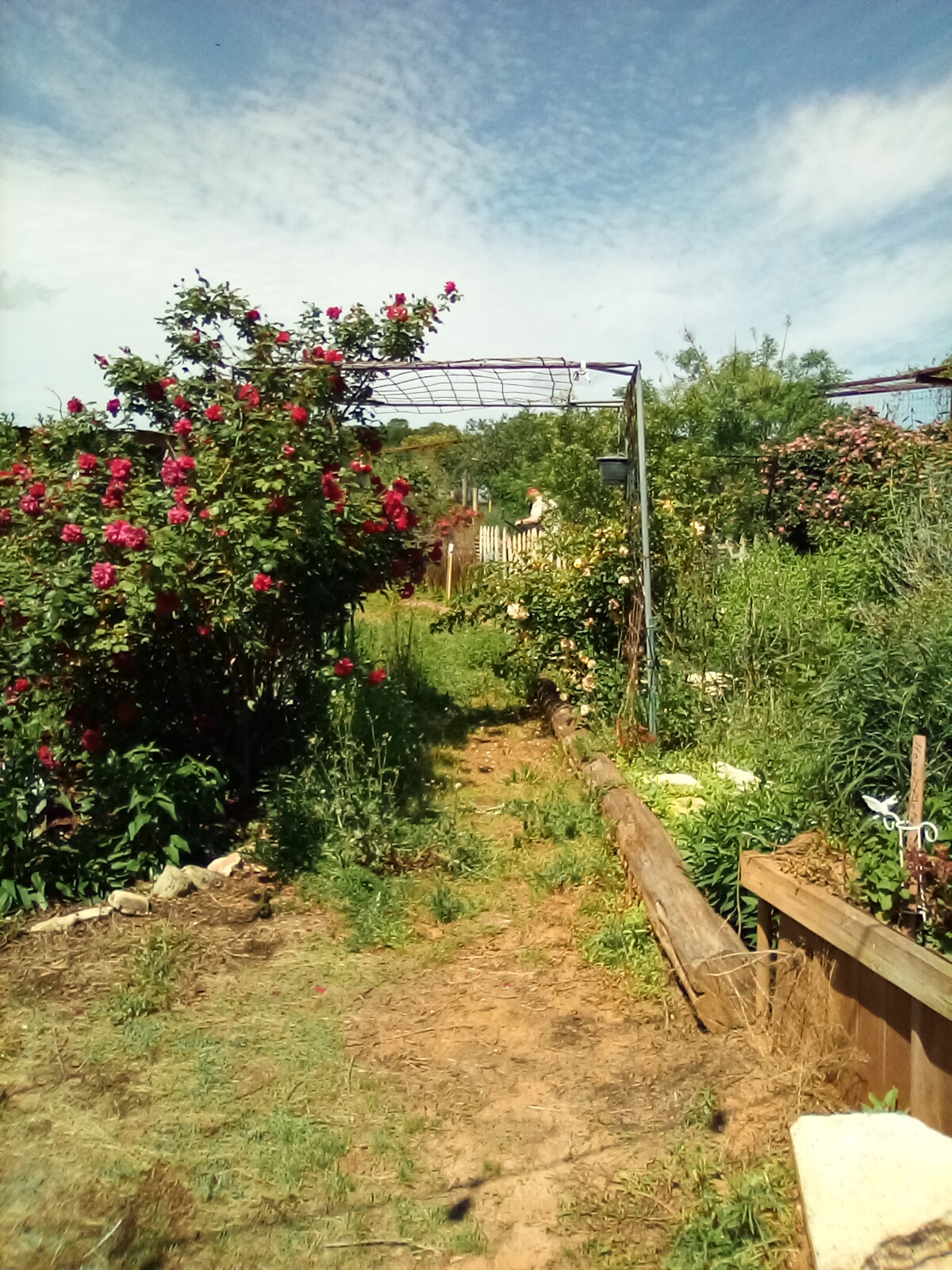
A friend to the Master Naturalists assembled a second donated used arbor that will provide another shaded garden room.
The new arbor
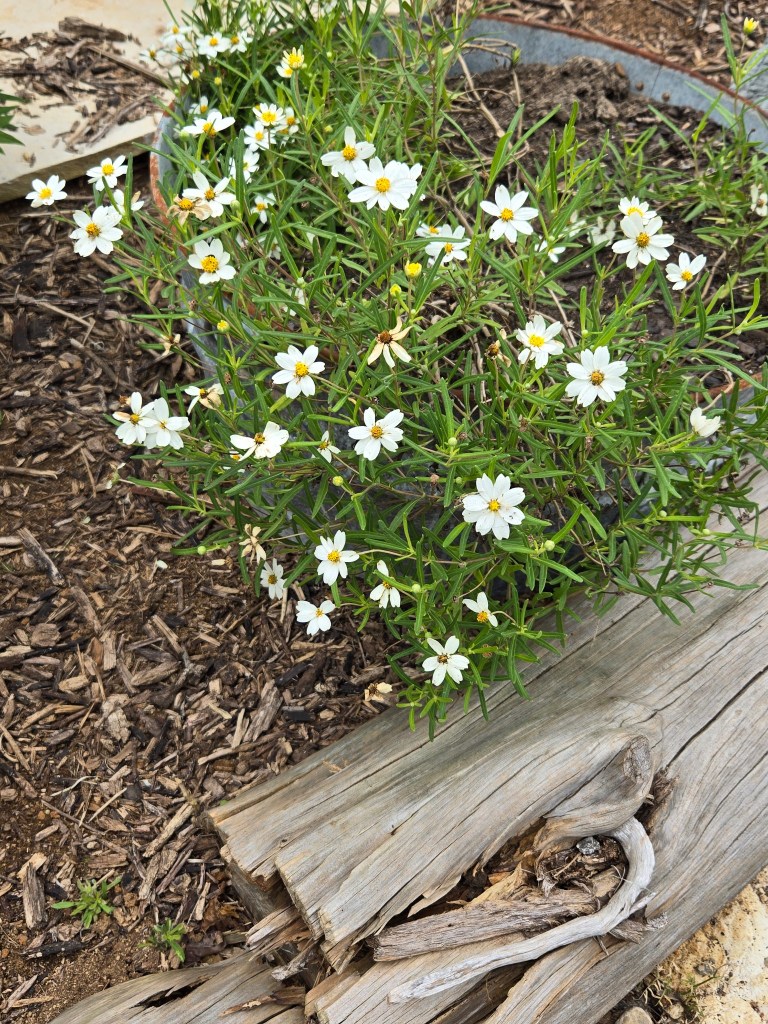
There are still plenty of wildflowers and spring bloomers and Natives gearing up for summer and the fall. Take a walk on the wild side before more is removed to make way for upcoming events!
Clouds parted and the view was stunning of the Solar Eclipse. El Camino Real chapter members gathered at a member’s place to watch the event together as well as do a few projects – and of course eat.
There were 16 members and 7 guests who met at Jackie Thornton’s Party Barn near Minerva Monday. Jackie had everything ready to go including materials to make bee watering stations and Wren nests.
Working on projectsCarolyn sharing informationConnie sharing information
Debi Harris used gourds to make the Wren nests, and members put a little personalization on them. Jackie told everyone how to create the bee watering stations. Several creative pieces went home with members.
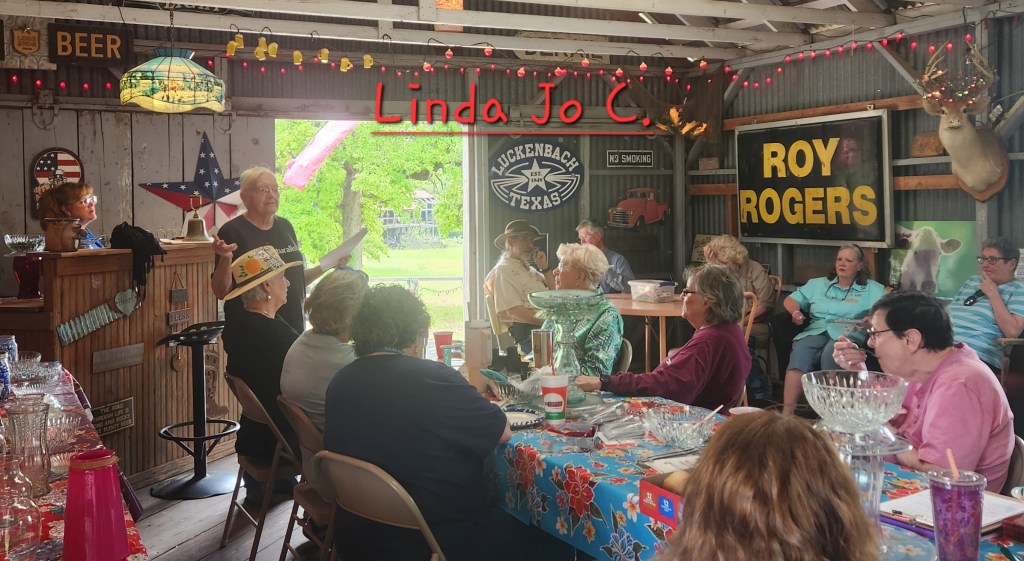
Training was then provided by Carolyn, Connie Anderle, and Linda Jo Conn on the eclipse. Carolyn provided facts, including the one that predicts another total solar eclipse will not occur in our area for 350 years. Connie provided safety information on viewing eclipses, and Linda Jo discussed how animals react to eclipses.
Linda Jo sharing information
After eating a large lunch, members set up outside in a wildflower-covered field and cheered when the clouds parted, making the eclipse visible. Everyone sat and watched for over an hour as the moon edged its way between the earth and sun.
Eclipse watchers
Everyone stopped all noise, to hear what nature would do as the totality came close. Before it was complete, but it was growing darker, birds, frogs and crickets began to make their noises that they normally do at dawn and dusk. At the darkest point, nearby coyotes howled for a minute or two. It was measurably cooler, too.
Getting toward total eclipse!
Several members were seeing colors – pink and blue – at the most covered point, too. I found out last night that it was solar flares making the colors.
Carolyn’s photo with a plane in itCarolyn’s photo with a streak that could be a meteor
I did not use the correct filter on my camera, so my photos show those colors, among other oddities. It was a once in a lifetime experience – unless you are willing to travel to see another one.
Of course, Linda Jo took some time for iNaturalist observations
Long ago and not so far away lived a group who called themselves the “Hogna.” Sounds like a Native American tribe, doesn’t it? But, no, we who are better informed know them as a strain of arachnids, joint-legged arthropods. That’s “wolf spiders” for those of you who need a head’s up.
Anyway, it seems the leaders of the group were interested in genealogy and had heard rumors of some cousins that had disappeared from the family tree. These were the antelucana part of the tribe, and they wanted to reconnect with the cousins. They didn’t even know what to call them; they just knew they were Hognas.
Hogna antelucana (photo by E. A. Neubauer)
Fortunately, one day a young man by the name of Eric was discovered in their home territory. Now, Eric was a bit of a mystery to the Hogna, and the Hogna were an equal mystery to Eric. The Hogna were terrified of Eric in the beginning, because he was always running them down and swooping them up in a Tupperware container. Hogna aren’t jumping spiders, and the sides of the plastic containers were too slick to climb out of, so they were trapped. Nobody likes that feeling, do they? It wasn’t too long before they realized that sooner or later Eric would dump them out of the Tupperware, and they could once again go about the business of their daily lives.
Somehow or other those who were abducted by the Tupperware King were able to communicate their interest in their genealogy search. Eric couldn’t promise much since he wasn’t proficient in that kind of search. After all, he was a cross between an engineer and an ice skater! But he said he would look into it for them. Out came the Tupperware and even more of the Hognas got to experience the thrill of the hunt.
One fantastic day, Eric noticed some differences to the antelucana in a wolf spider he had caught. Maybe he was better at this genealogy thing than he had initially thought. He kept finding more of these Hognas with strange markings.
When he needed to see both sides of a spider (wolf spiders being on the larger side) it became a bit of a challenge to Eric as well as to the Hogna. Eric got the engineering part of his brain working on the problem and designed and built a contraption that would allow photographs to be taken without the discomfort of having the Hogna lie motionless on their backs while he took pictures and studied the differences between the cousins. (Some of us think he should apply for a patend for this device! What do you think?)
Well, time moved on, as it has a way of doing, and Eric became convinced that he had truly found the lost Hogna cousins. (He put a talk, with pictures, together and presented it to friends and folks who became staunch supporters of his research. He even presented his research at the Texas Master Naturalist State Conference.) He was becoming something of a celebrity in the world of spiders.
Russell Pfau, who is a professor at a college up in Stephenville, began paying attention to Eric’s research. Russell was able to confirm that our very own Eric had indeed discovered a new species never before documented (again, we are so proud!). Eric even found out what the branch of Hogna wanted to be called. Hogna incognita is the name/title they will be known as from now on. Somewhere in this discovery Eric Neubauer will be forever linked.
We are all so very proud of Eric for his dedication, persistence, and patience in his quest to prove his research was valid.
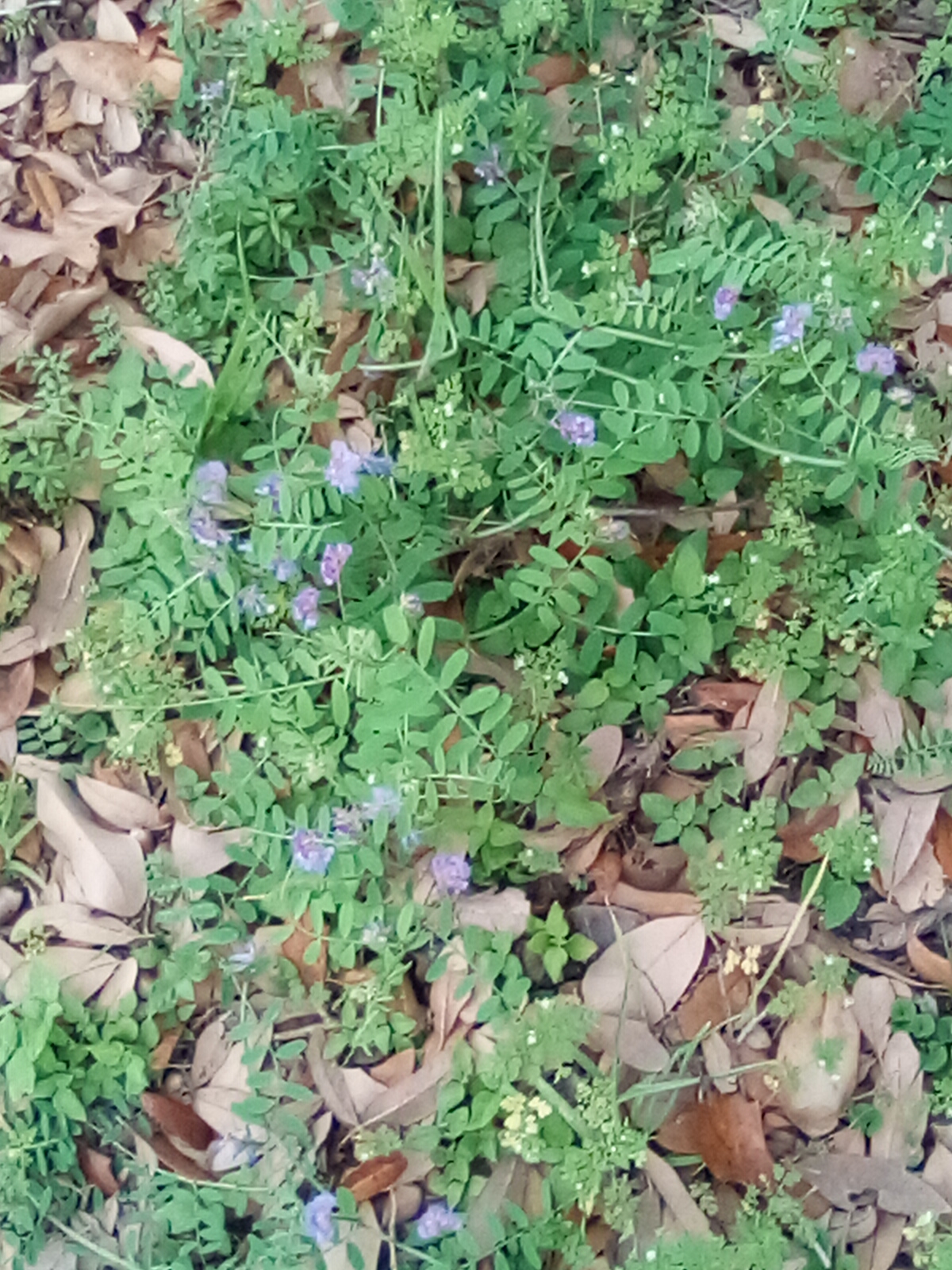
Catherine shared these photos of sights at her home. Sue Ann Kendall has added identifications, which may be wrong, so feel free to correct!.
Southern dewberry (Rubus trivialis)Crow poison, catchweed bedstraw, among othersCommon vetch (Vicia sativa)Tiny bluet (Houstonia pusilla)Common dandelion (Taraxucum officinale)Cecropia moth (Hyalophora cecropia)This is the largest native moth in North America













 Nature Along the El Camino Real