The Famous Endangered Houston Toad also attended the Wildlife & Woodlands Post Oak Savannah Landowner Workshop, where our chapter had a booth last week.
The male toad saying hello.
The pair traveled in customized carriers with their chauffeur, back to the Ft Worth Zoo (a 2.5 to 3 -hour trip each way). I only managed one photo of his handsomeness. This species is leading the resistance against riparian and native species destruction.
A few live in the southern part of Milan County. The Brazos River splits this county. I’m on North side of the river, and the soil is Blackland. South of River is sandy soil and that’s where our small Houston Toad population lives.
I enjoyed getting to see their huge back feet, which are all the better for excavating their holes while moving backwards! They don’t have to turn around to watch their world!
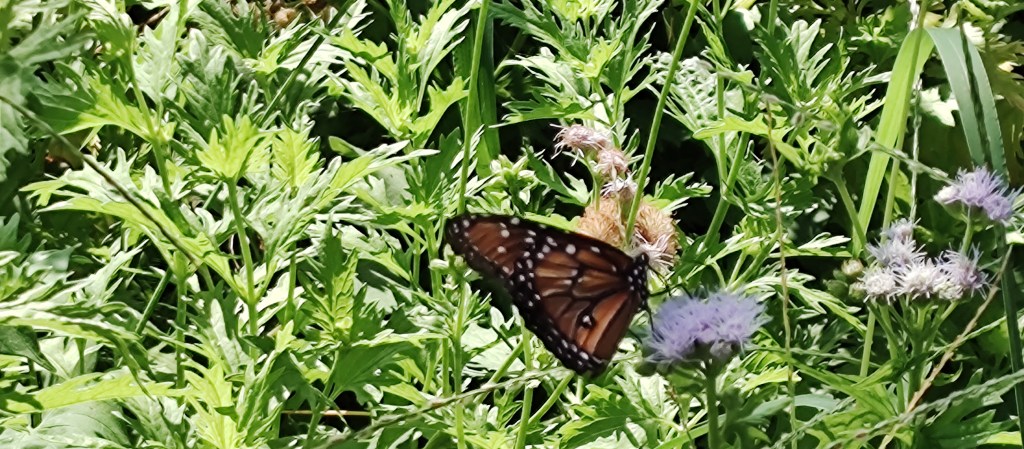
On Saturday morning I took a side trip to the El Camino Real Texas Master Naturalist City Wildscape to find a pleasant surprise in the overgrown mess. Queen butterflies had found the place. I counted about 20 that morning – all on the Gregg’s Mist. That is by far and away the Queens’ favorite nectar producer.
Not only had the Queens landed, American Bumblebees had also located nectar sources for themselves – mainly the Common Sunflower that planted itself in the city wildscape and reproduced many more this year.
I also saw Ligated Furrow Bees and Jagged Ambush Bugs. Those are pending identification verifications in iNaturalist. I also saw Oblique Longorn Bees – a second time for a new to me bee. They are very tiny and in near constant motion. All of these were on the Sunflowers.
Other things we planted were in bloom, but they are mostly overwhelmed by the terrible invasive “Tree of Heaven” and the Persimmons. Persimmons have taken over the right half of the wildscape (if you’re looking at it from the street) and the Tree of Heaven, an invasive from China, has the left side.
I met with the church directors Sunday morning, and they agreed to let us make a last ditch effort to eliminate both of those. Crape Myrtles also are spreading, which are not native to this area either. They have lots of pretty blooms, though. More Queens had arrived.
Alan Rudd has devised a plan to kill these invasives. We believe that we can do it without harming the Pecan tree in the wildscape, but there is no guarantee of that, so we needed approval from the All Saint’s Episcopal Church to do it. They were in agreement, since they also were dealing with the Tree of Heaven in most other parts of their landscape.
Liz Lewis is having the source of the Tree of Heaven, three trees nearby, removed, too. Otherwise, they’ll just come back. No one knows where the Persimmons came from, but we hope we can get them out, too.
Once that is done, the wildscape needs weeding. Good for volunteer hours, everyone.
I went out to Wild Wings Bird Sanctuary yesterday to see what birds were out there and to take some new resources for visitors.
Oops! Lost a tree.
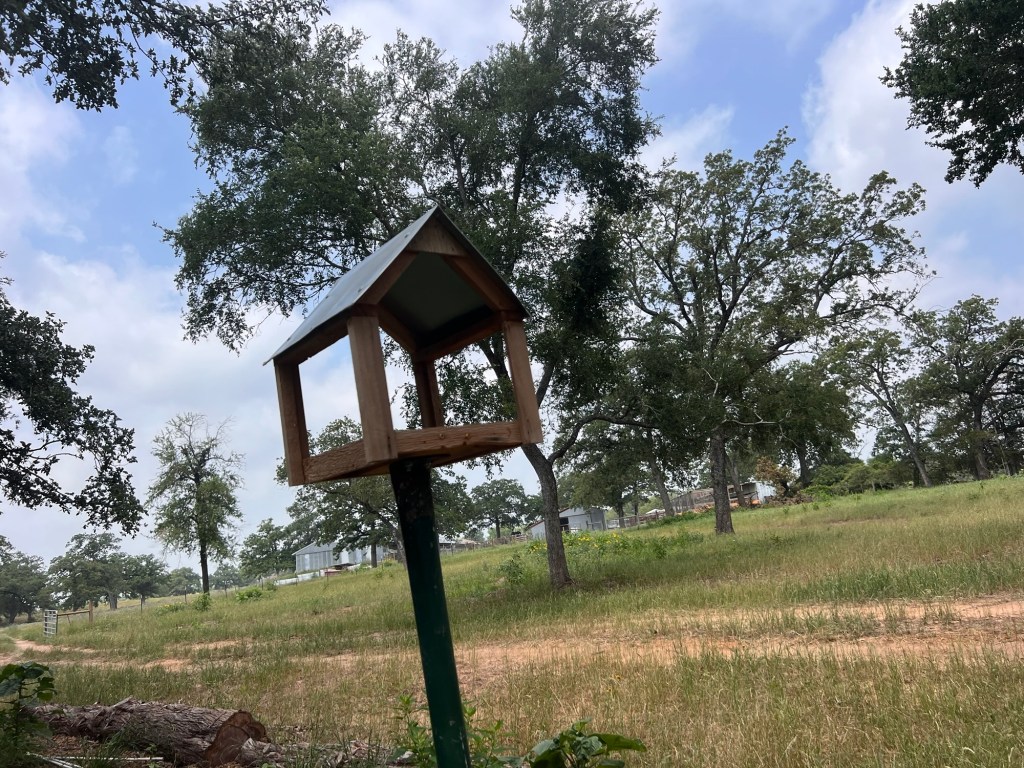
I joined Ann Collins, who was as happy as I was to see new bluebird houses have been put up, one in the sanctuary and two others along the property driveway.
Next year’s Bluebirds will love this!
We appreciated the newly planted native plants and red lantana in the raised beds, and no doubt the hummingbirds will, too.
New plants.
That’s good, because curious heifers have been having too much fun with the official hummingbird feeders. You can’t help but be amused by them, though. Gene Rek found one of them had drunk all the water in the bird bath and was licking the water dripping down the drip chains. That’s just too cute.
Yum!
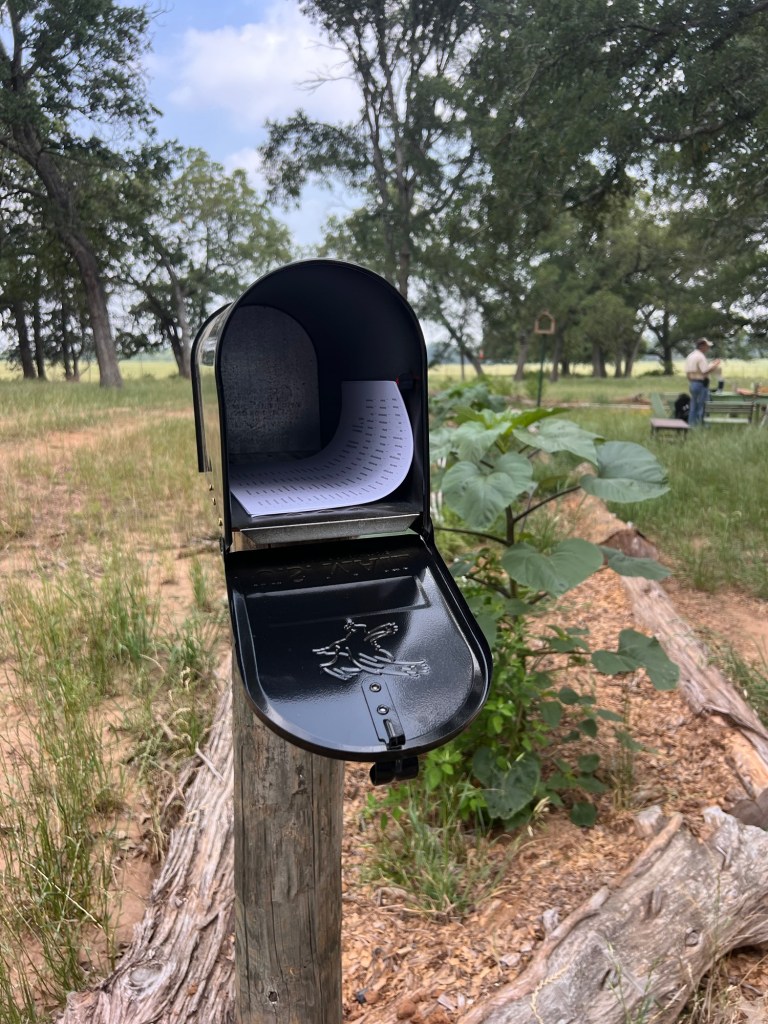
As we listened and watched for birds, I put two of our new bird sheets in the mailbox for visitors to take. One’s an alphabetical list of birds found in Milam County (an updated version is linked on the Wild Wings web page), and the other is our beautiful color bird sheet to help visitors identify what they may see at Wild Wings. You can also download your own copy on the web page. By the way, there’s also a bird list in taxonomic order in the collection as well. As soon as I can get these printed, you’ll find them in the mailbox as well.
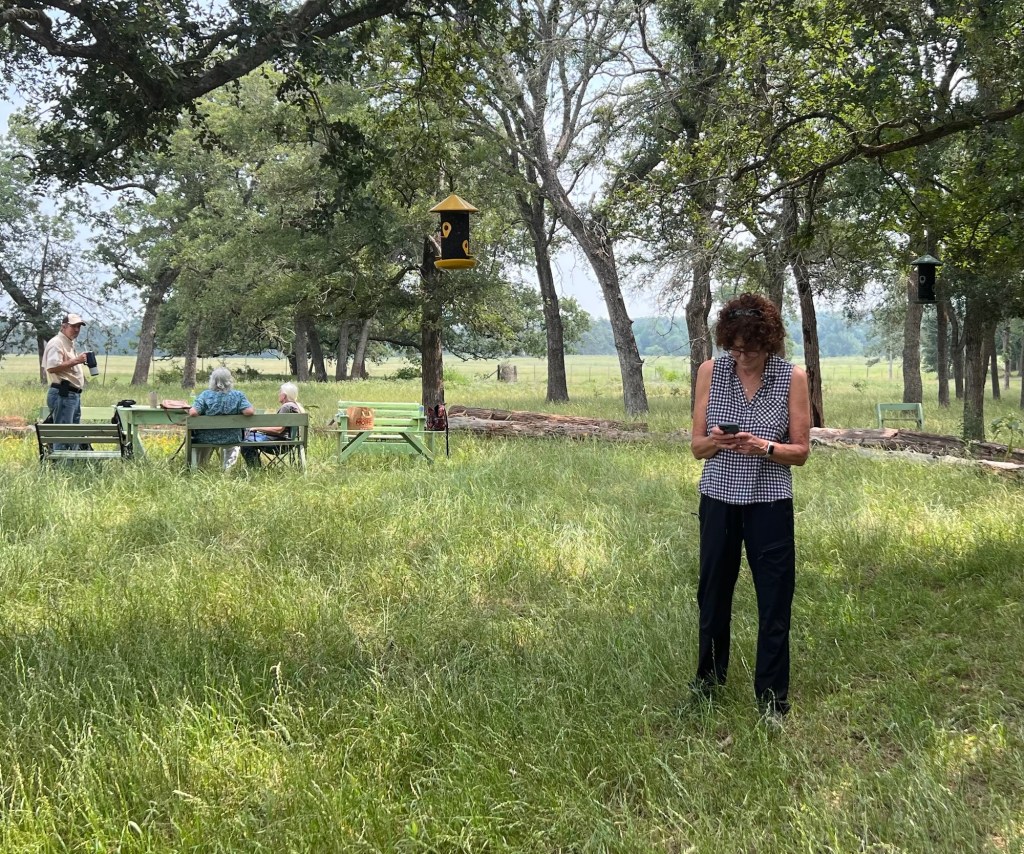
Shady meeting area.
We are still waiting for our signs to arrive, but I did put a few magnets in the mailbox, so visitors will know they’re at the right place.
I forgot to take a picture of the mailbox!
Mornings are a wonderful time to hang out with the birds and squirrels, so check out our growing sanctuary! Enjoy some of the sights we found during our visit.
Very cool grasshopper exoskeleton Bold jumping spiderArmy workCicada exoskeleton Brittlestem?Hard to ID. Pretty cluster. Lots of insects in this spotted horsemintInsect on pokeweedWhite example of usually blue white mouth day flower.
Today we had one of our first educational sessions at the Wild Wings Bird Sanctuary, sponsored by the El Camino Real Texas Master Naturalist chapter. Although there’s no denying the weather was toasty and humid, the attendees all learned about Merlin Bird ID and iNaturalist.
Practicing with MerlinMany wildflowers surround the Wild Wings Bird SanctuaryNew platform feederMailbox for things to shareThere’s a birds of Milam County checklist and some tools you can borrow in hereBonus: a Wheel Bug Arilus cristatus
I enjoyed leading the discussion, since I just retired as an adult educator and miss teaching people. I’m grateful for the opportunity to give back to the chapter.
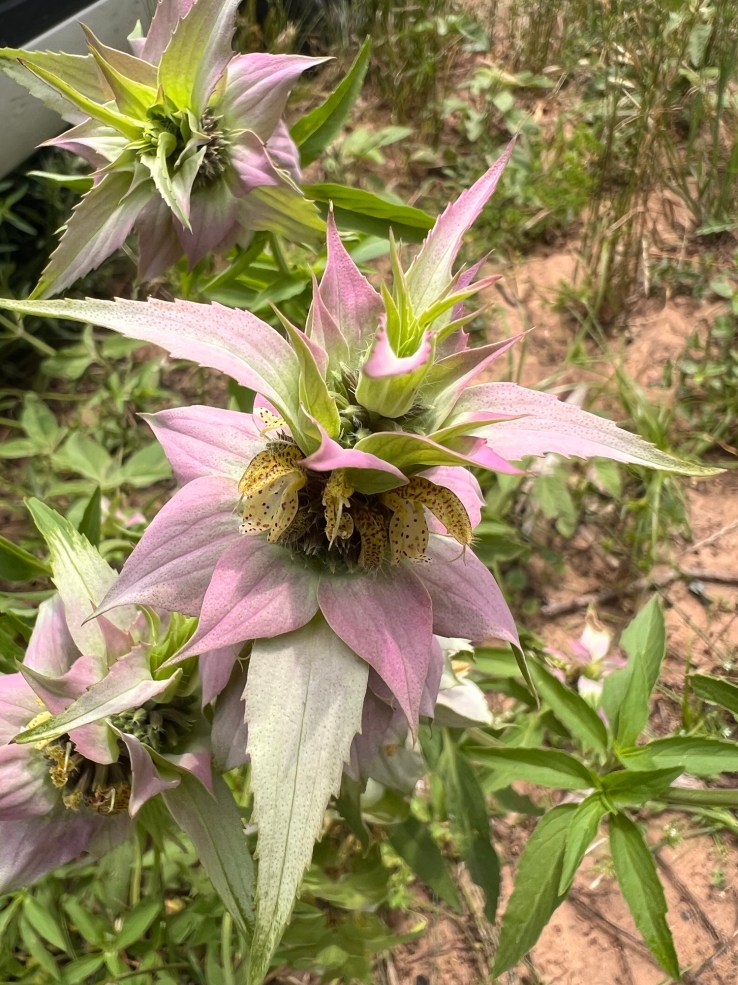
When I parked, I went next to this Spotted Horsemint (Monarda punctata). You sure could smell it!
Anyway, before we started, one of our members brought a baby bird she has been caring for to try to identify it. We enjoyed watching it eat and peep. No doubt it will soon be in the hands of All Things Wild or another rehab organization, but for now, the little Blue-gray Gnatcatcher or Mockingbird seemed in good shape. Interestingly, more than one of us tried to use Merlin Bird ID to identify it, but depending on the angle of the photograph (or something), different birds came up. On iNaturalist, my photo came up unambiguously Blue-gray Gnatcatcher, however. And looking at the bird, it seems more likely to be a Gnatcatcher than a Mockingbird or Phoebe. It will be interesting to find out how it turns out.
Getting a photo with the tail feathers seemed to help.
The class had a mix of learners, from people who were unable to access the App store to get either app on their phone to very quick learners to experienced helpers. I did my best to help everyone but always got stumped when I can’t remember their passwords for them (I can’t remember mine either, but have finally found ways to find them when I need them). I can help people later! Oh, and those with Android phones weren’t able to acquire the new iNaturalist, because it’s only out for iPhones, to the great consternation of some of our power users!
Merlin
The good news is that even some of the experienced people learned new features of Merlin Bird ID. Some of the most helpful information is kind of buried among menus and options with cryptic symbols. We had a lot of fun seeing what the most likely birds in the area around Wild Wings would be, and people practiced the step-by-step and photo ID features. I enjoyed showing learners how to get to additional information about birds they identify, such as migration patterns, songs and more.
Most important from a “citizen science” viewpoint, is that everyone learned how to save an observation to their life list. There were some very gleeful folks who started to build out their lists. Who doesn’t enjoy seeing a bunch of stars appear and the words “New Lifer!”? I sure enjoy it, even with 333 birds on my list (I travel a lot, so there are lots of East Coast, Colorado and Arizona birds). These observations go on eBird, where biologists and others use it to track patterns of movement, migration, and numbers. The more people record observations, the more information they will have.
My most recent birds. Can you tell it was migration time?
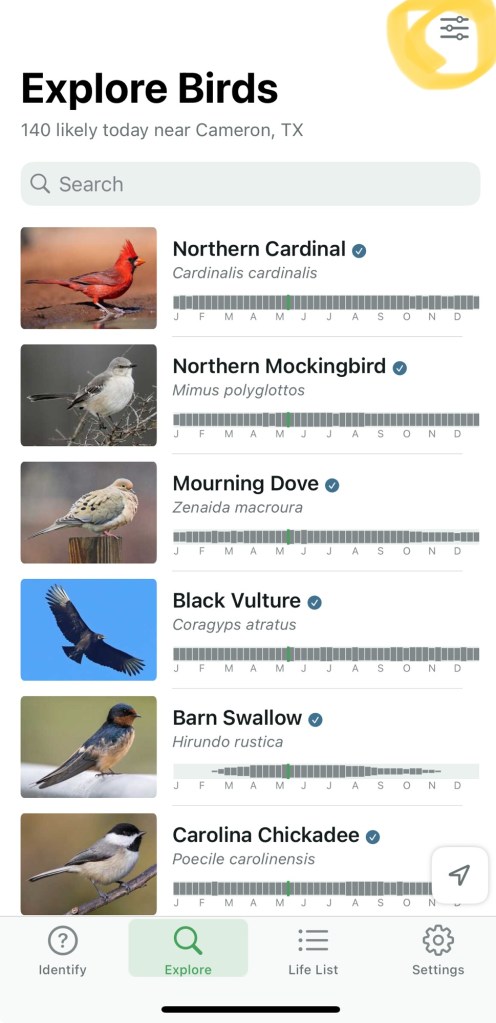
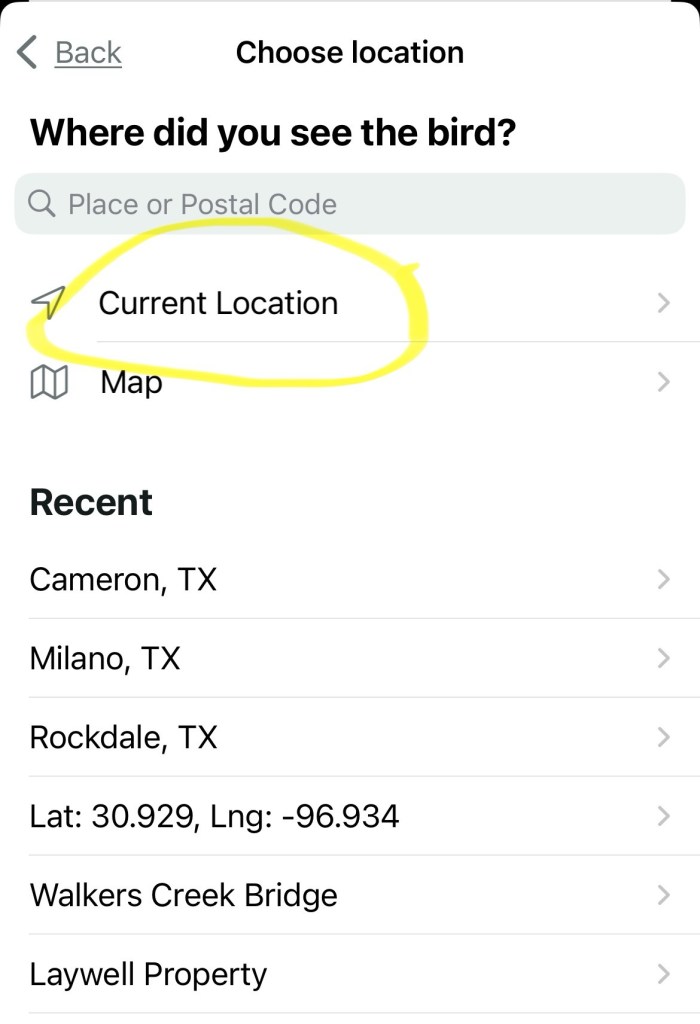
It’s important to remember that the birds identified by the AI software used by Merlin are not always accurate, as I’ve written about before. For example It’s less accurate if you don’t have it set to listen for birds where you are, too (I forgot to tell mine to stop listening for South Carolina birds recently, and only realized when a Texas bird I heard was missed). [I forgot to teach this part, so here are some instructions.] The setting to change locations (if you travel or something) is accessed by clicking the menu on the Explore (search) screen and clicking where it says “Cameron TX” on my version of the Refine Bird List screen (yours may differ). Then click Current Location (I usually leave mine on my house, which works fine for all our area). It will be stuck on your last location until you select “current location”
How to change your location in Merlin Bird ID
It helps to visually confirm the birds heard unless you’re familiar with it (I think most of us can confirm an American Crow) and to ensure that there isn’t another source for the call (Mockingbirds in my area do a great job with Eastern Phoebes, Eastern Bluebirds, and Belted Kingfishers, for example). Still, using Merlin is a great help for learning to do your own identification of bird calls and impress non-birders.
iNaturalist
Most of our group knows how to use iNaturalist on the computer and/or phone, but not many were familiar with the new iPhone app. So, I showed those who needed the app how to find it and helped get them started. The new app is quite different and has some interesting new capabilities, like using AI to identify what you’re looking at without taking a photo, identifying batches of observations and uploading them later (handy if you have limited bandwidth in the field), and grouping your photos before uploading (a little tricky but helpful).
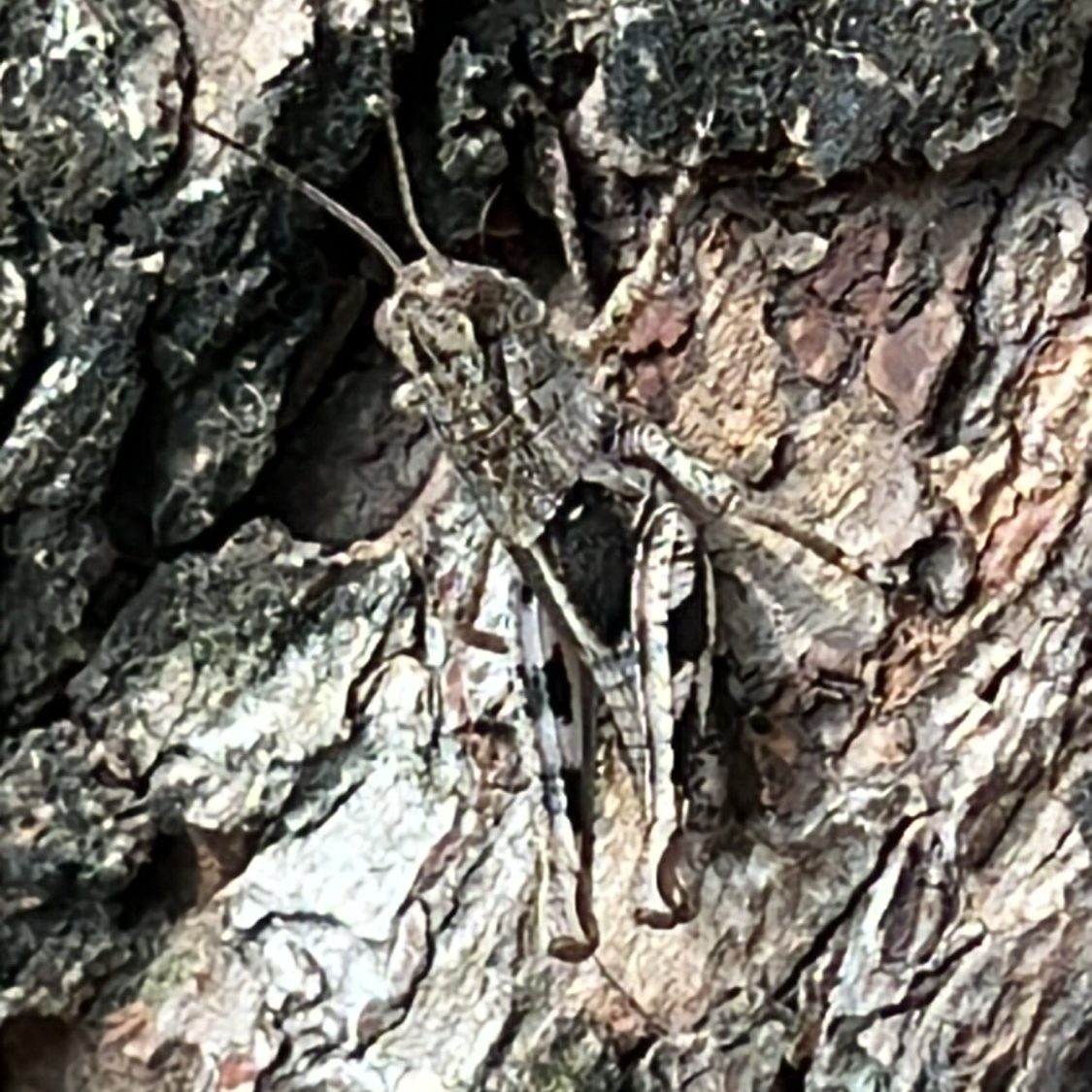
This Ponderous Spur-throated grasshopper sure blended in with the tree, but iNat got it!
I’d like to do another session on the updated iNaturalist when more Chapter members get set up and try it out a bit. But at one of us said to me, the best thing to do it just get it and make yourself use it until you figure it out. That’s what I did (it helps that I learned and taught applications for a living until just recently, so I’m a good software learner).
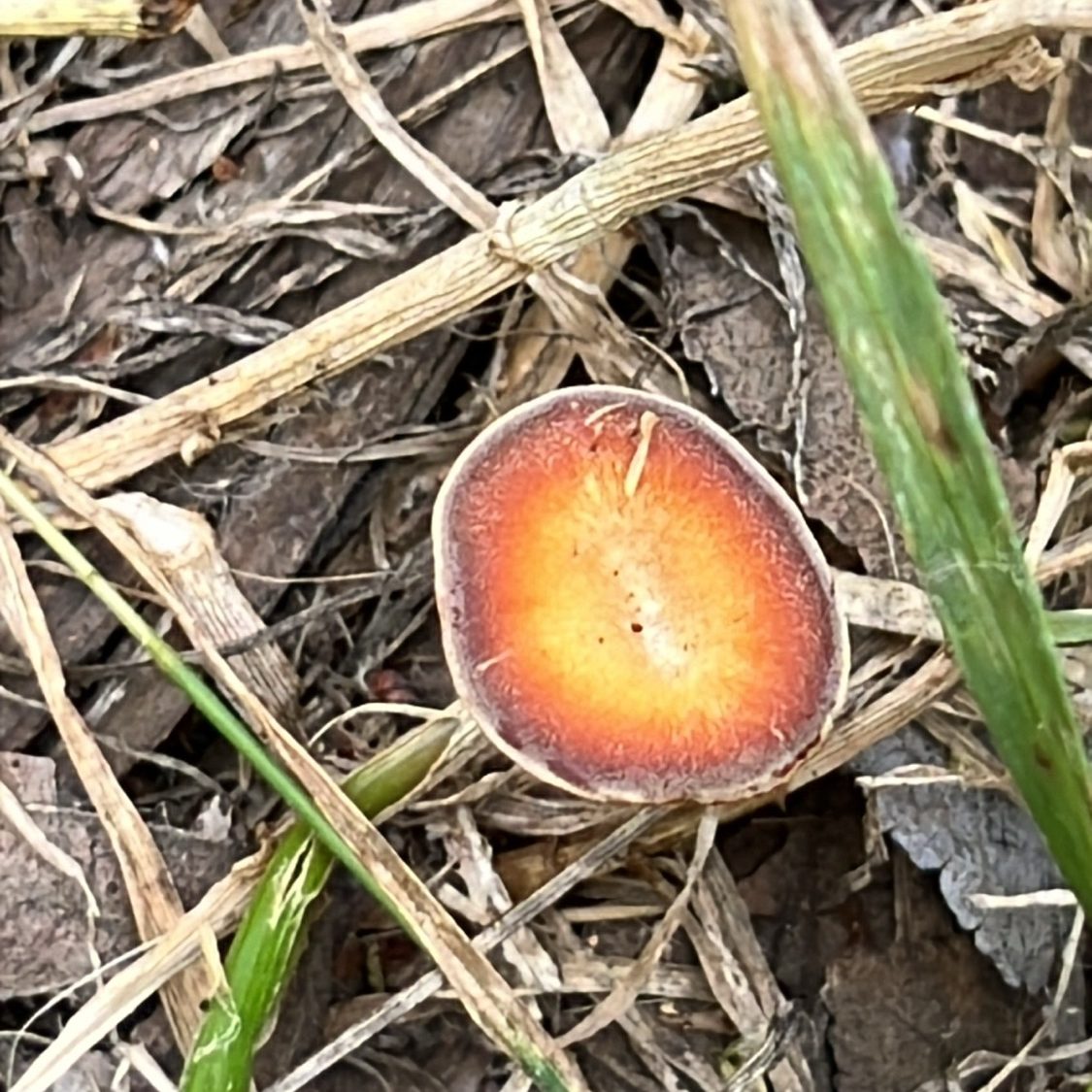
iNat has no clue what this fungus is. I should have gotten a photo from the side – rookie error!
I’m here as a resource for anyone with questions on this one. Send me an email or comment on this blog. Our usual source of vital iNaturalist information, Linda Jo Conn, is hampered by having an Android phone, but she’s your go-to on the computer app and the “classic” iNaturalist. Of course, iNat is working on that Android version, so it should be out soon, we hope.
Thanks as always to Ann Collins and Gene Rek for their hard work on Wild Wings, as well as to our bird sanctuary committee. They have kept the project on track and enabled us to start our educational programs.
Resources
New iNaturalist App for iPhone! This article provides more information about the new iNat app, and has a handy video on configuring it to behave a bit more like the earlier version, which is more like how people who do a lot of identification will want to use it. I highly recommend this if you can learn from text or video (some people prefer to be shown).
It’s Earth Day! …. and a beautiful day to get outside and plant some wildflowers!
Wildflowers make bees happy!
The El Camino Real Texas Master Naturalists and the Little River Basin Master Gardeners, with the help of the Cameron Public Library, have created a free Seed Library for the public.
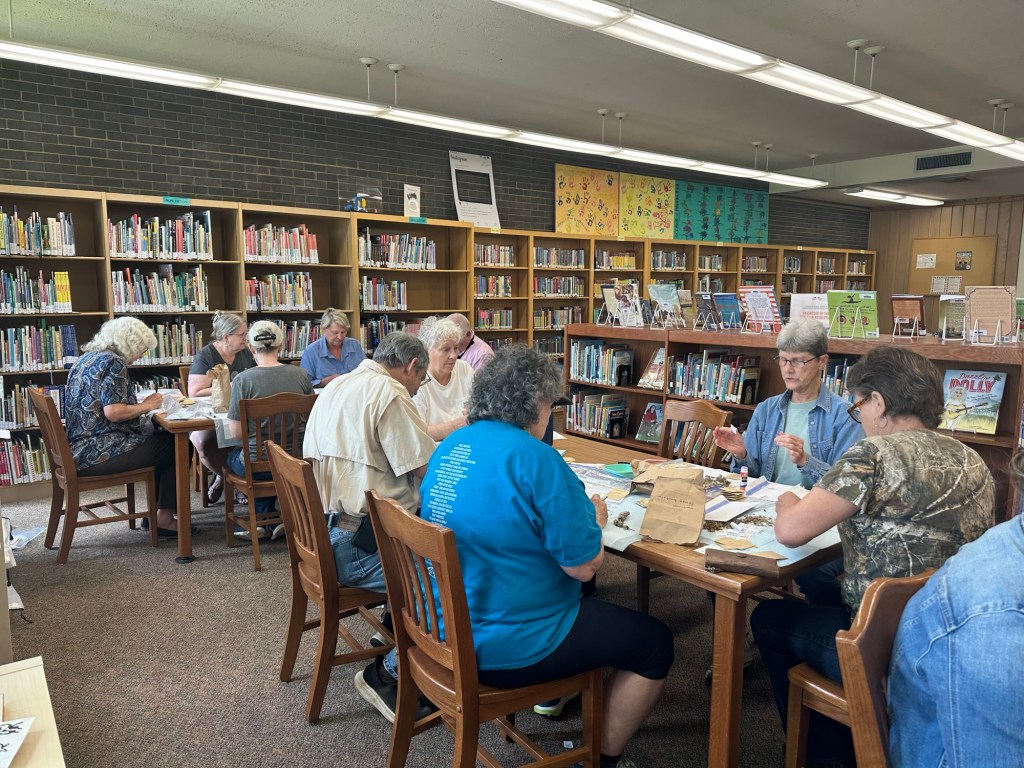
Volunteers packaging seeds
We have lots of native wildflowers, adapted plants, and some herbs. We are always adding new varieties, so come by and get a few packets of free seeds. We can’t wait to see our community become even more beautiful …and it’s a huge benefit to our environment. You’ll also feel joy from being outside and watching your seeds grow!
Thanks to the Cameron Public Library for hosting the seed library.
We had our monthly seed packaging at the Library on Earth Day. With Master Naturalists and Master Gardeners combined, we had 21 volunteers! We’re grateful to them all.














 Nature Along the El Camino Real