Drought, Ugh

by Donna Lewis

First we have the Big Freeze, now we have the big heat wave and drought!!

I guess we need to be more careful about what we wish for. When it was cold, I wished for warm weather…

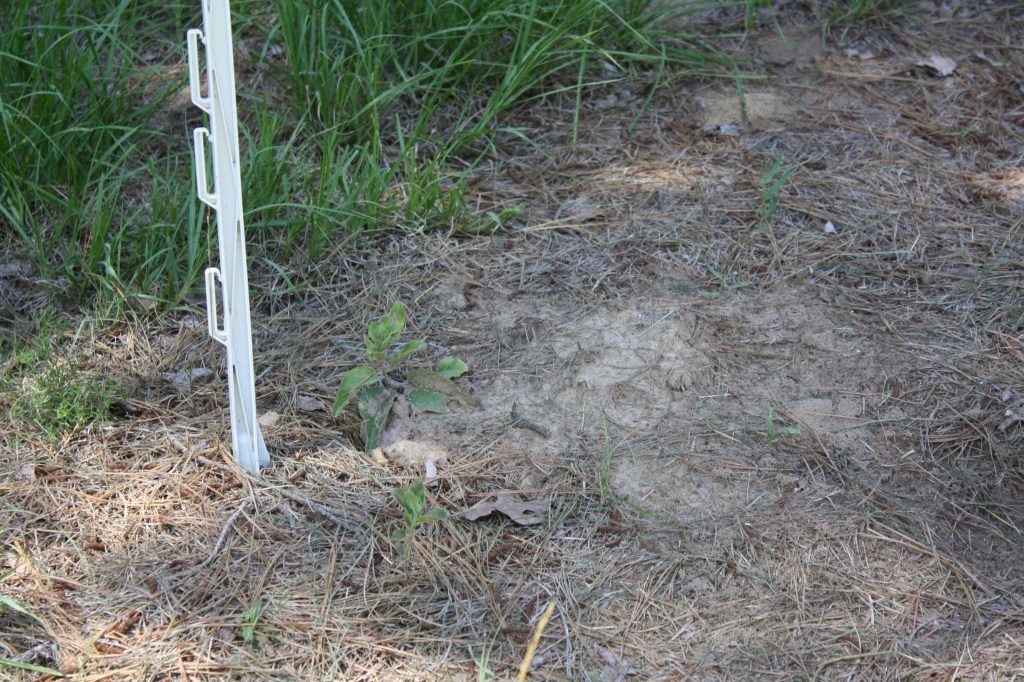
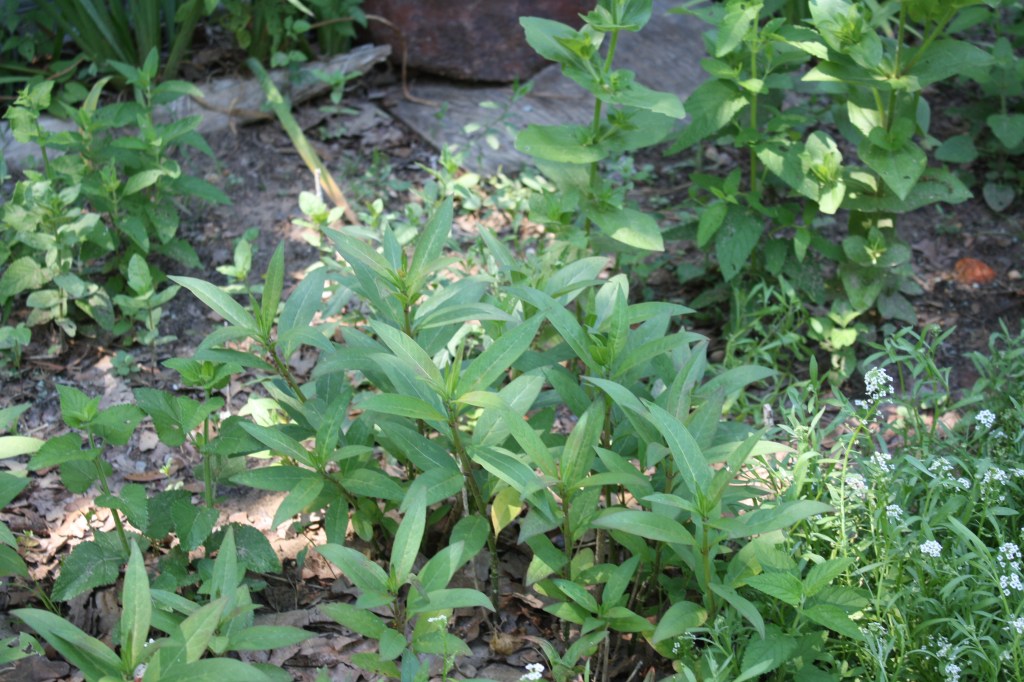
So I took a few photos around the house. It is bad. I didn’t even have the heart to take photos of my beautiful pollinator garden. I have tried to save it, but we also have to be smart.

Water for the birds, the big plants and trees. But we might just have to let the small stuff go.  Zinnias will come back from the dried seeds you can harvest now. That will save some water.

This is a good time to learn from this weather event. Put out a sprinkler in the evening, the birds love it.

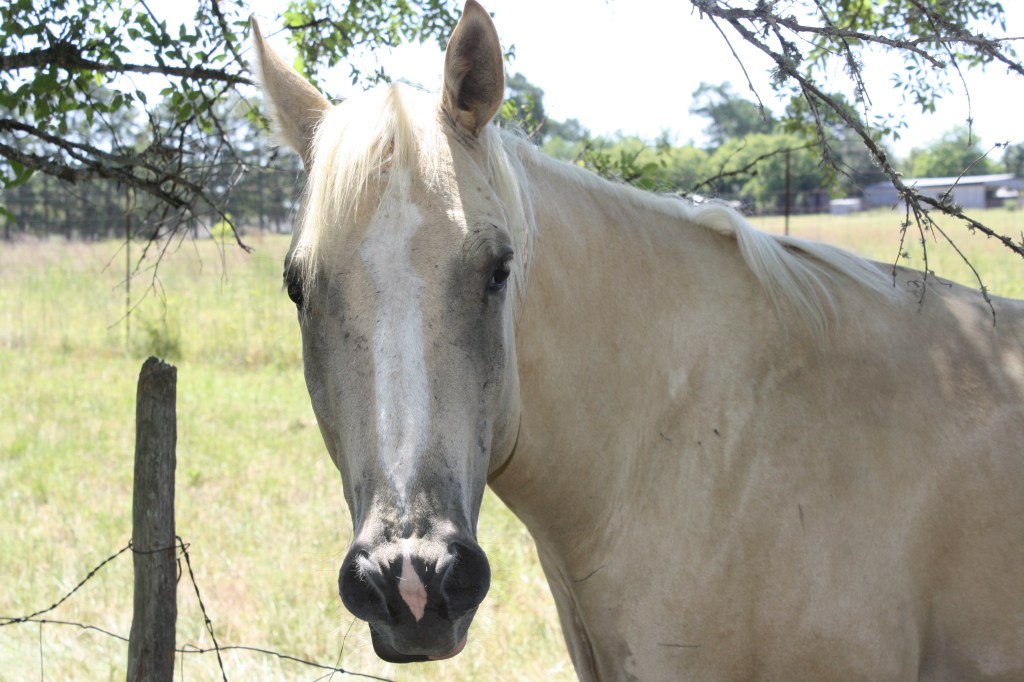
And on a happy note, here is one of my neighbor’s horses watching me put out the sprinklers. He always gets a carrot for helping me!  
Take stock of WHAT is surviving instead of being so upset over the plants that do not make it. Next year we will know to plant more of the hardy things that made it.

We must always observe and revise our plans. Things change.

Mike McCormick Explains Purple Martins

by Carolyn Henderson

Mike McCormick, considered the largest houser of Purple Martins in the area, shared his wealth of knowledge with the El Camino Real chapter of Texas Master Naturalist on Saturday, June 18. McCormick lives south of Buckholts in Milam County with thousands of Purple Martins and a few family members. He has been housing the birds for more than 40 years and has grown the number of seasonal residents steadily every year.

Purple martin house with adults waiting for fledglings to fly

There are approximately 65 Purple Martin houses at his place – all made by him. He’s also helped many others get started with some extra houses. 

Up close of the three fledglings that haven’t decided to fly, yet.

ECRTMN visited at the optimum time. All the babies are starting to fledge. Members learned how to house them and keep them coming back. McCormick also clarified some untrue facts about the migrating birds. For example, a 6-foot-tall martin house works as well as a 12-foot-tall house.

Martins in flight

Thanks also go to Donna Lewis, organizer of the event, and Ms. McCormick, sister to Mike, who fed us and kept the cattle herded.

El Camino Real Chapter Tree Girdling Saga Continues…

by Carolyn Henderson

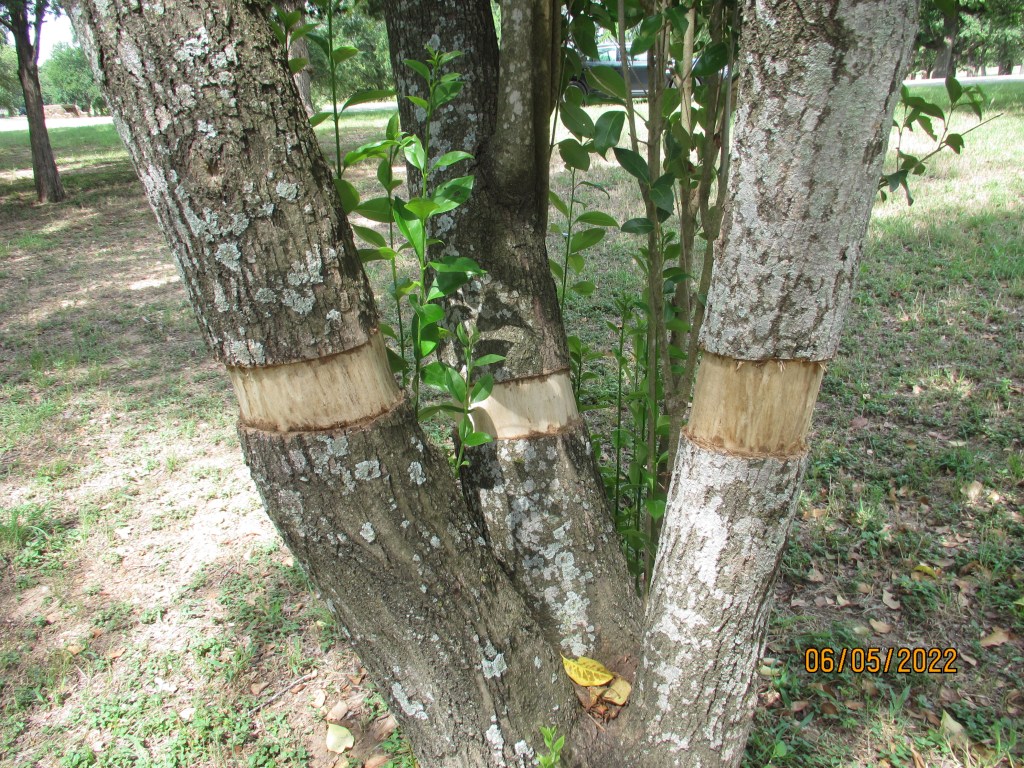
Three months ago, nine members of our TMN chapter met Cliff Tyllick at Wilson Ledbetter Park to learn how to girdle an invasive species of tree. The Glossy Privet was introduced to Texas landscapers from China. It is evergreen, produces flowers liked by pollinators and grows prolifically, and it’s an invasive species.

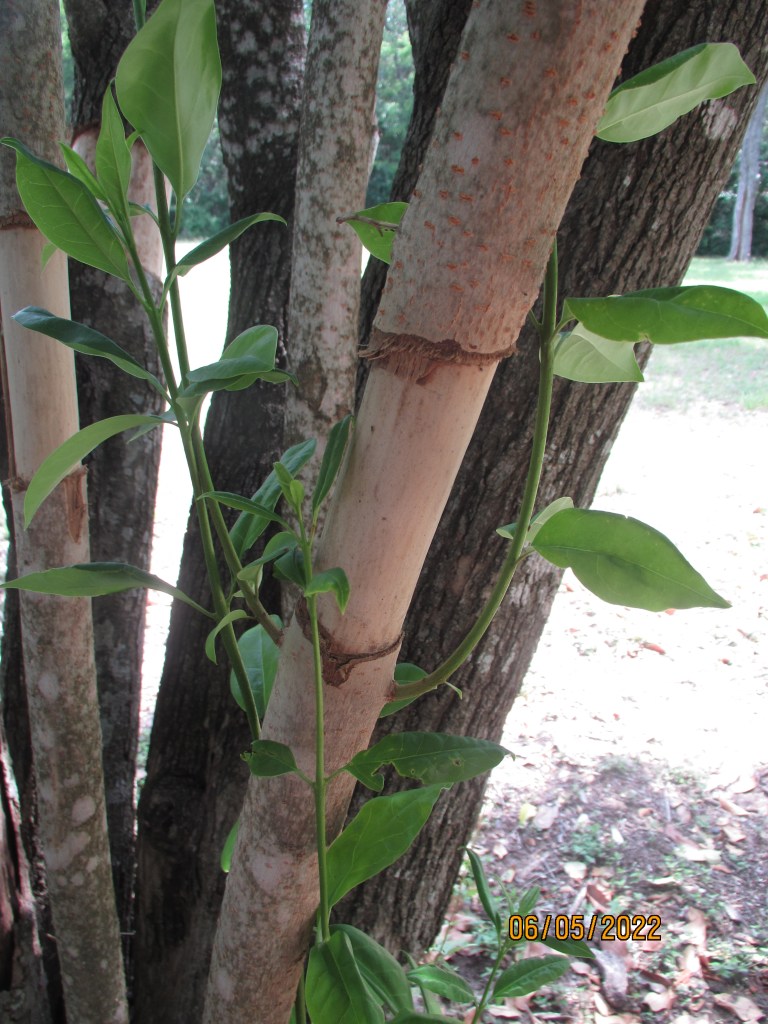
Tree #1

It’s invasive because it knocks out native trees because of its rapid growth, and it “steals” pollinators from native Texas wildflowers. Pollinators find the big tree’s flowers easy to access. It often takes a little more work to find the native Texas flowers. Without pollinators, the natives die out.

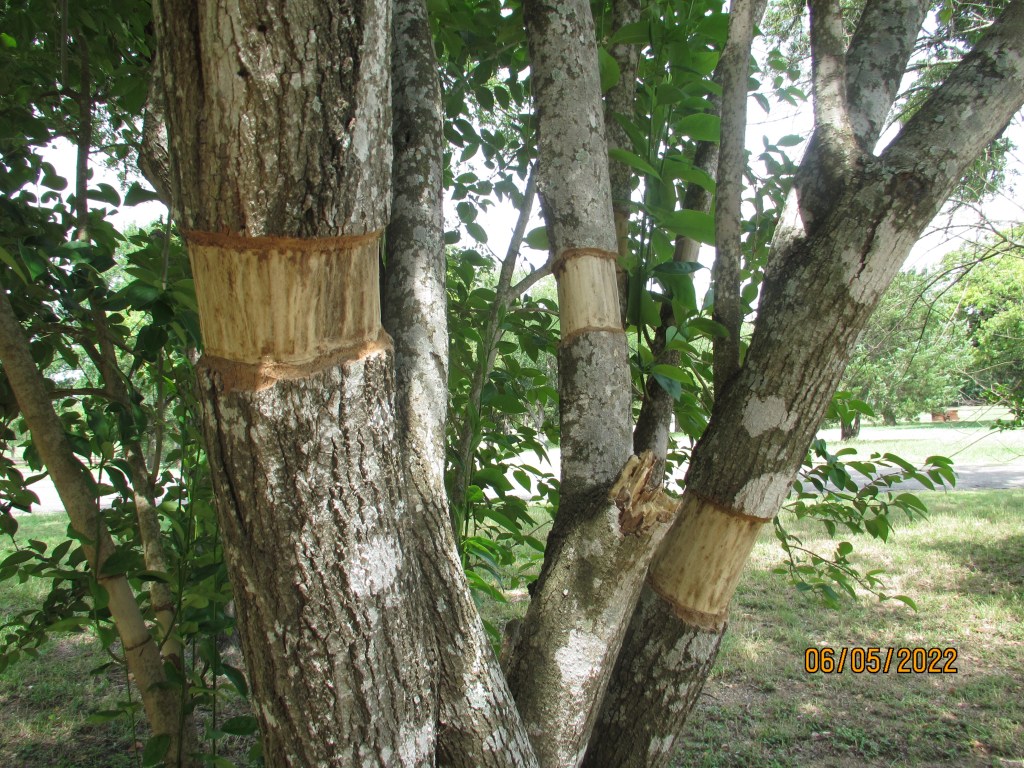
Tree #2

Tree girdling is a method of killing trees without herbicides or the noise of chainsaws. It is used a lot in the nature preserves in the Austin area. Since there are quite a few Glossy Privets in Wilson-Ledbetter, we brave nine thought we’d give it a go. In summation – it’s difficult to girdle a tree. It’s not overly complicated. It requires a lot of physical action.  

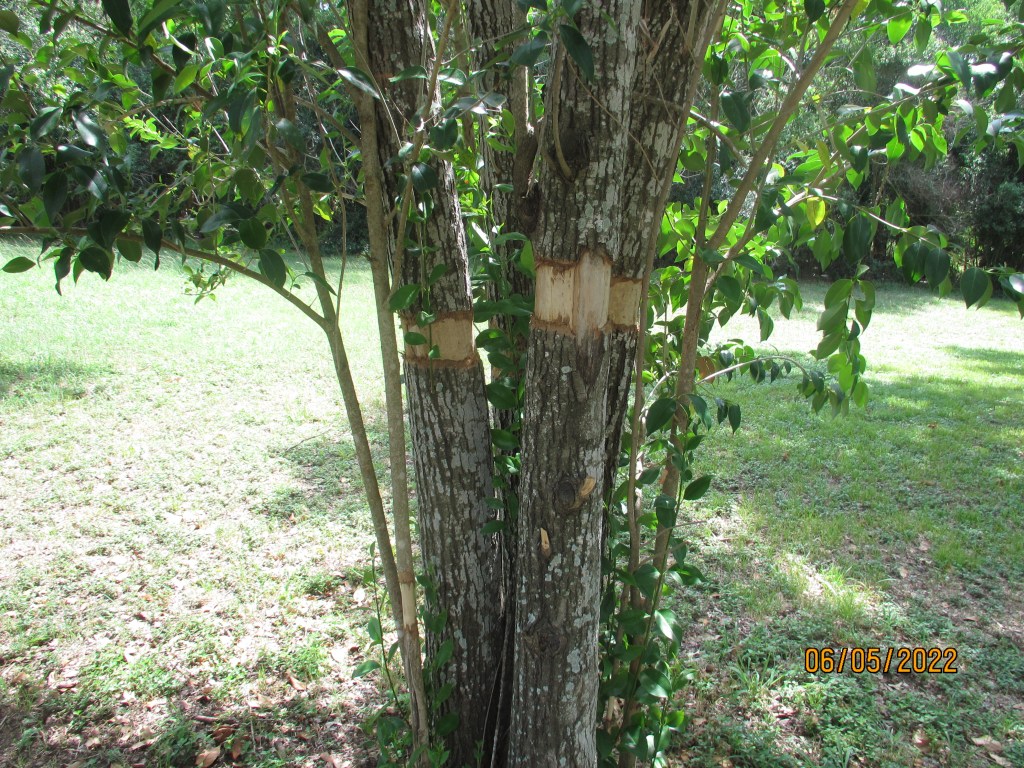
Tree #3

Sunday, I went to the park to check on the progress of our girdling. I am unsure whether it’s succeeding or not. We worked on three clusters of trees in three groups. Two of them had 3 or 4 “trunks” and were completed. The third group had eight or nine trunks, and a few of those were left untouched.

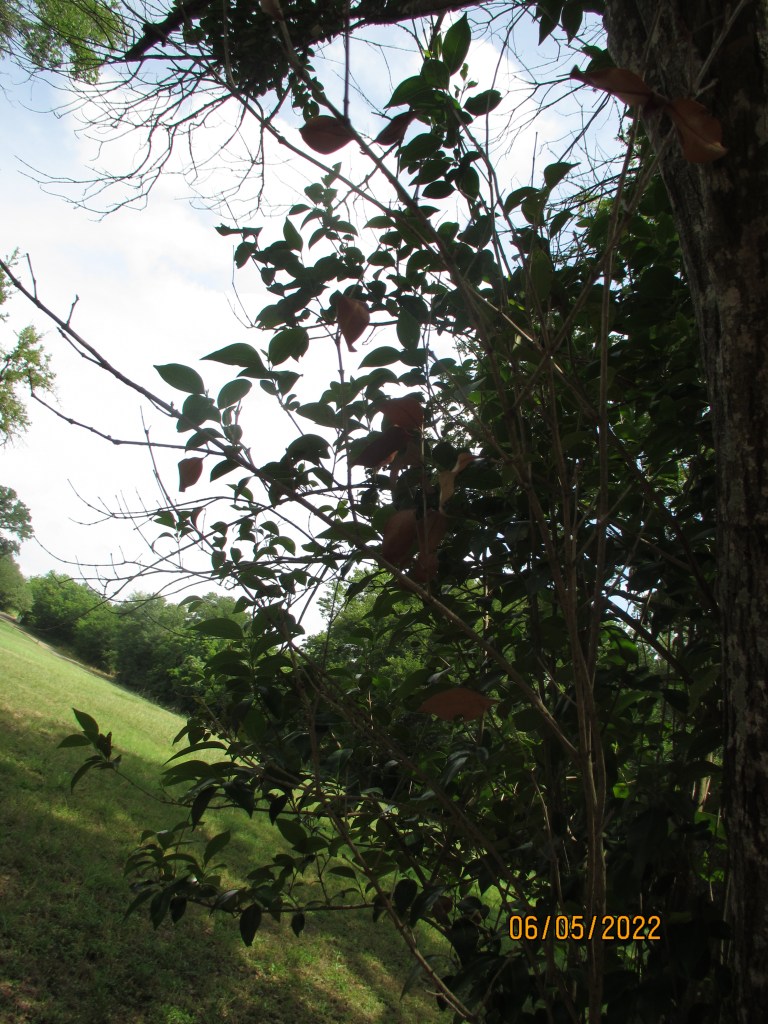
Dead branches

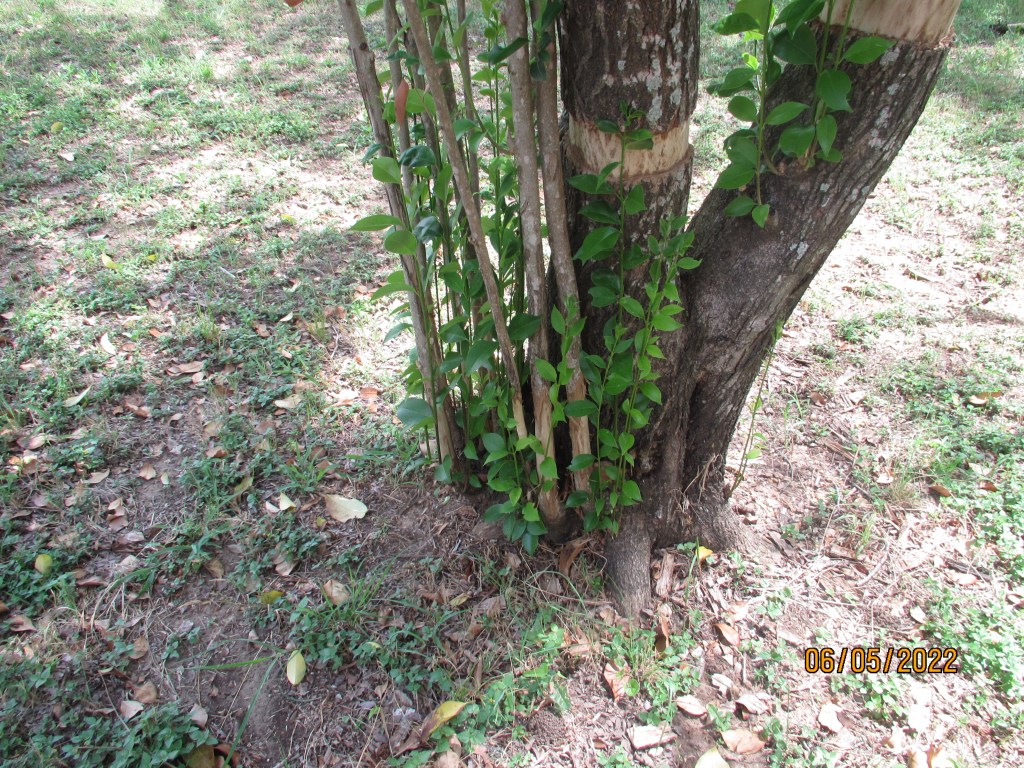
The uncompleted one has dead branches at the top of the trees, but I’m not sure if that’s from girdling or leftover damage from the freeze of 2021. The other two have a couple of dead branches, but new “trunks” are growing up from the ground. There are a few growing below the girdling area, but I don’t see any new growth above the girdling.

Tree finding a way around girdling

Cliff said it would probably take a year to completely knock them out. To hasten it along, they need a little work which isn’t uncommon, I’m told. For those who want to give our project a little care, I’m going to schedule another morning to get together and help them along.

Trying hard to live

Ultimately, we’ll get them down one way or another. Then we plan to plant Eastern Redbuds to replace them.

More dead branches

Milkweed…the ones I planted and the ones Mother Nature planted

by Donna Lewis

I wanted to show you what milkweed is growing on our property here in Central Texas.  The biggest issue is that some of these plants came up very late in the year and by now, all the monarchs have already left the area. That is not too good.   

Hopefully, this does not start becoming normal. The plants are reacting to the climate, but the monarchs are reacting to their instincts.  The plants and the butterflies need to be ready at the same time.

The first photo is Asclepias asperula or Spider Milkweed.  This plant was awarded by a grant to our chapter.  Our member Cathy Johnson applied for the grant. It was a lot of paperwork.

I started with twenty-four small plants. I put them in several areas around our pastures.

This is the only one that has returned this year.  The rest did not come up.

Photo #2 is the seed pod on the plant, which is about to let loose its seeds.

Photo #3  shows the same plant in our back pasture.

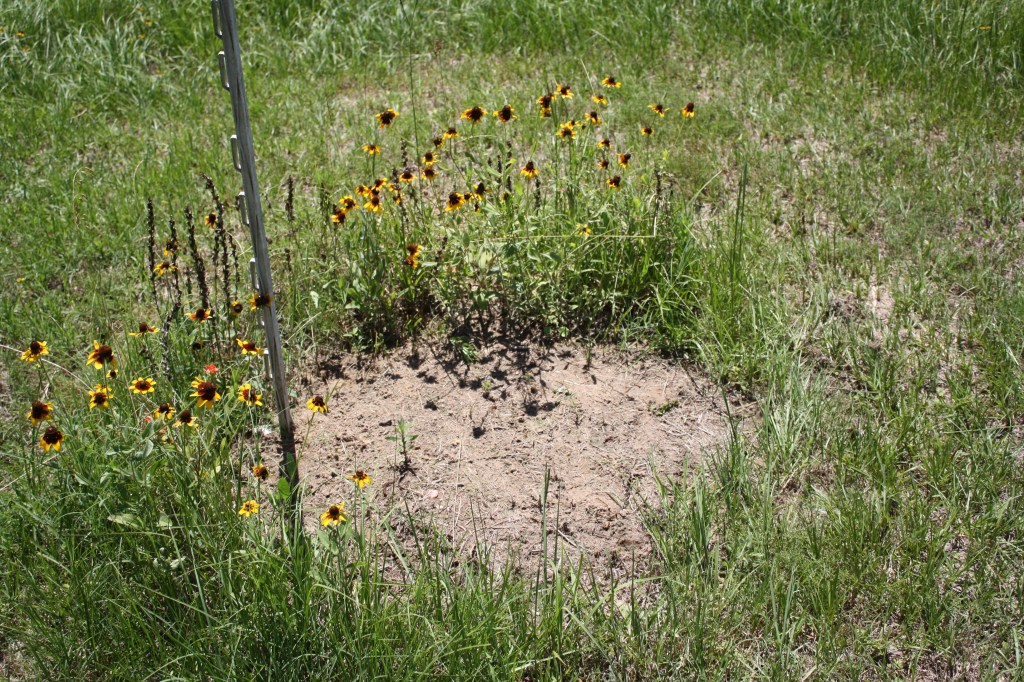
Photo#4  This is another area where we had the plants return for two years, but not this year.  There were gophers under the plant.   I guess they were hungry.

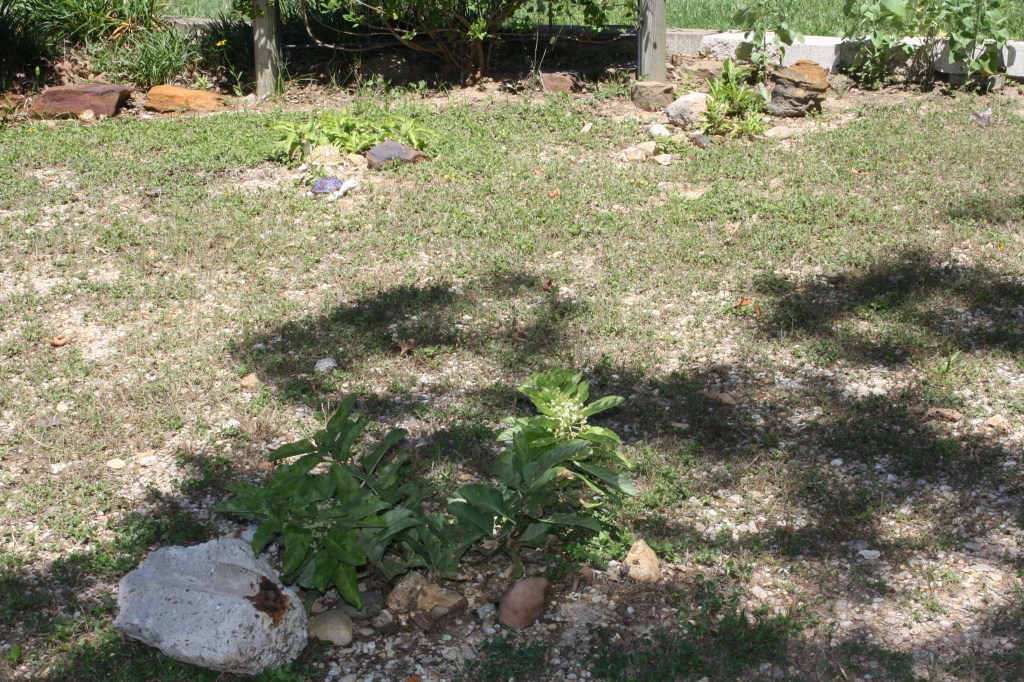
Photo#5  This shows Zizotes Milkweed on our gravel drive where they just came up on their own.  Volunteers for sure.  There are three plants near our backdoor.

#6  This is another Zizotes in the pasture that just showed up.

#7  Another Zizotes in a different part of the pasture.

#8  Tropical Milkweed in my garden.  This needed to be bigger before now. Tropical milkweed is from Mexico.

You’re too late, milkweed plants.  The last monarch I saw here on our property was on 5-17-2022.  You can see where the monarchs are by viewing Journey North, monarchs’ migration.  It is a great site.

We will have to pay attention and see what happens to both the milkweed and the monarchs over the next few years.

Still, we need to keep on planting the native milkweed to try to help out.

Hot Weather

by Donna Lewis

I think everyone can agree it’s hot!  It’s looking like this is the new norm and will get hotter in the years to come.

We humans can go inside and enjoy a nice glass of iced tea or whatever.

But what about everything that lives outside?  Yes, they were born outside, but not in this kind of weather. So, can we help them a little without taming them?

I think so.

I just put up some heat shields on my Purple Martin Gourds. I could feel the difference it made on my face as I installed them.  Just a little help.

Cooler birds

I make sure that the many water stations I have for the birds are filled several times a day. The bees are also drinking from them. Water is so important for everything right now.

So do just a little for the wildlife we love.

Happy Trails!