Beautiful Arachnid Mystery

by Sue Ann Kendall

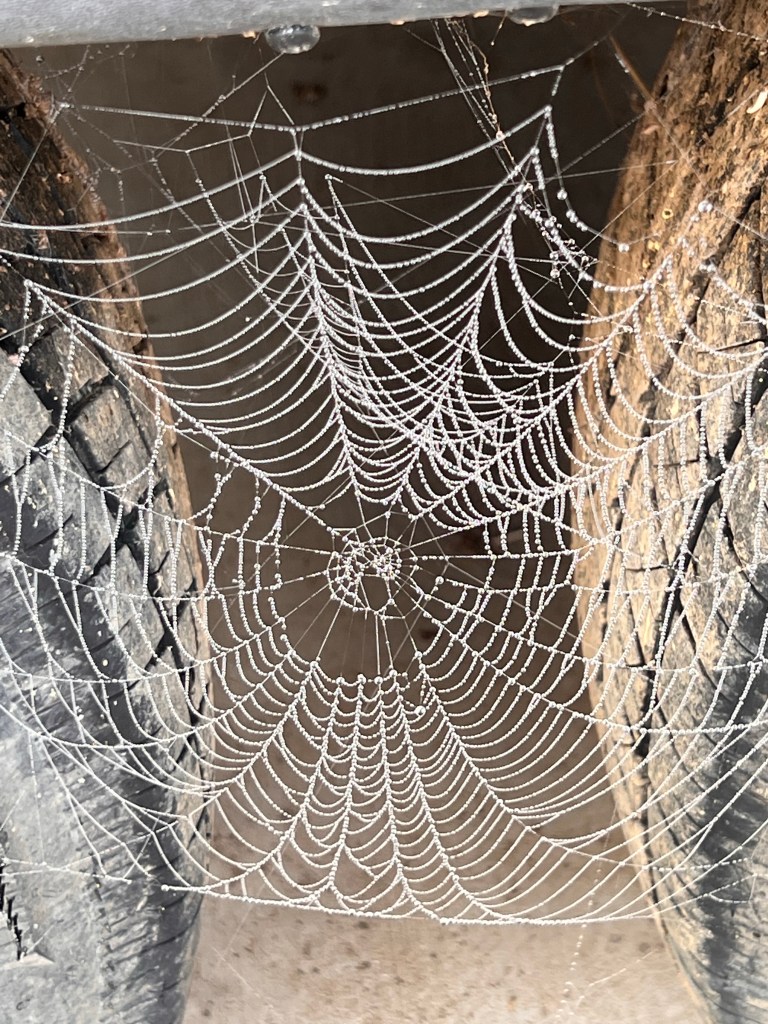
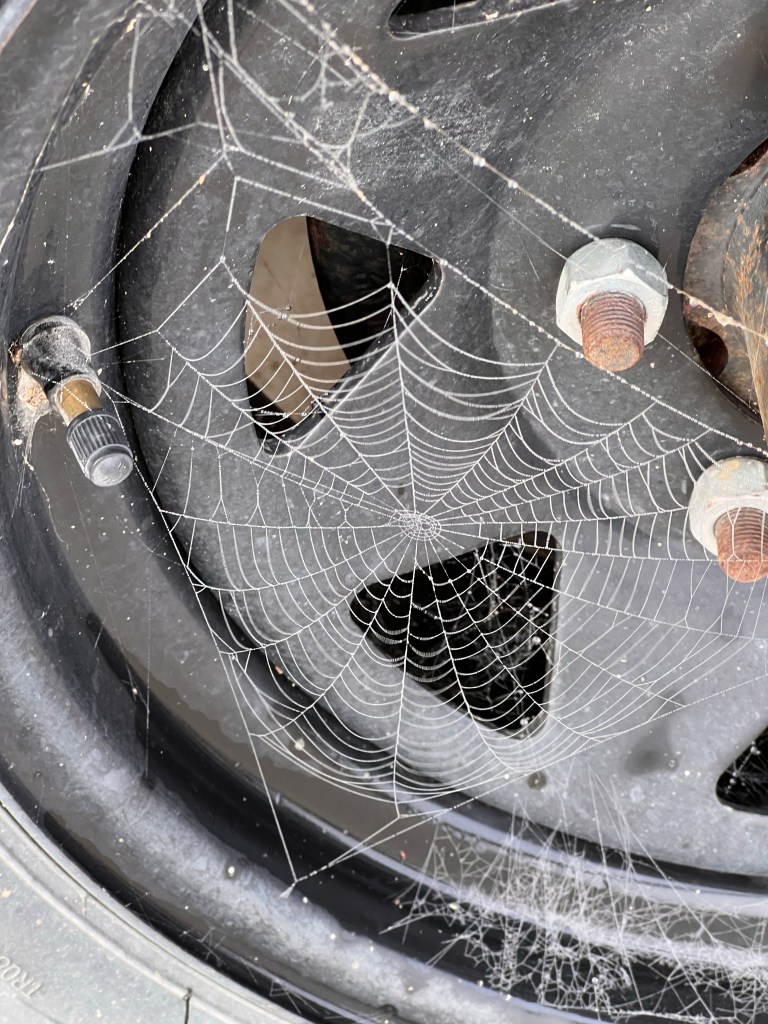
Yesterday morning, it was very foggy at my house. As usual, I stopped to enjoy the droplets of water in the grass and hanging on the chicken wire at the henhouse. On my way back from feeding the chickens, I happened to glance at the steps to the RV that’s parked next to our garage. I was entranced by the jewel-like effect the dew had on the spider webs that are usually just busy trapping flies and other insects.

Arachnid artistry

Yes, spiderwebs have a job to do, but that doesn’t mean one can’t admire their construction and strength. That water had to be heavy, but the webs held up. There was also a light breeze, and I wish I’d thought to take video of the webs as they danced around, still holding on to most of their water droplets.

I didn’t see any evidence of spiders in any of the webs I saw, including ones around the grounds near my house. They were probably avoiding their webs until it dried off a bit.

You can see how dewy it was in the background grass

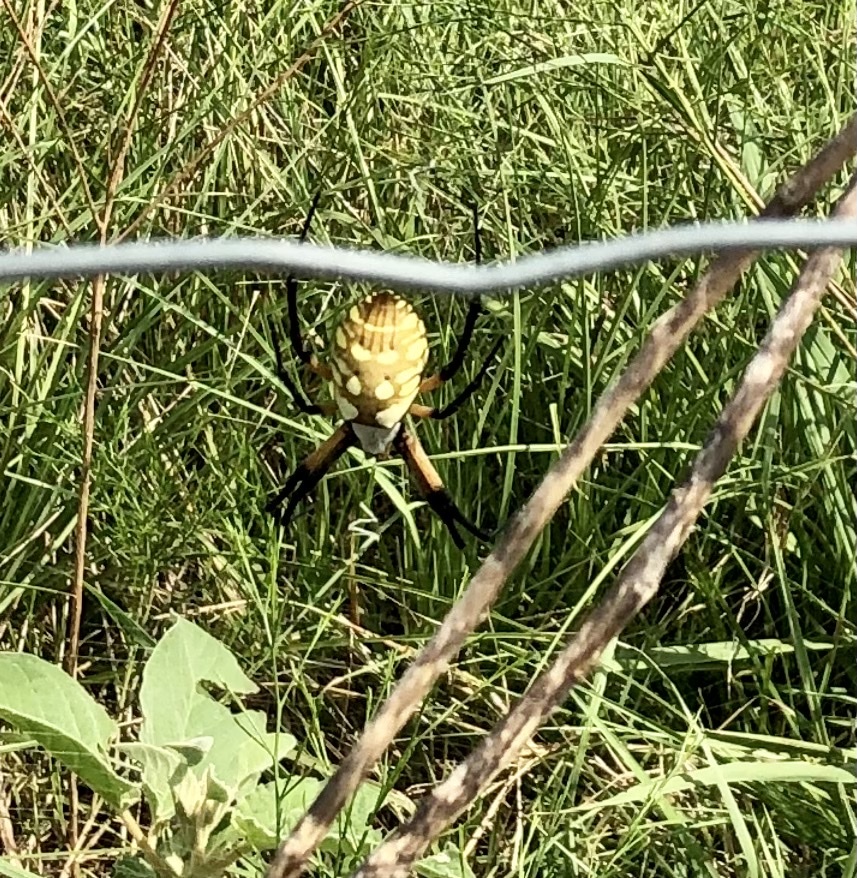
I figured most of the webs I saw were woven by an orbweaver, judging from their shape. I know that the yellow garden spiders (Argiope aurantia) are mostly gone, so I ruled them out. But I’ve seen a couple of different orbweavers around this fall and I’m not sure which ones they are, because I haven’t gotten any confirmation from iNaturalist reviewers (follow the link to view and confirm or deny my guesses!). Most appear to have been Western spotted orbweavers (Neoscona oaxacensis) or tuft-legged orbweavers (Mangora placida).
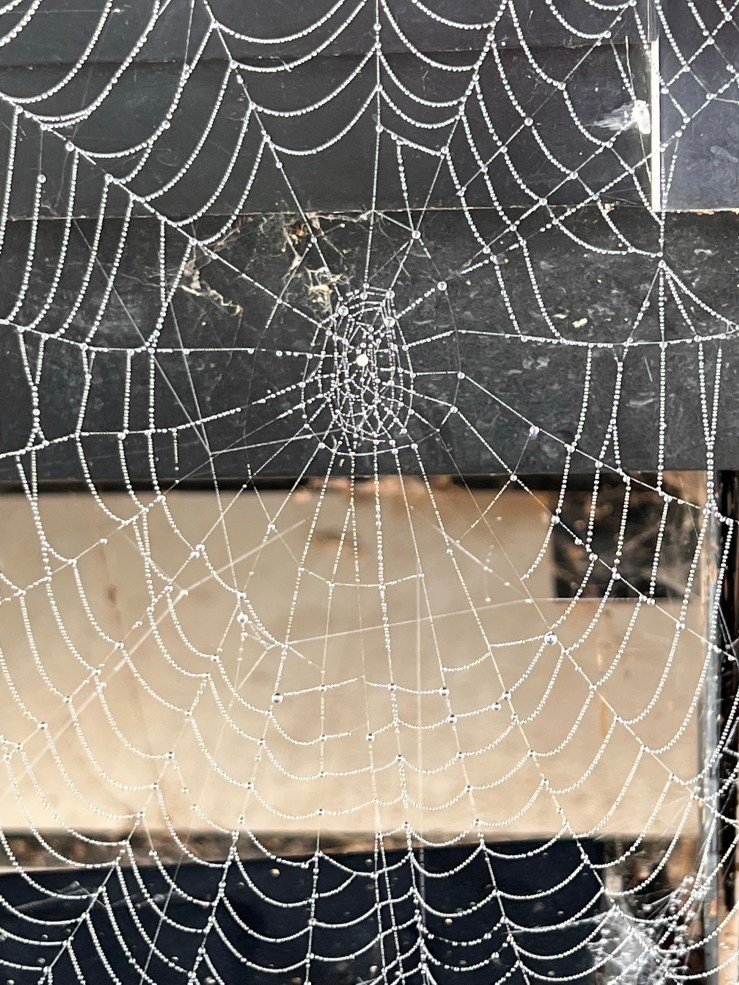
The center of this one is rather wonky but does the job.

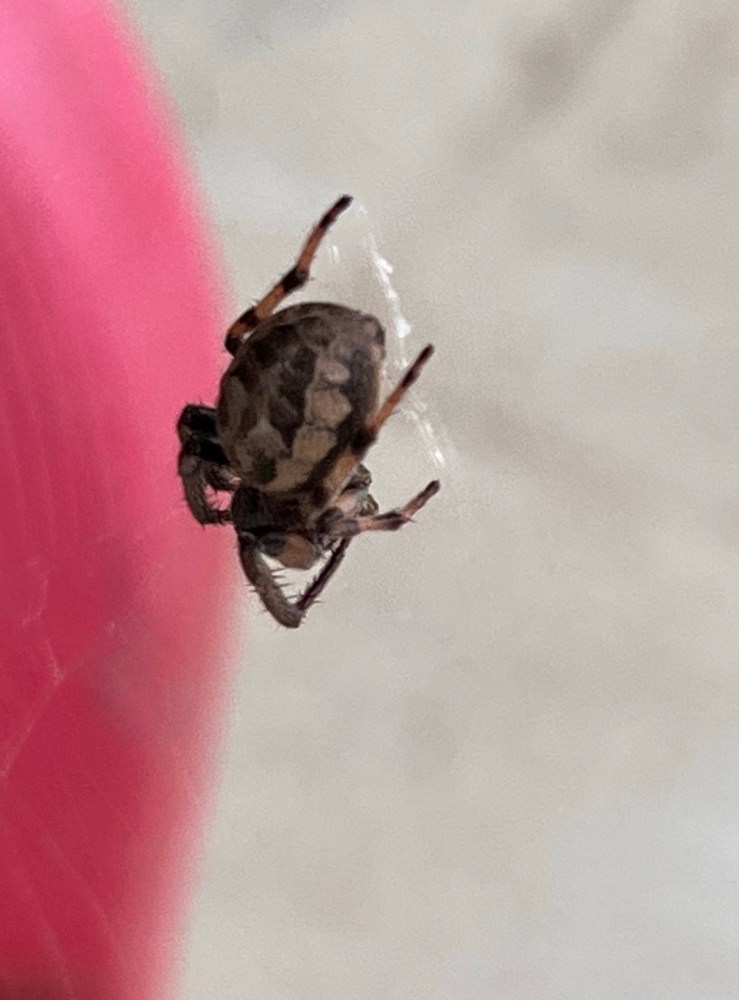
This morning was still damp, but not as foggy, so the webs were back to being almost invisible, but hey, I spotted a brown lump in one of the webs. I found her! The webs by the RV seem to be made by yet another orb weaving friend, the furrow orbweaver (Larinioides cornutus), which I have seen before in Milam County. The pattern is quite different from the others I’d been seeing this summer, so I’m fairly confident, even though no one has confirmed the observation yet (I just put it up a couple of hours ago).

I was happy to be able to know to whom I owed the debt of gratitude for the spectacle of web adornment I got to enjoy yesterday.

I do think maybe one or two of the webs were made by different spiders, especially the one by the front gate, which was made by an old spidey buddy of mine, who, judging by her coloration, is probably the Spotted Orbweaver (Neoscona crucifera). These webs aren’t quite as neat and tidy as the ones by the RV.

Well, regardless of whether my identifications are right or not, I’ve had fun with the orbweavers in my vicinity, and hope you enjoyed learning a little more about them. Below are some more of my photos of these cool arachnids and their webs.

Farewell to the Garden Spiders

by Eric Neubauer

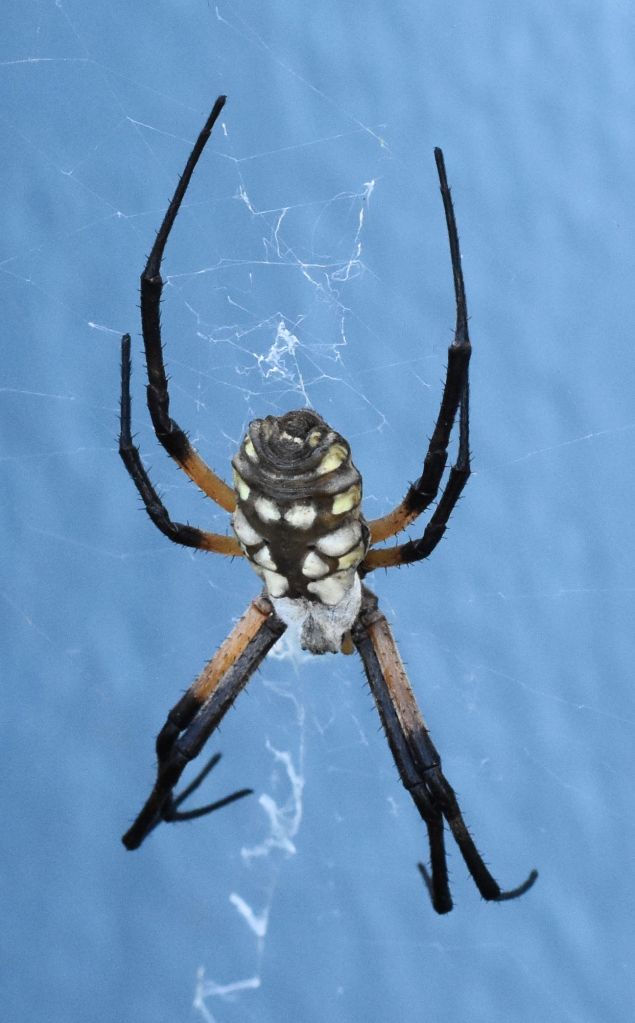
Fall is a sad time of year for some. I had garden spiders arrayed around my house again this year. One picked a low spot between the porch and skirting. It was a good spot at first and she grew quickly. There were lots of suitors while she was the only show in town, including some from the other species.

Argiope aurantia

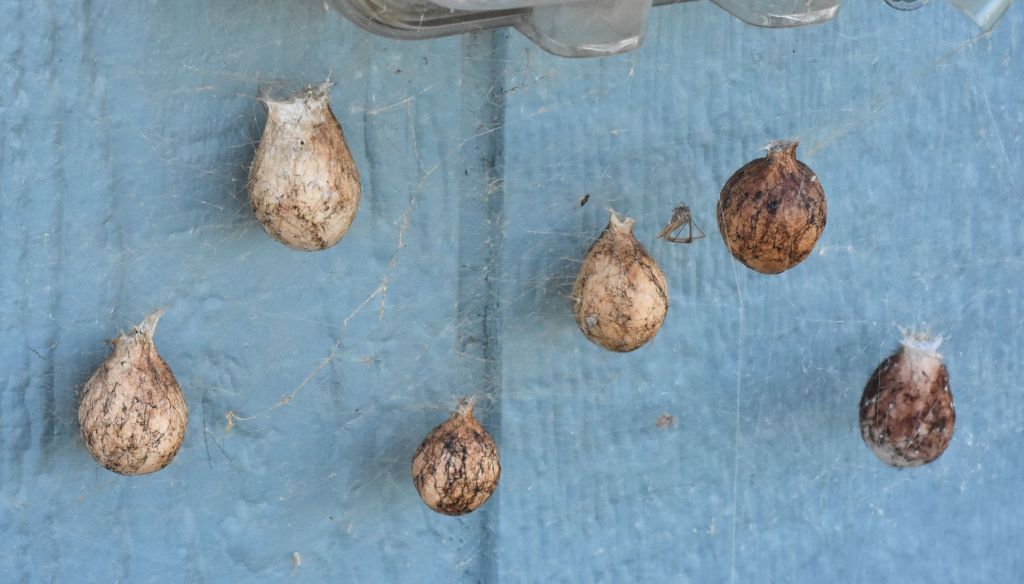
About that time, she wasn’t catching anything and looked like she might be starving to death, so I started throwing differential grasshoppers into her web. After a while she was doing OK on her own, so I stopped. In all she produced six egg sacs. No other spider came close and most never produced a single sac. After the last sac, she caught no more grasshoppers and died about a week after the photo was taken.

Egg sacs ad what appears to be a former suitor

Prairie Restoration Progress: Johnsongrass Removal

by Eric Neubauer

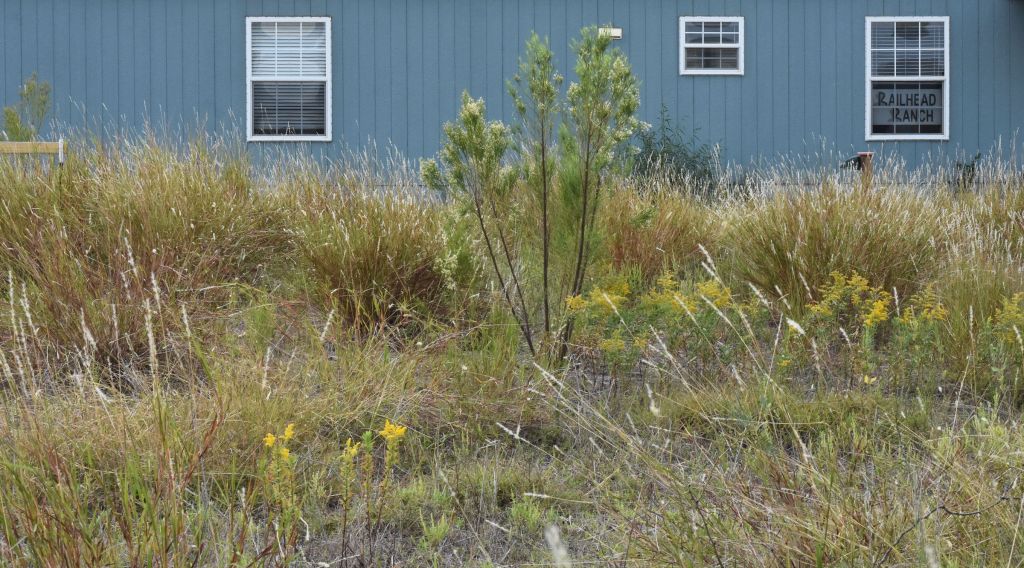
Many people in the chapter have probably heard about my continuing war on Johnsongrass. Here’s a shot from out in the yard of an area that was once overrun. You can see bunches of native grass which grow to about 4′, drifts of goldenrod, and a poverty weed. It’s about 30′ from the bunchgrass to the house. Although the initial Johnsongrass pulling was taxing, maintaining the area got easier with time. After several years it has dwindled to pulling scatted seedlings once or twice a year. The native plants were already there and just needed sunlight to thrive.

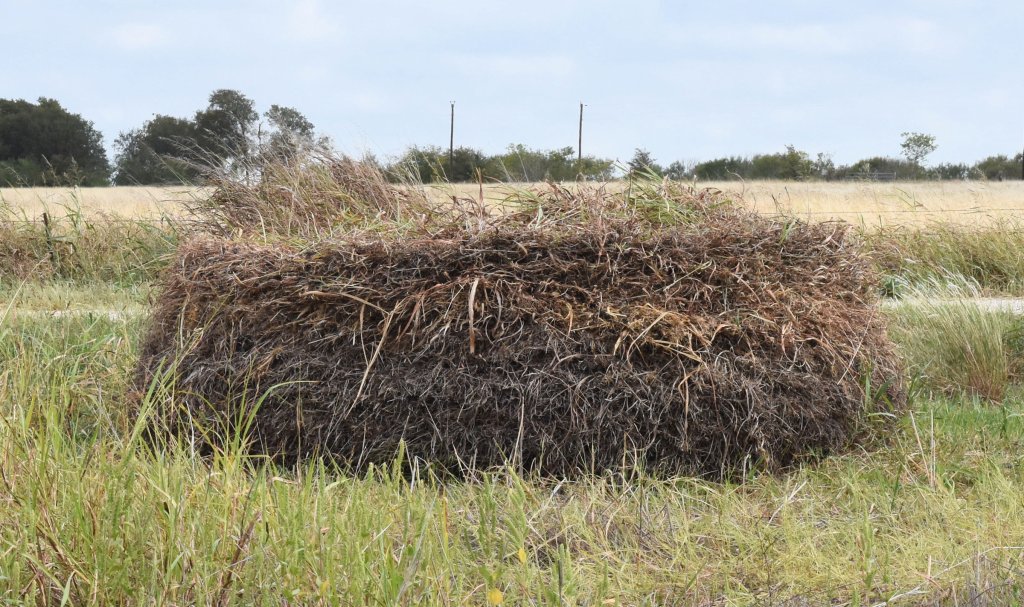
What do I do with all the pulled Johnsongrass? I decided to build haystacks to provide shelter for various animals. This one is conveniently located near the powerline that various raptors were hunting from last winter. The canes are arranged with the roots on the outside so they dry out and die, and the seed heads are on the inside where they won’t spread and germinate. The stack is about 12′ in diameter and 4′ tall now.

Johnson grass haystack

Learning about Vultures at the Chapter Meeting and Beyond

by Sue Ann Kendall

The September Chapter Meeting presentation for El Camino Real Master Naturalist was by Debbi Sorenson, who has been observing vultures on her property for years and decided to do some research on these fascinating scavengers.

Debbi listens to questions and comments during her presentation

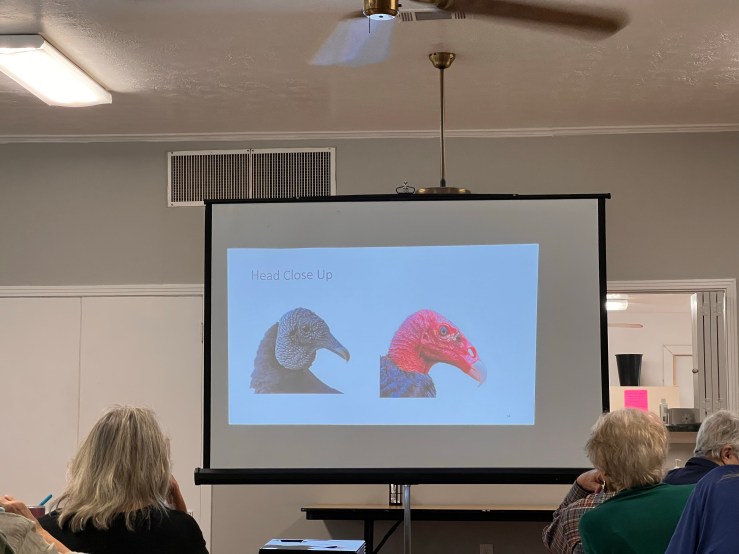
We learned how to distinguish our two resident vultures, the turkey vulture and the black vulture from each other. The easiest way is to look at their heads. Turkey vultures have red heads and black vultures have black heads. In flight, turkey vultures have white on their lower wings, while black vultures just have white “fingers” or wing-tips. The turkey vultures are also a little larger.

There you go, heads

Other interesting tidbits I gleaned were that turkey vultures are almost exclusively carrion feeders an find their food through extra-sensitive senses of smell. Black vultures both hunt and eat carrion and use sight to locate their food. They often see the red vultures eating and take over from them. I’ve seen this at my house.

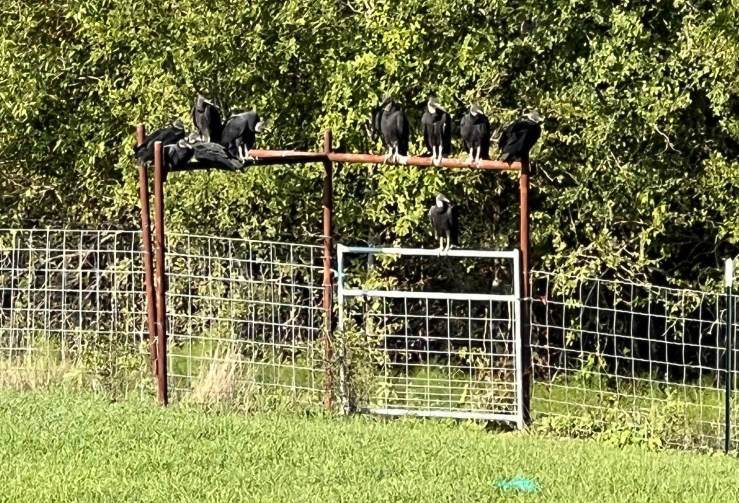
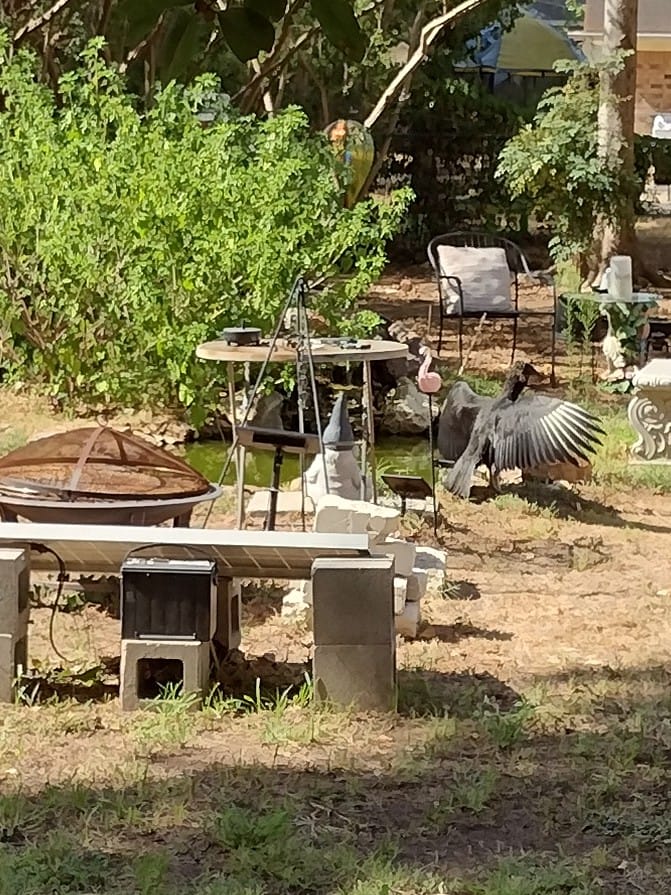
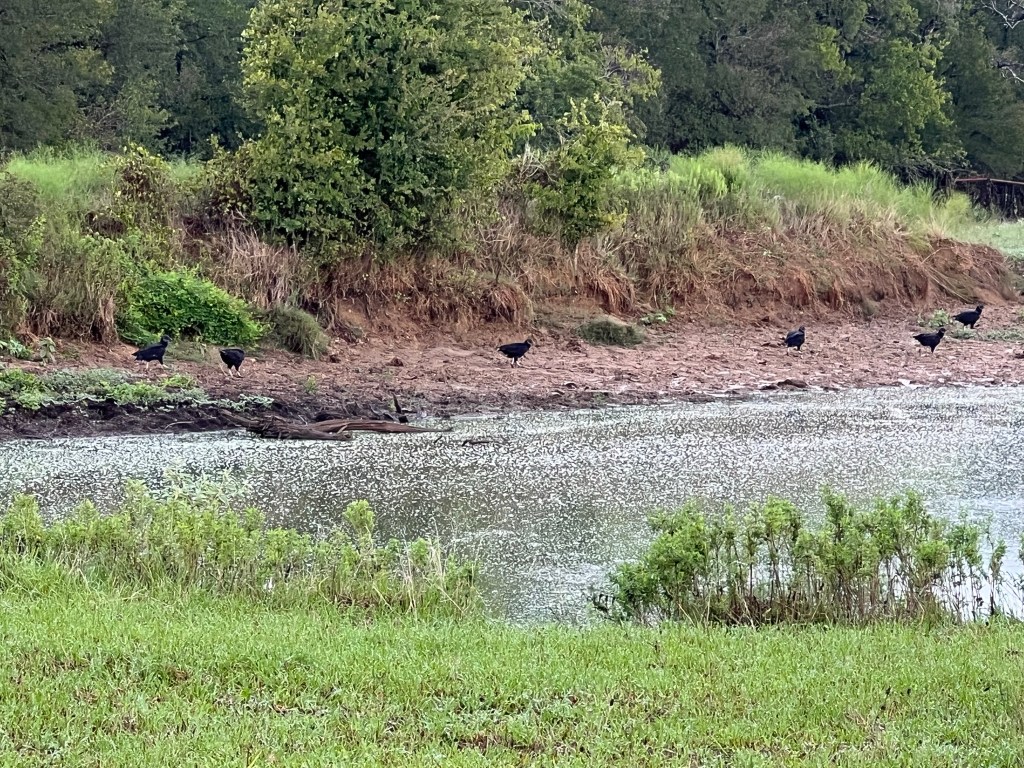
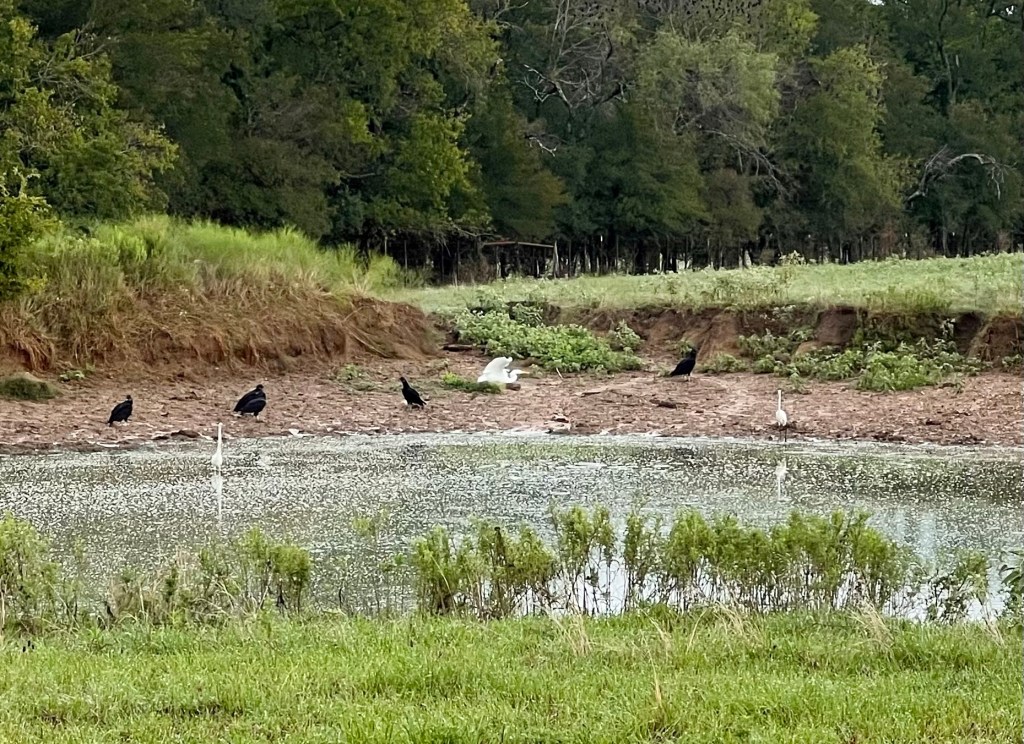
These black vultures at my ranch found a dead snapping turtle that turkey vultures were eating, and took over.

Debbie also shared the ranges of both birds and told us about their breeding behavior, which is to lay two eggs in abandoned buildings or dead trees and raise them there. George Bowman, a visitor to our meeting, shared how he had a baby vulture raised on his front porch this year (which many of us had enjoyed on Facebook). He ended up with a poopy porch, but a successful fledging of the baby.

Debbi shared that their barn is a vulture nesting headquarters for a pair, and that they enjoyed watching one with just stumps for feet (Old Peg) as it grew. Debbi shares her garbage with them and gets lots of observations in return. I also enjoy watching them. They are graceful in the air but are pretty fun on the ground. I love to watch them as they hop, hop, hop around my tank behind the house.

I guess Debbi isn’t alone in enjoying vultures and their behavior. She had lots of questions to answer, and she also explained that our other resident carrion eater, the crested caracara, is not a vulture at all, but is a falcon, also known as the Mexican eagle.

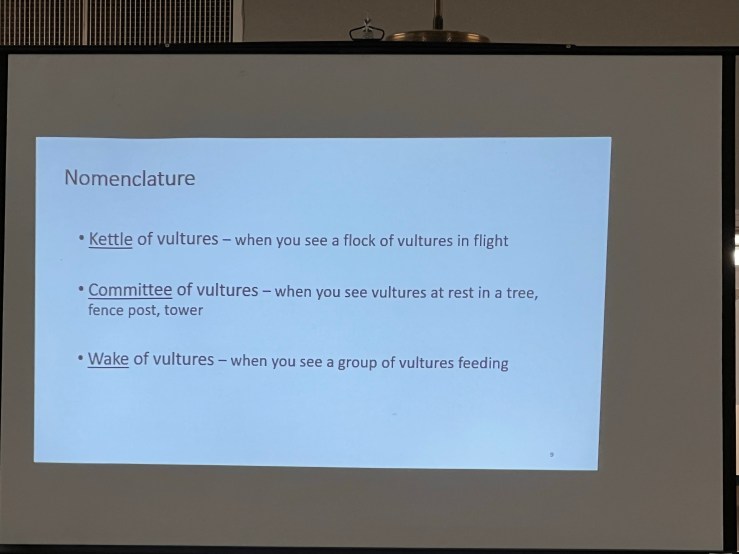
Here’s what you call a group of vultures, depending on what they are doing.

Our meeting concluded with the recognition of two of our members. Congratulations to Alan Rudd and Scott Berger for getting their annual recertification for forty volunteer hours and eight advanced training hours. And Scott received a milestone recognition for 250 hours contributing to the Master Naturalist organization. We appreciate our members!

A Non-native Vine Beloved by Bees: Sweet Autumn Clematis

by Donna Lewis

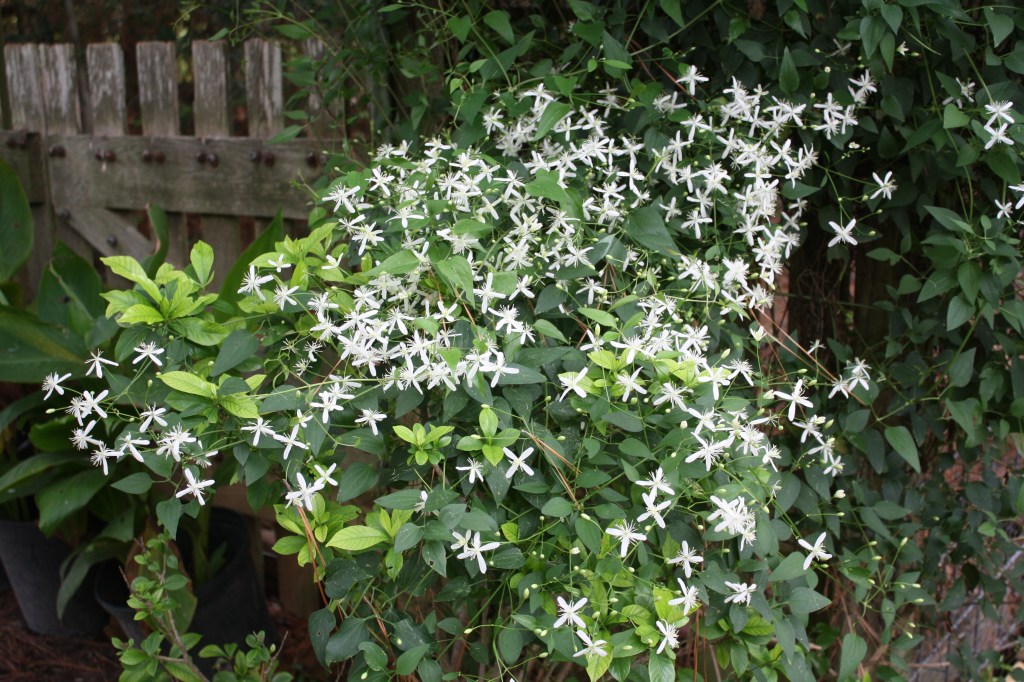
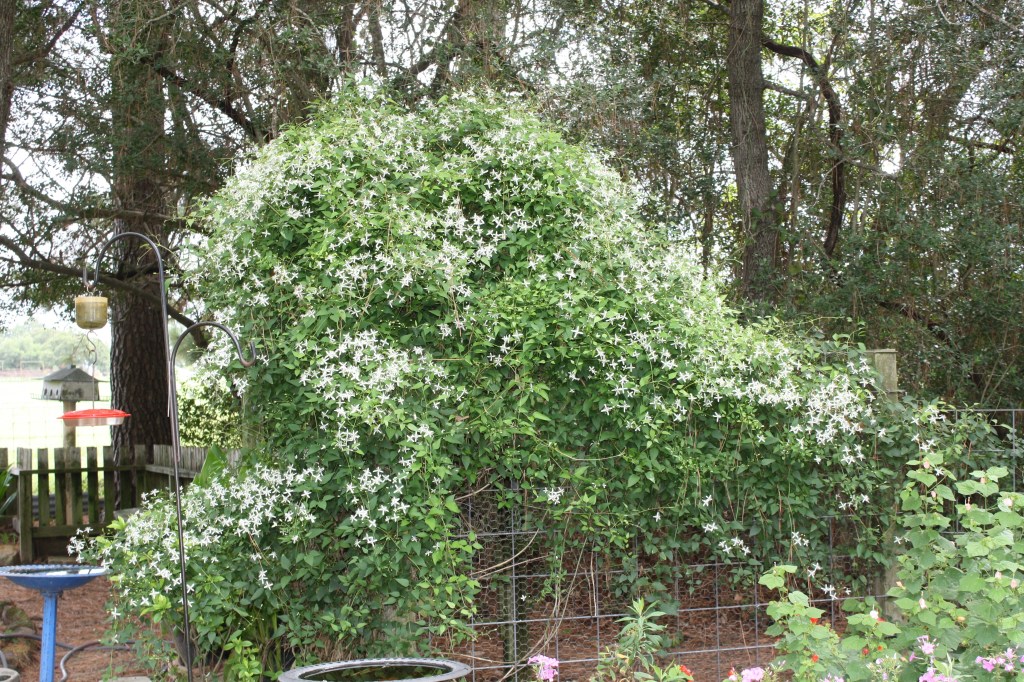
Today it is cloudy and looks like rain. But in the secret garden there is a vine that is beautiful and blooming like crazy. When I get close to it, I can hear and almost feel the honeybees doing their thing on it. It’s a beautiful vine.

I cannot remember how I came to have it, because it is not a Texas native vine.

I try to buy native as much as I can.  I also try to plant things for the pollinators. This plant is common in India and other Asian countries. So, I guess you could call it naturalized because it does great here.

I have seen it in many magazines covering arbors and fences. It is lovely and the tiny white flowers blend well with any other colors. It climbs well.

It blooms at the end of the summer when normally you don’t have much going on. That is refreshing. 

It can get invasive, but the little beginner plants are easily removed.

I have this vine in a half-shaded area. When wet, the birds love to wiggle around in it getting a bath.  The tree frogs also like it because it is moist. The garden’s inhabitants really like it.

As you can see, it really has some good qualities, and it is very pretty.  No thorns. I like that.

You will have to decide for yourself if it’s for you.

As I always say…who are you gardening for?