Weird and Interesting Sights

by Sue Ann Kendall

This post isn’t about Milam County, but it’s about some nature I observed at Fort Parker State Park, near Mexia and Groesbeck, Texas, to the north of here on the Navasota River. Since we have readers from all over the area, I’m hoping for some feedback on some of my sights, and for some high-fives about a few cool observations.

The trails were surrounded with beautiful Turk’s cap plants in bloom.

Even though we are under a giant heat dome, it was pleasant at the shady park during the mornings, so I did my longest “hikes” then (as anyone who’s gone on a walk with me will know, I stop an awful lot on hikes). The biggest highlight of my trip happened when I was on the river trail. I was busily listening to birds (vireos and more vireos), when something moved to my left. It was extra-brown and looked like mobile leaf litter. The shape told me I’d stumbled across a Chuck-Will’s Widow (Antrostomus carolinensis), my favorite nightjar! By standing still/creeping around, I managed to get photos that were identifiable, which excited me greatly. You don’t often see these birds; you more often hear them. as they are very loud and nocturnal. I’d only seen one of these birds one other time. So, that was enough nature for me, right there.

As good as my photography gets.

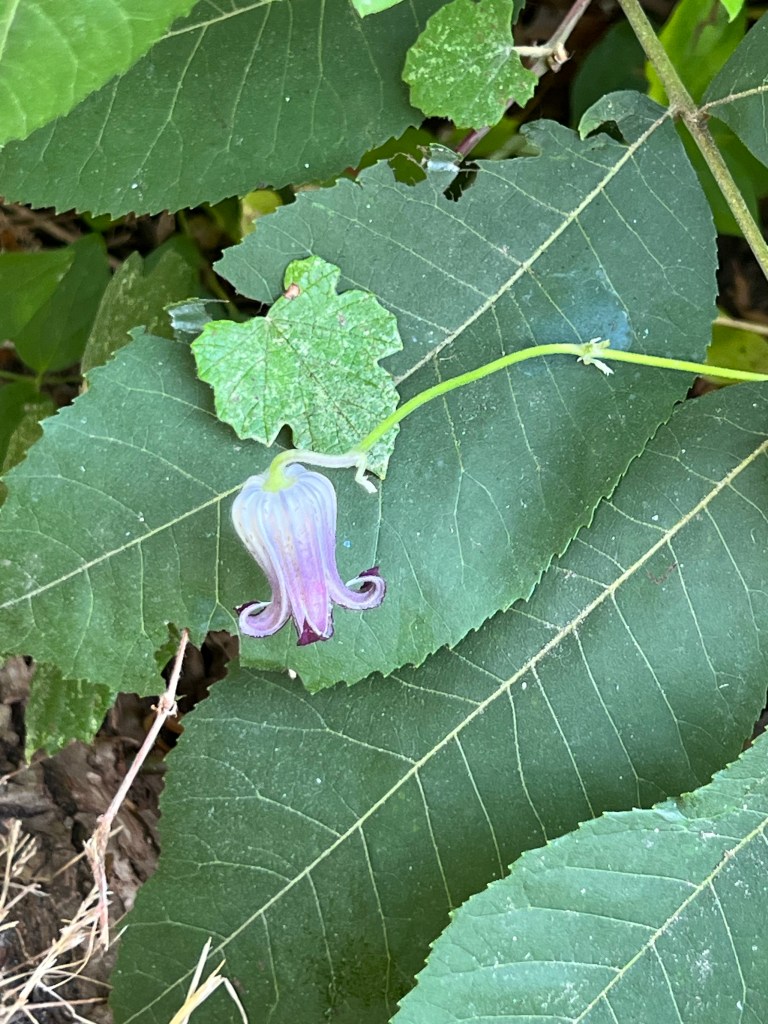
Of course, I found many other things. A couple of flowering plants were new to me, including this one, which could be one of two plants, both of which have the common name of butterfly pea or pigeon wings: Clitoria mariana or Centrosema virginianum – I’d love some help getting the right identification for this flowering vine, which is one of the most beautiful things I’ve ever seen.

There aren’t many flowers, but the vine itself is really interesting, because it grows very long tendrils that hang down gracefully.

Another thing I saw that I could use some identification help with is this mammal skeleton. Could it be a fox or a coyote? It has large canine teeth. Or am I missing something obvious?
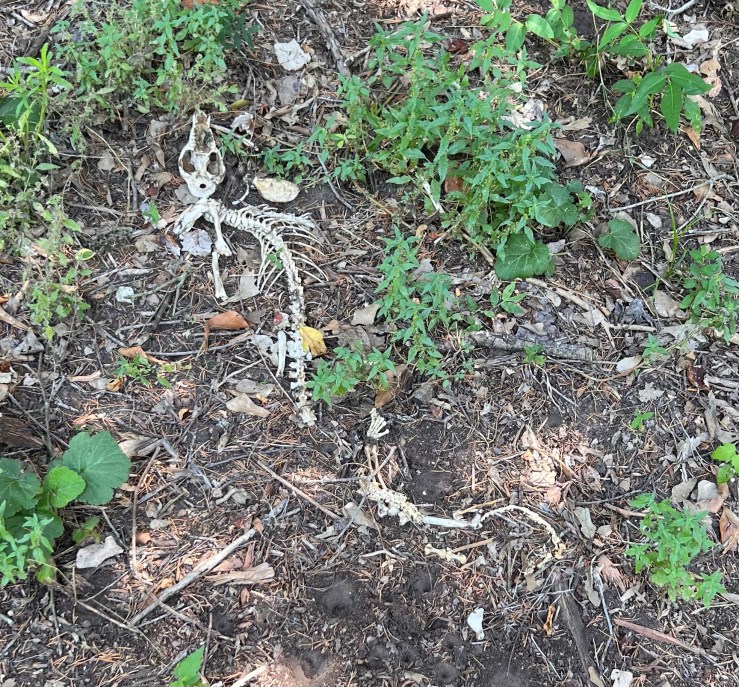
A former animal

There was other evidence of creatures that have moved on, too. All over the part of the park near the lake are holes that look recently dug, with white things scattered around them. There were dozens of them.
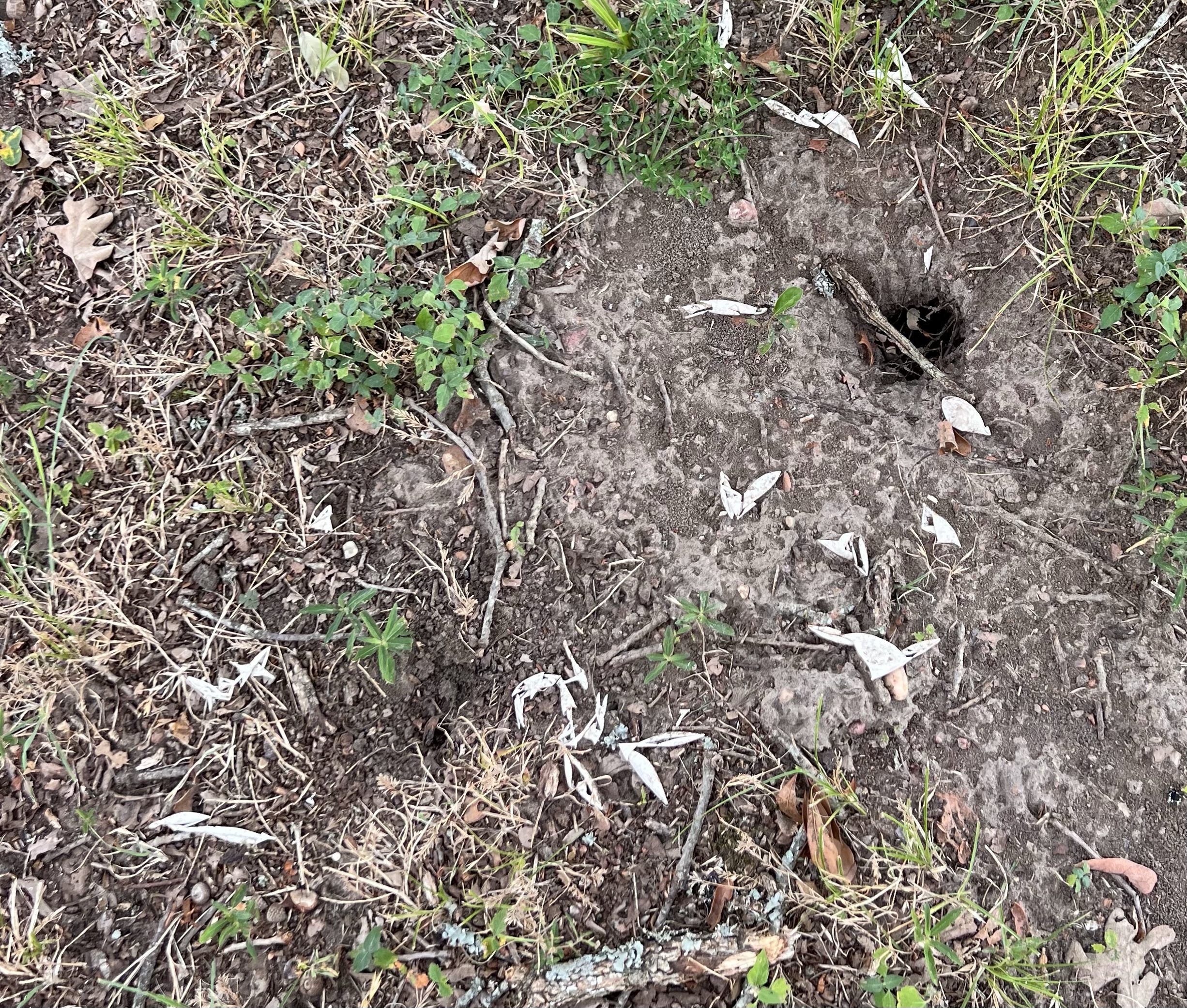
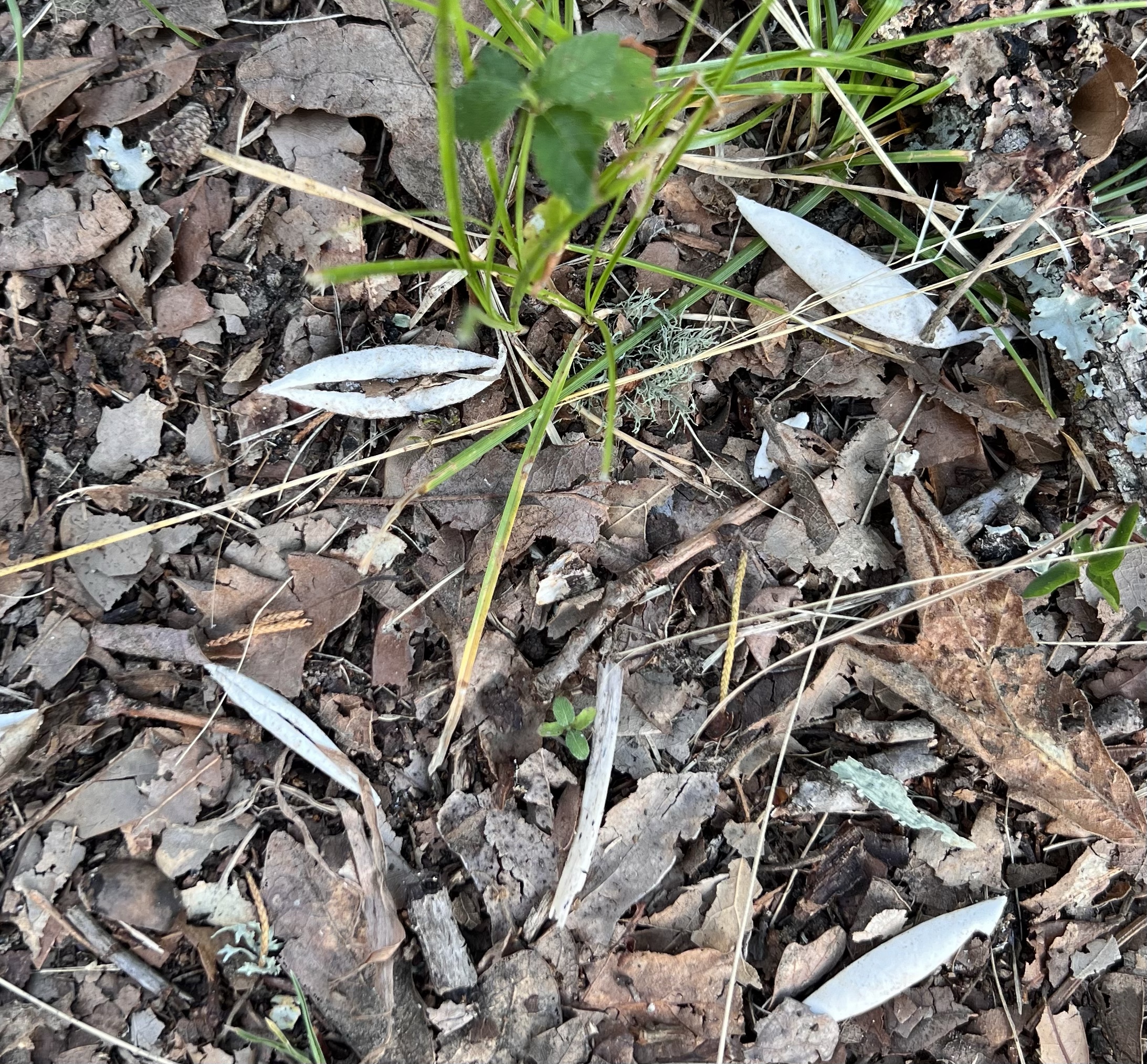
My thought is that these are recently hatched turtles. I did see a few mounds of dirt that resemble turtle nests I’ve seen before. If even some of these made it to the lake, that’s a LOT of new turtles out there! I have a feeling all the egrets around the lake are happy with this potential feast. Do these look like turtle eggs to you?

That does it for my mysteries. I thought I’d share a few other bits of interesting nature that I ran across. Let me know if any of my IDs are wrong, and be sure to go correct me over on iNaturalist (I am sunasak).

If, for some reason, you’re dying to see the many, many other plants and insects I saw over the weekend, feel free to visit my personal blog:

Or for you hard-core observation lovers, I’m sunasak on iNaturalist. Please go confirm or deny my identifications! I appreciate it so much, and it helps me learn more.

Early Isn’t Early Enough

by Catherine Johnson

Kim and I worked at the Wildscape early one morning, but it was not early enough. When we left at 9:30 it was oppressive. We aim to work from 7:00 until 8:30 next time. The humidity is what makes you feel ill.

Texas Kidneywood

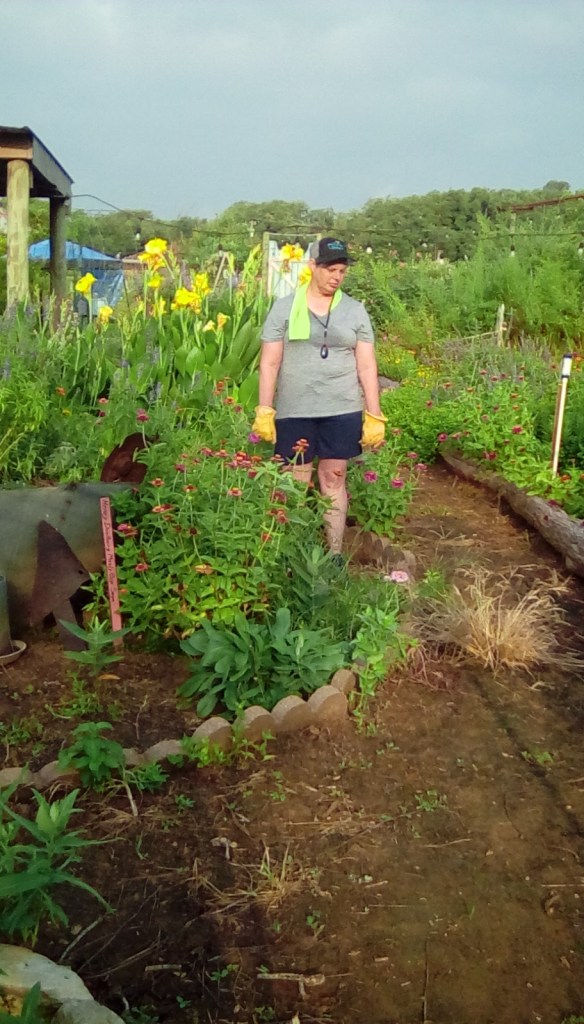
Many native wildflowers are in bloom. There are native seeds and plants to give away. 

Mexican Hat and Elbow wood

At some point, one of our native plant experts is going to verify which of the Native plants in the Wildscape are native to Milam County.  We will try to get some endemic plants in the garden as well. 

Mexican Honeysuckle

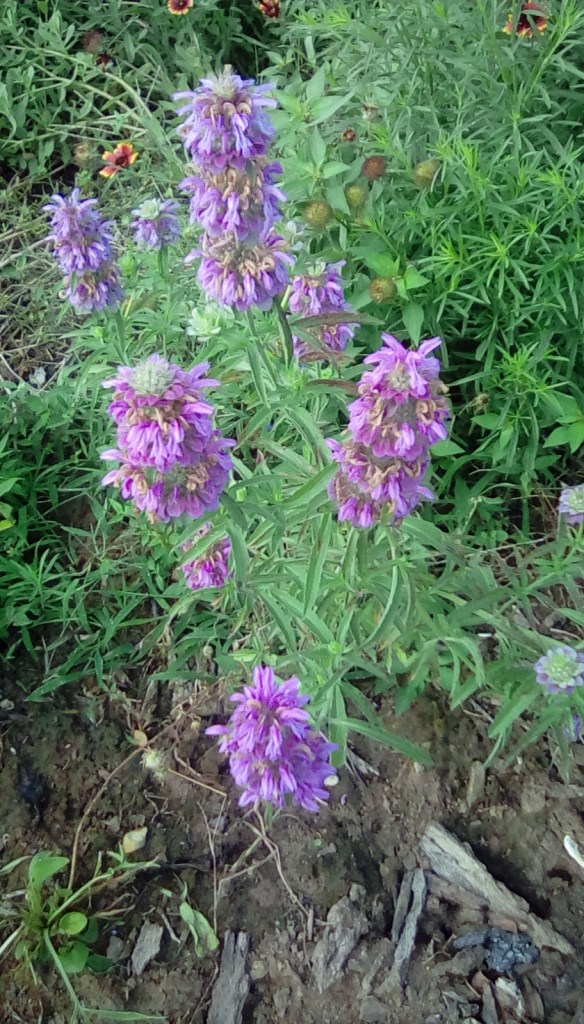
Pictured are Texas Kidneywood, Mexican Hat and Elbow bush, Mexican Honeysuckle, Wild Bee Balm, Englemann Daisy, Milkweed, and Black Eyed Susan, among others.

Hiking the Rancheria Grande

by Carolyn Henderson

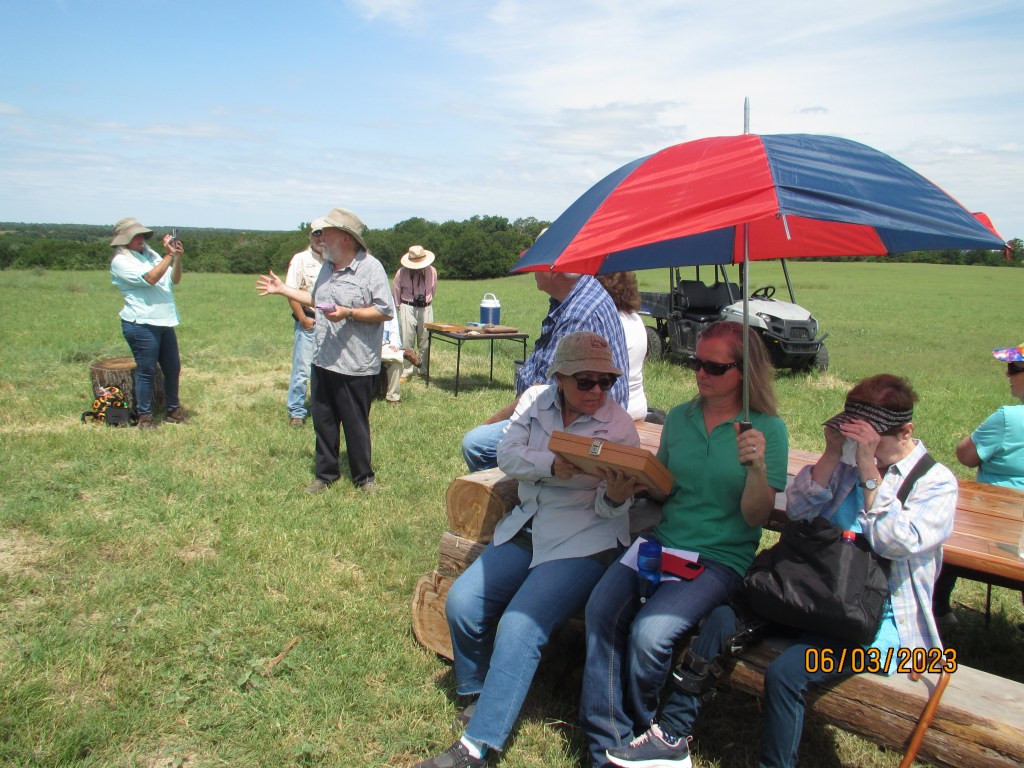
To walk where Spanish settlers walked hundreds of years ago and native tribes lived their lives, even thousands of years ago is an inspiring experience. Members of the El Camino Real chapter Texas Master Naturalist and El Camino Real de los Tejas National Trail Association got to experience it firsthand Saturday in a guided tour of a trail in development.

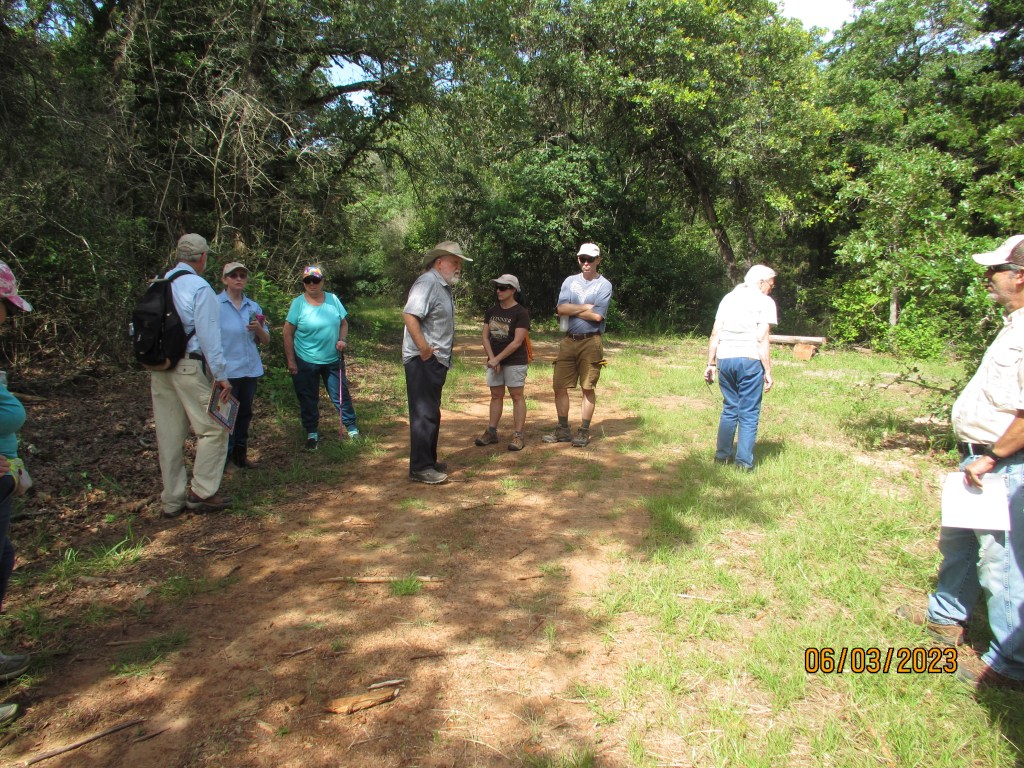
The group after their hike

The trail is part of the El Camino Real Trail that spans a good part of Texas. The part travelled Saturday, June 2, runs across the Cedar Hill Preserve, owned by Mike and Joyce Conner, and the Baumann Ranch. The Conner property is being developed as a native flora and fauna preserve, and the adjoining Baumann ranch is still a working cattle ranch. It is now part of the National Trail Association, and it is being prepared for study and hiking for organized groups in the future.

The trail head

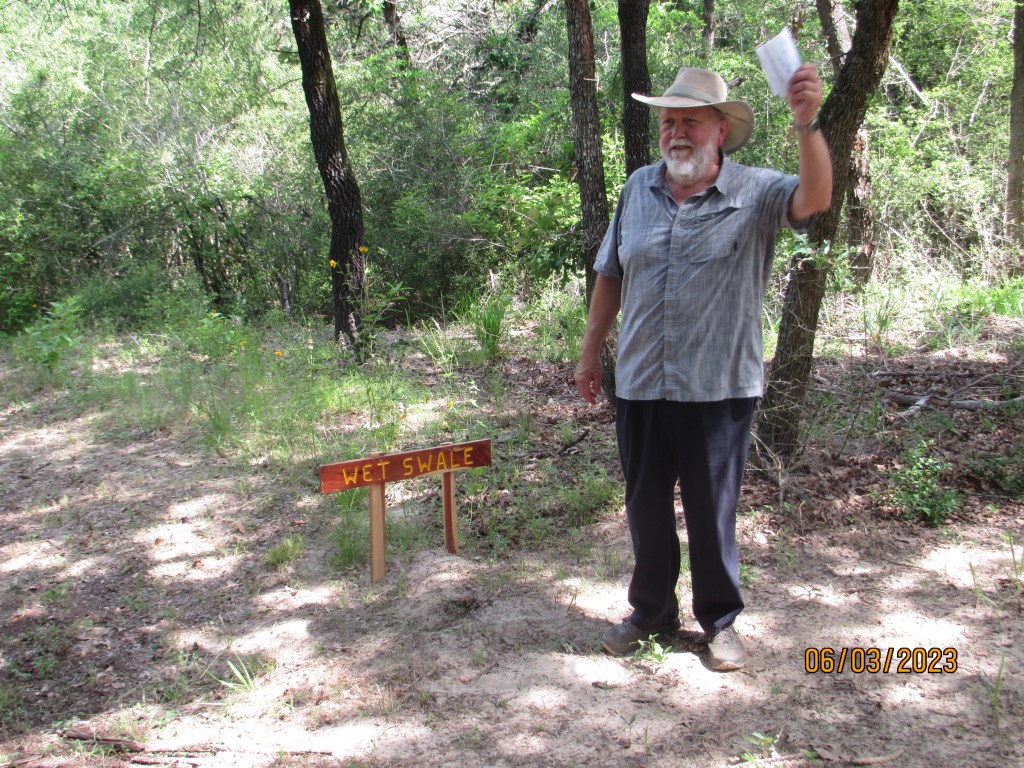
The wet swales were probably formed by water traveling in a path through the area in wet seasons then later used by travelers.

Mike Conner talks about the wet swale

The trail head begins in a woody area on sandy loam soil complete with a fancy new outhouse somewhat like your grandparents had in this area. In many areas a hiker can actually see the trodden
path taken by Spaniards and Native Americans dating back hundreds and probably thousands of years ago. They are most discernable by swales that bank the path. A swale is a buildup of land running along each side of the ancient trail. It looks a bit like a street curb might look today. There are both dry swales and wet swales. The dry swales were strictly roads/paths taken by travelers.

Dry Swale (photo by Michelle Lopez)

There also are signal trees believed to have been formed by the native tribes to give direction
then later used by the Spaniards. Artifacts from both groups have been identified by archaeologists
studying the area. Post Oak trees primarily were used to form these trees.

Signal Tree

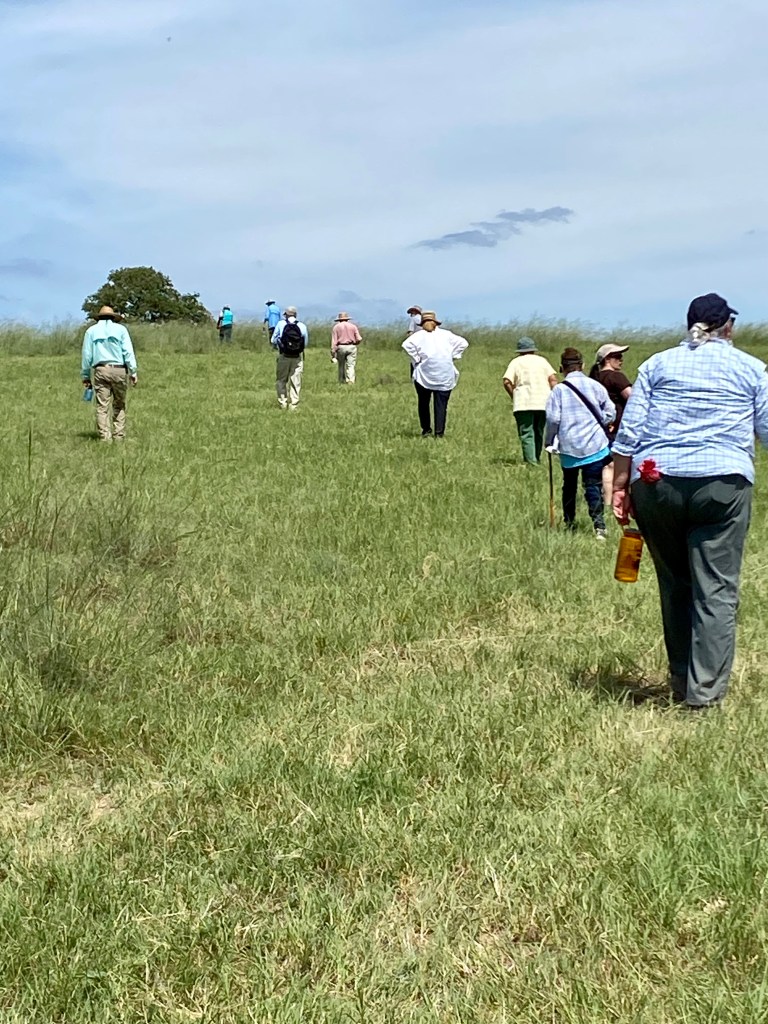
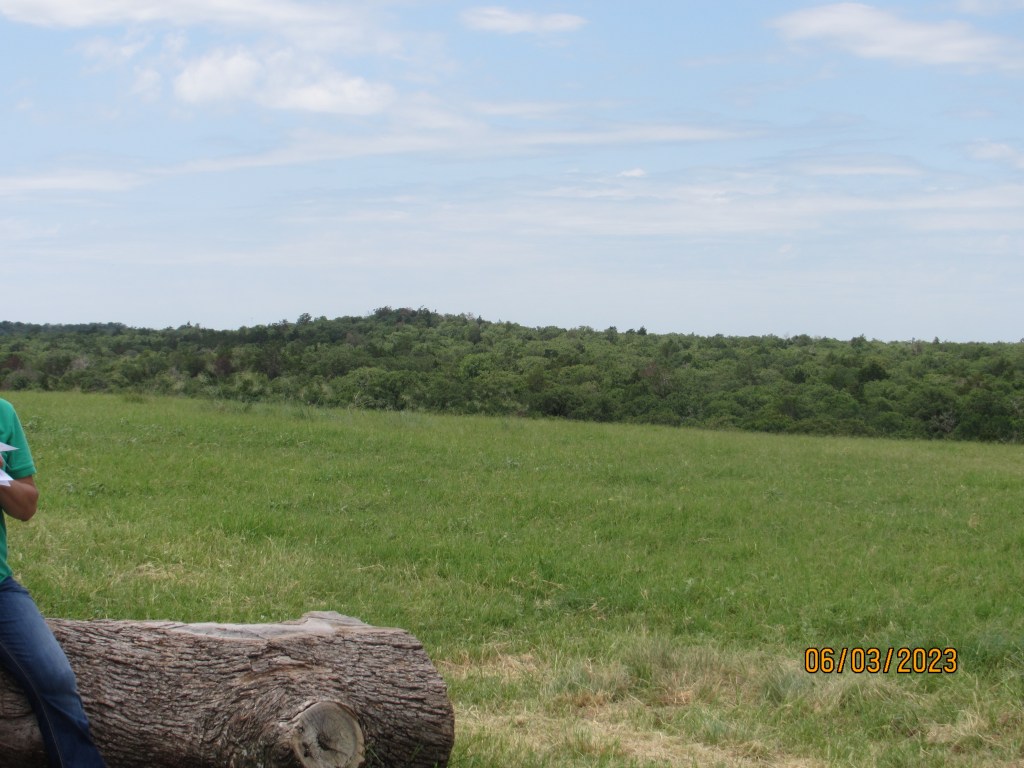
When you come out of the wooded area, you are then on an uphill stretch to reach the very high hilltop. The top of the hill is like a meadow looking out at the woods below and nearby hills or “mountains.” Sugar Loaf Mountain is very near and visible from this hilltop. It is believed that this hilltop where we were was a village for a native tribe or tribes over the years. Tonkawa artifacts have been identified from the area. There was a great deal of speculation by the hikers that the different tribes sent smoke signals to each other from these hill tops. A visit to Sugar Loaf Mountain has long been a rite of passage for area high schoolers.

This area is part of the Rancheria Grande Los Brazos de Dios. An archaeological dig in the area around Alligator Creek and Pin Oak Creeks, both of which cross these properties, a few years ago found evidence of very early Spanish settlements.

Trail loop

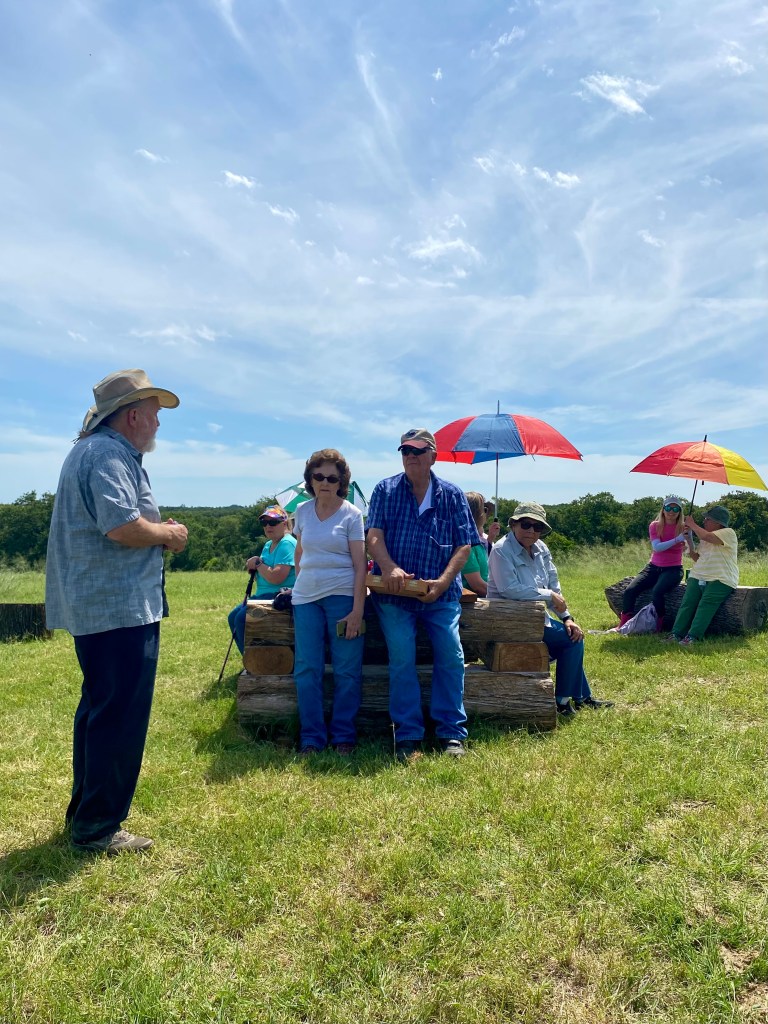
Mike Conner and Dr. John Pruett, tour guides for the adventure, and Mr. and Mrs. Baumann, explained the history and discoveries while the rest of us recovered from the climb. Joyce Conner etched a map of the trail into a homemade tabletop. It sits at the top of the hill.

Joyce Conner’s tabletop map

Going downhill was easier, but one could certainly feel the rising midday temperature. An appreciation of what people had to go through to get anywhere hundreds and thousands of years ago is brought home when hiking this trail.

The Baughmans (center)

There is a book titled The Archaeology of Rancheria Grande Los Brazos de Dios, written by Sergio A. Iruegas, archeologist, and Melinda T. Iruegas, about the discoveries in the area. It is currently out of print, but there are copies at the Cameron and Rockdale libraries. If you own land in that area, you may be sitting on artifacts.

Mike Conner talks about the trail

Addendum

by Mike Conner

I would like to clear up a little confusion about swales.

Swales are u-shaped, linear depressions in the ground formed by many years of foot and hoof steps. They are never formed by water but may be damaged by water once they are formed. This is happening to some extent to Hidden Swale. Both the Dry and Wet Swales have been certified by archeologists to have been used during Spanish colonial times but may have been used for thousands of years before. The somewhat confusing names for these two swales come from the fact that the Dry Swale leads directly to the historic village site and cuts through a small valley that would only be passable is fairly dry weather. The Wet Swale leads in a less direct route to the historic village site that goes around the edge of the valley and would be passable in wet weather.

Celebrating Our Graduates!

by Sue Ann Kendall

Photos by Sue Ann Kendall and Debbi Harris

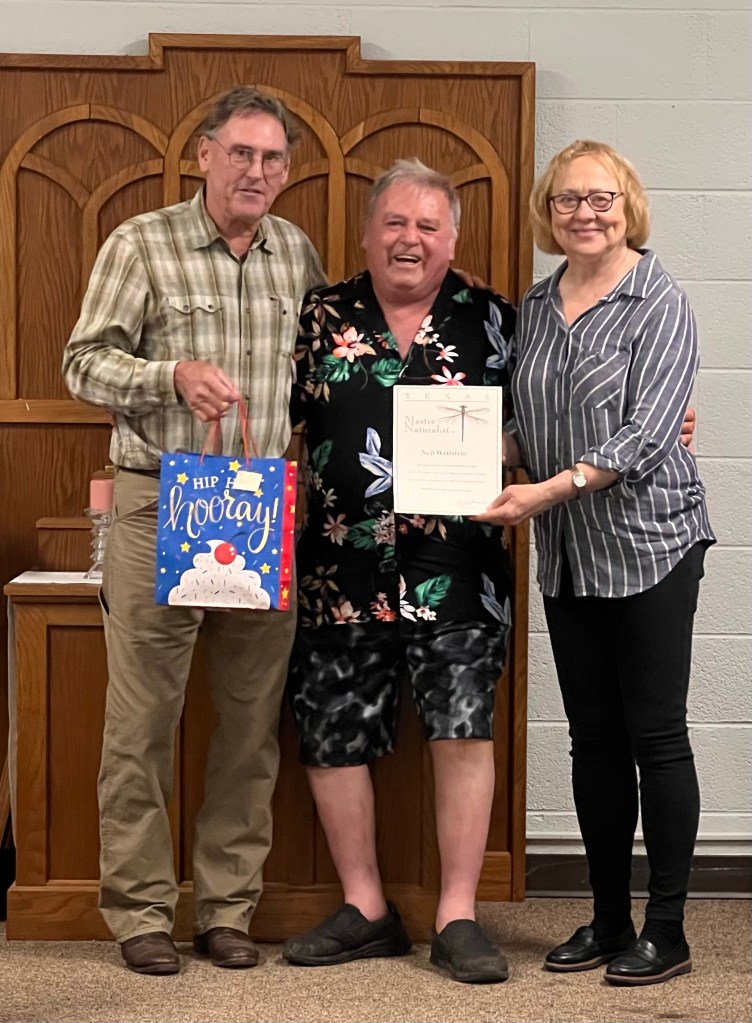
Wednesday night was very festive for the El Camino Real Texas Master Naturalist chapter. We celebrated the five new graduates from our training program with a delicious meal and a lovely presentation at the All Saints Episcopal Church in Cameron, where we also have our monthly meetings. We are grateful to Fr. Jeff and his staff for being such gracious hosts.

Father Jeff and our graduates.

Our food was catered by Hot Corners, the company that is located in the beautiful Venue at Railfan that recently opened in town. Barbara Dominguez does a wonderful job, and we were glad to see our vegetarian attendees had many options. Next time we’ll remember to ask for a gluten-free main course!

The appetizers included one of Barbara’s famous charcuterie boards, along with wine and some pretty darned good non-alcoholic wine beverage that was fun to try!

MMM, charcuterie

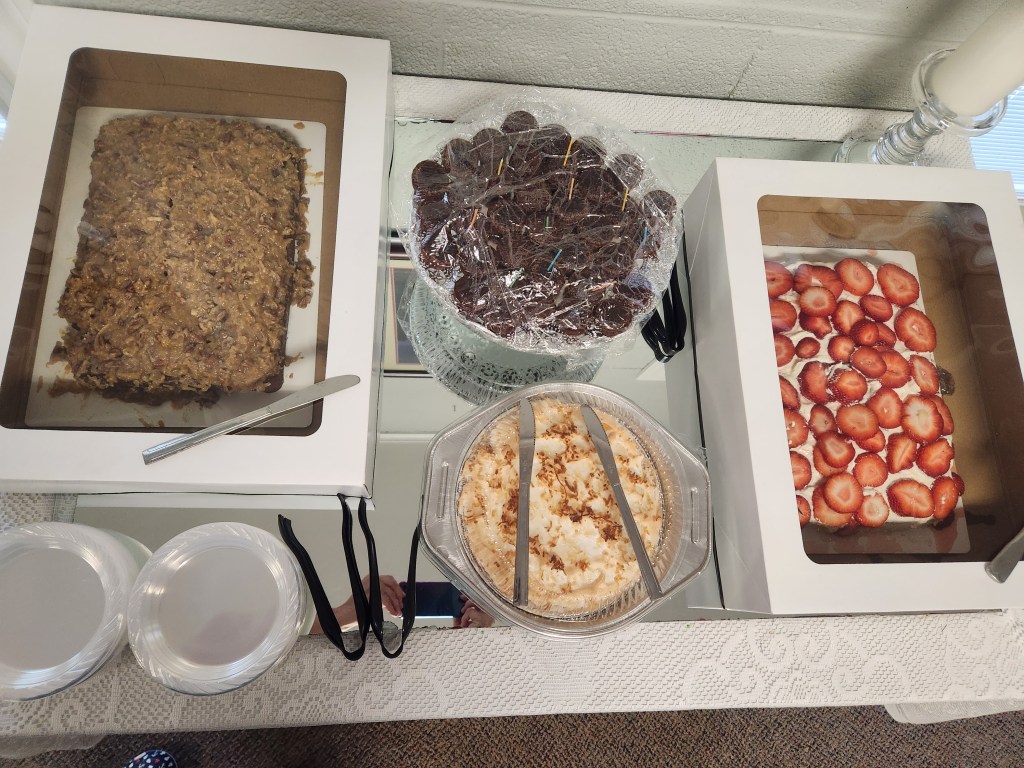
Desserts were provided by Alan Rudd, who was also our assistant trainer this year. It was hard to choose which one to try, so many people tasted more than one.

The fellowship and conversation were fantastic, and everyone had a good time at the meal, and an even better time during the awards.

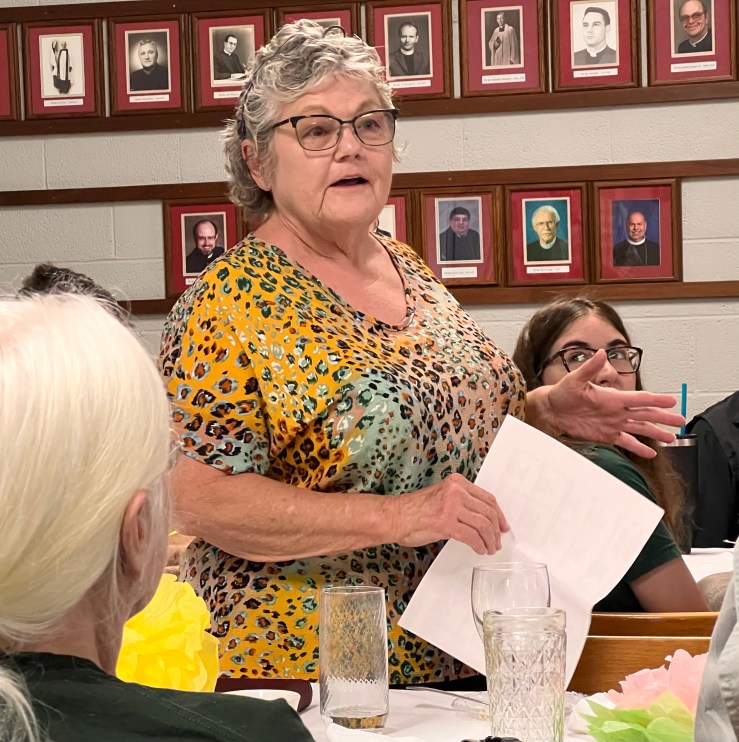
First, Dorothy Mayer read her famous poem she wrote when she was graduating, which always brings a laugh.

Dorothy shares the story of her poem.

Then came the highlight of the evening. Patricia Coombs, Brenda Ferris, Ellen Luckey, Michelle Pierce, and Neil Wettstein were each presented with their graduation certificates, and two others received their first dragonfly pins for their initial certification as well. Great job, everyone!

Following the student awards, Alan Rudd presented Kathy Lester, our lead trainer for the past three classes, with a beautiful painting of a sunrise or sunset (you get to pick) with kind words on the back of it from past students. Kathy was surprised and delighted by her gift, which is obvious in the photos!

Kudos to the team who put together the party and decorated the room so nicely. It takes a lot of work to organize all our activities, and we appreciate our dedicated members very much. Now, let’s get going on the City Nature Challenge!

Here are a couple of funny out-takes from the party. We did have fun.

Master Naturalists Plant Trees on Earth Day

By Carolyn Henderson

The El Camino Real chapter planted native trees in three Cameron parks on Earth Day, then removed some invasive species that they “girdled” last year. Twelve members and a couple of family volunteers planted Bur Oaks in Cameron City Park, Orchard Park, and Wilson-Ledbetter Park to promote native species to help the natural eco-system locally.

The tree-planting gang at Cameron City Park

Quite a few trees were lost in and around Cameron during the ice storm this year, so the chapter is making an effort to replace them. Any type of native oak tree is considered the most beneficial to the local eco-system. Native trees are more acclimated to the heat and drought conditions that are occurring fairly often. 

Planting in Orchard Park

In addition to planting the trees, the members removed the three Glossy Privets at Wilson-Ledbetter Park that had been girdled over a year ago. Girdling is a method to remove trees without herbicides to avoid harming other trees. Alan Rudd brought his chain saw and a trailer. He cut them down and the members and volunteers loaded all the branches on the trailer. They were removed and burned to prevent resprouting elsewhere.

Pondering a privet at Wilson-Ledbetter Park

Alan also planted an Eastern Redbud in the trunk of an old dead tree at Cameron City Park in an experiment to see if it will grow there and add some color to the park. Members have volunteered to keep all the trees watered on a weekly basis through the summer and early fall. We planted the trees in the manner recommended by our recent speaker from the A & M Forest Service. 

We plan to add more trees to Wilson-Ledbetter in the fall.