Learning about Nature Observation Apps

by Sue Ann Kendall

Today we had one of our first educational sessions at the Wild Wings Bird Sanctuary, sponsored by the El Camino Real Texas Master Naturalist chapter. Although there’s no denying the weather was toasty and humid, the attendees all learned about Merlin Bird ID and iNaturalist.
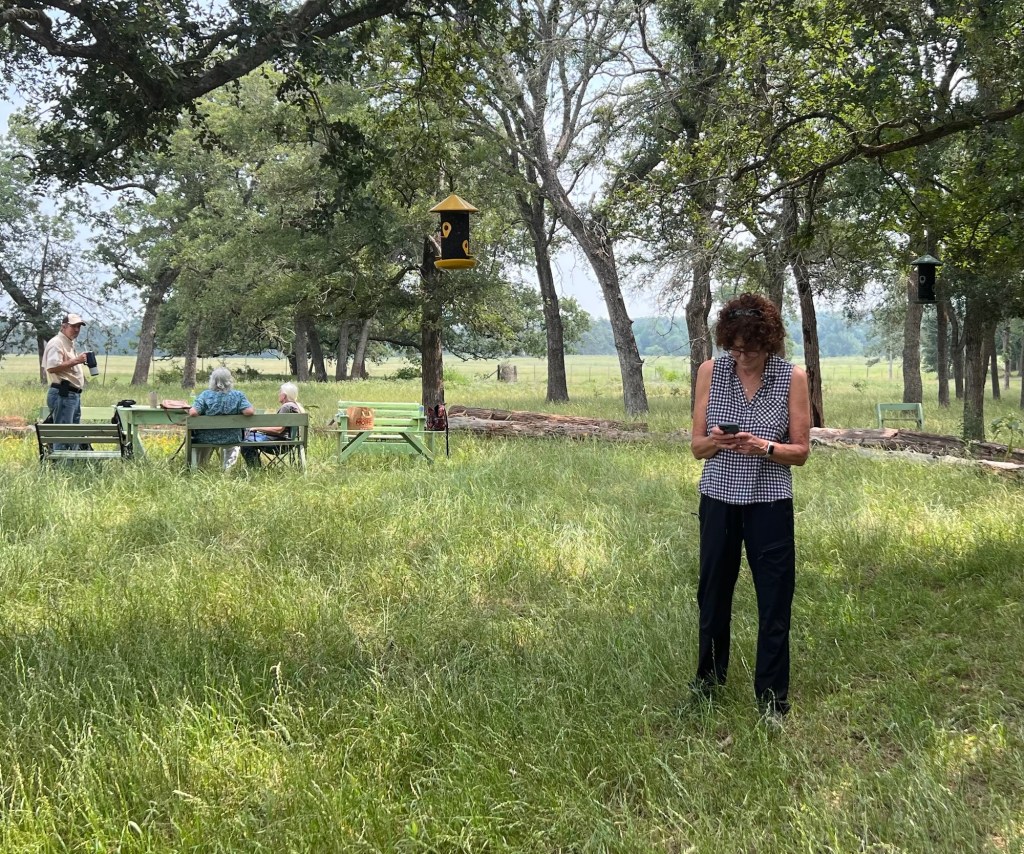
I enjoyed leading the discussion, since I just retired as an adult educator and miss teaching people. I’m grateful for the opportunity to give back to the chapter.
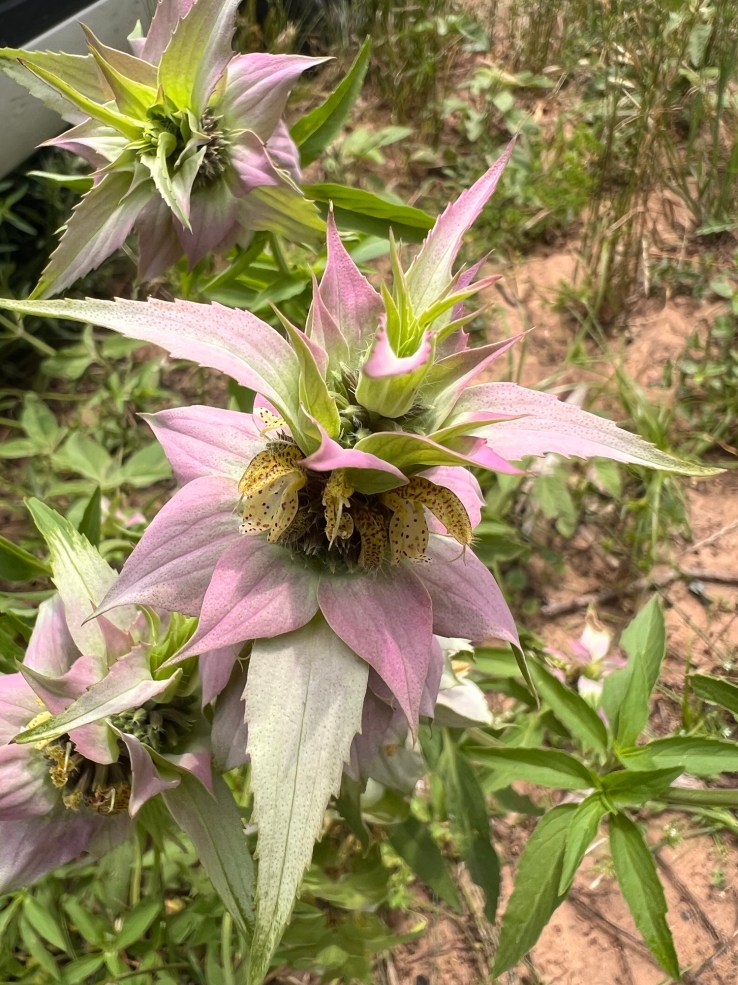
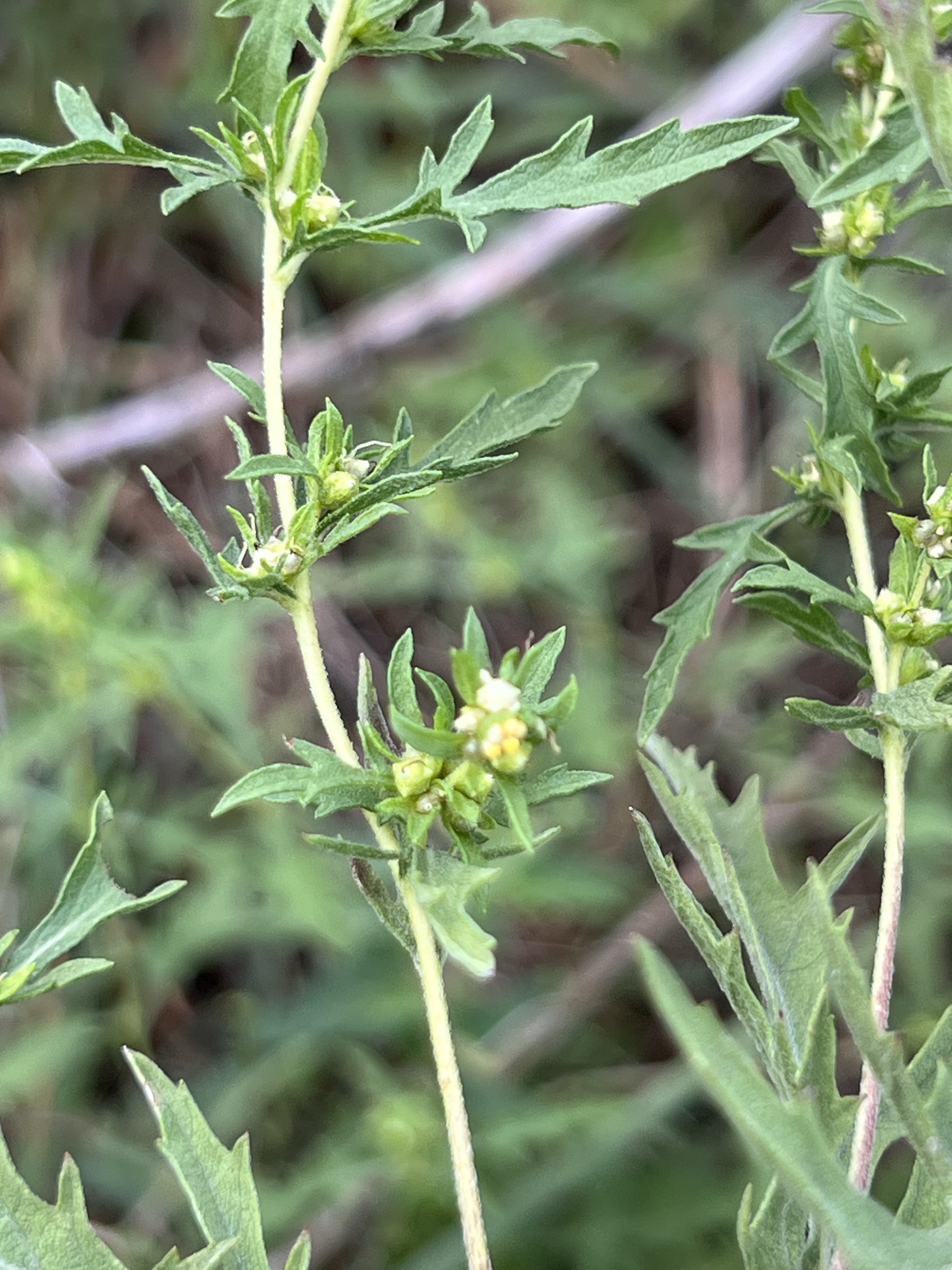
Spotted Horsemint
When I parked, I went next to this Spotted Horsemint (Monarda punctata). You sure could smell it!

Anyway, before we started, one of our members brought a baby bird she has been caring for to try to identify it. We enjoyed watching it eat and peep. No doubt it will soon be in the hands of All Things Wild or another rehab organization, but for now, the little Blue-gray Gnatcatcher or Mockingbird seemed in good shape. Interestingly, more than one of us tried to use Merlin Bird ID to identify it, but depending on the angle of the photograph (or something), different birds came up. On iNaturalist, my photo came up unambiguously Blue-gray Gnatcatcher, however. And looking at the bird, it seems more likely to be a Gnatcatcher than a Mockingbird or Phoebe. It will be interesting to find out how it turns out.

baby bird
Getting a photo with the tail feathers seemed to help.

The class had a mix of learners, from people who were unable to access the App store to get either app on their phone to very quick learners to experienced helpers. I did my best to help everyone but always got stumped when I can’t remember their passwords for them (I can’t remember mine either, but have finally found ways to find them when I need them). I can help people later! Oh, and those with Android phones weren’t able to acquire the new iNaturalist, because it’s only out for iPhones, to the great consternation of some of our power users!

Merlin

The good news is that even some of the experienced people learned new features of Merlin Bird ID. Some of the most helpful information is kind of buried among menus and options with cryptic symbols. We had a lot of fun seeing what the most likely birds in the area around Wild Wings would be, and people practiced the step-by-step and photo ID features. I enjoyed showing learners how to get to additional information about birds they identify, such as migration patterns, songs and more.

Most important from a “citizen science” viewpoint, is that everyone learned how to save an observation to their life list. There were some very gleeful folks who started to build out their lists. Who doesn’t enjoy seeing a bunch of stars appear and the words “New Lifer!”? I sure enjoy it, even with 333 birds on my list (I travel a lot, so there are lots of East Coast, Colorado and Arizona birds). These observations go on eBird, where biologists and others use it to track patterns of movement, migration, and numbers. The more people record observations, the more information they will have.

My most recent birds. Can you tell it was migration time?

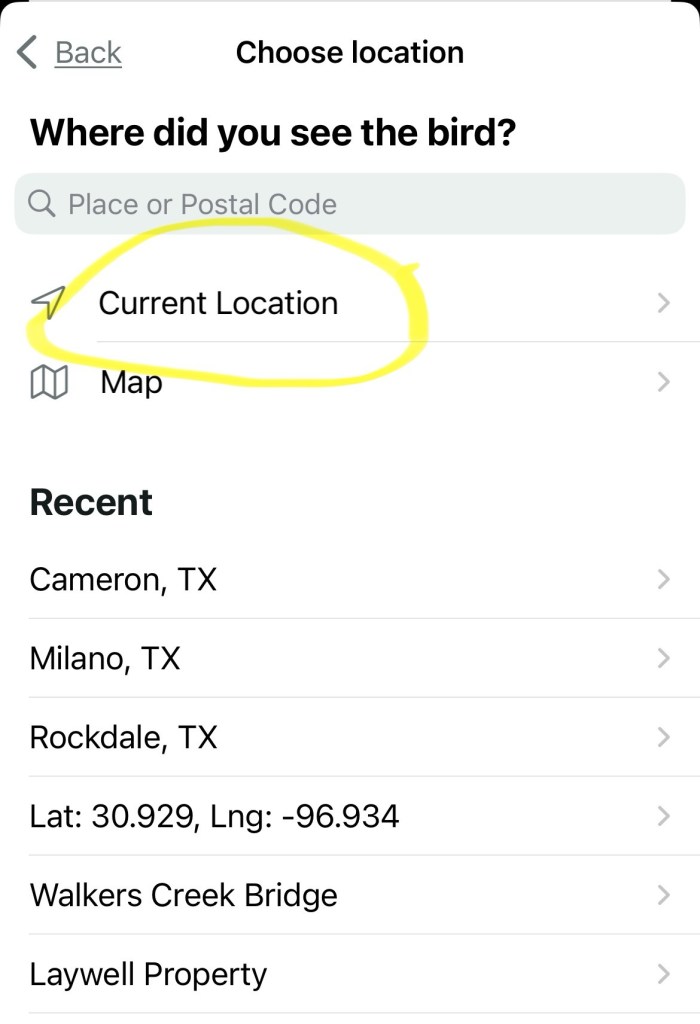
It’s important to remember that the birds identified by the AI software used by Merlin are not always accurate, as I’ve written about before. For example It’s less accurate if you don’t have it set to listen for birds where you are, too (I forgot to tell mine to stop listening for South Carolina birds recently, and only realized when a Texas bird I heard was missed). [I forgot to teach this part, so here are some instructions.] The setting to change locations (if you travel or something) is accessed by clicking the menu on the Explore (search) screen and clicking where it says “Cameron TX” on my version of the Refine Bird List screen (yours may differ). Then click Current Location (I usually leave mine on my house, which works fine for all our area). It will be stuck on your last location until you select “current location”
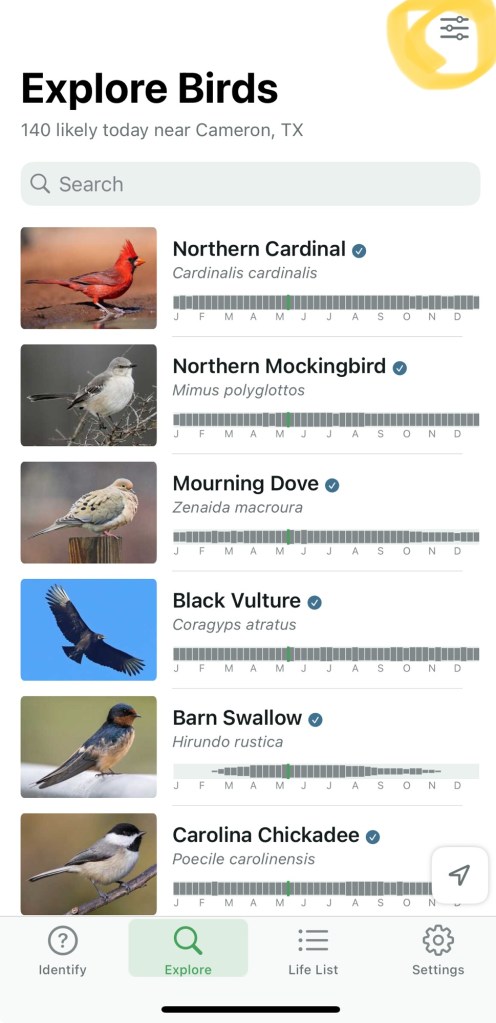
It helps to visually confirm the birds heard unless you’re familiar with it (I think most of us can confirm an American Crow) and to ensure that there isn’t another source for the call (Mockingbirds in my area do a great job with Eastern Phoebes, Eastern Bluebirds, and Belted Kingfishers, for example). Still, using Merlin is a great help for learning to do your own identification of bird calls and impress non-birders.

iNaturalist

Most of our group knows how to use iNaturalist on the computer and/or phone, but not many were familiar with the new iPhone app. So, I showed those who needed the app how to find it and helped get them started. The new app is quite different and has some interesting new capabilities, like using AI to identify what you’re looking at without taking a photo, identifying batches of observations and uploading them later (handy if you have limited bandwidth in the field), and grouping your photos before uploading (a little tricky but helpful).
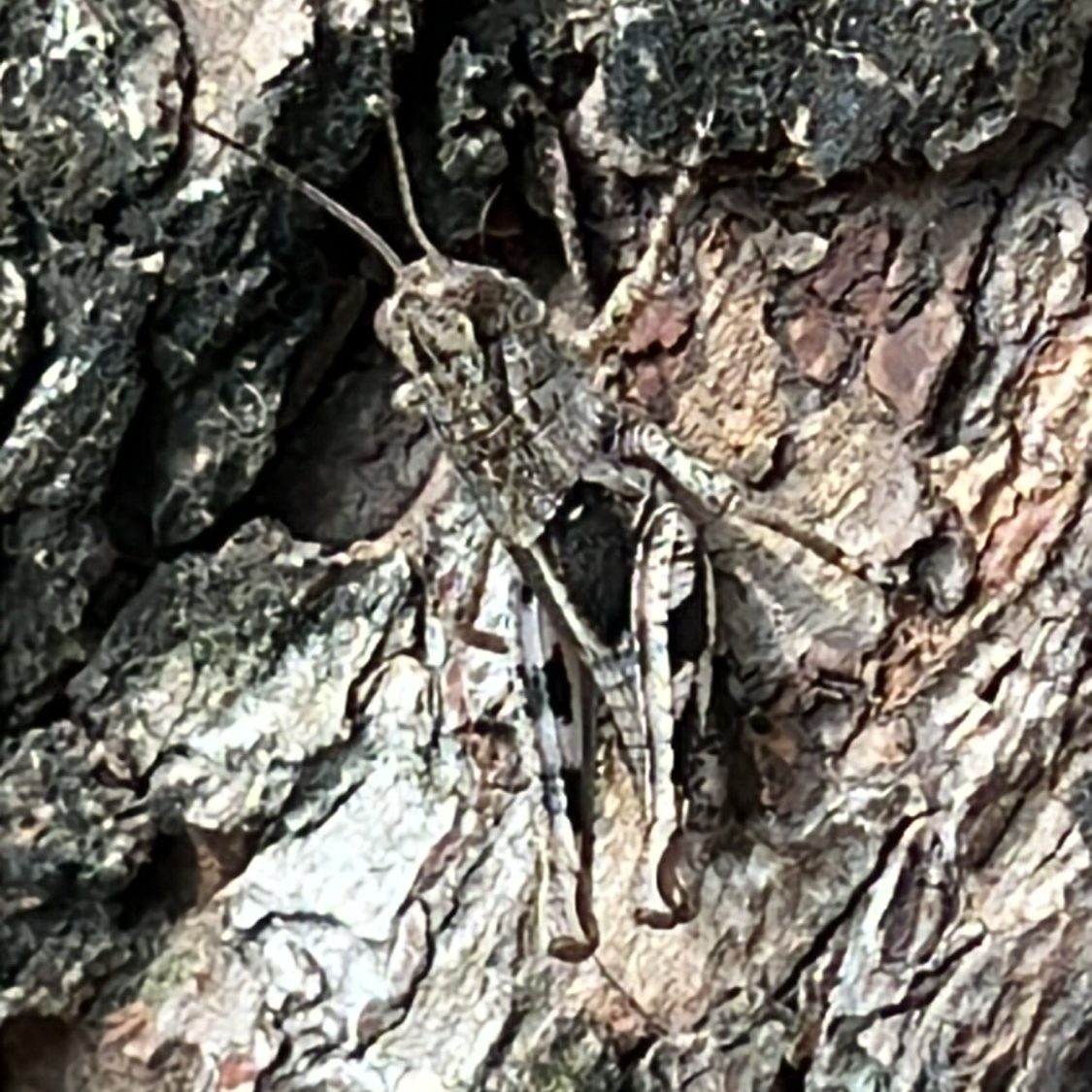
This Ponderous Spur-throated grasshopper sure blended in with the tree, but iNat got it!

I’d like to do another session on the updated iNaturalist when more Chapter members get set up and try it out a bit. But at one of us said to me, the best thing to do it just get it and make yourself use it until you figure it out. That’s what I did (it helps that I learned and taught applications for a living until just recently, so I’m a good software learner).
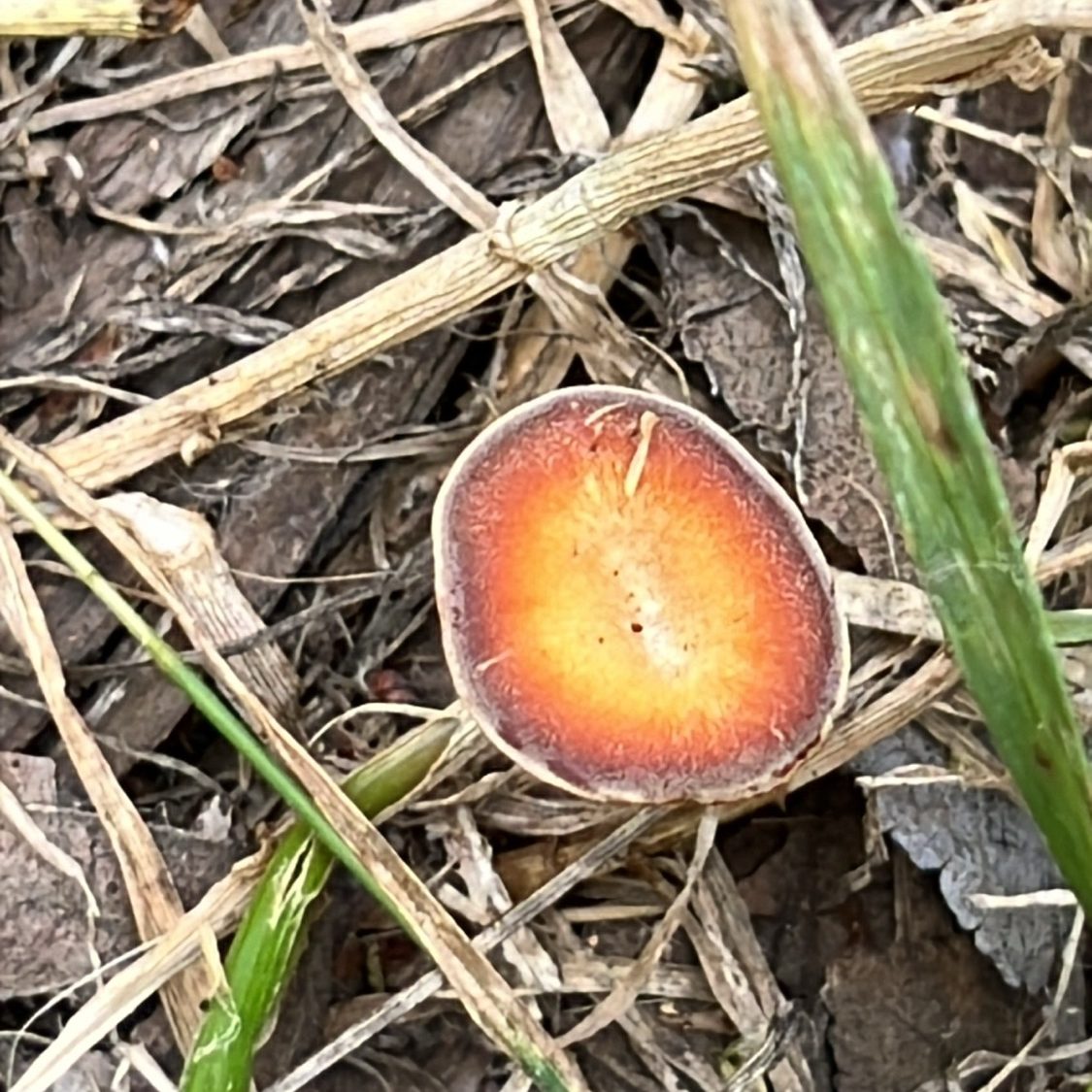
iNat has no clue what this fungus is. I should have gotten a photo from the side – rookie error!

I’m here as a resource for anyone with questions on this one. Send me an email or comment on this blog. Our usual source of vital iNaturalist information, Linda Jo Conn, is hampered by having an Android phone, but she’s your go-to on the computer app and the “classic” iNaturalist. Of course, iNat is working on that Android version, so it should be out soon, we hope.

Thanks as always to Ann Collins and Gene Rek for their hard work on Wild Wings, as well as to our bird sanctuary committee. They have kept the project on track and enabled us to start our educational programs.

Resources

New iNaturalist App for iPhone! This article provides more information about the new iNat app, and has a handy video on configuring it to behave a bit more like the earlier version, which is more like how people who do a lot of identification will want to use it. I highly recommend this if you can learn from text or video (some people prefer to be shown).

What I’ve Learned about Merlin Bird ID: Article I wrote with more Merlin tips and tricks.

iNaturalist New or Classic: Which one for new users? This is on a Reddit forum, so probably of interest to our nerdier Master Naturalists. But the information on how the AI works was interesting to me.

Check Out the New iNaturalist

by Sue Ann Kendall

Last Thursday, I headed out to observe wildlife at the Nails Creek Unit of Lake Somerville State Park. My usual method of observing is to take pictures of what I find, then upload the photos to iNaturalist for identification and to document what’s out there. (I also have Merlin Bird ID going most of the time, to catch the birds flying around.) I had a nice walk out by the lake, where I saw many ducks, hundreds of White Pelicans, and some plants I hadn’t seen before. What a lovely afternoon!

Pelicans in flight

Of course, I fired up iNaturalist on my iPhone when I got back to my campsite. To my surprise, there was a notice saying that I should download the new iNaturalist right now, because it has all sorts of wonderful new features (not available on Android yet).

This is the notice on the computer app.

I downloaded iNaturalist Next, as it’s called now, like a good user, but I went ahead and identified my photos on the old app, which still works just fine. I then read all about the new version, which you can, too, by going to their blog. It’s a good idea to do that before starting to use the new one.

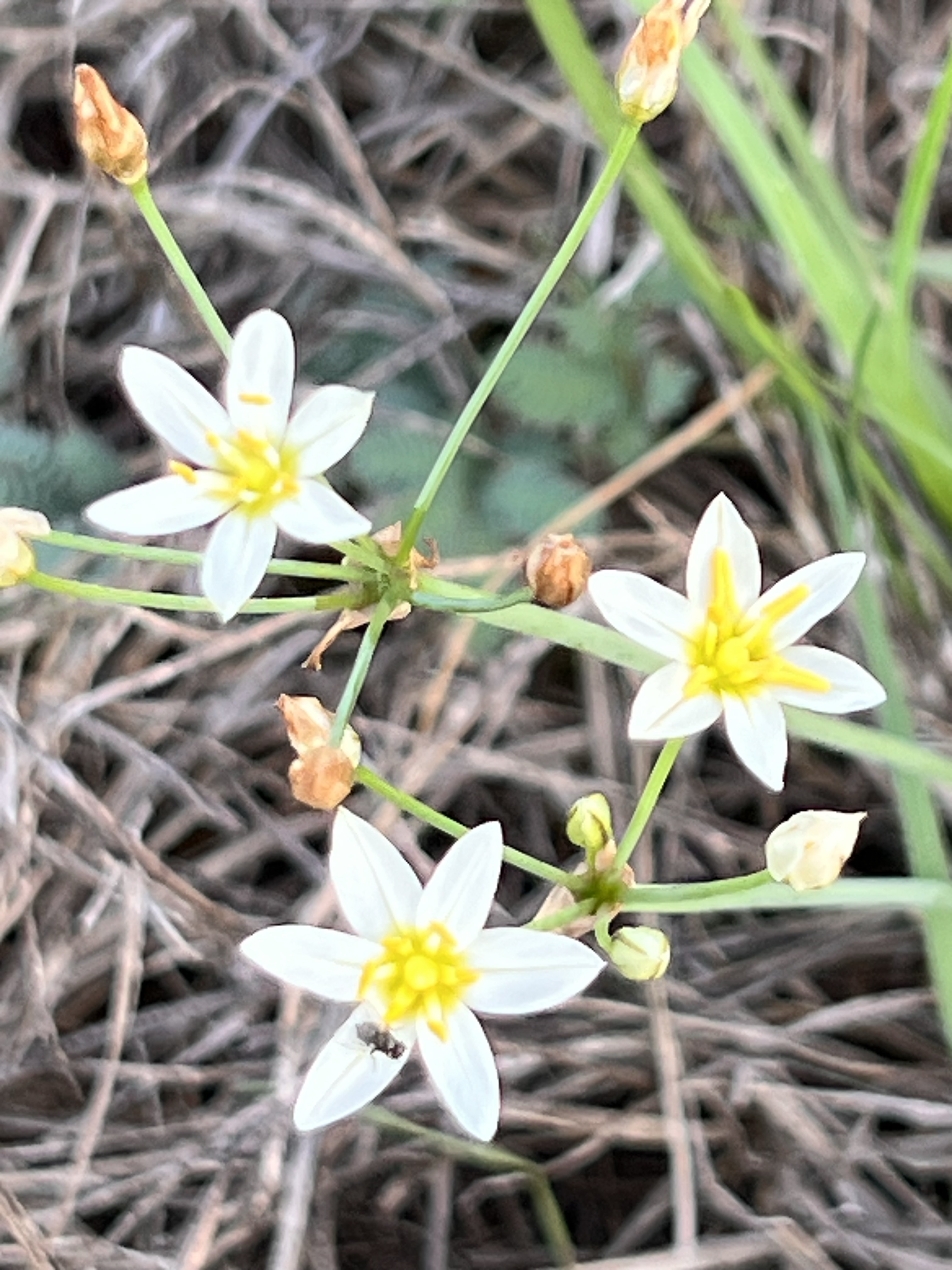
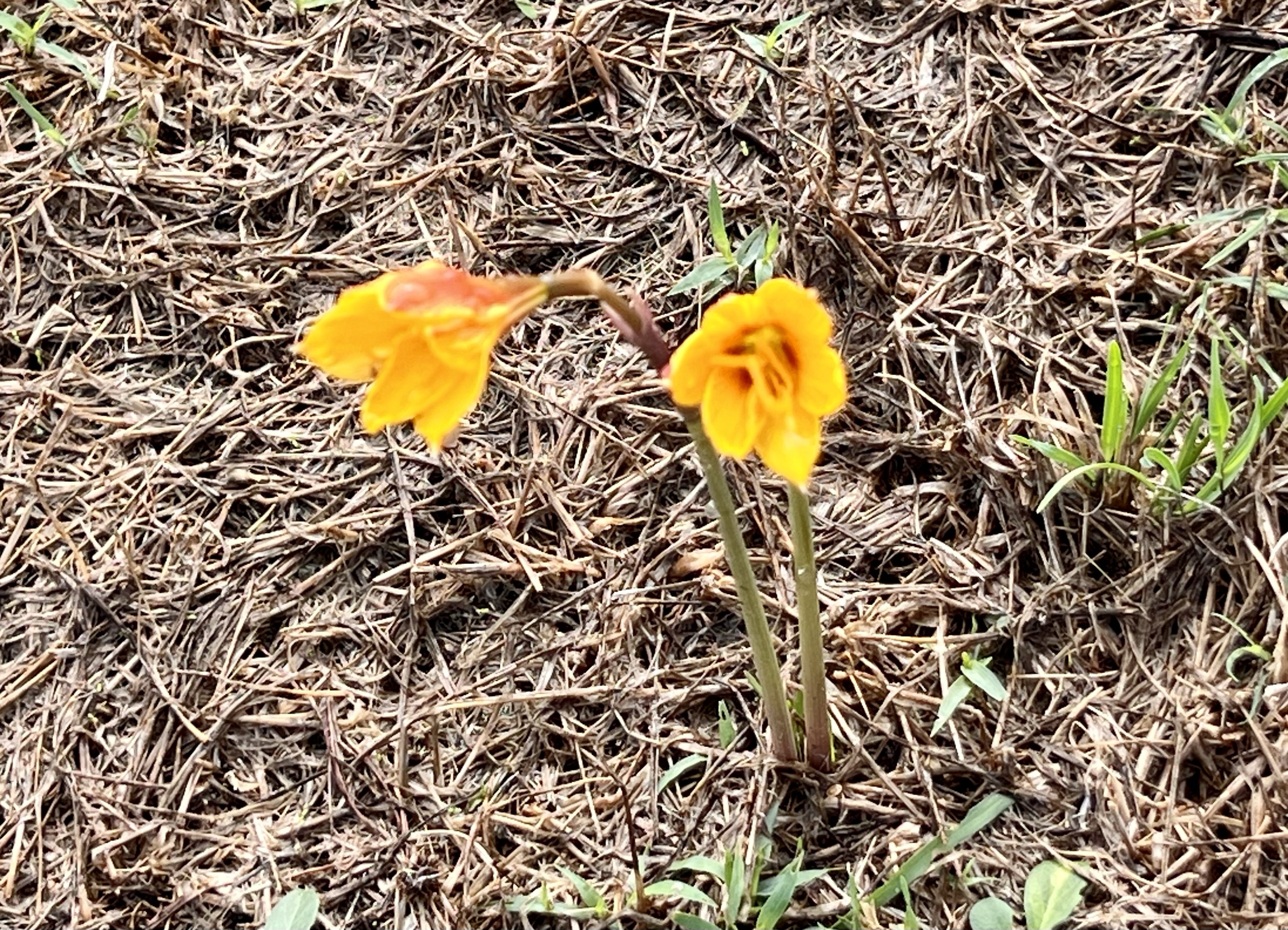
Beautiful Prairie Nymph (Herbertia lahue) I saw at the park.

The next day I tried out the new version. I was especially intrigued by the new feature that lets you point to a plant or other living thing and get suggested identifications. So, if you just want to check on something or resolve an argument with your friends about what something is, you can do it without uploading to the database. This is like the Seek app many people use.

After some trial and error, I was happy to figure out that you can take a photo from within the app, get a suggested ID, confirm it (or select another option if you know better), then upload it right then. Off you go to the next intriguing plant. This really saves a lot of time going back in and uploading later.

The top option is the one that gives suggestions.

I have to say it’s not the most intuitive interface ever created (I’m qualified to judge, because I supported users of an application with a horrible UI from 2011-2025, so I know one when I see one). However, once I figured out how to do what I wanted to do, it was just fine. I was also happy to see a pop-up with instructions on how to make the new version work a bit more like the old one, for us creatures of habit, and a reasonable tutorial on the blog post. Here are a few tips I’ve come up with so far:

Here’s the user interface.
  • Take your pictures carefully. You’ll see possible IDs coming up as you aim the camera at something, if you move slightly or annoy the app in some magical way I don’t understand yet, it might go back to identifying by family or worse. So be sure to snap at the right time to get the ID you want; otherwise you have to go back in and edit the observation, which works like the old iNat.
  • Note that the photos the app takes are an odd rectangular shape. If you are going to use photos taken with the app for other purposes, you’ll want to go in and crop them to a more useful aspect ratio.
  • I also find that it’s harder to focus on your organism from within the app than using the phone camera app. I frequently got frustrated trying to get a good image, especially of insects. A couple of times I just took a phone photo and identified the insect or plant later. If you are careful to only upload nice, sharp pictures to iNat, you might just want to get the suggestions in the app, but take pictures separately.
  • One of the good new features is being able to upload a lot of photos at once (up to 20) for identification. You can group photos of the same organism to go in one observation, but read the instructions first, because I found it to be challenging when I started out. Once you get it, it’s fun.
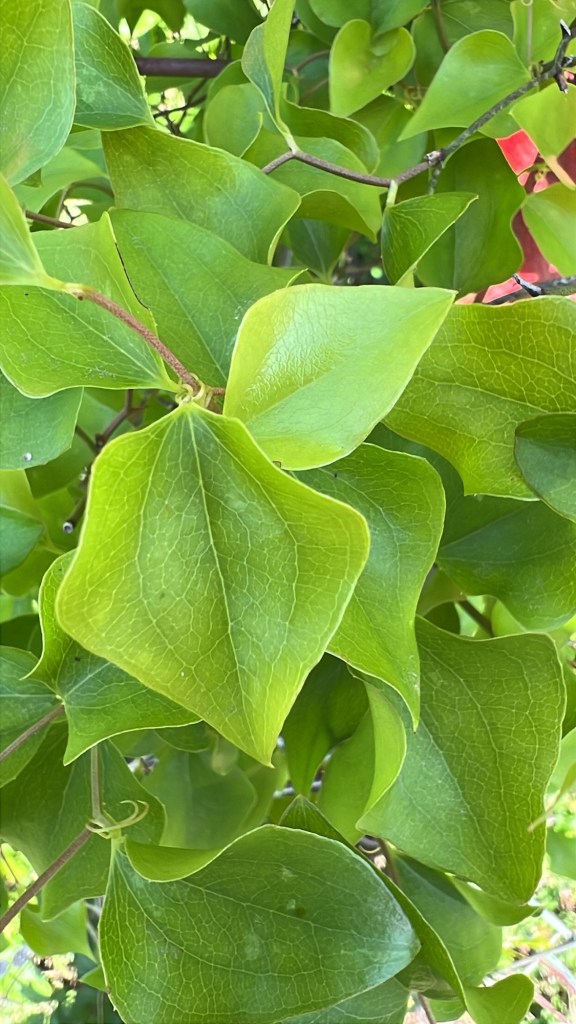
Example of the shape of photos. It was the closest plant to me, Smilax bona nox.

Overall, I think I’ll like this new app just fine. The only thing I really miss is that I liked the more compact list of your observations on the Me tab in the old one. And I think there are some issues with traditional projects that need to be resolved, for those of us who use a lot of projects. New features, like viewing other users’ profiles on the phone, make up for any issues I have. I loved that their example was Sam K.

It’s spring, though, and plants are blooming, so get out there and identify some of what you see on this new app. I’ll be waiting for reviews from some of our Super Users.

Chasing Butterflies

by Carolyn Henderson


At just after noon on Saturday, I was standing on my patio when a Monarch butterfly flew by very close to me. Unfortunately, I didn’t have a camera to get a photo of it, but I probably wouldn’t have gotten it anyway. It flew straight by into my neighbor’s back yard. It did, however, inspire me to go chasing them.
I go to the Little River Basin Texas Master Gardeners Triangle Garden seasonally to take pictures of pollinators, and I usually see Monarchs, and many other types of butterflies, there. So I took my camera to see what I could see.

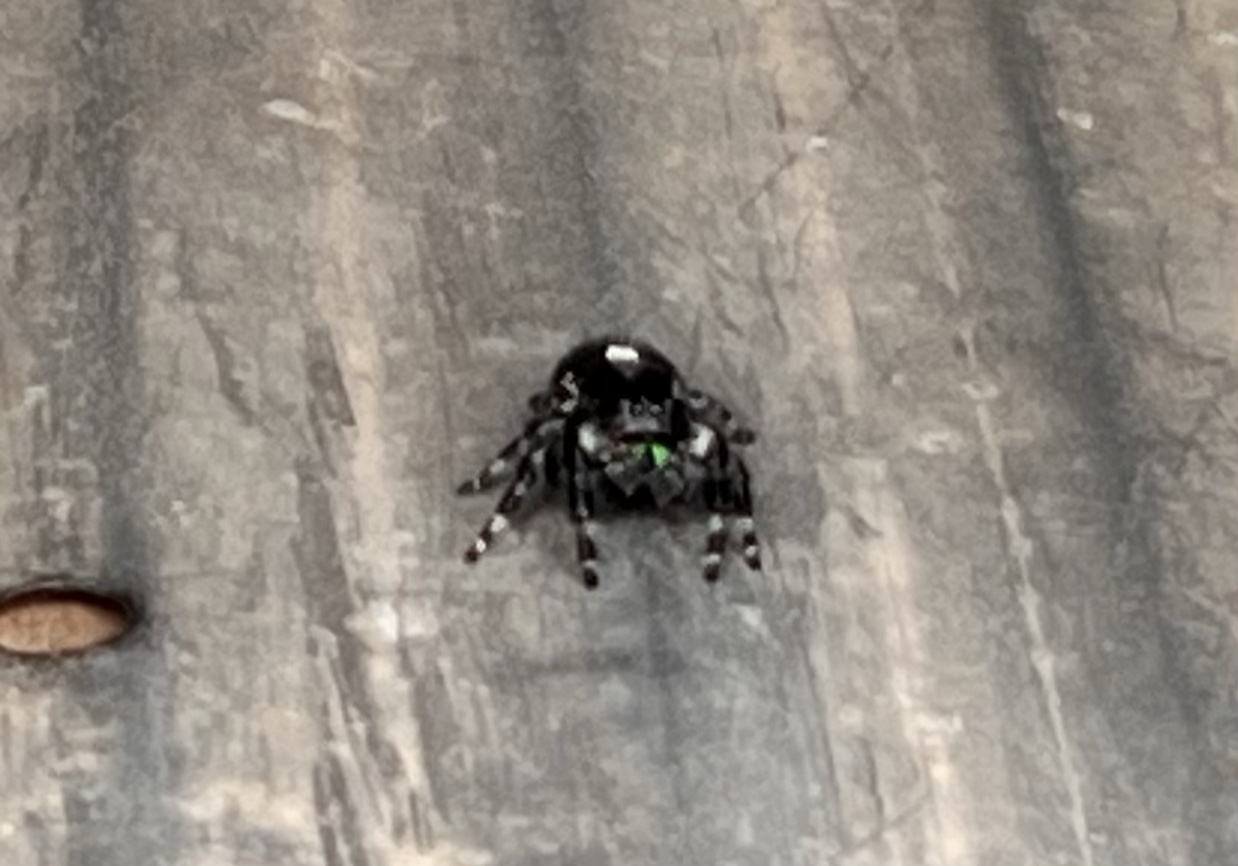
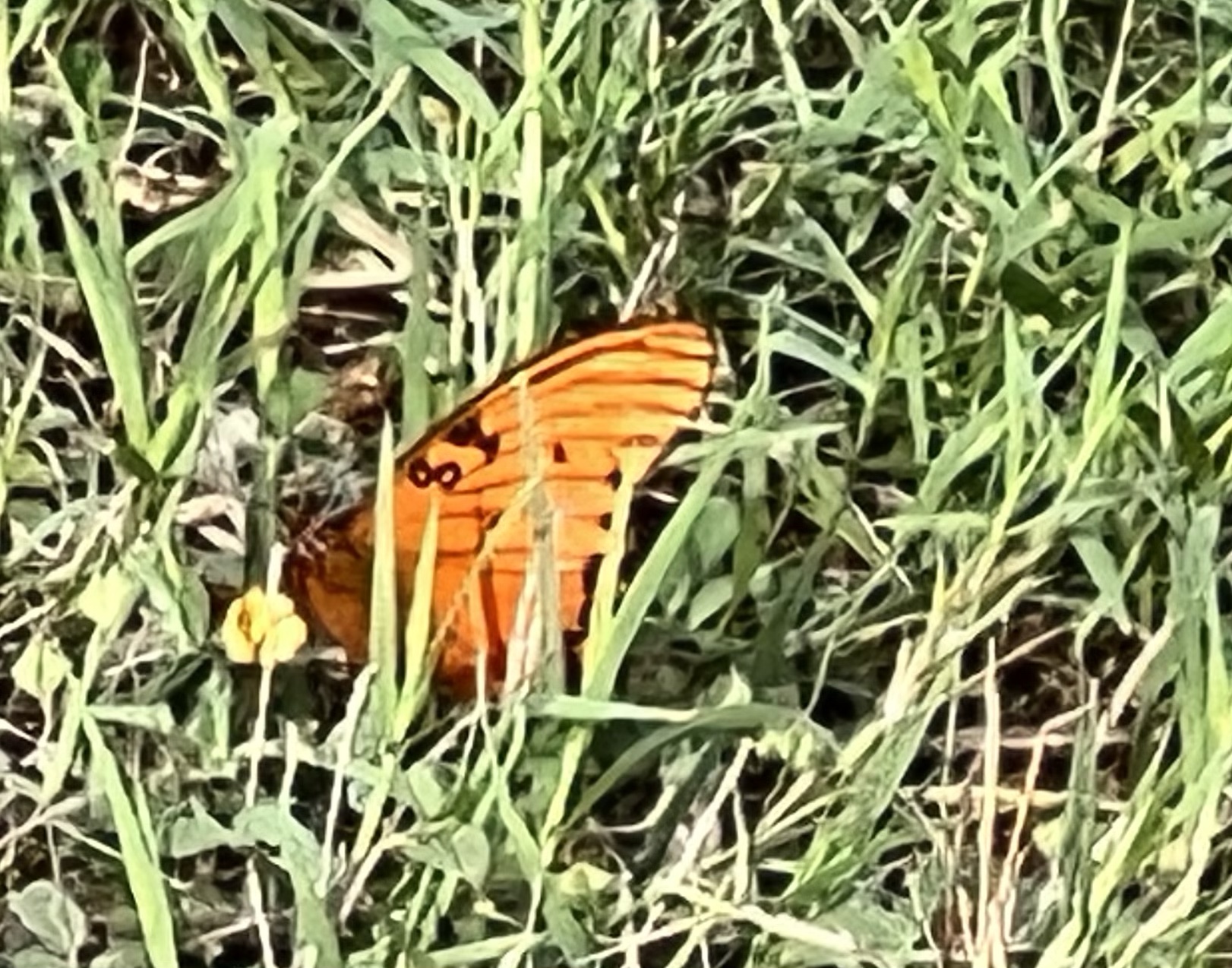
I found huge Giant Swallowtails eating from abundant Zinnias. The Fritillarys, both Gulf and Variegated, also were fond of the flowers. So was a Bold Jumping Spider that seemed to be after the Variegated Fritillary. I also found Gulf Fritillary on Tropical Sage. I am unsure if the Giant Swallowtails are Eastern or Western variety. iNaturalist thinks they are Western, but Eastern are more common here.

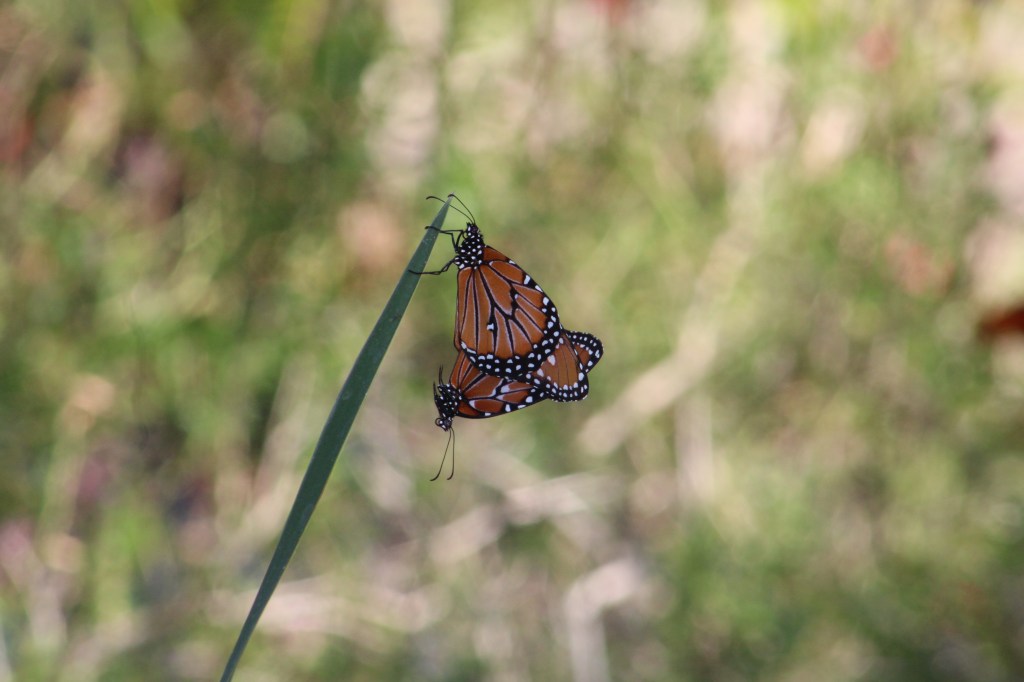
One of my favorite butterflies is Queens. They were abundant on Gregg’s Mist. I can always find them on this plant. They also were mating. I’ve seen more of them there, but it may be early in the migration. Bordered Patch and Fiery Skippers also were enjoying the Gregg’s Mist.
What is not there, at least yet, are Monarchs nor Pipevine Swallowtails. The Flame Acanthas and Tropical Sage and Gregg’s Mist are ready for them. So is the cat in residence (see photo).

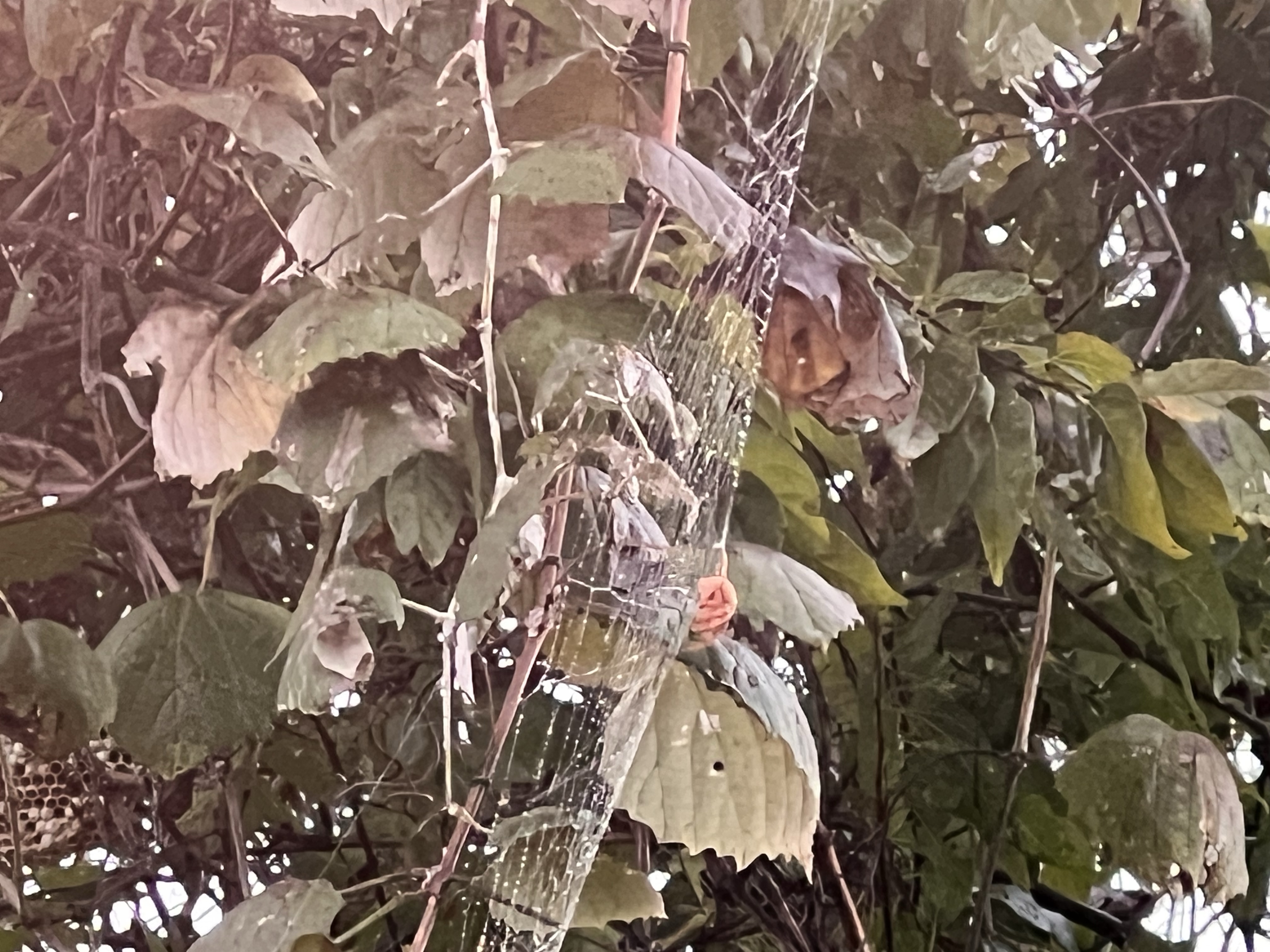
I also found a few others at my house. My yard is inundated with Hackberry Emperors, and some Clouded Skippers are hanging out there. So are Carolina (or Arizona?) Praying Mantis and Spinybacked Orbweavers with an elaborate web, and grasshoppers that were abundant at the triangle garden, too. I also had a hummingbird that was interested in the Texas Purple Sage at my house.

Blackchinned Hummingbird

The iNaturalist fall project to submit as many pollinators as you can find is coming up in October. If you are participating, you might want to try the El Camino Real Wildscape which is usually full of butterflies in October – including Monarchs. Or, you also can try the Triangle Garden.

Spinybacked Orbweaver and web

The Elusive Texas Star in Milam County

by Sue Ann Kendall

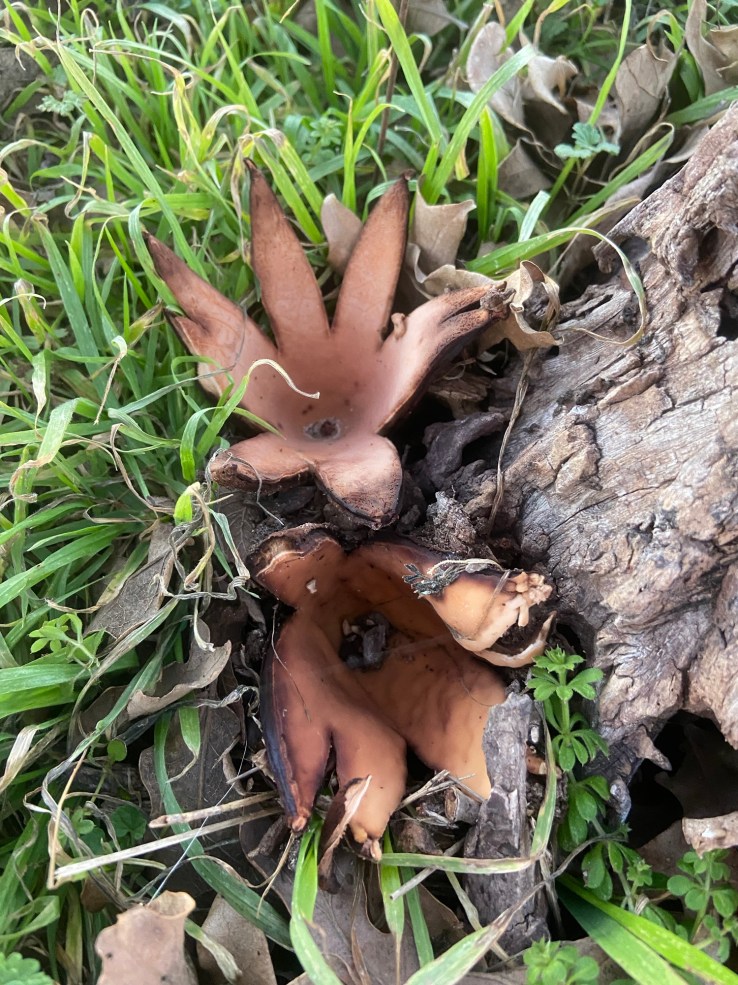
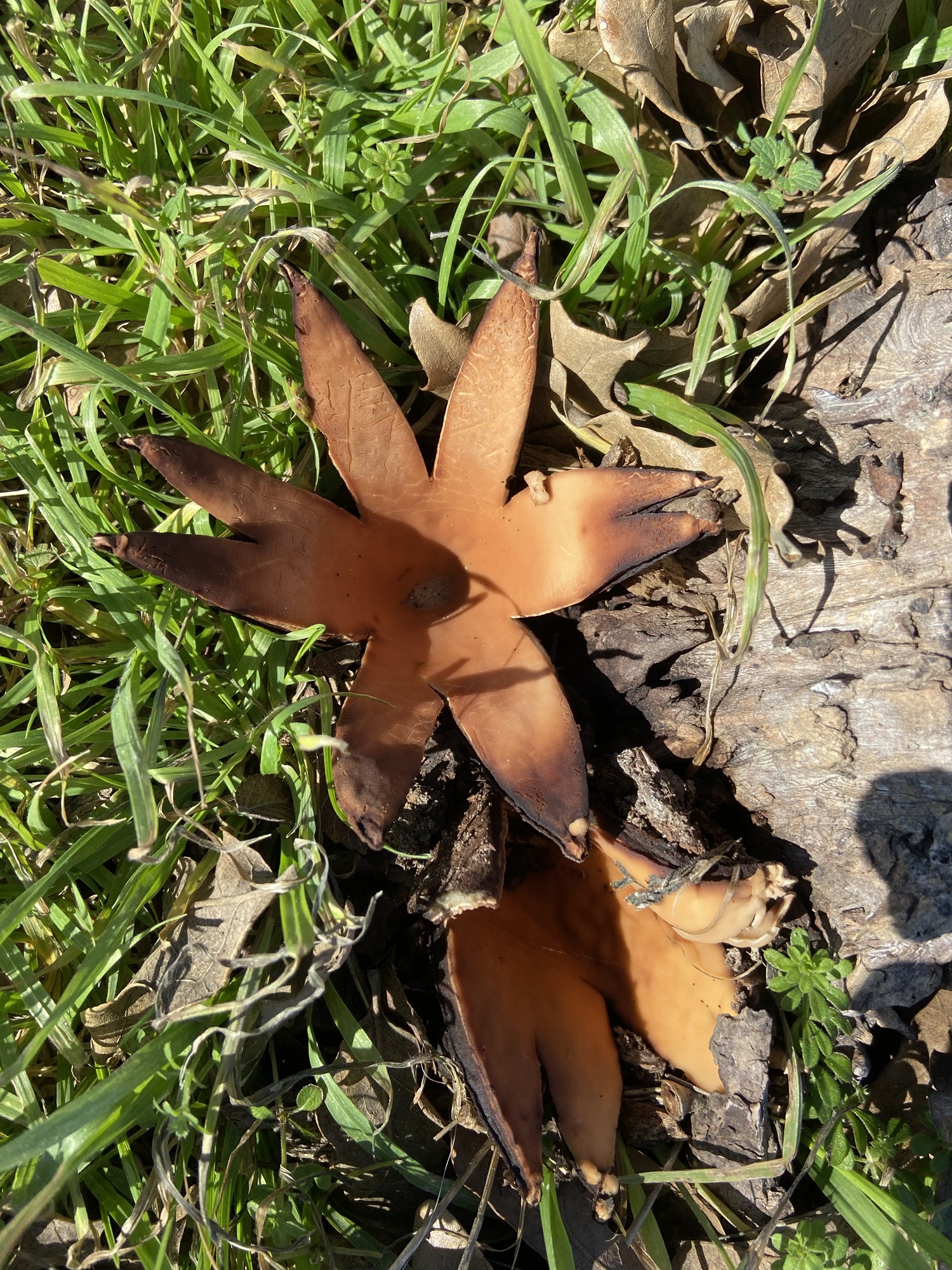
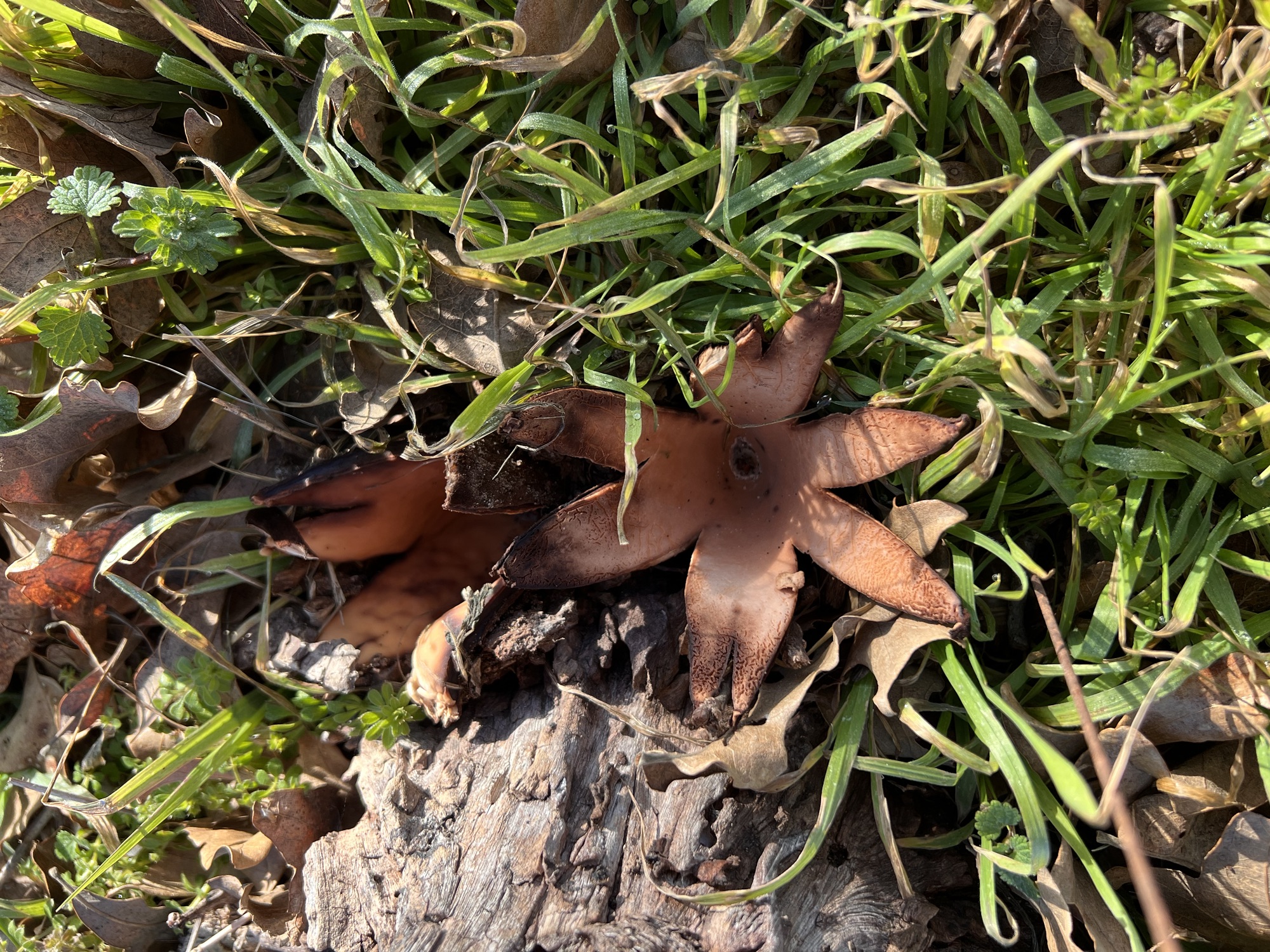
The State Fungus of Texas is the Texas Star (or Devil’s Cigar) (Chorioactis geaster). It’s not spotted often, so wheneever you see it, it’s newsworthy. When it was spotted for a second time at Inks Lake State Park last December, it made the news all over Texas. This is just one of the articles. There’s also an article on them in this month’s Texas Coop Power magazine. So, when my neighbor Vicki sent me a photo and asked me if I’d ever seen anything like this before, my heart skipped a beat.

I knew exactly what it was!

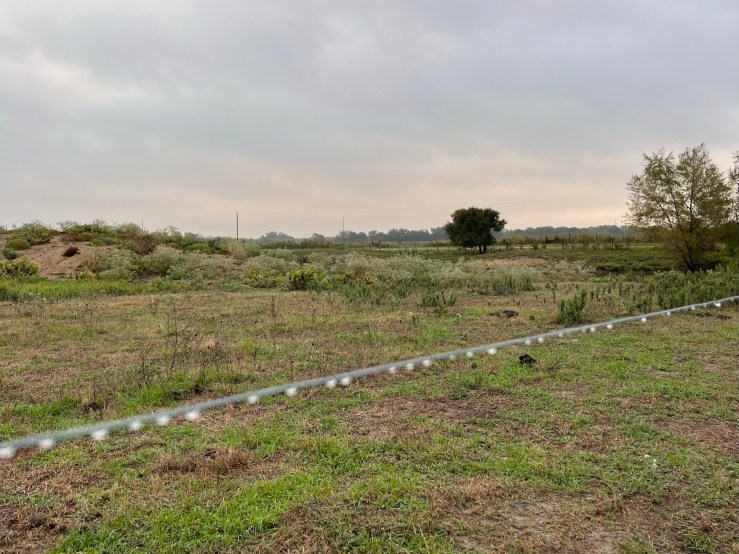
I told her it was rare and exciting. She looked it up, and we both geeked out over it for a while. The next day I went over to her property to get a look (I’d also hoped to pet her minature horse, but she was in the next pasture.) The mushroom was in a field of post oak trees, which confused me.

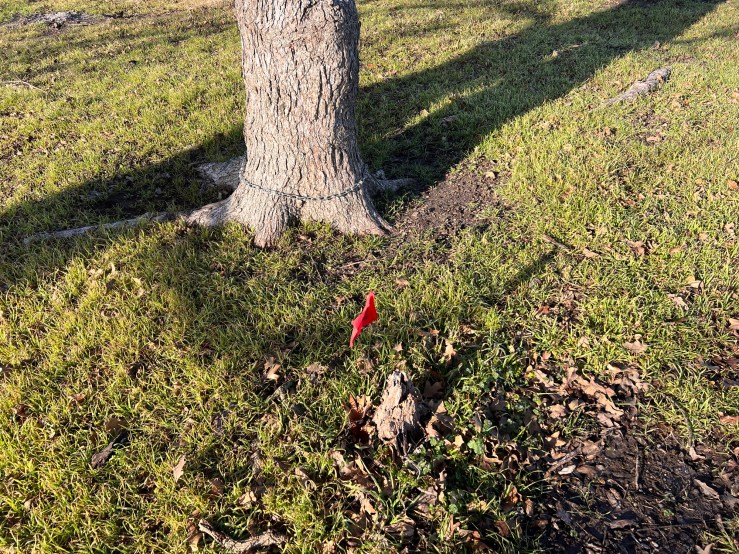
However, when I got closer to the spot where the Texas Star was located, conveniently flagged by Vicki, I saw it was exactly where it should be. It was right next to the stump of a cedar elm tree (that’s basically all we have, the oaks and the elms). We’d recently had a lot of rain, so it was fruiting right when it was supposed to.

There it is!

As soon as I got my own photos, I uploaded the observation to iNaturalist, where it was quickly confirmed. It had already burst its spores out, so we missed the exciting hissing sound the Texas Star makes, but it was fun to feel its leathery “petals,” and see if it smelled funny (I couldn’t smell anything). I looked around but didn’t see any more on her property. I also looked at the dozens of cedar elm stumps in my woods, but no Texas Stars have turned up.

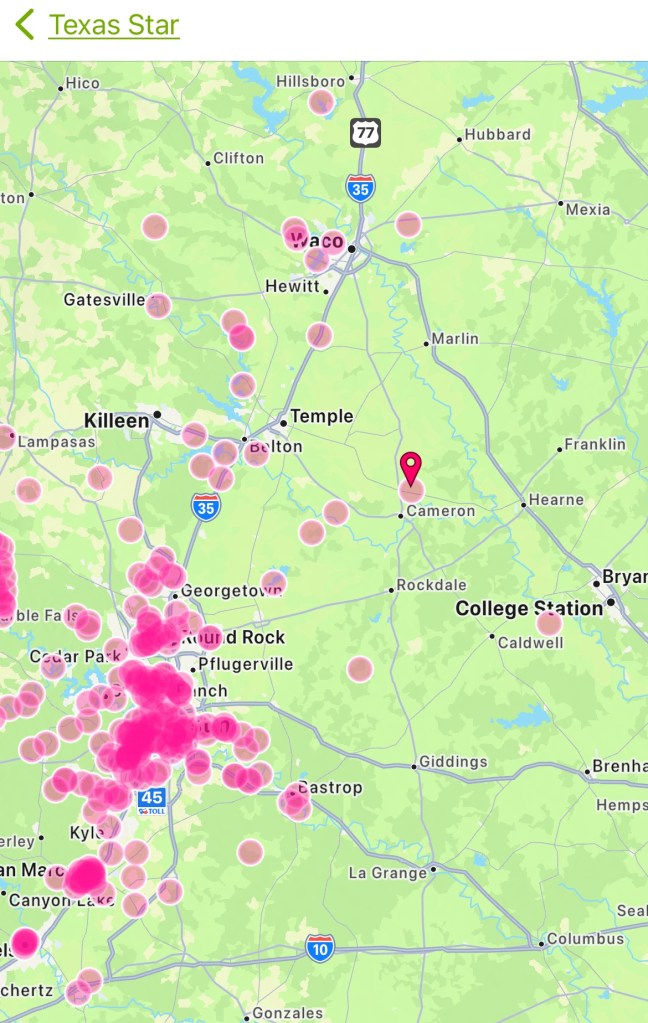
As I looked at the information on iNat and Wikipedia about the fungus, I learned a lot. First of all, I’m pretty lucky to live where it grows. It’s only found here in the middle of Texas and a small place in Japan. That makes me wonder if they are really the same fungus, but I’m sure professionals have looked into that.

This iNat screenshot isn’t the whole Texas Star range, but it shows how few observations there are in this part of the world.

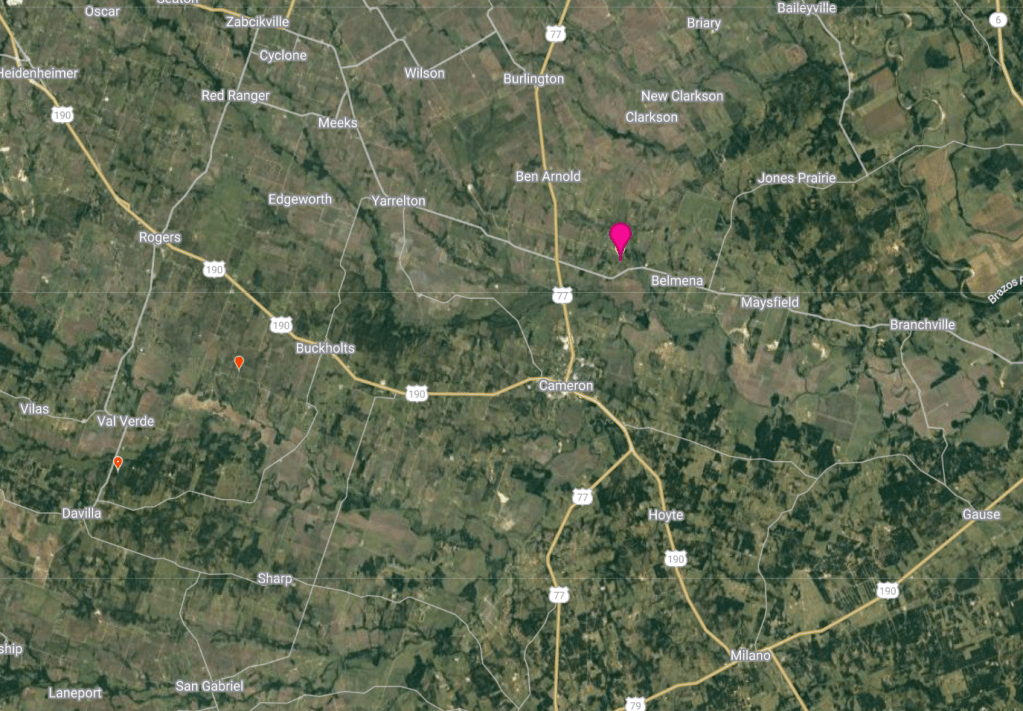
There were observations near Davilla and Buckholtz, but only the Davilla one was research grade, making my observation the second confirmed one in Milam County. And we are way to the east of its usual range. I was excited!

This map has most of Milam Couonty in it, and shows the three potential observations.

Keep on the lookout for these if you have decaying cedar elms (Ulmus crassifolia) and we have another nice rain (which I assume will happen soon). To learn more, read any of these articles:

Don’t Look Up (all the time)

by Sue Ann Kendall

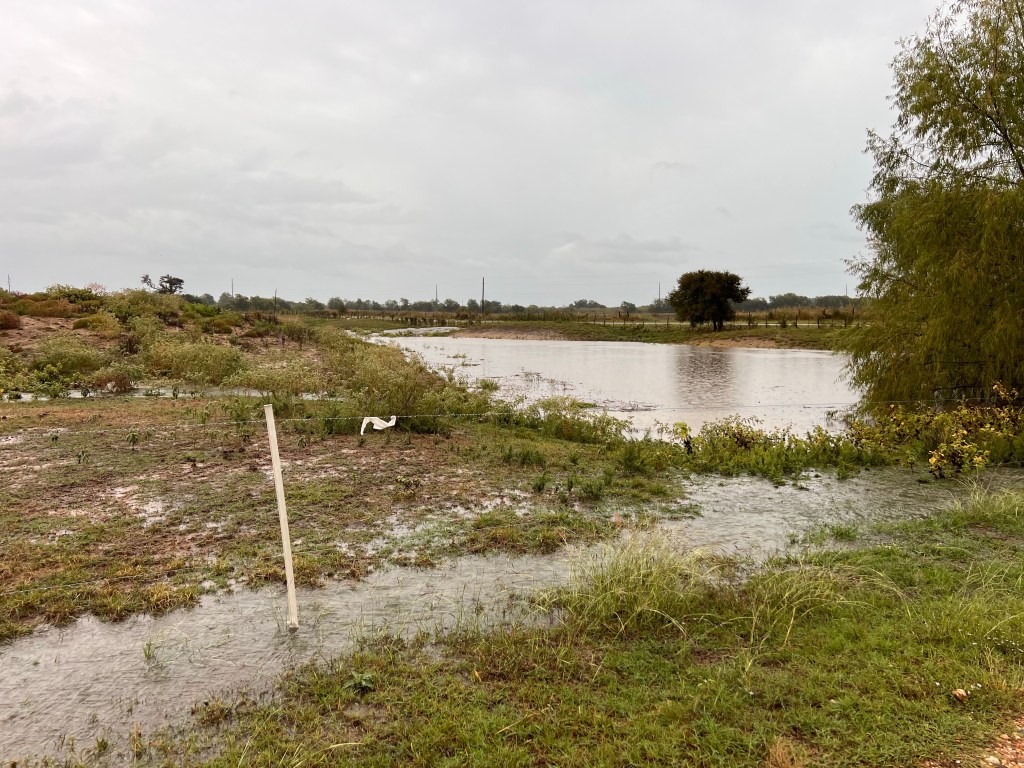
Usually, I’m the one editing and uploading blog posts for other people, but today I have time to write my own post for this blog. If you live in Milam County, Texas, there’s a very good chance you’ve had some rain over the past few days, very welcome rain, in fact, even if some of us got a lot very quickly.

It’s been wet.

Where I live, at the Hermits’ Rest Ranch in northwest Milam County, we got close to six inches of rain. That’s how it goes here these days, months of drought followed by a big flood. I was expecting it.

Our spring is now springing anew.

It’s also autumn, and since I’m not one of those people Donna wrote about yesterday who think there’s nothing going on in nature this time of year, I thought the days after a big rain would be the perfect time to see what’s blooming or seeding, who’s flying around, and who’s up and about after a rain. Since one of my hobbies is documenting what flora and fauna are around at different times of year on this property, I knew it would be a good idea to document what’s here on iNaturalist (you don’t get Master Naturalist hours for work on your own property, but I’m fine with that, since this is my own research).

That’s an overfull tank!

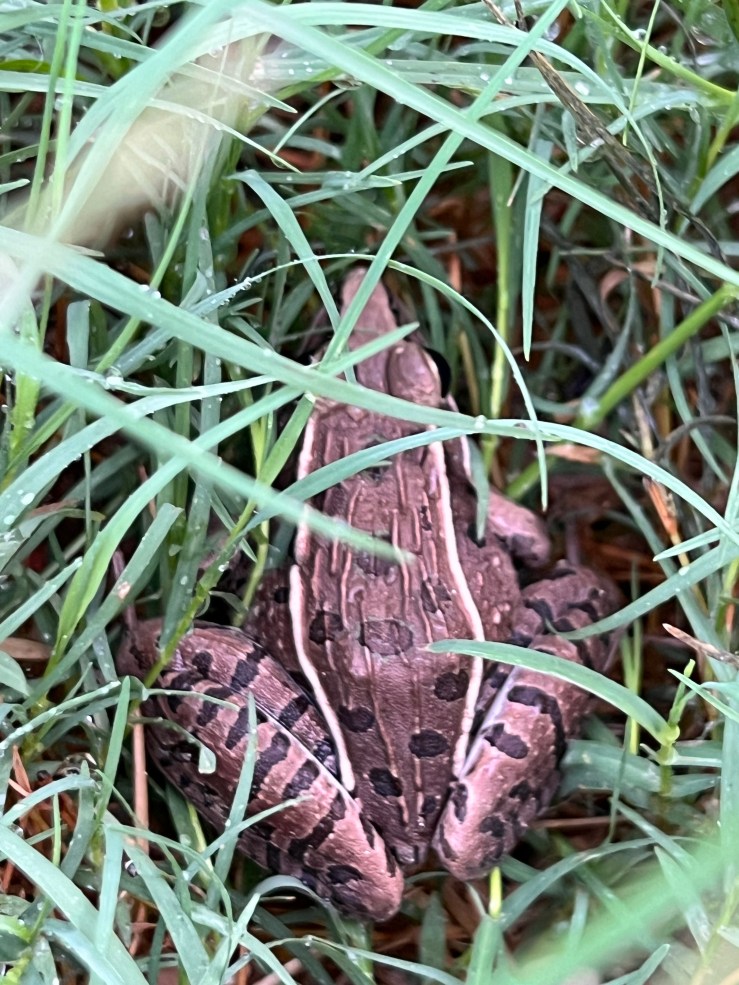
As the title of this post hints, I found most of my interesting sightings on the ground. Looking down will quickly dissuade you of any notion that nothing’s blooming, growing, and reproducing this time of year. The very first thing I found on the ground was my favorite: this gorgeous leopard frog. I didn’t get a side view, so I can’t tell if it’s a Rio Grande one or a regular one, but it’s pretty.

It’s a big one, too.

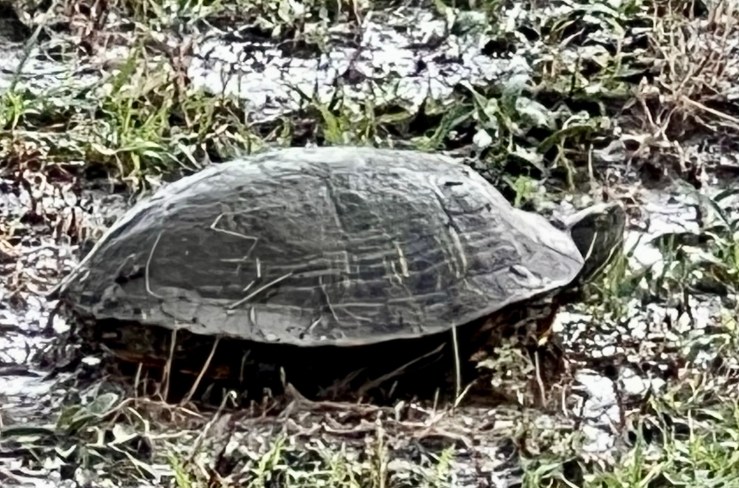
As I walked down to my front pond, I saw another resident out of its usual watery location, this pond slider, who must have been going from the back pond to the front. There are so many of these in there, and I bet the flooding moved them around a bit.

Trachemys scripta

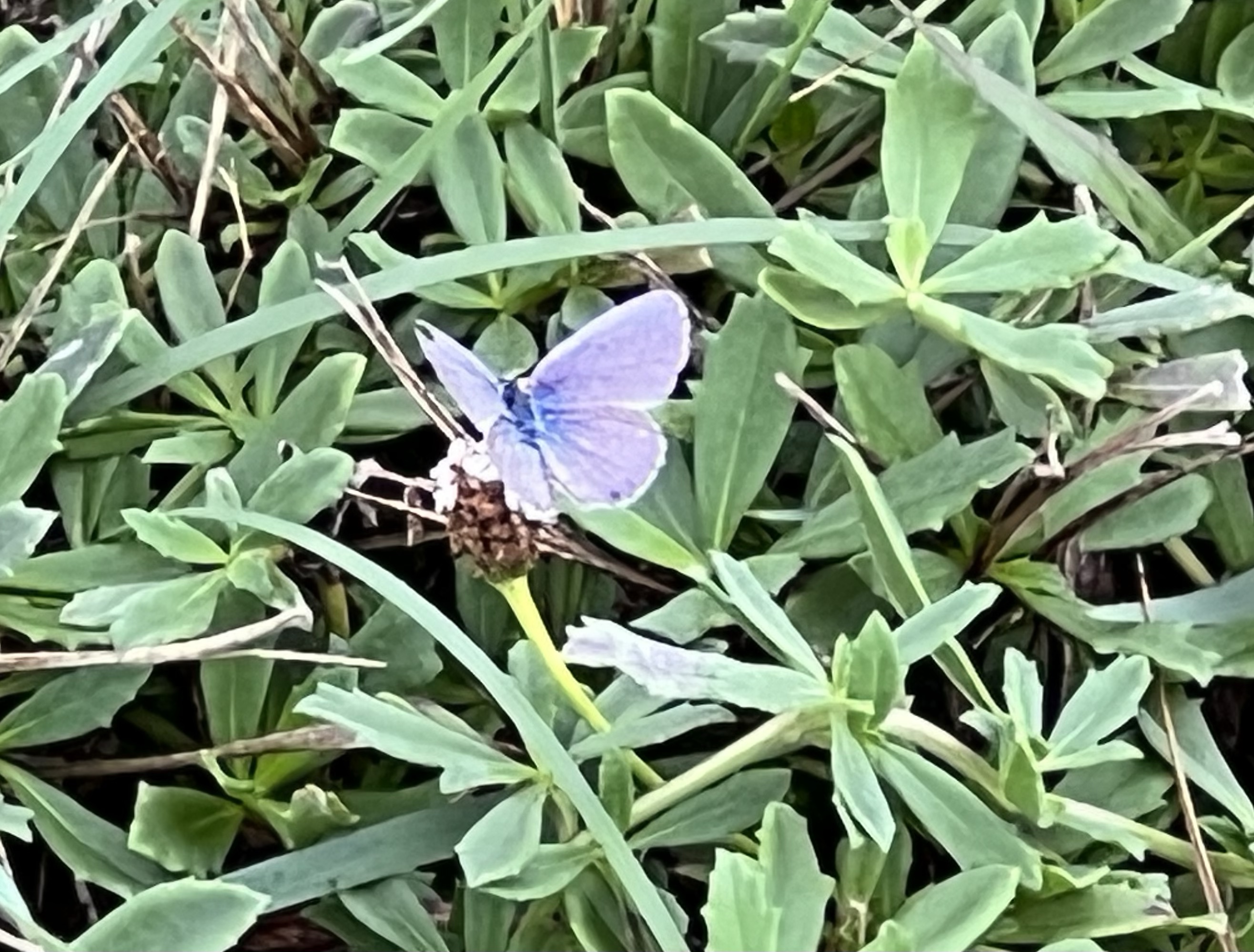
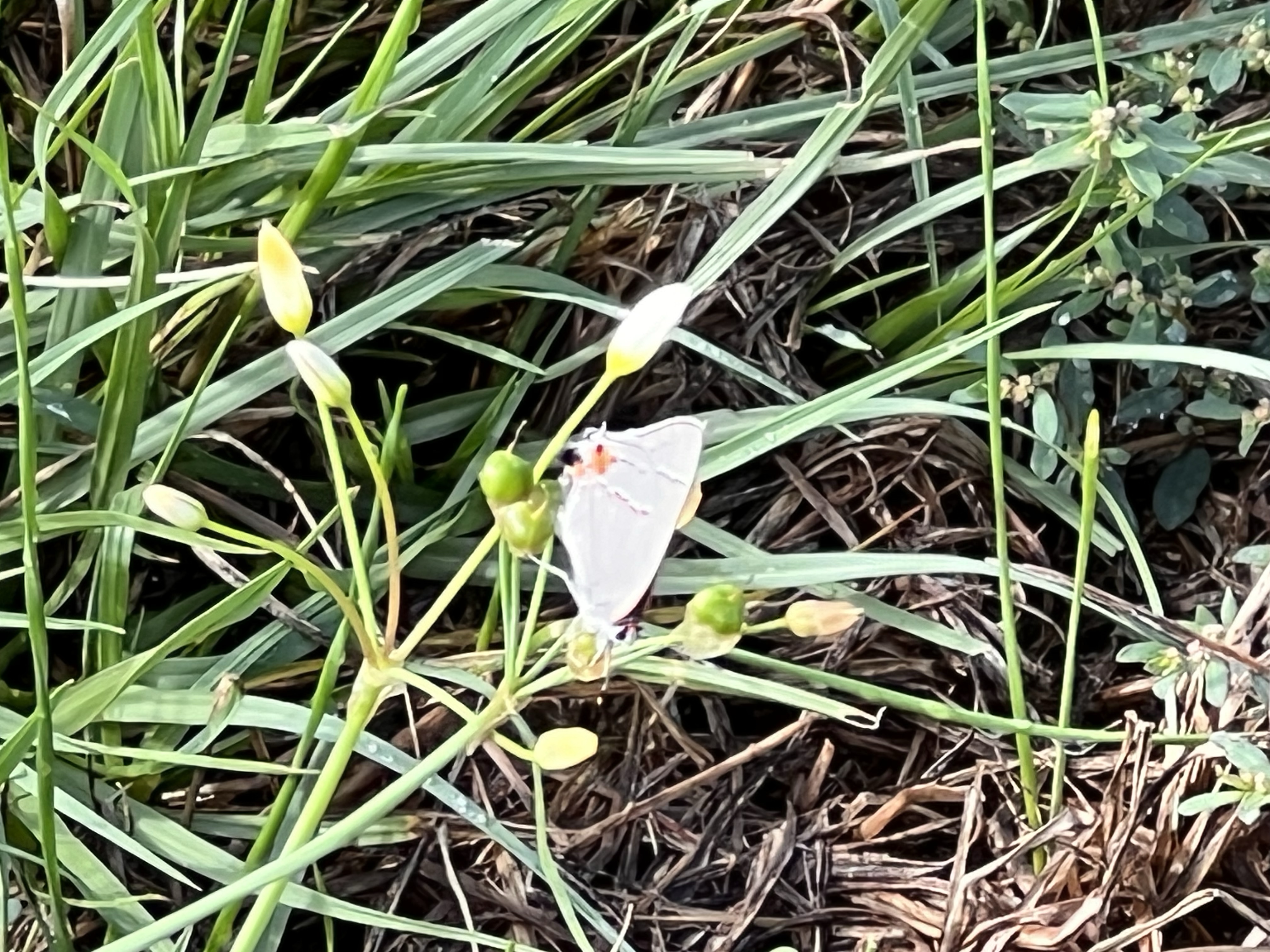
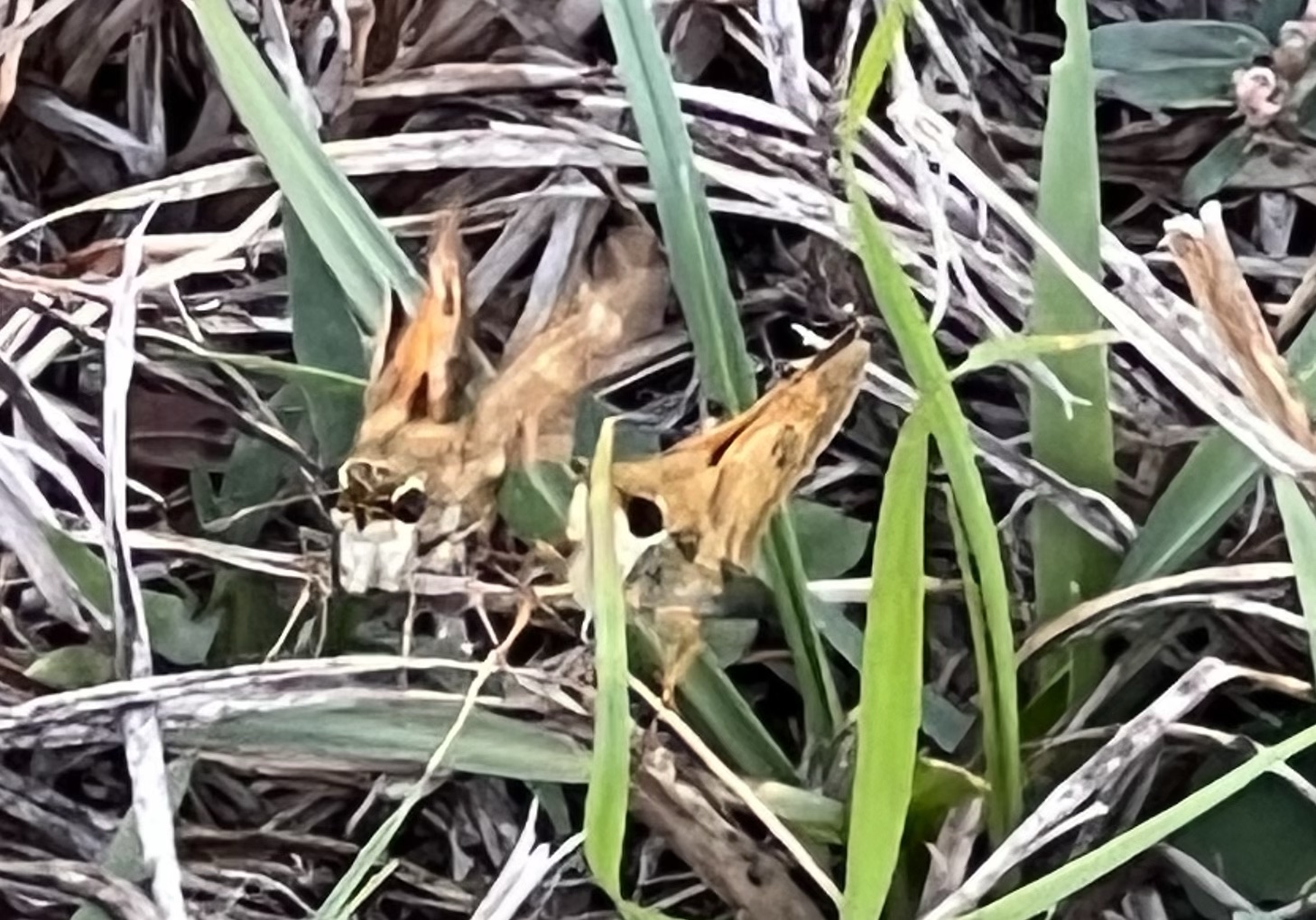
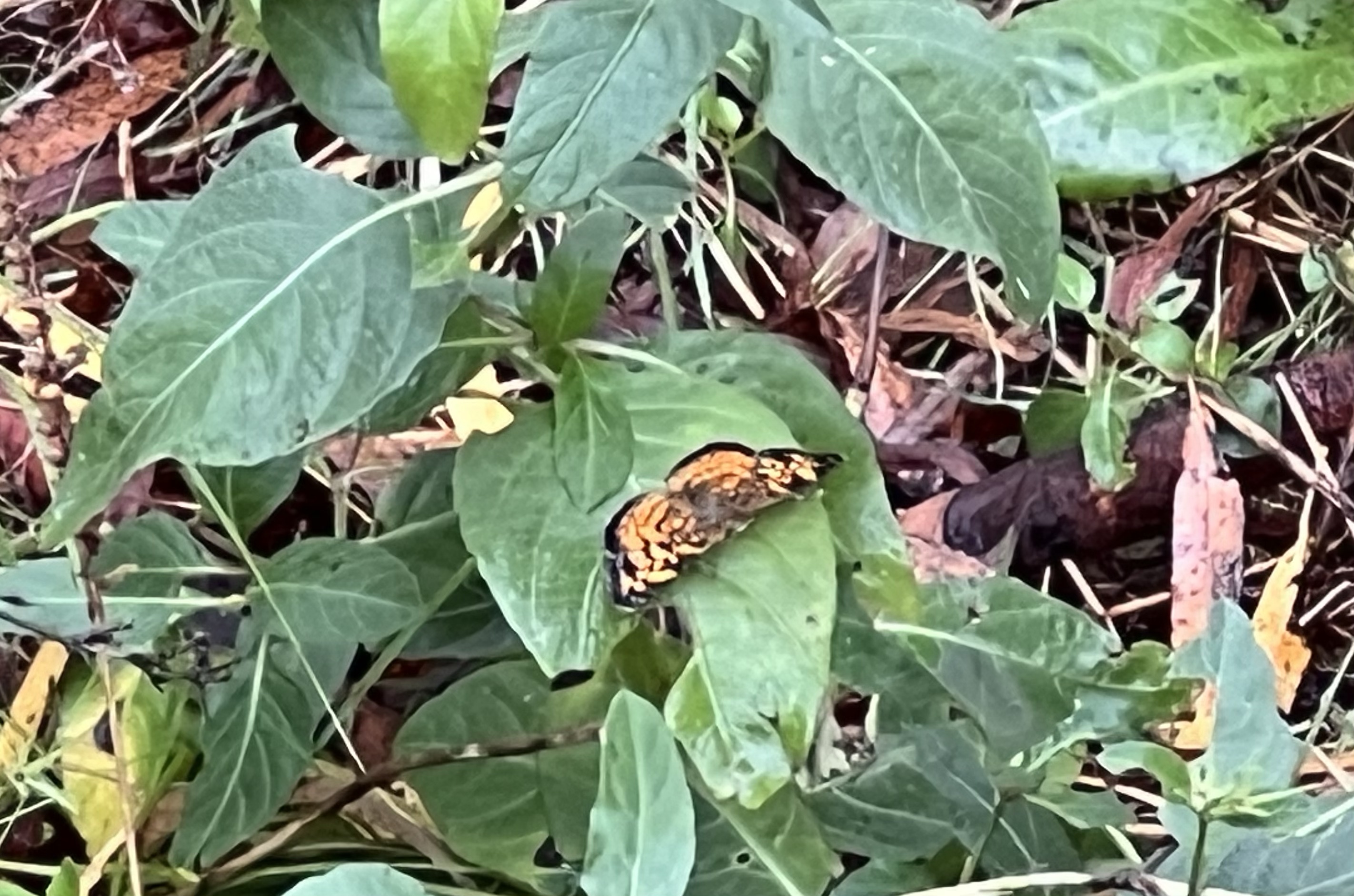
Once the sun came out, so did the butterflies and moths. I’m transfixed by the Ceraunus blues (Hemiargus ceraunus) and was really pleased to find them drying off their wings so I could see the blue part when they were sitting still, for once. But I also enjoyed the many sulphurs (not pictured, as they are blurry), Gulf fritillaries (Dione vanillae) and pearl crescents (Phyciodes tharos). There were also monarchs, who refused to pose, and lots of skippers.

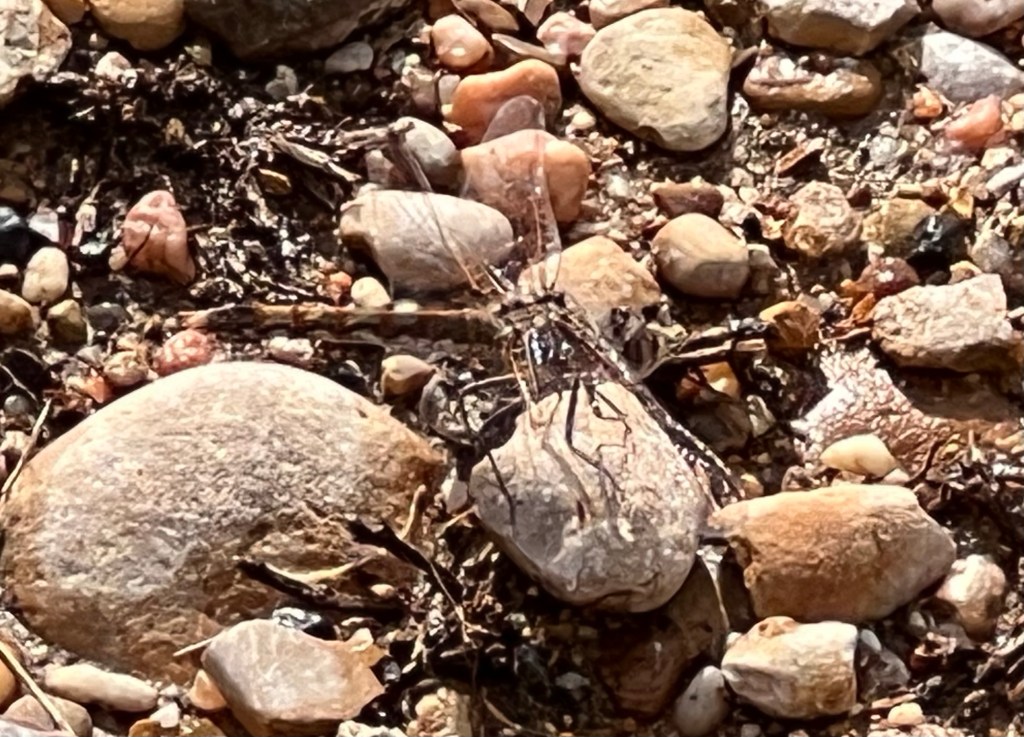
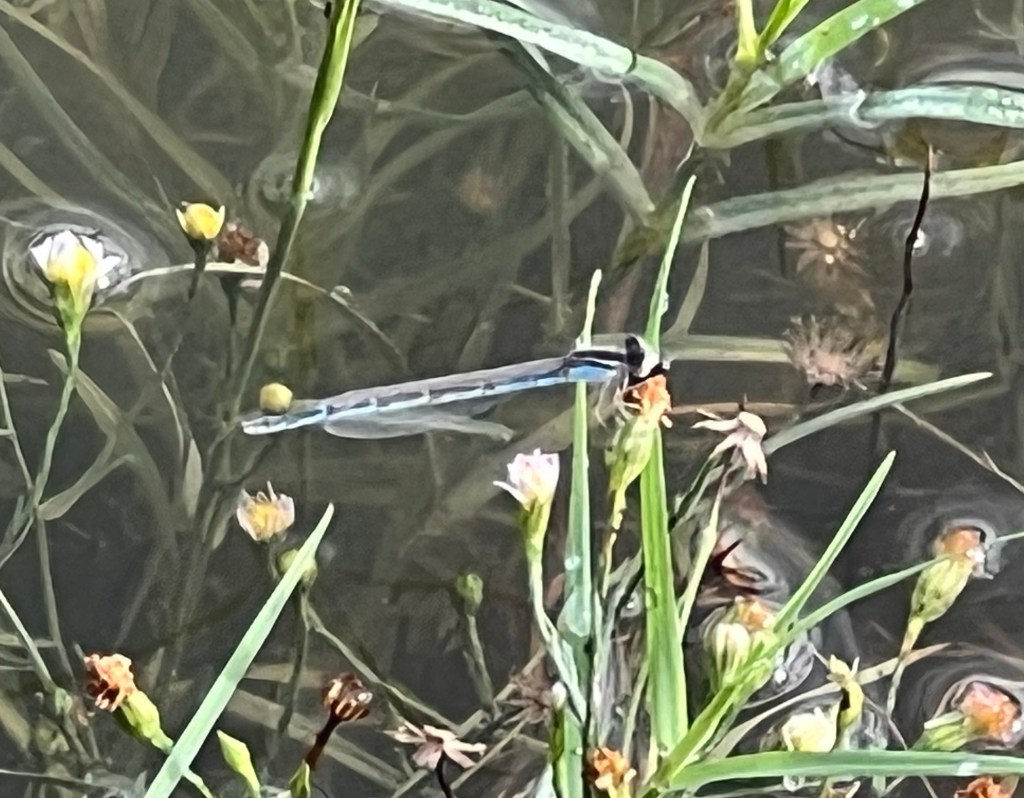
Speaking of flying insects, there are also dozens of dragonflies and damselflies out scarfing up meals. Saddlebags, pond hawks, pink ones, and red ones all flitted by me. But these are the two that sat still briefly.

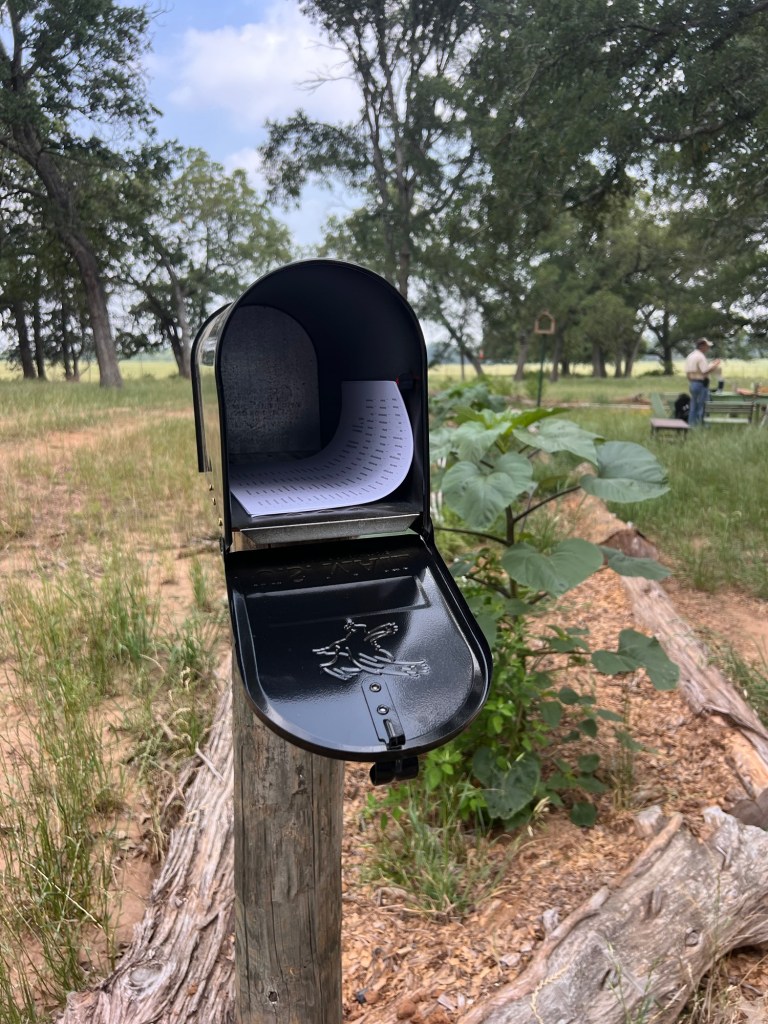
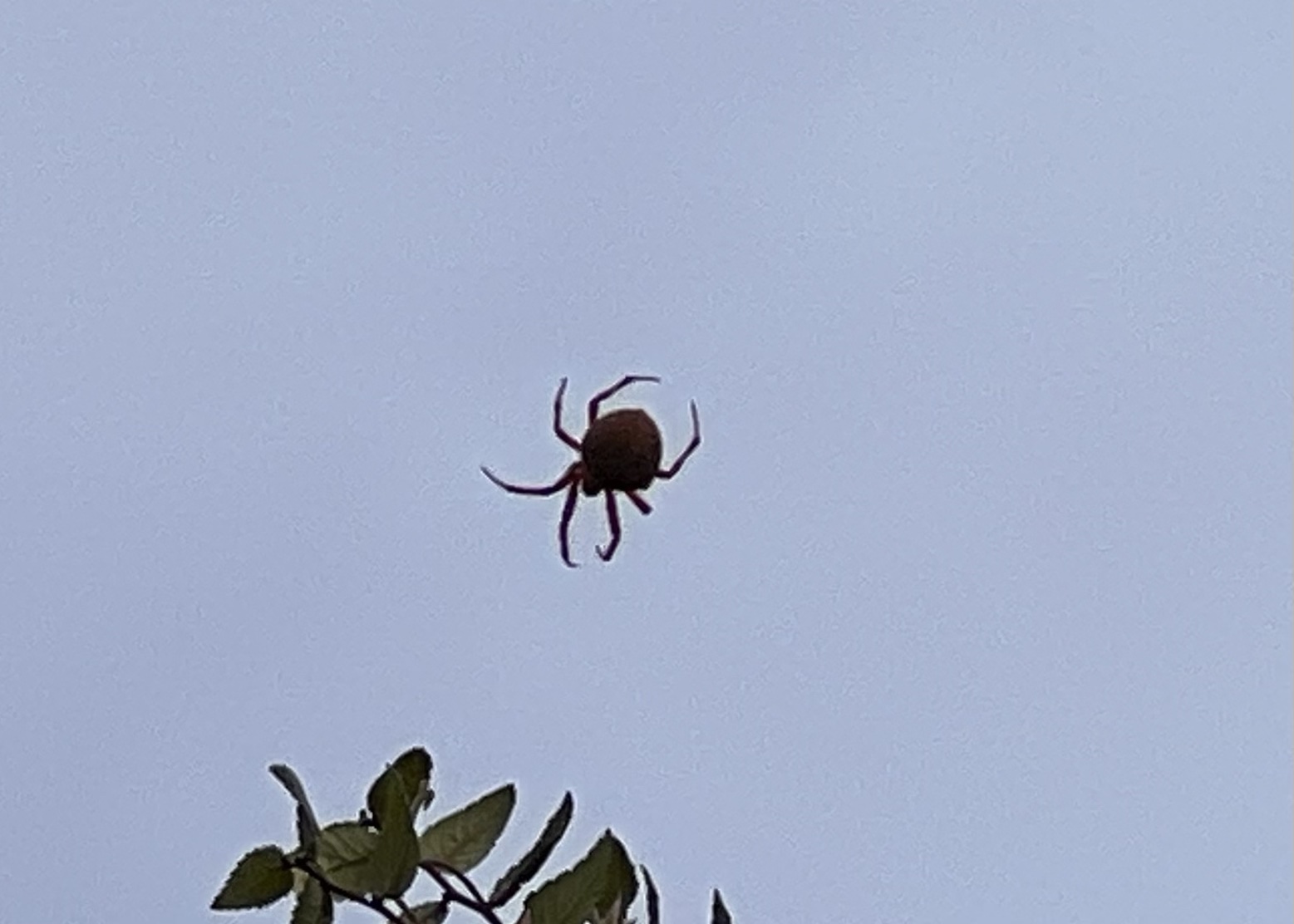
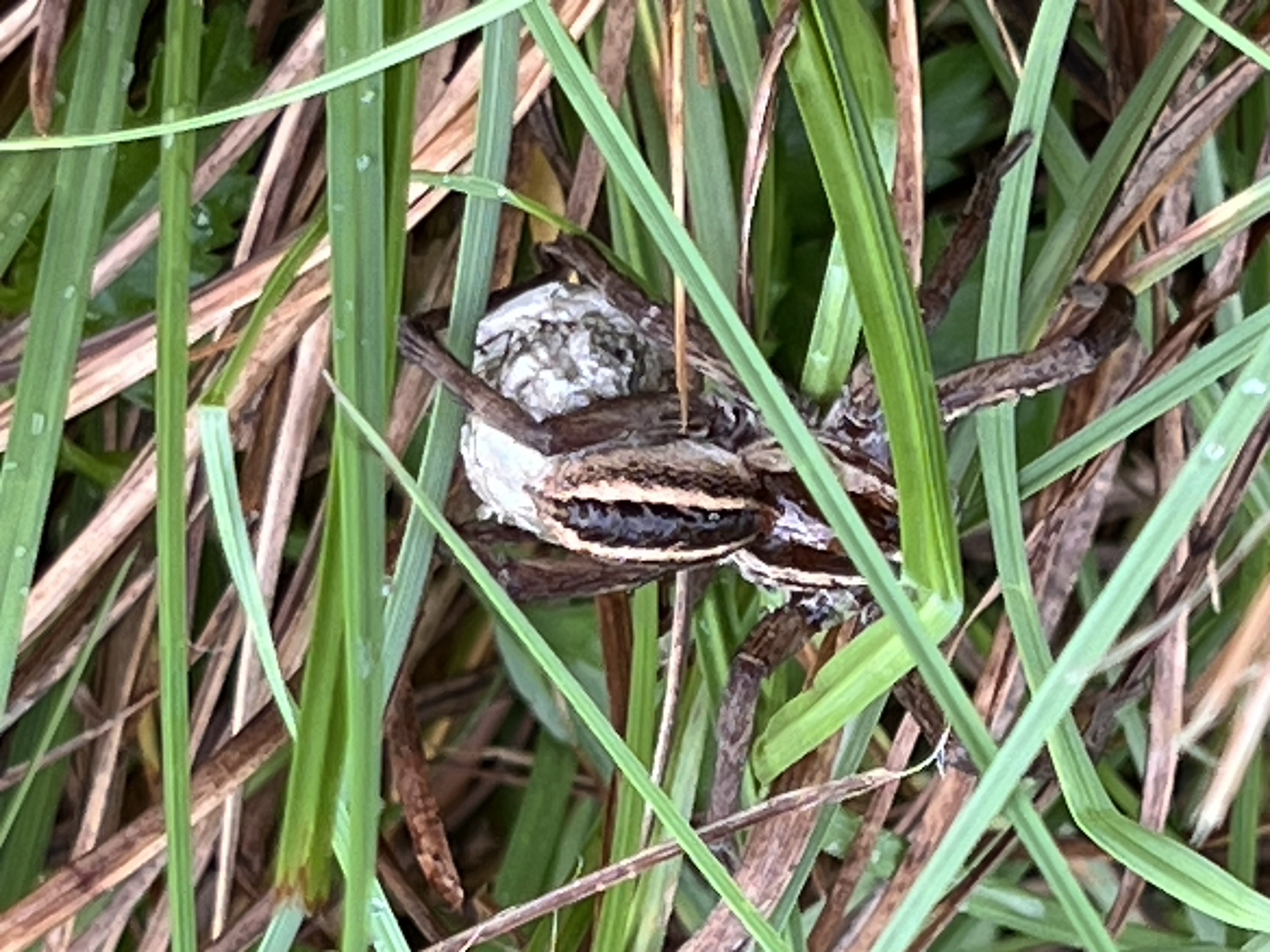
And for our pal Eric, I documented some spiders, including a rabid wolf spider mama and my bold jumping spider buddy who lives in my mailbox. There are also many orb weavers out, including these orange ones that may be spotted orb weavers, but I can’t get close enough to get a good photo.

Not a great photo of a pipit.

Of course, this is a great time of year for birds, and this is one time when it’s just fine to look up. After all, birds can be found in the water, on the ground, in the bushes, in trees, on poles, and in the air. I’ve been having a blast with the Merlin Bird ID app on my phone, which has helped me a lot with figuring out all the different sparrows and sparrow-esque birds out in our fields. I say “sparrow-esque,” because just this week I realized one confusing sparrow was, in fact, a pipit. (The link goes to my personal blog post about the birds.) Once Merlin identified it and told me what to look for, I could easily identify it from both sight and sound (and a lovely sound it is).

The list of actual sparrows I have seen and heard includes way more than the annoying house sparrows that have invaded from Europe! Here’s a list:

  • Clay-colored sparrow
  • Harris’s sparrow (seen in the winter, not now)
  • Lark sparrow (bigger ones)
  • Savannah sparrow
  • Swamp sparrow
  • Vesper sparrow
These are probably phoebes, but may be kingbirds. Darn that phone camera.

That’s a lot of sparrows. Added to that are the two kinds of wrens and the amazing meadowlarks (I could listen to those guys all day), and there is a lot of brown to go around. I almost forgot the killdeer. You can’t really forget them, because they never shut up. Between the killdeer and the crows, it can be hard for poor Merlin to hear the more delicate bird calls. The crows have much to tell each other, though I do enjoy all their different kinds of calls and other vocalizations.

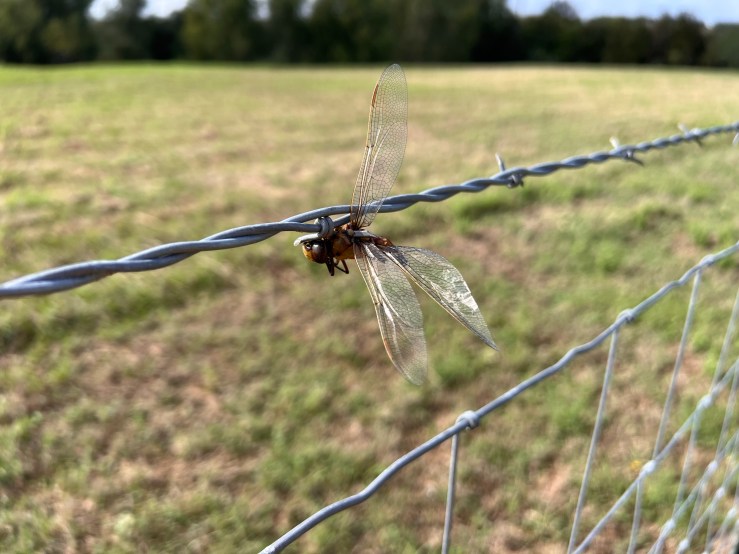
Also quite vocal are the loggerhead shrikes and the phoebes. You can’t miss them. Plus, the shrike leaves tell-tale evidence.

A dragonfly captured and impaled by a loggerhead shrike.

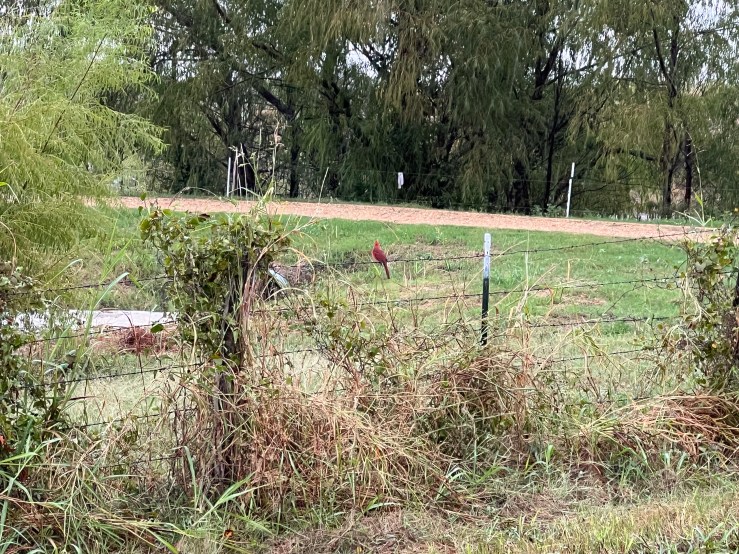
You’d think I was done with the birds, but no way. We have large flocks of cardinals here, many warblers (this week the yellow-rumped are around), starlings, grackles, and three kinds of woodpecker (downy, red-bellied, and pileated).

There were two more cardinals on the same fence.

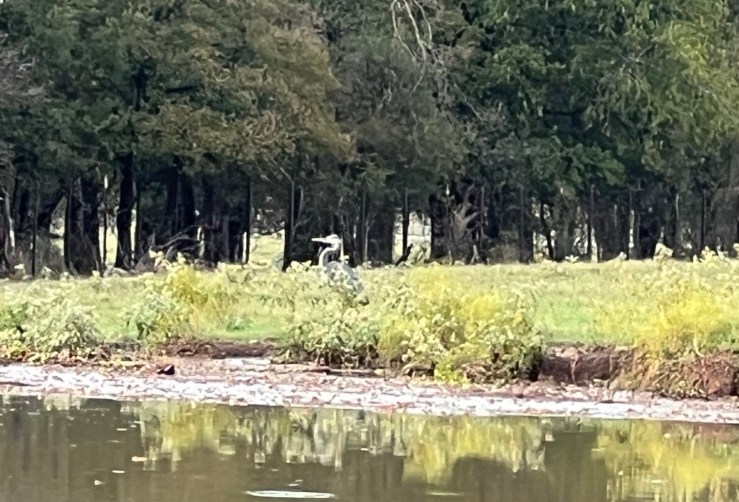
And then there are the water birds. Merlin messed up big time and identified this as a crow. It was right next to me when it croaked, and it sure sounded like a great blue heron to me.
Not a crow.

A seasonal water bird that’s around right now is our belted kingfisher. I do have a photo of it, but it’s a blurry thing with a white neck ring that you know is a kingfisher if you’ve ever seen one. I got to enjoy watching is catch a couple of fish today (and make a lot of kingfisher trills), but there were willow trees between me and the bird, so no photos. Nonetheless, that was a wonderful experience!
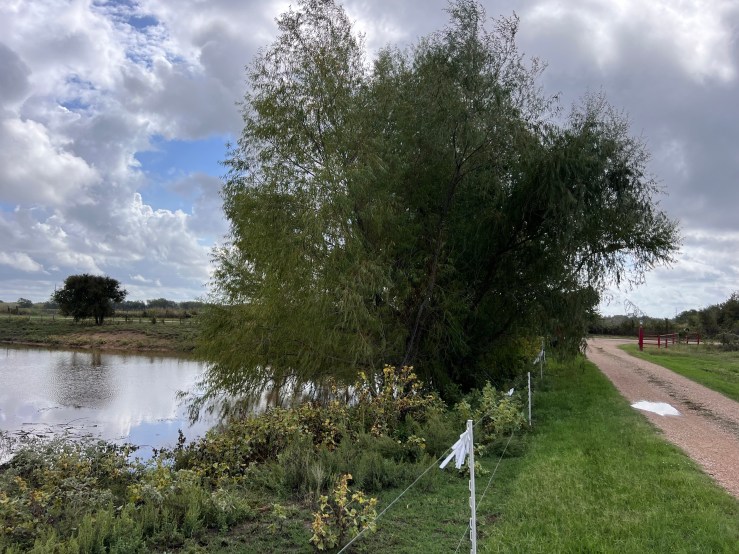
The kingfisher was fishing from these trees.

I’m impressed by how many birds are are still here or migrating through, since many summer residents have moved on. I’d miss the tanagers and buntings more if other beautiful singers hadn’t taken their place. But enough on birds. I’m overly chatty.

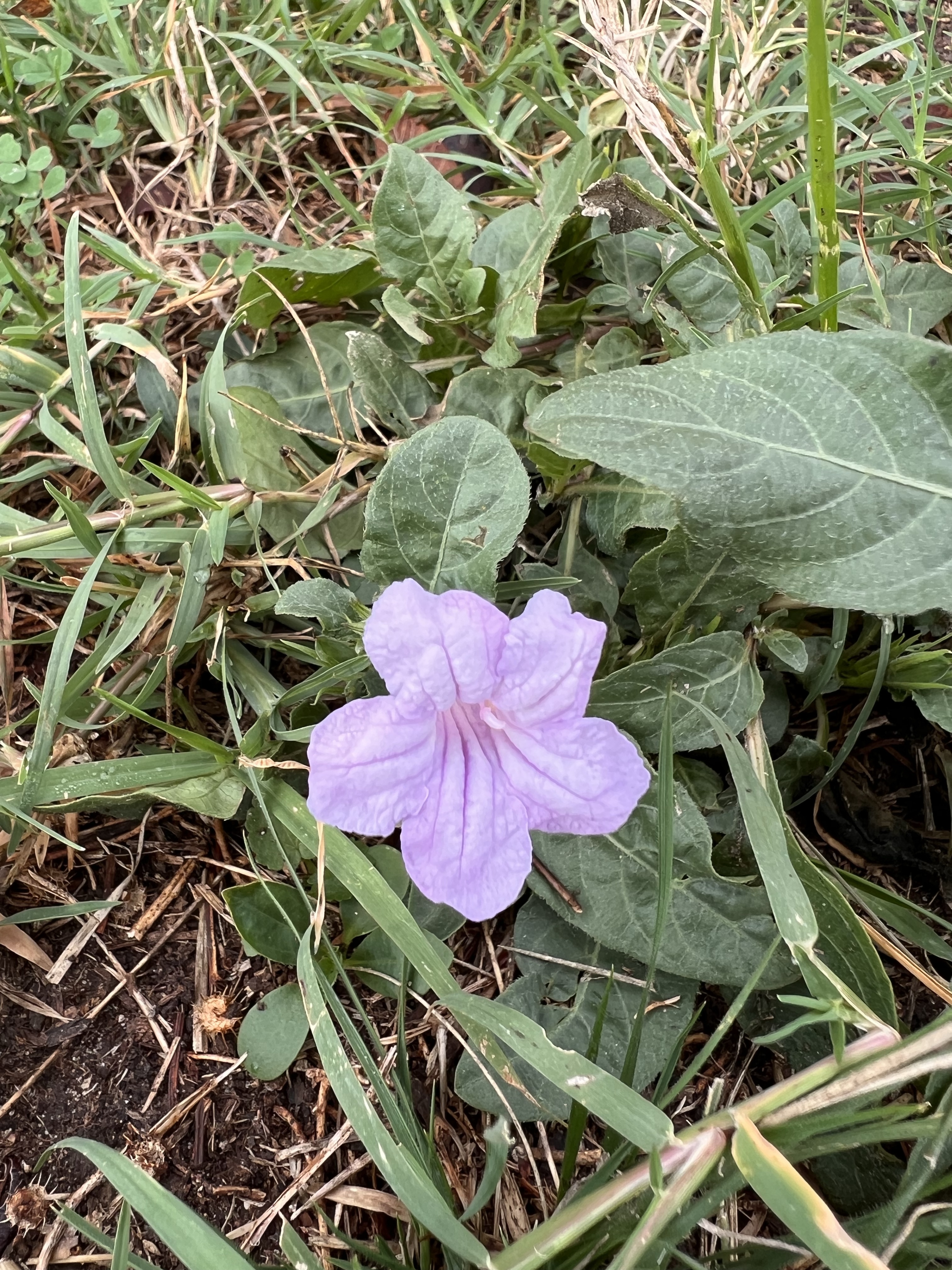
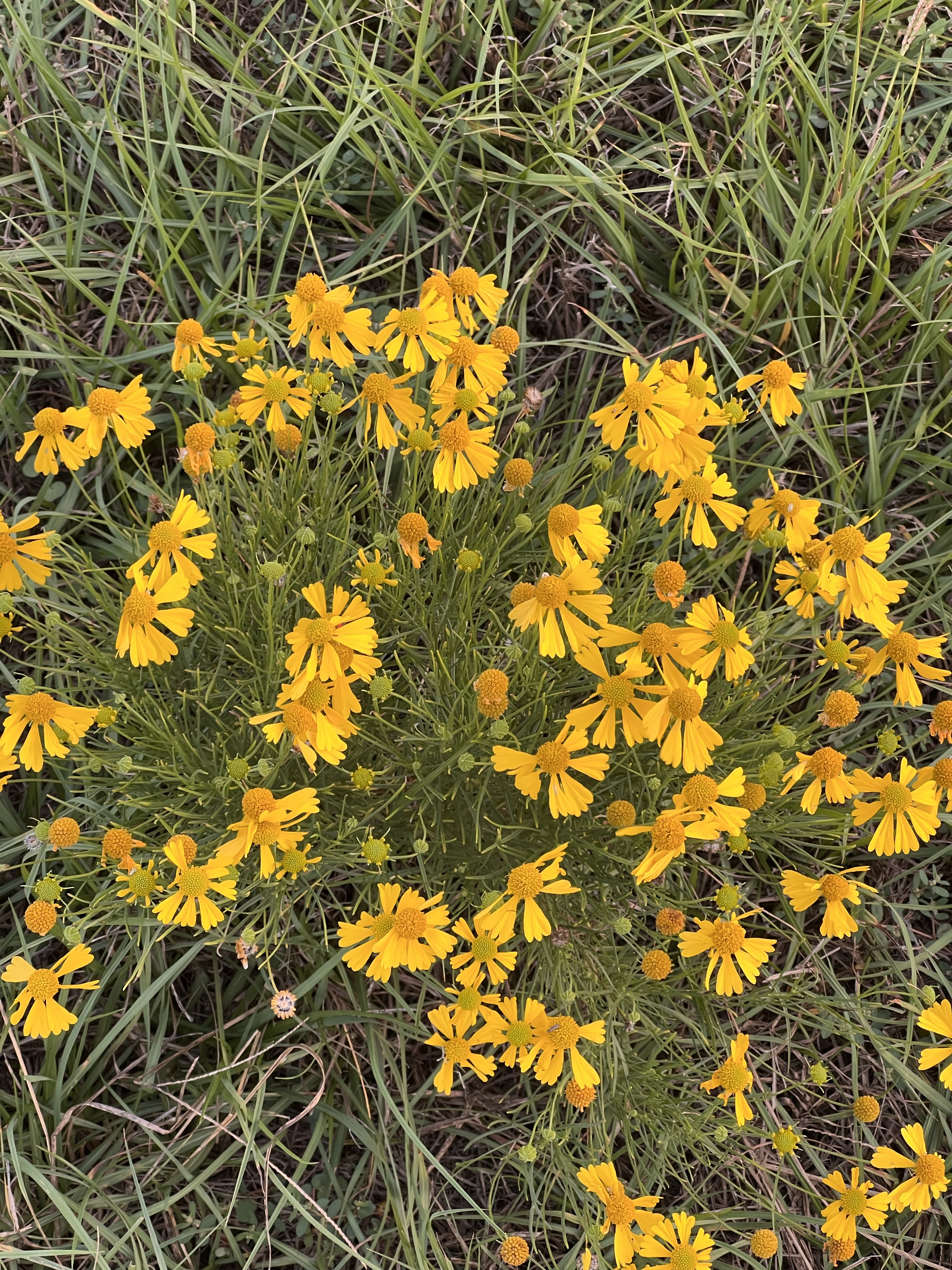
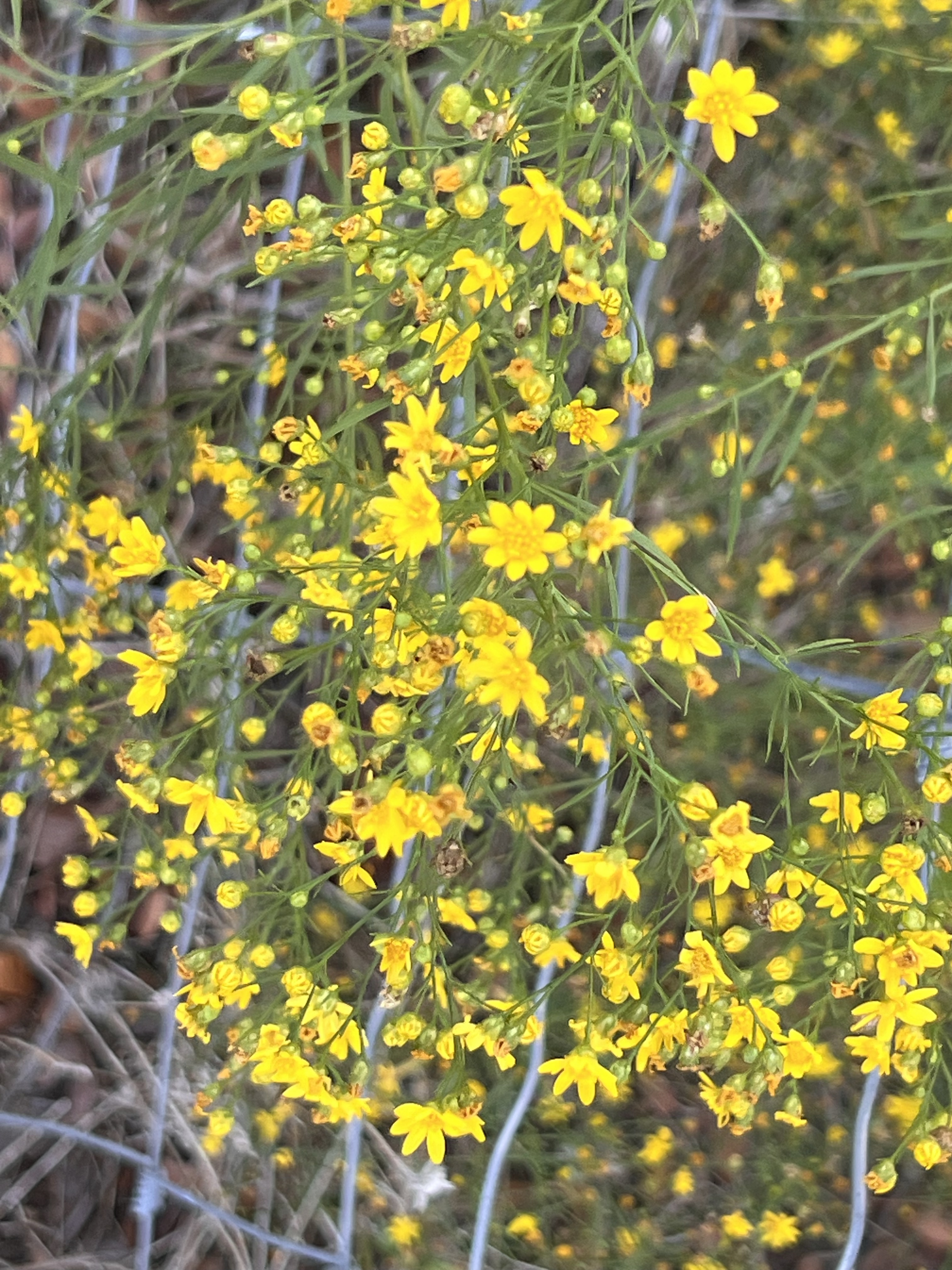
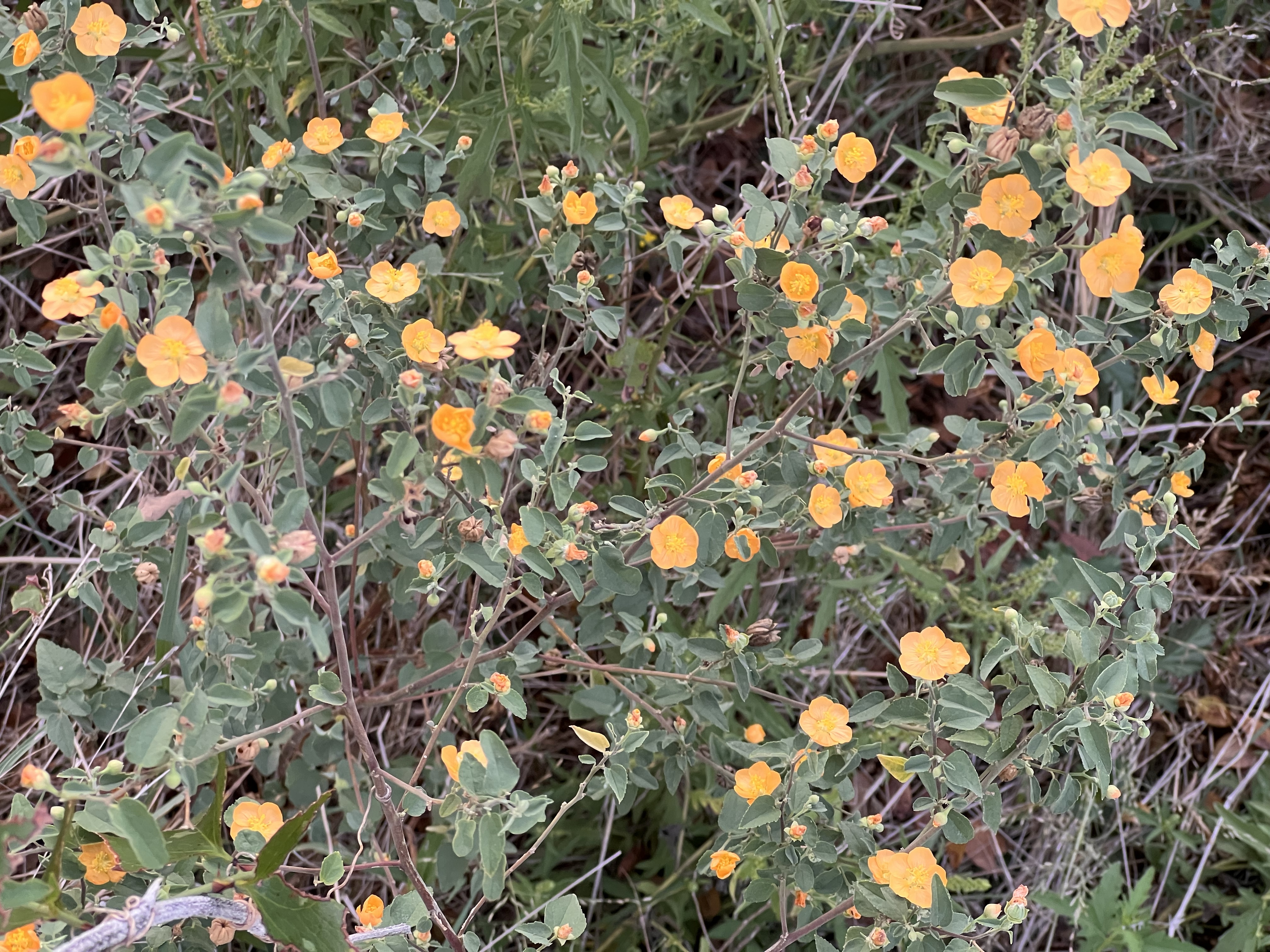
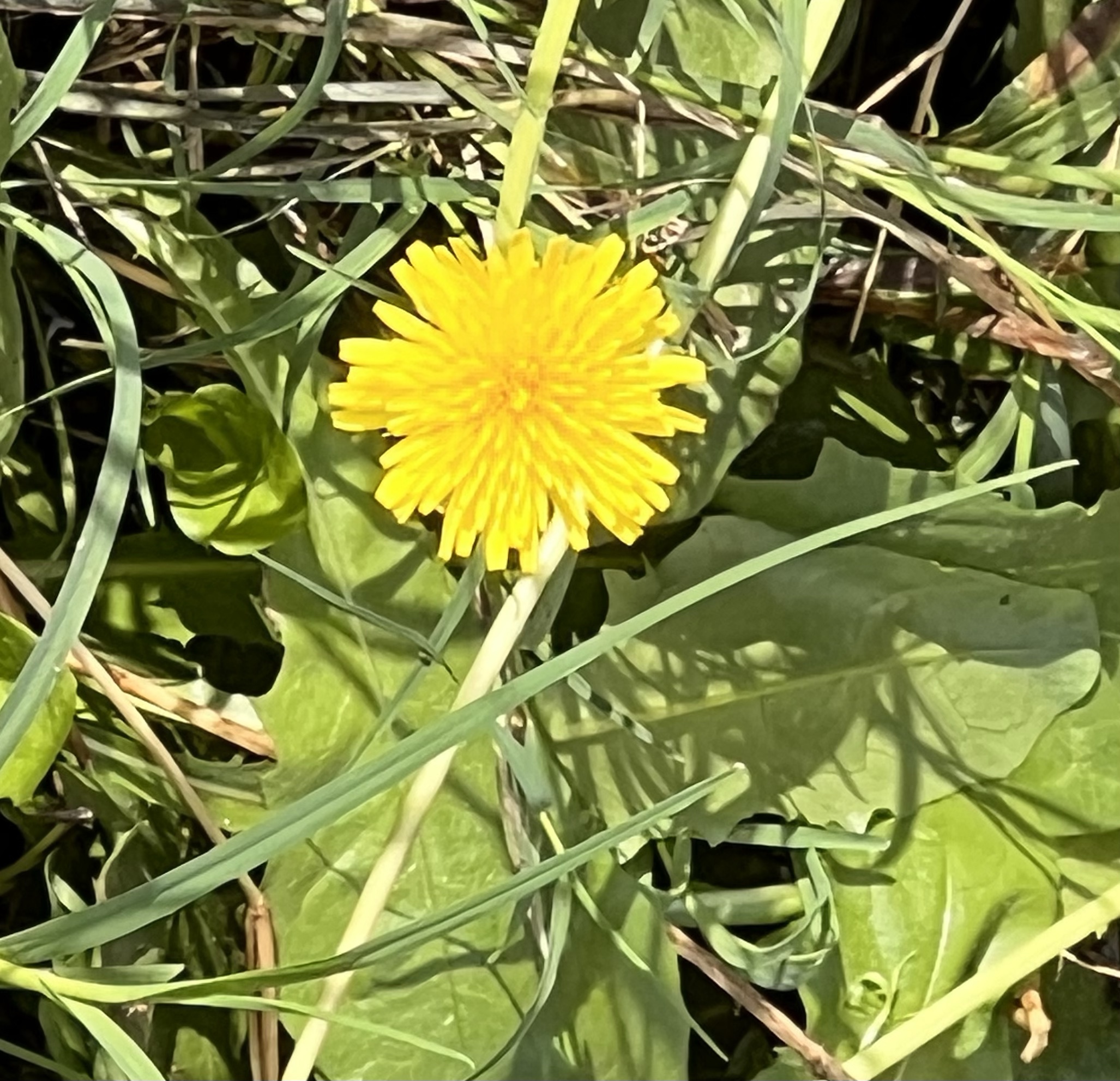
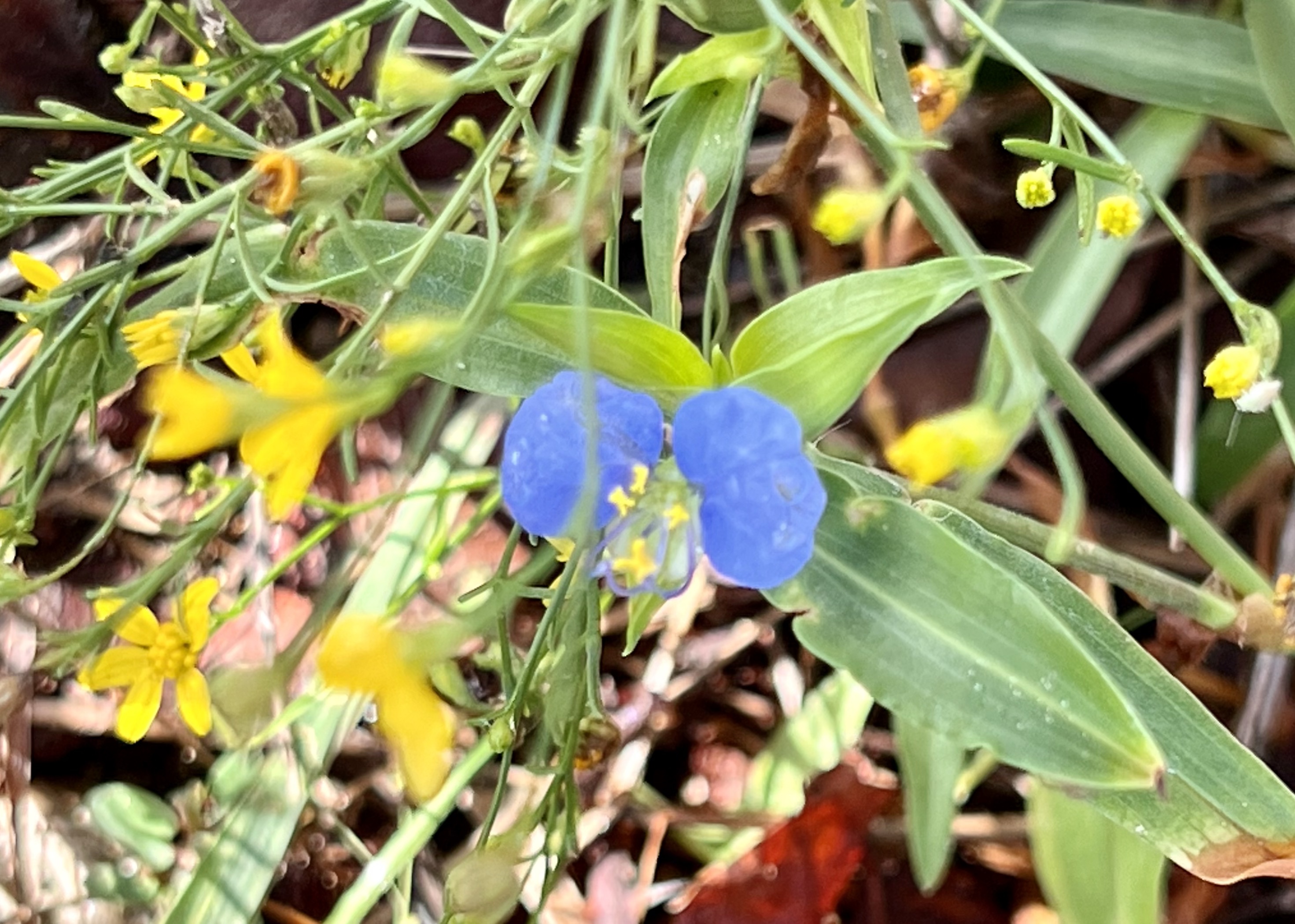
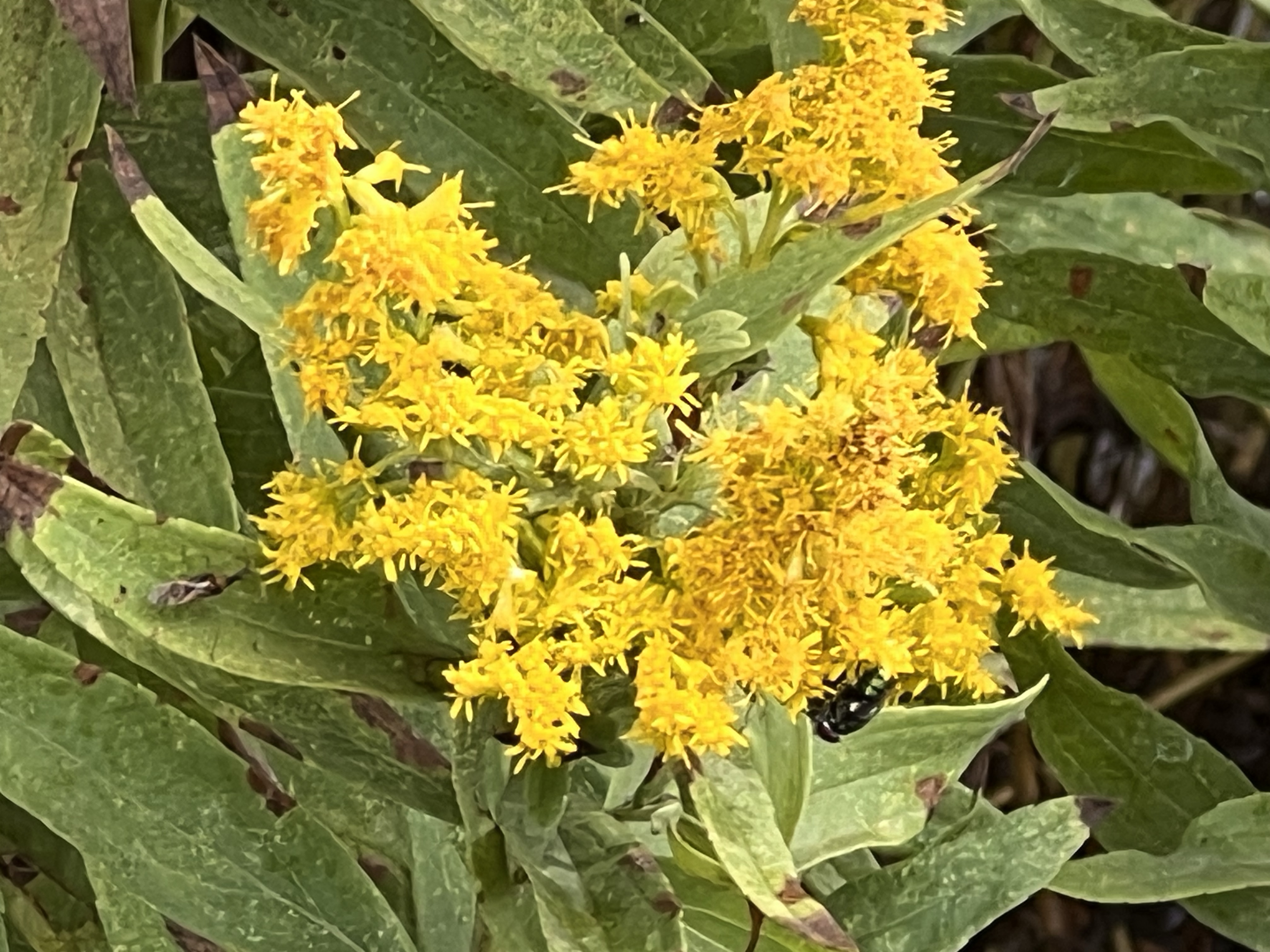
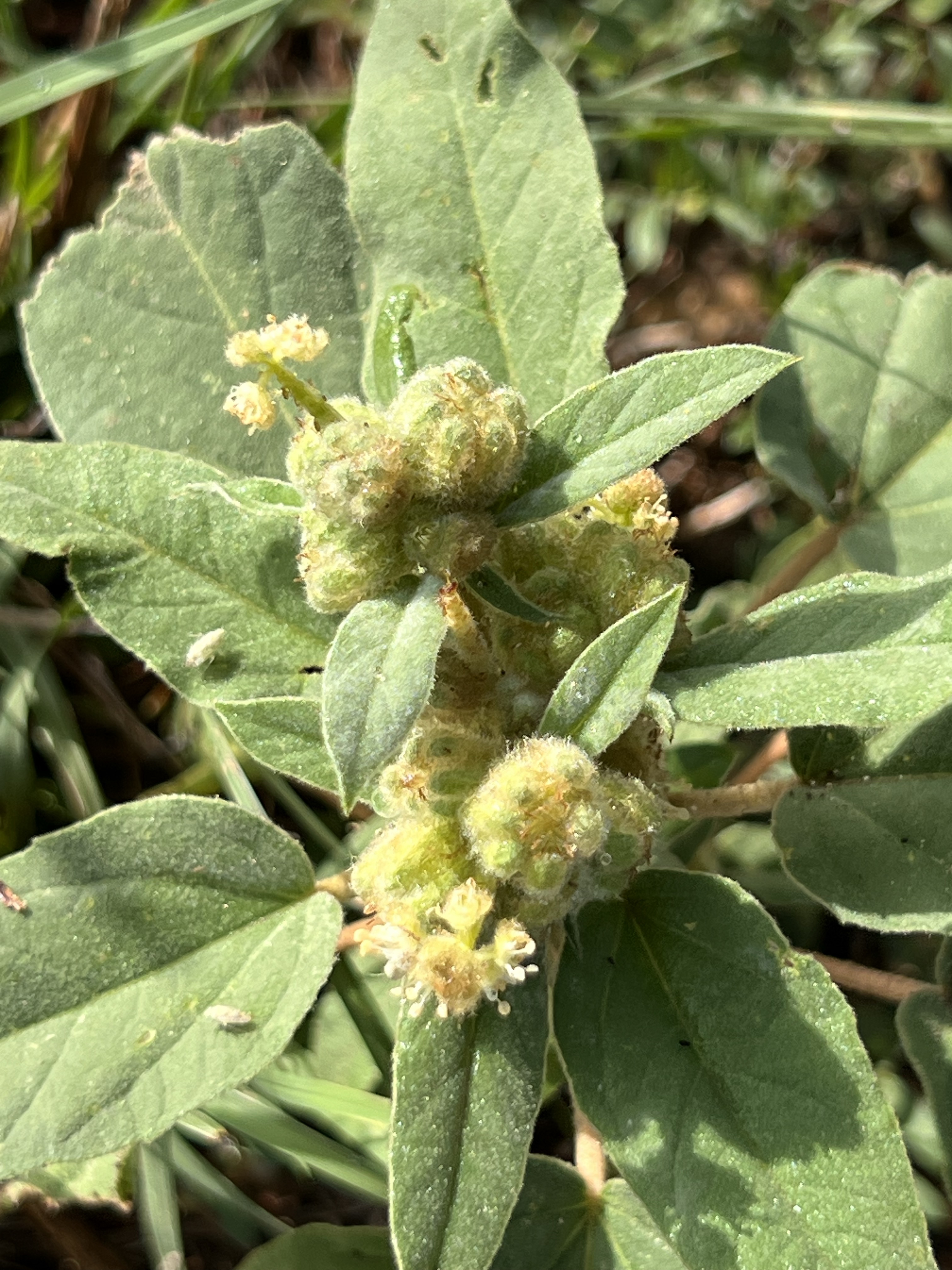
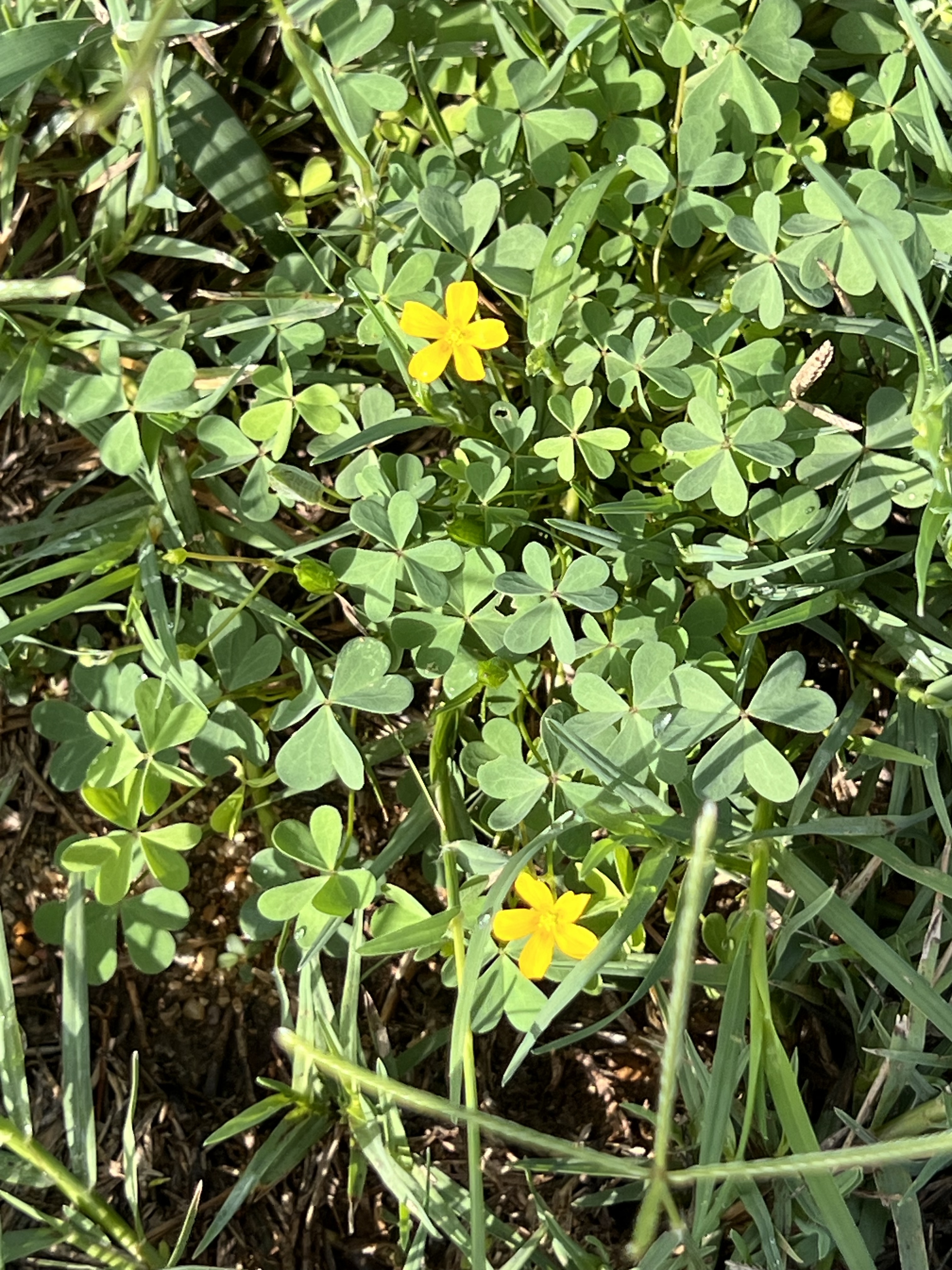
I had originally intended to focus on all the plants that are blooming or making pretty seeds/berries right now on the ranch, but I got distracted by all the other teeming wildlife. Autumn is a great time to look for flowers here, though, so allow me to share a few of the plants I’m enjoying right now. It’s fun to watch groups of flowers fade away while others start up!

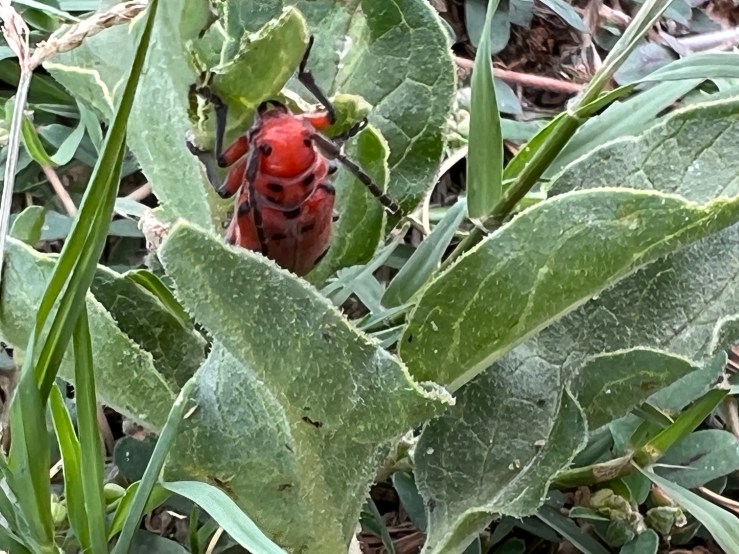
Well, if that doesn’t convince you that autumn is a great time to go out in nature and look down for a while, I don’t know what will. Heck, you might even see a milkweed beetle.

I’m down here, looking up at you.