Hiking the Rancheria Grande

by Carolyn Henderson

To walk where Spanish settlers walked hundreds of years ago and native tribes lived their lives, even thousands of years ago is an inspiring experience. Members of the El Camino Real chapter Texas Master Naturalist and El Camino Real de los Tejas National Trail Association got to experience it firsthand Saturday in a guided tour of a trail in development.

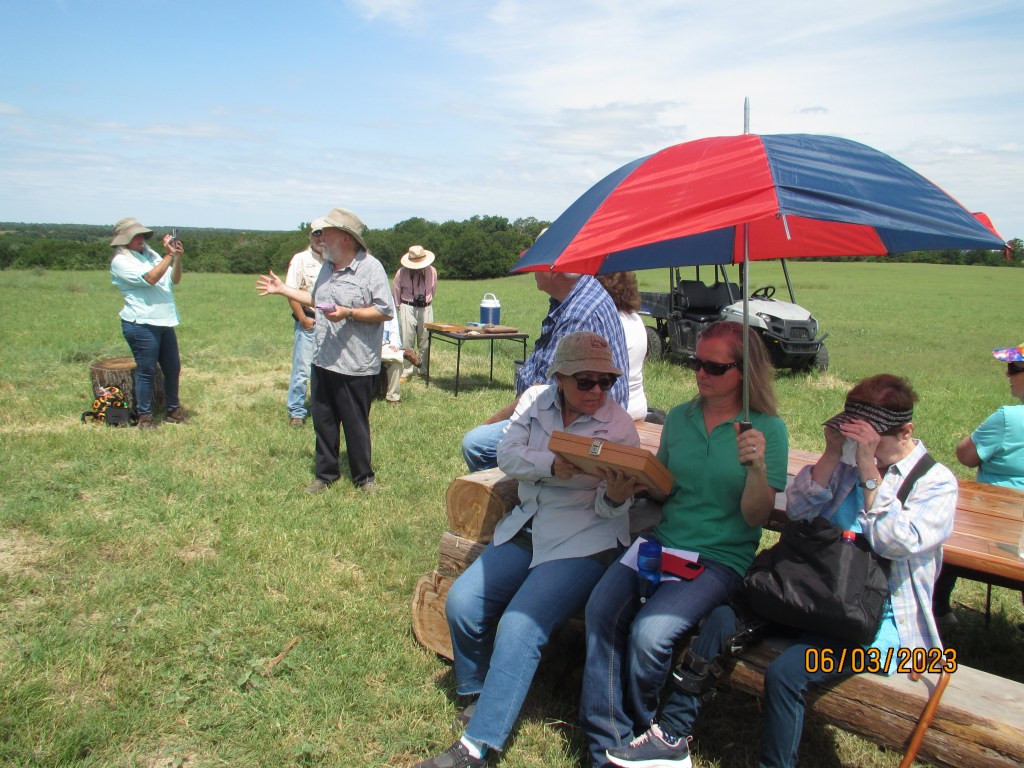
The group after their hike

The trail is part of the El Camino Real Trail that spans a good part of Texas. The part travelled Saturday, June 2, runs across the Cedar Hill Preserve, owned by Mike and Joyce Conner, and the Baumann Ranch. The Conner property is being developed as a native flora and fauna preserve, and the adjoining Baumann ranch is still a working cattle ranch. It is now part of the National Trail Association, and it is being prepared for study and hiking for organized groups in the future.
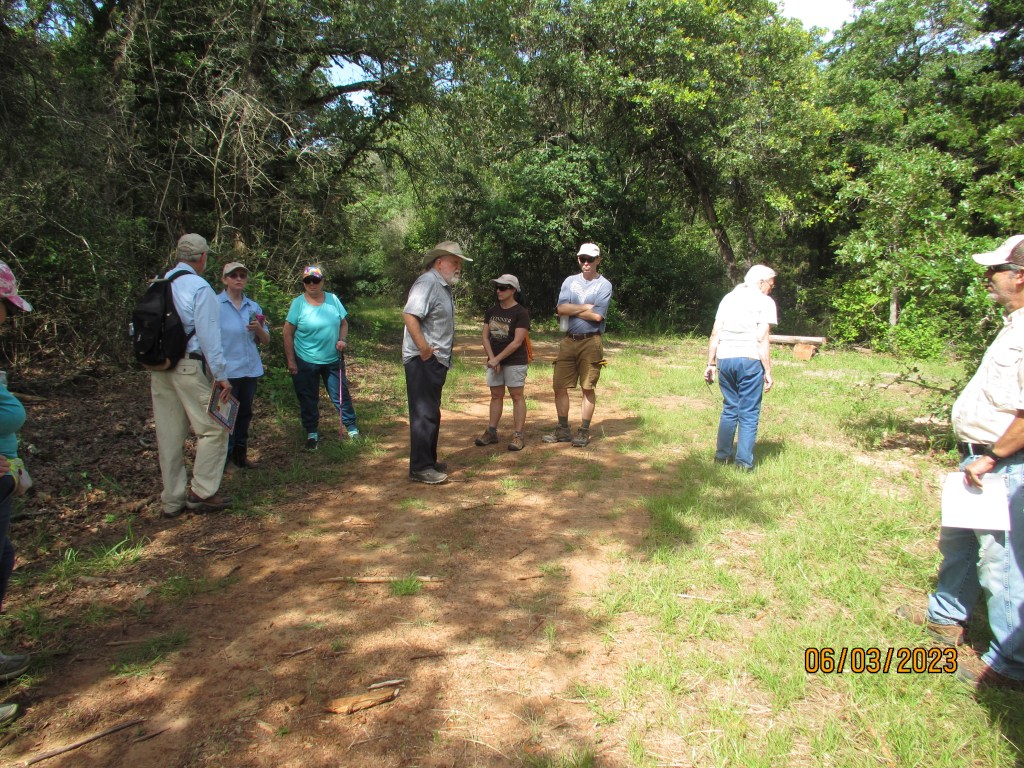
The trail head

The wet swales were probably formed by water traveling in a path through the area in wet seasons then later used by travelers.
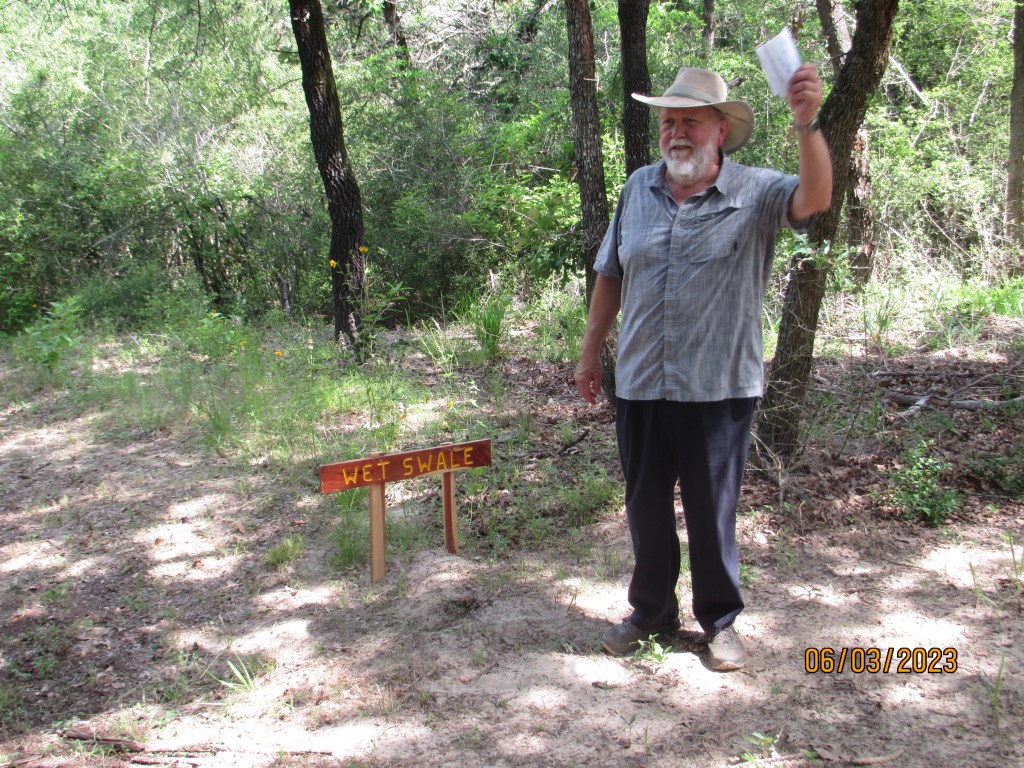
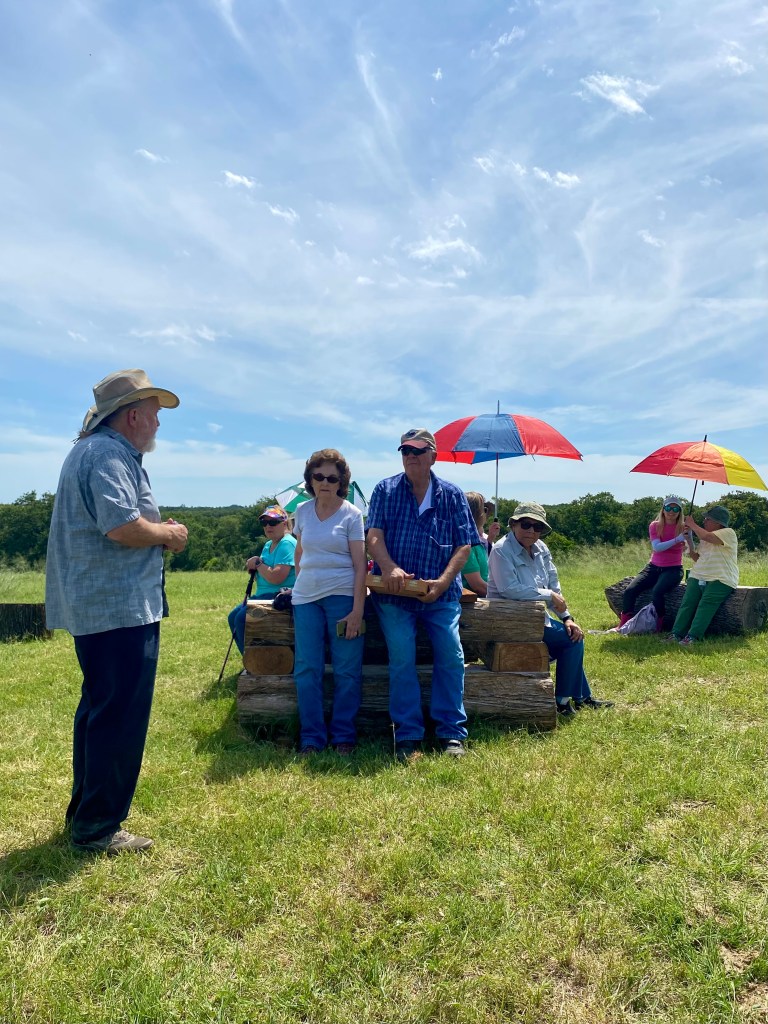
Mike Conner talks about the wet swale

The trail head begins in a woody area on sandy loam soil complete with a fancy new outhouse somewhat like your grandparents had in this area. In many areas a hiker can actually see the trodden
path taken by Spaniards and Native Americans dating back hundreds and probably thousands of years ago. They are most discernable by swales that bank the path. A swale is a buildup of land running along each side of the ancient trail. It looks a bit like a street curb might look today. There are both dry swales and wet swales. The dry swales were strictly roads/paths taken by travelers.

Dry Swale (photo by Michelle Lopez)

There also are signal trees believed to have been formed by the native tribes to give direction
then later used by the Spaniards. Artifacts from both groups have been identified by archaeologists
studying the area. Post Oak trees primarily were used to form these trees.

Signal Tree

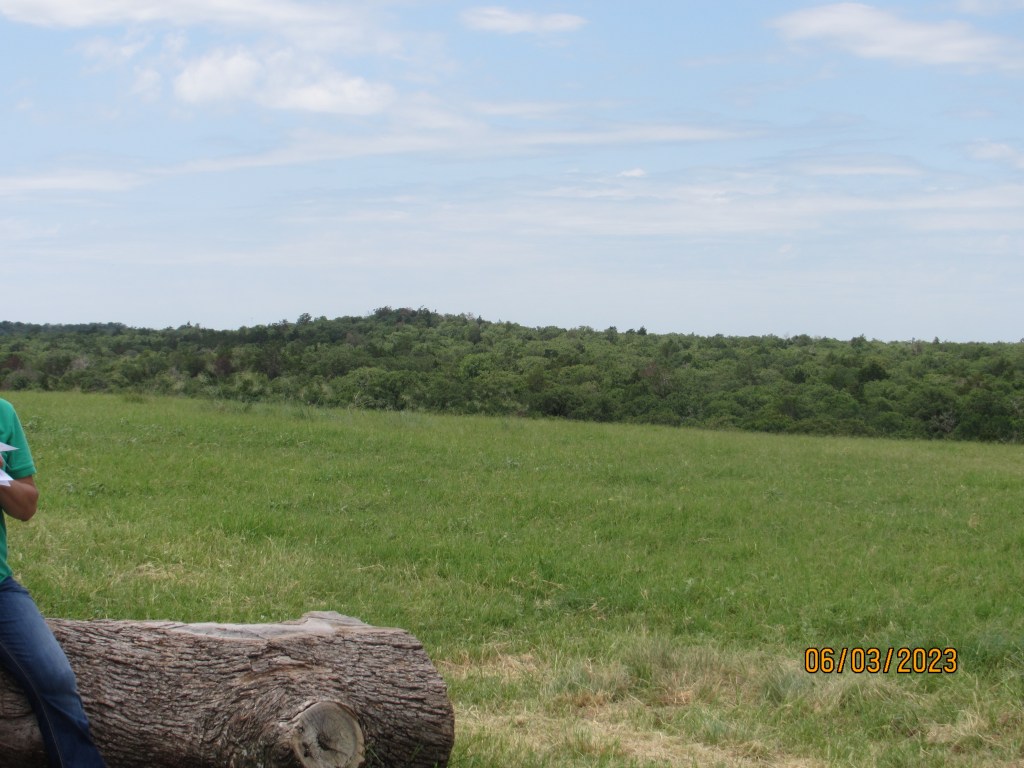
When you come out of the wooded area, you are then on an uphill stretch to reach the very high hilltop. The top of the hill is like a meadow looking out at the woods below and nearby hills or “mountains.” Sugar Loaf Mountain is very near and visible from this hilltop. It is believed that this hilltop where we were was a village for a native tribe or tribes over the years. Tonkawa artifacts have been identified from the area. There was a great deal of speculation by the hikers that the different tribes sent smoke signals to each other from these hill tops. A visit to Sugar Loaf Mountain has long been a rite of passage for area high schoolers.
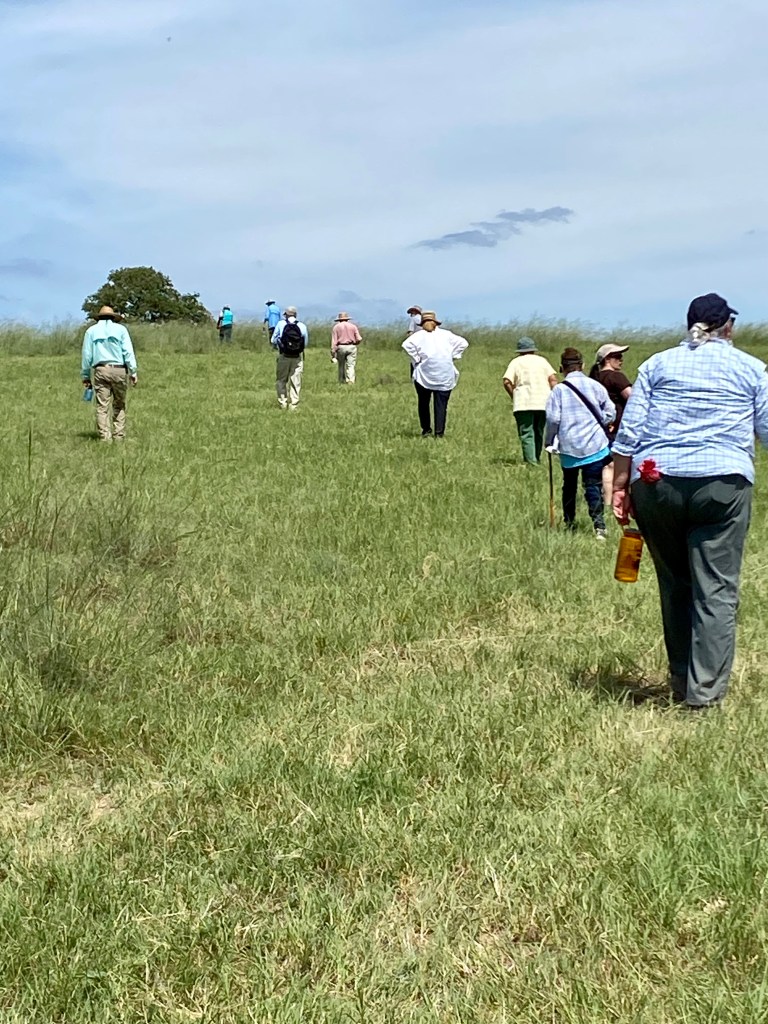
This area is part of the Rancheria Grande Los Brazos de Dios. An archaeological dig in the area around Alligator Creek and Pin Oak Creeks, both of which cross these properties, a few years ago found evidence of very early Spanish settlements.

Trail loop

Mike Conner and Dr. John Pruett, tour guides for the adventure, and Mr. and Mrs. Baumann, explained the history and discoveries while the rest of us recovered from the climb. Joyce Conner etched a map of the trail into a homemade tabletop. It sits at the top of the hill.

Joyce Conner’s tabletop map

Going downhill was easier, but one could certainly feel the rising midday temperature. An appreciation of what people had to go through to get anywhere hundreds and thousands of years ago is brought home when hiking this trail.

The Baughmans (center)

There is a book titled The Archaeology of Rancheria Grande Los Brazos de Dios, written by Sergio A. Iruegas, archeologist, and Melinda T. Iruegas, about the discoveries in the area. It is currently out of print, but there are copies at the Cameron and Rockdale libraries. If you own land in that area, you may be sitting on artifacts.

Mike Conner talks about the trail

Addendum

by Mike Conner

I would like to clear up a little confusion about swales.

Swales are u-shaped, linear depressions in the ground formed by many years of foot and hoof steps. They are never formed by water but may be damaged by water once they are formed. This is happening to some extent to Hidden Swale. Both the Dry and Wet Swales have been certified by archeologists to have been used during Spanish colonial times but may have been used for thousands of years before. The somewhat confusing names for these two swales come from the fact that the Dry Swale leads directly to the historic village site and cuts through a small valley that would only be passable is fairly dry weather. The Wet Swale leads in a less direct route to the historic village site that goes around the edge of the valley and would be passable in wet weather.
Araneae, Odonata, and Anura at Apache Pass

by Linda Jo Conn

Eric Neubauer and I joined forces Wednesday, July 7, to investigate the diversity of wildlife at the Apache Pass Event Center on the San Gabriel River, a unique location on the El Camino Real de los Tejas National Historic Trail and a stop on the Brazos Loop of the Great Texas Wildlife Trail promoted by Texas Parks and Wildlife. 

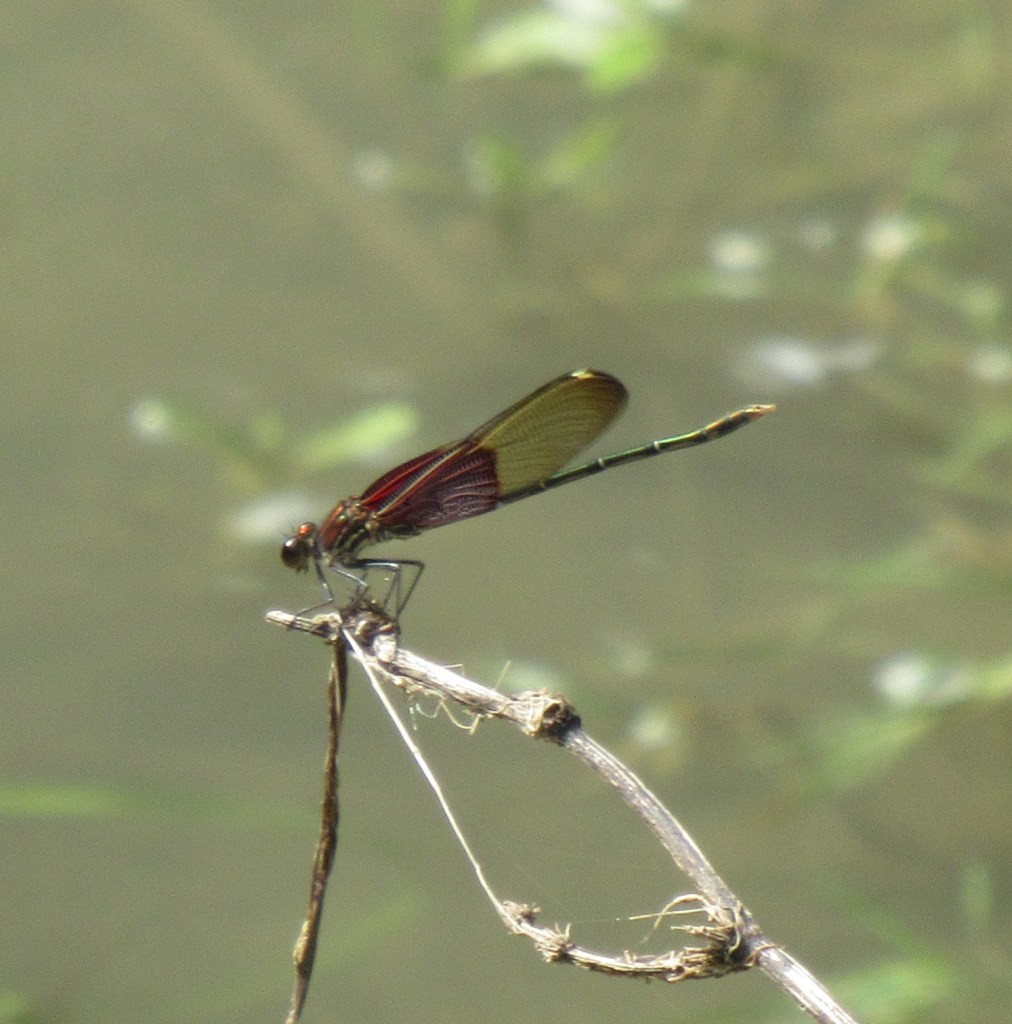
Damselfly

The mowed, fertilized and herbicided open areas of the privately owned location did not hold a lot of appeal for exploration, especially since the Bermuda grass was dripping wet from morning dew.  The peripheral areas along trees and fence lines were the more interesting locations for plants and listening to bird songs. 

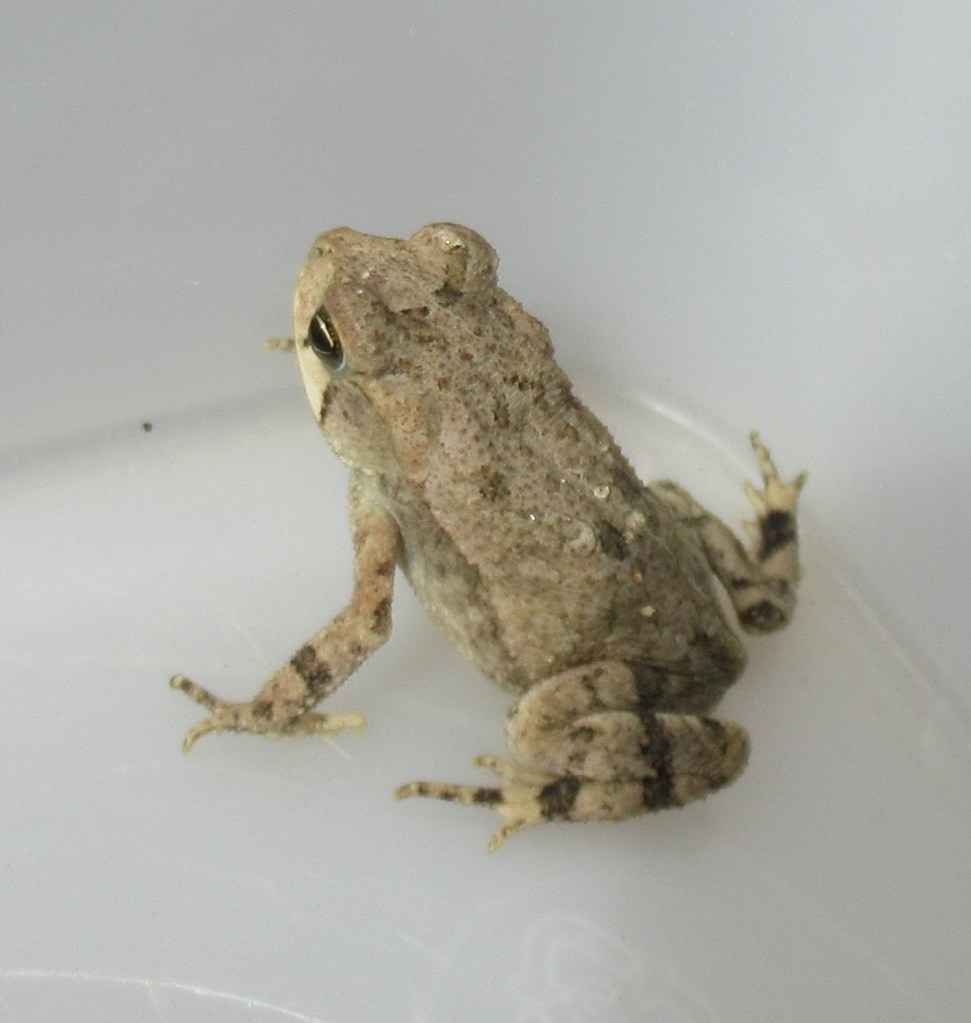
A frog!

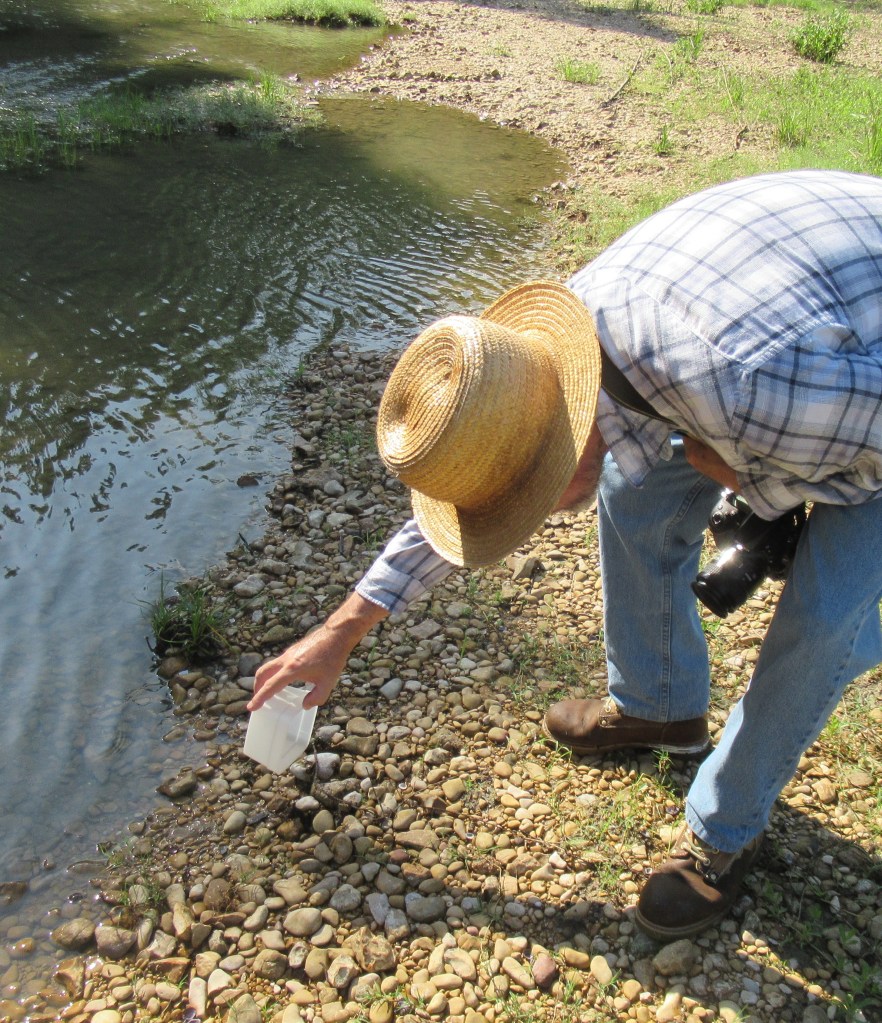
A gravel bar beside the flowing river was the high point of the visit.  It was teeming with spiders, damselflies and small frogs.  A naturalist’s paradise!

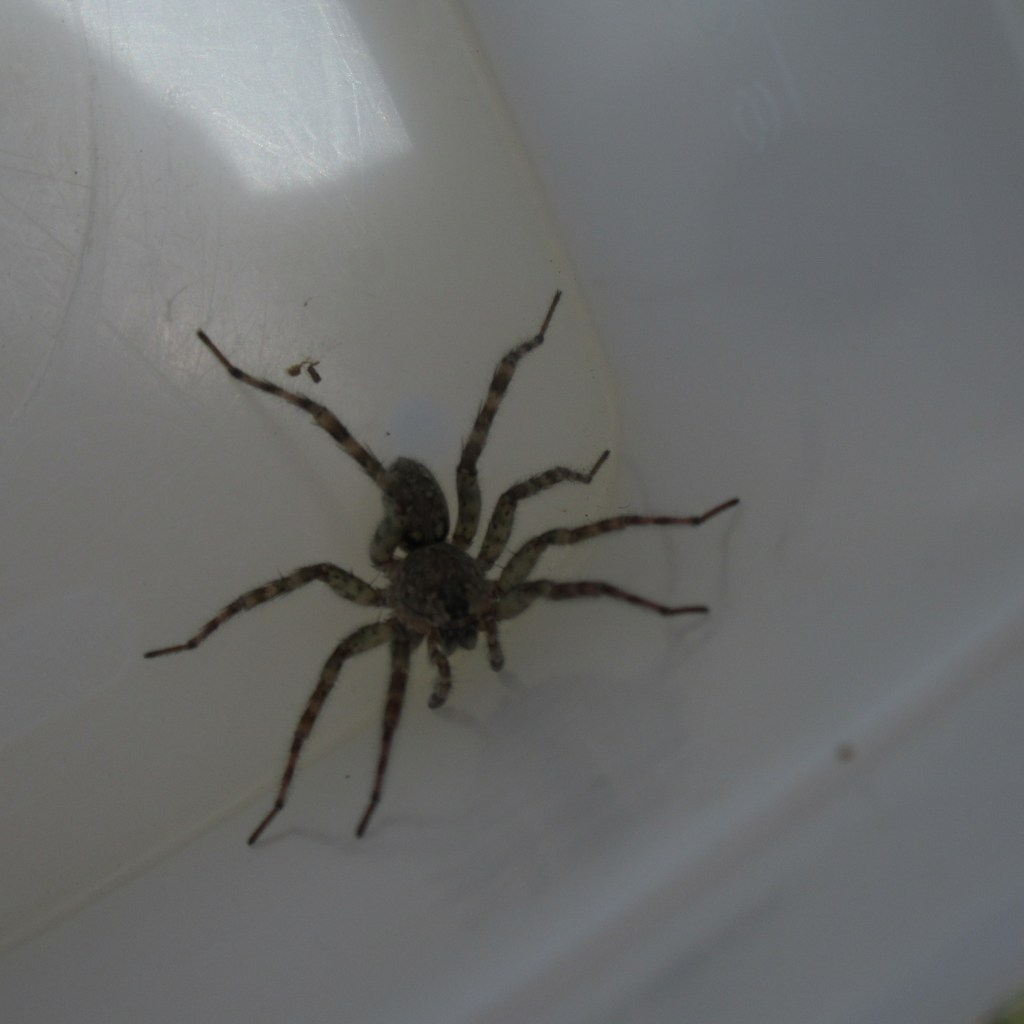
Eric with the “spider scoop” (a white plastic storage container)

Eric brought his awesomely simple spider scoop which made the photography and inspection of spiders a snap as well as his advanced (compared to my point-shoot-and hope) camera and his vast knowledge of spider identification.  As usual, the adventure was a learning experience for me.

One of Eric’s spiders.

The number of colorful damselflies we observed was incredible, as well as the many tiny frogs and toads Eric was also able to spot and point out.  I am certainly looking forward to another visit when the river is flowing at a slower rate.  If you decide to drive over that way yourself, be sure to visit the gravel bar along the river.  And visit iNaturalist.org for the day’s observations by eanuebauer and connlindajo

Busy Weekend for Us

This past weekend our Chapter members were busy learning and sharing what they learned.

The Chapter members who are also members of the El Camino Real de las Tejas National Trail Association attended their conference on Friday and Saturday. They shared our new wildflowers of Milam County brochure with all the attendees. (I was unable to go, so I don’t have any photos.)

Viewing the photos of the land conference attendees got to see in person.

Yesterday they did field trips of Milam County sites that were on the trail, including the property of Joyce and Mike Conner, Cedar Hill Ranch, which has some important sites on it. They also went to Sugarloaf Mountain and Rancheria Grande. Many thanks to our chapter members who volunteered to help out with the tour.

Chapter members tell a visitor about what we do.

Meanwhile, other members put together a lovely exhibit of plant samples for the herbarium that members of our group helped collect. It was located at the at the Milam County Historical Museum.

Plant samples for use in herbaria.

There was also a display of beautiful photographs Christopher Talbot’s A Photographic Journey of the Trail exhibit. The photos were quite impressive, including a photo of the Graham Swale that Ann Collins and Connie Anderle claimed was theirs, because they are from the Graham family. So yes, fun was had.

Ann Collins and her “family swale.”

Ann, Donna, Linda Jo, and Scott did a great job answering questions and passing out material. After the tour was over, the trail conference attendees came to enjoy the exhibits. Lots of people came in, since the Steak, Stein and Wine Fest was also going on. It was a fine way to do some outreach, and the weather was just perfect.

Actual Nature Along the Actual El Camino Real

by Sue Ann Kendall

Members of our group have been working with members of the El Camino Real de los Tejas National Historic Trail Association in preparation for the organization’s annual conference in October, which will be in Milam County at Apache Pass. They are creating a brochure to show wildflowers that you’d see growing on the trail.

The committee has been meeting for a few weeks, and I’d been trying to come (but it’s hard to get time off during work hours!). This week I was able to attend their meeting and see what they’ve been up to. I met with John Pruett from the trail association, along with Linda Jo Conn, Joyce Conner, Catherine Johnson, and Ann Collins.

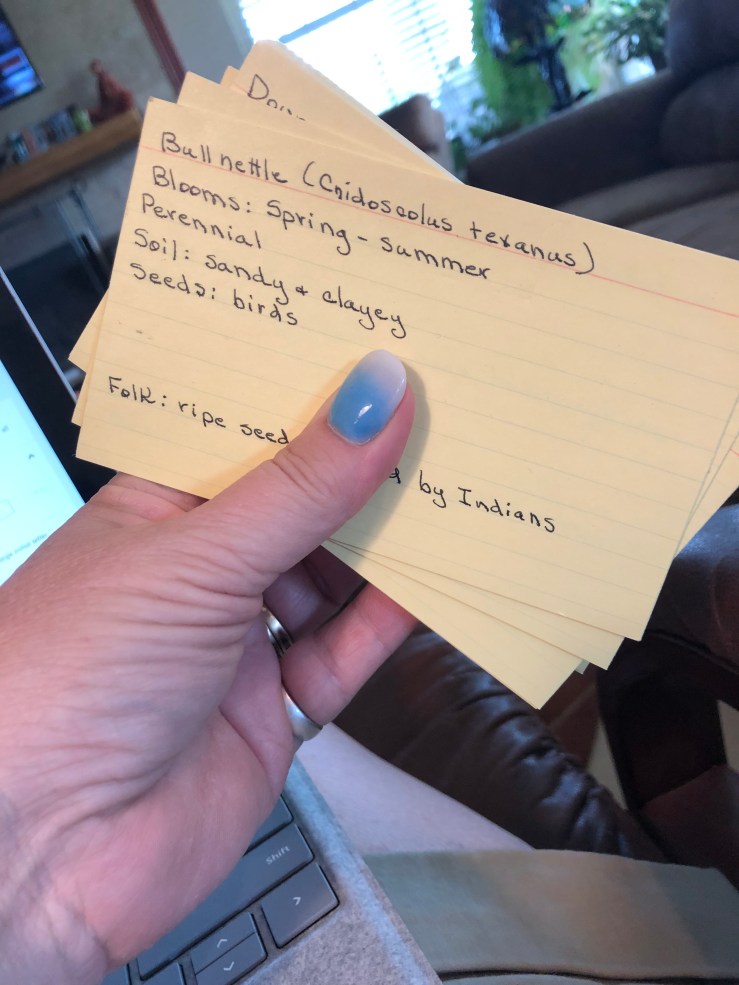
Some of Ann Collins’s notes on plants.

Wow, so much work has been done! Our Master Naturalist group has spent years gathering data on plants found on the El Camino Real route, and they’ve now got it all gathered up, so we can include it in a brochure people can refer to when they are exploring the marked trail areas throughout Milam County.

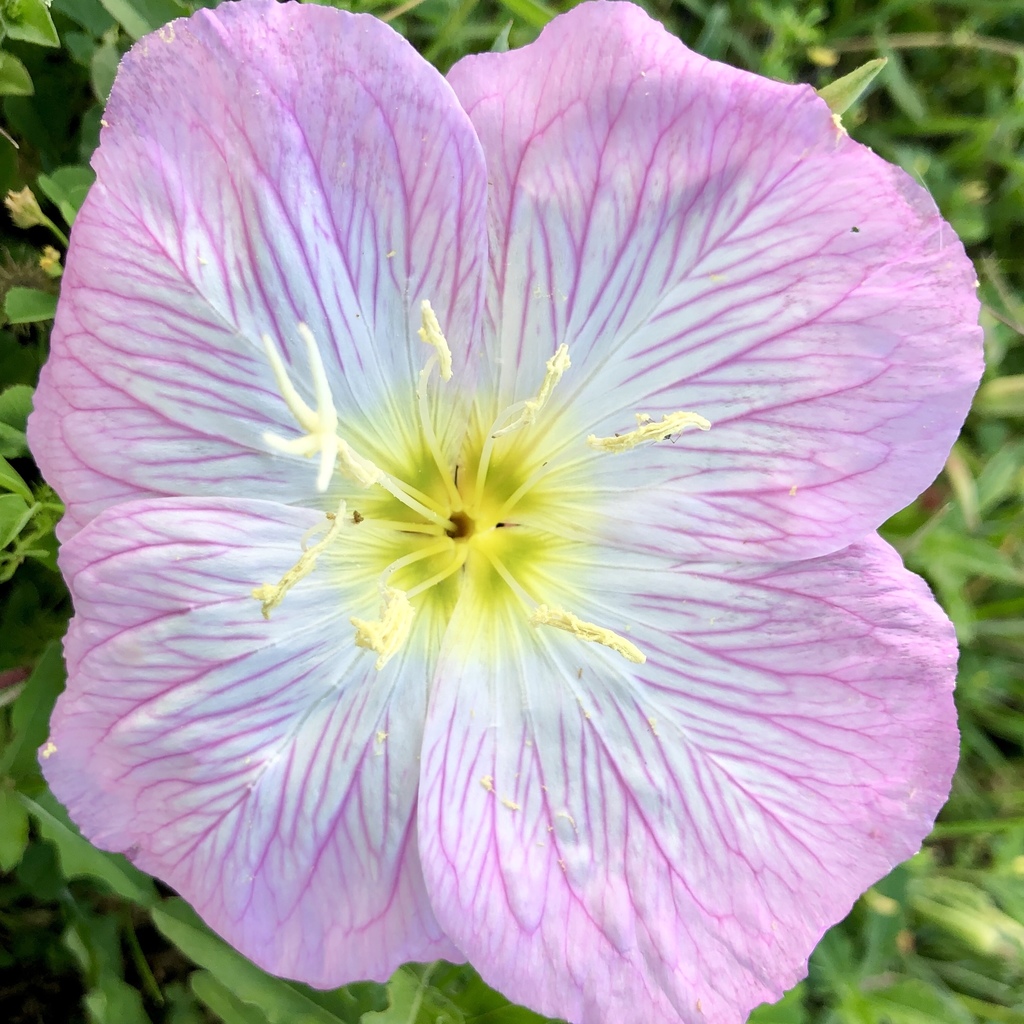
Pink evening primrose or pink lady, by Sue Ann Kendall.

In addition, Mike Conner has created a map for us to use in the brochure that will help people find their way from Apache Pass to Sugarloaf Mountain, where the trail passed through Milam County.

Beautiful image of antelope horn by Ann Collins.

I am assigned to make the actual brochure. I’ve collected photos of the plants the committee wants to show information about, the introduction they’ve written, and the cover photo of Linda Jo Conn. We’ll see what I come up with.

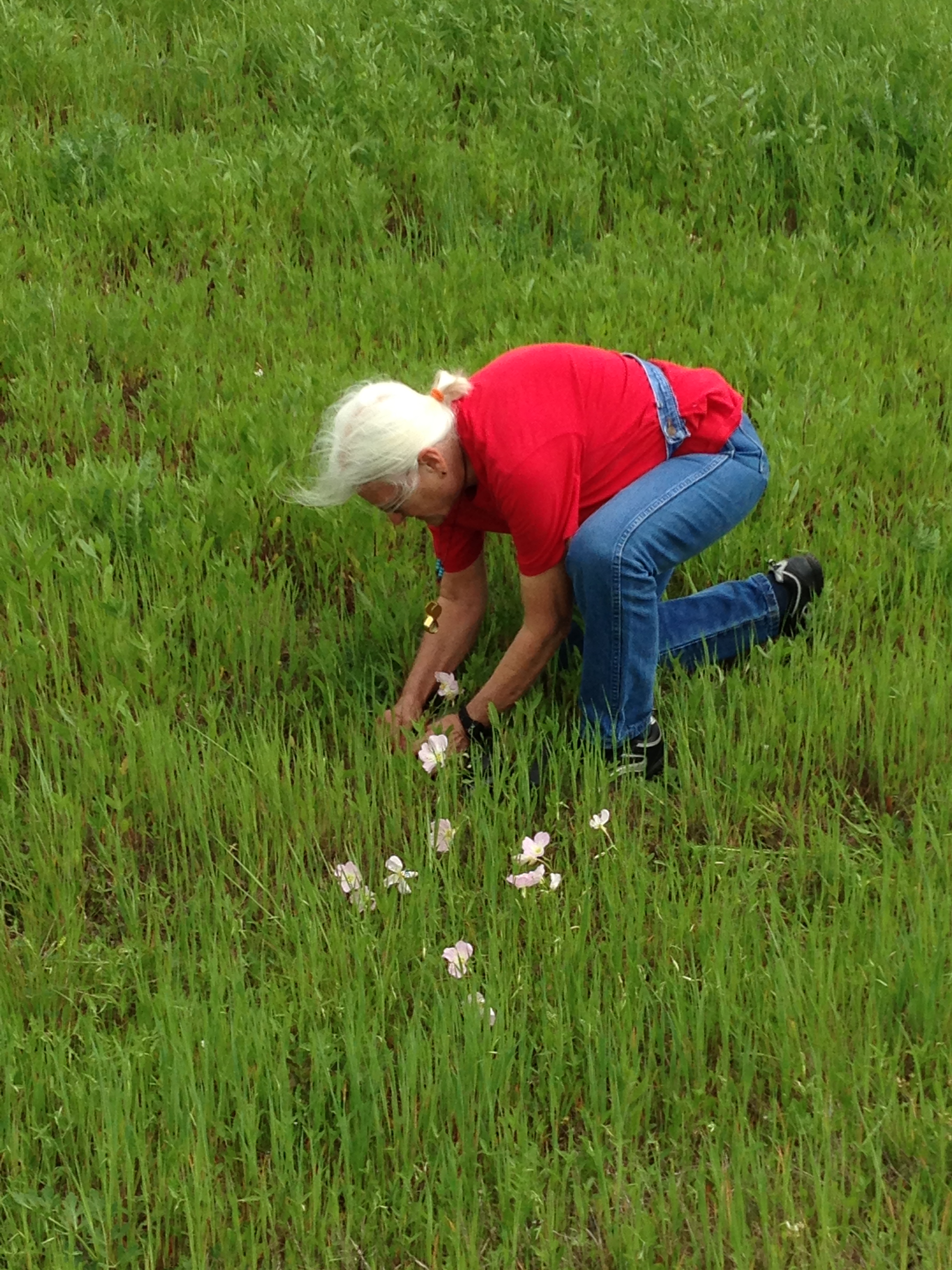
The cover image of Linda Jo Conn gathering pink ladies.

The committee would be happy to have other members of the El Camino Real Master Naturalists join them as they get ready for our role in the conference. You get volunteer hours for it!

Hiking the El Camino de los Tejas National Historic Trail in Milam County

By Joyce and Mike Conner

Figure 1: Part of the Previously Discovered Trail

On Saturday, March 9, 2019, thirteen students; their teacher, Dr. Nichole Wiedemann, from the University of Texas School of Architecture; and Steven Gonzales, Director of El Camino Real de los Tejas National Historic Trail Association (ELCAT), arrived at Cedar Hill Ranch in Gause to hike a small part of El Camino de los Tejas National Historic Trail.

Figure 2: Dr. Estell Meets the UT Students

There they met Dr. Lucile Estell who explained how she and the late historian Joy Graham worked to get the approximately 2580 miles of trail nationally recognized as the 19th National Historic Trail in the United States in 2004 and then subsequently worked to get signage placed throughout most of Milam County. (Dr. Estell has authored/co-authored several books including El Camino Real de lost Tejas (Images of America) and Historic Bridges of Milam County; and served on the board of ELCAT for many years since its beginning, including as president and vice-president.)

Continue reading “Hiking the El Camino de los Tejas National Historic Trail in Milam County”