The Barking Baby

By Donna Lewis

A few days ago, I was headed out to the back pasture when I walked right up to a tiny Pocket Gopher with his little back end up in the air as he was digging in the ground.

Dirt was flying everywhere.  He must have gotten out in the open because there was no tunnel to dive into.

I’m thinking… buddy you need to watch what you’re doing or one of my dogs will get you because you are not paying attention.

So I reached down and touched him on his little tail.

Lordy mercy…he jumped up and started running around my boot barking at me.

I was laughing so hard.

I had my camera in my pocket so I took a photo of him.  He was really telling me what he thought.

Angry little pocket gopher!

And no, I never kill these little creatures, even though they eat things in my garden. They aerate the soil and add organic matter to the areas where they are. So they do some good for us. 

Everything has a purpose.

The Big Kahuna Lizard Thing

by Donna Lewis

Just the other day, I was in my garden and leaned against an oak tree with my hand. Something heavy and wet then scooted  across my hand. Boy, I pulled my hand back just in time to see the biggest lizard looking thing I ever saw in my garden!

Broad-headed skink, iNaturalist photo by (c) Alan R. Biggs. Creative Commons. 

After I composed myself, I looked a little closer to the beast. It was the biggest skink I ever came across. It climbed up to the higher parts of the tree and ducked inside a hole.

It turned out to be a Broad-headed Skink (Plestiodon laticeps). This fellow likes dead trees usually near a forest environment. That makes another good use for a snag (dead tree).

These skinks can look very different. This one is from © Dawn Carrie, and was observed July 3 of this year.

This skink eats insects and other small lizards. I was glad to discover that humans were not on the list.

It was pretty neat seeing it. Keep your eyes open, and maybe you’ll see one, too.

Nature has amazing creatures everywhere. You just need to look.

How Glorious to Be Able to Fly

by Donna Lewis

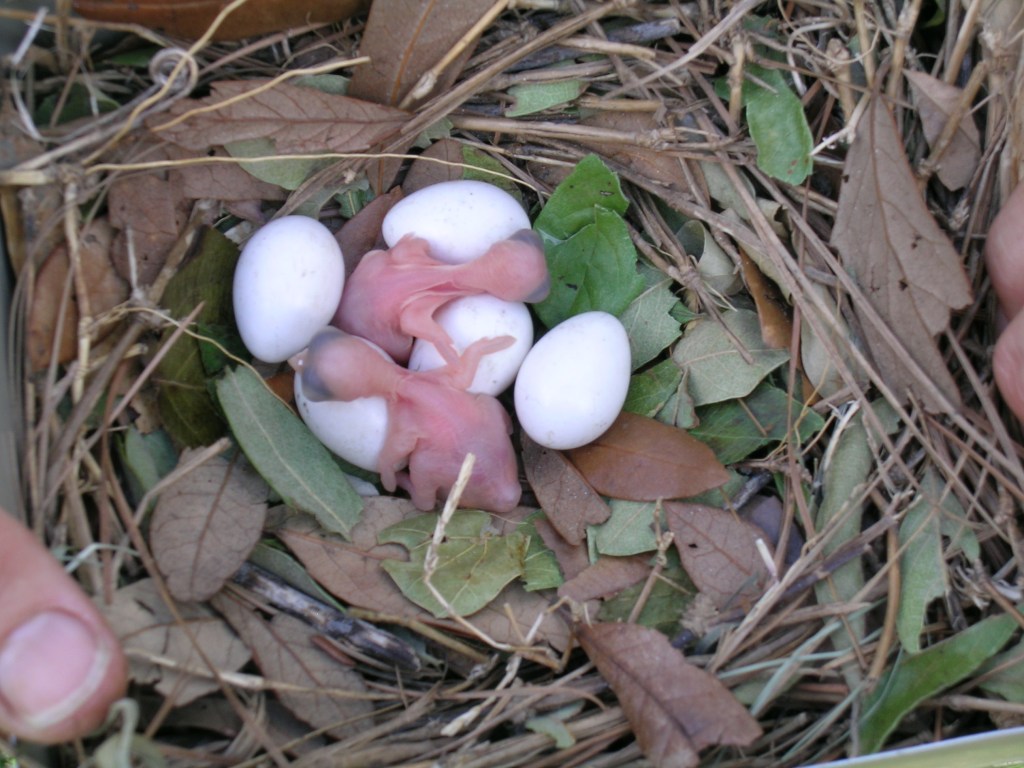
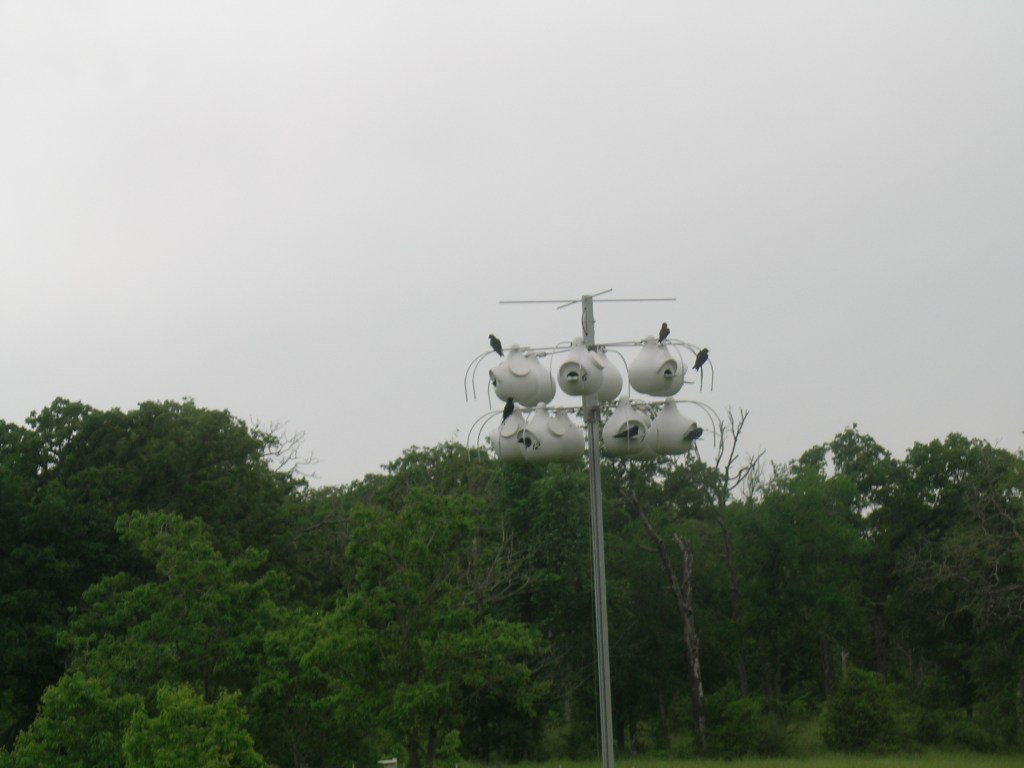
Recently I had several clutches of Purple Martins fledge out into the world.  There are more to come soon.

Newly hatched babies.

When they fledge, they make their first flight and leave the nest. A big step that must be successful the first time.  Talk about pressure.

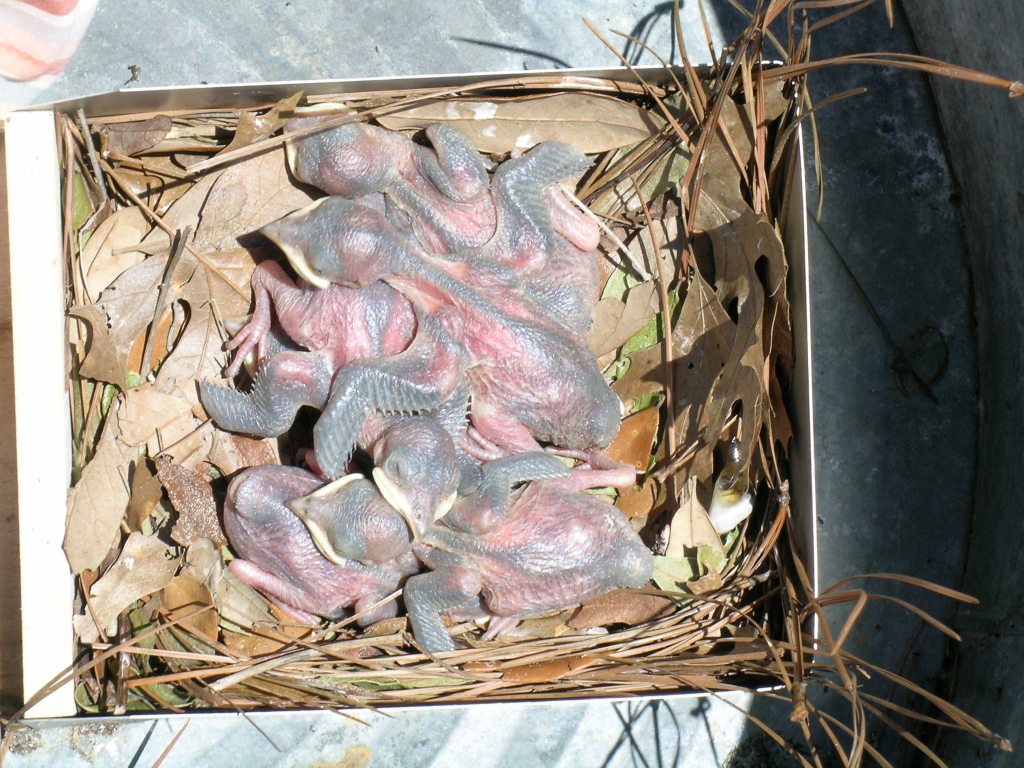
Getting close to fledging.

Right now they still perch on the gourd rack, but are out in the new world learning to fly, hunt, and socialize with their friends. They sing so loud and often; I know they must be laughing at the pure joy of it all.

Singing their songs

How I have dreamed of flying and looking at the earth from above. I think many of us have that dream.

The Martins will be here in the US for about another eight weeks or so. Then they start to gather in huge roosts, waiting till their instincts tell them it is time to fly to their winter home in Brazil. They have dual citizenship.

In Brazil, they live in the trees until winter is over, and once again they return here to have their babies. It will be the only time they live in gourds or other man-made houses.

A very full nest box

Their song is beautiful and one of the reasons they are so loved. It is so silent after they leave.  I count the weeks till they return.

Donna Lewis 
Proud Purple Martin Landlord

Cool Caterpillar

 by Donna Lewis

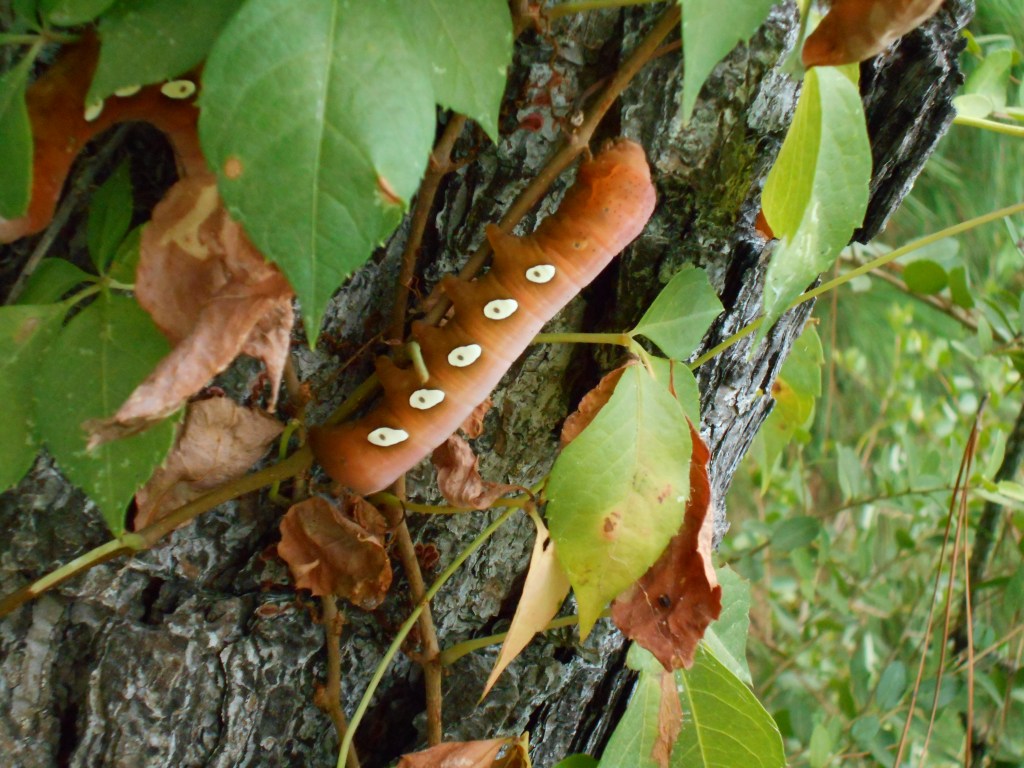
This Pandora Sphinx was a very interesting caterpillar I found one day while walking around our place.

Pandora sphinx moth from 2015.

It’s rust colored, very fat with bright yellow almost tear-drop eye patches. I had never seen one before or since then.  I was excited to find it.

It was eating leaves on a Virginia Creeper vine, a vine with five leaves.

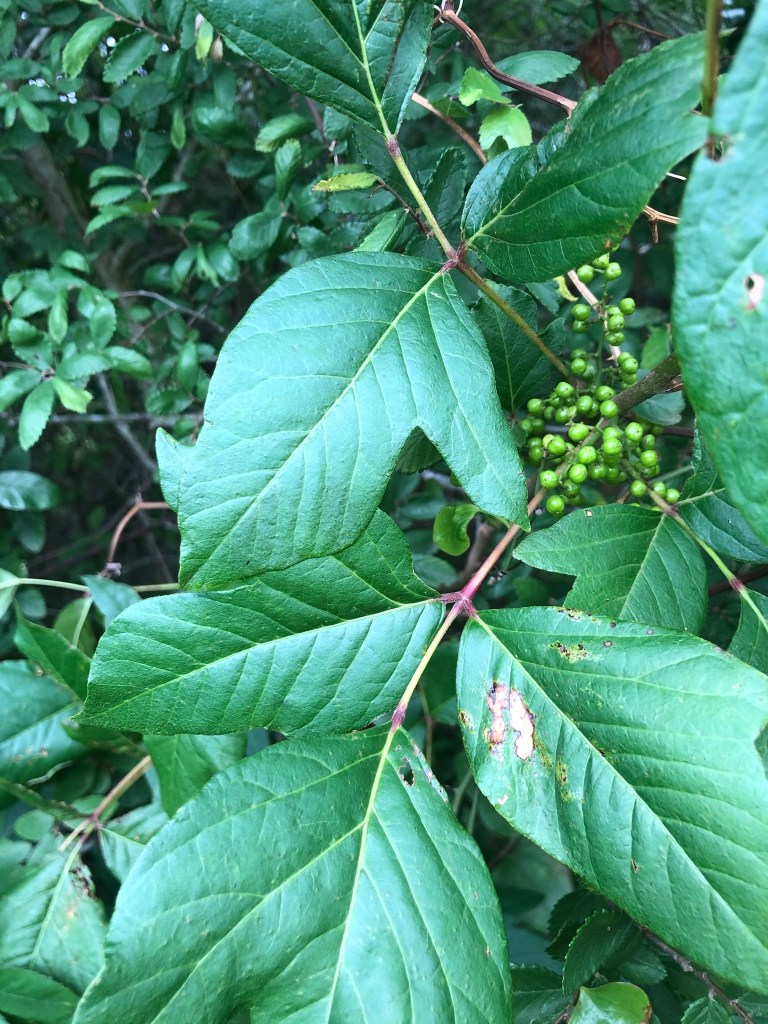
Here’s a picture of Virginia creeper taken by Ann Collins from iNaturalist (Creative Commons copyright).

The Virginia Creeper is a great  native vine to have around.  It tolerates most soil conditions and climates  It has many uses for wildlife, and can be used as a vine in gardens.

Many birds such as Bluebirds, Titmice, Cedar Waxwings, Robins, Chickadees, and more love its berries.  Several species of Moths and Butterflies use it as a host plant.

This is also the vine that created the saying we were taught as children.

Leaves of 3 leave it be, leaves of 5 let it thrive….

Poison ivy near Cameron, by Sue Ann Kendall from iNaturalist. Creative Commons copyright.

This vine is often mistaken for our favorite vine, Poison Ivy, but Poison Ivy has three leaves.

Right now you can find both vines just about  everywhere in the country especially around wooded areas with part shade, so be careful to identify which one you just touched..

I have personally found that an over-the-counter product called “Tecnu” Poison Ivy Scrub. If used within 8 hours, it can really help get rid of the oil that causes the itching.

I should buy it by the case!  I never learn.

Babies Everywhere

by Donna Lewis
(with additional photos by Sue Ann Kendall)

This is Suna’s Phoebe mom, eating sunflower seeds and amaranth, or waiting on a fly.

Anywhere I look I have baby birds right now, which is a wonderful thing for a naturalist. Who could be bored right now with so many little creatures to look at?

On our front porch we have a nest with five tiny Eastern Phoebes. They are fly-catchers and love things with wings.

This morning mama tried to force a giant beetle down her youngest daughter and I thought for awhile I might have to preform the Hine-lick procedure…

Donna’s Phoebe babies taking a nap
Suna has a phoebe nest atop an old swallow nest.

Then in my Blue-bird houses I have five babies in one house and six babies in another. Again, bugs are on the menu.  This year the Blue-birds decided to run off the Purple Martins so they could use their perch to look for predators near their houses.

Over in our barn I have a nest of baby Carolina Wrens in a bucket that was hanging on the wall. If you have never seen a wren baby you would not believe how tiny they are. They are the cutest little things ever. There are only three babies.

Up in the oak trees about 18 feet high we have some Ruby-throated Hummingbirds. Now talk about a tiny house. You can barely see it. It is wrapped in moss and is very concealed.

I love this quote.

There are ton’s of Cardinal nests everywhere. They eat bugs and from my feeders. I have them year round.  They are regulars here.

Then at last my beautiful Purple Martins, who came very late this year, are starting to lay their eggs finally. That unfortunately will cause the babies to mature during the hottest time of the year. 

I have seven nests with eggs and more that have not started yet.  I have the fewest Martins than ever at this site.  There are many potential reasons for this, and it’s hard to determine for sure.

But the ones I do have sing to me, and it’s all worth the trouble.

Nature is everywhere you are.  All you have to do is look.

Heaven on earth.