All the preparations have paid off for our pollinator project at the Milam Wildscape. Our grant from the H-E-B Pollinators for Texas is going a long way toward creating just what our target species need.
The pollinators are waiting patiently for their new nectar and pollen sources.
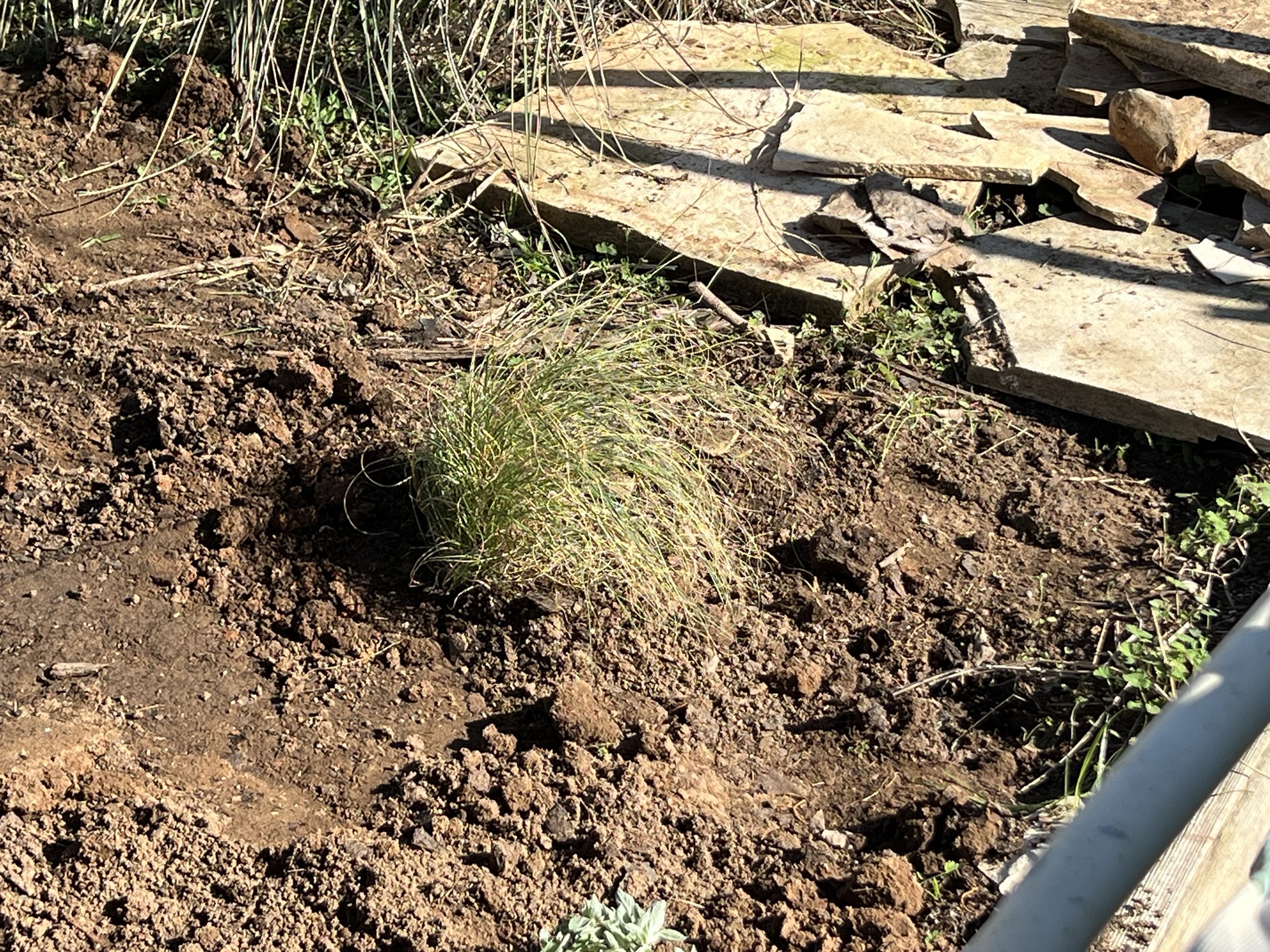
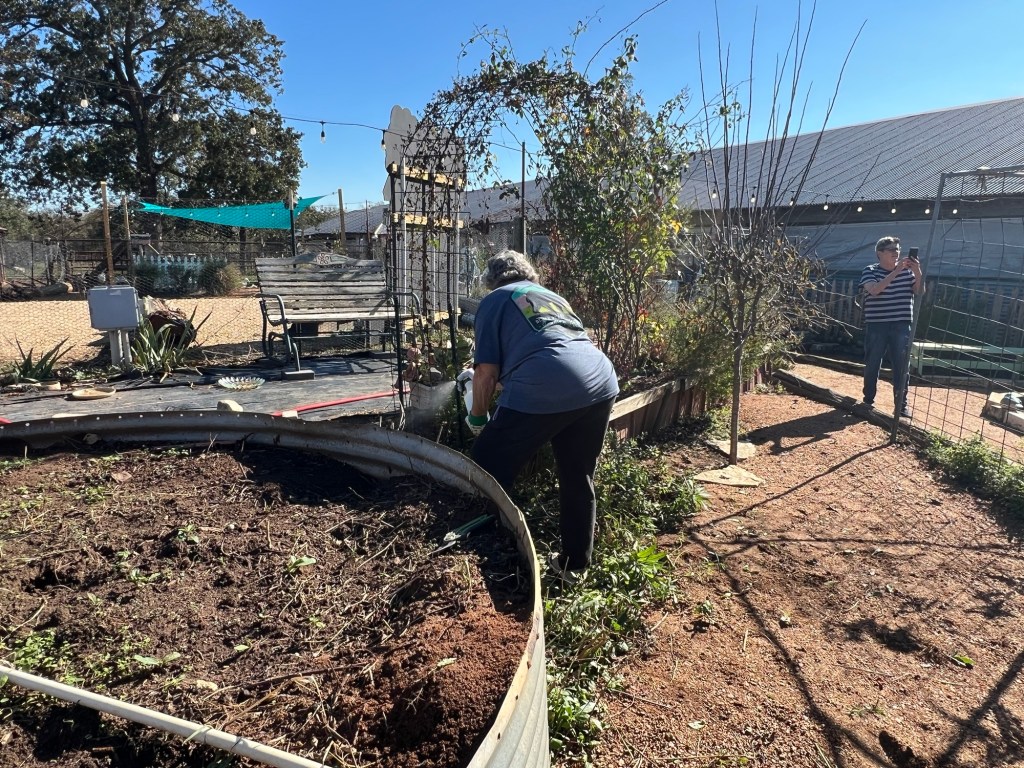
Starting early on Saturday morning, volunteers got their hands dirty and planted many interesting native grasses and ground covers in the new prairie area.
Catherine Johnson explains what kinds of grasses have been planted.
This new section isn’t covered in plastic, because the grasses and ground covers should quickly fill in the space and eliminate unwanted volunteers.
The new area
All the different textures and colors of these grasses will provide a beautiful background for other annual and perennial natives.
Lindheimer muhlyWith apologies, I can’t remember the names Catherine told me for these plants.
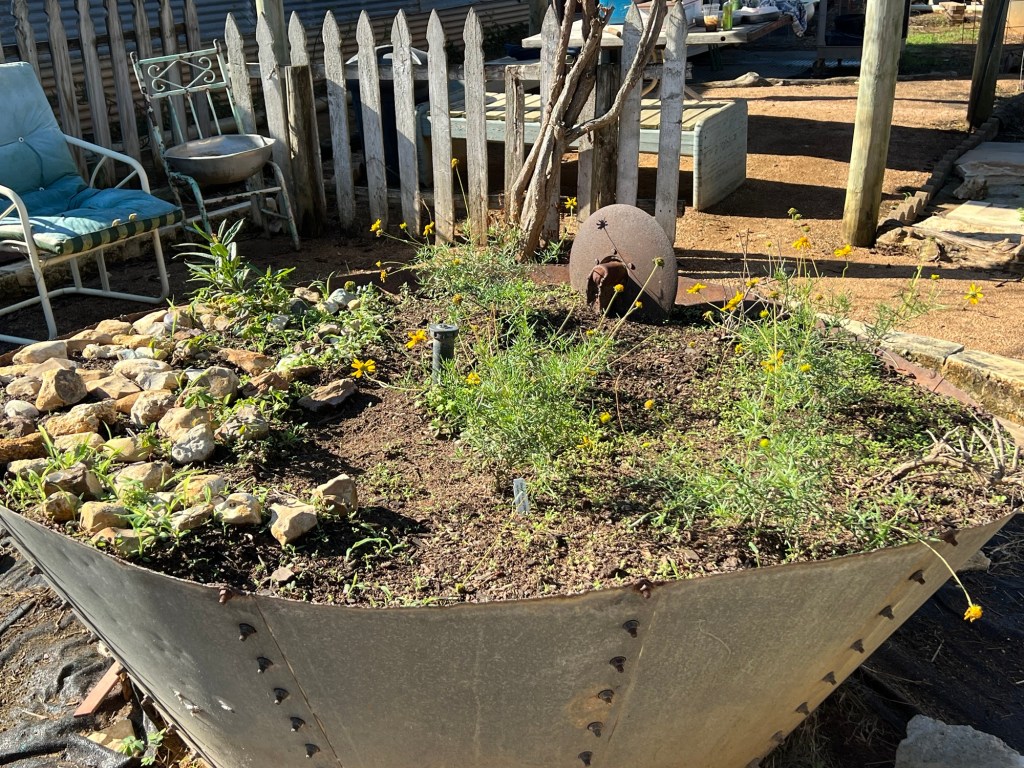
There are various new plantings elsewhere, thanks to all the creativity and hard work of our team.
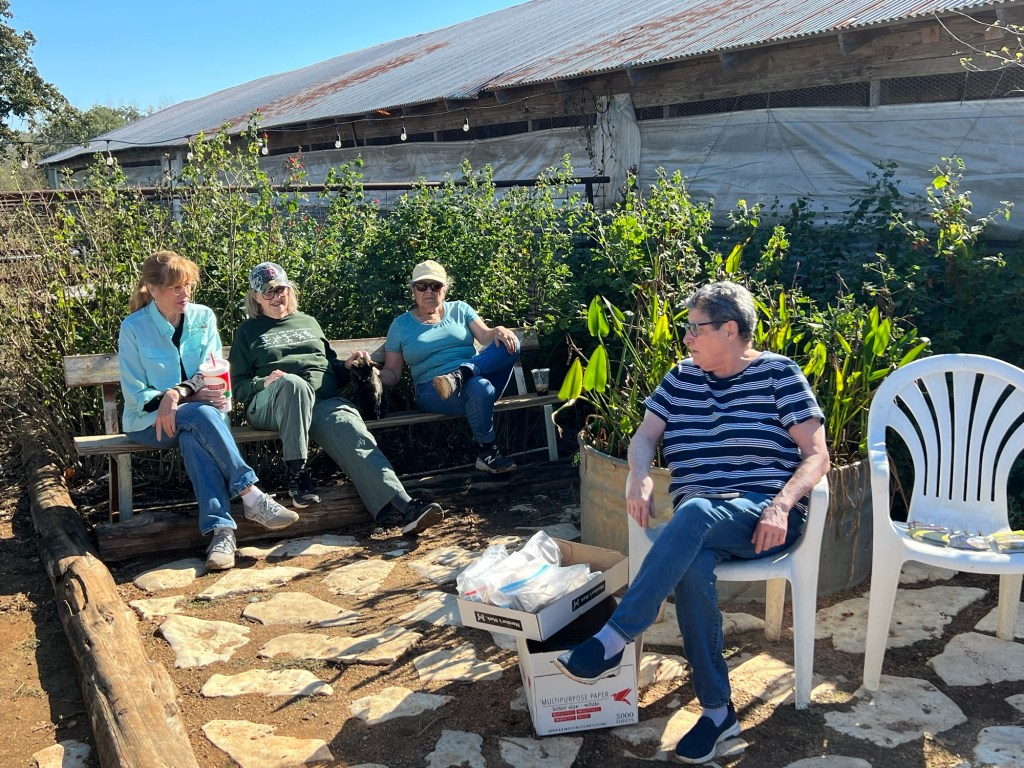
New plants I. The giant planterNew items in the succulent areaworkingWorkingTaking a break Kitty had to take a break, tooNew redbud
Of course, a visit to the Wildscape isn’t complete without some pollinators. We hope their descendants enjoy all the new plants.
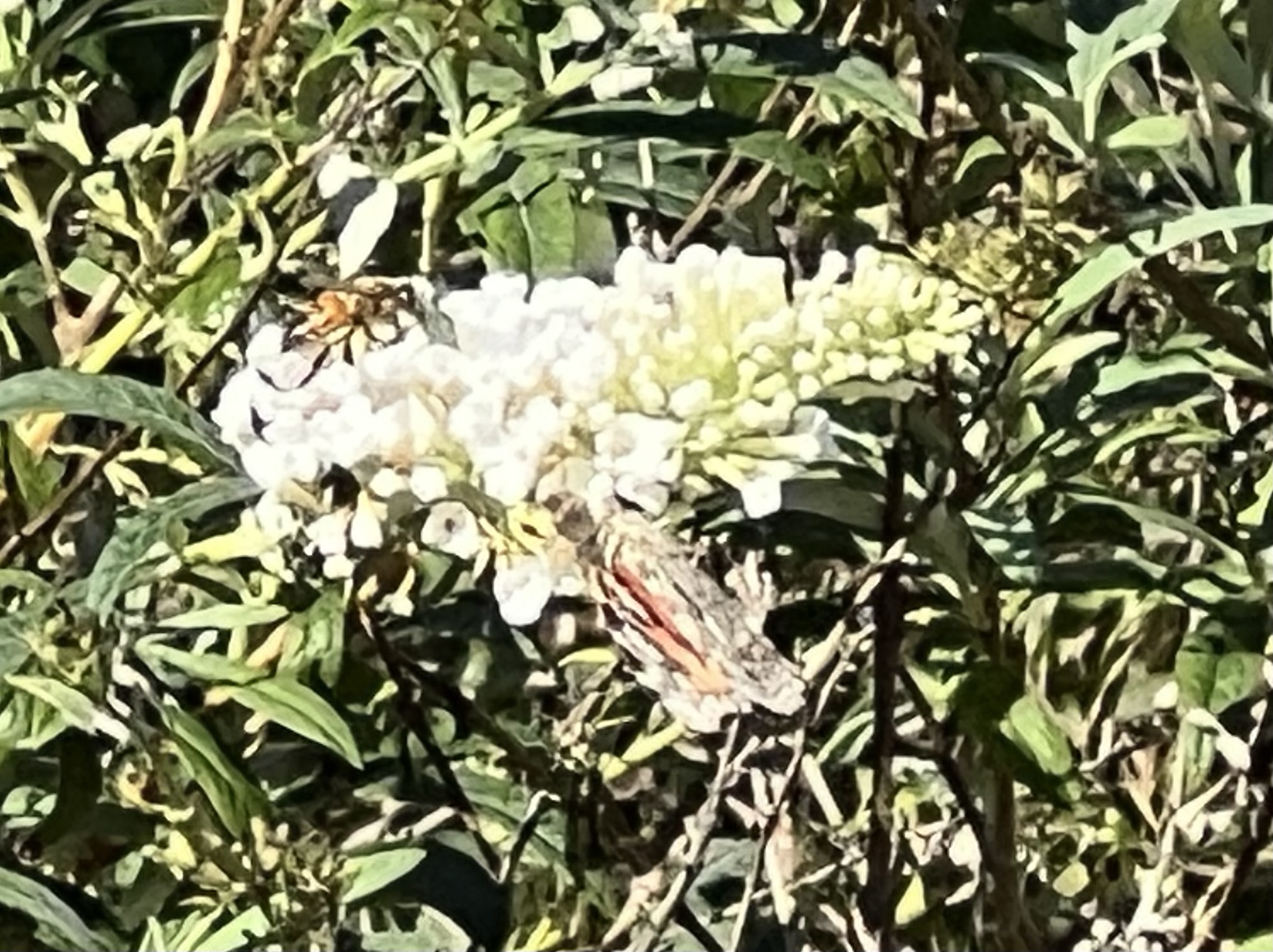
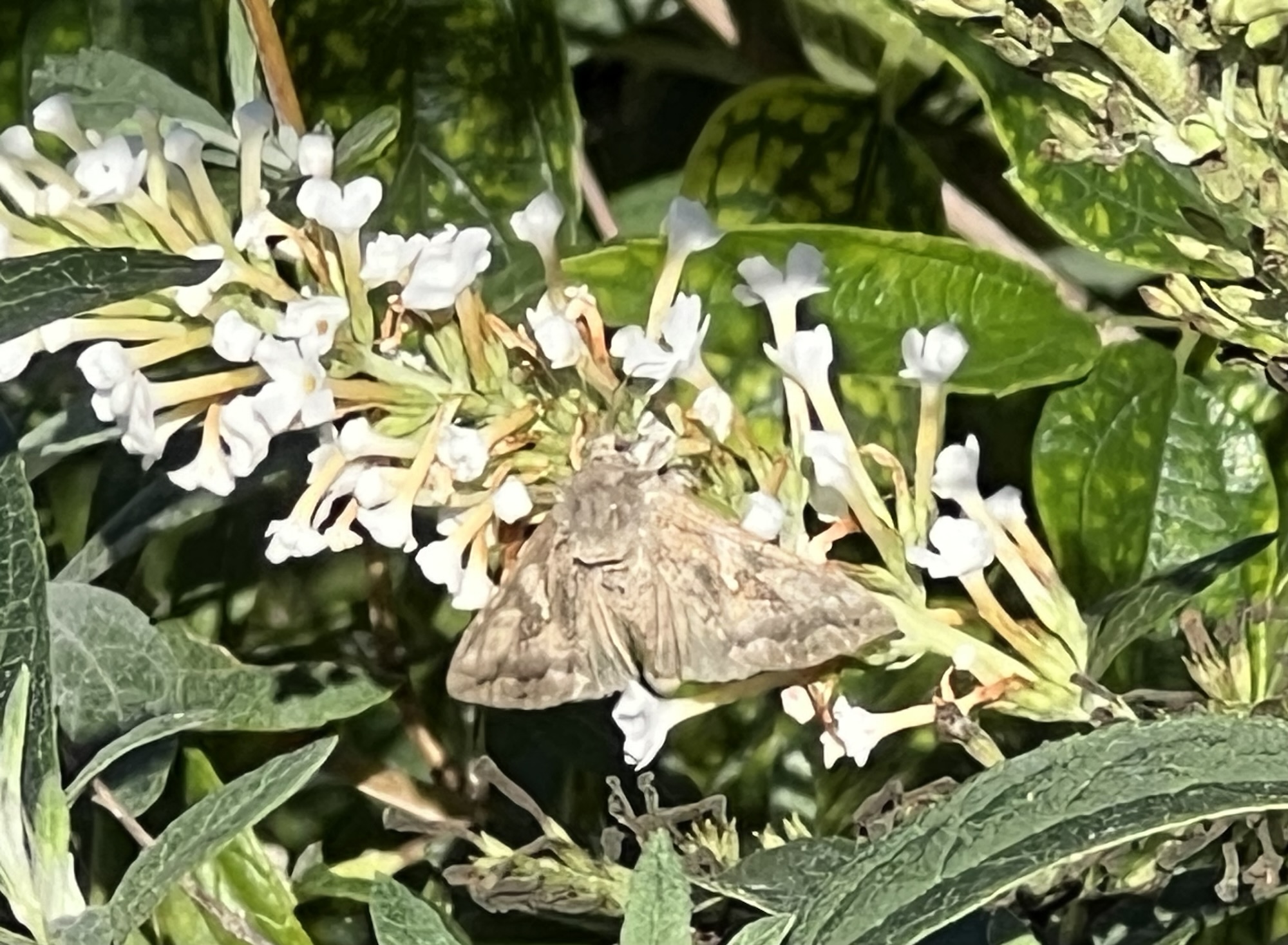
A tiny skipperPainted ladyBee and butterflyGulf Fritillary Another fritillary Gray looper mothHoneybee digging deepResting carpenter bee.
There’s another workday next week, then the plants will settle in next month.
The Pollinators for Texas project is a collaborative effort with H-E-B and the Texas Master Naturalist (TMN) Program focused on enhancing native pollinator conservation across the state by promoting awareness, conservation efforts and creating sustainable pollinator environments. The initiative aims to engage communities in supporting pollinator-friendly practices through funding TMN chapter-led projects and programs.
I recently got back from the TX/NM border region including Monahans Sandhills State Park. Not great timing for wolf spiders because only a few species were in or nearing their breeding season, but I was still able to add two species to my life list. There were other compensations:
Ascalapha odorata (Black Witch) is a huge moth. I had seen a couple of very worn ones in a dark alcove at Devils River last fall where they couldn’t be readily photographed. As I made my way down into a sand dune blowout, I flushed one that flew around for a while before settling down about 5′ away. Unbelievably it let me approach quite close. The photos were amazing and were a credit to the Olympus camera. Light levels were very low and the setting sun had already left most of the blowout in shadow.
Not far away was a Euploca convolvulacea (Phlox heliotrope) which had only the bare essentials of a mature plant. Many plants were covered with hundreds of bloom.
I’ve known about the Black Witch for decades but never expected to see one, so never looked up the details. The range map on iNat is amazing and includes all of North and South America except the coldest extremes. It has even turned up on Wake Island in the eastern Pacific. It is quite a flier and apparently has some sort of northward migration in the fall.
Mine was in perfect condition, so it must have matured nearby rather than migrating there. There had been 8 previous observations scattered around Ward County, all in good condition suggesting there is a healthy local breeding population there.
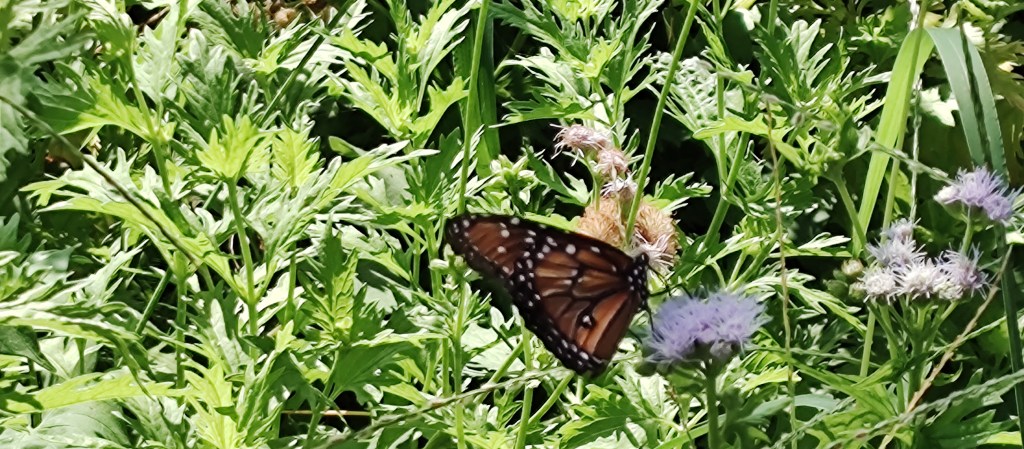
On Saturday morning I took a side trip to the El Camino Real Texas Master Naturalist City Wildscape to find a pleasant surprise in the overgrown mess. Queen butterflies had found the place. I counted about 20 that morning – all on the Gregg’s Mist. That is by far and away the Queens’ favorite nectar producer.
Not only had the Queens landed, American Bumblebees had also located nectar sources for themselves – mainly the Common Sunflower that planted itself in the city wildscape and reproduced many more this year.
I also saw Ligated Furrow Bees and Jagged Ambush Bugs. Those are pending identification verifications in iNaturalist. I also saw Oblique Longorn Bees – a second time for a new to me bee. They are very tiny and in near constant motion. All of these were on the Sunflowers.
Other things we planted were in bloom, but they are mostly overwhelmed by the terrible invasive “Tree of Heaven” and the Persimmons. Persimmons have taken over the right half of the wildscape (if you’re looking at it from the street) and the Tree of Heaven, an invasive from China, has the left side.
I met with the church directors Sunday morning, and they agreed to let us make a last ditch effort to eliminate both of those. Crape Myrtles also are spreading, which are not native to this area either. They have lots of pretty blooms, though. More Queens had arrived.
Alan Rudd has devised a plan to kill these invasives. We believe that we can do it without harming the Pecan tree in the wildscape, but there is no guarantee of that, so we needed approval from the All Saint’s Episcopal Church to do it. They were in agreement, since they also were dealing with the Tree of Heaven in most other parts of their landscape.
Liz Lewis is having the source of the Tree of Heaven, three trees nearby, removed, too. Otherwise, they’ll just come back. No one knows where the Persimmons came from, but we hope we can get them out, too.
Once that is done, the wildscape needs weeding. Good for volunteer hours, everyone.
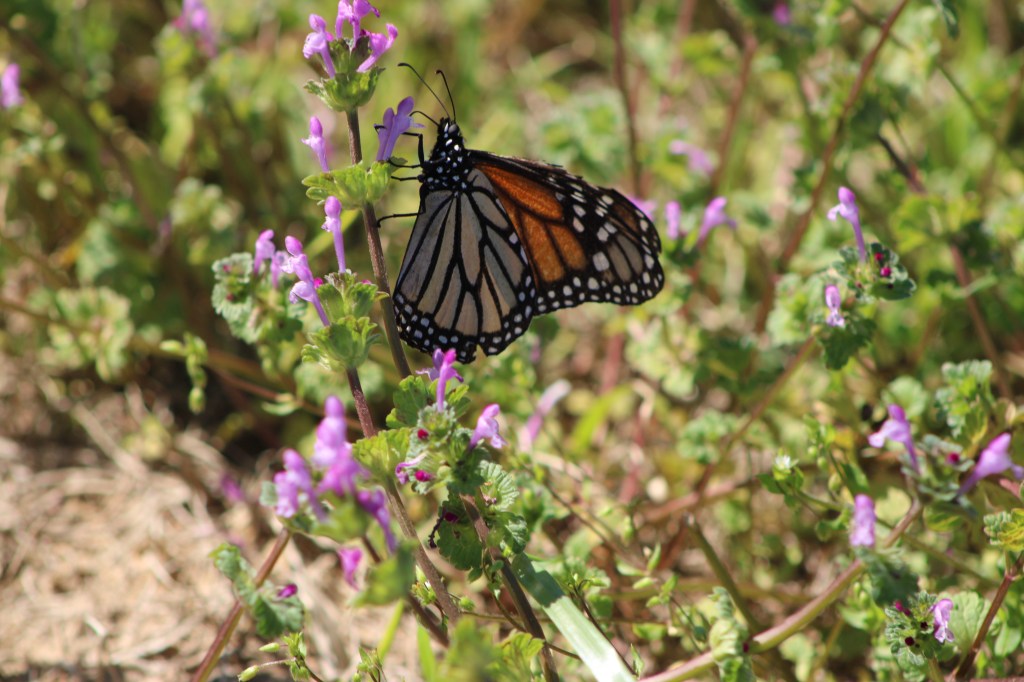
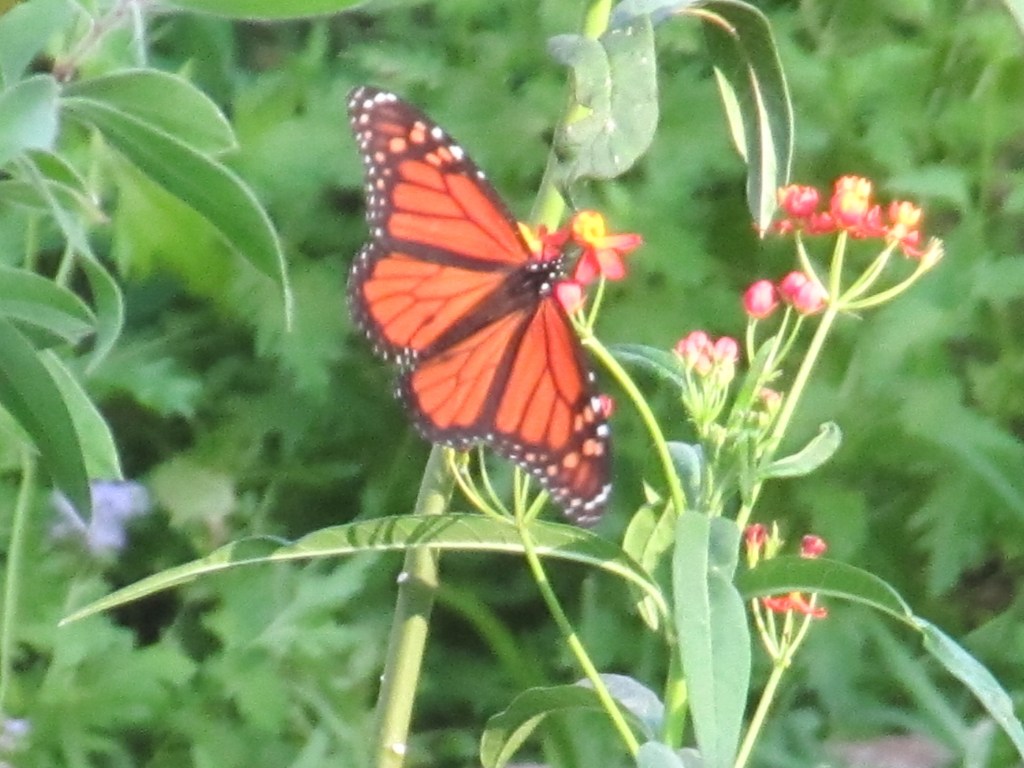
A few weeks ago I had the few Monarchs that I was able to see on our property here in Central Texas. I have only counted about one dozen in all. That is a sad number considering there used to be hundreds crossing our pastures. I have been counting them for years and reporting this information to Journey North and several other organizations.
This serious decline is happening to most butterfly species. The Monarch is just an iconic species that we all recognize.
There needs to be more citizens who try to help them. Probably all who read our Master Naturalists blog will do something. But most people will not. This could be that they don’t know what to do, or they think their small actions won’t matter. Everything matters. Remember that.
So, action means leaving natural area’s unmowed till after all the milkweed has gone to seed. It means learning about all of our pollinators and planting appropriate native plants for where you live. There are lists online about these plants. Yes, these plants can be hard to find. It means looking to volunteer groups like Texas Master Naturalists for advice.
These are the things we love and work hard to educate ourselves about them.
As humans we like to neaten up our yards and pastures. That is not what butterflies, birds and mammals like. A mower means death to them. So just taking a little more time to be aware of what is living near you. If you loved moving to the country, then do not change it.
The Beatles have a song by John Lennon that talks about this. The song is, “Let it be, let it be, speaking words of wisdom, let it be…”
Remember what something beautiful means to you…and work to save it.
(Recap of an Associated Press article from Carolyn Henderson)
North America has approximately 650 species of butterflies and all but nine of them are in trouble. Approximately 114 of them are showing significant decline including the Monarch.
Monarch
Monarchs are reported to be down to 10,000 in 2024 compared to 1.2 million in 1997. The annual report that was just released about Monarchs from another group stated that there were slightly more hectares covered in Mexico, their winter home, than there were last year, but it still isn’t even close to a sustainable number. They covered approximately 1.8 hectares in 2024 compared to .9 in 2023. Scientist say they must cover at least 6 hectares. One hectare is equivalent to 2.471 acres.
All butterfly populations are down by 22% since 2000 in the lower 48 states. Their numbers are dropping on average 1.3% every year. There are 96 species that are so sparse, they didn’t show up on any of the counts in 2024. There are another 212 species whose sightings were so insufficient, a trend could not be calculated for them.
Two that I have seen in Milam County are on the high risk list. The Red Admiral population is down by 44%, and the American Lady population is down by 58%. Monarchs come through this area, too, but in small numbers. They are seen more along and west of I35 when they migrate.
Red Admiral
An entomologist that reviewed the collection of butterfly counts said he considered the numbers a sign “telling us the continent’s health is not doing well.” The numbers of parrots and porpoises also are dropping notably.
Butterflies are pollinators – not as much as bees, but they still contribute significantly. They are a major pollinator of Texas cotton crops – a crop often grown here. The driest and warmest areas, including Texas, are showing the greatest decline. They are doing better in colder climates.
American Lady (photo by SA Kendall)
Butterflies aren’t alone in their decline. Other insects that aren’t studied nearly as much also are thought to be in decline.
As usual, climate change, habitat loss, and insecticides are faulted. You can help by planting native wildflowers in your yard to help feed all species. Turn over some soil, throw some NATIVE Texas wildflower seeds out there, and create a butterfly garden in your yard. Native plants require very little effort once you get them growing. They need to be native to your area because butterflies need the nutrients provided by what nature normally would provide.
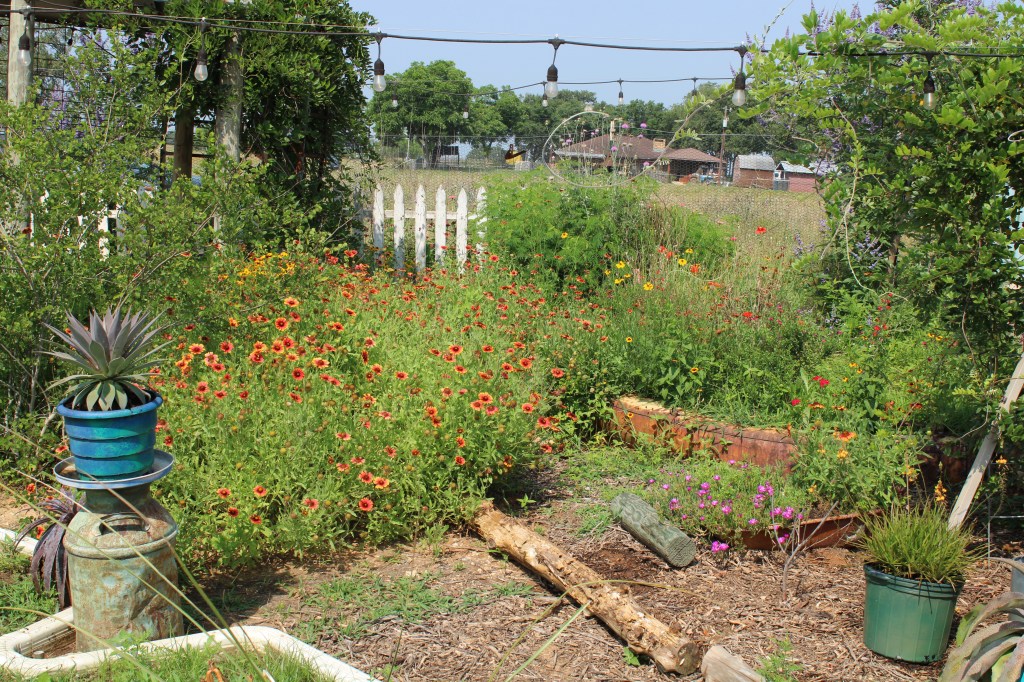
Our Chapter Wildscape
If you need seeds, go to the Cameron Public Library where Texas Master Naturalist – El Camino Real chapter is giving them away. At the library, you also have access to plenty of information from the Lady Bird Johnson Wildflower Center if you have a smart phone. To see these wildflowers in full bloom, wait a month or so, and come to the ECRTMN Wildscape out on CR 334. Announcements will be made when lots of them are in bloom.














 Nature Along the El Camino Real