Some of you who are originally from the North may think it’s not cold. But those of us born in Central Texas think even barely freezing is terrible. I am one of those people.
I can hardly bear it to go below 50 degrees. I hate it. It makes me crazy to worry about our wildlife friends.
But, they are adapted more than we think.
The birds have a harder time finding food when it’s cold. That is because the insects they like are not moving around.
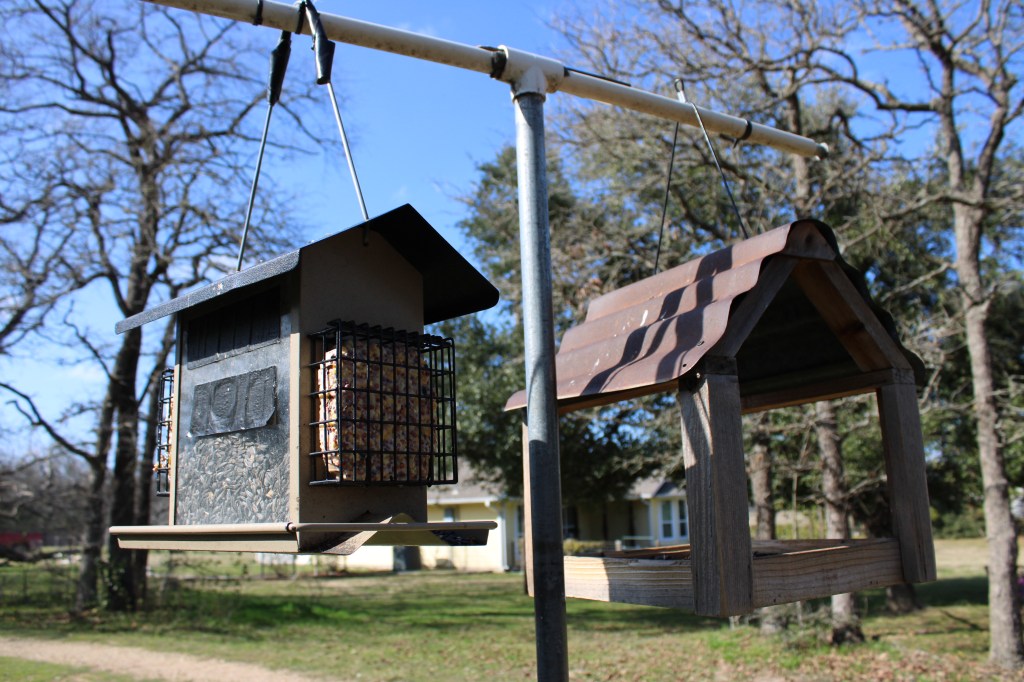
One way we can help during this time is to put out suet for them. You can make your own or purchase it. I found that making it is messy. So, I bought some. Now is the time to put it out.
It needs to go in suet holders and placed near feeders. You can make your own holders and make them suit your location. A suet holder can be as simple as a small cage made from hardware cloth. Anything that a bird can cling to. Many species will come to a suet feeder. Even woodpeckers like them.
The suet provides needed energy to help the birds keep warm.
Right now, I am waiting for a new product to arrive that keeps hummingbird feeders from freezing. As soon as I receive it, I will put that info out for everyone.
So don’t forget our feathered friends…
“I cannot do all the good that the world needs, but the world needs all the good that I can do.
Since we’re not getting many submissions lately, I’ll go ahead and write up some of my little naturalist projects. Too bad I don’t get volunteer hours for this kind of stuff, but I enjoy it anyway, because it gets me out in nature and my data is useful to someone.
Where I listen to birds.
What I’ve been doing involves using my eyes and ears to track the bird species in an area of northern Milam County about a half mile in diameter around my property. It contains pastures, woodlands, ponds, and a creek.
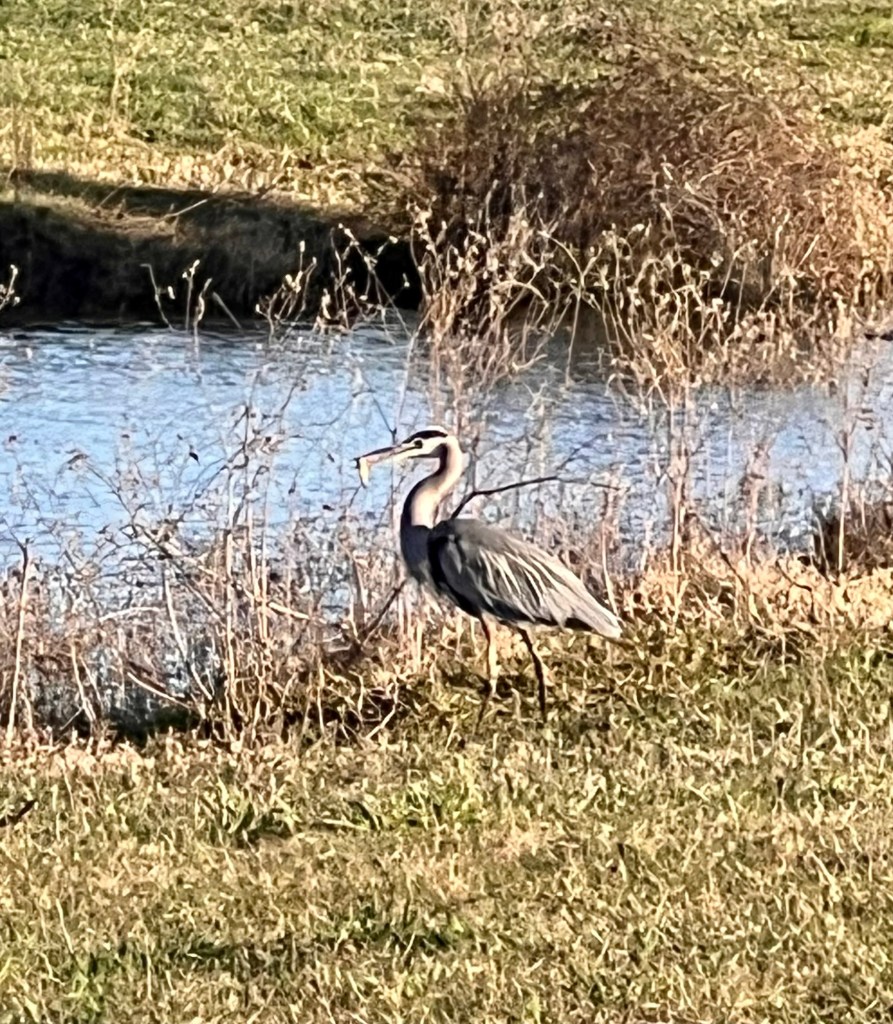
Mmm, fish
I’m keeping a record of what birds I observe with my eyes (I do try to get photo confirmation on iNaturalist for unfamiliar birds, but I trust myself to identify the two vultures I see as well as crested caracaras. For listening, I use Merlin Bird ID, which is really quite accurate (only twice has it found birds that shouldn’t be here, and who knows, the wind could have brought them in).
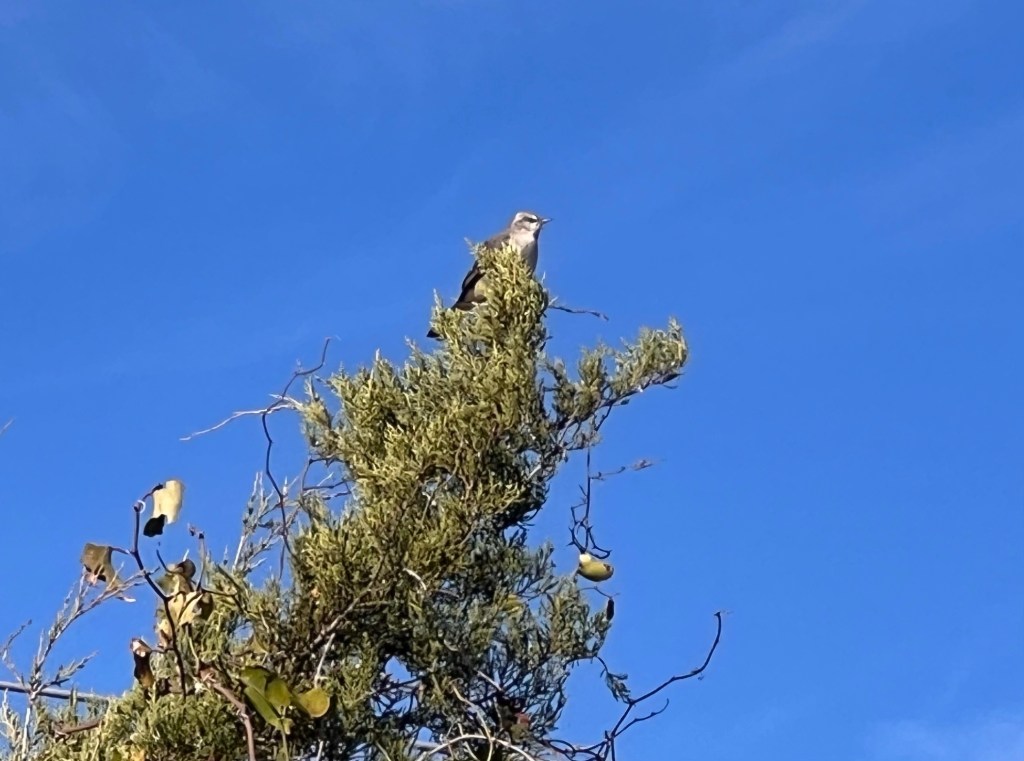
It’s a mockingbird, not a loggerhead shrike.
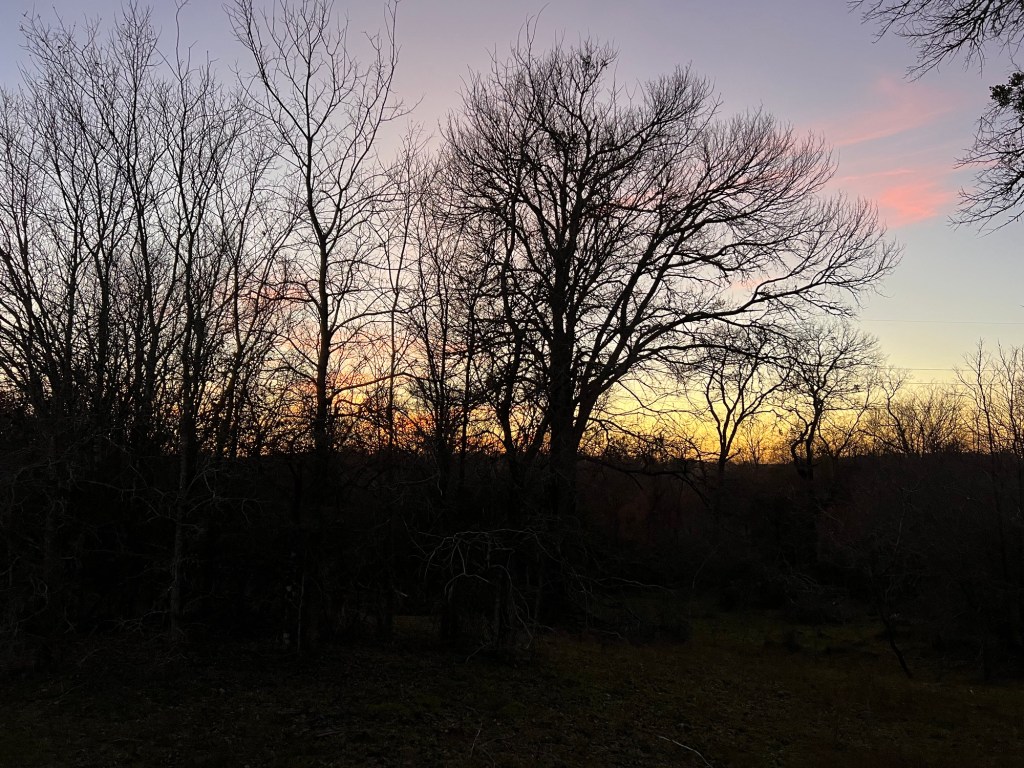
I use Merlin for between half an hour and an hour a day, and I have three places I usually listen. Mostly I listen between 8 and 10am, depending on my schedule, though I occasionally listen around dusk so I can get owls (barred and great horned so far).
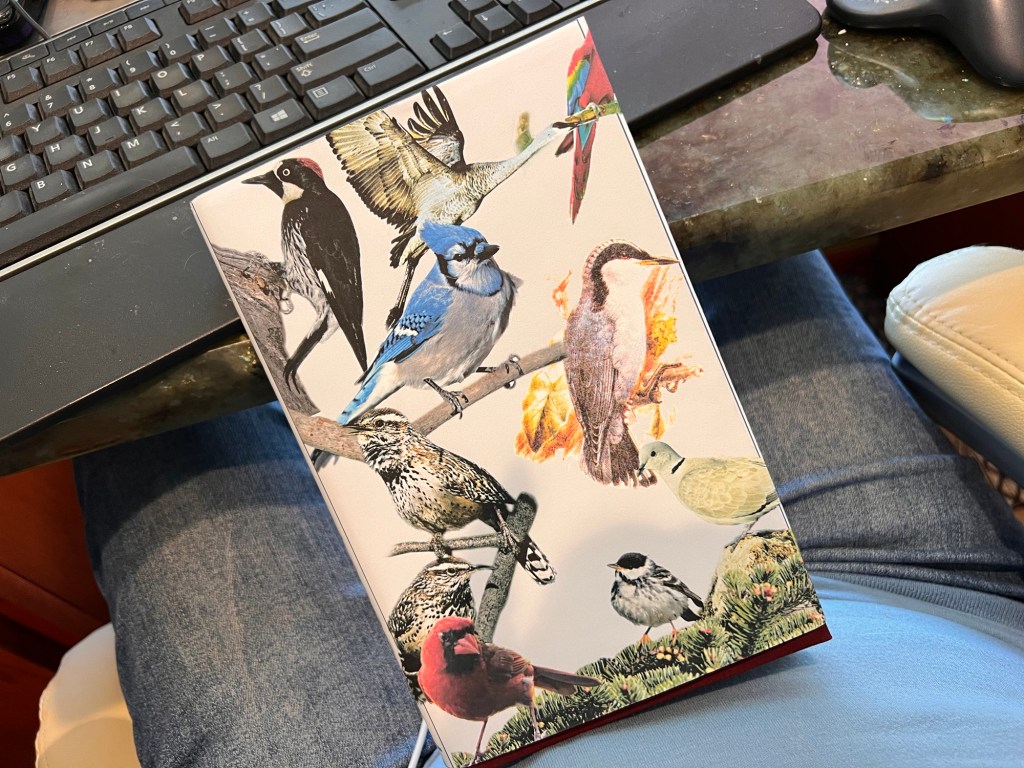
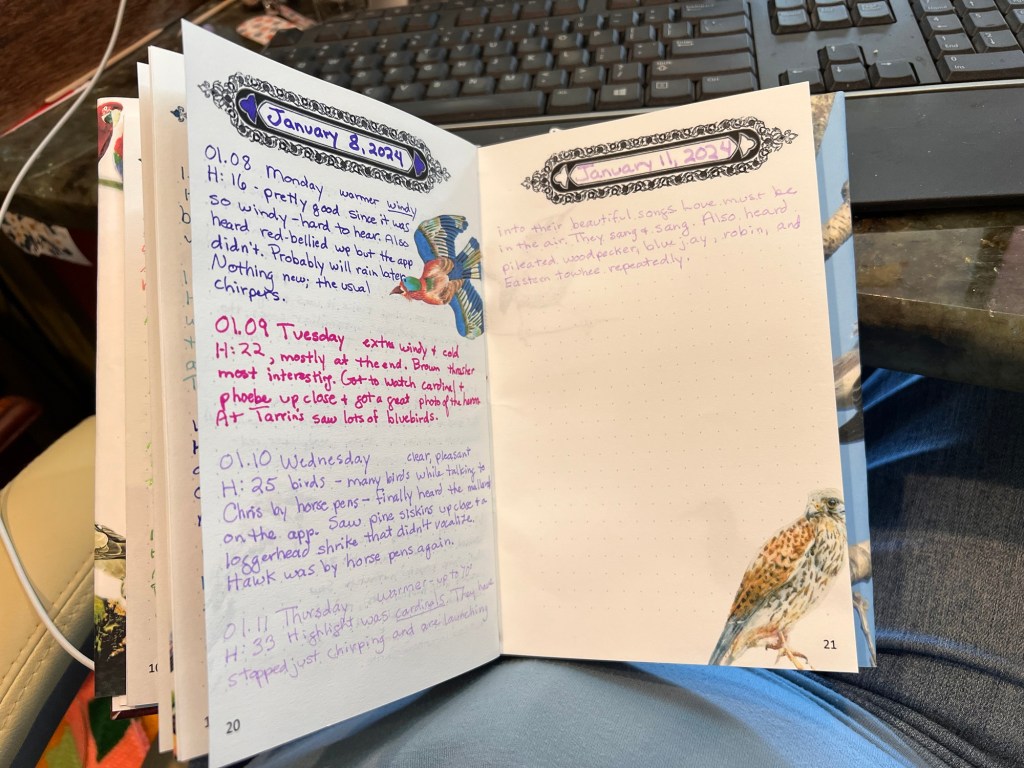
I have a bird journal that my spouse made for me. I record weather notes as well as how many birds I hear each day. I also note birds I get to observe up close or with my binoculars, and any new arrivals.
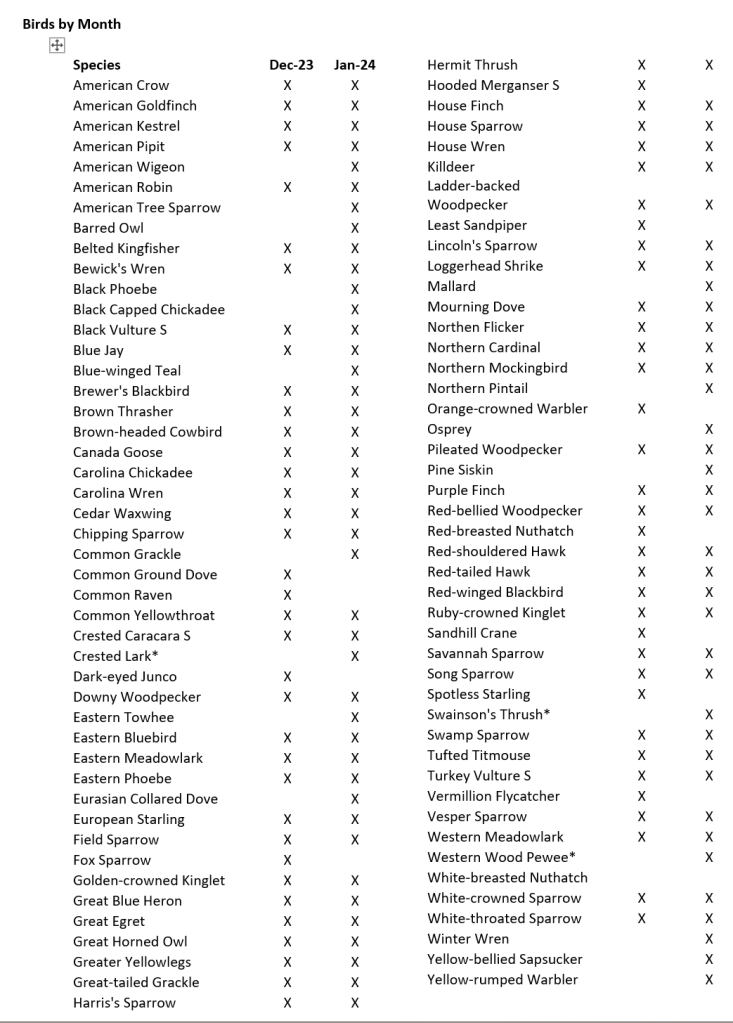
Where the research part comes in is that I have started a spreadsheet that lists each species I observe each month. I’m looking forward to spring migration to see what passes through as well as to record when winter residents leave and summer ones arrive. I miss the painted buntings and their friends, though the twelve kinds of sparrows here do keep me on my toes. Yes, twelve.
Current birds observed
By the end of the year, I’ll have a good idea of the patterns here in this small area. My hope is to keep observing for a few more years, so I can see how climate or big weather events affect this area.
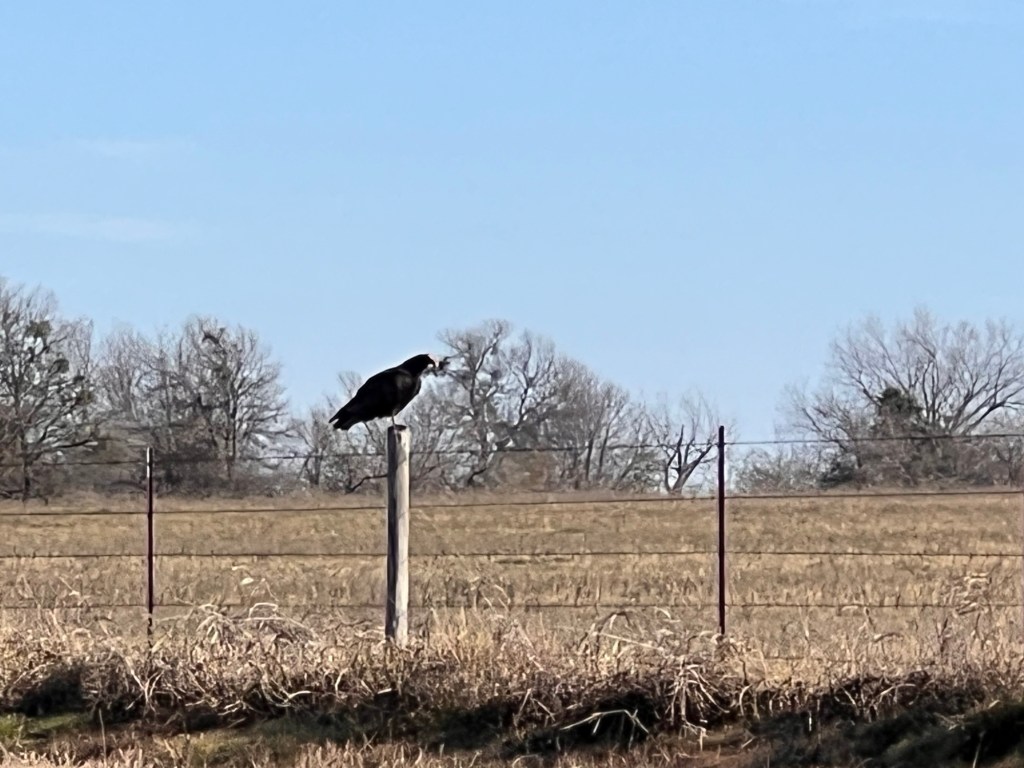
I’m a black vulture.
I’m going to put in another plug for the Merlin Bird ID app on my phone. All the observations go into the eBird database, since it’s from Cornell Ornithology Labs. You can contribute photos as well as record sounds of birds. I say sounds, because it identifies mourning dove wings correctly!
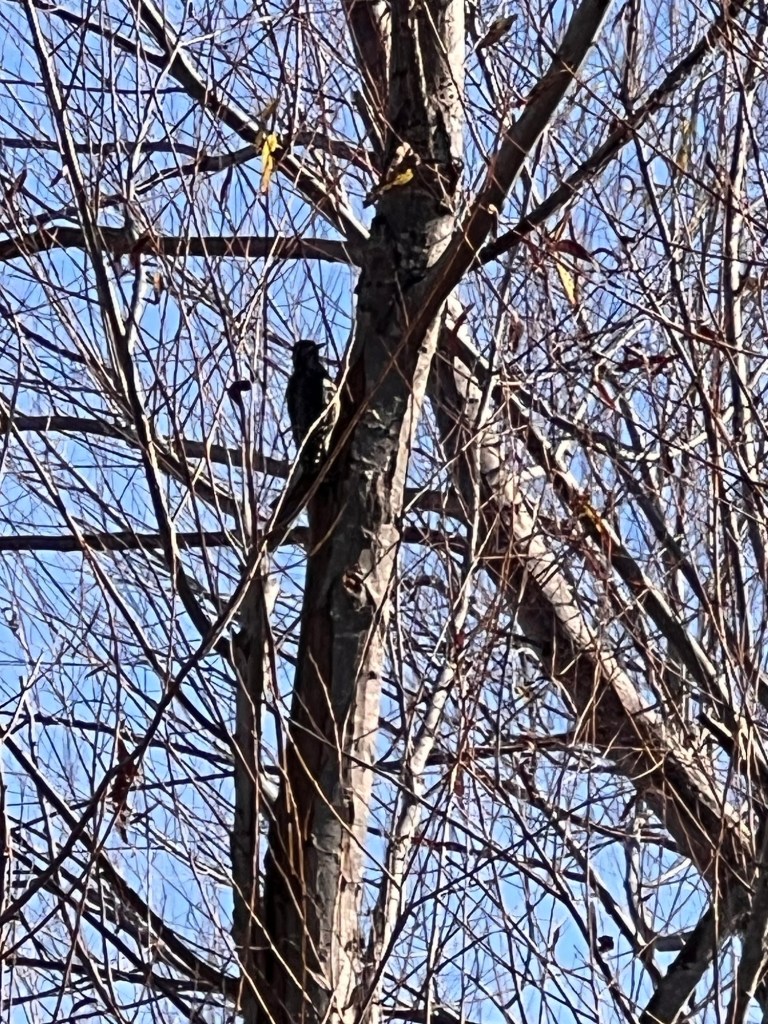
Sound ID told me this one’s a ladderback woodpecker.
I’ve learned so many bird calls that enrich my life. I drove my spouse crazy yesterday identifying all the birds on the Nature PBS show yesterday. There was one persistent Phoebe. I now know Carolina Chickadees have many more songs and calls than I’d realized and that we’ve had a few Black-capped Chickadees drop by.
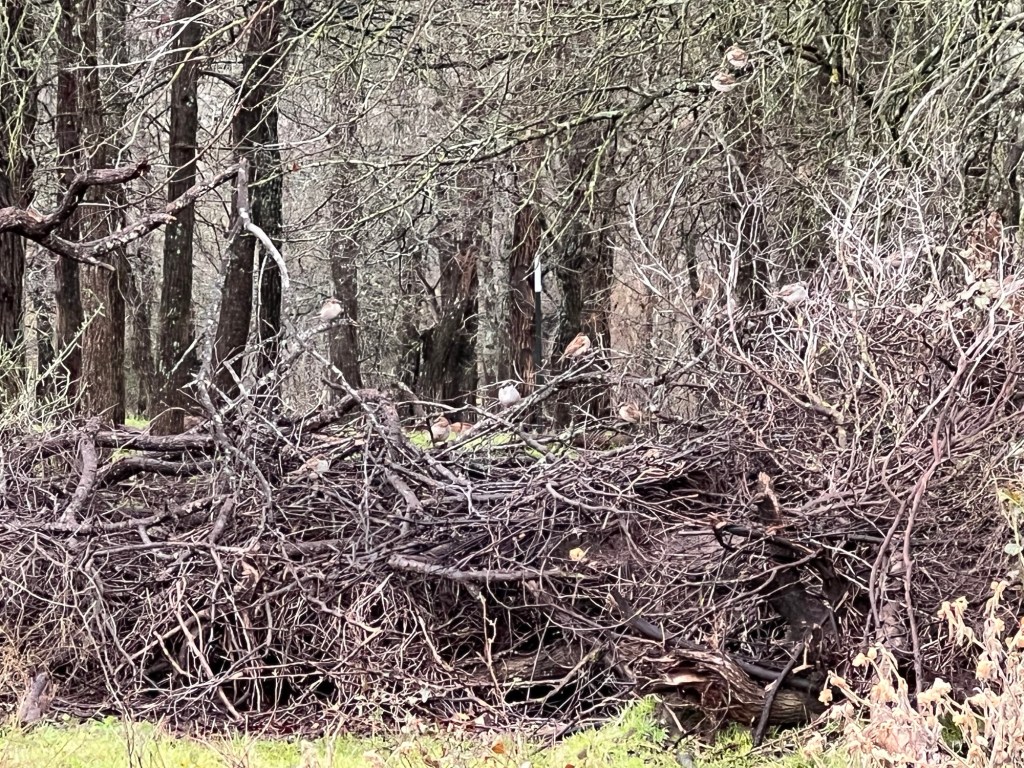
Some of our sparrows. Mostly white-capped, some house sparrows, maybe a Harris’s sparrow in there.
The part I find funny about this app is that it refuses to identify chickens, Guinea fowl, and turkeys, at least at the Wildscape. The last one confused me, because they are native. but maybe it “knew” these were at a facility for raising turkeys.
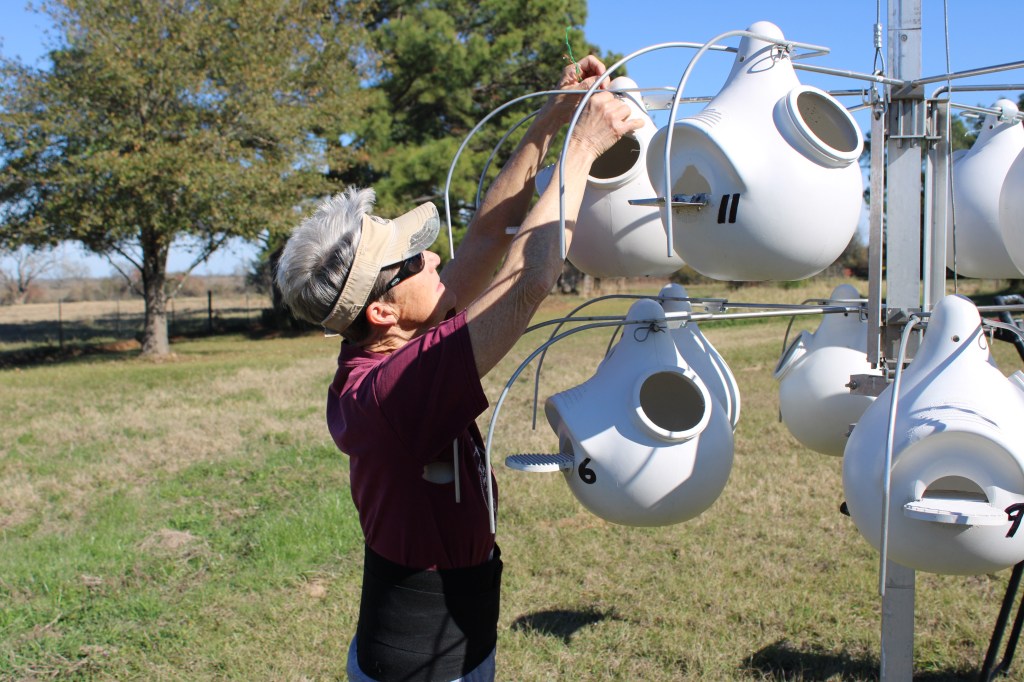
Just as our weather starts to turn cold and windy, for Martin landlords it is time to get ready for the return of our beloved Martins.
Right now they are still in Brazil. Very soon they will feel the time-long urge to migrate back to their breeding grounds. That would be across the border into the US and Canada. From my experience, the birds will arrive in Milam County around February.
Times vary a little from year to year.
The first to arrive are called scouts. They tend to be the adult males looking for nesting areas that will best attract females. Last year’s birds will arrive later, up to four to eight weeks.
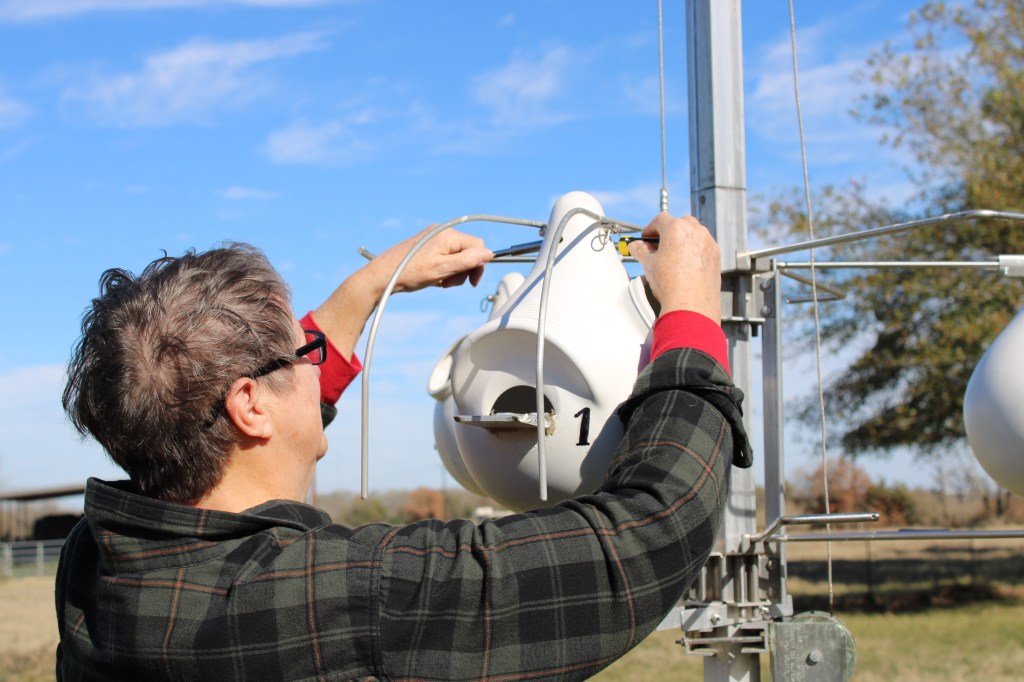
Right now is the time to get your houses ready. It is harder to assemble an Owl guard when the weather is cold and windy. Putting your gourds or apartments up nowmakes sure you are ready as soon as they arrive. Do NOT open the cavities yet. You need to wait till you hear the bird’s arrival and open only a few cavities. This keeps unwanted birds (House Sparrows) from taking over. Block the entrances with foam or something you can easily take out. Duct tape is NOT a good option.
I have people ask me how I know I have a Martin? Their song is different from any other bird. Believe me, they will let you know they have come home.
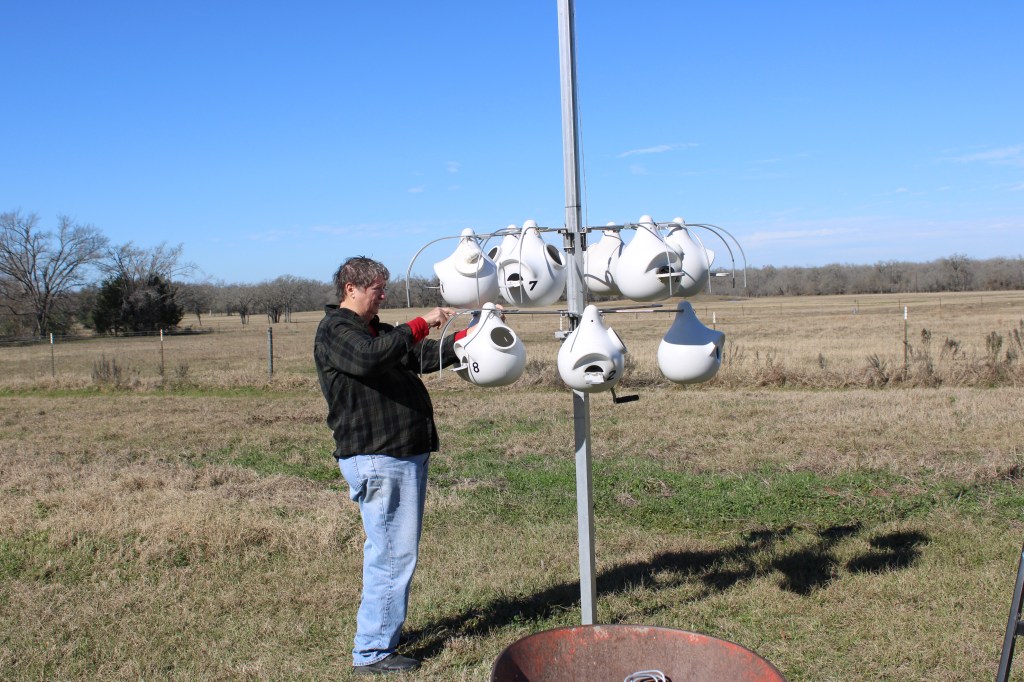
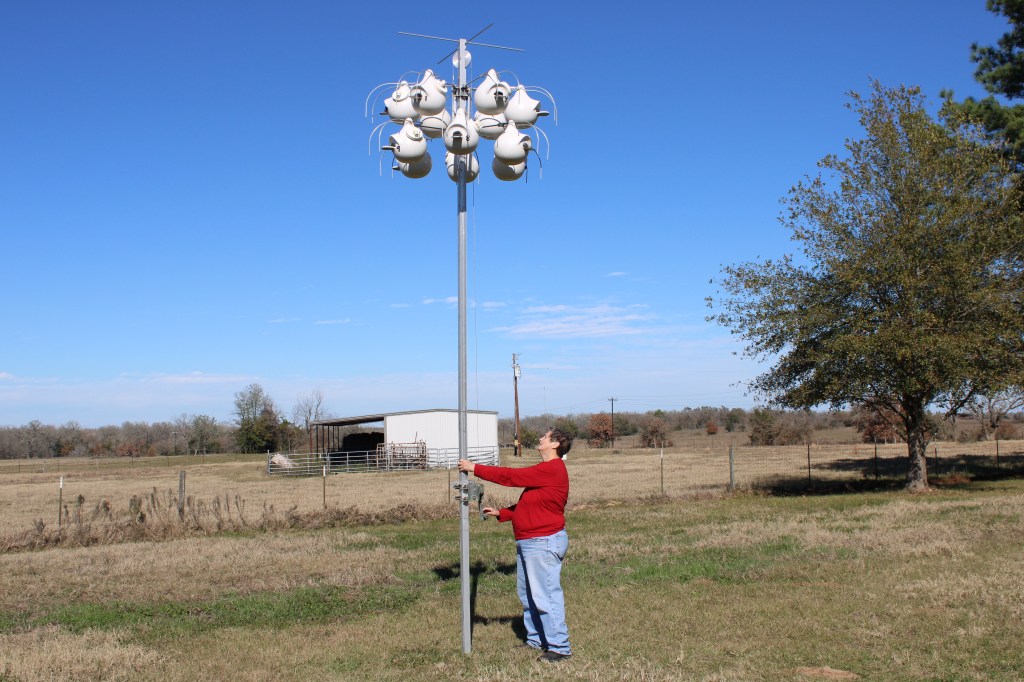
So, I had help putting up my gourd rack, and all I will need to do is add the pine-needles in a few weeks.
I have both a Gourd house and an apartment house. I have noticed here at our site, the gourds are the most favored.
Also, it is best to add new housing, or make changes before the Martins arrive. They don’t like change.
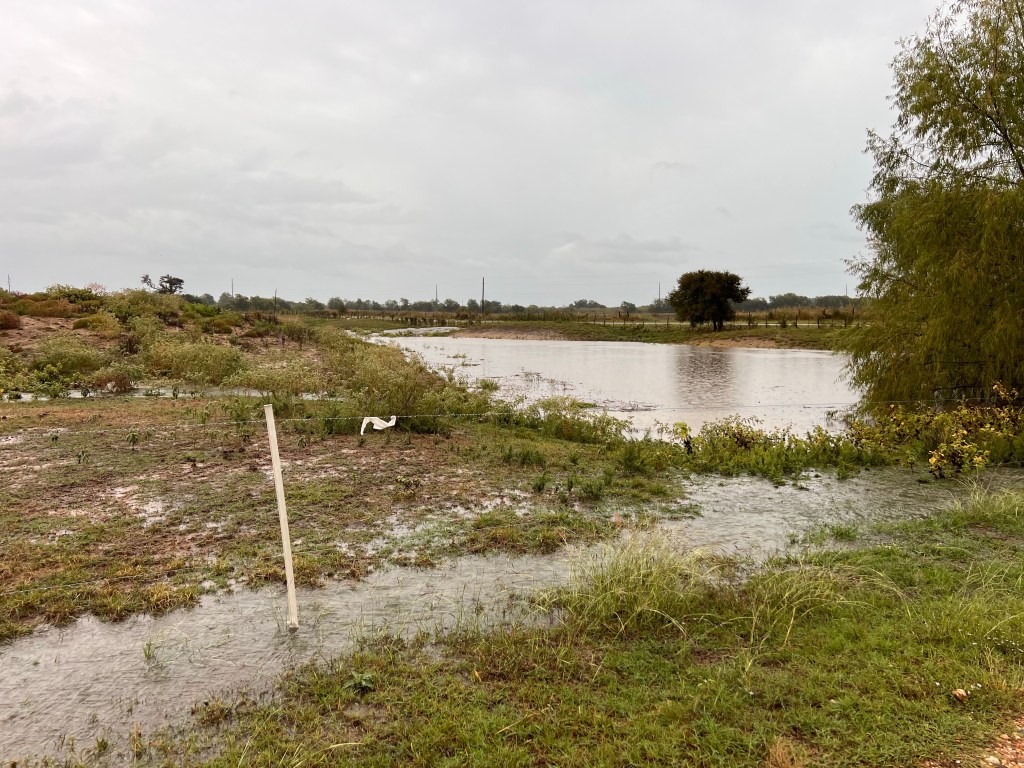
Usually, I’m the one editing and uploading blog posts for other people, but today I have time to write my own post for this blog. If you live in Milam County, Texas, there’s a very good chance you’ve had some rain over the past few days, very welcome rain, in fact, even if some of us got a lot very quickly.
It’s been wet.
Where I live, at the Hermits’ Rest Ranch in northwest Milam County, we got close to six inches of rain. That’s how it goes here these days, months of drought followed by a big flood. I was expecting it.
Our spring is now springing anew.
It’s also autumn, and since I’m not one of those people Donna wrote about yesterday who think there’s nothing going on in nature this time of year, I thought the days after a big rain would be the perfect time to see what’s blooming or seeding, who’s flying around, and who’s up and about after a rain. Since one of my hobbies is documenting what flora and fauna are around at different times of year on this property, I knew it would be a good idea to document what’s here on iNaturalist (you don’t get Master Naturalist hours for work on your own property, but I’m fine with that, since this is my own research).
That’s an overfull tank!
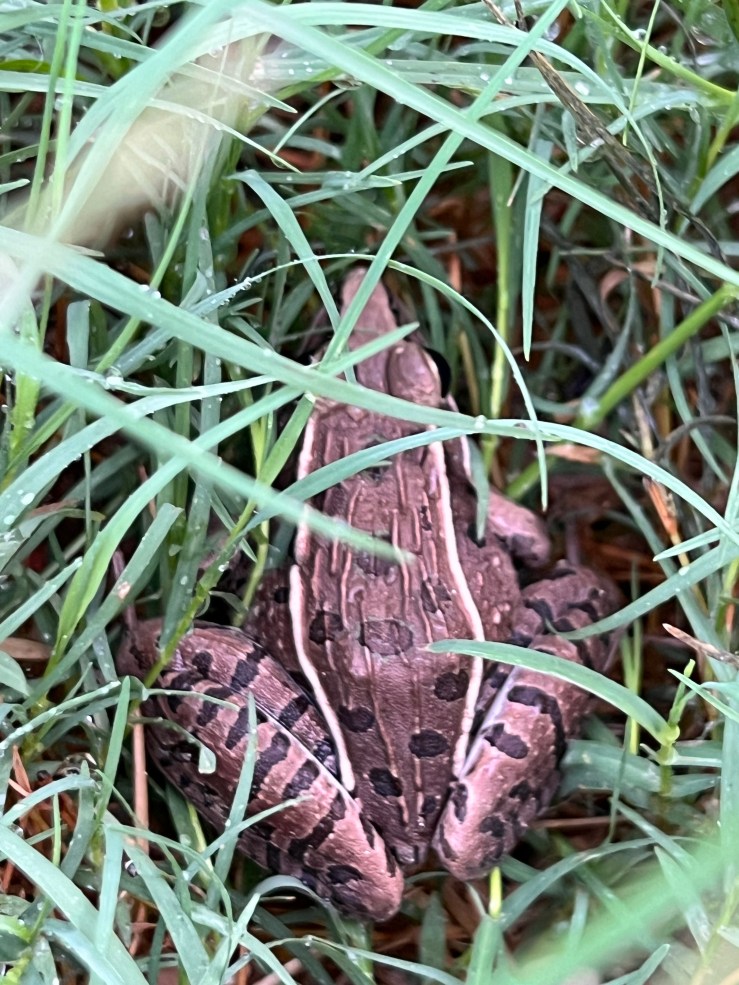
As the title of this post hints, I found most of my interesting sightings on the ground. Looking down will quickly dissuade you of any notion that nothing’s blooming, growing, and reproducing this time of year. The very first thing I found on the ground was my favorite: this gorgeous leopard frog. I didn’t get a side view, so I can’t tell if it’s a Rio Grande one or a regular one, but it’s pretty.
It’s a big one, too.
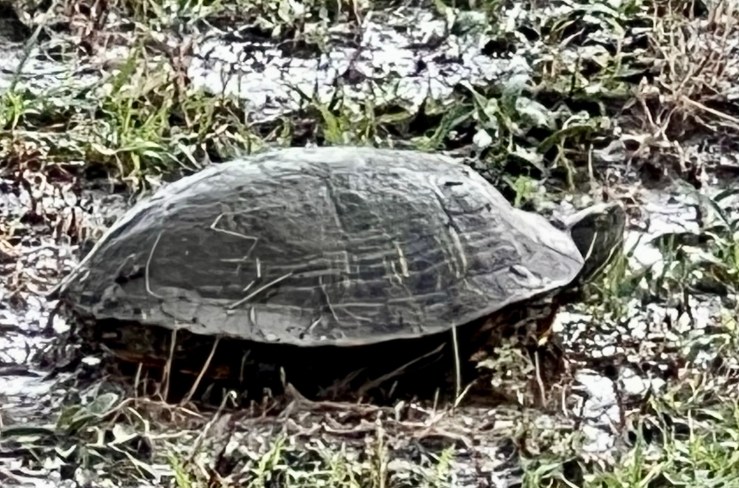
As I walked down to my front pond, I saw another resident out of its usual watery location, this pond slider, who must have been going from the back pond to the front. There are so many of these in there, and I bet the flooding moved them around a bit.
Trachemys scripta
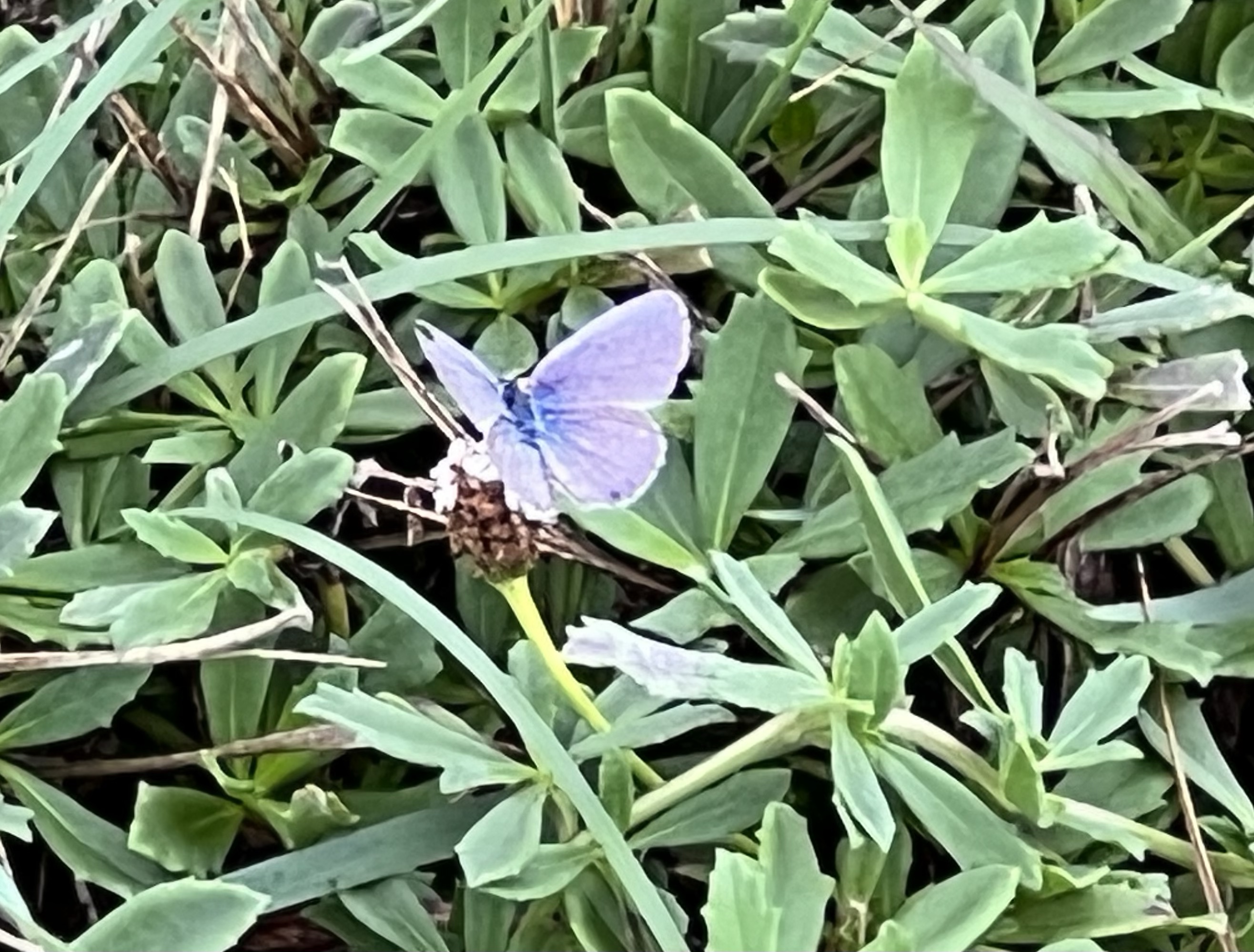
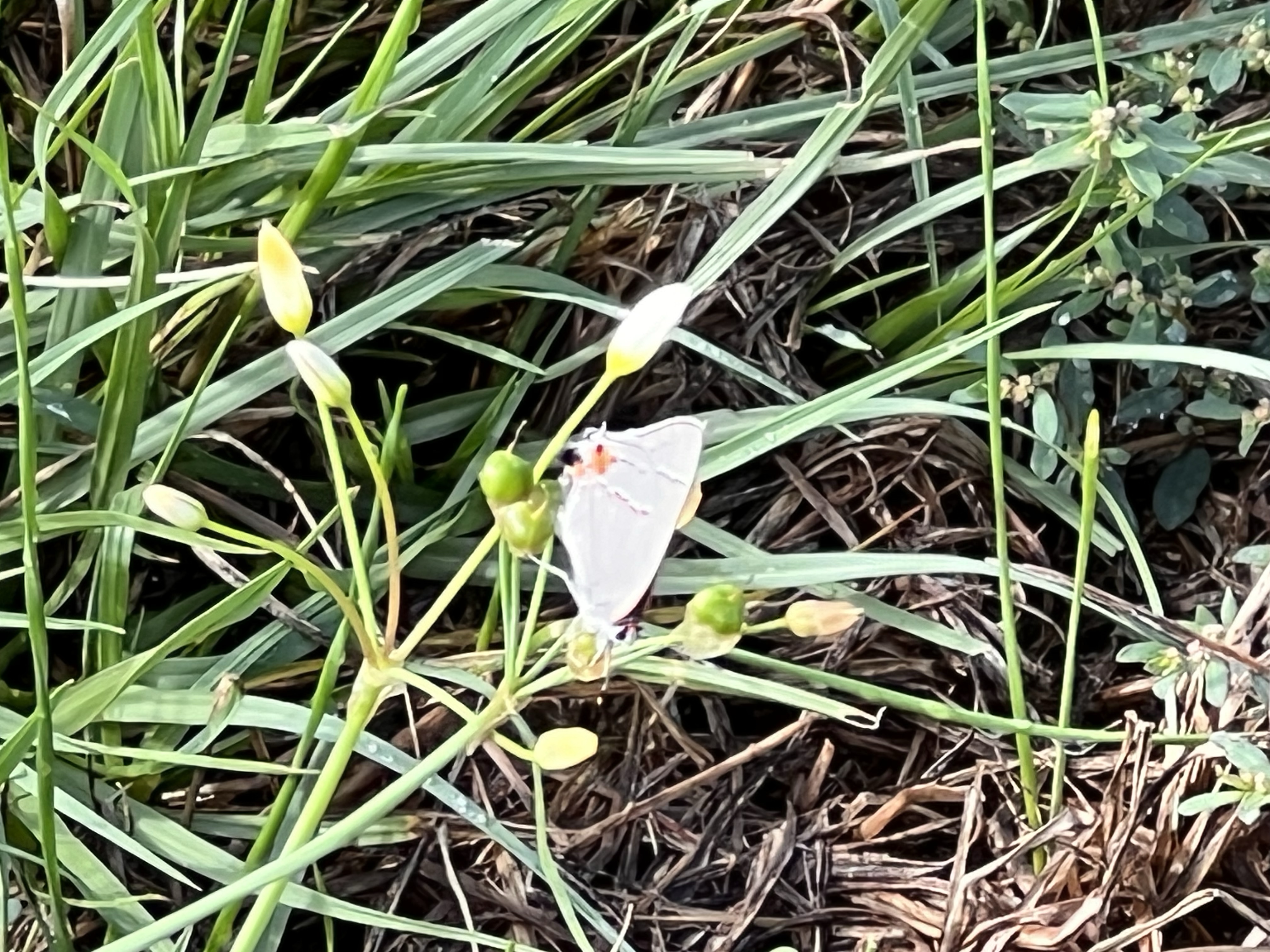
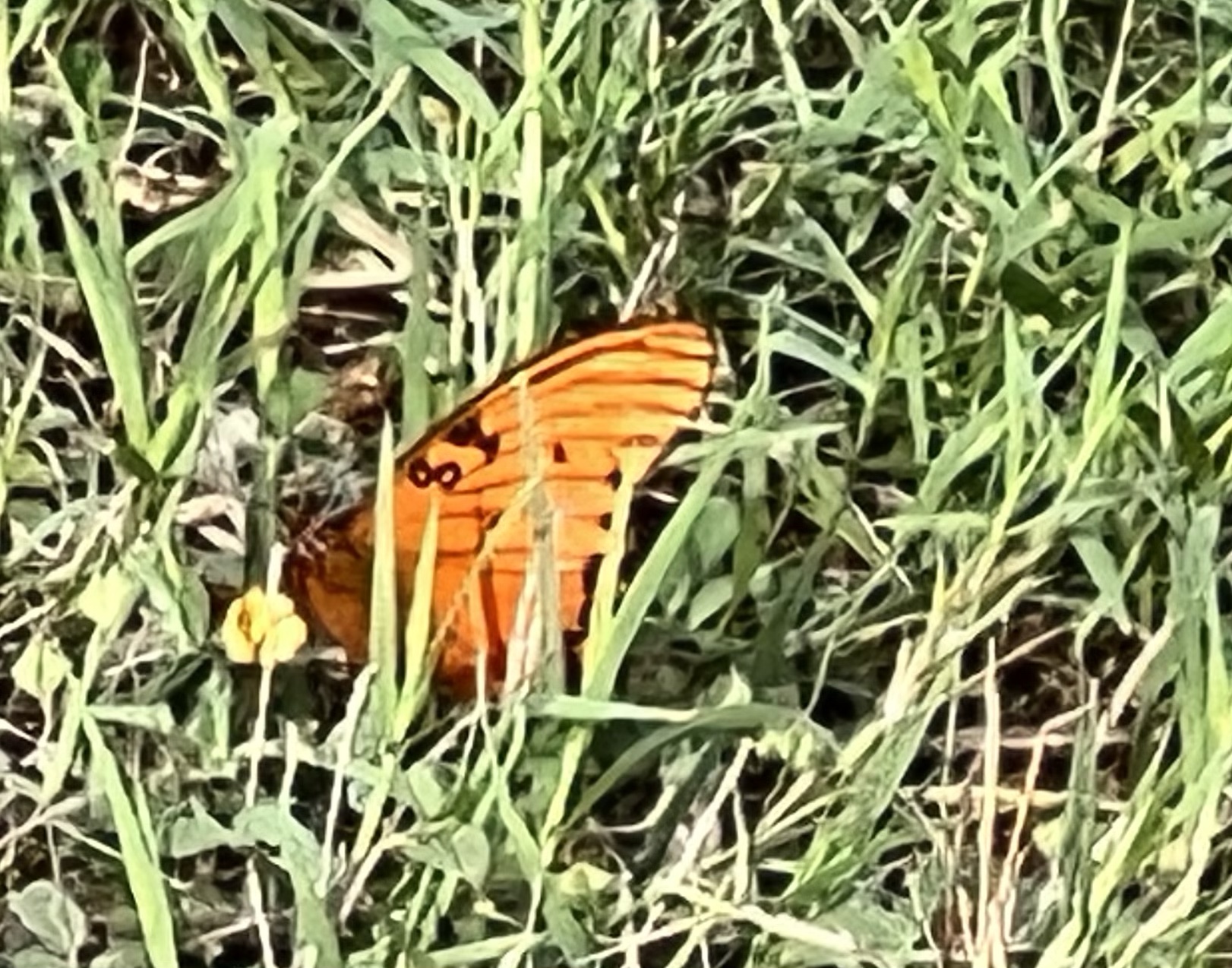
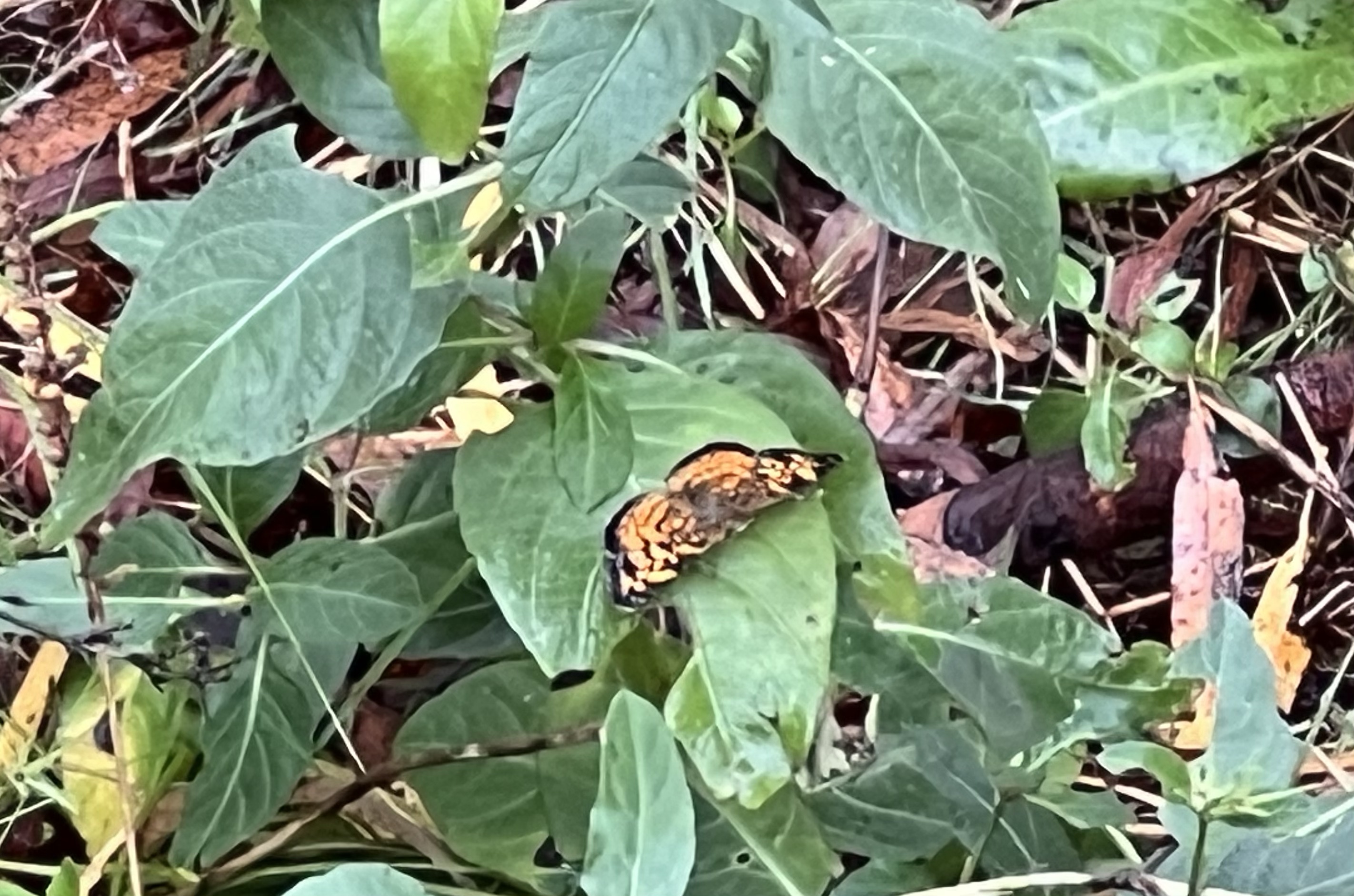
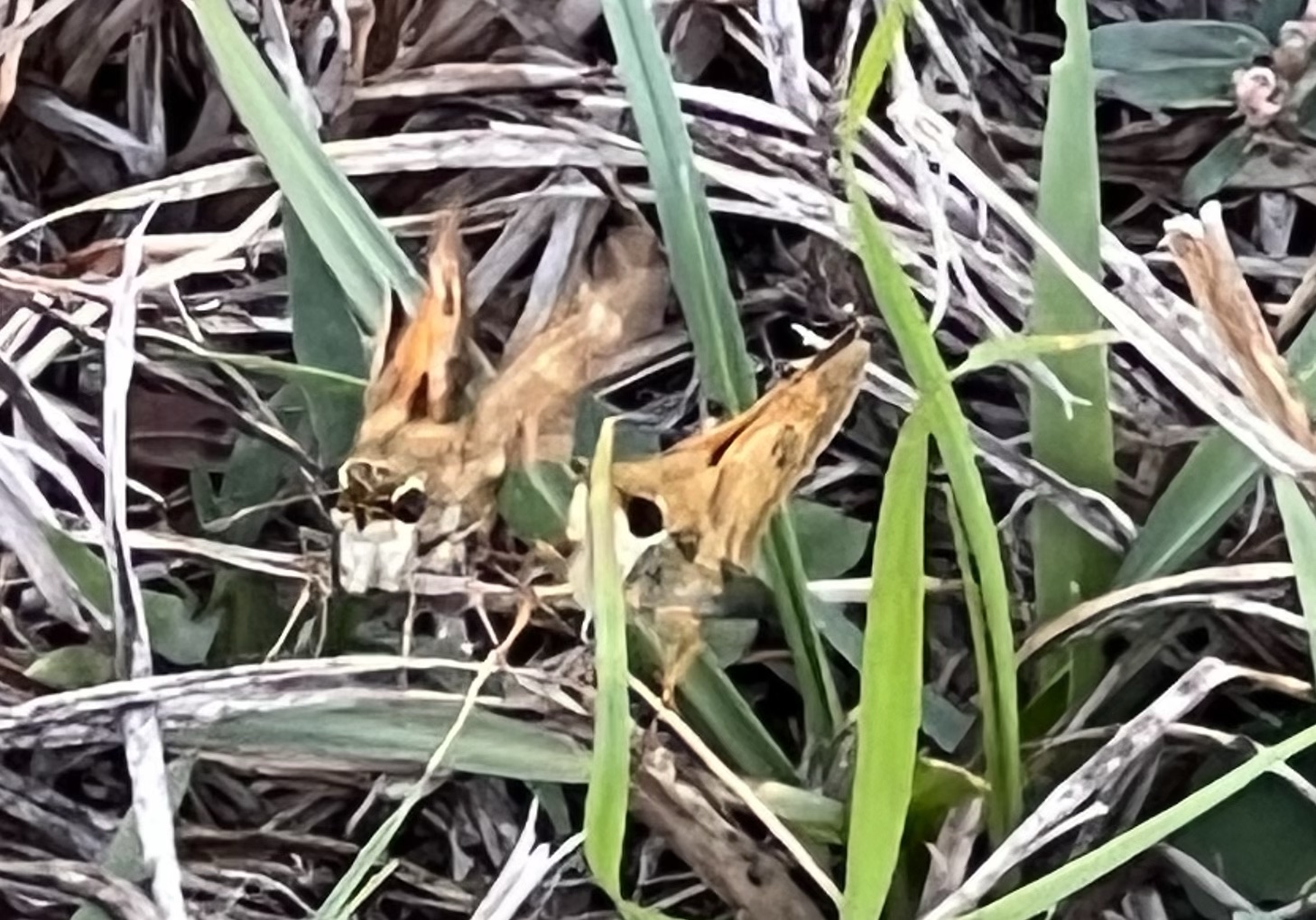
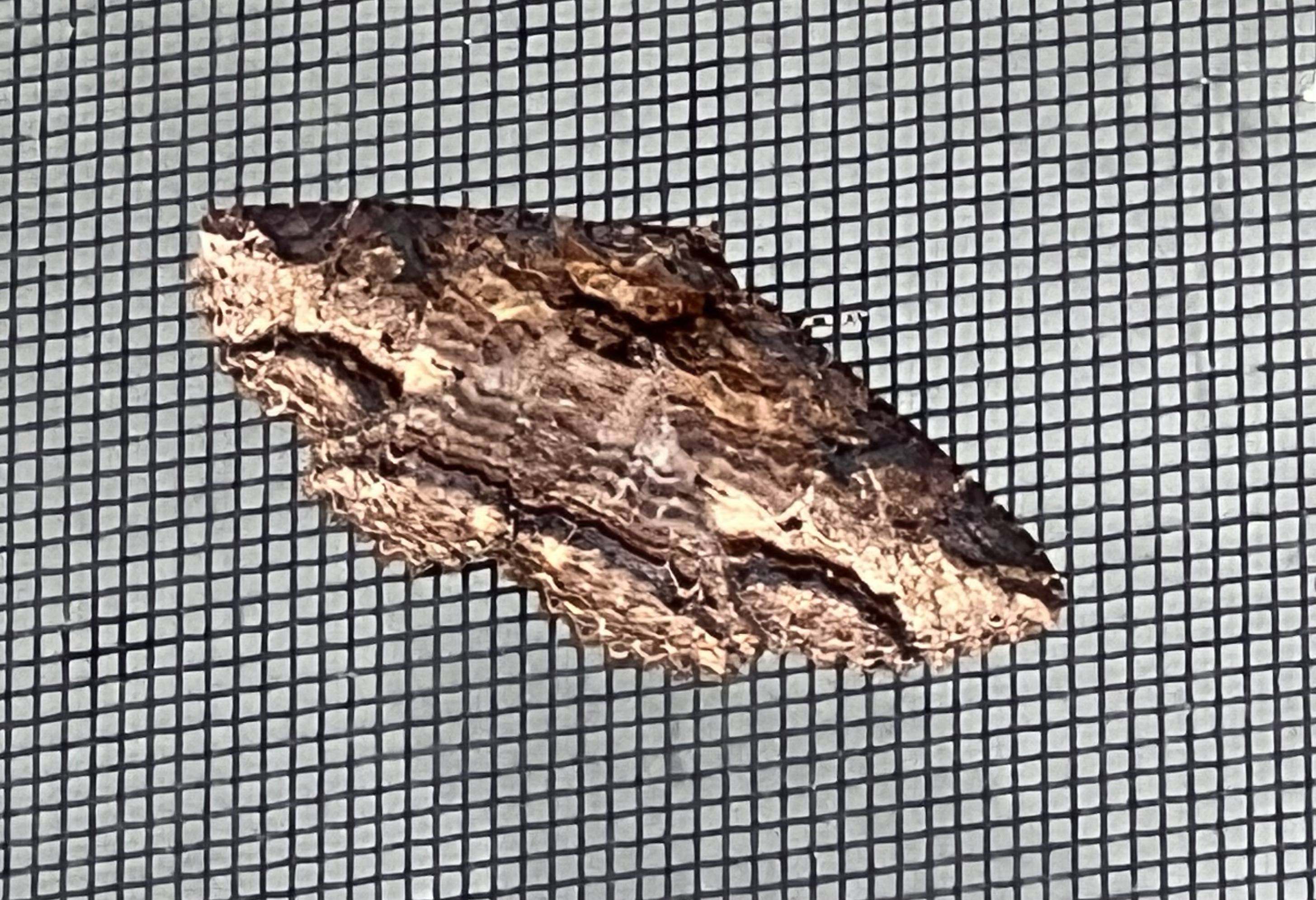
Once the sun came out, so did the butterflies and moths. I’m transfixed by the Ceraunus blues (Hemiargus ceraunus) and was really pleased to find them drying off their wings so I could see the blue part when they were sitting still, for once. But I also enjoyed the many sulphurs (not pictured, as they are blurry), Gulf fritillaries (Dione vanillae) and pearl crescents (Phyciodes tharos). There were also monarchs, who refused to pose, and lots of skippers.
Blue wings showingUsual view of ceraunus blueGulf fritillaryPearl crescentSorry they are blurry. Pretty sure they’re fiery skipperes.Lunate zale moth (Zale lunata)
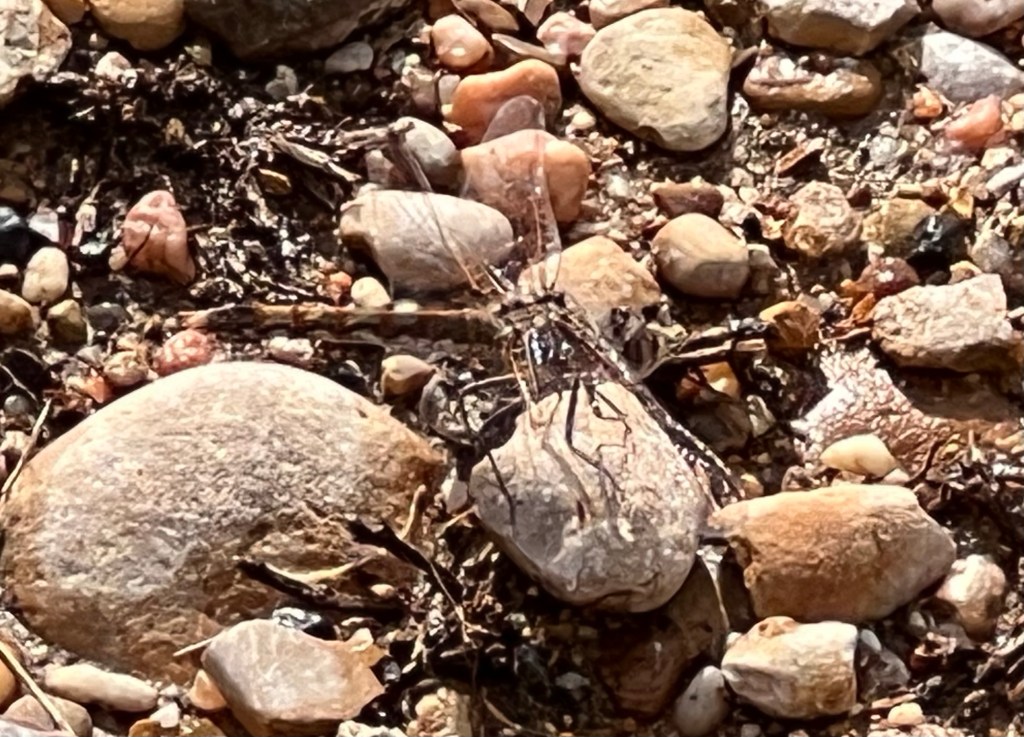
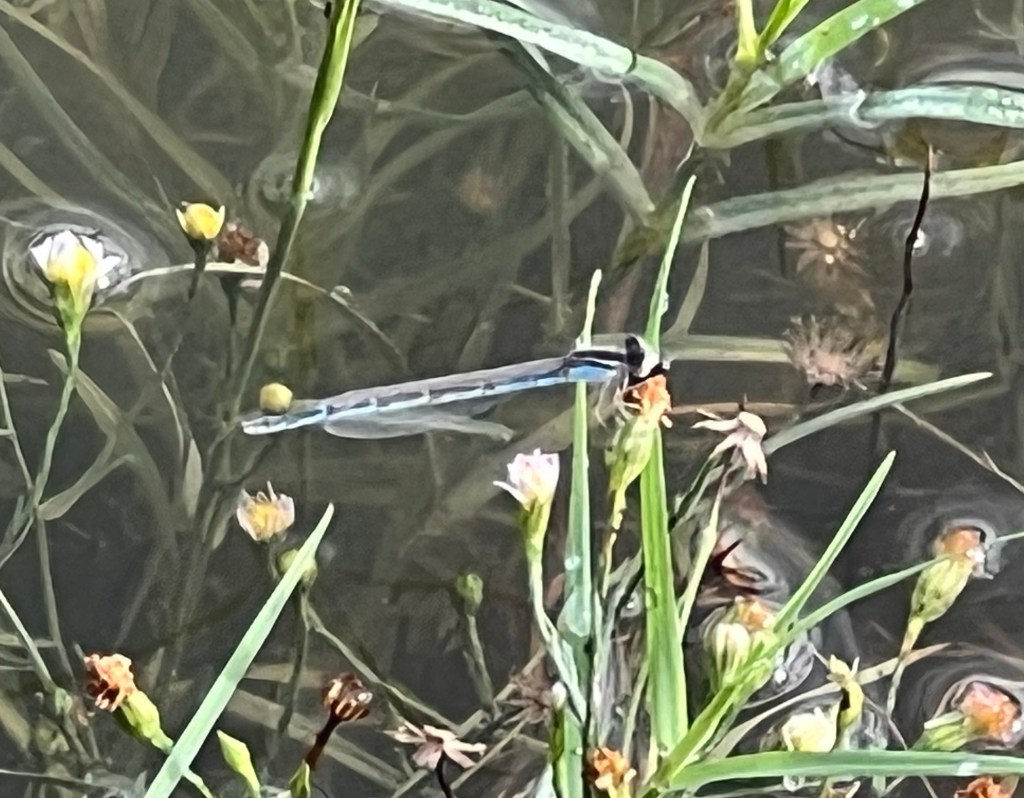
Speaking of flying insects, there are also dozens of dragonflies and damselflies out scarfing up meals. Saddlebags, pond hawks, pink ones, and red ones all flitted by me. But these are the two that sat still briefly.
Variegated meadowhawk (Sympetrum corruptum), who blends with rocksThe common familiar bluet (Enallagma civile)
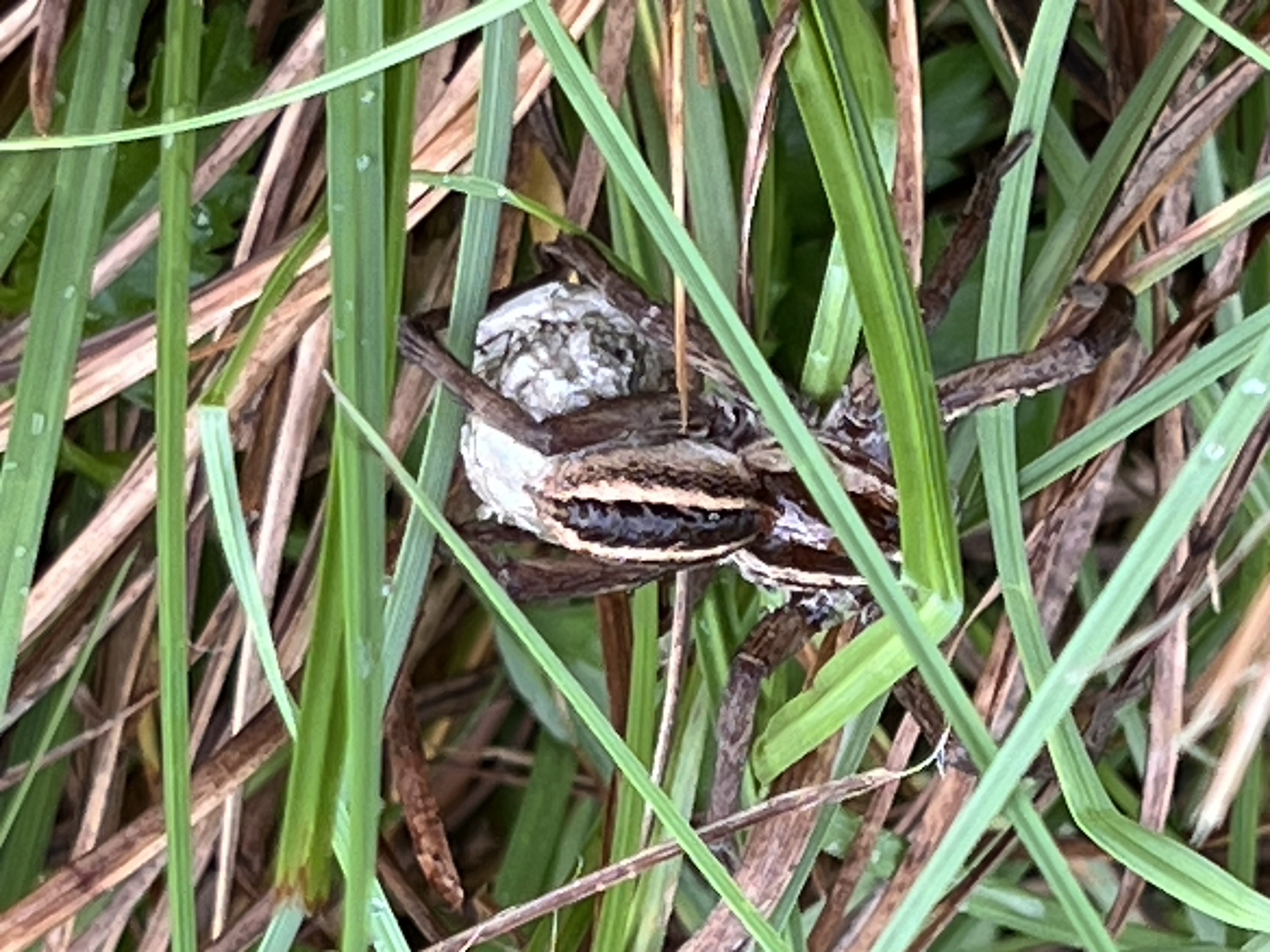
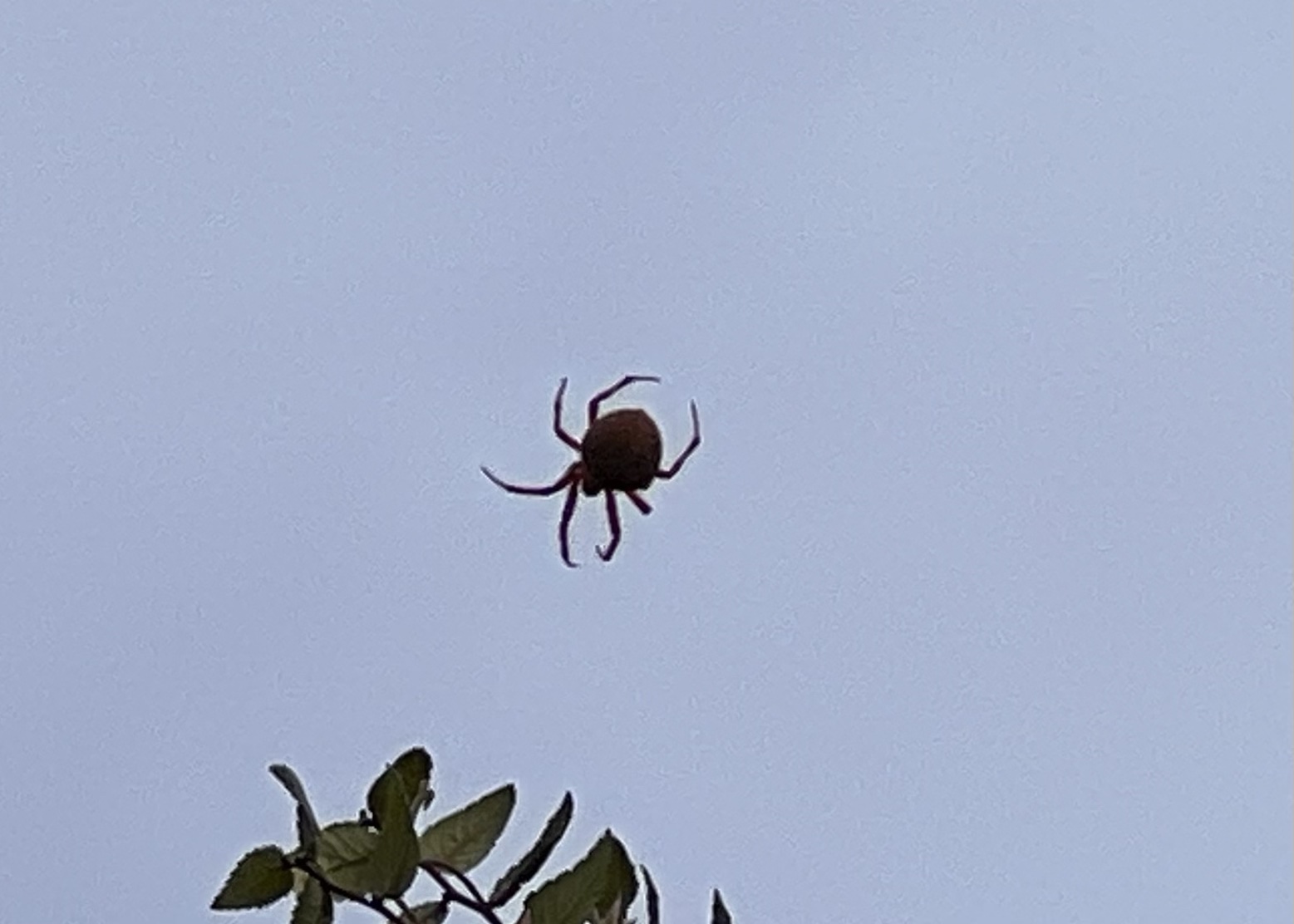
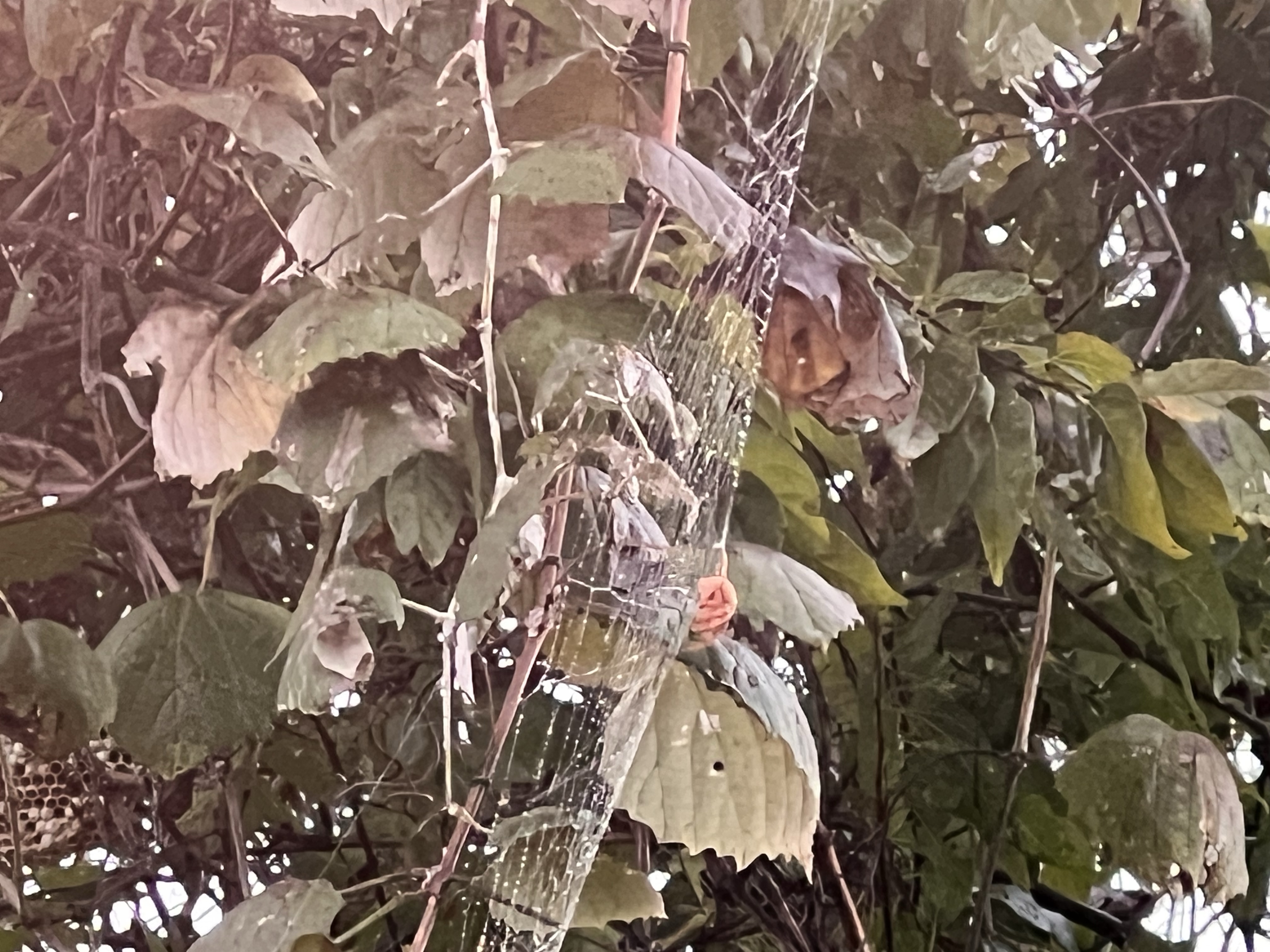
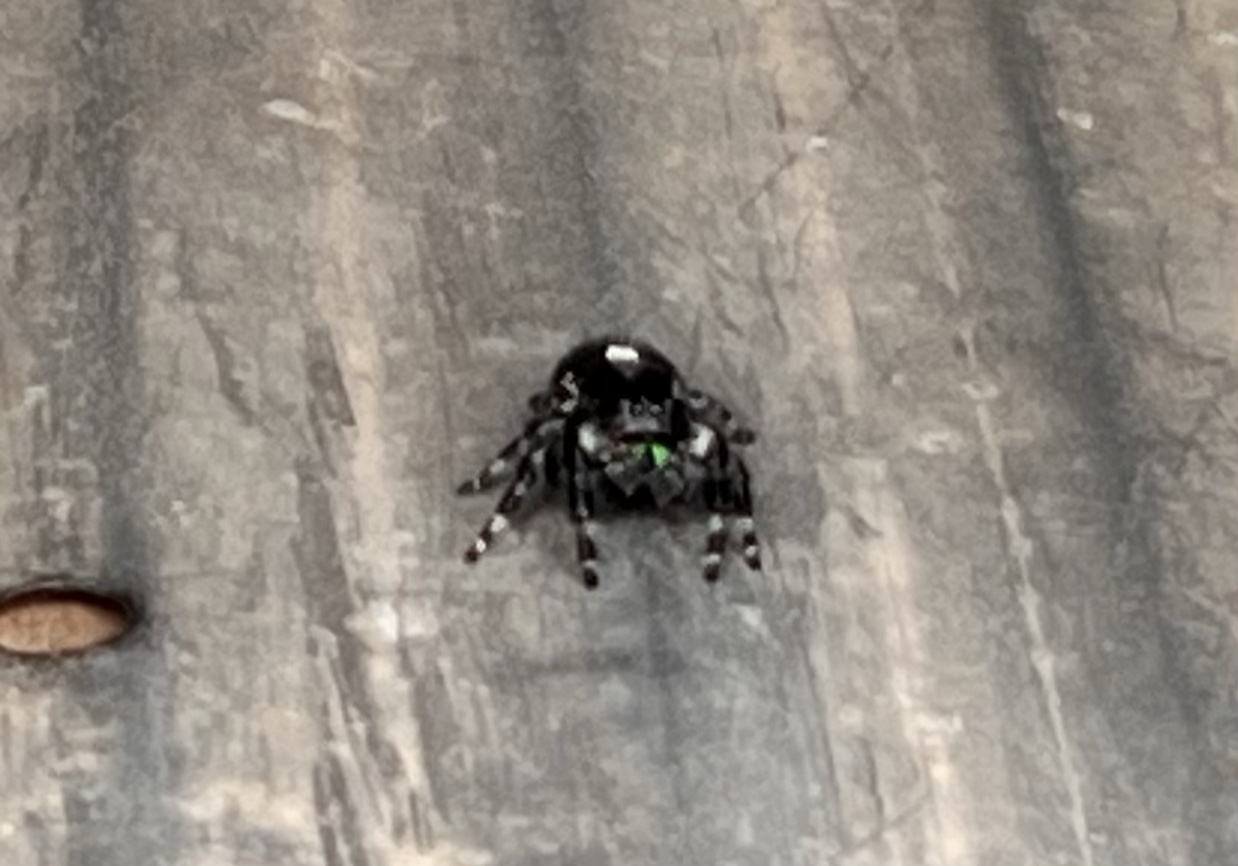
And for our pal Eric, I documented some spiders, including a rabid wolf spider mama and my bold jumping spider buddy who lives in my mailbox. There are also many orb weavers out, including these orange ones that may be spotted orb weavers, but I can’t get close enough to get a good photo.
Rabidosa rabida and egg sacOrb weaver in the airThat’s an orb weaver web, all rightHey, Suna, would you get the ants out of your mailbox?
Not a great photo of a pipit.
Of course, this is a great time of year for birds, and this is one time when it’s just fine to look up. After all, birds can be found in the water, on the ground, in the bushes, in trees, on poles, and in the air. I’ve been having a blast with the Merlin Bird ID app on my phone, which has helped me a lot with figuring out all the different sparrows and sparrow-esque birds out in our fields. I say “sparrow-esque,” because just this week I realized one confusing sparrow was, in fact, a pipit. (The link goes to my personal blog post about the birds.) Once Merlin identified it and told me what to look for, I could easily identify it from both sight and sound (and a lovely sound it is).
The list of actual sparrows I have seen and heard includes way more than the annoying house sparrows that have invaded from Europe! Here’s a list:
Clay-colored sparrow
Harris’s sparrow (seen in the winter, not now)
Lark sparrow (bigger ones)
Savannah sparrow
Swamp sparrow
Vesper sparrow
These are probably phoebes, but may be kingbirds. Darn that phone camera.
That’s a lot of sparrows. Added to that are the two kinds of wrens and the amazing meadowlarks (I could listen to those guys all day), and there is a lot of brown to go around. I almost forgot the killdeer. You can’t really forget them, because they never shut up. Between the killdeer and the crows, it can be hard for poor Merlin to hear the more delicate bird calls. The crows have much to tell each other, though I do enjoy all their different kinds of calls and other vocalizations.
Also quite vocal are the loggerhead shrikes and the phoebes. You can’t miss them. Plus, the shrike leaves tell-tale evidence.
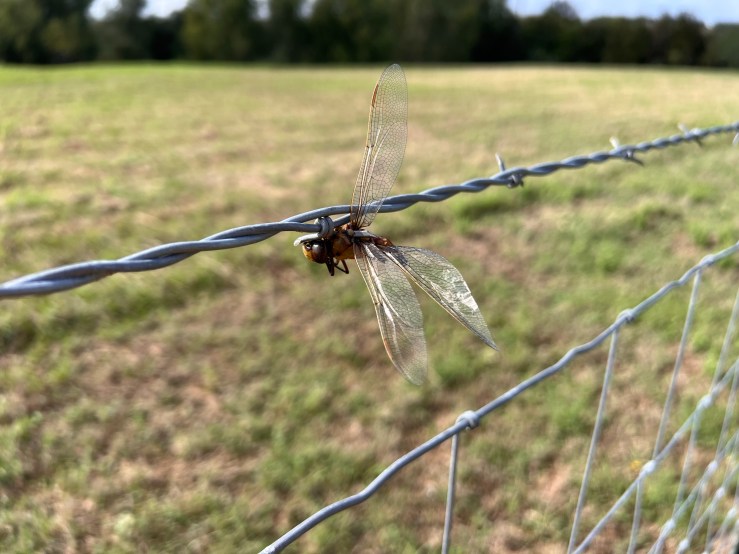
A dragonfly captured and impaled by a loggerhead shrike.
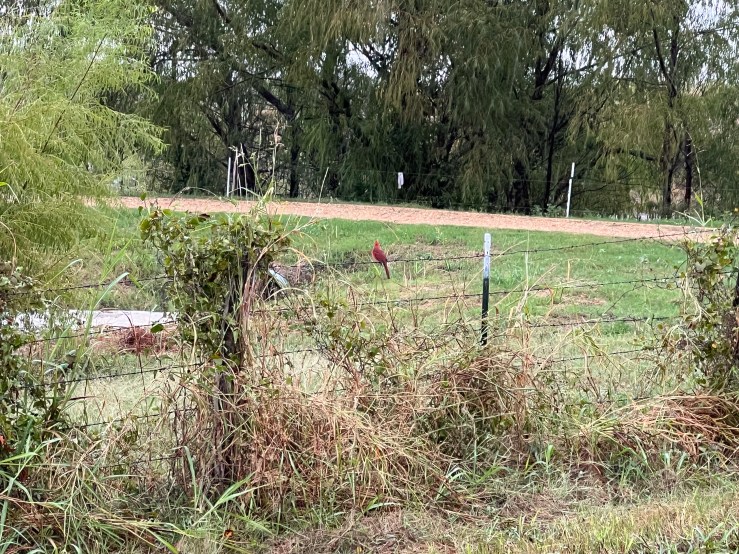
You’d think I was done with the birds, but no way. We have large flocks of cardinals here, many warblers (this week the yellow-rumped are around), starlings, grackles, and three kinds of woodpecker (downy, red-bellied, and pileated).
There were two more cardinals on the same fence.
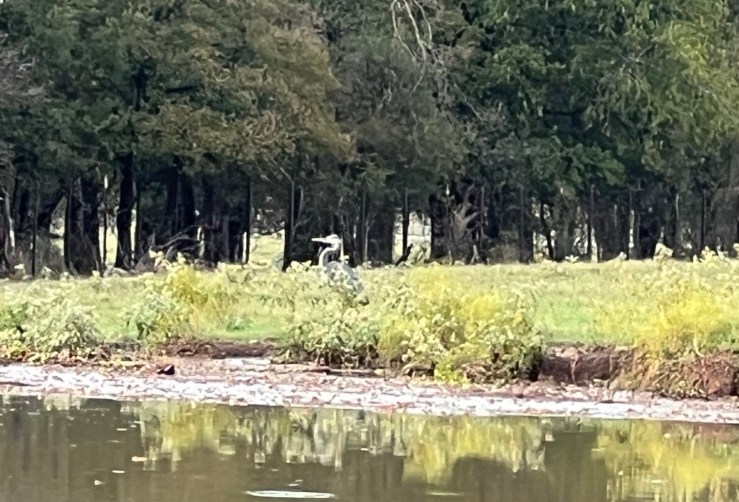
And then there are the water birds. Merlin messed up big time and identified this as a crow. It was right next to me when it croaked, and it sure sounded like a great blue heron to me.
Not a crow.
A seasonal water bird that’s around right now is our belted kingfisher. I do have a photo of it, but it’s a blurry thing with a white neck ring that you know is a kingfisher if you’ve ever seen one. I got to enjoy watching is catch a couple of fish today (and make a lot of kingfisher trills), but there were willow trees between me and the bird, so no photos. Nonetheless, that was a wonderful experience!
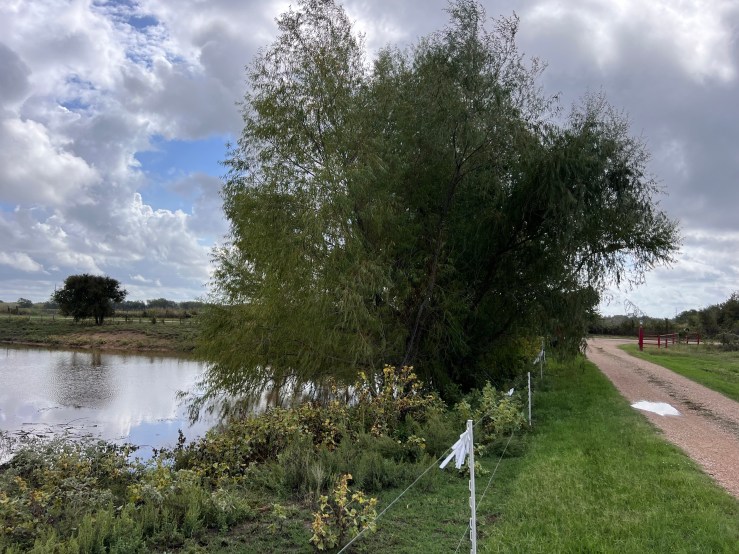
The kingfisher was fishing from these trees.
I’m impressed by how many birds are are still here or migrating through, since many summer residents have moved on. I’d miss the tanagers and buntings more if other beautiful singers hadn’t taken their place. But enough on birds. I’m overly chatty.
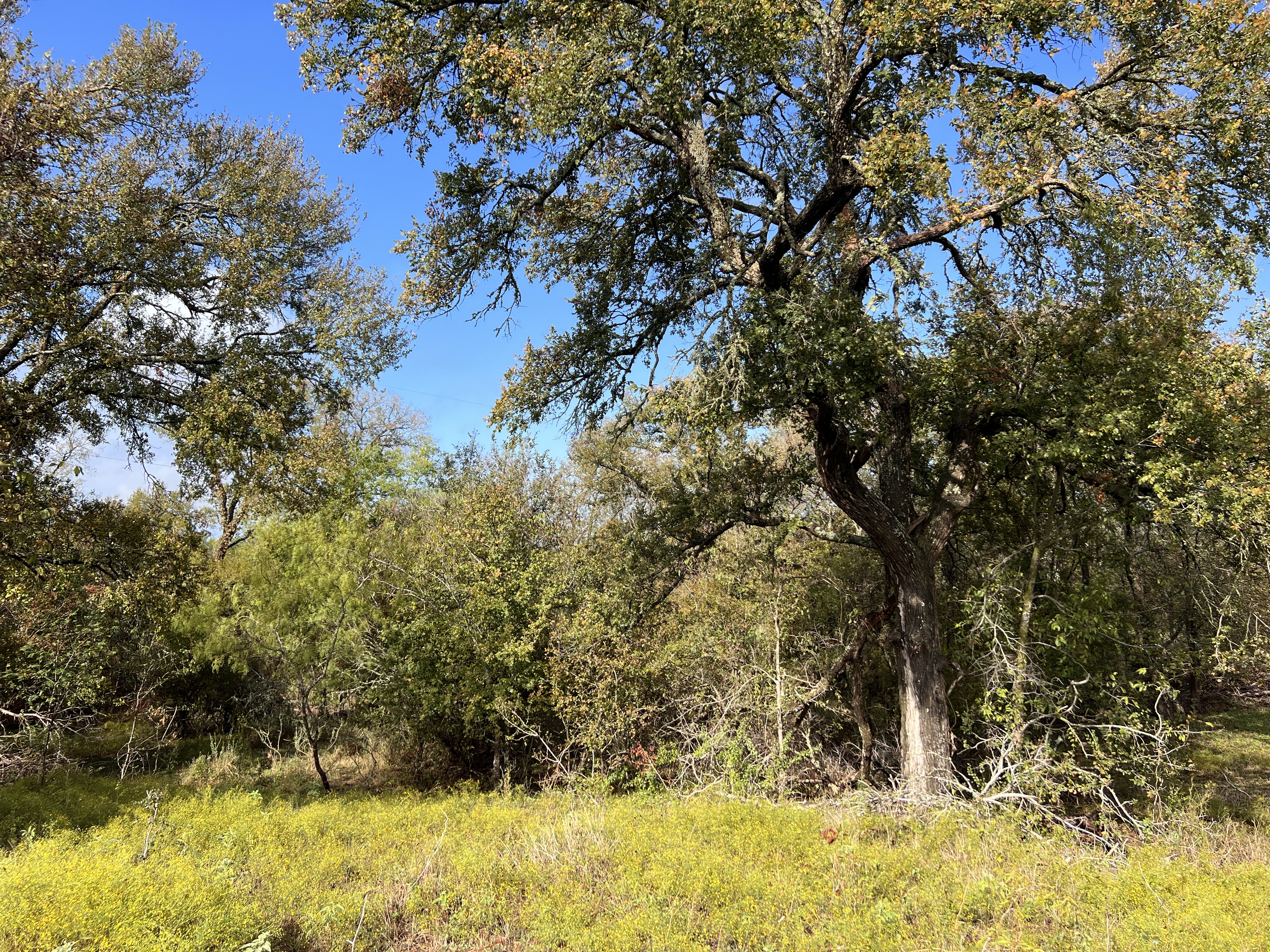
I had originally intended to focus on all the plants that are blooming or making pretty seeds/berries right now on the ranch, but I got distracted by all the other teeming wildlife. Autumn is a great time to look for flowers here, though, so allow me to share a few of the plants I’m enjoying right now. It’s fun to watch groups of flowers fade away while others start up!
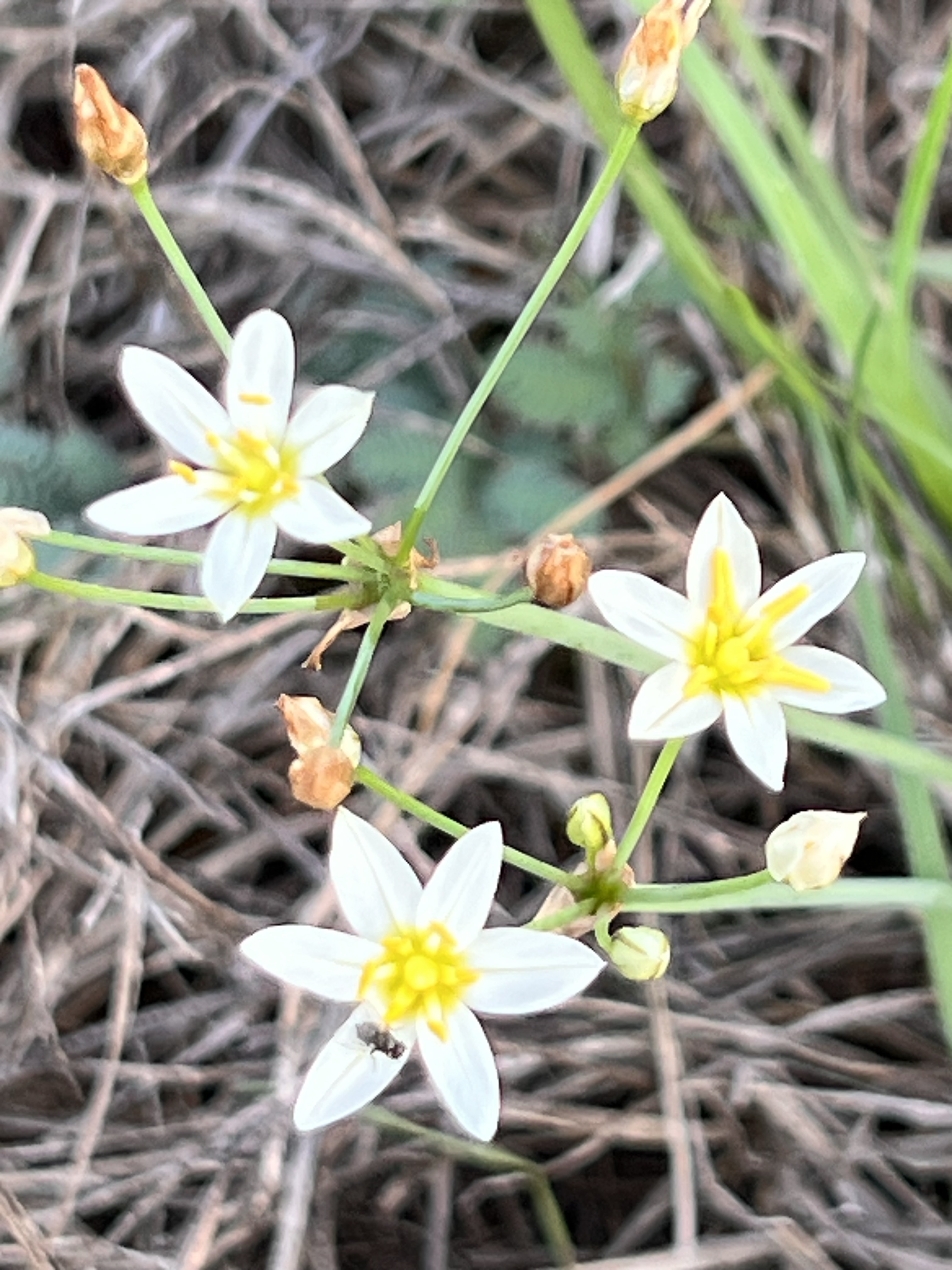
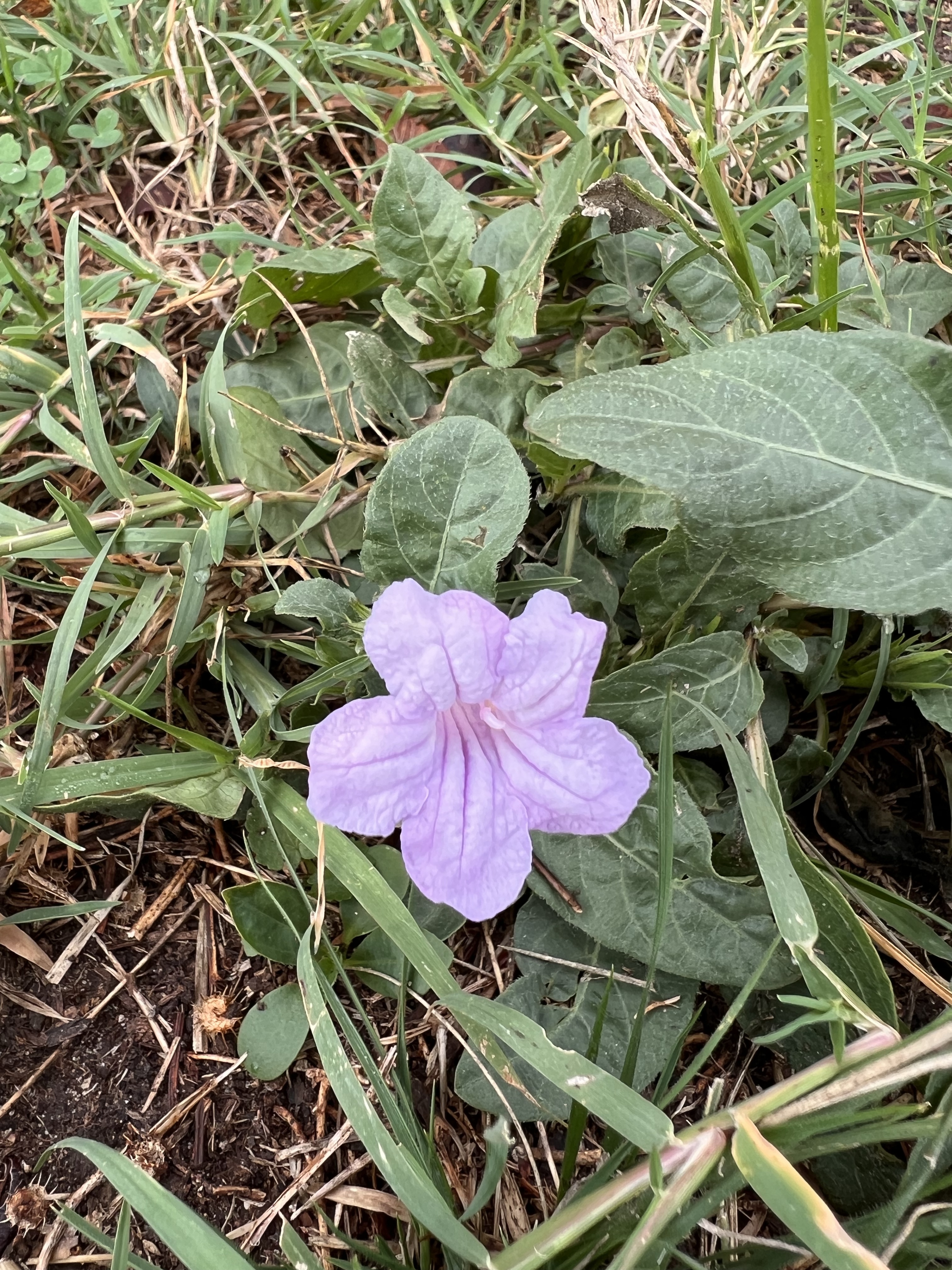
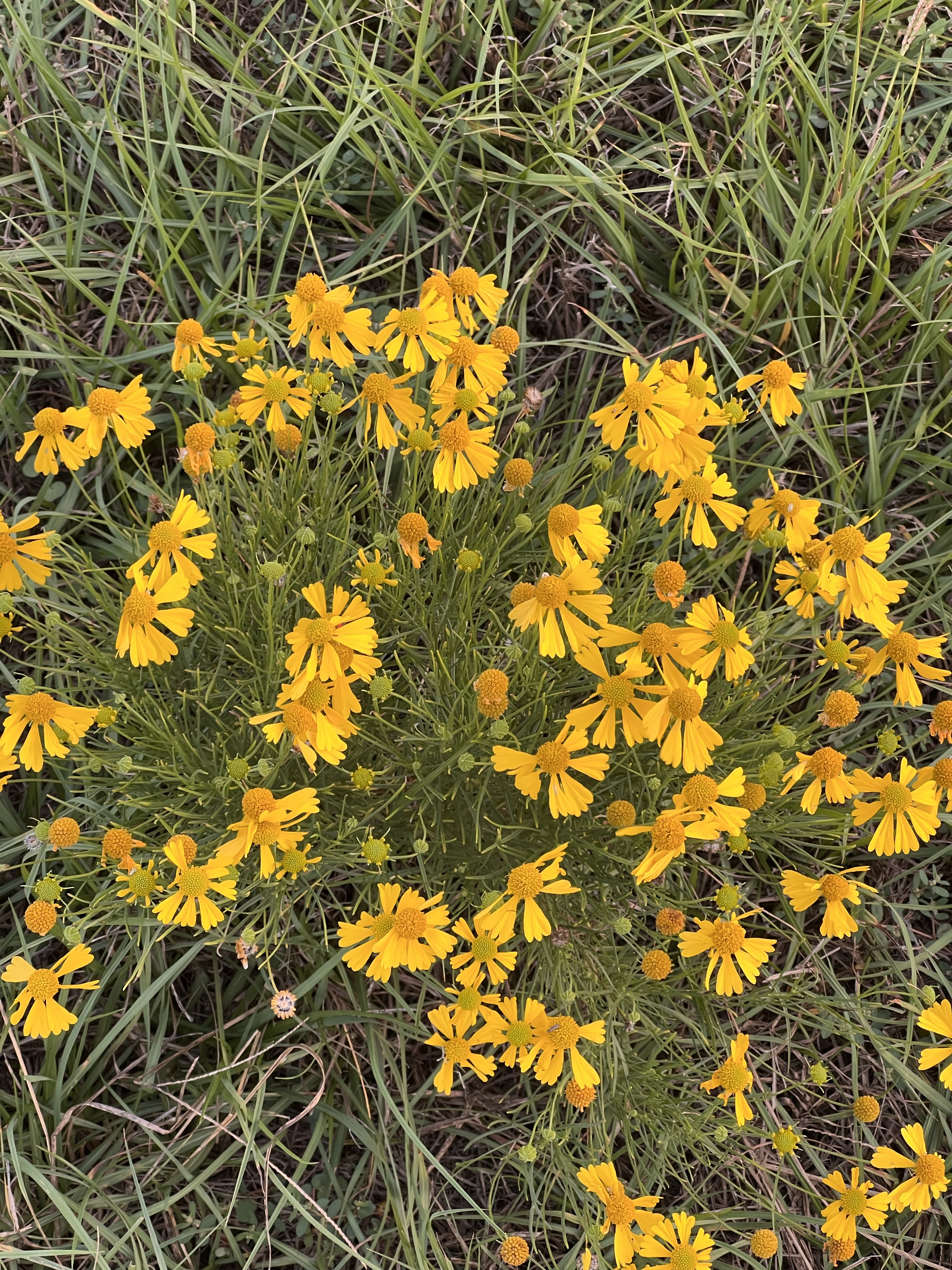
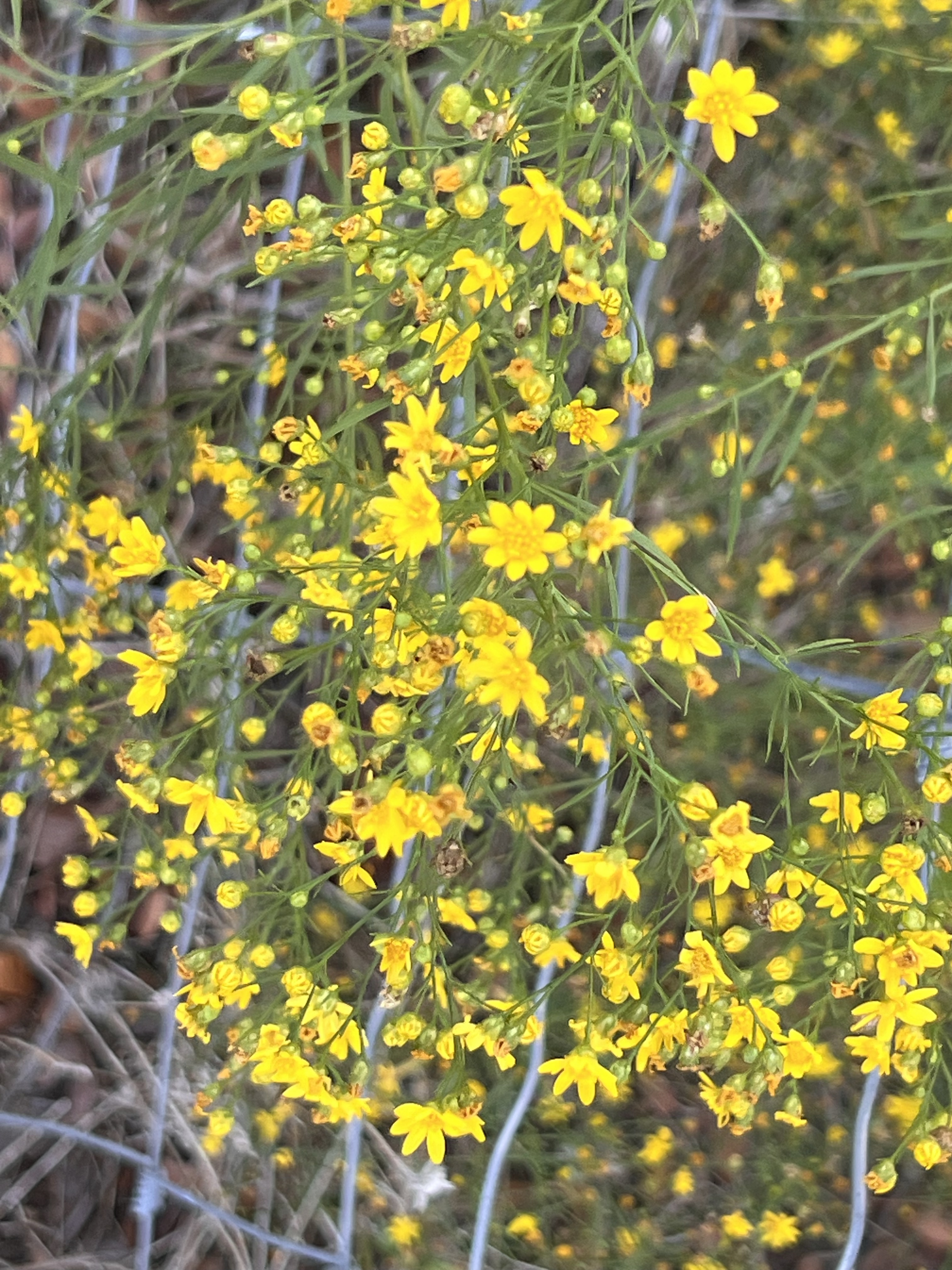
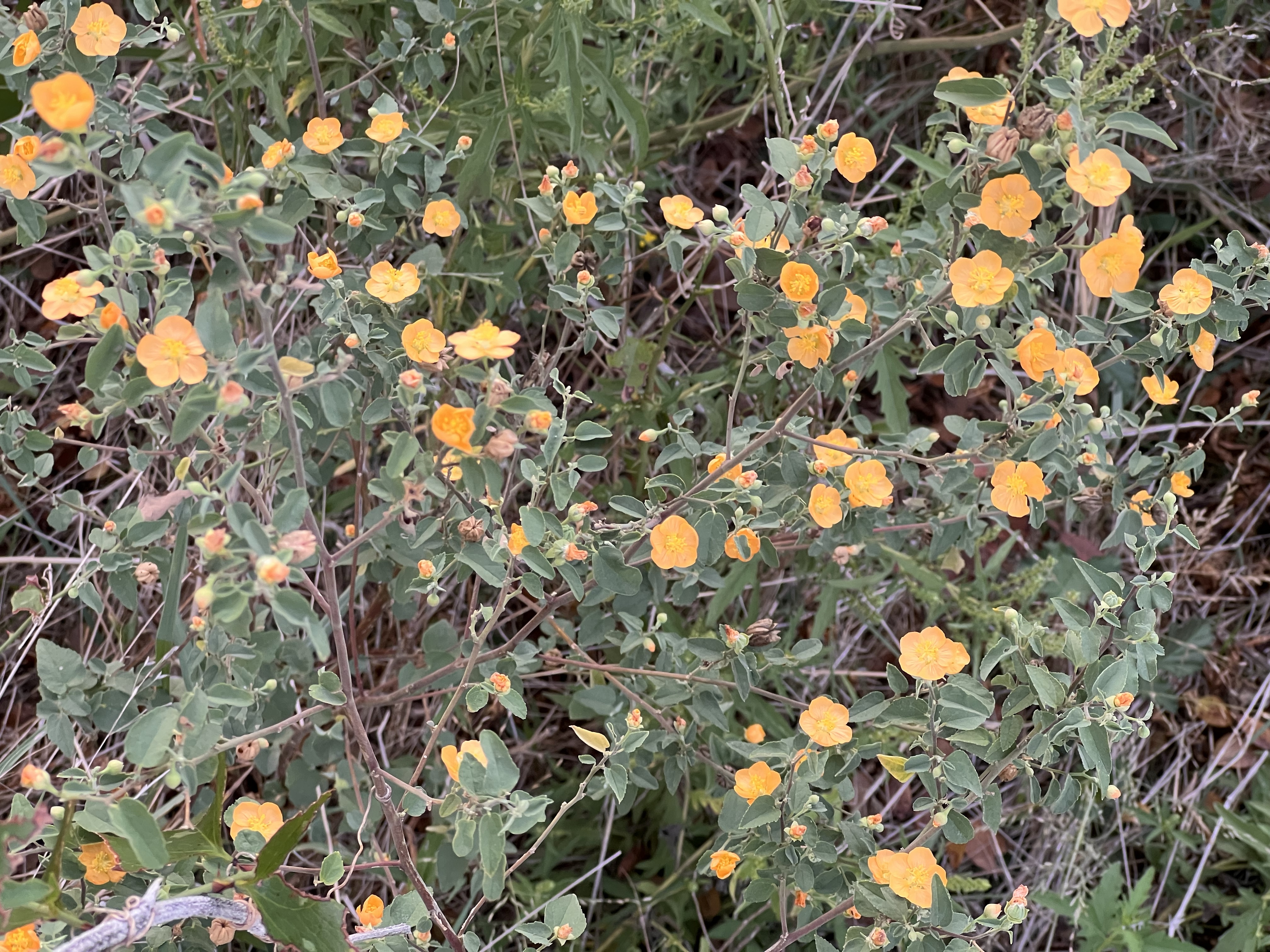
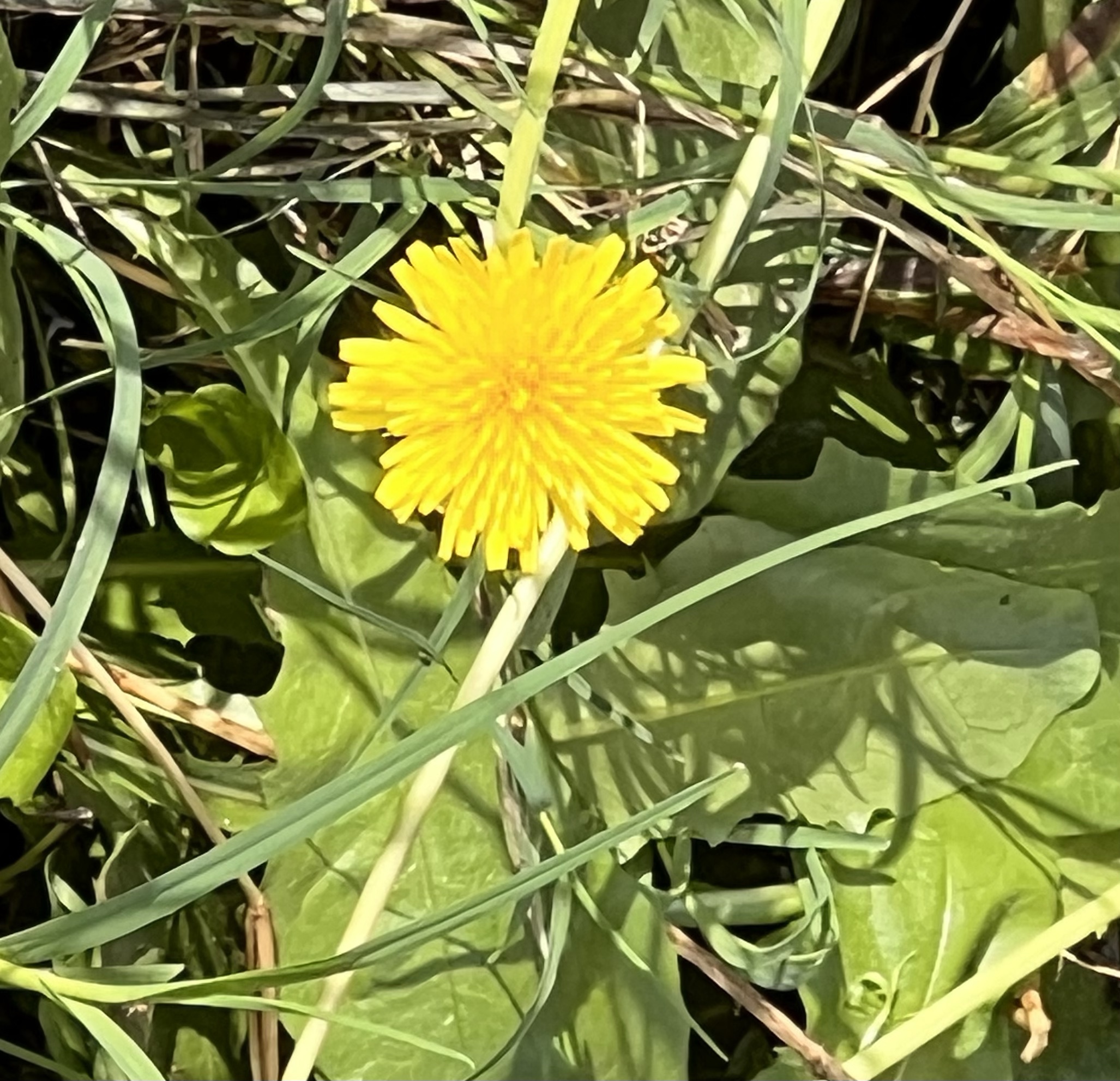
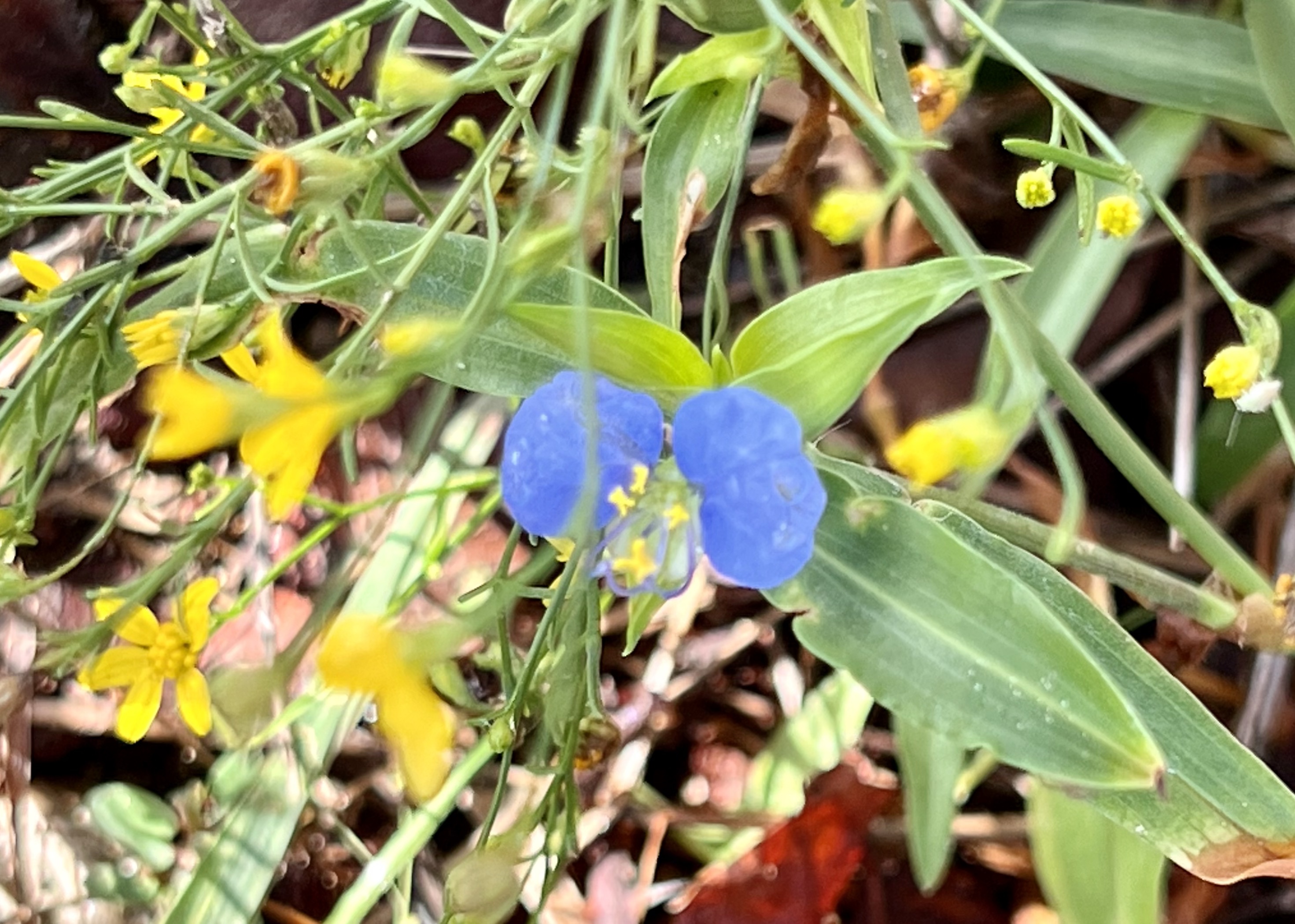
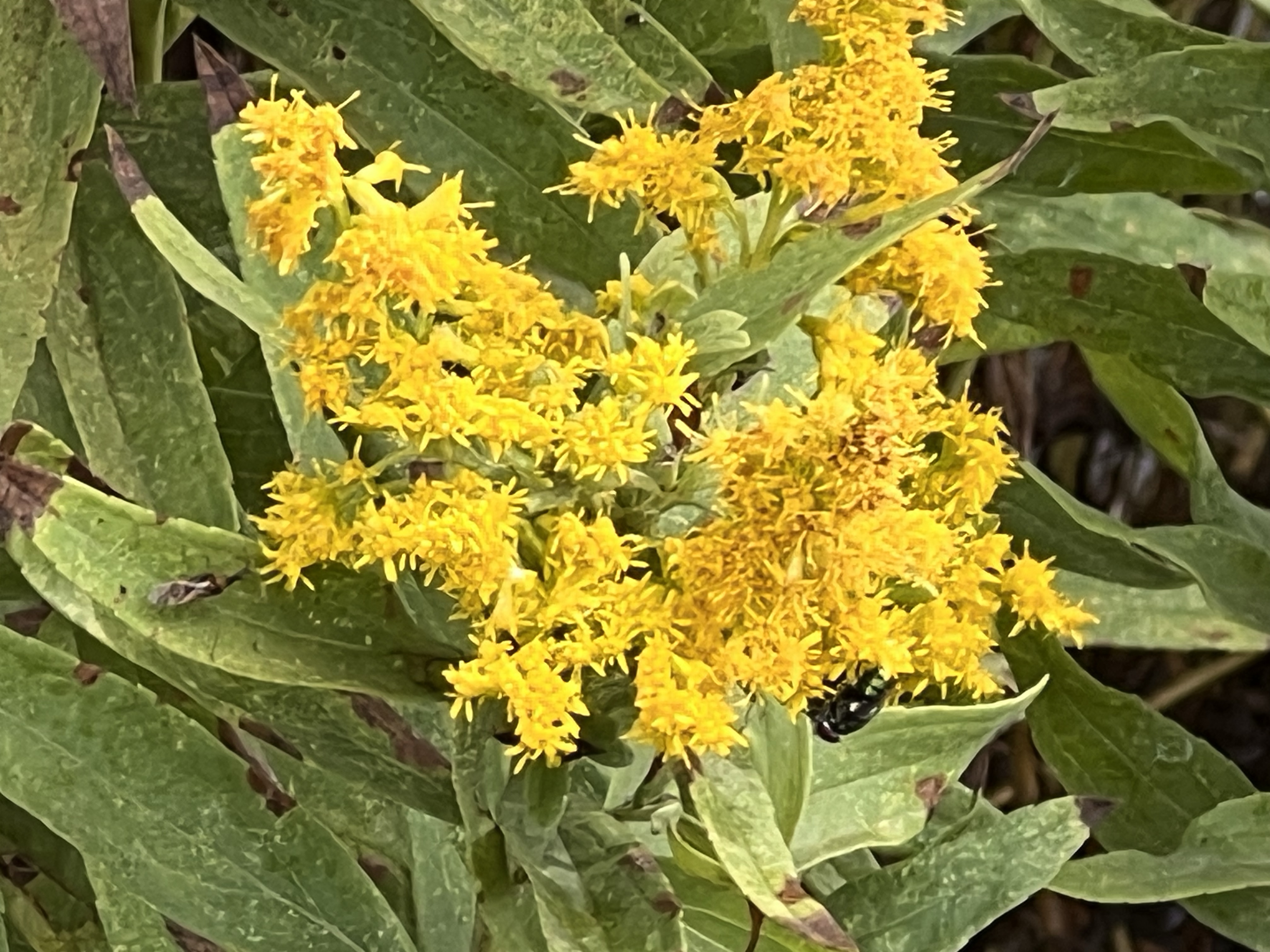
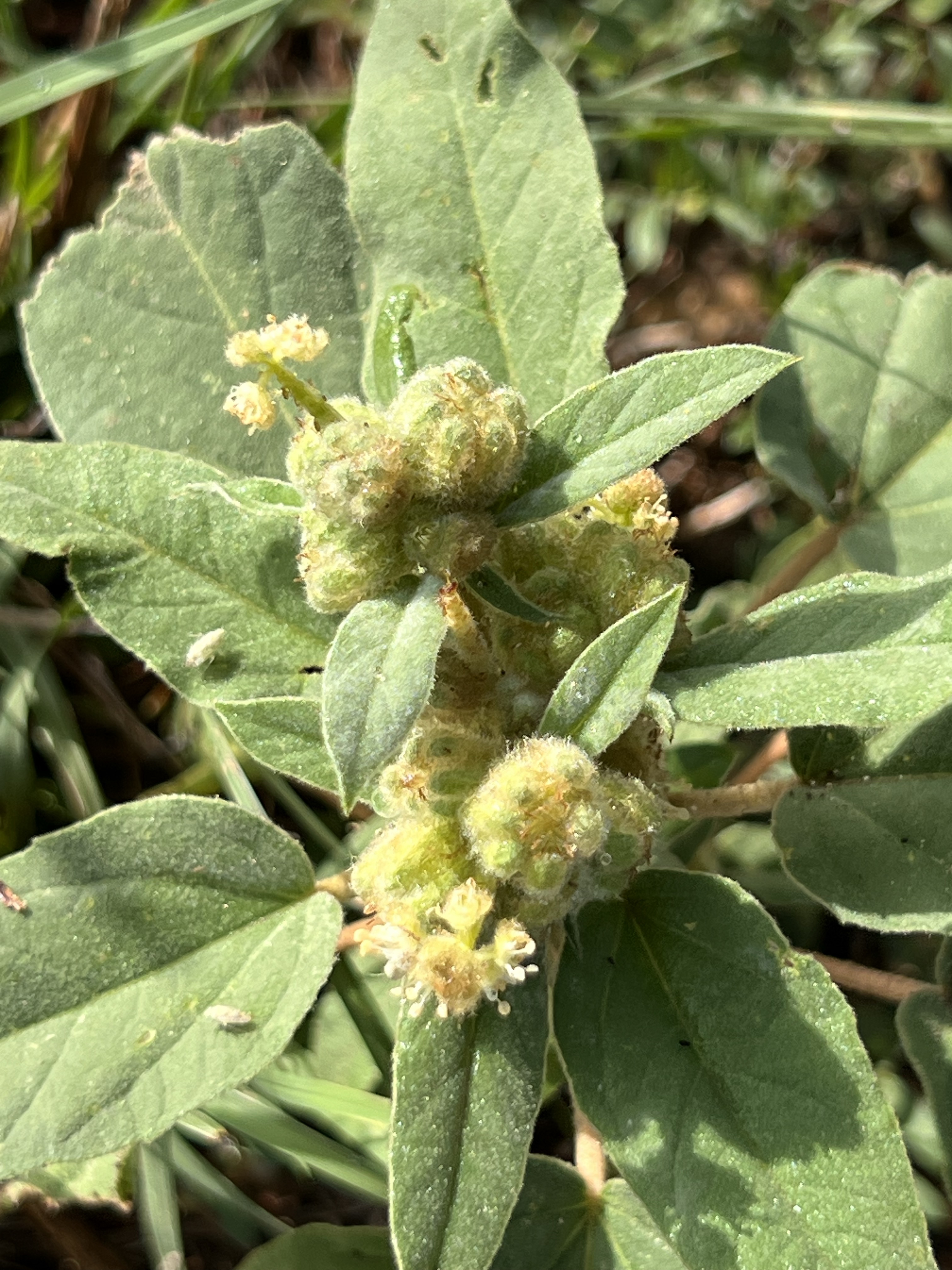
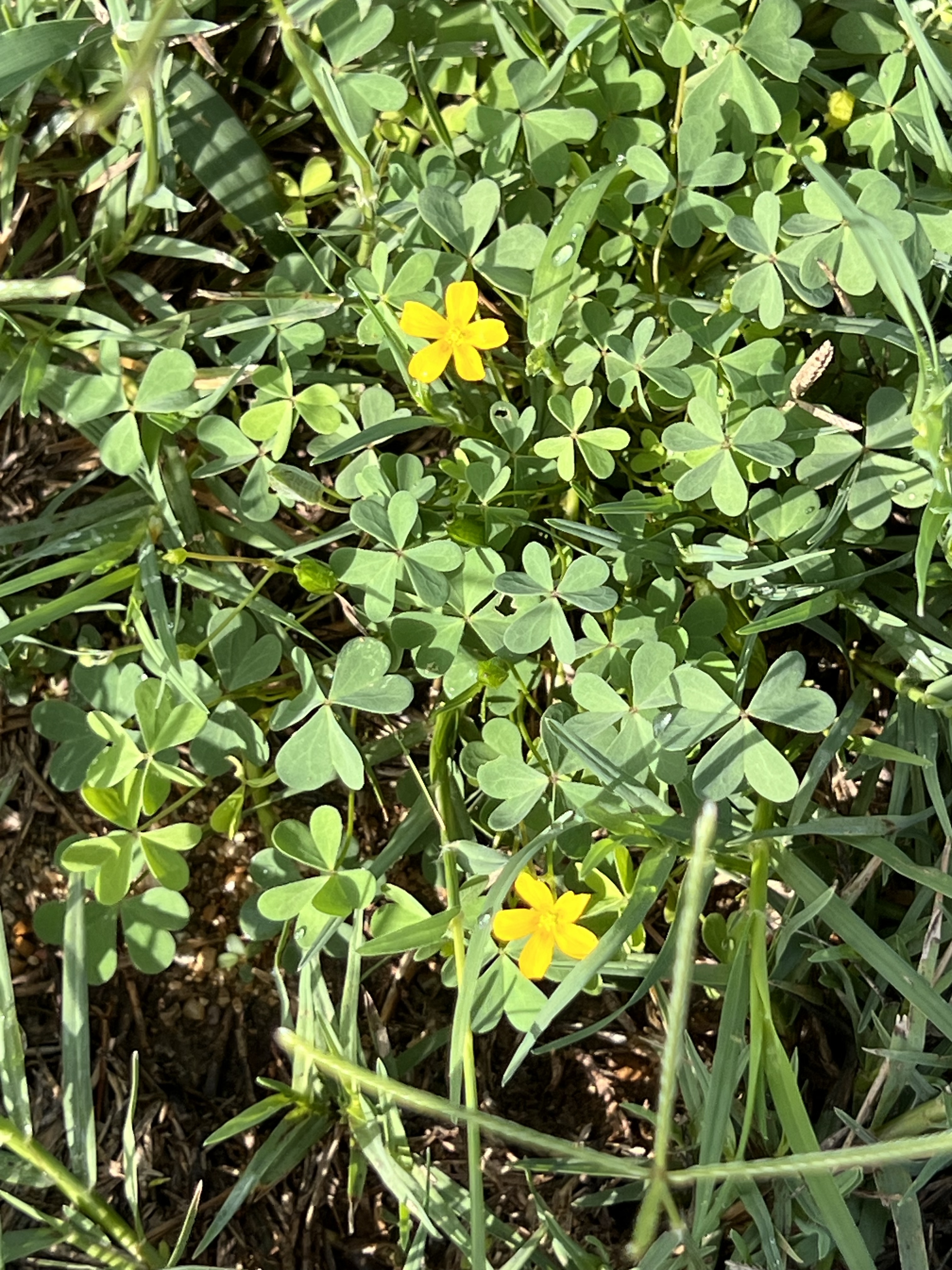
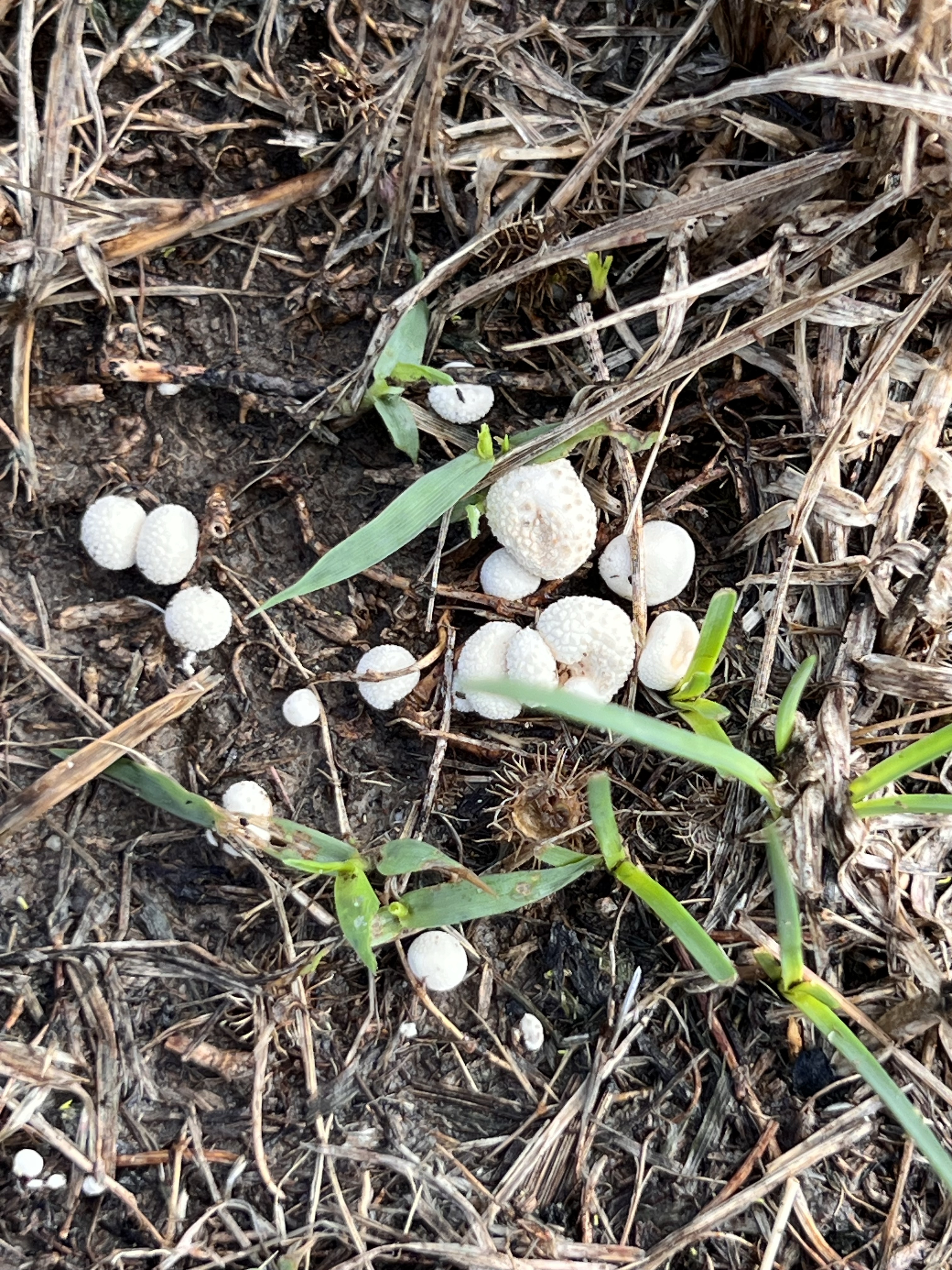
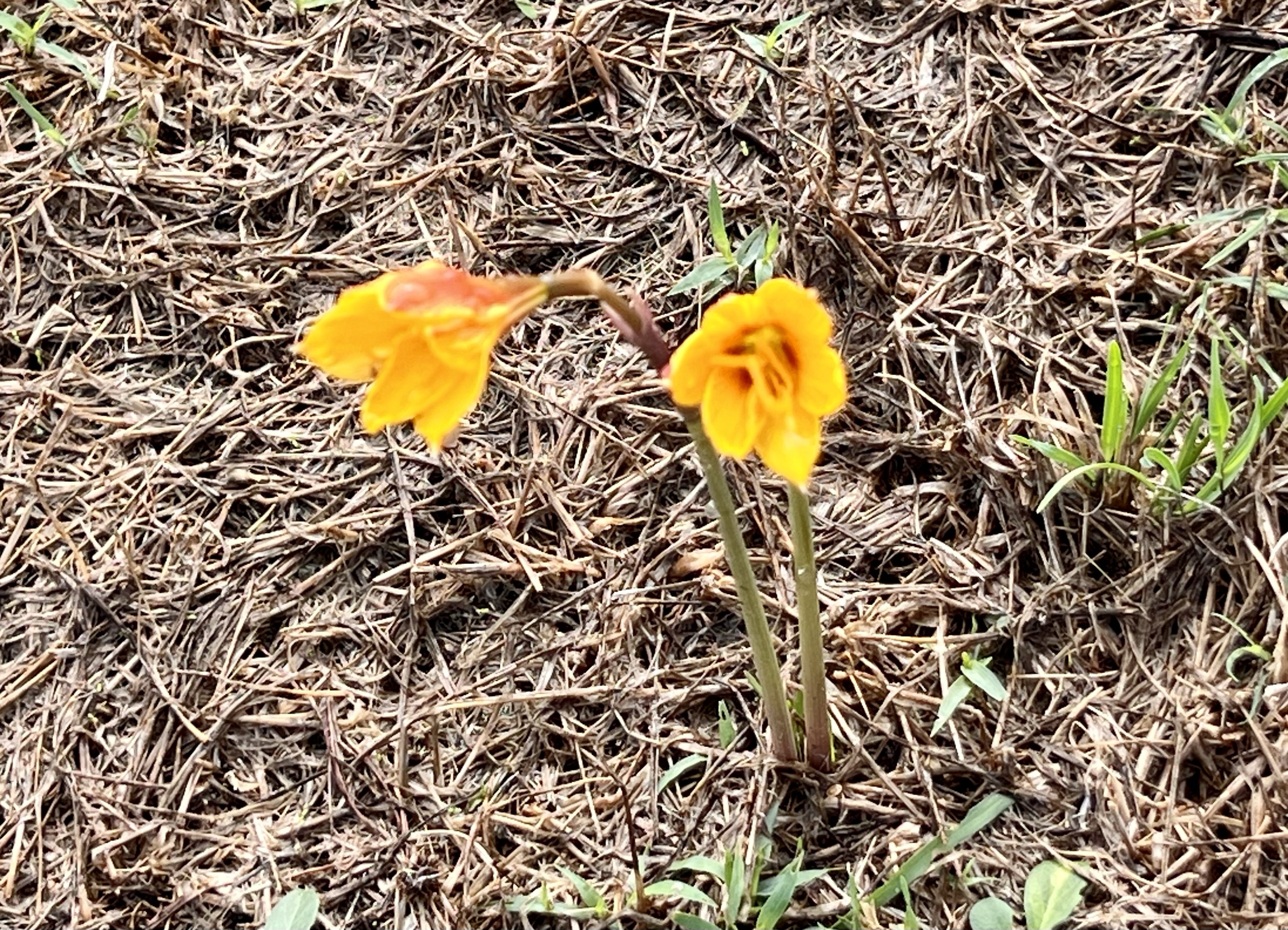
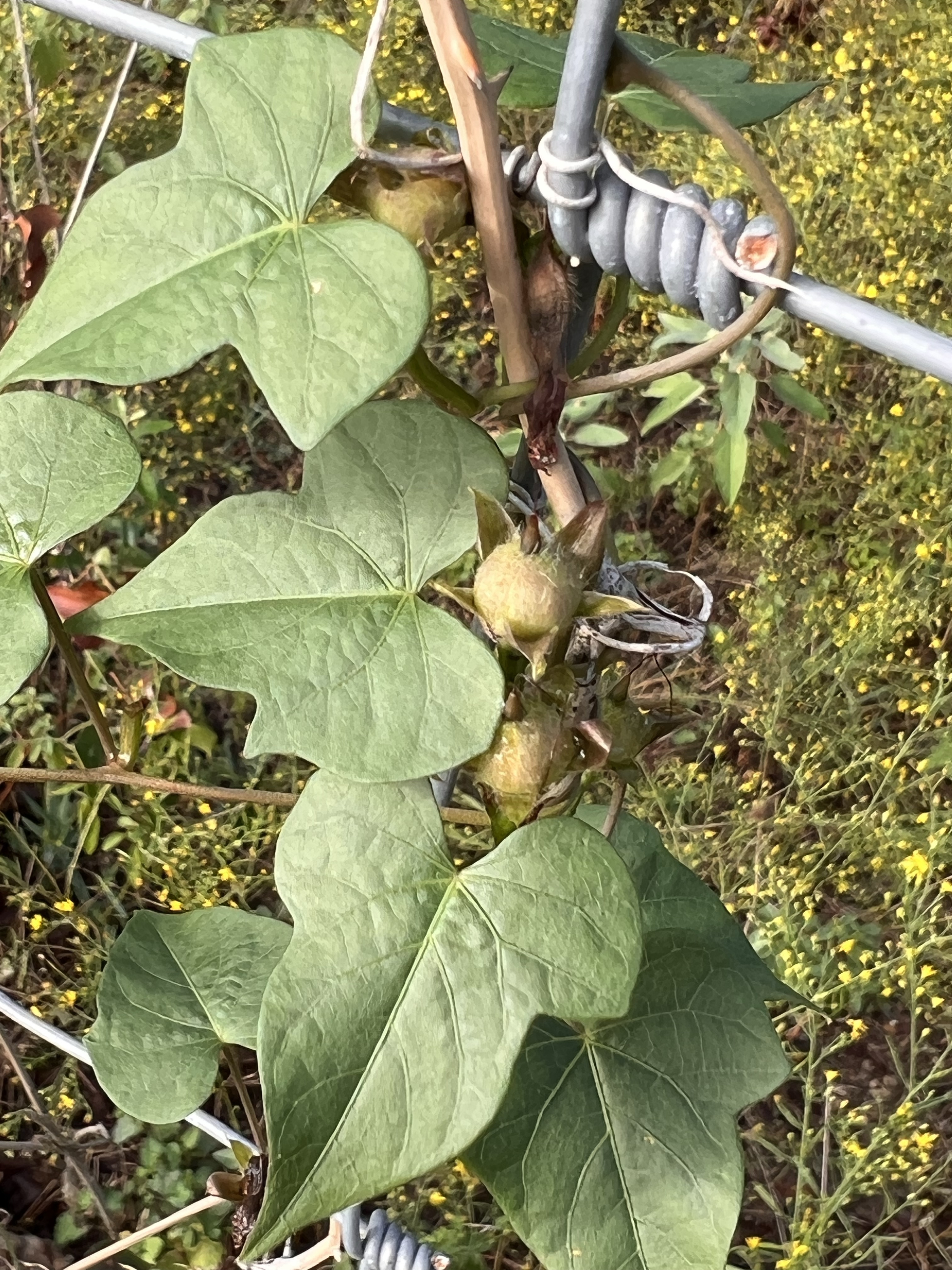
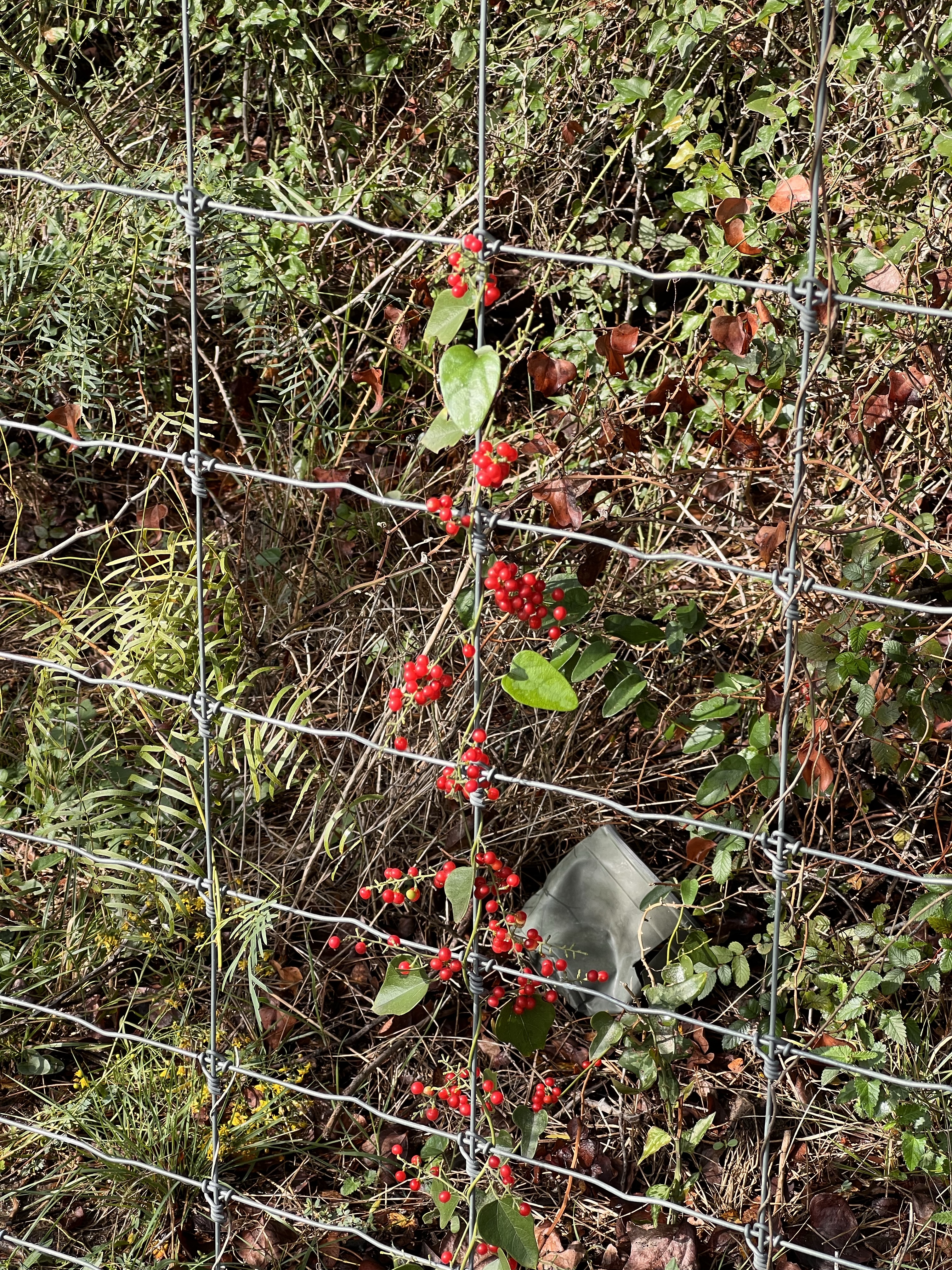
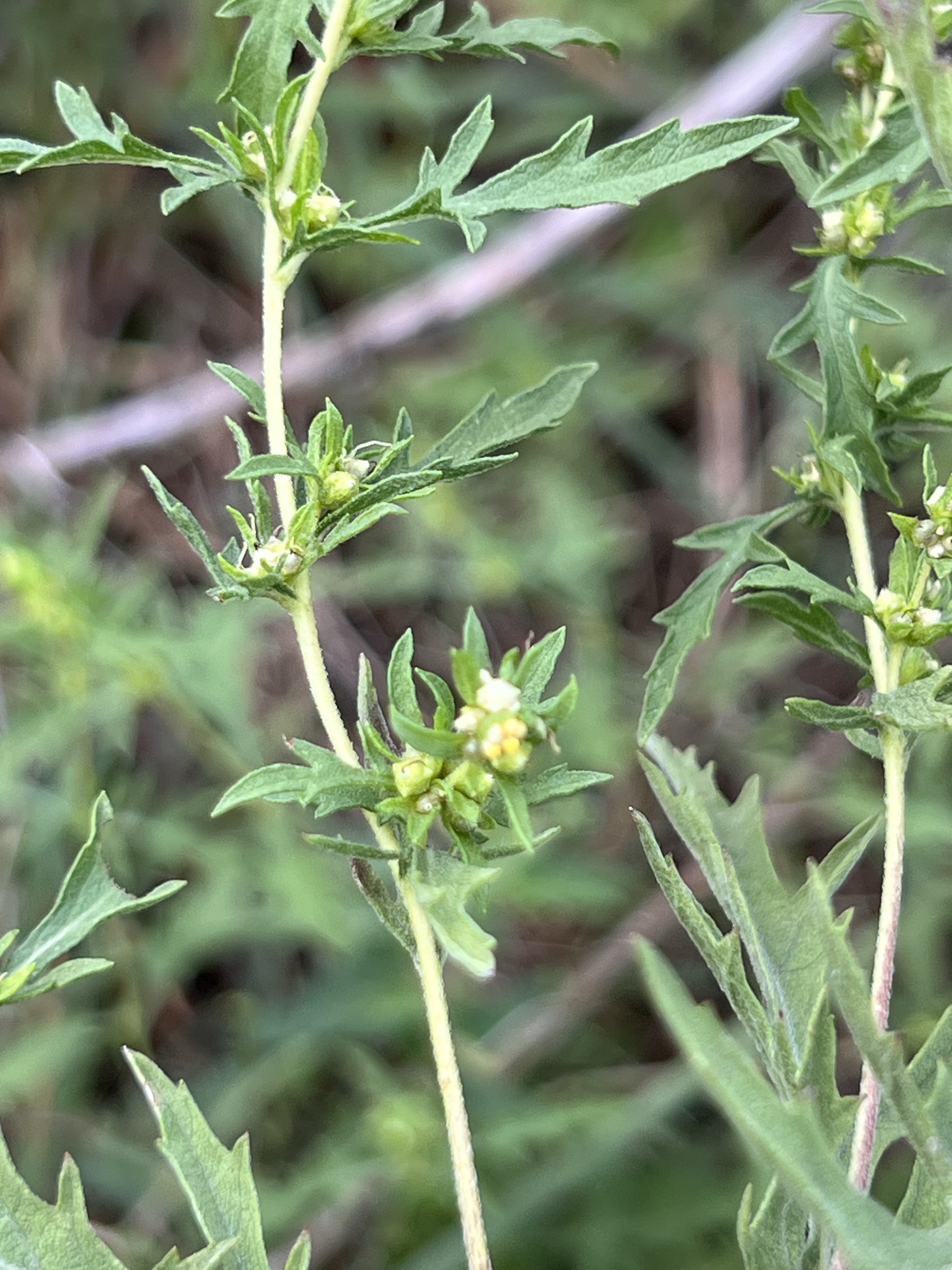
Crow poison (Nothoscordum bivalve) and a tiny insectViolet ruellia (Ruellia nudiflora), still hanging in thereI never get this plant right. Broomweed or something else.Texas Indian mallow (Abutilon fruticosum)Common dandelion (Taraxacum officinale)White mouth dayflower (Commelina erecta)Tall Goldenrod (Solidago altissima)Lindheimer’s doveweed (Croton lindheimeri)Slender yellow wood sorrel (Oxalis dilenii)Not a plant. Mushrooms coming up.Rio Grande copper lily (a rain lily) (Zephyranthes tubispatha)Tie vine seed pods (Ipomoea cordatotriloba)Carolina snailseed (Cocculus carolinus)Ragweed, not sure whichA view looking into our wooded area
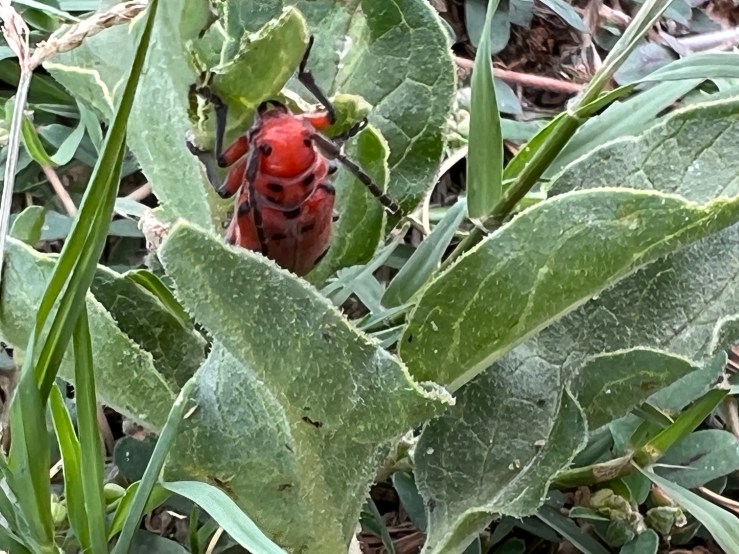
Well, if that doesn’t convince you that autumn is a great time to go out in nature and look down for a while, I don’t know what will. Heck, you might even see a milkweed beetle.
Labor Day weekend this year cried out for a river trip, and the only “river” that was running hard on September 3 was a portion of the stream that the Spanish explorers dubbed the Rio San Francisco. Stephen F. Austin drew a map of the expanding land grants between the Brazos and Colorado Rivers in 1829 and labeled this same stream Yegua. It stands to reason that those people occupying the land at that time had identified this watercourse as a place populated with horses. Yegua in Spanish are female horses. A valley to the west of the Brazos River with a significant abundance of horses deserves such a distinctive name. St. Francis of Assisi was already known as “the patron saint of animals” when the Spanish priests were spreading their culture north into Texas circa 1690. His name would be attached to many other places and a few streams. The Texas stream that is named after the horse populations attracted to its bottomland habitat is a special kind of place. It was my time to explore it.
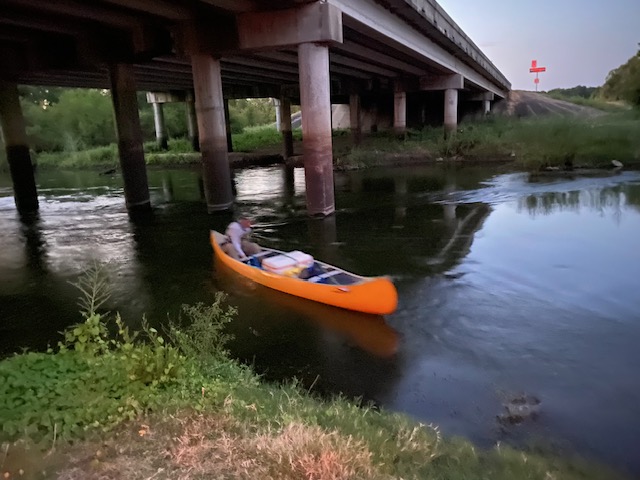
Adam and I put boats into the water of Yegua Creek below the Hwy 36 bridge in Somerville. It was before dawn, and I was hoping to paddle the first portion of a 13-mile run in moonlight. As luck would have it, we were running a bit too late, and the moon was slightly obscured by thin clouds anyway. Angie was our driver and her photographs taken as we shoved off show an orange dawn sky looking downstream. Turns out it was a darn good thing we could see well because the first three miles of this trip seemed like a combination of paddling through a Venezuelan jungle and the log-ride at Six Flags. We needed full visual acuity. Short-statured elm trees reached far out from each shore, and you had to weave around them. Open shorelines were densely populated with sedges, rattle bean, millet, and smartweed. Somerville Dam was just a mile upstream and was releasing 366 cubic feet per second to supply users down near the Texas coast. In this 40-60-foot-wide channel the water was pushing hard toward the Brazos and shoving our boats with it.
The narrow channel was alive with insect life on the water surface and in the air above it. There were clouds of small insects buzzing about us but not biting or landing upon us. I suspect they were midges (I inadvertently swallowed several but could not identify species from the taste), and they were being attacked and fed upon by an astounding number of dragonflies. In the dawn’s early light thousands of dragonflies of many sizes and colors were passing through the dense haze of Chironomids and eating them in mid-air. Looking upward was like watching tuna feeding on schools of sardines. Dragonflies were to be over and around us all day.
Lots of supplies in Alan’s canoe
One of my worries about running a narrow creek was about how many large trees would be lying completely across the channel. Very rapidly Adam scraped over the top half of a semi-submerged log in his kayak but my cargo canoe loaded with water and food could not pass. We pulled to shore, carried the cargo around and then portaged the canoe 60 feet to reload and relaunch. This turned out to be the only portage of the day and I pointed out to Adam that many famous “canoe trails” in Maine and Minnesota have ¼ mile portages between upland ponds that have no water flowing between them. This kind of portage was a cinch unless there turned out to be one tree every half-mile.
Very rapidly we were off, and then came the rapids. The first was a washed-out concrete vehicle crossing that had collapsed in the middle. Both boats sailed through the gap and the Yegua carried us soon to a second loud crashing of water half a mile downstream. This spot was a concentration of large rock rip-rap strewn across the channel and below a powerline that supplies Somerville and Caldwell. Construction crews likely used this material when stringing wires 50 years ago. The heavy water flow got us over the rocks and into the big eddy four feet below. No problem! However, this day was far from over.
The next rapids could be heard but were hidden around a hard right turn. It ended up being a steep drop of 5-6 feet. This spot is a natural rock formation. The 366 cfs filled my boat when I went over the drop and was pushed sideways into a rock wall. This, dear hearts, is why we tie all our gear securely into the canoe.
The entire boat was full of creek water in under three seconds and was being pushed rudely downstream. The water jugs, canteens, Pelican box holding my I-phone, ice chest (strapped tightly closed), first aid kit were all attached. Adam, who had shot through the rapids ahead one minute ahead of me in the kayak, had spun around to watch as I inelegantly exited my boat and was floating along beside it in my ugly brown PFD (personal floatation device). Don’t ever let anybody tell you it is too hot to wear a PFD (even an ugly brown one), especially on a reach of river that you have never traveled before. We were shoved downstream 300 yards along straightaways and around corners before an adequate sandbar was located to pull up the water-filled canoe.
The PFD was absolutely essential to keeping me from snagging a pant-leg or belt on a submerged tree-limb while being dragged along. The water temperature felt good in late summer, but in winter getting “tumped” over would have been a problem that required quickly building a fire to heat up a shivering paddler (me). Yet another reason you never paddle alone. It is hard to start a fire when you are shaking like a coon-dog trying to pass a peach pit.
Adam in kayak ready for adventure on Yegua Creek near Lake Somerville
The fourth rapid was halfway through the trip and had a large rock in the middle of the river. A lunchtime spot! The rest of the trip was delightful. Magnificent pecan and willow trees over-hung the river. We paddled in the shade almost the entire day. Without question the largest black willow trees I have ever seen stand like mythical giants along the Yegua. I wondered what it takes to be the state record Salix nigra? Two of these we saw had to be contenders.
Beautiful live oaks grew on both the Washington County bank and the Burleson County shore. Big antlered deer and feral hogs were sleeping and feeding in the lush green growing on the shoreline sandbanks. There were two old, abandoned county road bridges. Cattle swam and waded back and forth across the county line (who needs bridges?). We noted two minimalist fish camps but not a single drop line was seen. This apparently is rod and reel territory.
Adam and Alan on Yegua Creek near Lake Somerville just past HWY 36 bridge
Having unceremoniously plopped over my trusty OUACHITA, I was glad I did not bring my binoculars. Many small birds flying across in front of me consequently went unidentified. I did note eastern phoebes, pileated woodpeckers, a lone anhinga, wood ducks, a Louisiana heron, green herons galore, and great blue herons. At least my vision is still good enough to see the big ones!
The surprised behavior of a lone coyote suggested he had never seen a boat before. Deer antlers seem big this year based upon the whitetail bucks we flushed. That cool rainy spring must have provided protein at the right time for a lot of grazing animals. Francis of Assisi would be pleased.
The nice thing about this canoe trail is that it has easy access to put in on Hwy 36 and easy access to take out at Hwy 50 near Clay, Texas. Driving home through Independence and eating Mexican food at Las Fuentes in Somerville after a 6-hour paddle was a sweet finish to a Labor Day Sunday trip. Always bring dry clothes or lunch must be eaten in the outdoor heat.
Nowadays the Yegua is considered a “creek.” After experiencing the intensity of the flow and taking a thorough dunking at a natural waterfall I can see why those well-educated Padres and Spanish Expedition commanders wrote down in their diaries that the San Francisco was a river.
Yegua Creek, which is actually a river. Photo by Alexey Sergeev, 2020. Public domain. (as you read on you’ll see why Alan shared no personal photos)






 Nature Along the El Camino Real