Birding along Country Roads with Merlin

by Sue Ann Kendall

One of my favorite pastimes is seeing how many birds I can identify in new places. I’ve found that taking along my favorite electronic helper, Merlin Bird ID is very helpful and also allows me to contribute to the eBird database. This may even get me some volunteer hours as a Master Naturalist, though I admit I do it for fun even when I’m on my property or out of state. Want to join me? Here are some hints.

Before You Start

Before you head out, be sure to download Merlin Bird ID onto your phone and get your account set up. It’s free! Charge your phone up, too. Then get your hat, notebook, binoculars, spare batteries, and water. You may spend longer with the birds than you expect to. It’s hard to stop!
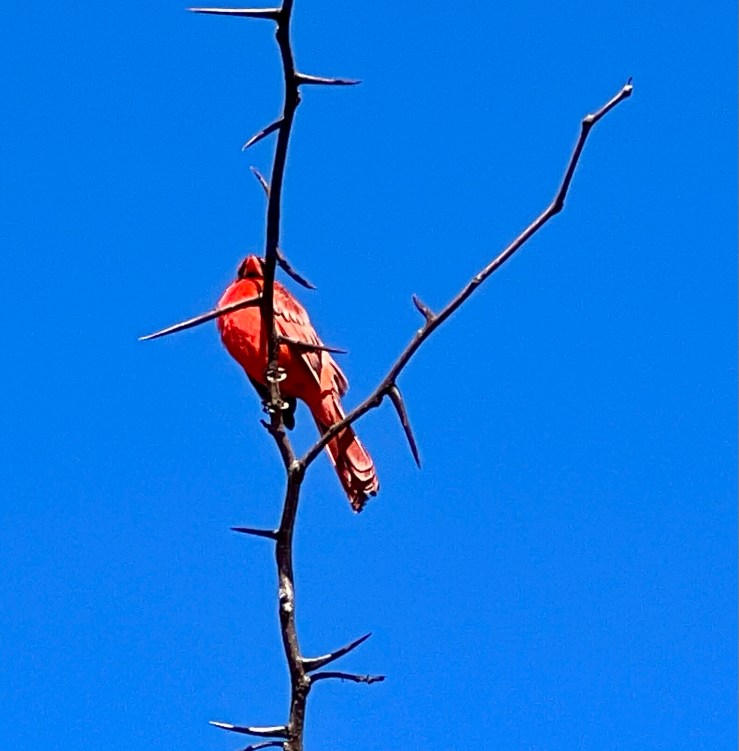
bird
You will probably see a Cardinal if you are in Milam County.

You can go anywhere you want, but I prefer county roads with little traffic and a variety of habitats. Going past water may get you some herons, ducks, or a kingfisher. Fields and prairies are good for sparrows, meadowlarks, starlings, and hungry raptors. Woodlands have woodpeckers, owls, songbirds and more. I find the best birding in places with open space that are near cover (brush or woods). I often park at a friend’s house and take off from there.
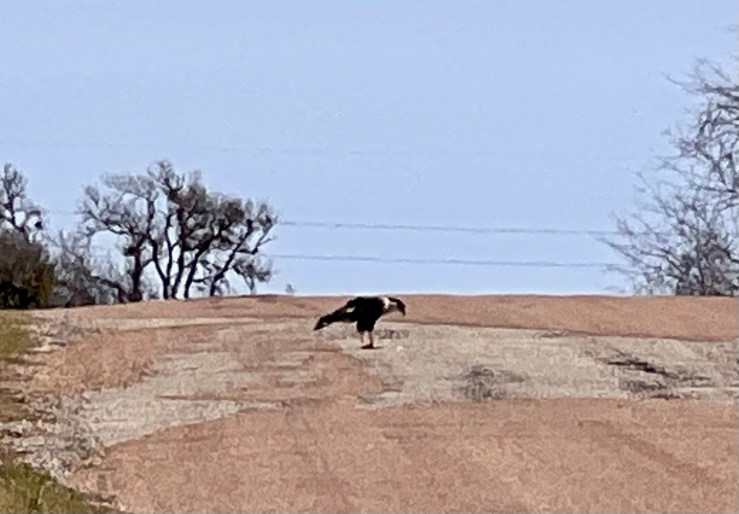
Caracara eating pizza off the road – the middle of the road is a good place to find scavengers.

Once I get to the area where I’ll be birding, I do an important thing in Merlin – I set the location for bird recommendations to where I am. That’s important, because Merlin suggests birds likely to be where you are. That may not matter if you’re just a mile or two from your house, but if you’re in another part of Texas or even farther away, you’ll want to know what’s likely to be there. You can use the list of birds found under the “Explore” option in Merlin to check what’s likely to show up so you’ll know what to look for (for example, does your locale have Ravens or only Crows? Does your area have Tufted Titmice or Black-crested?).* In the example below, I was making sure there are still Sandhill Cranes around this time of year at my house.

Another important preparation is to tell your phone to send your calls to voicemail. Every time you get a call, it stops the Merlin recording. I usually use an iPhone setting that lets important calls through, but not spam. Just save the recording if a call interrupts.

Bird Walking

Now you can start your bird walk. Start Merlin on Sound ID as soon as you hear a bird. It’s a good idea to stand still while listening, so your footsteps don’t interfere and so the app can identify sounds more easily. Be ready to photograph any birds you see, because Merlin can identify birds from photos as well as sound. Remember that not every bird is going to make sounds, so be on the lookout for those vultures (Black have white wing tips and Turkey have the “thunderbird” shape on the underside of their wings).

Black Vulture
This is a Black Vulture, which was easier to ID in person.

You may also hear birds that Merlin doesn’t register – for example, I just heard Sandhill Cranes flying overhead, but they were very high in the sky, so they didn’t get picked up by the phone microphone. I did get a photo of them, but even if I hadn’t, I could count them since I know what they sound like. Owls are also notoriously hard for Merlin to identify.

Sandhill Cranes
These Sandhill Cranes were flying high.

What I do on these walks is stop whenever I hear a bird or birds and let Merlin record them. You may not get very far if the birding is good, but move on when you’ve heard everything in the area. It’s so much fun watching birds show up on the app! I also look around to see if I can see or photograph the bird. Soon you will know what birds are around you by their calls and songs with Merlin’s helpful training. I love this in the summer when the trees are leafed out. I finally got to see Painted Buntings last year thanks to Merlin. And I’ll never forget the sound of passing Eastern Bluebirds and Lesser Yellowlegs as they go overhead out of sight.
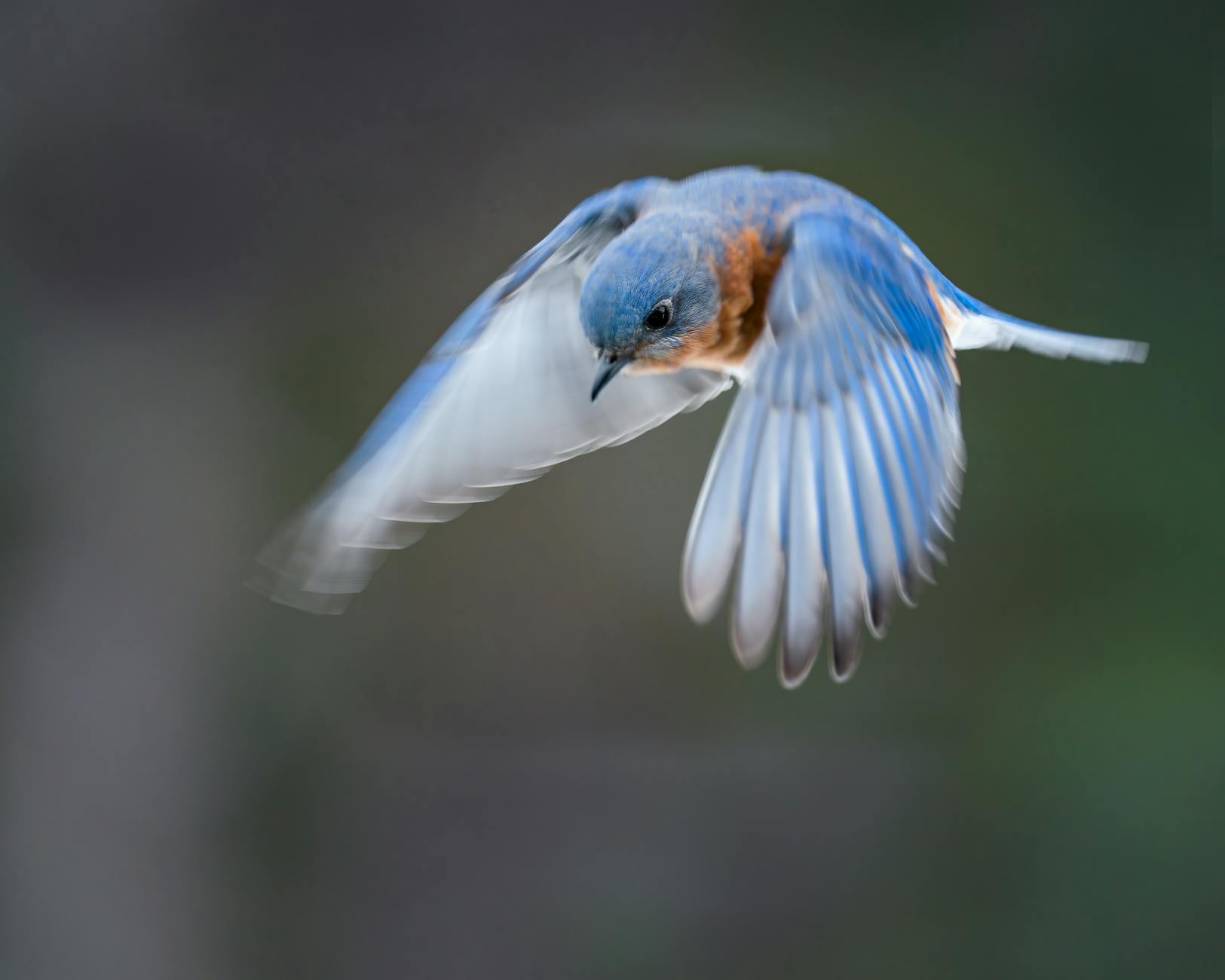
Photo by Skyler Ewing on Pexels.com

I usually listen for 20-30 minutes, then save the recording. Those files aren’t too big and I can review them later to record them. You can select a bird Merlin identifies and click “this is my bird” to save it in eBird. Give the location a good name, so you can later figure out where you were. Good examples are the name of a trail, road name, landmark, state park name, etc. Record them as you see them, because if you try to add them later, you’ll not have the right location and you’ll have to find where you were manually. You can make an eBird checklist when you get home, if you like, though.
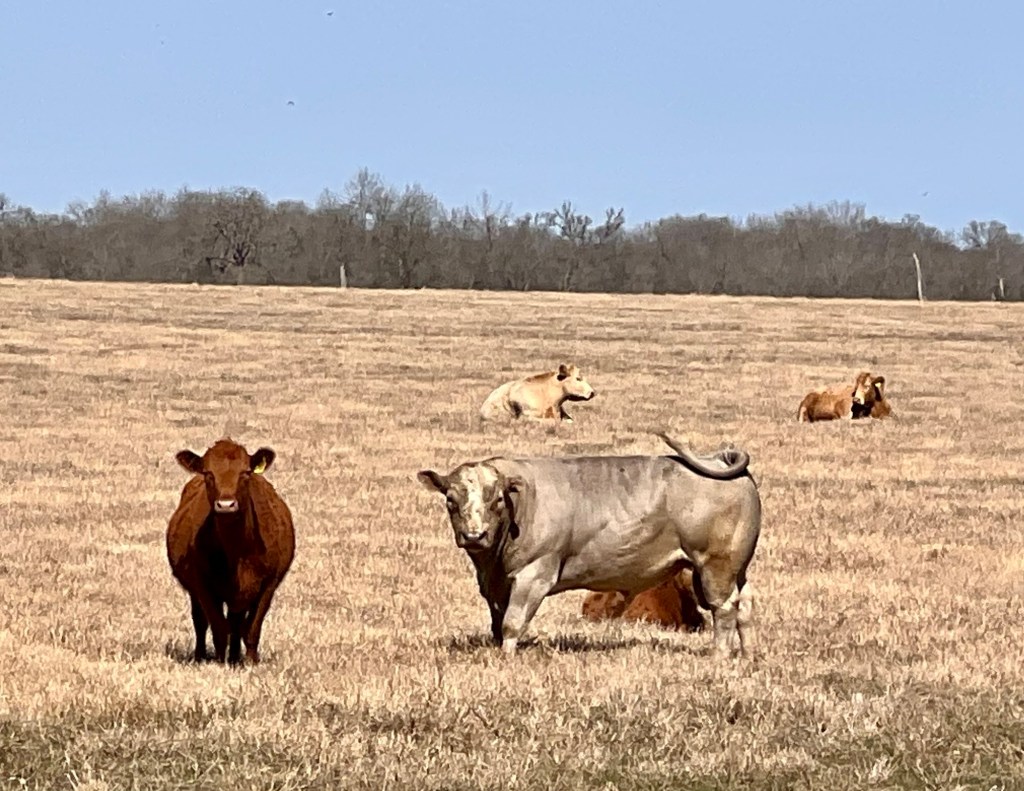
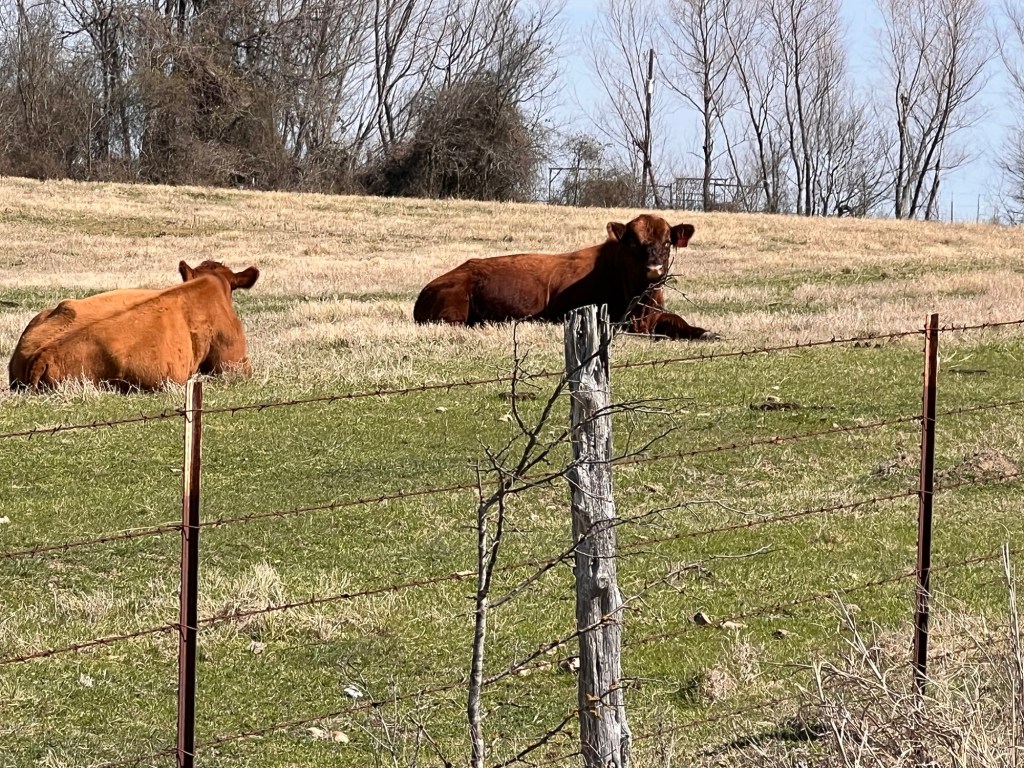
On a long walk you might end up with two or three recordings, and a bunch of photos, which you can put on Merlin or in iNaturalist, too. You might get a surprising number of species if you’re patient. Use Merlin to read more about birds that are new to you. It will describe the bird and show you its range, which can be surprising.
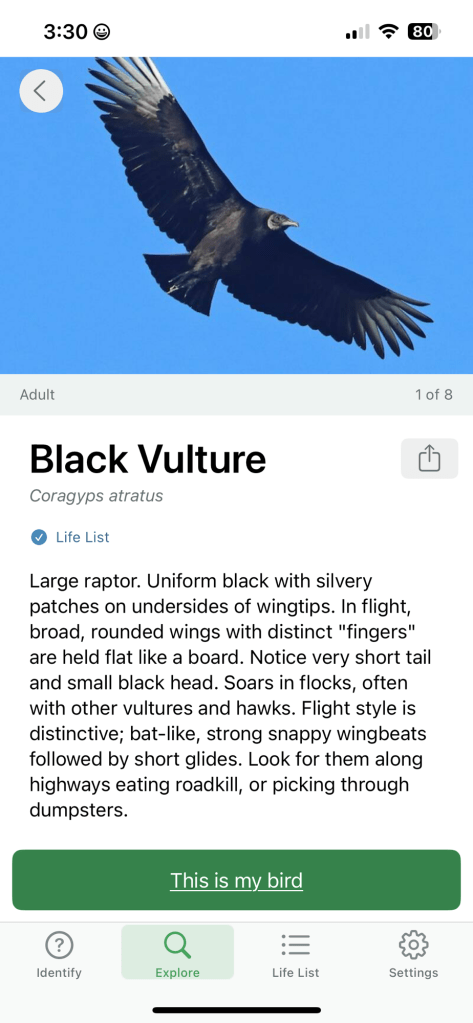
The more you walk around with Merlin open and listening, the more you’ll learn about the birds wherever you are. I’ve learned all about the birds where I travel, and conveniently use Merlin to add them to a life list Merlin tracks. If you’ve got a few minutes to spare, take a walk down a country road with Merlin!

Barn Swallows

Just for your information, here’s what I usually do. At home I only put new birds or birds seen at an unusual time in eBird, since I’ve recorded them many times. I have a notebook where I write down the birds I see and hear on Merlin every day and I track sightings monthly on a spreadsheet, which then goes in my blog. It’s fun to see which birds show up in different seasons. I’m a little obsessed, but everyone needs a hobby, right?

notebook
A page from my notebook listing birds I saw on one day. I do use abbreviations, but I know what they are!

*Be sure to set your location back to your home base when you return. I realized this morning that Merlin was looking for birds at Inks Lake, not Milam County.

Wild Wings Taking Flight!

by Sue Ann Kendall

The Wild Wings Bird Sanctuary project is taking off! Our committee members are making so many contributions that it’s hard to keep track.

This is the final logo.

We held a committee meeting last week and got to work on getting our logo and signage planned out, decided to get some sturdy seating, and have planned fun new ways to encourage people to come and enjoy this peaceful oasis for themselveds.

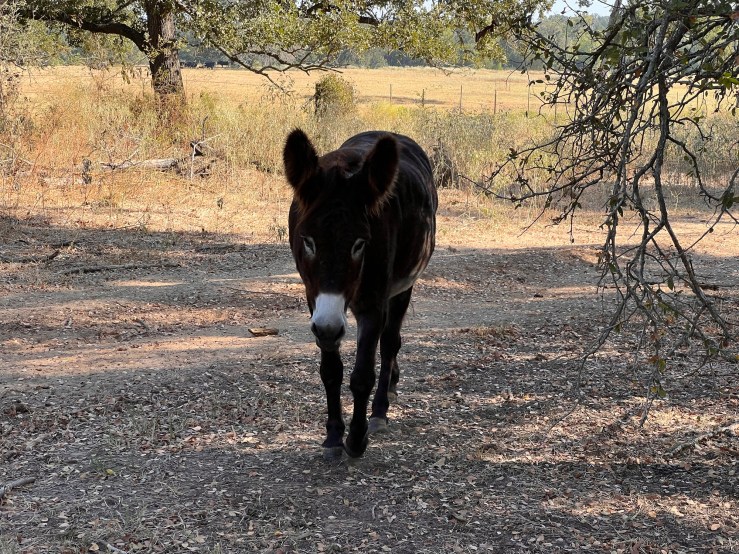
Bonus donkey sightings encourage visitors.

We envision quarterly iNaturalist bioblitzes, evening bird walks, and monthly guided observations. This will be fun! And we decided on our official hours, which will be Thursday through Sunday, 8 am to noon. Visits can be arranged by texting a number we’ll share soon, as well.

The current seating now has concrete pavers under it, so it’s more steady, and it’s been moved away from the feeders for better observation.

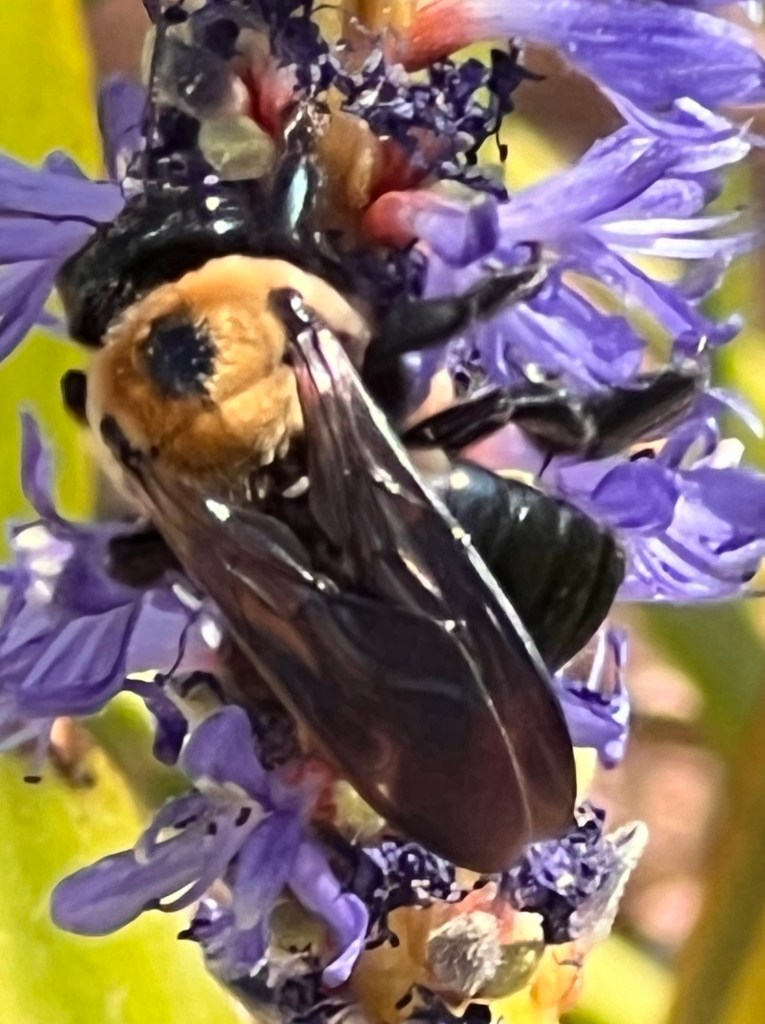
At our monthly official observation day, Sue Ann and Ann heard or saw 25 different bird species. New birds included an American Kestrel and Broad-winged Hawk. Ann observed a Peregrine Falcon a few weeks ago, as well. They took the opportunity to take photos for the 2024 Texas Pollinator Bioblitz on iNaturalist, since there are lot of pollinators hanging around the sanctuary. It was also the best day to record birds, because it was the Big Day on eBird. Sue Ann made sure to record all the birds Merlin found, so they would go into the eBird count.

Be sure to check out our October Observations page to see what birds we saw and heard, and to check our totals page for a list of all 43 bird species we’ve observed since August.

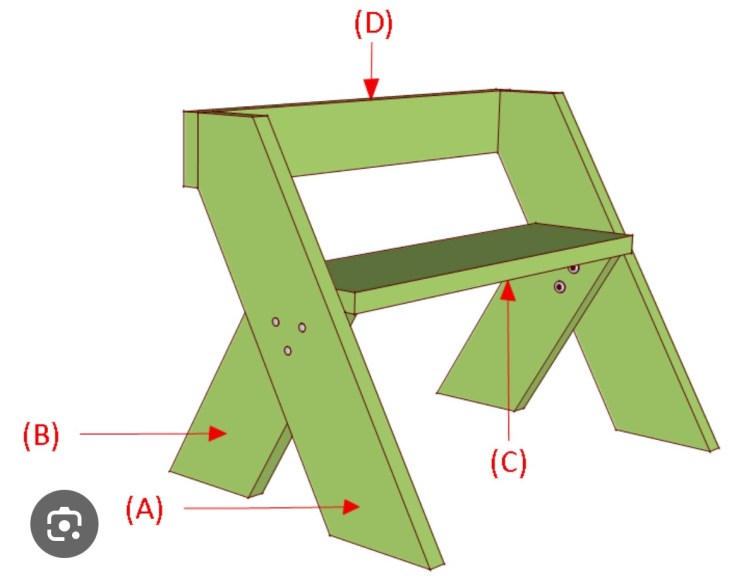
But that’s not all. Committee member Gene Rek has volunteered to build some Leopold Benches, whish were devised by naturalist Aldo Leopold especially for bird watching. They are simple to build and very sturdy, which we have agreed we need to have for public seating. We are aware of liability issues, since we will be making the sanctuary available on the Texas Birding Trail soon. Sue Ann also has some heavy, durable benches she will donate, so Wild Wings will be all set for seating.

Leopold Bench diagram

Killing Time Leads to a Wonderful Find

by Michelle Lopez

While killing time between doctor appointments in Temple, I found a store called Wild Birds Unlimited. I decided to check it out since I am an avid birder and struck up a conversation with the lady working in there. I found out that she is also a Texas Master Naturalist, and we had great conversations.

We talked about the different ways we get volunteer hours and different projects we are involved in. I really enjoyed meeting her. She told me about a nearby pond that had migrating Roseate Spoonbills and White Ibis, and that there is also a Bald Eagle that hangs out around there.

I got super excited and decided to check it out on my way home. She drew me a map on some scrap paper and I found the location easily. I was excited to immediately find the White Ibis. I keep binoculars in my car for such an occasion, and tried to get some good pictures to share. I didn’t see any Spoonbills or an Eagle but I thoroughly enjoyed this wonderful find.

I had another appointment today and decided to take the long way home so I could revisit the pond and hopefully see something new. Well, it was even better than the day before! I saw some White-Faced Ibis, American Avocet, and a Bald Eagle!  This really made my day. 

Killing Time Leads to a Wonderful Find

by Michelle Lopez

While killing time between doctor appointments in Temple, I found a store called Wild Birds Unlimited. I decided to check it out since I am an avid birder and struck up a conversation with the lady working in there. I found out that she is also a Texas Master Naturalist, and we had great conversations.

We talked about the different ways we get volunteer hours and different projects we are involved in. I really enjoyed meeting her. She told me about a nearby pond that had migrating Roseate Spoonbills and White Ibis, and that there is also a Bald Eagle that hangs out around there.

I got super excited and decided to check it out on my way home. She drew me a map on some scrap paper and I found the location easily. I was excited to immediately find the White Ibis. I keep binoculars in my car for such an occasion, and tried to get some good pictures to share. I didn’t see any Spoonbills or an Eagle but I thoroughly enjoyed this wonderful find.

I had another appointment today and decided to take the long way home so I could revisit the pond and hopefully see something new. Well, it was even better than the day before! I saw some White-Faced Ibis, American Avocet, and a Bald Eagle!  This really made my day. 

Forest Walk and Monthly Bird Count

by Sue Ann Kendall

This month’s bird count at the Wild Wings Bird Sanctuary took place on September 14. Ann Collins, Sue Ann Kendall, and Phyllis Shuffield not only looked for birds with their eyes, binoculars, and ears, but they practiced their Merlin Bird ID skills. We identified 25 different birds in the two hours we spent at the sanctuary. Highlights were a juvenile and adult male Eastern Bluebird and a chatty Downy Woodpecker. Merlin identified other new birds, Alder Flycatcher, Blue Grosbeak, Lark Sparrow, Upland Sandpiper, and White-breasted Nuthatch. These are all plausible birds to have around this time of year in Milam County.

Eastern Bluebird. Photo by Skyler Ewing on Pexels.com

The group decided to take an informal forest walk in the wooded part of the sanctuary (not an official Shinrin-yoku walk, since we were identifying plants and birds. It’s quite pretty back there, where a creek often flows when it’s wet outside. We found some late wildflowers, such as Marsh Fleabane (Pluchea odorata) and Late Boneset (Eupatorium serotinum). We observed lots of berries for the birds, including many coralberry plants (Symphoricarpos orbiculatus). There was evidence of animals who hang out in the sanctuary, especially deer who had been there very recently judging from the fresh scat and urine.

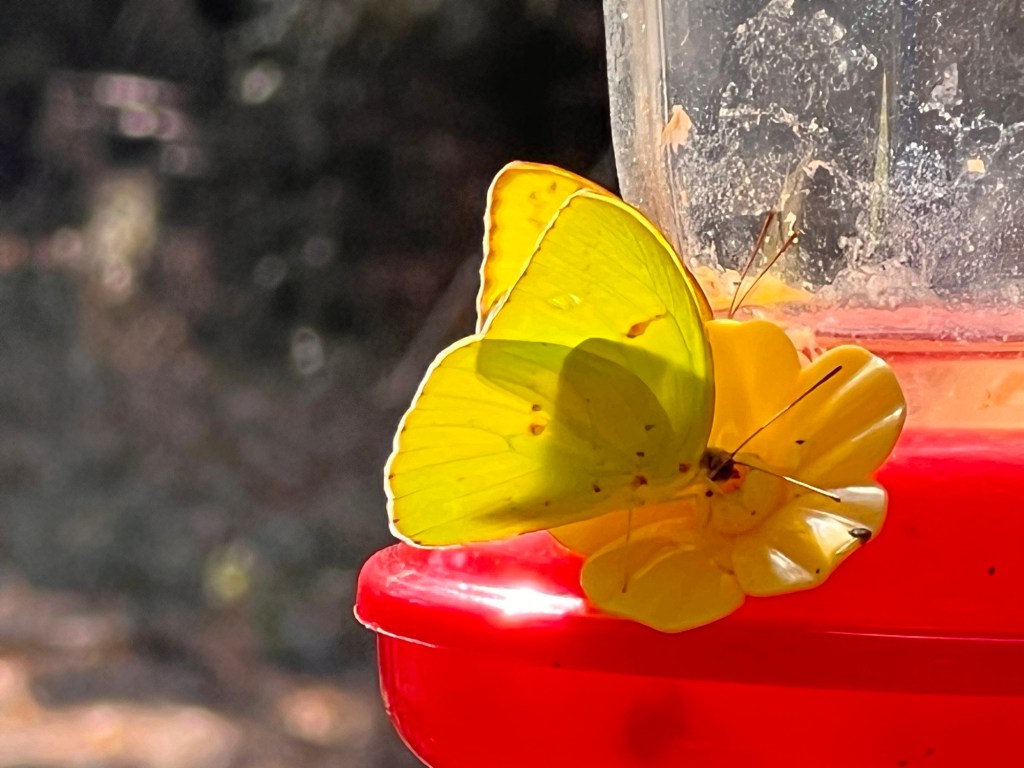
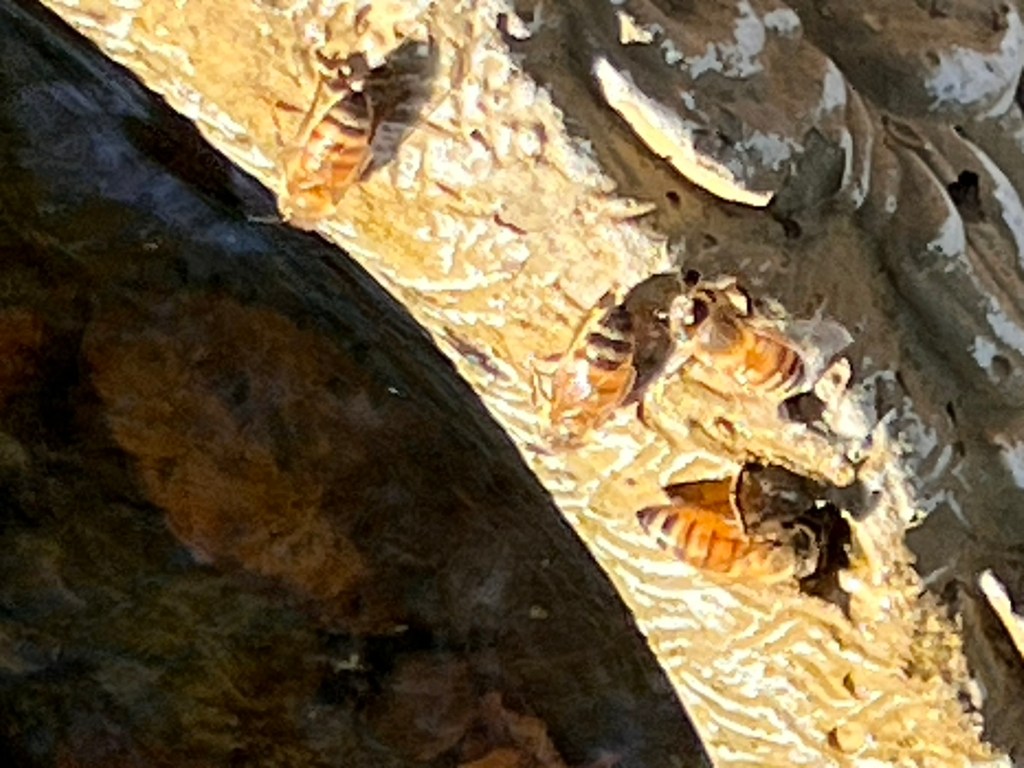
Ann and Phyllis refilled some of the hummingbird feeders, which were primarily being used by the local honeybees of Bird and Bee Farm and a few butterflies. There are now many feeders, and it appears that the birds (primarily Carolina Chickadees and Tufted Titmice) are eating out of them all. There were dozens of Northern Cardinals flying around, but they were not coming to the feeders.

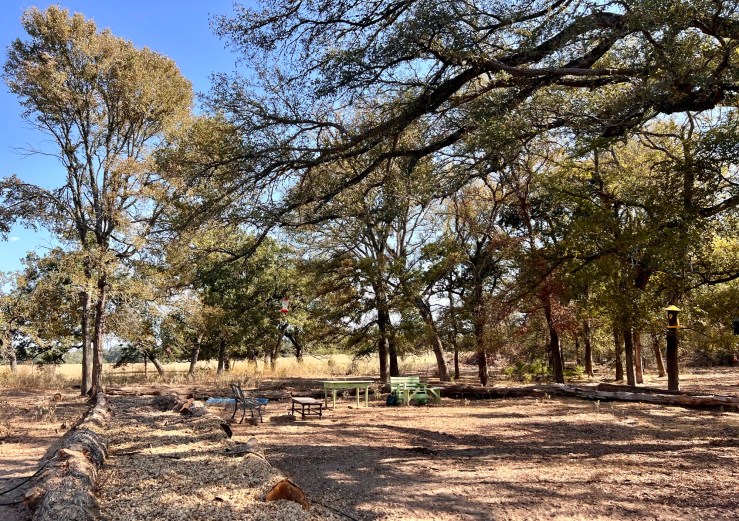
Bird feeders and the seating area

Since our last visit to the bird sanctuary, the intrepid Gene Rek has put in more raised beds and planted some new shade-loving plants in them, including beautyberry and Turk’s cap. They have drip irrigation to help get them established. The new bird bath is still working great, too. There’s lots of progress being made.

And as a bonus, Sue Ann left with two new Cochin hens! It was a good morning at the Wild Wings sanctuary!

Cathy the hen is much happier now that she’s in a hen house.

We made a page that lists all the birds we’ve seen since we started observing here. Please let one of us know if you come out and see a new bird!