It’s Ragweed Season

by Donna Lewis

Got a headache, coughing and sneezing?

If you have some or all of these you probably have Giant Ragweed ( Ambrosia trifida). I certainly don’t think it’s ambrosia…it’s awful! I don’t see how you could  make rags out of it. Where do these names come from?

Ragweed

So are they good for anything?  As it turns out, I looked in my reference book, Medicinal Plants by Peterson and found out that the native Americans did use it for certain ailments. They used it as an astringent, to stop bleeding, dysentery, and insect bites to name a few. Today it is commercially harvested for the treatment of ragweed allergies.

It’s everywhere!

So, yes it has a few saving characteristics.

The flowers are pretty, though.

Also out in the pastures right now is a very valuable plant that our migrating monarchs use.  It is in the Sunflower family: goldenrod. 

Goldenrod

The native Americans used this for many medical issues: roots for burns, flower tea for fevers and snakebites, crushed flowers for sore throats, and some other ailments.

Both these plants can cause severe allergic reactions, so don’t try any for medical ailments unless you have asked your doctor first.

Always something interesting to learn out there.

Birds at the Park

By Carolyn Henderson

Birds where everywhere Sunday at Wilson-Ledbetter Park. I came upon a few out of the ordinary species while walking the park to contribute to the GTWT Adopt-A-Loop project with the Texas Nature Trackers/Texas Parks and Wildlife Department and iNaturalist

Normally, flora is abundant in that park, but most things were wilted, or dried up and gone, which is primarily due to the lack of rain in August and September and mowing. I heard on the local weather report that September has been a record dry month here in Central Texas. There were a few butterflies, but they were sparse, too, probably because there are very few nectar-producing plants right now. But the birds showed up. 

There were domestic mallards that I would called mottled, mallards, mallards x muscovy cross, black-bellied Whistling Ducks (juvenile), and pekin ducks. The ducks appear to be intermingling. 

There were green herons, great blue herons (which kept stealing fish from the green heron), and a great egret. Watching the Great Egret fly over the pond was beautiful – until it landed (see top photos). It was comically ungraceful when it landed in a large patch of floating primrose-willow. 

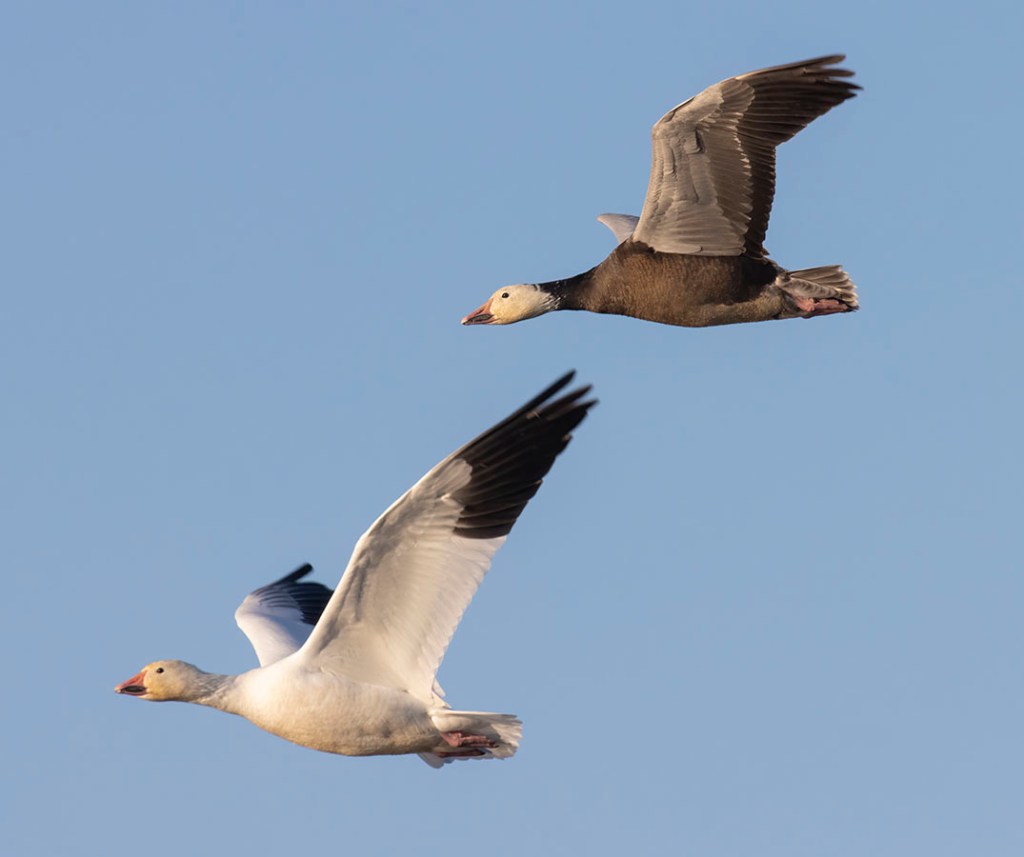
There were also domestic geese that have been living in the wild there for a very long time. The geese and most ducks  were amazingly indifferent to humans standing amid them. All of the pictured birds have been verified for research grade on iNat except the Geese and Mallard x Muscovy, the latter of which was the suggestion by iNat.

Usually sparrows, mockingbirds, and grackles are there, but I did not see them Sunday.

If you’re a bird watcher or just want to earn some volunteer hours, it’s an interesting place to spend a little time. If you don’t yet use iNat and want to, they are having at least three programs on the use of the program at the annual meeting next month. You can attend virtually if you aren’t going in person.

Dancing Bees

by Catherine Johnson

These are the containers they put mead in when they sell it. You bring them back to get more, so it’s a great re-use example.

One thing we learned at a recent visit to Walker Honey Farm is that Mead is a mixture of honey, water, and yeast.  Many factors affect the taste, including the type of wildflowers bees visit.

We also learned that bees dance on the surface of the honey comb, which directs other bees to within 10 feet of sweet sources, which can cover a 16 square mile area.

Visiting Cameron City Parks

by Catherine Johnson

Our Let’s Get Outside project took us to Cameron City Park, 12 Street Park, Cameron and Airport Park, and O. J. Thomas Park. 

At Cameron City Park we saw natives, mushrooms , and former swimming pool.

12 St. Park has beautiful trees and a nice pond. 

Cameron Park has a fun pool and Airport Park great baseball fields.

O. J.  Thomas Park has swings and basketball hoops.  All were very well maintained and offer quiet, pretty places for recreation, walking, picnics, or observing nature. 

Bitterweed photo by Nick Moore on iNaturalist. Used with permission.

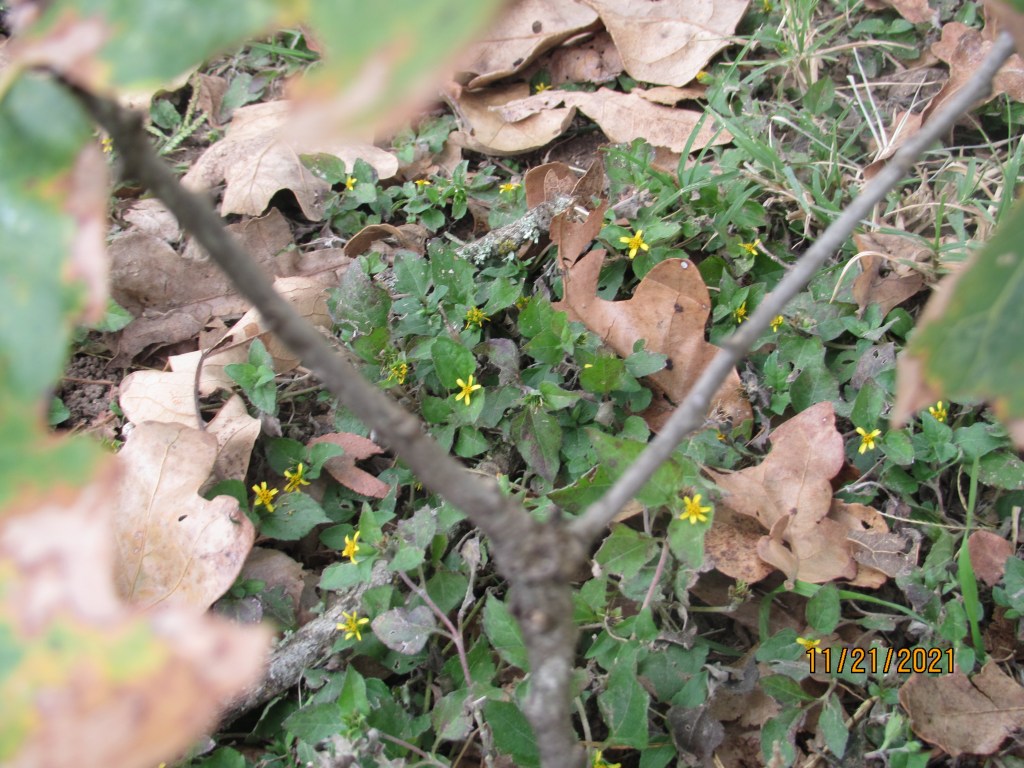
I focused on three small yellow wildflowers in order to learn to distinguish them–Bitterweed, Camphor weed, and Straggler Daisy.  The leaves are very different.

Bitterweed, camphor weed, and straggler daisy (left to right)

You will be amazed at how much you will know in a few years if you learn in small steps. Attending these latest walks were Linda Jo, Donna, Scott, Debra, Jackie T. , Connie, Pamela and Ruby, Kim and Catherine (me).  Most fun–eating together at Dairy Queen and listening to Connie’s (who was mayor of Cameron for many years) tales of the city’s history.

Monarchs and Other Butterflies

by Catherine Johnson

Next year we will continue our Milkweed/Monarch project and create a network for sharing milkweed, info and habitats. A recent Monarch seminar taught us how to raise milkweed from seed. We’ll create here a walk-in enclosure in the Milam Wildscape for the project.

To follow up on Lisa’s post yesterday, it turns out that 10% of caterpillars make it to butterflies and 10% of those survive full adulthood.  Two of my butterflies were born with wrinkled wings, so I fed them sugar water, took them for outside trips, and after a couple of weeks they passed peacefully. Other
options were to euthanize or leave outside. This way they had a good life.

Gulf fritilary chrysalis

We are watching Gulf Fritillary chrysalises  now.  They look like leaves to fool predators.