
by Dorothy Mayer
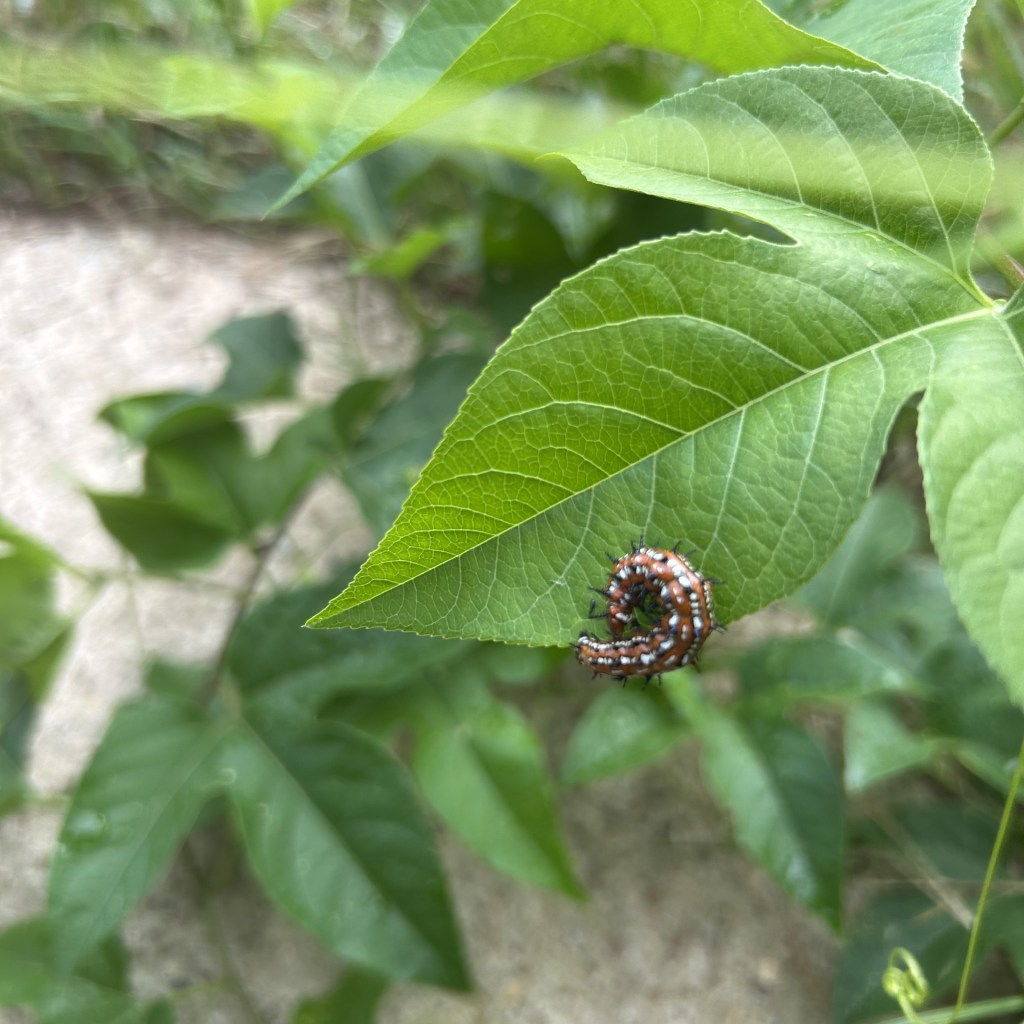
I was just about to think the fritillary butterflies weren’t going to show this year. (They lay their eggs on native Passion Vines and I’ve been trying to grow those vines especially for them.) Last year the fritillary caterpillars ate my passion vines to the ground and I never even saw a bloom. This year, though, the passion vines have come back really strong and have multiplied like crazy. I’m hoping to see a bloom or two, but I’ll definitely settle for butterflies instead.
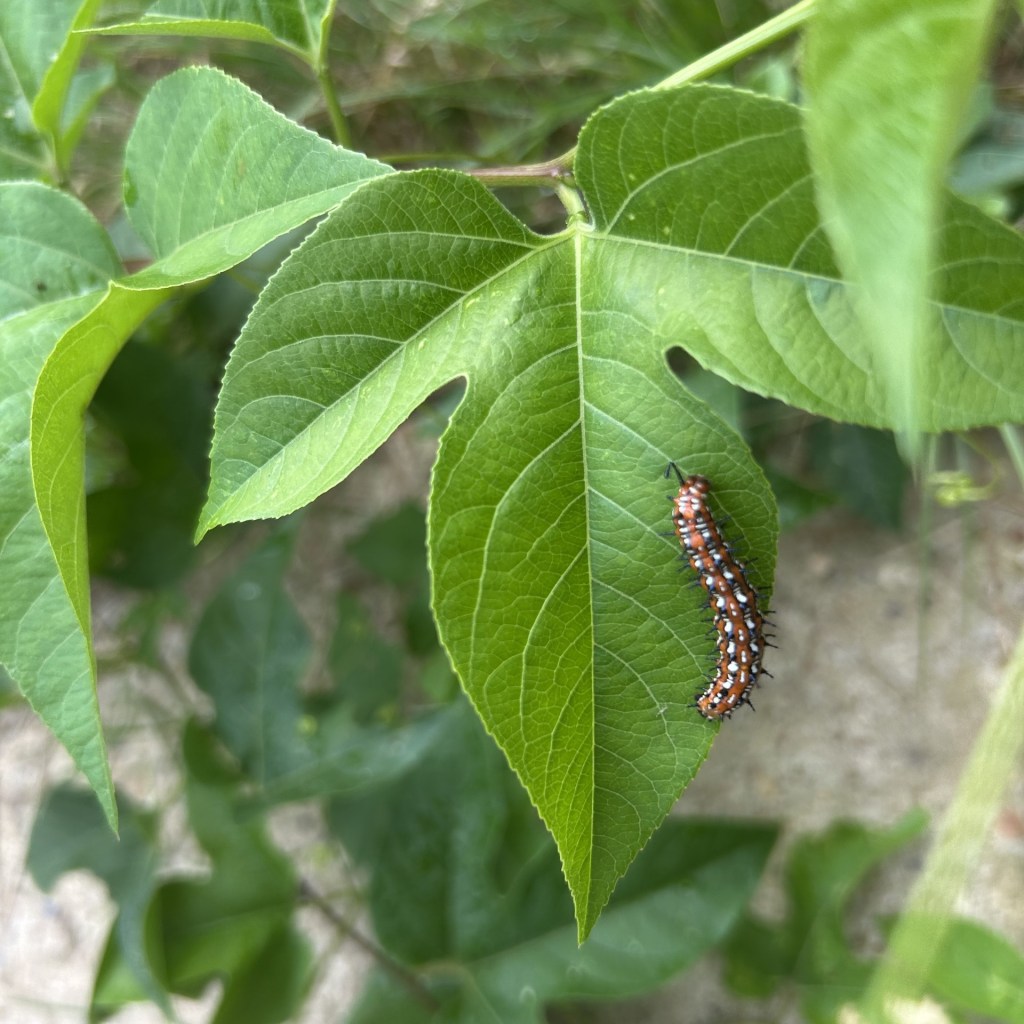
On a side note, I also planted some more passion vine in a different location. However, that passion vine must have been modified and the butterflies evidently knew that because they left those vines completely alone. I saw the butterflies flying around checking those vines out closely and noticed they never stayed long at all. Even though those vines were beautiful, I choose to stick with native plants, because our native wildlife require them to multiply, and I choose to share.
Hint: I was thinking if you watch nature closely, you could come up with some great science ideas and experiments.

 Nature Along the El Camino Real