Mike McCormick, considered the largest houser of Purple Martins in the area, shared his wealth of knowledge with the El Camino Real chapter of Texas Master Naturalist on Saturday, June 18. McCormick lives south of Buckholts in Milam County with thousands of Purple Martins and a few family members. He has been housing the birds for more than 40 years and has grown the number of seasonal residents steadily every year.
Purple martin house with adults waiting for fledglings to fly
There are approximately 65 Purple Martin houses at his place – all made by him. He’s also helped many others get started with some extra houses.
Up close of the three fledglings that haven’t decided to fly, yet.
ECRTMN visited at the optimum time. All the babies are starting to fledge. Members learned how to house them and keep them coming back. McCormick also clarified some untrue facts about the migrating birds. For example, a 6-foot-tall martin house works as well as a 12-foot-tall house.
Martins in flight
Thanks also go to Donna Lewis, organizer of the event, and Ms. McCormick, sister to Mike, who fed us and kept the cattle herded.
Donna Lewis, who organized the trip, speaks to attendees.Closeup of fledgling. McCormick put it back in its house.Mike McCormick handles a fledgling that wasn’t ready and landed on the ground. ECR member Victoria found it.McCormick’s handmade houses.Another of McCormick’s handmade houses.
Well, we all know that every living thing needs water.
We are really experiencing a very hot and dry time right now.
This is when you can help the wildlife. Birdseed and other things we put out so we can watch and help our wildlife is a good thing, but water is the number one thing they need to survive.
I have 10 birdbaths out and I put out the sprinkler every evening around 5:00 pm.
The birds are waiting for me. I move the sprinkler about three times, so I don’t waste any water. I use it for my plants as I give the birds their cool and happy time in the refreshing raindrops the sprinklers provide. I am sure I would see them smiling if they could. Yesterday I slowly approached my garden about 10 minutes after I turned the first round of water on. They scatter if they see me and that’s OK, it keeps them safe.
This is what I saw through my fence around the garden.
25 Cardinals
1 Mockingbird
4 young Titmice
5 Bluebirds
6 Chickadees
2 unknowns
1 Red-bellied woodpecker.
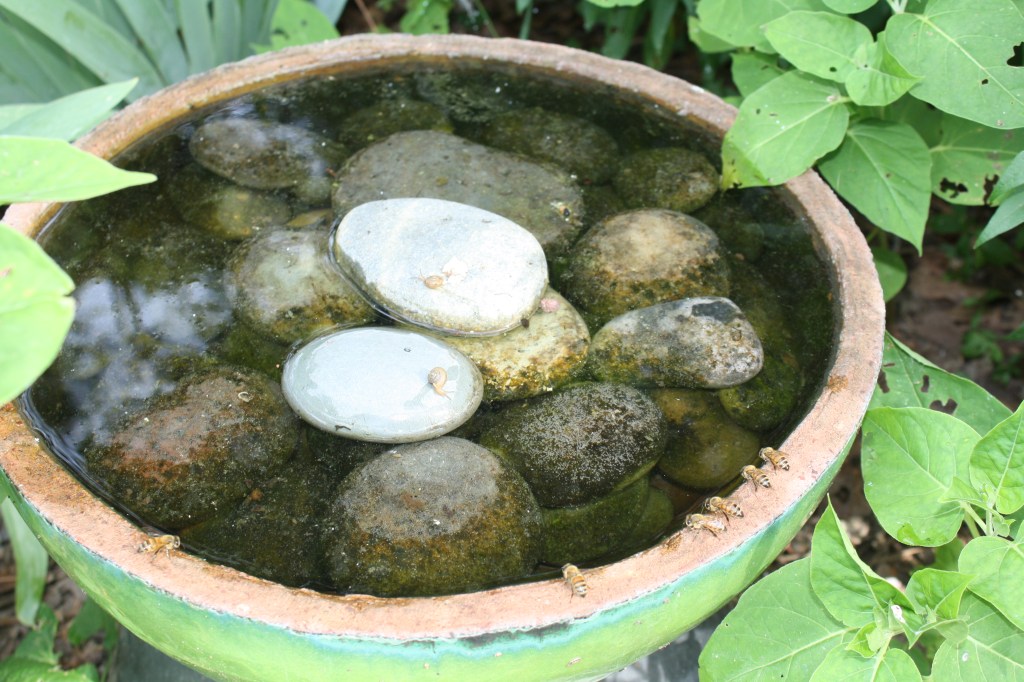
What a photo that would have been. I also have lots of bees getting water from the birdbaths.
So, remember to put out lots of water features and keep them full.
The birds like a perch when bathing, so a fence or trellis is good, but is also a good hiding place for cats. Most are there for the water, but the kitties are there for the birds….
The El Camino Real Chapter Wildscape at the Bird and Bee Farm is awash in blooming plants. I went to water early Saturday morning and was quite surprised by the incredible growth since the last time I was there to prep for the award Gene and Cindy Rek received from the Texas Environmental Quality Commission.
Happy verbena
It looks like everything has recovered from the freezes this year and last. Come and see for yourself and water some plants or pull a weed while you’re there.
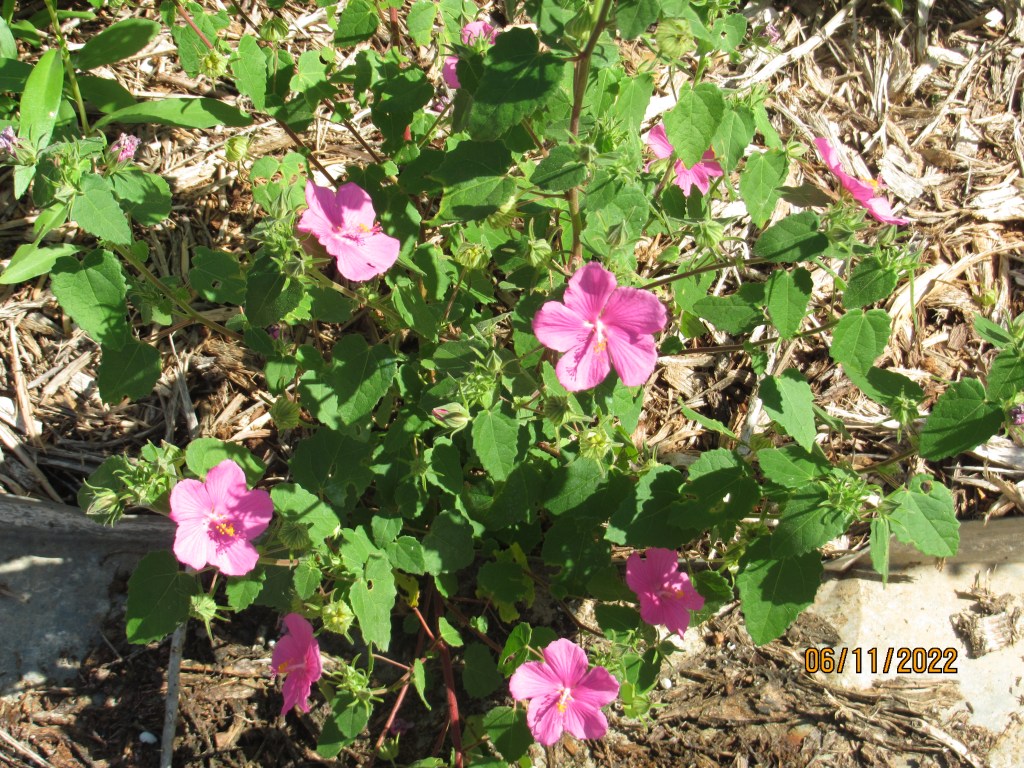
Now is a good time to visit the Wildscape garden at Bird and Bee Farm. Many native plants and grasses are in bloom. The mason bee houses are filled, and bobwhite quail were spotted on the grounds for the first time (see below).
Events will be held later in the year, including Nature Days in October. Saturday mornings are a nice time to visit and share Master Naturalist info with others or do much needed watering.
Butterflies enjoy the zinnias
Hours will be for Community Outreach- indirect, or Nature Improvement in Public Areas.
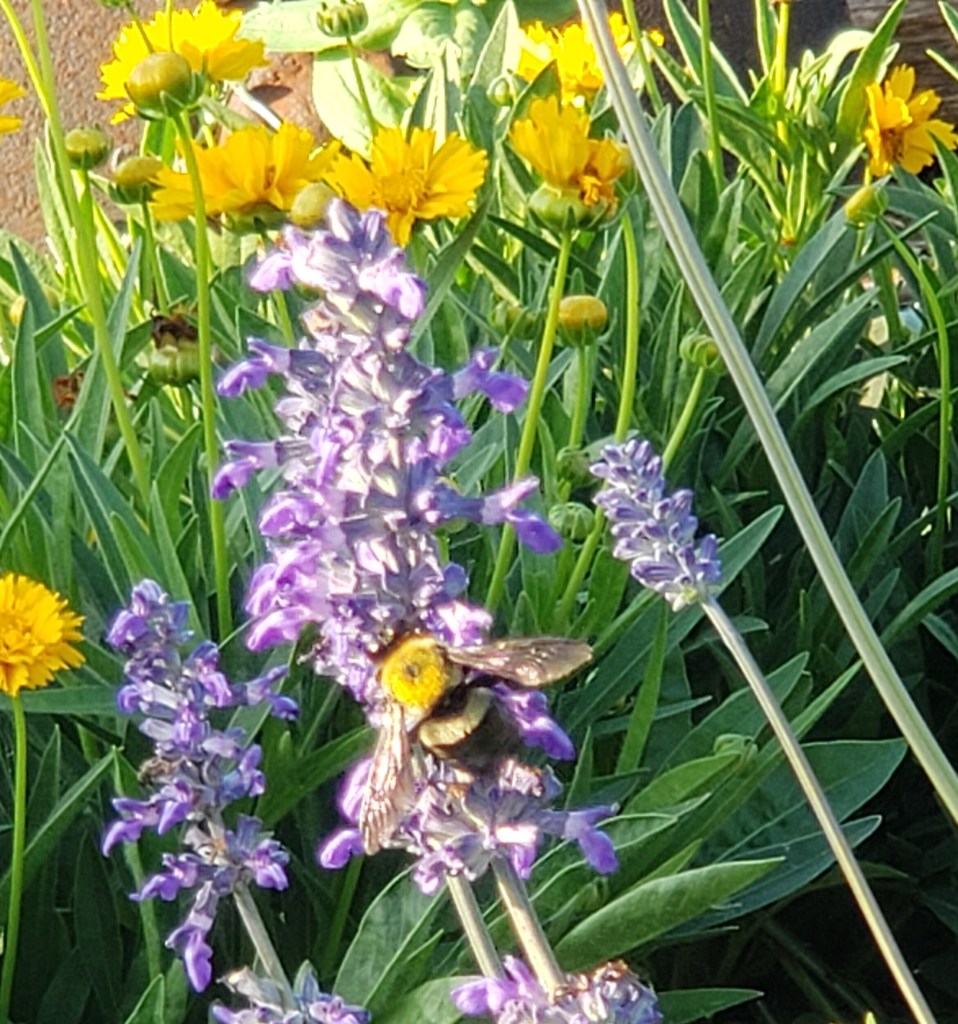
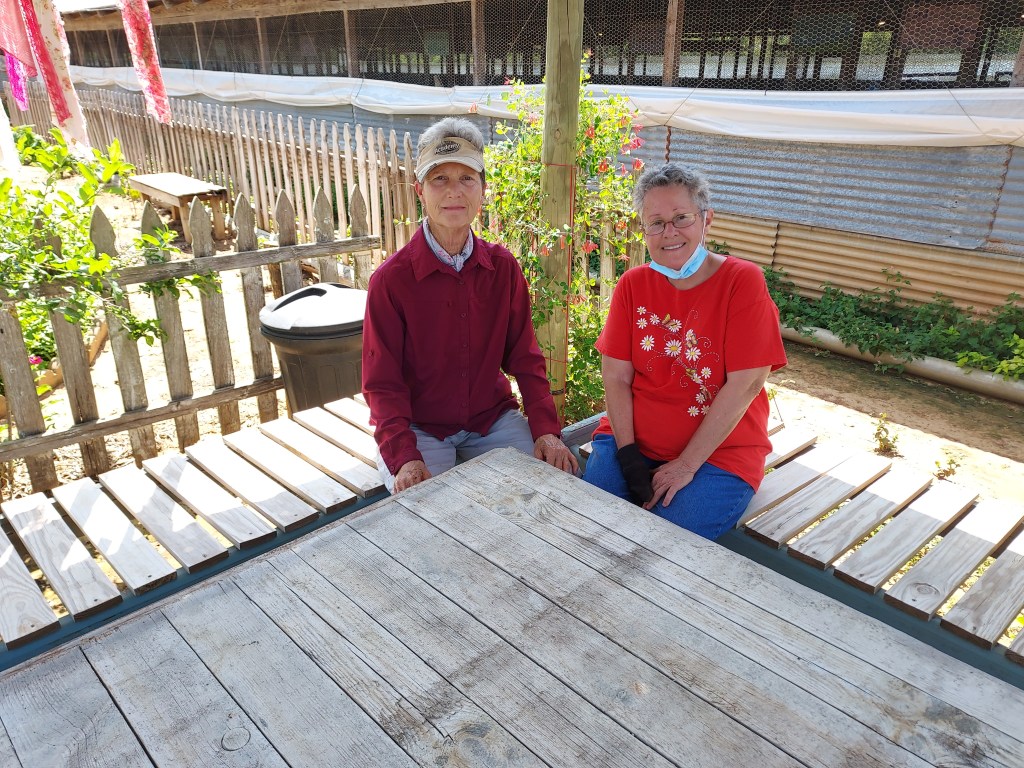
Quail!Pollen loverReady to make honeyDonna Lewis and Catherine Johnson enjoy the shadeLife at the Wildscape
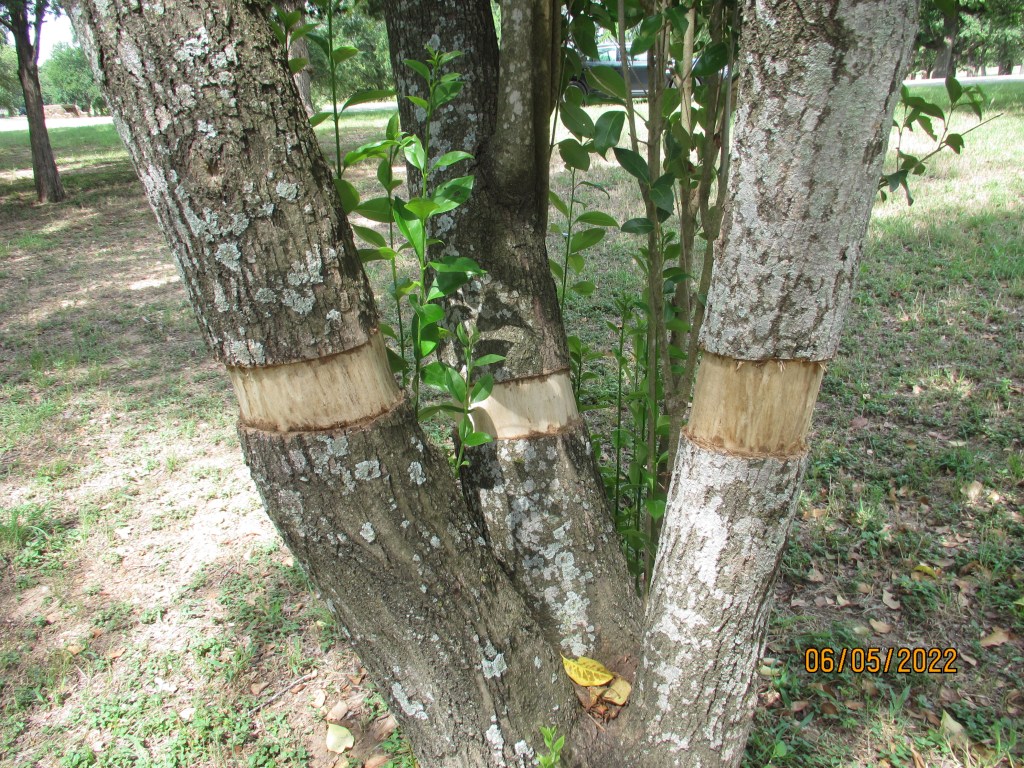
Three months ago, nine members of our TMN chapter met Cliff Tyllick at Wilson Ledbetter Park to learn how to girdle an invasive species of tree. The Glossy Privet was introduced to Texas landscapers from China. It is evergreen, produces flowers liked by pollinators and grows prolifically, and it’s an invasive species.
Tree #1
It’s invasive because it knocks out native trees because of its rapid growth, and it “steals” pollinators from native Texas wildflowers. Pollinators find the big tree’s flowers easy to access. It often takes a little more work to find the native Texas flowers. Without pollinators, the natives die out.
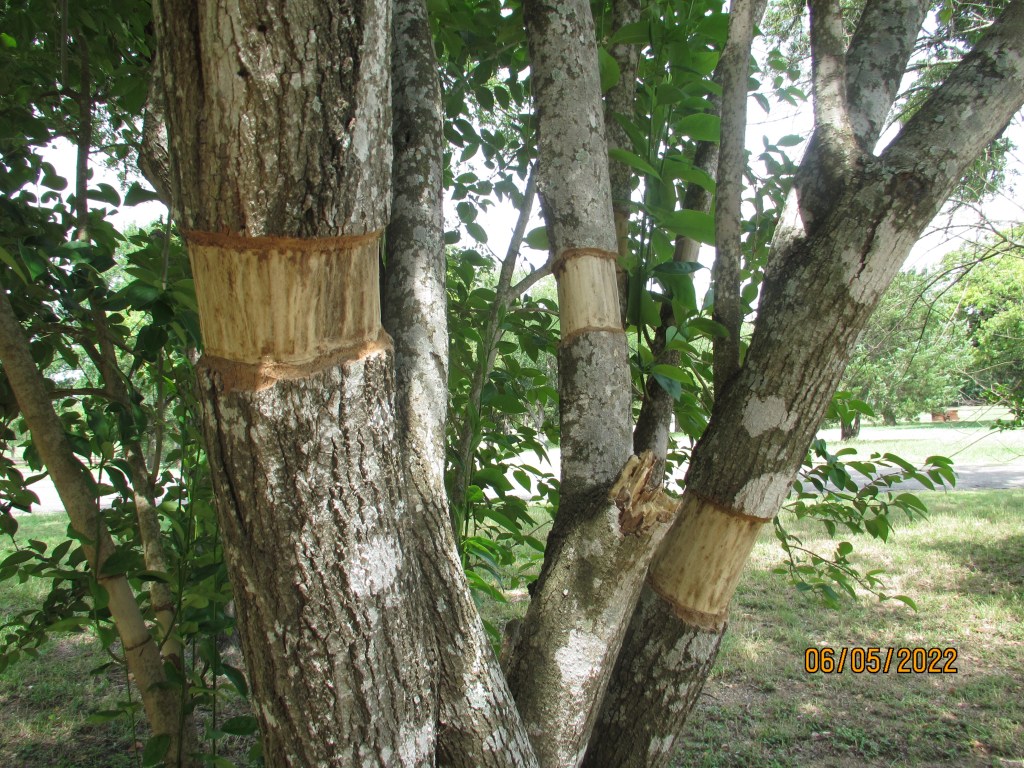
Tree #2
Tree girdling is a method of killing trees without herbicides or the noise of chainsaws. It is used a lot in the nature preserves in the Austin area. Since there are quite a few Glossy Privets in Wilson-Ledbetter, we brave nine thought we’d give it a go. In summation – it’s difficult to girdle a tree. It’s not overly complicated. It requires a lot of physical action.
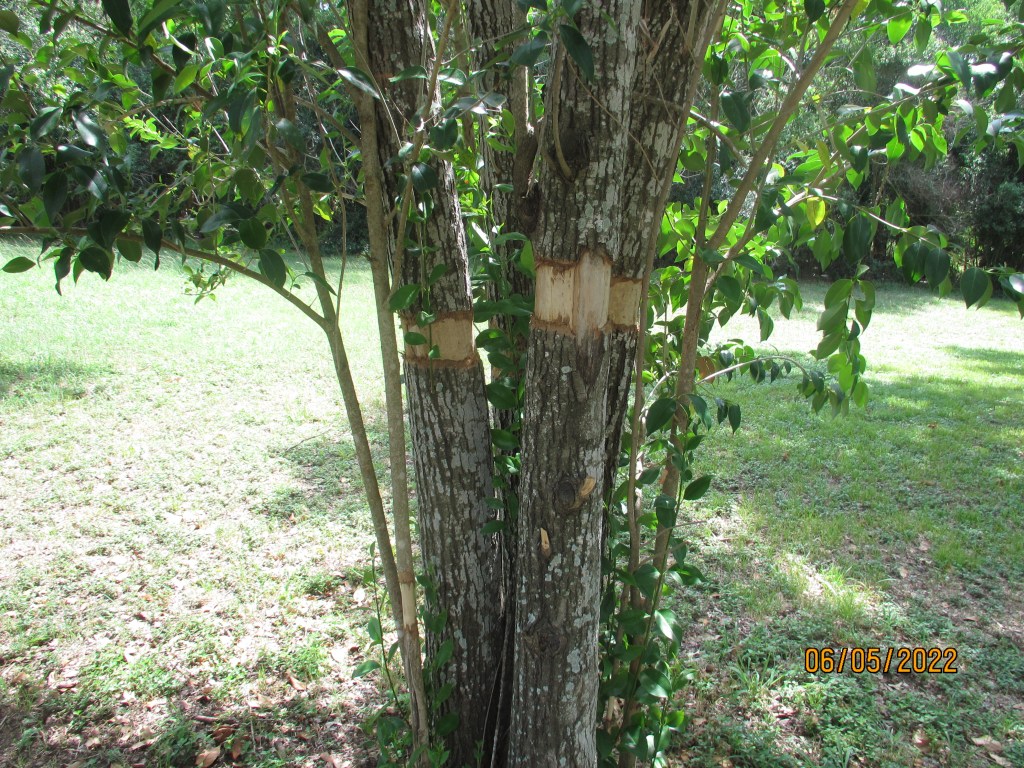
Tree #3
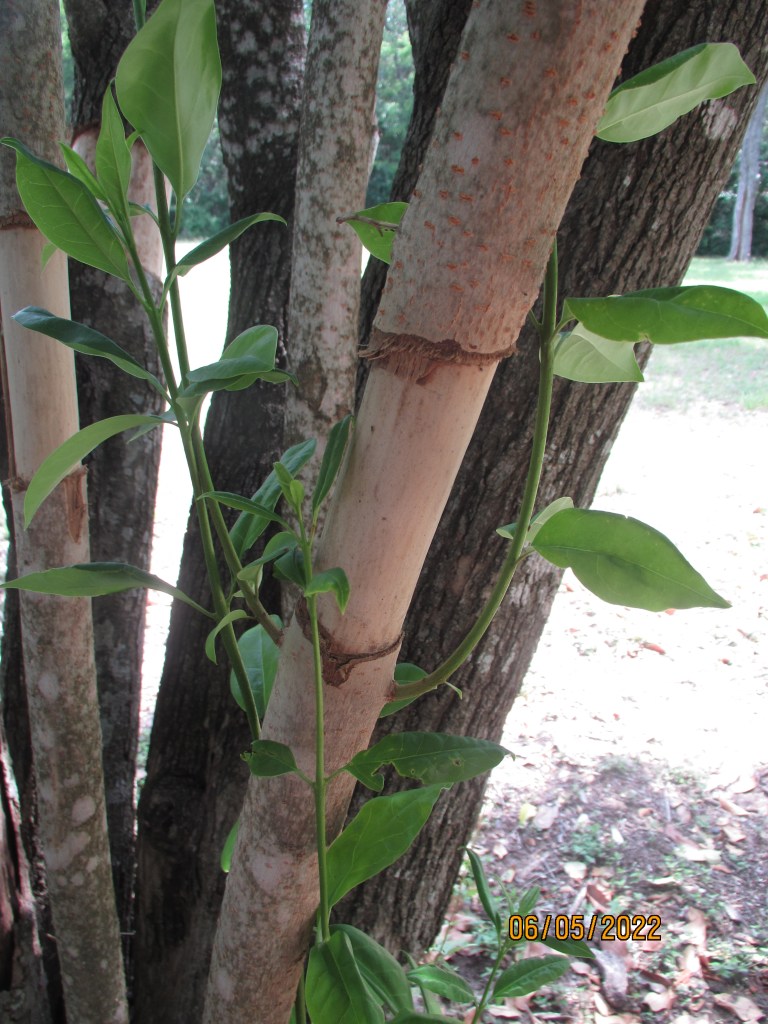
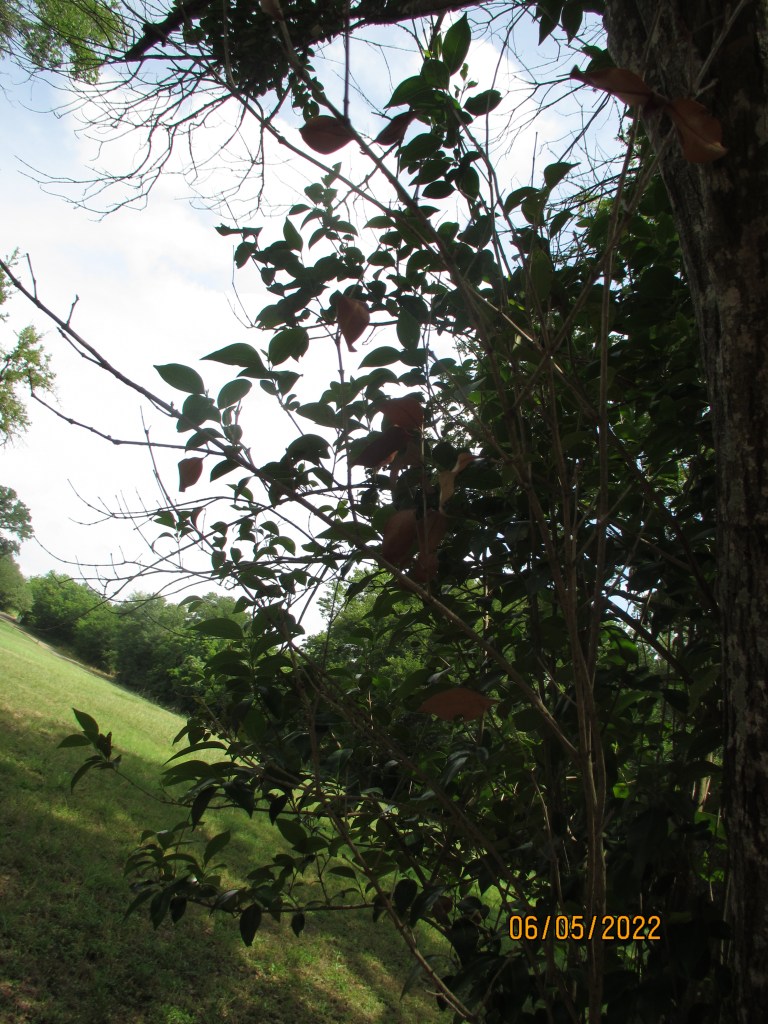
Sunday, I went to the park to check on the progress of our girdling. I am unsure whether it’s succeeding or not. We worked on three clusters of trees in three groups. Two of them had 3 or 4 “trunks” and were completed. The third group had eight or nine trunks, and a few of those were left untouched.
Dead branches
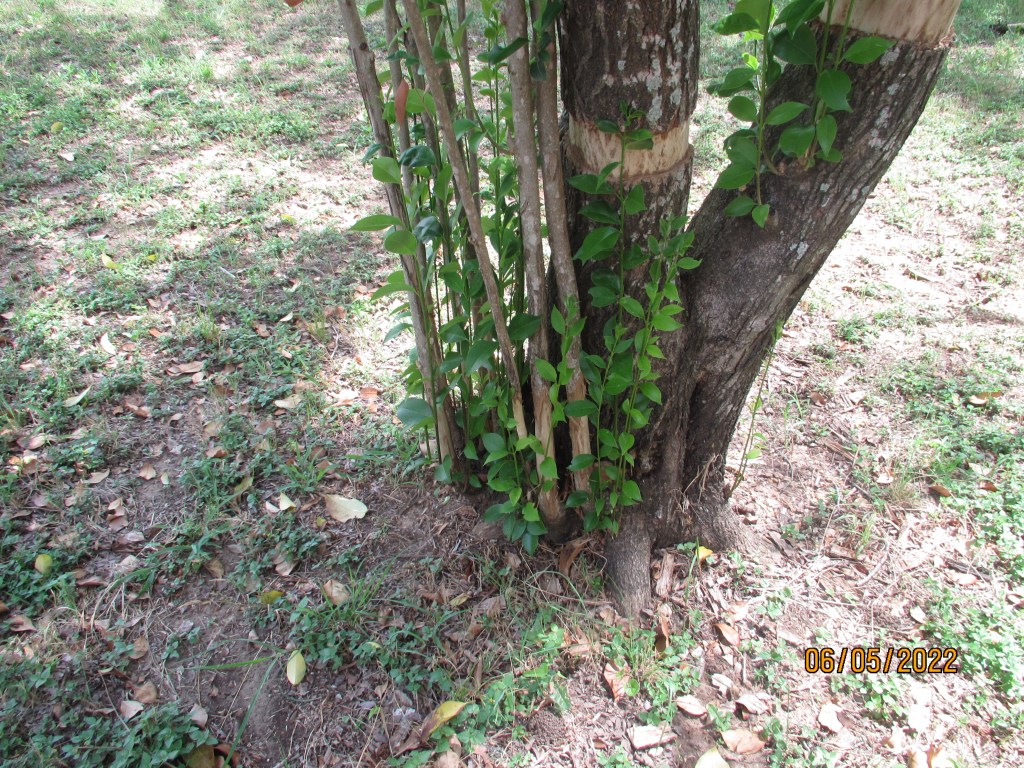
The uncompleted one has dead branches at the top of the trees, but I’m not sure if that’s from girdling or leftover damage from the freeze of 2021. The other two have a couple of dead branches, but new “trunks” are growing up from the ground. There are a few growing below the girdling area, but I don’t see any new growth above the girdling.
Tree finding a way around girdling
Cliff said it would probably take a year to completely knock them out. To hasten it along, they need a little work which isn’t uncommon, I’m told. For those who want to give our project a little care, I’m going to schedule another morning to get together and help them along.
Trying hard to live
Ultimately, we’ll get them down one way or another. Then we plan to plant Eastern Redbuds to replace them.








 Nature Along the El Camino Real