Two out of Three isn’t Bad for the Bur Oaks

By Carolyn Henderson

Anyone remember planting the three Bur Oaks in Cameron parks last April? Two of the three are doing great.

About 10 members and friends planted them in Wilson-Ledbetter Park, Cameron City Park, and Orchard Park in honor of Earth Day. The trees at Orchard Park and Wilson-Ledbetter Park are growing, which indicates they will survive. Cameron City Park tree has mysteriously died.

Orchard Park

Both of the living trees were planted close to the bodies of water in each park, and then Liz Lewis and I proceeded to water them every week. They both survived a very heavy wind in a storm the day after we planted them. The wind bent both of them toward the ground. It practically laid the Wilson-Ledbetter Park Bur Oak on the ground. Michelle and Oscar Lopez and I went out to check on them and found it. We staked it upright to a degree. The top part is alive, but it really seems to be coming back from the ground.

Wilson-Ledbetter tree

The Orchard Park oak also was found leaning from the storm, and I pushed it back in place. Then the heat wave set in on the area. Liz and I took water to the three at least once a week. We used cat litter jugs to carry it. The City Park oak had lost all its leaves early on, but resprouted them in two weeks. I labeled that transplant shock. I was watering it once a week.

Orchard Park tree.

Later, I was told someone else (not a member) was watering the tree regularly. I drive by it frequently. It had green leaves on it until one day it didn’t. It was dead at that time. It is a mystery why it died. I have left it there for now, just in case it sprouts from the bottom like the Wilson Ledbetter oak has done.
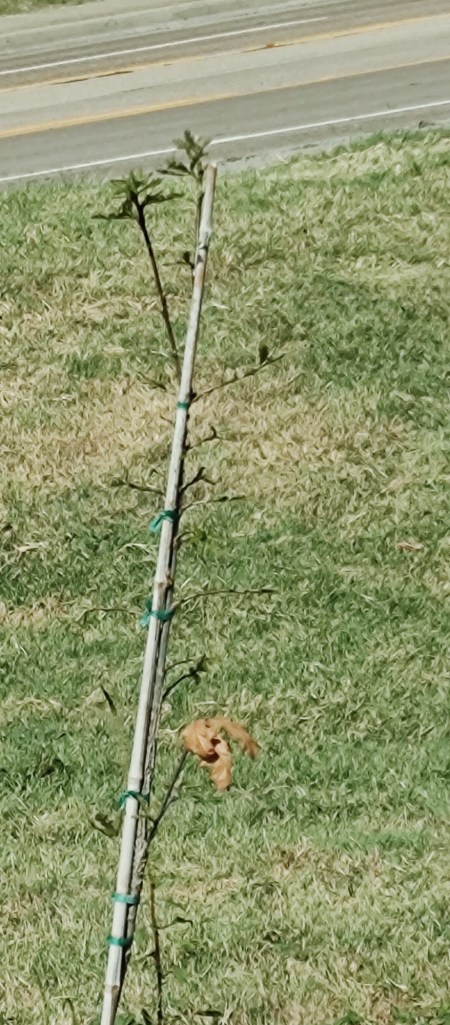
City Park tree.

I’d like to plant Redbuds out a Wilson-Ledbetter, but it might be too much to water.


Note from Sue Ann Kendall: I had a bur oak in my yard in Round Rock. It lost its leaves each winter. Maybe that’s what’s going on in the City Park tree. If they all resprout in spring, do cut the sprouts from the base so the trees will have one trunk. If they don’t, encourage one trunk to regrow.

Just thoughts. I could be wrong. it happens.
Turks Caps Still Blooming (at least pre-freeze this week)

By Carolyn Henderson

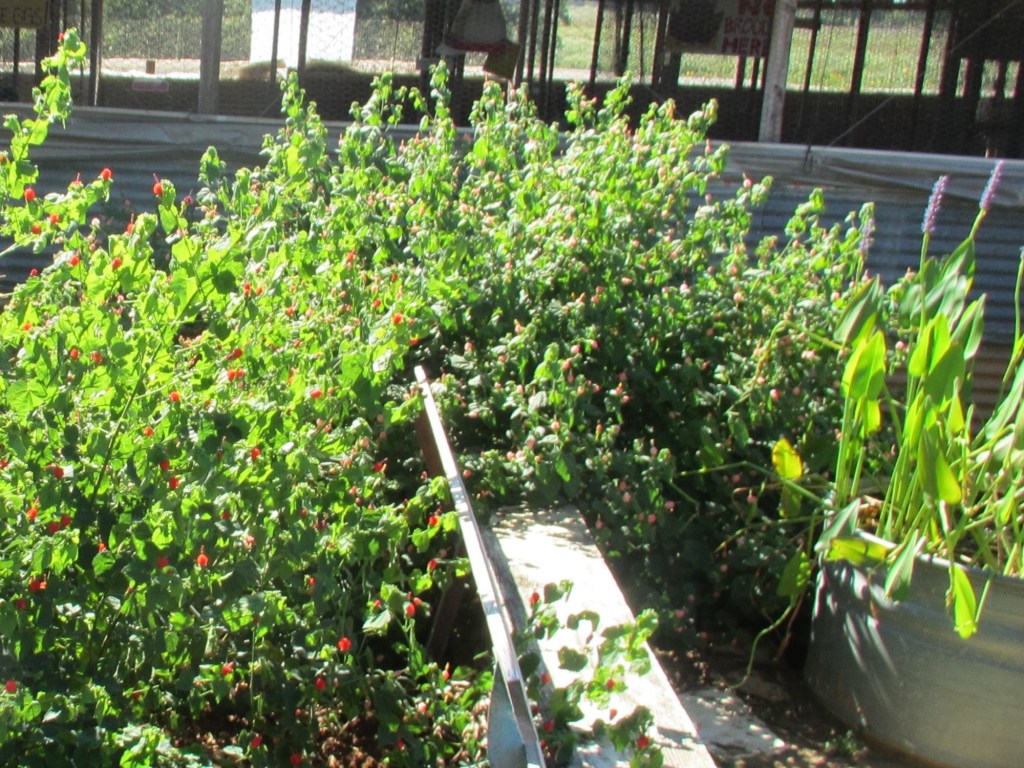
Turks Caps are easy to grow from the little red apple-looking seed pods they put out in late fall. I have verified that through an experiment I decided to undertake last December 2022. 

I harvested the seed pods from a very large, pink Turks Cap at the El Camino Real Master Naturalist Wildscape at the Bird and Bee Farm on FM 334 with the hope of growing some in my yard. Turks Caps naturally have a vivid red flower. These had been modified to bloom a light pink. The one at the wildscapesits right next to an even bigger Red Turks Cap.

I googled how to process the seed pods. It was recommended to put them in the refrigerator whole until late February or early March. In late February of 2023, I then did as recommended and removed the seeds from the red pod. Each pod produced quite a few seeds. I planted 16 of them in seed starter packs. I should add that I also took a baby plant from the Pink Turks Cap and put it in a pot at the same time I took the seed pods. I planted one full pod in the flower bed where I intended to put all of them. It is a heavily shaded bed which Turks Caps are known to like. The potted one was getting 6 hours of sun a day.

All of them grew. The potted one grew very tall since it had a head start, I think, and bloomed a lot. Butterflies and bees are very fond of the blooms. I moved the starter plants to a flower bed in my front yard in late March. The full pod plant grew at a faster pace than the seeded plants, but all of them did grow. They grew the most in the shadiest part of the bed. 

The whole pod plant bloomed first of the ones in the bed. About half of the others bloomed in the fall. The blooms were all pink – at first. To my surprise, I went to water them one day, and one in the shadiest part of the bed was also blooming red at the same time it was blooming pink. The potted plant had pink blooms throughout the season. The others native gene pool came through. It would appear that they can be planted in any manner I tried.

All of them were still alive up to the freeze. I fully expect them to come back in the spring – even a small one my son weedeated down because he thought it was a weed. It re-sprouted quickly. What I really want to see is what color they bloom.

Getting the Purple Martin Apartment House Ready to Open

by Donna Lewis

Hello all my Martin Friends in Central Texas.

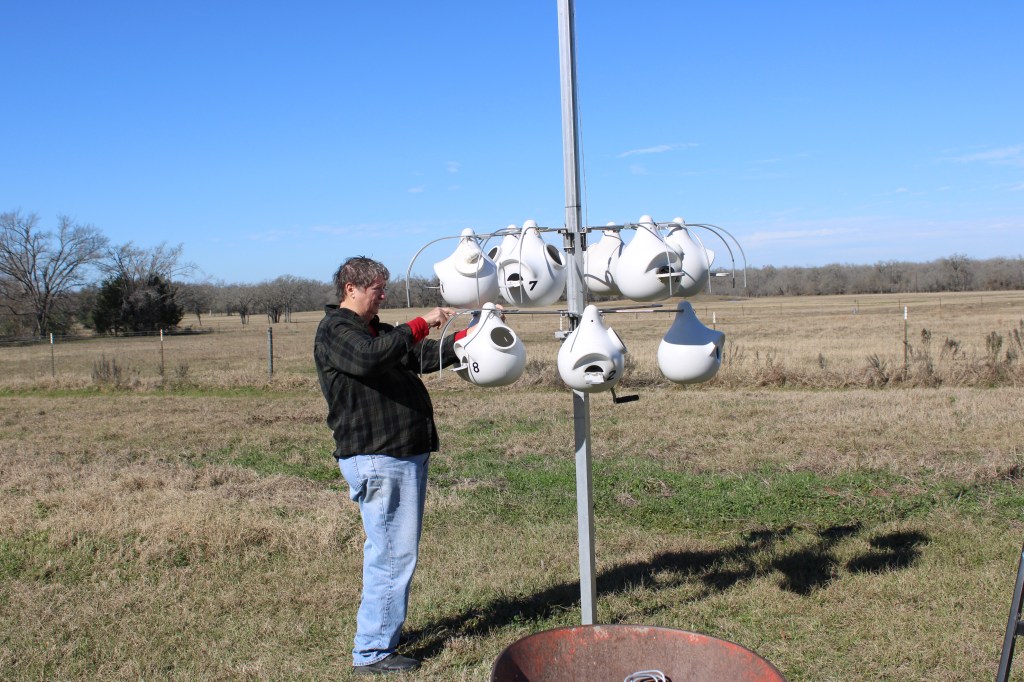
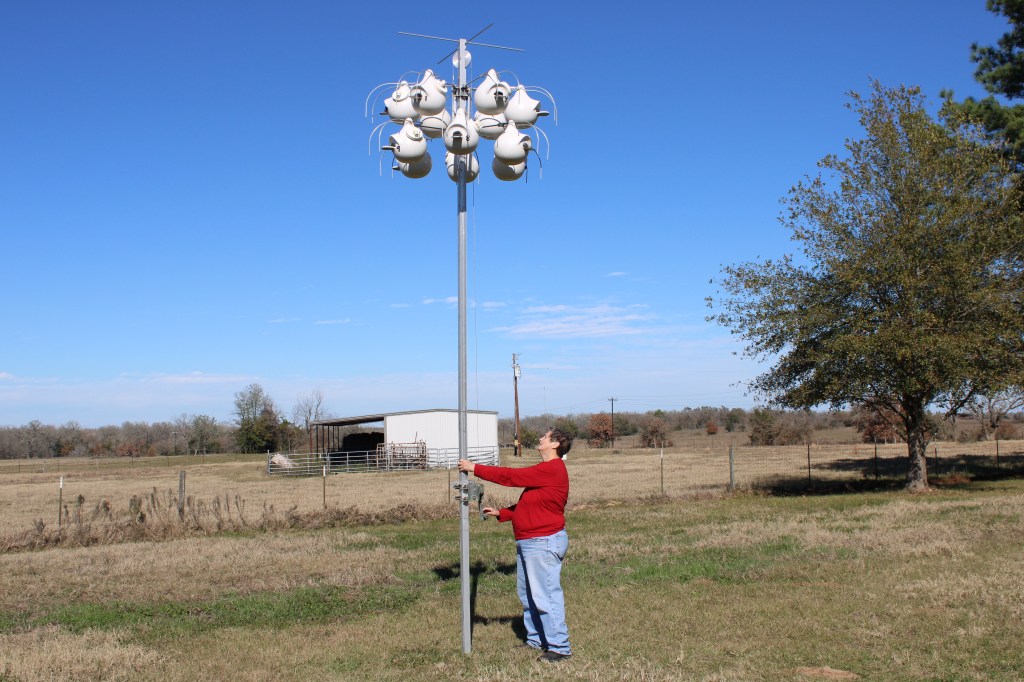
I last showed you how I got my gourd rack ready for the return of the Martins.

Now let’s look at readying the apartment house for the Martins.

It has been cleaned, emptied of all nesting materials and covered last August when the Martins left this area. Then the house was lowered down and secured till the next season which usually starts in Central  Texas in late January and on.

At my site, February 14th is the normal time for my friends to return.

Once again, the first scouts are normally males looking to get a nest they like. They will then start singing trying to attract females to the site. It is a beautiful song..

Right now I uncovered the house. I inspected it to make sure no wasps, spiders or anything else had taken up residence since I last closed the house.

I then slide in the nest box that I have put fresh dry pine needles in all of the 26 compartments. I also have an early arrival door that goes over the openings. It has only the door for the birds to enter. When the summer heat has arrived and there are babies in the house, I switch the doors to ones that are made with more ventilation.

It can be extremely hot inside the houses. That is why I have aluminum houses painted white to reflect the heat as much as possible. So now, I recover the house and keep it as low as it will go.

When I hear the Martins arriving, I remove the cover and roll it up. Then I only open a few holes at a time. That will keep some of the House Sparrows from taking over. It is absolutely a requirement to keep them out. They can ruin an entire colony by killing the Martins.

So right now is the time to get new or existing ready to open at a moment’s notice. It’s kinda like a fire drill. So naturally, the weather is going to be cold, windy and rainy. That is why you want to do what you can while your hands are warm.

So my timeshare is OPEN, come on in!  I just love the Martins and all birds.

I am part of all that I have met.

Alfred, Lord Tennyson

A Local Bird Project

By Sue Ann Kendall

Since we’re not getting many submissions lately, I’ll go ahead and write up some of my little naturalist projects. Too bad I don’t get volunteer hours for this kind of stuff, but I enjoy it anyway, because it gets me out in nature and my data is useful to someone.

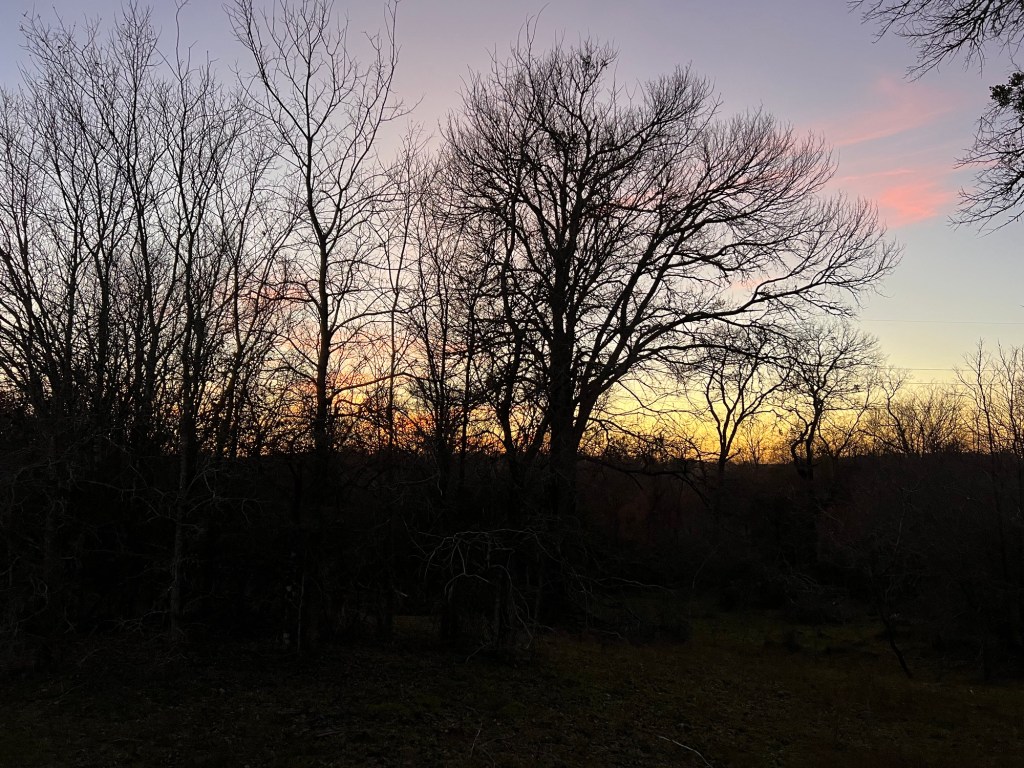
Where I listen to birds.

What I’ve been doing involves using my eyes and ears to track the bird species in an area of northern Milam County about a half mile in diameter around my property. It contains pastures, woodlands, ponds, and a creek.

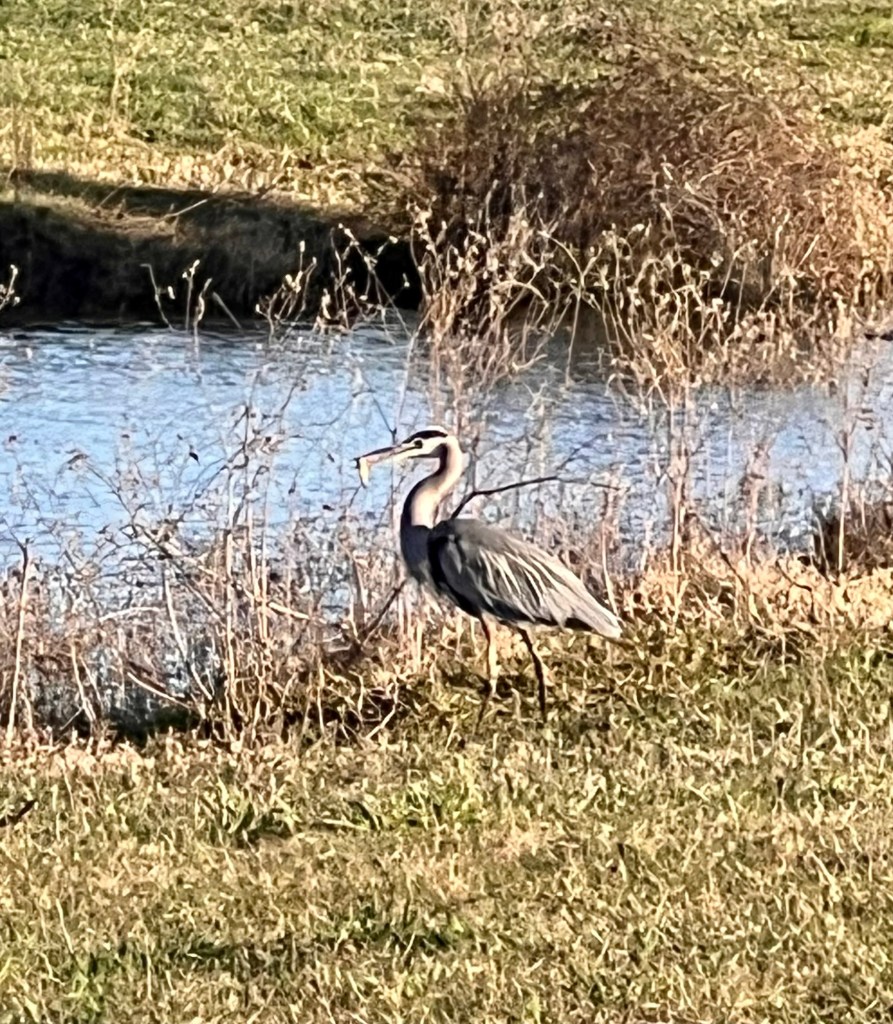
Mmm, fish

I’m keeping a record of what birds I observe with my eyes (I do try to get photo confirmation on iNaturalist for unfamiliar birds, but I trust myself to identify the two vultures I see as well as crested caracaras. For listening, I use Merlin Bird ID, which is really quite accurate (only twice has it found birds that shouldn’t be here, and who knows, the wind could have brought them in).

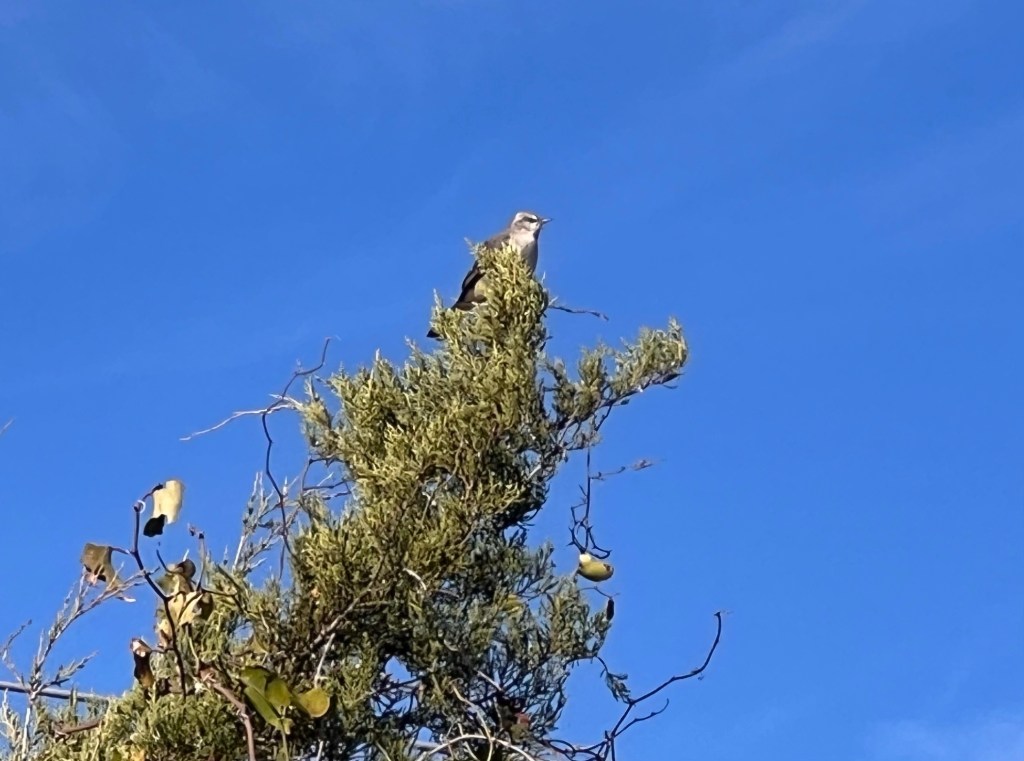
It’s a mockingbird, not a loggerhead shrike.

I use Merlin for between half an hour and an hour a day, and I have three places I usually listen. Mostly I listen between 8 and 10am, depending on my schedule, though I occasionally listen around dusk so I can get owls (barred and great horned so far).

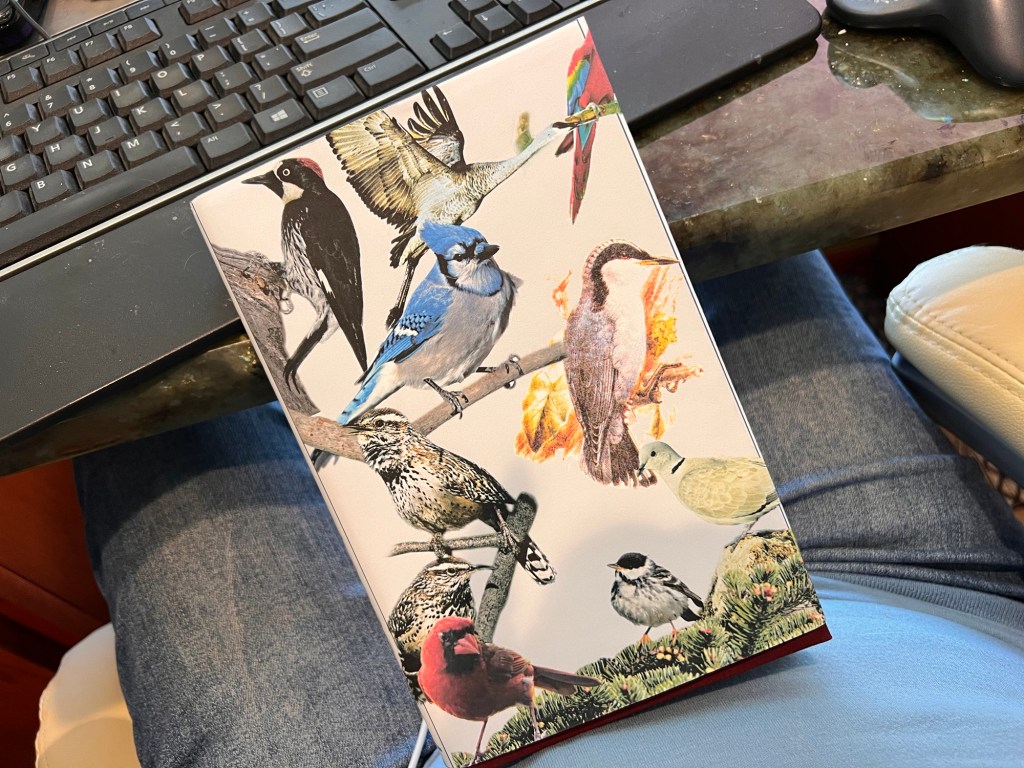
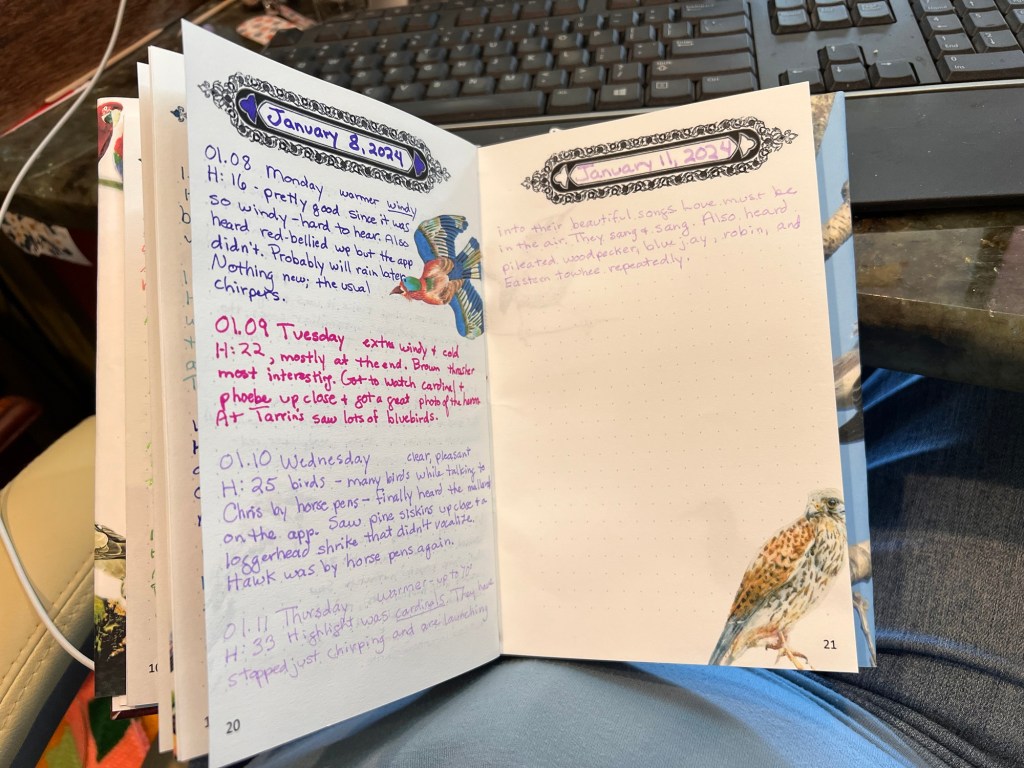
I have a bird journal that my spouse made for me. I record weather notes as well as how many birds I hear each day. I also note birds I get to observe up close or with my binoculars, and any new arrivals.

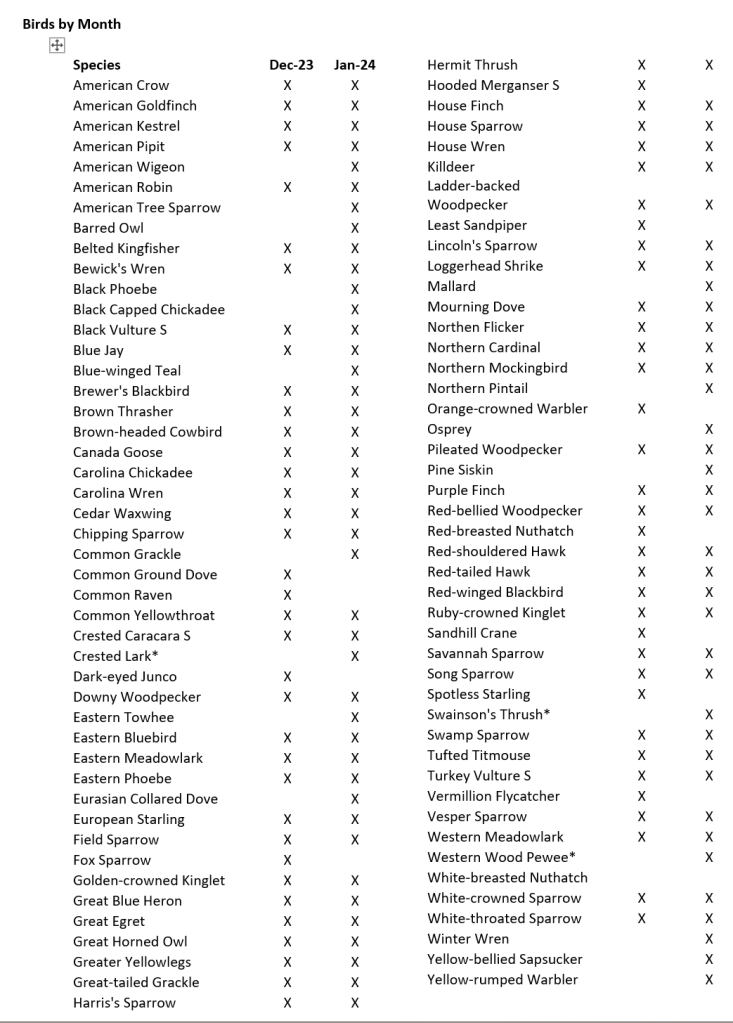
Where the research part comes in is that I have started a spreadsheet that lists each species I observe each month. I’m looking forward to spring migration to see what passes through as well as to record when winter residents leave and summer ones arrive. I miss the painted buntings and their friends, though the twelve kinds of sparrows here do keep me on my toes. Yes, twelve.

Current birds observed

By the end of the year, I’ll have a good idea of the patterns here in this small area. My hope is to keep observing for a few more years, so I can see how climate or big weather events affect this area.

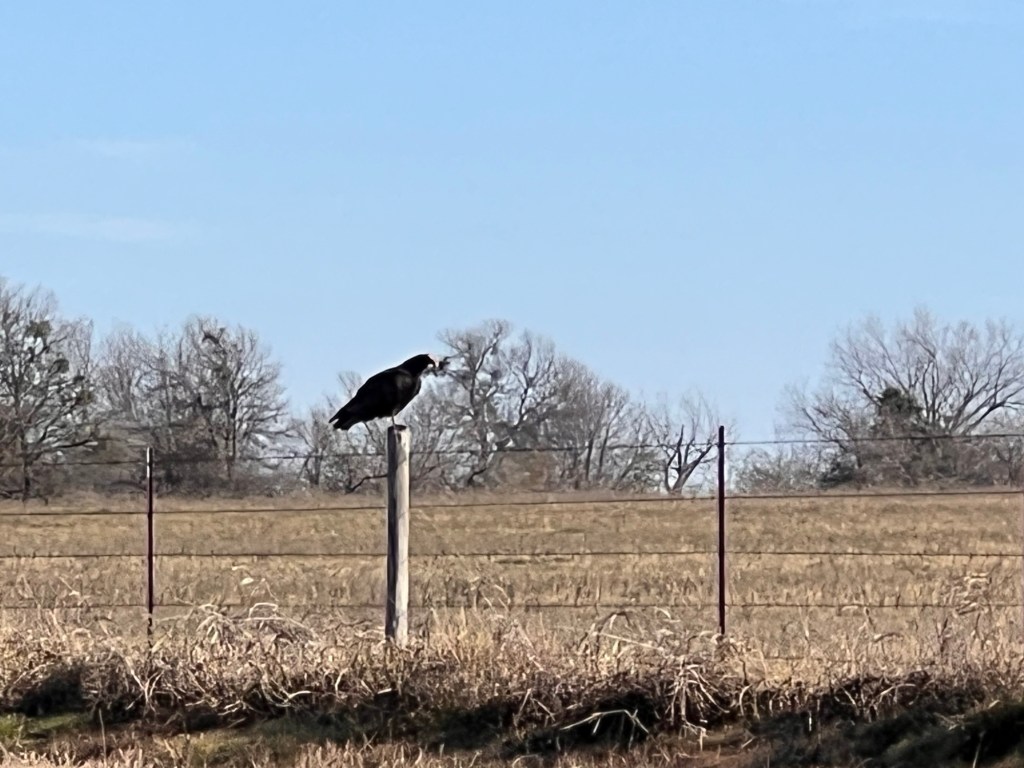
I’m a black vulture.

I’m going to put in another plug for the Merlin Bird ID app on my phone. All the observations go into the eBird database, since it’s from Cornell Ornithology Labs. You can contribute photos as well as record sounds of birds. I say sounds, because it identifies mourning dove wings correctly!

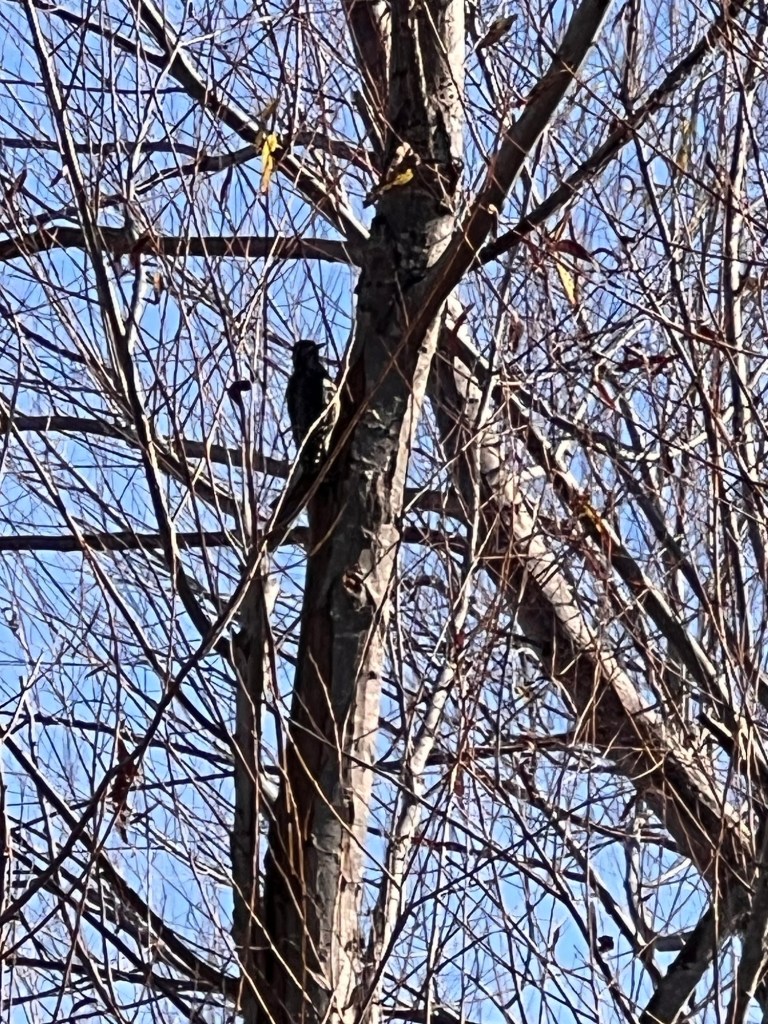
Sound ID told me this one’s a ladderback woodpecker.

I’ve learned so many bird calls that enrich my life. I drove my spouse crazy yesterday identifying all the birds on the Nature PBS show yesterday. There was one persistent Phoebe. I now know Carolina Chickadees have many more songs and calls than I’d realized and that we’ve had a few Black-capped Chickadees drop by.

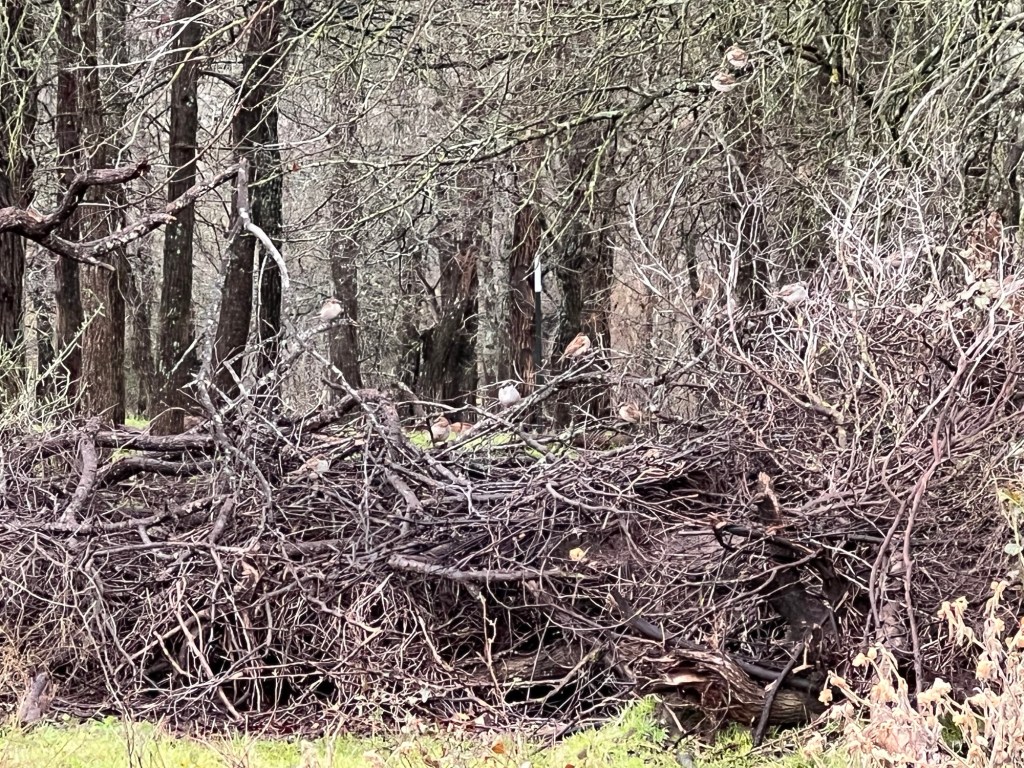
Some of our sparrows. Mostly white-capped, some house sparrows, maybe a Harris’s sparrow in there.

The part I find funny about this app is that it refuses to identify chickens, Guinea fowl, and turkeys, at least at the Wildscape. The last one confused me, because they are native. but maybe it “knew” these were at a facility for raising turkeys.

Time to Think about the Purple Martins’ Return

by Donna Lewis

Happy New Year.

Just as our weather starts to turn cold and windy, for Martin landlords it is time to get ready for the return of our beloved Martins.

Right now they are still in Brazil. Very soon they will feel the time-long urge to migrate back to their breeding grounds. That would be across the border into the US and Canada. From my experience, the birds will arrive in Milam County around February.

Times vary a little from year to year.

The first to arrive are called scouts. They tend to be the adult males looking for nesting areas that will best attract females. Last year’s birds will arrive later, up to four to eight weeks.

Right now is the time to get your houses ready. It is harder to assemble an Owl guard when the weather is cold and windy.  Putting your gourds or apartments up nowmakes sure you are ready as soon as they arrive. Do NOT open the cavities yet. You need to wait till you hear the bird’s arrival and open only a few cavities. This keeps unwanted birds (House Sparrows) from taking over. Block the entrances with foam or something you can easily take out. Duct tape is NOT a good option.

I have people ask me how I know I have a Martin? Their song is different from any other bird. Believe me, they will let you know they have come home.

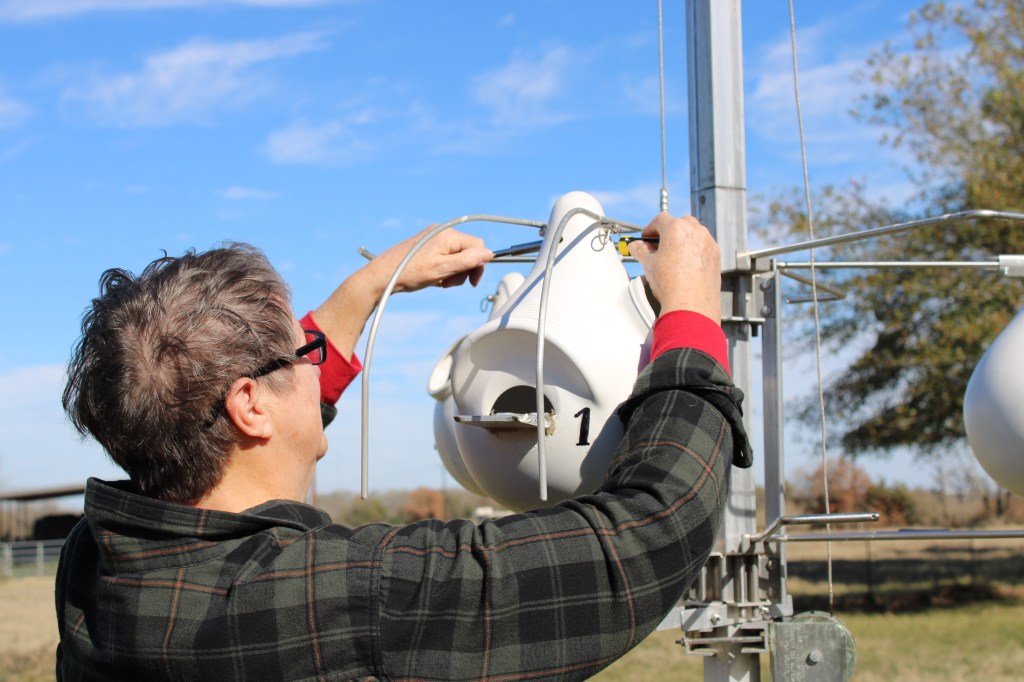
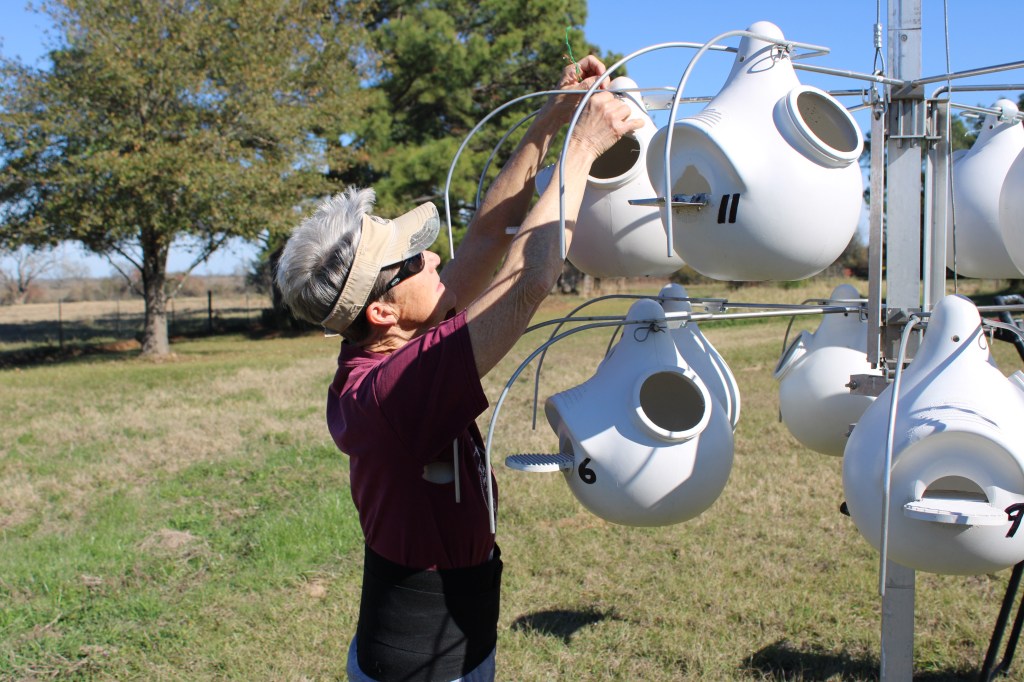
So, I had help putting up my gourd rack, and all I will need to do is add the pine-needles in a few weeks.

I have both a Gourd house and an apartment house. I have noticed here at our site, the gourds are the most favored.

Also, it is best to add new housing, or make changes before the Martins arrive. They don’t like change.

So, happy Martin season.