Hiking the Rancheria Grande

by Carolyn Henderson

To walk where Spanish settlers walked hundreds of years ago and native tribes lived their lives, even thousands of years ago is an inspiring experience. Members of the El Camino Real chapter Texas Master Naturalist and El Camino Real de los Tejas National Trail Association got to experience it firsthand Saturday in a guided tour of a trail in development.

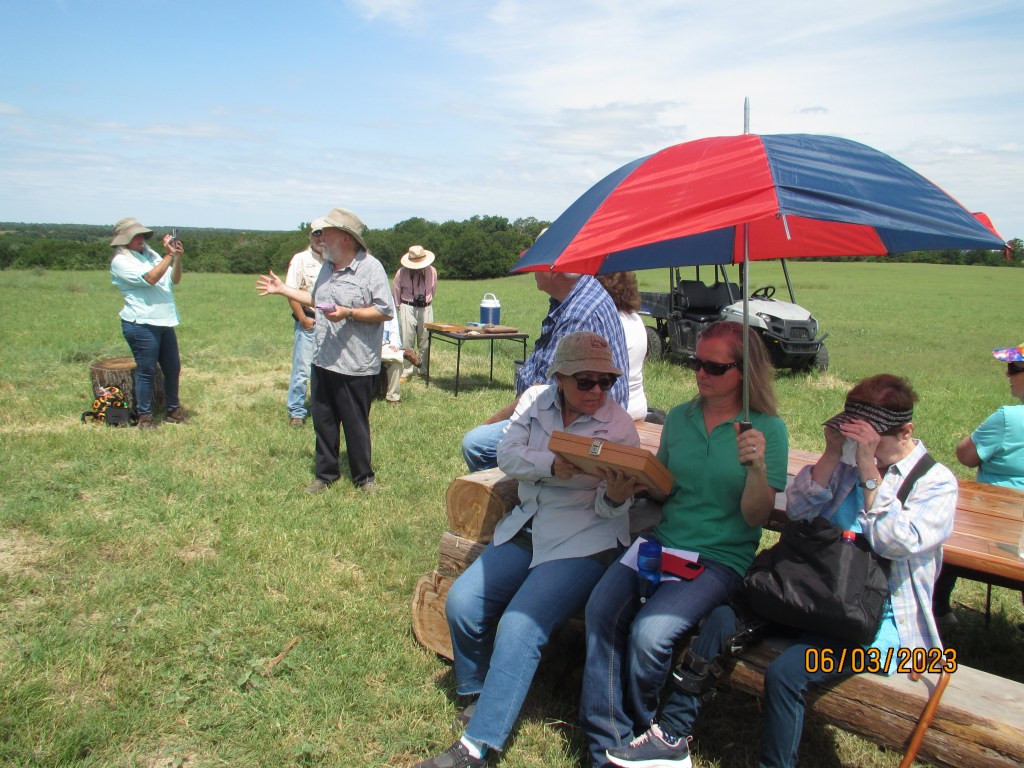
The group after their hike

The trail is part of the El Camino Real Trail that spans a good part of Texas. The part travelled Saturday, June 2, runs across the Cedar Hill Preserve, owned by Mike and Joyce Conner, and the Baumann Ranch. The Conner property is being developed as a native flora and fauna preserve, and the adjoining Baumann ranch is still a working cattle ranch. It is now part of the National Trail Association, and it is being prepared for study and hiking for organized groups in the future.
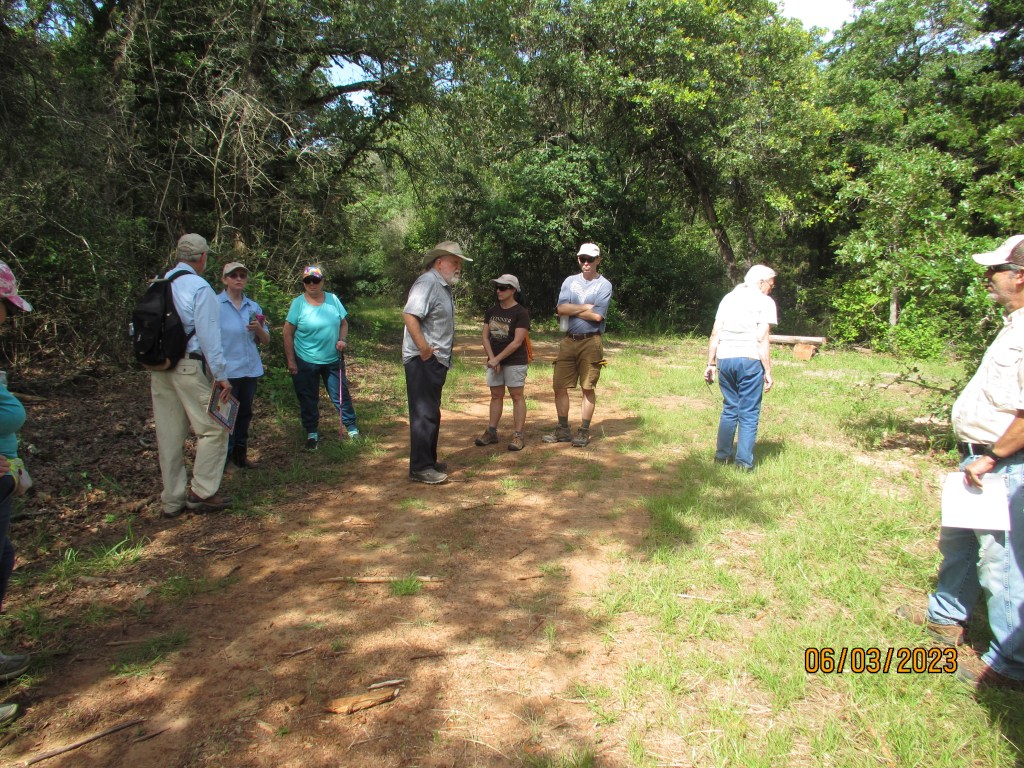
The trail head

The wet swales were probably formed by water traveling in a path through the area in wet seasons then later used by travelers.
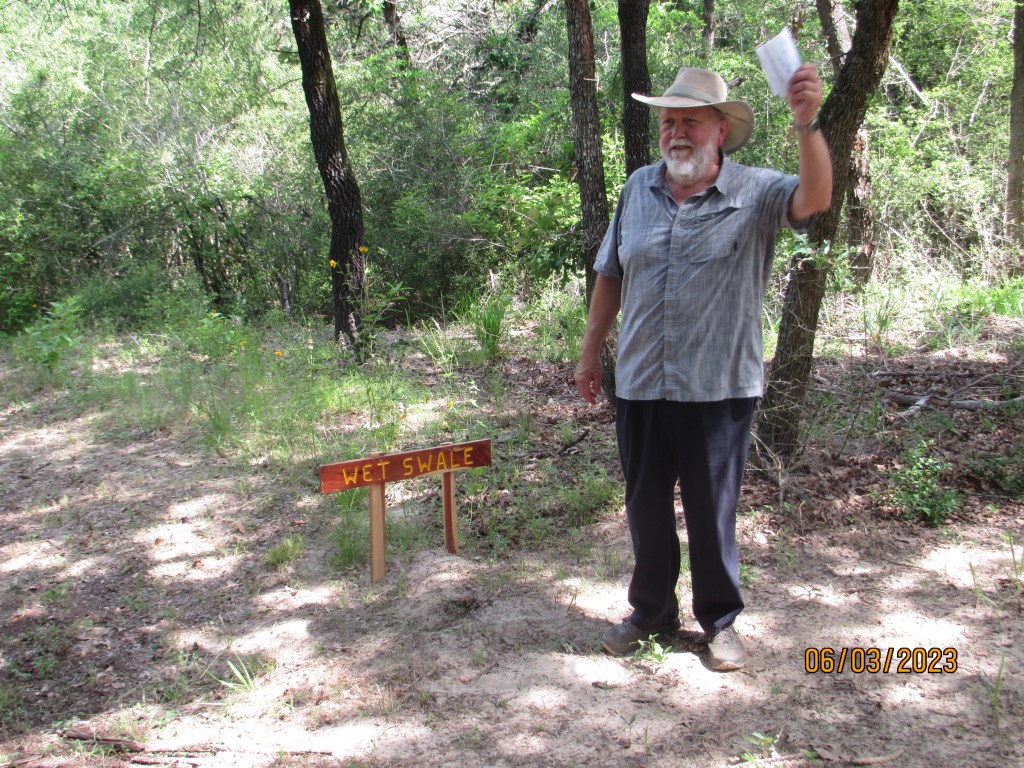
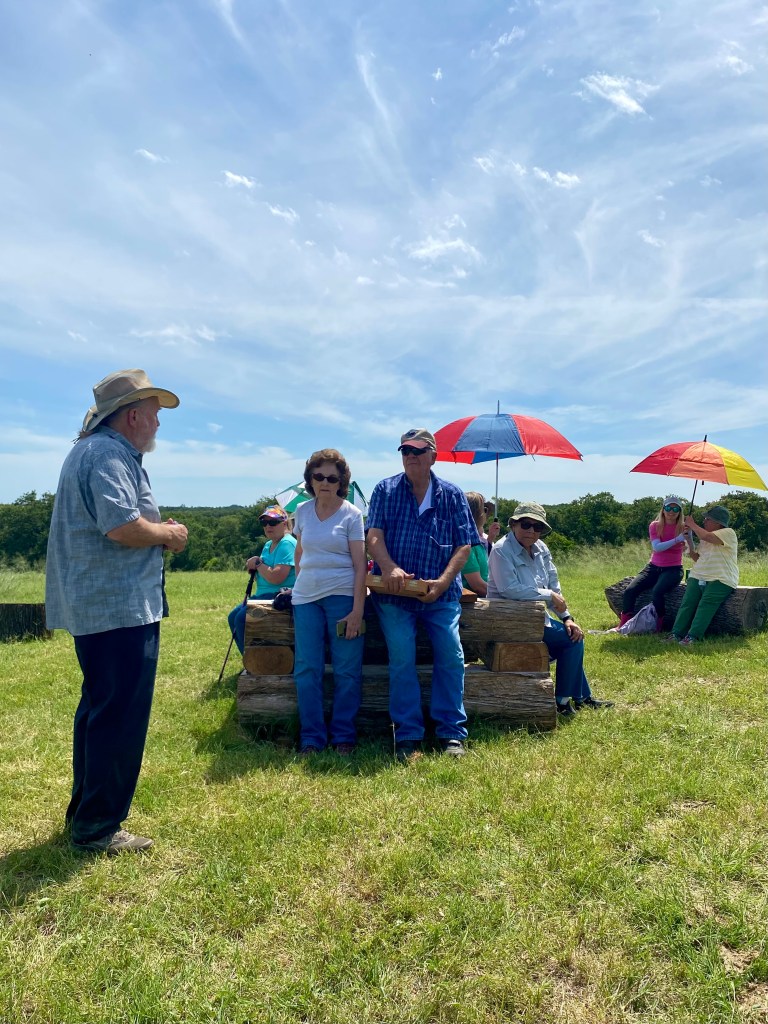
Mike Conner talks about the wet swale

The trail head begins in a woody area on sandy loam soil complete with a fancy new outhouse somewhat like your grandparents had in this area. In many areas a hiker can actually see the trodden
path taken by Spaniards and Native Americans dating back hundreds and probably thousands of years ago. They are most discernable by swales that bank the path. A swale is a buildup of land running along each side of the ancient trail. It looks a bit like a street curb might look today. There are both dry swales and wet swales. The dry swales were strictly roads/paths taken by travelers.

Dry Swale (photo by Michelle Lopez)

There also are signal trees believed to have been formed by the native tribes to give direction
then later used by the Spaniards. Artifacts from both groups have been identified by archaeologists
studying the area. Post Oak trees primarily were used to form these trees.

Signal Tree

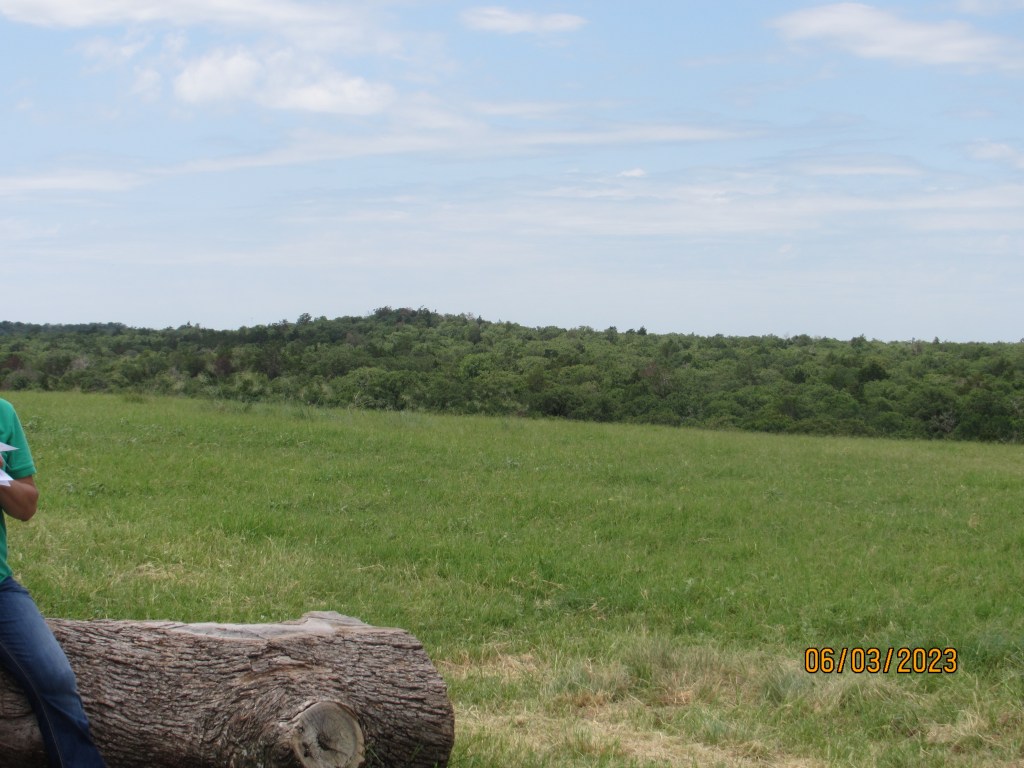
When you come out of the wooded area, you are then on an uphill stretch to reach the very high hilltop. The top of the hill is like a meadow looking out at the woods below and nearby hills or “mountains.” Sugar Loaf Mountain is very near and visible from this hilltop. It is believed that this hilltop where we were was a village for a native tribe or tribes over the years. Tonkawa artifacts have been identified from the area. There was a great deal of speculation by the hikers that the different tribes sent smoke signals to each other from these hill tops. A visit to Sugar Loaf Mountain has long been a rite of passage for area high schoolers.
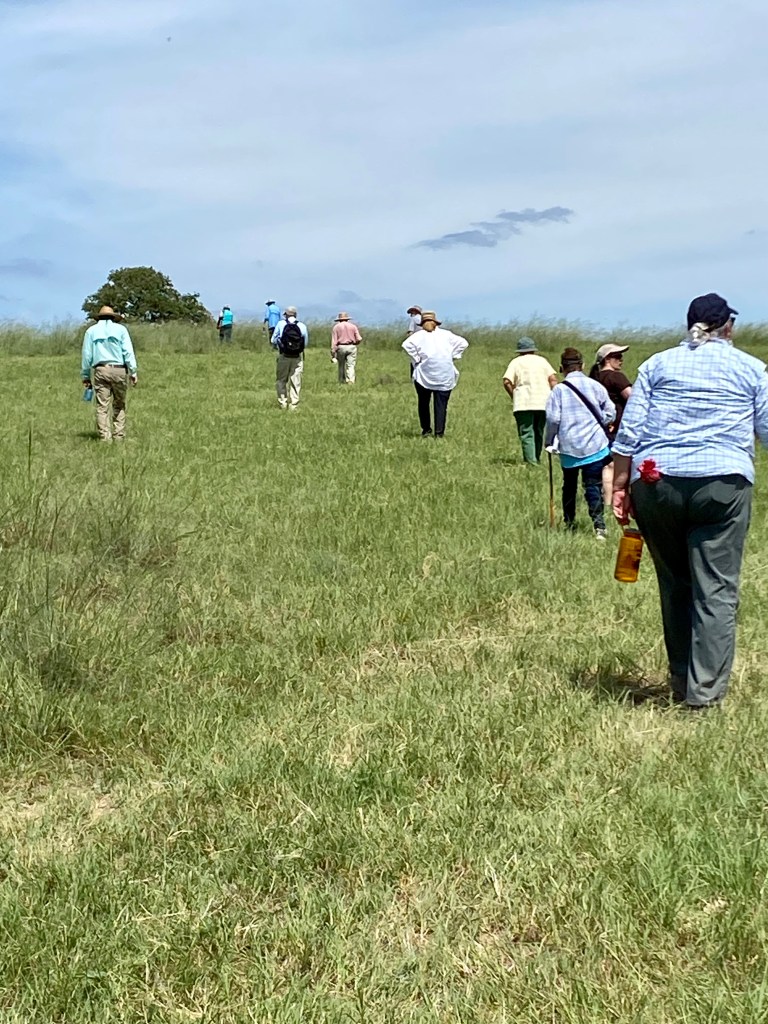
This area is part of the Rancheria Grande Los Brazos de Dios. An archaeological dig in the area around Alligator Creek and Pin Oak Creeks, both of which cross these properties, a few years ago found evidence of very early Spanish settlements.

Trail loop

Mike Conner and Dr. John Pruett, tour guides for the adventure, and Mr. and Mrs. Baumann, explained the history and discoveries while the rest of us recovered from the climb. Joyce Conner etched a map of the trail into a homemade tabletop. It sits at the top of the hill.

Joyce Conner’s tabletop map

Going downhill was easier, but one could certainly feel the rising midday temperature. An appreciation of what people had to go through to get anywhere hundreds and thousands of years ago is brought home when hiking this trail.

The Baughmans (center)

There is a book titled The Archaeology of Rancheria Grande Los Brazos de Dios, written by Sergio A. Iruegas, archeologist, and Melinda T. Iruegas, about the discoveries in the area. It is currently out of print, but there are copies at the Cameron and Rockdale libraries. If you own land in that area, you may be sitting on artifacts.

Mike Conner talks about the trail

Addendum

by Mike Conner

I would like to clear up a little confusion about swales.

Swales are u-shaped, linear depressions in the ground formed by many years of foot and hoof steps. They are never formed by water but may be damaged by water once they are formed. This is happening to some extent to Hidden Swale. Both the Dry and Wet Swales have been certified by archeologists to have been used during Spanish colonial times but may have been used for thousands of years before. The somewhat confusing names for these two swales come from the fact that the Dry Swale leads directly to the historic village site and cuts through a small valley that would only be passable is fairly dry weather. The Wet Swale leads in a less direct route to the historic village site that goes around the edge of the valley and would be passable in wet weather.

Chapter Members Attend Water Summit

by Donna Lewis
photos by Joyce Conner

On August 18th, from 9:00 am to 4:00 pm in Caldwell, Texas, the Post Oak Savannah Groundwater Conservation District (POSGCD) held an all-day event for those living in Milam and Burleson Counties.

Summit attendees

We were invited to have an informational booth at the Civic Center about the El Camino Real Chapter of the Texas Master Naturalists, and a booth for the El Camino Real de los Tejas National Historic Trail.

Quite a crowd!

This event covered many topics including water rights, legislation updates, well monitoring, septic practices, and many other topics. 

Joyce Conner and I set up our booths the day before. Joyce also set up the Trail Association booth next to ours. Both tables looked very professional and had handouts about both organizations. Our tablecloth really looks nice.

Donna Lewis and Scott Berger at the El Camino Real Texas Master Naturalist Chapter booth

Joyce, Scott Berger, and I arrived around 7:00 am. That was a good thing because people started to arrive then. Both our booths had many interested people asking questions and taking brochures with them.  Sandra Dworaczyk arrived soon after. We missed getting her picture with us. Several of our members, including Janice Johnson, attended the talk. Probably more came, but I was too busy to catch them.

Joyce Conner at the El Camino Real de los Tejas booth

Joyce had brochures that showed where the El Camino Real Trail was in our area, which was very interesting to many who lived in our county. No doubt some did not know much about the history of the trail.

The booth team

I think I talked to at least 50 people about our group.  Scott and Sandra were also talking to many people and Joyce jumped in when we needed her. It took the four of us to handle the crowd. Many wished they had a chapter in Burleson County. I informed them that they could attend our talks, but most did not want to come that far at night. Many were interested in daytime events.  I told them to check out our website for those events.  

Checking out our booth

The President of the Lost Pines Master Naturalist Chapter was attending the event and talked to me about our events also.

This was a very successful event for our chapter. I hope we will get some new members because of it.

A good day for Nature.

Talking Trash and Texas History

Linda Jo Conn

The suggested “Let’s Get Outside!” ECRTMN chapter activity for the first week in January was to pick up litter at a roadside park or other public area.  Granted, it is not that exciting a task but with the Covid numbers still a concern, it was an activity that could be performed in solitude at any convenient time.    

Today was my day to “get outside”.  It was cool and overcast but fortunately, there was not an icy wind gusting from the north.  

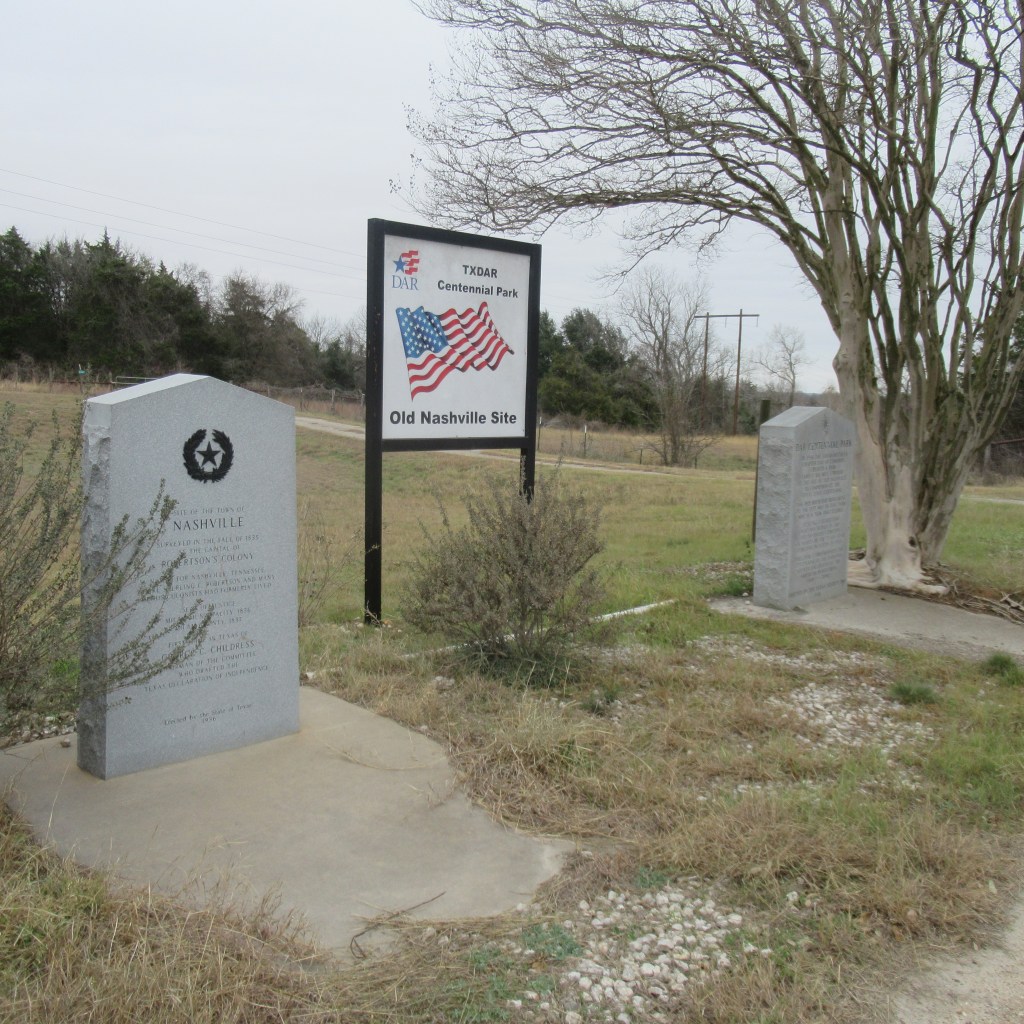
After attending the hybrid ECR chapter board meeting in Cameron, I drove down FM 2095 to Gause and turned east on Hwy 79 toward the Brazos River and the Milam and Robertson County line. Just before the river, there is a pullover with a couple of granite monuments and a row of large crepe myrtle trees.  

One of the monuments commemorates the former site of the town of Nashville surveyed in the fall of 1835 as the capital of Sterling C. Robertson’s colony and named for Nashville, Tennessee, where Robertson and many of his colonists had formerly lived.  The location also commemorates the first Texas home of George C. Childress, the chairman of the committee who drafted the Texas Declaration of Independence.    

The monuments

The other monument was erected by the Texas Society of DAR in 1991 to commemorate the DAR Centennial Park.  According to the inscription: “In 1936 the Sarah McCalla Chapter DAR of Cameron created a park (about ¾ mile upriver) at the site of old Nashville to commemorate the Texas State Centennial.  The red rock DAR monument to the left was in that park which is now inaccessible.”  The red rock monument referred to was vandalized and is no longer on the site.  The inscription continues: “Sterling C. Robertson who is buried in the old Nashville Cemetery was moved to the Texas State Cemetery in Austin in 1935.” The monument commemorates the Centennial of the National Society Daughters of the American Revolution 1890-1990.

I do not travel this highway very often, but when I do, I usually stop to check the site out.  Usually, there has been plenty of litter in the area, but today, there was not an inordinate amount so my workload was light. I found nothing exciting or valuable; just the usual beer bottles, aluminum cans, cigarette butts, and some miscellaneous paper items.  My haul was a Walmart bag stuffed full and a few large pieces of metal. I am intrigued by the mention of the Nashville cemetery and the former park.  I plan to do some research and will return to visit the cemetery in the spring.  

The haul of trash.

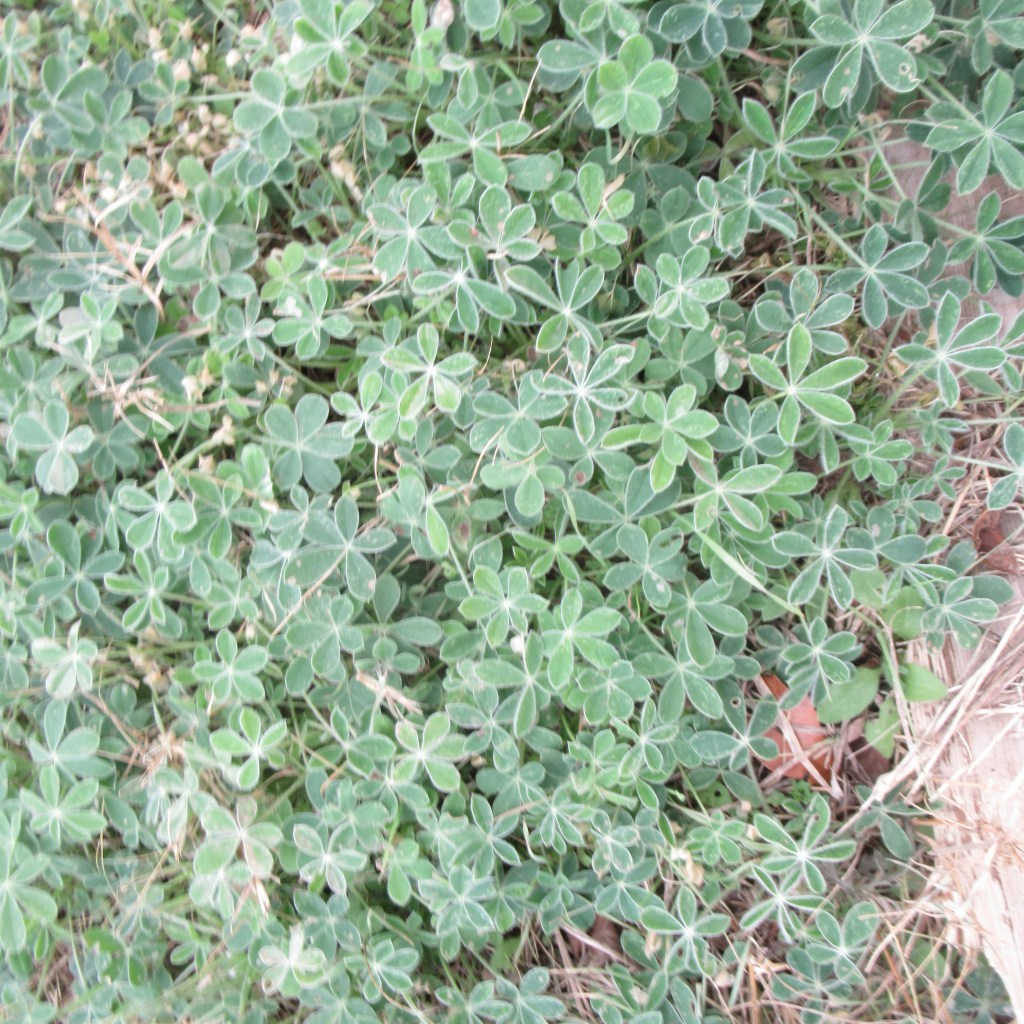
The area behind the monuments is now covered with rosettes of Texas Bluebonnets (Lupinus texensis) and it will certainly be worth the trip. 

Bluebonnets!

What’s Up with Our Chapter?

Hello! It’s been such a busy time for the El Camino Real Chapter that we haven’t had much time to update you.

Marsha May sharing all her birding information.

First, our 2020 training class has been meeting the past few Thursdays, and it’s going very well! We have over ten class members, and every single one of them is bringing amazing talents and knowledge to our chapter. The classes have been attended by many of our current chapter members, too, because there is so much to learn.

For example, last week we had Marsha May, a renowned birder and former Texas Parks and Wildlife employee, who told us so many things about birds that even the most experienced birders didn’t know. (I learned how their lungs work, where there are two air chambers, so when they breathe out, it’s the air from the previous breath!)

The classes are a great way for current members to get Advanced Training hours and also get to know our new class members.

Coming Up

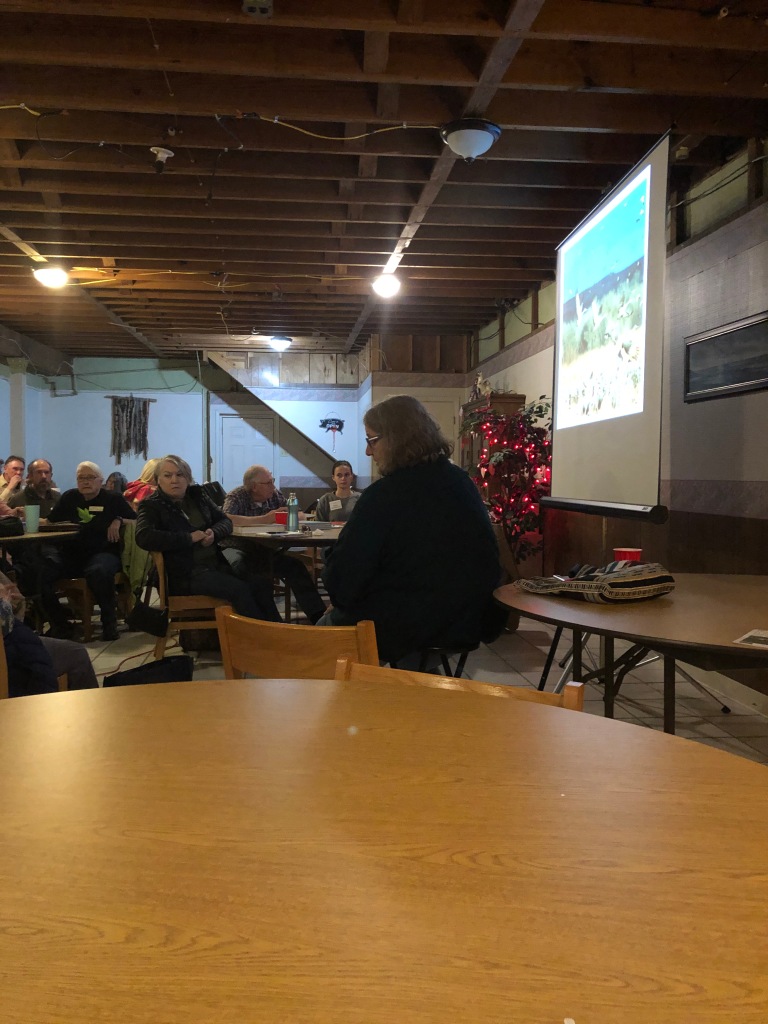
Next week is our February Chapter Meeting, which will feature one of our favorite speakers, Dr. Alston Thoms. He is an archeologist at Texas A&M University, and he will present a program about the original peoples who occupied the land around the Rancheria Grande here in Milam County. Knowing who lived here before us really puts the area into perspective.

A map of the Rancheria Grande, which was near current Gause, Texas. We have members who own property there. This image is from this Austin American Statesman article. The article would be great to read in preparation for the Chapter Meeting.

On the Saturday after the chapter meeting February 15) will be a wonderful field trip opportunity for our class members and current Chapter members. We will visit the property of one of our members, near Davilla, and get first-hand information on the flora and fauna in our area.

BioBlitz!

Our iNaturalist team (Linda Jo Conn, Ann Collins, and me) has set up the FIRST of our BioBlitzes for February 22. We will announce the location at the Chapter Meeting, and it will appear in our weekly email newsletter, so stay tuned.

What’s a BioBlitz? It’s where a group of people get together and record as many entries into iNaturalist in a set area that they can. We are planning to eventually cover all the parks in Milam County, which is a big job, but will provide wonderful data about our county for researchers. We’re excited!

Art by Sean Wall, on my wall.

Farther in the Future

Carlton climbs a fence.

Our Vice President, Donna Lewis, is working hard scheduling speakers for the 2020 Chapter Meetings. We’re excited to be able to announce that our friend, Sean Wall, will be joining us for the May 14 meeting. He’s an expert on wildcrafting, edible native plants, and using what you find in nature in all aspects of your life. For example, he painted this picture of my dog, Carlton, scaling our fence using pigments he found around him.

The Saturday after the Chapter Meeting, Sean will return to Milam County to lead a nature walk at the Hermits’ Rest Ranch, to see what kind of edible plants are growing in the fields, wetlands, and wooded areas there. The wildflowers should be pretty that time of year, too!

We hope to see you at some of our meetings and events. Our Chapter Meetings are open to the public, by the way!

Let the Tours Begin

By Lisa Milewski

On Saturday, October 12, 2019 the Rancheria Grande Chapter of the El Camino Real de los Tejas National Historic Trail Association conducted a tour of several significant, certified sites along the El Camino Real in Milam County. 

https://photos.smugmug.com/Milam-County-Historical-Commission/Milam-County-Historical-Commission-2019/El-Camino-Real-Tour-2019/i-g5QZxqm/0/094e64ef/X2/El%20Camino%20Real%20Tour%202019-27139-X2.jpg
Local history buffs John Pruett and Geri Burnett discussed county and trail history along the route. 

The tour started in Cameron at 9:00am and ended back in Cameron at the Milam County Museum at 5pm.   

Dr. Alston Thoms, Professor of Anthropology at A&M, and Dave Cunningham provided rich and insightful commentary about Sugarloaf Mountain and the surrounding area.

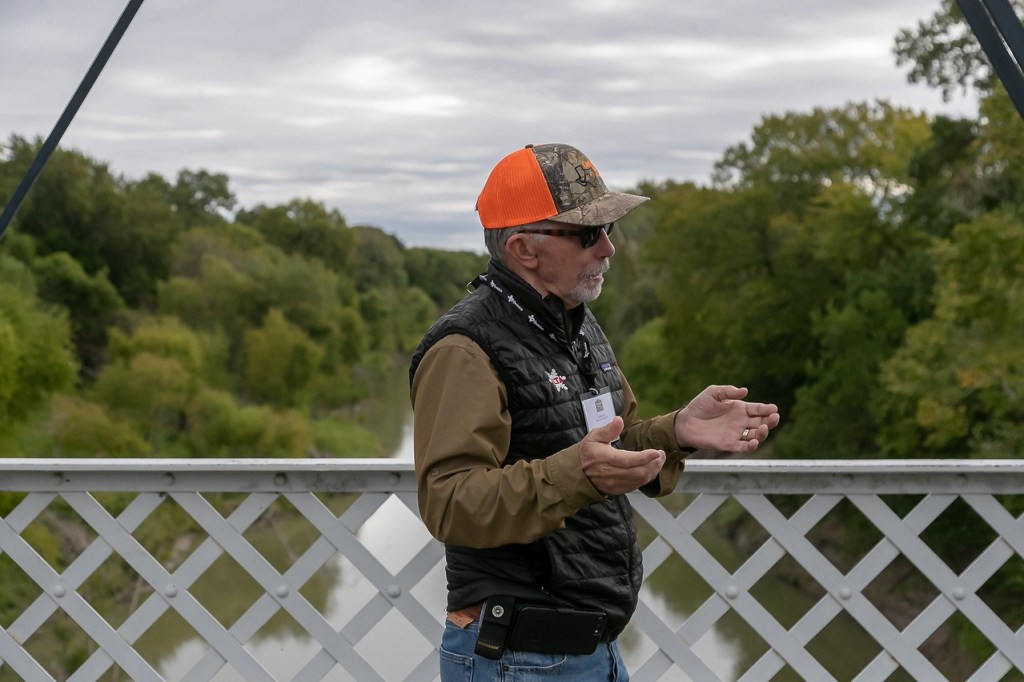
Dave Cunningham

The Tour began with an introduction by Dave Cunningham on the Sugarloaf Bridge as well as a brief history of the area.  Sugarloaf Mountain is privately owned and permission is needed for tours/hikes. 

Sugarloaf Mountain
Continue reading “Let the Tours Begin”