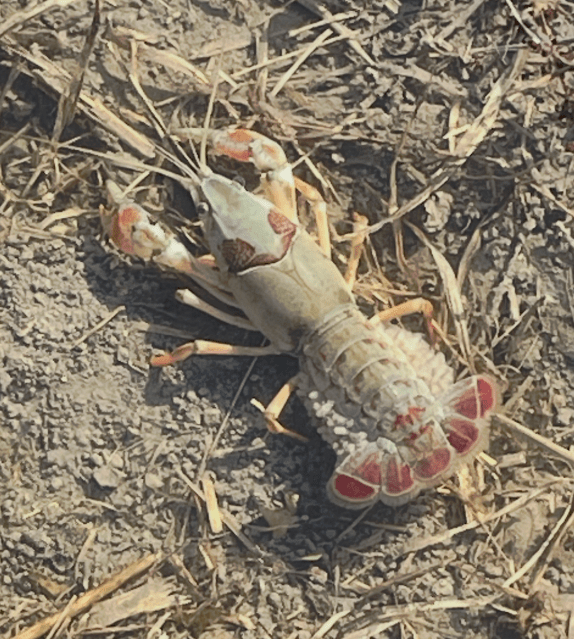
A few days after winter storm Fern hit central Texas I spotted this XLLL crayfish putting the pedal to the metal in a “stream” of ice melt that was flowing to one of my stock tanks. I posted her on iNaturalist (naturally). Don Johnson, a crawdad aficionado, noted that this was a female with young.
This summer hasn’t been as bad in the heat and rain department as last summer, so I’m not complaining one bit. But there sure have been some interesting developments in the sky, many directly over my head.
Some overhead things are cool, like this Red-tailed Hawk I got to listen to yesterday.
I’ll start with the most interesting one. For the past week or two I’d been noticing a lot of honeybees around my legs. It seemed like the earth was buzzing. Upon closer examination, I saw dozens of bees crawling on the tiny blossoms of the grass (I think it’s Dallis grass) that is blooming now. The bees were all very busy, zipping from flower to flower (not leisurely sipping as they usually do), and they were loaded with pollen.
My lame attempts at photographing zippy bees.
This went on for a few days. Yesterday, there was no buzzing as I walked along the field in my daily bird-watching patrol. Then, late in the afternoon I was over by the trees listening to a Yellow-billed Cuckoo when I heard something that sounded like one of those annoying drones people fly these days. I looked up and didn’t see a drone. I saw a large mass of tiny things moving along at a rapid clip. It was hundreds and hundreds of bees swarming. I guess they were moving on to better pastures. I’m not sure where their hive was before, because I hadn’t heard one in a couple of years. I hope they find a nice new dead tree!
FAKE NEWS! The blog software generated this image when I asked for “swarm of flying bees.” I don’t think they actually swarm in a giant ball.
Moving along, I’ve also been dealing with birds overhead, specifically the beautiful but omnipresent Barn Swallows. Now, normally they hang out on our porches, building mud nests, raising babies and pooping. They also eat numerous insects, so they get to stay (also it’s ILLEGAL to mess with a nest of wild birds; you can ask Mike Mitchell about it if you don’t believe me). We coexist just fine, looking into or out of the windows at each other, and enjoying the swimming pool area.
Swallows on the pond.
However, lately, the little darlings have not been at all happy with me. They aren’t nesting anymore, just flying around the ponds and in the air catching food. They are always there, and for some reason they resent my presence. When I go for my morning or afternoon walks, I often hear a very loud CHIRP, with a Doppler effect as the chirper moves away. The swallows ambush me from behind, for the most part, but occasionally they fly right at me and veer off just before they make contact with my head.
There are so many!
I have absolutely no clue as to why they are dive-bombing me. I’ve had Mockingbirds and Red-winged Blackbirds do this when they are nesting nearby. But, hey, do they think I want to home in on their mosquitos?
Creepy? Why, yes, it is. Never trust AI to draw an insect. Or a horse. They always have five legs.
Other things in the sky have been more benign. I was a bit surprised to see both Black and Turkey Vultures in the air and in my trees until I realized the Mighty Hunter (Goldie the Great Dane) had eliminated yet another armadillo that had wandered into the fenced-in area. I wish they’d read my signs that say “Armadillos and Possums: Keep out! Killer Dog! This means YOU!”
All real vultures in real trees and the real sky. Left is Black Vulture looking like it’s skulking, middle are Turkey Vultures pretending to be Christmas ornaments.
Other flying friends include the usual Green Herons, Great Blue Herons, and Great Egrets, along with some hardy butterflies and a smaller-than-usual number of dragonflies. I’m going to pretend the flying Differential grasshoppers don’t exist.
Great EgretFemale Roseate SkimmerVariegated Fritillary
Yep, the skies around here are busy. Always look up in case bees or swallows are coming for you!
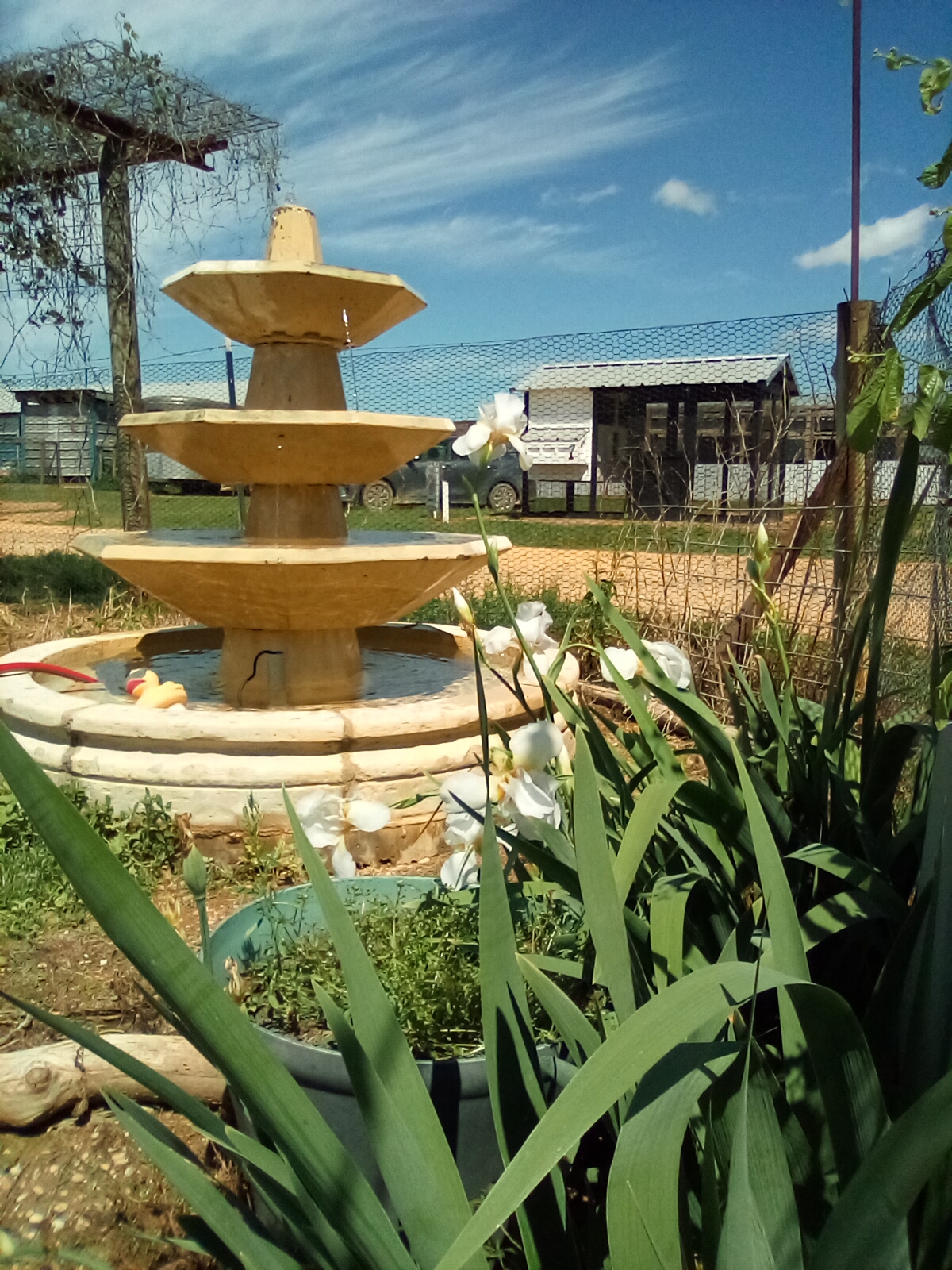
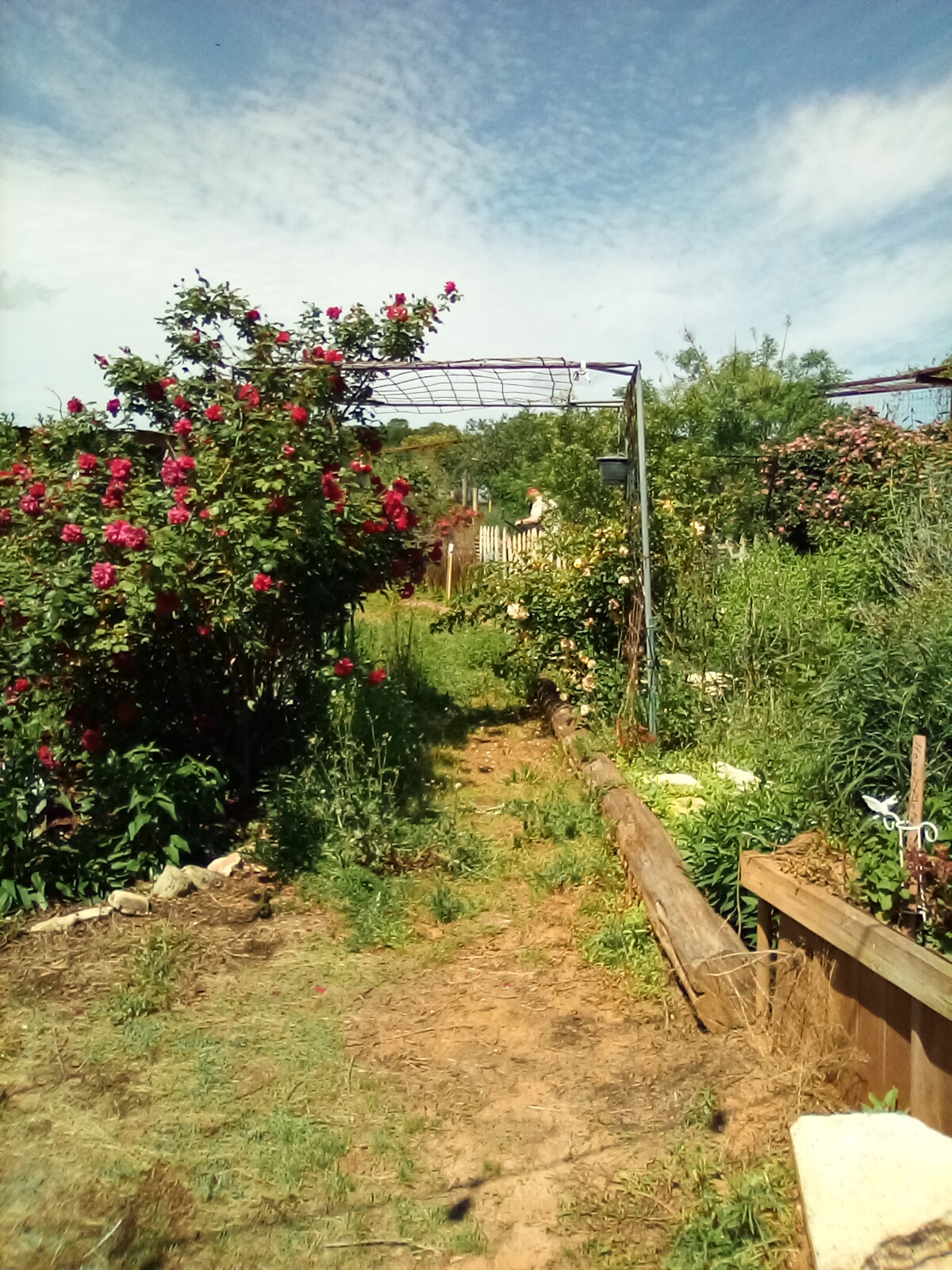
The Wildscape had a major facelift thanks to the Reks and employee Brandon.
Upcoming events include a full moon gathering to observe moths and nature at night. The improved space will be easier for people to walk thru each month learning about the Master Naturalist program.
Birds have built nests in the mailboxes and the Mason bees are active.
The pictures include our State grass, Sideoats Grama. It is a short clump grass that provides nutrition for wildlife and erosion control. It is drought tolerant, with oat-like seeds and orange and purple flowers.
Honeysucklesideoats gramaGray hairstreakThere are lots of chickens at this chicken farm!
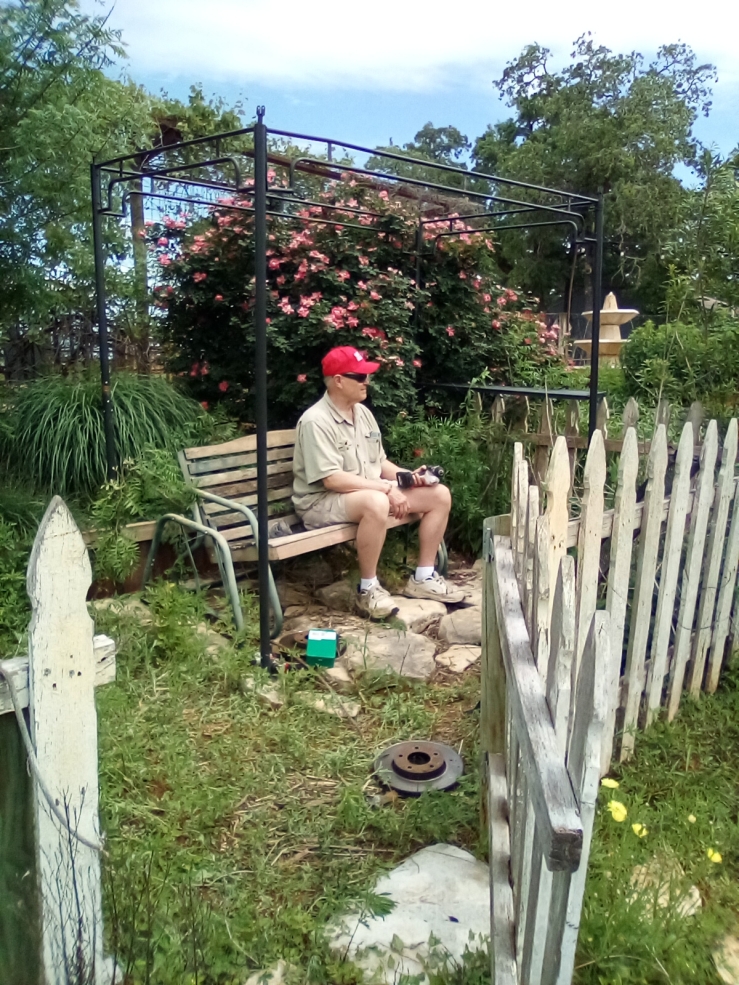
A friend to the Master Naturalists assembled a second donated used arbor that will provide another shaded garden room.
The new arbor
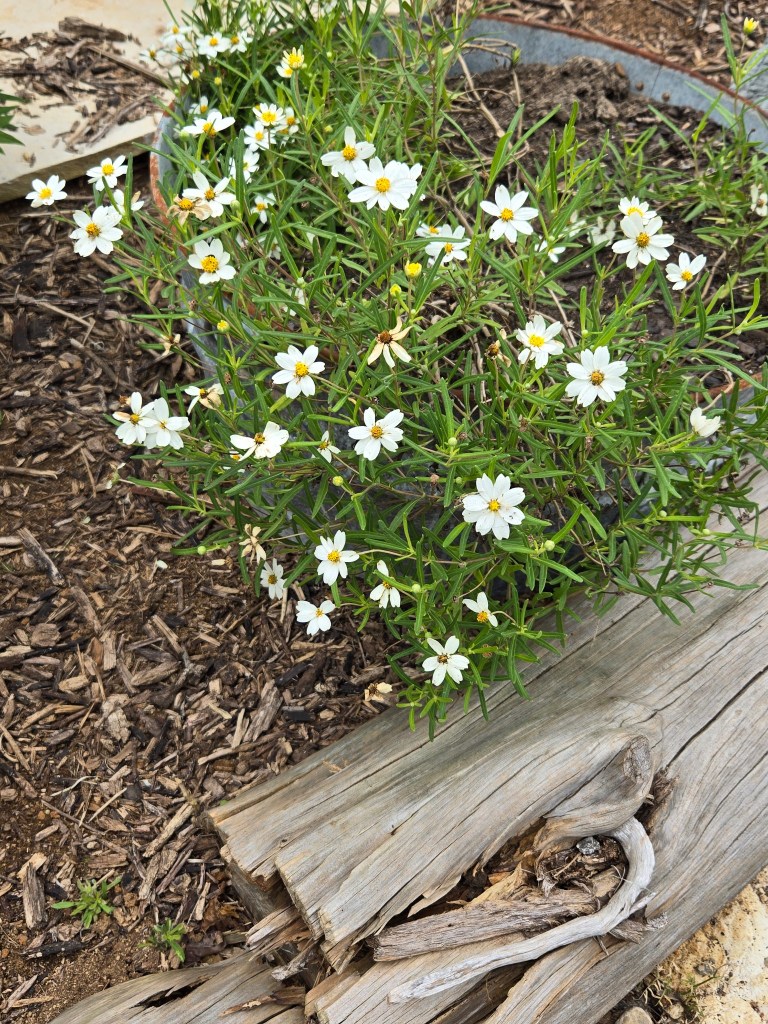
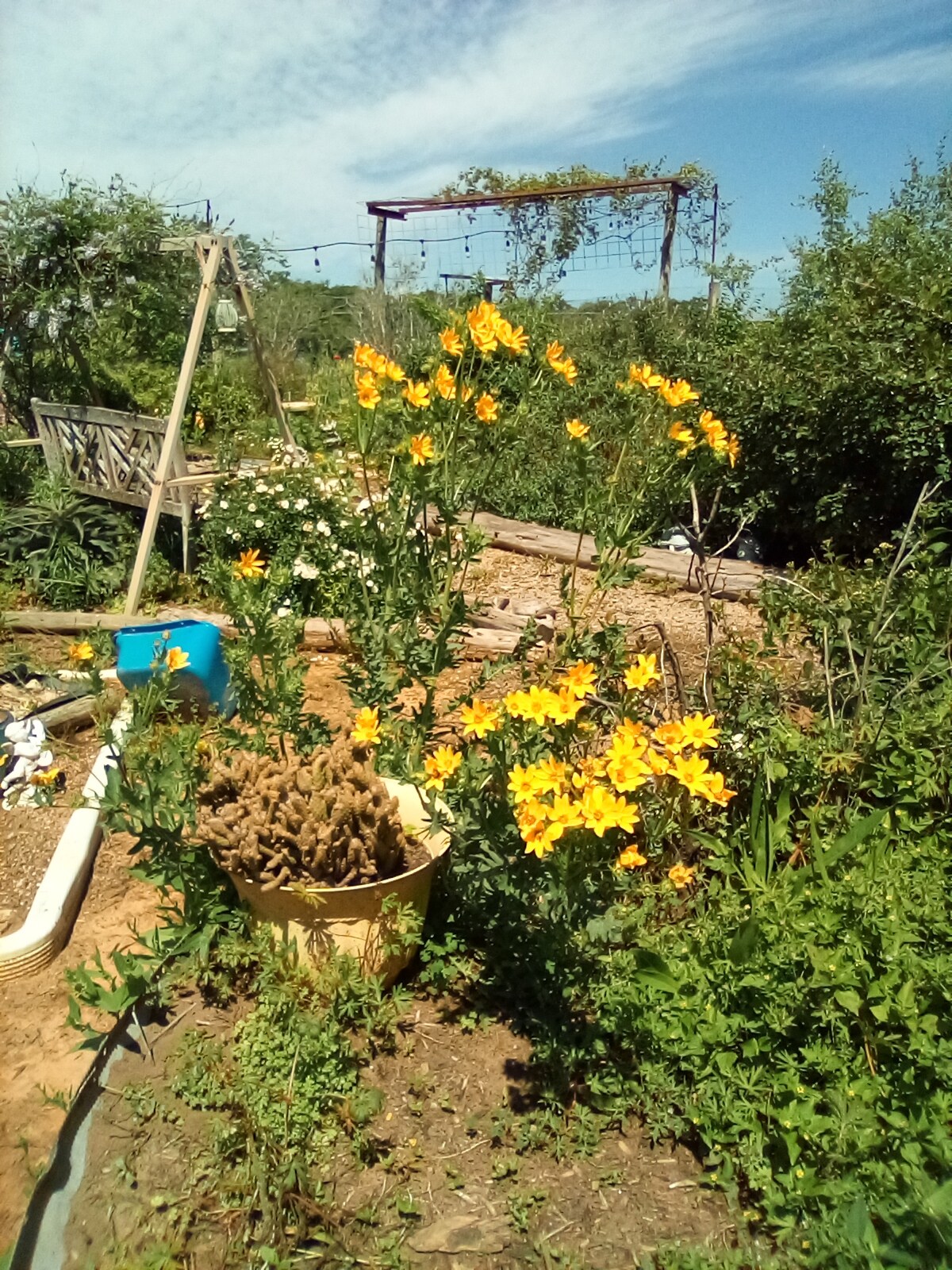
There are still plenty of wildflowers and spring bloomers and Natives gearing up for summer and the fall. Take a walk on the wild side before more is removed to make way for upcoming events!
Clouds parted and the view was stunning of the Solar Eclipse. El Camino Real chapter members gathered at a member’s place to watch the event together as well as do a few projects – and of course eat.
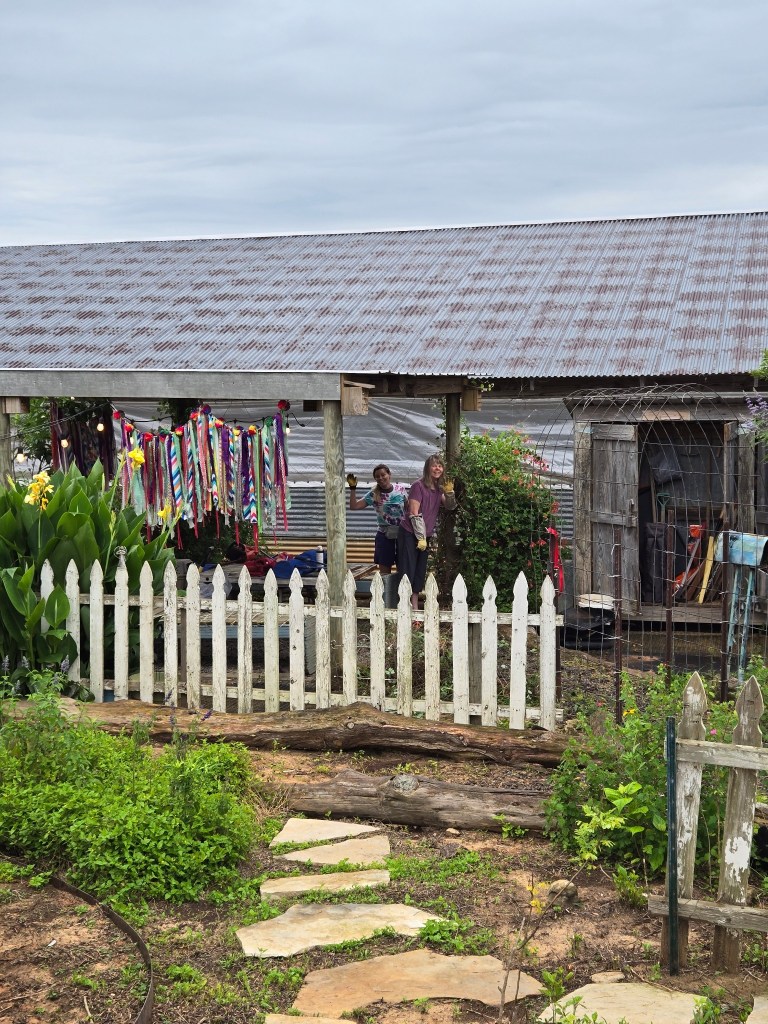
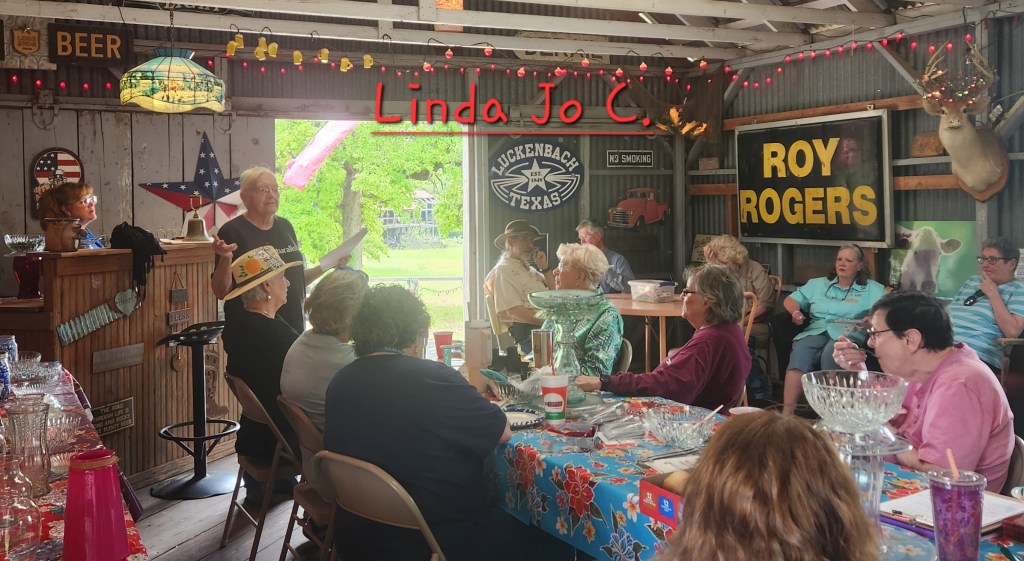
There were 16 members and 7 guests who met at Jackie Thornton’s Party Barn near Minerva Monday. Jackie had everything ready to go including materials to make bee watering stations and Wren nests.
Working on projectsCarolyn sharing informationConnie sharing information
Debi Harris used gourds to make the Wren nests, and members put a little personalization on them. Jackie told everyone how to create the bee watering stations. Several creative pieces went home with members.
Training was then provided by Carolyn, Connie Anderle, and Linda Jo Conn on the eclipse. Carolyn provided facts, including the one that predicts another total solar eclipse will not occur in our area for 350 years. Connie provided safety information on viewing eclipses, and Linda Jo discussed how animals react to eclipses.
Linda Jo sharing information
After eating a large lunch, members set up outside in a wildflower-covered field and cheered when the clouds parted, making the eclipse visible. Everyone sat and watched for over an hour as the moon edged its way between the earth and sun.
Eclipse watchers
Everyone stopped all noise, to hear what nature would do as the totality came close. Before it was complete, but it was growing darker, birds, frogs and crickets began to make their noises that they normally do at dawn and dusk. At the darkest point, nearby coyotes howled for a minute or two. It was measurably cooler, too.
Getting toward total eclipse!
Several members were seeing colors – pink and blue – at the most covered point, too. I found out last night that it was solar flares making the colors.
Carolyn’s photo with a plane in itCarolyn’s photo with a streak that could be a meteor
I did not use the correct filter on my camera, so my photos show those colors, among other oddities. It was a once in a lifetime experience – unless you are willing to travel to see another one.
Of course, Linda Jo took some time for iNaturalist observations













 Nature Along the El Camino Real