Chasing Butterflies

by Carolyn Henderson


At just after noon on Saturday, I was standing on my patio when a Monarch butterfly flew by very close to me. Unfortunately, I didn’t have a camera to get a photo of it, but I probably wouldn’t have gotten it anyway. It flew straight by into my neighbor’s back yard. It did, however, inspire me to go chasing them.

I go to the Little River Basin Texas Master Gardeners Triangle Garden seasonally to take pictures of pollinators, and I usually see Monarchs, and many other types of butterflies, there. So I took my camera to see what I could see.

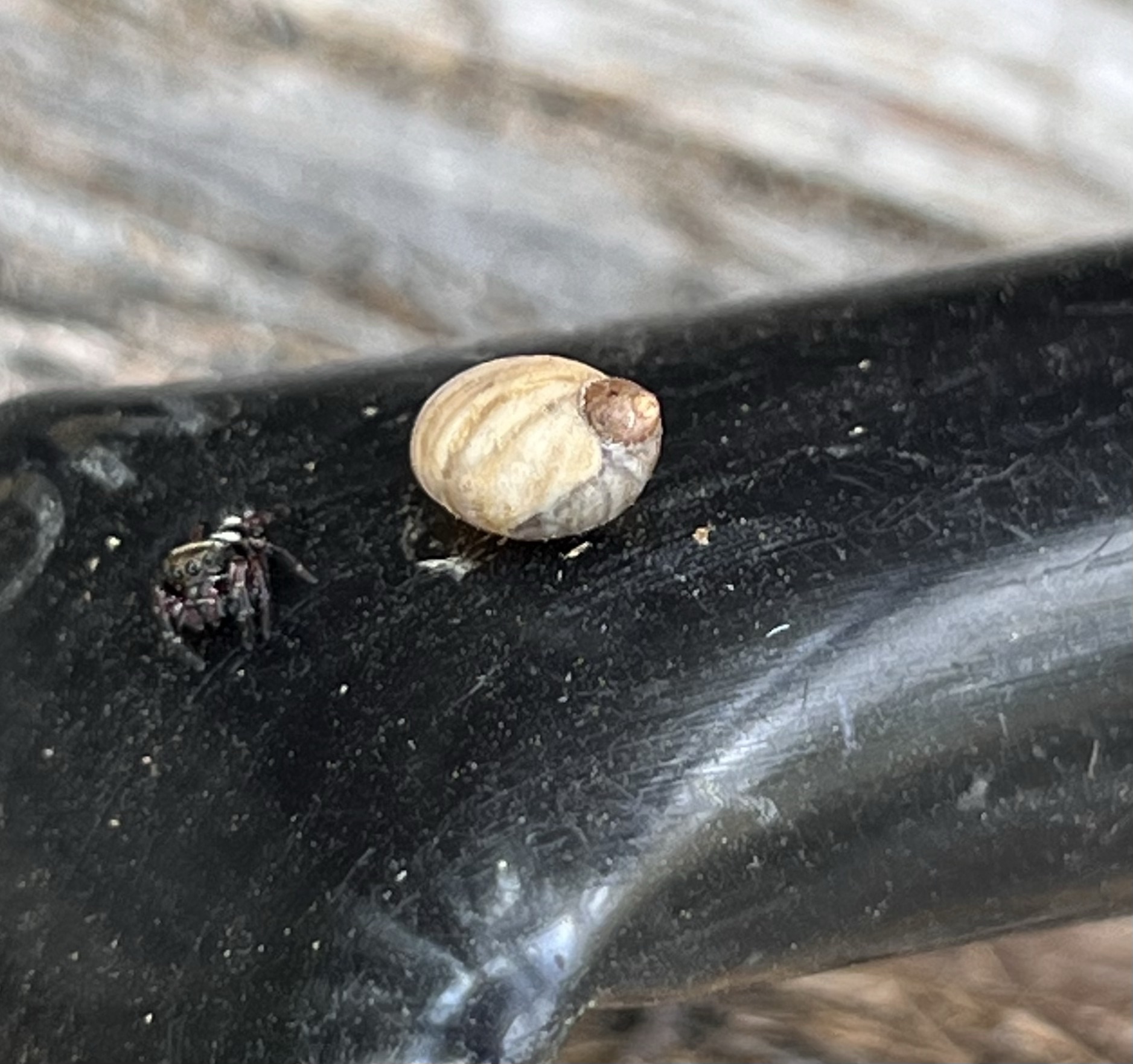
I found huge Giant Swallowtails eating from abundant Zinnias. The Fritillarys, both Gulf and Variegated, also were fond of the flowers. So was a Bold Jumping Spider that seemed to be after the Variegated Fritillary. I also found Gulf Fritillary on Tropical Sage. I am unsure if the Giant Swallowtails are Eastern or Western variety. iNaturalist thinks they are Western, but Eastern are more common here.

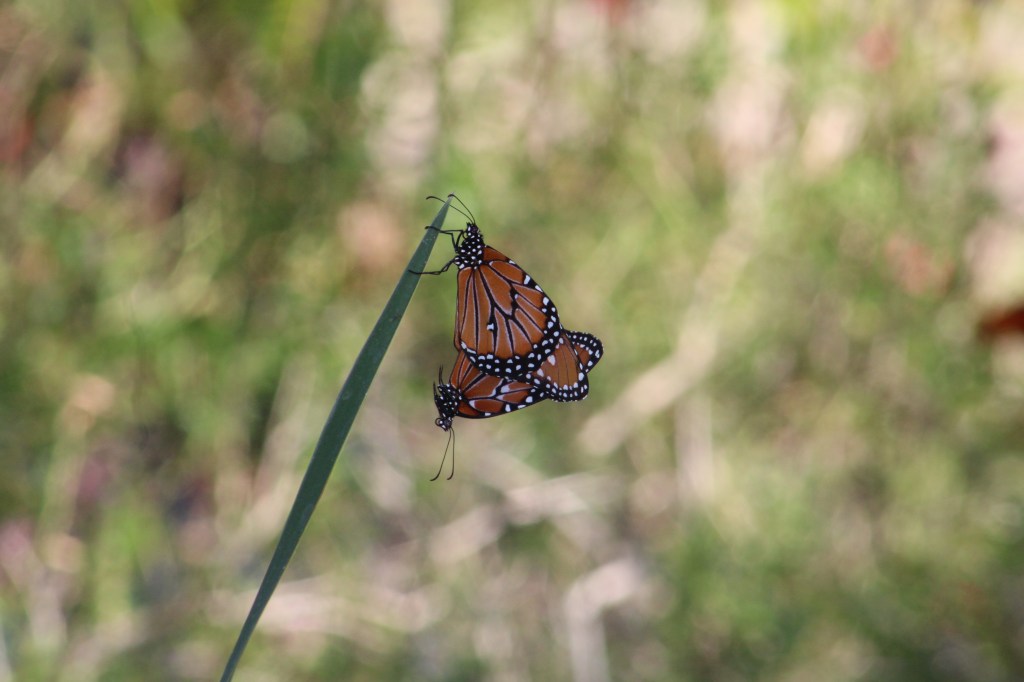
One of my favorite butterflies is Queens. They were abundant on Gregg’s Mist. I can always find them on this plant. They also were mating. I’ve seen more of them there, but it may be early in the migration. Bordered Patch and Fiery Skippers also were enjoying the Gregg’s Mist.
What is not there, at least yet, are Monarchs nor Pipevine Swallowtails. The Flame Acanthas and Tropical Sage and Gregg’s Mist are ready for them. So is the cat in residence (see photo).

I also found a few others at my house. My yard is inundated with Hackberry Emperors, and some Clouded Skippers are hanging out there. So are Carolina (or Arizona?) Praying Mantis and Spinybacked Orbweavers with an elaborate web, and grasshoppers that were abundant at the triangle garden, too. I also had a hummingbird that was interested in the Texas Purple Sage at my house.

Blackchinned Hummingbird

The iNaturalist fall project to submit as many pollinators as you can find is coming up in October. If you are participating, you might want to try the El Camino Real Wildscape which is usually full of butterflies in October – including Monarchs. Or, you also can try the Triangle Garden.

Spinybacked Orbweaver and web

Water Features Aren’t Difficult!

By Pamela Neeley

Around the farm, I have all kinds of lazy water features. Let’s take a look!

This one has a drip from the faucet keeping it full and the water moving. Even large birds, cardinals, come here for water.

Here’s another lazy water feature. The solar fountain keeps things moving. The plant is rooting in a convenient terracotta strawberry pot.  Also there for fish “enrichment”
I put water hose into a pot when topping it off so the water movement doesn’t create mucky water. The fish are doing well and get fed pellets or mosquito larva from nearby sources.

Lazy water source is by the back door faucet. Shallow kitchen container with shard and pot in corner. When there is a fish, they have a place to hide under the shard. The pot provides extra climbing surface so the toads can get out when they find themselves in here. When mosquitos build up, I move a fish over here for a day. The faucet drips into the container when I’m watering around the house.

This large lazy water feature container is not set up right now. I have an electric ceramic fountain, usually 6-8 fish, and a water plant – this is an arrowhead. When set up it creates the pleasing sound of running water, but being under an oak tree presents problems with leaves.

The next lazy water feature is a plant container from a big box store. There’s a pottery shard for fish to hide under, and a pedestal for the water plant and solar fountain. This solar fountain has legs to keep it from hugging the wall and emptying the water on to the ground. I’ve lost one leg, so water escapes regularly.

One happy fish, pedestal  for plant on pedestal  – but too hot right now.


Fountains do need to have algae and minerals scrubbed off top to keep it accepting sun power.  
It’s a very low tech, not too expensive way to have fountain, fish, and a water feature. Just use what you may already have. Solar fountains range from $12-15 on line.

And finally, here’s another low-cost water feature at night. There are two toads enjoying the water at 10:30 pm. One is partially on the solar fountain and partly on the rim of the submerged terracotta pot. He won’t drown.

Dog Days at the Wildscape

by Catherine Johnson

Kim and I were at the Wildscape  from 7:0O PM- 8:00 PM to water plants and tidy up for the upcoming full moon event, Monday, August 19, at 6:30 PM.

Sideoats Grama, the State Grass of Texas.

For the most part Texas natives have held up amazingly well with minimal attention.  In cooler weather, the garden will be groomed and new plantings put in. We noticed it felt cooler with a breeze blowing and decided to do no more weeding until the Dog Days of Summer are over. 

Blackfoot Daisy

Pictured are some of the toughest Texas Natives – Sideoats Grama, Blackfoot Daisy, Gaillardia, Salvia, Kidneywood, and the garden mascots.

Birding at the Bird Station

By Sue Ann Kendall

I’d promised myself that I’d make another visit to the bird station our chapter is working on to see what birds are there this time of year. Even though I wasn’t feeling too well, I figured I could sit in the shade for an hour, so off I went to the special area behind Bird and Bee Farm near Milano, home of our Wildscape project (and chickens and turkeys!)

There have been some improvements to the site, as Cathy Johnson posted earlier this week. I enjoyed checking out the new raised beds, charming seating, and a beautiful birdbath watered by a tinkling rain chain.

Last time I visited was three weeks ago, when I identified eleven birds. This week I found seventeen! When you sit quietly, the birds forget about you and go about their business catching bugs and picking delicious morsels off the cedar elms.

Bird action headquarters

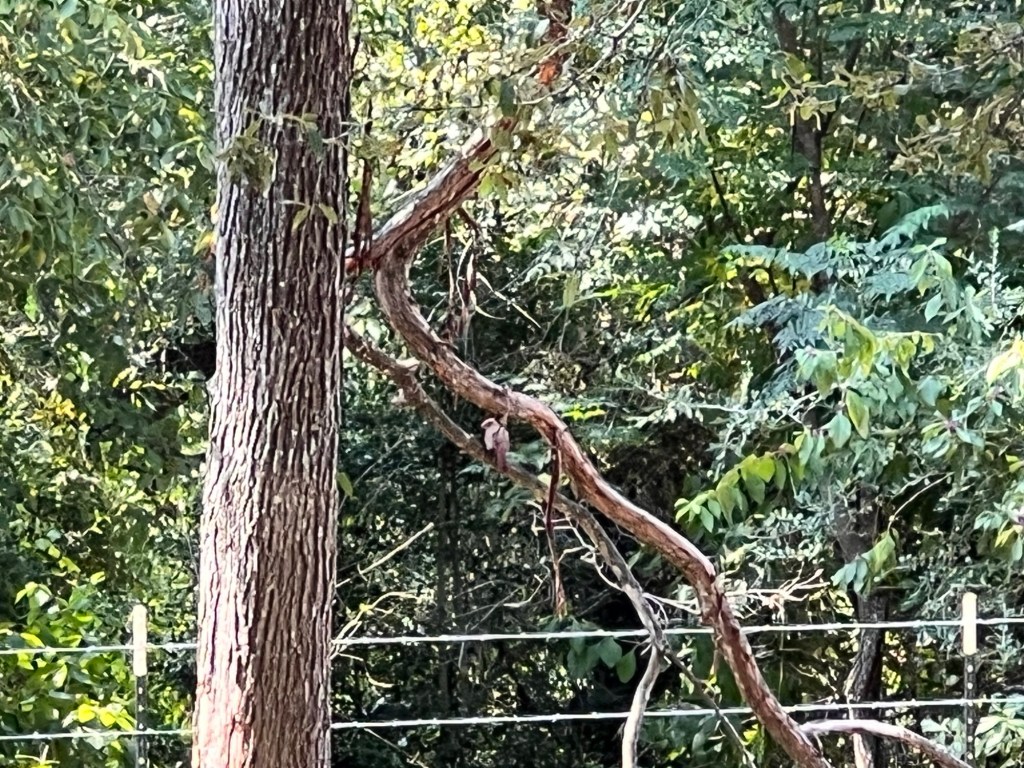
I got to see Northern Cardinals, Carolina Chickadees, Tufted Titmice, Eastern Bluebirds, and precious Blue-gray gnatcatchers feeding themselves. Not seen, but very well heard were a Swainson’s and Red-tailed Hawk. Other hidden friends were Red-bellied Woodpecker, Yellow-billed Cuckoo, and Blue Jay.

Female Cardinal is in there.

Two juveniles surprised me. One was a young Cardinal who landed very. Eat me and proceeded to find multiple morsels to eat.

Watch it chow down.

You can tell it’s a juvenile by its black beak. It’s growing in adult feathers, so doesn’t look too great.

The other juvenile was a real puzzle. It was enjoying the water chain and easy to photograph, but I couldn’t ID it. It had pretty eyes but not many markings. I ran my photos through Merlin Bird ID and it got no results. But when I tried iNaturalist, the result came up Painted Bunting. It didn’t look like the female, who is rather green, but as I paged through the pictures, I saw the juvenile. Bingo! It has the wing and beak markings I saw, and the same eye ring. So, there we go. I didn’t see or hear any adults

Here are today’s birds:

  • American Crow
  • Blue-gray Gnatcatcher
  • Blue Jay
  • Carolina Chickadee
  • Carolina Wren
  • Eastern Bluebird
  • Mourning Dove
  • Northern Cardinal
  • Northern Mockingbird
  • Painted Bunting
  • Red-bellied Woodpecker
  • Red-tailed Hawk
  • Rock Pigeon
  • Swainson’s Hawk
  • Tufted Titmouse
  • Turkey Vulture
  • Yellow-billed Cuckoo

Of course I checked out the plants, so that if I get the area declared an official spot on iNaturalist, the observations can go there. A few were really pretty, especially the berries.

I’m going to miss the dedication, but I’ll be back to see what’s here at the beginning of September!

Wildscape and Bird Station News

by Catherine Johnson

We acquired several benches and chairs from Marketplace for the Wildscape and delivered them at noon, which is not as hot as later in the day. Many pollinators were flying around, including hummers. 

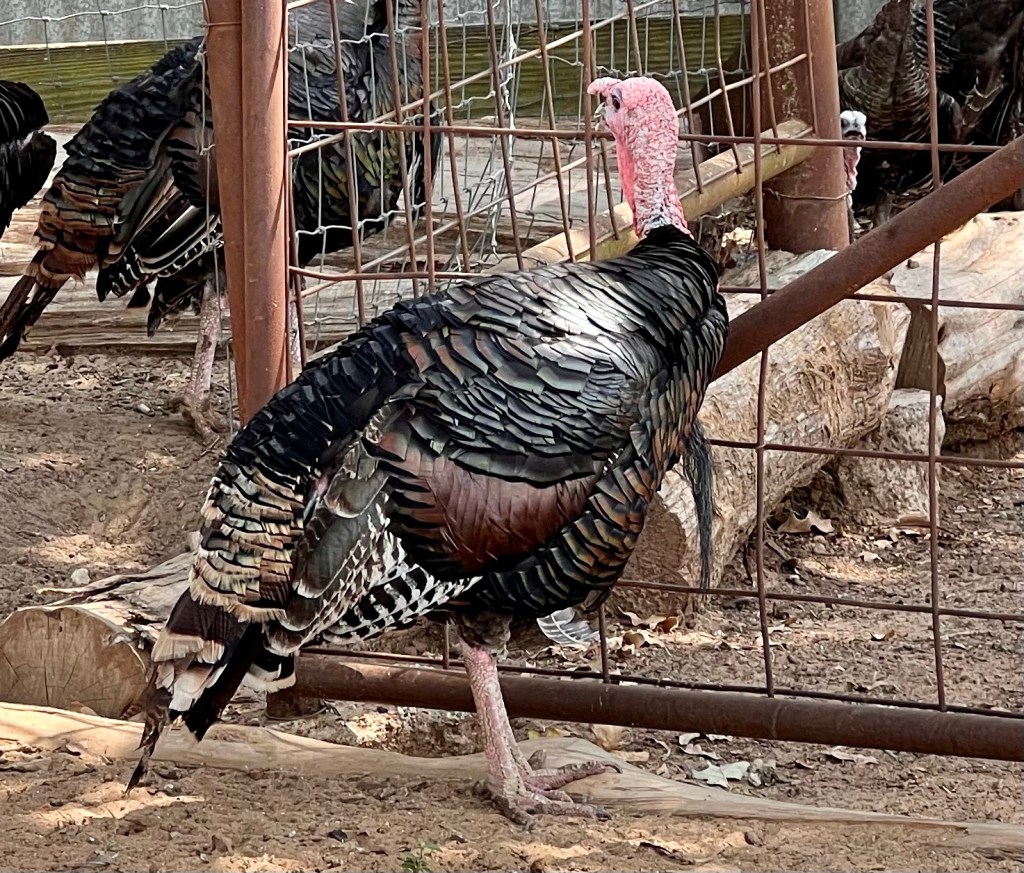
Kim Summers and I went back late evening to water and stayed until 8:00 pm, resting by the big fountain in the shade, while Cindy Rek told us about the Rio Grande Turkeys being delivered to Bird and Bee Farm, where our projects are located. 

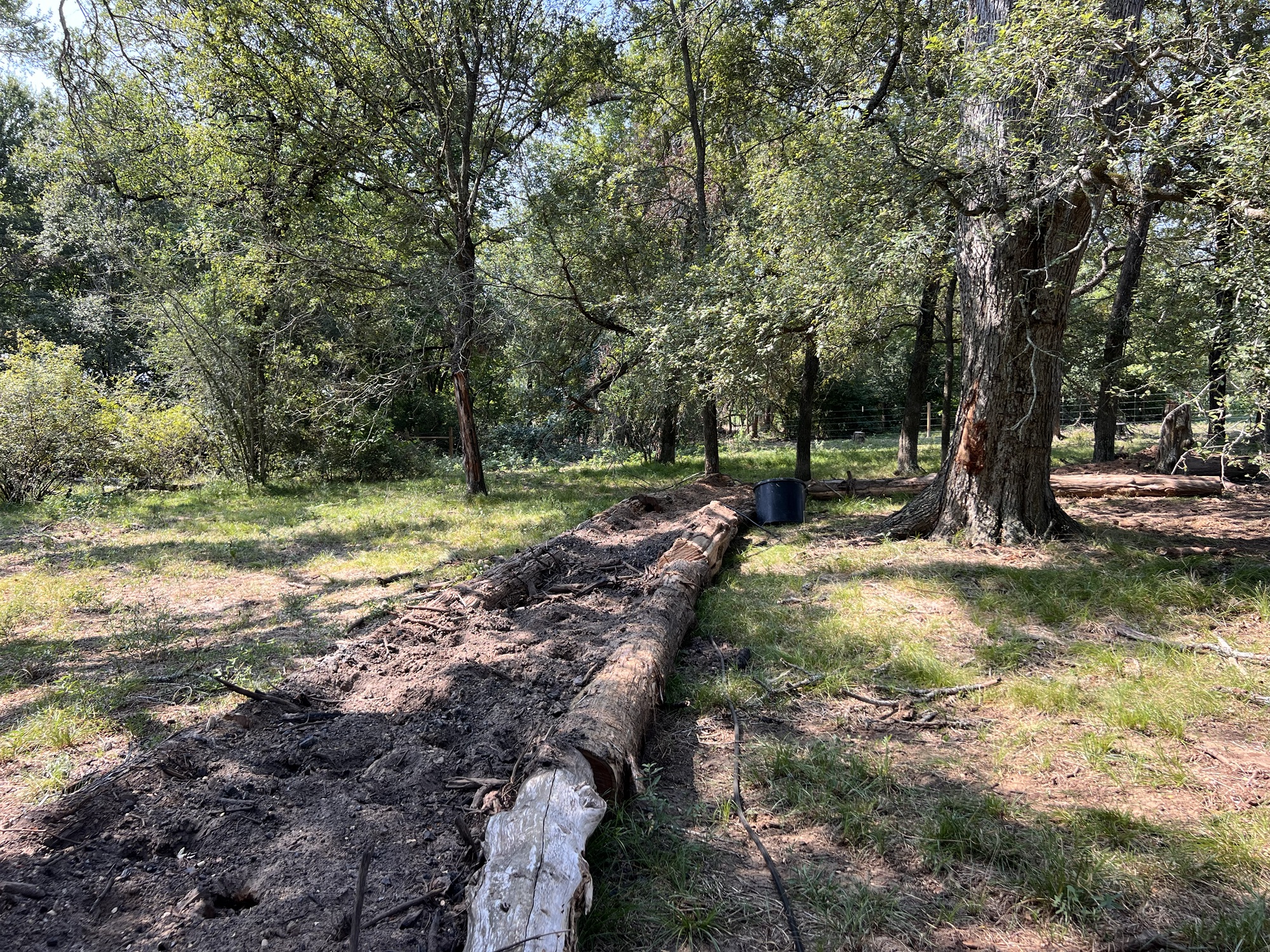
Pictured are the new pathways in the birding station that Gene Rek has been working on. We also placed 100-year-old furniture in the Bird Station, which Ann Collins chose. 

Pictures also show new beds, which will allow native birds to enjoy plants that are watered by a drip system.

We are excited to be viewing all at our full moon Wildscape Celebration later this month: Monday, August 19, 6:30 pm – 9:30 pm. Guests are welcome.