The rash of alien abductions in a certain sector of the Alligator Creek community has finally come to an end although they don’t know it yet. They have suffered being scooped up and moved through a series of examination rooms, often with bright lights, and being occasionally prodded for over two months now.
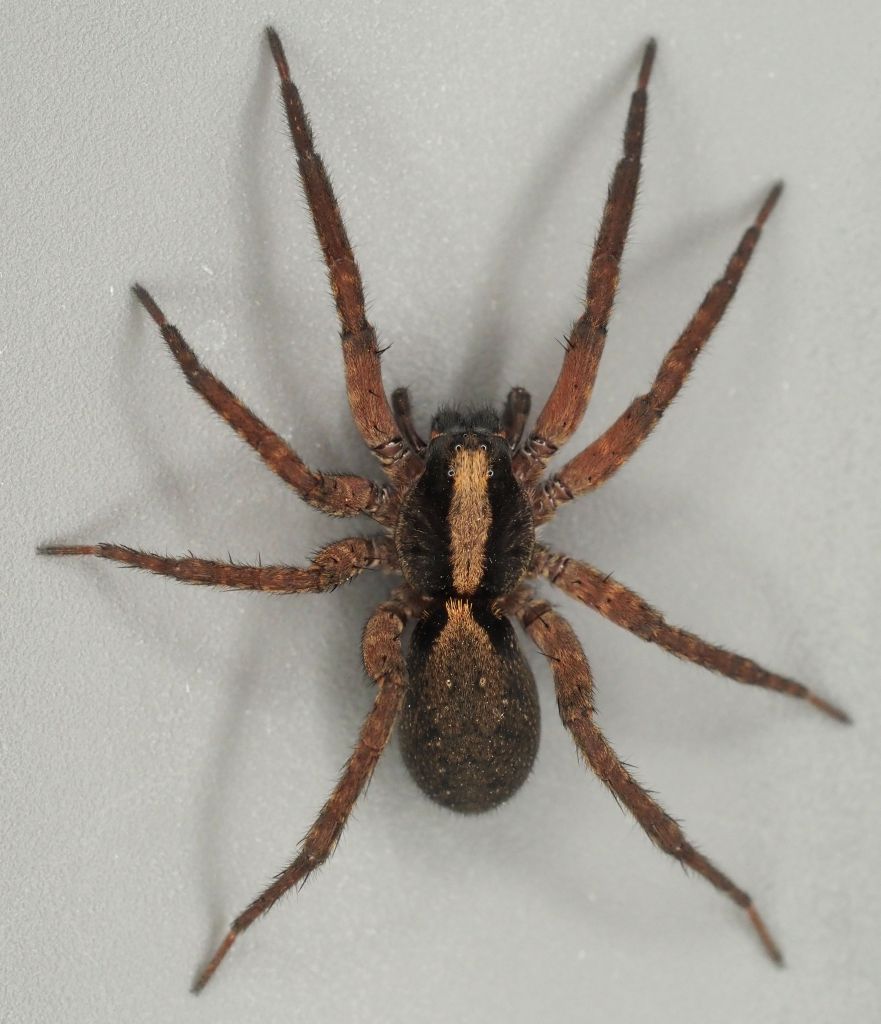
My earlier photos of Schizocosa perplexa weren’t good enough to do the species justice, so fixing that was on my project list for this winter. I started looking sooner, discovered the mid-juveniles in December and found they were easy to identify. Then I checked back whenever the weather was warm as the mating season approached. First the males became adults, and then finally the females just this week. Photos of a female are included here.
Whether they deserve a conservation status or not is unknown. They appear to have very specific habitat requirements, specifically wooded flood plains with long lasting vernal ponds. Substrate is important as I could only find them in two places in the Blackland Prairie part of the county. I’ve looked carefully in the Post Oak Savanna part and couldn’t find any. My local colony appears to have had a good year. The other colony in Milam County was gone this year. It may have been active earlier but by the time I checked it last week, the ponds were already dried up and the leaf litter well picked through by armadillos. The original specimen came from Garland, Texas, and iNaturalist observations suggest robust populations in the Dallas-Ft. Worth area. These observations lack underside views so the species can’t be confirmed. S. perplexa is also known to be in Ohio.
No spiders were harmed during this project and all are alive, free, and well at home unless they got eaten by a frog, armadillo or suffered some other misadventure.
The original plan for February 16, 2024 was to conduct a long downriver trip on the Brazos to examine spots suitable for an overnight canoe trip in spring. However, lots of rain upstream inundated the very sand and gravel bars that serve as the best camping spots. An alternate plan was in order, so the team of intrepid explorers chose a feeder stream known to be shallow, gravelly, and home to mollusks. Call the stream Clam Creek, Mollusca Millrace, or Bivalve Bayou. Mussel Run turned out to be a special place on a special day.
The warm February air on a Friday morning we knew would soon turn cold, with a blue norther due to arrive the next day. Victoria and Rosie were eager to put some paddling time in as a tonic for spring fever, so we did a reconnaissance canoe trip down this creek that is usually too shallow to allow boat travel of any kind. Dragging two kayaks and a canoe down into the creek-bed was easy as the rainy winter had grown a deep carpet of winter grass along Mussel Run Creek in Falls County.
The three of us claimed “First Descent” along this small tributary of the Brazos River, since it was an unknown path to any and all in our group of “river runners.” In the grand scheme of things, others have surely traversed and crossed this old watercourse. Having a name on the map so appropriate to what we would find along this creek is a sure indicator that other people have visited here often. It has likely been known to many people, and probably over thousands of years.
Paddling the first 200 yards of this 7-mile run we found sand bars littered with the shells of bivalve mollusks. Many were freshly opened and probably eaten the night before. Racoon tracks were everywhere in the freshly washed sand. River Otter tracks were less abundant but also found along with beaver slides and feral hog sign. Mussel shells numbered in the many hundreds on the sandbars. Rosie wondered out loud if any of the species we were seeing were edible. “Sure they are! Particularly if you’re a racoon”. Wise guy…….
We found Giant Floater clams (Pyganodon grandis), Yellow Sandshell (Lampsillis teres), Threeridge (Amblema picata), and Mapleleaf (Quadrula quadrula). These mollusks were new to me, but Justin Grimm at Brazos River Authority quickly identified them from my amateur photos.
Justin is environmental programs coordinator at Brazos River Authority in Waco. Part of his duties are to survey and document the health of a wide assortment of aquatic plants and animals in one of the largest watersheds in Texas. This creek originates in upland areas east and north of Marlin, Texas. Streams which contribute flow in this watershed are Wild Horse Slough, Big Creek, Cedar Creek, and Brushy Creek among others. It is not until this stream reaches that flat red soil of the Brazos River flood plain that it obtains the name Mussel Run on the USGS topo maps.
We noted that the farm fields above us were located on fine red “Brazos bottom” alluvial silt that appeared to be 20-25 feet thick when looking up from the watercourse. Below it at water level there was a stark change in the geology, with a layer of bright white limestone conglomerated-gravel, with the aggregates being about the size and smoothness of ping-pong balls. This gravelly rock layer contributed most of the material that made up the hard bottom of the creek-bed we could feel with our paddles. I wondered if this high-calcium gravel accounted for the habitat that provided such a top-quality home for all these bivalve mollusks.
One thing for is for sure, and it is that this creek has been a major access barrier for river bottom farmers for most of the last two centuries. The creek channel is uniformly steep and has actively eroding sections of alluvial soil at almost every turn. Crossing it with mules and plows in the 19th century or with tractors in the 20th and 21st century has had to require extraordinary effort. The bridge we launched at is a brand-new concrete “highway-quality” structure at the end of a Falls County road. As we traveled down-stream we paddled over a concrete low water crossing probably 3-4 decades old clearly built by the landowners and not Falls County engineers.
We also passed under a high bridge structure that had steel I-beam upright pilings and a rickety wooden deck. This structure was a proper place to eat lunch but had signs on both ends stating WEAK BRIDGE CROSS AT OWN RISK. River bottom farm families have likely been using this structure since the 1920s, but heavy modern agricultural equipment crossing this structure is out of the question these days. A large disc plow was permanently embedded in the bottom of the creek where it apparently slid down an embankment during a severe erosion-causing flood event. It was a stark warning about the power of rainwater visible from the lunch-time observation spot.
Because this creek had flooded only 4 days prior to our trip we were able to float over almost every rocky riffle and fallen tree. Once we reached the confluence with the Brazos River, we got the opportunity to deal with the remains of that flood, to the tune of 6130 cubic feet per second (cfs) water flow. Riding on top of this dense flowing mass one can quickly cover miles with only moderate exertion with the paddle. The power of flowing water to excavate and move soil, push trees, and shove large objects is widely renowned. The reason is that water itself is so very heavy (62.4 pounds per cubic foot). The water flowing past us as we entered the river amounted to a 382,573-lb. object shoving us down-slope every second. Being whisked along was a joy after the hours of hard paddling in the slow water of the creek. What is most dangerous when the river is high are obstacles. If you get lodged against a tree or other immovable object in the stream, the force of the flow will quickly bend you and your boat into a very abnormal shape, and then hold you there like an angry 382,000-pound sumo wrestler. It is not an exaggeration to say “Death can come quickly.” Fortunately, we skimmed along the surface in mid-channel and arrived to have our pick-up crew (Adam and Angie) throw us ropes and pull the boats up the muddy shoreline. Now we know what is up along Mussel Run Creek and have the luxury of staying next to the wood stove on a Saturday morning.
Just last Thursday night I mentioned I hadn’t seen any Hogna ‘incognita’ for a while. The last time was December 31 to be precise.
Early Friday morning, I found out they were back!
I’m back!
Based on another’s similar experiences, this nap time seems to be true of the species, regardless of environmental conditions. Its close relative, Hogna antelucana, passed on napping and is now significantly larger. That’s a neat thing about a new species. Every little discovery about it can be a surprise.
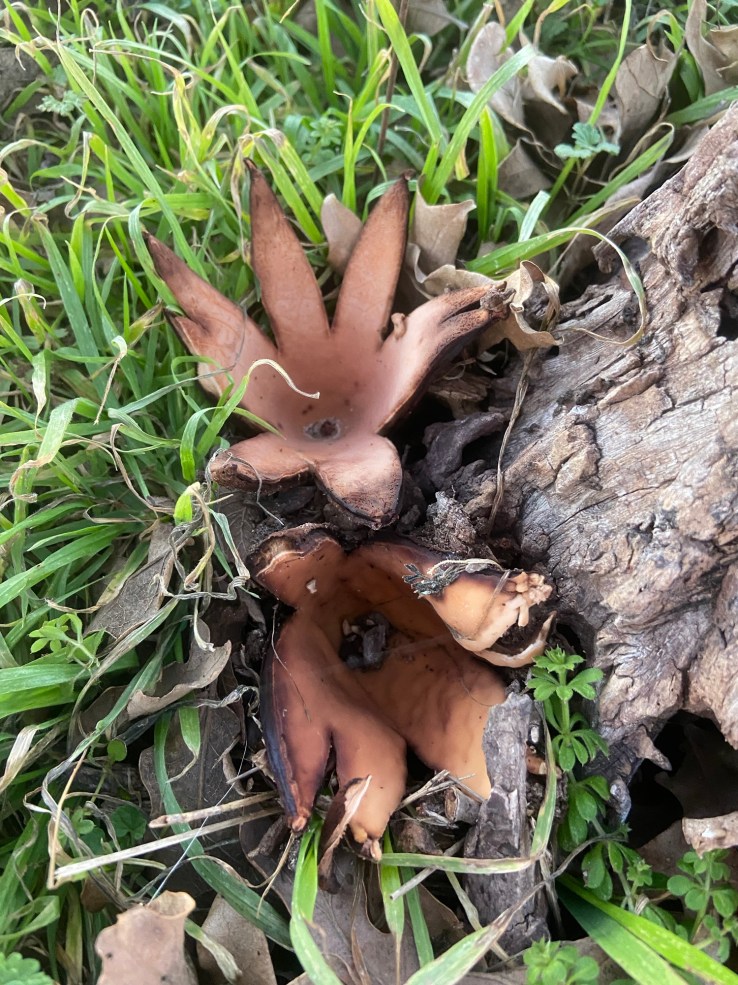
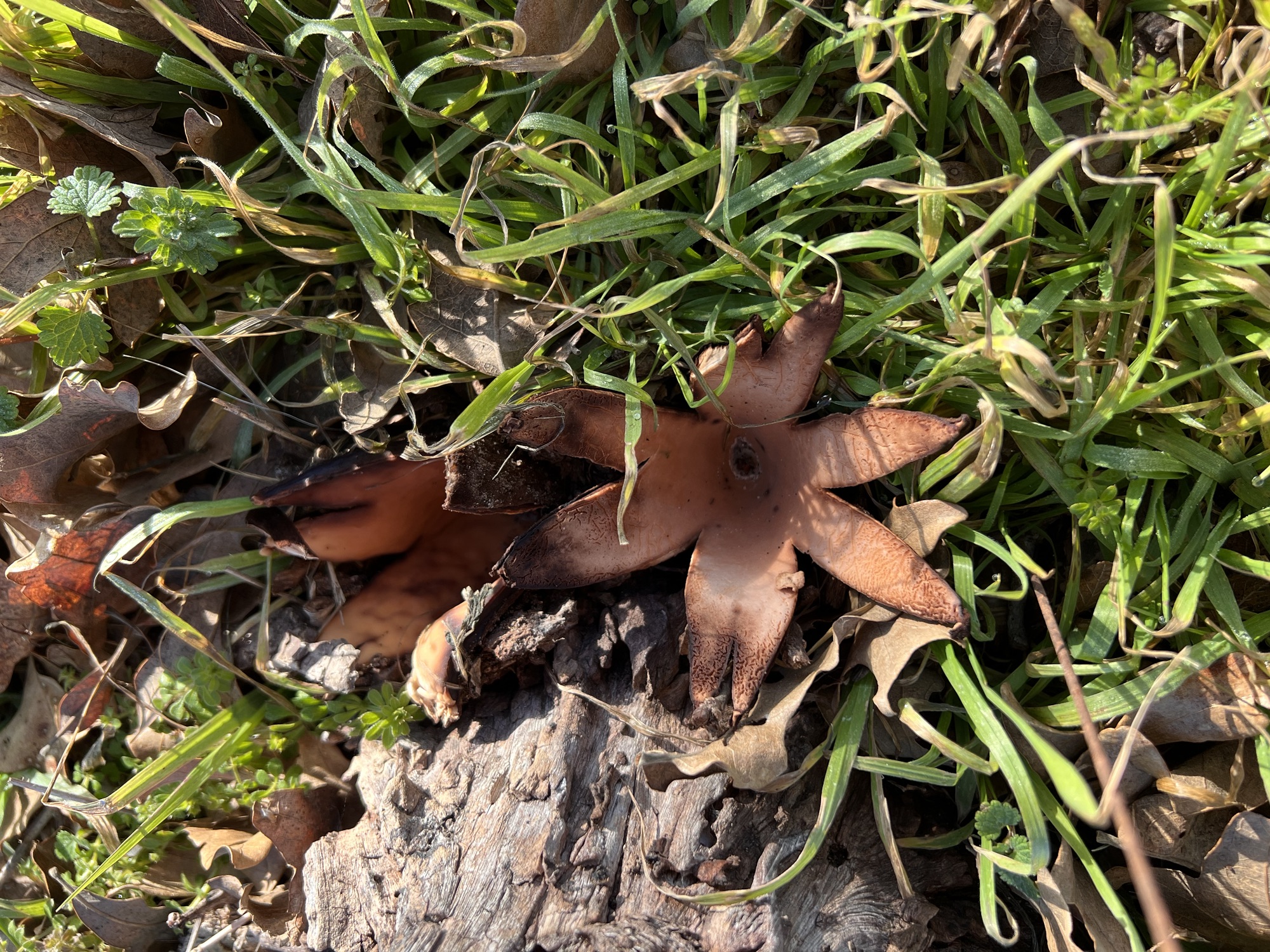
The State Fungus of Texas is the Texas Star (or Devil’s Cigar) (Chorioactis geaster). It’s not spotted often, so wheneever you see it, it’s newsworthy. When it was spotted for a second time at Inks Lake State Park last December, it made the news all over Texas. This is just one of the articles. There’s also an article on them in this month’s Texas Coop Power magazine. So, when my neighbor Vicki sent me a photo and asked me if I’d ever seen anything like this before, my heart skipped a beat.
I knew exactly what it was!
I told her it was rare and exciting. She looked it up, and we both geeked out over it for a while. The next day I went over to her property to get a look (I’d also hoped to pet her minature horse, but she was in the next pasture.) The mushroom was in a field of post oak trees, which confused me.
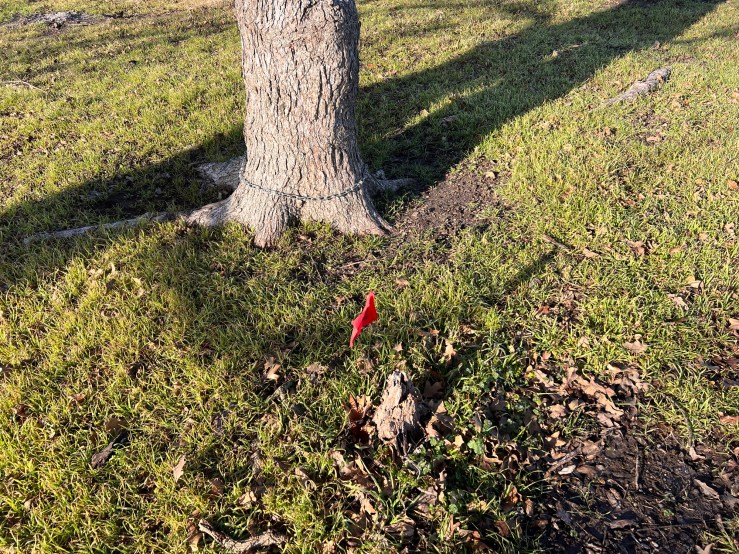
However, when I got closer to the spot where the Texas Star was located, conveniently flagged by Vicki, I saw it was exactly where it should be. It was right next to the stump of a cedar elm tree (that’s basically all we have, the oaks and the elms). We’d recently had a lot of rain, so it was fruiting right when it was supposed to.
There it is!
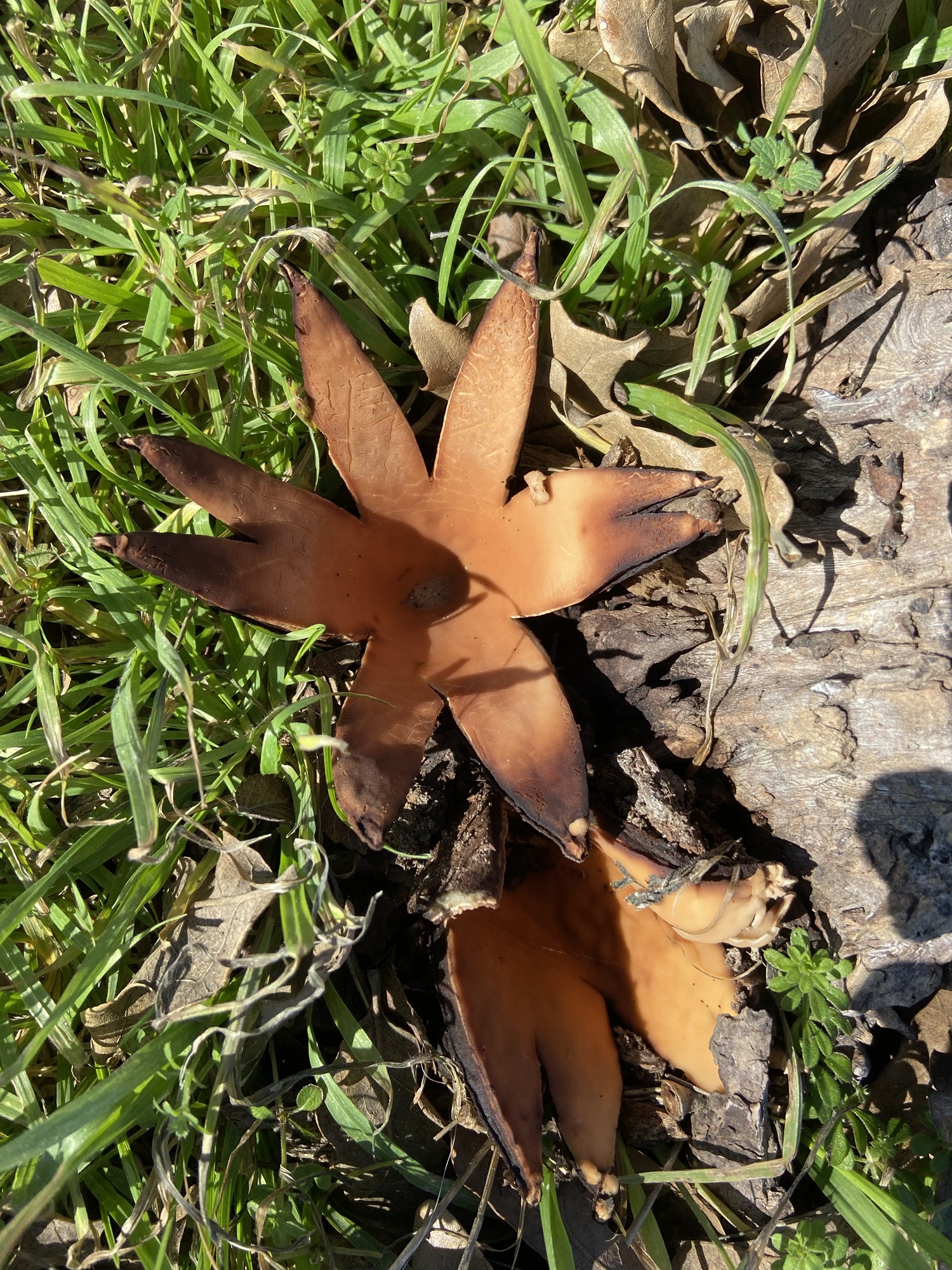
As soon as I got my own photos, I uploaded the observation to iNaturalist, where it was quickly confirmed. It had already burst its spores out, so we missed the exciting hissing sound the Texas Star makes, but it was fun to feel its leathery “petals,” and see if it smelled funny (I couldn’t smell anything). I looked around but didn’t see any more on her property. I also looked at the dozens of cedar elm stumps in my woods, but no Texas Stars have turned up.
It pretty much looks the same from all angles.
As I looked at the information on iNat and Wikipedia about the fungus, I learned a lot. First of all, I’m pretty lucky to live where it grows. It’s only found here in the middle of Texas and a small place in Japan. That makes me wonder if they are really the same fungus, but I’m sure professionals have looked into that.
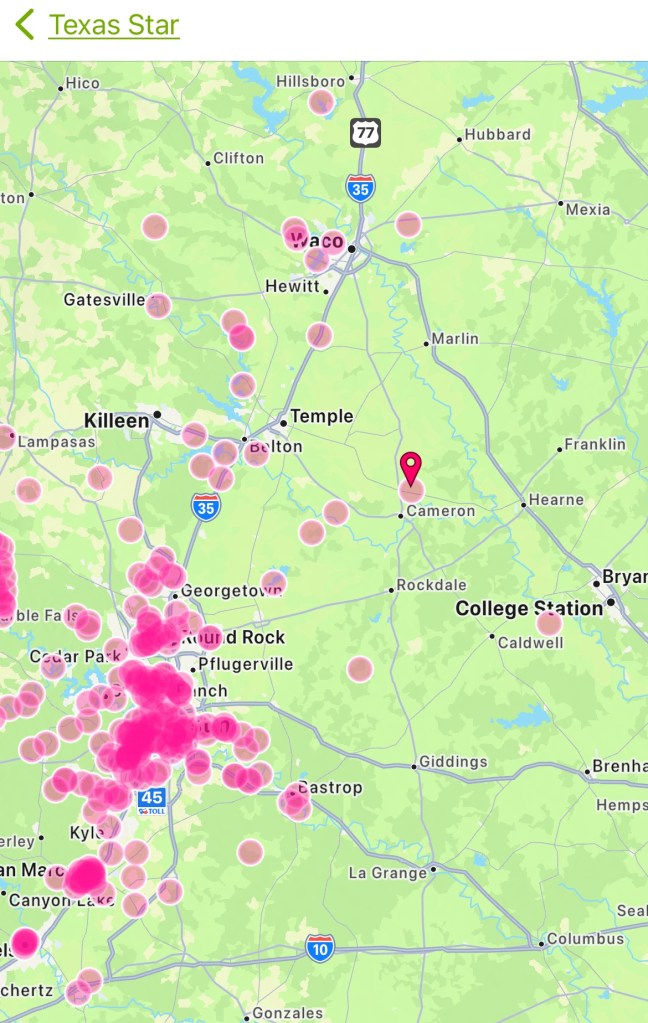
This iNat screenshot isn’t the whole Texas Star range, but it shows how few observations there are in this part of the world.
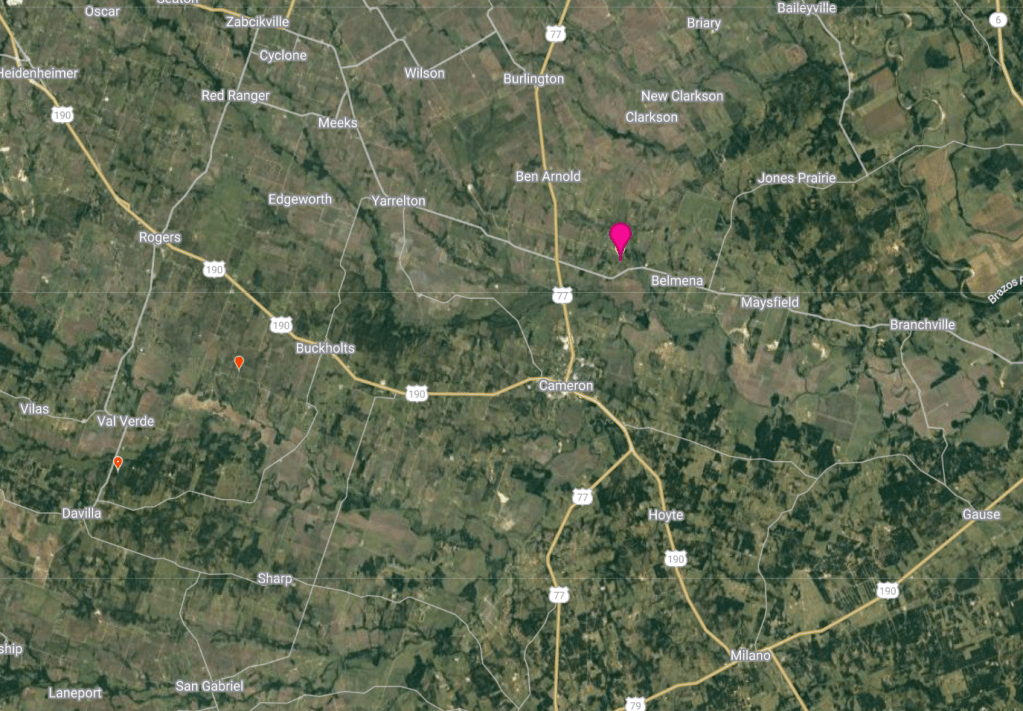
There were observations near Davilla and Buckholtz, but only the Davilla one was research grade, making my observation the second confirmed one in Milam County. And we are way to the east of its usual range. I was excited!
This map has most of Milam Couonty in it, and shows the three potential observations.
Keep on the lookout for these if you have decaying cedar elms (Ulmus crassifolia) and we have another nice rain (which I assume will happen soon). To learn more, read any of these articles:
Turks Caps are easy to grow from the little red apple-looking seed pods they put out in late fall. I have verified that through an experiment I decided to undertake last December 2022.
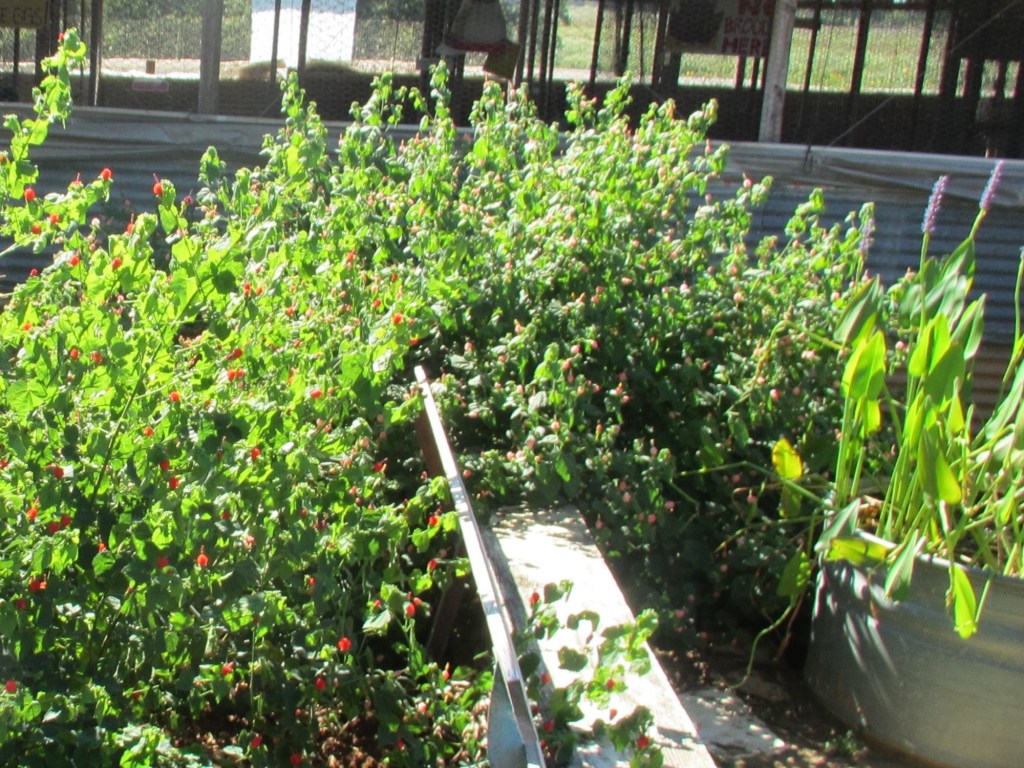
I harvested the seed pods from a very large, pink Turks Cap at the El Camino Real Master Naturalist Wildscape at the Bird and Bee Farm on FM 334 with the hope of growing some in my yard. Turks Caps naturally have a vivid red flower. These had been modified to bloom a light pink. The one at the wildscapesits right next to an even bigger Red Turks Cap.
I googled how to process the seed pods. It was recommended to put them in the refrigerator whole until late February or early March. In late February of 2023, I then did as recommended and removed the seeds from the red pod. Each pod produced quite a few seeds. I planted 16 of them in seed starter packs. I should add that I also took a baby plant from the Pink Turks Cap and put it in a pot at the same time I took the seed pods. I planted one full pod in the flower bed where I intended to put all of them. It is a heavily shaded bed which Turks Caps are known to like. The potted one was getting 6 hours of sun a day.
All of them grew. The potted one grew very tall since it had a head start, I think, and bloomed a lot. Butterflies and bees are very fond of the blooms. I moved the starter plants to a flower bed in my front yard in late March. The full pod plant grew at a faster pace than the seeded plants, but all of them did grow. They grew the most in the shadiest part of the bed.
The whole pod plant bloomed first of the ones in the bed. About half of the others bloomed in the fall. The blooms were all pink – at first. To my surprise, I went to water them one day, and one in the shadiest part of the bed was also blooming red at the same time it was blooming pink. The potted plant had pink blooms throughout the season. The others native gene pool came through. It would appear that they can be planted in any manner I tried.
All of them were still alive up to the freeze. I fully expect them to come back in the spring – even a small one my son weedeated down because he thought it was a weed. It re-sprouted quickly. What I really want to see is what color they bloom.








 Nature Along the El Camino Real