El Camino Real Chapter Members Attack! (More on Tree Girdling)

by Linda Jo Conn

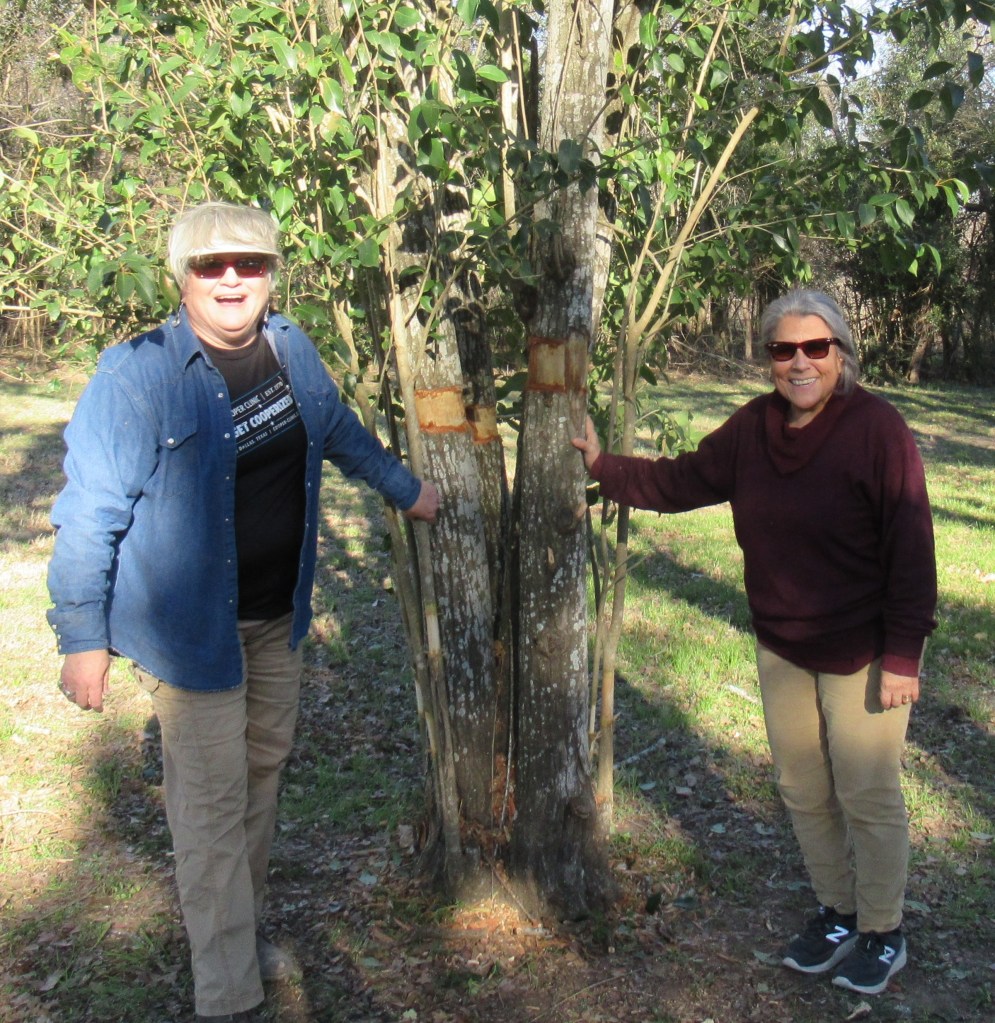
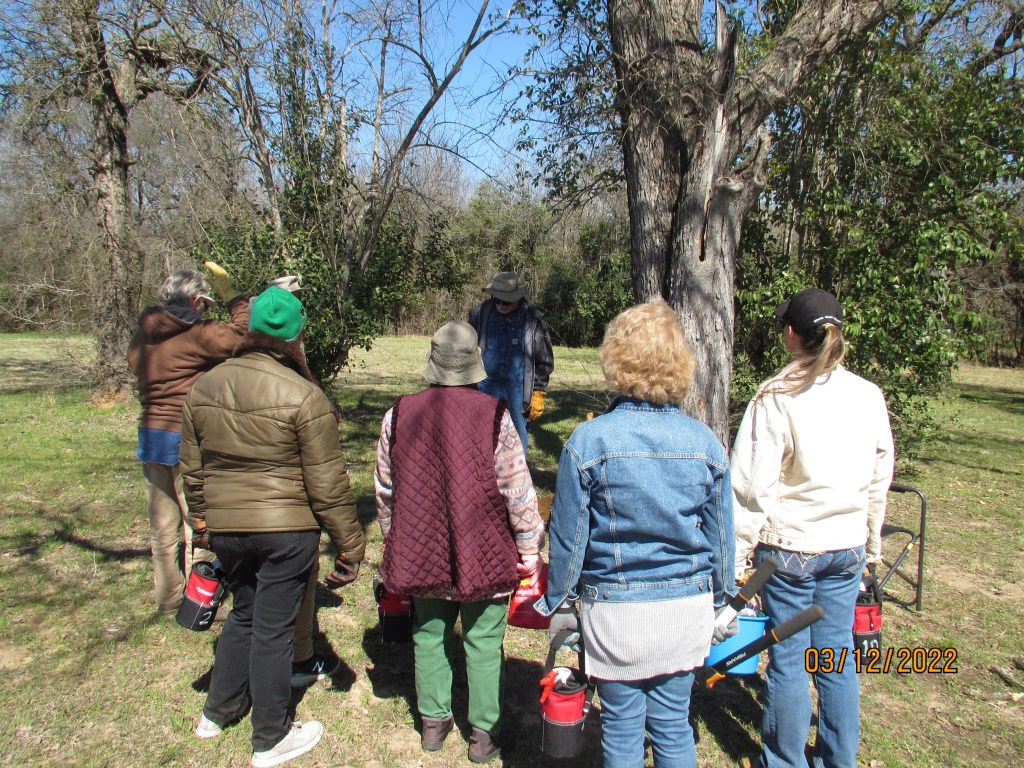
While I and a couple of others watched, a group of hard-working El Camino Real Texas Master Naturalist members and trainees girdled three of the large specimens of invasive Glossy Privets (Ligustrum lucidum) on the grounds of the Wilson-Ledbetter Park in Cameron.  The weather cooperated. It was pleasant with a hint of a chill in the breeze. 

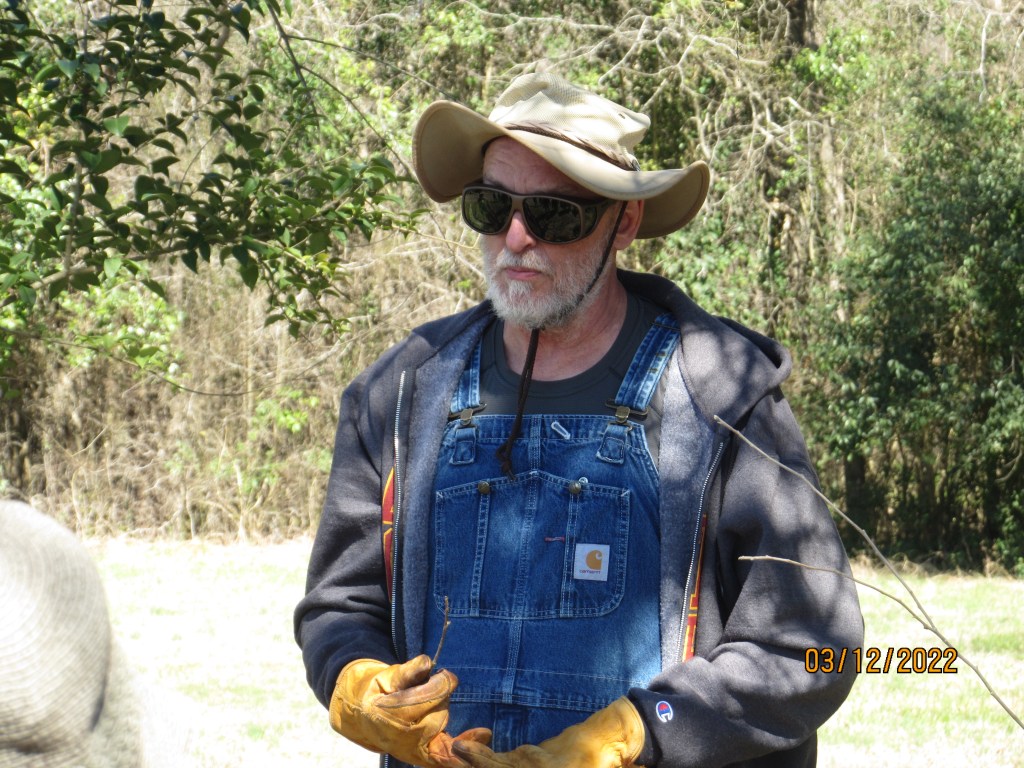
Cliff Tyllick, known to iNaturalists as “baldeagle”, is a self-appointed eradicator of invasive species.  He regularly leads volunteer groups in Austin at the Walnut Creek Metropolitan Park to remove invasive plants.  Read Cliff’s profile at https://www.inaturalist.org/people/baldeagle

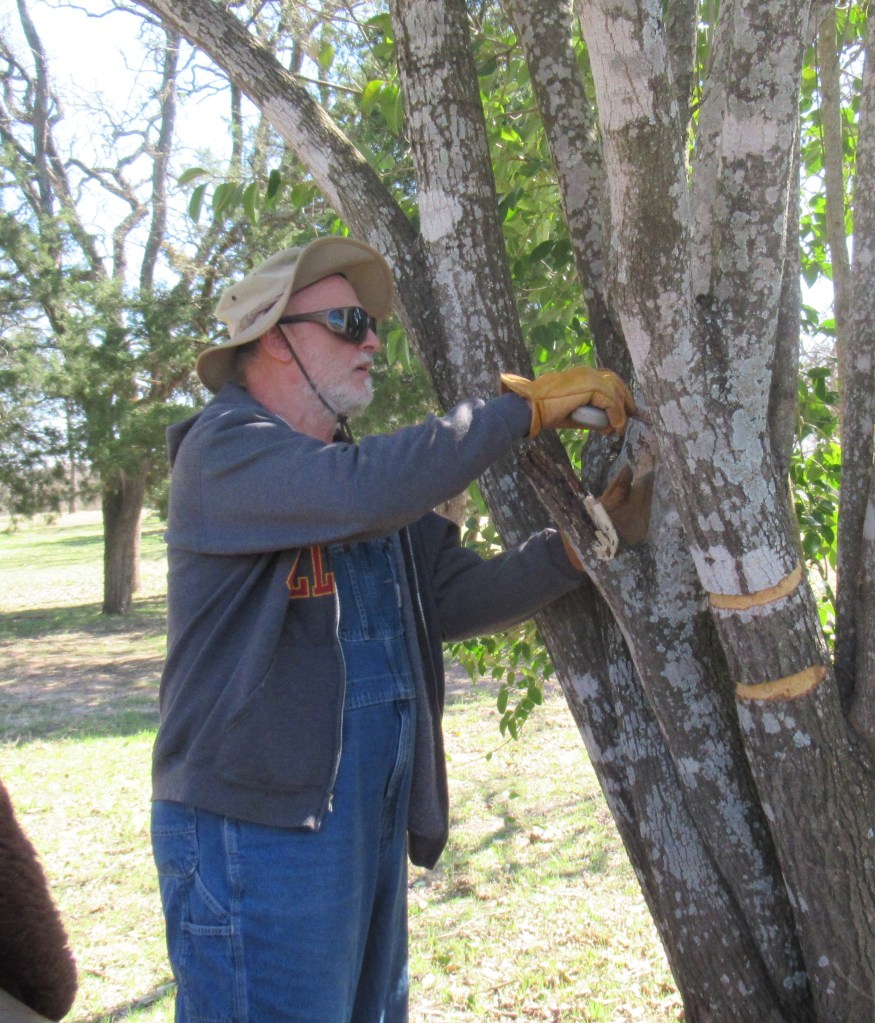
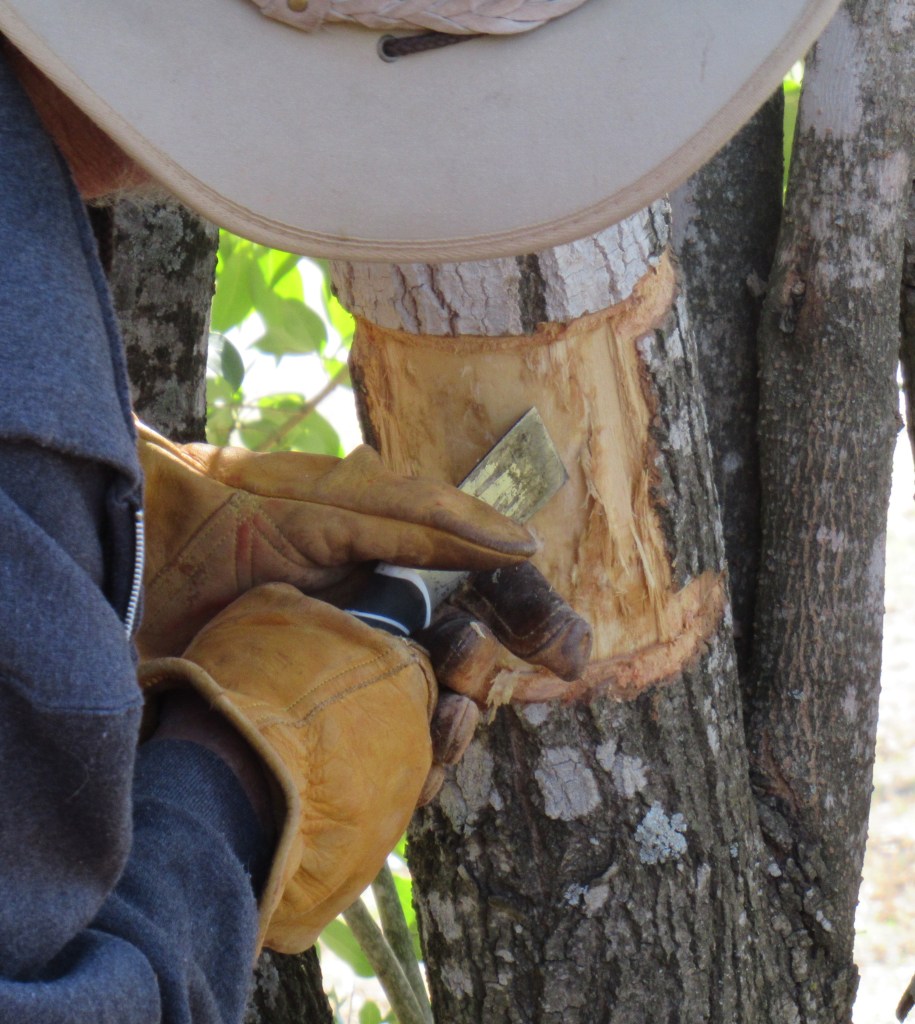
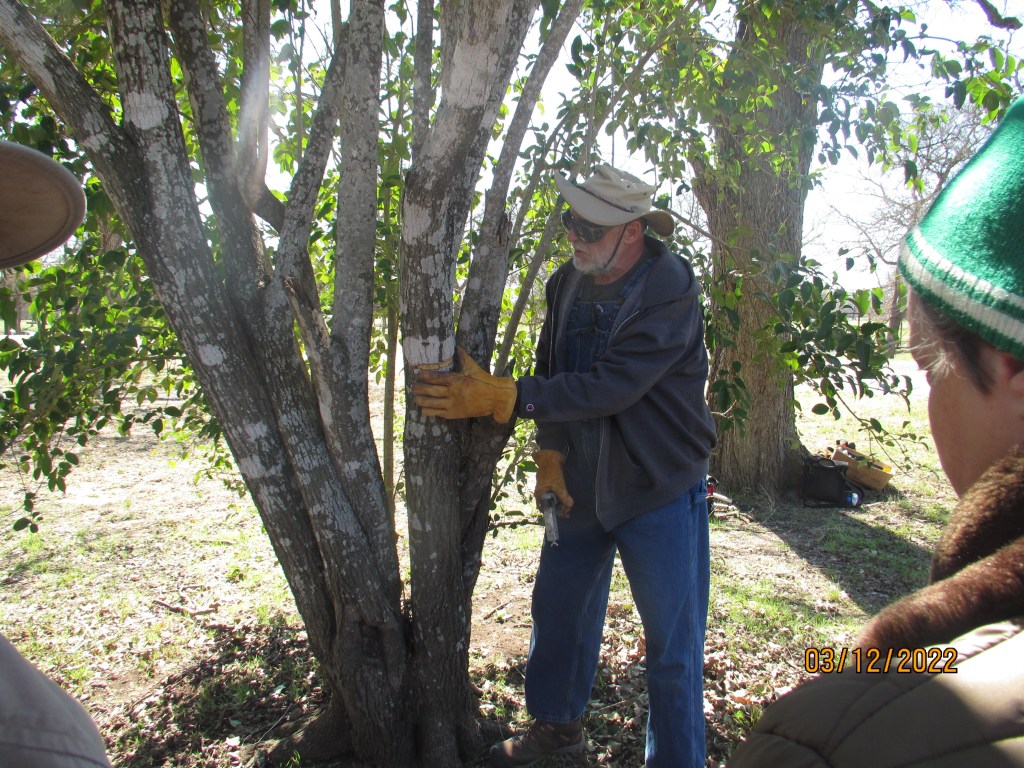
First, Cliff demonstrated the technique to the group and showed the proper use of each of the tools in his girdling kit. Several members came equipped with their own tools, some newly purchased, along with an eagerness to learn.  

Carolyn Henderson, ECR Chapter President and coordinator of the volunteer project, showed the determination that is necessary for the job. 

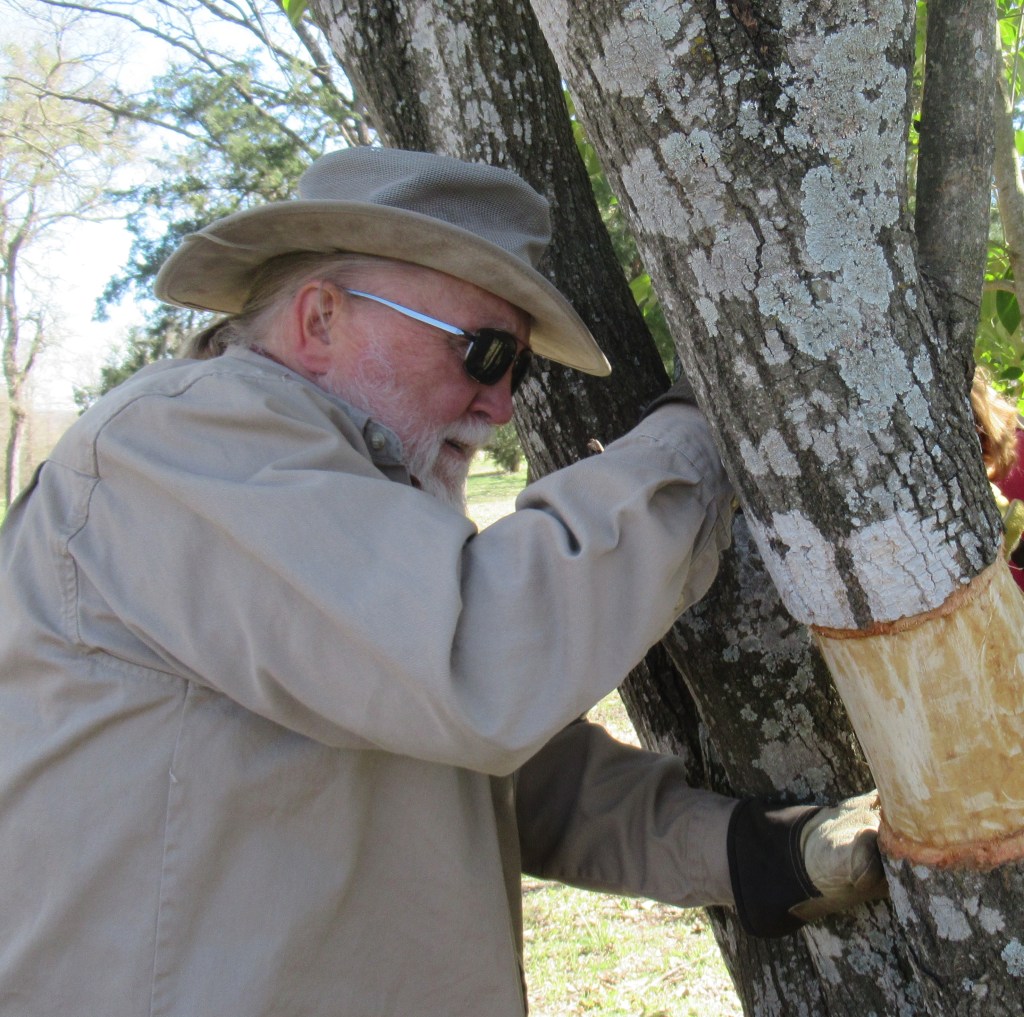
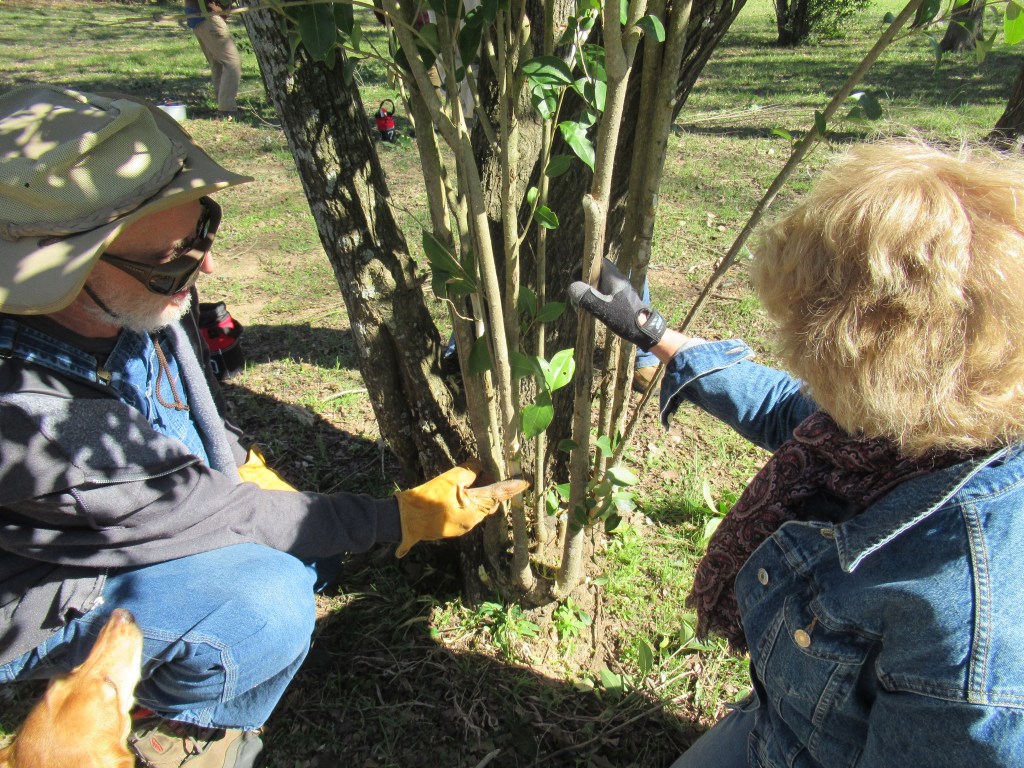
Cliff was always ready and eager to share his knowledge about tree growth and structure with the folks.  He explains the basics of a technique to trainee Linda Burgess.

Mike Conner, a well-seasoned warrior against invasive and aggressive species on his own property, attacked and conquered several large and difficult trunks of privet.

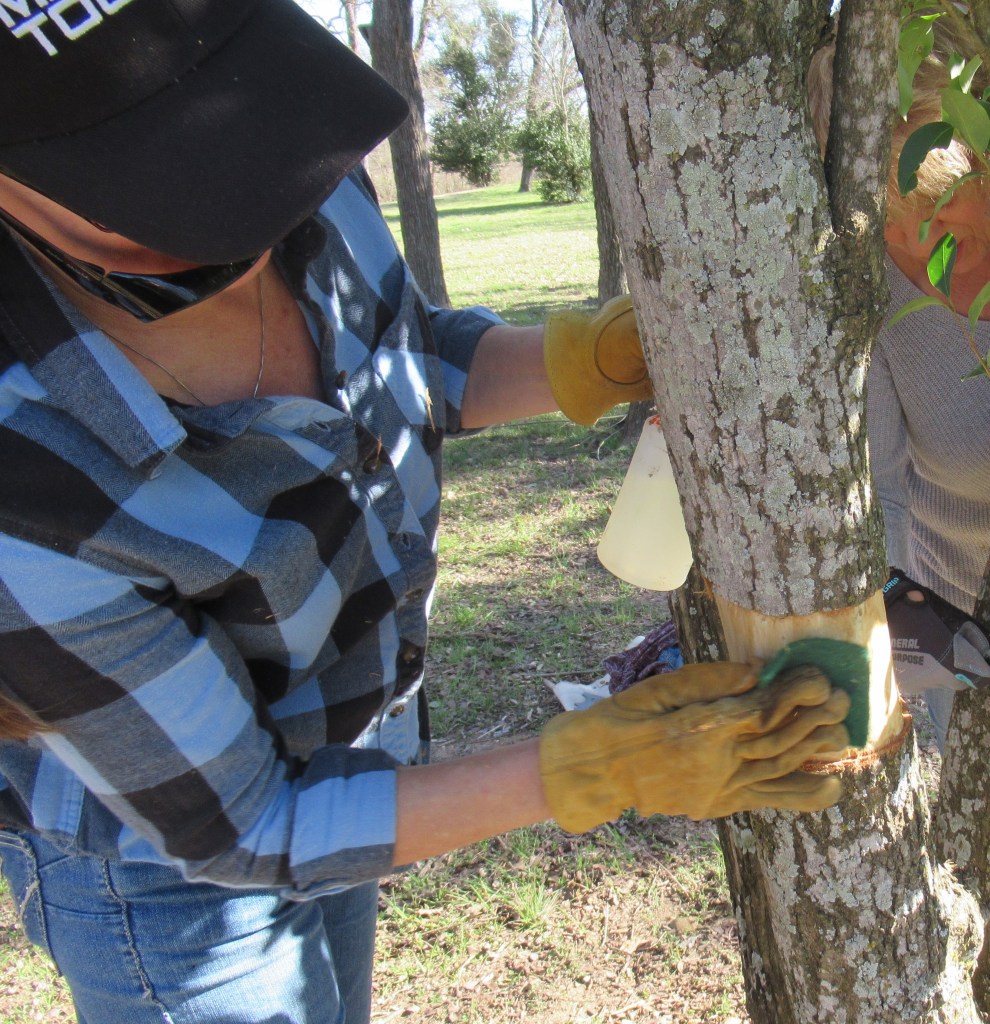
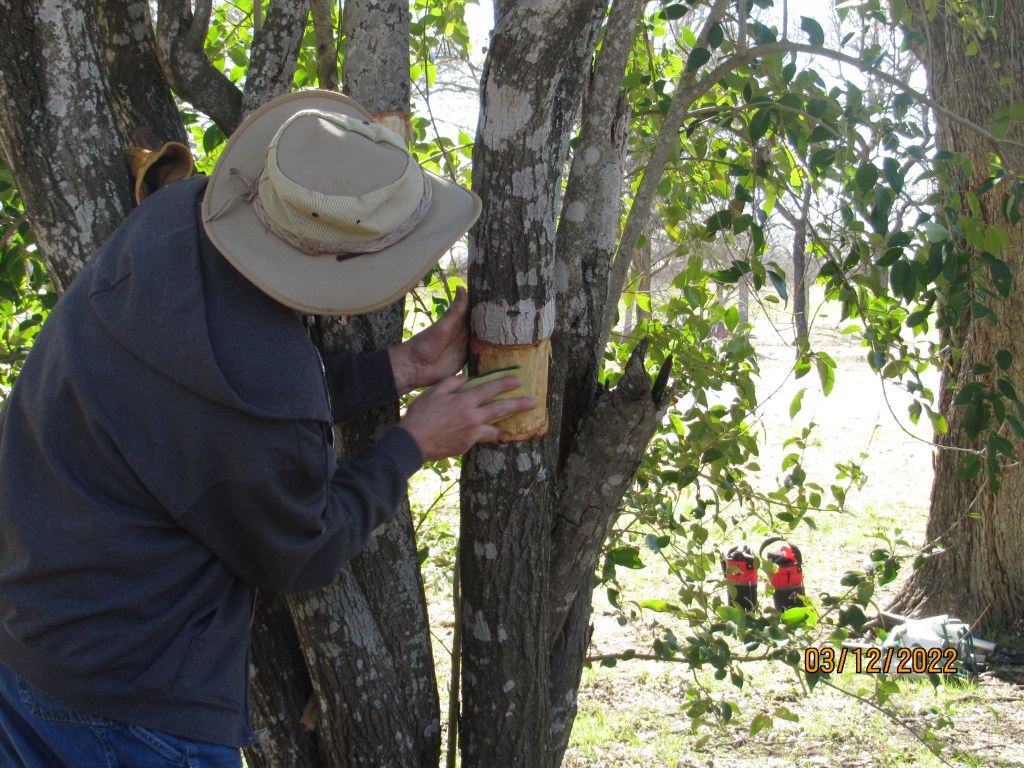
Mariann Buegler showed her grit and fortitude and is now at the final stages of the process using a spray bottle of 70% alcohol and a scrub pad.  

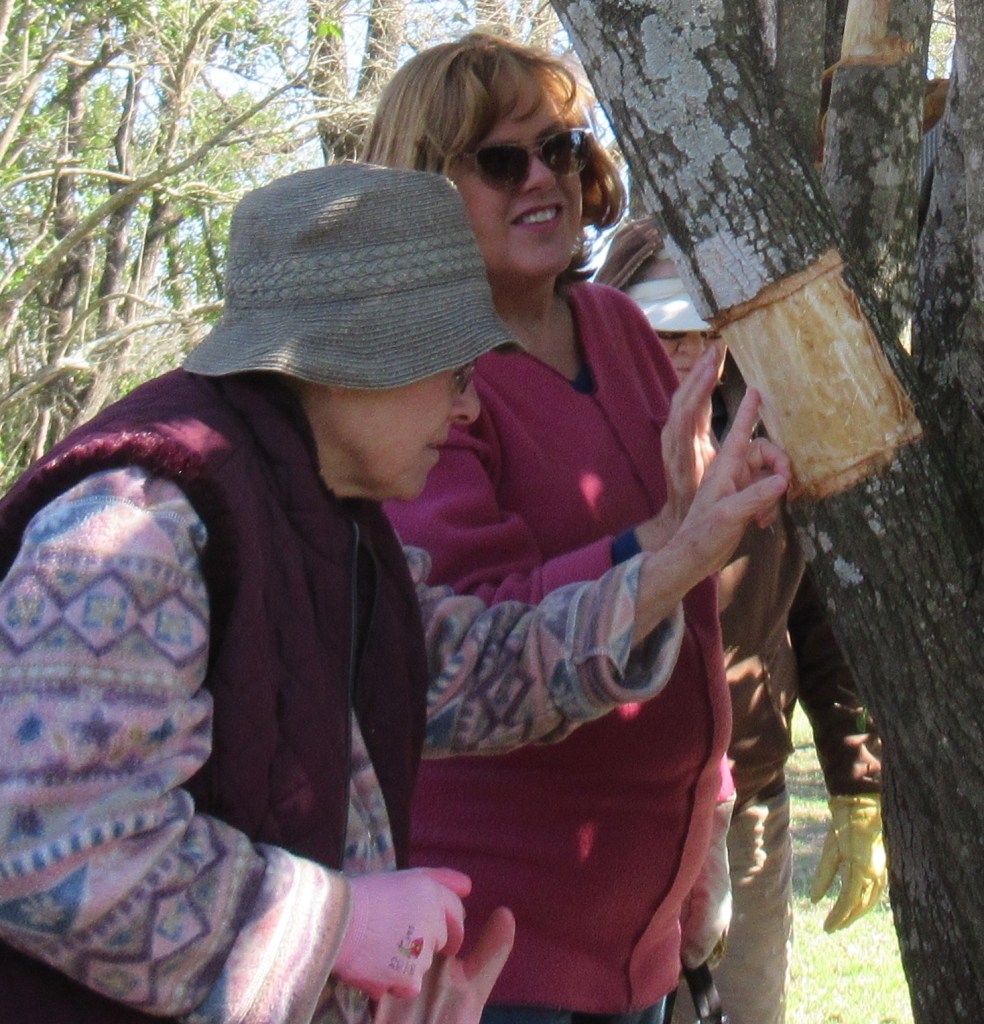
Catherine Johnson and Carolyn inspect the progress on a girdle. 

Debbie Sorenson and Liz Lewis are rightfully proud of their finished girdling job. Great work! 

For an instructional guide on girdling of invasive species, watch “Girdling Invasive Trees with Cliff Tyllick” below (this is the same one that our other tree girdling post featured): 

Not only did we learn about the technique of girdling to eliminate invasive species without the use of herbicides from Cliff, we also learned about the detrimental effects of invasive species in the natural ecology.  

Linda and Cliff

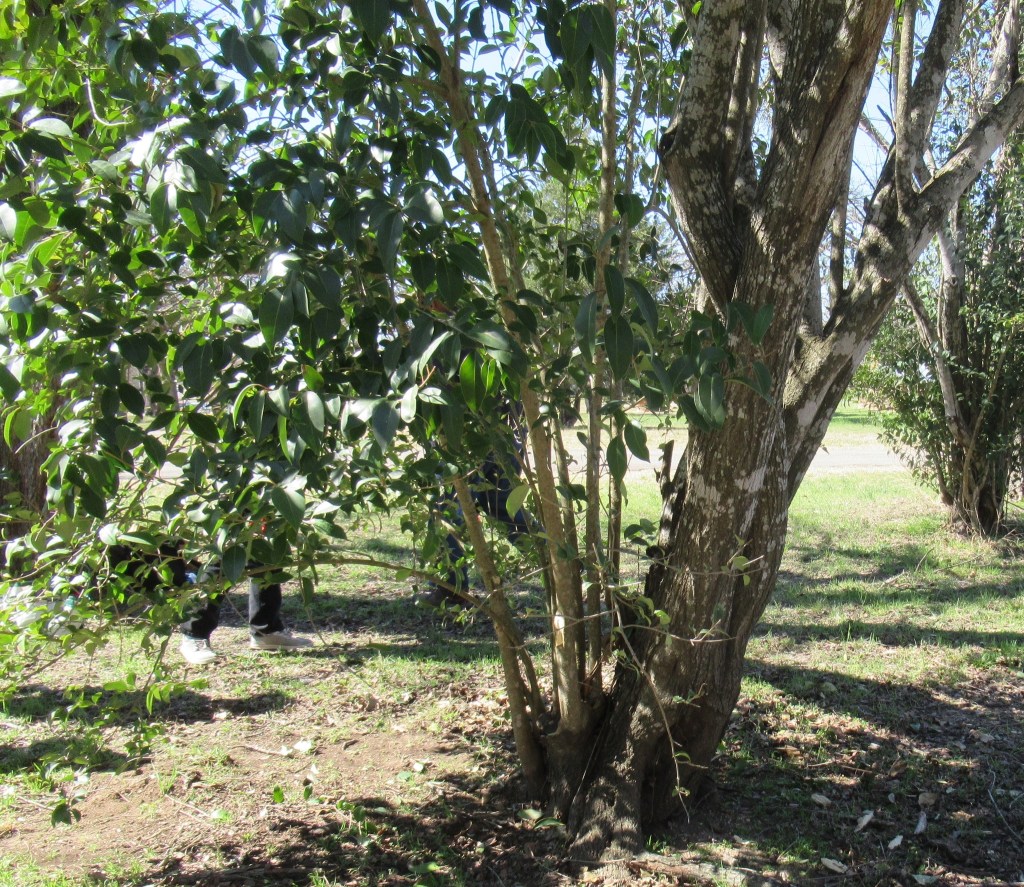
To view one of the Glossy Privets attacked by the group, see my iNat observation at: https://www.inaturalist.org/observations/108564382.  The privet will be revisited several times in the future to document its demise and the success of the workday by a remarkable group of ECR volunteers. 

The tree I am tracking.

Tree Girdling at Wilson Ledbetter Park

by Carolyn Henderson

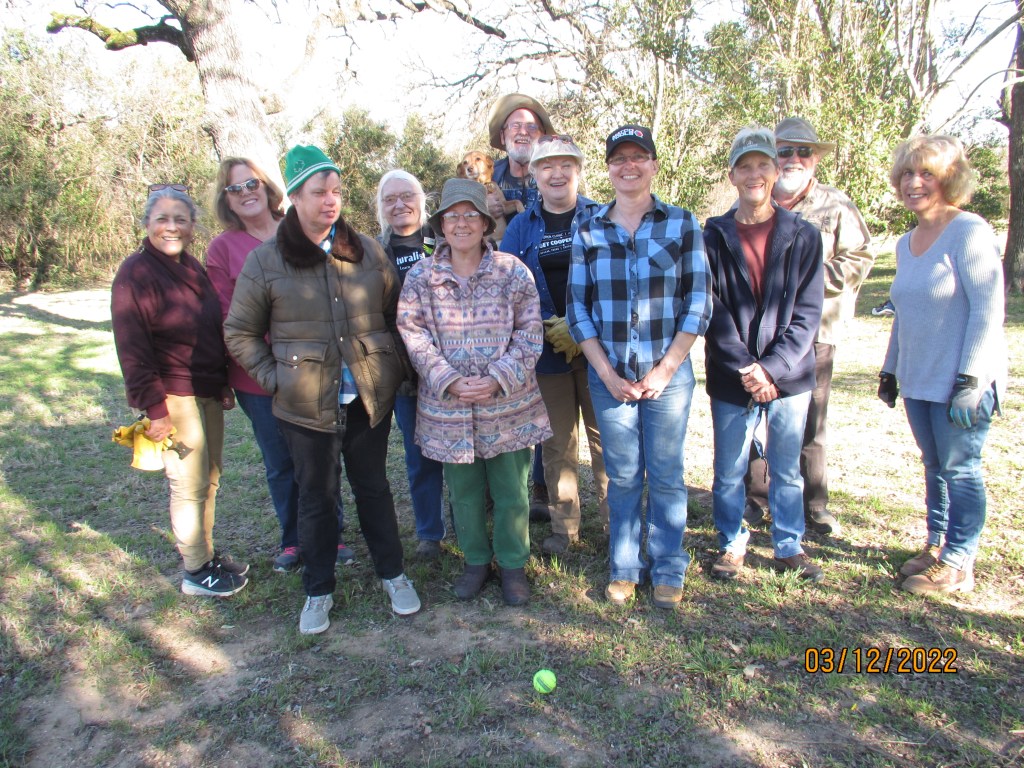
Ten troopers from the El Camino Real chapter of Texas Master Naturalist met up Saturday, March 12, to attempt to rid Wilson Ledbetter Park, in Cameron, Texas, of an invasive species. With the very experienced guidance of Cliff Tyllick, we managed to wear ourselves out after three hours of Glossy Privet girdling. I’m not so sure about the trees. 

Cliff Tyllick explains tree girdling

Tyllick has years of experience girdling trees in the Austin area. Much of his work is done through grants and conservation organizations in an attempt to hold back Glossy Privets and some other invasive species. He also has done a program on girdling for Texas Master Naturalist at the annual meeting in 2019. 

Tyllick draws lines on bark to be removed
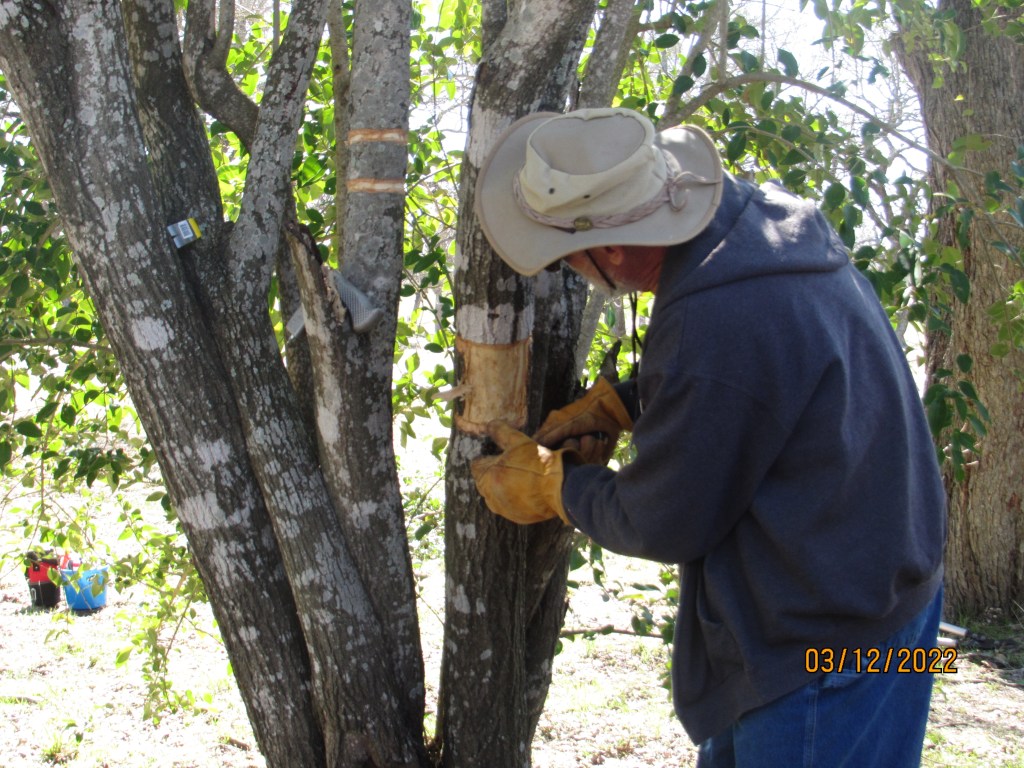
Bark is removed between the lines

Is it more difficult than cutting down the tree and poisoning it? Yes! So why do it this way? Girdling doesn’t require the use of poisons that could contaminate nearby plants, animals, or water, and it eliminates noisy large equipment (as well as the need to carry it down long trails). It eliminates spreading of the trees by seed while killing it slowly. If it’s in a wooded area, you can let the tree decompose to fertilize the ground.

 All pulp material is removed to prevent regrowth

And why would there be a need to remove the invasive Glossy Privet that produces flowers and shade? They hinder the growth of native trees and flowers in the area. They outgrow native trees in height, which hinders the growth of native Texas species growing below them. Bees and butterflies do like the flowers, but that stops them from pollinating native Texas flowers.

Members walk toward the ill-fated Privets.

There is a specific format to do the girdling in so that it will take out the plant in one effort. The outer bark must be removed for about the length of a hand. Then the pulpy matter left must be removed by using tools to scrape it away. Once it’s removed, it is washed with soap and water then cleaned with an alcohol and water mixture. This combination keeps it from regenerating what was removed. If you’d like to see it in action, check out this video:

It was hard work, and most of us were worn out, but learning a new process was interesting, and we got to enjoy the company of our chapter members. As an aside, Tyllick’s wife, Karen is an archeologist by training and a PhD. She found some relics in the park. Thanks to her for our group picture. We were all smiling because we said “Girdling” instead of “cheese”. It was really funny at the time, which was at the end of the day.

ECR chapter members smile big after all the girdling.

More Field Trip Memories

by Carolyn Henderson and Catherine Johnson

The El Camino Real chapter of Texas Master Naturalist took their first field trip of the year to the farm of Master Naturalist Alan Rudd. About twenty members, including new trainees, toured the place learning about natural methods of fish farming and how the stock ponds were created. Rudd also gave a history of all the new species drawn to the area by the abundant water and food sources.

After the hike around parts of the place, members cooked hot dogs and pie iron goodies over the fire. Many thanks go to Rudd and his family for hosting the chapter.

Native Rangeland and Cattle Grazing are Compatible

by Carolyn Henderson

New trainees for the El Camino Real chapter Texas Master Naturalist learned about extensive programs being implemented by the Texas Parks and Wildlife Department with area ranchers to restore grazed land to its native state while still grazing cattle on it. A project in a neighboring county is being implemented by Tim Siegmund, the Private Lands Program Leader for TPWD-WL Division, with Jay Whiteside, TPWD Technical Guidance biologist District 5. They are several years into the 7-year plan, and the results are very positive in proving that native growth on rangeland and grazing cattle on it can be compatible and profitable. Below is a synopsis by Siegmund about the project. 

The use of fire to concentrate cattle grazing has led to a recovery of the areas being rested from burning within the pastures.  The cattle preferentially graze the freshly burned areas, and lightly or don’t graze at all the areas burned in previous years.  This allows the plants to recover, make seed, and persist over the long term in a constant burn, graze, rest cycle.  This can lead to better carbon and nitrogen cycling as a result of thatch incorporation into the soil and concentration of animal waste, increased water infiltration as healthy roots grow and rot in place creating pathways for water infiltration, and increased plant and animal diversity as there are a host of niches being created by short and tall vegetation as well as annual, biennial, and perennial plant species.  Patch burn grazing can be a great tool to promote livestock production, plant diversity, and wildlife diversity. —- Tim Siegmund

Photo 1 shows the short, grazed grass and the diverse wildflower community not being grazed by the cattle, average grass height was less than 2 inches.

Photo 2 is a picture of a yard stick showing the amount of ground cover now blanketing the ground after 2 full years post burn.

Photo 3 is a picture with Siegmund and assistants in it conducting the vegetation sampling monitoring the changes over time.

Photo 4 shows the year of burn and the annual plant community dominated area as the fire and subsequent regrowth of grass has concentrated the cattle in this area.

Photo 5 is a picture of Jay Whiteside and an intern showing what 2 years of rest looks like by burning other portions of the pasture to focus grazing pressure elsewhere. In 2019, grass height is approximately 20 inches.

By the way, a recording of this session can be found on our website.