Report from the 2021 Annual Meeting

by Carolyn Henderson

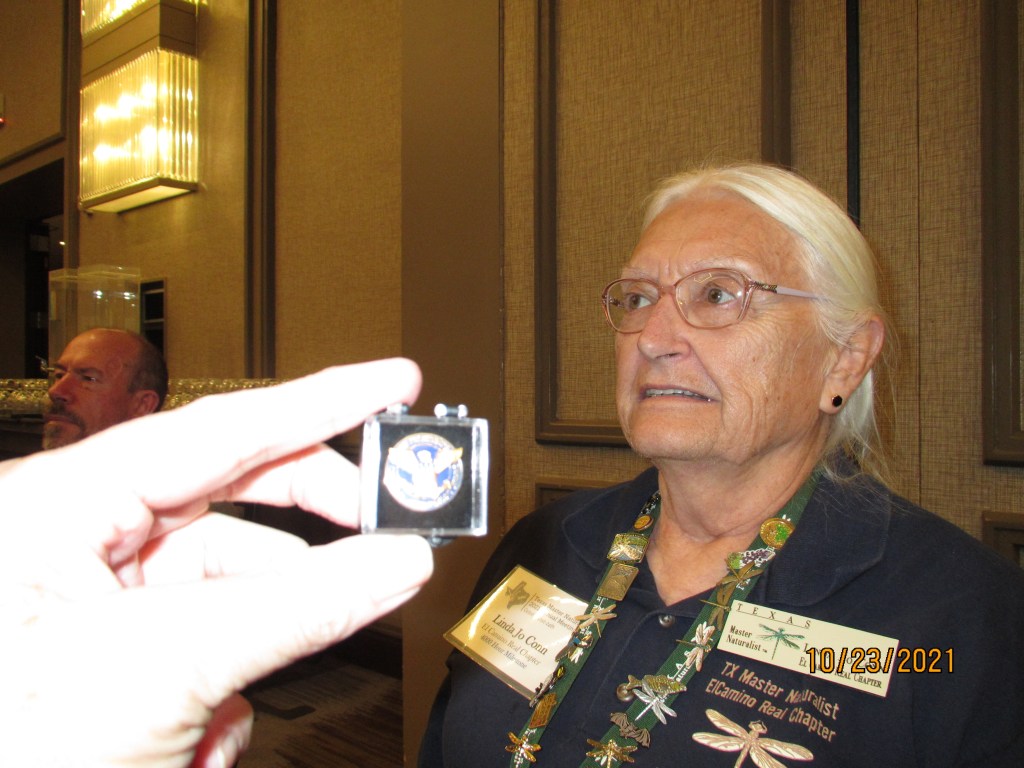
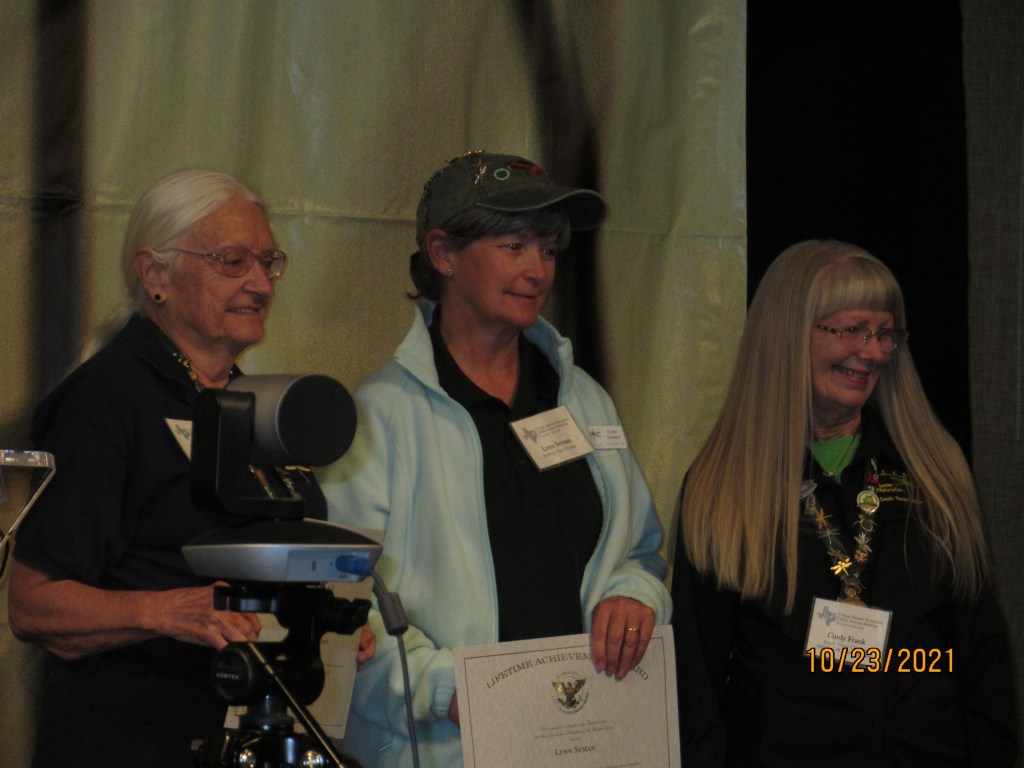
Linda Jo Conn received special recognition Saturday night at the annual meeting of Texas Master Naturalists in Dallas/Ft Worth. She has reached a milestone of 4,000 service hours. She was in very tight company. Only one other statewide member qualified. 

Congratulations to Linda Jo

The award included a dragonfly pin of brushed gold with a ruby in the center and a special pin and certificate from the office of the President of the United States. 

The Presidential pin

In other categories, Eric Neubauer received recognition for reaching 250 service hours. All who received initial certification from the class of 2020 were also recognized (there were many statewide).

Eric stands as his name is called.

Larry Kocian was recognized for “109!” hours of service in the Texas Water Specialist program with TPWD. Kocian and Sandra Dworaczyk were both given recertification this year. 

Good job!

I attended a 3-hour session on this program, and it looks particularly interesting. If we can get a group of three interested, they can take the class and gain certification. I have a connection to it if anyone is interested. If you’d like to find out more information, contact Melissa Felty, conservation education manager for TPWD, at Conservation Edu@tpwd.gov or go to the web site. The class counts as advanced training hours (8) and the service, which can be education, water testing, CoCoRaHs precipitation measuring, and other things, count as service hours for Texas Master Naturalist. 

Yay for our folks!

The meeting had some very educational sessions. I went from water conservation, to wildscaping in the shade, to Chronic Wasting Disease, to iNaturalist advanced training, to Tarantula sex with live tarantulas in one day. That last one was particularly amusing to me, Eric, and the rest of the packed class. A few members gave play-by-play commentary. My favorite occurred on Saturday. It was an excellent program given by a fellow iNaturalist from the Blackland Prairie chapter on identifying trees. I now have a brochure to carry with me. 

Award recipients

The meeting was educational, entertaining, and a great place to meet other TMNs. I came away with some good ideas for our chapter. 

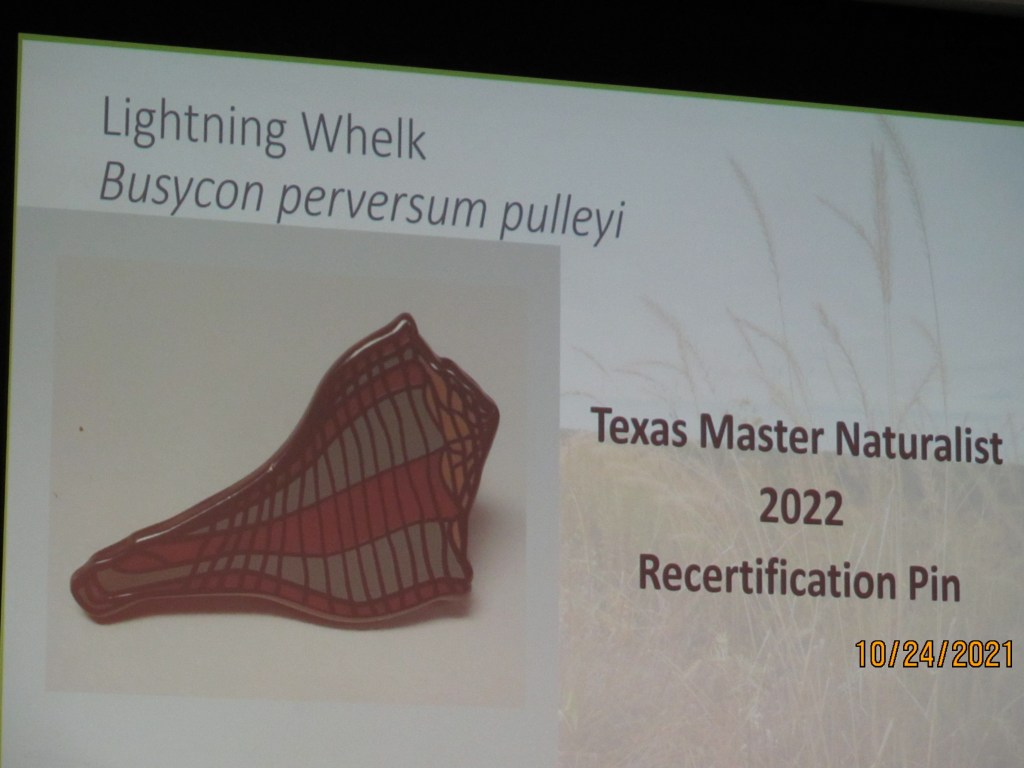
Oh, and by the way, the new TMN pin for recertification in 2022 is the Lightning Whelk.

Dancing Bees

by Catherine Johnson

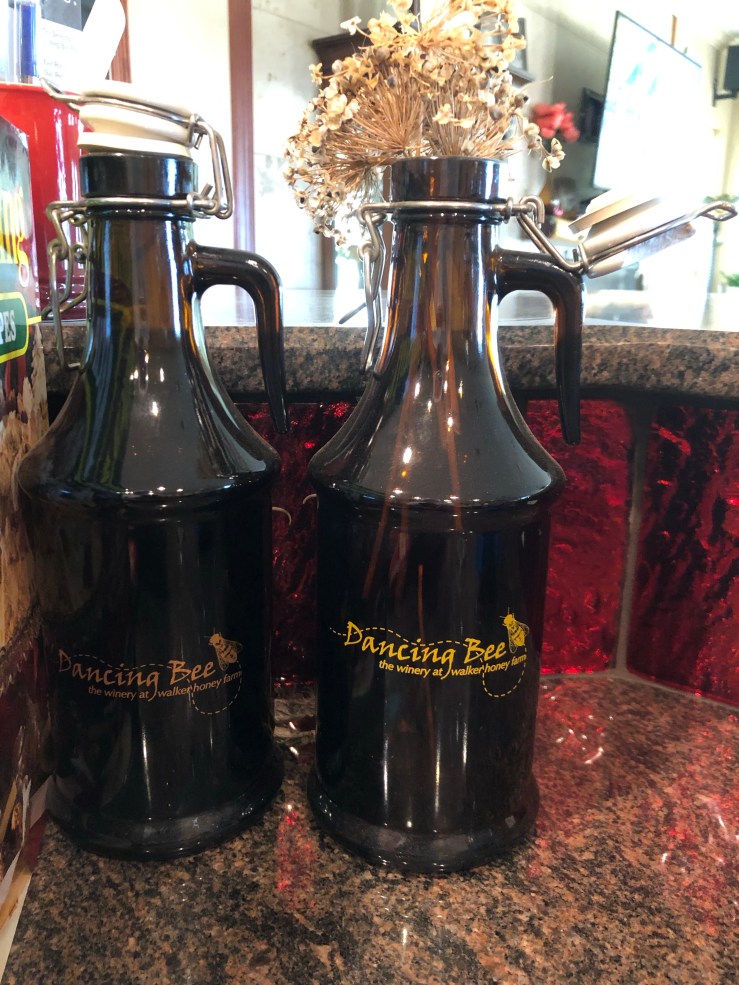
These are the containers they put mead in when they sell it. You bring them back to get more, so it’s a great re-use example.

One thing we learned at a recent visit to Walker Honey Farm is that Mead is a mixture of honey, water, and yeast.  Many factors affect the taste, including the type of wildflowers bees visit.

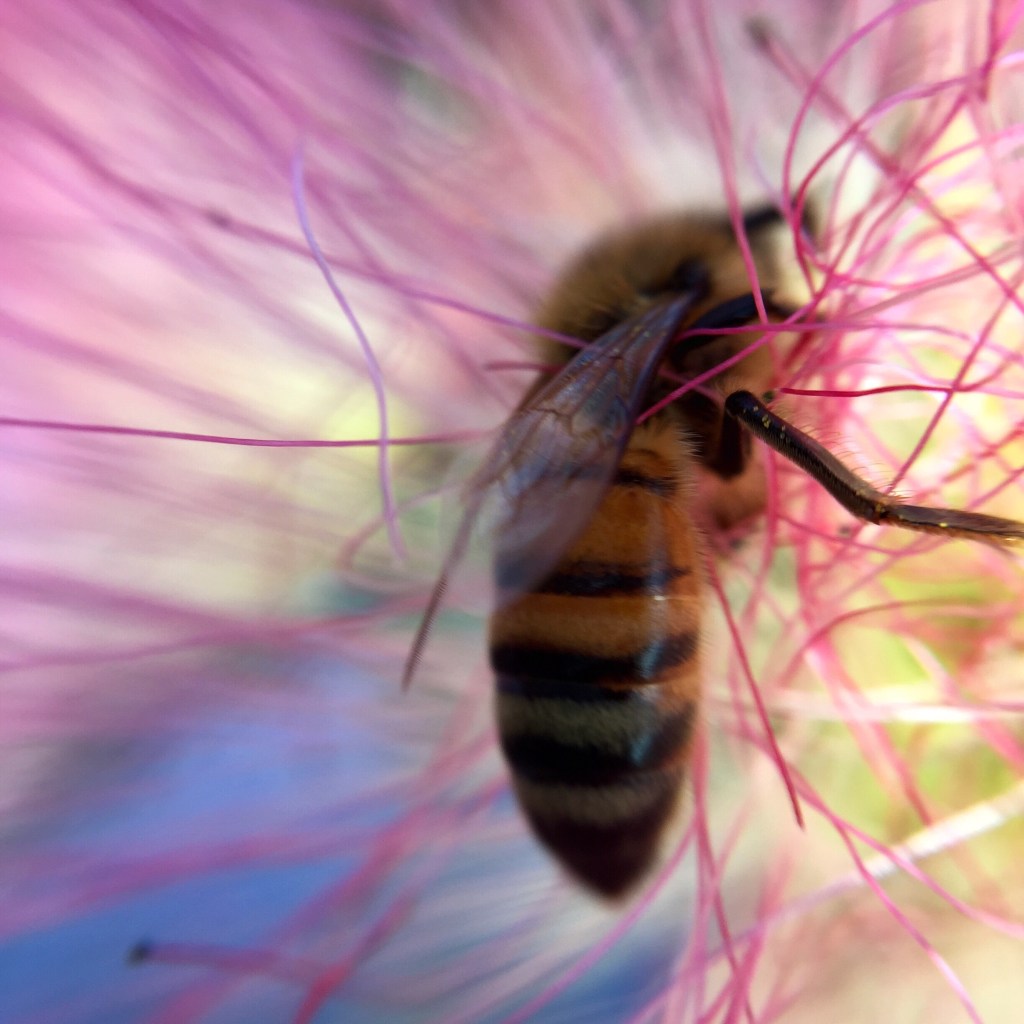
We also learned that bees dance on the surface of the honey comb, which directs other bees to within 10 feet of sweet sources, which can cover a 16 square mile area.

Be the Change: Alex Bailey and Black Outside

by Sue Ann Kendall

[We realize there has been a gap in blog entries. Don’t worry; next week there will be a lot of catch-up posts. Your blog poster has had some “issues” and been out of town, but they are resolving and she’s coming back to Texas soon.]

This entry originally appeared in another form on the Hermits’ Rest blog.

Today my head’s all full of learning, because I attended the Texas Master Naturalist program’s latest in the Be the Change series, which is a part of our diversity and inclusion initiative. The things I learned completely dovetailed with some of the things I’ve been observing and thinking about in my time in South Carolina, so I’m just processing away.

Where I am not.

I’m one of those “well-meaning white people” who want to help create a more diverse world and be good allies (or co-agitators, as someone said today). I know that some of our good intentions do not go over well, though, so I’m in the learning stage (which today I discovered to be a good thing).

The speaker I listened to today was Alex Bailey, of San Antonio, who founded the Black Outside organization.

Black Outside, Inc has one simple mission: Reconnect Black/ African-American youth to the outdoors through culturally relevant outdoor experiences

Black Outside website

Bailey did a great job of coming across as friendly and funny, even when he was making points that could make listeners uncomfortable. One of my favorite things he reminded us was that, although many of today’s black youth have little camping or wilderness experience, that was not always the case. As he pointed out, Harriet Tubman just didn’t pile all those people into an SUV and drive them to safety. He also reminded us that rural black folks have a rich history of fishing, hunting, and living off the land.

While Bailey talked to us about the importance of observing, learning, and reflecting (see graphic below for his actual words) before trying to bring the outdoors to young people of color, he gave us a lot of insights, including some about swimming. He pointed out that well meaning event organizers often include water activities without letting the families of the black participants know they are coming up. Why is this a problem?

This great graphic comes from work by Barbara J Love, so I figure I can borrow it, too.

Hair. That’s the problem. In my day, that may have been an issue, too, because swimming, afros, and Afro-Sheen didn’t go together well, That’s nothing compared to some of the elaborate hair styles young black people have today. You know, those braids could be ruined under water. And if you do an activity that requires a helmet (in or outside water), well, some styles won’t fit, period. Young people might miss out on fun, just because they hadn’t prepared a water-friendly hair style. (And yes, a lot of black women where I am today are NOT dunking their heads.)

That’s just one example where pausing to learn about cultural differences can lead to better experiences. And that’s one reason why Bailey suggested that, rather than volunteer to teach black kids directly, allies can provide materials or training to black mentors who can then work with the kids, who really benefit from seeing people who look like them in positions of authority about nature and the outdoors. That makes a lot of sense to me!

For sure, this was a very helpful step in my journey toward being a good BIPOC (Black, Indigenous and People of Color) ally and a better Master Naturalist, and it reminded me how much I still have to learn. I’m quite glad for that!

I highly recommend that all of you, whether you’re a Master Naturalist or not, head over to the Be the Change page on the Texas Master Naturalist website and listen to this presentation. It’s a great way to get an hour of Advanced Training! You will also find a link to Bailey’s interesting TED Talk and other useful information.

Alternatives to Feeding Sugar Water to Honey Bees

by Donna Lewis and Mary M Reed, Chief Apiary Inspector, Texas Apiary Inspection Service

You may have read Donna’s recent post about feeding honeybees on her property. She got to wondering if the sugar water she was putting out was a good idea, so she contacted Mary Reed at Texas A&M, who has spoken to our chapter before, for more information. It’s so great that we Master Naturalists can contact credible resources like Mary Reed when we have questions. Their email exchange starts below the beautiful image of a bee.

Sue Ann Kendall

Image from @Wire13 via Twenty20

Donna

I wanted to ask about something I thought was OK, but after looking at some web sites, I may be wrong. I do not want to give incorrect information out on our blog.

So, is putting out sugar water for honey bee’s bad?

Mary

Thanks for reaching out! Feeding sugar to honey bees is a method beekeepers use to strengthen their colonies as needed. It gives honey bees the energy they need to generate wax to build the comb, conduct tasks in the hive, and forage for resources in the surrounding area. 

It is recommended that if a beekeeper is going to feed their hives sugar water that they use in-hive feeders rather than open feeding. In-hive feeders help prevent robbing behavior from other colonies, and it cuts down on the possibility of disease transmission. Open feeding (i.e., placing sugar water out in a bucket, tray, etc.) increases the likelihood of disease transmission amongst hives in the area. 

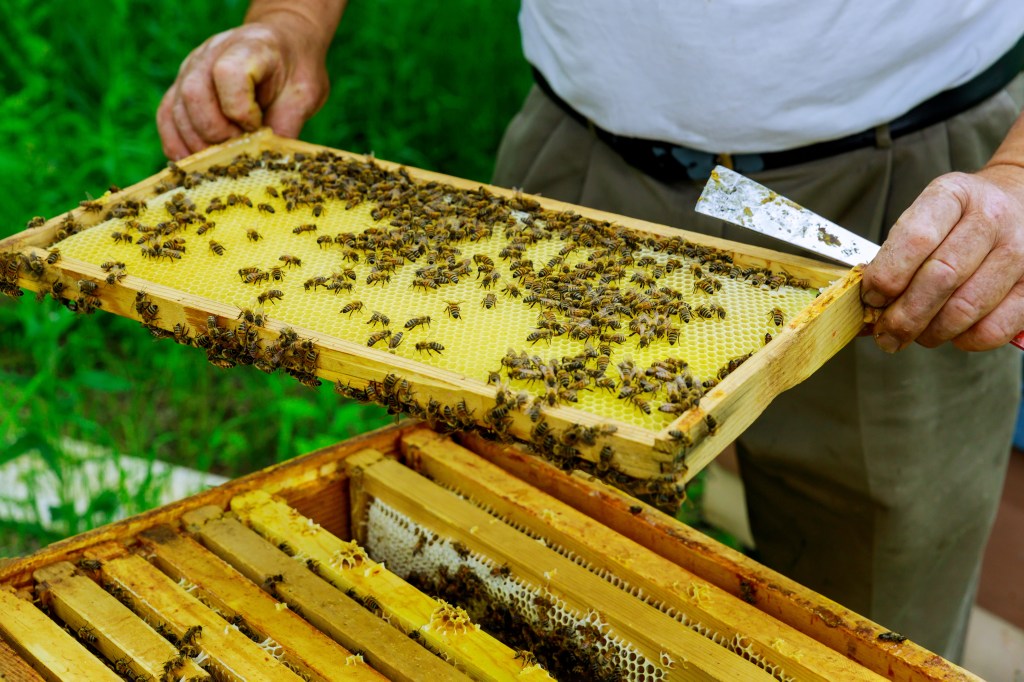
Beekeepers know what they’re doing! Image from @photovs via Twenty20.

It’s also possible to see a flurry of bees coming to this open resource at certain times of the year when other nectar resources are not available. This can be alarming to some and is a potential public safety issue. 

If your readers are interested in providing a resource for bees, my best recommendation is to plant a variety of flowering plants that bloom in succession over the year. The successive blooming periods provide bees a reliable food source throughout the year. It’s fairly common in Texas to have nutritional dearths, meaning there are periods of time where there is little to no natural resources for bees to feed on, so having a succession of blooms available really helps. 

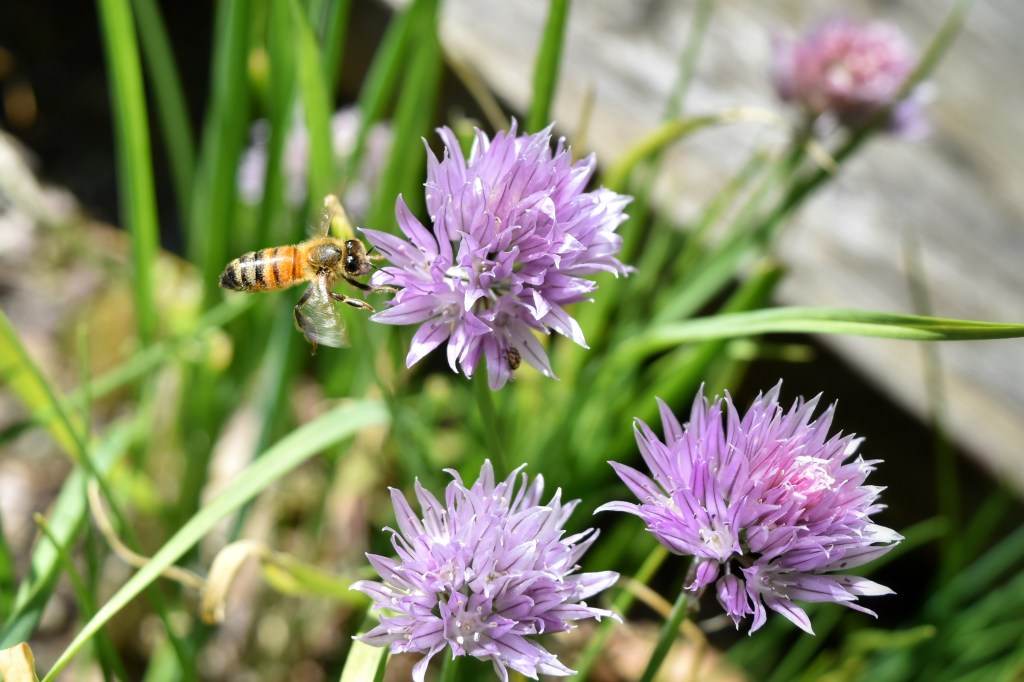
Bees like chive blossoms as much as we do, and they can appear when it’s chilly out. Image from @Anyra via Twenty20.

The other benefit to having a variety of flowering plants is that it also provides a diversity of nutrients to bees. The nutritional content of pollen can vary from plant to plant, and bees need this variety for their overall health.

I probably went way beyond what you were expecting for this question, but I hope this information is helpful.  If you need anything else, please don’t hesitate to reach out!

Donna

I think I will discontinue with the sugar water and just do what I always do and provide lots of shallow water containers for them.

In the near future I hope we can meet again and share more knowledge about our pollinator friends with our chapter and the public.

Mary

No problem! I’m happy to help out any time.  To be honest, providing a consistent water resource for bees is one of the best things you can do. We don’t often think about how insects need and utilize water for their own survival, but for bees it’s especially important when it comes to thermoregulating their hive. 

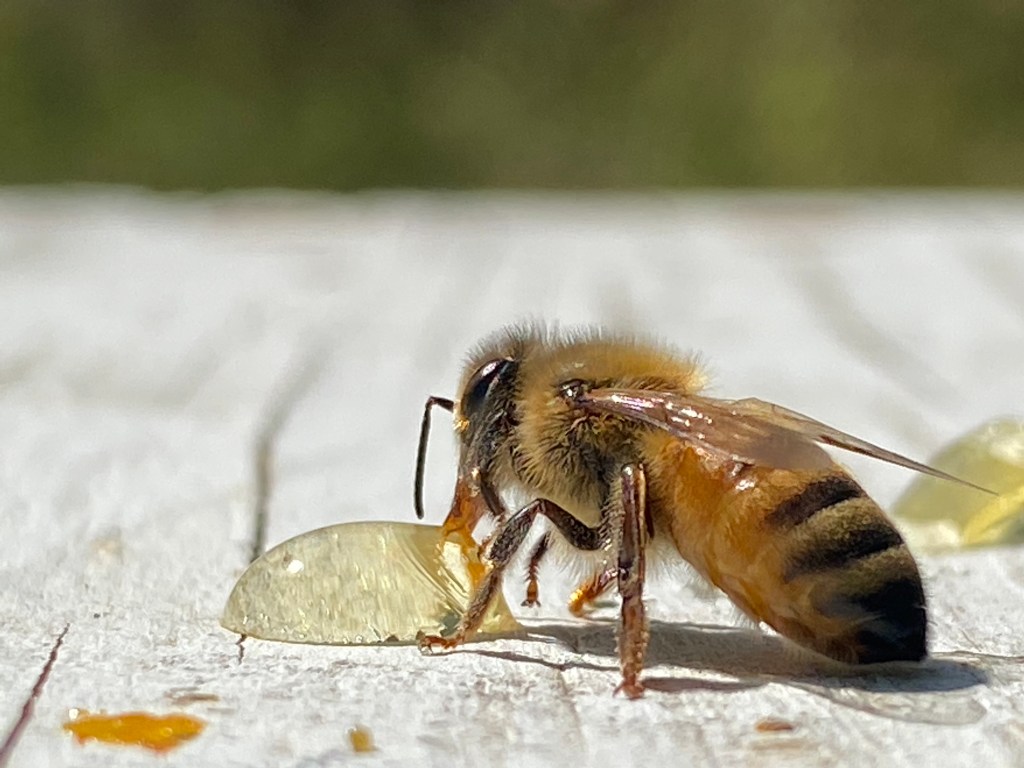
Yum! Photo by @billyves12 via Twenty20.

I like to provide some type of water resource year round, but especially in the warmer months when bees are using the water to cool down their hives.

May Chapter Meeting: The Houston Toad

by Sue Ann Kendall

We had our first online Chapter Meeting last week, and while it wasn’t totally hitch-free, it went well enough that everyone enjoyed the advanced training and meeting, I think. We had nearly 30 attendees, which is a reasonable number for our chapter at any time!

Our speakers were Dr. Paul Crump (Herpetologist) and Dr. Elizabeth Bates (Conservation Initiatives Specialist) from Texas Parks and Wildlife. They graciously provided the WebEx link for the meeting, since we didn’t have our shiny new Zoom account yet (we do now, thanks to Mike Conner).

Throughout our state the habitats for many species are dwindling.  @cameronrainer via Twenty20

Conservation of Rare Species

The first part of the session was about programs that exist in the US and Texas to protect endangered and rare species. It gets pretty complicated, since species can be listed as being of greatest conservation need at the federal level, state level, or both levels.

One thing that Dr. Bates stressed was the need to be pro-active about protecting these plants and animals. She encouraged landowners to take advantage of programs, such as Safe Harbor Agreements, to protect and enhance dwindling habitats. Something easy and rewarding that any of us can do is log sightings of rare and endangered species in iNaturalist. That way, researchers can see if they are increasing, decreasing, or staying the same.

You can find more information on this topic at the Texas Parks and Wildlife department site.

The Houston Toad

For the second part of the presentation, Dr. Crump, who has worked with the Houston toad (Bufo houstonensis) for many years, provided an example of the work that’s been done to protect and expand the range of this Texas native. The Houston toad took quite a hit when one of its primary sanctuaries, the Lost Pines area near Bastrop, burned so badly.

Historic range of Houston toad (from presentation)

Crump shared maps of where the toad used to be found and its current range (which does NOT include Houston), which includes parts of Milam County. Later he did say that only five have been found here. The Houston toad is the only toad that’s found only in Texas, by the way. There are eight other toads found in this state, but the one we usually see is the Gulf coast toad.

We learned that these toads like to breed in bodies of water that aren’t permanent, perhaps because they are less likely to hold fish and turtles that would eat their eggs and developing tadpoles. They’ve bred in many ponds and such, though. Their most sensitve time is right after they crawl out of the water, because they need leaf litter to hide in, and they are easy to squish. Eventually they head out to sandy soil where they can hide by burying themselves.

The smaller males tend to live a year, while females take two years to mature, due to their size. Most only breed once. We are lucky that there has been some success breeding them in captivity and setting the little ones in ponds (it’s way too expensive to feed them to maturity; it requires mega-large amounts of crickets.

Male calling for a mate. From presentation.

It’s easy to tell a Houston toad from a Gulf coast toad if you know where to look. Houston toads have more freckles on their bellies and are quite green where their neck balloons out while they call. Gulf coast toads have a large cranial ridge that the Houston toad lacks, too. Their calls are really different, with the Houston toad being much higher in pitch. Basically, you’ve probably never seen or heard one.

But don’t let that stop you from looking, because the researchers need data on where they have been sighted! Crump and his colleagues would also love to have more participants in the Houston Toad Safe Harbor Agreement, which is a way for landowners to agree to protect their toad habitat.

If this doesn’t satisfy your curiosity, the slide deck from Crump’s presentation is available on our website, and there’s great information on the TPWD website as well.