El Camino Real Texas Master Naturalist Take Historic Tour

by Carolyn Henderson

The El Camino Real Texas Master Naturalist took a trip Saturday to a major Texas historical site and got a side of beautiful nature along with it. The tour of Washington on the Brazos was both informative and beautiful. 
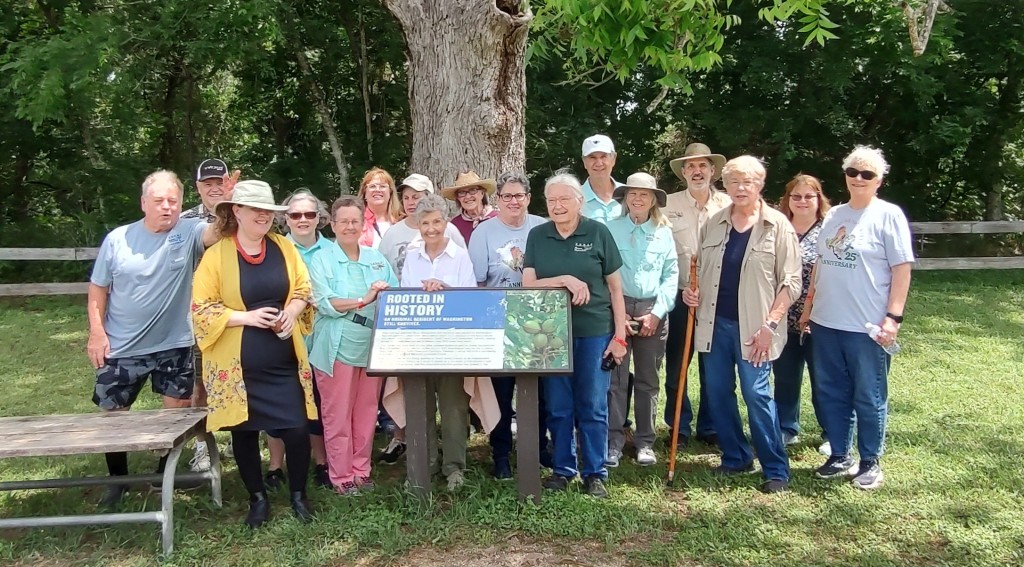
Master Naturalists under pecan tree
Group photo in front of famous pecan tree, including Master Naturalists and friends

The Texas Historical Commission has taken over management of the state park and is doing some major renovation on the facilities. The museum manager led the group through a lesson in the most major event in Texas history, and added information on how nature played a role in the events at the site. Sam Houston and delegates from every major city in Texas at the time met there to sign the Texas Declaration of Independence on March 2, 1836. The site was the capitol of Texas for several years, too. Lack of a railroad did it in in favor of Austin. 

There is currently an archeological dig that will be made visible to visitors once it’s complete. Several buildings have been reconstructed based on descriptions by visitors there to sign the declaration. The only original structure left from the 1830s is a water well. It was built with stone. The park sits on the Brazos River, which is why it was chosen to be the meeting site. At the time there was a ferry running to the site. There are also some paving bricks left from the original town. Nature took its toll on the main path to the river, and washed it out and away eventually. Another original, and somewhat old structure is still there, too. It is the pillars that marked the entrance to the original park. They are going to serve as the entryway into the archeological dig for visitors. 

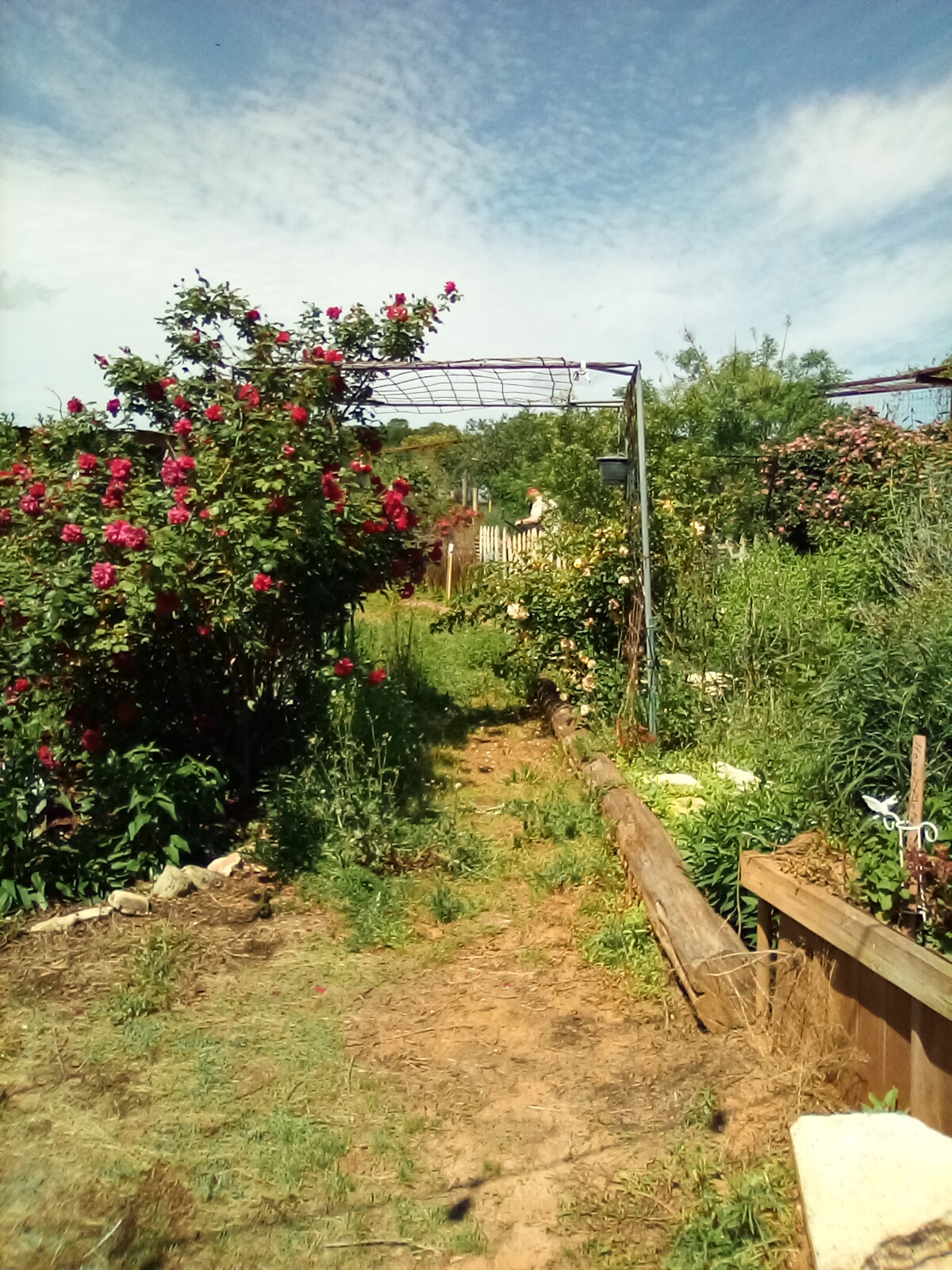
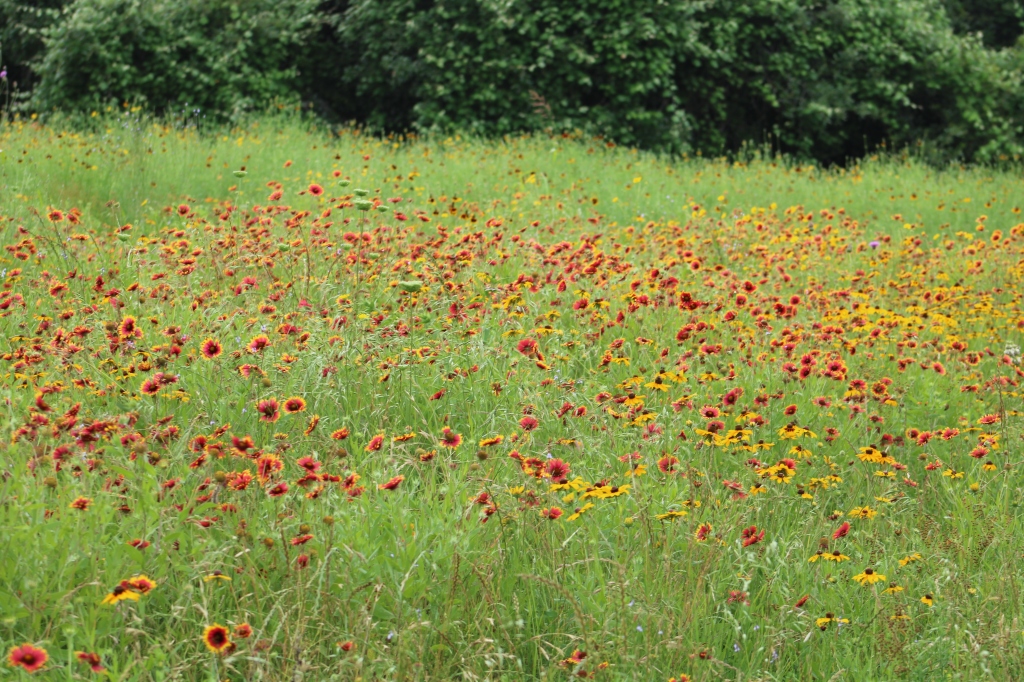
The grounds, which have grown over the years, have been given over to nature. They are covered in native grasses, wildflowers and trees. The commission has to replant only the  state flower – Texas Bluebonnets – because people trample them while taking their pictures in them which disrupts the  natural reseeding. All the others manage to come back on their own. 
wildflowers
Wildflowers, mostly Indian blanket and black-eyed Susans.

There is a particularly notable Pecan tree on the grounds near the river (see photo above). It is the oldest documented pecan tree in the state of Texas. The delegates met under it during the 17 days it took to get the declaration written and signed. Ironically, it was discovered recently that it is not a native Texas pecan tree. Scientist ran DNA tests on it and discovered it originated in northern Mexico. It is assumed it came with early settlers from Mexico or perhaps missionaries that came up from Mexico sometime well before 1836. It was a pretty good size by then. If you go to the web site for Washington on the Brazos, you can order saplings from the tree. Costs for it are used by the commission to renovate the facilities. 
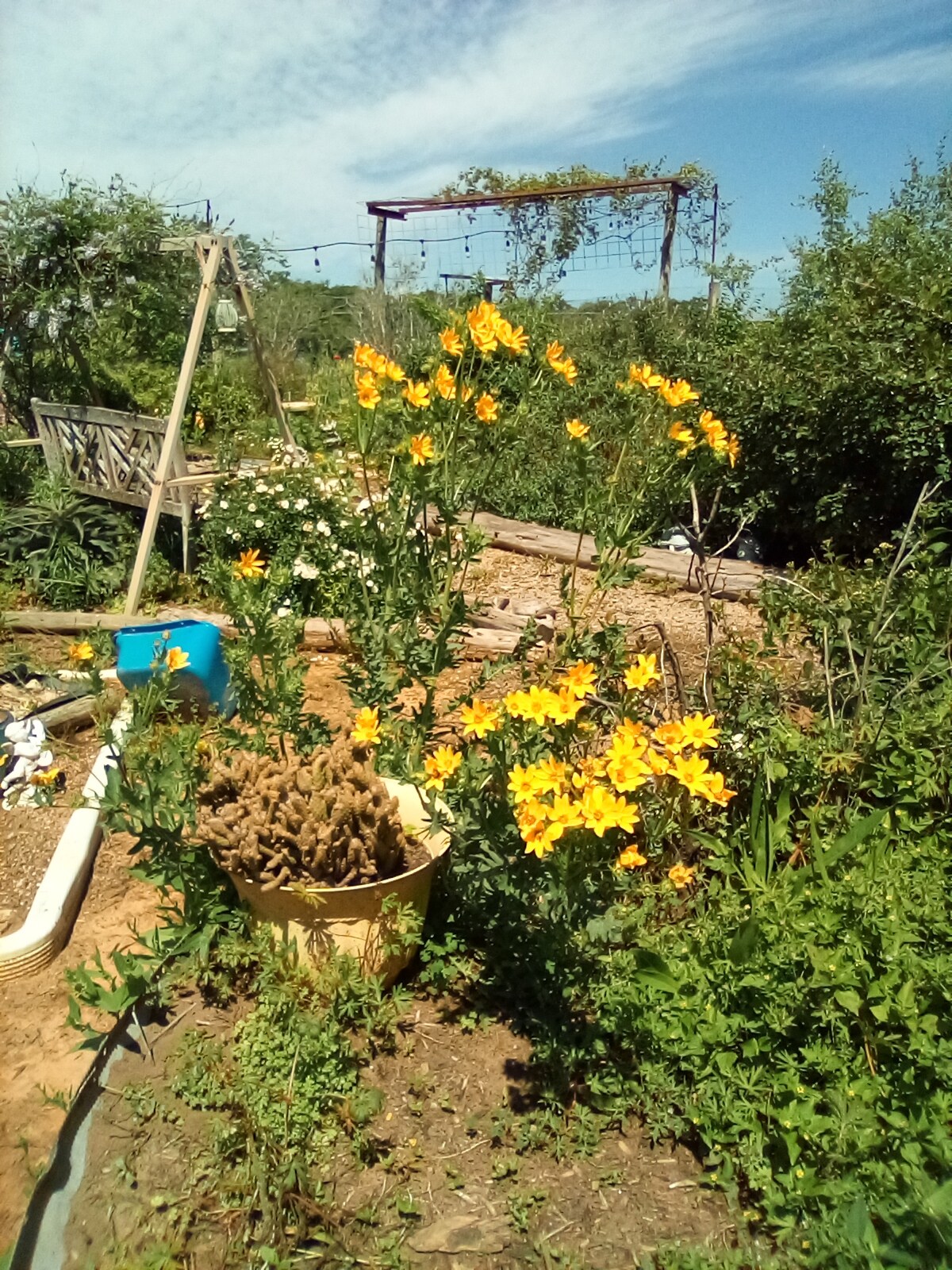
wildflowers
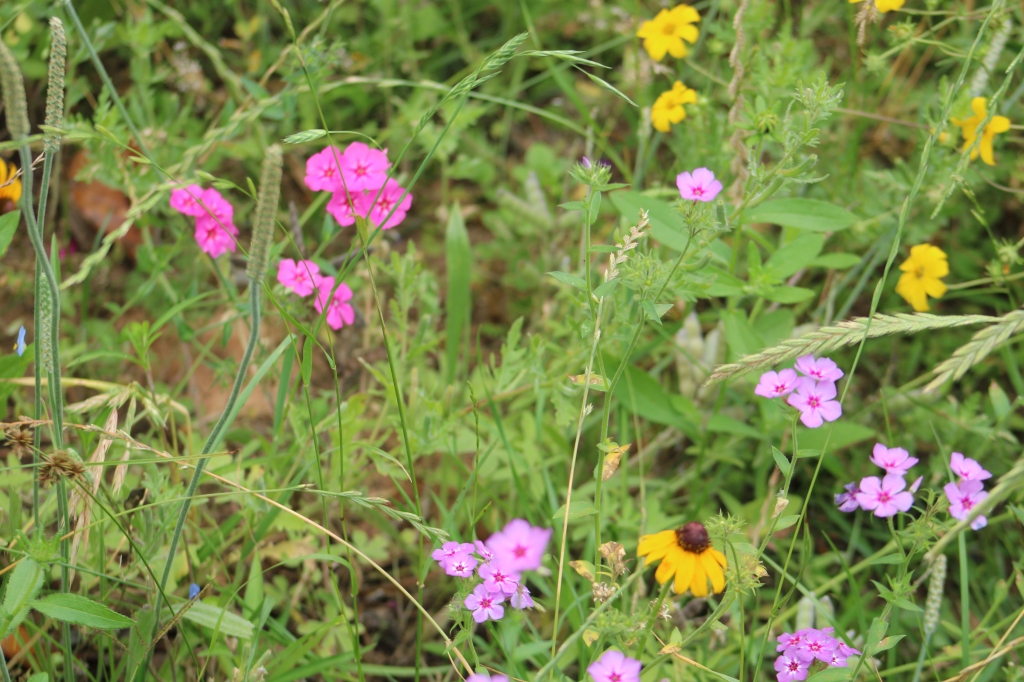
Drummond’s phlox, clasping coneflower, and Engelmann daisies.

Catherine Johnson, organizer of the trip, organized a picnic under the pavilions to round out the trip. It is a trip worth taking, especially if you take a side trip to Independence, Texas nearby. 

Take Care for Snakes

by Joyce Conner and Donna Lewis

If you have been paying attention lately in your garden or yard, you probably will have noticed that our friends, the snakes are back.

They are out grocery shopping for lizards, frogs, birds, eggs, and other small mammals. Humans are NOT on the list, but they will bite us if we scare them or step on them. Can you blame them?

So, when you move leaves around or pull weeds, you need to be observant.

Sticking your hand down into the brush might not be so smart. (Wasps might not like us to disturb them either, so beware of their bites and stings too!)

Texas Rat Snakes, Broad-Banded Copperheads, and Western Cottonmouths are the main ones out on our properties, so you probably have them too.

There are many more Texas Snakes in Central Texas, but these are the recently observed species.

Most people are really afraid of snakes. But, they serve a purpose in nature as all wild things do. As they go about their business of finding food, reproducing, protecting themselves from their enemies, and maintaining a comfortable body temperature, they are no different from any of the other wild animals on this planet. And, as a member contributing to the cycle of life on earth, they play an important role in maintaining balance. Without snakes, we would have an overabundance of insects, rodents, amphibians, etc.

Almost all snakes are docile and will not bite unless provoked. We just have to remember that “provoking” them may be no more than walking/reaching too near where they are lying in wait for a lizard to come by.

Yes, the snakes are definitely out of their dens and enjoying the change in weather!

On Wednesday, April 24, Joyce and Mike dealt with two snakes that same day. First, a rat snake was found in the chicken coop.

Here Joyce is taking the Texas Rat Snake out of a nesting box. Notice the black blotchy purplish pattern on its back in the second picture. Rat snakes are not venomous but can bite. Use caution when handling them.

According to Texas Snakes: A Field Guide by James R. Dixon and John E. Werler, the Texas Rat Snake is one of Texas’ longest snakes. Most adults measure between 42 and 72 inches. It is found in brushy and wooden areas and can easily climb trees. After checking out its length, Joyce put it in a bucket and released it at one of the ponds away from the house.

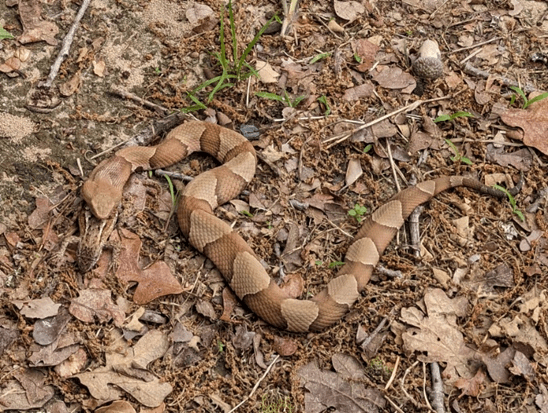
Later that same day, Mike nearly stepped on a copperhead just off the porch. According to Texas Snakes, the Broad-Banded Copperhead “is marked with wide, reddish brown crossbands that alternate with narrower tan to pale brown interspaces.” The adult grows to usually 30 inches long.

This one appeared to be young (they can live up to 18 years) and short (we estimated around 2 feet). It blended in nicely with the dead leaves and dirt. While Joyce photographed, it stayed completely still. Until she reviewed her first photos, she didn’t notice that it had stunned a lizard.

Each time the copperhead was checked, the lizard was a little less visible, as it was being swallowed whole.

After a while, the lizard had completely disappeared inside the snake.

Mike and Joyce do not handle venomous snakes and do not recommend anyone doing so unless well trained and outfitted with special snake-catching equipment.

When checked later, the copperhead was no longer found around the porch.

However, the next day, Mike and grandson Bryce saw a long rat snake in another area of the yard. Joyce wonders whether it could be the same snake she took away from the house the day before. Snakes can find their way back to an area by smell. Since Joyce is the snake wrangler at the preserve and she wasn’t around, the boys were unable to catch and release it that day. But no worry – if it goes into the chicken coop, Joyce will catch and release it elsewhere!

Happy (Belated) Earth Day

by Carolyn Henderson

Happy Earth Day! Plant something native to our area in honor of it.

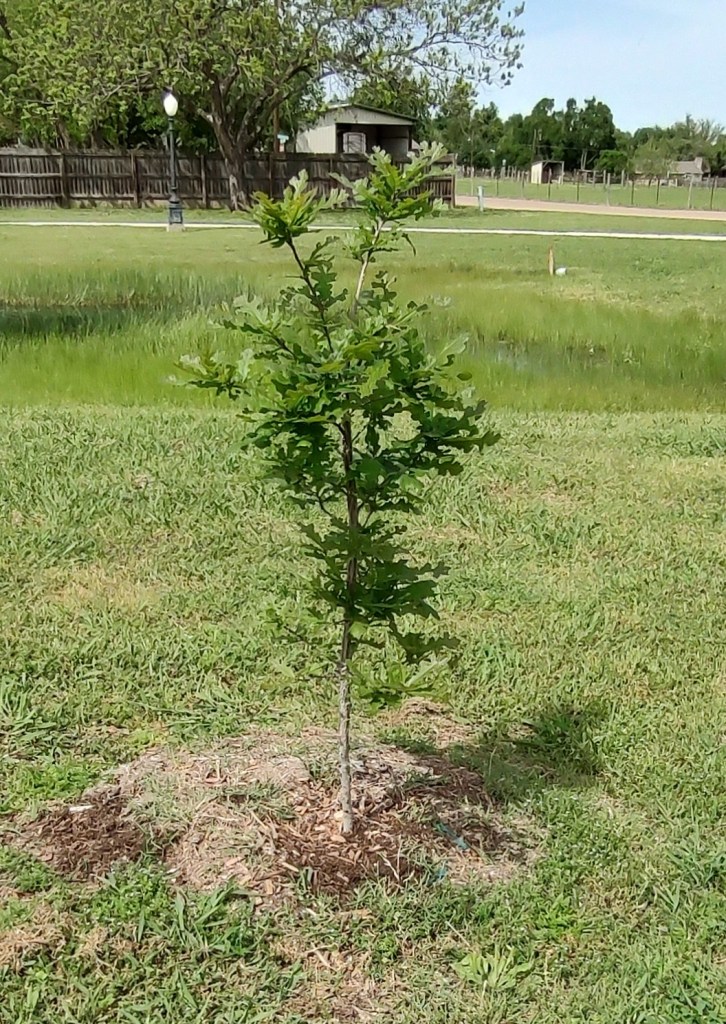
Last year a small group of us planted three Bur Oaks in Cameron parks in honor of the day. Two of them survived and are now thriving.

The photo is from the one at Orchard Park. We replaced a tree that went down in the freeze of 2023 there. The other surviving tree is at Wilson Ledbetter Park. It needs a little help being upright because of a major hit by that big storm we had right after we planted them, but it is already growing new ones to make up for it.

I watered the Orchard Park tree and Liz Lewis watered the Wilson Ledbetter Park tree. Liz went to see her tree at least three times a week, and she is still working on it. I have left mine to fend for itself. Watering a Bur Oak for its first year is enough for it to establish itself, it seems. Hint: they are both planted close to bodies of water. 

The Energy Bunny Was Patterned after Linda Jo Conn

By Ann Collins

Please don’t tell her I said so, because then she will know I’m on to her plot, but I think Linda Jo Conn is trying to kill me… (If I’m murdered, Linda jo didn’t do it – there are plenty of other suspects!)

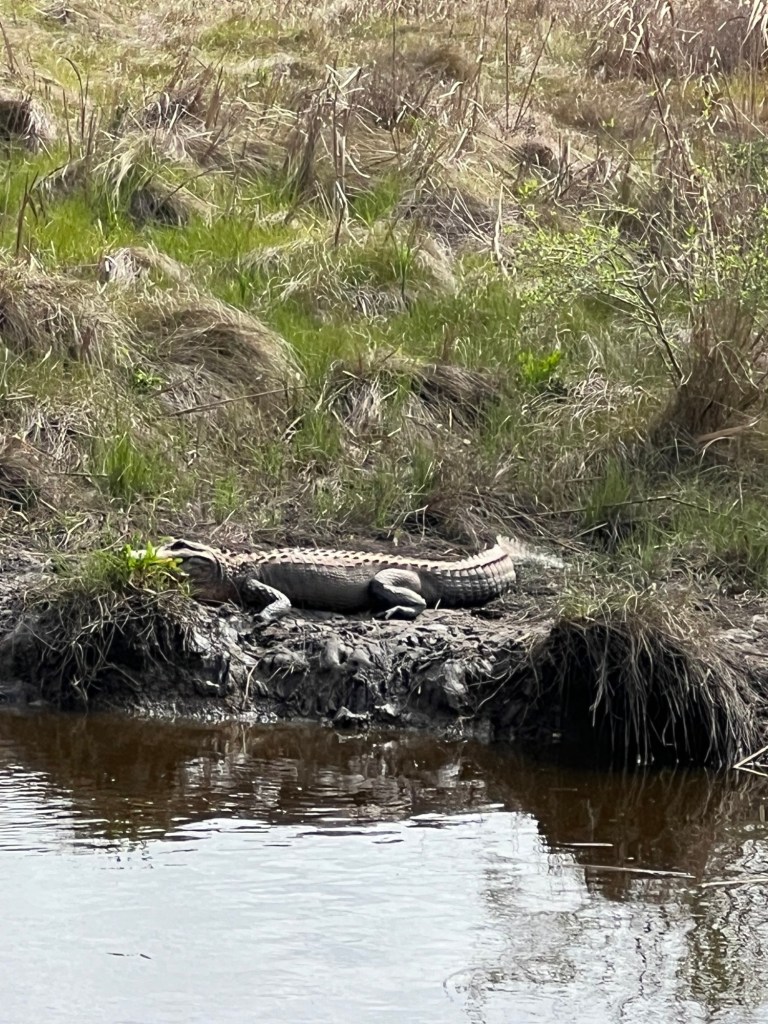
LJ and I recently embarked on a three-day marathon trip to my beloved East Texas – Big Thicket National Preserve. First on the agenda was the forty-two (42!) American alligators sunning themselves in the shallows of Shoulders Pond. You drive around this circle of a canal and note what you see.

Second most exciting was the huge number of White Ibis spending the winter there. It could have easily been 50-60 or more. There were lots of coots, great egrets, great blues, little blues, snowy egrets, reddish egrets, gulls, and red-winged blackbirds. 

After the drive, which took over two hours, we walked one of the trails. Even so far south not much was blooming. There were quite a few plums and maybe some pear trees, the invasive kind! Perhaps a few weeks later everything will be in bloom and there will be more birds. Put it on your bucket list!

An hour drive later we arrived at our luxury hotel in Kountze, my old home town, a real bargain at $66 a night! They had the cleanest towels I’ve ever seen! Not a joke. Really nice folks run the place, and it has a free breakfast and good maid service.

After a good night’s rest and supper at the local Dairy Queen, we drove north to the Geraldine Watson Preserve. My heart lives there. In my next life I will come back a Geraldine wannabe! They had done a recent burn trying to get rid of the invasive sphagnum moss and whatever is encroaching on the fantastic boardwalk. Everything here is maintained by the association of dedicated volunteers.

There were remnants of pitcher plants, and I got a really good picture of the remains of creatures left after the plant had dined on them. Cool!

There was lots of other interesting stuff – more to come – such as orchids, mushrooms, wildflowers, and birds. Do NOT fail to spend a morning there if you are in the area. 

Geraldine wrote two books before she died. One is somewhat technical, about the geology of the area. One is about her adventures living in the area. It’s the best one in my humble opinion.

Next, we went on a drive on the Gore Store Road (try saying that fast three times!). Sadly, they are harvesting pines for lumber there – quite a few scary trucks loaded to the gills with long, tall, used-to-be-majestic trees. It was scary to drive behind them. A man who lives in the area tried to make a citizens’ arrest on us for trespassing on a vacant lot. Luckily, LJ talked him out of it. But we had to sacrifice a half hour charming him and convincing him we only wanted pictures. In the end, he even let us take a few shots on his property. There was very little worth reporting on the Gore Store Road – we never did find the store.

Lunch was at the barbeque place in Warren. It’s the best place to eat in the area and run by a very nice family. Friendly folks.

Off to the Sundew Trail. If you didn’t know, sundews are another carnivorous plant in the thicket. Again, not much was blooming. There is a great boardwalk and they have installed ten information stations that talk to you about what you are seeing. The best sighting was a brown green anole. You hardly ever see them colored.

Supper was an orange – too tired to eat.

Next day was Village Creek Park in Lumberton. There are very pretty cabins to rent. Homeward bound!

I went to sleep at 6:00 pm, was awake a few hours in the night, then slept until 7:00 am! I still think she’s after me. What do you think?