
By Larry Kocian. Adopted from a Facebook post on Milam County Veggie and Plant Exchange, September 22, 2019.
Free from nature, these vines (also known as tie vine —Impomoea cordatotriloba) make an appearance in late spring, early summer. In mid- to late summer and into autumn, they are showy with their purple/lavender colors.

Some people say invasive. I say not, because they are easily controlled by going into the garden and removing/sculpting them. I let mine climb, and they do climb into the mimosa trees. I do control some when they wrap in the wrong place or too much on a particular plant/tree.
My point is that most natural occurring plants that are labeled invasive are not at all. I always encourage everyone who reads this to go outside and get to know your garden. It’s very therapeutic.
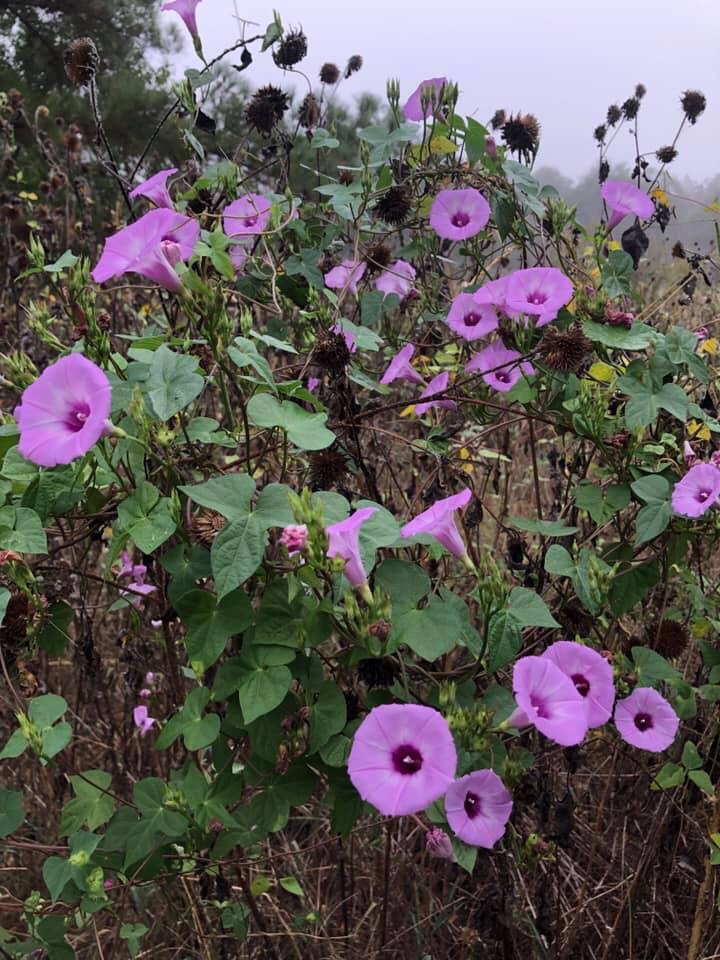
My reason for this post is to show you how the pollinators need this and many other wild blooms. Bees and hummingbirds feed on these early-morning blooms.
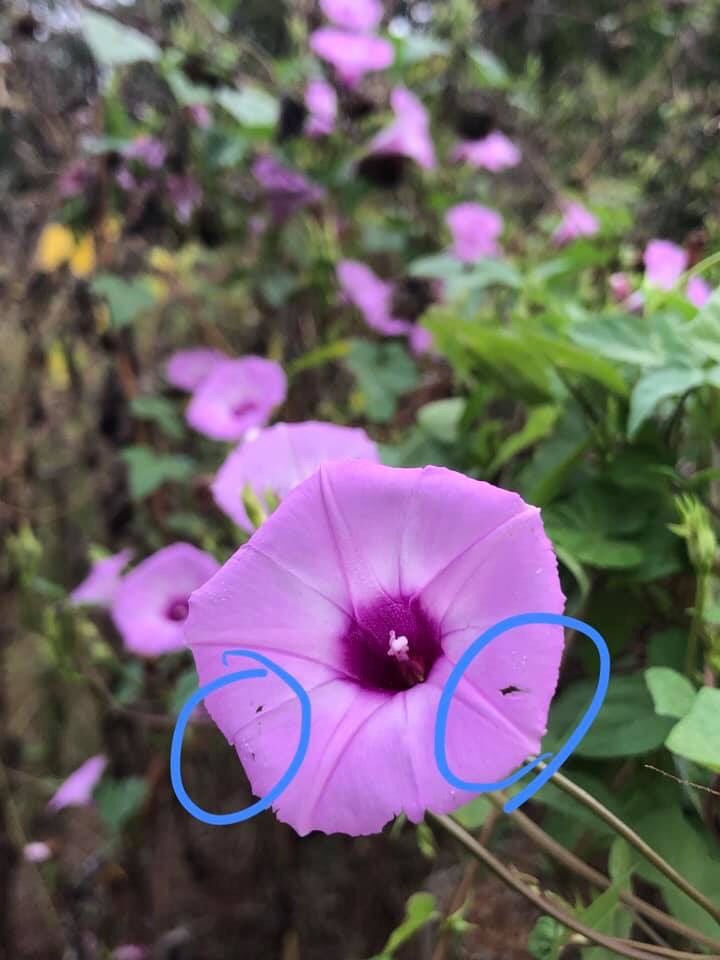
The photo below shows holes in the bloom. Hummingbirds this morning were feeding on all the morning glory blossoms. The hummingbird put two holes in the flower with its wings. It grabbed my attention when I heard noises as their wings hit the blooms. Finding this pattern on a bloom may indicate to you that you had a hummingbird visiting your garden.
Notice the next photo and find the pollen on the left side of the flower. Bees 🐝 already have been here, dropping a little pollen as they left with their load.
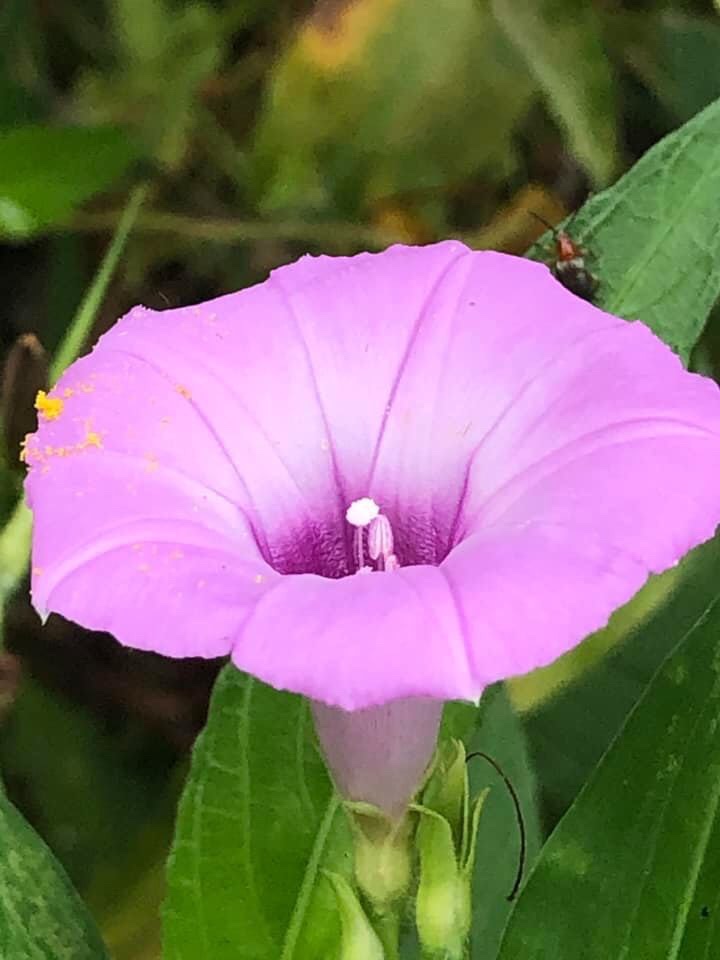
The photos show how the morning glory can add the much-sought-out color to your garden display.
2024 Update by Sue Ann Kendall
Since this post is getting viewed often these days (thanks for the link!), I thought I’d update with my observations of tie vine this year. I let them grow along the fence next to my woods and around two posts on my patio.
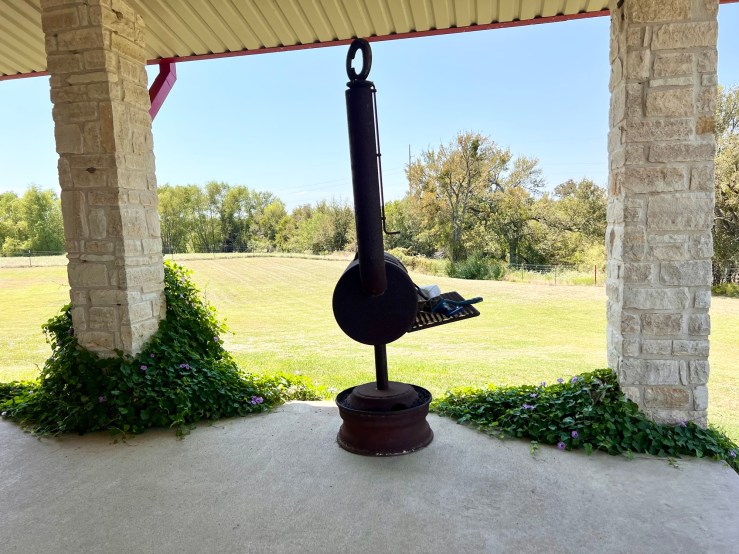
It was a great idea, because these wild morning glories have provided me with hours of entertainment on my walks as dozens of hummingbirds, bees (especially bumblebees), butterflies, and other insects flock to them each morning. And the hummingbirds (Black-chinned and Ruby-throated) join me on the patio while I drink my coffee.
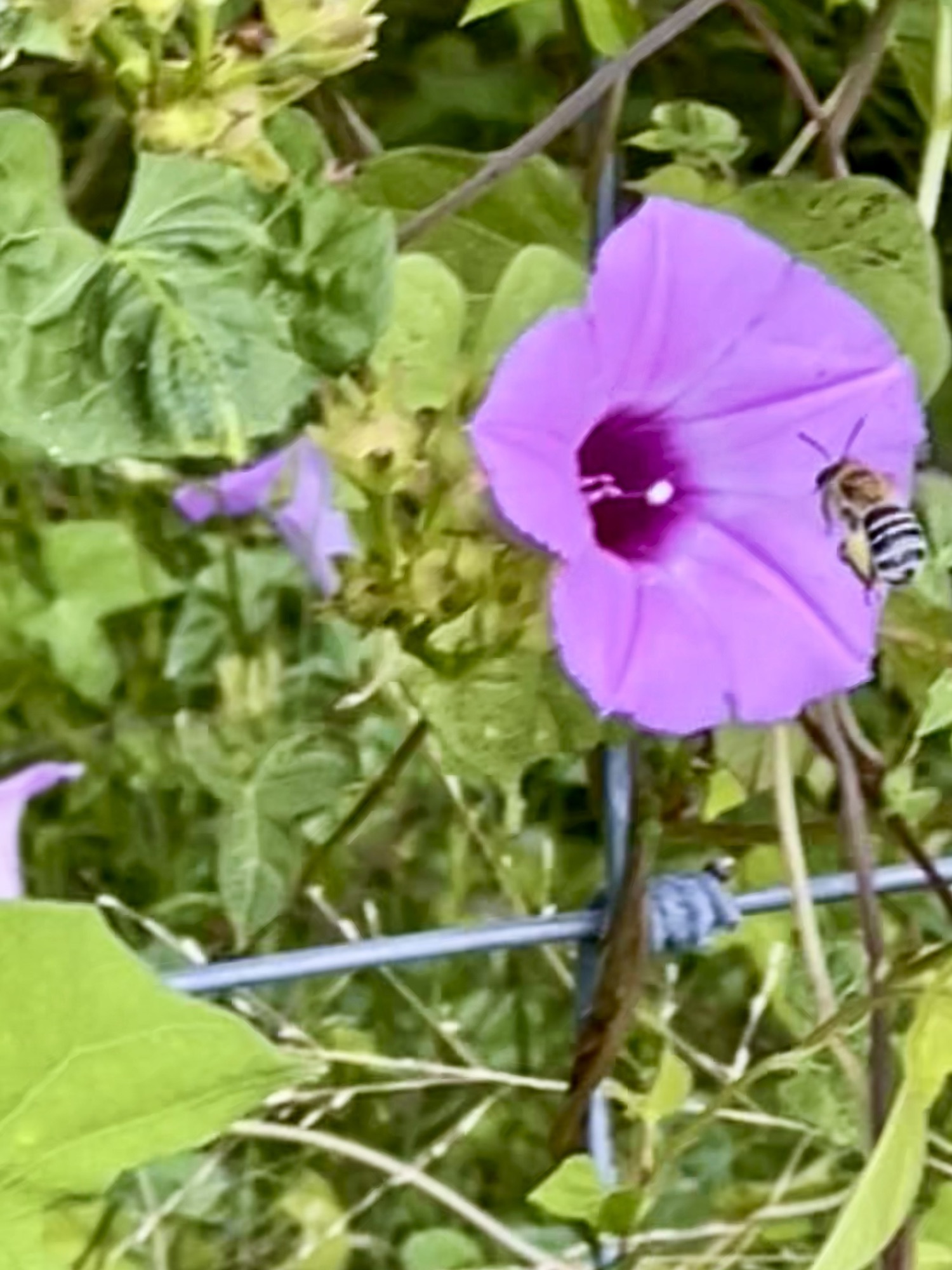
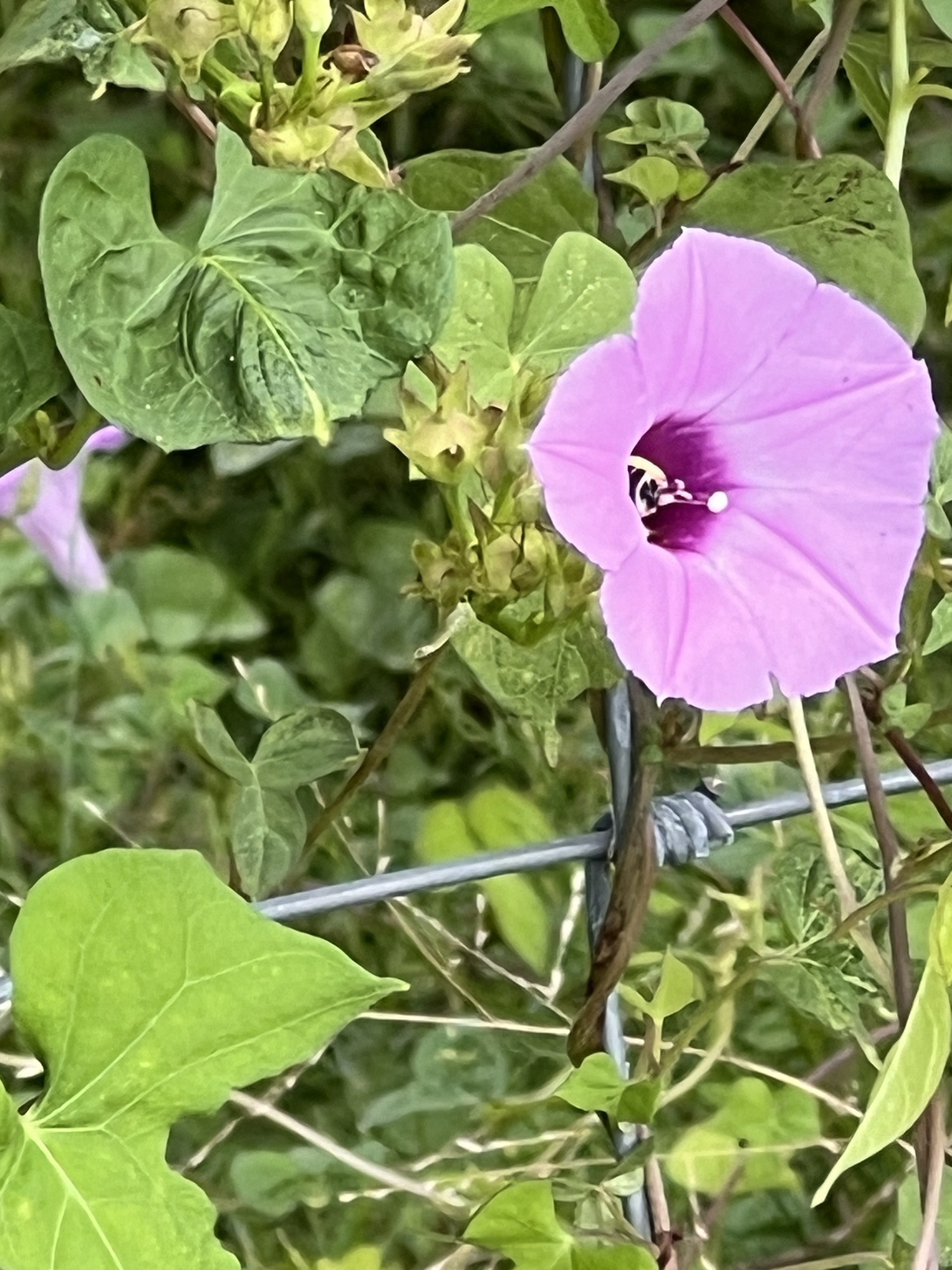
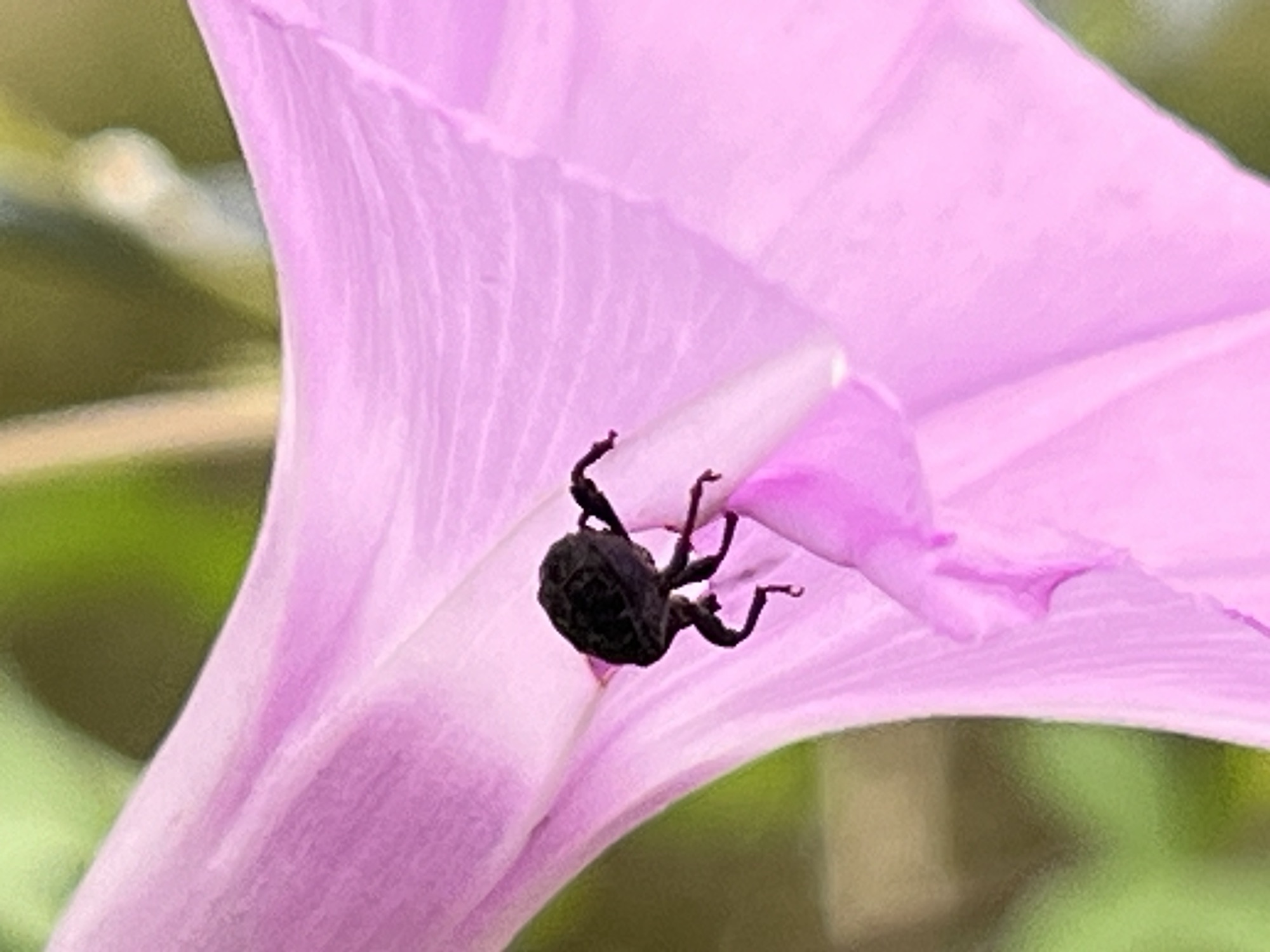
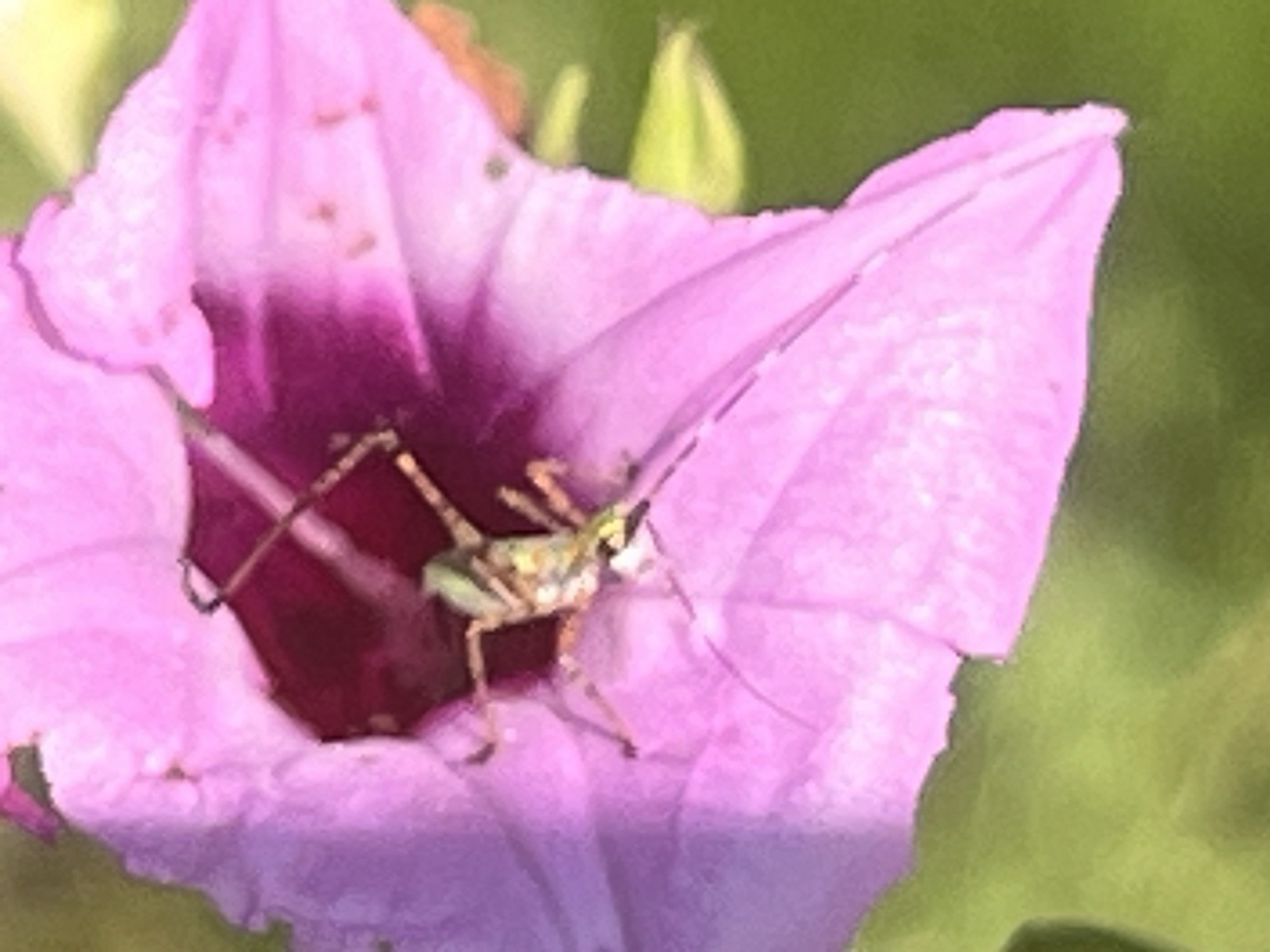
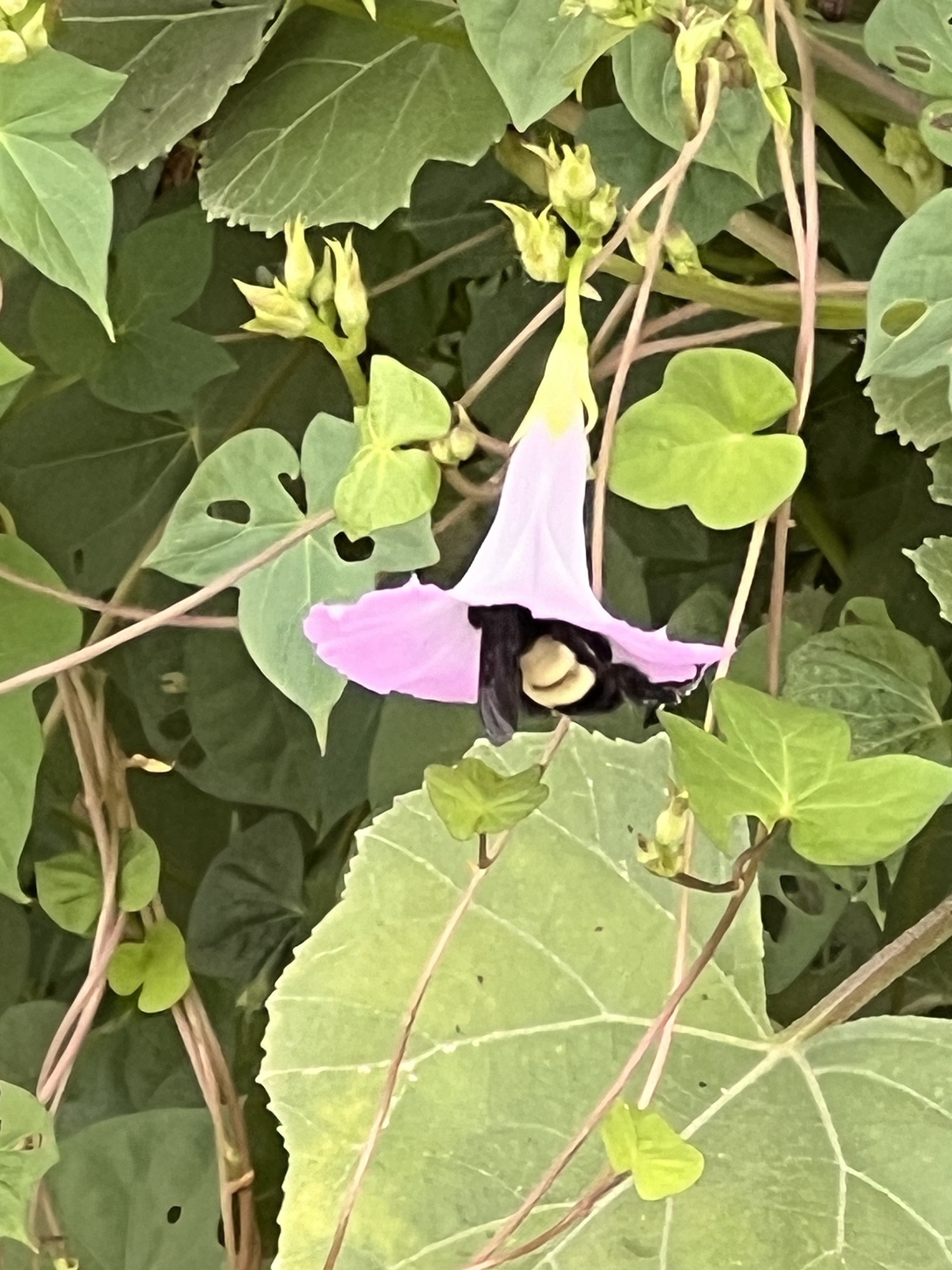
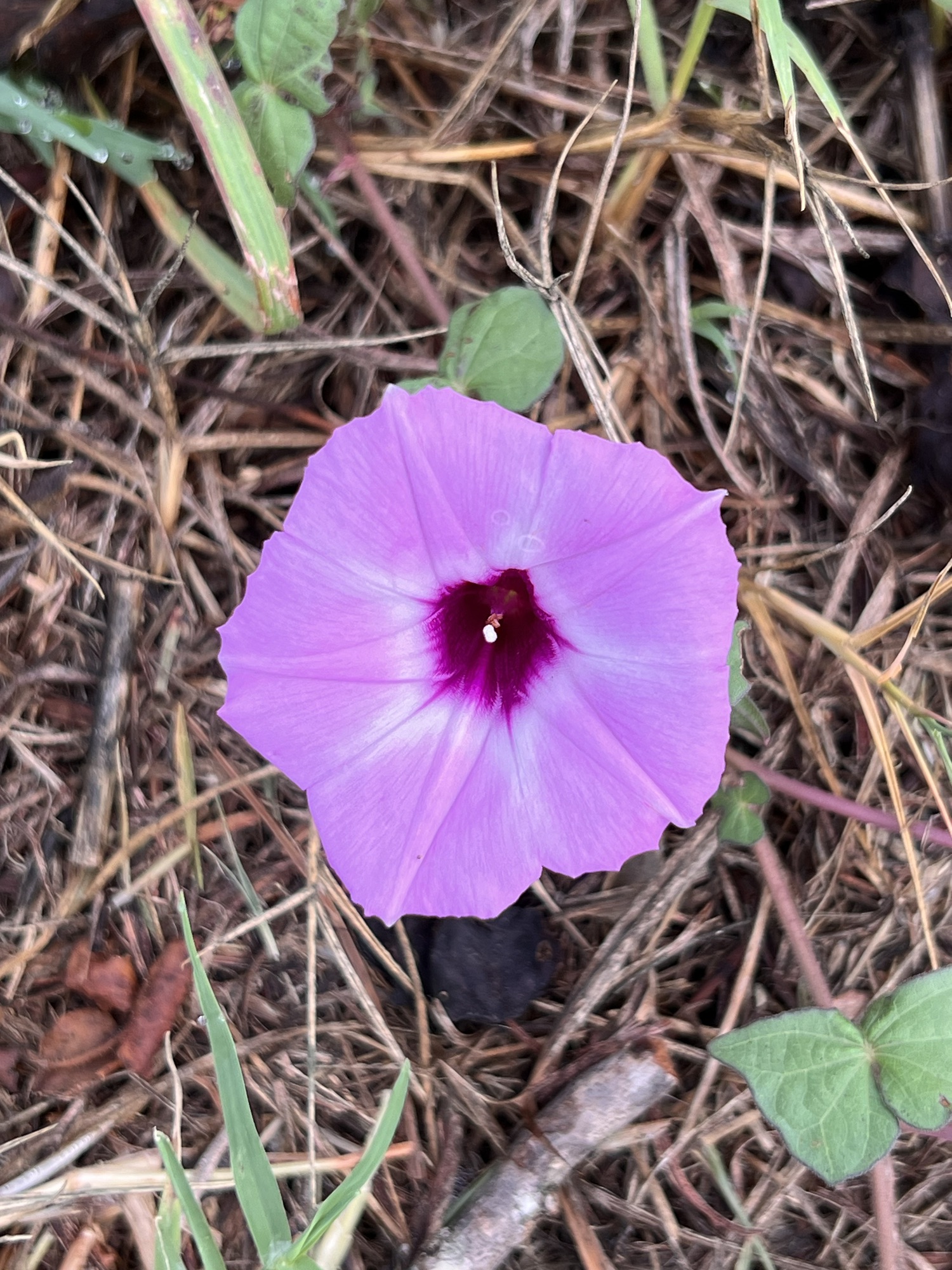
I love that I don’t have to put out artificial nectar to attract wildlife, and it’s good to see that the vines are still blooming away during the hummingbird migration.
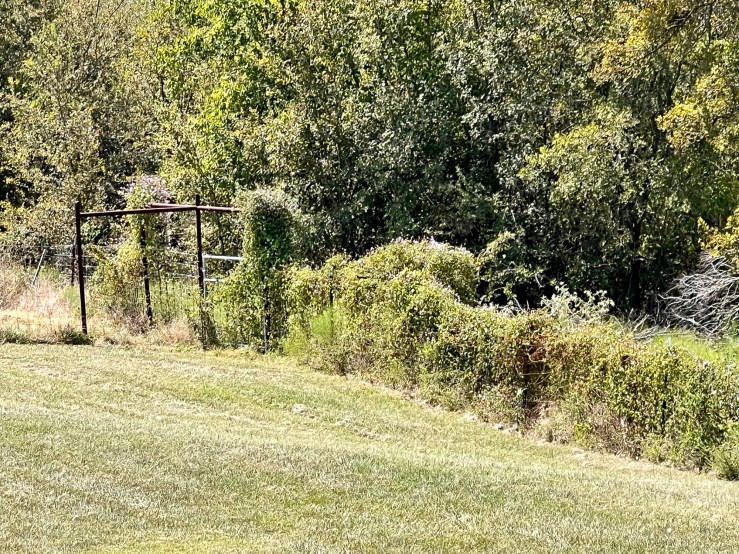
I admit that I pull them up in my one and only cultivated flower bed (which has red yucca for the insects and hummingbirds, so it’s no big loss). But in wild areas, I’m all for letting them stick around, since they conveniently die back once it freezes. I vote for inviting, not invasive!
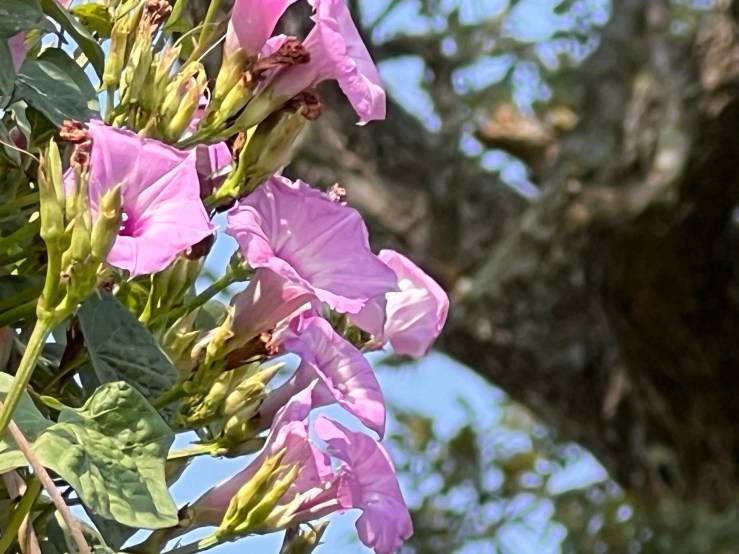
 Nature Along the El Camino Real
Reblogged this on The Hermits' Rest and commented:
We have so many wild morning glories, or tie vines, around the ranch. I’m sharing this article by a friend, because it has a fascinating photo of a flower with damage from the wings of a hummingbird. That is just so cool!
Suna
LikeLike
[…] mimosa. Some luscious violet-colored trumpets turned out to be not bindweed, but its slightly less-annoying cousin, wild morning glory. All in all, we have a stellar collection of prairie […]
LikeLiked by 1 person
In a wild setting, this vine is a scourge. We have a 200-acre park, and it covers at least 50 acres of that, covering every living thing, like kudzu does. My crew and I spend our summers cutting vines away from trees and shrubs, filling dozens of trailers every month.
LikeLiked by 1 person