Little Brown Spiders

by Eric Neubauer

The wolf spider world never shuts down in Texas if you know where to look. About a dozen species from a number of genera mature over winter when they can hide among fallen leaves. They can be quite active at night during rare warm spells. They all look generally similar and are often hard to tell apart unless you know exactly what details to look for.

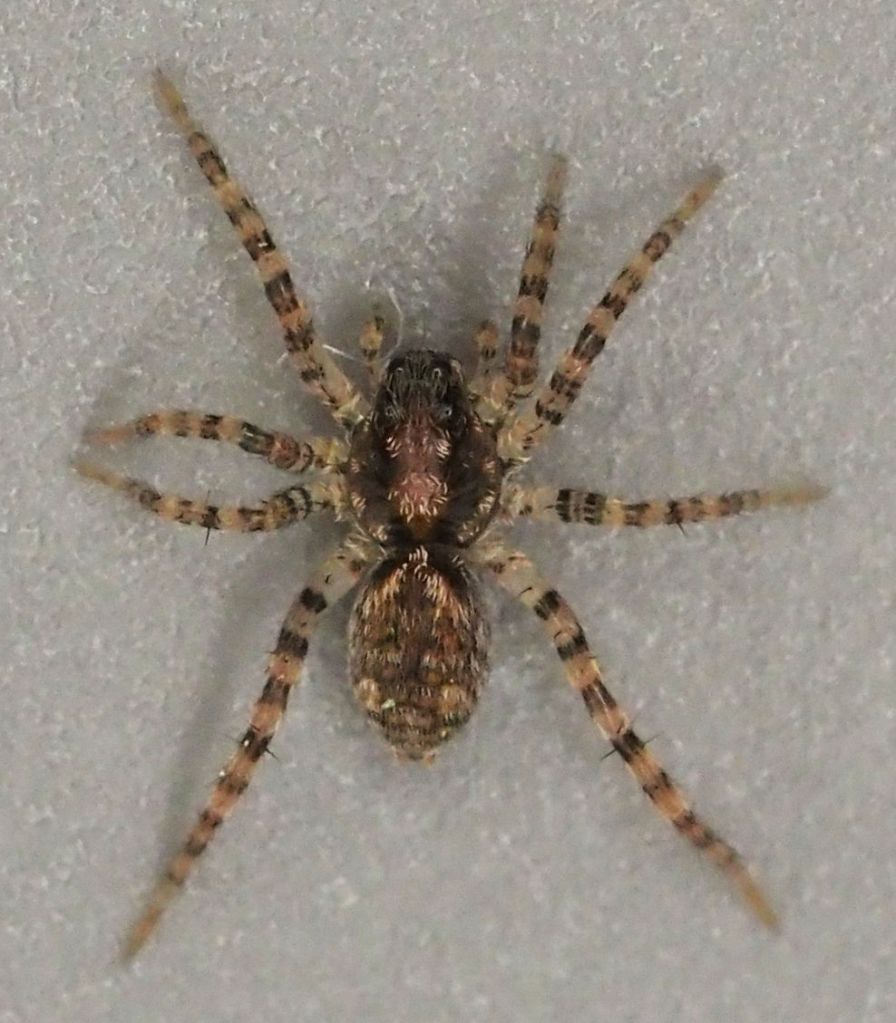
Here we have the obscure S. perplexa, which I’ve written about before. Turn it over and the white on black abdomen pattern makes identification easy. This is a juvenile male just one molt away from adulthood.

The other is Varacosa avara. I had found some a couple of weeks earlier and speculated they were this species mostly because of the strongly pinched carapace medial band at the posterior lateral eyes. This time it was another adult male, and I was able to confirm it from the spine lengths on the underside of tibia I thanks to a better image. The pinched medial band is a lot easier to see than the translucent spines, but the medial band pinching isn’t mentioned in the literature. Body lengths of both spiders are a little over 8 mm (a third of an inch).

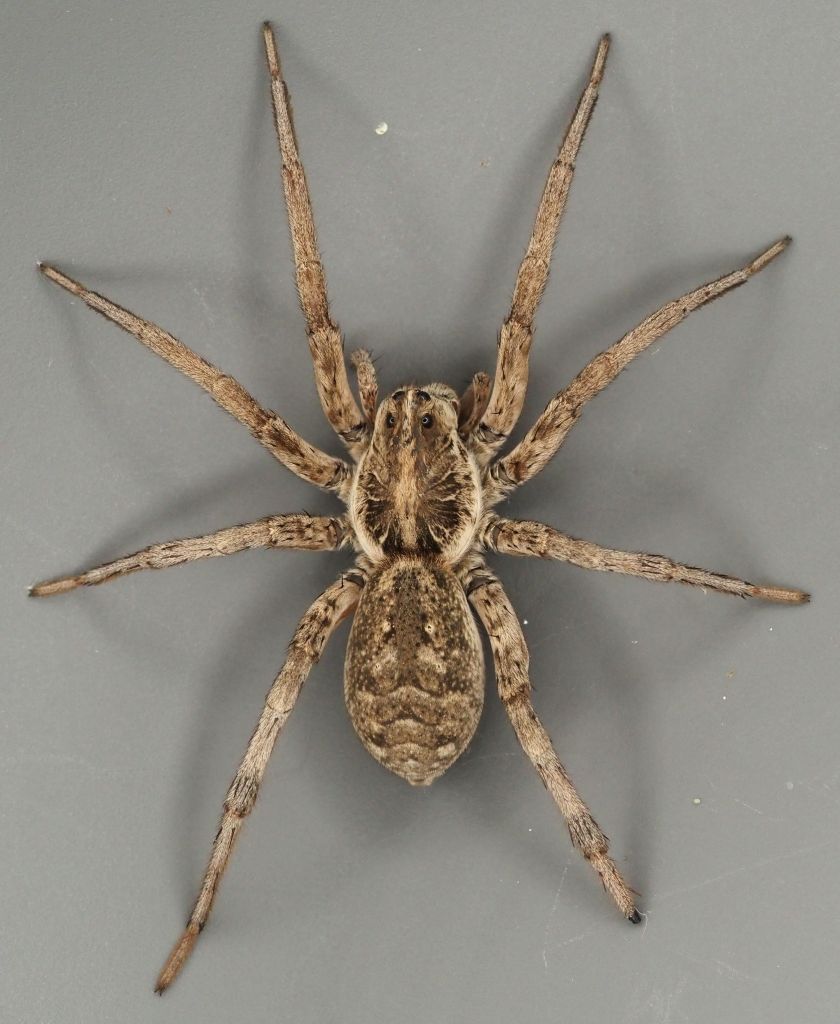
Also seen was a much larger Tigrosa georgicola. The presumed female has been in about the same place for over a month. Previously she had retreated into her burrow as I approached but this time she held her ground. I didn’t attempt to capture her for photos since I already have a lot of photos of that species.

Extra Help for Birds in Winter

by Donna Lewis

So, we have some very cold weather upon us.

Some of you who are originally from the North may think it’s not cold. But those of us born in Central Texas think even barely freezing is terrible. I am one of those people.

I can hardly bear it to go below 50 degrees. I hate it. It makes me crazy to worry about our wildlife friends.

But, they are adapted more than we think.

The birds have a harder time finding food when it’s cold. That is because the insects they like are not moving around.

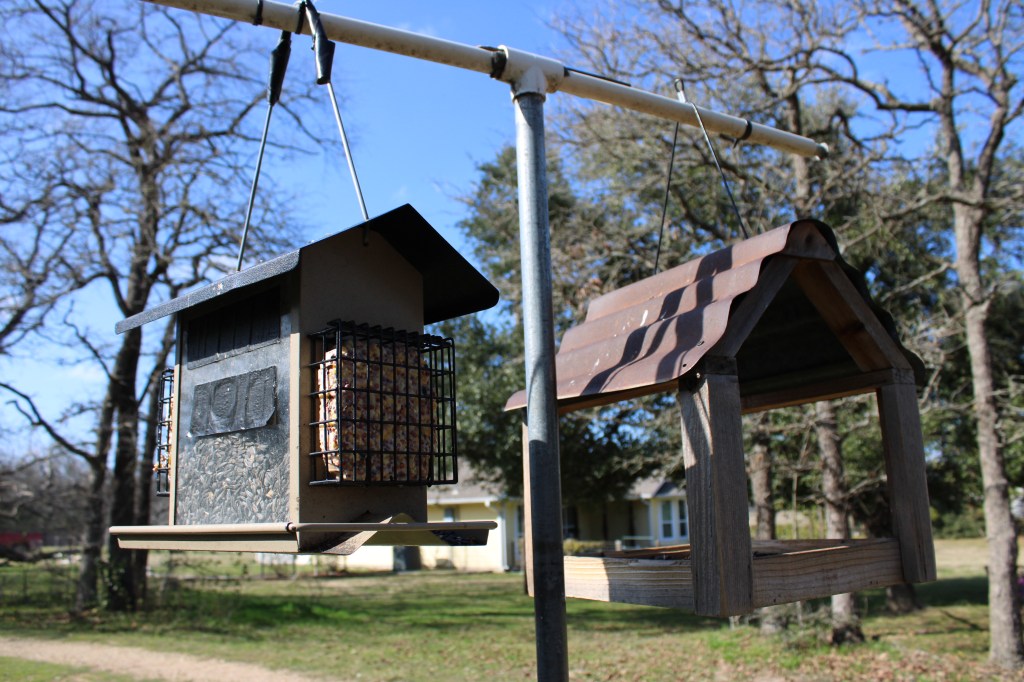
One way we can help during this time is to put out suet for them. You can make your own or purchase it. I found that making it is messy. So, I bought some. Now is the time to put it out.

It needs to go in suet holders and placed near feeders. You can make your own holders and make them suit your location. A suet holder can be as simple as a small cage made from hardware cloth.  Anything that a bird can cling to. Many species will come to a suet feeder. Even woodpeckers like them.

The suet provides needed energy to help the birds keep warm.

Right now, I am waiting for a new product to arrive that keeps hummingbird feeders from freezing. As soon as I receive it, I will put that info out for everyone.

So don’t forget our feathered friends…

“I cannot do all the good that the world needs, but the world needs all the good that I can do.

Jana Stanfield

Winter Spiders

by Eric Neubauer

Wolf spiders can be a winter activity; just use a headlamp at night when it’s relatively warm and humid.

Last Wednesday, I went out there to see what I could find, and came up with five species. Most were juveniles of course, and now is a good time to photograph them as they grow.

The ones I saw covered most of the possible size range. The smallest had a body
length of 0.11″/2.8 mm. At this size it could still be with its mother. The legs are short (fully stretched out in the photo) and they don’t run very fast. Their best defense is to pull their legs in close, stay still, and pretend they’re a wee lump of nothing worth notice.

Juvenile

The largest had a body length of 1.1″/27 mm. I’m still not certain which of two species it is and should have used a larger container for photos so she could stretch out her legs and show me another clue of her identity.

Adult

Doing the math suggests that the weight of 1,000 of the little ones would equal the weight of the large one.

A Little Sun and a Little Nectar

by Donna Lewis

On Christmas Eve I walked around outside after we had three inches of rain during the night. I wanted to see what everything looked like. The sun was out.

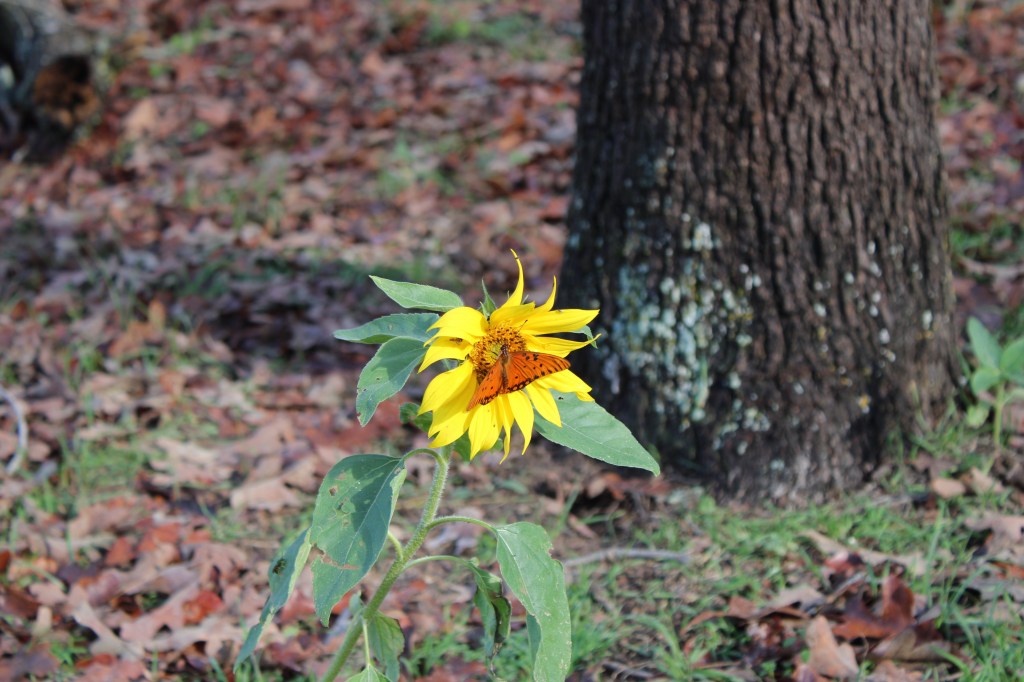
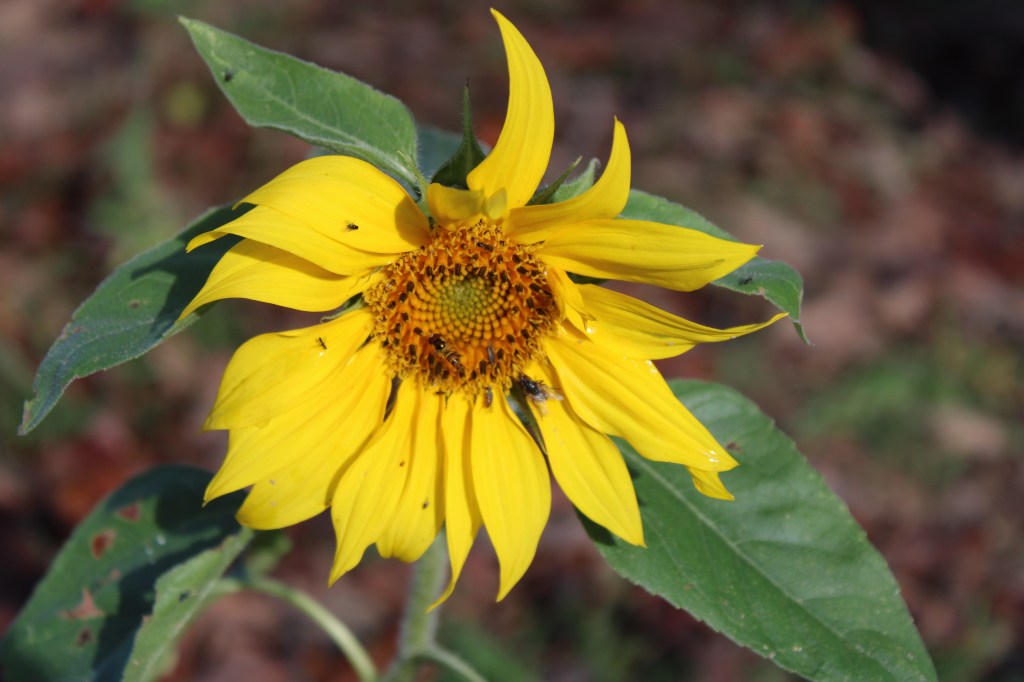
I found a little Black Oil Sunflower blooming that had been dropped by a bird. It was right beside one of my bird feeders.  Nothing else blooming but that little flower.

Of course, the warm weather and rain has made many Gulf Coast Fritillaries wake up from their winter nap too early. But this one little flower held the hope of a much-needed sip of nectar.

The flies and bees were also trying to be first in line for a drink. I wish I had more for them.

Maybe they will be lucky and find more flowers in the fields around our home.

It is always amazing to see nature at work. Who are you gardening for?

The First Martin Arrived January 31

by Donna Lewis

January 31: My first Purple Martin to arrive at my site. It was an adult male. Oh, I was excited…

The scouts are first to arrive. They are normally the older birds. They are really not scouting anything.  Who gave them that name?

So, my little friend first sat on top of the gourd rack until the bluebirds ran him off. After many more Martins arrive, the Bluebirds give up and mind their own business.

He then flew to the front pasture, where the apartment house is. He stayed there an hour.

I watched him with my binoculars until I remembered to go and get my camera. In the few minutes I was away from the window he left and has not returned.

The picture was for the blog only, not for me.  After over 50 years I know what they look like pretty good!

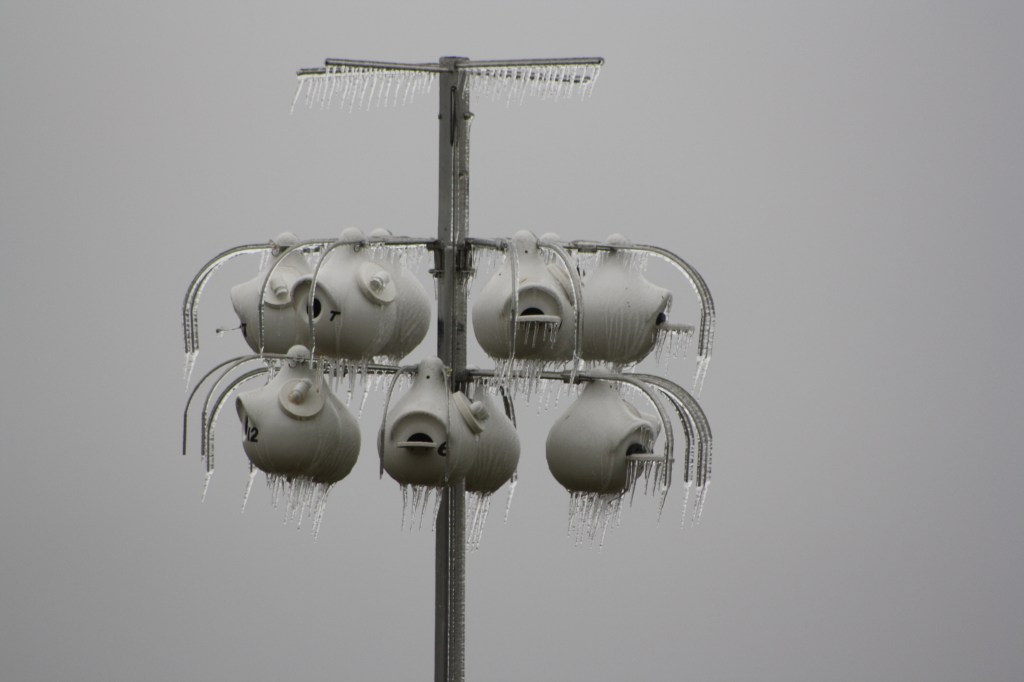
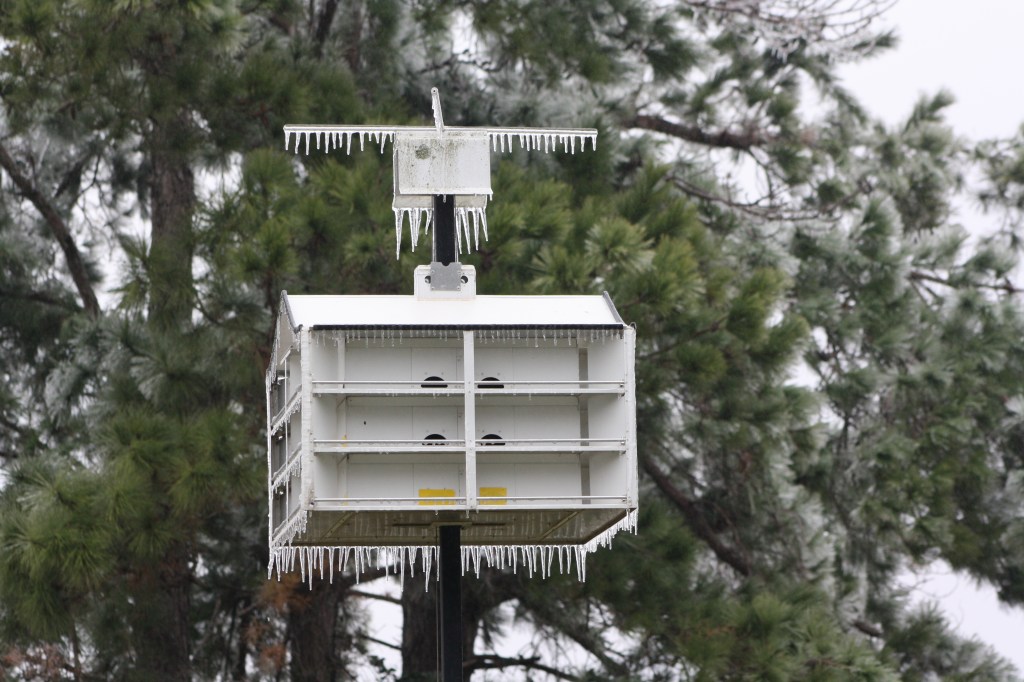
So today, February 1st, we had an ice storm…no wonder he left. I might like to leave too. I hate cold weather!

So, what happens if the Martins cannot find food for five days or so? It’s not a good thing. They usually do not survive. They are picky eaters, only using live flying insects as their food.

And when it is bad weather, especially ice, the bugs don’t fly. Just like airplanes. They are grounded.

So sad. Yes, I have tried dried meal worms and throwing up live crickets to them. No success. By the way, the crickets that went up in the air and back down on my face now reside here with me in the pasture. I can hear them singing in the summer months.

I stepped just outside for a few minutes and took these photos of the ice on the Martin housing.  All I can say is burrrrrrr.

I may not pass through this world but once.
Any good, therefore, that I can do or any kindness I can show to any fellow creature,
let me do it now.
Let me not defer or neglect it, for I may not pass this way again.

Stephen Grellet