Yes, it has been raining lately. And yes, it has been HOT! So let’s talk about our wild friends during the hot summer.
At Sue Ann’s house, they got 8.11′ of rain last night. Frogs are very happy.Photo by Sue Ann Kendall.
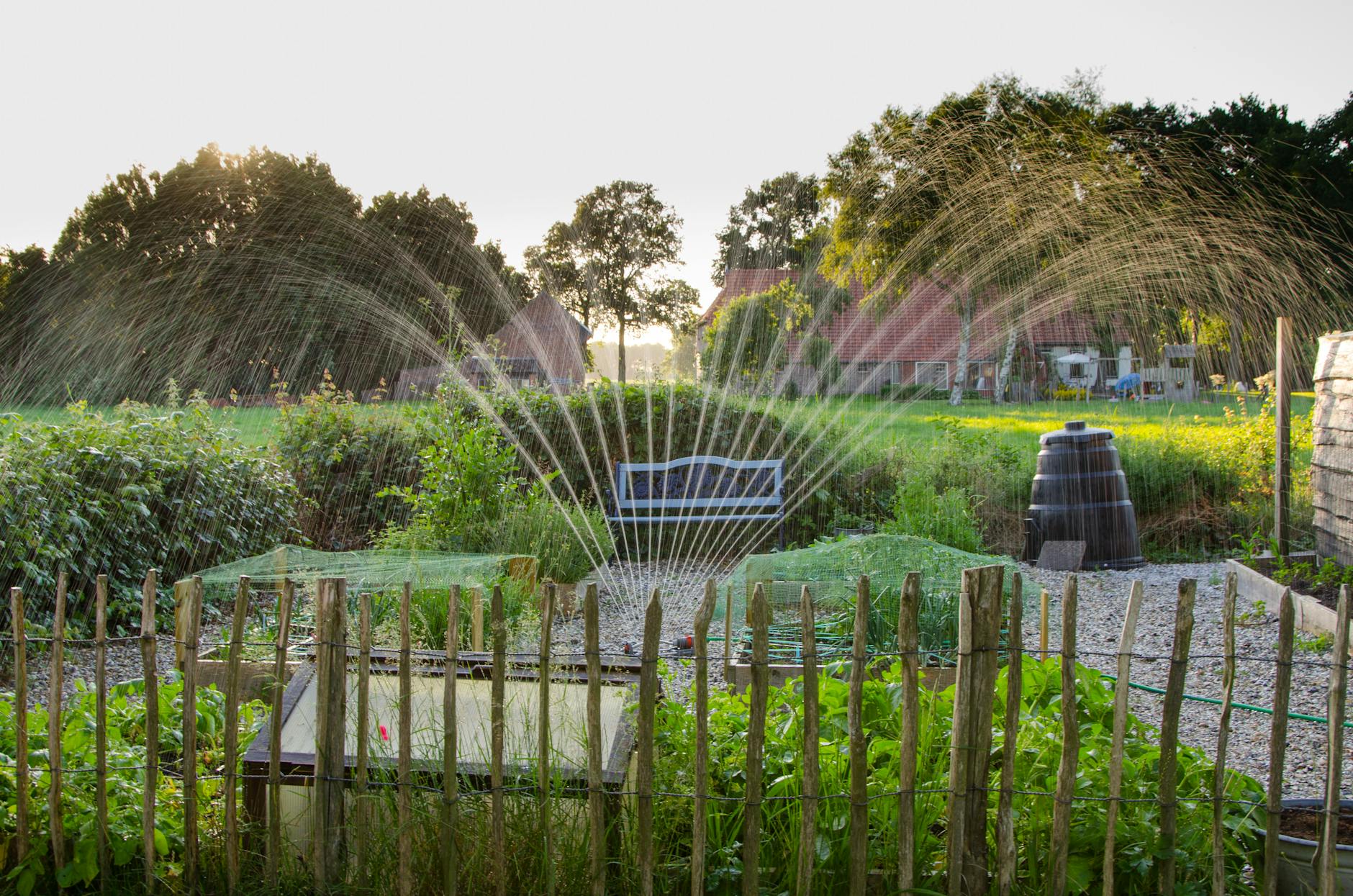
We love to put out bird seed, and other goodies for our friends, but the most important thing is water. Sometimes the closest water can be a great distance for the animals to travel. This means that providing a close water source is immelsely helpful. Keeping fresh water nearby could save the life of a baby bird, a baby bunny, and all of the wild things.
A good example of water with a place to perch. Photo by Janice Carriger on Pexels.com
Another thing to remember is that birds need a perch to light on. An especially important thing in wildscaping is to provide an arbor, a fence, or even a cattle panel propped up. I have been quite successful in bringing birds to our place, so I know what they like, which is water, a perch, food, and some shelter near all of these items. Shelter can be an evergreen bush or small tree. Safety from cats should also be considered.
Be creative, like we have at the Milam Wildscape! Photo by C. Johnson.
A sprinkler put out is heaven for my little hummers. I place the sprinkler near a fence lined with vines and they go crazy.
Maybe we don’t need as much rain as some of us got last night, but it is ALL appreciated. This is Walker’s Creek at County Road 140, now more like a river. Photo by Sue Ann Kendall.
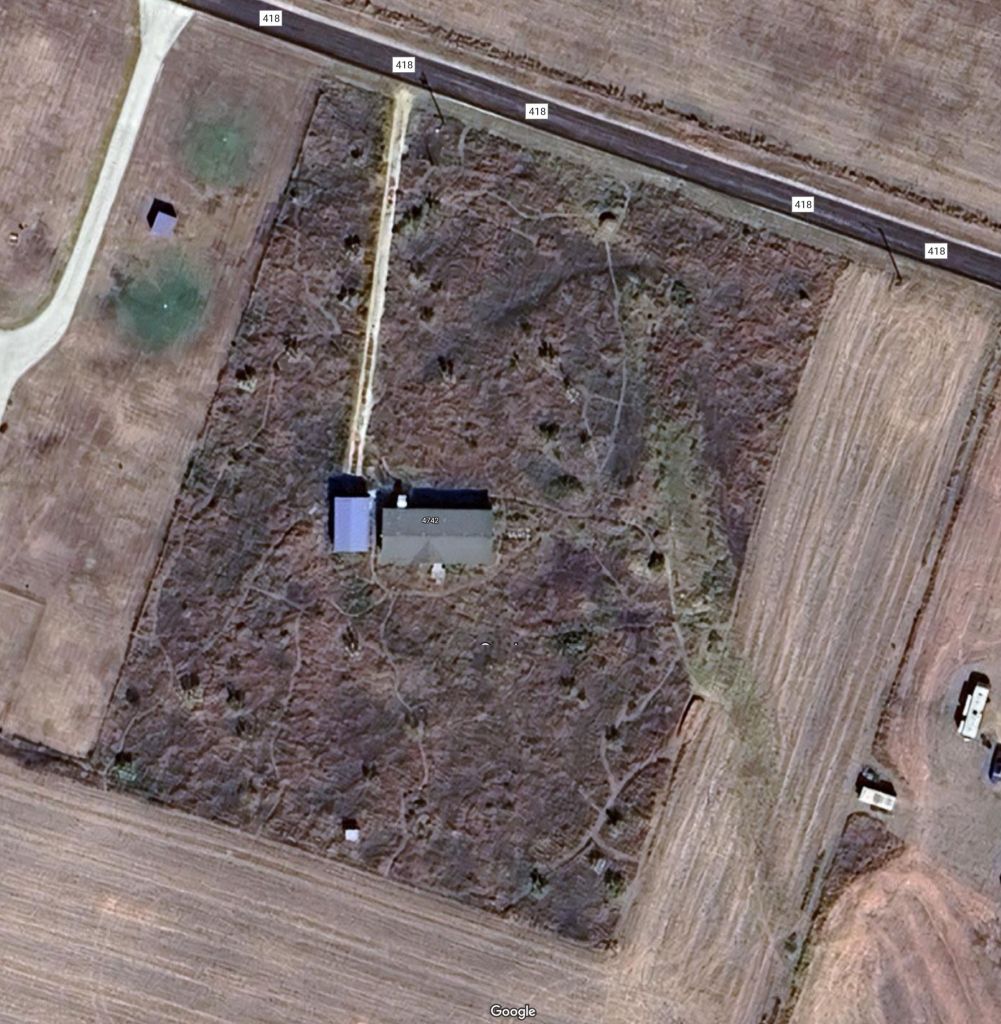
Thanks to google maps updating the satellite view in my neighborhood, I have a recent look at the part of my property that is turning into a three-acre modern prairie with little help from me except for pulling up Johnson Grass.
As you can see, I’ve been wandering all over the place during the last year pulling the damned stuff except for the upper right, where I suspect there was a large rattler about a month ago. I’d also done little in the lower left until recently but have begun expanding and deepening an area prone to flooding. The property is generally flat, and there is a drainage swale running across the northeast corner. The runoff from an eight-acre hay field comes in from the southwest along several terraces.
After a dry spell, about the first 2″ of rain disappears into the Blackland cracks. So, there is little runoff except in winter and early spring, and flooding is rare; it can even skip a year. When they form, vernal ponds last a week to two weeks and make the frogs, toads, and plains crayfish very happy.
I believe the multiple paths have been a plus for wildlife. During the last year I’ve seen the return of jackrabbits, at least three does dropped their fawns in my yard, and at least the pairs of dickcissels have nested. Several other species of birds have brought their fledglings in for foraging. Recently a bobcat has been around at night, although I’ve never gotten a good look at it. Pretty good for a place with no permanent surface water.
This month’s bird count at the Wild Wings Bird Sanctuary took place on September 14. Ann Collins, Sue Ann Kendall, and Phyllis Shuffield not only looked for birds with their eyes, binoculars, and ears, but they practiced their Merlin Bird ID skills. We identified 25 different birds in the two hours we spent at the sanctuary. Highlights were a juvenile and adult male Eastern Bluebird and a chatty Downy Woodpecker. Merlin identified other new birds, Alder Flycatcher, Blue Grosbeak, Lark Sparrow, Upland Sandpiper, and White-breasted Nuthatch. These are all plausible birds to have around this time of year in Milam County.
Eastern Bluebird. Photo by Skyler Ewing on Pexels.com
The group decided to take an informal forest walk in the wooded part of the sanctuary (not an official Shinrin-yoku walk, since we were identifying plants and birds. It’s quite pretty back there, where a creek often flows when it’s wet outside. We found some late wildflowers, such as Marsh Fleabane (Pluchea odorata) and Late Boneset (Eupatorium serotinum). We observed lots of berries for the birds, including many coralberry plants (Symphoricarpos orbiculatus). There was evidence of animals who hang out in the sanctuary, especially deer who had been there very recently judging from the fresh scat and urine.
Ann and Phyllis head into the woodsThe pasture behind the woodsMarsh FleabaneLate BonesetVelvet ant, not sure which kindCedar elm leaves are fallingDeer evidence
Ann and Phyllis refilled some of the hummingbird feeders, which were primarily being used by the local honeybees of Bird and Bee Farm and a few butterflies. There are now many feeders, and it appears that the birds (primarily Carolina Chickadees and Tufted Titmice) are eating out of them all. There were dozens of Northern Cardinals flying around, but they were not coming to the feeders.
Bird feeders and the seating area
Since our last visit to the bird sanctuary, the intrepid Gene Rek has put in more raised beds and planted some new shade-loving plants in them, including beautyberry and Turk’s cap. They have drip irrigation to help get them established. The new bird bath is still working great, too. There’s lots of progress being made.
Drip irrigation and beautyberryTurk’s cap
And as a bonus, Sue Ann left with two new Cochin hens! It was a good morning at the Wild Wings sanctuary!
Cathy the hen is much happier now that she’s in a hen house.
Some of you who are originally from the North may think it’s not cold. But those of us born in Central Texas think even barely freezing is terrible. I am one of those people.
I can hardly bear it to go below 50 degrees. I hate it. It makes me crazy to worry about our wildlife friends.
But, they are adapted more than we think.
The birds have a harder time finding food when it’s cold. That is because the insects they like are not moving around.
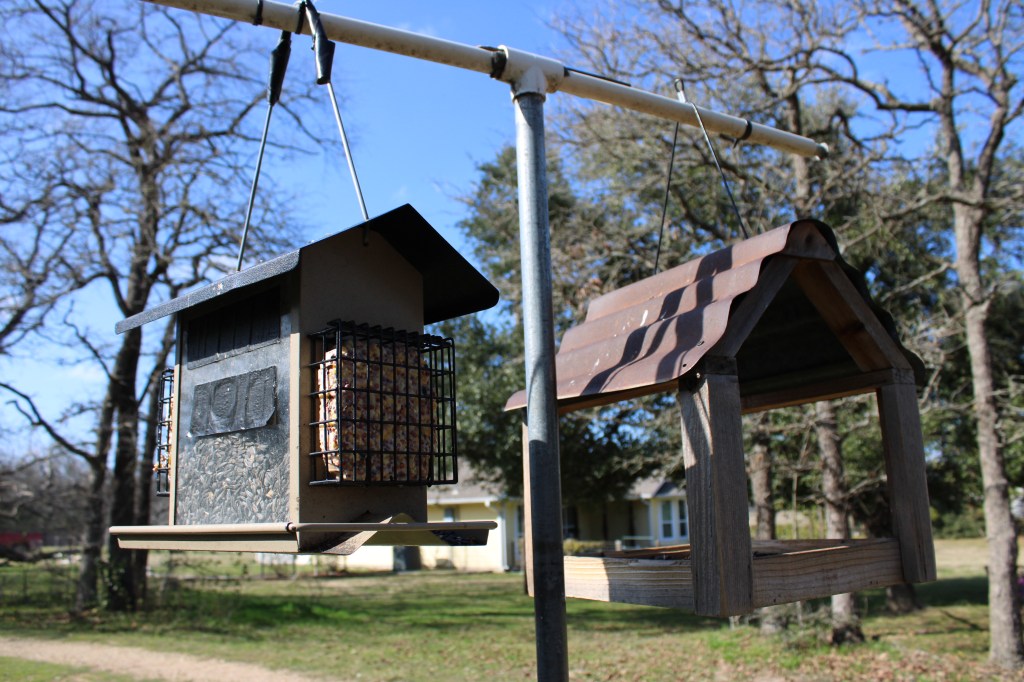
One way we can help during this time is to put out suet for them. You can make your own or purchase it. I found that making it is messy. So, I bought some. Now is the time to put it out.
It needs to go in suet holders and placed near feeders. You can make your own holders and make them suit your location. A suet holder can be as simple as a small cage made from hardware cloth. Anything that a bird can cling to. Many species will come to a suet feeder. Even woodpeckers like them.
The suet provides needed energy to help the birds keep warm.
Right now, I am waiting for a new product to arrive that keeps hummingbird feeders from freezing. As soon as I receive it, I will put that info out for everyone.
So don’t forget our feathered friends…
“I cannot do all the good that the world needs, but the world needs all the good that I can do.
It was Wednesday, March 16, 2022, and we were enjoying spring break. My wife was on her way to Bryan, Texas, with her mother, to pick up our niece for a spring break visit. It was about 3:00 pm and past Milano on the south side of highway 79, she saw a hawk just standing there. She thought the hawk must have prey on the ground and is trying to get. The hawk was standing right in the grass and almost on the shoulder of the highway. She continued her way and was in Bryan for several hours. Upon her return home, she noticed the hawk in the same location, when she passed the area. She turned around and pulled over in the grass passed the shoulder to see what was wrong.
The hawk
My wife, her mom and our niece got out and saw the hawk was standing there looking around, but it was not moving its feet or wings. They were careful not to get too close because they did not want the hawk to fly into the highway. Her mom said the bird looked so pitiful, like it was seeking someone to help it. It was about 7:30 pm by the time they got back in the car and started calling any wildlife rehab center they could find on google. My wife knew there had to be a place to take the hawk, because when we go to the Renaissance Festival, we like to watch a presentation called “Birds of Prey.” In this live show, they explain how they acquired each bird and how it came to be rescued and rehabilitated. The birds in the show were not able to be released back into the wild, so they used them for educating the public. Everyone they called was closed and they could only leave a message. They did not want to leave the hawk there, but they were running out of choices. They did not have a cage or any idea of how to approach a hawk to attempt to detain it.
After she got to rehab
Then my wife remembered our friend, neighbor, and fellow master naturalist Catherine Johnson. My wife called Catherine’s daughter Rosie Johnson and then Rosie and Catherine got on the phone together. They gave my wife the number to the wildlife rehab called All Things Wild. However, All Things Wild is only an intake center, so they were still in the same boat, no cage, and no knowledge of how to capture the hawk. But thankfully they also gave her the number to another fellow master naturalist, Donna Lewis. My wife called Donna, and Donna was on it. Donna started calling all her contacts for wildlife rehab. Before Donna hung up to start her search for help, she mentioned the Game Warden.
My wife’s mom looked up the Game Warden, Derrik Rennspies, and my wife called and talked to him. He agreed to come and bring his raptor cage and secure the hawk. Before he got there, Donna and her neighbor and friend, Holly Jentsch, showed up. Holly put a white sheet on the shoulder of the highway so approaching vehicles would be cautious. When he arrived, the Game Warden turned on his lights to caution other drivers. He then put the white sheet over the hawk and the raptor cage, then carefully got the hawk inside the cage. When he was putting the hawk in the cage, he saw a dead animal, maybe a mouse or rabbit close to hawk. The hawk was most likely trying to get it.
Her red tai,
Now they had the bird secured, but there was still the problem of where to keep it overnight. Donna and Holly agreed to keep the hawk overnight and then my wife and I would transport it to College Station the next day. Game Warden Rennspies put us in contact with a wildlife rehab that would accept the hawk.
The next day, 3/17/22, my wife and I, along with our niece, met Holly in Gause at Coats Grocery to pick up the hawk for transport. Once we secured the raptor cage in the inside of the truck, we took off for the wildlife rehab in College Station.
She still had some energy!
Once we got there, we met wildlife rehabilitator, Krista Bligh. Krista is a wildlife rehabilitator through Texas Parks and Wildlife with mission of taking in injured or orphaned wildlife and releasing them back into the wild. She is not funded by the state, so she does wildlife rehabilitation out of her own pocket, as well as donations. She currently takes in a wide range of species, and she never knows what she will get. Currently she is feeding a litter of baby opossums as well as nursing other red-tailed hawks. Last year, she got in two orphaned baby bobcats, three orphaned baby foxes, and numerous injured and orphaned opossums, raccoons, squirrels, and the list goes on. She explained that a huge part of wildlife rehabilitation is also educating the public. Not many people are taught about wildlife, so it is common for people to accidentally kidnap a baby from their mom, since they are left in odd spots for a wide range of time. The most common kidnapped wildlife are fawns (baby deer) and baby bunnies. By educating the public, she can save more animals by allowing the animals who are not needing assistance to stay and free up her time for those that do.
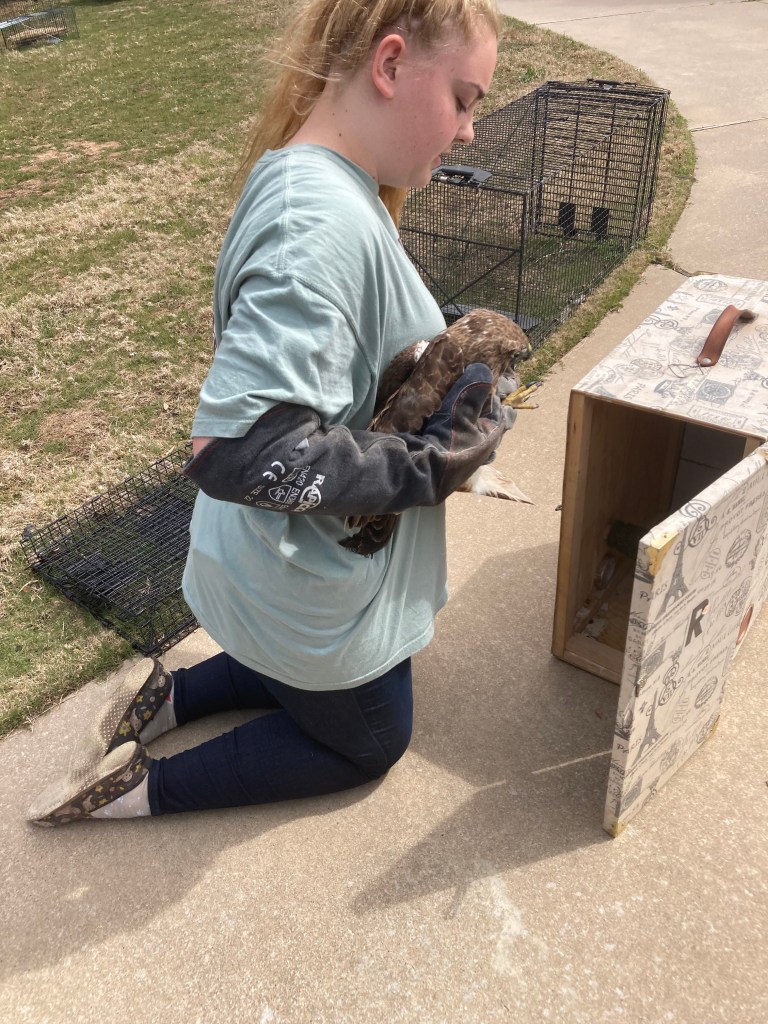
Removing her from the box
Krista is currently a senior Wildlife and Fisheries Zoology major at Texas A&M University. She aspires to attend Vet School with the eventual goal of opening an official wildlife center for the Brazos Valley since it is so incredibly needed.
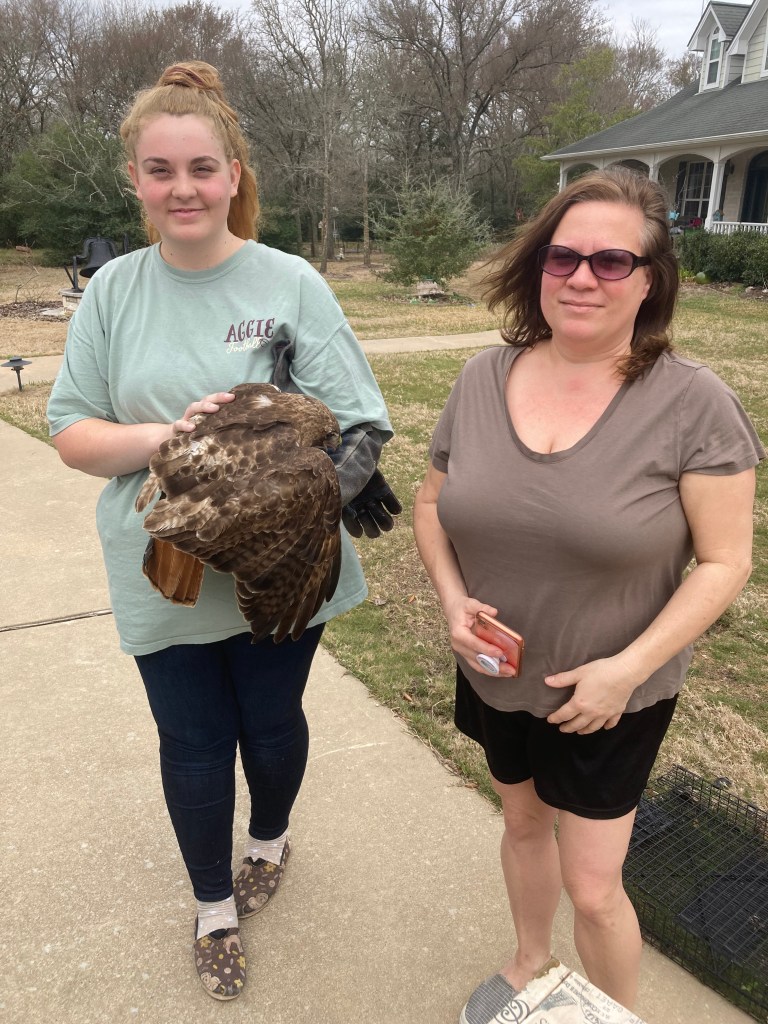
Krista and Cherie Kocian
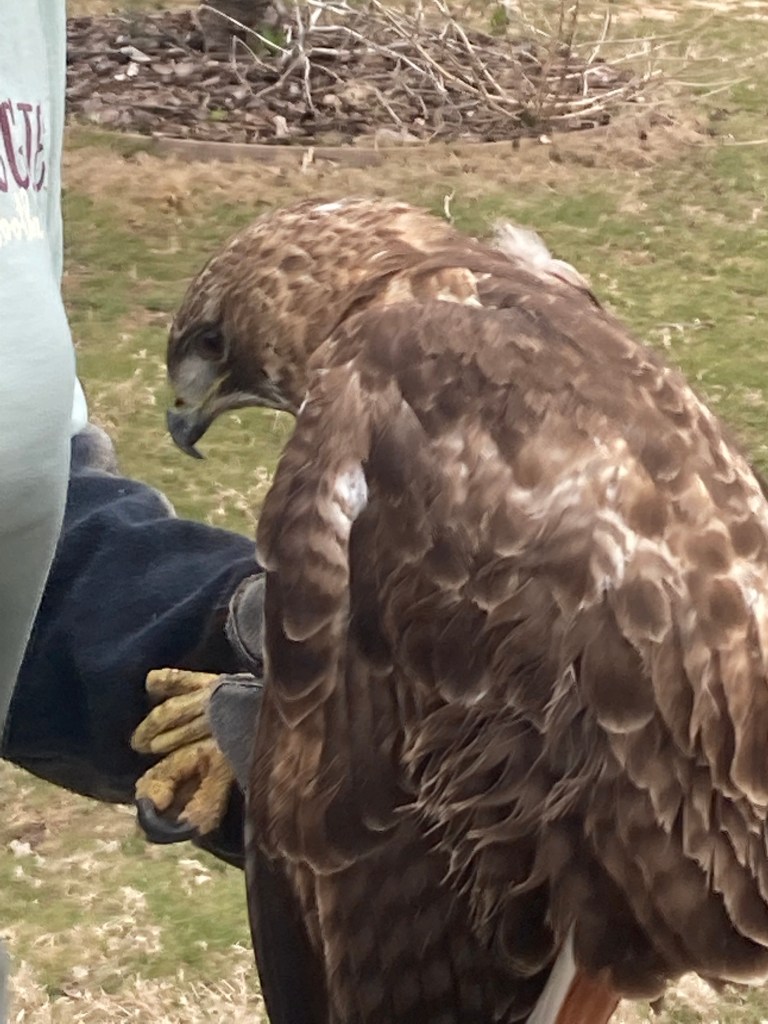
Once we got the hawk out of the truck, Krista was prepared to pick her up out of the cage. Her first impressions were the hawk had some neurological damage and possible internal injuries. She examined her and said she must have been grounded (not able to fly and hunt for prey) for a while because she was emaciated. Neurological damage can also come from eating poison or poisoned prey. Before we left, she said ask for updates at your own risk because the hawk did not look good. Based on the hawk’s size and weight, Krista believed the hawk was a female hawk.
We contacted Krista the next day, 3/18/22, and the hawk was doing well. She had her on oxygen to give her a boost while she was rehydrating her as well. She was going to start her on semi-solid foods that night. She had no apparent external injuries, but she was not quite stable yet. She wanted to go very slow with her since she suspected she had internal injuries on top of the neurological issues and slight emaciation.
Coming out of the box
Update a week after finding the female red-tailed hawk 3/23/22: She is doing great. She has been eating like a champ and Krista will be evaluating how well the hawk can fly very soon.
Update as of 3/25/22: She is doing well and will be doing a test flight tomorrow to see how strong she is and how far she can fly.
Update 3/28/22: After a few days of building her strength flying, she flew like a champ and is back into the wild.
Back in the wild!
What a great ending to this story. After 13 days from being found on the side of the highway, the hawk was rehabilitated and returned to the wild.









 Nature Along the El Camino Real