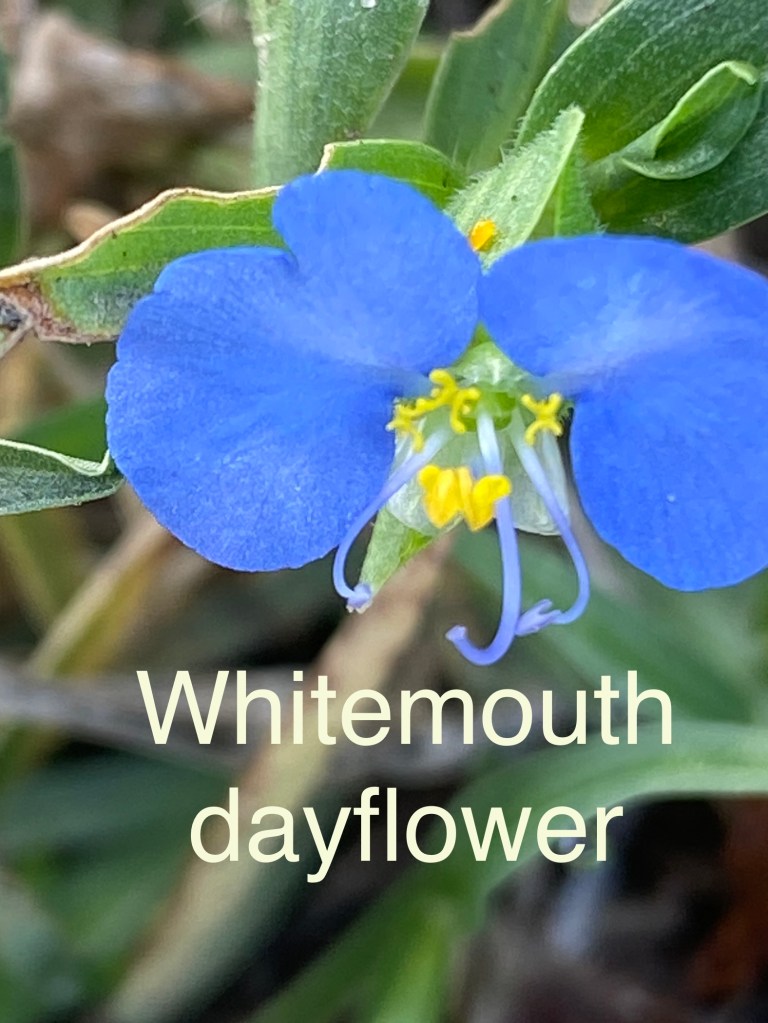
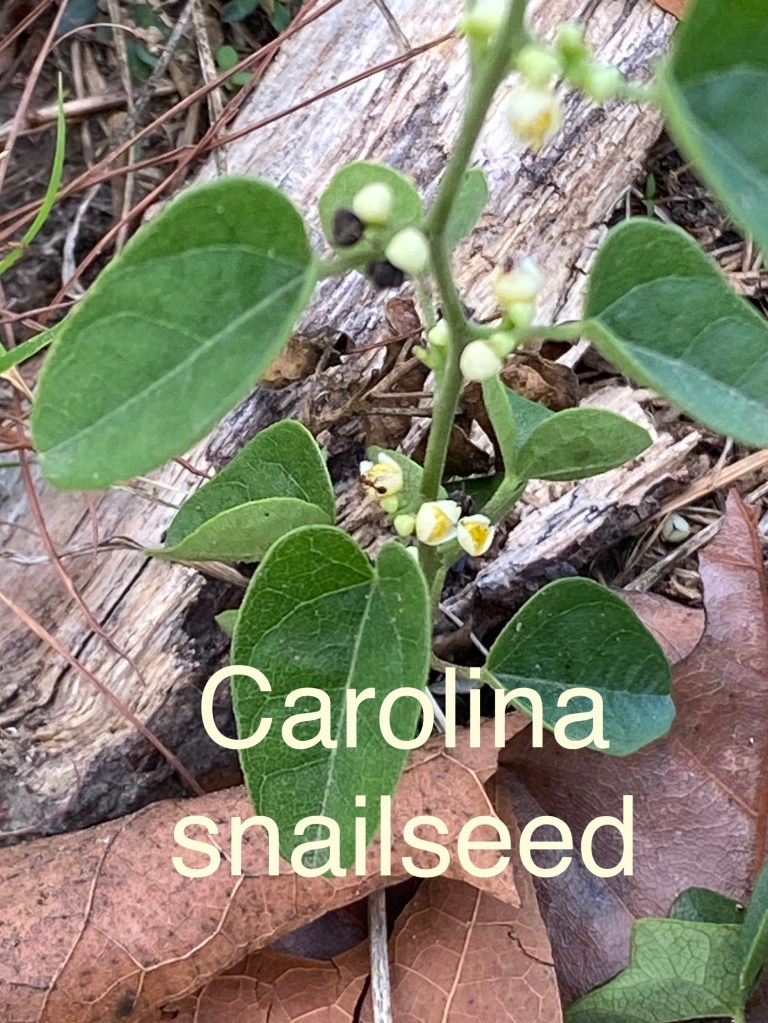
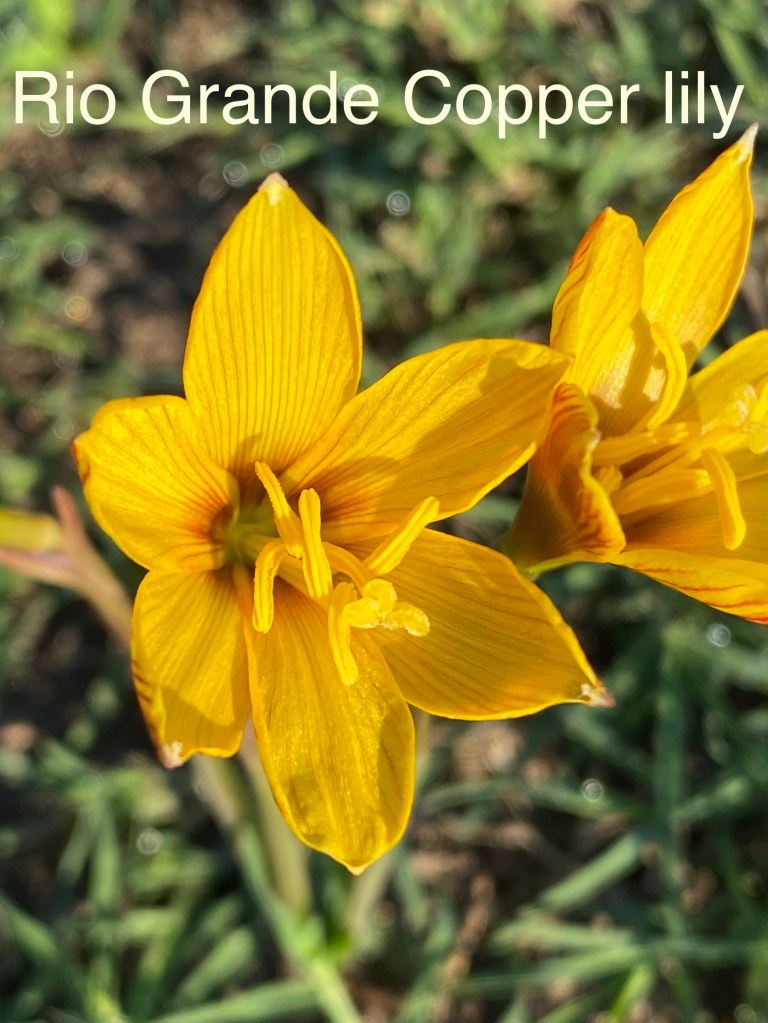
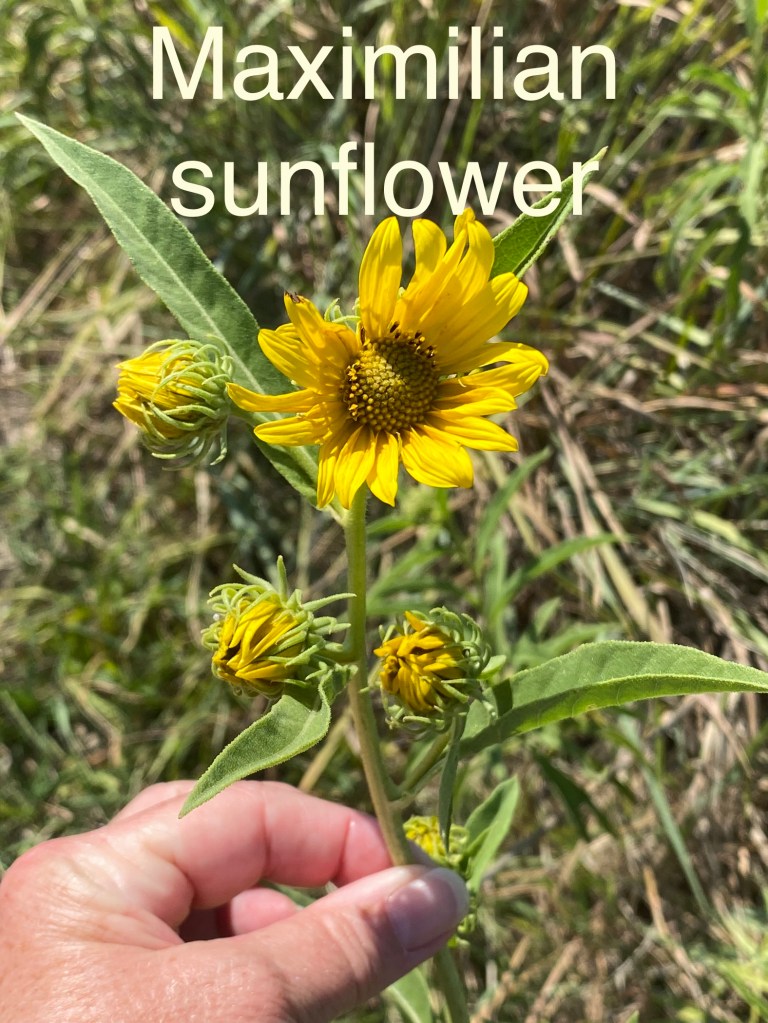
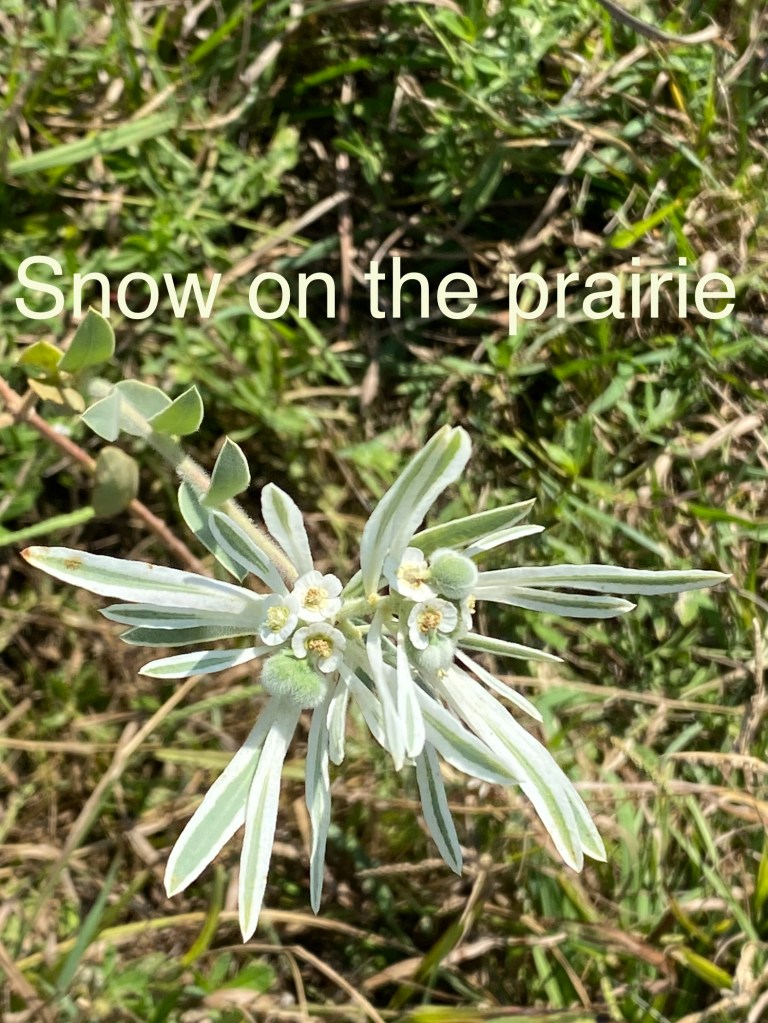
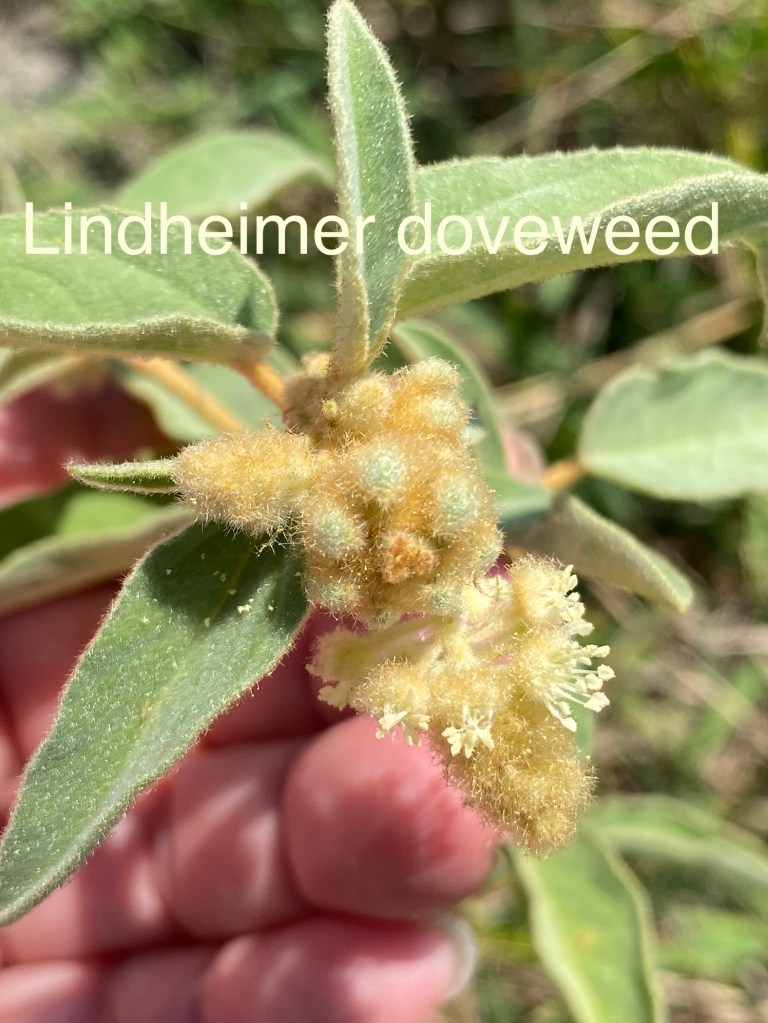
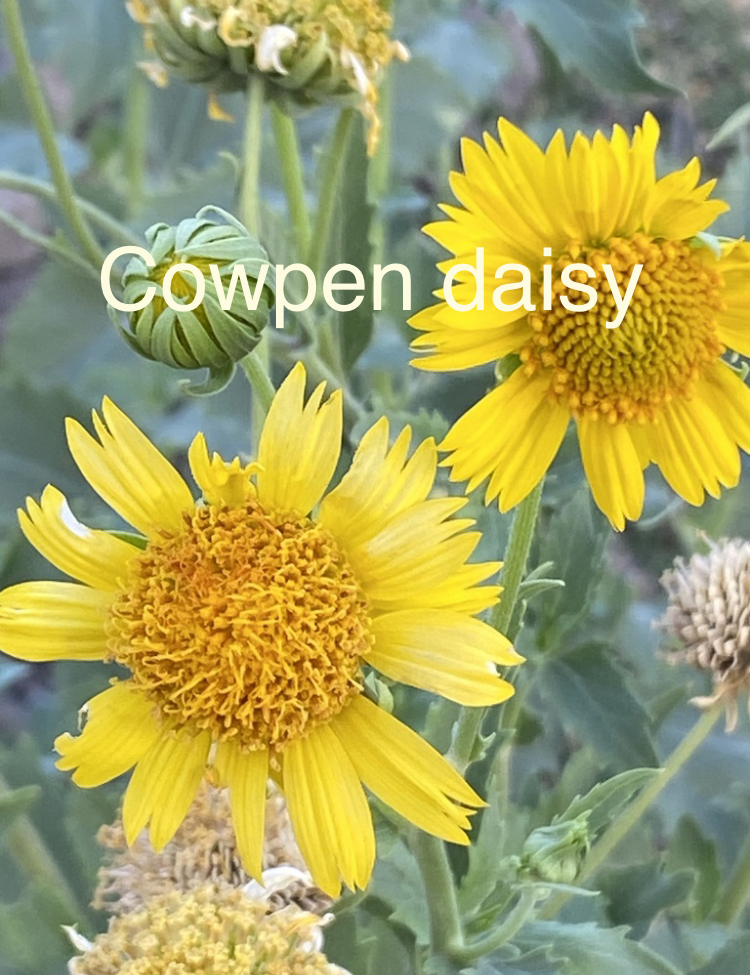
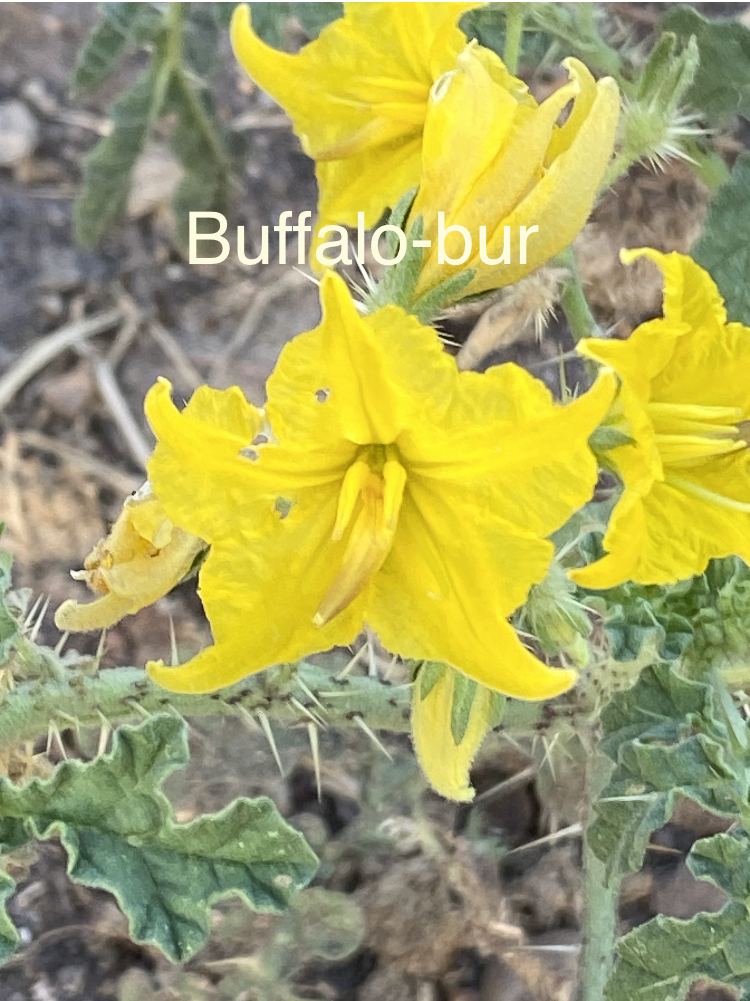
I decided to play the game “what’s blooming in the front yard today” and was surprised at a few. The Vitex tree is blooming. Maximilian sunflowers are bursting and the tall goldenrod is starting to bloom. More newcomers are Tropical sage, Southern annual saltmarsh aster, Prairie false foxglove, Whitemouth dayflower, Rio Grande copper lily and still hanging around are Texas bluebells, Cowpen daisies, Buffalo-bur, Prairie tea, Silverleaf nightshade, Tievine, Violet ruellia, Texas snakeweed, Gulf vervain, Lindheimer Doveweed, Carolina snailseed, Turkey tangle frogfruit, Bitterweed and Snow-on-the-prairie.
The only time that I find being outside tolerable during this long heat wave/drought is early morning or late evening. I think Hummingbirds agree with me. And I don’t feed them intentionally.
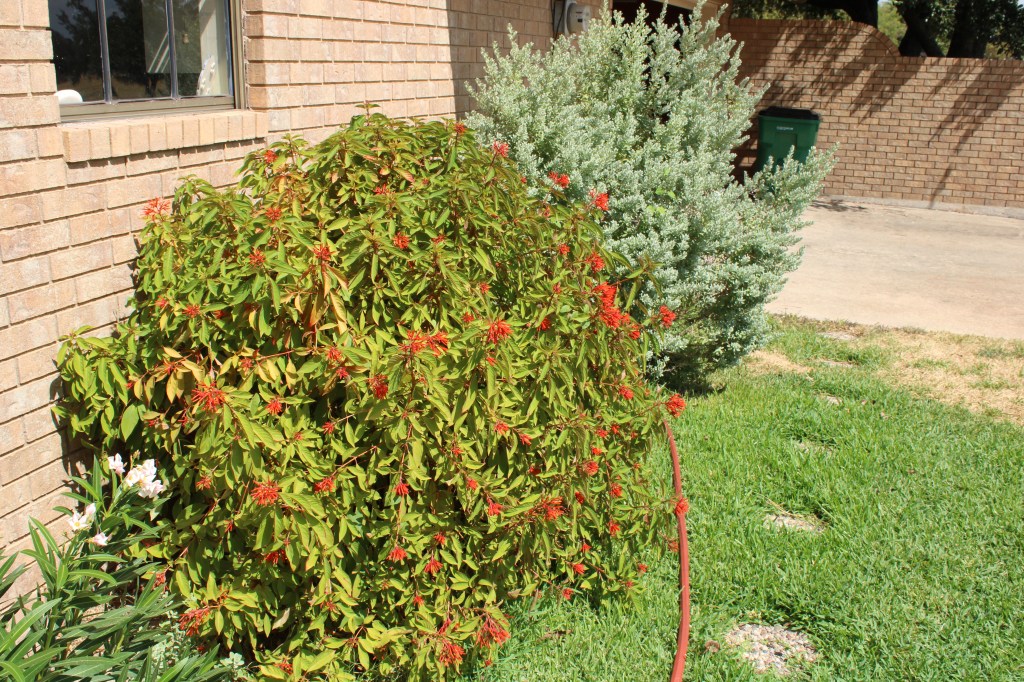
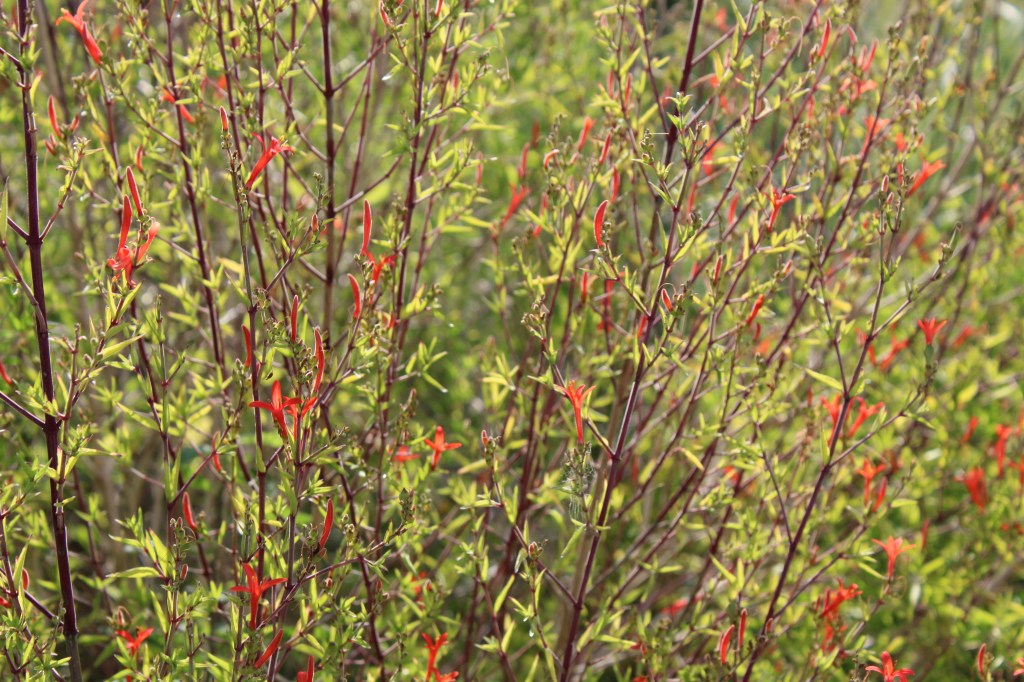
I stopped putting out bird food of any sort several years ago after I saw my sometimes-outside cat, with a Hummingbird then a Yellow Rumped Warbler in his mouth. I decided to limit his pickings as much as possible. However, I did plant a Mexican Honeysuckle bush from the El Camino Real Texas Master Naturalist Wildscape, and I also have a Fiery Hummingbird Bush (also called a Fire Bush) that was here when I bought the house. They both are in full bloom now, and Hummingbirds and several types of butterflies are very fond of feeding on them. The multitude of wasps that I have nesting at my house like them, too.
Mexican honeysuckleMexican honeysuckleFiery hummingbird bushFiery hummingbird bush
These two bushes, my Crape Myrtle and a couple of Mexican Hats are all in bloom now. These plants are heat wave tolerant, feeding birds, butterflies, Western Honeybees, and three types of wasps. I only see the Hummingbirds in the very early morning and evening. They come in groups of three to four. I believe they are the Ruby Throated version. Three of them have white undersides and one, that I finally got a photo of this morning, looks to be Ruby Throated (according to iNaturalist). I’ve been trying to get photos of them for a few weeks, but I never have my camera ready at the right time. It seems that if they see that I have seen them, they head for the tallest trees.
Hummingbird zooming in on Fiery Hummingbird Bush
The Crape Myrtle, which bloomed late this year, attracts mostly wasps and honeybees. I normally have a Texas Purple Sage in bloom that the bees really like, but it has not put out more than 5 or 6 blooms a few times. The Mexican Hats are just about done for the year. Luckily for the feeders, the Mexican Honeysuckle Bush and Fiery Hummingbird Bush bloom until it freezes – which may not occur this year.
crape myrtleMexican hats
I must say, being able to watch the birds and butterflies eat without having to frequently clean out the feeder is nice. They really like my new bird bath, too. They, along with Robins, Blue Jays, Doves, Cardinals, and Mockingbirds have become very fond of it. They drink it and cool themselves off in it.
By Carolyn Henderson, with additional photos from Catherine Johnson
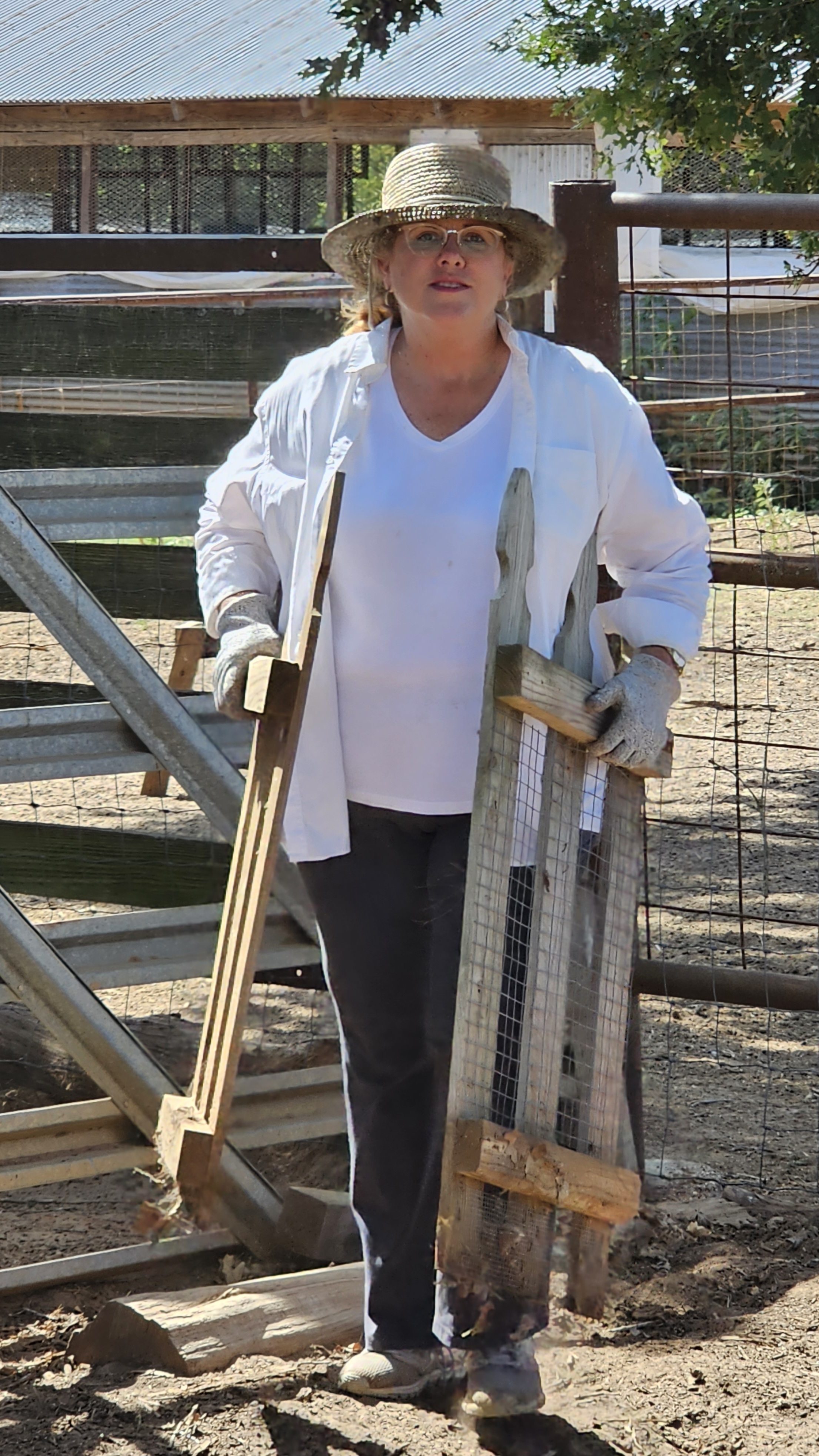
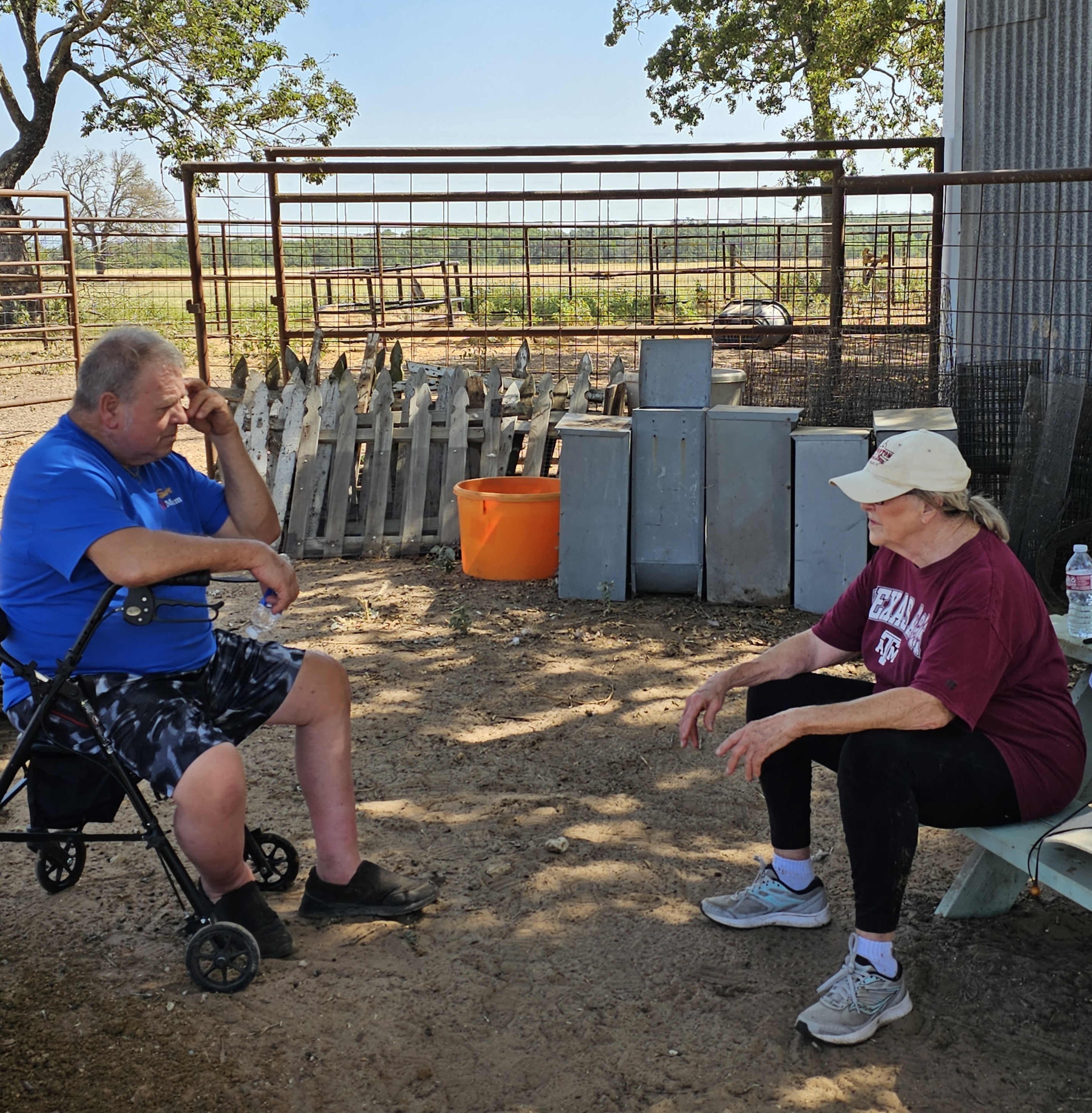
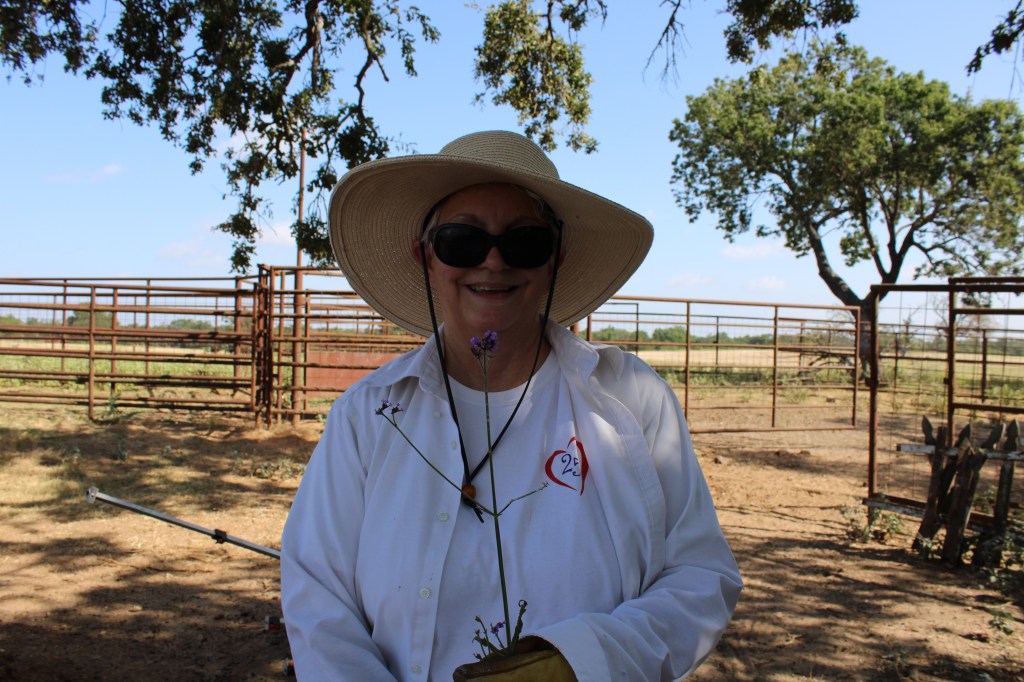
Sweltering heat couldn’t stop the nine Texas Master Naturalist El Camino Real chapter members from sprucing up the El Camino Real Wildscape at the Bird and Bee Farm and finding a few “treasures” in the process on Saturday, July 15.
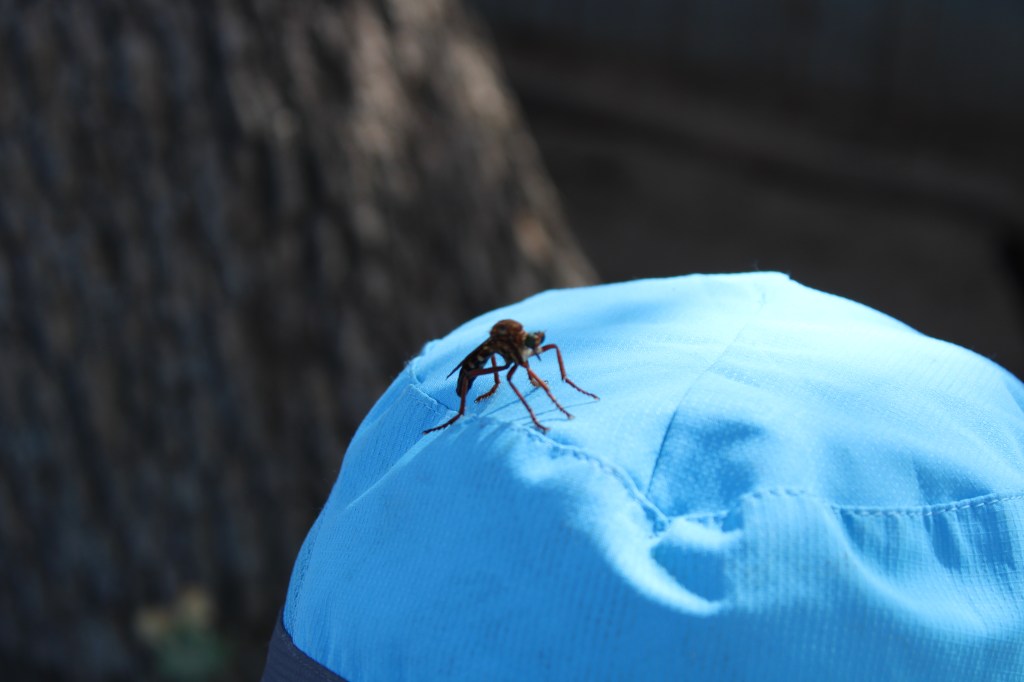
Most of us wouldn’t consider a horsefly a treasure, but one did visit Debi Sorenson’s hat.Tropical milkweed
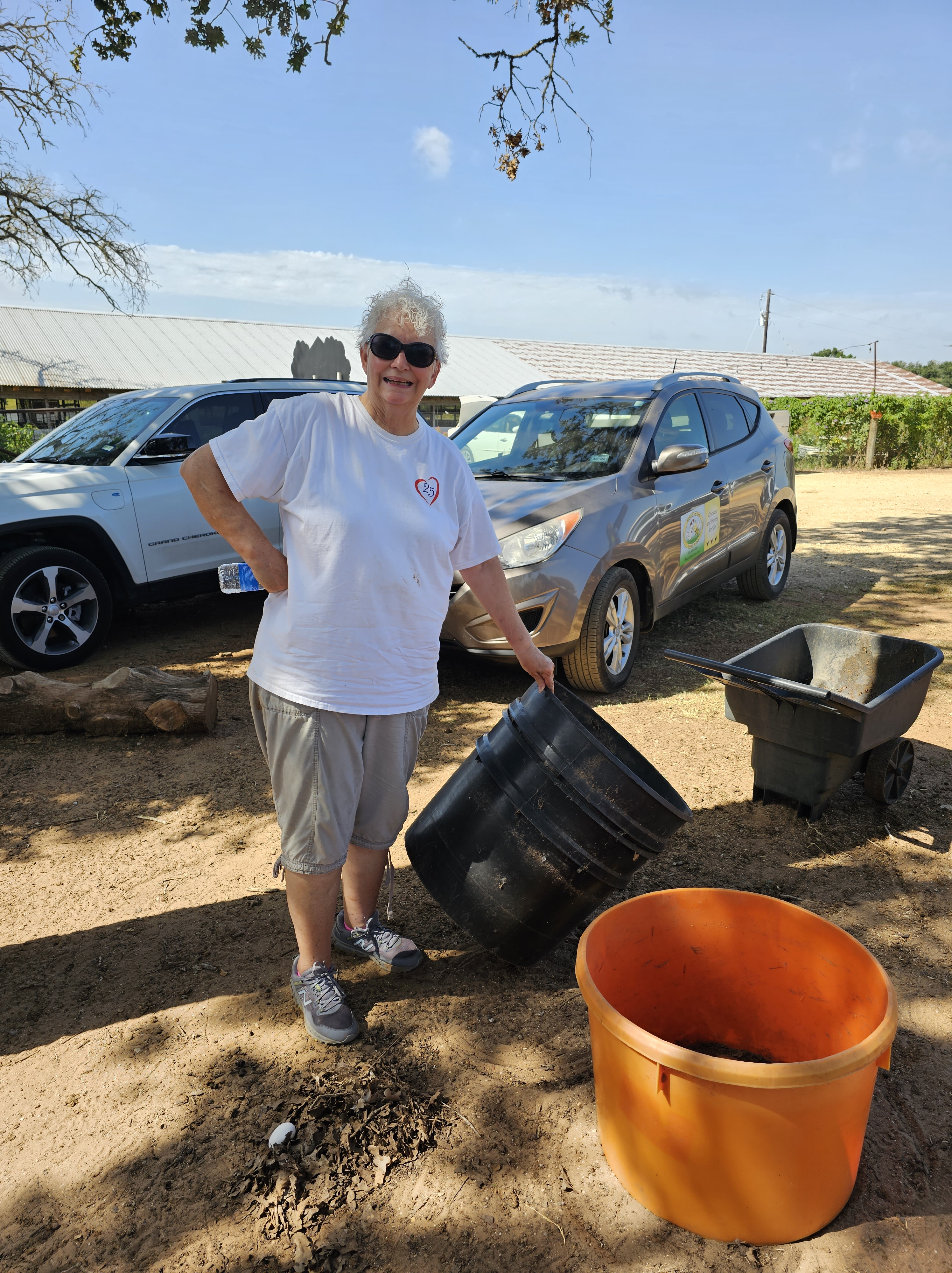
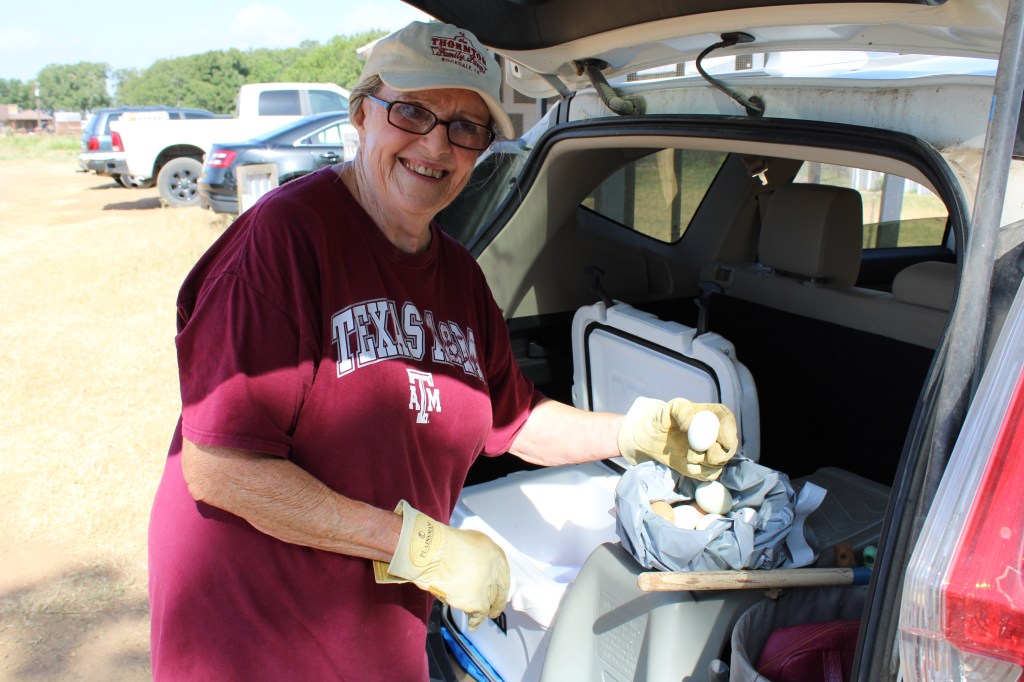
A lot of work was done to clean up the area where meetings are held at the site when large groups come for events. It was hot, but the area is shaded by trees and a nice breeze helped. In the midst of the cleanup, Jackie Thornton found a nice nest of chicken eggs. She took them home (and we didn’t get photos).
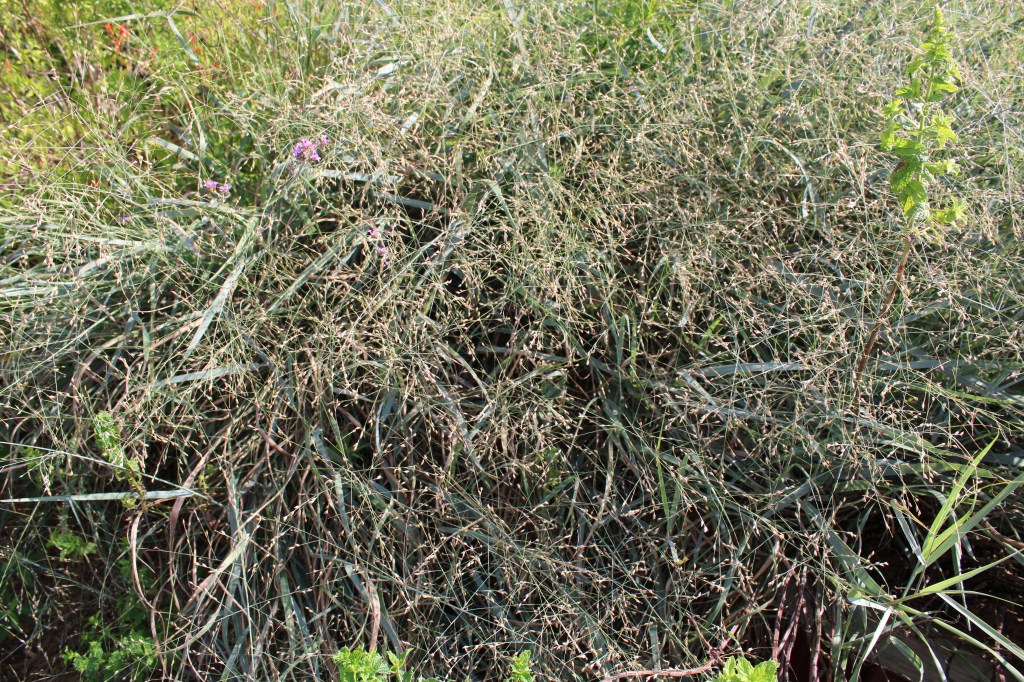
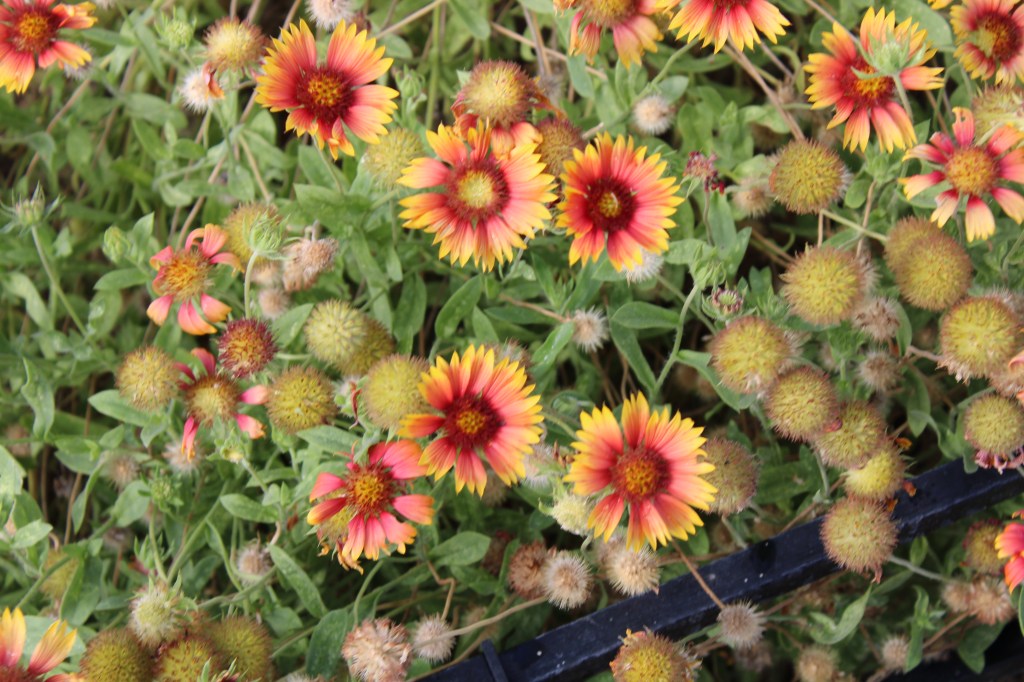
SwitchgrassIndian blanket
Phyllis Shuffield found the invasive scourge Vervain growing in a few places in the wildscape. It was not put there intentionally. Phyllis proceeded to remove them all. The wildscape acquired several non-native plants this year. An early one was a red poppy. Maximillian Sunflowers were rampant this year and will require some control measures. Other plants also showed up either by birds, wind or hitching a ride in a plant intentionally purchased and planted.
Flame acanthus
Carolyn Henderson found the Cypress Vine with pretty red flowers over-growing and choking everything in its vicinity. It completely took over the arch which had Malabar Spinach growing all over it. It literally choked that out. It was starting to overtake the Coral Vine growing around the covered picnic table and it was wrapping around the storage building. The local mouse hunter did try to help pull it up or at least push it out of the way.
Turk’s cap, not an invasive plant
It was decided that this vine, a Texas native that is seriously invasive, will require serious efforts to stop. It may overtake everything if not removed.
The invasive cypress vine
The color palette has also changed. The purples had mostly gone to seed, and oranges, yellows and reds have taken over. Three to four types of bees and Gulf Fritillaries were enjoying the blooms.
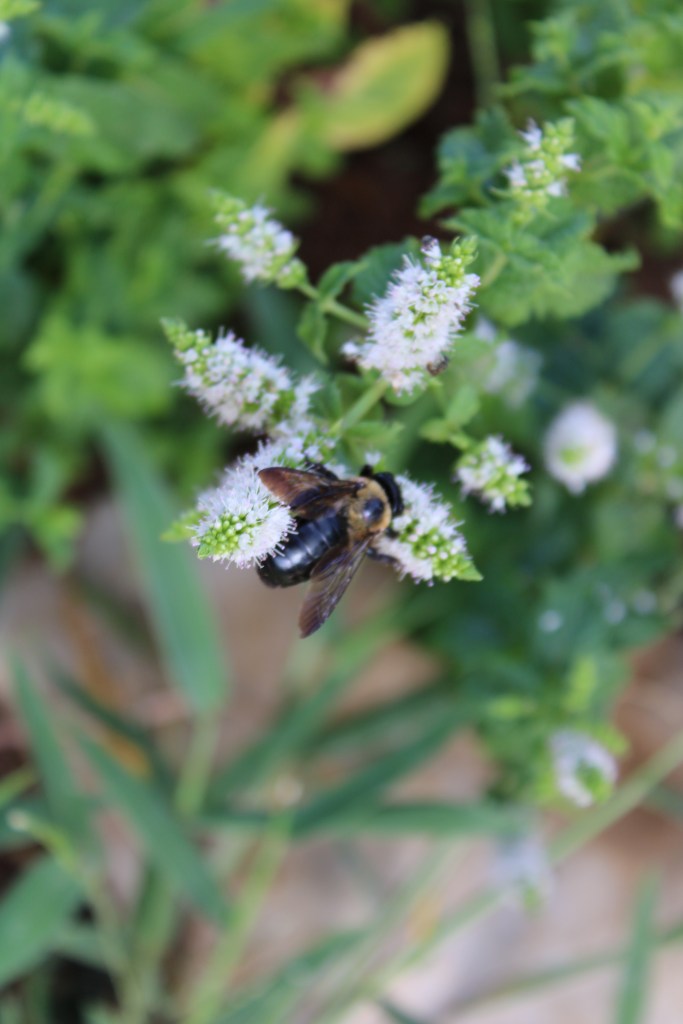
A carpenter bee on a mint plant
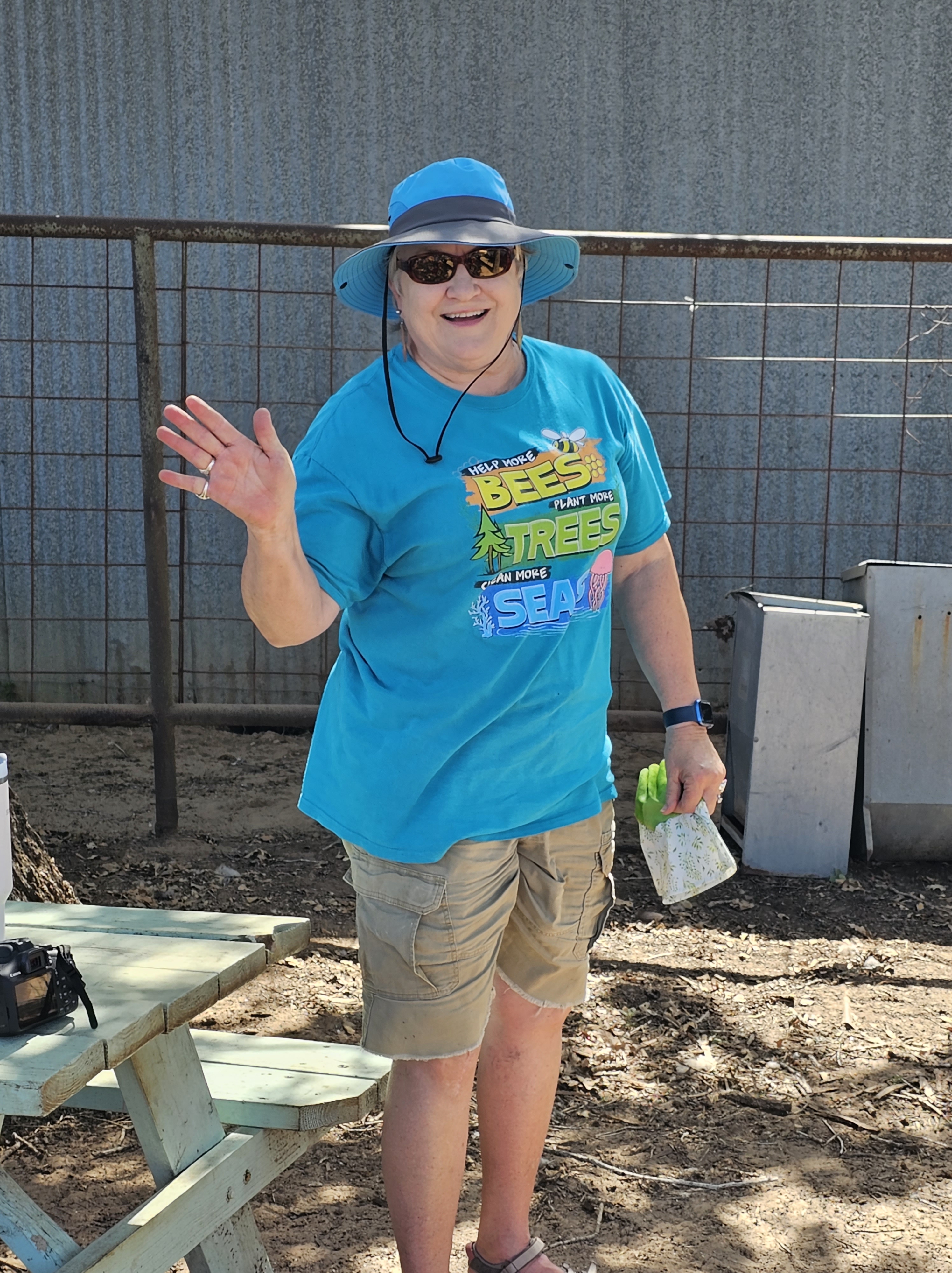
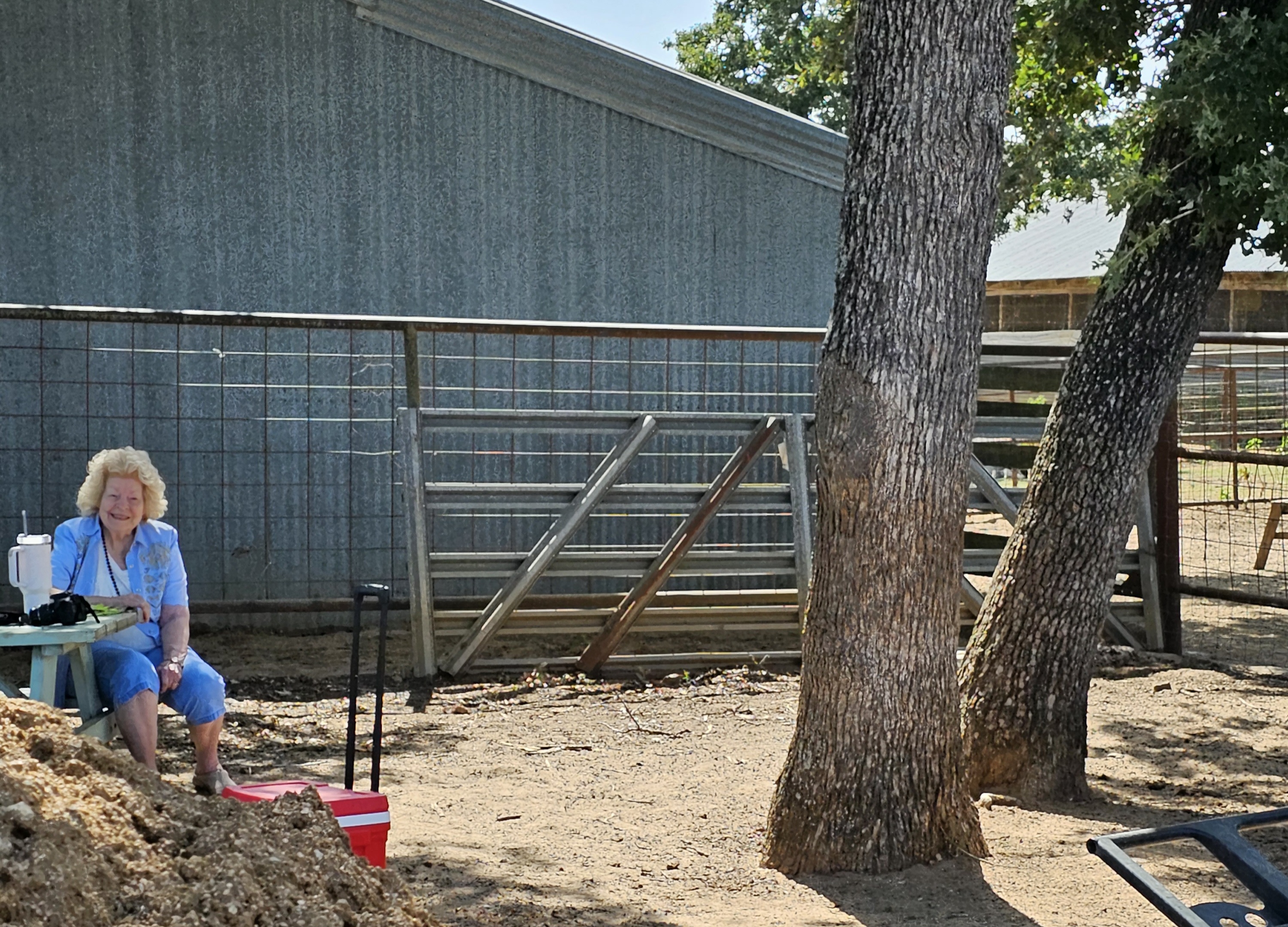
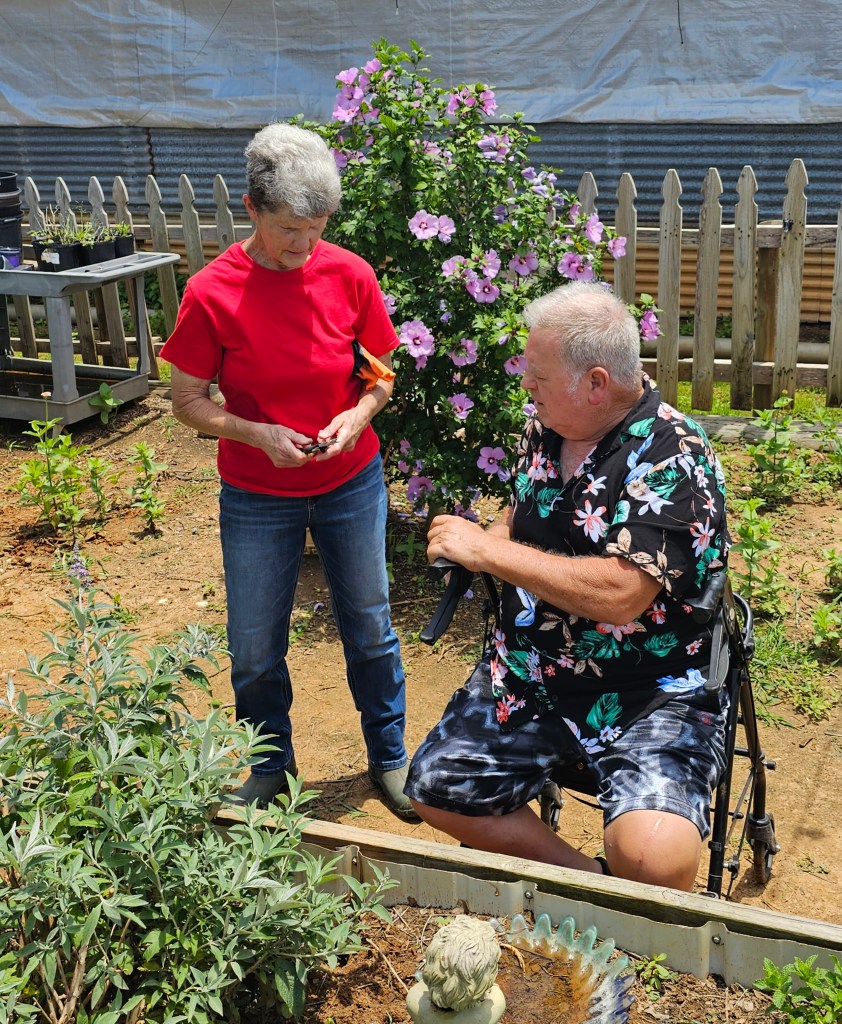
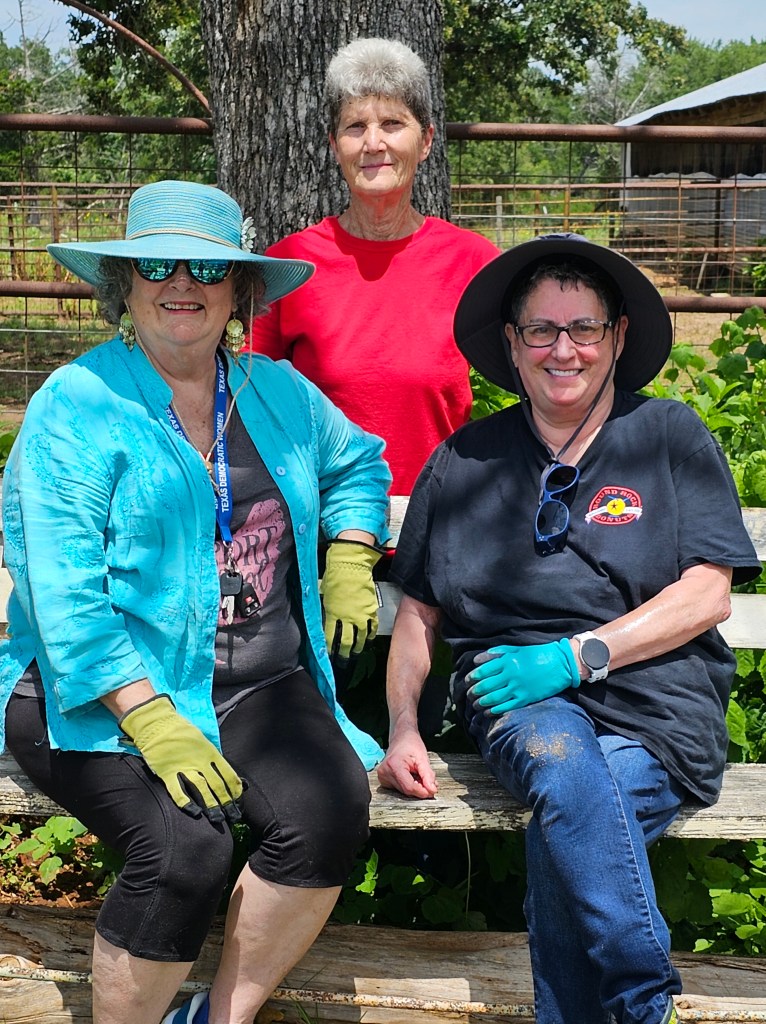
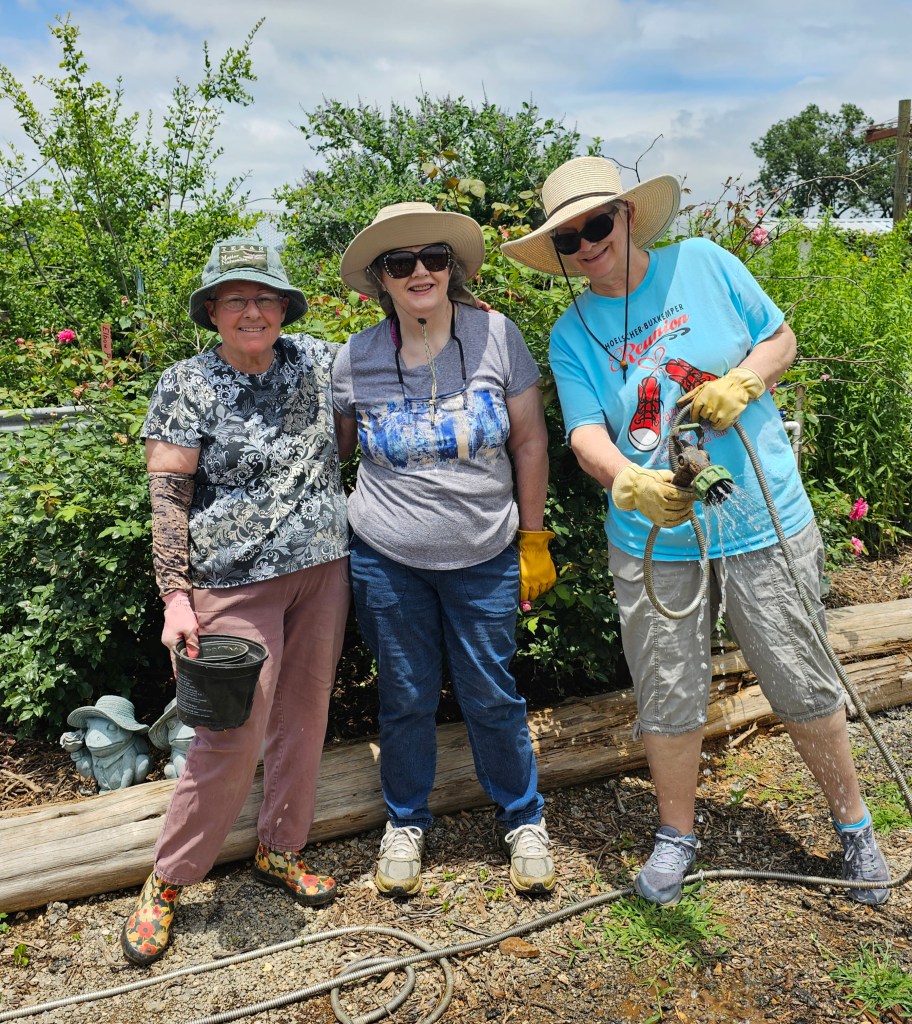
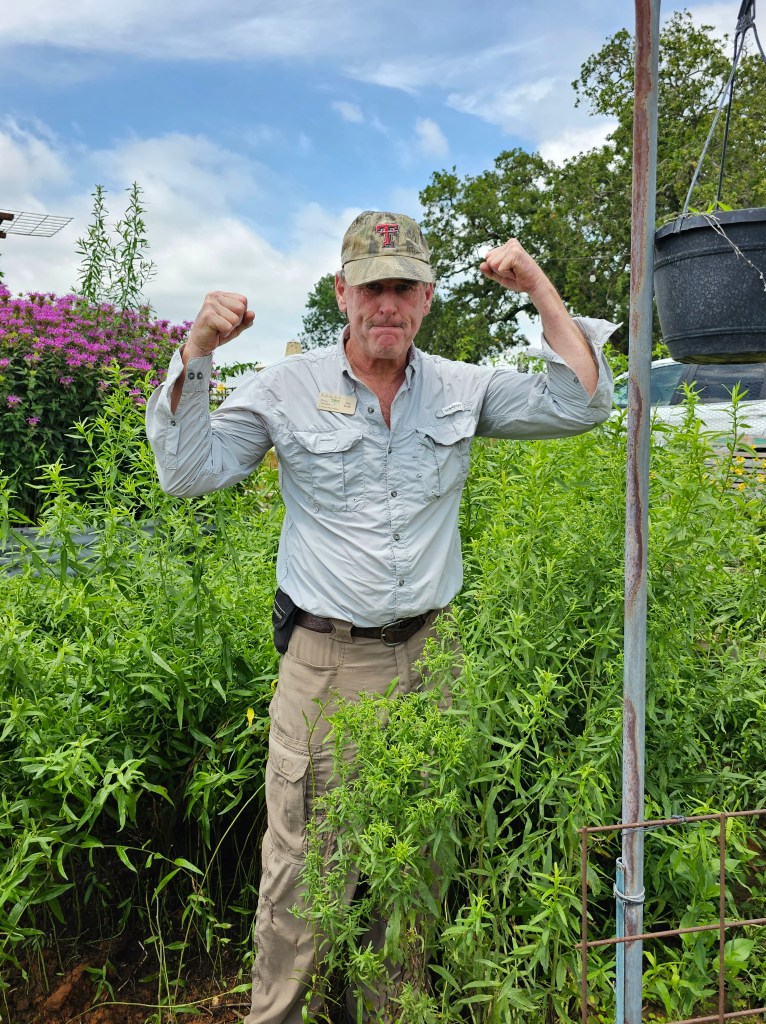
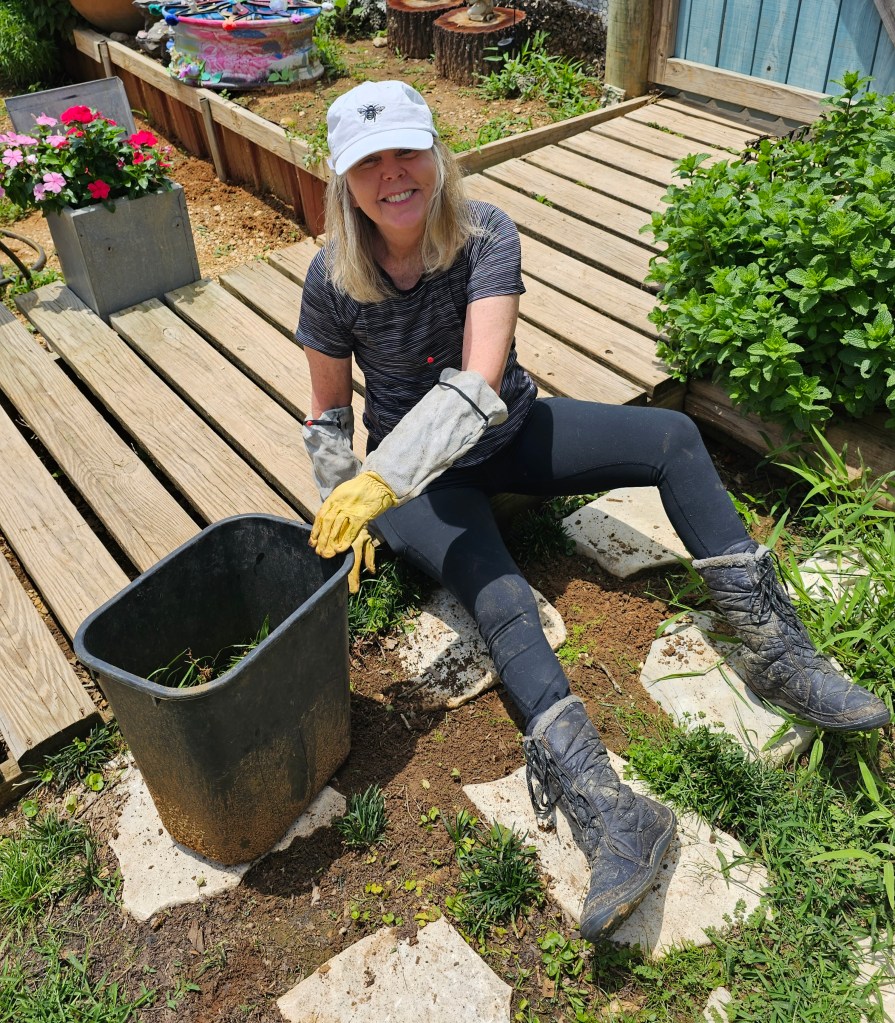
More plans were made for August beautification. Afterward, Catherine Johnson, Patsy Coombs, Neil Wettstein, Debra Sorenson, Pamela Neeley, Sandra Dworaczyk, Jackie and Carolyn recovered from the heat at Corona’s in Rockdale. Here are some photos of the crew.
The El Camino Real Texas Master Naturalist Wildscape is awash in purple blooms on flowers, bushes and trees. And all types of bees are all over them. Honeybees, Mason bees and Carpenter bees covered most of the blooms.
The favorite for the bees was Wild Bergamot growing in cultivation in the Wildscape.
Wild Bergamot
Its sister plant the Lemon Bee Balm growing in the wild in the surrounding pasture was a very close second.
Lemon Bee Balm
Gene Rek, owner of Bird and Bee Farm where the wildscape is located, said the wild Lemon Bee Balm provided the most nectar for his bee farm. They had found the Wild Bergamot, too.
Huge Wild Bergamot
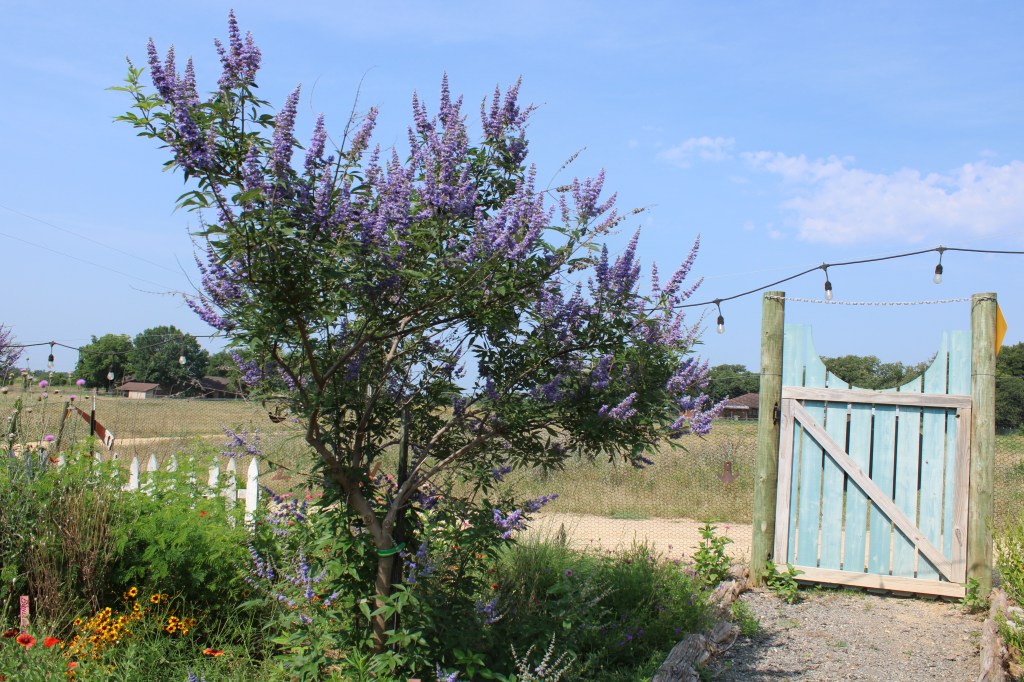
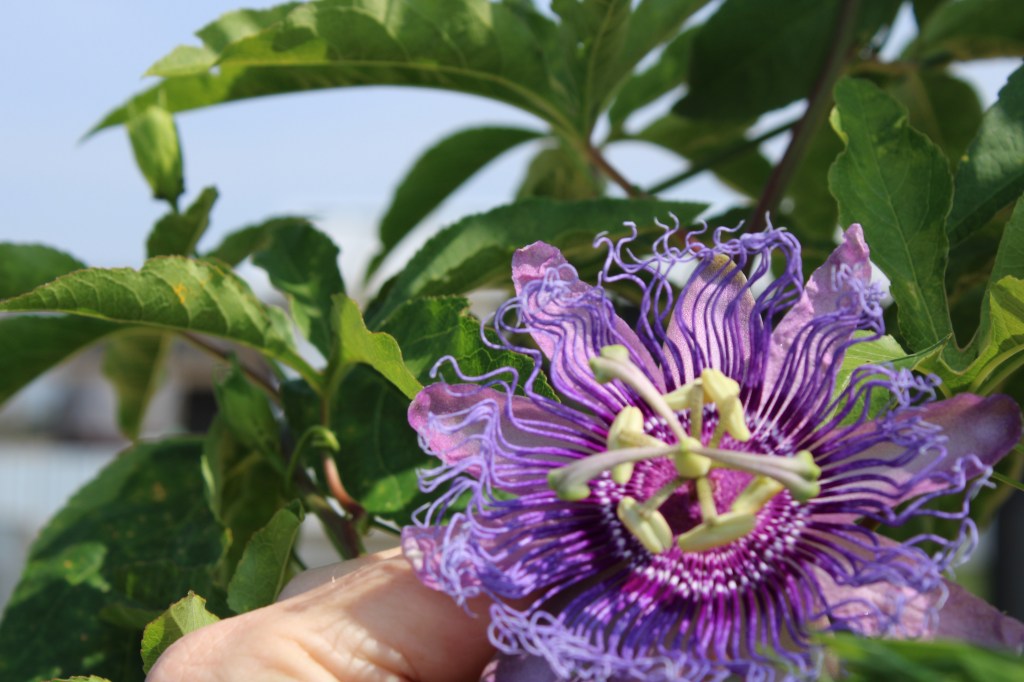
Close in line was a Lilac Chaste Tree, Mealy Blue Sage and Purple Passionflower. Plenty of other plants also are in bloom. Many of those are new to the Wildscape.
Lilac chaste tree
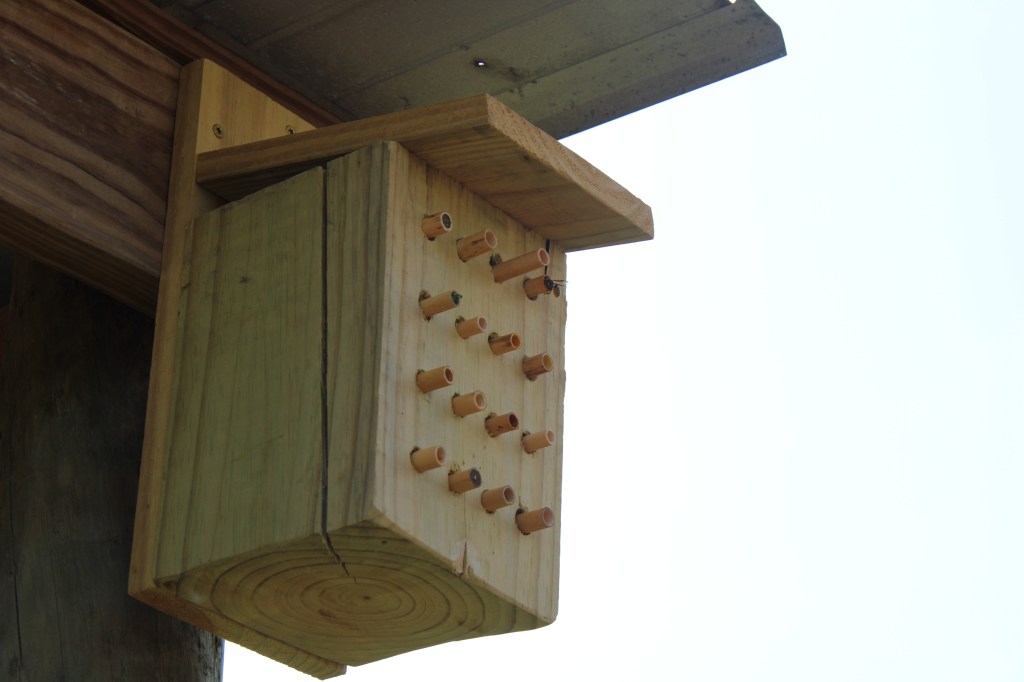
The Mason Bees were also filling up the new bee houses put up by some Eagle Scouts.
Mason bee house
If you’d like to grow native Texas plants, this is an excellent place to see many of them in bloom. Members of the El Camino Real chapter Texas Master Naturalist will be there on June 17, from 10 to 12. Catherine Johnson, member in charge of the Wildscape, always gives away free starters to anyone interested. It’s located on Fm 334.
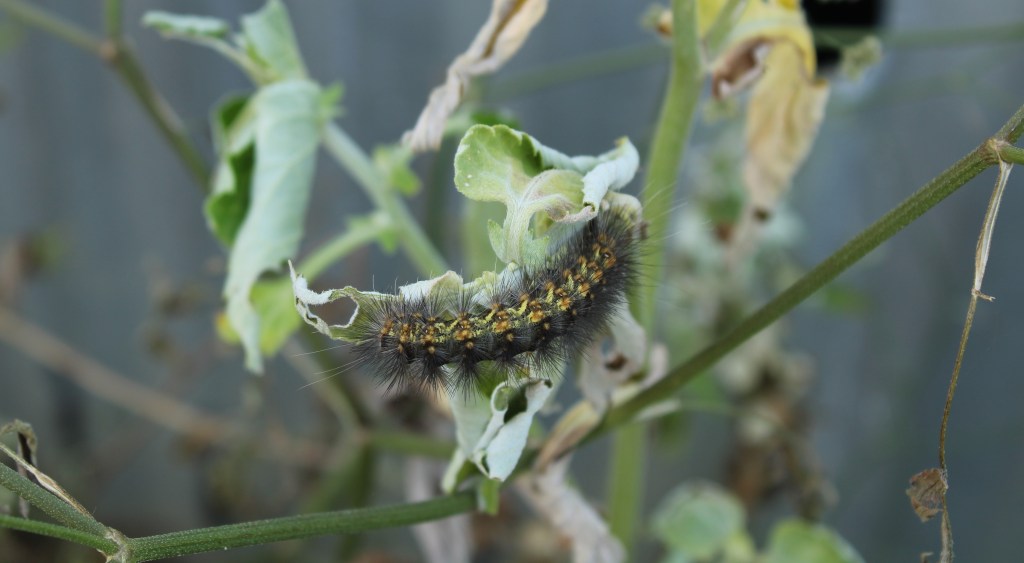
Mealy blue sagePurple passionflowerCaterpillar feeding on wilting Lemon Bee Balm, working to produce a Salt Marsh MothMore purple flowers and their friends.






















 Nature Along the El Camino Real