Wildscape Workday

by Catherine Johnson

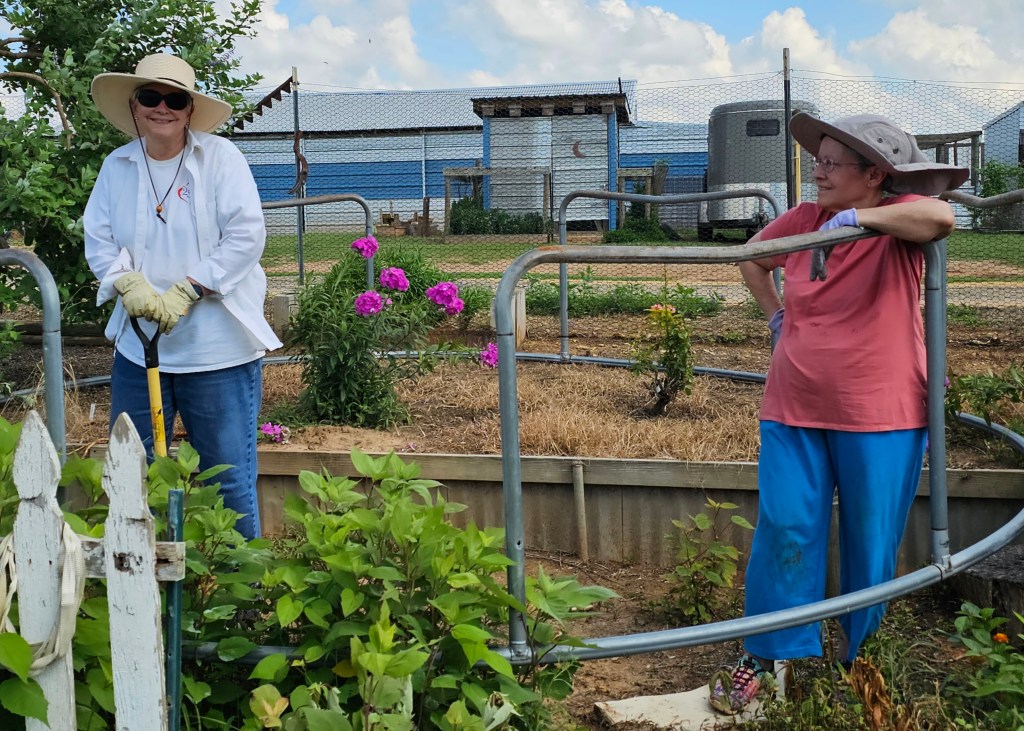
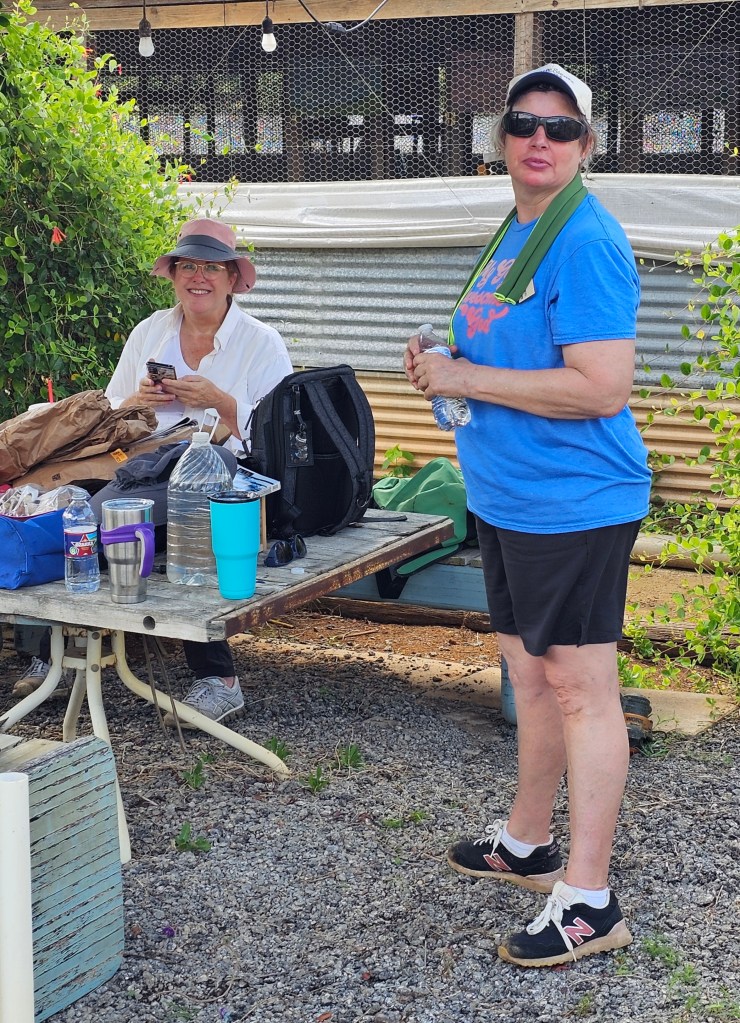
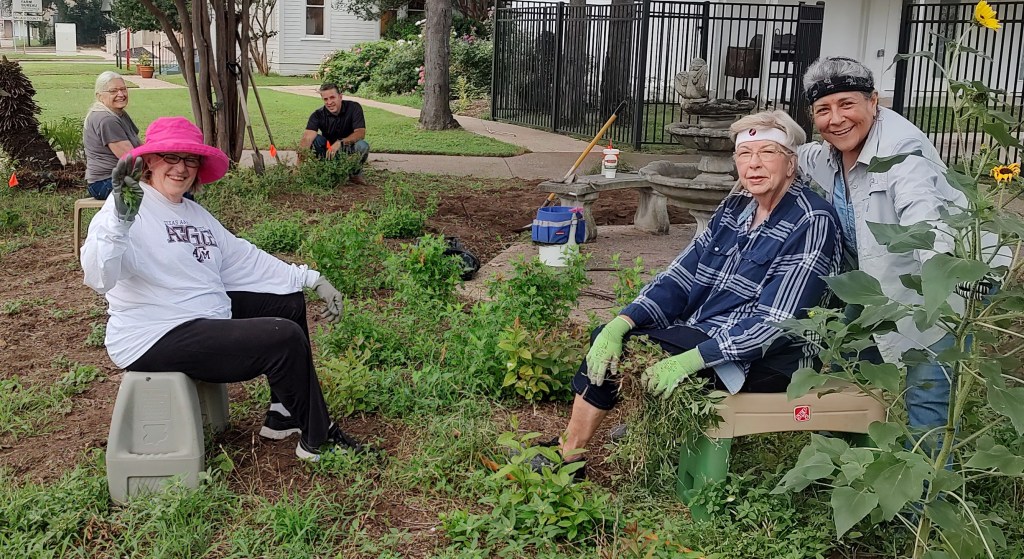
The best time to work in the Milam Wildscape is after 7:00 p.m. at this time.  Everyone was ready to leave on a recent Saturday at 11:00 a.m.  However, Phyllis, Patricia, Dorothy, Carolyn, Kim, Jackie, and Catherine accomplished some specific tasks of pruning, eliminating aggressive vines and harvesting excess plants. 
Gene showed us the new major Bird Station in progress which will have water and native grasses and berries. Ann Collins is the coordinator and looks forward to future educational programs.

Native Texas Flower Bed Improving

By Carolyn Henderson

Progress is being made on the flower bed the chapter voted to develop into a native Texas plot. If faces Travis Street, so those of us who are in downtown Cameron regularly have paid attention to the ongoing battle with the non-planted plants running rampant in it. 

The bed after weeding

Some might call them weeds. But, some of them are native wild flowers that tend to be invasive – in that they overrun everything else around them. For example, Persimmons are coming up repetitively all over that bed, and they are very hard to get up.

Luckily, almost everything we planted has survived and is growing. We plan to plant more things in the  fall with the hopes of all of ours overrunning all he uninvited plants. We could put poison on the interlopers, but we don’t want to risk what we did plant. Mulch is on order to be put down this week.

The photos are from work done today. Jackie Thornton and Liz Lewis, both regulars at the plot, as well as Connie Anderle and Linda Jo Conn did a lot of work on the bed today. We also had an unexpected volunteer – Ed Guerrero – who is a master weed puller. I’m pretty sure we would not have gotten the whole thing done without him.

The weed pullers

Past contributors to the project have been Catherine Johnson, Phyllis Shuffield, and Pamela Neeley. If you can pull a weed, you can volunteer. When we are done, we all go have lunch to celebrate winning this battle against those unwanted invaders.

Antique Rose Emporium

by Catherine Johnson

On the way home from Washington-on-the Brazos, a group of Master Naturalists stopped by to visit the Antique Rose Emporium garden, which was stunning.  The new owners are continuing to add structures, add educational programs, and partner with NPSOT to stock many native plants.

One of the caretakers told of how they created a continuous flowing “creek” around the Cypress trees.  Available outdoor seating and refreshments help provide a peaceful experience in a Shire-like setting.

Happy May Day! Celebrate with flowers!

Turks Caps Still Blooming (at least pre-freeze this week)

By Carolyn Henderson

Turks Caps are easy to grow from the little red apple-looking seed pods they put out in late fall. I have verified that through an experiment I decided to undertake last December 2022. 

I harvested the seed pods from a very large, pink Turks Cap at the El Camino Real Master Naturalist Wildscape at the Bird and Bee Farm on FM 334 with the hope of growing some in my yard. Turks Caps naturally have a vivid red flower. These had been modified to bloom a light pink. The one at the wildscapesits right next to an even bigger Red Turks Cap.

I googled how to process the seed pods. It was recommended to put them in the refrigerator whole until late February or early March. In late February of 2023, I then did as recommended and removed the seeds from the red pod. Each pod produced quite a few seeds. I planted 16 of them in seed starter packs. I should add that I also took a baby plant from the Pink Turks Cap and put it in a pot at the same time I took the seed pods. I planted one full pod in the flower bed where I intended to put all of them. It is a heavily shaded bed which Turks Caps are known to like. The potted one was getting 6 hours of sun a day.
All of them grew. The potted one grew very tall since it had a head start, I think, and bloomed a lot. Butterflies and bees are very fond of the blooms. I moved the starter plants to a flower bed in my front yard in late March. The full pod plant grew at a faster pace than the seeded plants, but all of them did grow. They grew the most in the shadiest part of the bed. 

The whole pod plant bloomed first of the ones in the bed. About half of the others bloomed in the fall. The blooms were all pink – at first. To my surprise, I went to water them one day, and one in the shadiest part of the bed was also blooming red at the same time it was blooming pink. The potted plant had pink blooms throughout the season. The others native gene pool came through. It would appear that they can be planted in any manner I tried.

All of them were still alive up to the freeze. I fully expect them to come back in the spring – even a small one my son weedeated down because he thought it was a weed. It re-sprouted quickly. What I really want to see is what color they bloom.