Things I Never Saw Before

By Sue Ann Kendall

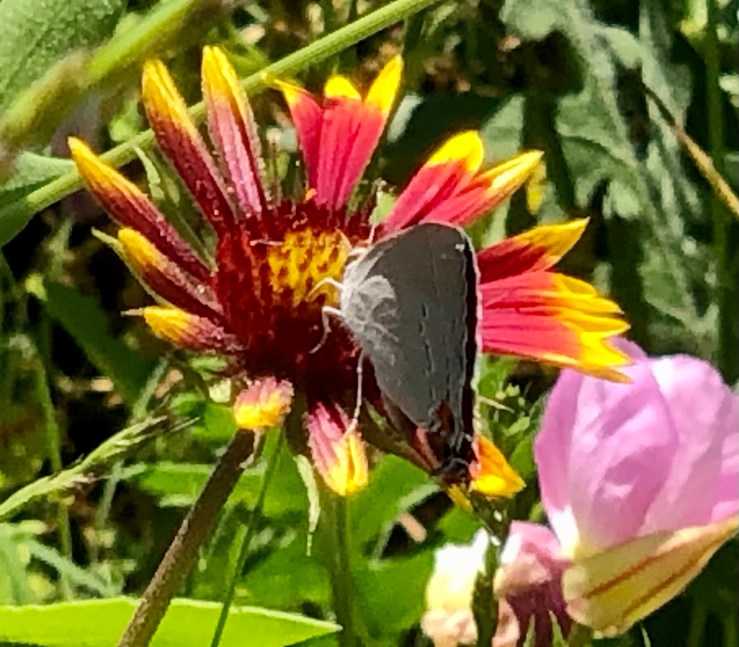
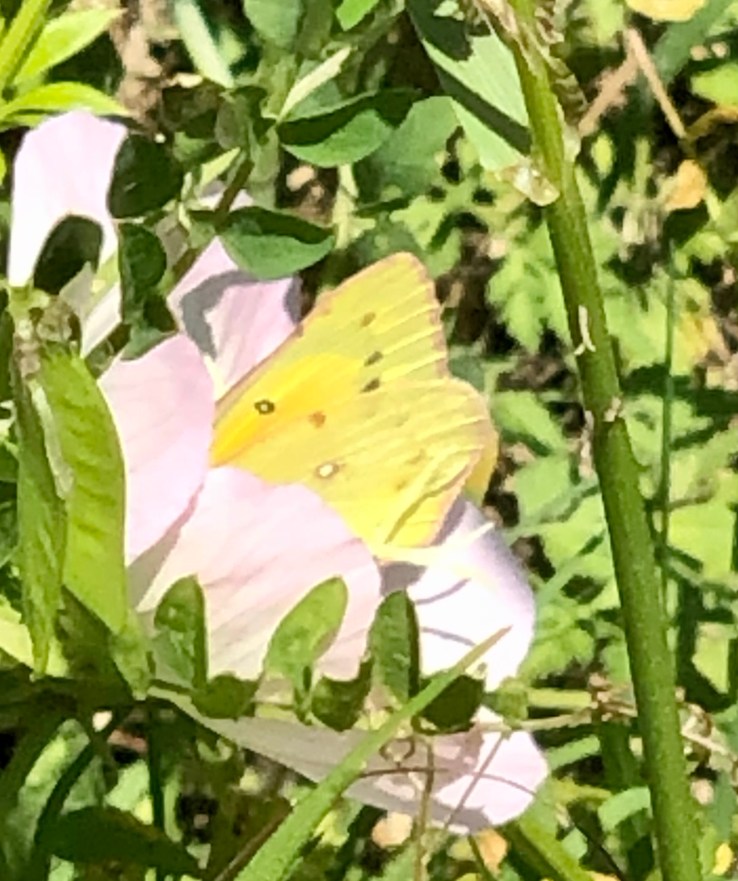
One of the things I like about being a Master Naturalist is that I have learned to be a more careful observer, wherever I go. I’m happiest that I’ve been entering what I see on our ranch into iNaturalist, because I can see when flowers bloom or go to seed every year, when butterflies arrive, etc. Today’s butterflies included these:

Even though our observations on our own property no longer are approved by the state office, I still observe for my own study and analysis. I have a project where all observations here are stored.
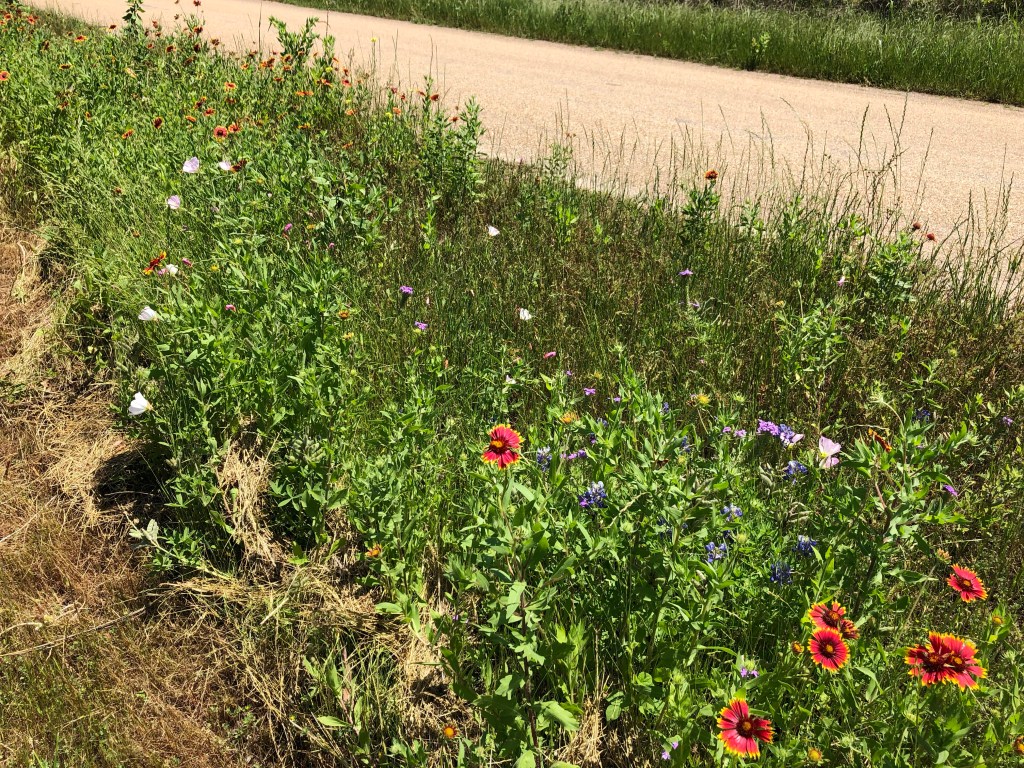
But the public right of way counts!

This year’s been pretty interesting, which shouldn’t be surprising after the weird weather. I’ve been quite surprised to see common plants, like Indian paintbrush, not as prominent, with some new plants popping up.
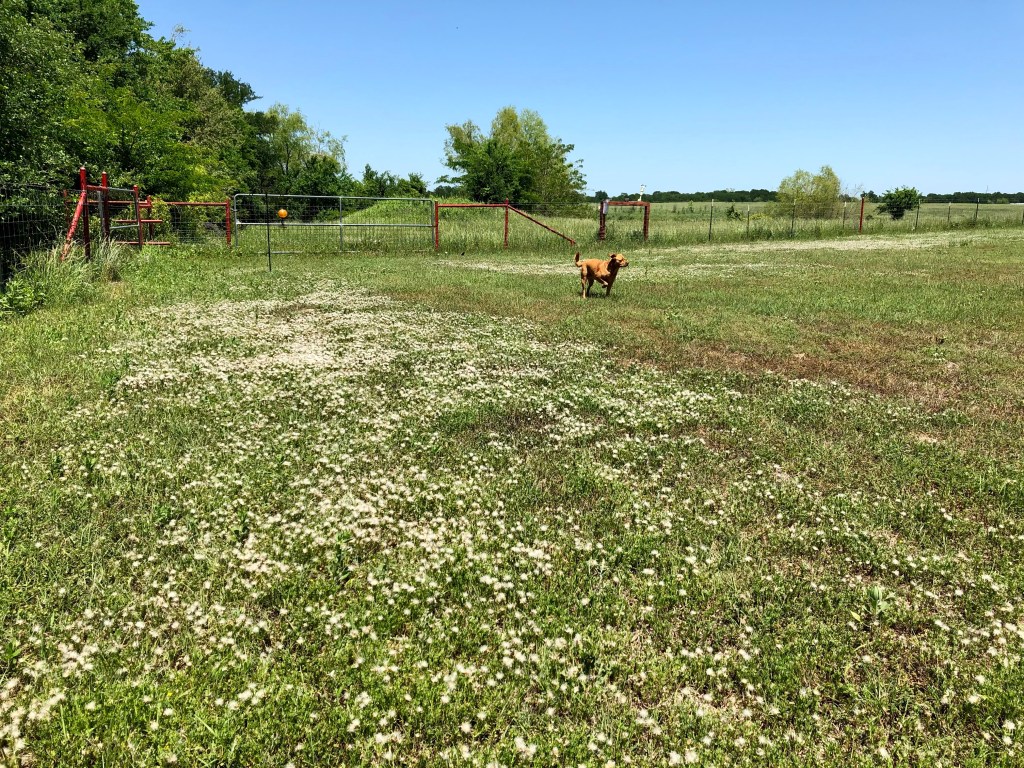
What’s this white stuff?

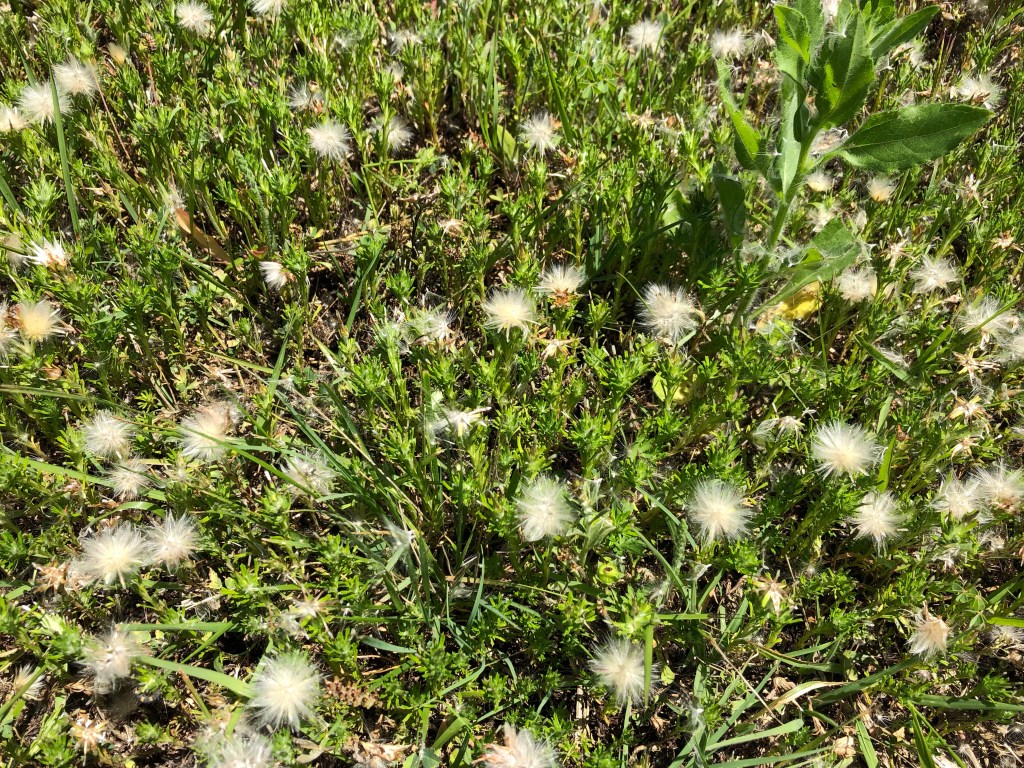
One plant we have in super abundance is this annual trampweed (Facelis retusa). It’s really pretty in early spring. Then, when it blossoms, you don’t really see the flowers, just white buds, followed by exuberant star-shaped seed heads.
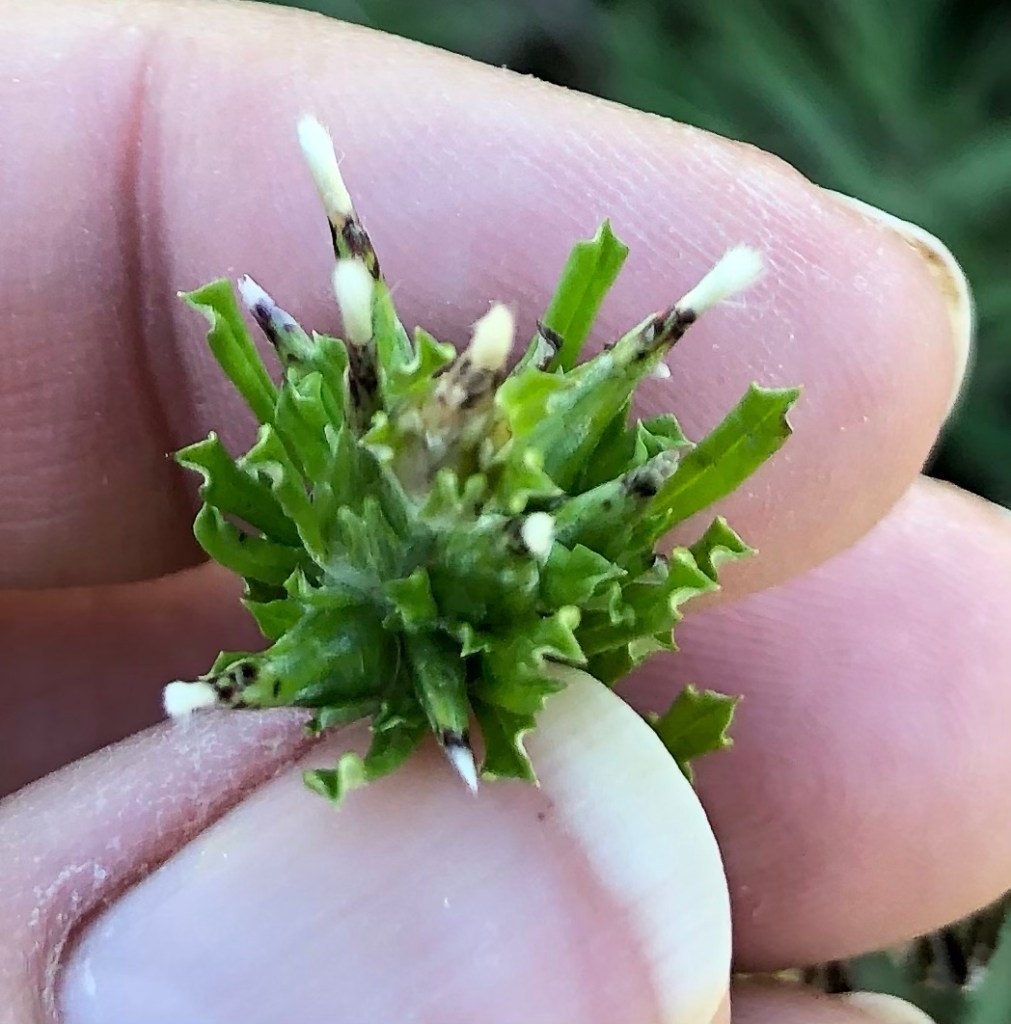
The little seed fluff sticks out and looks like a flower bud.
Here’s what the plant looks like, with leaves circling up a stem.

I’d never noticed this plant before, and it’s everywhere this year. Now it’s one of my favorites.
They look so cheerful!

Another plant I’d never noticed around here is small-flowered catchfly (Silene gallica). It’s another one of those tiny flowers from up high. At first I thought it was that chickweed or something.
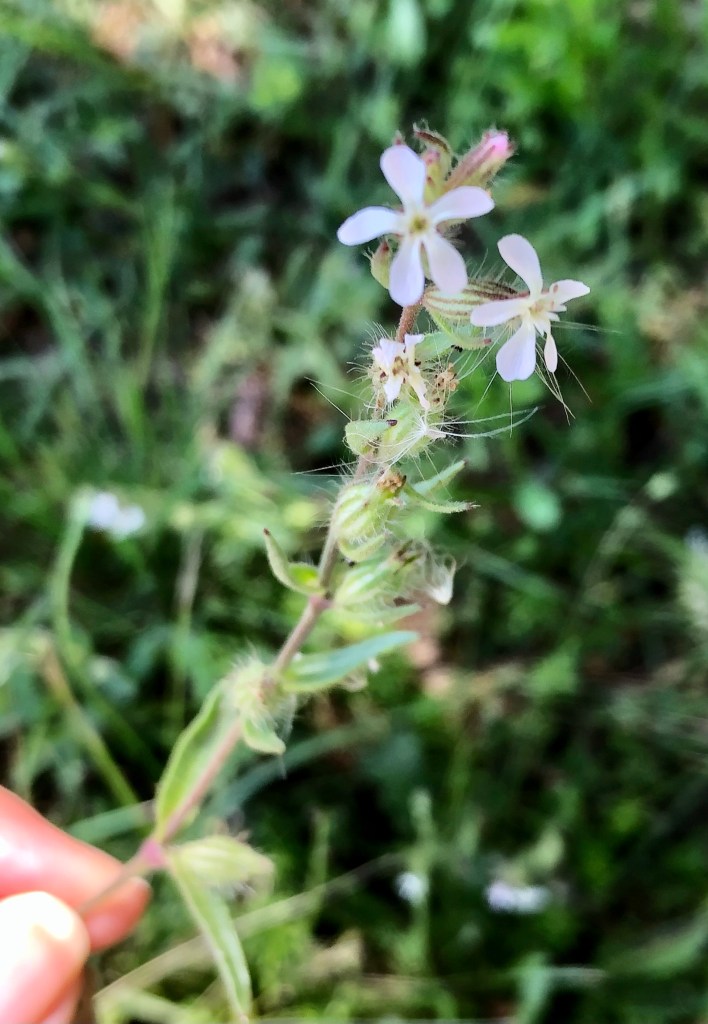
Small-flowered catchfly.

Once you touch it, though, you know it’s different. You also know how it got its name. It’s sticky! It could certainly catch a fly. You can see all the hairs in the photos.
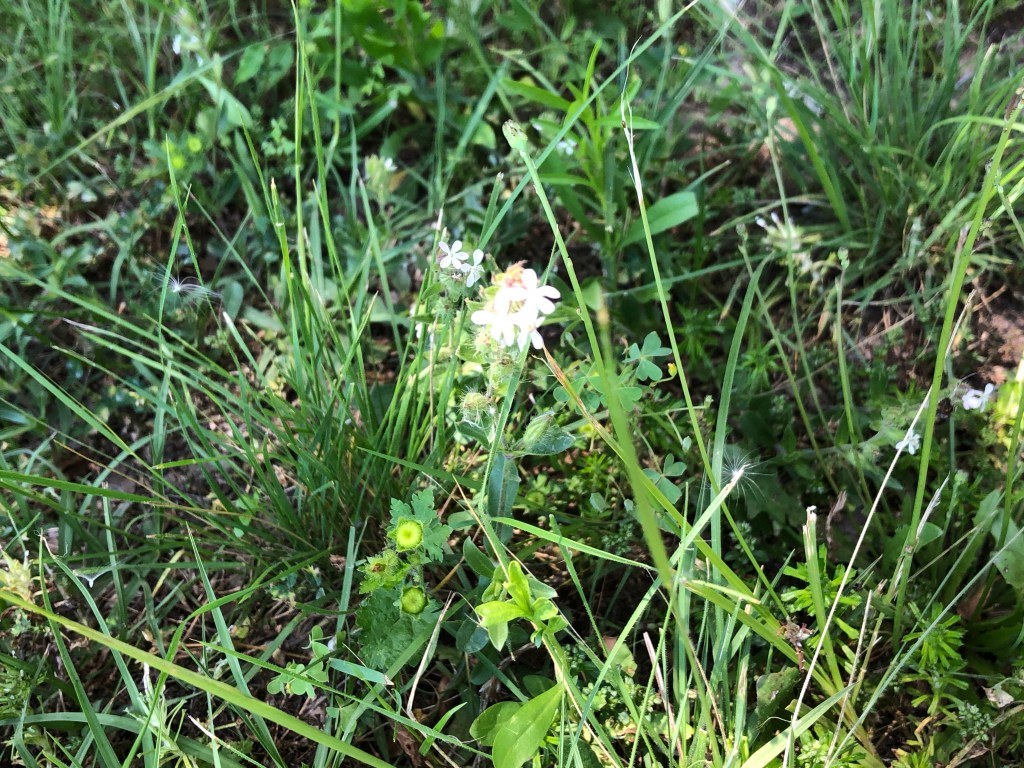
Here it is growing with some Carolina bristle marrow, trampweed

The little flowers range from pink to white. I had honestly never seen it before. Did I not notice it or did it come in with floods? Is it something that grows better after a hard freeze or two? I’m sure I just didn’t notice it, even though I’ve been trying so hard to identify everything here!

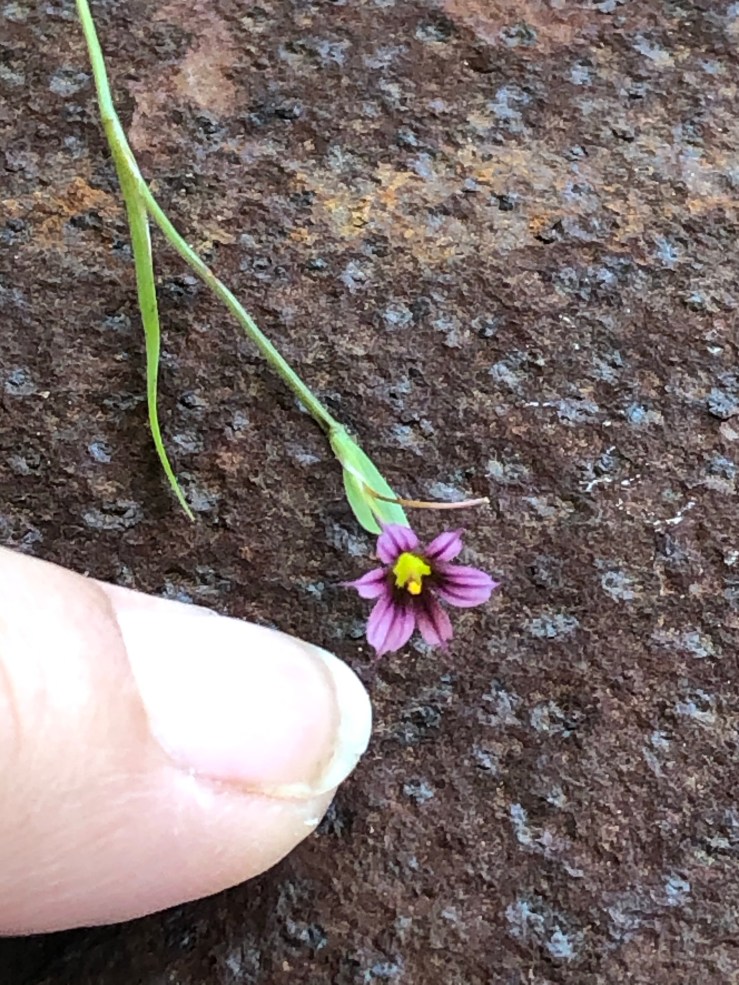
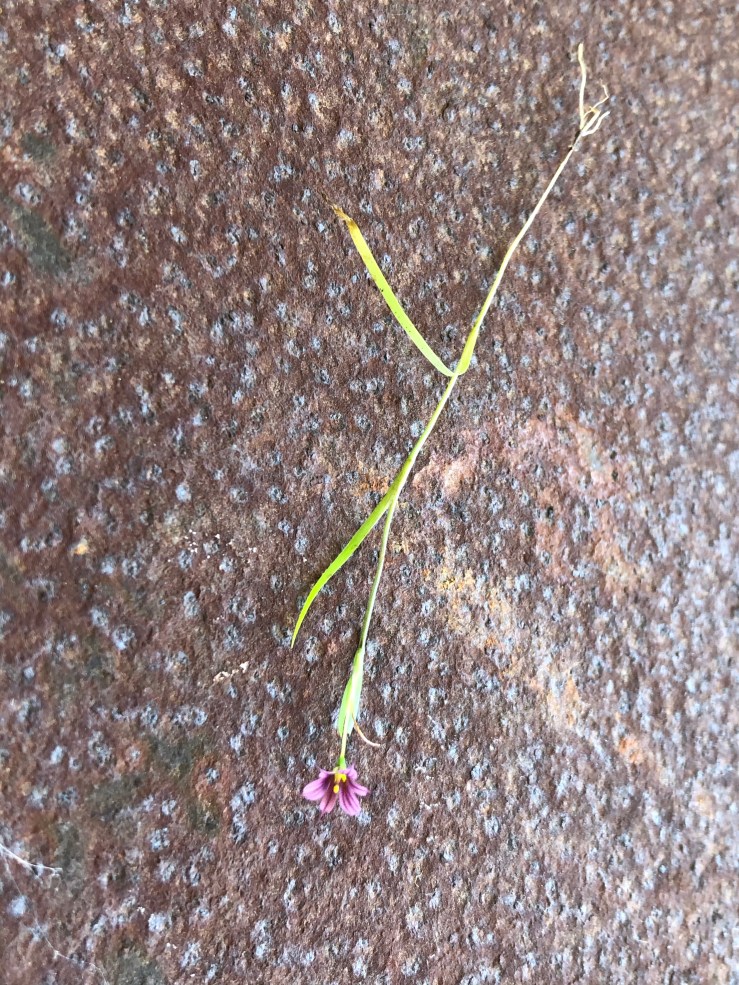
The third “new” plant I wasn’t even sure of its ID. None of the things that are suggested on iNaturalist really match the way it looks, but since I know plants can differ in color from place to place, labeled it dwarf blue-eyed grass (Sisyrinchium minus), and hooray, I was right! Linda Jo identified it for me. It’s another tiny little fellow, but it’s really pretty.
Another “new” plant really isn’t new. It’s a pink evening primrose. But I never saw one so white. I thought it was a petunia from a distance.
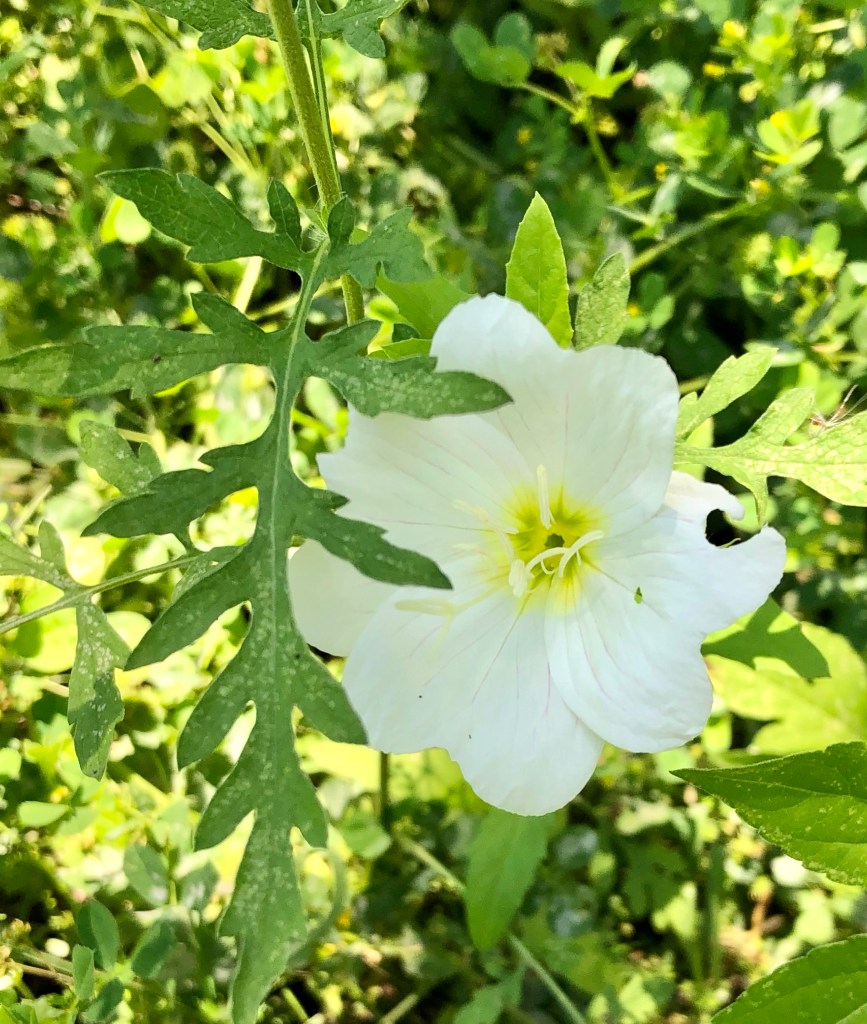
That’s quite a contrast to the usual ones, though they do come in many shades of pink.
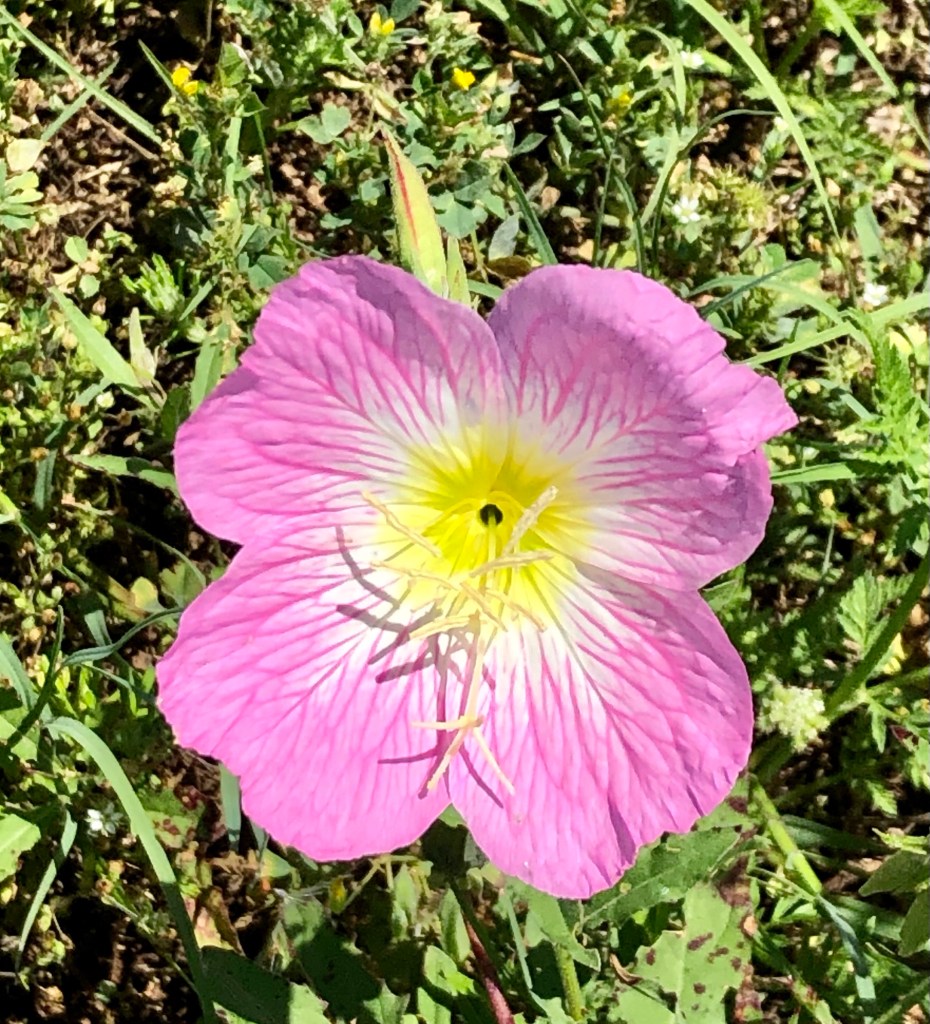
One of the really pink ones. I know we’ve seen them a lot, but still, they’re gorgeous.
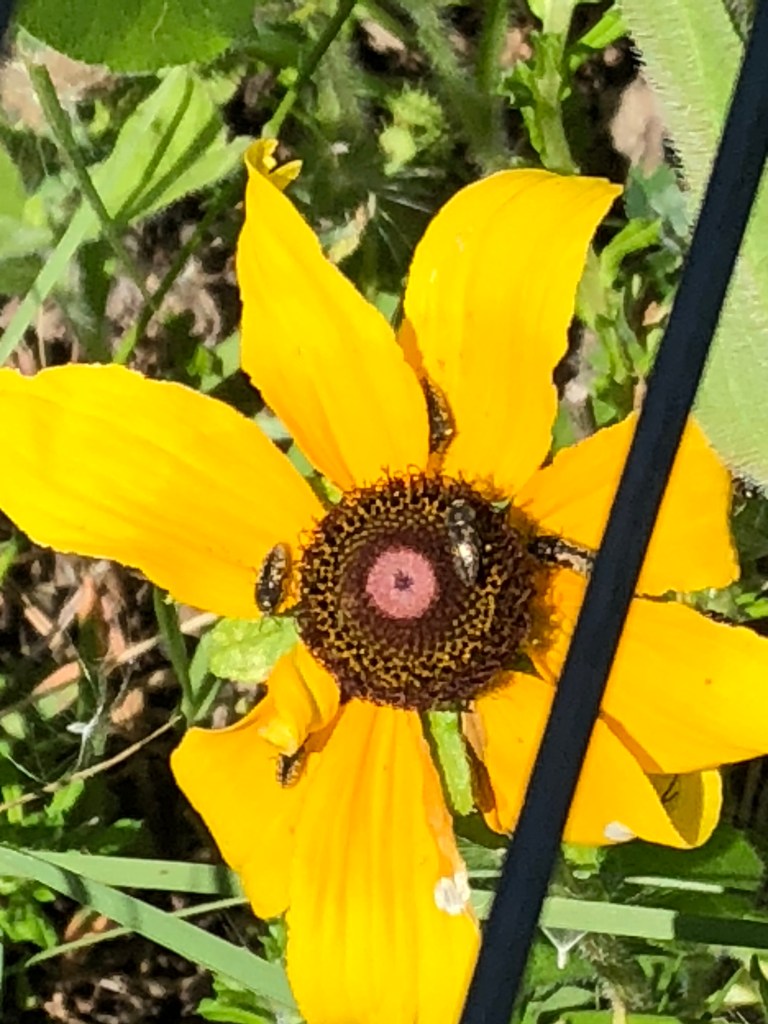
Look at all the bugs on this Black-eyed Susans!

There, I hope you’ve enjoyed a small selection of the fun discoveries I make right on the Hermits’ Rest Ranch. I’m so glad I’ve learned so much about nature in this one special place, thanks to joining the Texas Master Naturalist program.

Please join me, Donna, Pamela, Carolyn, and the others who have shared the nature where they live! Send me your pictures and some words, and let’s share the beauty in our part of the state.
Belly Hunting

by Carolyn Henderson

“Belly Hunting” for teeny, tiny flowers is hard on the leg muscles. On Sunday, I went to Wilson Ledbetter Park to take pictures to post to the Great Texas Wildlife Trails (GTWT) Adopt-a-Loop project in iNaturalist. It was a follow-up to pictures posted in February before the Great Freeze of 2021. I discovered that the park is covered in teeny, tiny flowers, and plenty of larger one, too. 

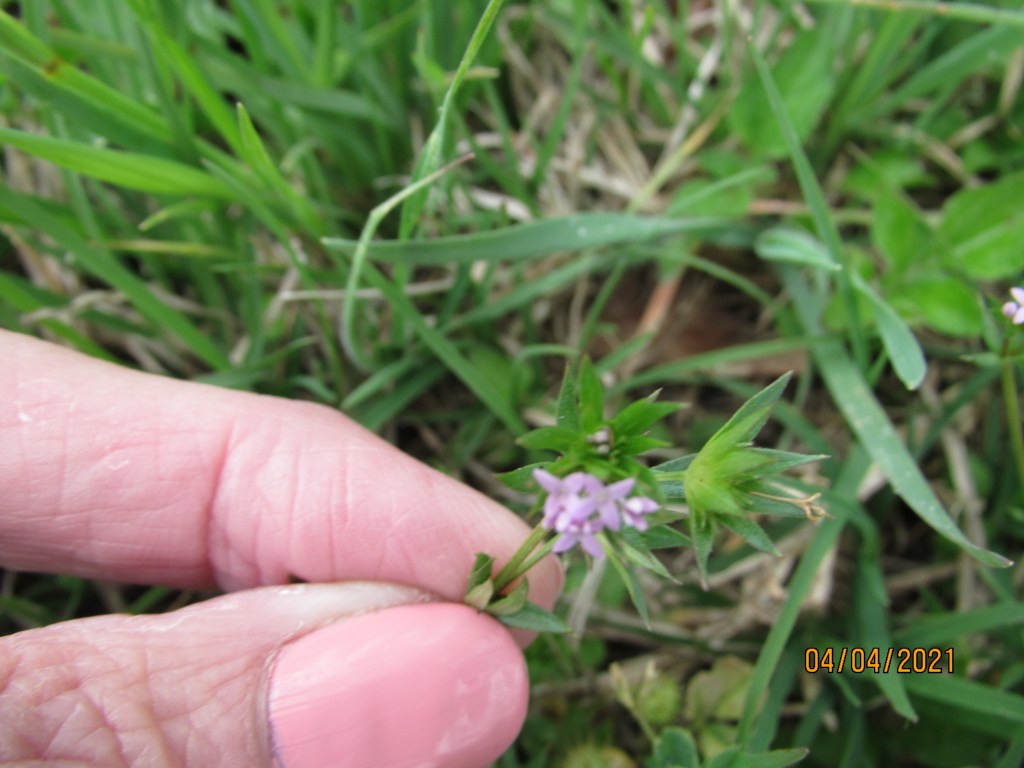
Field madder

If you attended the March meeting of ECRMN, you remember that Monique Reed, retired Botanist for the state, called it belly hunting because it requires getting down on their level which is really low. I opted for a lot of squatting trying to stay out of the way of the ants. 

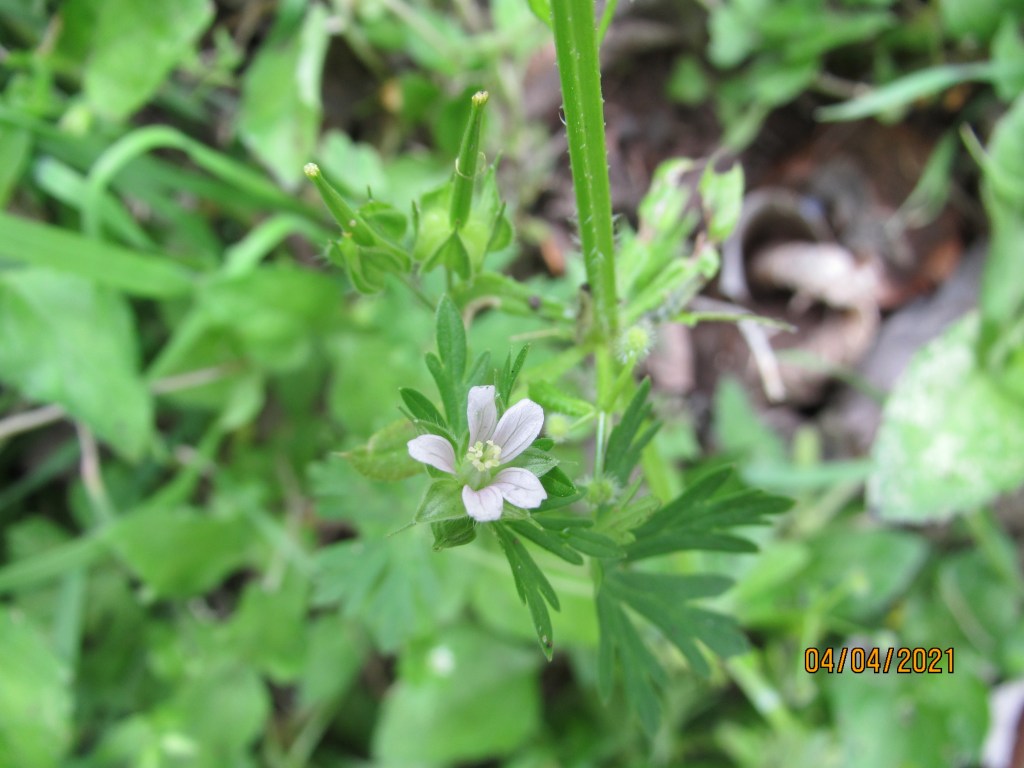
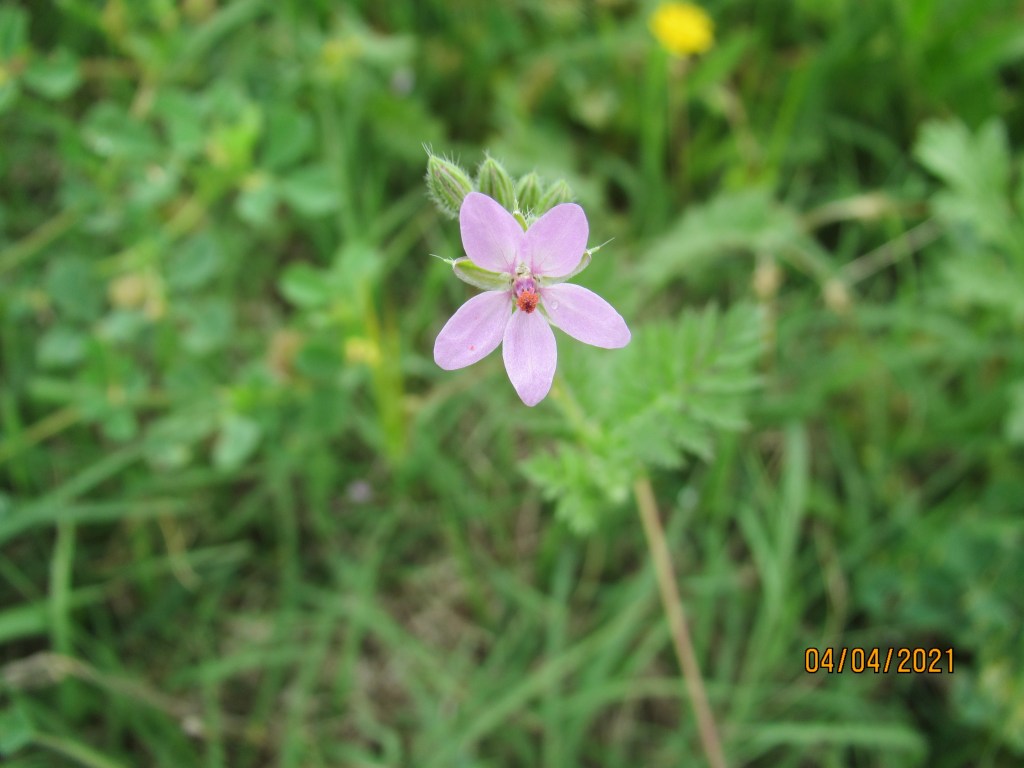
Common stork’s bill

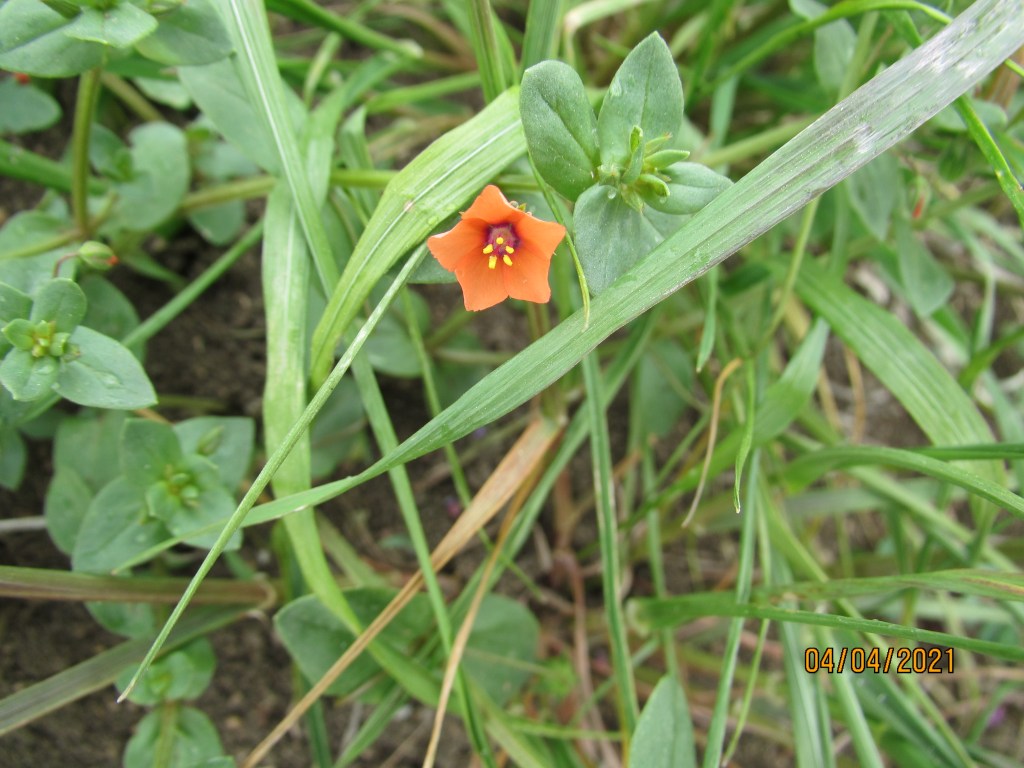
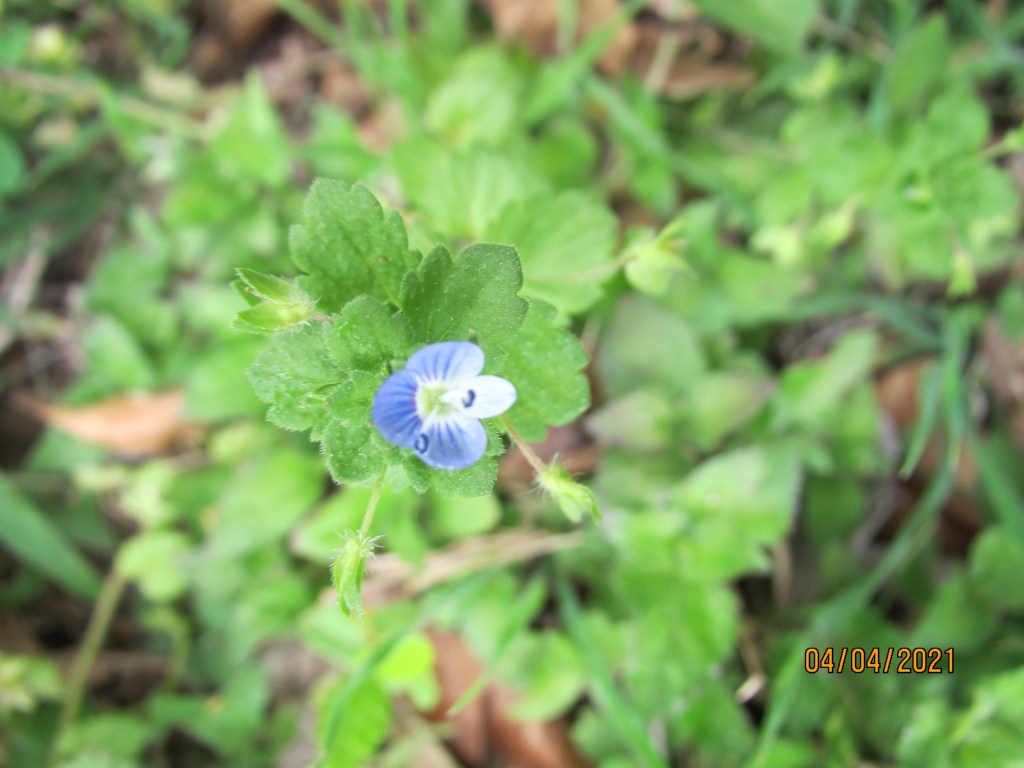
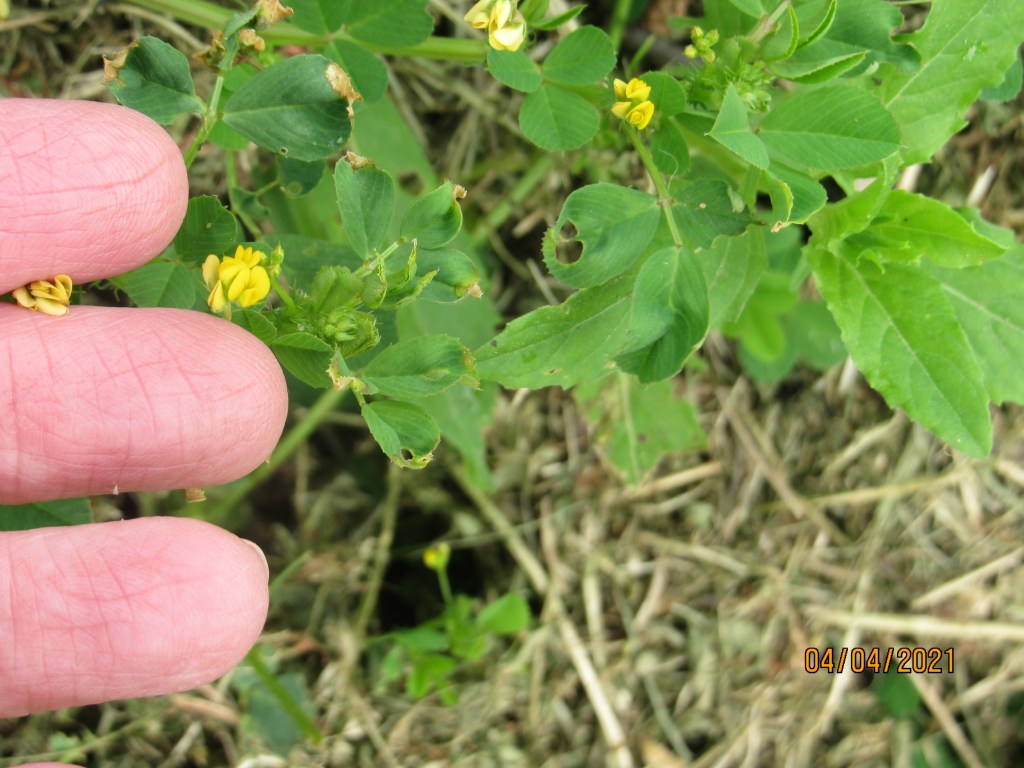
Some of the teeny flowers I encountered were Field Madder, Common Stork’s-bill (very pretty flower), Bird’s-eye Speedwell in abundance, Black Medick, Scarlet Pimpernel, and Carolina Crane’s-bill. It isn’t difficult to find them because they are currently abundant in Wilson Ledbetter Park. I have included pictures of these flowers.  Often, I came across patches with five or six of these in a space about the size of a square yard. I didn’t see any bees out there, which is a little worrisome, but there were several types of butterflies, flies and ants. 

Scarlet pimpernel

I also recorded the larger flowers – which don’t require frequent squatting. I challenge you to locate Grape Hyacinth, Texas Baby Blue Eyes (some of these are twice the normal size that I’ve always found), Poppy “Winecup” Mallow, Cretanweed (they have darkened lines at the edges of the petals but look similar to dandelions), two different types of Blue-eyed Grass, Fine-leaf Fournerved Daisy, Floating Primrose Willow, and Canadian Meadow Garlic. Here’s a hint: the last two are located near/in the lake/pond. Some are on the fence by the cemetery. 

Bird’s-eye speedwell

If you’re active in iNaturalist, they’re easy to get identified. If you’re not, you can sign up. It’s free. Enjoy a walk in the park surrounded by many types of flowers, birds and butterflies. I will buy lunch for the first person to find all those flowers at Wilson Ledbetter who posts the pictures in a blog here. I am not liable for any bee stings – in case they show up. 

Carolina crane’s bill

Happy belly hunting.

Black meddick, not to be confused with bur clover. But it’s easy to do so.

Cedar Park in Milam County

by Linda Jo Conn

Driving past the roadside park on Hwy 79 between Milano and Gause on my way to Sugarloaf Mountain Bridge, I told myself that one of these days I was going to stop and investigate the place. So, on the way home, I stopped and looked around. 

It is a typical roadside park. Surrounded on three sides by a chain link fence supporting several species of vines, it has a circular drive, the usual brick and cement tables and benches, and some large cedar trees.

Later, when using Google Maps to enter the GPS location for my observations into the iNaturalist.org website, I discovered that this small roadside park actually has a name:  Cedar Park. Not surprising. Cedar trees are the dominant trees.

Bird’s-eye speedwell.

Although the area is closely mown, there were a few flowers to observe. I saw my first Bird’s-eye Speedwell (Veronica persica) and Field Madder (Sherardia arvensis) blossoms of the season. There were the usual roadside park plants of Straggler Daisies (Calyptocarpus vialis), Crow Poison (Nothoscordum bivalve) and Green Poinsettia (Euphorbia dentata).  

Climbing the chain link fence were common vining plants:  Mustang Grapes (Vitis mustangensis), Carolina Snailseed (Cocculus carolinus), and Poison Ivy (Toxicodendron radicans). 

The most memorable plant of the visit stayed with me a while. The park must have been covered with grass burrs (Cenchrus sp.).  You may call them sandburs or stickers. Not noticeable in the short vegetation while I was walking about, they showed up as I was about to get into my truck. There must have been hundreds of them stuck to my jeans and to the tops and soles of my tennis shoes! It took a while to remove them.

Grass burs. Not fun.

Cedar Park is a shady, convenient place to stop on the highway and was visited by several travelers while I was there. Fortunately none had children or pets wanting to romp on the grounds. That would have been a memorable stop for them also. Ouch!

Native Fall bloomers and Catatonic Carpenter Bees

(or another day at the Bees and Birds Wildscape)

By Carolyn Henderson

A sea of color is in bloom at the Milam Wildscape project at Bird and Bee Farm outside of Milano. Most of the blooms are courtesy of native Texas plants. On a follow-up trip on Saturday, October 24, to check on the Malabar Spinach vine I am trying to keep trimmed, I was met with a surprise of different colors and some catatonic bees.

There were many shades of purple, pink, orange, yellow, red and white from a variety of plants still thriving.

The most surprising was a Cypress Vine (below) that had sprung up, wrapped itself around the awning with the spinach, climbed about four feet and proceeded to bloom since I was last at the site. 

Cypress Vine, growing like crazy

There were also Lavender Leaf Sage, American asters, Southwestern Cosmos and some pink flowering vines full of catatonic carpenter bees.

The carpenter bees had attached themselves to a few different flowers but mostly to this plentiful pink flowered vine (Suna says: coral bells Antighonon letopus). They seemed to be in a state of hibernation – probably temporary. They could be touched with almost indiscernible movement from them. (I thought they were bumble bees until I put them on iNaturalist.)

Also in bloom and growing were goldshower, cut-leaf crane’s-bill, Indian blanket, white and pink roses, and a frilly, white shrub-like flower. A pair of Gulf Fritillary were also weathering the cold front on a tropical sage.

If that’s not enough, a great group of volunteers were planting more including a couple of trees.  (Pictured l to r : Carolyn Henderson, Pamela Neeley, Scott Berger, Liz Lewis, Catherine Johnson, and Donna Lewis (kneeling). Most of the foliage is putting out “babies”, and the “babies” are available for adoption to be planted at your place. For information on that, contact Catherine. You also can volunteer to help grow the wildscape by contacting her.

Volunteers, plus that good kitty.

What’s Blooming?

This is the time of year when everything is crispy and shriveled. But still, you can see life moving along, if you look carefully.

After talking to Linda Jo Conn last week about how many shriveled images were being uploaded to iNaturalist now, I got curious as to what floral beauty I could find at my place, the Hermits’ Rest Ranch.

So, my dogs and I set out to see what we could find. I looked in a meadow, a woodland border, and a riparian area. The pond still has plenty of marsh marigolds in it, but I can’t safely get to them for photos.

You can see how thin the leaves are on the broomweed. The stems are a nice and bright green, which looks good against all the brown foliage everywhere.

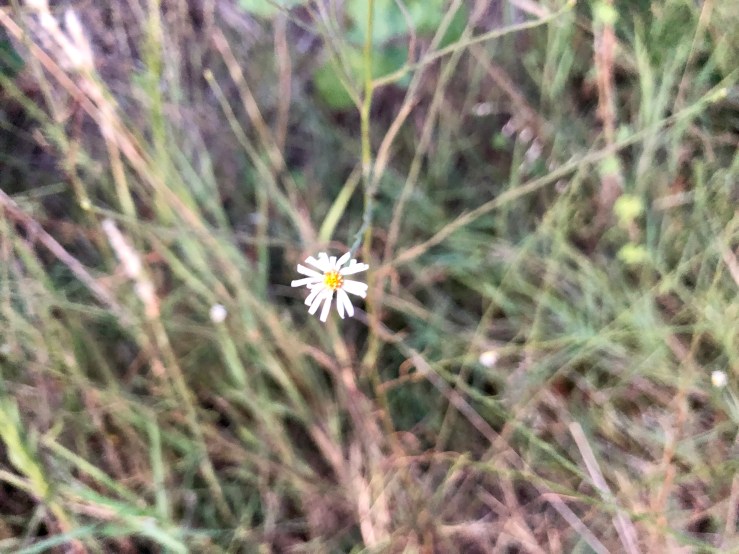
Most of the flowering plants right now seem to have two characteristics: very few or very thin leaves and small blossoms. The two most common examples are the prairie broomweed and yard aster, both of which look practically leafless and have tiny flowers.

These little asters are pale pinkish purple and widely scattered on the plant.
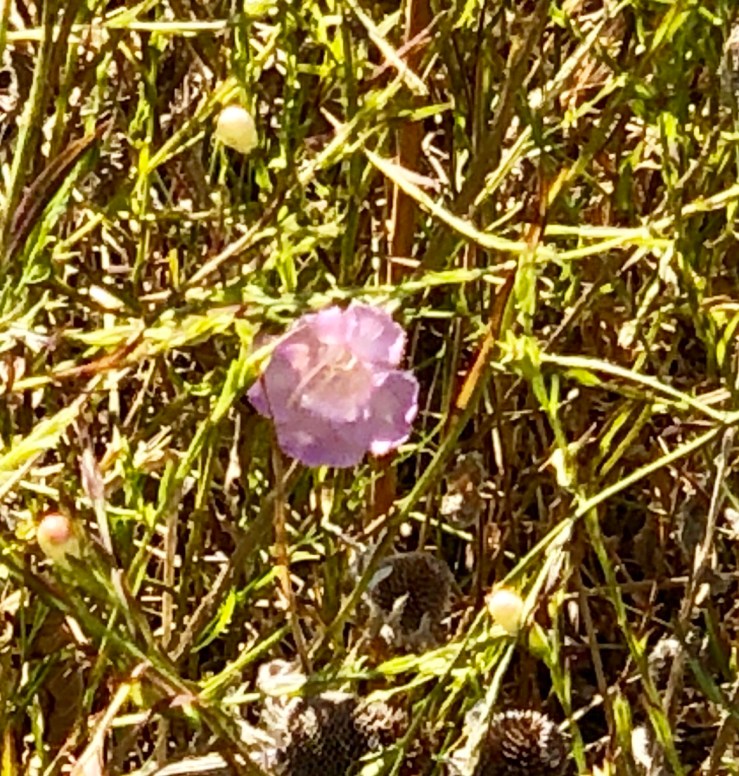
I had to take this over a fence, so it’s not frat. It’s hiding among the seedheads of the spring flowers.

In slightly shadier areas I saw a few rather tired looking prairie false foxgloves, a flower I’ve always enjoyed running into. They also have sparsely flowered plants with few leaves. I am guessing all three of these plants are high on drought tolerance lists.

I know the Mexican ruellia that’s still hanging on does well in droughts, because it did well at my Austin house, too, throwing those seeds out all over my xeriscaped garden. They are hard to get rid of, which for the most part is a feature I value a lot in a plant.

This is a “Mexican petunia” blossom that had just been expelled from the plant.

Other plants I saw were turkey tangle frogfruit, which has been going strong all year, and a lot of pretty grasses. Since I stink at grass ID, I just look at the fluffy ones, watch the ones that blow in the wind wander around the area, and admire the dignified nodding stalks.

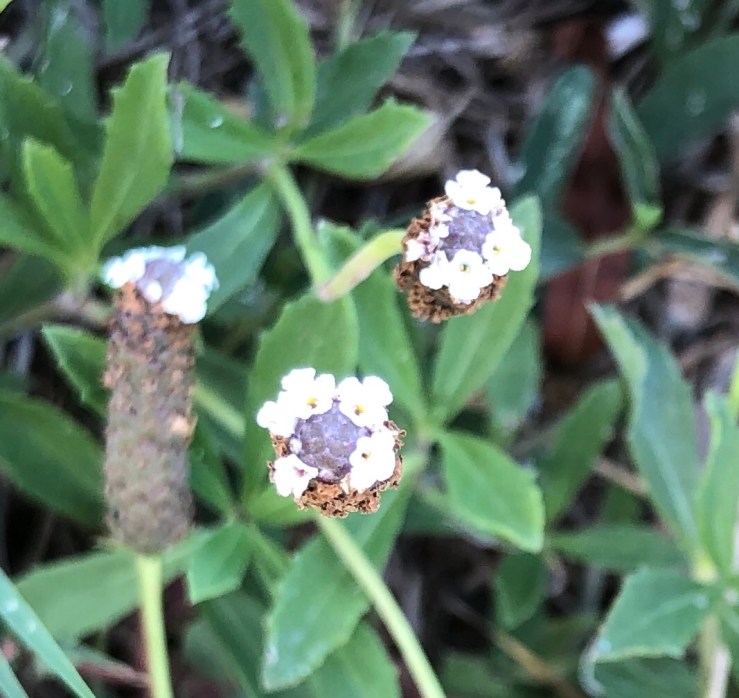
My mother called these matchstick flowers. I thought they were really matches and was apprehensive around them for a few years as a child.

I know others in our Chapter have been out looking for flowers, such as Conni Jo, who found a lot of flowers to photograph for the wilfdlower brochure we’re putting together. Have any of you others seen any stalwart bloomers out there braving the heat and dryness? Let us know. Share some pictures!