
by Carolyn Henderson
The bi-annual trip of the El Camino Real chapter – Texas Master Naturalist to the Purple Martin conservation project of Mike McCormick was both awe inspiring and amusing. McCormick had hundreds of Purple Martins making his place home for the nesting season while a notable number of dumped roosters were fighting it out on the ground.

McCormick, who started the Purple Martin conservation project at his place south of Buckholts at least 40 years ago, estimated somewhere between 800 to 1,000 Martins in residence this year. It is nearly triple what has come around for the last two years. He attributes it to milder weather so far this year.

He has a few hundred Purple Martin houses set up. They are particular about their “homes.” They like them to be a certain level above the ground away from trees and buildings. They need a pond or stream in the near vicinity. They also do their hunting of insects at a high altitude, although they have been known to hunt over ponds and even on the ground if the weather is bad.

McCormick will walk around under the many houses to get them to come out then the sky looks like it’s covered in Martins. Many are pairing off. Once the babies are hatched, they take about a month before they leave the nest. By early fall, these Martins have flown to Austin, where thousands meet up to then fly to Brazil or other points south for the winter.
Purple Martins’ primary natural competitors are European Starlings, which are invasive to the USA, and sparrows, many of them also invasive. They take over their houses. McCormick has styled a large cage to catch those competitors in and remove them. Human expansion is also a problem for martins wanting to nest in natural spots.

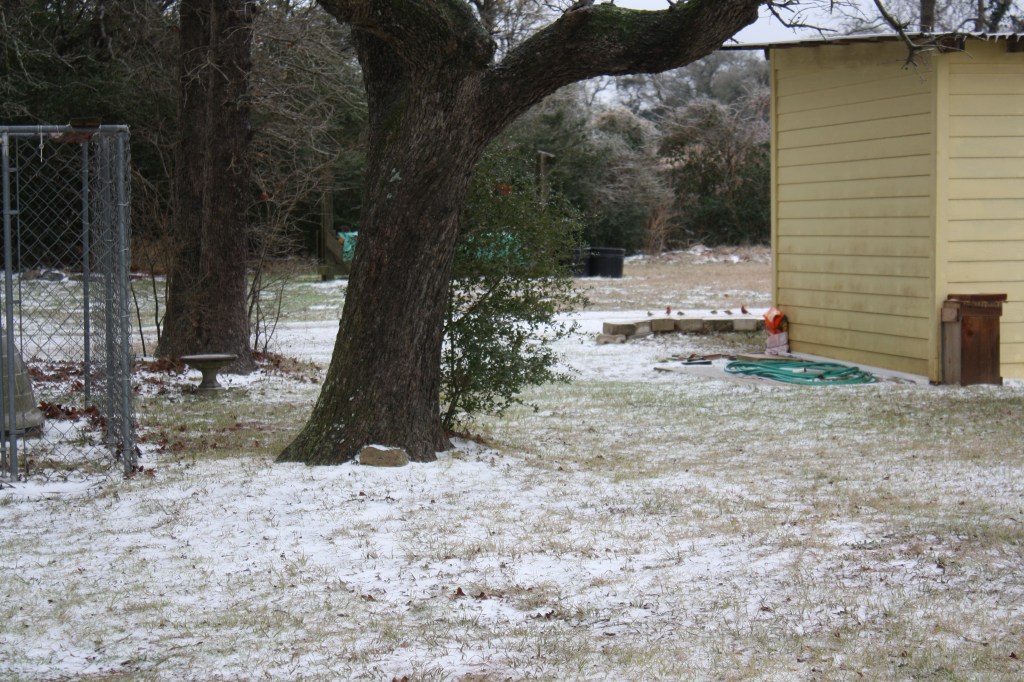
McCormick and his sister have added a nature trail on the site to let visitors see the natural habitat there. They also have created a sort of refuge for other native bids and those ever-invasive non-natives. They use a small corral that used to be used for training horses. They have a birdbath, several feeding sites, and a few bird houses.

He puts birdseed on the tops of all the fence posts, which brings Cardinals, Red-bellied Woodpeckers, Brown-headed Cowbirds, and and few other species to the little refuge.

The piece de resistance is new bathroom facilities with running water and full plumbing.

To top it all off, they had at least 15 (my sort-of count) roosters dumped on their place. I’m used to dogs and cats being dumped – but not roosters. They were in a fighting mood while we were there.


It’s worth a trip to see all the sites and have McCormick impart much knowledge about Purple Martins.



 Nature Along the El Camino Real