Things Flying Over My Head

by Sue Ann Kendall

This summer hasn’t been as bad in the heat and rain department as last summer, so I’m not complaining one bit. But there sure have been some interesting developments in the sky, many directly over my head.

hawk
Some overhead things are cool, like this Red-tailed Hawk I got to listen to yesterday.

I’ll start with the most interesting one. For the past week or two I’d been noticing a lot of honeybees around my legs. It seemed like the earth was buzzing. Upon closer examination, I saw dozens of bees crawling on the tiny blossoms of the grass (I think it’s Dallis grass) that is blooming now. The bees were all very busy, zipping from flower to flower (not leisurely sipping as they usually do), and they were loaded with pollen.

This went on for a few days. Yesterday, there was no buzzing as I walked along the field in my daily bird-watching patrol. Then, late in the afternoon I was over by the trees listening to a Yellow-billed Cuckoo when I heard something that sounded like one of those annoying drones people fly these days. I looked up and didn’t see a drone. I saw a large mass of tiny things moving along at a rapid clip. It was hundreds and hundreds of bees swarming. I guess they were moving on to better pastures. I’m not sure where their hive was before, because I hadn’t heard one in a couple of years. I hope they find a nice new dead tree!

FAKE NEWS! The blog software generated this image when I asked for “swarm of flying bees.” I don’t think they actually swarm in a giant ball.

Moving along, I’ve also been dealing with birds overhead, specifically the beautiful but omnipresent Barn Swallows. Now, normally they hang out on our porches, building mud nests, raising babies and pooping. They also eat numerous insects, so they get to stay (also it’s ILLEGAL to mess with a nest of wild birds; you can ask Mike Mitchell about it if you don’t believe me). We coexist just fine, looking into or out of the windows at each other, and enjoying the swimming pool area.

Swallows on the pond.

However, lately, the little darlings have not been at all happy with me. They aren’t nesting anymore, just flying around the ponds and in the air catching food. They are always there, and for some reason they resent my presence. When I go for my morning or afternoon walks, I often hear a very loud CHIRP, with a Doppler effect as the chirper moves away. The swallows ambush me from behind, for the most part, but occasionally they fly right at me and veer off just before they make contact with my head.

There are so many!

I have absolutely no clue as to why they are dive-bombing me. I’ve had Mockingbirds and Red-winged Blackbirds do this when they are nesting nearby. But, hey, do they think I want to home in on their mosquitos?

Creepy? Why, yes, it is. Never trust AI to draw an insect. Or a horse. They always have five legs.

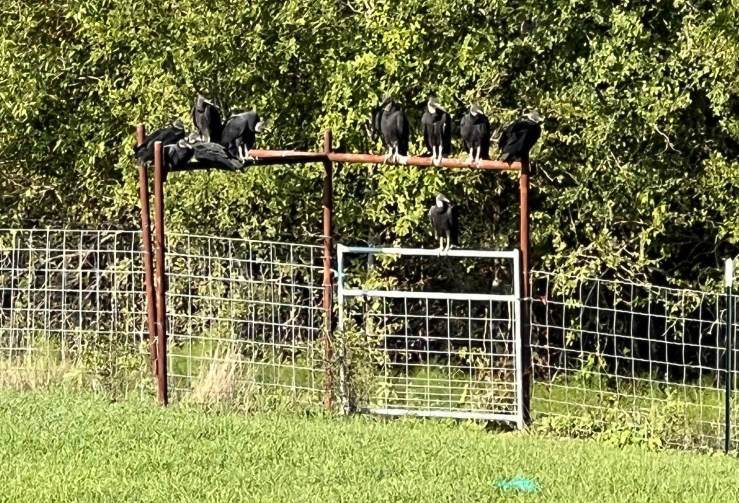
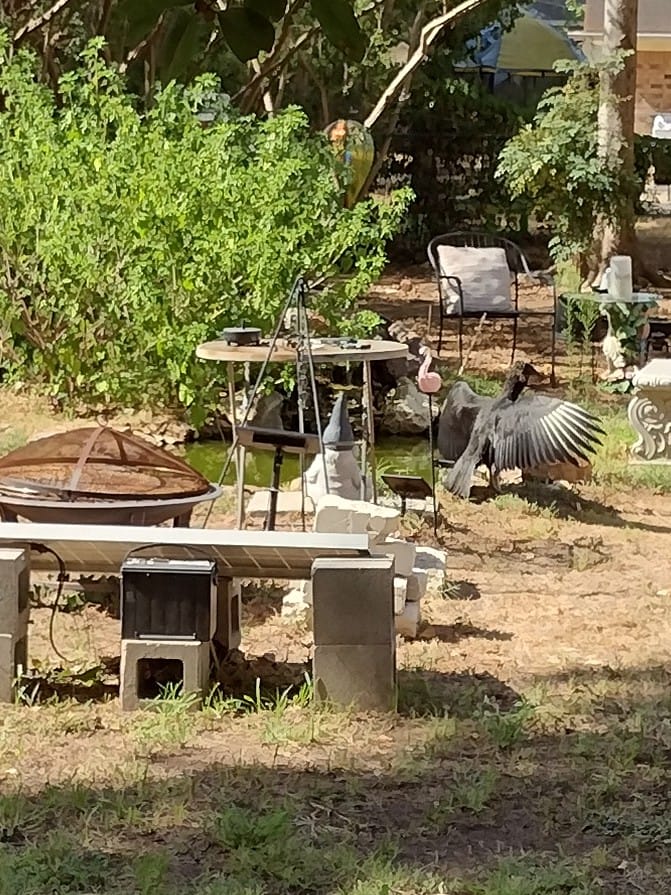
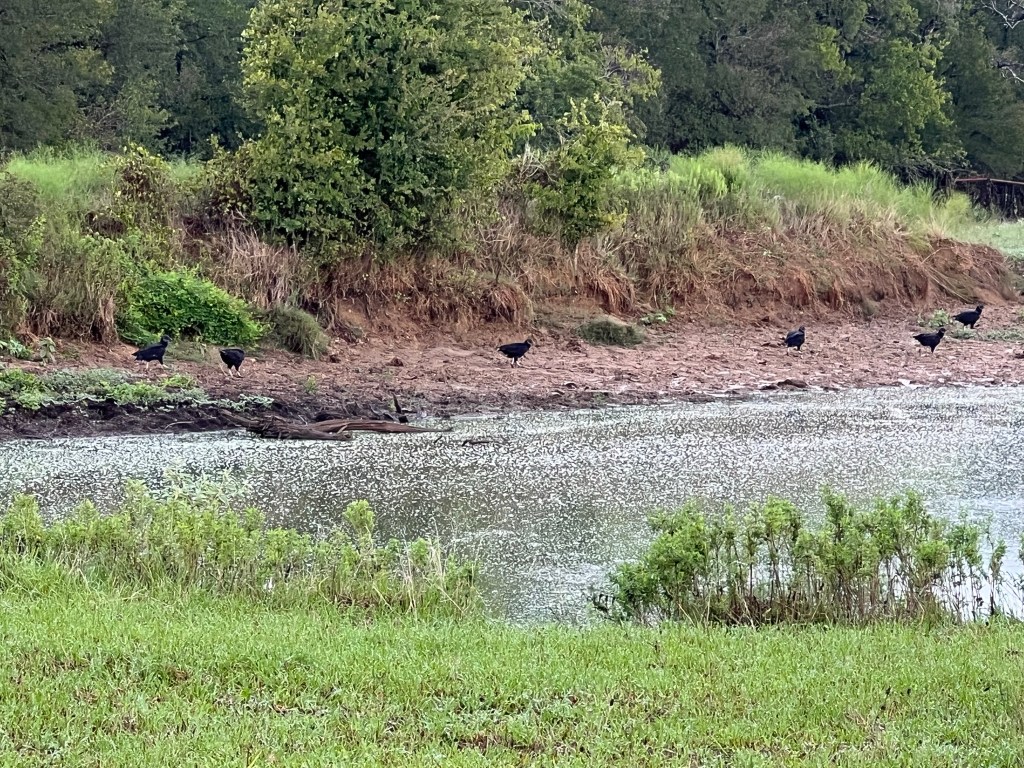
Other things in the sky have been more benign. I was a bit surprised to see both Black and Turkey Vultures in the air and in my trees until I realized the Mighty Hunter (Goldie the Great Dane) had eliminated yet another armadillo that had wandered into the fenced-in area. I wish they’d read my signs that say “Armadillos and Possums: Keep out! Killer Dog! This means YOU!”

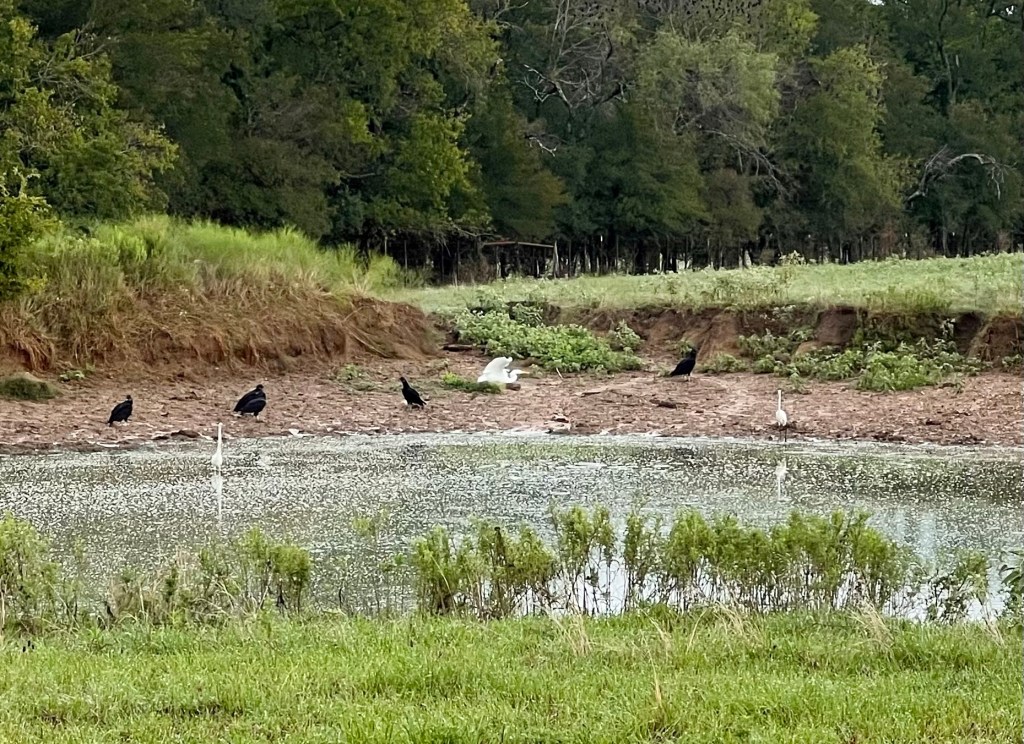
Other flying friends include the usual Green Herons, Great Blue Herons, and Great Egrets, along with some hardy butterflies and a smaller-than-usual number of dragonflies. I’m going to pretend the flying Differential grasshoppers don’t exist.

Yep, the skies around here are busy. Always look up in case bees or swallows are coming for you!

It looks so peaceful out there…but it’s NOT!

A Red-headed Visitor

by Donna Lewis

Right now, many birds are migrating South for the winter season.

Included in this very large group are the vultures, our friends who clean up decaying meat so we don’t have to. They are built just for this specific task. Lucky them.

We have two species of vultures that are commonly seen in Texas, the black vulture and the turkey vulture.

Vultures are BIG. They have a wingspan of six feet.  When you see them up close, you’ll know what I mean.

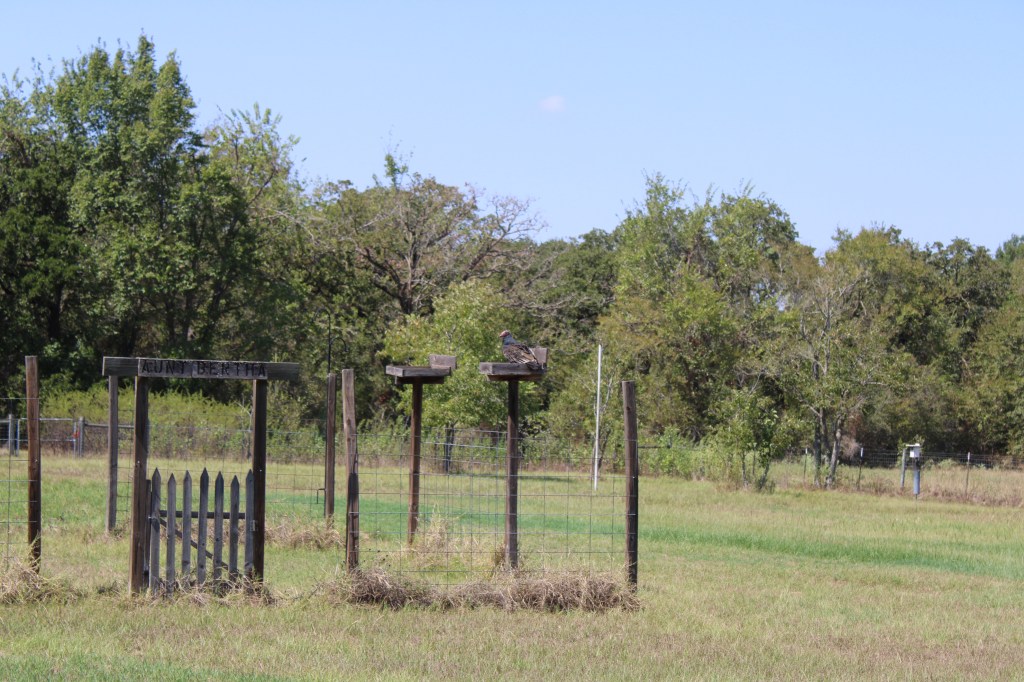
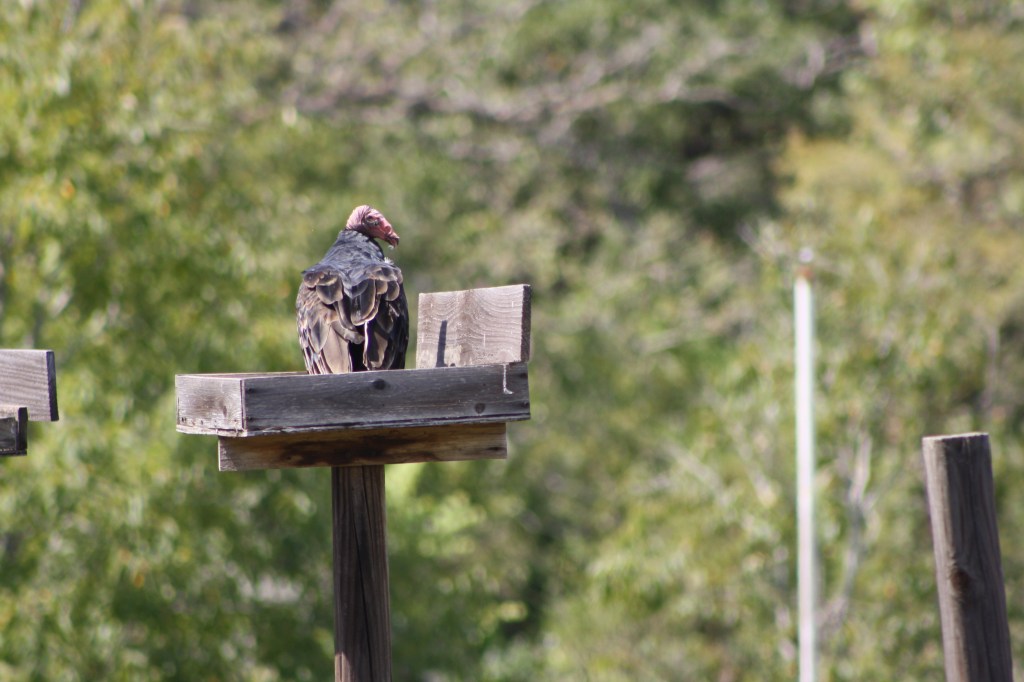
Yesterday, a turkey vulture landed on one of my platform feeders that I use for oyster shells for my purple martins.  A few other birds also like the shells for grit.

I put these structures in my bird area where I also feed bluebirds mealworms.

This guy sat there in the sun and heat for 5 hours. By now I am thinking that something is wrong. It’s 3:00 pm.  It should not normally do that.

I walked out to see if it would fly away, but it let me get close enough that I could have touched it.  I didn’t touch it of course; I value my face.

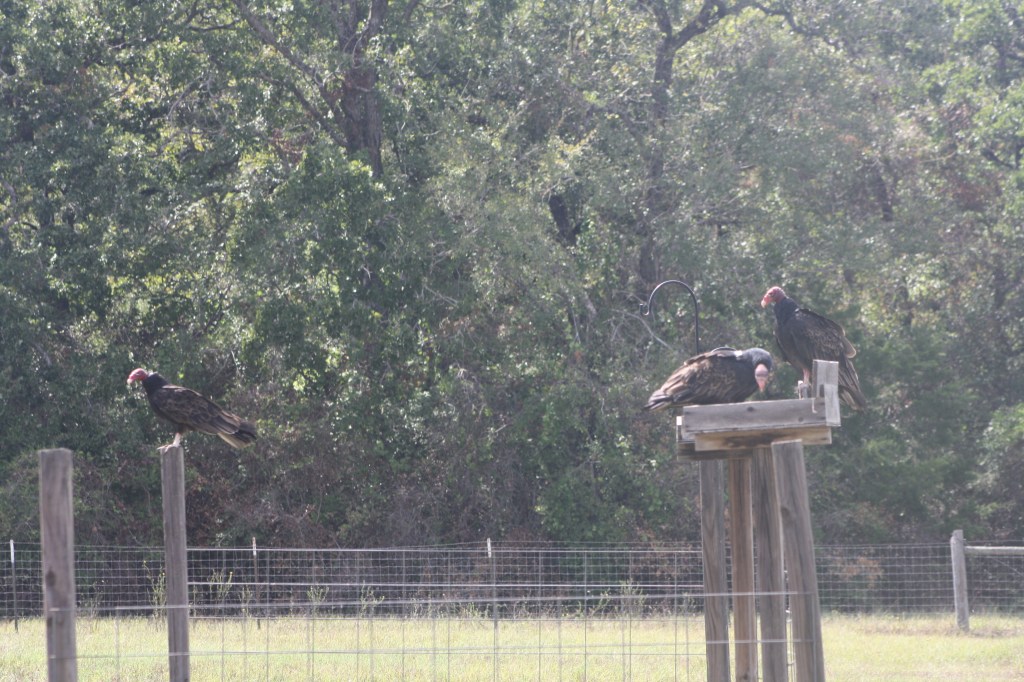
While it sat there, two of its friends came down to either encourage him or eat him.

 I called two rehabbers about it. I thought it might need medical help. They agreed.

I also called the local game warden but did not hear back from him.

So, I decided to call my neighbor to see if she would help me capture it, so I could transport it to the rehabber in College Station Texas.

I got a large towel, one of my largest dog crates, and some welding gloves together.

The rehabbers also warned me of something disgusting that vultures do when they are trapped and you try to move – they vomit on you! And it stinks big time.
My friend and I were careful to approach it from the rear using a ladder.

It just sat there and just before I was about to throw the towel over it, it flew off into a tree about twenty high near our woods.

Its wings look OK, but I feel it was sick. It should have flown up and away.

We could not help it now.  This morning I could not find it.  

I hope it was able to go on somehow and migrate with its friends.

I did what I could. I wish it fair skies and long life.

As goes the saying from you know who…” Live long and prosper.”

Learning about Vultures at the Chapter Meeting and Beyond

by Sue Ann Kendall

The September Chapter Meeting presentation for El Camino Real Master Naturalist was by Debbi Sorenson, who has been observing vultures on her property for years and decided to do some research on these fascinating scavengers.

Debbi listens to questions and comments during her presentation

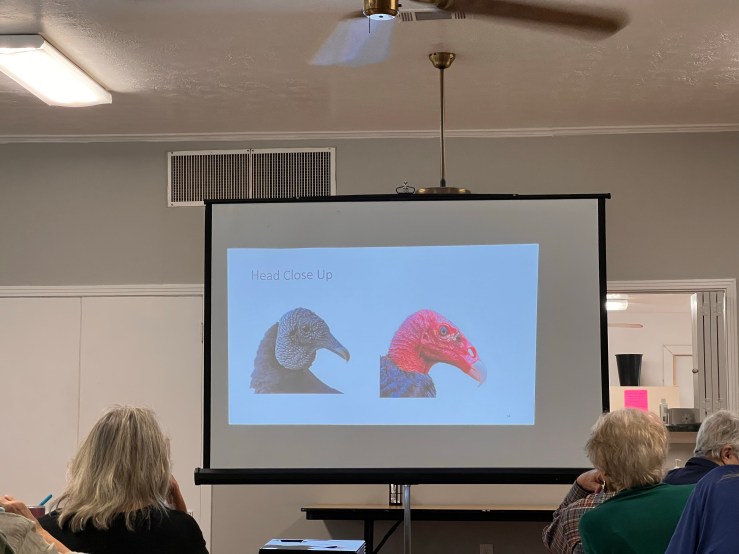
We learned how to distinguish our two resident vultures, the turkey vulture and the black vulture from each other. The easiest way is to look at their heads. Turkey vultures have red heads and black vultures have black heads. In flight, turkey vultures have white on their lower wings, while black vultures just have white “fingers” or wing-tips. The turkey vultures are also a little larger.

There you go, heads

Other interesting tidbits I gleaned were that turkey vultures are almost exclusively carrion feeders an find their food through extra-sensitive senses of smell. Black vultures both hunt and eat carrion and use sight to locate their food. They often see the red vultures eating and take over from them. I’ve seen this at my house.

These black vultures at my ranch found a dead snapping turtle that turkey vultures were eating, and took over.

Debbie also shared the ranges of both birds and told us about their breeding behavior, which is to lay two eggs in abandoned buildings or dead trees and raise them there. George Bowman, a visitor to our meeting, shared how he had a baby vulture raised on his front porch this year (which many of us had enjoyed on Facebook). He ended up with a poopy porch, but a successful fledging of the baby.

Debbi shared that their barn is a vulture nesting headquarters for a pair, and that they enjoyed watching one with just stumps for feet (Old Peg) as it grew. Debbi shares her garbage with them and gets lots of observations in return. I also enjoy watching them. They are graceful in the air but are pretty fun on the ground. I love to watch them as they hop, hop, hop around my tank behind the house.

I guess Debbi isn’t alone in enjoying vultures and their behavior. She had lots of questions to answer, and she also explained that our other resident carrion eater, the crested caracara, is not a vulture at all, but is a falcon, also known as the Mexican eagle.

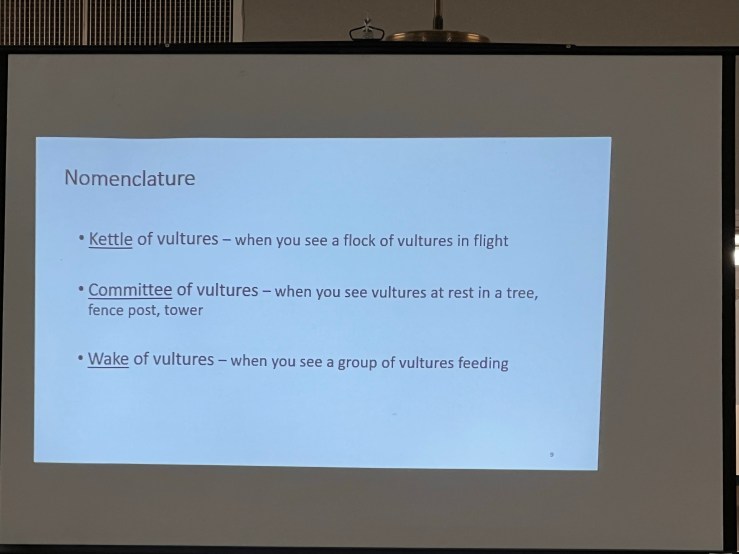
Here’s what you call a group of vultures, depending on what they are doing.

Our meeting concluded with the recognition of two of our members. Congratulations to Alan Rudd and Scott Berger for getting their annual recertification for forty volunteer hours and eight advanced training hours. And Scott received a milestone recognition for 250 hours contributing to the Master Naturalist organization. We appreciate our members!
Snow Time with Pamela

by Pamela Neeley

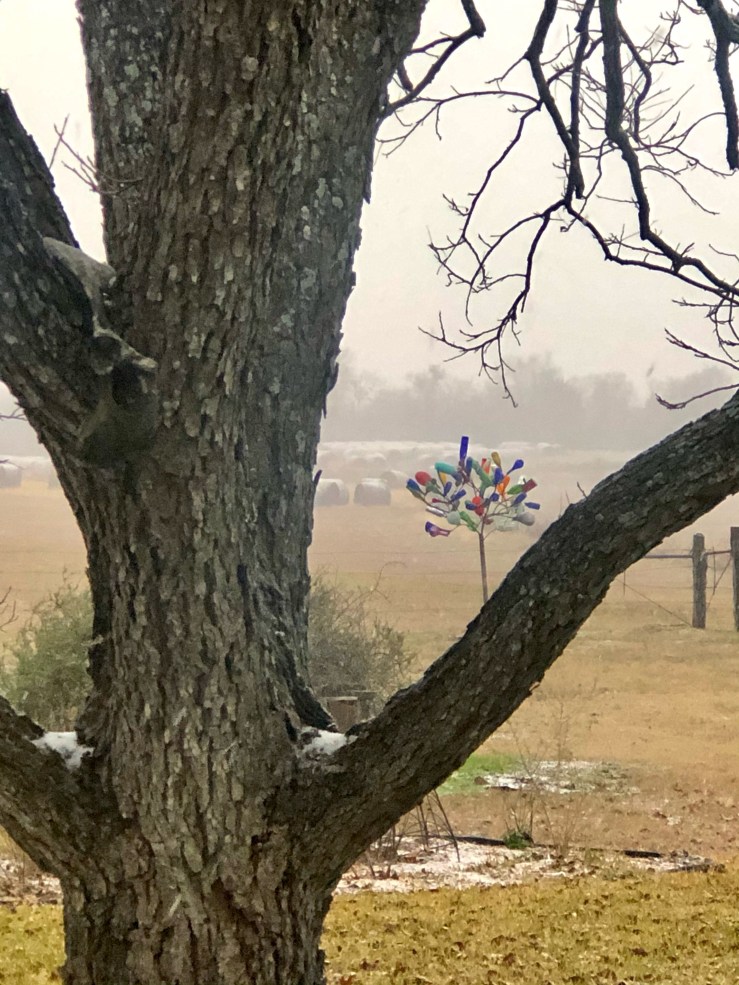
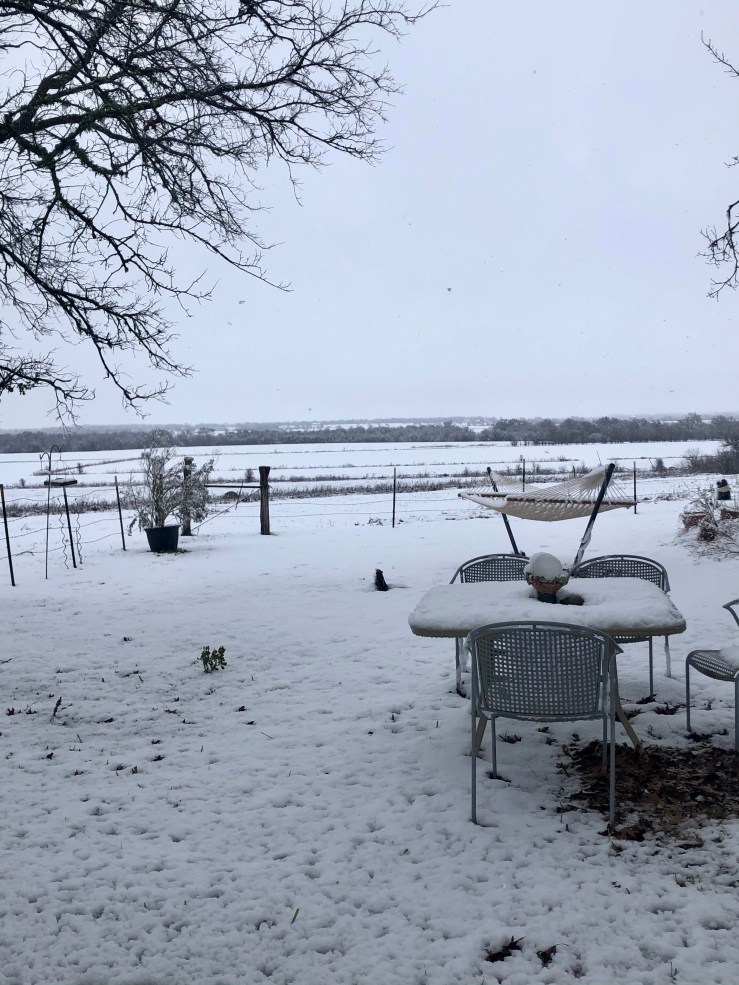
[Various members of our Chapter are sharing their snow memories from January 3, so we can look back on them in the future. Here are photos from Pamela Neeley’s farm just north of Cameron.]

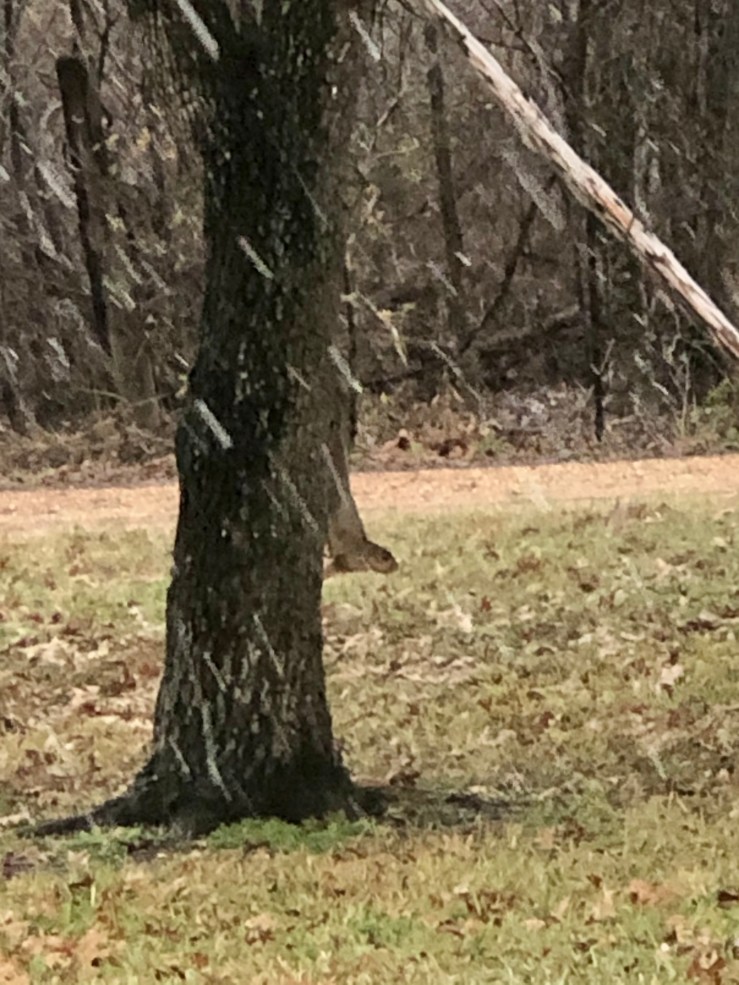
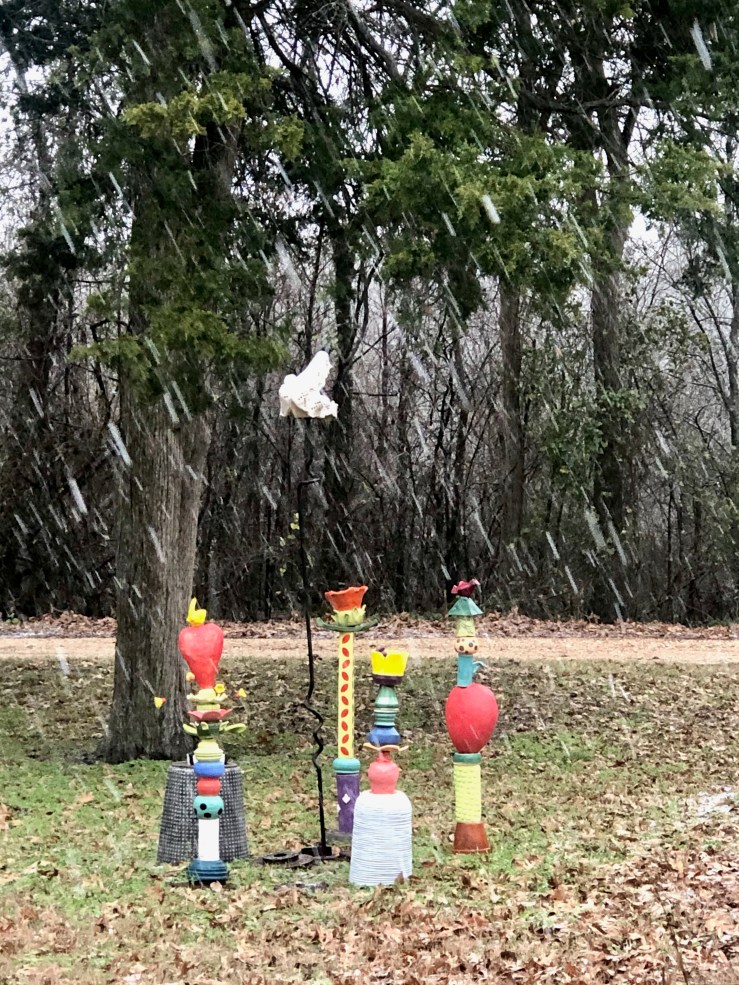
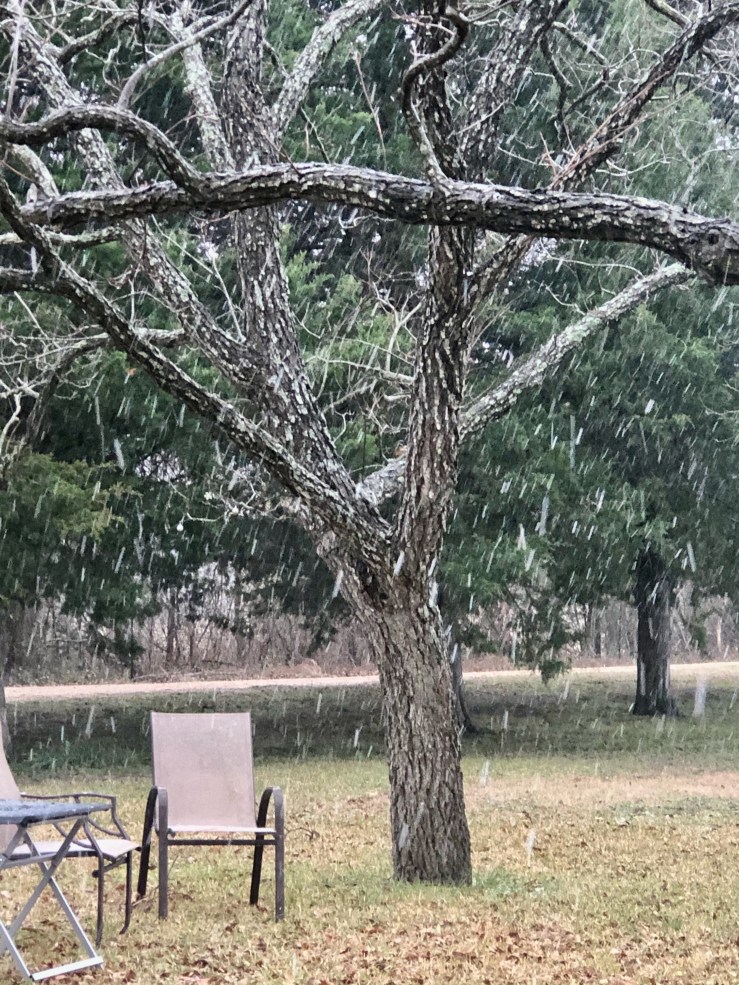
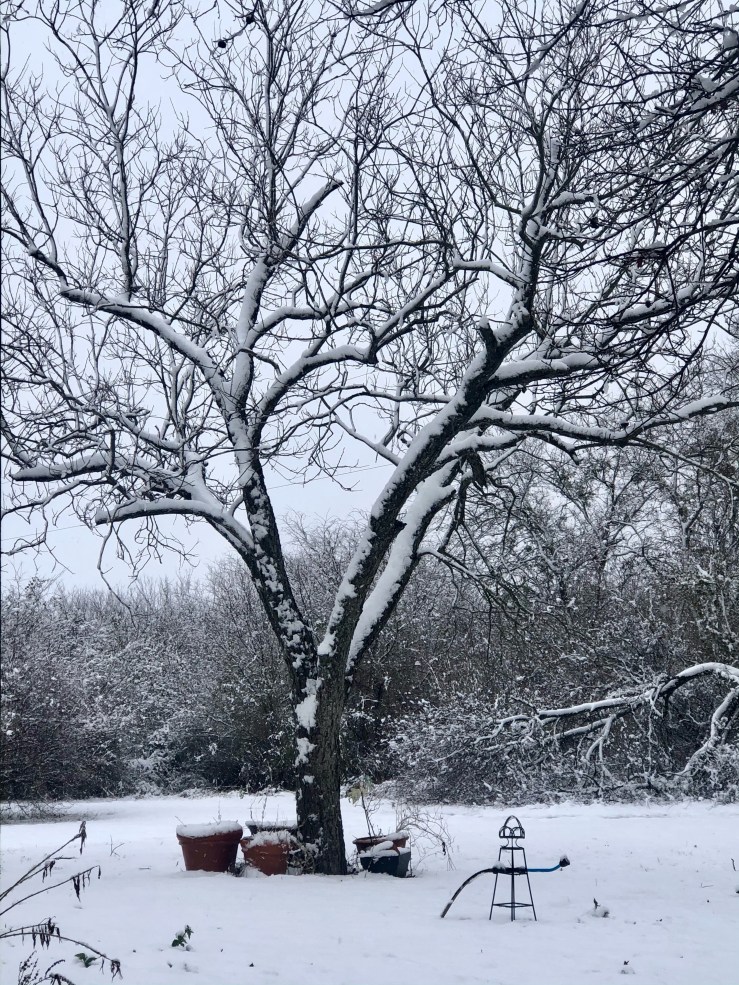
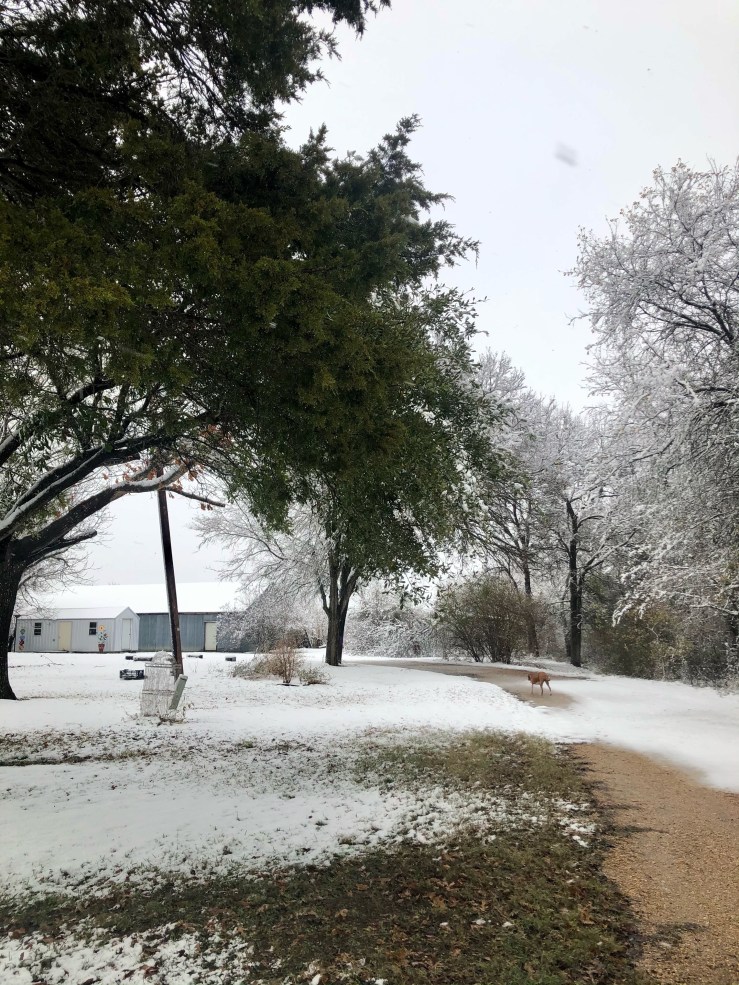
These photos are when the snow first started. Later the trees you see will be full of snow and their branches touching the ground. If you want to see any image larger, just click on it.

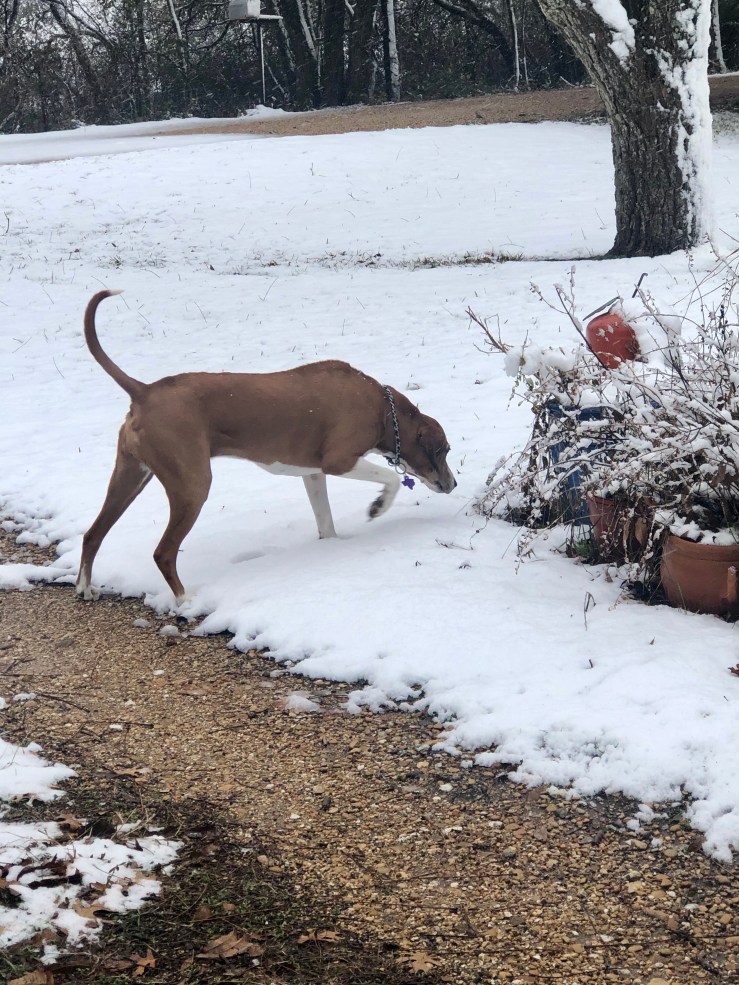
Ruby the dog growled at the snow, with the ridge of fur on her back while she explored. She preferred to stay on the road and not walk on the actual snow. She was happiest back in the house on her sofa!

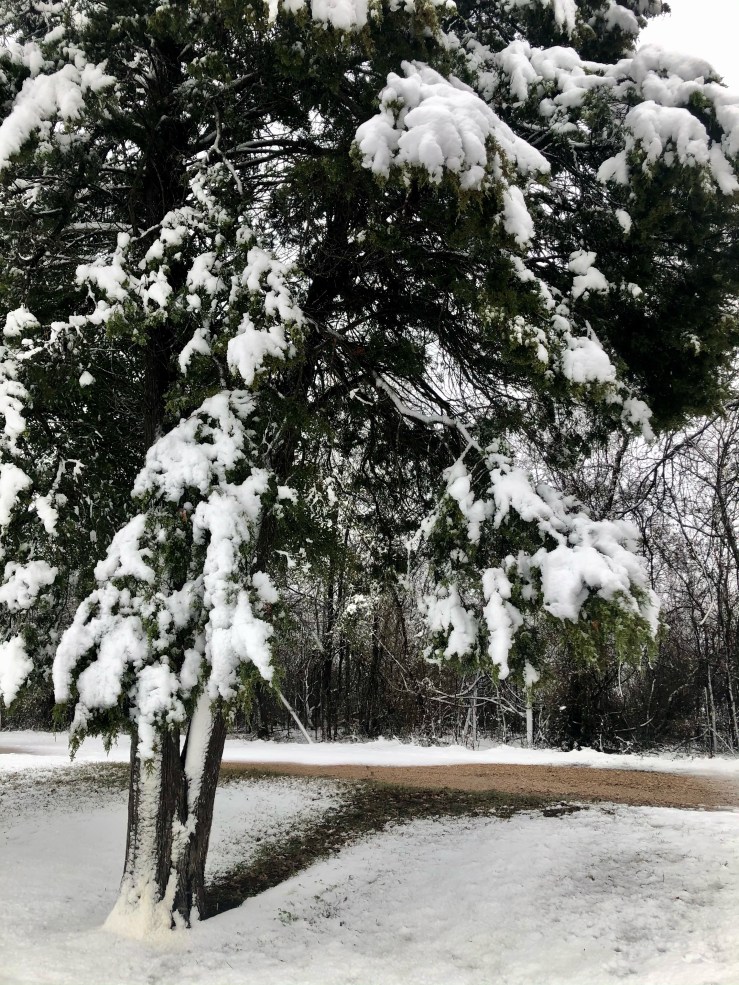
After the snow had fallen more, the art looked very interesting, and the evergreens had a heavy burden to bear (around town, a lot of limbs broke).

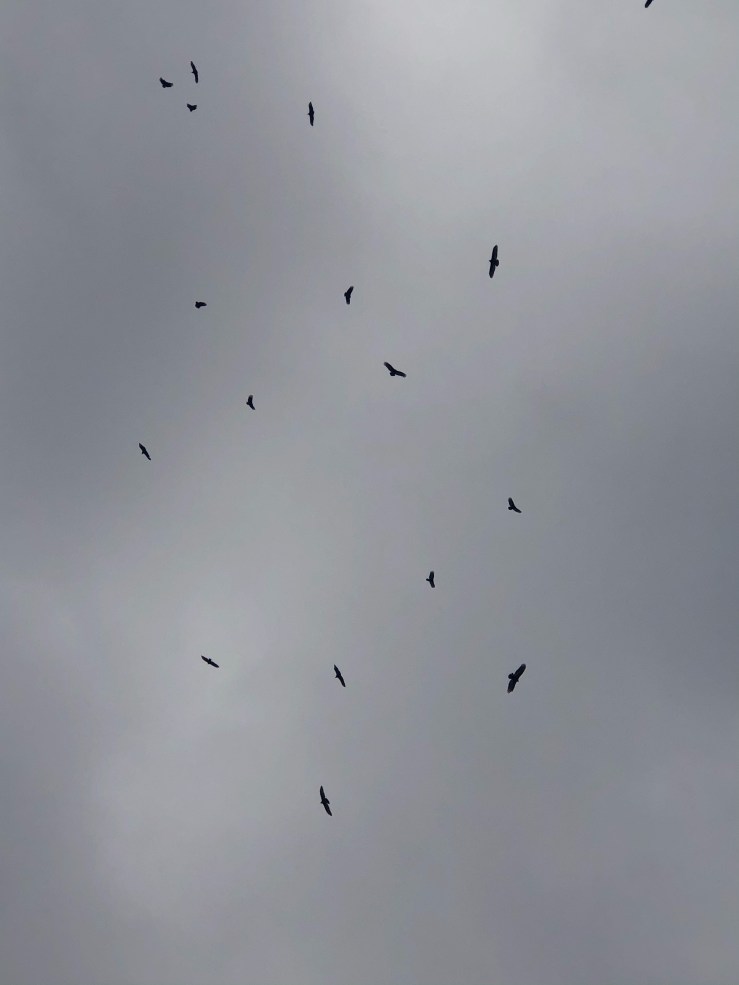
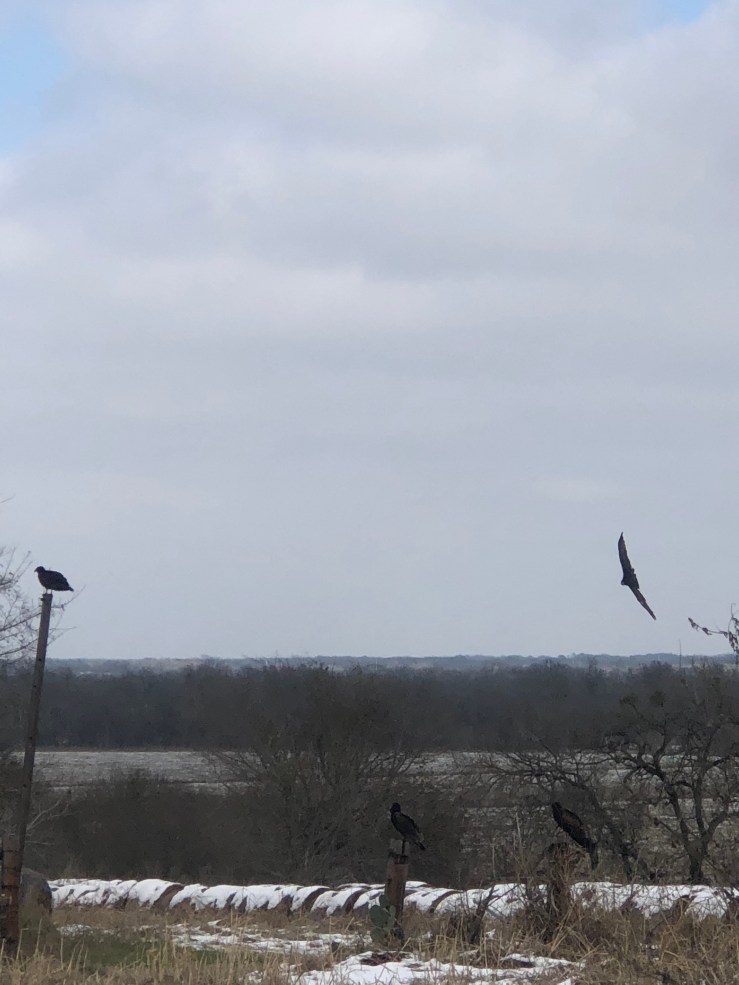
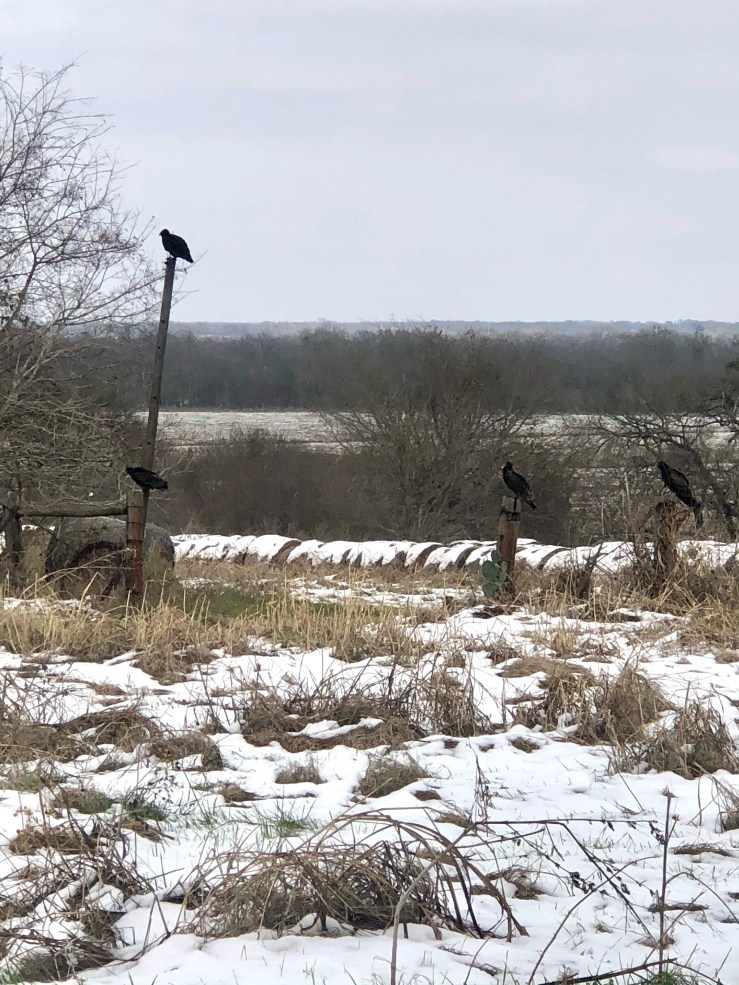
Later on, the farm was visited by a large flock of black vultures. There were at least 30 in the sky, while at least four of them rested on fence posts.