Are There Beavers in Milam County?

by Sue Ann Kendall

It turns out, the answer is yes, though I am sure many of you already know that. I went on a great adventure on Friday with my fellow Master Naturalist to see for ourselves. We escaped to the wilderness known as her property outside of Cameron and searched for a rumored beaver dam on the spring-fed creek that runs through the land. It was a beautiful warm day for exploring. (Note that I am not providing the exact location to maintain the beavers’ and property owner’s privacy.)

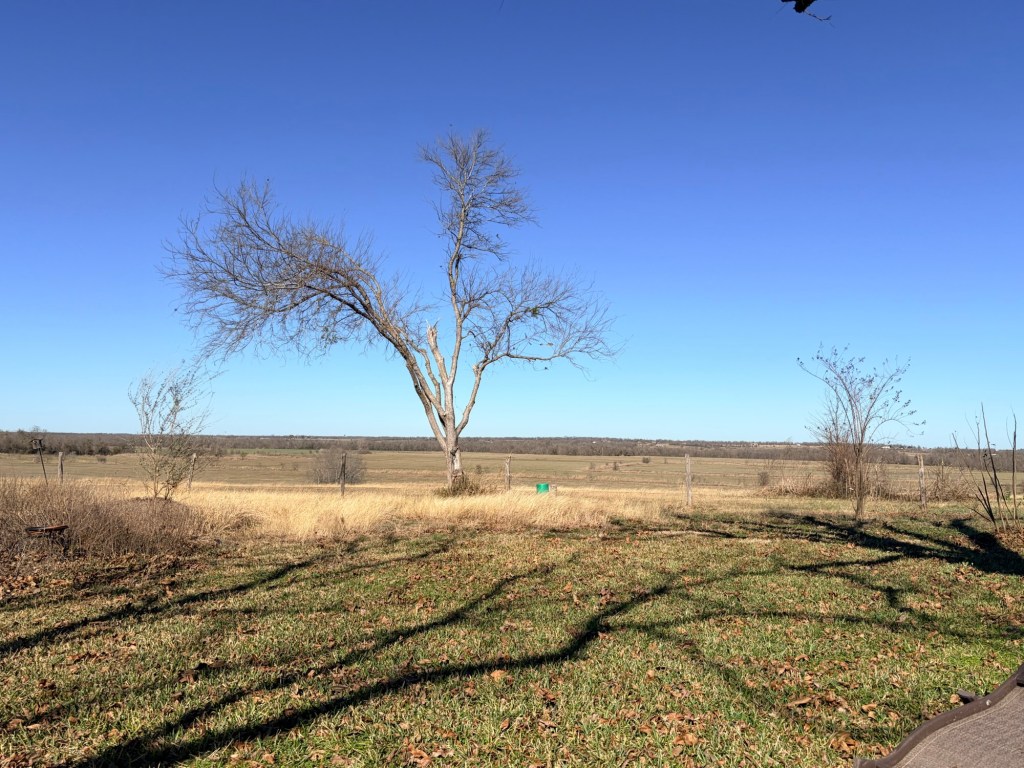
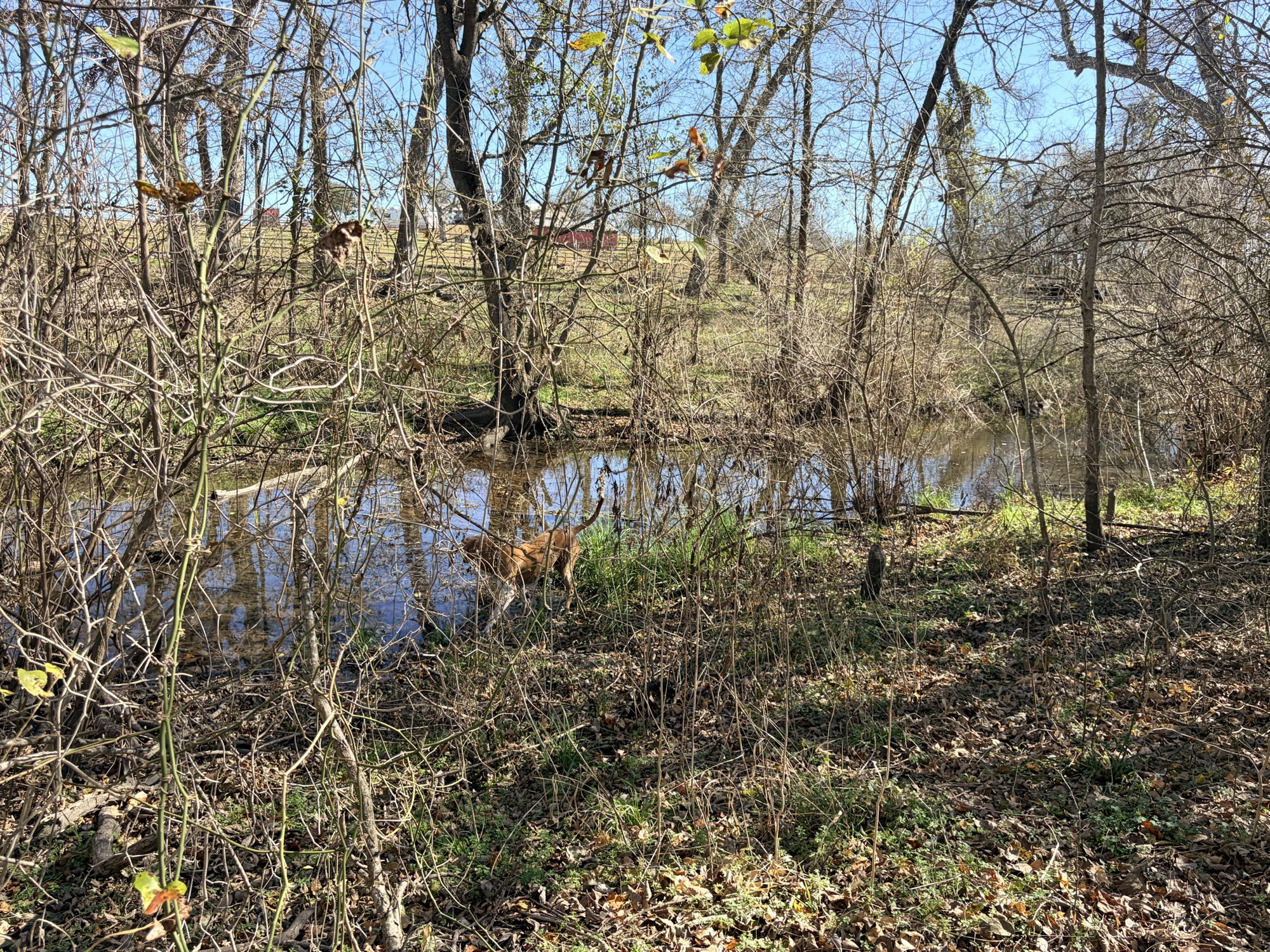
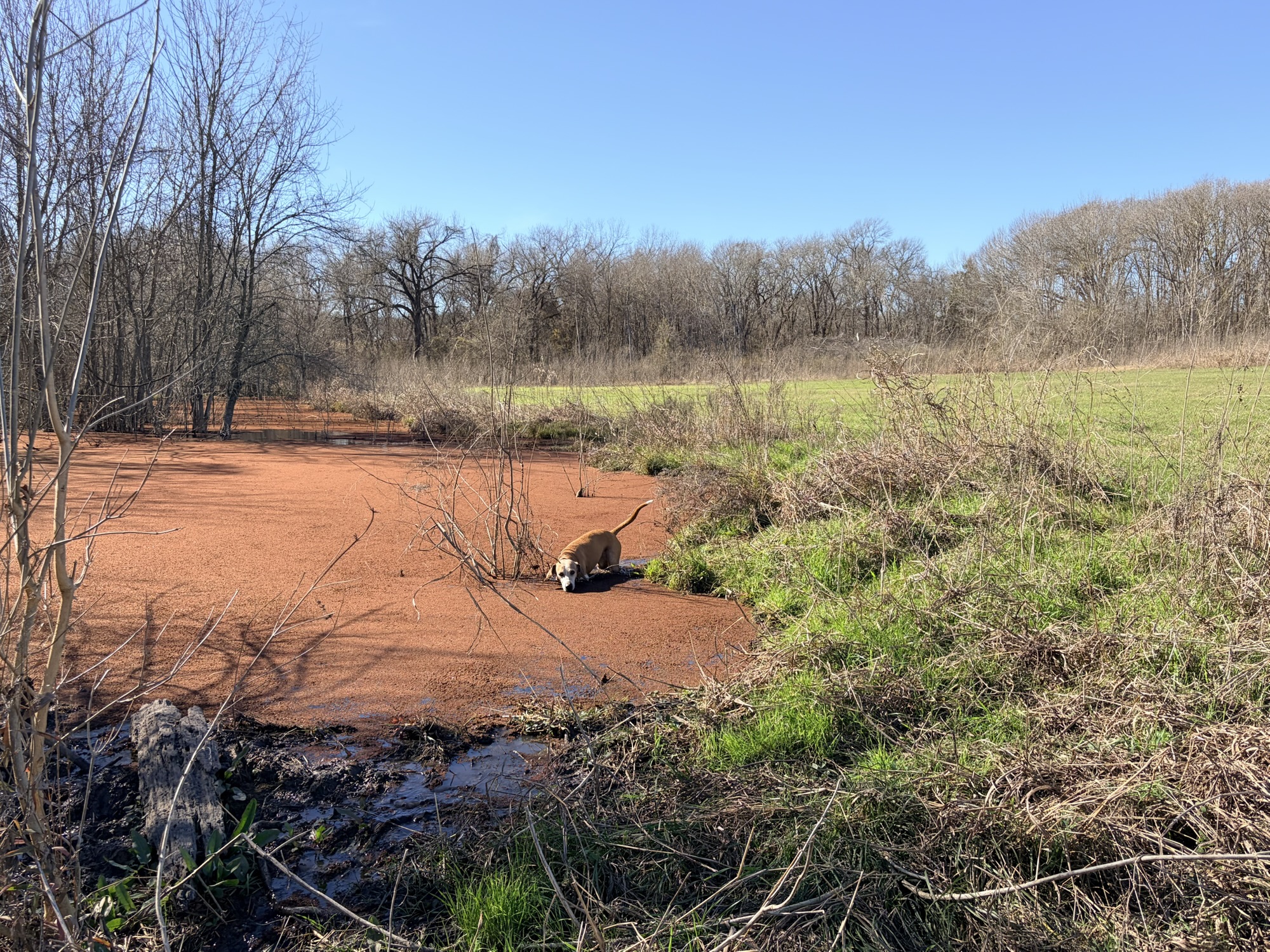
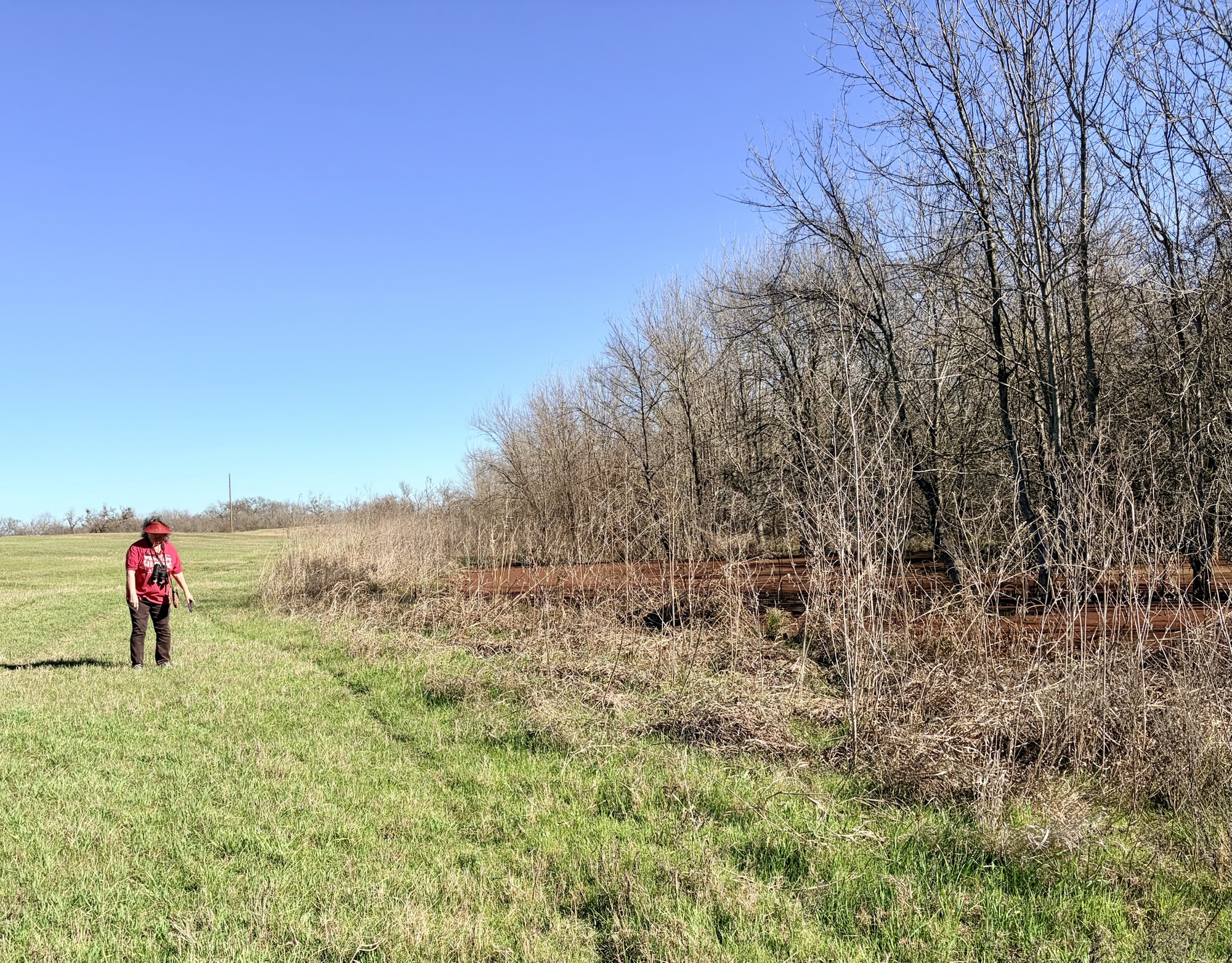
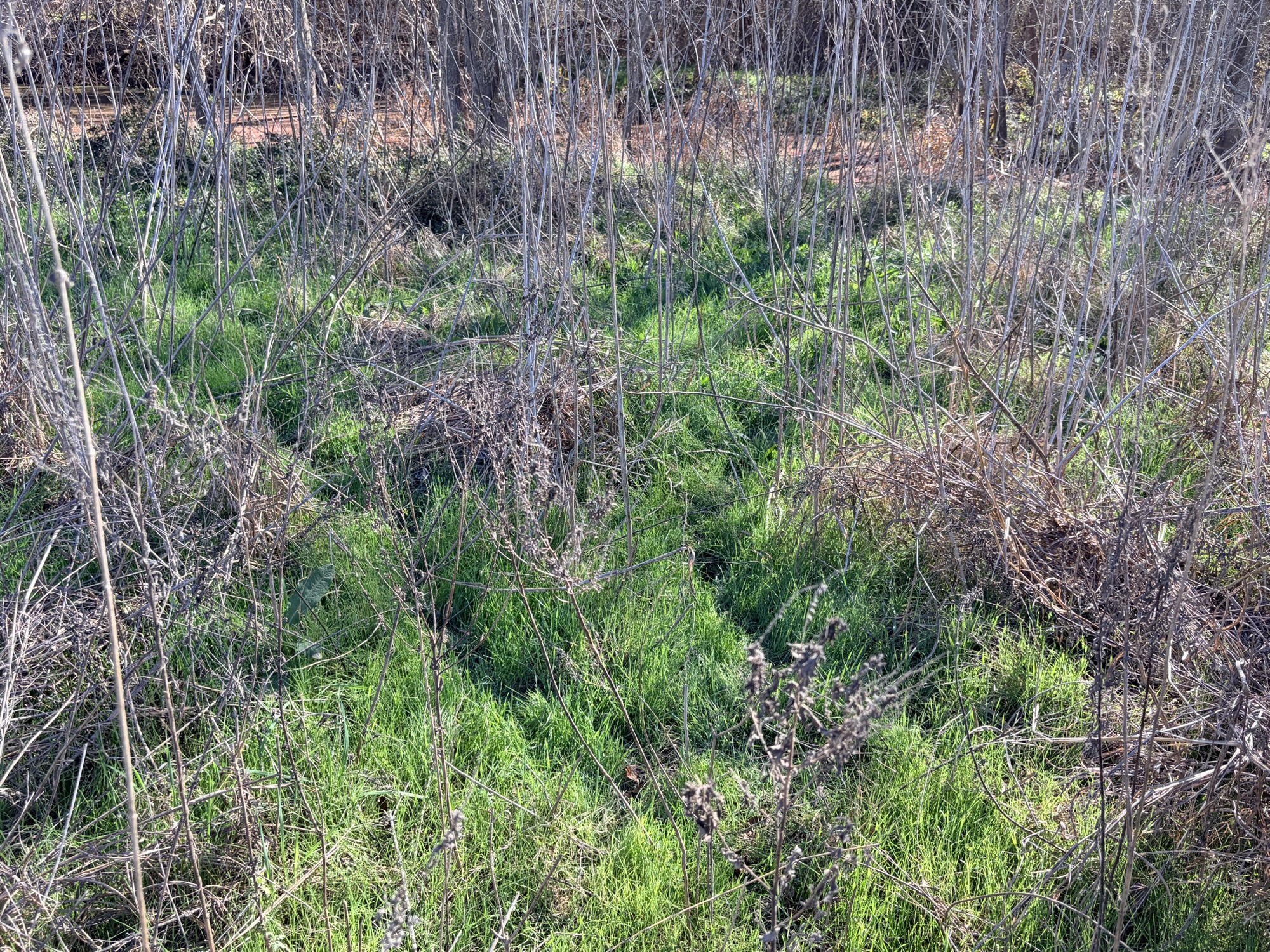
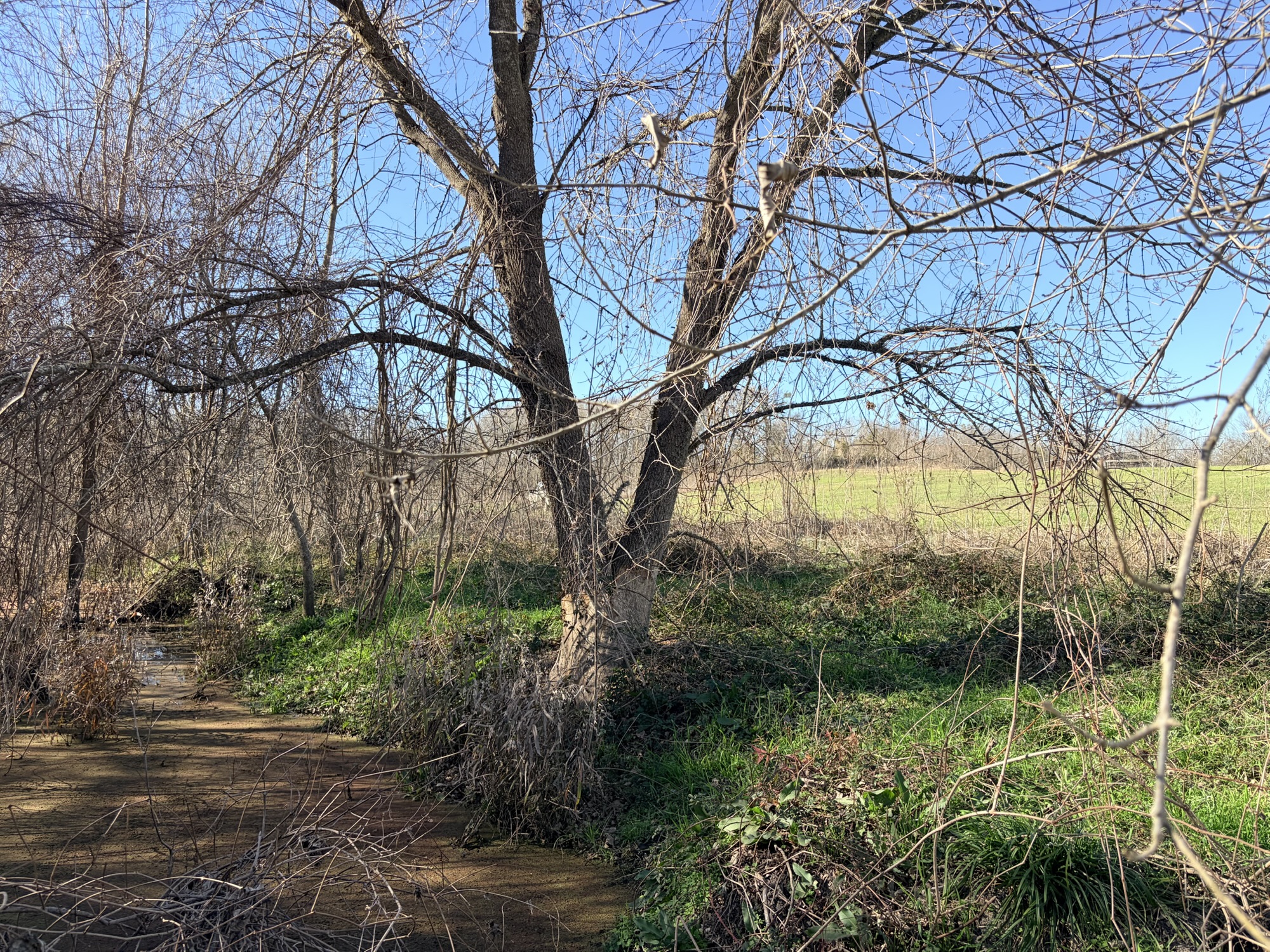
Proof that it was a beautiful day in Milam County

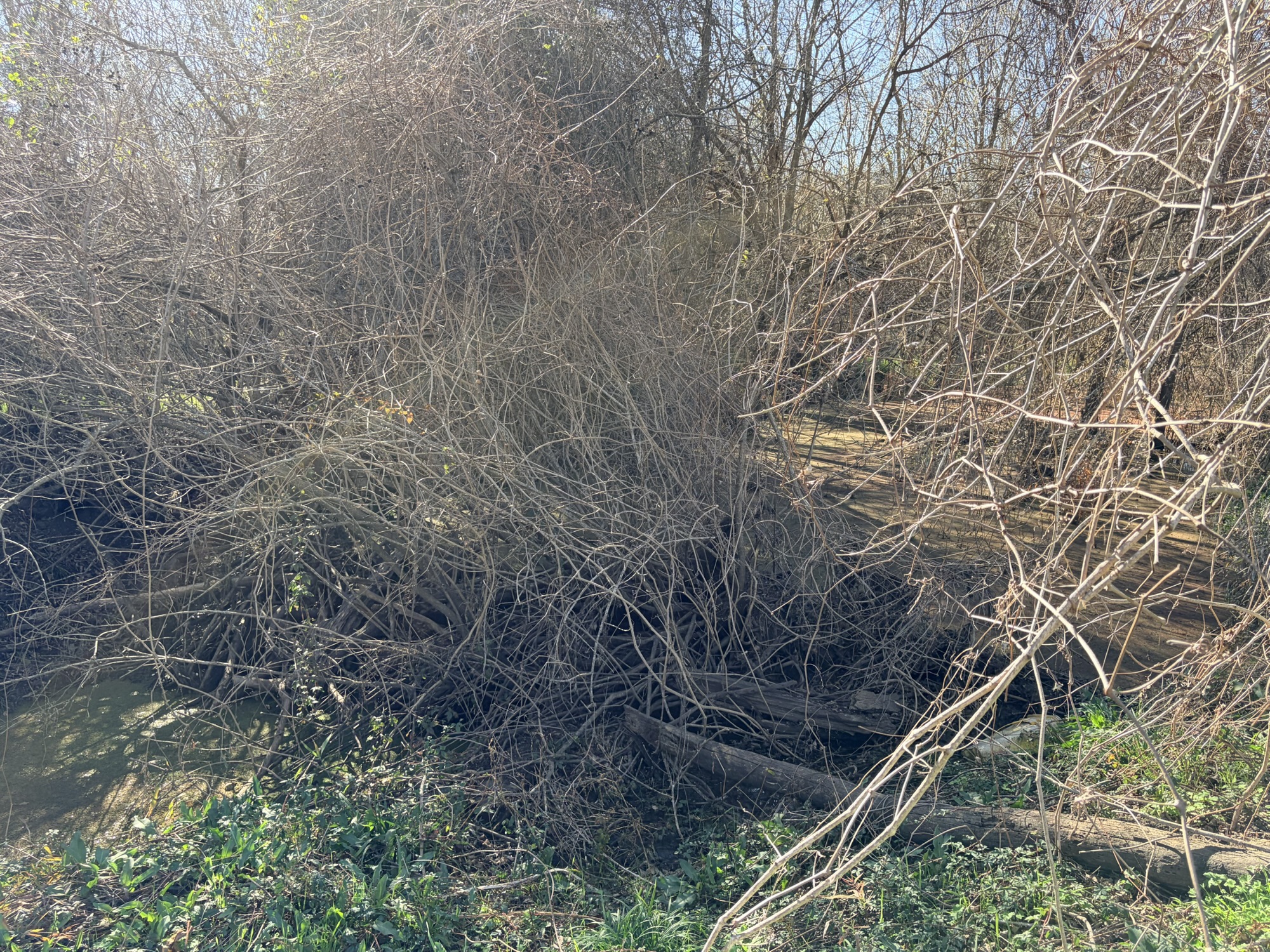
We got into the truck and took off for the spring-fed creek that runs from the property to Big Elm Creek. At first we looked in the wrong place and got attacked by much greenbrier and dewberry vines that tried very hard to trip us (I later determined that I got a tick on my head – darn nature). I did determine that the water was not out of its banks and was very clean.

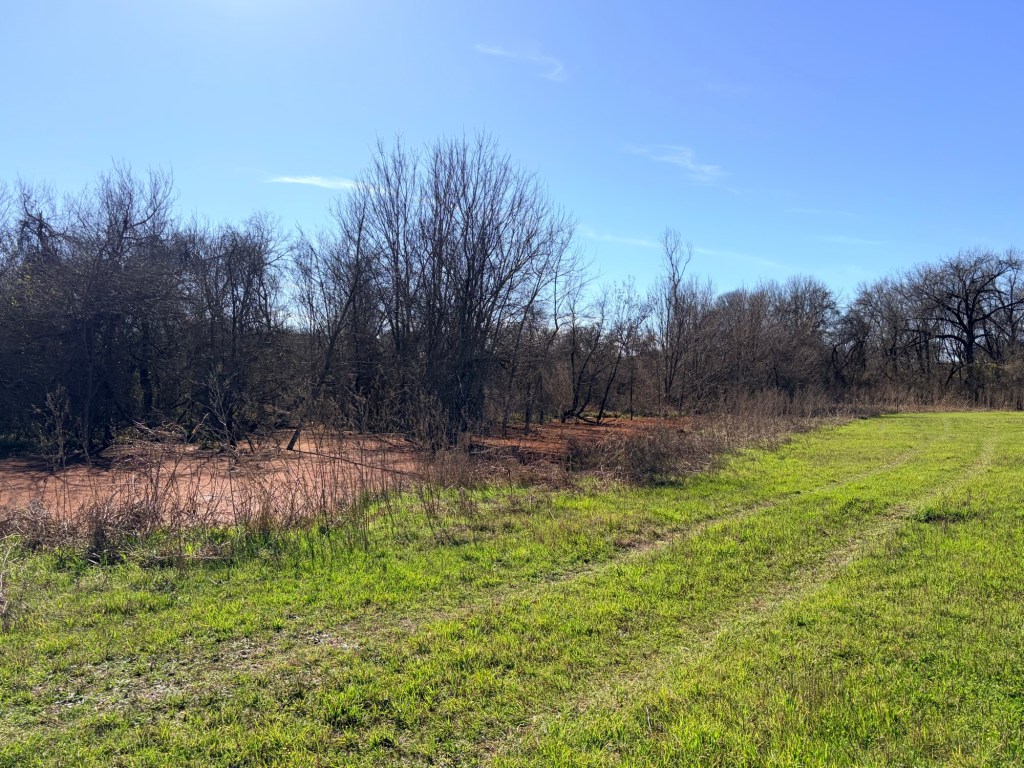
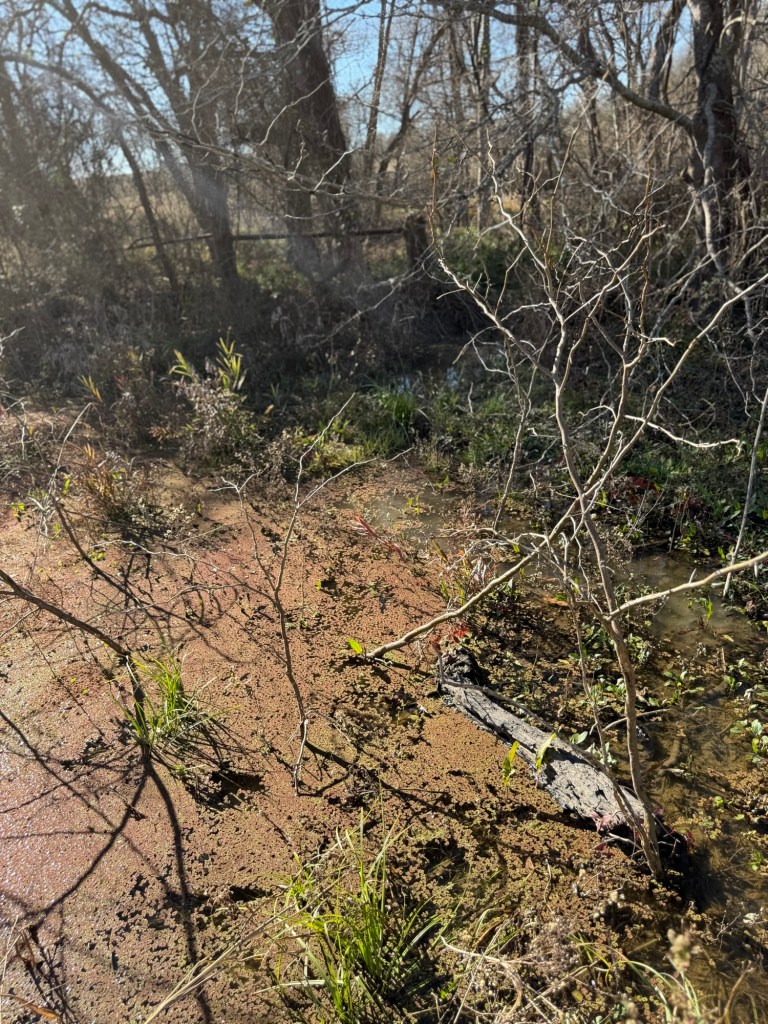
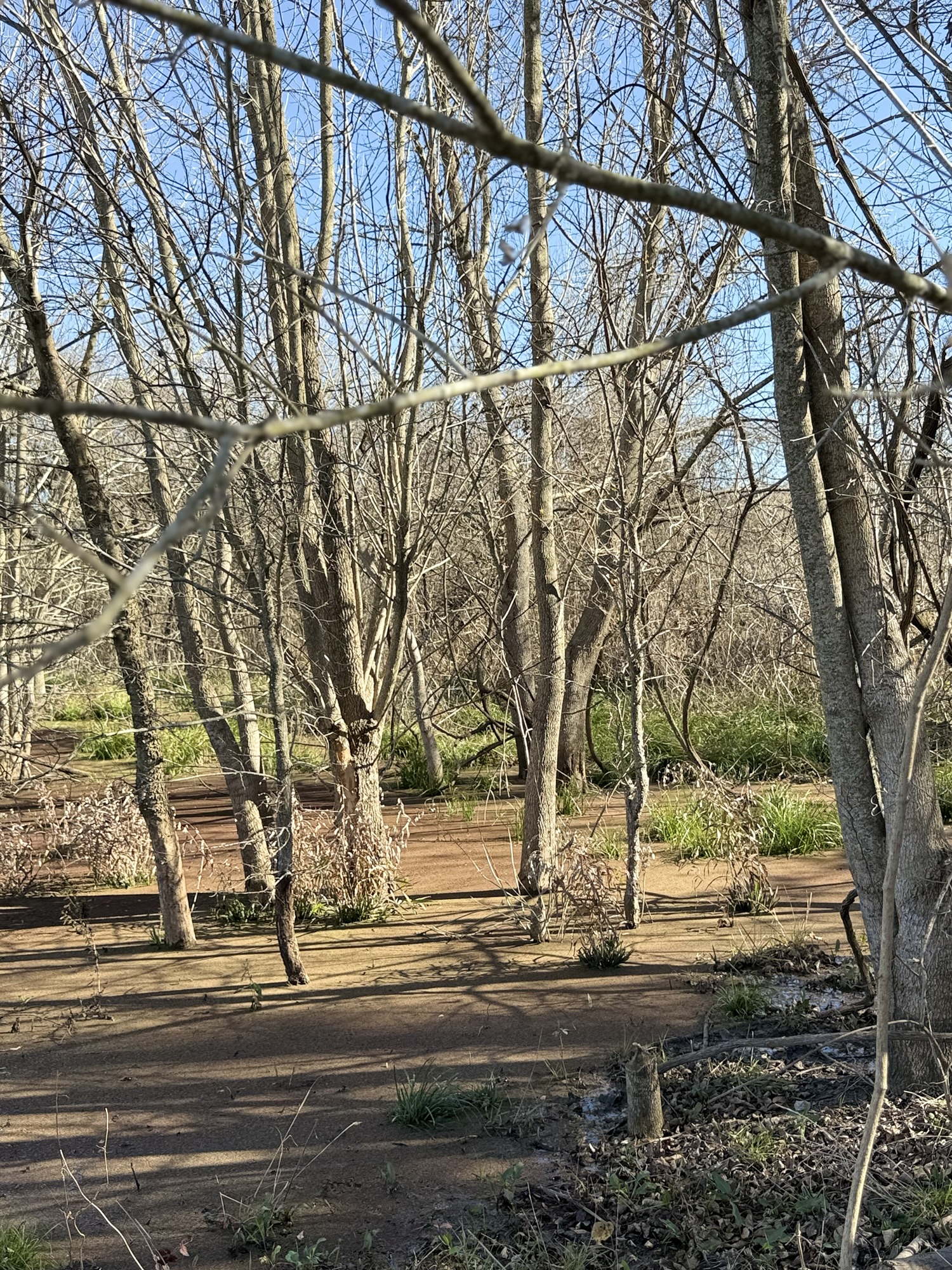
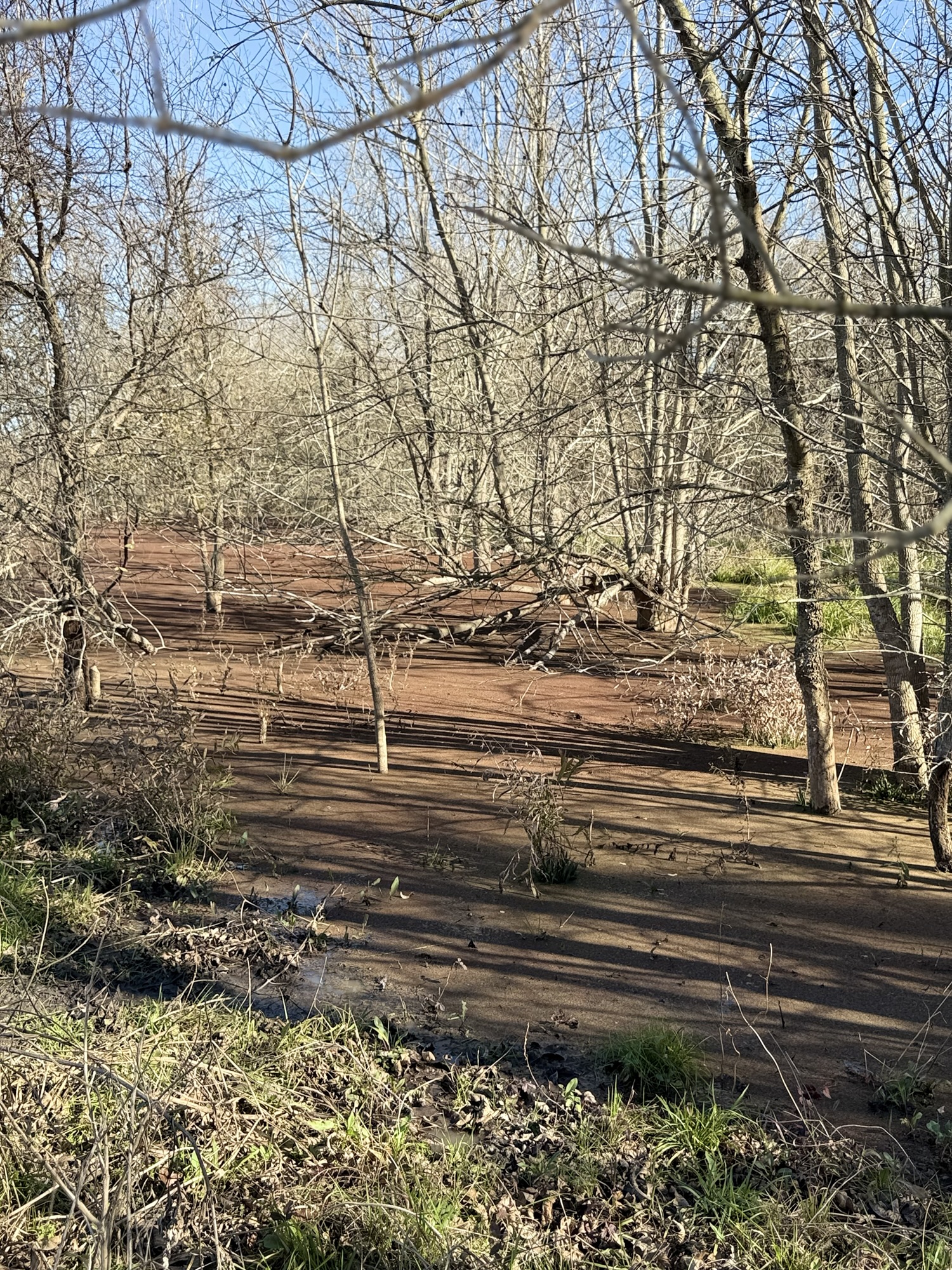
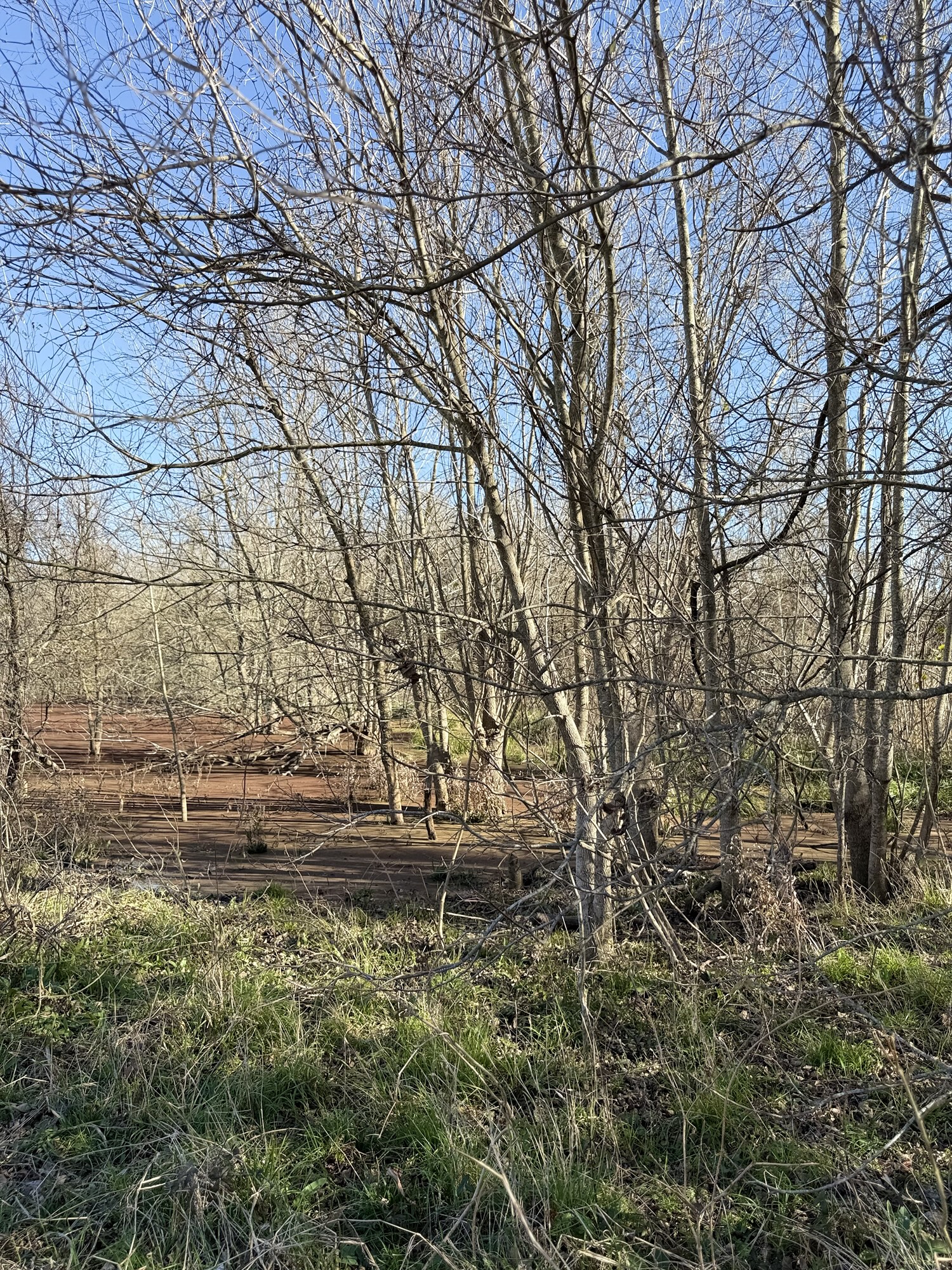
My friend called the folks who’d been on the property monitoring their deer lease or something, and they redirected us upstream. There we found what appeared to be weird flat areas with brown vegetation.

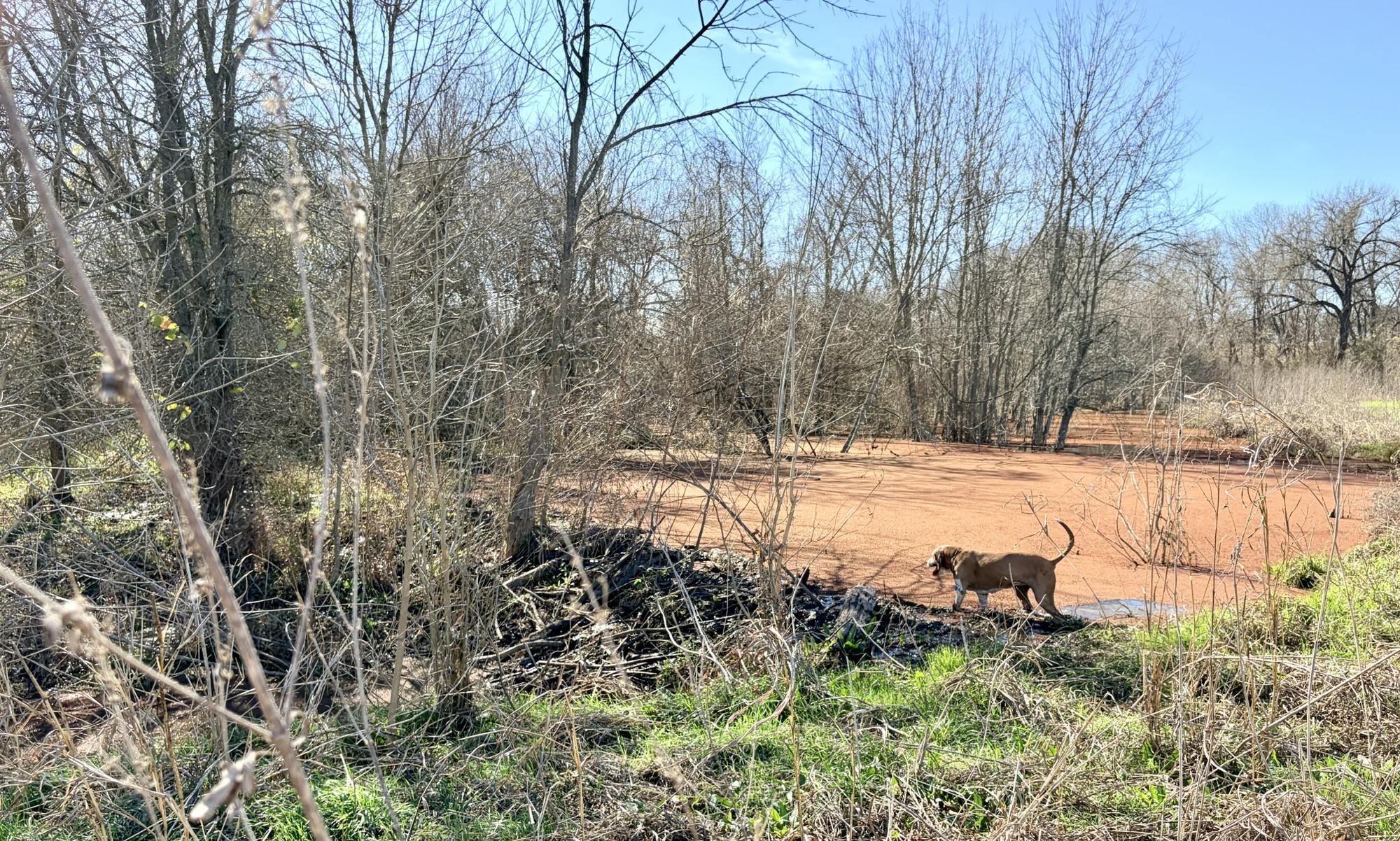
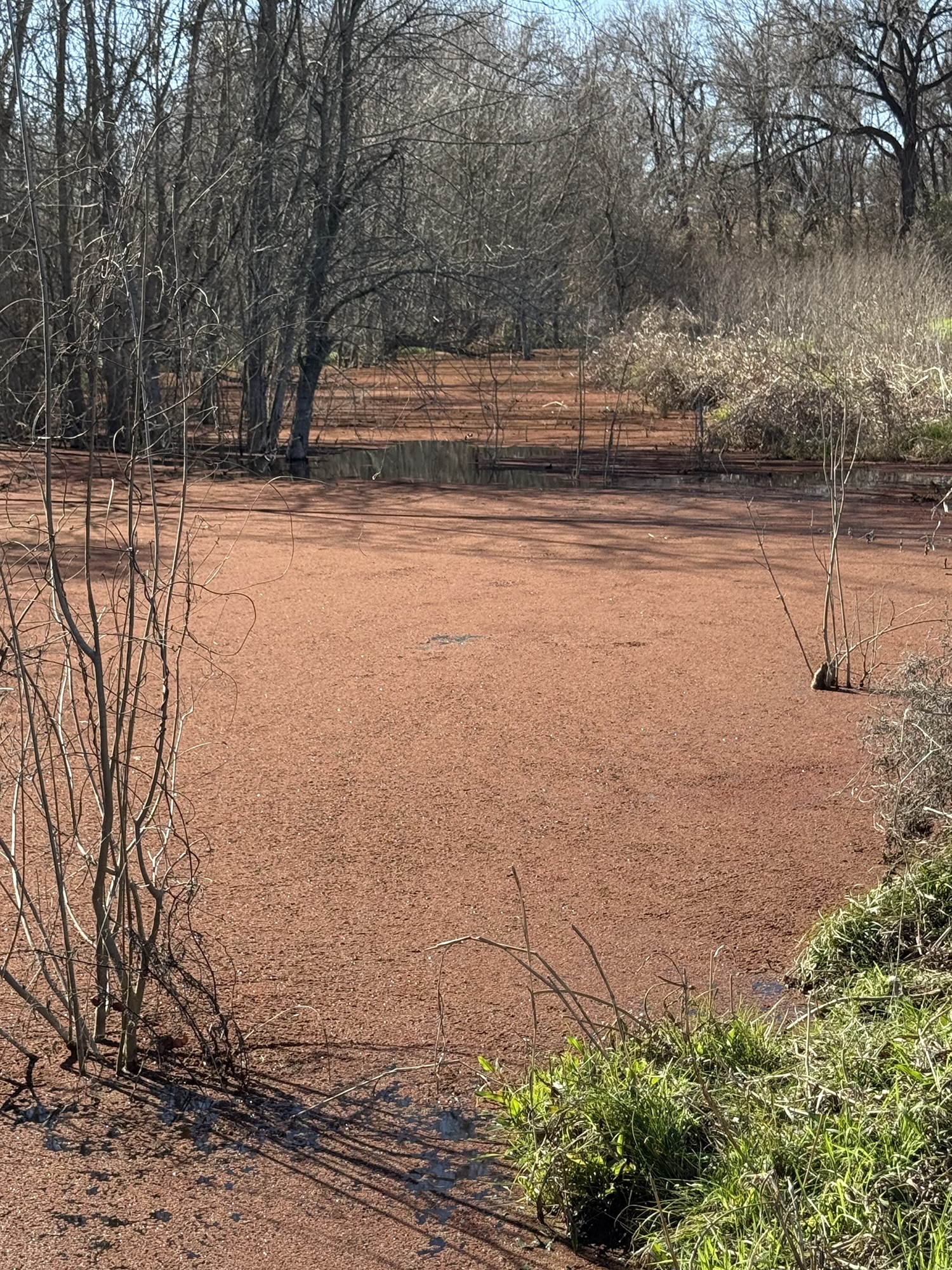
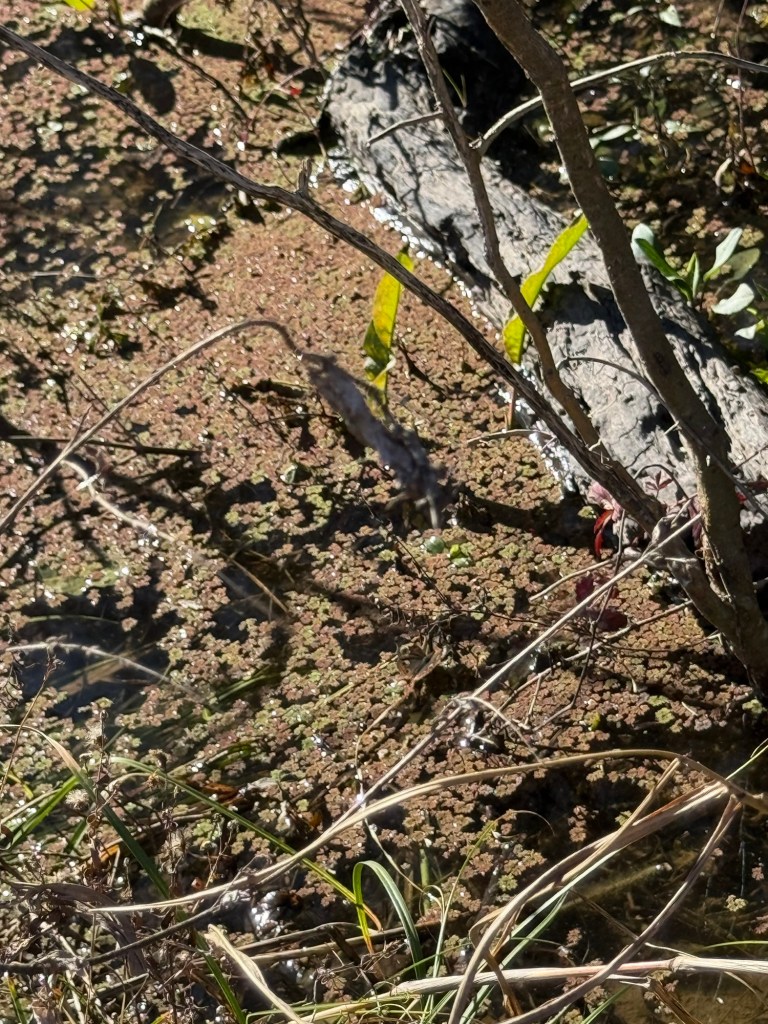
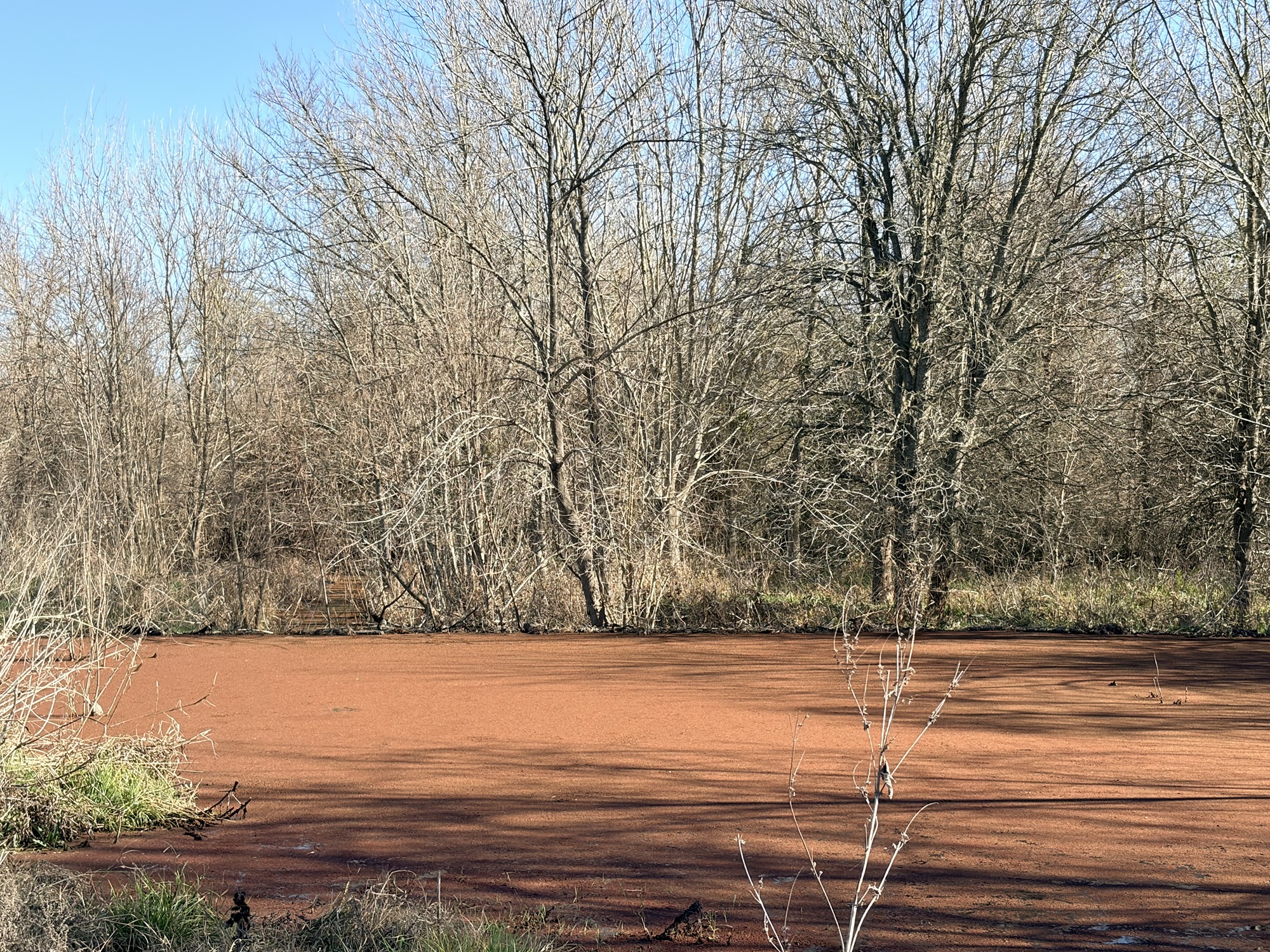
looks like a brown patch of dirt

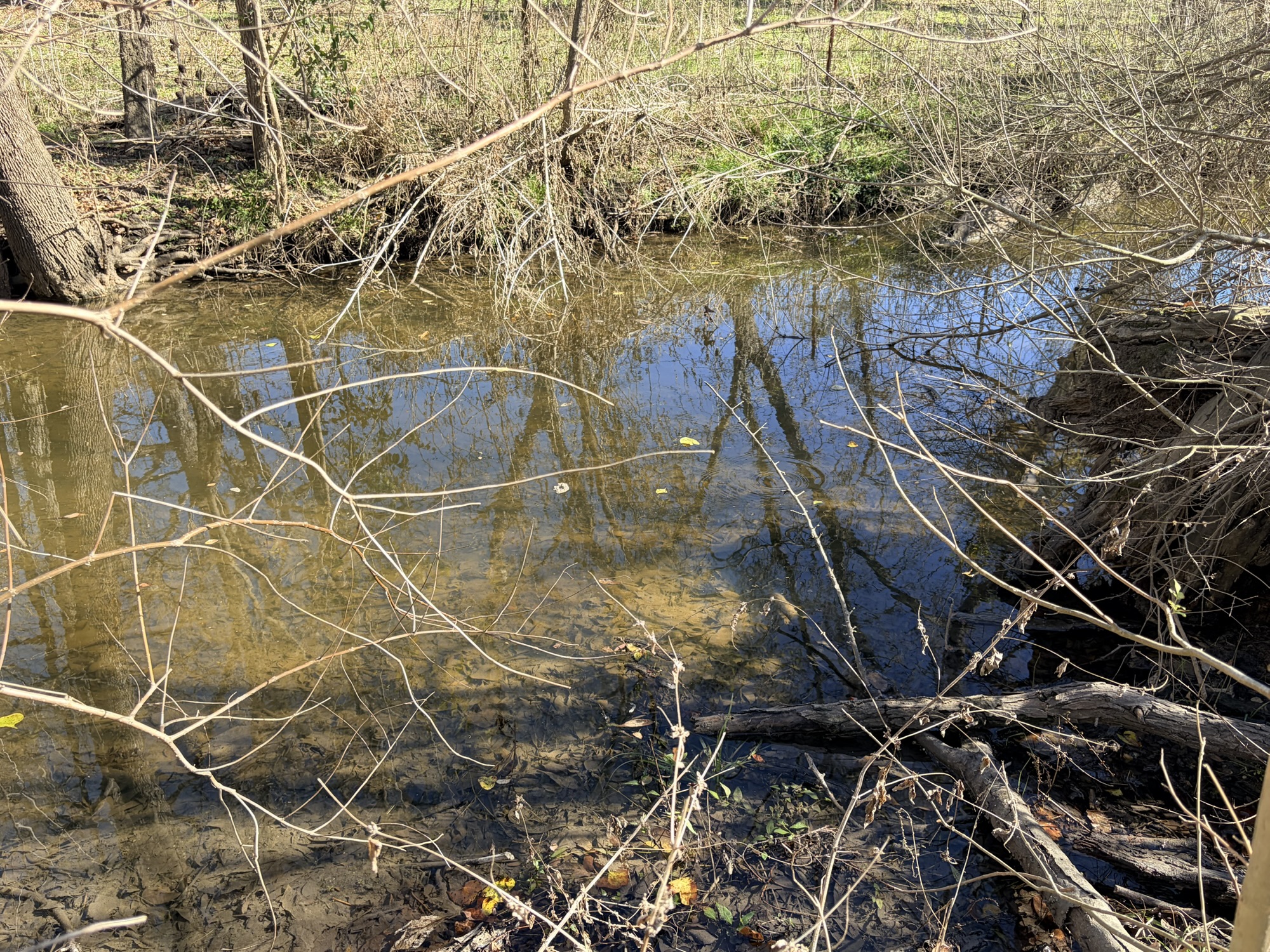
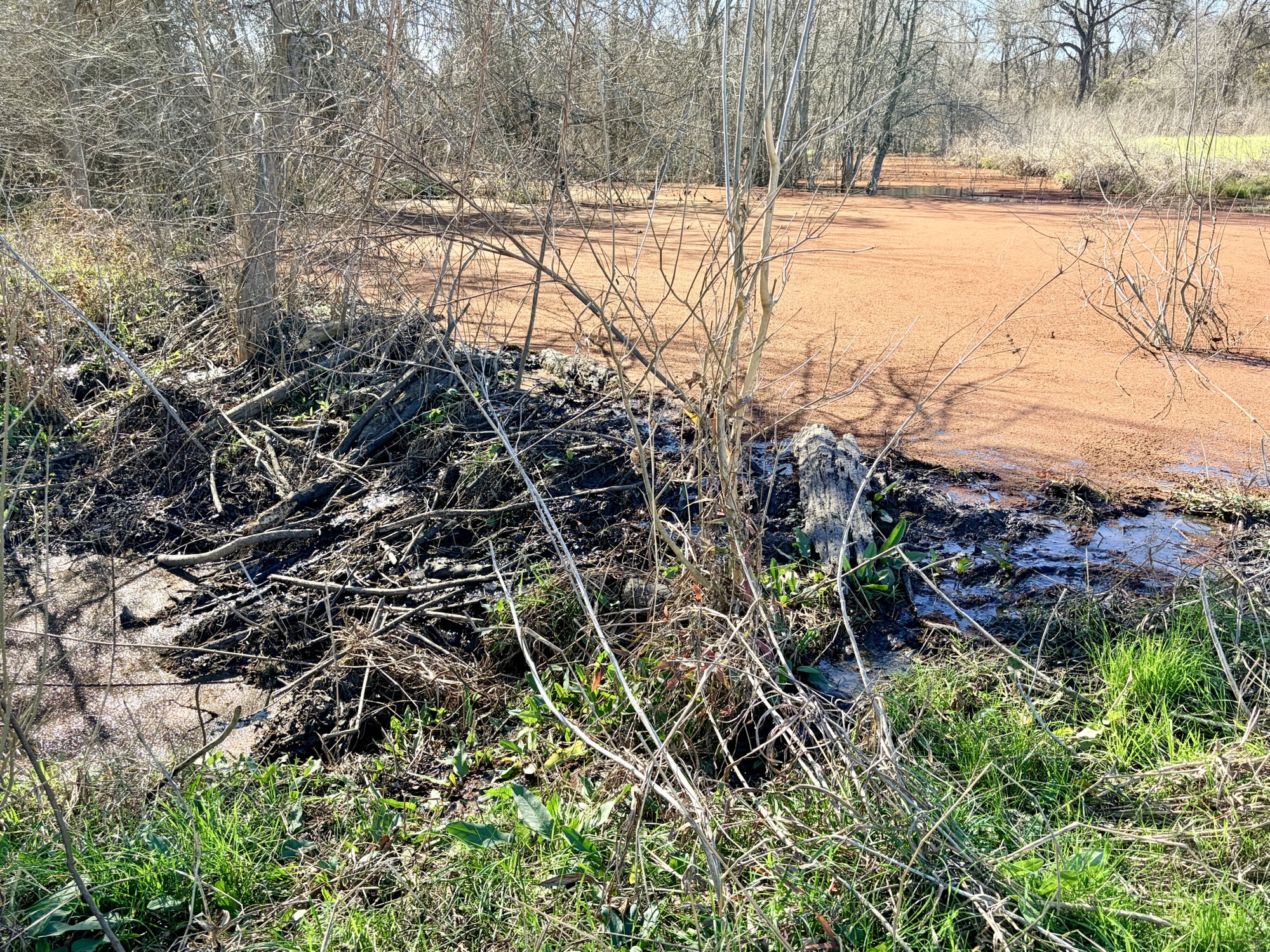
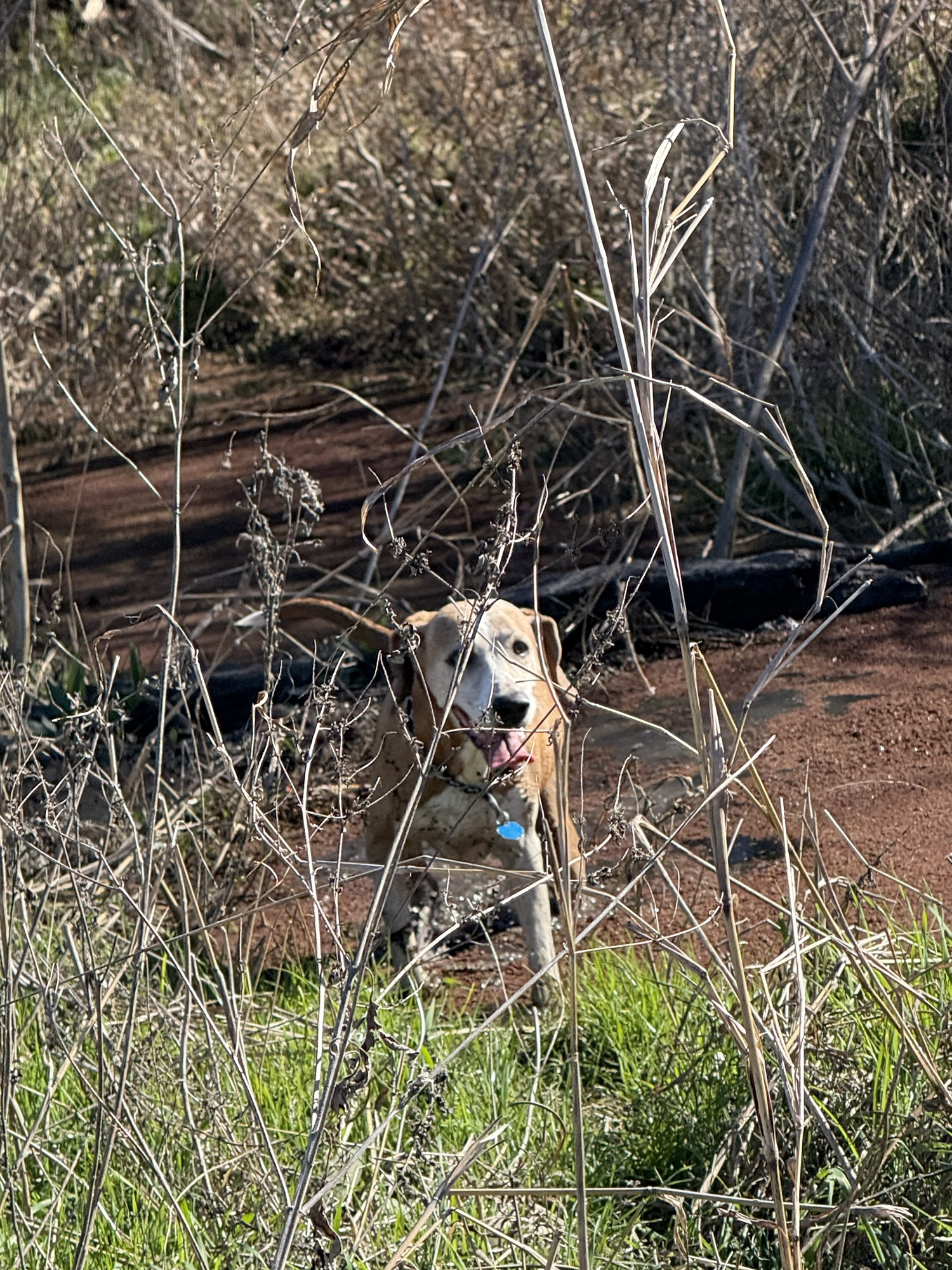
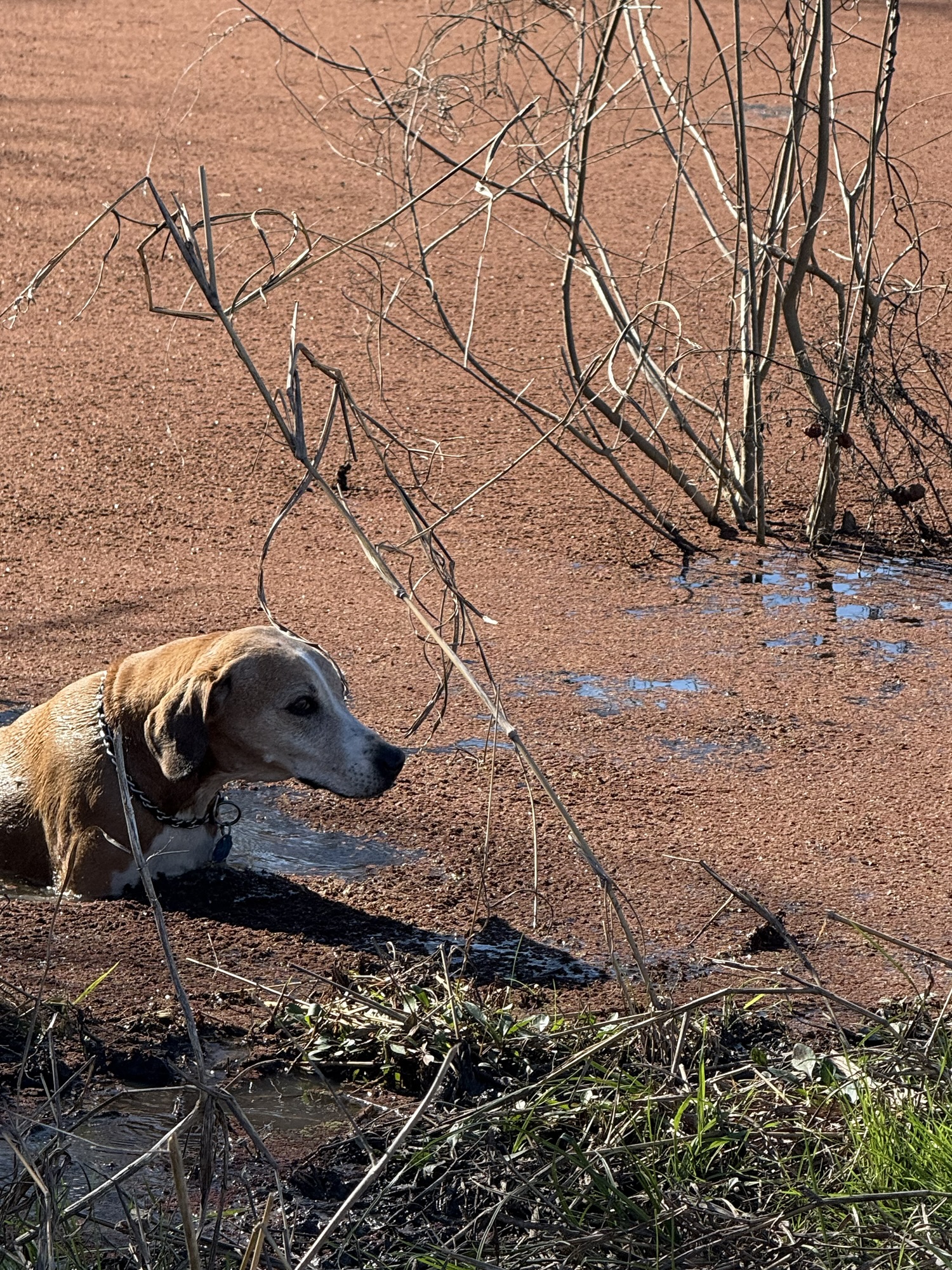
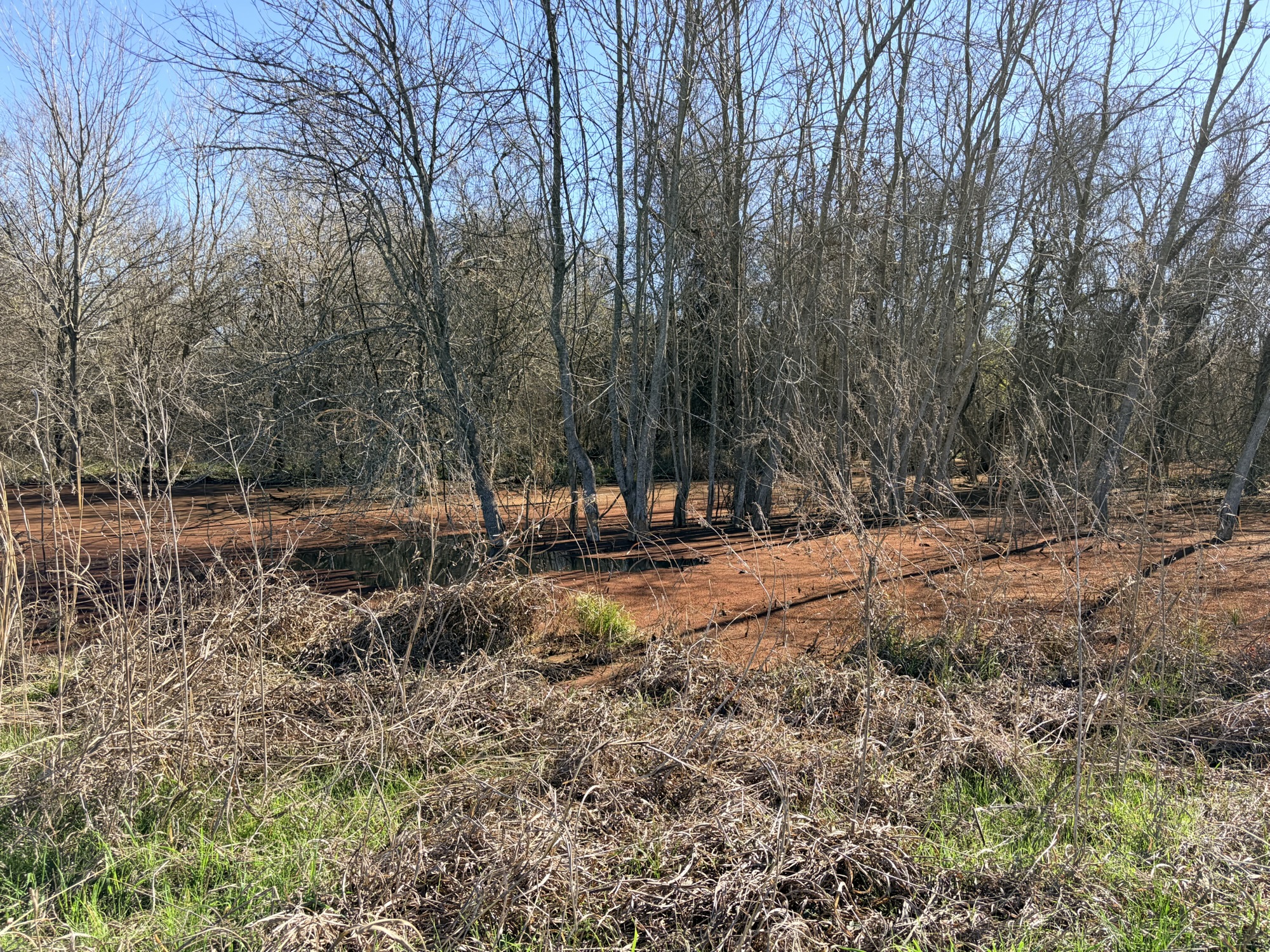
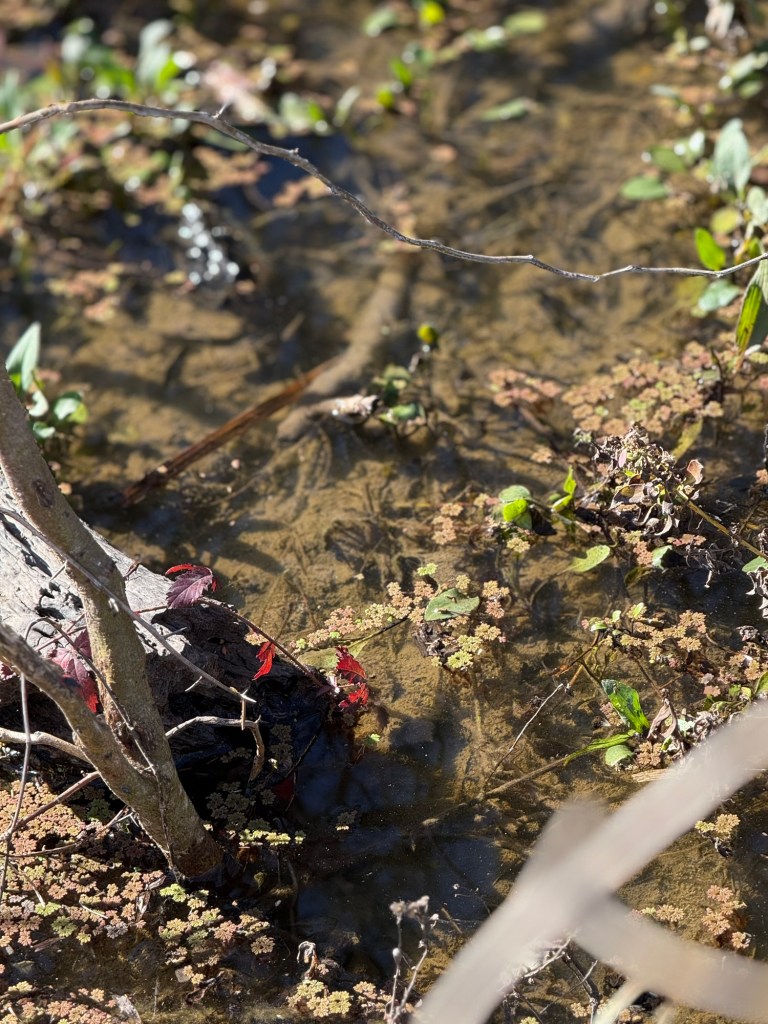
The brown stuff was actually duckweed on a big ole beaver pond! To say I was excited would be an understatement. The dog was also excited and immediately went swimming.

I enjoyed investigating the dam construction and listening to the water trickling through the spillways. It’s hard to believe animals can do this, even though I read a book all about beavers recently (and I highly recommend it to any fellow nature lover).

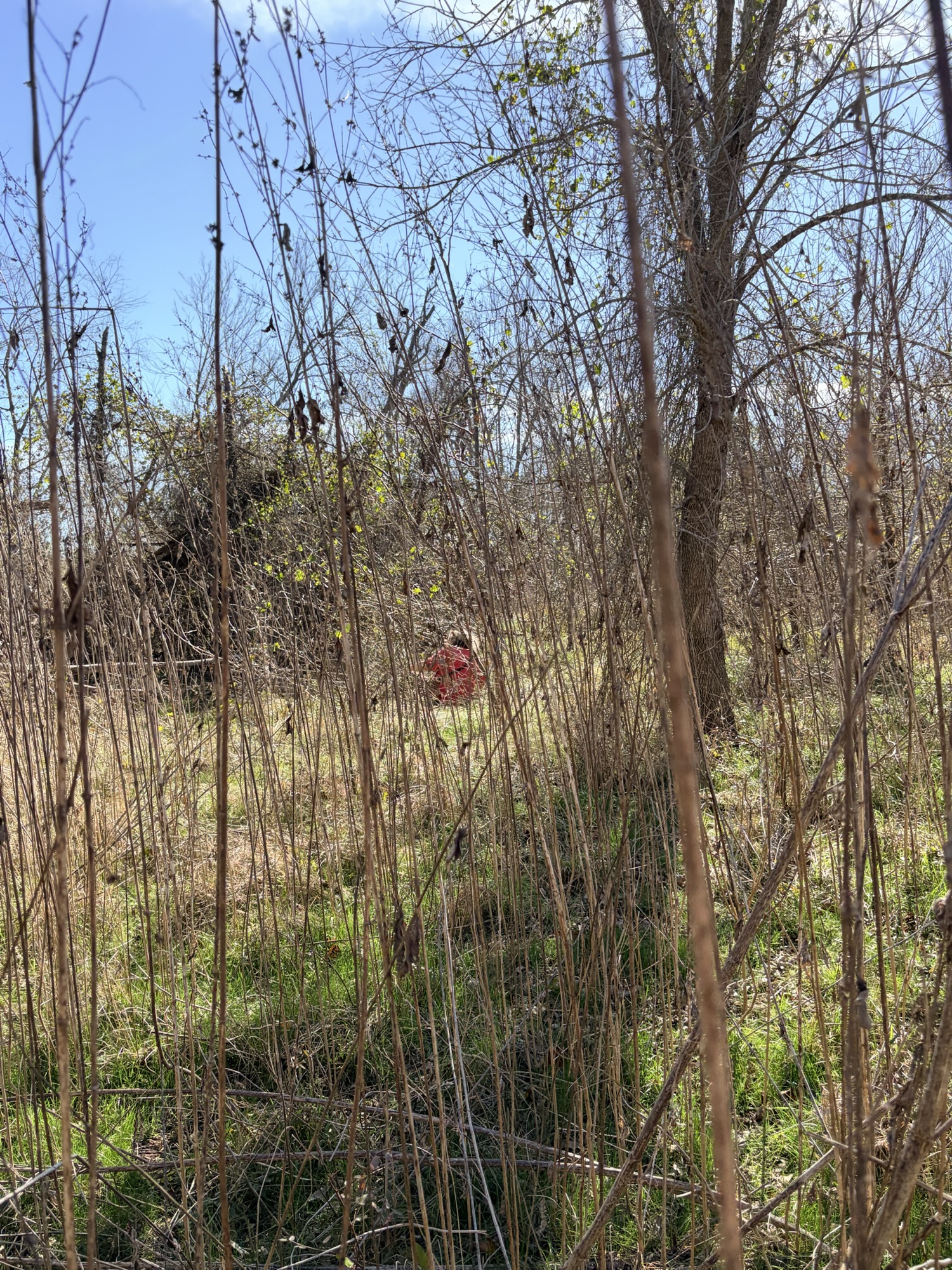
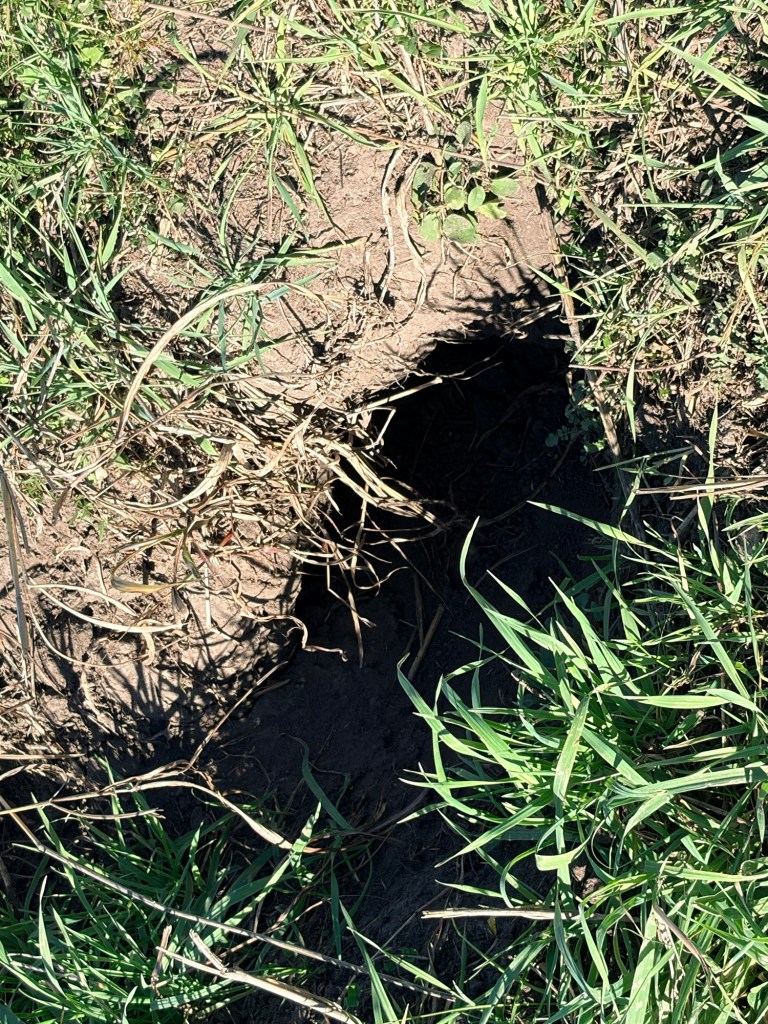
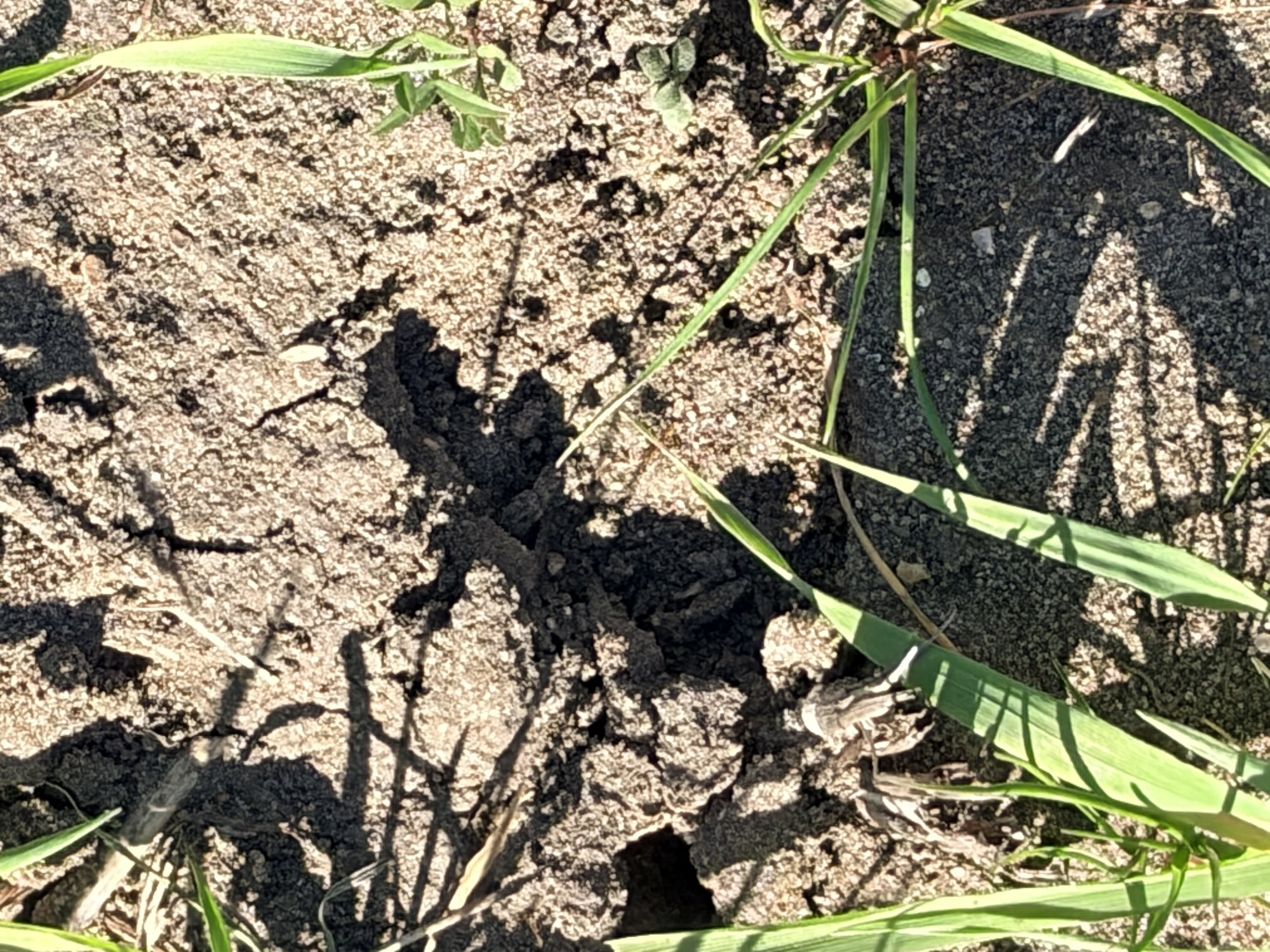
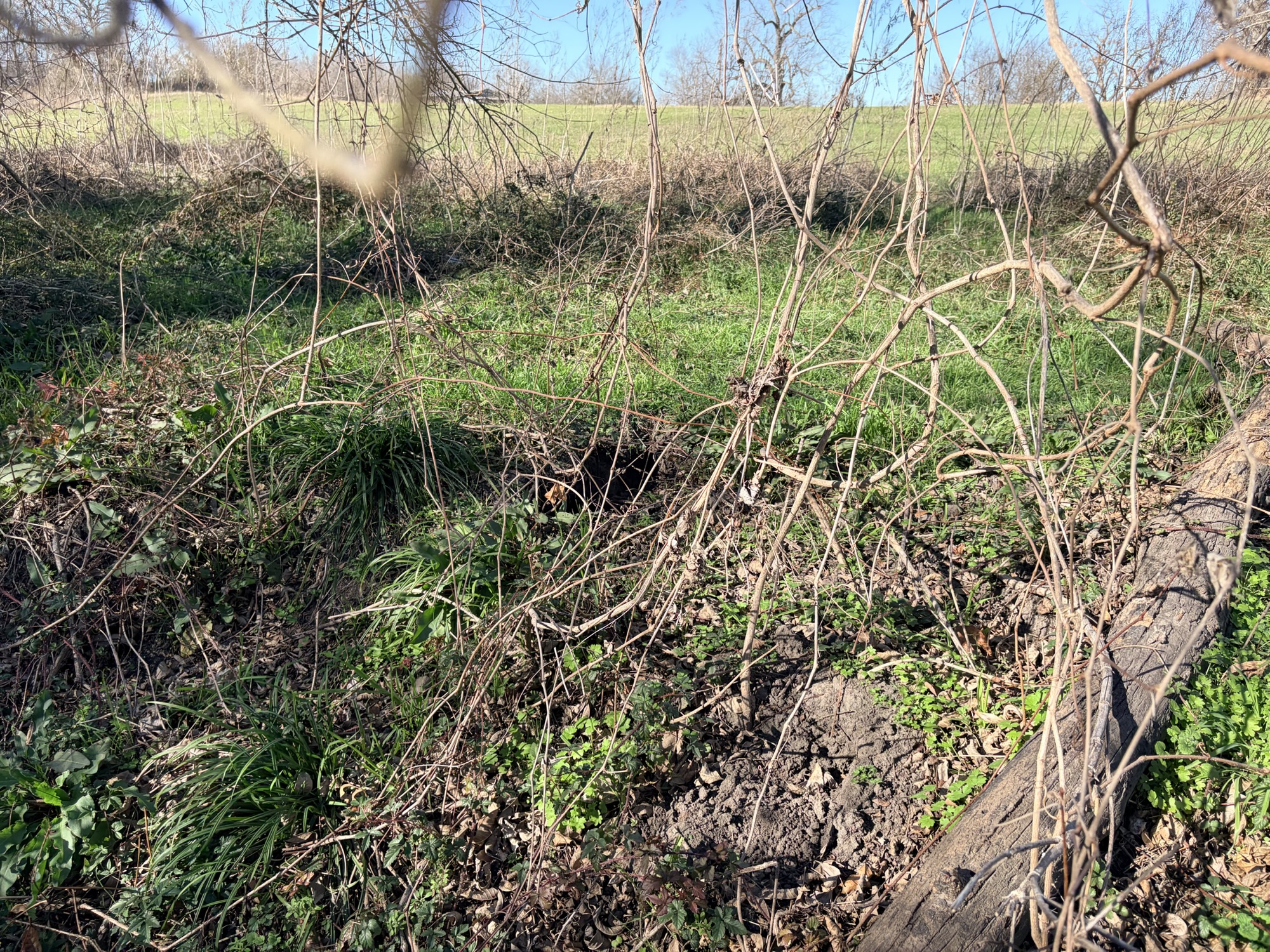
Also they build a lot of tunnels. Here is an entrance.

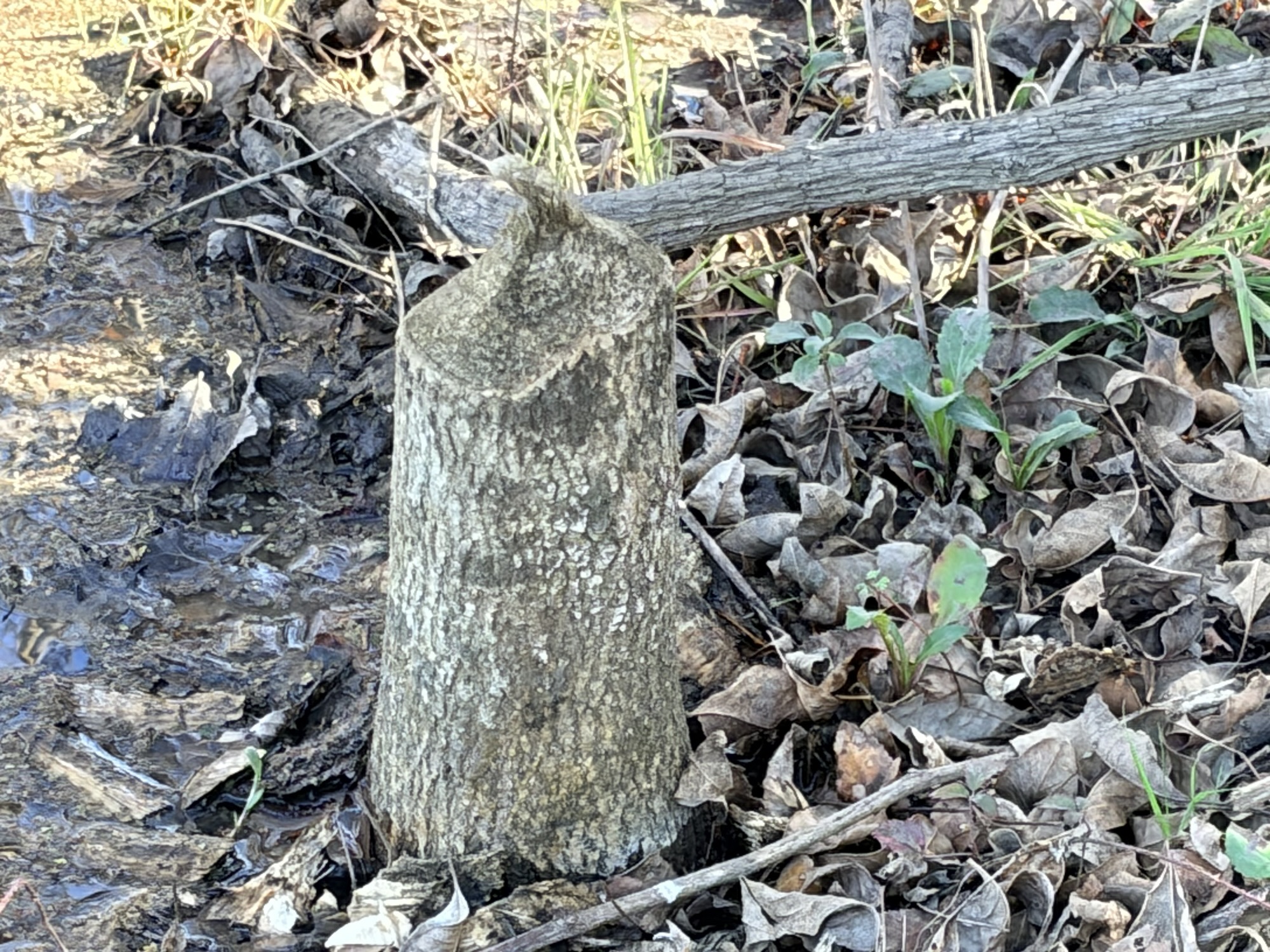
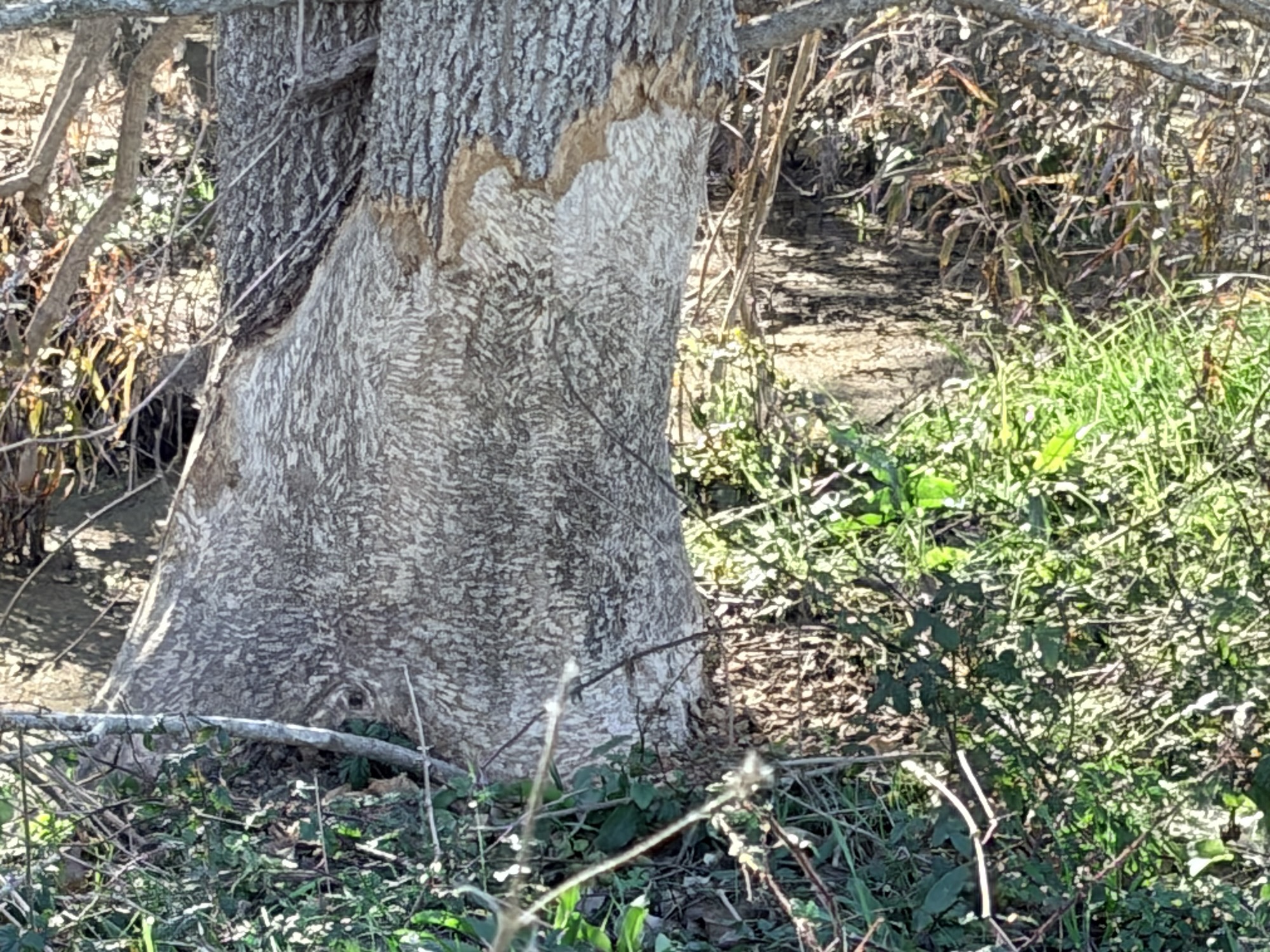
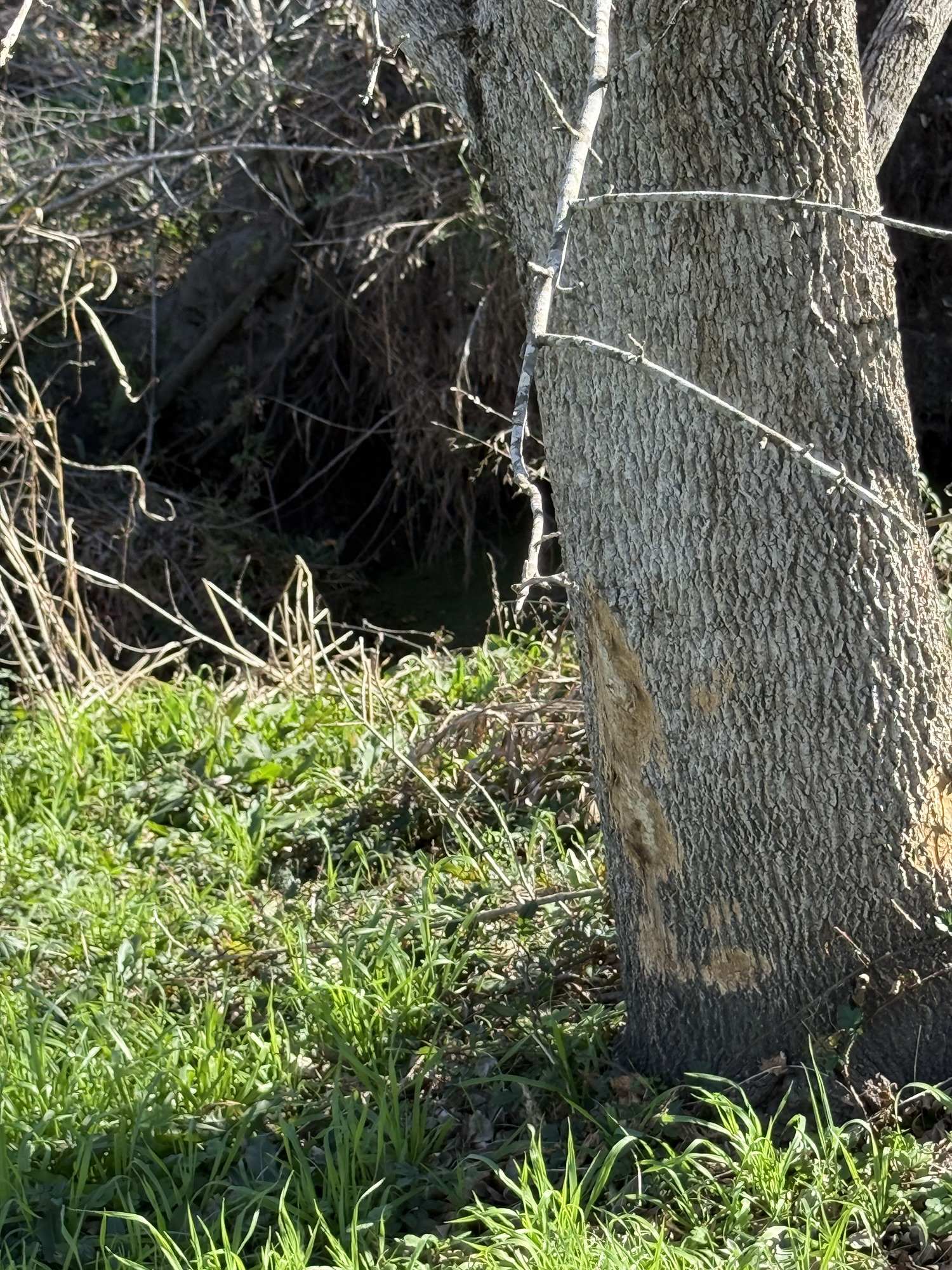
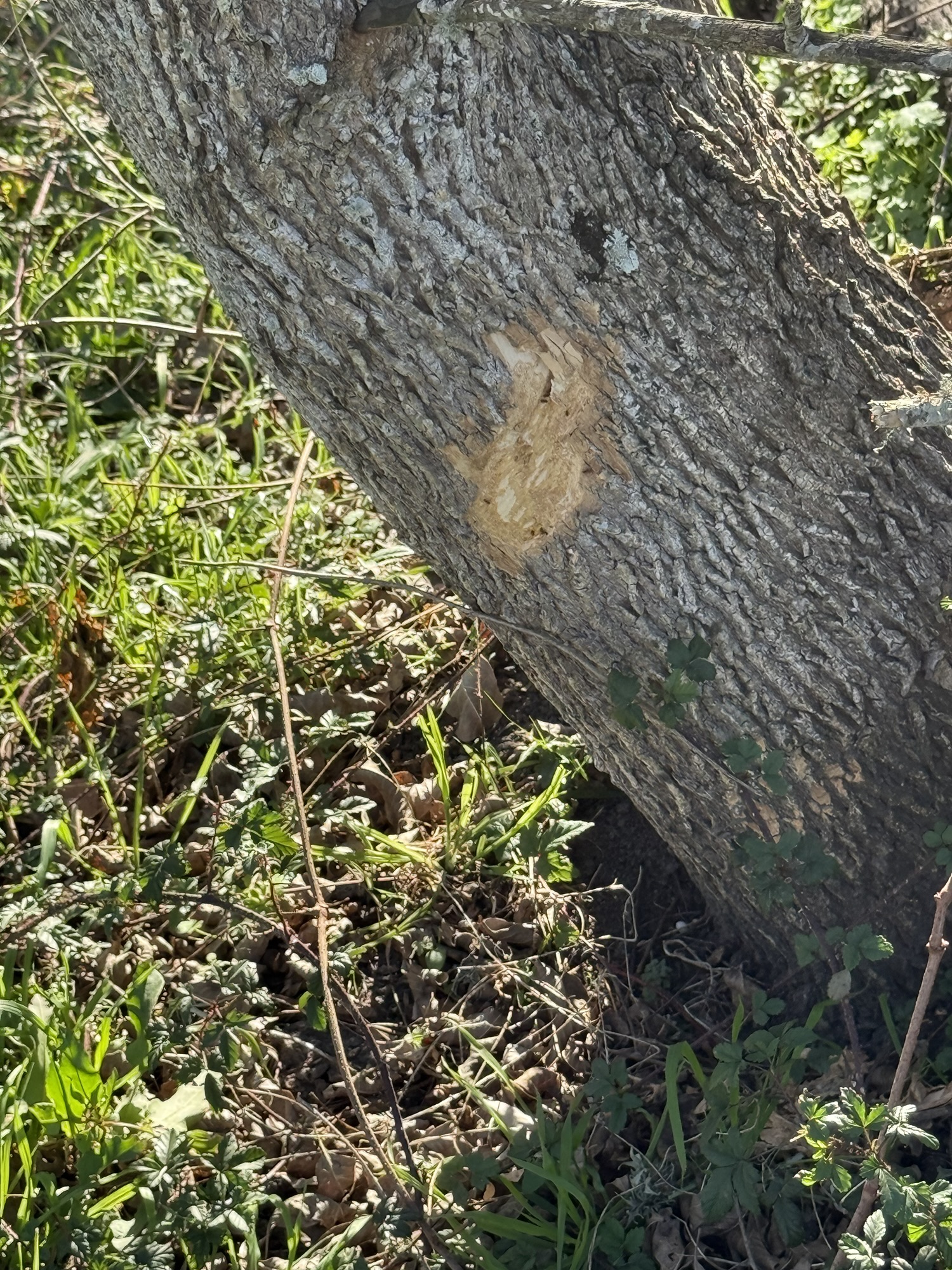
We found trees that had been gnawed by beavers (some from the previous dam a few years back). There were also trees whose bark had been gnawed. This definitely points to beavers!

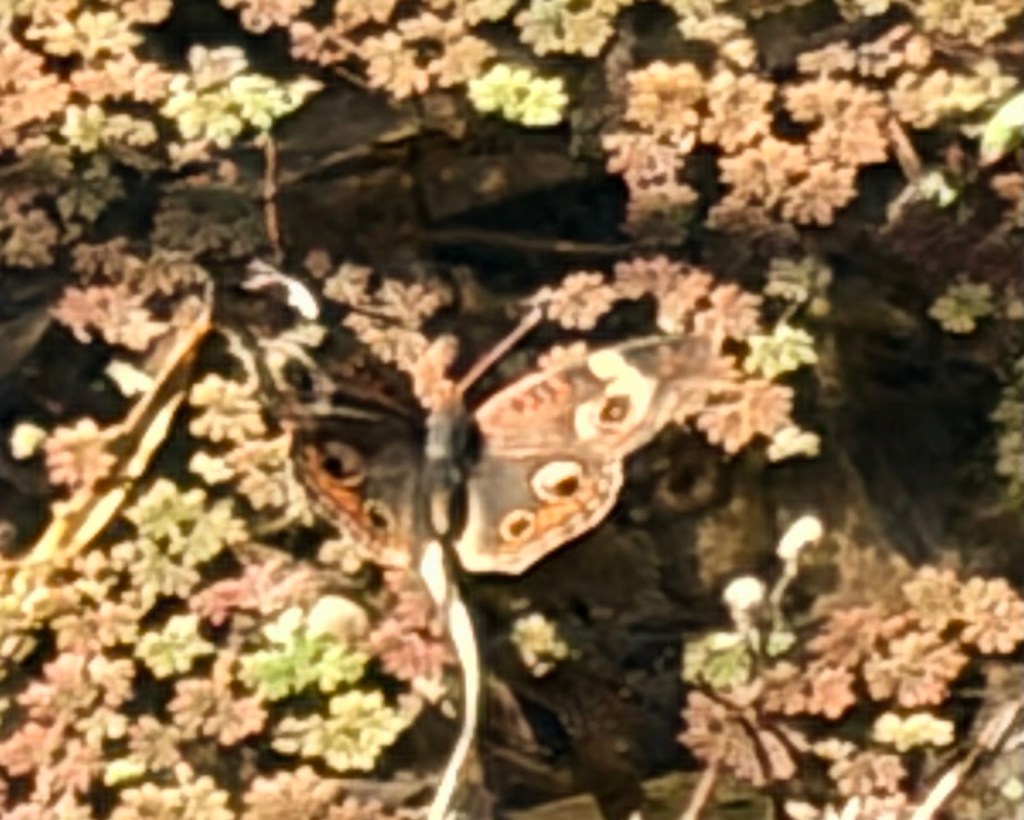
We moved upstream some more and found a second dam, which has created a magical pond full of fish, butterflies, and plants. One of the things beavers do is provide an environment for wetland plants, increasing diversity and creating more fertile soil after the dams are abandoned. It was hard to pull myself away from the tranquility.

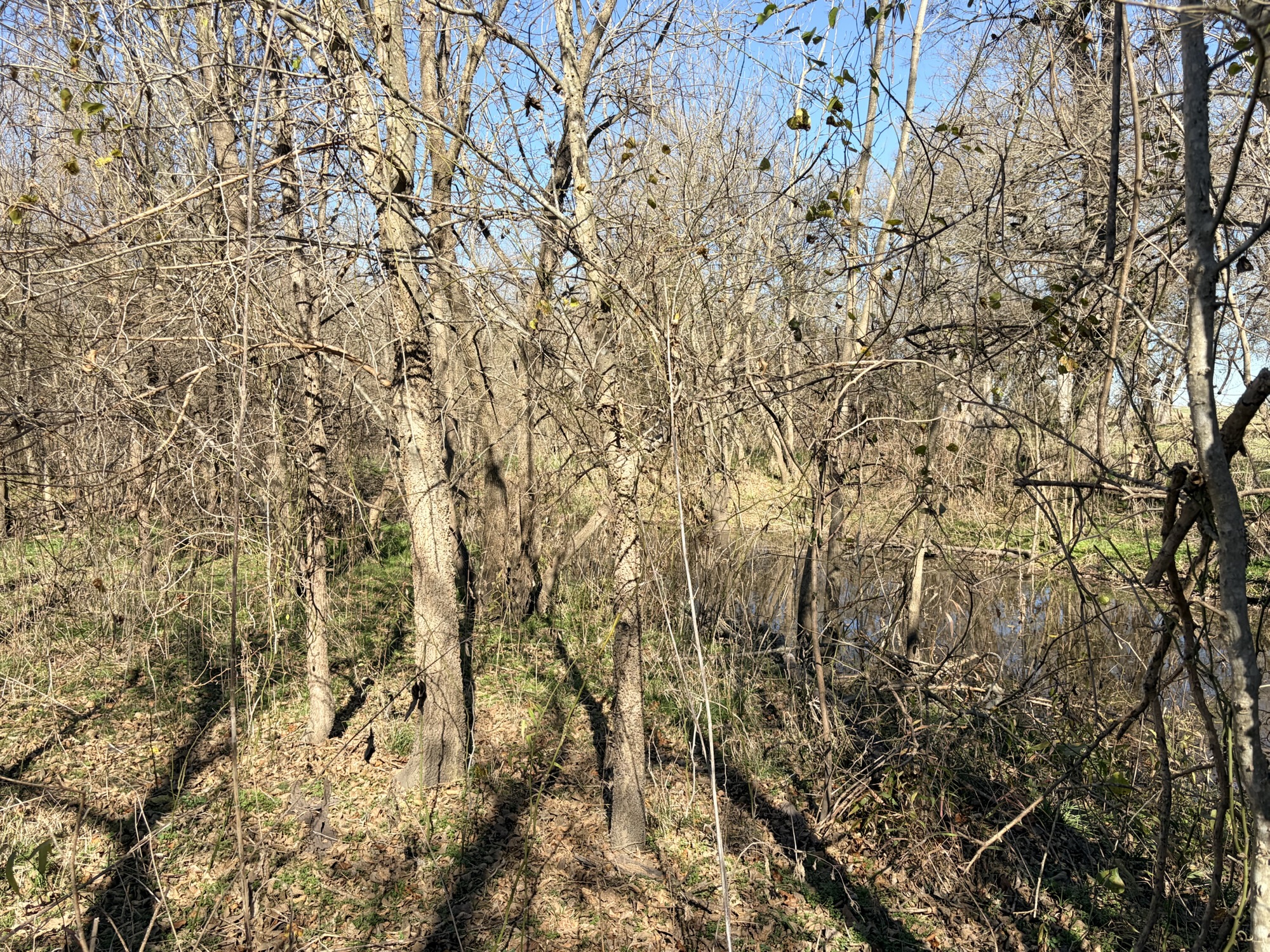
This is my favorite upper pond photo

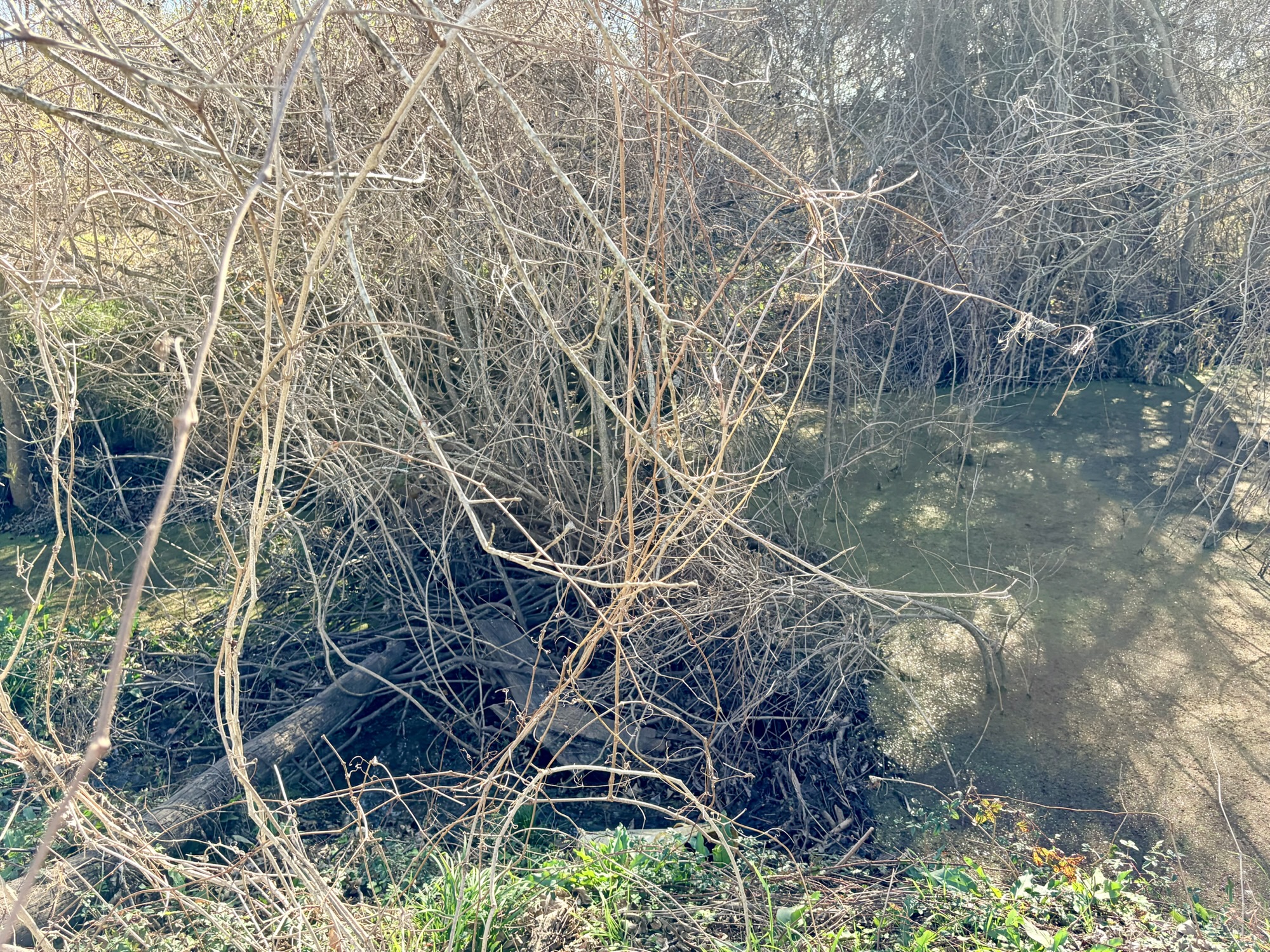
I wanted to see if there was a third dam below the first one we found. Sure enough, following the cool beaver trails led to another one that my friend thinks is a reconstruction of the original dam.

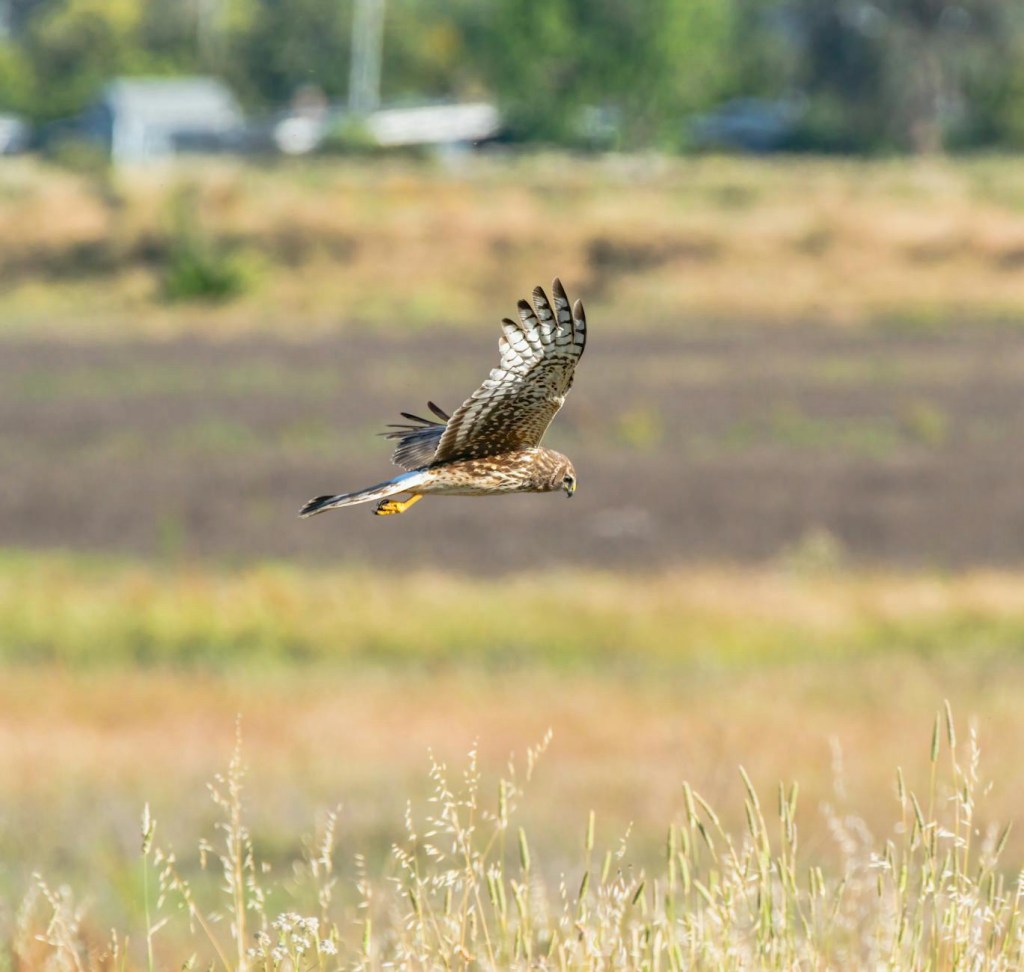
Since we had time and a truck, we went off exploring other parts of the property, which are mostly hay fields. We stopped and got to see a spectacular Northern Harrier fly right in front of us when we both had our binoculars. They’re beautiful hawks with a white patch just above their tail.

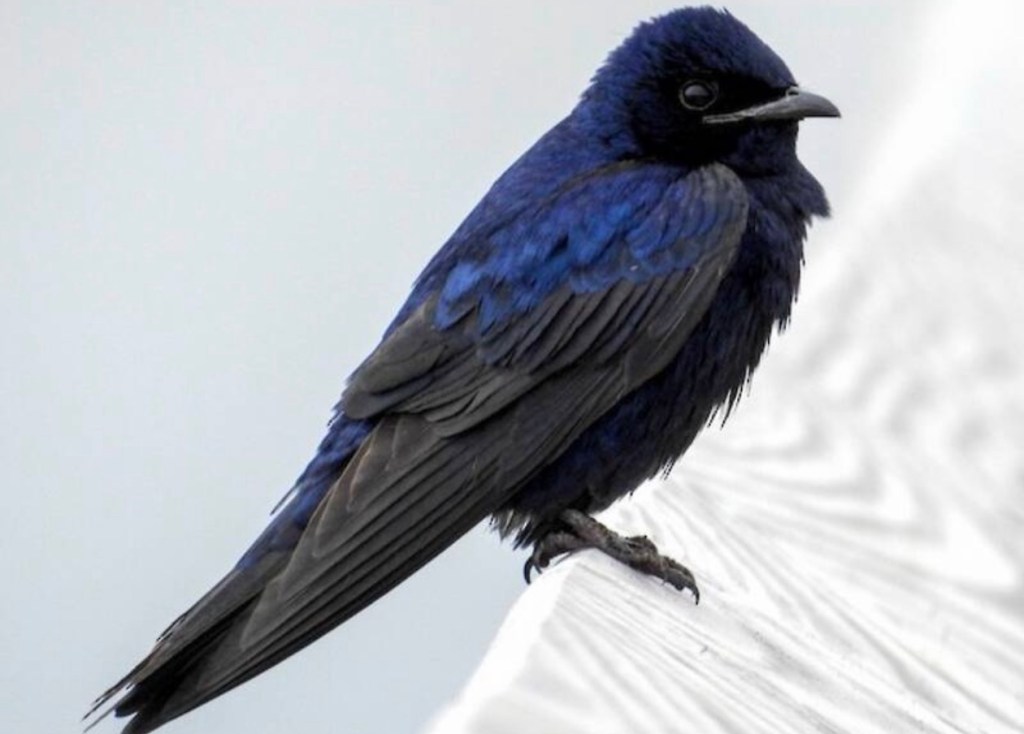
Northern Harrier from Pexels photo library

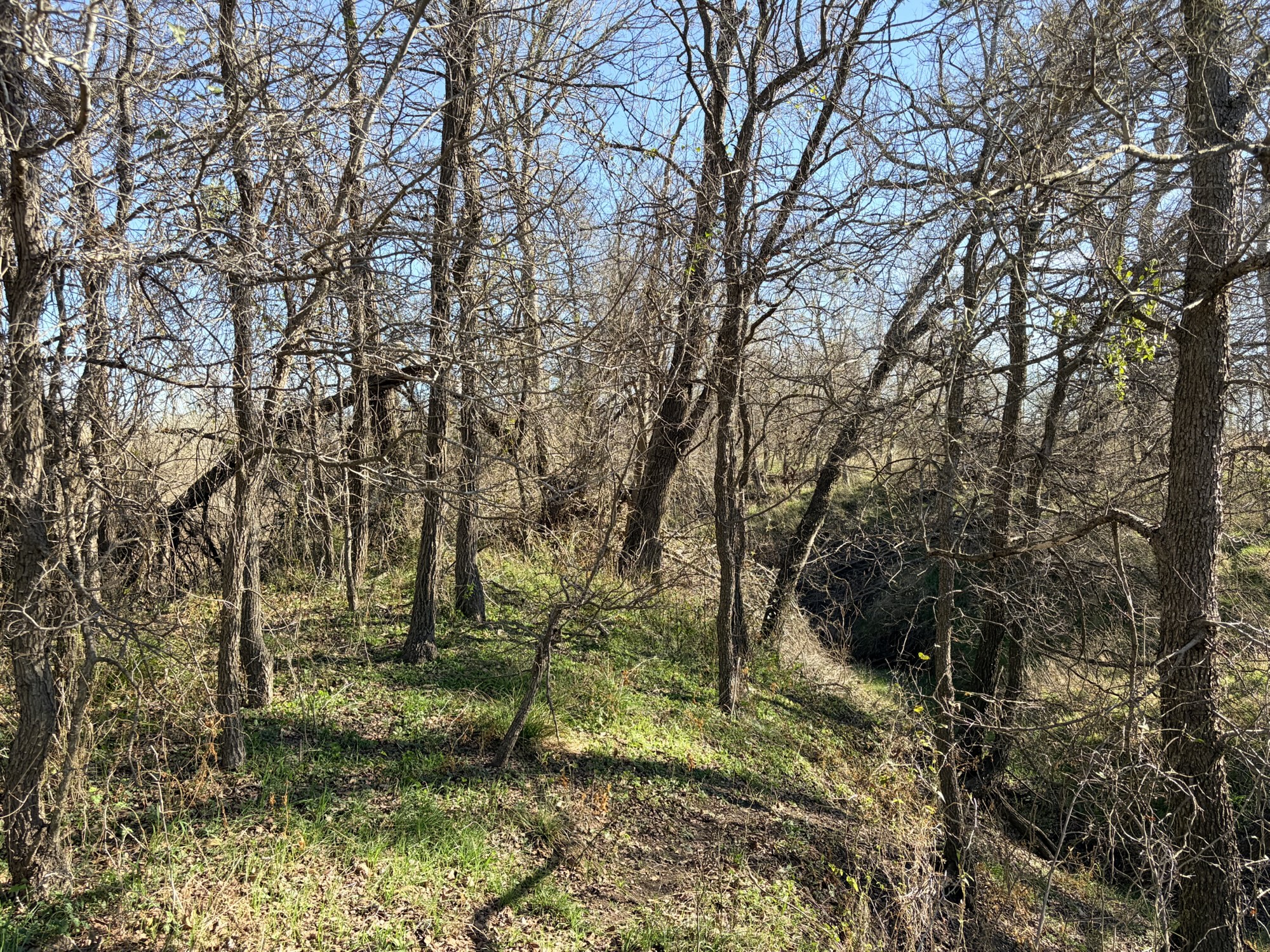
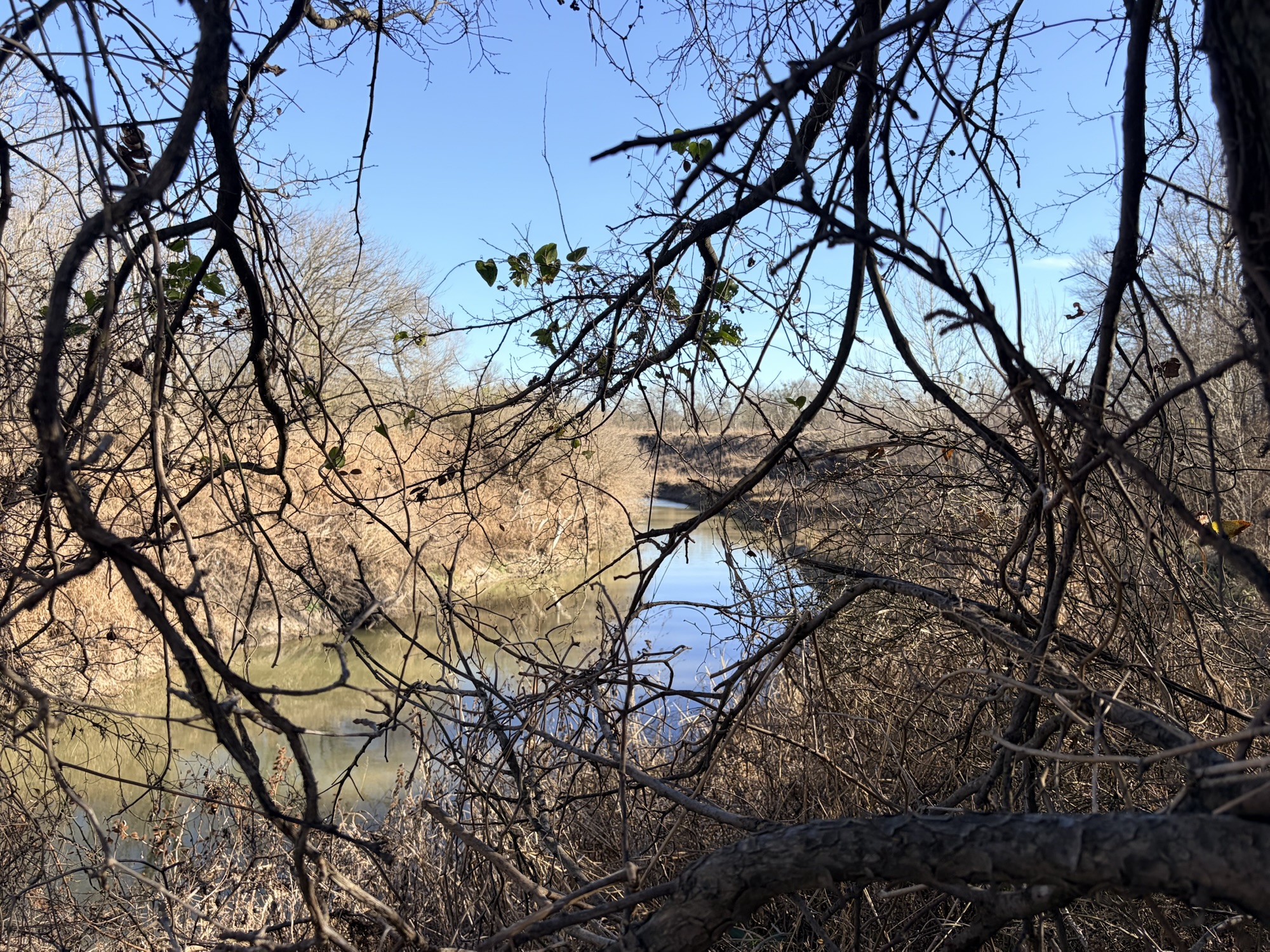
We then explored a ravine that lead to the big creek and observed how the creek is slowly moving northward. I did not fall down when I clambered down the embankment. I held onto trees. 

You can see where the creek used to be closer to the embankment

We ended our exciting afternoon doing some more birding back by my friend’s house and enjoying each other’s photos. I’m so pleased to cross another mammal off my list of Milam County sightings, even if I didn’t see an actual beaver. All my beaver knowledge really helped me see the signs of them. I’m sure the beavers are glad the prowling humans and dogs are gone!

Up Close Rat Snake Mating – Wow

By Sue Ann Kendall

There I was yesterday, sitting in my back yard, listening to birds and trying to read a book, when I heard a noise in the adjacent pasture, a few feet away from me. Usually when I hear something it’s one of the cottontails coming out of their den to munch on grass, or the cotton rat family traversing their tunnels along the fence line. Y’all, cotton rats are very cute (and no doubt delicious to hawks).
Hispid cotton rat (Sigmodon hispidus) on my porch

When I turned to look, I saw a massive moving blob. I took a photo of it, in case whatever it was moved away before I could get closer.

Can you see it?

I shouldn’t have worried, because the blob turned out to be two Texas Rat Snakes (Pantherophis obsoletus lindheimeri) (our subspecies of Western Rat Snakes) engaged in their mating rituals. This is one of the most interesting things I ever saw in my life, and I’m no spring chicken and have seen many things!

Texas rat snakes are more colorful than other Western rat snake subspecies.

I took many photos and even a two-minute video, that I hope will upload to this blog so you can watch all the undulations and pulses they go through. You can even see the female’s cloaca.

Yay! It uploaded!

I was spellbound. What a privilege to see this behavior out in the wild, right next to my birding chair (eek).

So pretty.

Being the semi-scientific type that I am, I looked up what I could find out about the mating practices of Texas Rat Snakes. It wasn’t easy, because there was little literature specific to these snakes, and nothing mentioned the bit about putting one’s head in the other one’s mouth that I think I saw.

rat snakes
What’s going on here?

However, I did learn that rat snakes mate in May and early June, making this prime time to enjoy the spectacle. Male rat snakes have a two-pronged penis (hemipenis) that is inserted into the female’s cloaca to deposit sperm. They spend a lot of time coiled together (up to an hour), though not all of the time is actually mating. I guess it’s a good time for all.

I was glad to see both heads looking fine.

Texas Rat Snakes lay 10-12 eggs 5 weeks after mating, and they hatch in early fall, which is, not coincidentally, when I tend to see many baby rat snakes.

This one just ate one of my eggs.

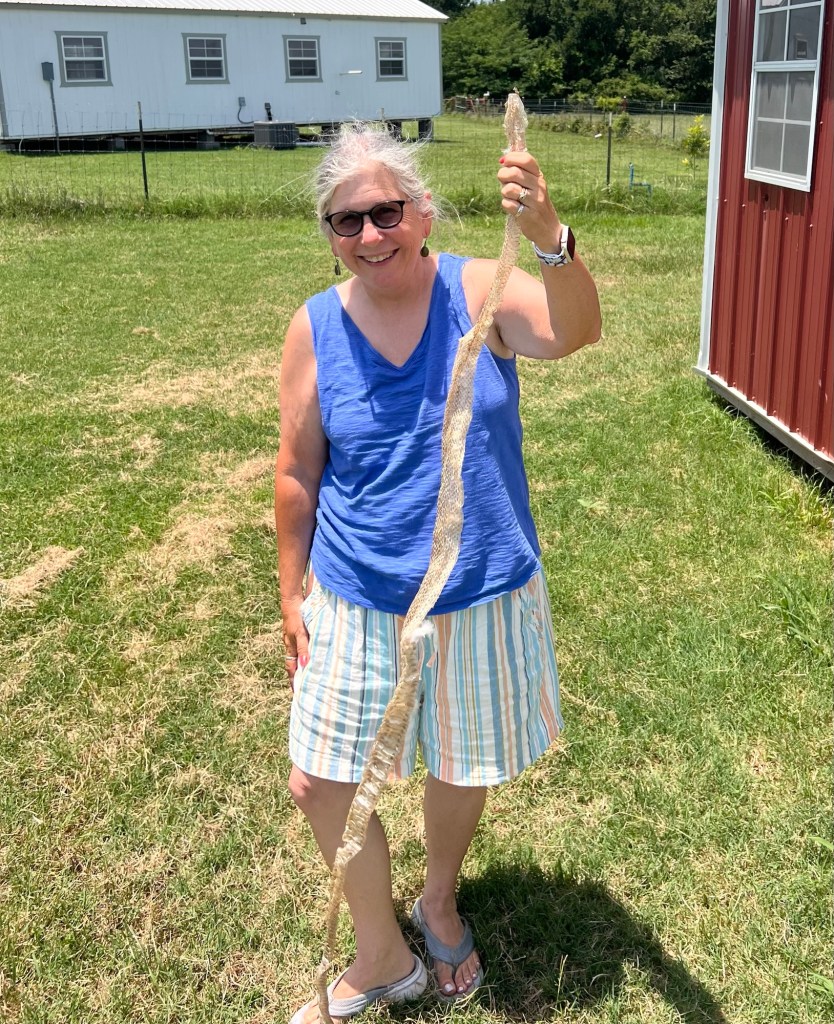
On my property we have quite a few of these snakes, which eat many of our pesky rodents, and many of my chicken eggs. I found a shed skin in my chicken house that was taller than me (I’m 5’2”) which makes sense, because rat snakes are the longest snake found in North America (up to eight feet, though Texas rat snakes usually top out a bit smaller).

Ignore my hair and look at the snakeskin! Photo by Asphalt.

They are constrictors, so that’s how they subdue small mammals before eating them. They will eat pretty much whatever animal they find. Their predators are hawks, especially Red-tailed Hawks, and where they have them, minks. I don’t think we have minks in Milam County, so that’s one less thing for the snakes to look out for.

Checking the hen house.

I really enjoy observing these snakes and consider any eggs they eat to be payment for mouse patrol. Note that they are great at climbing, and it’s fun to watch them climb walls. In fact, when we kept one as a pet for a few years, its name was Climber.

Climbing

By the way, this is prime snake season. I saw two plain-bellied water snakes today, on the Walker’s Creek bridge and in Walker’s Creek, north of Cameron, Texas. My friend Pamela found one at her house in a bucket of water, too. They are non-venomous snakes, like the rat snakes, so I just watch them and let them do their thing.

Resources

Pantherophis obsoletus – Wikipedia

Texas Rat Snake – Wikipedia

Forest Walk and Monthly Bird Count

by Sue Ann Kendall

This month’s bird count at the Wild Wings Bird Sanctuary took place on September 14. Ann Collins, Sue Ann Kendall, and Phyllis Shuffield not only looked for birds with their eyes, binoculars, and ears, but they practiced their Merlin Bird ID skills. We identified 25 different birds in the two hours we spent at the sanctuary. Highlights were a juvenile and adult male Eastern Bluebird and a chatty Downy Woodpecker. Merlin identified other new birds, Alder Flycatcher, Blue Grosbeak, Lark Sparrow, Upland Sandpiper, and White-breasted Nuthatch. These are all plausible birds to have around this time of year in Milam County.

Eastern Bluebird. Photo by Skyler Ewing on Pexels.com

The group decided to take an informal forest walk in the wooded part of the sanctuary (not an official Shinrin-yoku walk, since we were identifying plants and birds. It’s quite pretty back there, where a creek often flows when it’s wet outside. We found some late wildflowers, such as Marsh Fleabane (Pluchea odorata) and Late Boneset (Eupatorium serotinum). We observed lots of berries for the birds, including many coralberry plants (Symphoricarpos orbiculatus). There was evidence of animals who hang out in the sanctuary, especially deer who had been there very recently judging from the fresh scat and urine.

Ann and Phyllis refilled some of the hummingbird feeders, which were primarily being used by the local honeybees of Bird and Bee Farm and a few butterflies. There are now many feeders, and it appears that the birds (primarily Carolina Chickadees and Tufted Titmice) are eating out of them all. There were dozens of Northern Cardinals flying around, but they were not coming to the feeders.

Bird feeders and the seating area

Since our last visit to the bird sanctuary, the intrepid Gene Rek has put in more raised beds and planted some new shade-loving plants in them, including beautyberry and Turk’s cap. They have drip irrigation to help get them established. The new bird bath is still working great, too. There’s lots of progress being made.

And as a bonus, Sue Ann left with two new Cochin hens! It was a good morning at the Wild Wings sanctuary!

Cathy the hen is much happier now that she’s in a hen house.

We made a page that lists all the birds we’ve seen since we started observing here. Please let one of us know if you come out and see a new bird!

Falls County Canoe Trip

by Alan E Rudd

It was a day when, like it or not, we got up hours before sunrise. Trying to paddle down a reach of the Brazos River on the last day of June, any boating crew is well advised to start early and finish early. Unlike most of the days in the rainy first half of 2024 this one promised to have few clouds, and therefore the full intensity of the midsummer sun.

Bluffs. Photo by Peggy Connor

We looked at weather apps as we rode along that describe the expected true air temperatures and the now ever so popular “FEELS LIKE” index. We noted that the “Feels Like” index was exactly the same for Houston, Waco, Terlingua, and Las Vegas, Nevada. All of these places have different levels of humidity due to their locations on the North American continent. But for the most part they all receive the same amount of solar radiation (sunlight) on any given day. The locations where the humidity was higher Houston and Waco were blessed with lower temperatures but they “felt” to be the same temperature as the two chosen desert localities. This is no new discovery: IN SUMMERTIME IT IS HOT. Therefore it “FEELS HOT.” Always has!

Fishing Spider. Photo by Victoria St. Everett

As it was, we got into the river and launched boats at 7:33 AM. Angie and Adam dropped us off under the Highway 7 bridge with Victoria, Alan, and Peggy in three boats. The river level was gently dropping into the 2400 cfs range after being higher during the wee hours of the morning. This was pretty-clear, cool water from Lakes Whitney and Aquilla that was being released upstream of Waco. The flow rate pushed us downstream and even in this wide, placid stretch of the Brazos you did not have to work hard to move rapidly. We saw Great Blue Herons, heard woodpeckers, and watched Bluff Swallows entering and leaving their nest holes in the colonies burrowed into the red soil riverbanks. Cliff Swallows mobbed the bridges where they had huge colonies of mud nests glued to the underside of the concrete structures.

The wide Brazos River. Photo by AE Rudd.

Victoria was in the lead when she passed an antlerless white-tailed deer swimming across the river. You could see why the cattle drovers from the Texas coastal plains always pushed their herds upstream of Waco before trying to cross the Brazos on the northward cattle drives. This deer was stuck below a high, steep, red alluvial soil embankment. Its thrashing hooves could not gain traction to climb the bluff and it repeatedly fell back into the river and was washed downstream where it would try again to clamber up the slick red clay. Finally, it arrived at a point where a small creek entered from the eastern shore, and it rapidly disappeared up the slope of this creek-bed.

I was reading about mammals’ swimming abilities recently, and the author pointed out that swimming motions are directly derived from walking motions. Humans (and probably other hominids) are a rare exception to this rule, and we must learn to swim with motions other than our walking strides. Even goofy arboreal species of mammals like tree sloths are surprisingly talented swimmers. I would like to travel back in time 16,000 years and watch a giant ground sloth swim across the Brazos River.

The trip was fast. We traveled 4.9 miles by kayak and canoe in 1 hour 35 minutes. We had a perfect pull-out point at the concrete boat ramp at Falls on the Brazos Park. A big thank you goes to the Falls County Commissioners court for keeping this old park open access. The recent two months of flood stage water levels have rebuilt sand and gravel bars and scoured clean the riverbed. Every river benefits from a good flushing to renew the system. I had to risk exposure to the heat to get a quick look at the cleaned-up face of the Brazos.

Bivalve Bayou

by Alan E. Rudd

The original plan for February 16, 2024 was to conduct a long downriver trip on the Brazos to examine spots suitable for an overnight canoe trip in spring. However, lots of rain upstream inundated the very sand and gravel bars that serve as the best camping spots. An alternate plan was in order, so the team of intrepid explorers chose a feeder stream known to be shallow, gravelly, and home to mollusks. Call the stream Clam Creek, Mollusca Millrace, or Bivalve Bayou. Mussel Run turned out to be a special place on a special day.

The warm February air on a Friday morning we knew would soon turn cold, with a blue norther due to arrive the next day. Victoria and Rosie were eager to put some paddling time in as a tonic for spring fever, so we did a reconnaissance canoe trip down this creek that is usually too shallow to allow boat travel of any kind. Dragging two kayaks and a canoe down into the creek-bed was easy as the rainy winter had grown a deep carpet of winter grass along Mussel Run Creek in Falls County.

The three of us claimed “First Descent” along this small tributary of the Brazos River, since it was an unknown path to any and all in our group of “river runners.” In the grand scheme of things, others have surely traversed and crossed this old watercourse. Having a name on the map so appropriate to what we would find along this creek is a sure indicator that other people have visited here often. It has likely been known to many people, and probably over thousands of years.

Paddling the first 200 yards of this 7-mile run we found sand bars littered with the shells of bivalve mollusks. Many were freshly opened and probably eaten the night before. Racoon tracks were everywhere in the freshly washed sand. River Otter tracks were less abundant but also found along with beaver slides and feral hog sign. Mussel shells numbered in the many hundreds on the sandbars. Rosie wondered out loud if any of the species we were seeing were edible. “Sure they are! Particularly if you’re a racoon”. Wise guy…….

We found Giant Floater clams (Pyganodon grandis), Yellow Sandshell (Lampsillis teres), Threeridge (Amblema picata), and Mapleleaf (Quadrula quadrula). These mollusks were new to me, but Justin Grimm at Brazos River Authority quickly identified them from my amateur photos.

Justin is environmental programs coordinator at Brazos River Authority in Waco. Part of his duties are to survey and document the health of a wide assortment of aquatic plants and animals in one of the largest watersheds in Texas. This creek originates in upland areas east and north of Marlin, Texas. Streams which contribute flow in this watershed are Wild Horse Slough, Big Creek, Cedar Creek, and Brushy Creek among others. It is not until this stream reaches that flat red soil of the Brazos River flood plain that it obtains the name Mussel Run on the USGS topo maps.

We noted that the farm fields above us were located on fine red “Brazos bottom” alluvial silt that appeared to be 20-25 feet thick when looking up from the watercourse. Below it at water level there was a stark change in the geology, with a layer of bright white limestone conglomerated-gravel, with the aggregates being about the size and smoothness of ping-pong balls. This gravelly rock layer contributed most of the material that made up the hard bottom of the creek-bed we could feel with our paddles. I wondered if this high-calcium gravel accounted for the habitat that provided such a top-quality home for all these bivalve mollusks.

One thing for is for sure, and it is that this creek has been a major access barrier for river bottom farmers for most of the last two centuries. The creek channel is uniformly steep and has actively eroding sections of alluvial soil at almost every turn. Crossing it with mules and plows in the 19th century or with tractors in the 20th and 21st century has had to require extraordinary effort. The bridge we launched at is a brand-new concrete “highway-quality” structure at the end of a Falls County road. As we traveled down-stream we paddled over a concrete low water crossing probably 3-4 decades old clearly built by the landowners and not Falls County engineers.

We also passed under a high bridge structure that had steel I-beam upright pilings and a rickety wooden deck. This structure was a proper place to eat lunch but had signs on both ends stating WEAK BRIDGE CROSS AT OWN RISK. River bottom farm families have likely been using this structure since the 1920s, but heavy modern agricultural equipment crossing this structure is out of the question these days. A large disc plow was permanently embedded in the bottom of the creek where it apparently slid down an embankment during a severe erosion-causing flood event. It was a stark warning about the power of rainwater visible from the lunch-time observation spot.

Because this creek had flooded only 4 days prior to our trip we were able to float over almost every rocky riffle and fallen tree. Once we reached the confluence with the Brazos River, we got the opportunity to deal with the remains of that flood, to the tune of 6130 cubic feet per second (cfs) water flow. Riding on top of this dense flowing mass one can quickly cover miles with only moderate exertion with the paddle. The power of flowing water to excavate and move soil, push trees, and shove large objects is widely renowned. The reason is that water itself is so very heavy (62.4 pounds per cubic foot). The water flowing past us as we entered the river amounted to a 382,573-lb. object shoving us down-slope every second. Being whisked along was a joy after the hours of hard paddling in the slow water of the creek. What is most dangerous when the river is high are obstacles. If you get lodged against a tree or other immovable object in the stream, the force of the flow will quickly bend you and your boat into a very abnormal shape, and then hold you there like an angry 382,000-pound sumo wrestler. It is not an exaggeration to say “Death can come quickly.” Fortunately, we skimmed along the surface in mid-channel and arrived to have our pick-up crew (Adam and Angie) throw us ropes and pull the boats up the muddy shoreline. Now we know what is up along Mussel Run Creek and have the luxury of staying next to the wood stove on a Saturday morning.