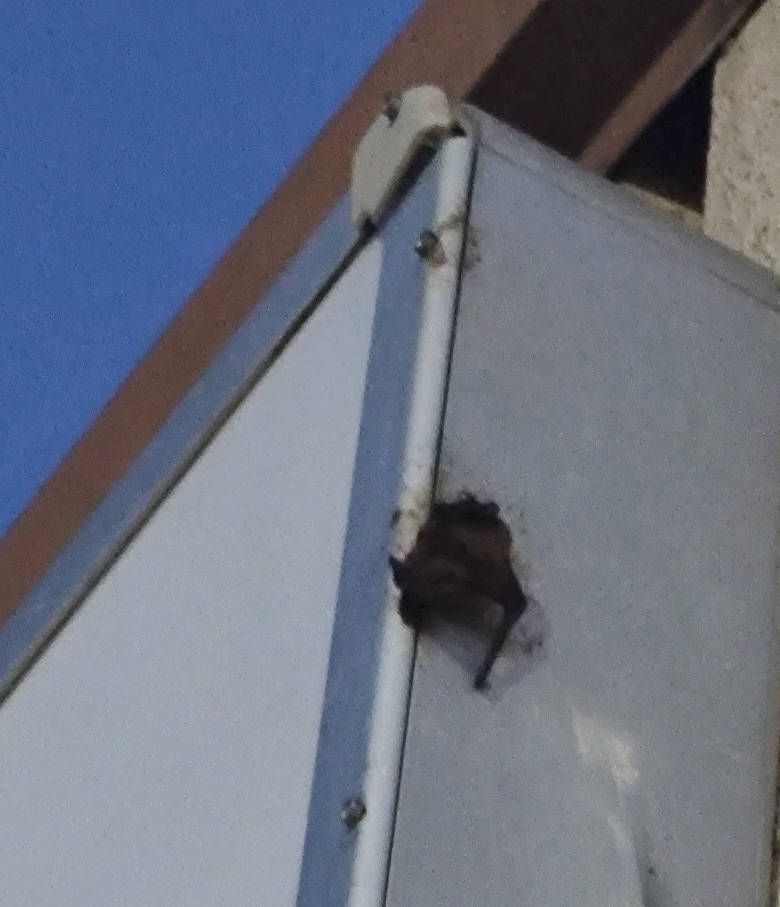
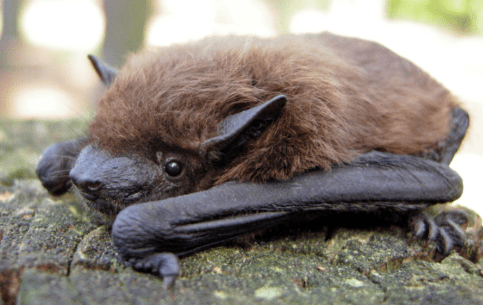
The bats are in residence in a strip mall here in Cameron. I believe they are Mexican Free Tails. Every evening around 6:30 pm they exit their abode in search of the evening meal. I’m unsure where they get their water.
The still shot is of a bar that appears to have gotten a leg stuck in the sign panels. It survived there for at least three days. Unfortunately. I couldn’t get it loose.
Postcript
At our March chapter meeting, Michelle Lopez shared the results of our Milam County bat monitoring project from last year. In addition to Mexican free-tail bats, we have Tri-colored bats (these are rare), evening bats, big brown bats, and eastern red bats. Nine sites were monitored for a week each. Michelle spent countless hours analyzing the sound files.
The first time I saw it, I knew immediately it wasn’t a Northern Cardinal.
At a glance, it had that familiar cardinal shape, but something was different—more gray overall, with muted red highlights and none of the bold black around the bill. At the time, I didn’t know exactly what to look for, only that my eyes were telling me this was something else.
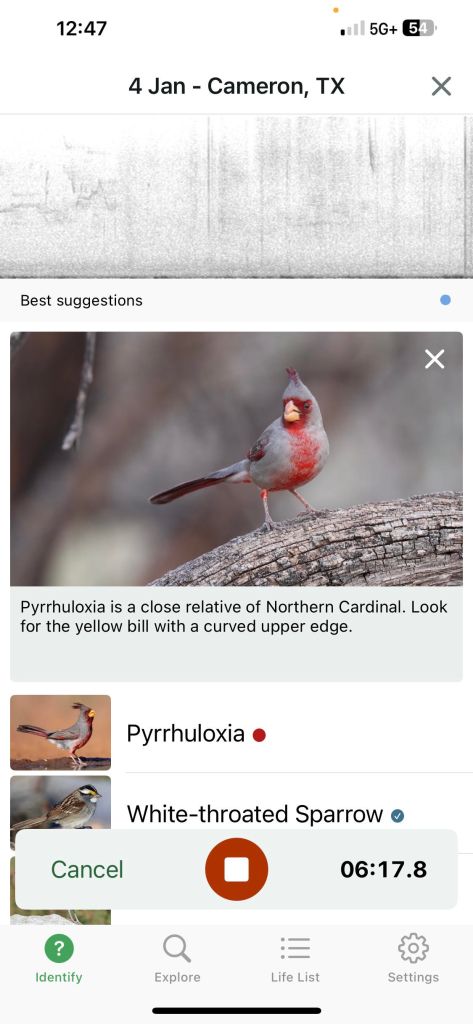
Later, as I learned more about the Pyrrhuloxia, one detail stood out: the beak. Unlike a cardinal’s thick, conical bill, the Pyrrhuloxia has a distinctly curved, almost parrot-like yellow beak. Once I knew that, everything clicked.
Not long after, I saw the bird again near the pond at Twisted Creek Ranch. This time, I was ready. The curved beak was unmistakable. As if on cue, the Merlin Bird ID app also picked up its call, confirming what I already felt deep down—I hadn’t been mistaken.
The Pyrrhuloxia, sometimes called the “Desert Cardinal,” is far less common in Central Texas than its bright red cousin. Seeing one is a reminder of why slowing down and paying attention matters. Sometimes it’s not about bold colors, but subtle differences—the shape of a beak, a softer call, or that quiet inner nudge that says, this bird is special.
Moments like this are exactly why I love living and observing nature here. Every season brings the possibility of something unexpected, and every observation deepens my connection to this land.
Keep watching. Keep listening. Nature always has more to reveal.
Did You Know?
The Pyrrhuloxia’s curved beak is specially adapted for cracking hard seeds, especially those found in arid and semi-arid landscapes.
Though often called the “Desert Cardinal,” Pyrrhuloxias are actually a separate species and lack the cardinal’s bold black facial mask.
Females are even more subtle than males, appearing mostly gray with faint red accents, making them easy to overlook.
Pyrrhuloxias are most commonly found in thorny brush, mesquite, and scrub habitats, which makes sightings in Central Texas especially exciting.
Their song is softer and less musical than a Northern Cardinal’s—another reason apps like Merlin can be helpful for confirmation.
Sometimes the most extraordinary discoveries happen quietly—right under our feet.
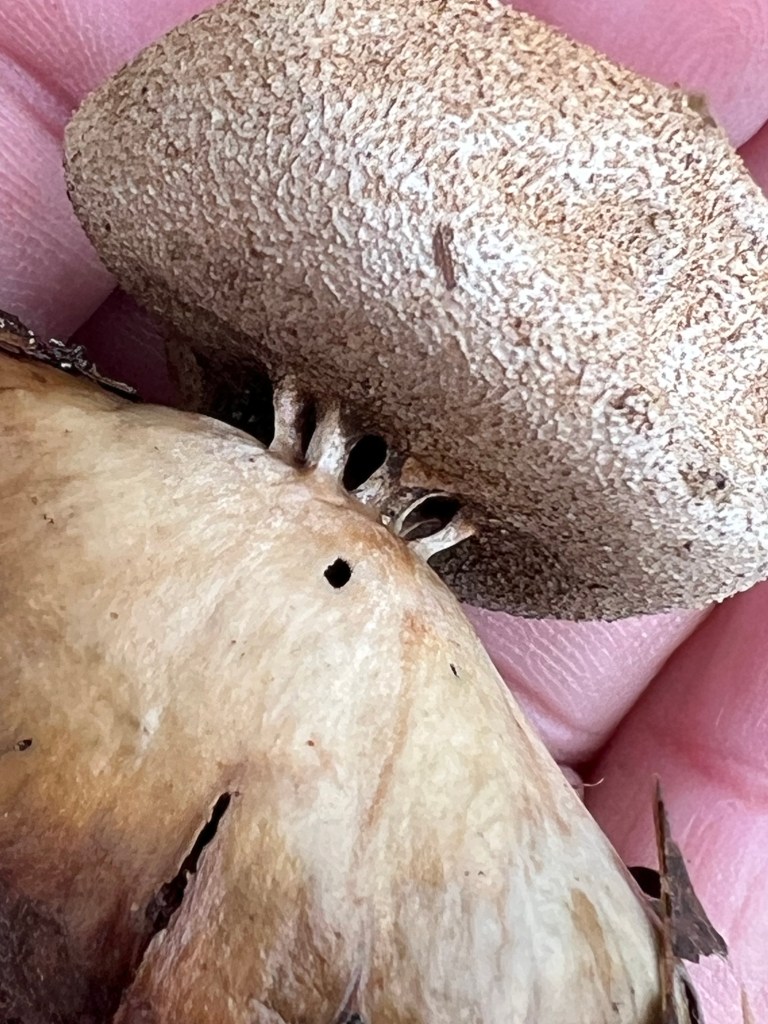
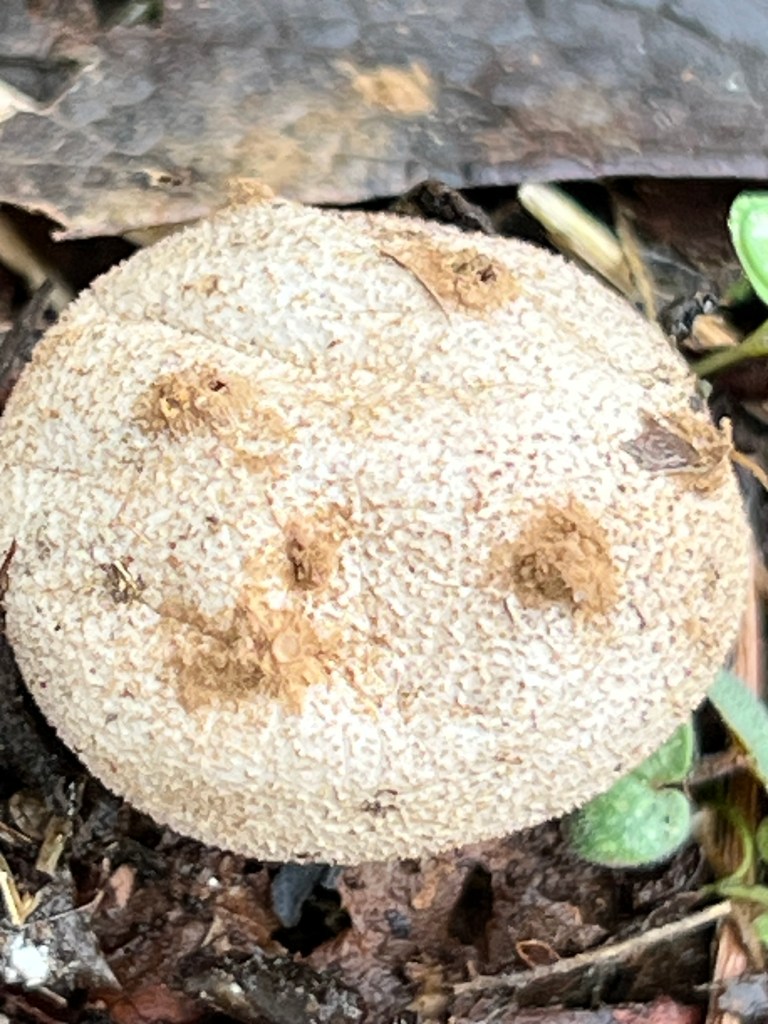
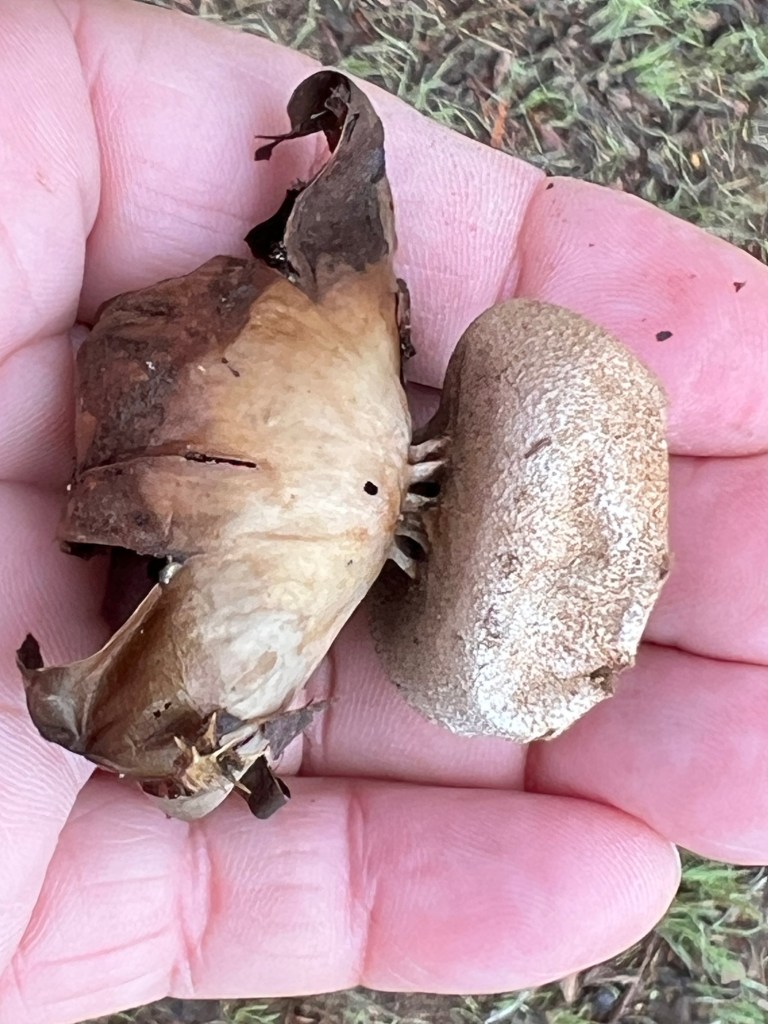
While exploring Twisted Creek Ranch, I came across an unfamiliar mushroom growing beneath a mix of native trees. At first glance, it didn’t resemble the common fungi we see after rains. Its clustered form and unusual structure immediately stood out, prompting a deeper look and documentation.
After careful observation, photo documentation, and consultation, the mushroom was identified as the Pepper Pot mushroom—a species with only around 820 documented sightings worldwide. Even more exciting, this appears to be the first recorded sighting in Milam County, Texas.
Why This Find Matters
Pepper Pot mushrooms are not just rare; they are indicators of something larger. Fungi play a critical role in ecosystems—breaking down organic matter, recycling nutrients, and supporting soil health. The presence of such a rarely documented species suggests a healthy, functioning habitat with intact ecological relationships.
Twisted Creek Ranch is a National Wildlife Federation–certified wildlife habitat, and discoveries like this reinforce the importance of preserving native landscapes. Undisturbed leaf litter, mature trees, and minimal chemical inputs all create the conditions fungi need to thrive—but that are increasingly hard to find.
The Value of Paying Attention
This find is a reminder of how much there still is to discover, even in places we walk every day. Fungi often go unnoticed, emerging briefly and disappearing just as quickly. Without slowing down, looking closely, and being curious, moments like this are easy to miss.
As Master Naturalists, documenting these occurrences—especially rare ones—is invaluable. Each observation adds to our collective understanding of species distribution and habitat health.
I’ve included photos from the original discovery to help document this sighting and to encourage others to keep their eyes on the forest floor. You never know when your next walk might turn into a county first—or even a global rarity.
Discoveries like this are why I’ll always advocate for leaving the leaves, protecting native spaces, and staying curious.
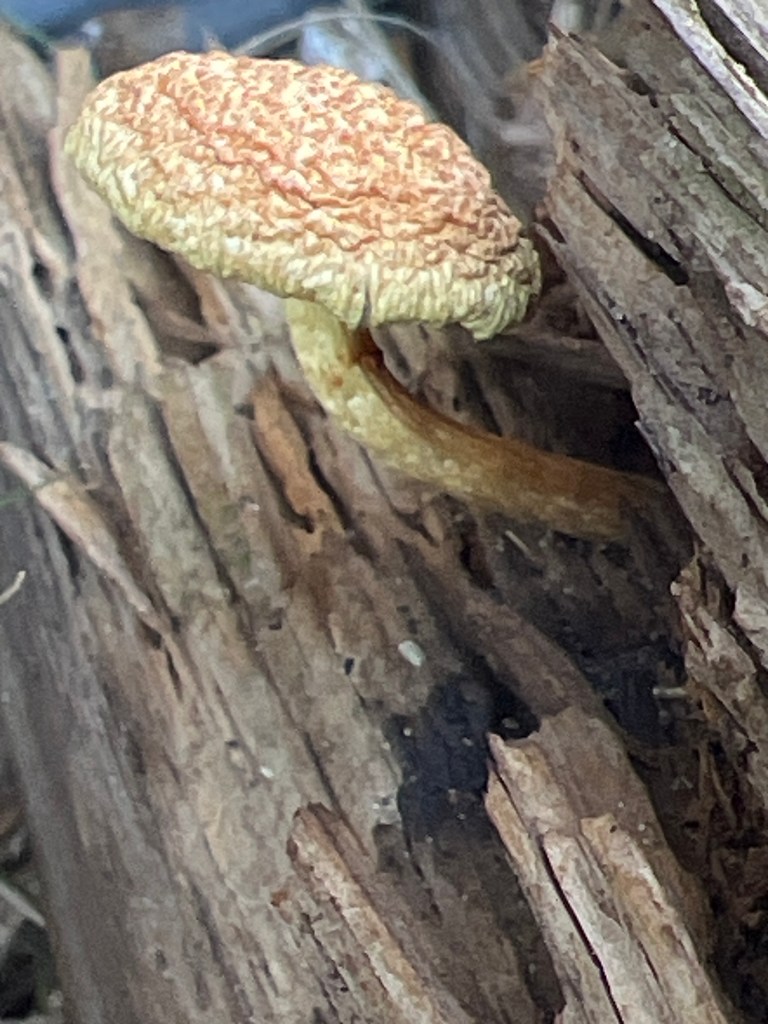
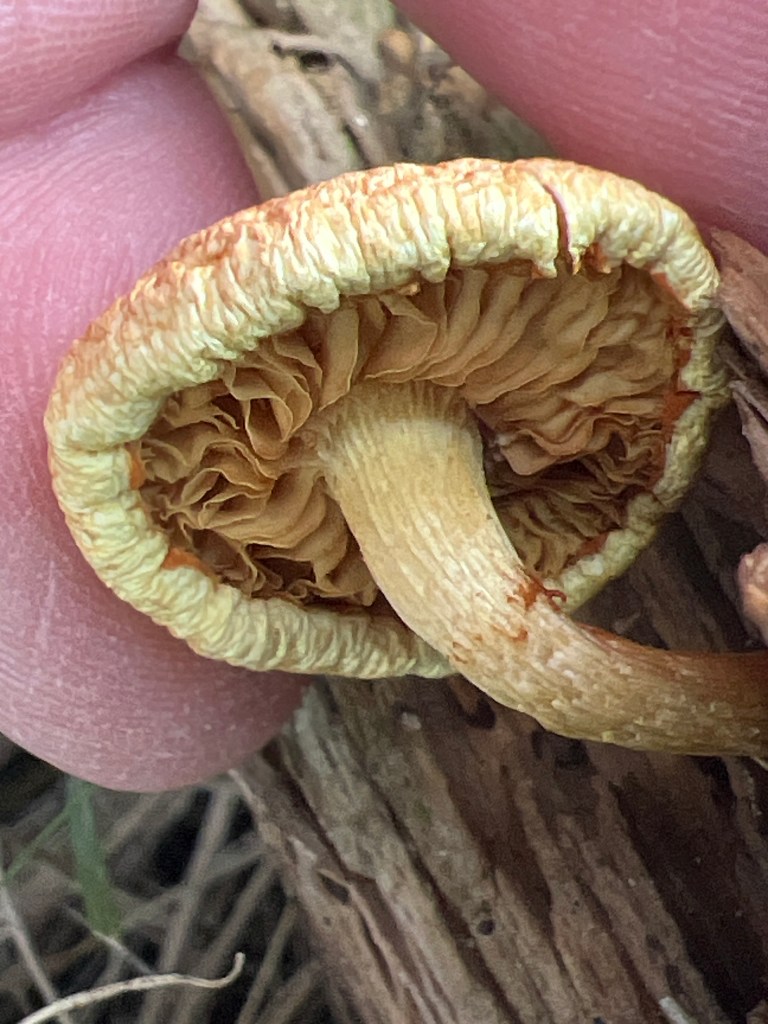
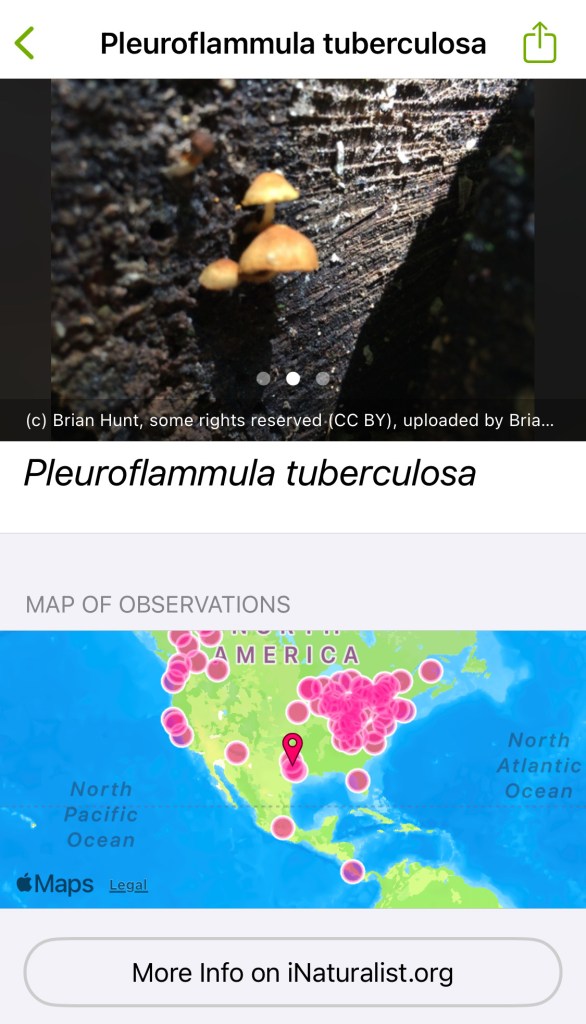
I was standing behind the barn the other day, not looking for anything in particular, when I happened to glance down at an old board on the ground. Growing right out of it was a small, unassuming mushroom—one of those moments where something ordinary suddenly asks you to pay closer attention.
Of course, I did what any curious naturalist would do: I took a photo and uploaded it to iNaturalist.
That’s when the surprise came.
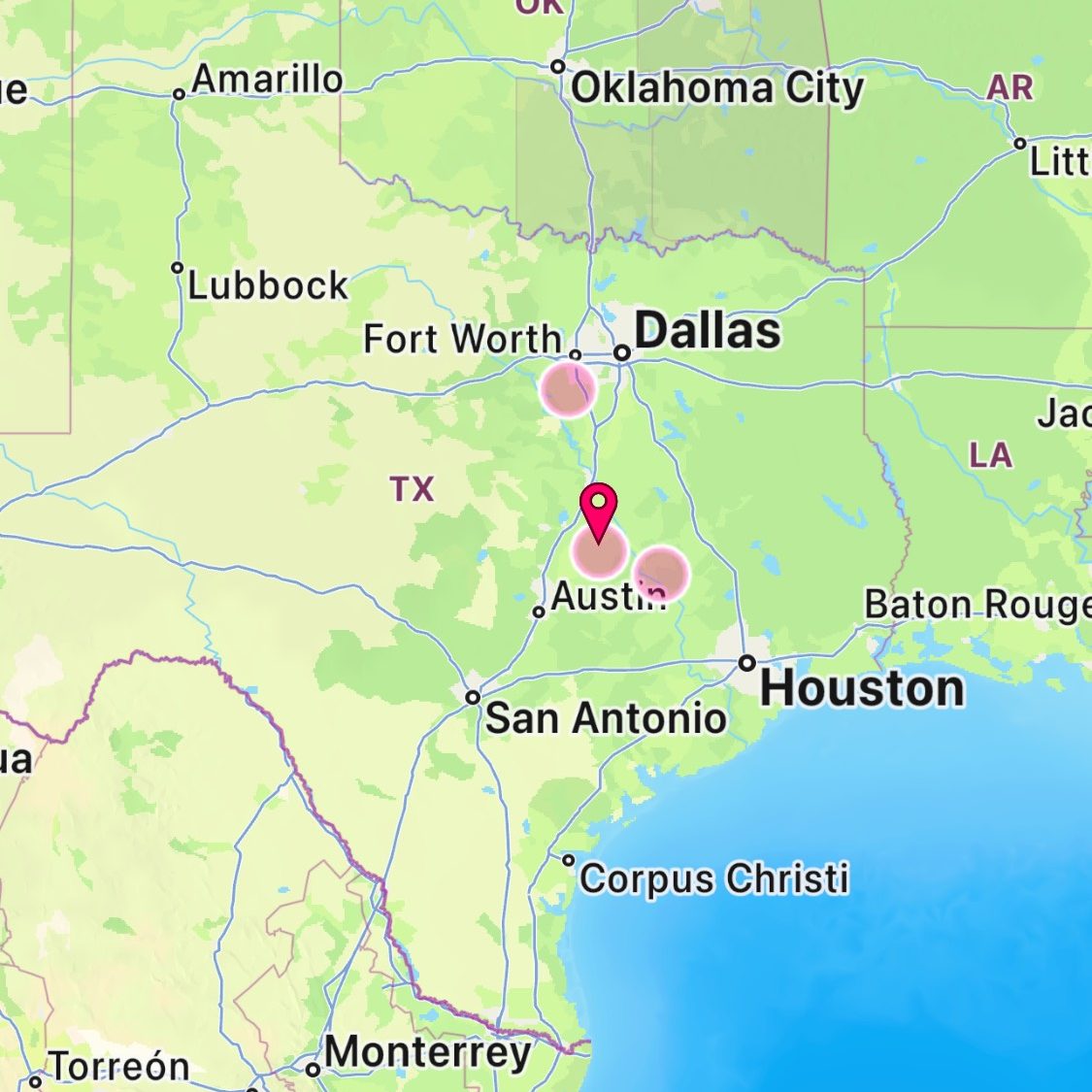
The mushroom turned out to be Pleuroflammula tuberculosa, a species with only 527 documented observations worldwide—and just two prior sightings in the entire state of Texas. Mine became the third.
Finding something so rare without intentionally searching for it feels like a quiet gift from the land. It’s a reminder that nature doesn’t always announce itself with fanfare. Sometimes it waits patiently for us to slow down, look down, and notice what’s right at our feet.
Moments like this are why I love spending time outdoors. Nature never disappoints. There is always something interesting happening—fungi recycling old wood, birds passing through unseen, insects going about their lives—if we’re willing to stop and observe.
Who knows how many rare, beautiful, or important things we walk past every day without realizing it? This little mushroom was a good reminder to keep my eyes open and my curiosity alive.
Here are some pictures from our trip to Red Mountain, where we prepped for the Tonkawa Powwow and did some trash pickup. What a spot!
Getting ready to climb
None of us had climbed the mountain before, but when we spotted some ribbons on trees, we figured that was our cue to start climbing.
Climbing
Let’s just say it was more of a challenge than we bargained for, but we all reached the summit. The kicker? Those ribbons were actually indicating where a trail was supposed to go. Who knew?
Anyway, our detour led to some neat discoveries, like some clay handles that could’ve been part of ancient clay pots. I took some photos and left the artifacts in place for the ongoing archaeological dig.
This may be a fossilized gourd in a rock!
Being a Texas Master Naturalist is a real treat, and our crew is fantastic. Love it!



 Nature Along the El Camino Real