Carolyn Henderson is one of the many folks in our Chapter who participate in a program to track the rain on our properties. It’s sponsored by CoCoRaHS, Community Collaborative Rain, Hail and Snow Network. Our data is collected daily to create one amazing database of precipitation!
Ideally, reading the rain gauge (or precipitation collection device) must happen daily, or we sure try to do it every day. Carolyn shared this with us yesterday:
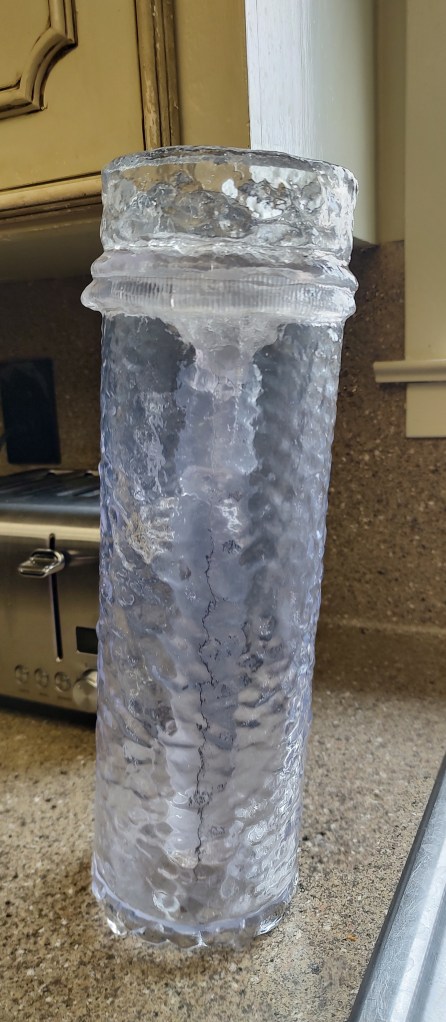
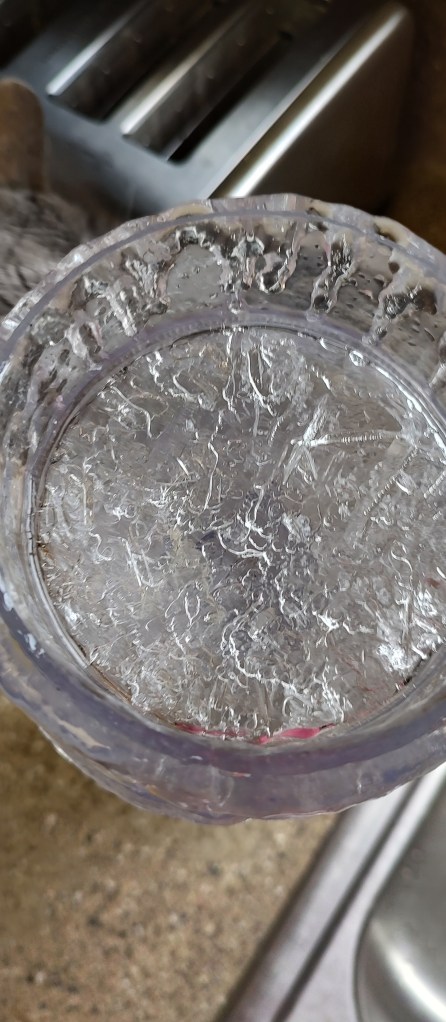
“Here is what the CoCoRaHS precipitation collection device looks like. It looks like about .75 in the inner section with about .5 inch frozen where it enters.”
If you have tales of citizen science during the ice storms in Milam County, feel free to share them with us. We can be reached at ecrmnsecretaryATgmailDOTcom.
The annual Texas Pollinator BioBlitz is on! Participants search for, photograph and post photos of all pollinators and what they pollinate during the month of October. There are a few places to post the photos, but the primary location is iNaturalist – my media of choice. Texas Parks and Wildlife Biologist and other studiers of pollinators and their source of food use the data to assess the viability of the insects.
I started my quest on Sunday. I was headed out to some friends’ place to check the Green Antelopehorn Milkweed which was abundant in May. I stopped at the Triangle Garden in front of Cameron Elementary School because it was full of a variety of blooms. The garden was started and is maintained by the Little River Basin chapter of Texas Master Gardeners. Because it is cultivated, I can’t use the flowers as post of pollinator food, but I can use what lands on them. I felt like I had hit the motherload of butterflies.
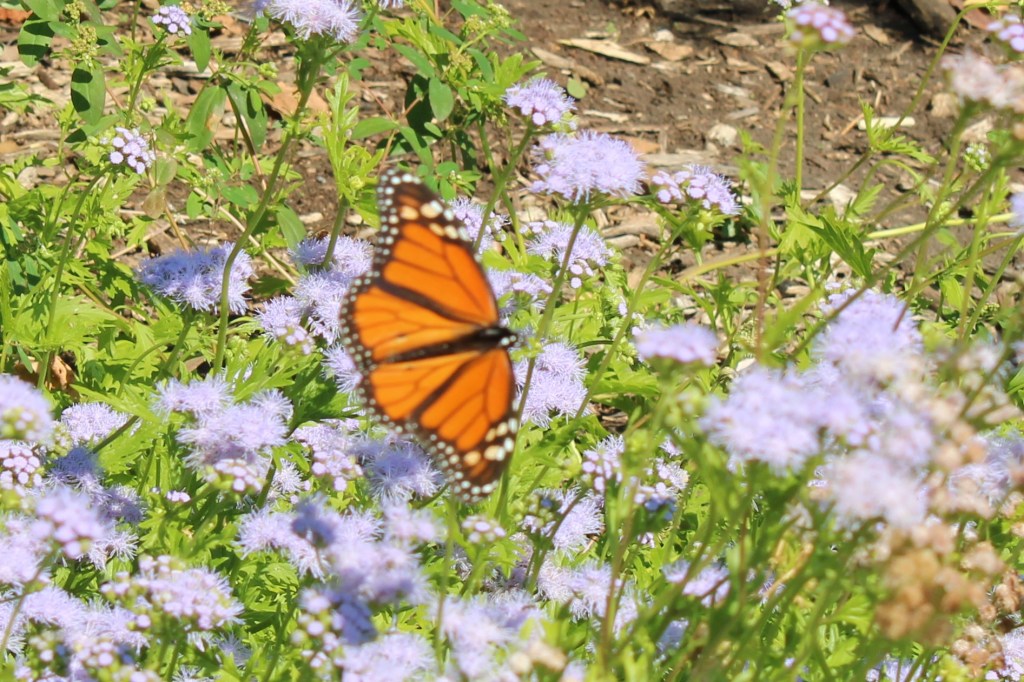
I was surrounded by Monarchs (at least 10), Queens, Gulf Fritillary, Pipevine Swallowtail, Fiery Skipper (or Southern Broken Dash – I’m still not sure), Painted Lady, and even a few Giant Tiger Swallowtail. Add in Eastern Carpenter Bees, plenty of honeybees, a few Bumble Bees, and something I think is a Snowberry Clearwing. I’m also pretty sure a saw a couple of Hummingbirds, but they moved too fast to identify. I took many, many photos. And none of them worked. I was upset. It was my fault. I’d done something wrong with my new fancy camera. They were all washed out. Of course, I didn’t know this until I got home.
To make it worse, when I arrived at my friends’ place, the Antelope horn Milkweed was gone. The total lack of rain and excessive heat had done them in this summer. I did get photos of Great White Egrets, Greater Yellowlegs, and thousands of American Bullfrogs. The Bullfrogs are hanging out in mass around the edges of a rapidly shrinking small lake. They look like little balls of mud from a distance but move in mass when startled. One verifier on iNat even gave them a “Wow!” for the sheer number of them. I did get a photo of “Swamp Smartweed” which was covered by honeybees. It’s a source of pollen on my quest.
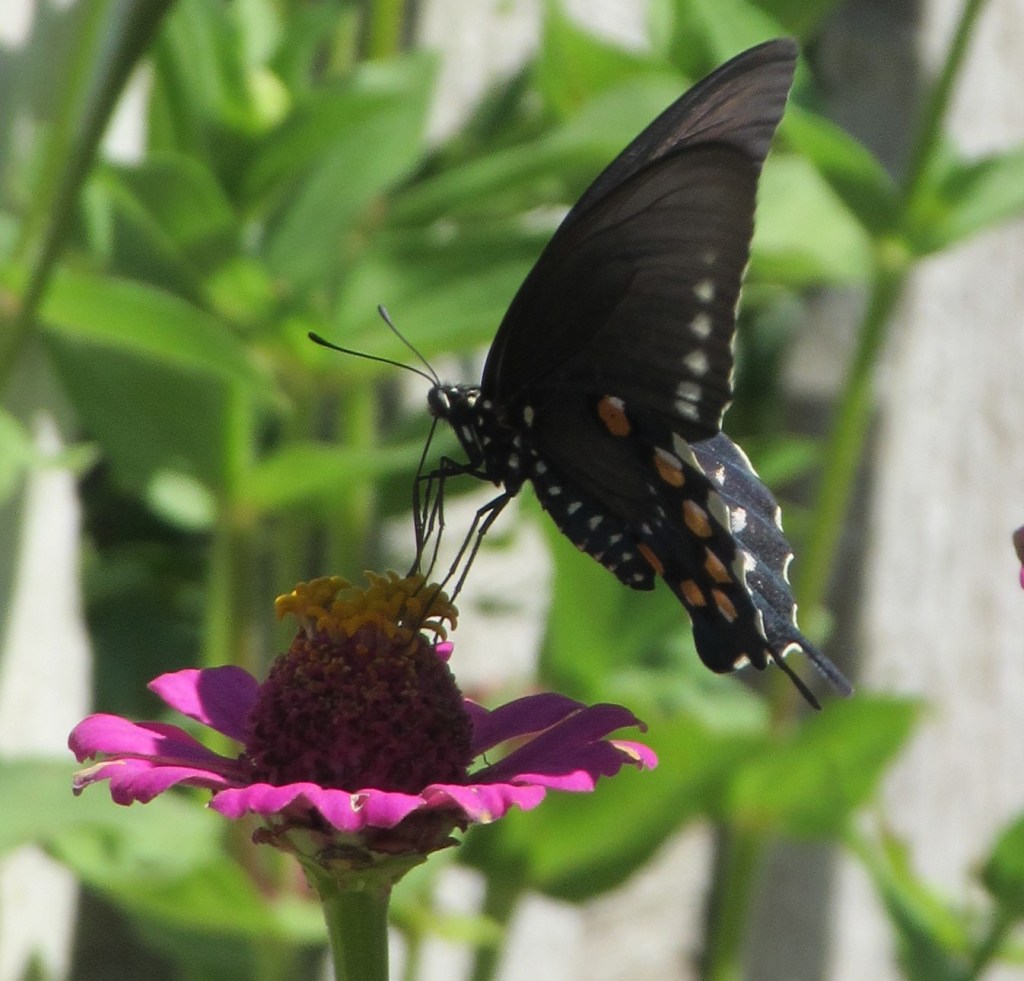
Not to be deterred, at lunch on Monday, I went back to the Triangle Garden, and all the butterflies had waited for me to come back and take photos of them. I got most of them, but not all. On Tuesday, most of them were still there, and the Pipevine Swallowtails were getting full, I think, because they actually sat still for a few seconds at a time, so I could get clear pictures of them.
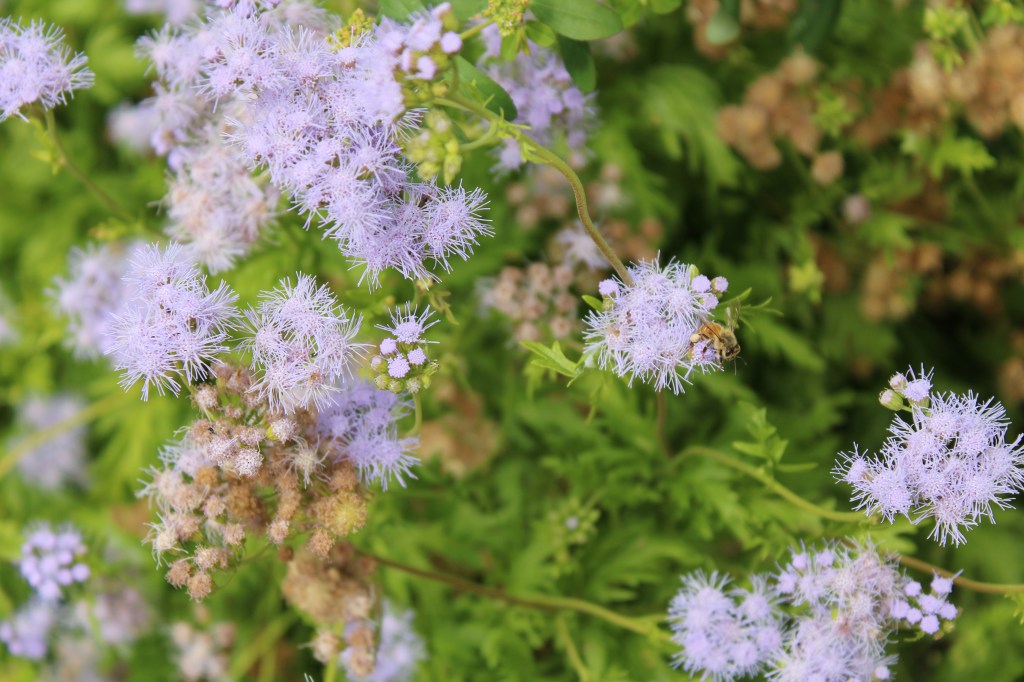
If you want all these butterflies to stop at your place next fall on their southern migration, I advise planting Gregg’s Mist and maybe a little Tropical Sage. The Queens, Gulf Fritillary and Skippers stayed only on the Gregg’s Mist. The Monarchs also stayed there mostly. One was interested in a lantana. The Pipevine Swallowtails like the Tropical Sage and Gregg’s Mist. The bees were less picky. Of course, if you want Monarchs to lay eggs at your place, you’ll need milkweed. That’s the only thing their caterpillars eat (according to current general consensus).
Abundant flowers attracting many pollinators leave one in awe at the El Camino Real Texas Master Naturalist Wildscape out at the Bird and Bee Farm. I read Catherine Johnson’s blog and noticed the severely overgrown Malabar Spinach awning that is being overtaken by Cypress Vines. I went out to try to tame it.
Before
It took electric pruners to get it under control. It draped over the entrances and spread out to the picket fence and flower bed behind it. And the Cypress vine had overgrown it and was attaching itself to cannas and other bushes nearby. I have made the awning walkthrough accessible. If you want to grow either of those at your place, it’s prime time to take cuttings or pick the berries. Or take some to eat – the Malabar. I don’t know that the Cypress vine is edible by humans, but hummingbirds were sure enjoying the nectar in the flowers.
After
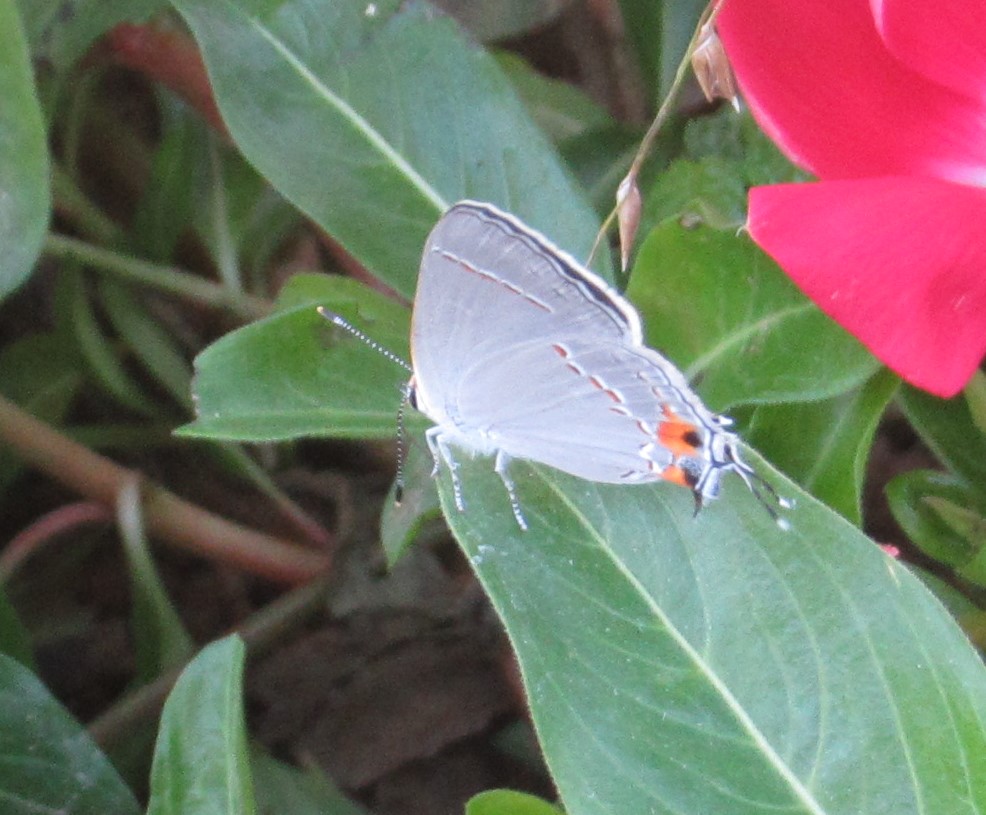
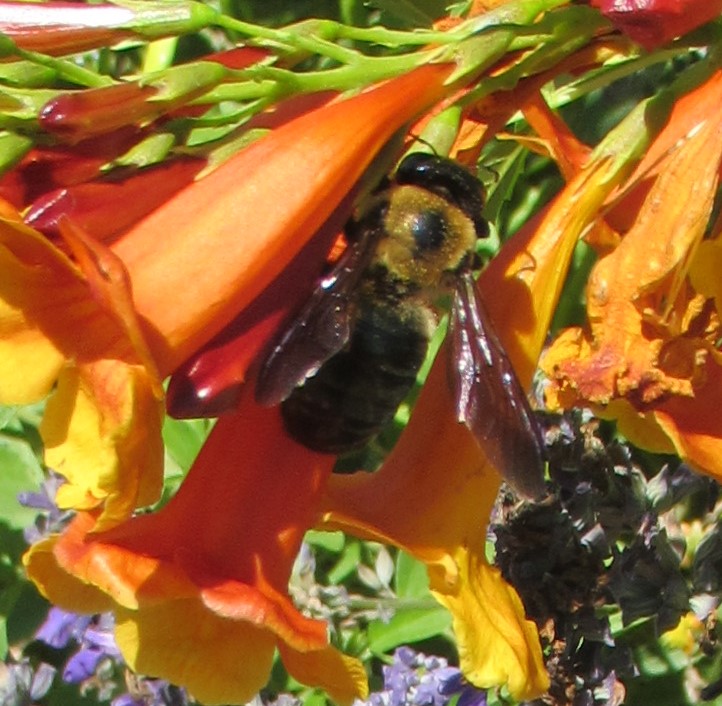
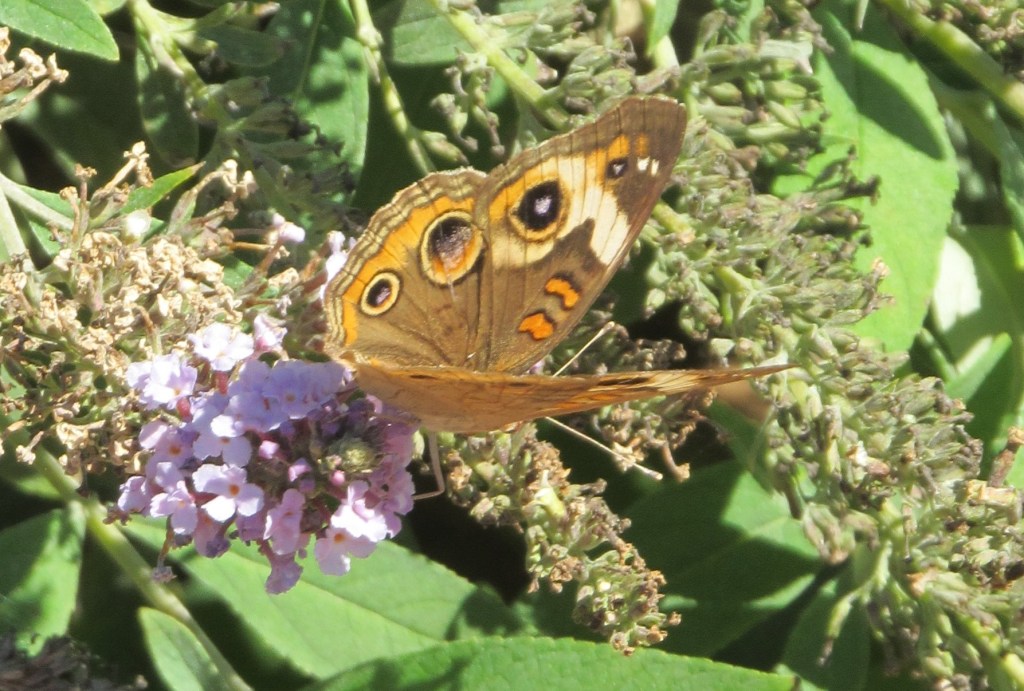
It was hard to stay focused on the vines while several species of butterflies and bees were all over the wildscape. Many Gulf Fritillaries, Common Buckeyes, Grey Hairstreaks and Pipevine Swallowtails were there. The Zinnias and Turk’s Caps were the favorite food of the butterflies. Carpenter bees and honeybees were also abundant. Cindy Rek said she has seen a few Monarchs and they laid eggs which have developed into caterpillars already. She has photos to prove it.
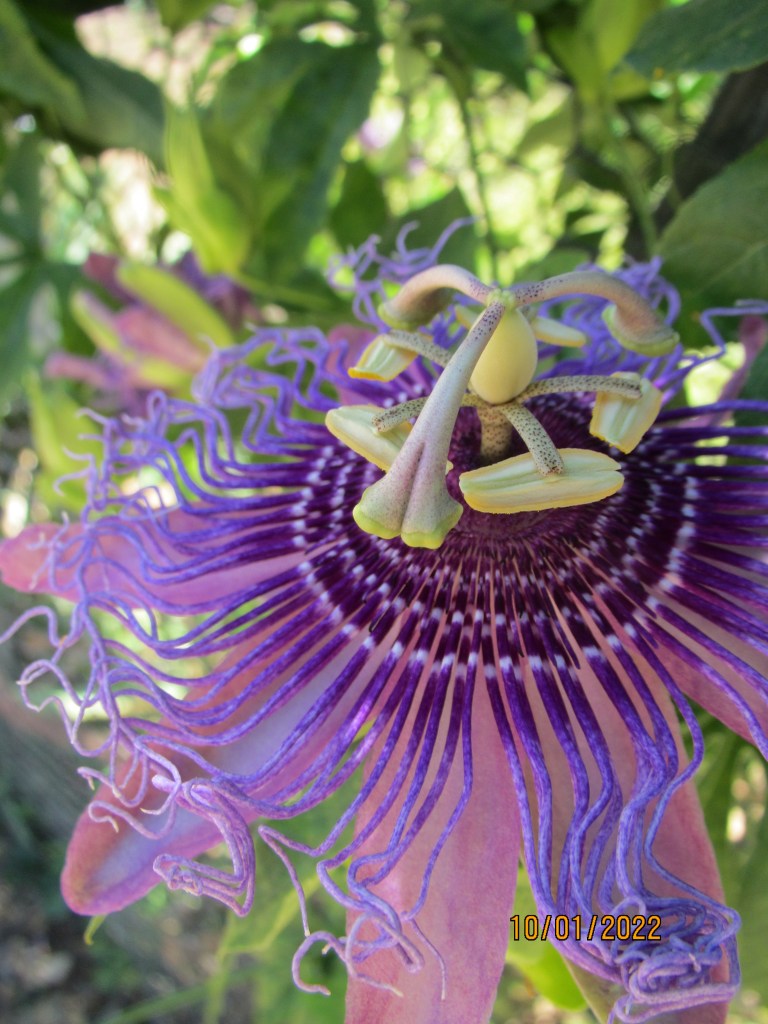
Gray HairstreakPipevine SwallowtailGulf Fritillary, worse for wearCarpenter beeCommon BuckeyeMorning gloryPassionflower
If you are participating in the the iNaturalist Pollinators BioBlitz beginning Oct. 7, the wildscape has plenty to photograph. If you don’t do bioblitzes, you can just sit among the many blooming flowers and all the pollinators buzzing around them. Pull a weed or two while you’re there.
Turkey Tangle Frogfruit – why was that name given to the little bitty flower that grows close to the ground and seems to be able to survive anything? Some fellow iNaturalist.org users in the El Camino Real chapter of Texas Master Naturalist tell me that it used to be just “Frogfruit” until it was recently changed. No one I know seems to know why that occurred either.
I often wonder how words originate. For example, I’d like to know who designated that tall naturally occurring thing with a lot of fluffy greenery on the top half a “tree.” I’m not asking why there are trees (I’m sure many scientists could tell me), I wonder who chose that combination of letters to identify it to other people. I should point out that I have degrees in journalism and English, two subject which perpetuate a lot of word pondering.
I also have been curious about the adage about Texas Purple Sage “predicting” rain. It came to mind today because mine suddenly bloomed. I have frequently heard that Texas Sage blooms two weeks before it rains. Many people I know believe that to be a fact. My Texas Sage can cover itself in beautiful purple flowers very quickly and, often, many times a year. However, it always seemed to me, that mine blooms after it rains. It turns out that neither is exactly correct, but it’s not called the “Barometer Bush” for nothing.
The shrub is believed to be sensitive to barometric changes in the atmosphere. When humidity and pressure change to indicate rain favorability, the bush blooms – at least according to current study.
I went to the Google search site and typed in “Texas Purple Sage predicts rain.” I found that many people had pondered this adage, and some had researched it. Below are partial quotes from two articles I read on the topic.
Research was obviously needed, so I dug in. All the book and online references agreed nobody knows the answer for sure. I learned that while Texas sage does tend to bloom a day or two before rain, it can also bloom within days after a rain or just when conditions are optimal for rain to occur, even though rain may not happen. This curious response to weather probably is mostly due to the plant’s sensitivity and ability to detect humidity as well as change in barometric pressure.
So, what can you depend on? Only that Texas sage blooms sometime around a rain event — maybe. If you have a full-sun location that drains well, plant some and enjoy them. They are very pretty plants.
By Howard Garrett | Special Contributor, The Dallas Morning News
The detail behind the matter, however, is that while Texas sage tends to blossom a couple days before precipitation occurs, it really blooms when the conditions are optimal for rain. Actual rainfall may not occur, but the plant is sensitive to changes in barometric pressure and humidity, and therefore it blossoms.
By Spring Sault, Nature section, Hill Country News
Maybe it is predicting rain after all. Like all weather forecasts, it’s rarely spot-on accurate. What the Texas Purple Sage does do is bloom despite little rainfall and high temperatures, and it attracts bees, butterflies and hummingbirds in mass sometimes. (I hope you can see the video here to actually see that.) My Texas Sage took a hit from the Freeze of 2021 which required severe pruning. It is really growing now and blooming. I hope the bees smell it and show up.
The amounts of rain received over the last few days varies, but a stroll around Wilson Ledbetter Park on Sunday shows just how much a little rain can do.
It’s green!
The 0.40 inches I received at my house was enough to elicit excitement because I had none for so long. The 2.5 inches friends a few miles down the road received also inflicted envy. Based on the location of Wilson Ledbetter Park and rain reports, I would estimate 0.50 inches there so far this week has really “greened” up the place.
I was there a month ago and all grass was brown, almost no flowers bloomed, and trees were turning brown, too. Today, grass is green, several types of flowers are blooming and most of the trees look perkier
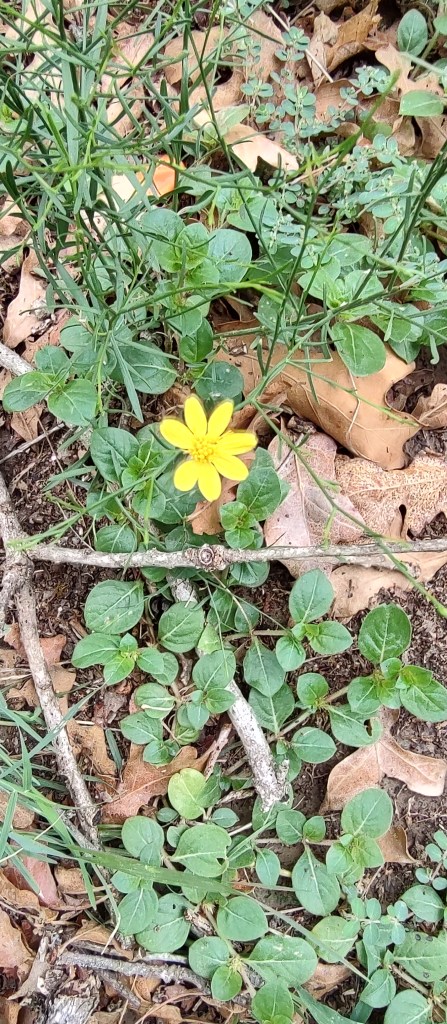
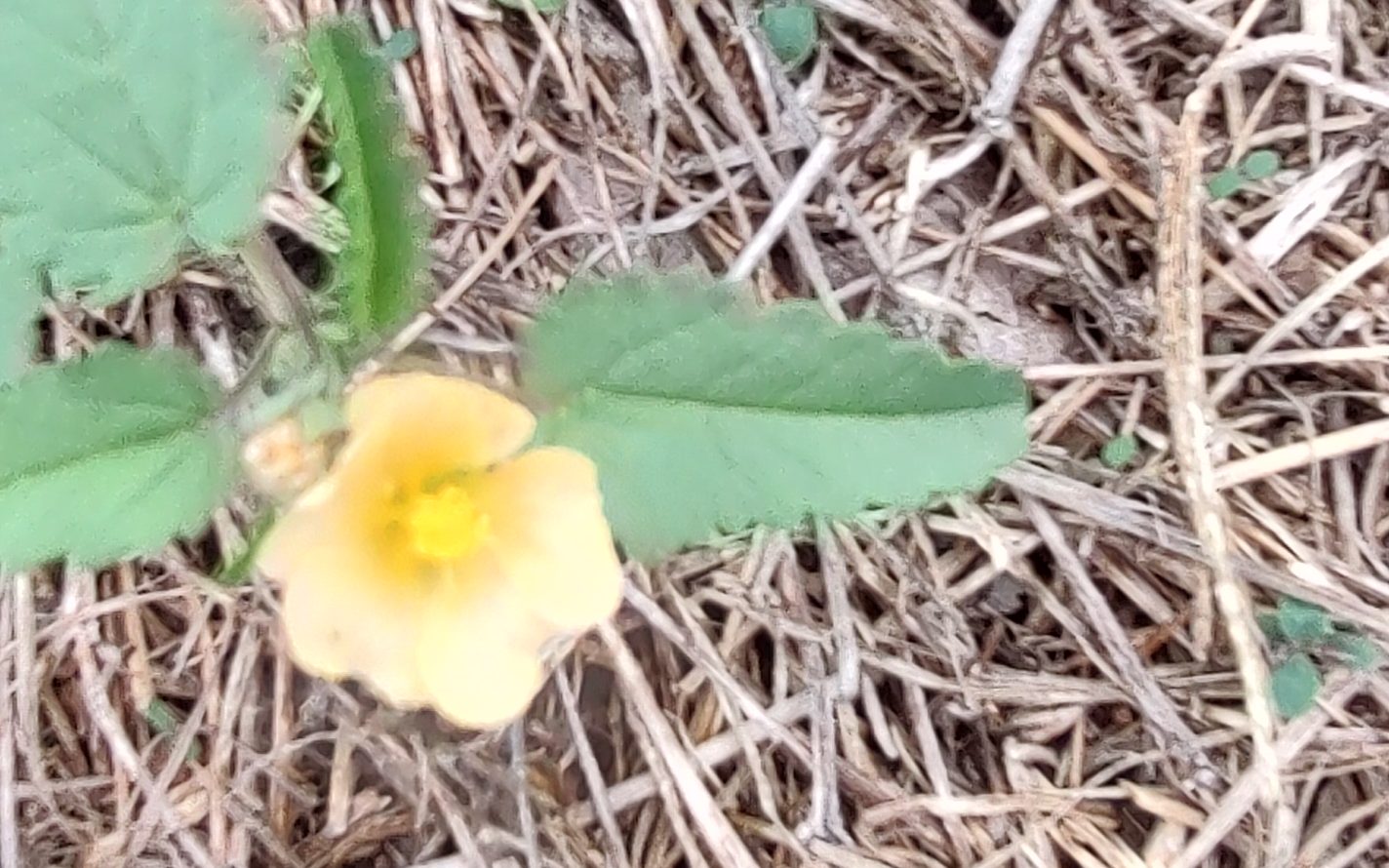
The bright yellow Rio Grande Copper Lily was popping up in many areas. Also blooming in the yellow category were Bitterweed, Spreading Fanpetals, and Texas Snakeweed. To be honest, Bitterweed never went into hibernation. Drought and 108 degrees didn’t faze it.
Rio Grande Copper Lily
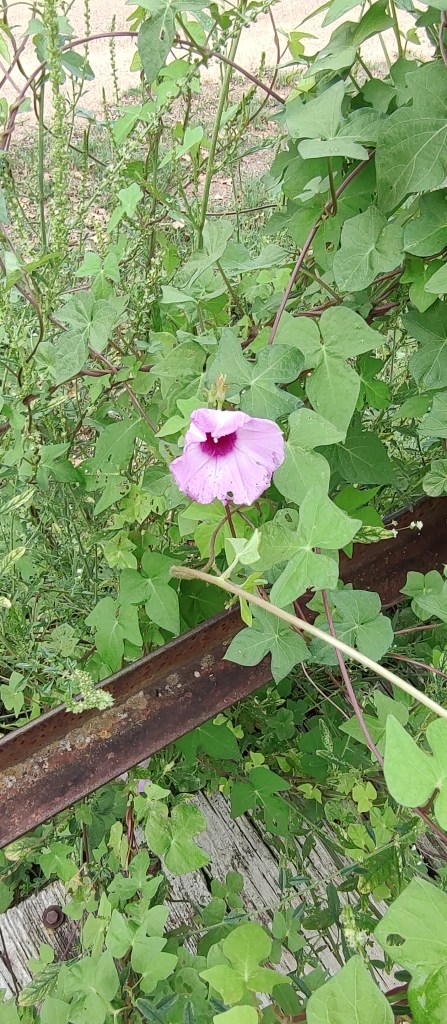
In the pink/purple category, Shaggy Portulaca, Tievine, and Texas Vervain were in bloom. Violet Rueilla and Purple Nightshade were abundant, but they never completely died off. The Whitemouth Dayflower, a vivid blue flower, was in abundant bloom both near and far away from the little lake.
PortulacaTie vineDayflower
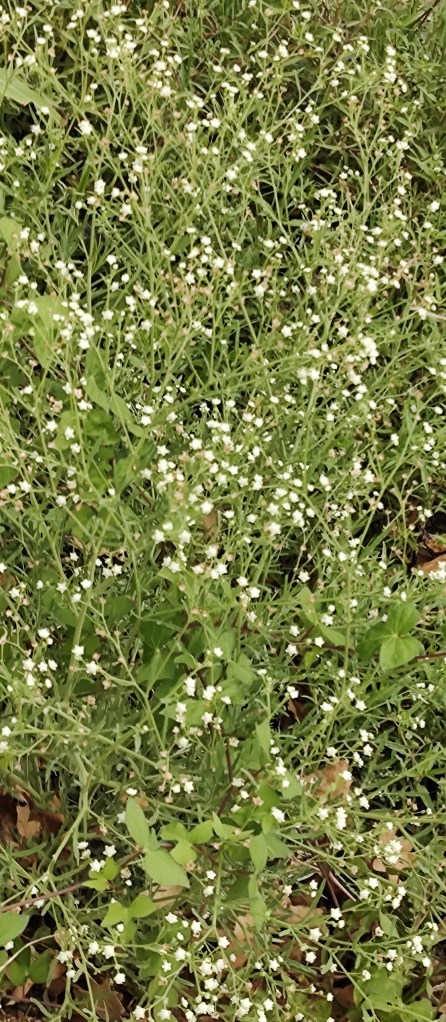
Texas Bull Nettle was really starting to put on medium sized white flowers. Try hard not to touch that one because all those nettles will really make your skin itch. Other whites were the Santa Maria Feverfew and Turkey Tangle Frogfruit. I would bet that Turkey Tangle Frogfruit could survive anything. It totally ignored the 8 days of below freezing temperatures and ice and the drought with excessively high temperatures.
FeverfewFrogfruit (photo by SA Kendall)
All that color was popping out at me in a short stroll around the park. If the amount of rain forecast for this week materializes, I hope you’ll go out to Wilson Ledbetter and take it all in, too.
















 Nature Along the El Camino Real