Butterflies Need Help

(Recap of an Associated Press article from Carolyn Henderson)

North America has approximately 650 species of butterflies and all but nine of them are in trouble. Approximately 114 of them are showing significant decline including the Monarch.
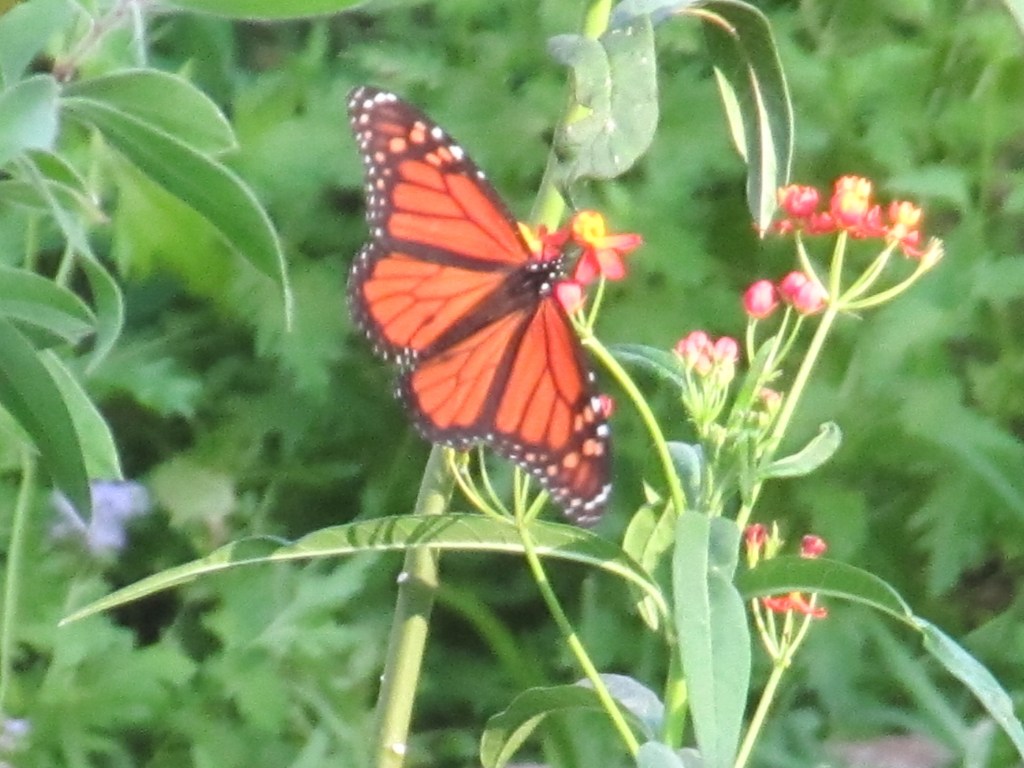
Monarch

Monarchs are reported to be down to 10,000 in 2024 compared to 1.2 million in 1997. The annual report that was just released about Monarchs from another group stated that there were slightly more hectares covered in Mexico, their winter home, than there were last year, but it still isn’t even close to a sustainable number.  They covered approximately 1.8 hectares in 2024 compared to .9 in 2023. Scientist say they must cover at least 6 hectares. One hectare is equivalent to 2.471 acres. 

All butterfly populations are down by 22% since 2000 in the lower 48 states. Their numbers are dropping on average 1.3% every year. There are 96 species that are so sparse, they didn’t show up on any of the counts in 2024. There are another 212 species whose sightings were so insufficient, a trend could not be calculated for them. 

Two that I have seen in Milam County are on the high risk list. The Red Admiral population is down by 44%, and the American Lady population is down by 58%. Monarchs come through this area, too, but in small numbers. They are seen more along and west of I35 when they migrate.

Red Admiral

An entomologist that reviewed the collection of butterfly counts said he considered the numbers a sign “telling us the continent’s health is not doing well.” The numbers of parrots and porpoises also are dropping notably. 

Butterflies are pollinators – not as much as bees, but they still contribute significantly. They are a major pollinator of Texas cotton crops – a crop often grown here. The driest and warmest areas, including Texas, are showing the greatest decline. They are doing better in colder climates. 

American Lady (photo by SA Kendall)

Butterflies aren’t alone in their decline. Other insects that aren’t studied nearly as much also are thought to be in decline. 

As usual, climate change, habitat loss, and insecticides are faulted. You can help by planting native wildflowers in your yard to help feed all species. Turn over some soil, throw some NATIVE Texas wildflower seeds out there, and create a butterfly garden in your yard. Native plants require very little effort once you get them growing. They need to be native to your area because butterflies need the nutrients provided by what nature normally would provide. 
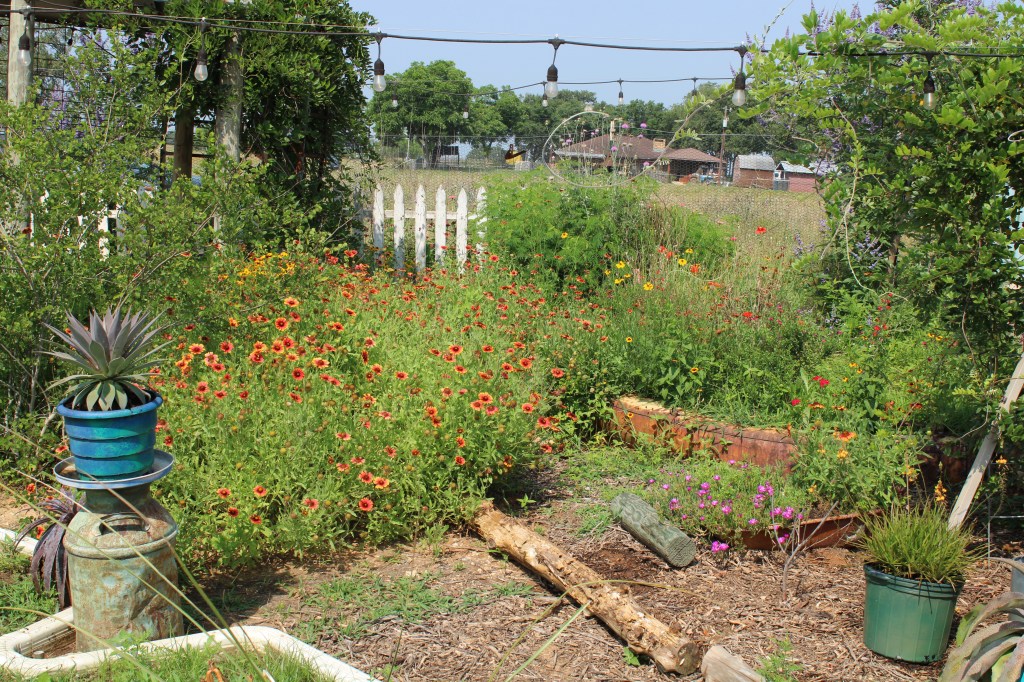
Our Chapter Wildscape

If you need seeds, go to the Cameron Public Library where Texas Master Naturalist – El Camino Real chapter is giving them away. At the library, you also have access to plenty of information from the Lady Bird Johnson Wildflower Center if you have a smart phone. To see these wildflowers in full bloom, wait a month or so, and come to the ECRTMN Wildscape out on CR 334. Announcements will be made when lots of them are in bloom. 

Chasing Butterflies

by Carolyn Henderson


At just after noon on Saturday, I was standing on my patio when a Monarch butterfly flew by very close to me. Unfortunately, I didn’t have a camera to get a photo of it, but I probably wouldn’t have gotten it anyway. It flew straight by into my neighbor’s back yard. It did, however, inspire me to go chasing them.

I go to the Little River Basin Texas Master Gardeners Triangle Garden seasonally to take pictures of pollinators, and I usually see Monarchs, and many other types of butterflies, there. So I took my camera to see what I could see.

I found huge Giant Swallowtails eating from abundant Zinnias. The Fritillarys, both Gulf and Variegated, also were fond of the flowers. So was a Bold Jumping Spider that seemed to be after the Variegated Fritillary. I also found Gulf Fritillary on Tropical Sage. I am unsure if the Giant Swallowtails are Eastern or Western variety. iNaturalist thinks they are Western, but Eastern are more common here.

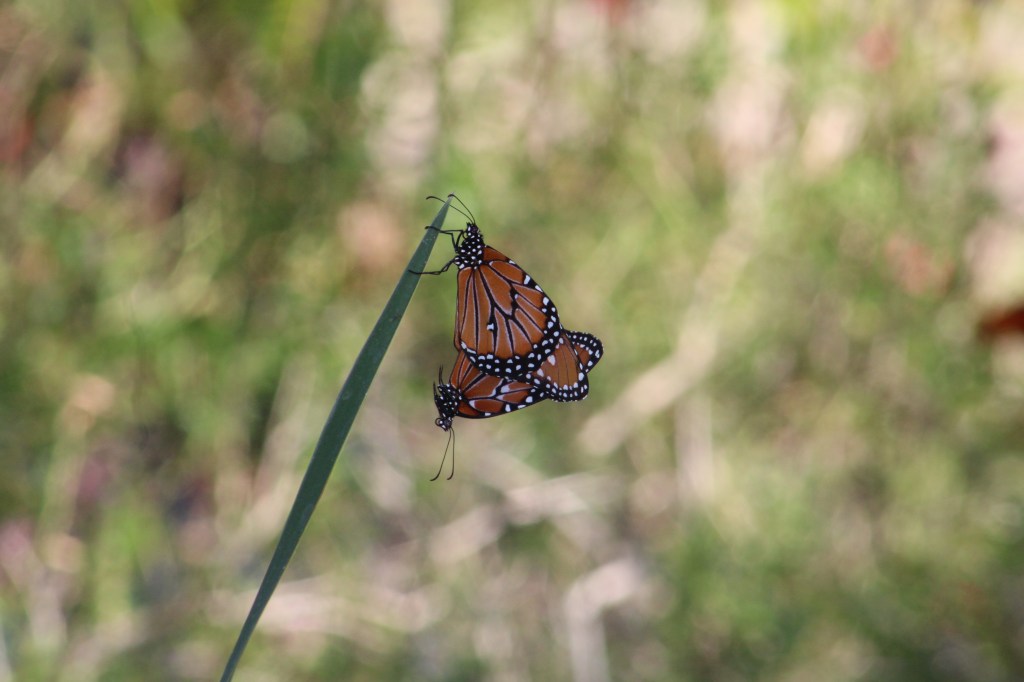
One of my favorite butterflies is Queens. They were abundant on Gregg’s Mist. I can always find them on this plant. They also were mating. I’ve seen more of them there, but it may be early in the migration. Bordered Patch and Fiery Skippers also were enjoying the Gregg’s Mist.
What is not there, at least yet, are Monarchs nor Pipevine Swallowtails. The Flame Acanthas and Tropical Sage and Gregg’s Mist are ready for them. So is the cat in residence (see photo).

I also found a few others at my house. My yard is inundated with Hackberry Emperors, and some Clouded Skippers are hanging out there. So are Carolina (or Arizona?) Praying Mantis and Spinybacked Orbweavers with an elaborate web, and grasshoppers that were abundant at the triangle garden, too. I also had a hummingbird that was interested in the Texas Purple Sage at my house.

Blackchinned Hummingbird

The iNaturalist fall project to submit as many pollinators as you can find is coming up in October. If you are participating, you might want to try the El Camino Real Wildscape which is usually full of butterflies in October – including Monarchs. Or, you also can try the Triangle Garden.

Spinybacked Orbweaver and web

The Cutest Ducklings

by Carolyn Henderson

A few days ago, I was observing birds at Orchard Park in Cameron, when the juveniles of the resident family of Black-bellied Whistling Ducks decided to show off their synchronized swimming skills. One wasn’t quite as synchronized as the rest! This gave me a good laugh.

The duck parents were nearby watching the shenanigans. These beautiful and interesting ducks (they roost in trees) are great parents, as all ducks tend to be.

4H Presentation

by Carolyn Henderson

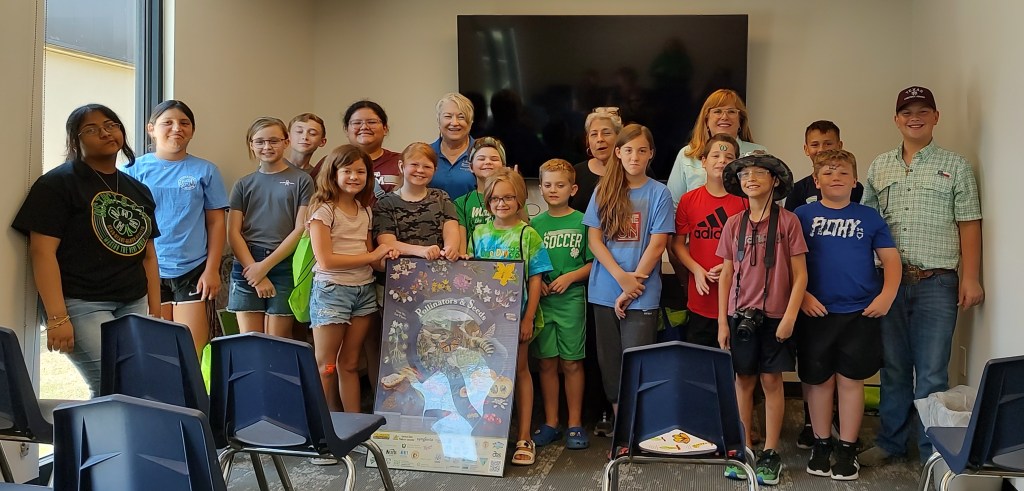
A few members of El Camino Real chapter Texas Master Naturalist presented a program on butterflies to some 4H members on Friday, June 28. The 4H program was having a summer day camp and offered the chapter the opportunity to speak with the children. Debra Sorenson, Carolyn Henderson, Liz Lewis and Pamela Neeley presented the program on helping pollinators do their thing.