Viper’s-Bugloss Invades Texas

by Carolyn Henderson

A new invasive plant has made it to Texas. It has only been spotted with verification nine times in the state, and one of them is in Milam County. The other eight are in a small area of Burnet County.

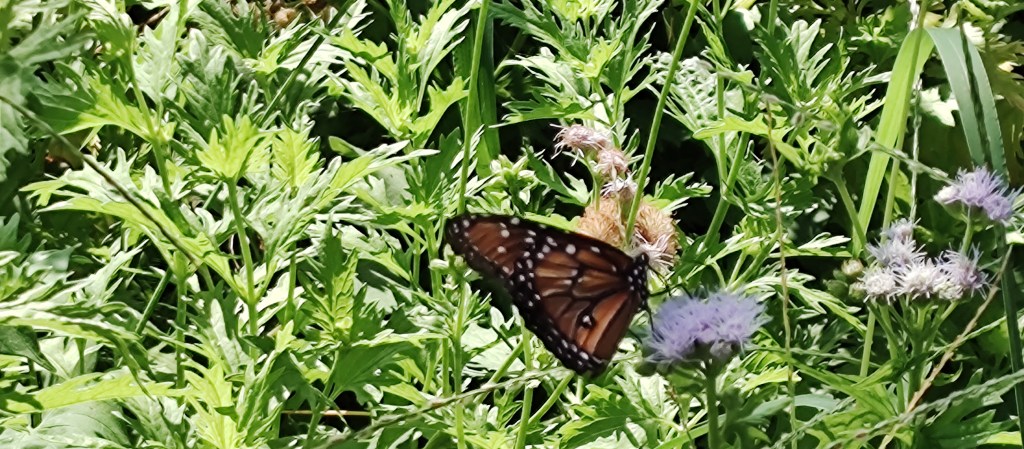
During the field trip to the McCormack Purple Martin conservation place, I took a photo of a flower I had not seen before. Of course I put it on iNaturalist. It got one “favorite”, but it couldn’t be verified as the Viper’s-Bugloss (genus Echium ) I had chosen to identify it. I had noted that I wasn’t sure, but it looked just like it.

My original observation image

Then an iNaturalist ecologist took note of it. He was very concerned about it, and he asked if I would go and take more photos of it for verification purposes. The gentleman has a PhD from the University of Texas and is a retired Wildlife Biologist at Balcones Canyonland NWR.

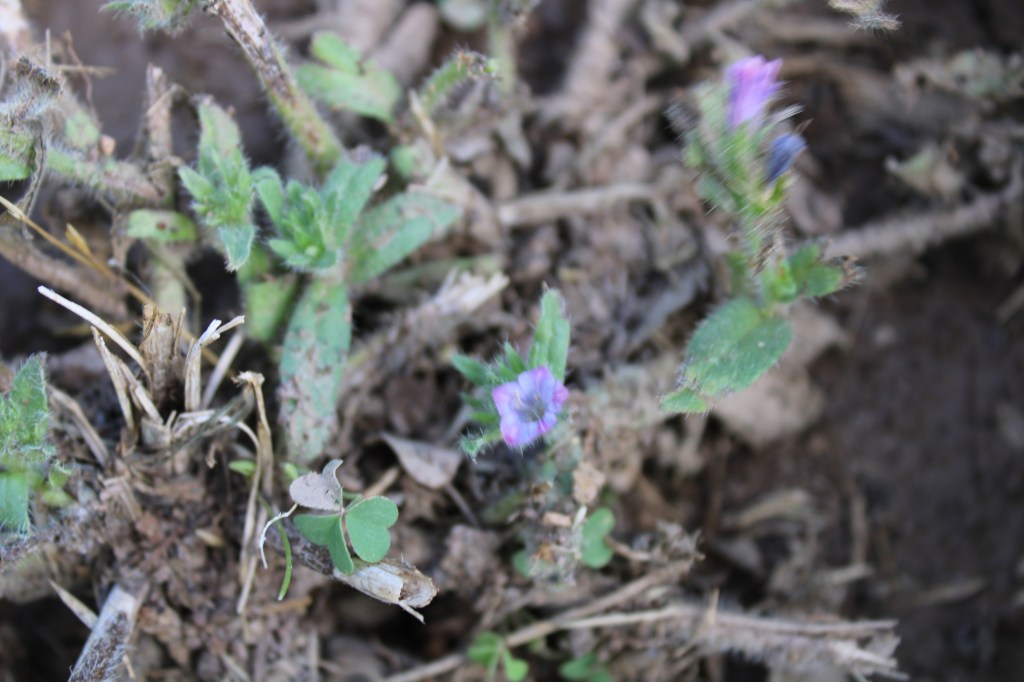
Mike McCormack said I was welcome to do that. I met him out there last Saturday and we went looking for some. McCormack noted that they had been dying out when I called, so he watered for me where he knew a cluster of them to be growing. They were blooming. The blossoms were smaller than the one I had seen earlier and had different colors.

The ecologist had warned me to wear heavy gloves and not touch them otherwise. They sting severely and cause a rash. You’ll see an ungloved hand in one of the photos. That’s Mike. He had handled them before and he said it wasn’t that bad, but they do cause an uncomfortable rash. I didn’t risk it. Mike said he first noticed them two years ago. He didn’t know their name until now. His theory is that they were transferred here via a pair of Black-bellied Whistling Ducks that were nesting in a tree above the main site of their location. 

I posted several more photos, and the ecologist verified that they are Viper’s-bugloss plants. 

They are native to Europe and temperate Asia. They are used in landscaping in a few European countries. They have been spotted in the northern United States and some other countries that didn’t use to have them.

These plants are actually harmful to horses and cattle because they produce a type of Alkaline that harms their livers. The ecologist recommended strongly that “the plants should be herbicided and dug out, bagged, and disposed of – being very careful not to drop any seeds.”

Years ago in Asia, they were thought to resemble snakes on some parts and were used to treat snake bites. Needless to say, that practice fell by the wayside. If you see any, it’s advised you remove them quickly – wearing heavy gloves. 

Purple Martin Update – Plus, What is This?

By Carolyn Henderson

On a quest to take more photos for another  iNaturalist on a possible Viper’s Bugloss plant, I discover baby Purple Martins and something else. There is always something new to discover in nature. 

Purple Martin nests

There are photos of parents feeding the recently hatched Purple Martins. Plenty of the houses at Mike McCormick’s considerable housing for the birds are occupied with hatchlings and eggs. 

McCormick says the majority of them will take flight in mid-June. He also noted that the late male arrivals are fighting the older males for housing. This is apparently common. The debate is over whether they are drawn to their nest they were hatched in the year before or they are trying to establish territory.

While standing out among the martins, I noticed a ball on the ground. It was between cow patties, but it was too perfectly round to be that. 

What is this?

The challenge of the day is to identify it.

Shiny insides

Purple Martin Field Trip Fun

by Carolyn Henderson

The bi-annual trip of the El Camino Real chapter – Texas Master Naturalist to the Purple Martin conservation project of Mike McCormick was both awe inspiring and amusing. McCormick had hundreds of Purple Martins making his place home for the nesting season while a notable number of dumped roosters were fighting it out on the ground. 

Purple Martins in the sky.

McCormick, who started the Purple Martin conservation project at his place south of Buckholts at least 40 years ago, estimated somewhere between 800 to 1,000 Martins in residence this year. It is nearly triple what has come around for the last two years. He attributes it to milder weather so far this year. 

McCormick talks about the birds.

He has a few hundred Purple Martin houses set up. They are particular about their “homes.” They like them to be a certain level above the ground away from trees and buildings. They need a pond or stream in the near vicinity. They also do their hunting of insects at a high altitude, although they have been known to hunt over ponds and even on the ground if the weather is bad. 

Chapter Members enjoying the talk.

McCormick will walk around under the many houses to get them to come out then the sky looks like it’s covered in Martins. Many are pairing off. Once the babies are hatched, they take about a month before they leave the nest. By early fall, these Martins have flown to Austin, where thousands meet up to then fly to Brazil or other points south for the winter.

Purple Martins’ primary natural competitors are European Starlings, which are invasive to the USA, and sparrows, many of them also invasive. They take over their houses. McCormick has styled a large cage to catch those competitors in and remove them. Human expansion is also a problem for martins wanting to nest in natural spots.

The resident Barn Swallows build their own nests. These are hungry babies!

McCormick and his sister have added a nature trail on the site to let visitors see the natural habitat there. They also have created a sort of  refuge for other native bids and those ever-invasive non-natives. They use a small corral that used to be used for training horses. They have a birdbath, several feeding sites, and a few bird houses. 

Repurposed trah-bin lid makes a great birdbath.

He puts birdseed on the tops of all the fence posts, which brings Cardinals, Red-bellied Woodpeckers, Brown-headed Cowbirds, and and few other species to the little refuge. 

Male eats while female Cardinal darts away.

The piece de resistance is new bathroom facilities with running water and full plumbing.

Visits are more pleasant with these available!

To top it all off, they had at least 15 (my sort-of count) roosters dumped on their place. I’m used to dogs and cats being dumped – but not roosters. They were in a fighting mood while we were there. 

It’s worth a trip to see all the sites and have McCormick impart much knowledge about Purple Martins.

Celebrating New Members and Milestones

by Carolyn Henderson
photos by Sue Ann Kendall

I am excited to introduce the new members of our chapter to you. They are in order: Carolyn M., Don F., Teresa (Terri) B., Kay F., Kathleen (Kit) T., Tina D., Bill D., and Chad C. I’m sure everyone who attended the party last night now knows them, but I wanted to make sure those who couldn’t attend and our online fans also know and can say hello if they run into them. I believe they are going to be a great group for our chapter. Let me add that Terri has also received Full Certification and her first pin and name tag, too. 

Terri getting her pin

I also want to send out some thank yous to everyone that helped get this class through. We kept eight out of ten who registered. Eighty percent retention is a feat worth noting. Alan R. and Debra S. worked extra hard to train this group and get them to the end. Michelle Lopez attended every training session to make sure all the information was presented as intended by the speakers. Ellen L. also kept the potlucks organized with the help of Ann C. and Jackie T. According to Chad, it was a motivating factor. Several members attended most of the sessions to mentor the new members. Making contact goes a long way.

We had a full house!

Many thanks go out to Liz L. for co-organizing the party last night. She also bought flashlights for the new members that will show the unusual colors on some lichen that Chad taught us about. Patsy C. made some very nice certificates and also kept the class on their toes about their hours. Pamela N. made the official ceramic frog magnets for each member and the trainers. Several members contributed to the very good bar-b-que we had last night with potato salads and deserts. 

It just goes to prove that it really does take a village to get things done. 

Last but not least, you may want to send a big congratulations to Debbi H. on achieving 4,000 volunteer hours in TMN. We are waiting on the Presidential citation and pin to arrive for her. Ellen L also achieved 250 hours – a great deal of those hours occured being our hostess director. 

Butterflies Need Help

(Recap of an Associated Press article from Carolyn Henderson)

North America has approximately 650 species of butterflies and all but nine of them are in trouble. Approximately 114 of them are showing significant decline including the Monarch.

Monarch

Monarchs are reported to be down to 10,000 in 2024 compared to 1.2 million in 1997. The annual report that was just released about Monarchs from another group stated that there were slightly more hectares covered in Mexico, their winter home, than there were last year, but it still isn’t even close to a sustainable number.  They covered approximately 1.8 hectares in 2024 compared to .9 in 2023. Scientist say they must cover at least 6 hectares. One hectare is equivalent to 2.471 acres. 

All butterfly populations are down by 22% since 2000 in the lower 48 states. Their numbers are dropping on average 1.3% every year. There are 96 species that are so sparse, they didn’t show up on any of the counts in 2024. There are another 212 species whose sightings were so insufficient, a trend could not be calculated for them. 

Two that I have seen in Milam County are on the high risk list. The Red Admiral population is down by 44%, and the American Lady population is down by 58%. Monarchs come through this area, too, but in small numbers. They are seen more along and west of I35 when they migrate.

Red Admiral

An entomologist that reviewed the collection of butterfly counts said he considered the numbers a sign “telling us the continent’s health is not doing well.” The numbers of parrots and porpoises also are dropping notably. 

Butterflies are pollinators – not as much as bees, but they still contribute significantly. They are a major pollinator of Texas cotton crops – a crop often grown here. The driest and warmest areas, including Texas, are showing the greatest decline. They are doing better in colder climates. 

American Lady (photo by SA Kendall)

Butterflies aren’t alone in their decline. Other insects that aren’t studied nearly as much also are thought to be in decline. 

As usual, climate change, habitat loss, and insecticides are faulted. You can help by planting native wildflowers in your yard to help feed all species. Turn over some soil, throw some NATIVE Texas wildflower seeds out there, and create a butterfly garden in your yard. Native plants require very little effort once you get them growing. They need to be native to your area because butterflies need the nutrients provided by what nature normally would provide. 

Our Chapter Wildscape

If you need seeds, go to the Cameron Public Library where Texas Master Naturalist – El Camino Real chapter is giving them away. At the library, you also have access to plenty of information from the Lady Bird Johnson Wildflower Center if you have a smart phone. To see these wildflowers in full bloom, wait a month or so, and come to the ECRTMN Wildscape out on CR 334. Announcements will be made when lots of them are in bloom.