Pipevine Butterflies and Their Caterpillars

by Donna Lewis

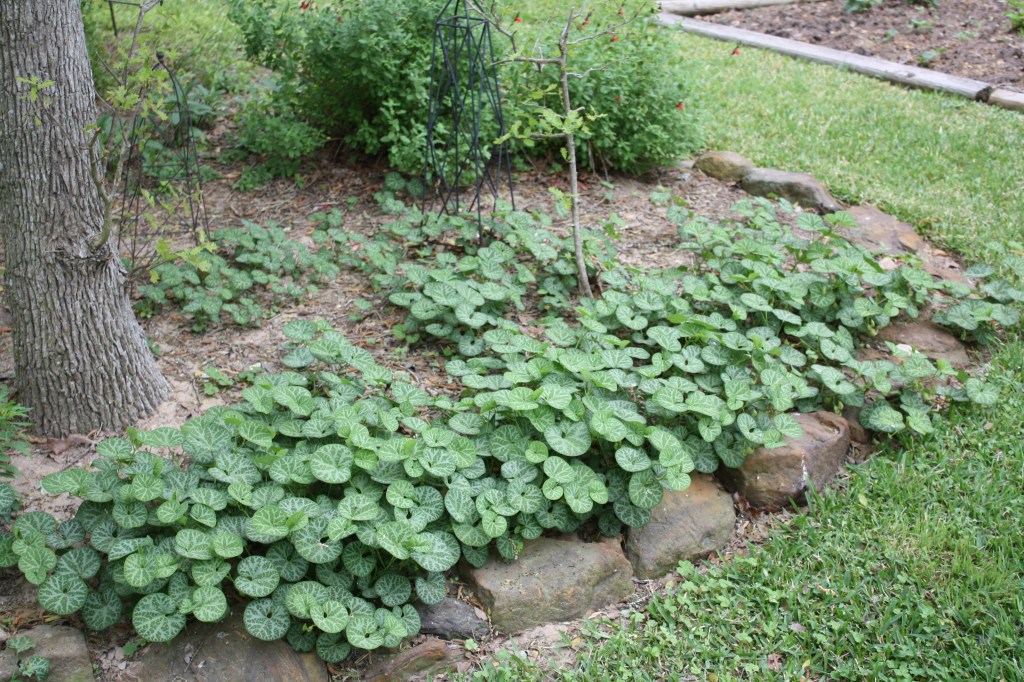
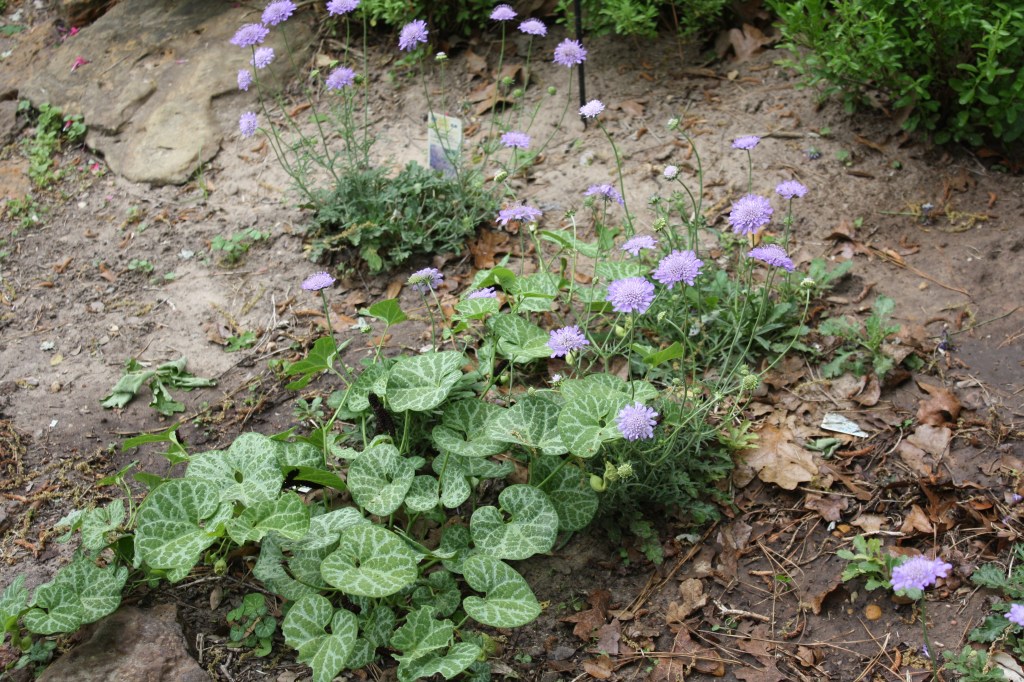
So, for a while I have been talking about the really neat caterpillars of the Pipevine butterfly.  Their host plant is the Pipevine plant.  I have a naturalized Pipevine in my garden called  Aristolochia fimbriata that originally came from Brazil.  There are native ones in our area, which are very hard to see and find.

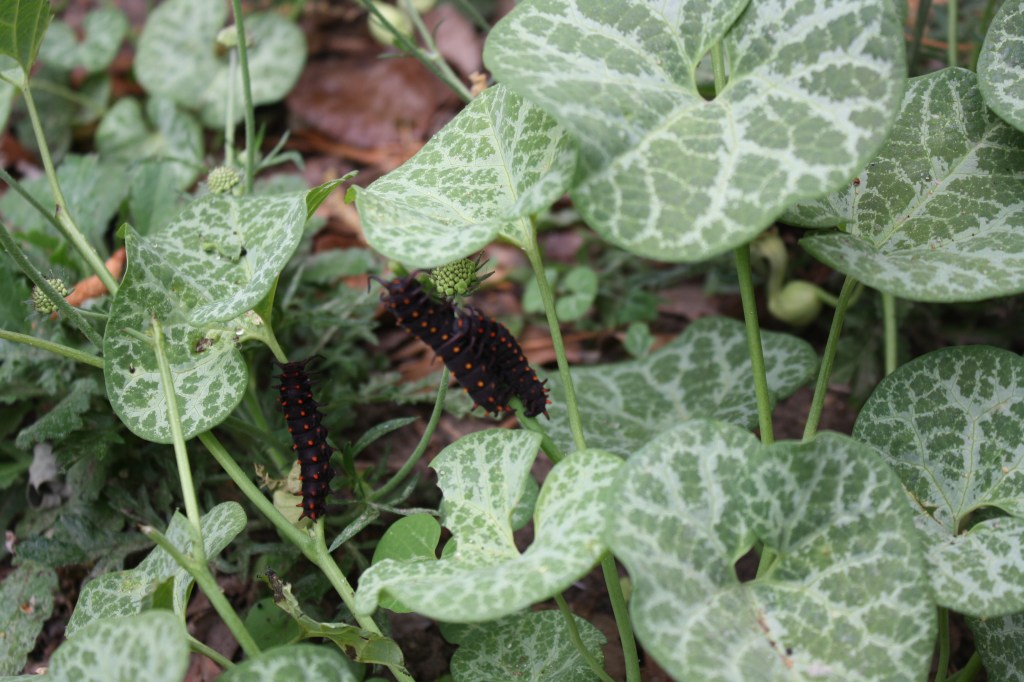
Black!

My plant is a groundcover plant not a vine.  The caterpillars will eat the plant leaves and stems down to the ground overnight once they hatch.

Then in about three weeks, the little plant regrows, and this happens four times during the summer months.  It is amazingly fast how this happens.
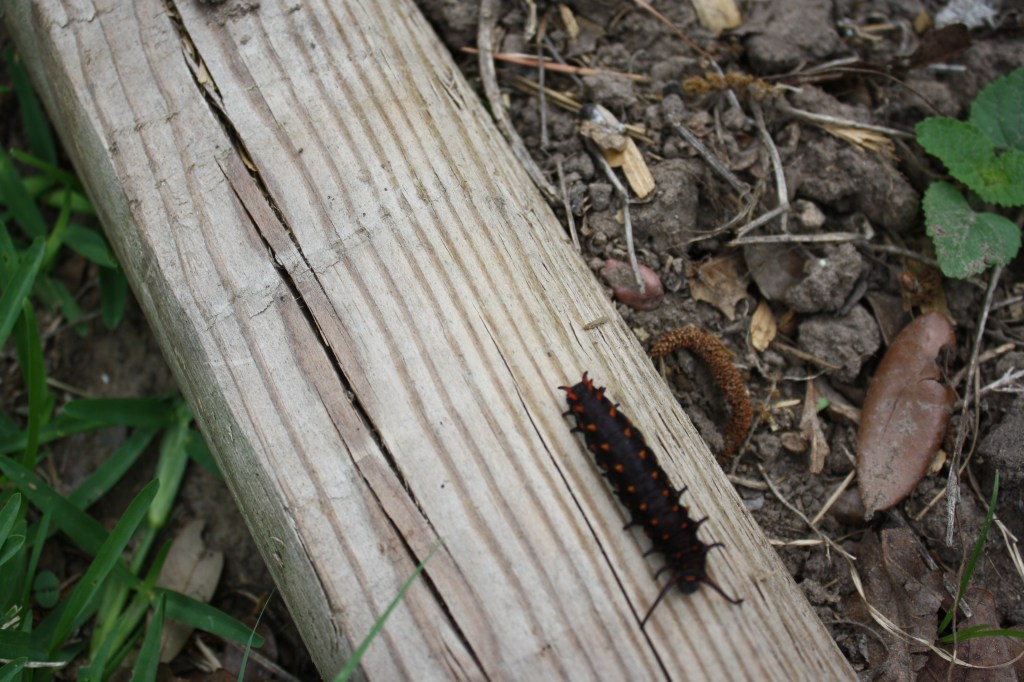
Black!

The Pipe-vine Butterfly produces two different colors of caterpillars!  Crazy! I do not know of another butterfly that does this.

I have looked up tons of information from many groups on this color issue. I have found that the older field guides and published books believe as the caterpillars aged, they changed colors. I do not think that is correct, after watching them for many years.

The newest theory from several universities including the latest study from The University of Virginia is that hot weather causes the red color to emerge rather than the black color. This is the current theory.
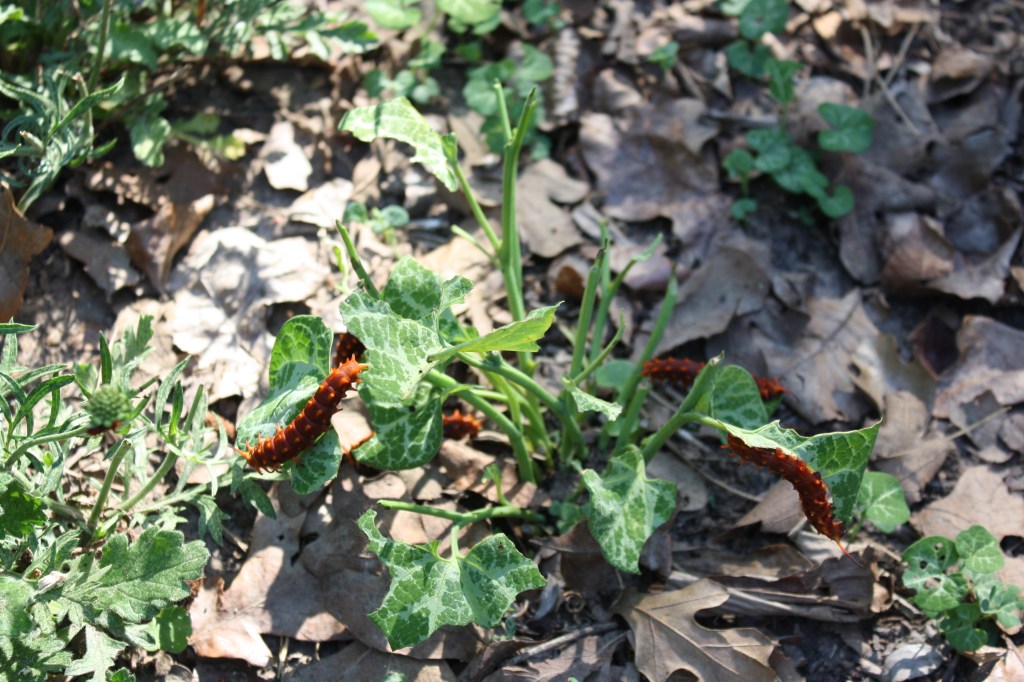
Red!

So let me throw a wrench on this theory.  Right now, today May 20th, 2022, it is really hot in my garden.  It is hot everywhere in Central Texas. And I have a grouping of both the red caterpillars and the black ones.

So how does that fit into the current findings? A real puzzle.   We will just have to keep watching and see if nature will tell us her secret.
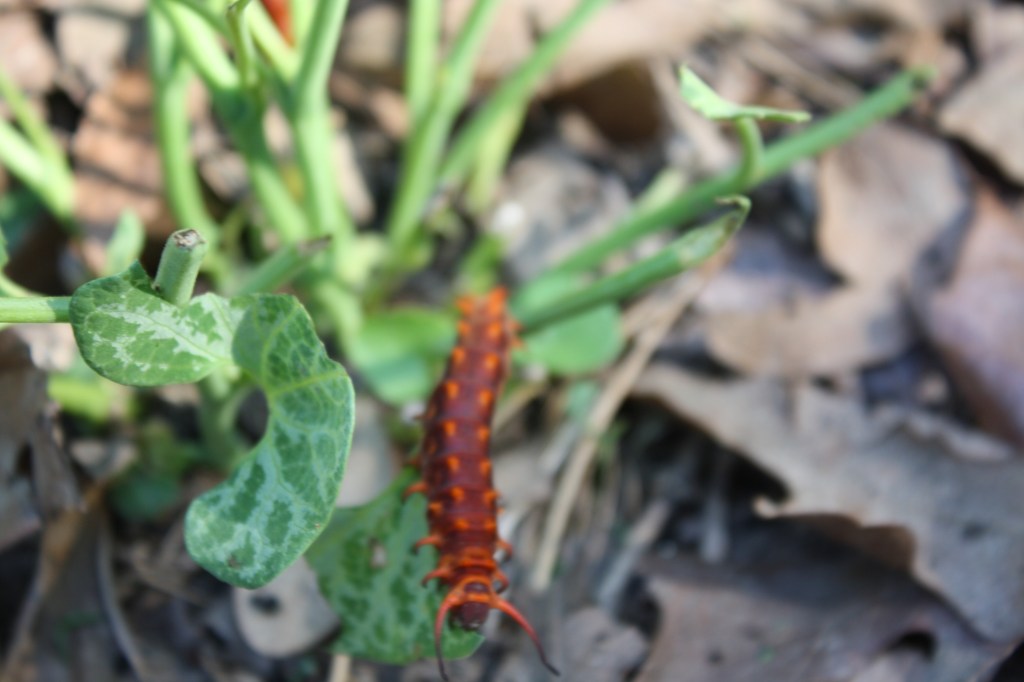
Red!

Nature is more amazing than anything mankind can produce, and they don’t even need a computer.  Wow.

Who are you gardening for?


Sorry for the delay in blog publishing. Your poor blogger has been working too hard at her paid job and has been dealing with world events, like the rest of us. There will be catch-up blogs coming in the next few days.

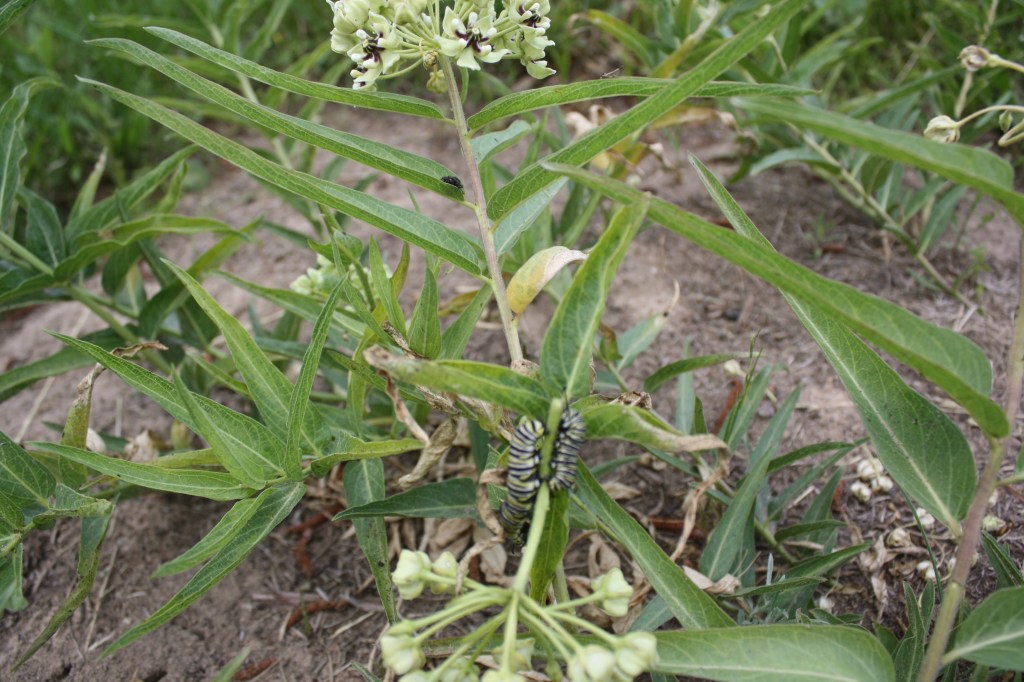
Monarch Caterpillars in the House!

by Donna Lewis

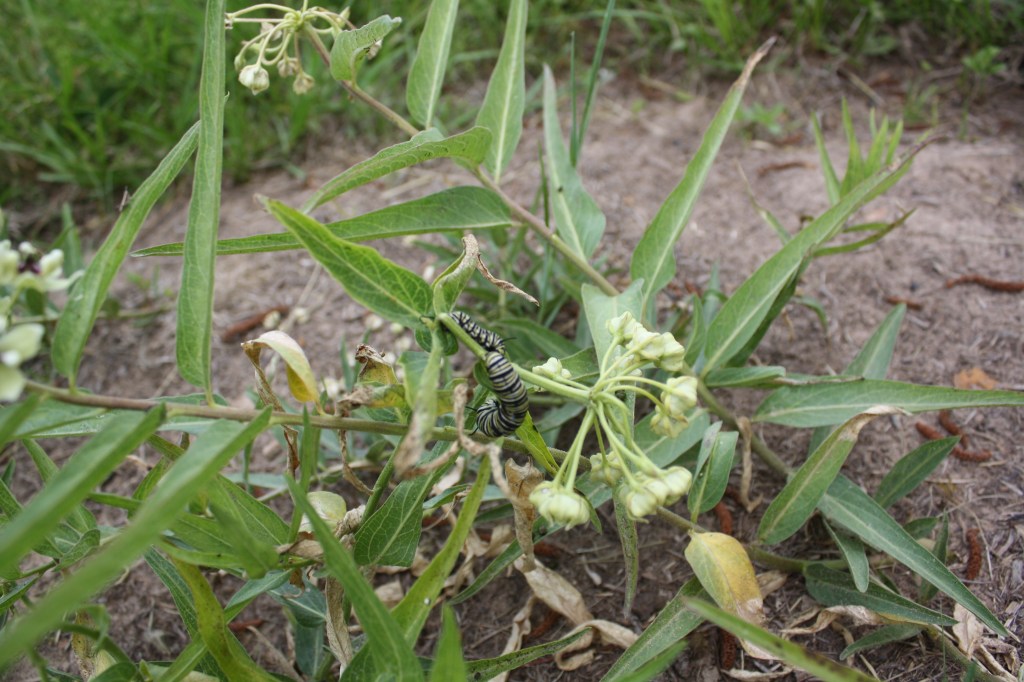
On Maya 4, I was so happy to discover two monarch caterpillars feeding on the milkweed a group of our Master Naturalists planted on our properties last year. This species of milkweed is Asclepias asperula, common name Antelope Horns or Spider Milkweed.

Of the twenty-four plants I received from a grant Cathy Johnson procured for us, only these few survived. Gophers tunneled under all the others and they did not regrow.

But… look what found them!  There are two monarch caterpillars munching away on them.

There were also two species of bees, a wasp, a variegated fritillary, and a hairstreak butterfly.    Everyone wanted in on the action.

Interesting was the fact that the Monarchs were eating the stems not the leaves? I do not know why that was. Something to learn about.

The main thing to take away is that while it may seem like a minor event…two more monarchs made it into our world.

So yes, we can make a difference!

Who are you gardening for?

The Great Caterpillar Run

by Donna Lewis

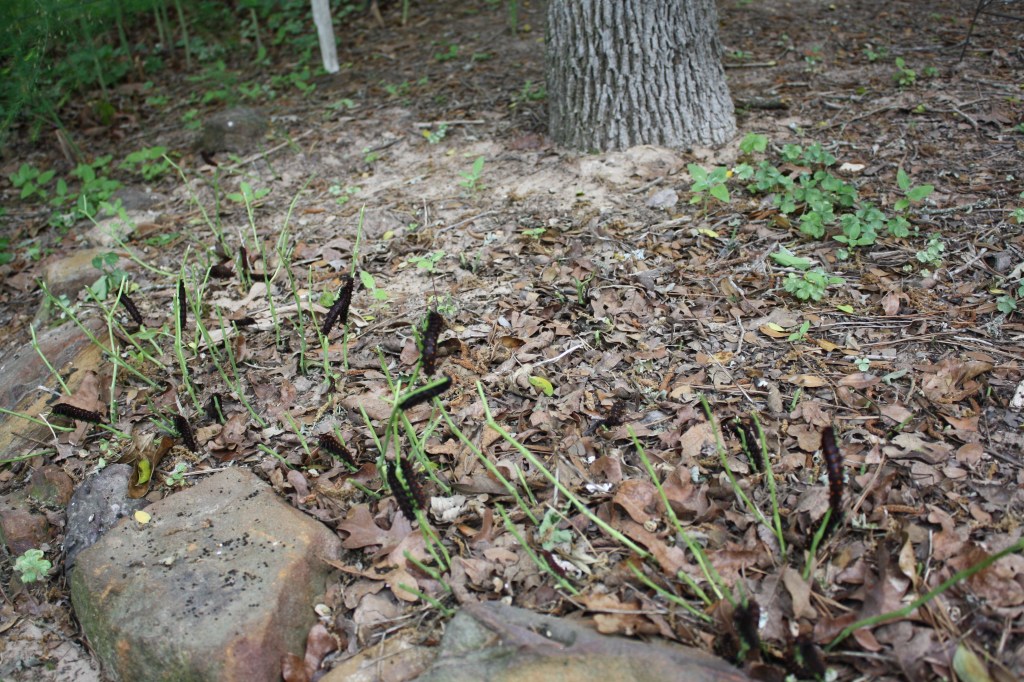
On May 2, I went out to the pollinator garden to work, and all I saw was black Pipe-vine caterpillars on the march to find more pipe-vine plants. They ate all the ones I have in my garden right down to the ground and are even eating the stems right now.  It’s a feast going on….

The vines, before

I almost stepped on a bunch of them.

Off it goes!

I got my camera, took a few shots and then carefully walked out of the garden.

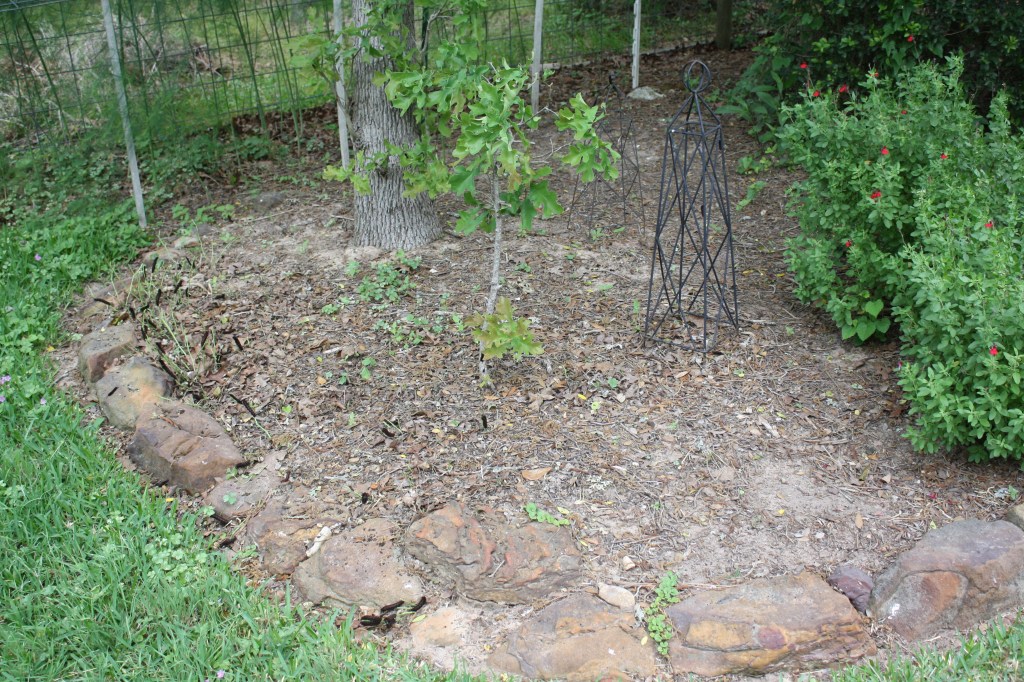
The vines, after

They will go out to the pasture and find their native vine until they are big enough to make a chrysalis  and then become a beautiful black swallowtail butterfly.

Nothing left but future butterflies.

In several weeks, my plants will completely grow back and the process begins again. Last year I had four complete cycles.

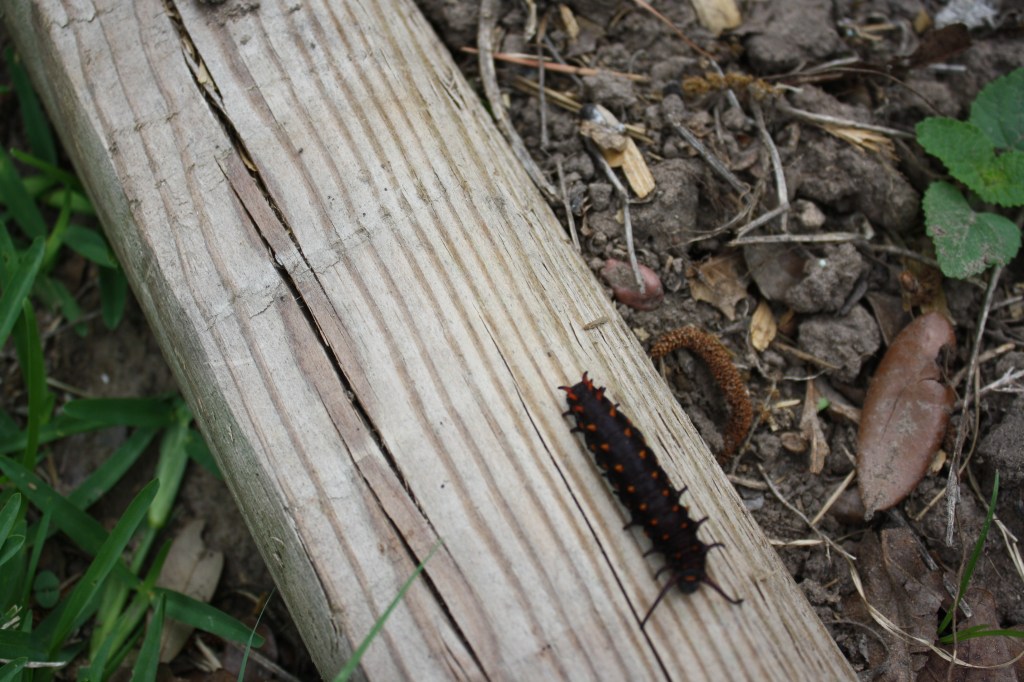
The caterpillars can be black or dark red.

That is amazing.

PS: Out near where Donna lives, Suna saw at least a dozen of the adults enjoying Indian blanket flowers. Sadly, she was unable to stop the vehicle fast enough for a photo, but it was a beautiful sight.

Pipevine Swallowtail

by Donna Lewis

There has been lots of activity in the pipevine area of my garden.

The first baby pipevine swallowtails (Battus philenor) of the year. These are the black form of the larva. There is also a red form. I will probably have both later on in the month.

This is a species of butterfly that is common around Milam County, so, I am sure there is a native pipevine that it uses as its host plant. My goal this year is to find it, and take some photos.

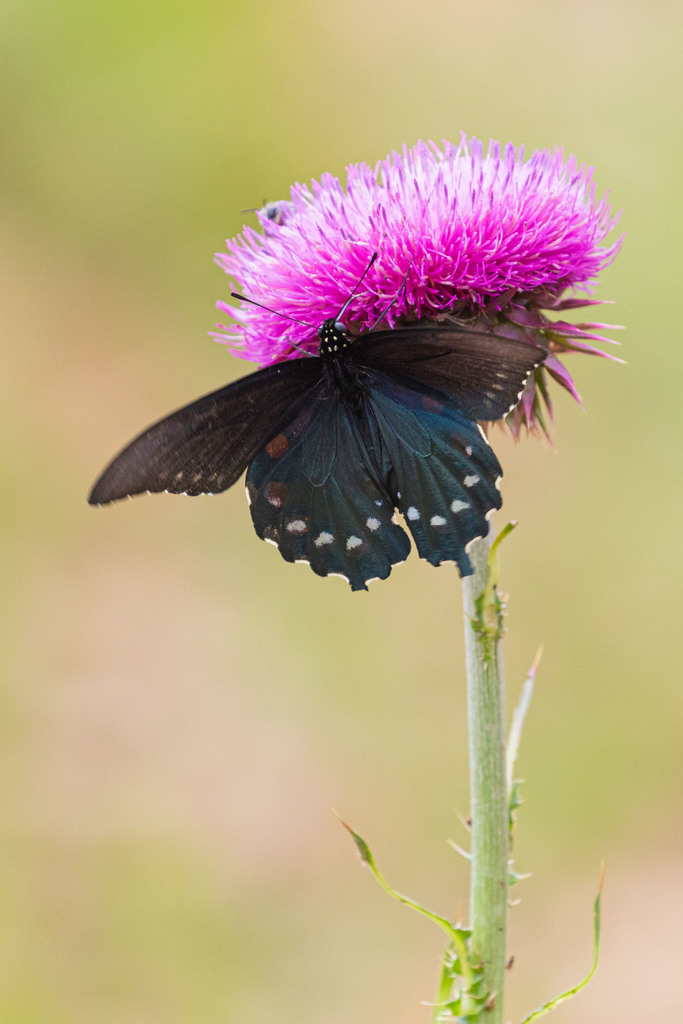
You will know this butterfly by the blue-metallic hind wings.

Photo taken April 20 at Canyon Lake by dnvarga on iNaturalist. Used with permission.

The pipevine plant I have in my garden is a naturalized version from Brazil. It is apparently safe (not invasive).  It is hard to come by, because the caterpillars will eat it to the ground in 24 hours. Thankfully, it has grown back 4 to 5 times each year. This plant has a toxic ingredient like milkweed to protect the adult butterfly.

 I really like these little guys.  They do not sting you and are interesting to watch.

Who are you gardening for?

First Monarch Caterpillar

by Donna Lewis

The first tiny monarch caterpillar in my garden for this year! It is a first instar and very little. Of course, the only milkweed I have right now is pretty tiny also.

The photo is not the best, because the wind was really blowing the camera around.

Still, it’s pretty exciting to see the little thing that will grow up to be a magnificent monarch butterfly.

Reach for the stars, little one.