By coincidence, two different groups of El Camino Real Texas Master Naturalist members got to witness the lifecycle of the Gulf Fritillary butterfly (Dione vanillae) up close and in person on Saturday, November 4. Here are our stories.
From Carolyn Henderson
Six members of our chapter got to see a Gulf Fritilary emerge from its chrysalis Saturday at the El Camino Real Texas Master Naturalist Nature Day aththe Wildscape project.
The chrysalis was on the gate entrance to the Wildscape. Donna Lewis noticed it and Carolyn Henderson took the photos.
Traffic through the gate was heavy, but the butterfly managed to hang on and make its debut. The first photo was right after it got out. It was still wet. The second photo was taken about an hour later. It was still getting its bearings.
From Sue Ann Kendall
Coincidentally, I was camping at Buescher State Park near Smithville/Bastrop this weekend. I had taken many long hikes, led a guided nature walk with a group of people from a church, and made many iNat observations. But my best observation was made less than ten feet from our RV, while relaxing and knitting. Go figure.
My campsite view was of a mixed deciduous forest with a lake behind it. There was a lot of yaupon holly, oaks, hackberries, beautyberries, and cypress. Just a mile or so west start the loblolly pines.
We’re in a very woodsy campsite with lots of birds (very loud pileated woodpeckers for example) and I also enjoyed many butterflies wandering around, like sulphurs and red admirals. But one Gulf Fritillary was extra fun to watch. It spent a LOT of time right in front of me, at first on some straggler daisies (that stuff is EVERYWHERE), but then on a vine that I somehow had overlooked when I was taking note of what plants were growing at the campsite.
I watched as the butterfly kept landing on different parts of the leaves of the vine. I was a little slow that morning and wondered why it was so interesting, since there were no flowers on the vine. It dawned on me that the plant resembled a passion vine.
There’s a clue to the butterfly’s mission in this photo.
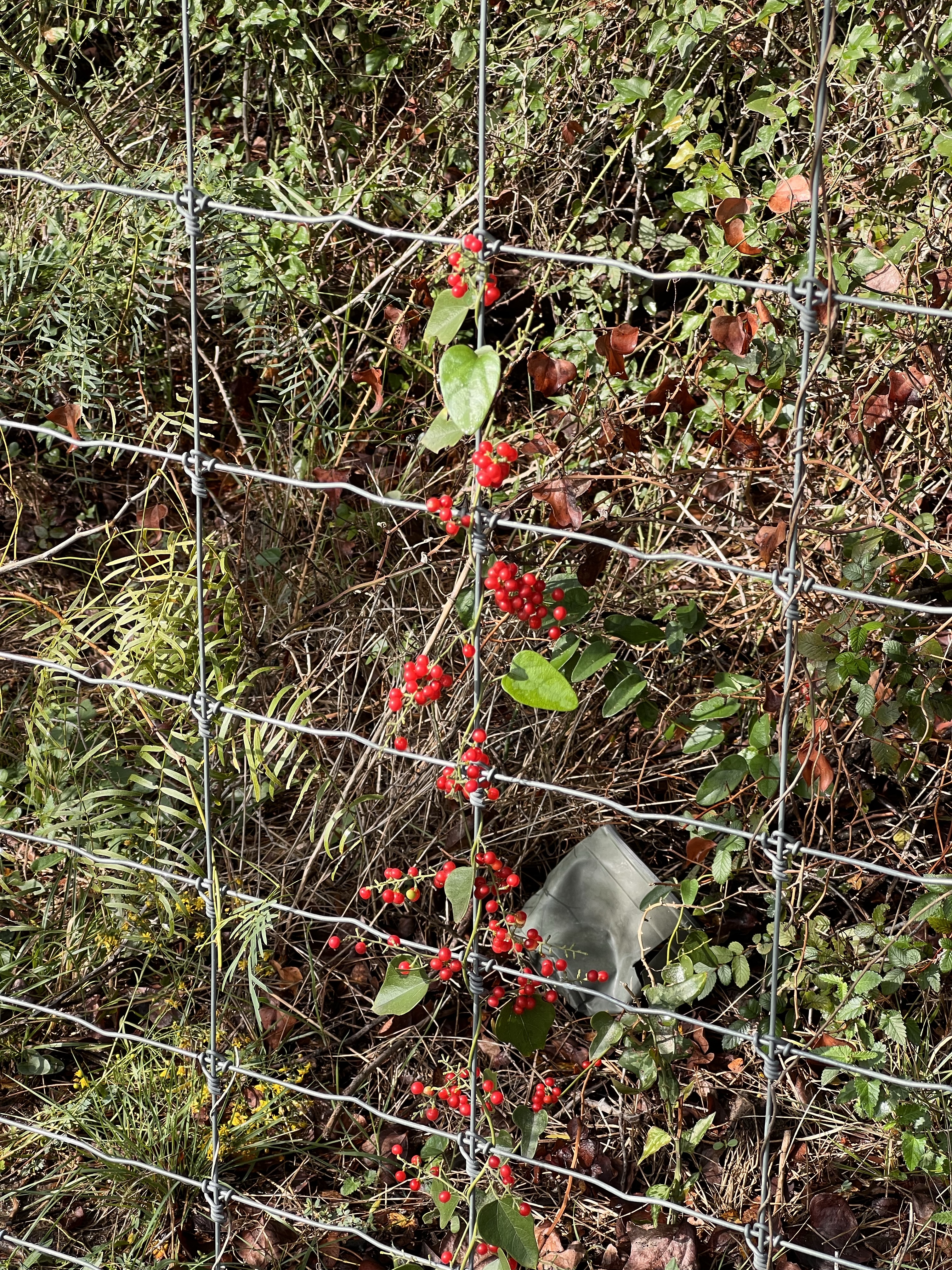
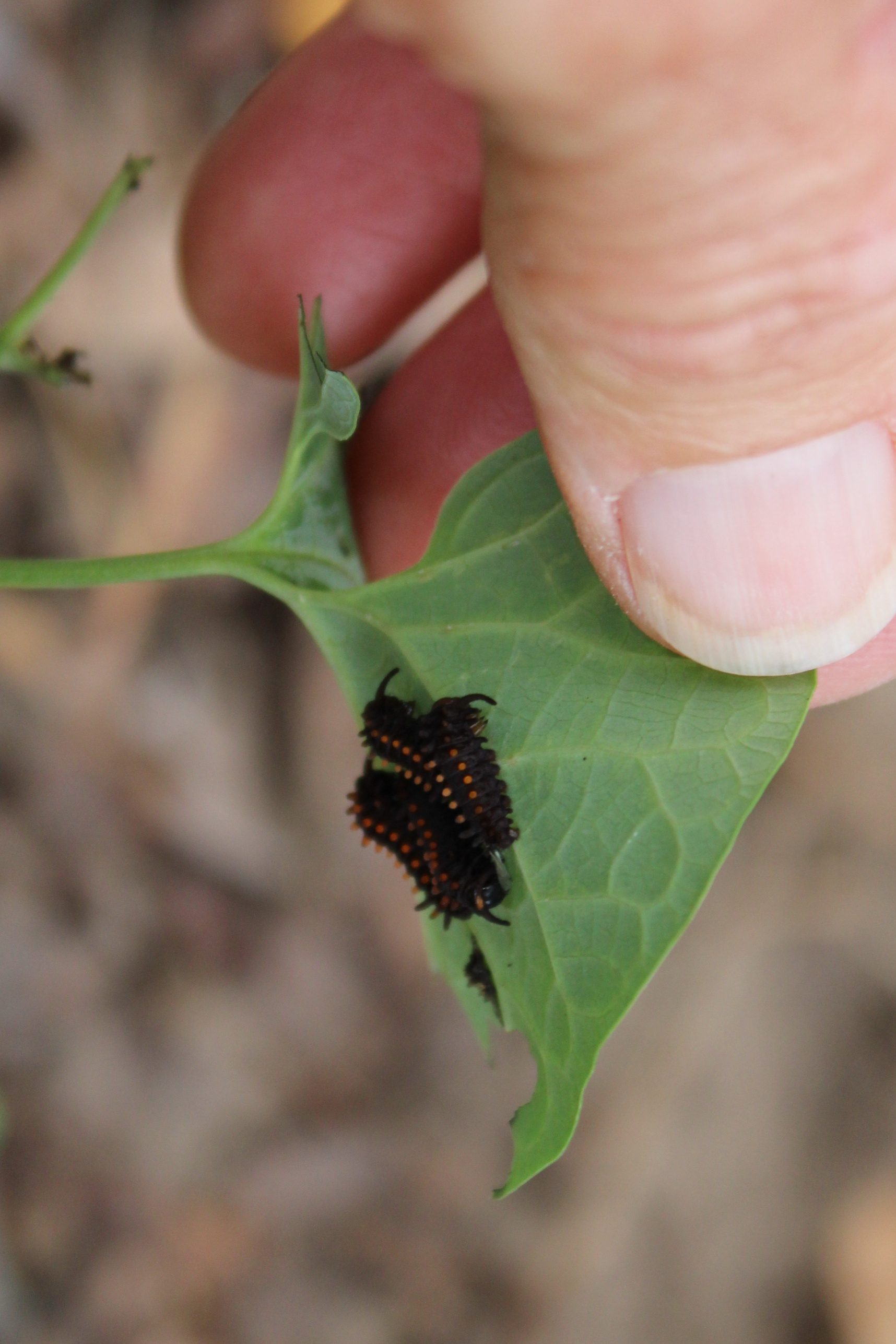
After the butterfly left, I went in to get a photo of the plant to identify it on iNat. That’s the photo above. I quickly realized there was more going on. Two caterpillars were munching away at one of the leaves.
Hmmmm.
I rushed back to my chair to investigate. The plant turned out to be the yellow passionvine (Passiflora lutea) that Linda Jo is always looking for on hikes. Hooray! And the caterpillars were Gulf fritillary caterpillars. Suddenly, the butterfly’s mission was clear. She was laying eggs. See the tiny yellow dot in the photo of the passionvine?
So, between Carolyn’s group and me, we’ve pretty much seen the entire lifecycle of the Gulf Fritillary!
Here’s what I learned from Wikipedia, which confirms all the things we’ve sen:
The caterpillar food plants–also called the host plants–for gulf fritillaries are members of the genus Passiflora. The adult butterflies use nectar from many flowers, including Lantana plants. The Passiflora host plants are frequently called passion vines; in some Texan counties where this butterfly’s population is high, gulf fritillaries will feed on specific species such as Passiflora lutea and Passiflora affinis. These passion vine plants are suitable host plants as they provide a good structure for larval host habitats which enables young populations of gulf fritillaries to be sufficiently nurtured and protected. The role of host plants is also integral to the oviposition of gulf fritillaries, as the female butterflies lay their eggs on or near the host plant.[8][9]
Usually, I’m the one editing and uploading blog posts for other people, but today I have time to write my own post for this blog. If you live in Milam County, Texas, there’s a very good chance you’ve had some rain over the past few days, very welcome rain, in fact, even if some of us got a lot very quickly.
It’s been wet.
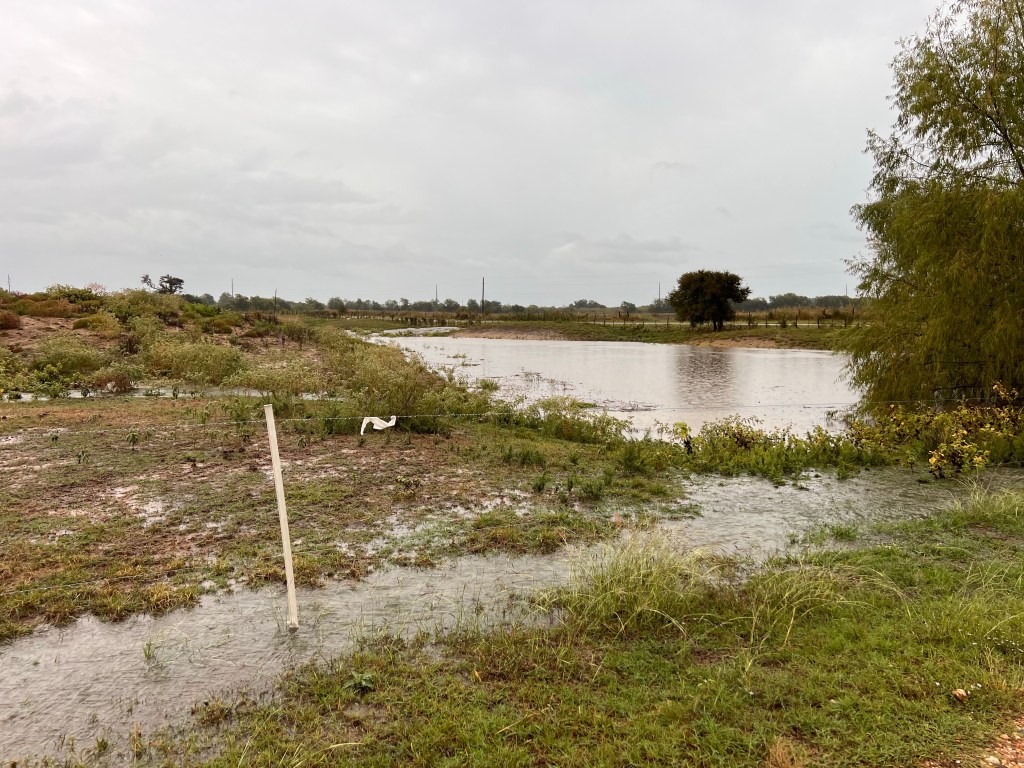
Where I live, at the Hermits’ Rest Ranch in northwest Milam County, we got close to six inches of rain. That’s how it goes here these days, months of drought followed by a big flood. I was expecting it.
Our spring is now springing anew.
It’s also autumn, and since I’m not one of those people Donna wrote about yesterday who think there’s nothing going on in nature this time of year, I thought the days after a big rain would be the perfect time to see what’s blooming or seeding, who’s flying around, and who’s up and about after a rain. Since one of my hobbies is documenting what flora and fauna are around at different times of year on this property, I knew it would be a good idea to document what’s here on iNaturalist (you don’t get Master Naturalist hours for work on your own property, but I’m fine with that, since this is my own research).
That’s an overfull tank!
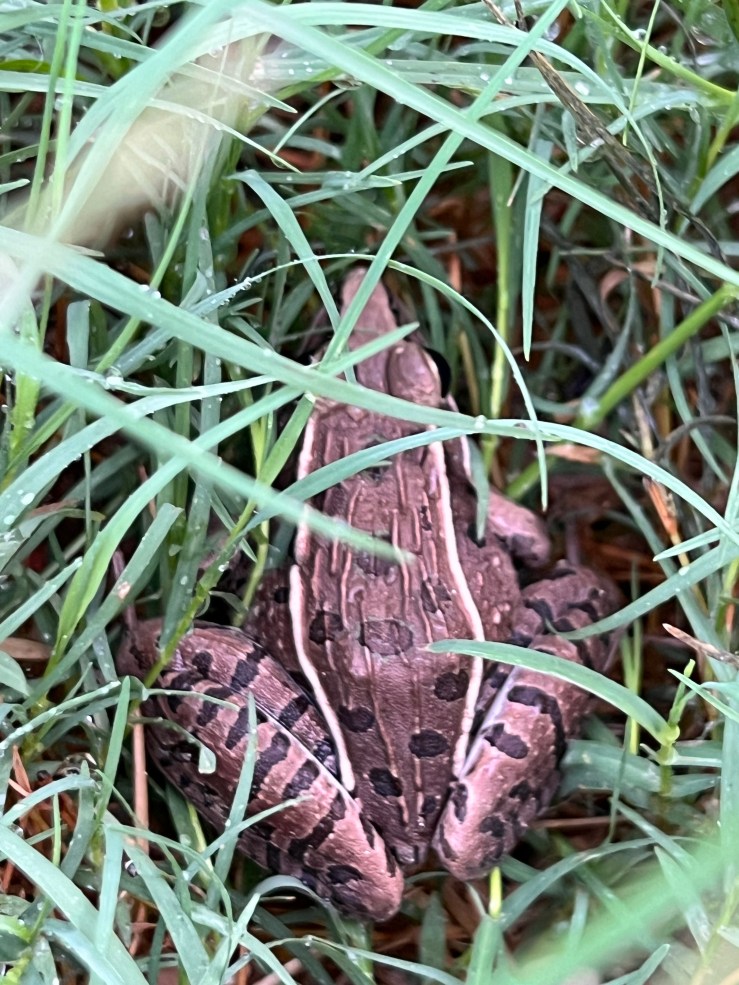
As the title of this post hints, I found most of my interesting sightings on the ground. Looking down will quickly dissuade you of any notion that nothing’s blooming, growing, and reproducing this time of year. The very first thing I found on the ground was my favorite: this gorgeous leopard frog. I didn’t get a side view, so I can’t tell if it’s a Rio Grande one or a regular one, but it’s pretty.
It’s a big one, too.
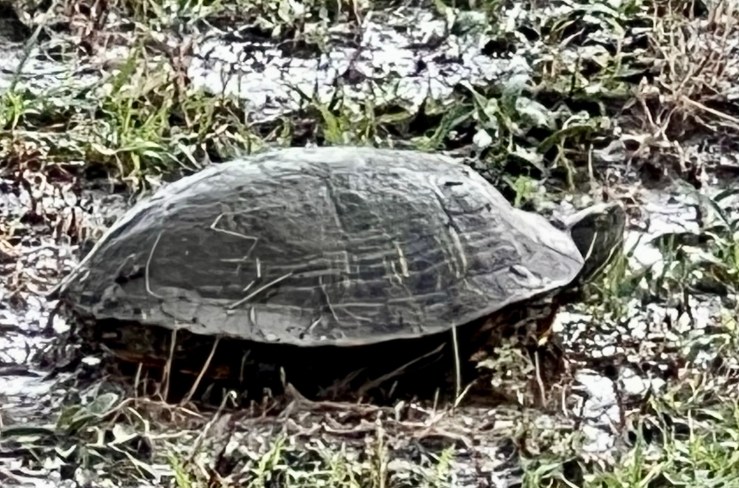
As I walked down to my front pond, I saw another resident out of its usual watery location, this pond slider, who must have been going from the back pond to the front. There are so many of these in there, and I bet the flooding moved them around a bit.
Trachemys scripta
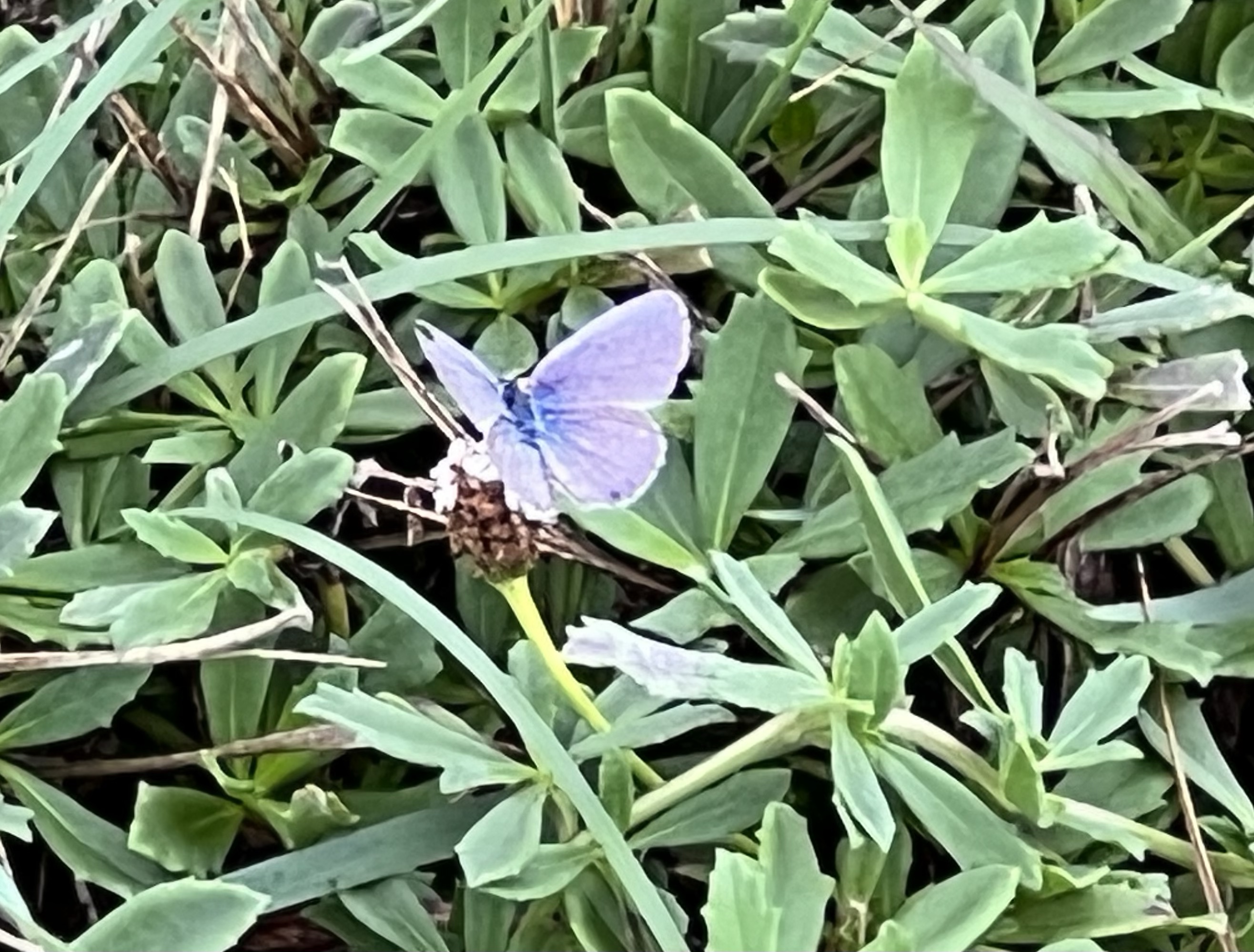
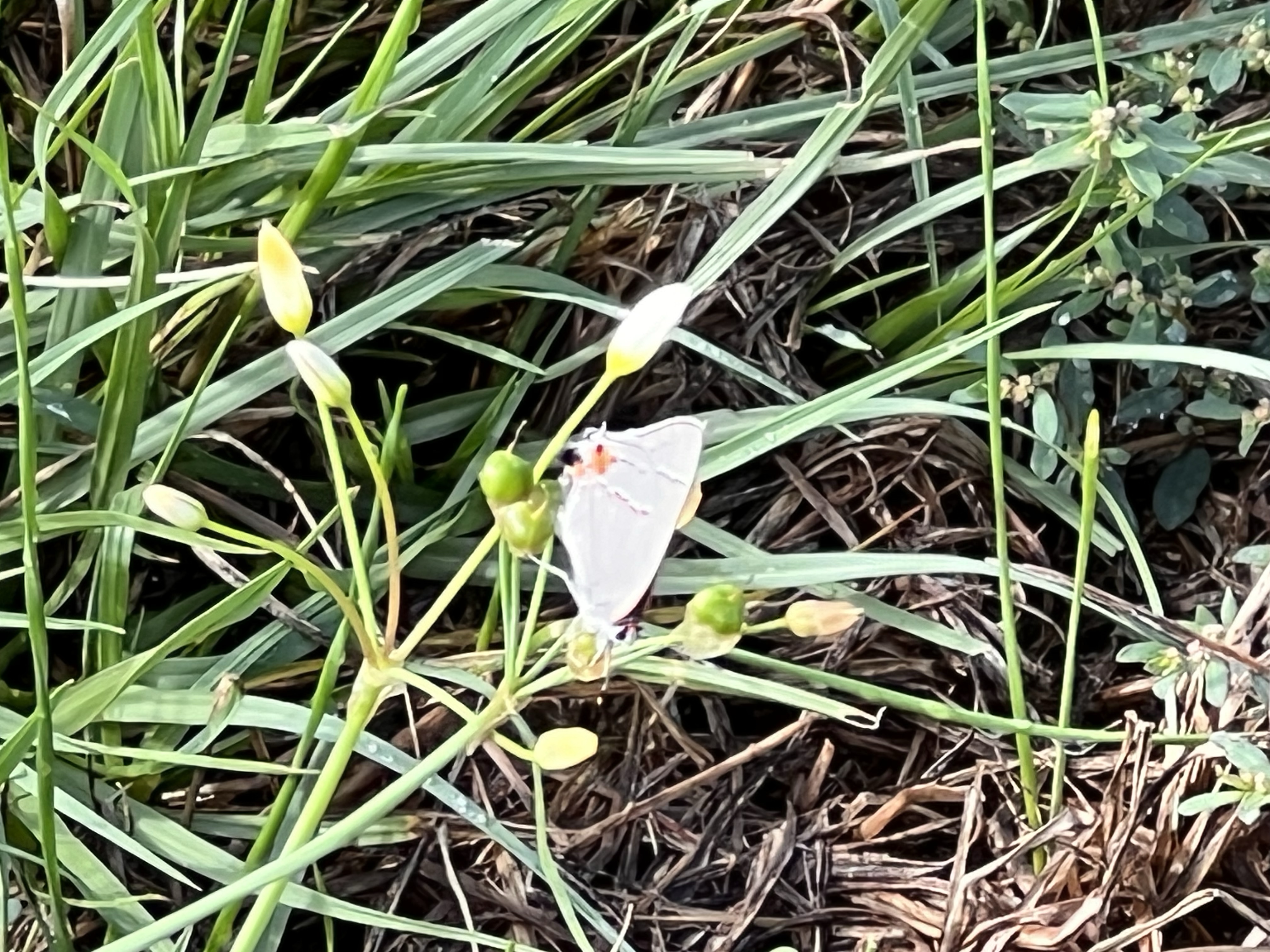
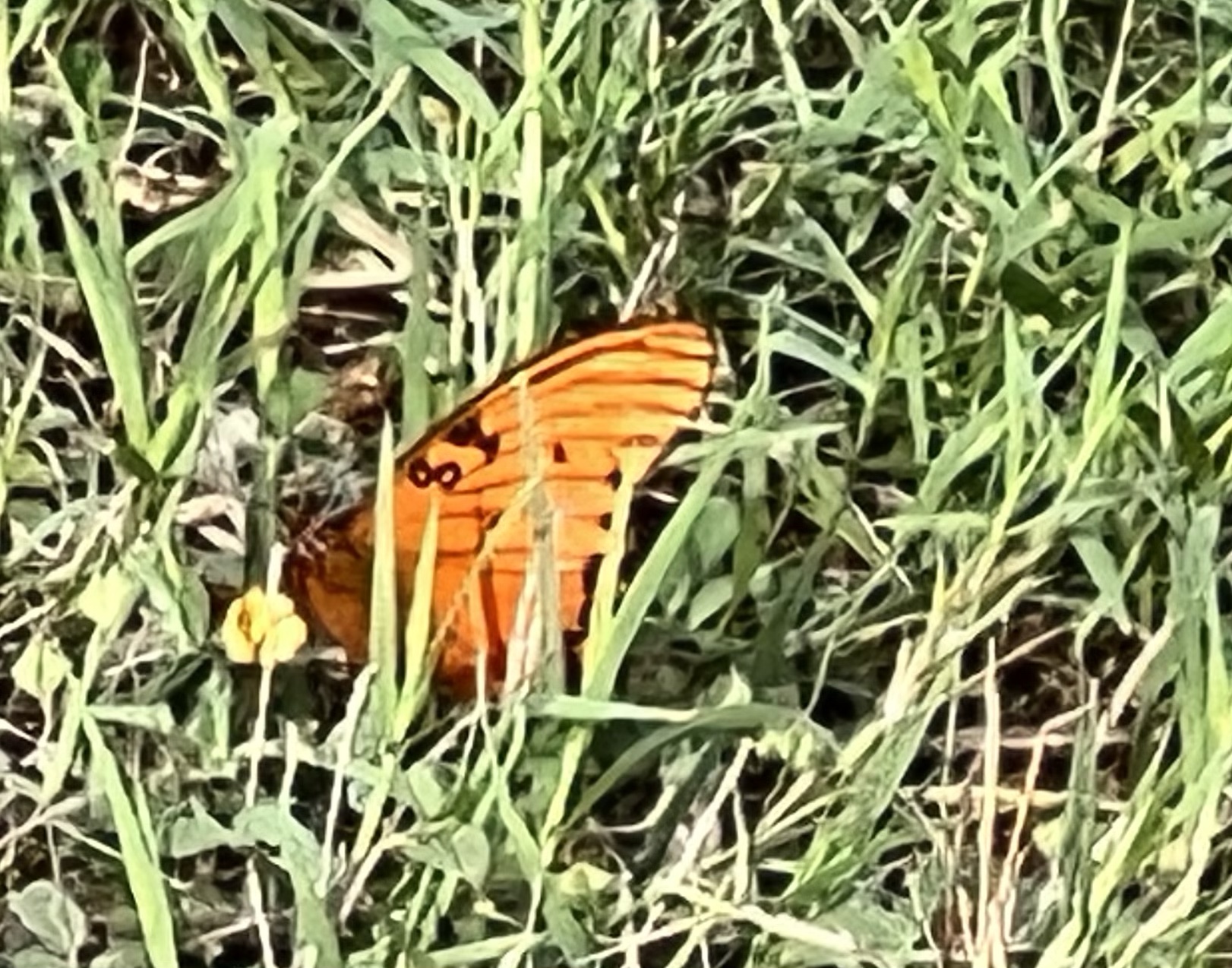
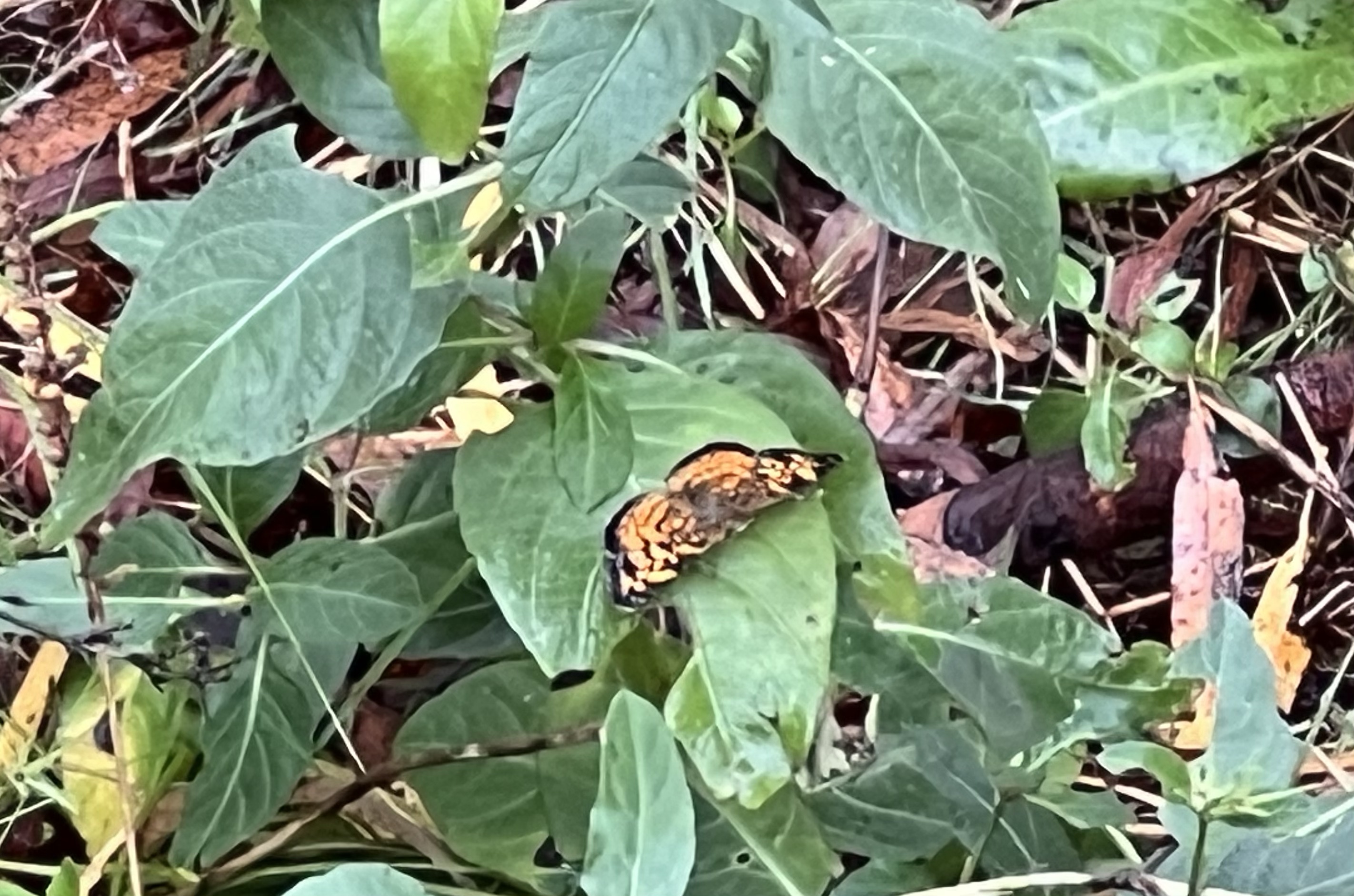
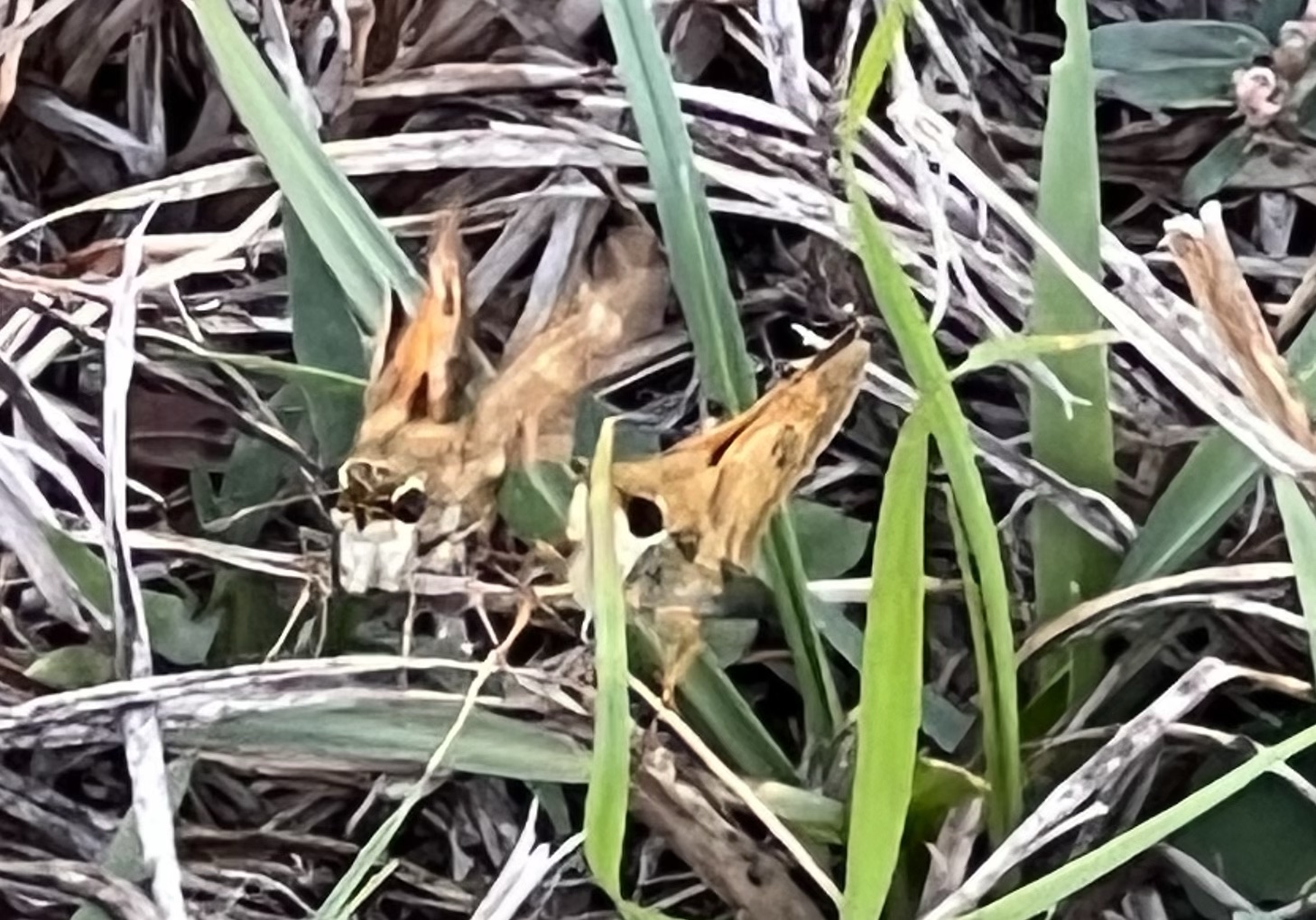
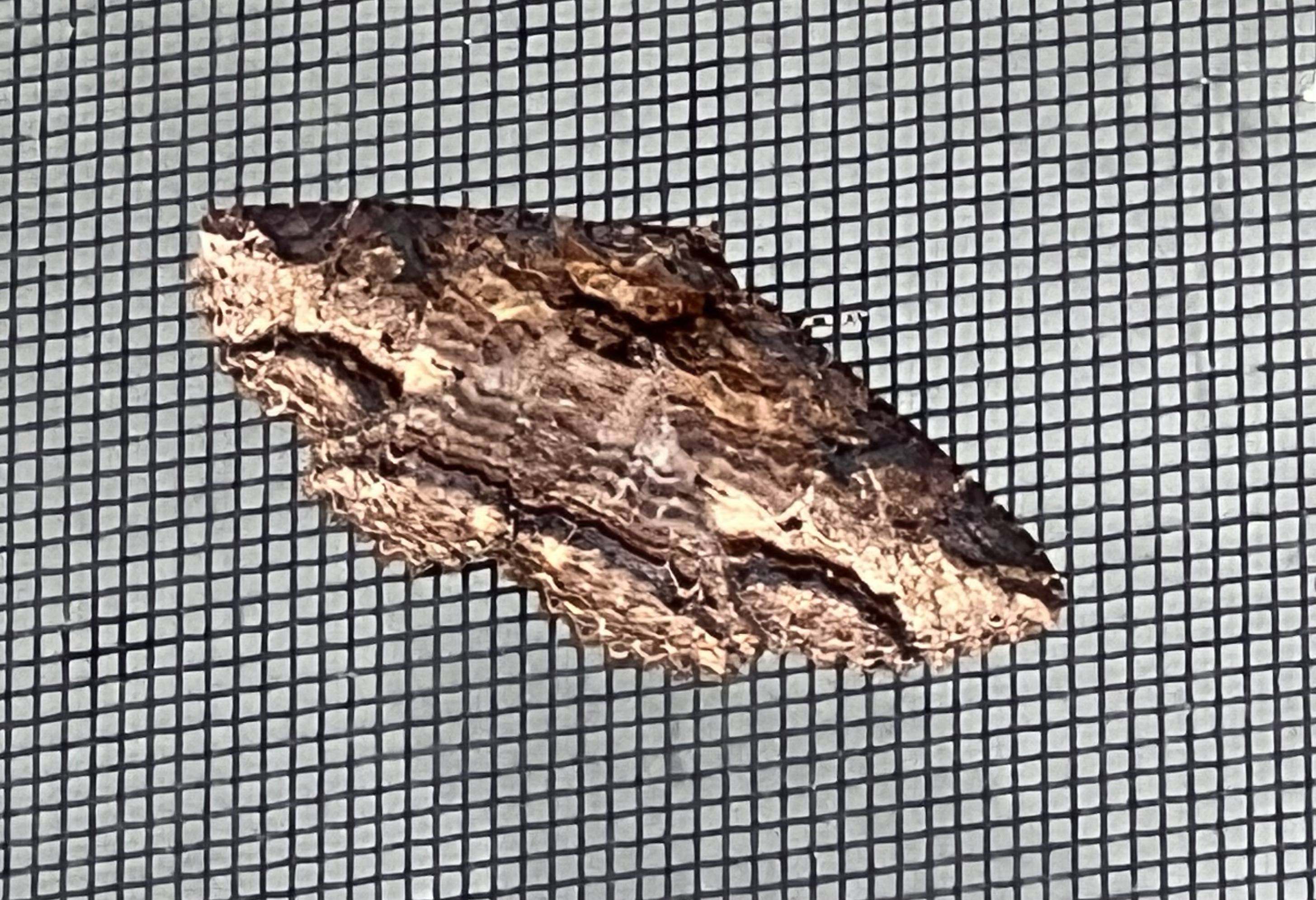
Once the sun came out, so did the butterflies and moths. I’m transfixed by the Ceraunus blues (Hemiargus ceraunus) and was really pleased to find them drying off their wings so I could see the blue part when they were sitting still, for once. But I also enjoyed the many sulphurs (not pictured, as they are blurry), Gulf fritillaries (Dione vanillae) and pearl crescents (Phyciodes tharos). There were also monarchs, who refused to pose, and lots of skippers.
Blue wings showingUsual view of ceraunus blueGulf fritillaryPearl crescentSorry they are blurry. Pretty sure they’re fiery skipperes.Lunate zale moth (Zale lunata)
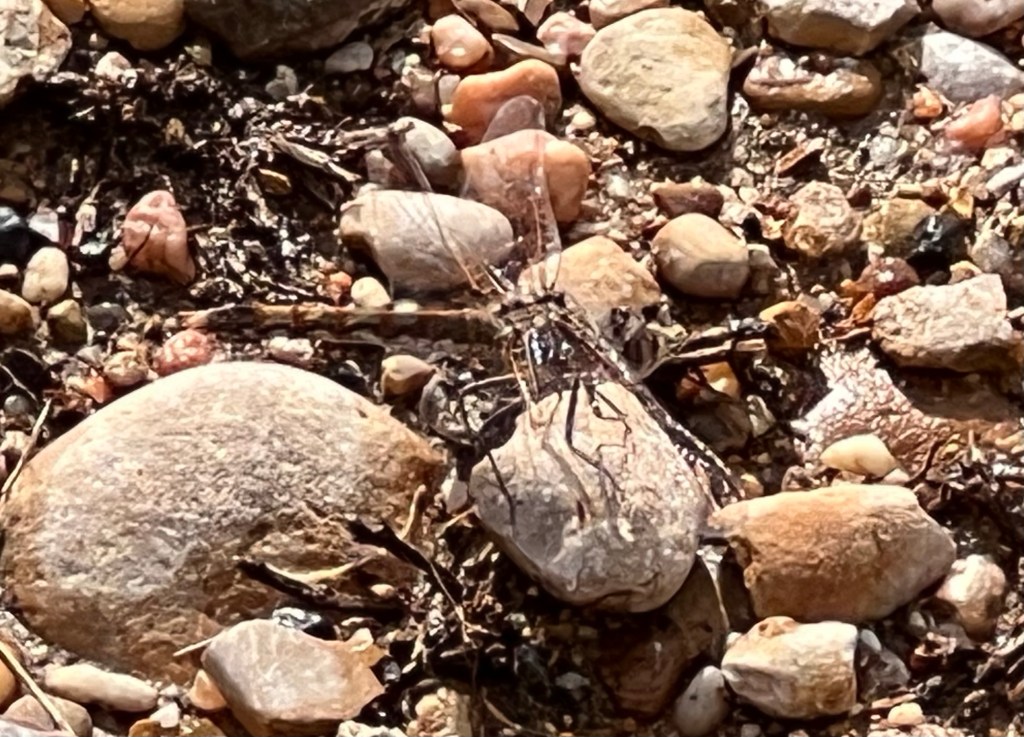
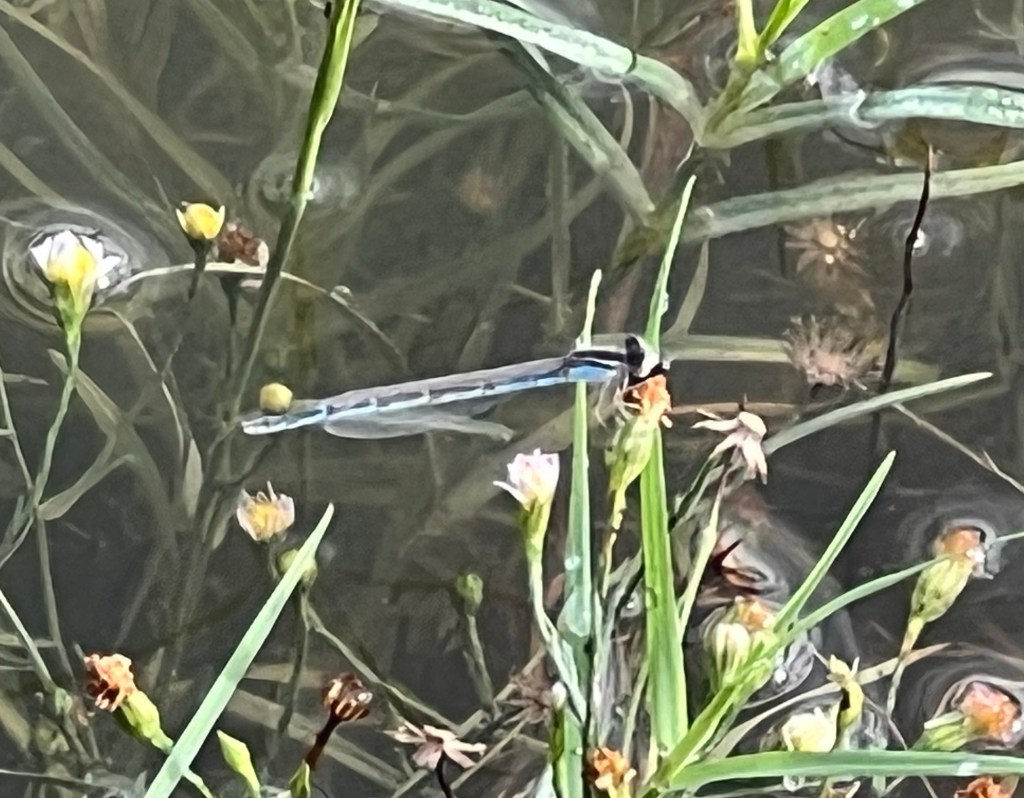
Speaking of flying insects, there are also dozens of dragonflies and damselflies out scarfing up meals. Saddlebags, pond hawks, pink ones, and red ones all flitted by me. But these are the two that sat still briefly.
Variegated meadowhawk (Sympetrum corruptum), who blends with rocksThe common familiar bluet (Enallagma civile)
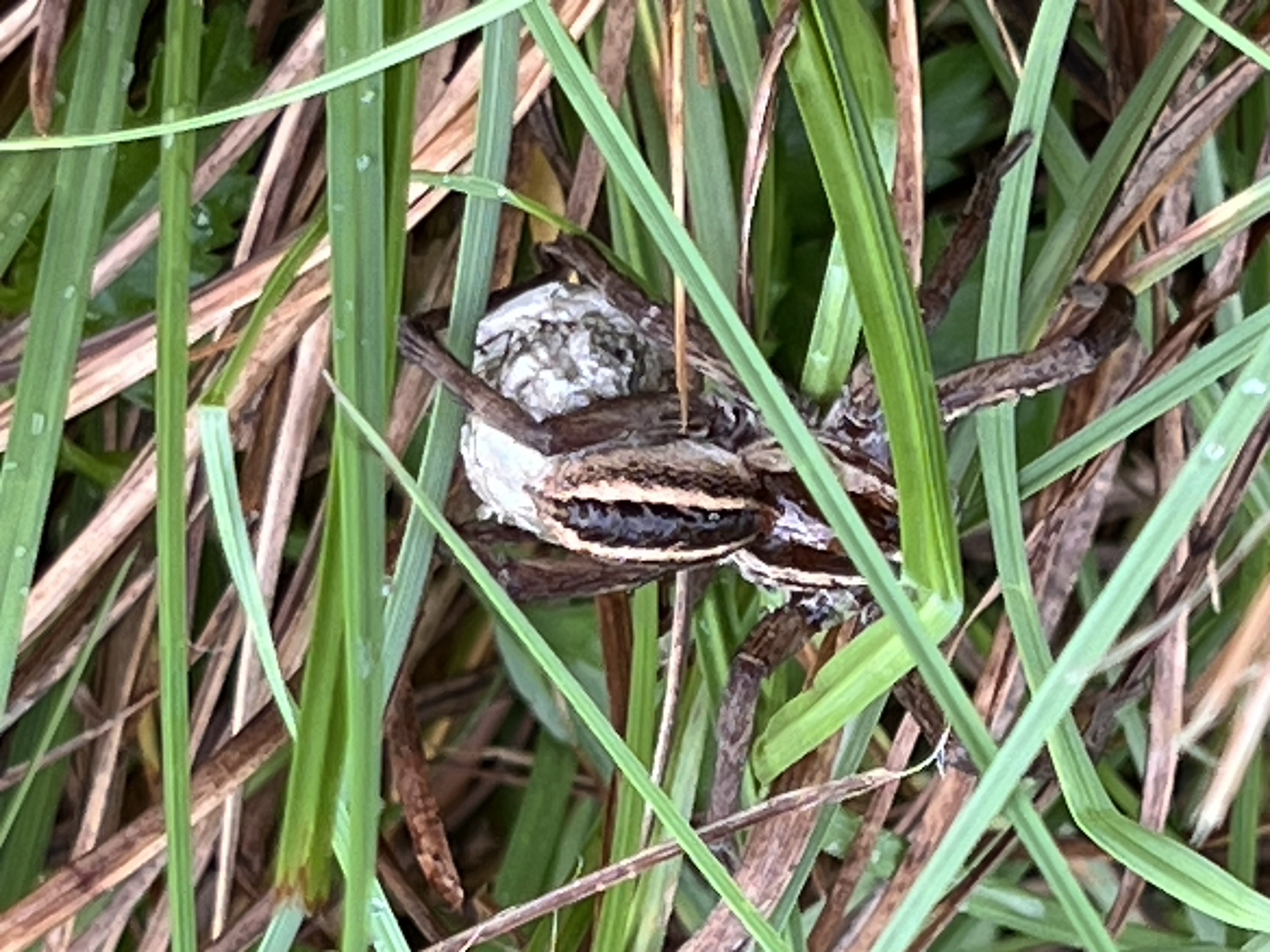
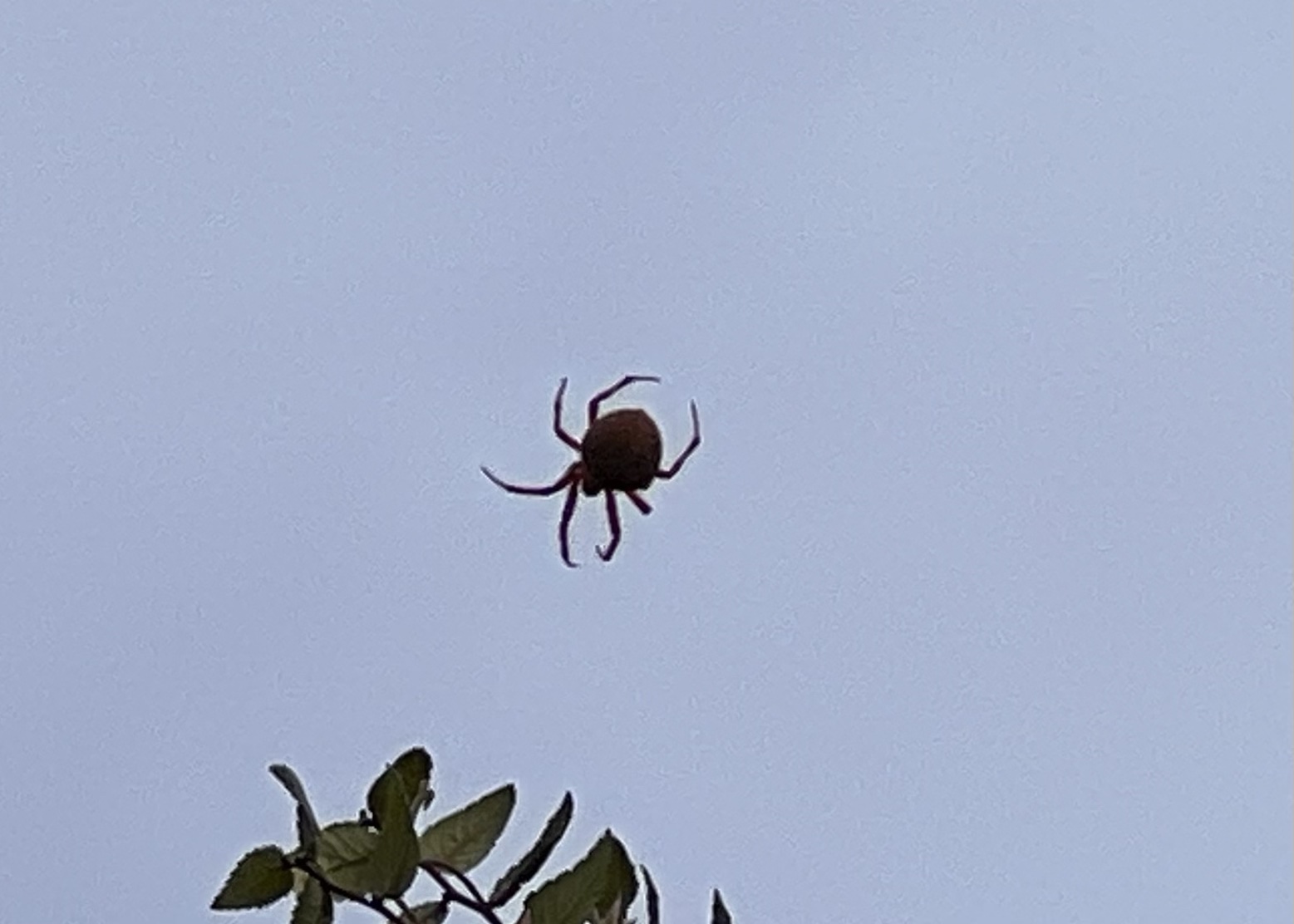
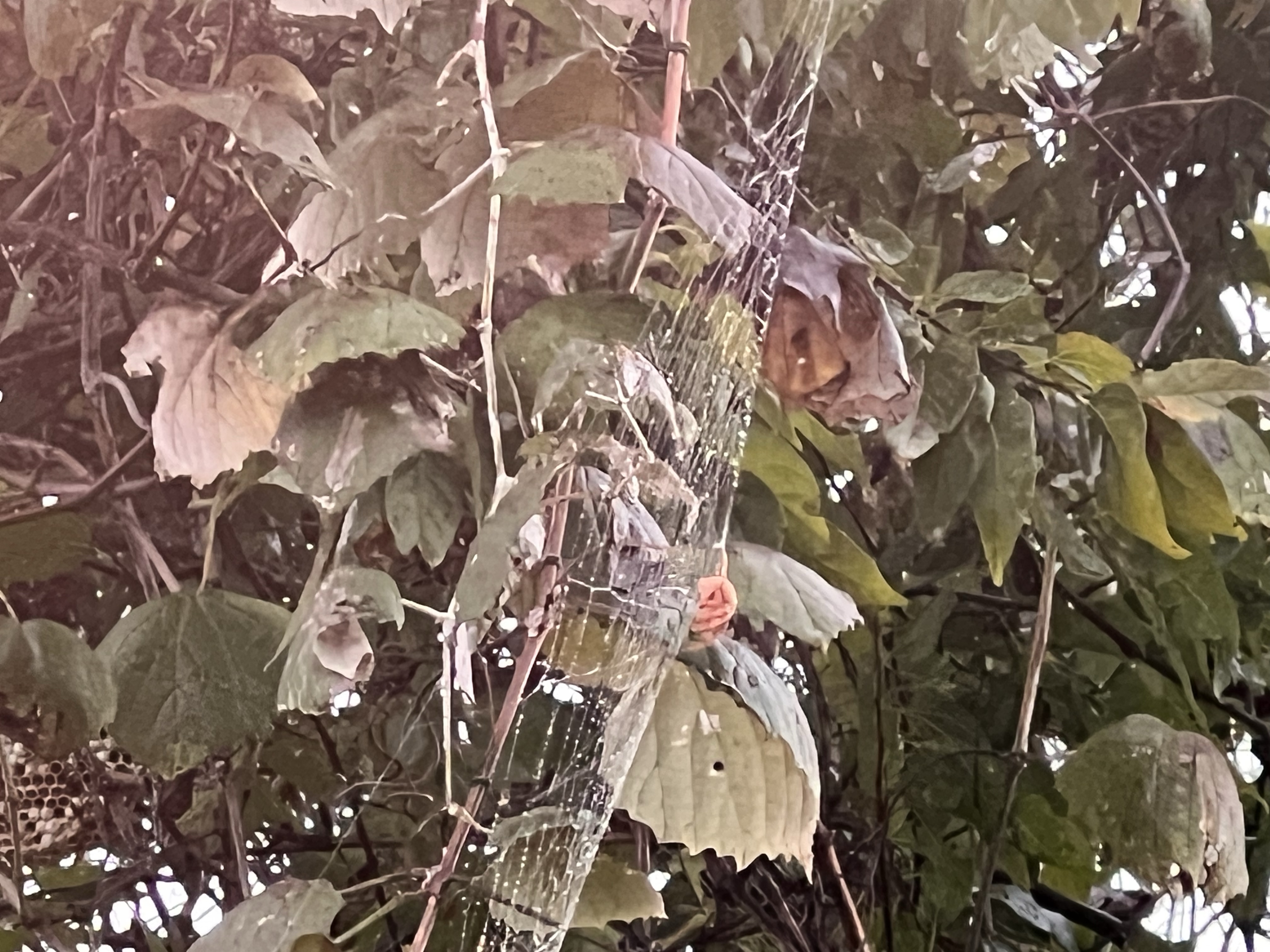
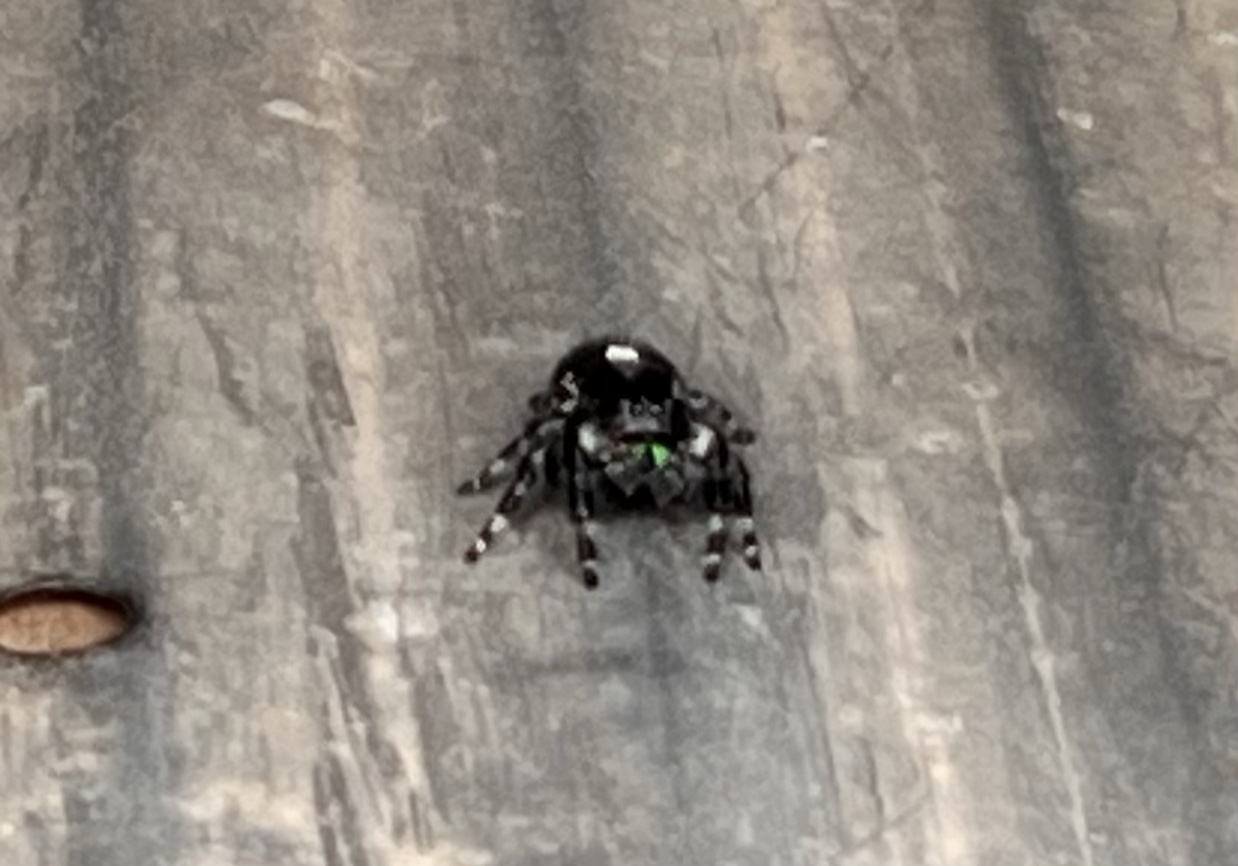
And for our pal Eric, I documented some spiders, including a rabid wolf spider mama and my bold jumping spider buddy who lives in my mailbox. There are also many orb weavers out, including these orange ones that may be spotted orb weavers, but I can’t get close enough to get a good photo.
Rabidosa rabida and egg sacOrb weaver in the airThat’s an orb weaver web, all rightHey, Suna, would you get the ants out of your mailbox?
Not a great photo of a pipit.
Of course, this is a great time of year for birds, and this is one time when it’s just fine to look up. After all, birds can be found in the water, on the ground, in the bushes, in trees, on poles, and in the air. I’ve been having a blast with the Merlin Bird ID app on my phone, which has helped me a lot with figuring out all the different sparrows and sparrow-esque birds out in our fields. I say “sparrow-esque,” because just this week I realized one confusing sparrow was, in fact, a pipit. (The link goes to my personal blog post about the birds.) Once Merlin identified it and told me what to look for, I could easily identify it from both sight and sound (and a lovely sound it is).
The list of actual sparrows I have seen and heard includes way more than the annoying house sparrows that have invaded from Europe! Here’s a list:
Clay-colored sparrow
Harris’s sparrow (seen in the winter, not now)
Lark sparrow (bigger ones)
Savannah sparrow
Swamp sparrow
Vesper sparrow
These are probably phoebes, but may be kingbirds. Darn that phone camera.
That’s a lot of sparrows. Added to that are the two kinds of wrens and the amazing meadowlarks (I could listen to those guys all day), and there is a lot of brown to go around. I almost forgot the killdeer. You can’t really forget them, because they never shut up. Between the killdeer and the crows, it can be hard for poor Merlin to hear the more delicate bird calls. The crows have much to tell each other, though I do enjoy all their different kinds of calls and other vocalizations.
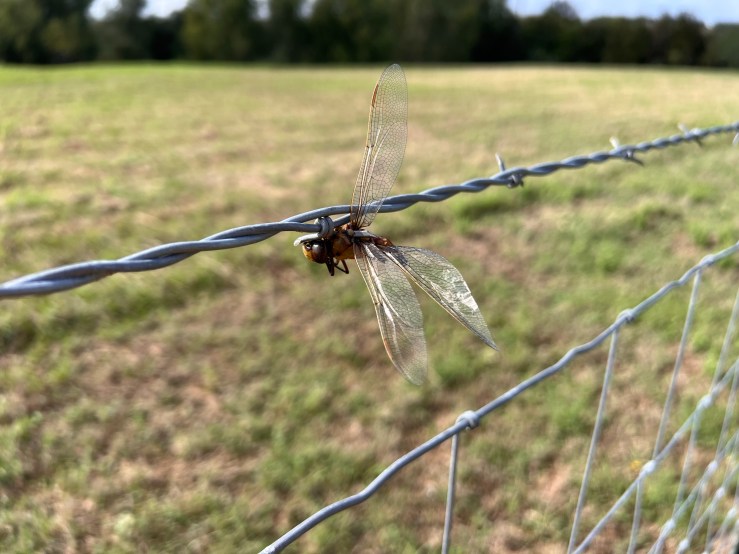
Also quite vocal are the loggerhead shrikes and the phoebes. You can’t miss them. Plus, the shrike leaves tell-tale evidence.
A dragonfly captured and impaled by a loggerhead shrike.
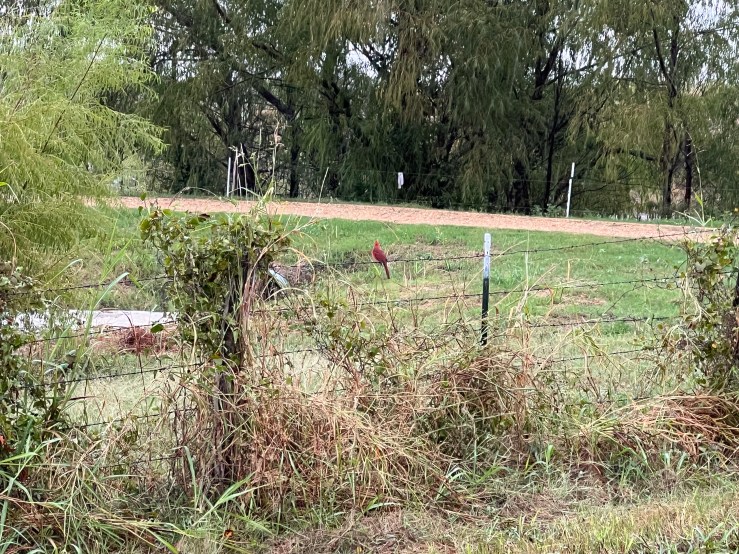
You’d think I was done with the birds, but no way. We have large flocks of cardinals here, many warblers (this week the yellow-rumped are around), starlings, grackles, and three kinds of woodpecker (downy, red-bellied, and pileated).
There were two more cardinals on the same fence.
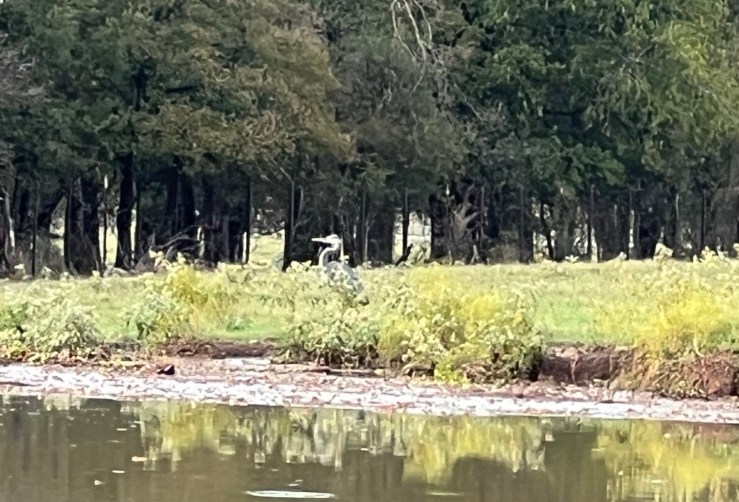
And then there are the water birds. Merlin messed up big time and identified this as a crow. It was right next to me when it croaked, and it sure sounded like a great blue heron to me.
Not a crow.
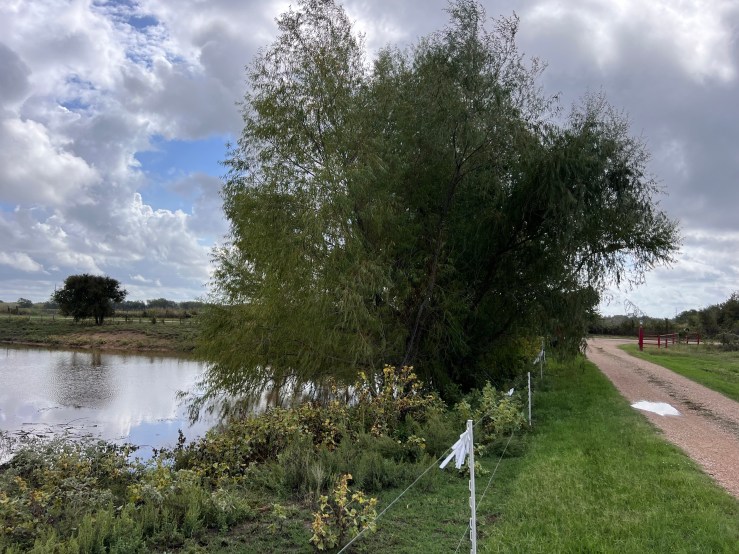
A seasonal water bird that’s around right now is our belted kingfisher. I do have a photo of it, but it’s a blurry thing with a white neck ring that you know is a kingfisher if you’ve ever seen one. I got to enjoy watching is catch a couple of fish today (and make a lot of kingfisher trills), but there were willow trees between me and the bird, so no photos. Nonetheless, that was a wonderful experience!
The kingfisher was fishing from these trees.
I’m impressed by how many birds are are still here or migrating through, since many summer residents have moved on. I’d miss the tanagers and buntings more if other beautiful singers hadn’t taken their place. But enough on birds. I’m overly chatty.
I had originally intended to focus on all the plants that are blooming or making pretty seeds/berries right now on the ranch, but I got distracted by all the other teeming wildlife. Autumn is a great time to look for flowers here, though, so allow me to share a few of the plants I’m enjoying right now. It’s fun to watch groups of flowers fade away while others start up!
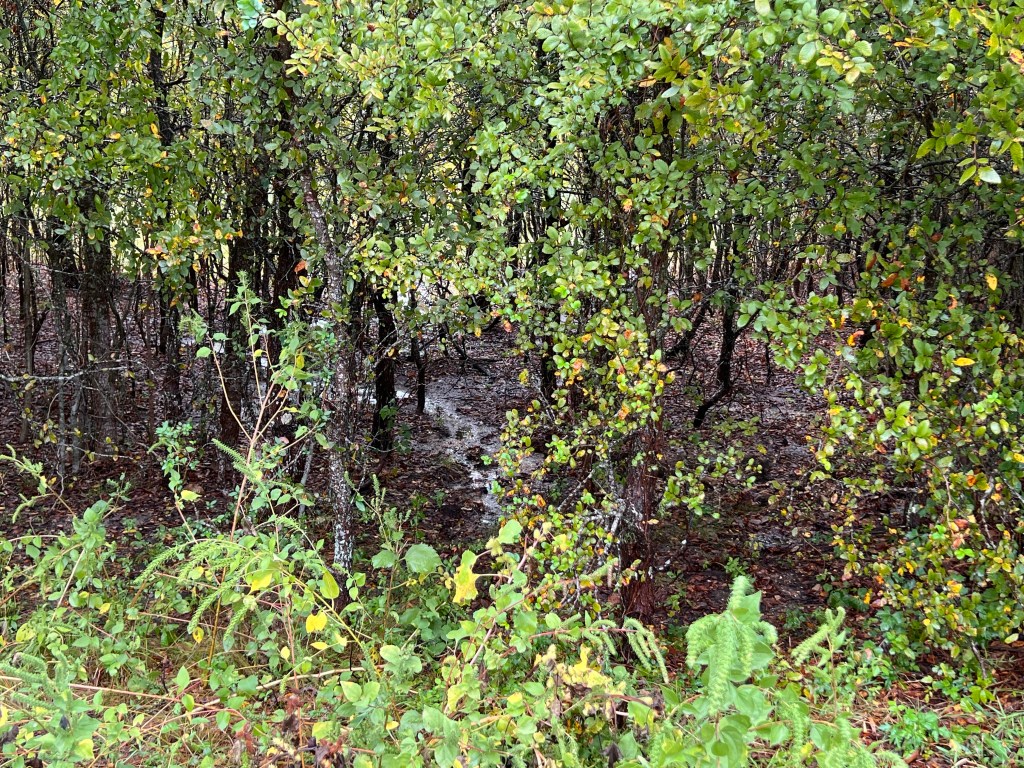
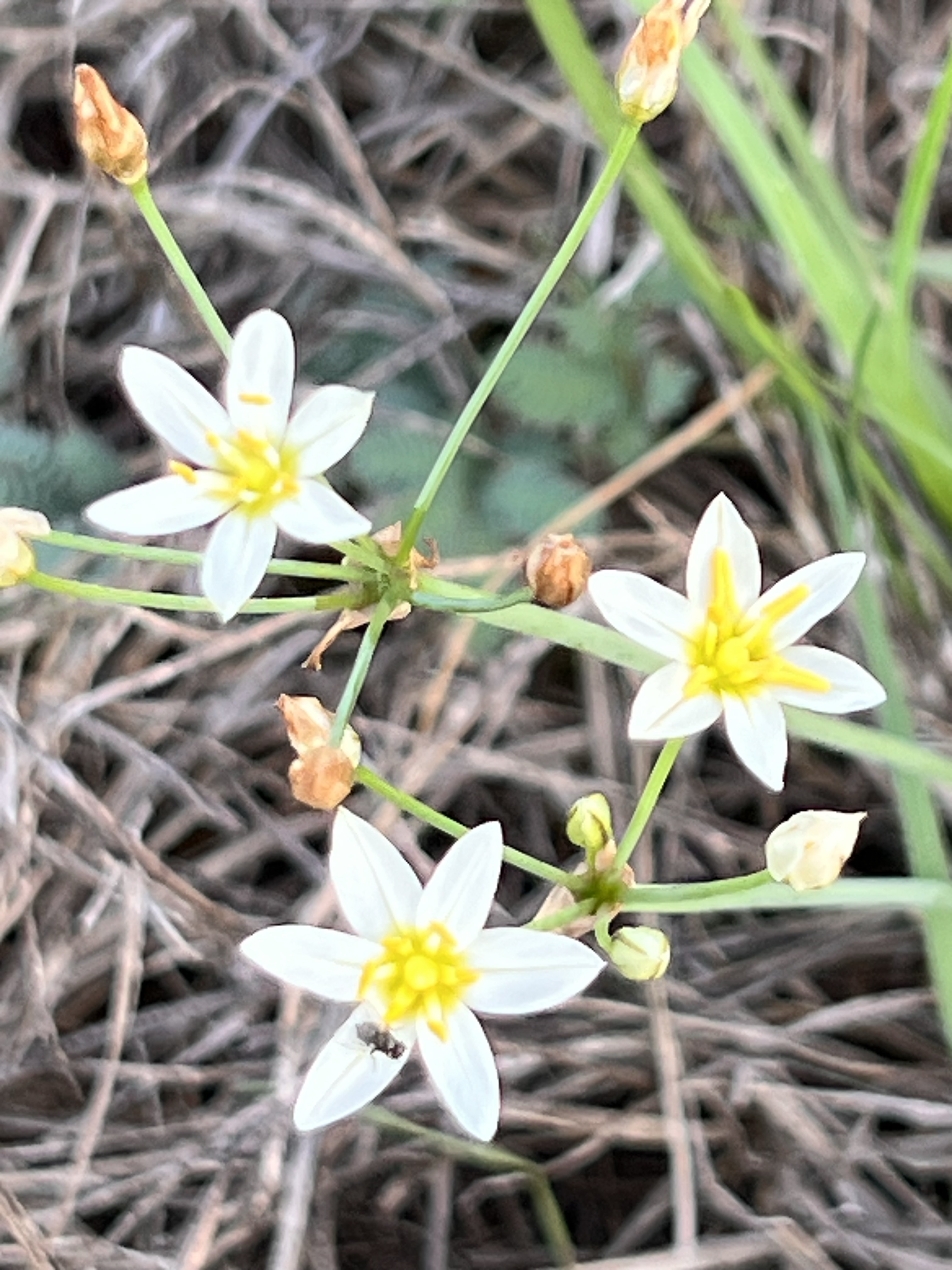
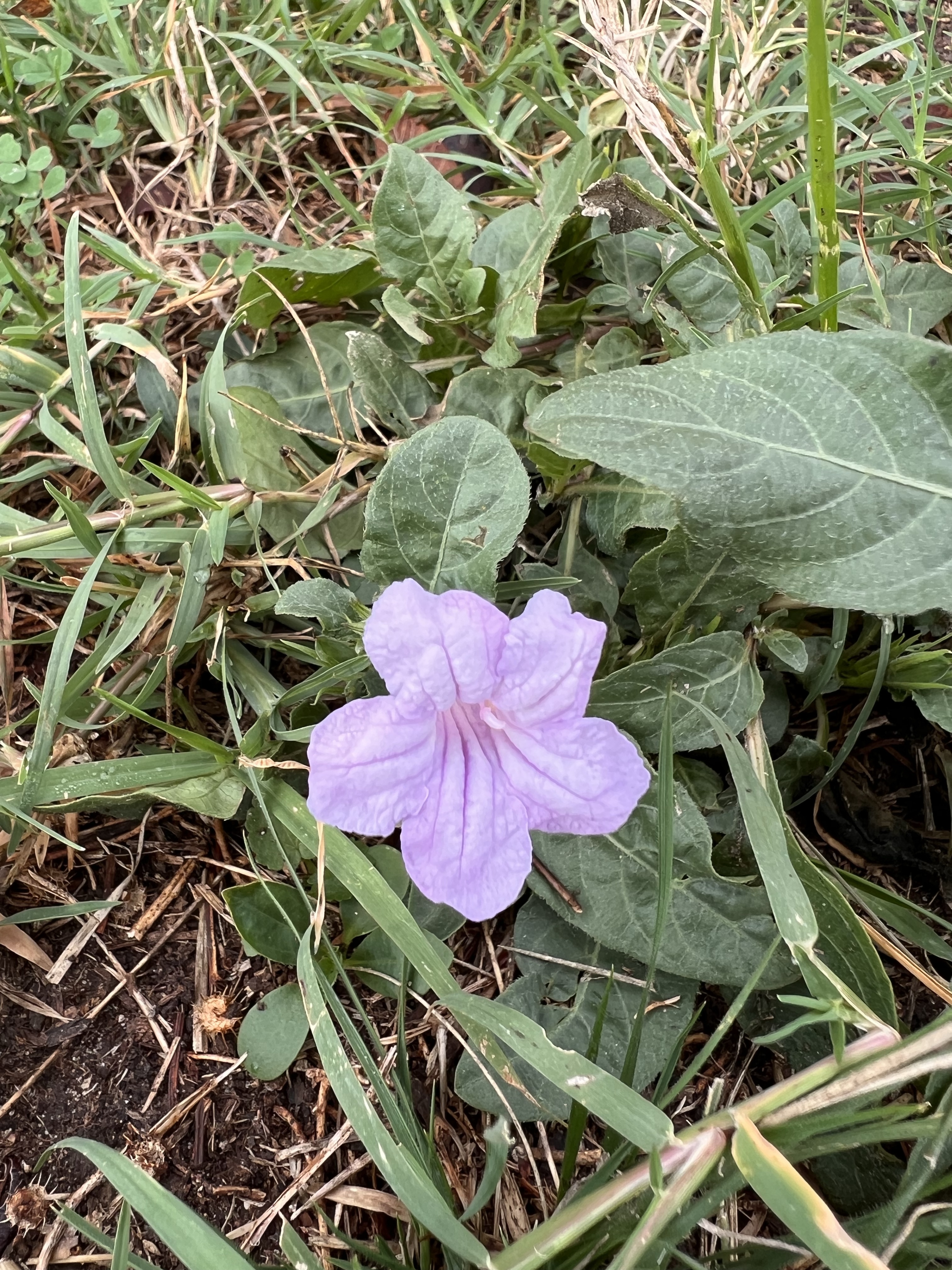
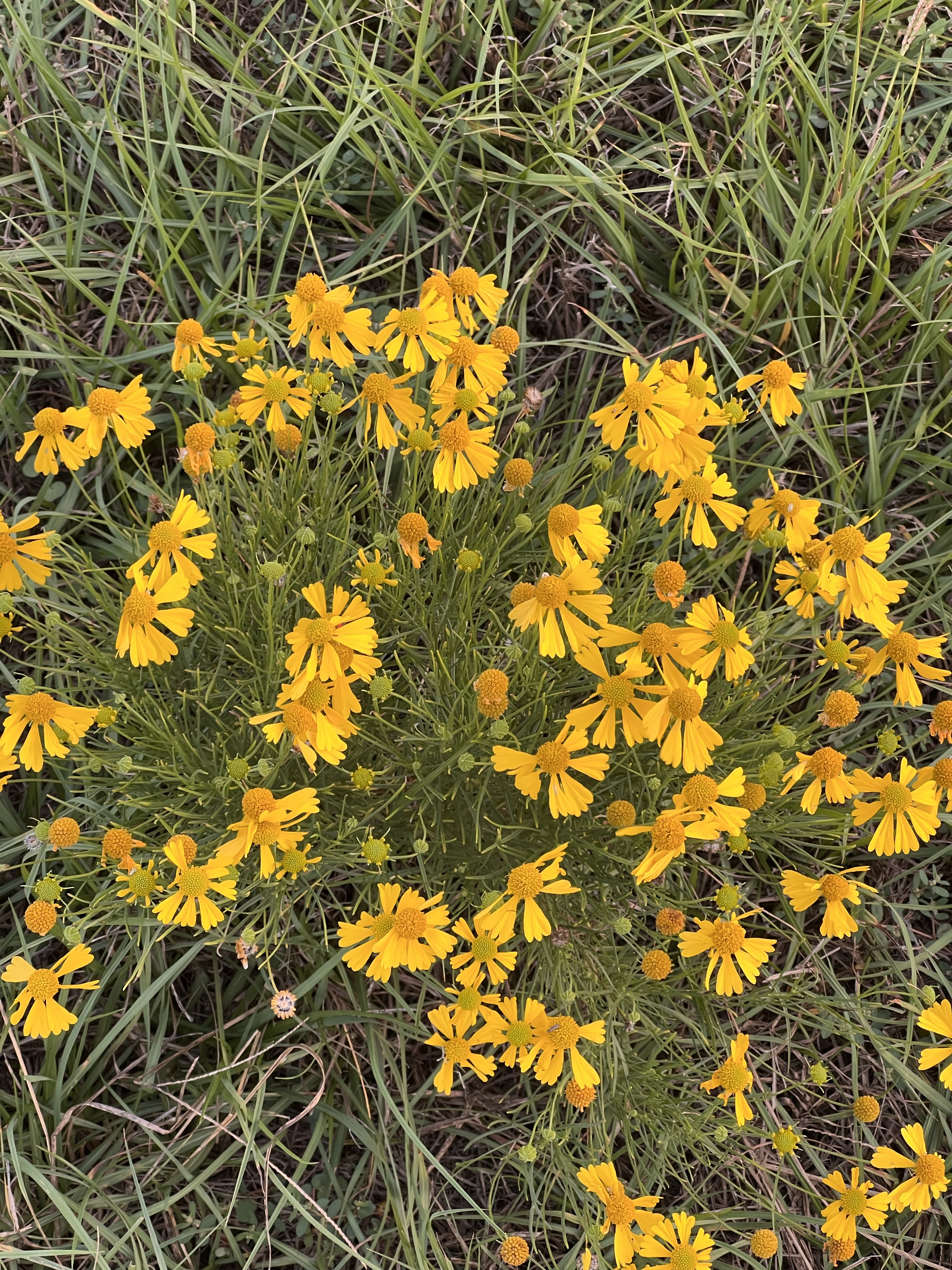
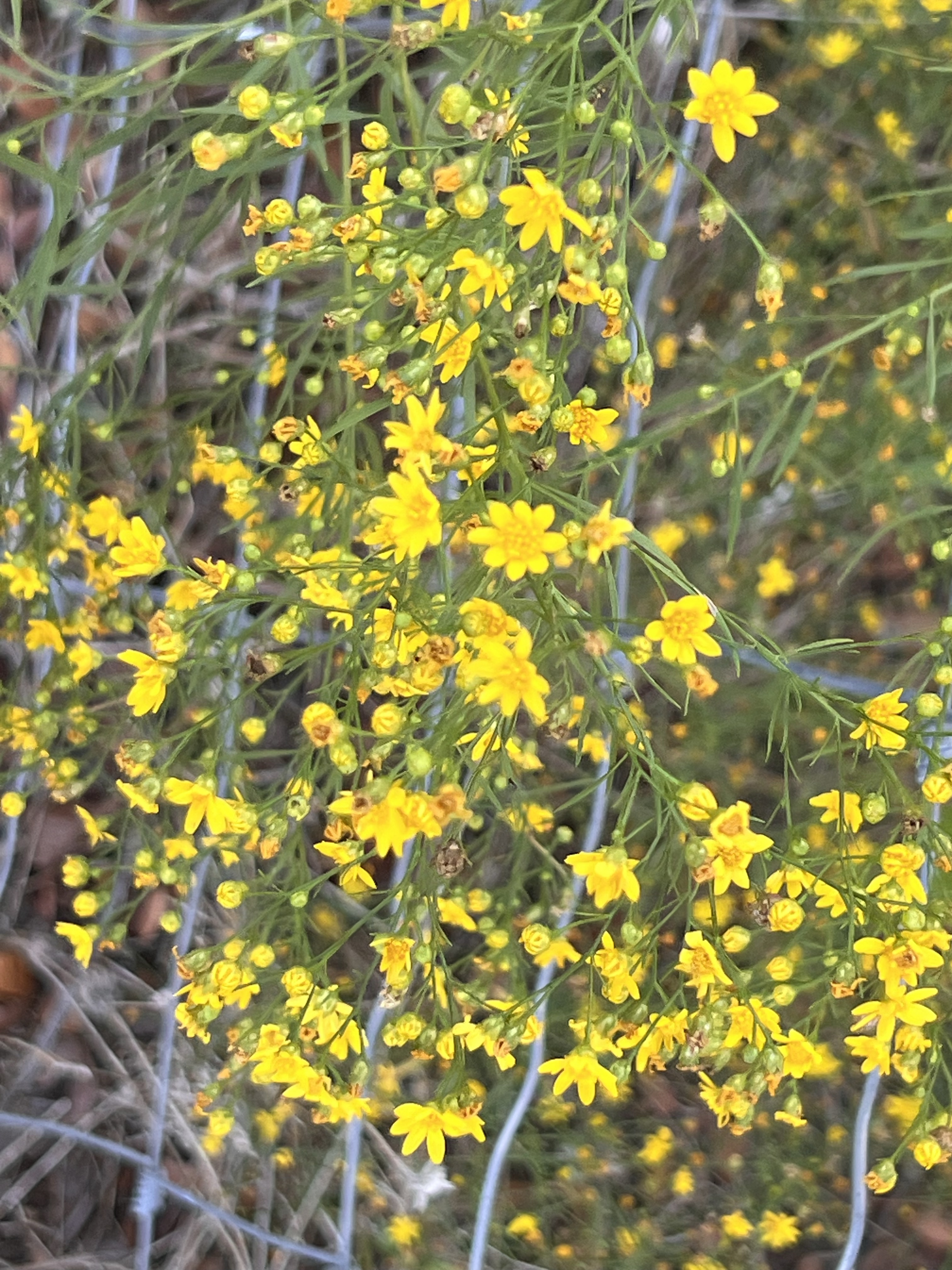
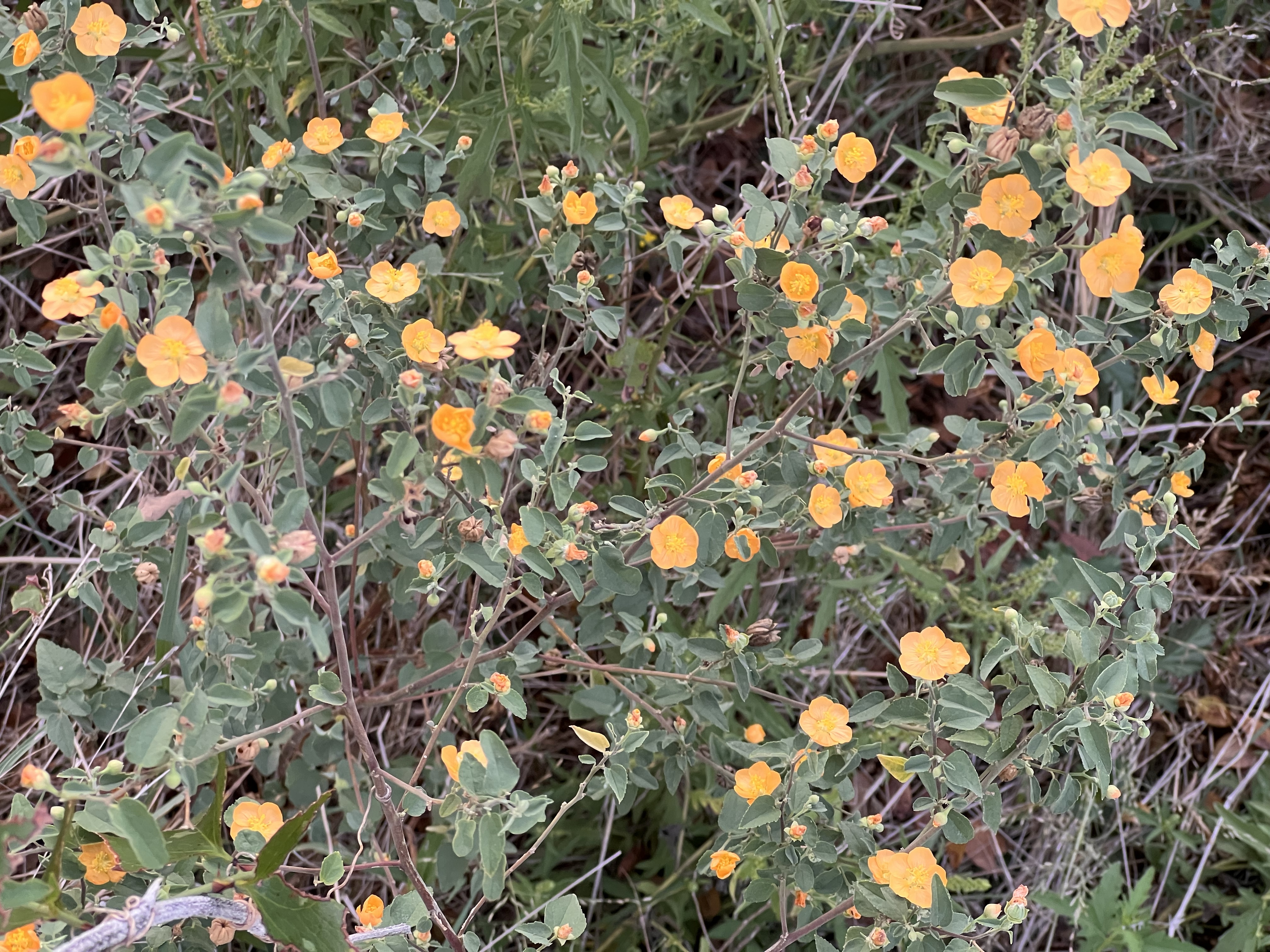
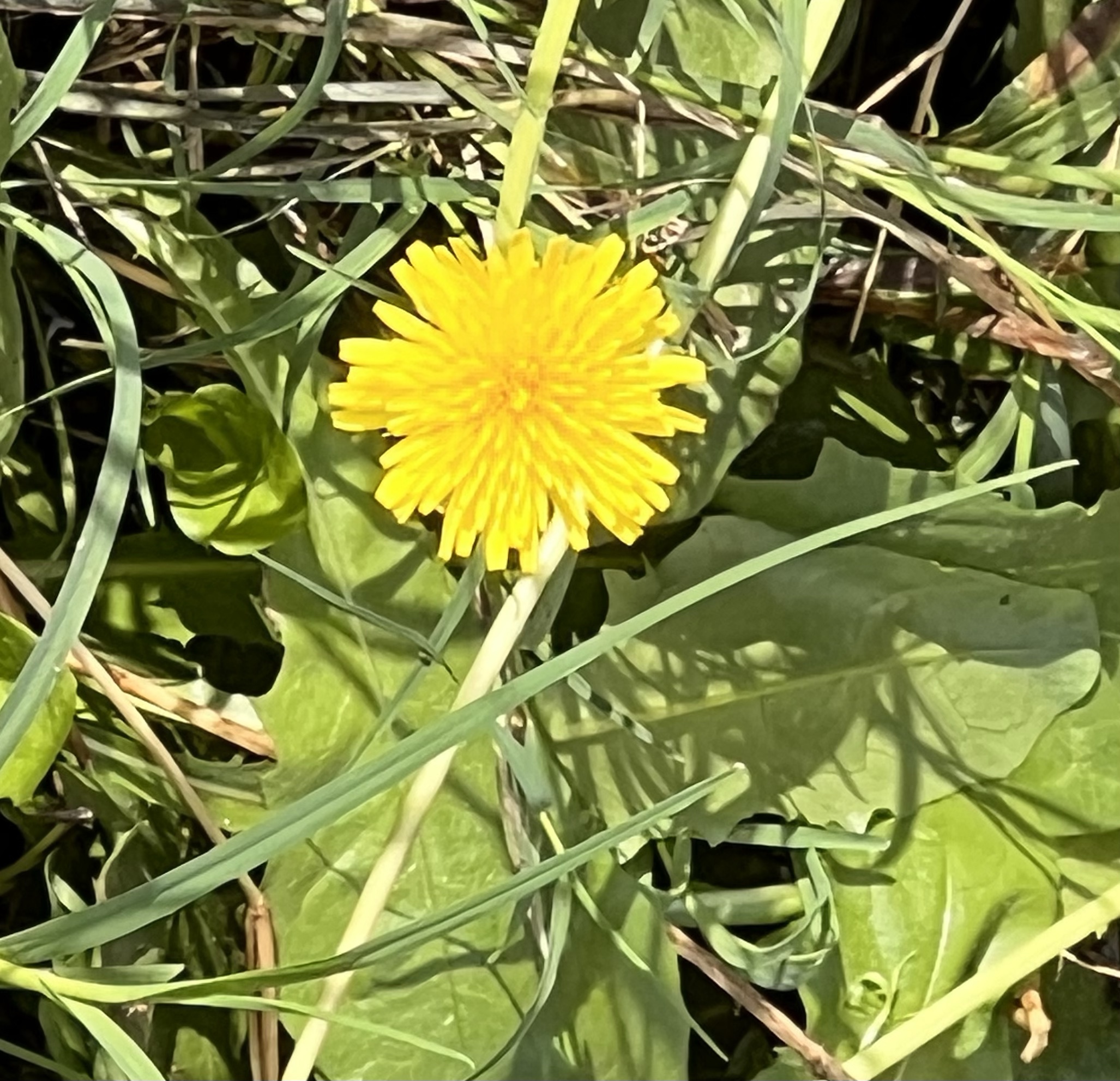
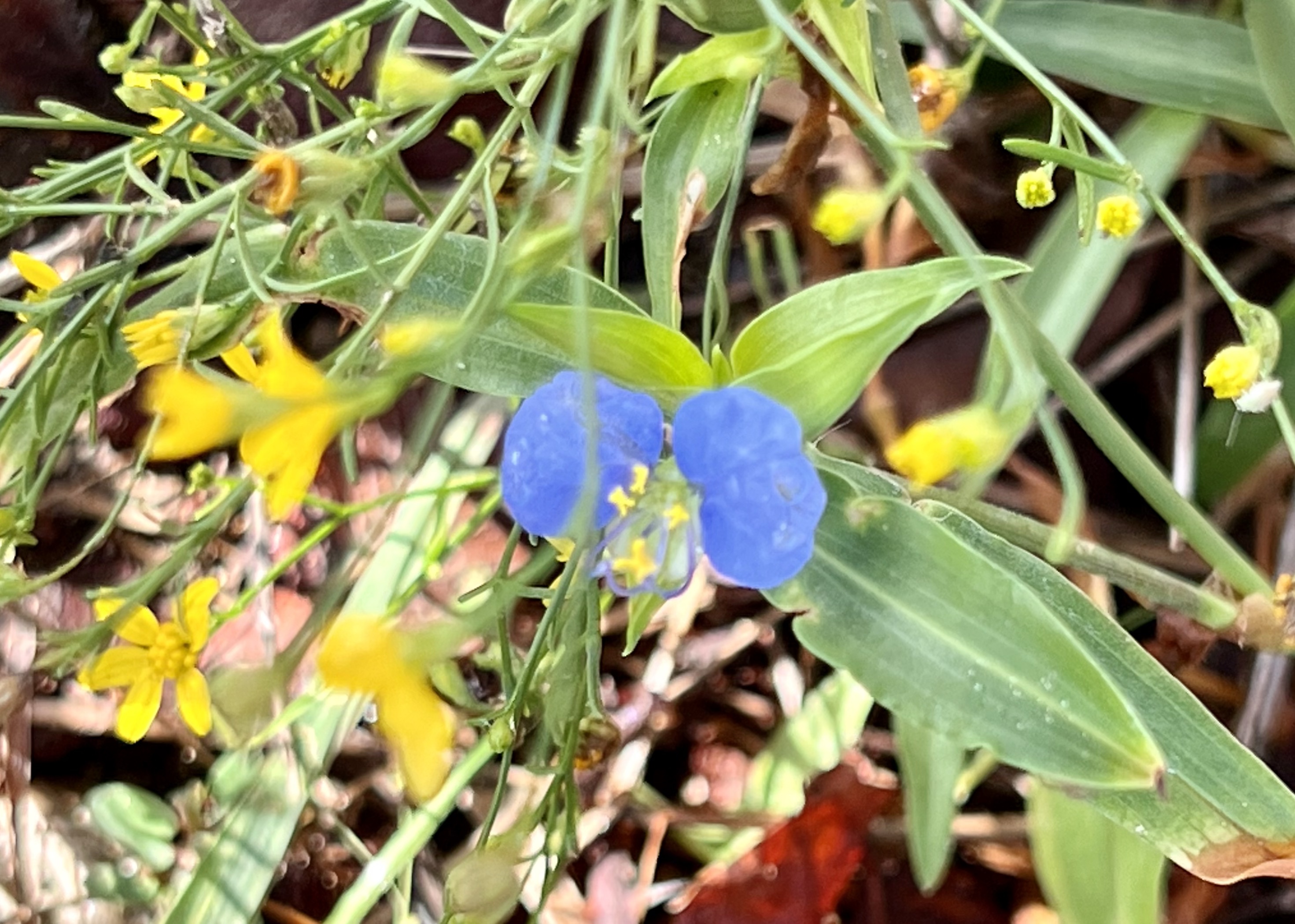
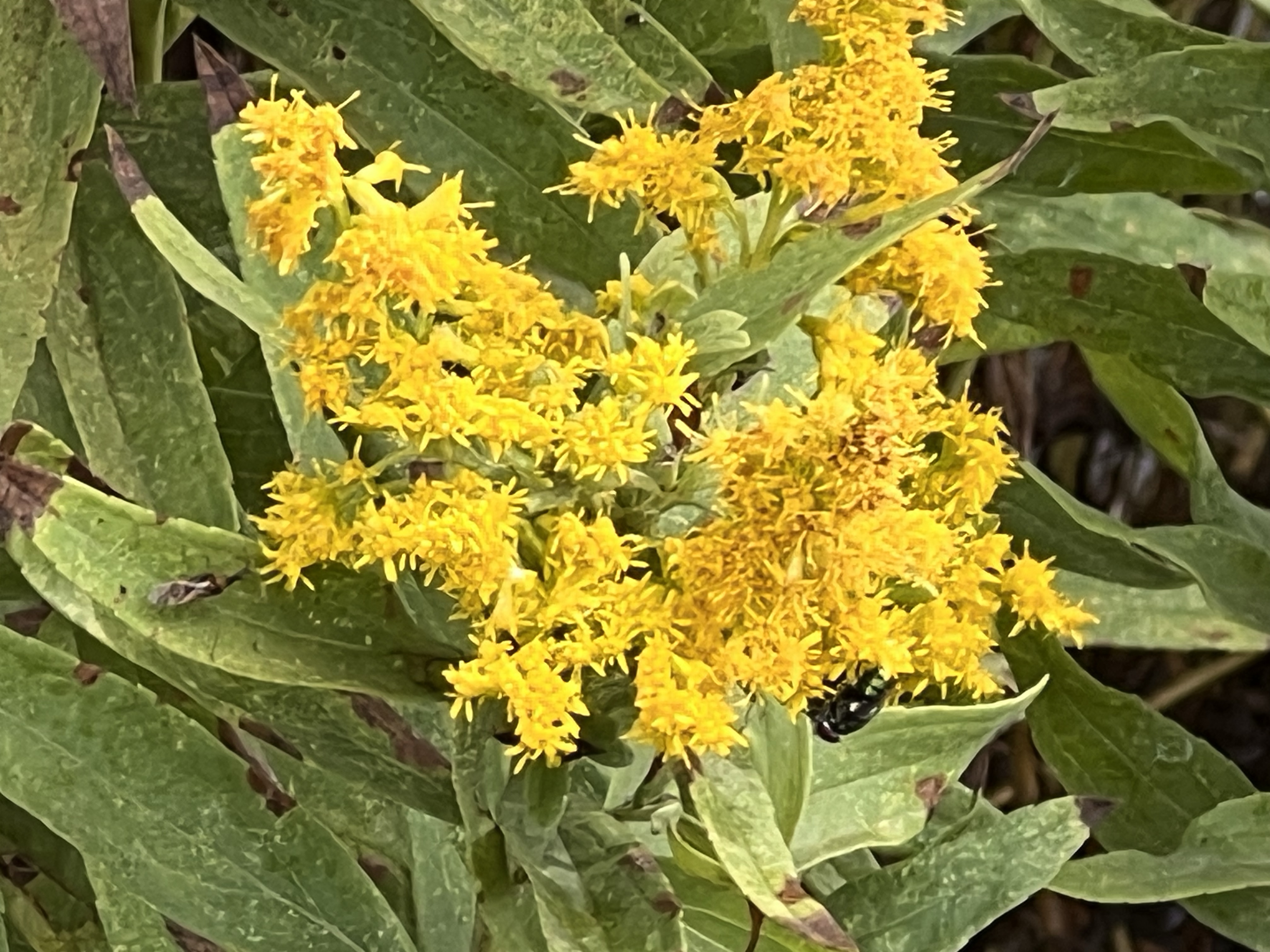
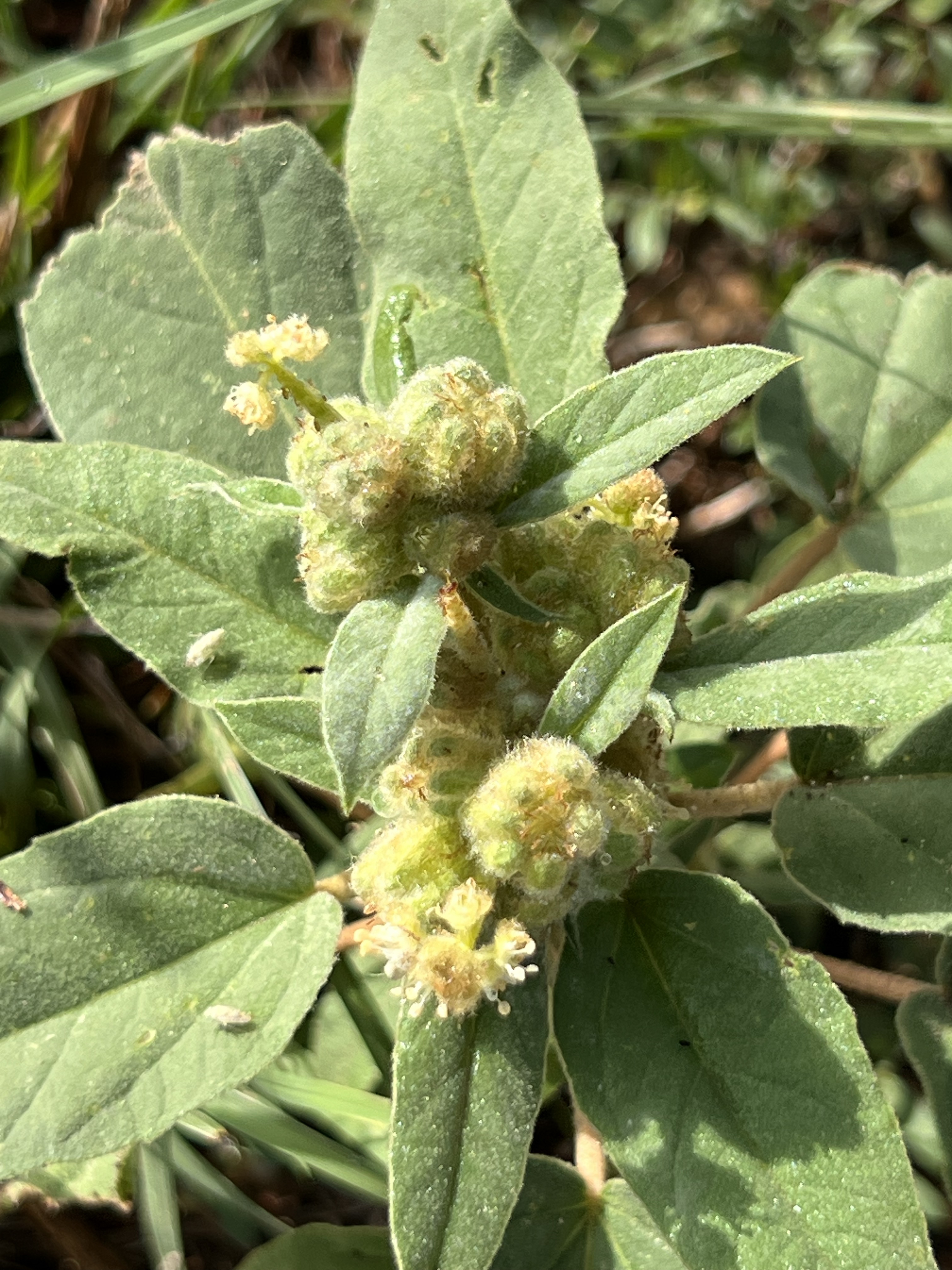
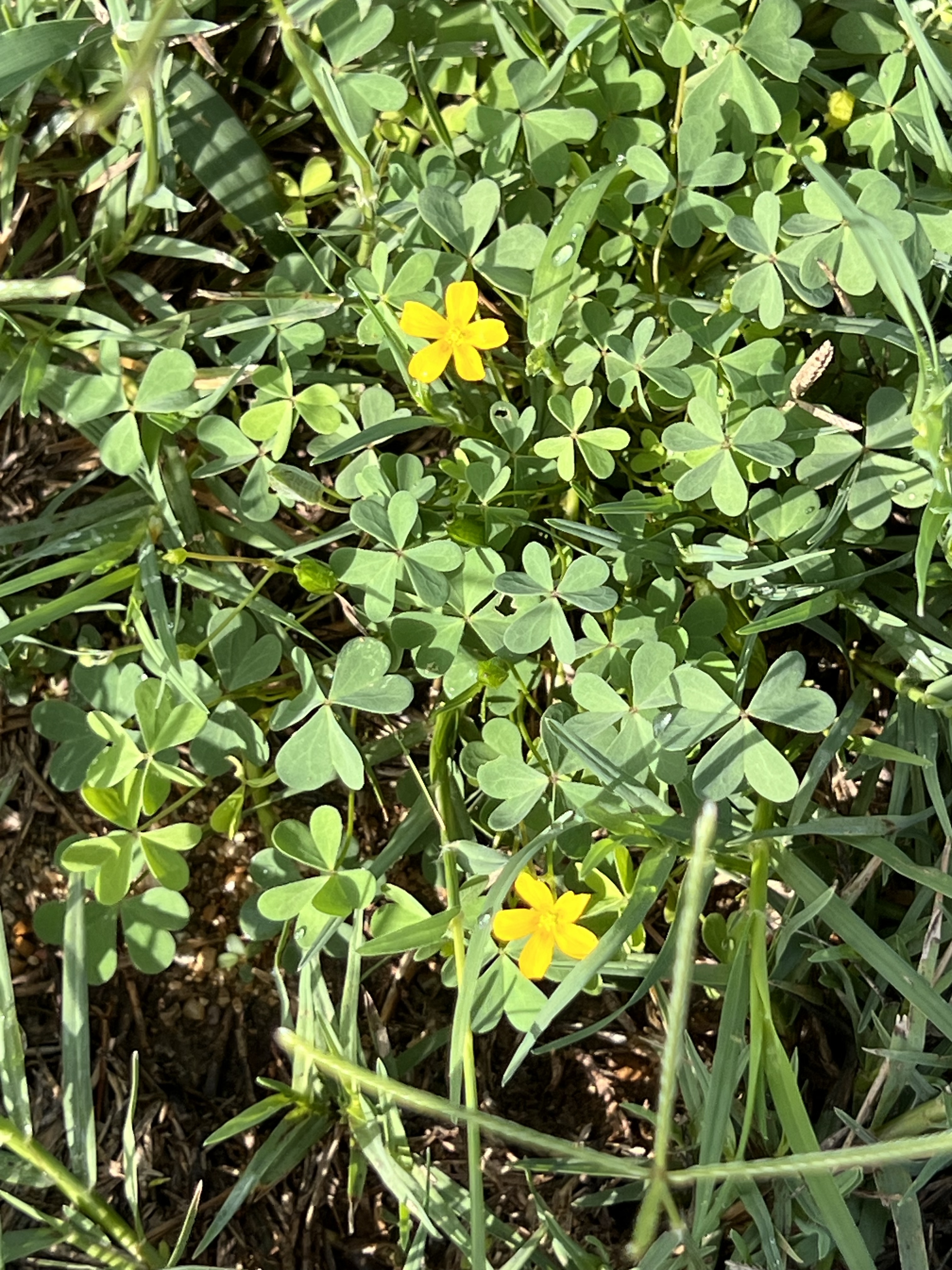
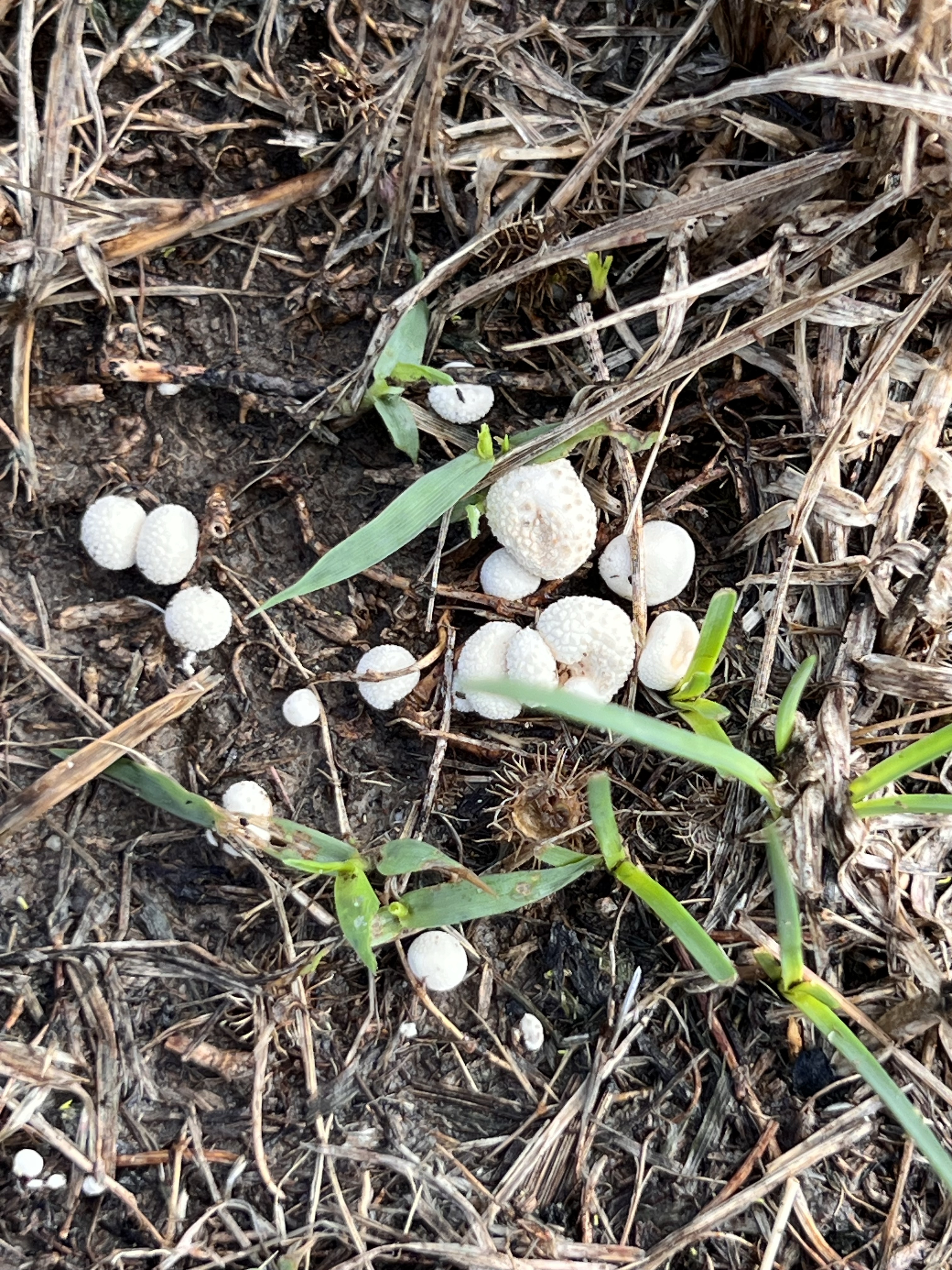
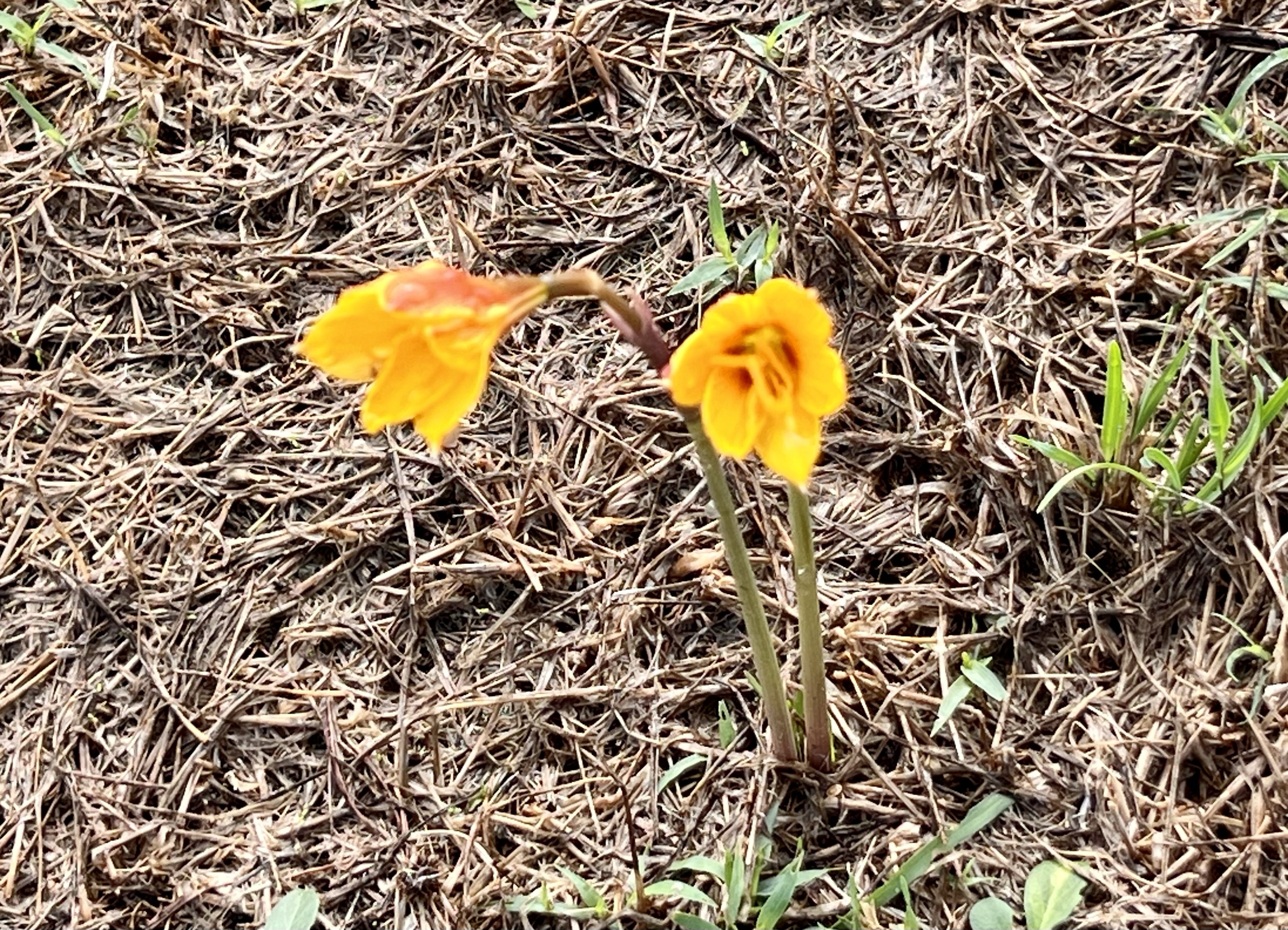
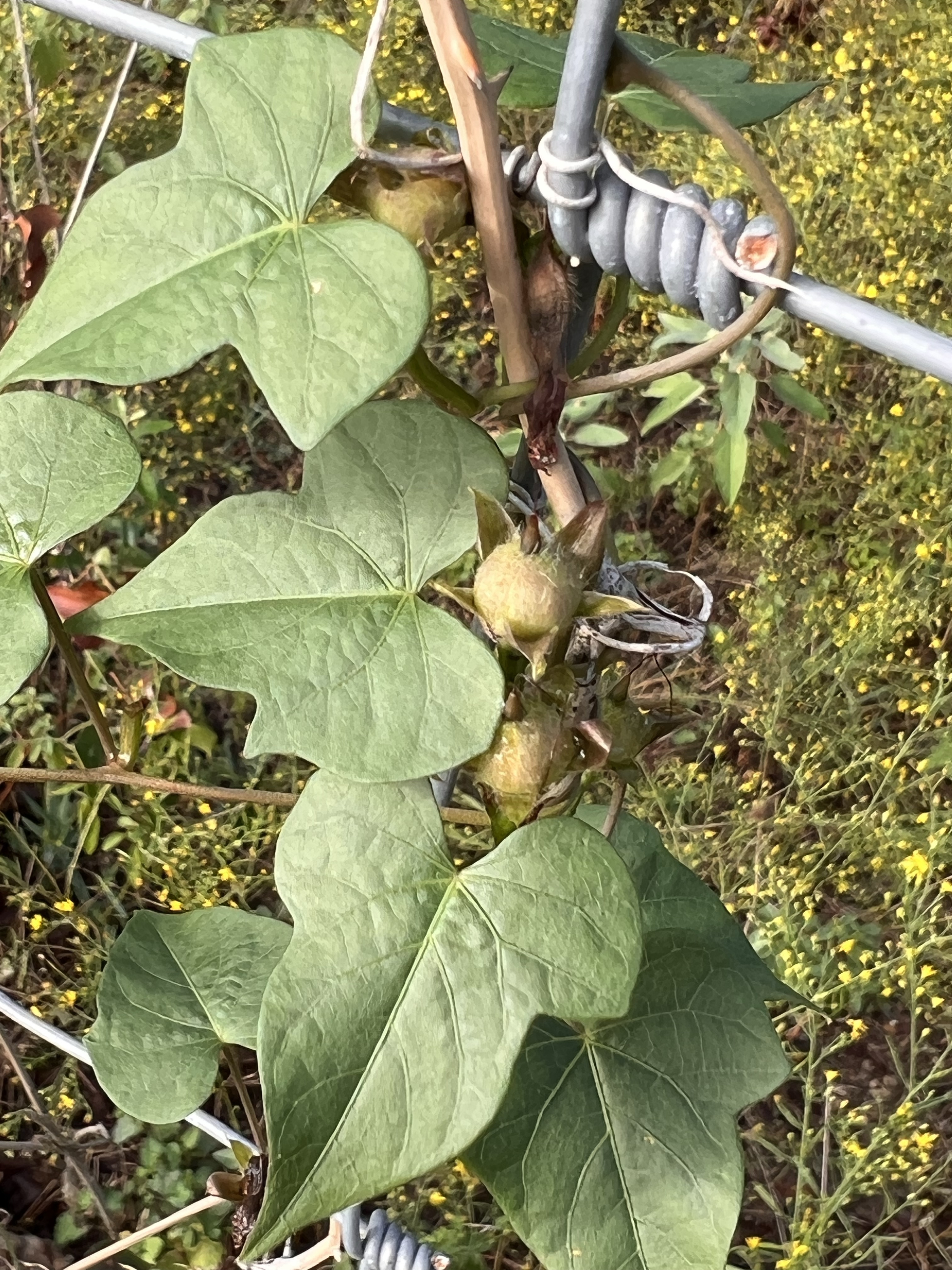
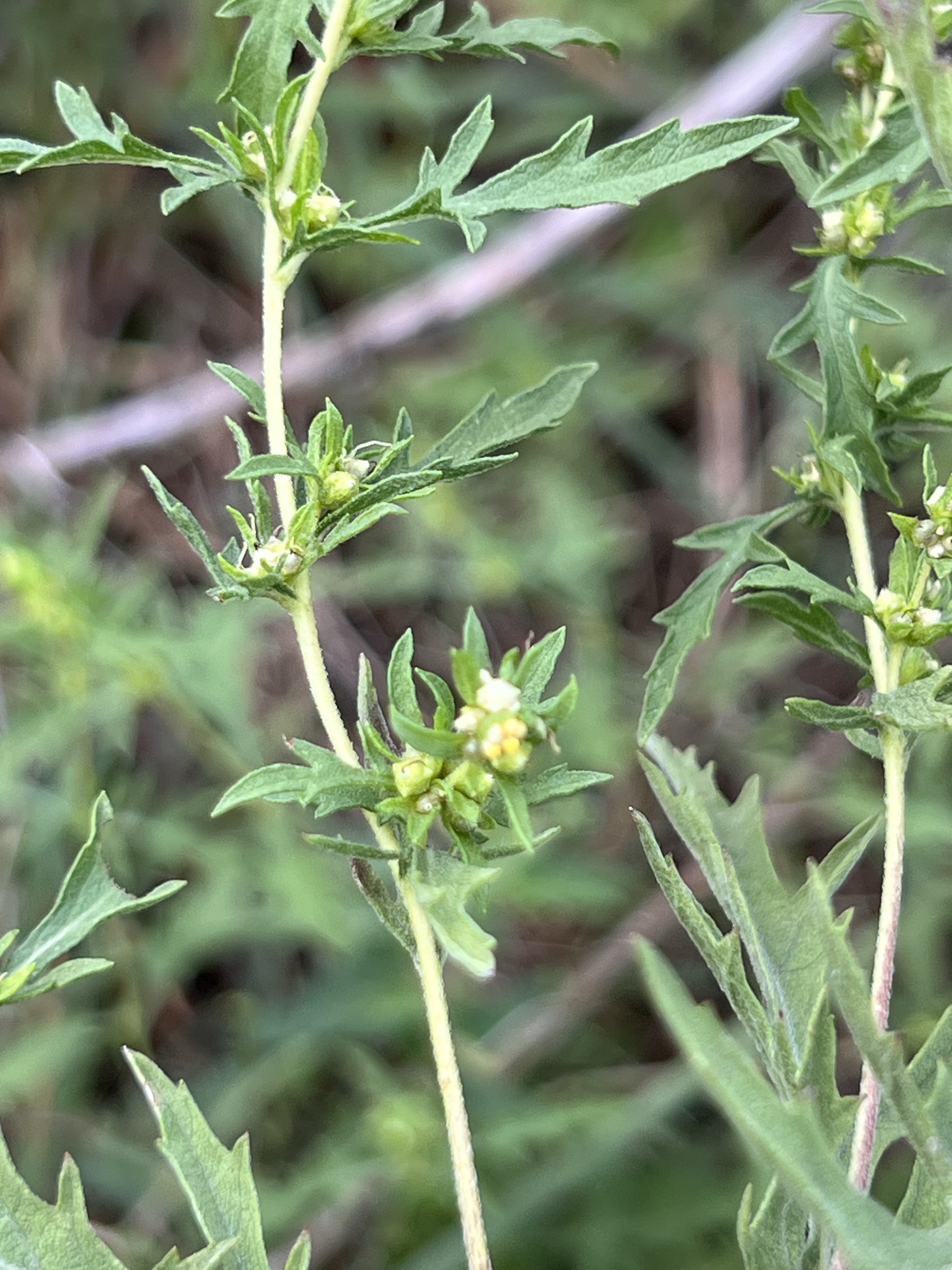
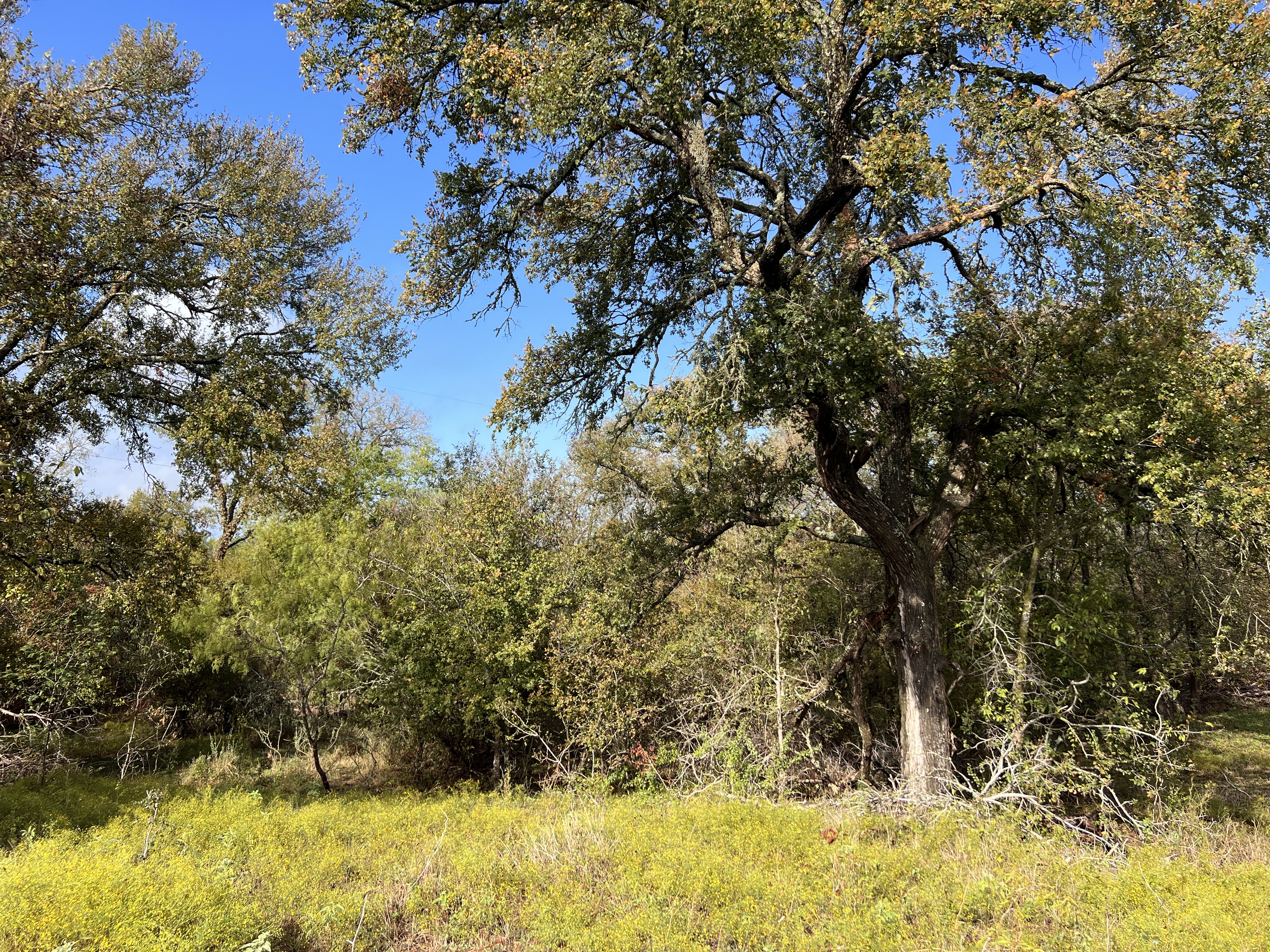
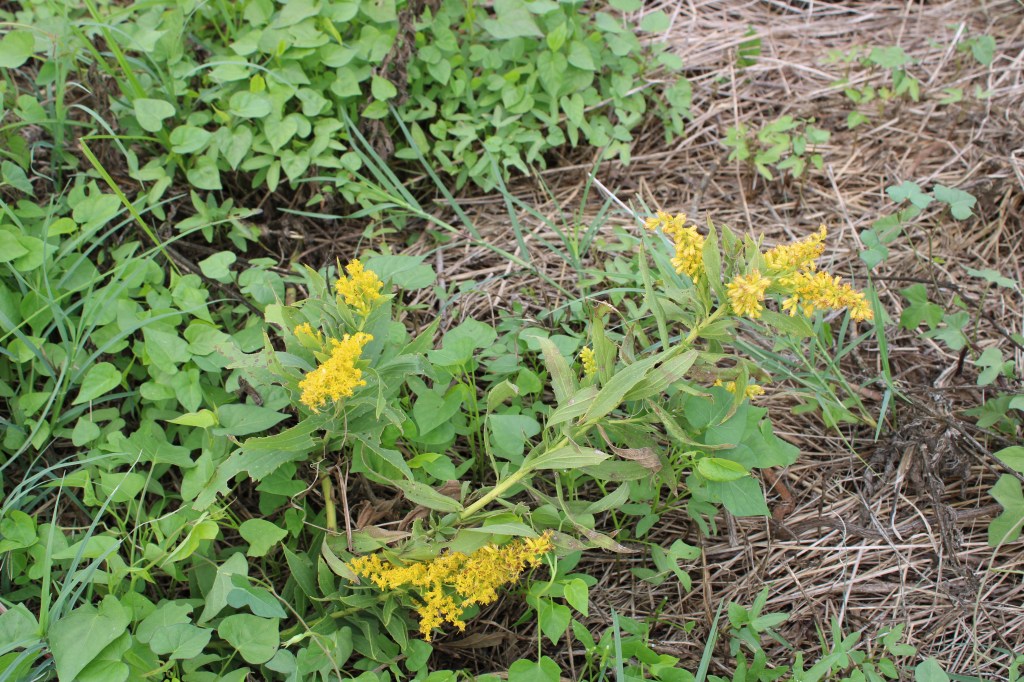
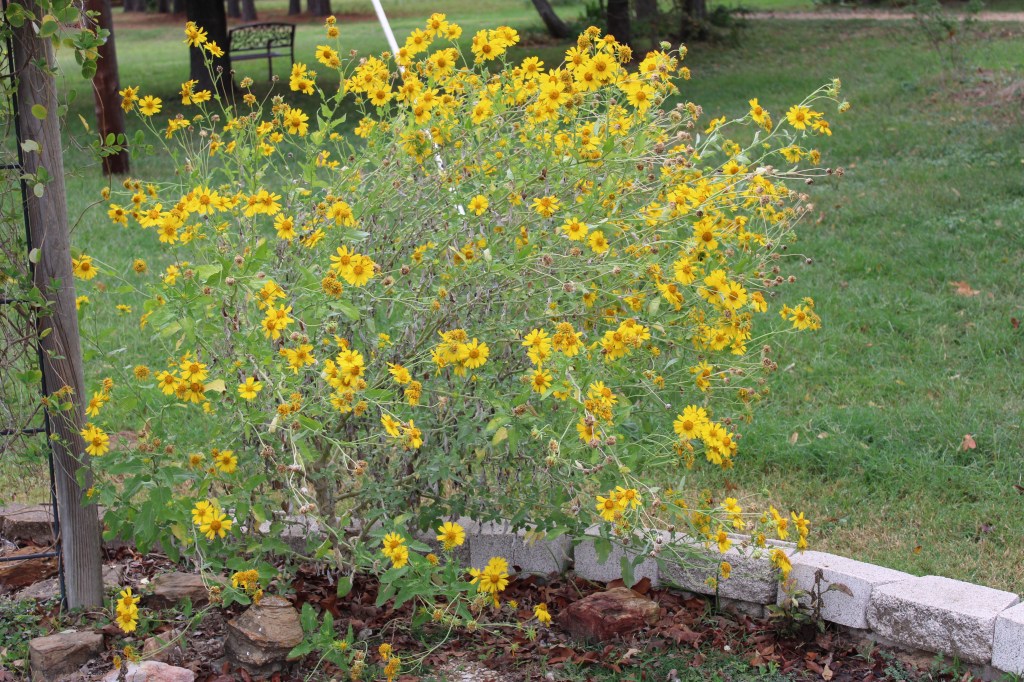
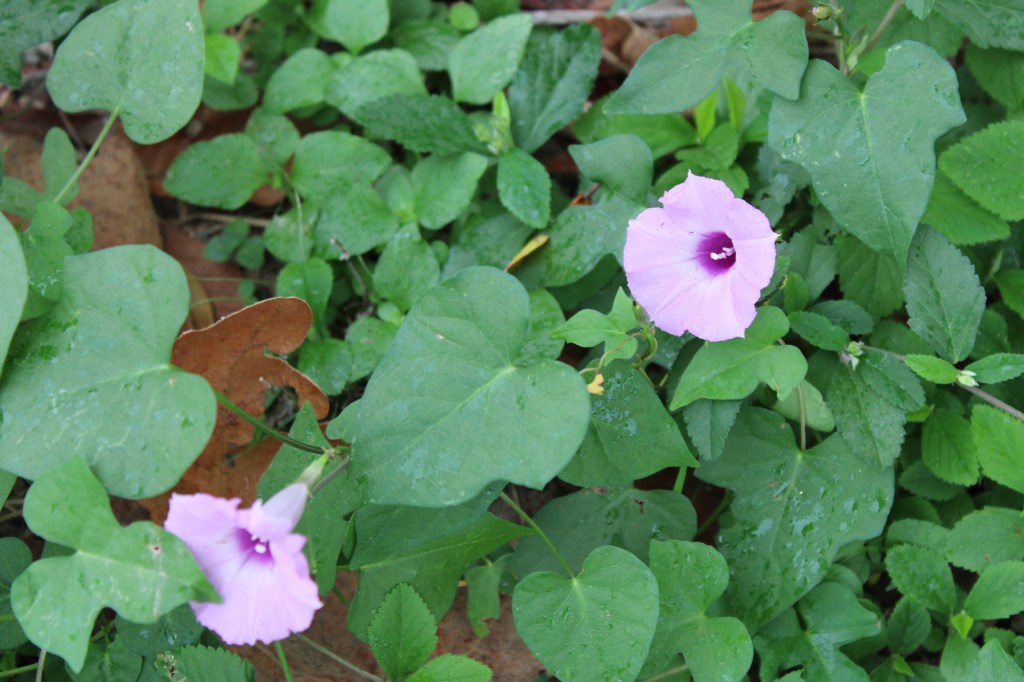
Crow poison (Nothoscordum bivalve) and a tiny insectViolet ruellia (Ruellia nudiflora), still hanging in thereI never get this plant right. Broomweed or something else.Texas Indian mallow (Abutilon fruticosum)Common dandelion (Taraxacum officinale)White mouth dayflower (Commelina erecta)Tall Goldenrod (Solidago altissima)Lindheimer’s doveweed (Croton lindheimeri)Slender yellow wood sorrel (Oxalis dilenii)Not a plant. Mushrooms coming up.Rio Grande copper lily (a rain lily) (Zephyranthes tubispatha)Tie vine seed pods (Ipomoea cordatotriloba)Carolina snailseed (Cocculus carolinus)Ragweed, not sure whichA view looking into our wooded area
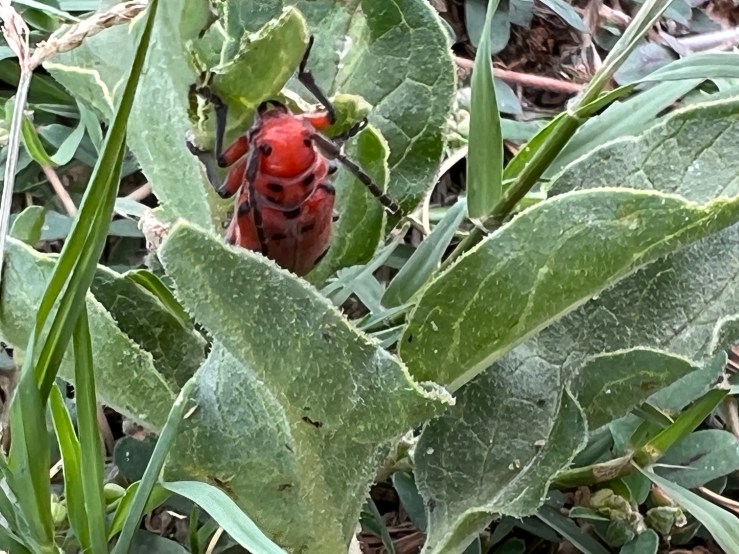
Well, if that doesn’t convince you that autumn is a great time to go out in nature and look down for a while, I don’t know what will. Heck, you might even see a milkweed beetle.
Fall has finally arrived, or so say the weather people. Seems a little warm for fall, but I don’t mind because I do not like to be cold.
Most people think all the plants are gone, all the butterflies are gone, and so on.
BUT, take another look! There’s life out there in abundance.
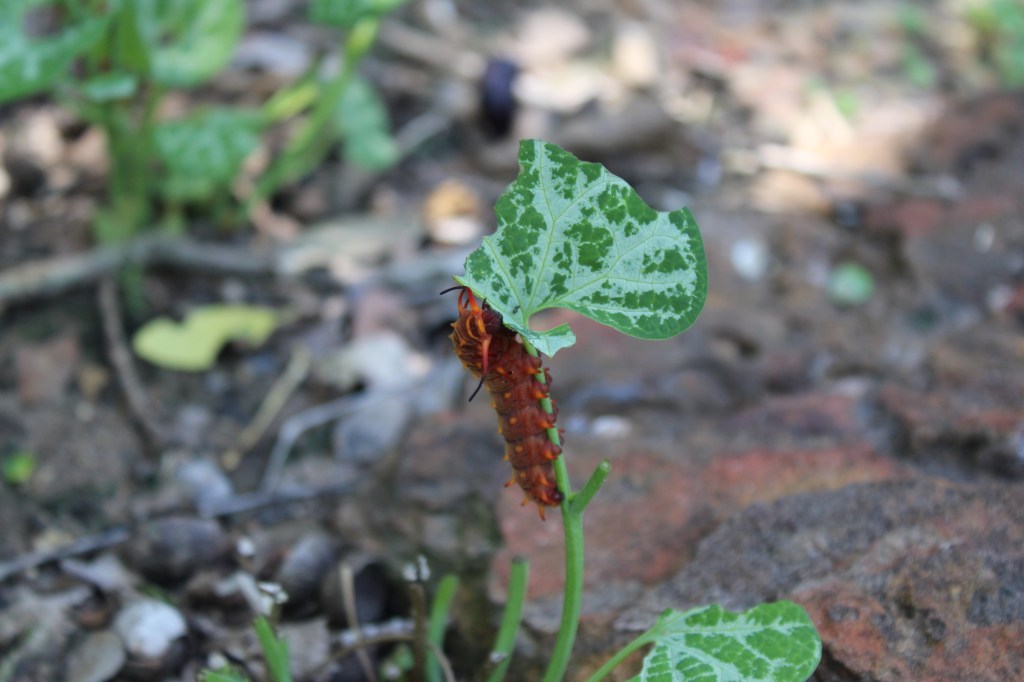
Some plants don’t show themselves until October and November. I actually have Pipe-vine caterpillars on my pipe-vine plants now.
One special tiny plant is seldom seen. It’s a lady tresses orchid. There are several varieties of this pretty little plant. Do you have them on your property? One of them, the Navasota lady tresses, is a Federal and State protected plant.
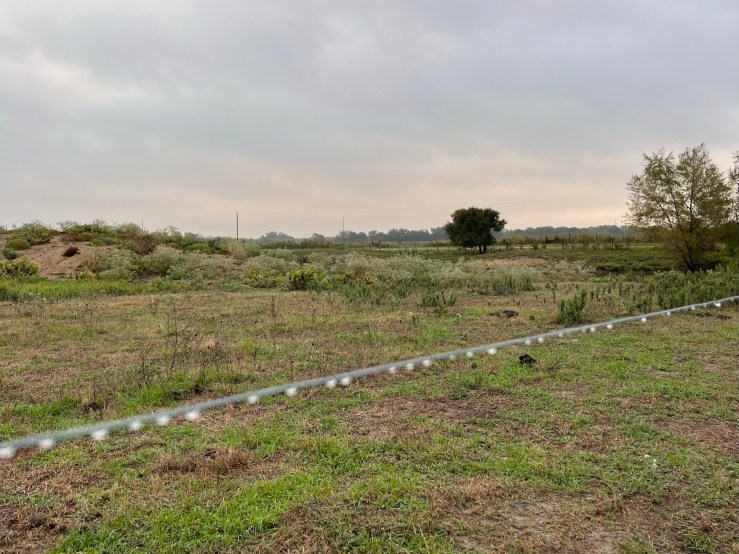
Here are just a few photos I took on October 25 on our property in Milam County, Texas.
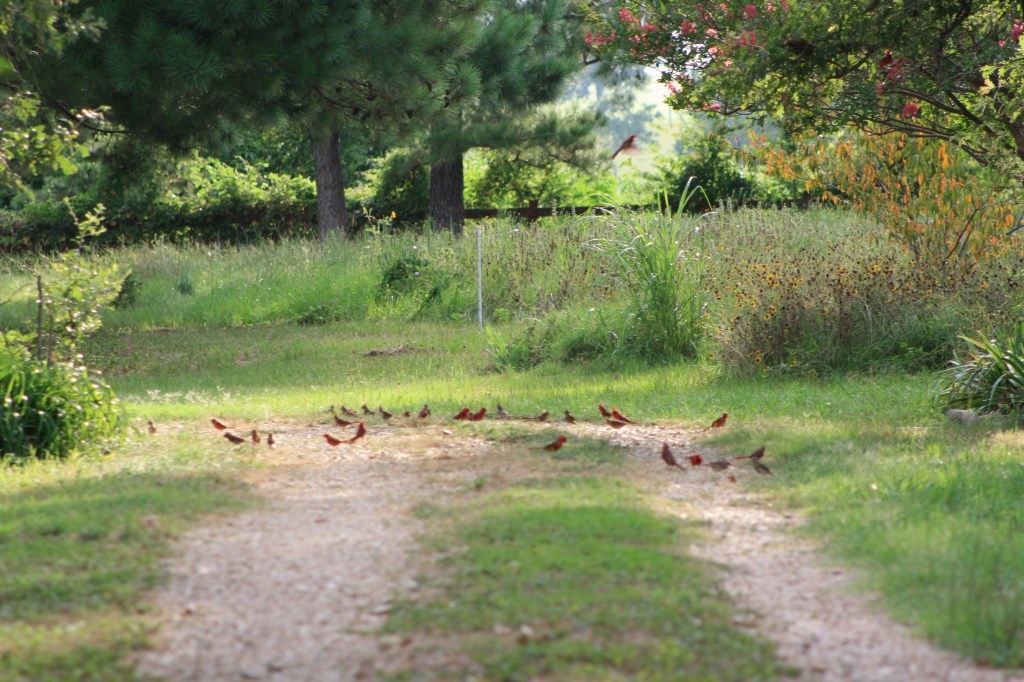
Yes, it is hot and dry. Remember to keep water in the shade if you can and plenty of it for the wild things. I have over 50 Cardinals that wait for me every day now. I bet my electricity bill is going to be a whopper from running our well to get water for them.
That is a LOT of cardinals
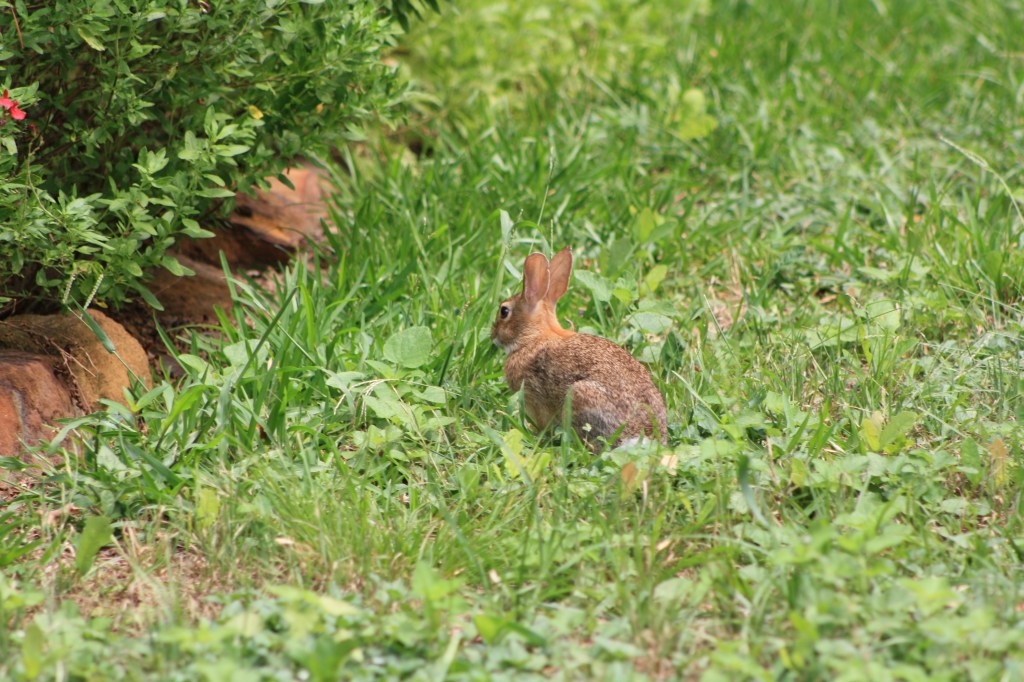
The bunnies are drinking along with all our other wild friends also.
Cottontails appreciate our help.
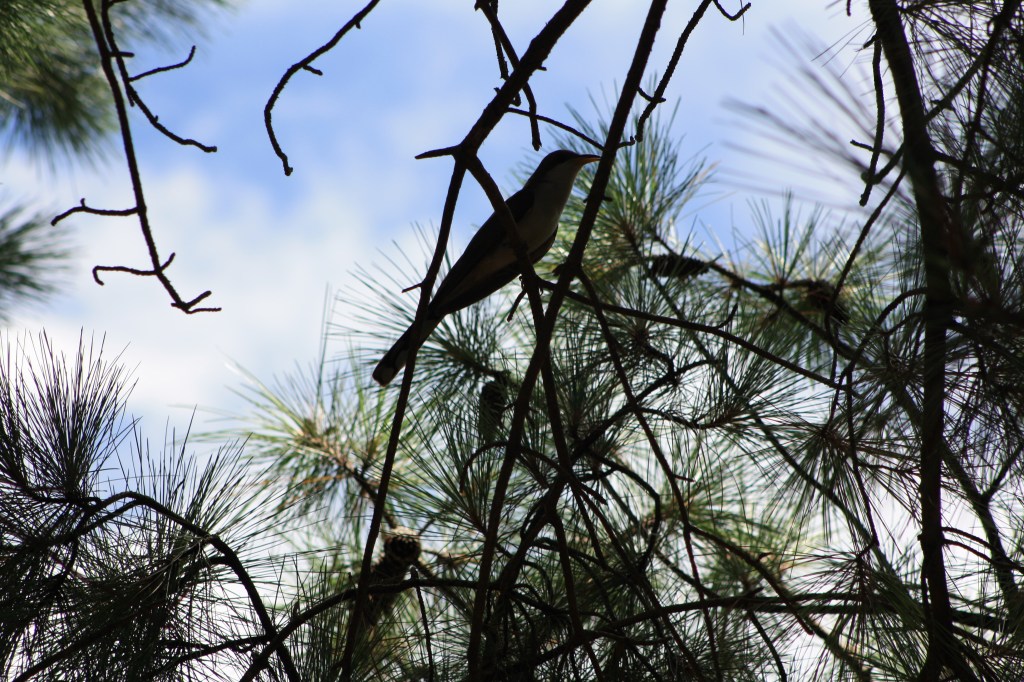
A few days ago, I heard some strange clicking noises way up in a pine tree, I waited a long time to see what it was. It was some kind of bird I had never seen before.
Yellow-billed cuckoos are elusive and often easiest to identify by their sound.
After several days of trying to ID it, I finally found it in a field guide. It was a pair of Yellow Billed Cuckoos! I had never seen them before. It’s interesting to add them to my bird list.
Most of the wildflowers are going to seed now and the pastures look awful.
In the garden I fight to keep anything alive for the butterflies and hummingbirds.
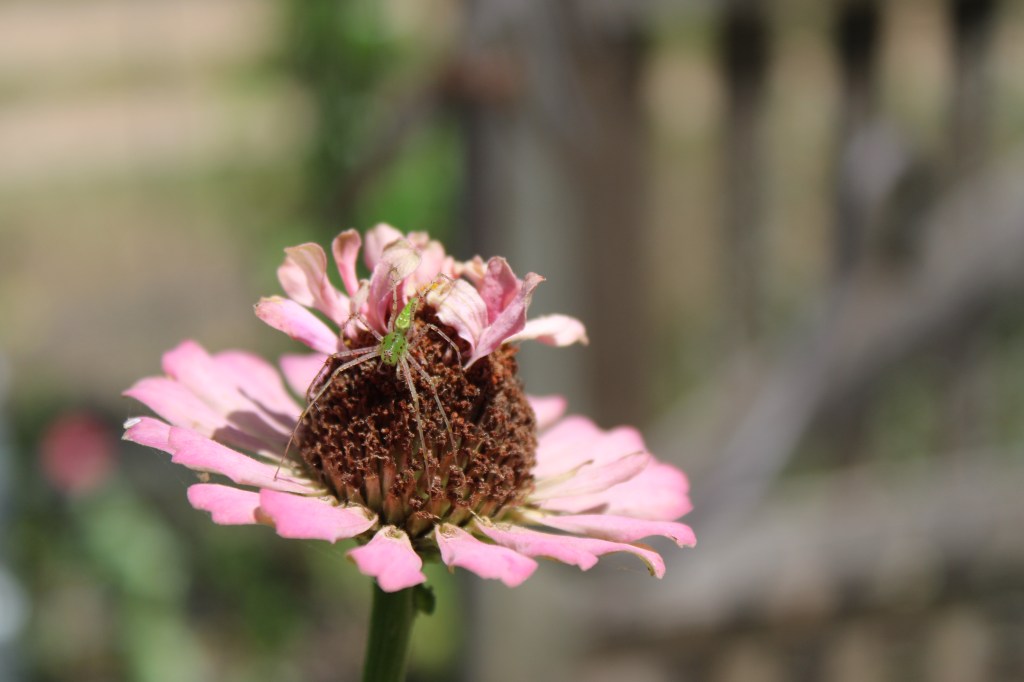
And lynx spiders, too.
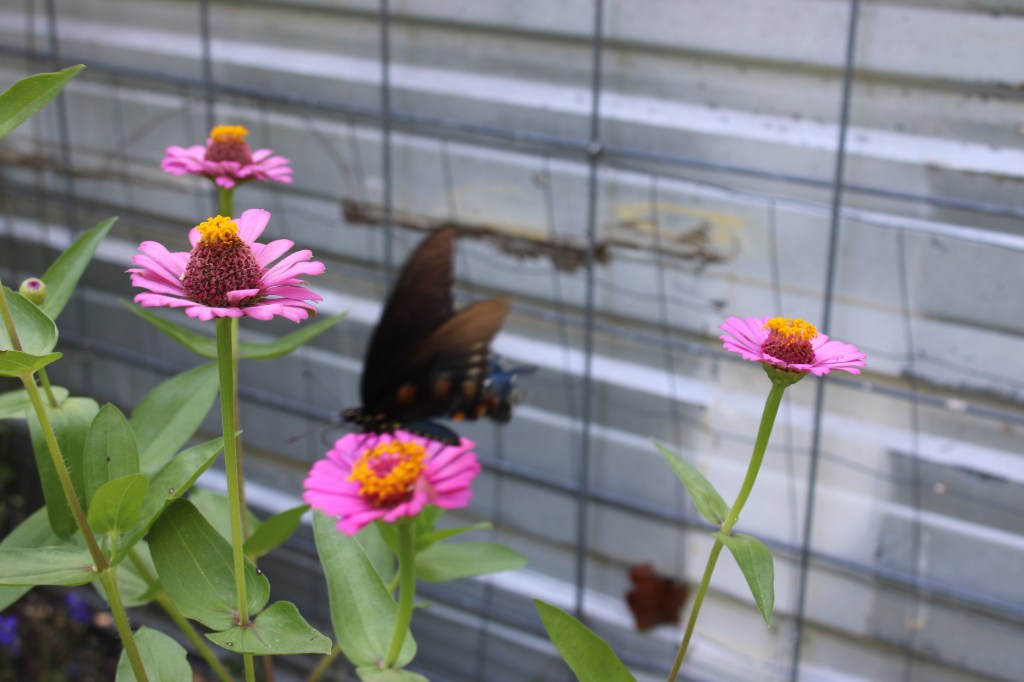
I do have a lot of Gulf Coast Fritillaries, Swallowtails, and Sulfurs still flying around.
There is also a new batch of the red version of the Pipevine Swallowtail caterpillars.
So, enjoy what nature is around you now because the heat is hard on them too.
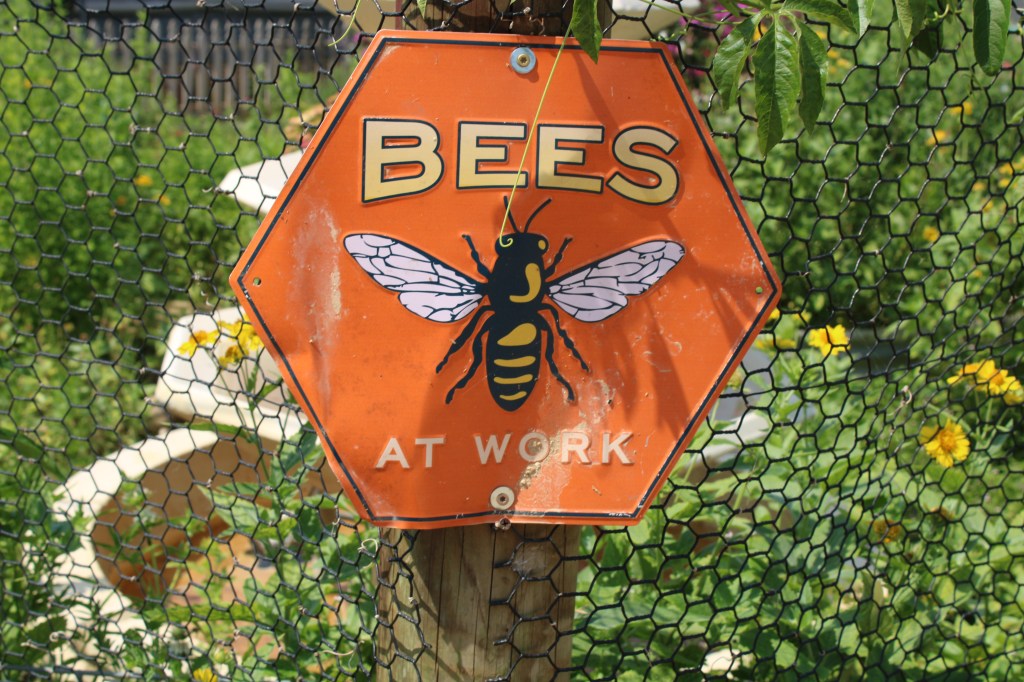
The El Camino Real Texas Master Naturalist Wildscape is awash in purple blooms on flowers, bushes and trees. And all types of bees are all over them. Honeybees, Mason bees and Carpenter bees covered most of the blooms.
The favorite for the bees was Wild Bergamot growing in cultivation in the Wildscape.
Wild Bergamot
Its sister plant the Lemon Bee Balm growing in the wild in the surrounding pasture was a very close second.
Lemon Bee Balm
Gene Rek, owner of Bird and Bee Farm where the wildscape is located, said the wild Lemon Bee Balm provided the most nectar for his bee farm. They had found the Wild Bergamot, too.
Huge Wild Bergamot
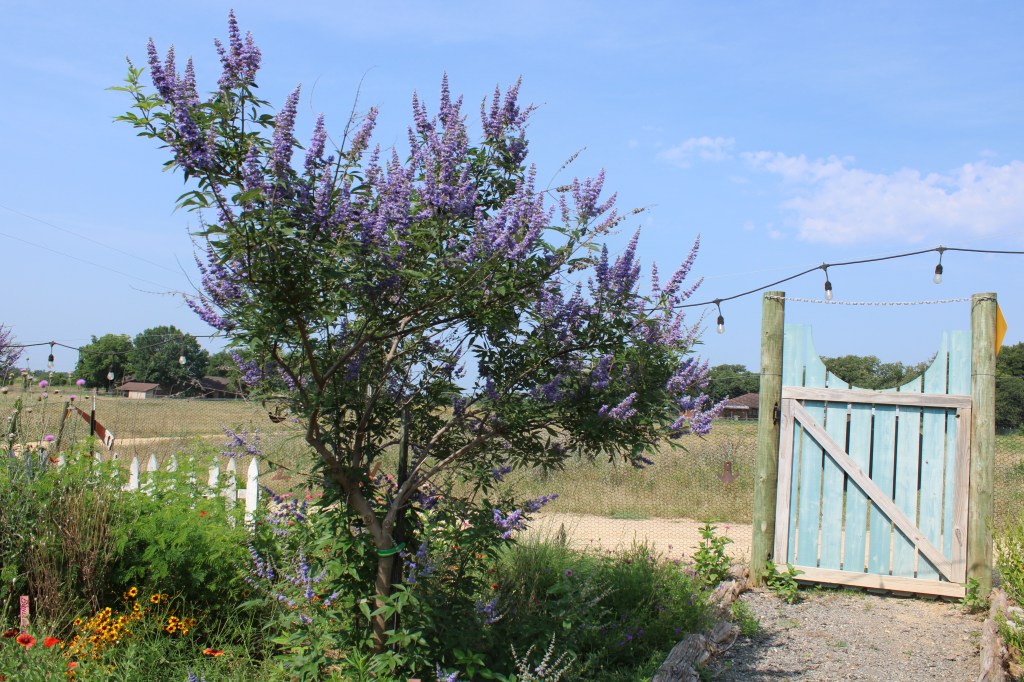
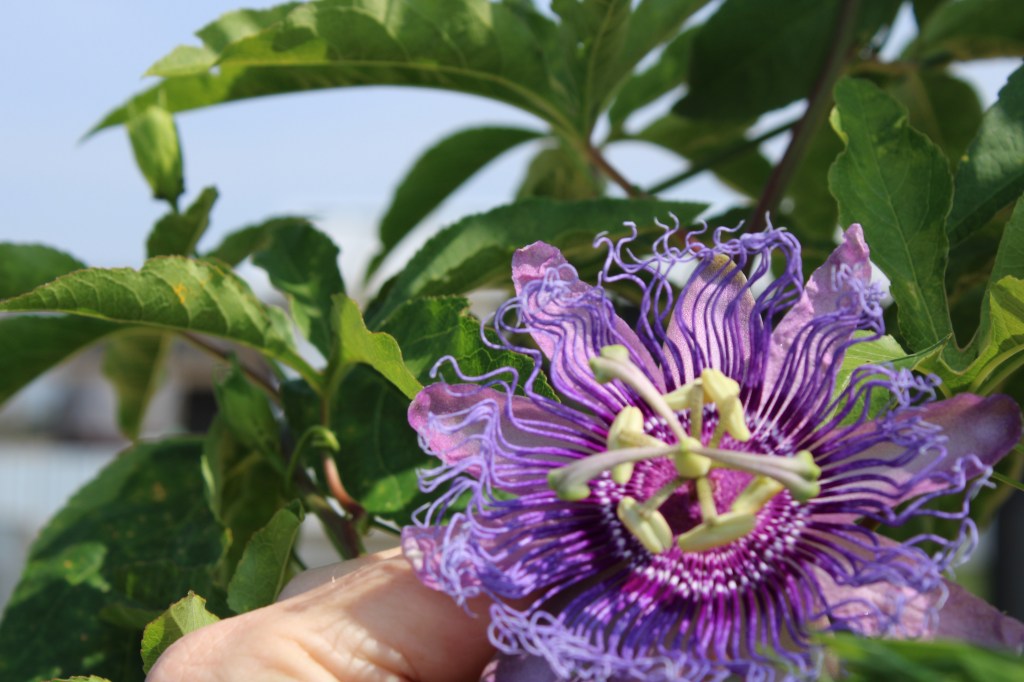
Close in line was a Lilac Chaste Tree, Mealy Blue Sage and Purple Passionflower. Plenty of other plants also are in bloom. Many of those are new to the Wildscape.
Lilac chaste tree
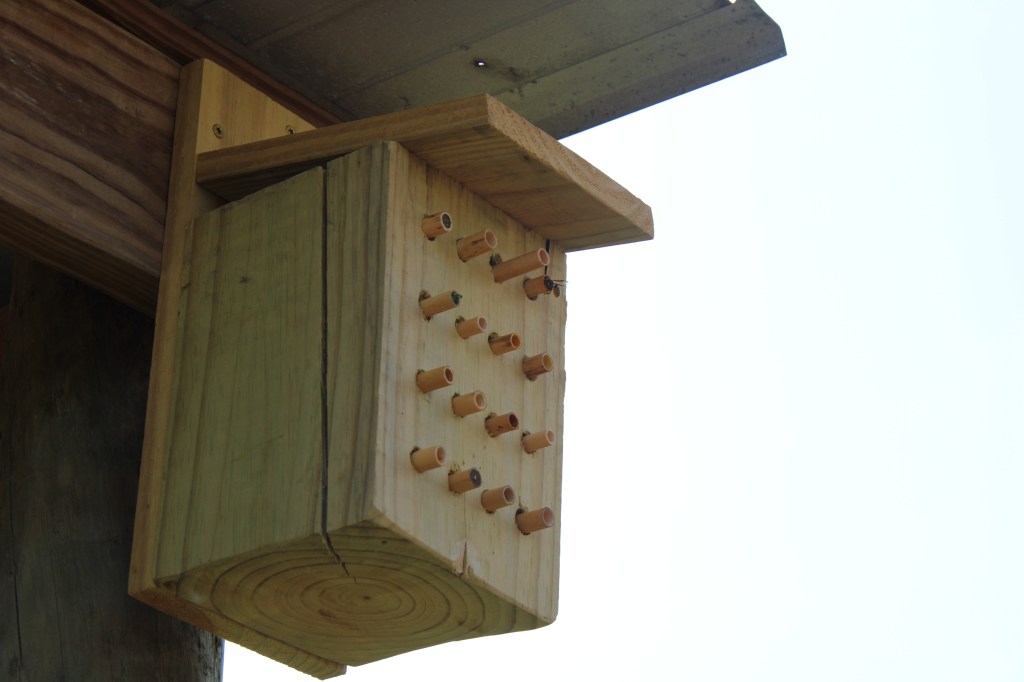
The Mason Bees were also filling up the new bee houses put up by some Eagle Scouts.
Mason bee house
If you’d like to grow native Texas plants, this is an excellent place to see many of them in bloom. Members of the El Camino Real chapter Texas Master Naturalist will be there on June 17, from 10 to 12. Catherine Johnson, member in charge of the Wildscape, always gives away free starters to anyone interested. It’s located on Fm 334.
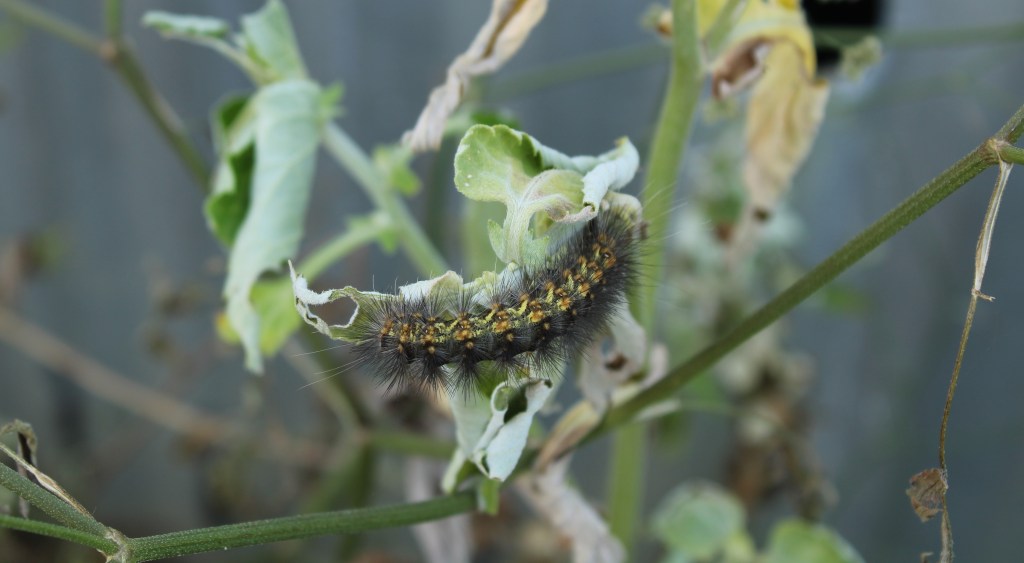
Mealy blue sagePurple passionflowerCaterpillar feeding on wilting Lemon Bee Balm, working to produce a Salt Marsh MothMore purple flowers and their friends.







 Nature Along the El Camino Real