There’s going to be a big visitor event at the Wildscape our chapter sponsors, and it’s coming up fast, so the garden needed a lot of pruning, weeding, and encouraging. Members got out early this morning and got to work pulling up what shouldn’t be there (overly enthusiastic grasses for the most part) and directing what should be there to their proper spots. A lot of the roses needed encouraging!
This smells so good.
There were enough people to help out that only a little dizziness or other heat issues developed, and as always there was plenty of camaraderie.
Kim, Carolyn, Ellen, and Scott take a breakNeil and Catherne share a laughSandra enjoyed the beautiful morningAnn made her first appearance since she broke her arm in May (her first broken bone ever, by the way)Allan ponders his next weeding moveDixie watched the chickens and stayed out of the heat
I admit that I may have spent more time taking pictures of bees, butterflies, and other insects than pulling weeds, but I did contribute! Besides, everyone likes pictures of flowers and pollinators, right?
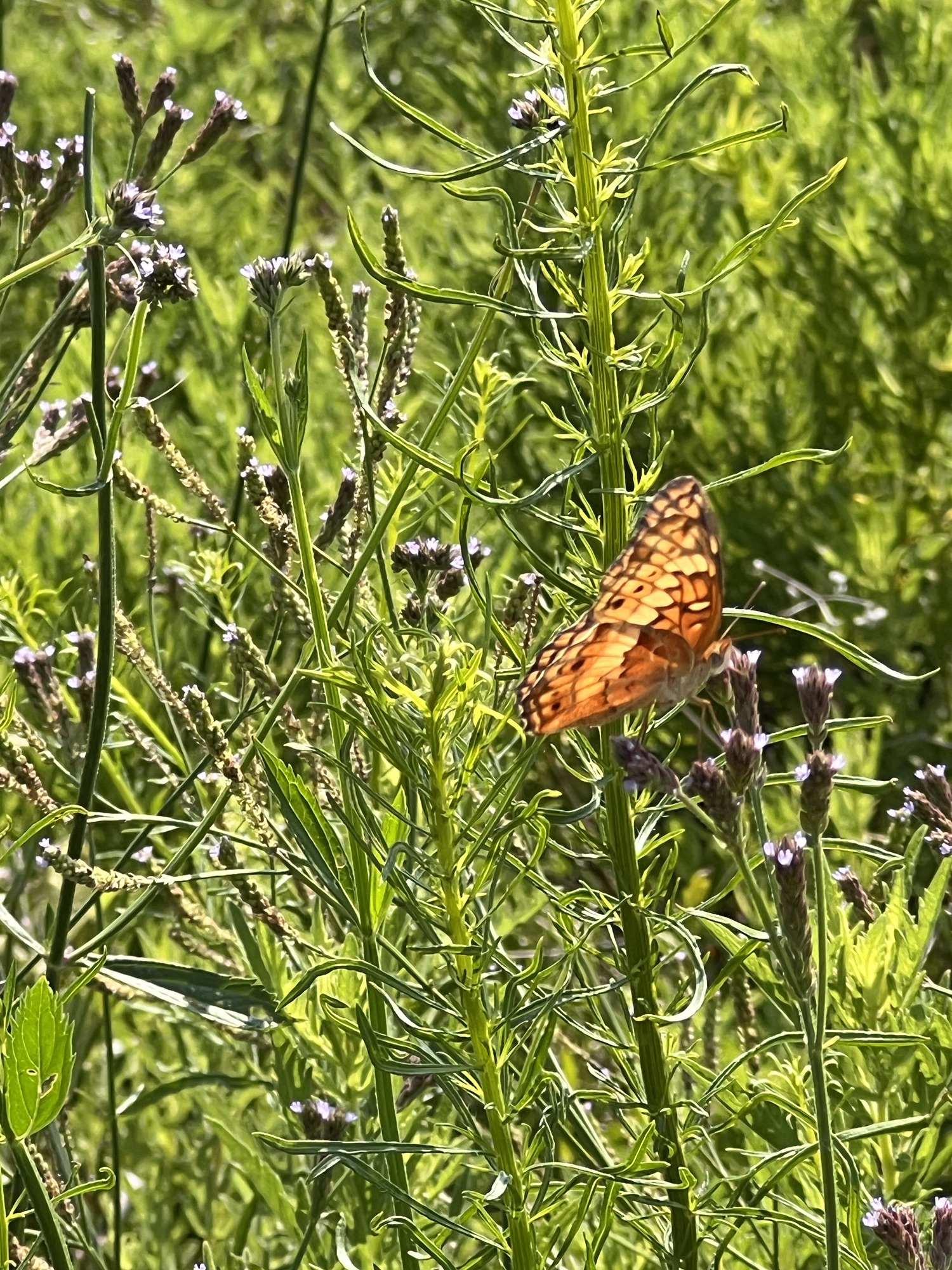
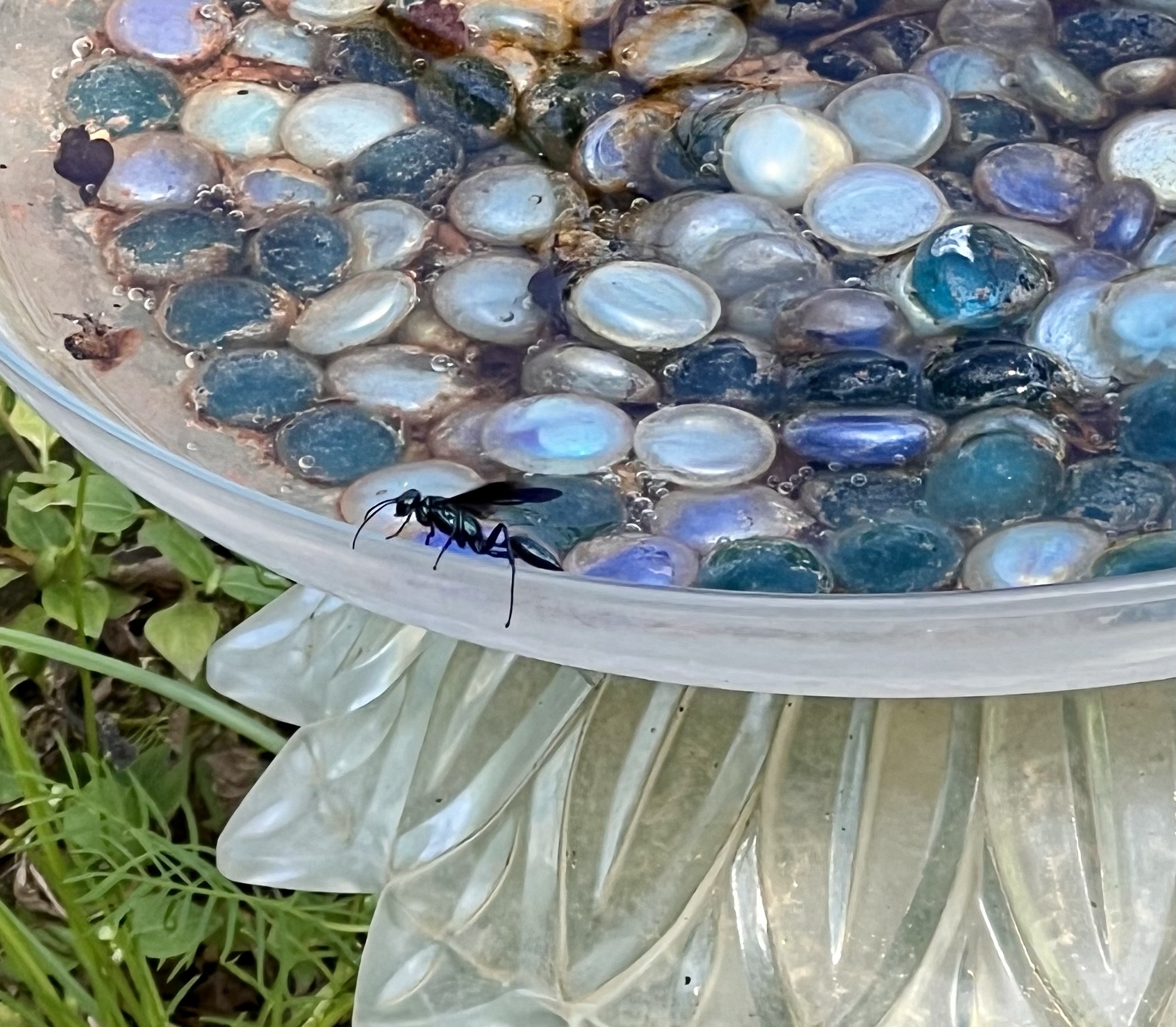
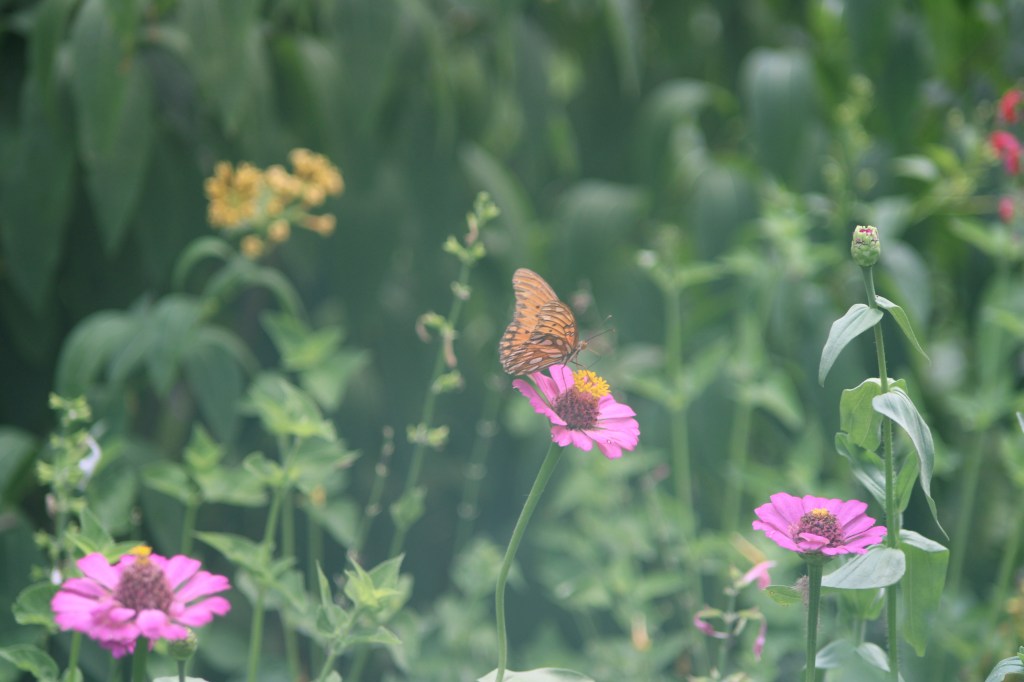
Variegated fritillary on Brazilian vervainBlue waterleafBird grasshopper of some kindHappy hibiscusGulf fritillary on verbenaSunflowers in sunshineBumblebee on button bushFind the honeybee on the passion flowerDirt dauber enjoying a water dishSpearleaf Swamp mallowCowpen daisyAcmaeodera mixta on upright prairie coneflowerHalloween PennantCarpenter beeCarpenter bee on pickerel weedClouded skipperHibiscus with pollenDetail of a hibiscus blossomCloudless sulphur on flame acanthusThe ubiquitous yellow garden spider
After we were finished, we headed to Rockdale for lunch, where we ran into Linda Jo Conn and her family. The people in the restaurant must have thought it very weird that everyone in both large groups seemed to know each other. Volunteering can be fun.
The fairy garden is being reconstructed, so here’s a totally fake one you can imagine replacing the one at the Wildscape.
This summer hasn’t been as bad in the heat and rain department as last summer, so I’m not complaining one bit. But there sure have been some interesting developments in the sky, many directly over my head.
Some overhead things are cool, like this Red-tailed Hawk I got to listen to yesterday.
I’ll start with the most interesting one. For the past week or two I’d been noticing a lot of honeybees around my legs. It seemed like the earth was buzzing. Upon closer examination, I saw dozens of bees crawling on the tiny blossoms of the grass (I think it’s Dallis grass) that is blooming now. The bees were all very busy, zipping from flower to flower (not leisurely sipping as they usually do), and they were loaded with pollen.
My lame attempts at photographing zippy bees.
This went on for a few days. Yesterday, there was no buzzing as I walked along the field in my daily bird-watching patrol. Then, late in the afternoon I was over by the trees listening to a Yellow-billed Cuckoo when I heard something that sounded like one of those annoying drones people fly these days. I looked up and didn’t see a drone. I saw a large mass of tiny things moving along at a rapid clip. It was hundreds and hundreds of bees swarming. I guess they were moving on to better pastures. I’m not sure where their hive was before, because I hadn’t heard one in a couple of years. I hope they find a nice new dead tree!
FAKE NEWS! The blog software generated this image when I asked for “swarm of flying bees.” I don’t think they actually swarm in a giant ball.
Moving along, I’ve also been dealing with birds overhead, specifically the beautiful but omnipresent Barn Swallows. Now, normally they hang out on our porches, building mud nests, raising babies and pooping. They also eat numerous insects, so they get to stay (also it’s ILLEGAL to mess with a nest of wild birds; you can ask Mike Mitchell about it if you don’t believe me). We coexist just fine, looking into or out of the windows at each other, and enjoying the swimming pool area.
Swallows on the pond.
However, lately, the little darlings have not been at all happy with me. They aren’t nesting anymore, just flying around the ponds and in the air catching food. They are always there, and for some reason they resent my presence. When I go for my morning or afternoon walks, I often hear a very loud CHIRP, with a Doppler effect as the chirper moves away. The swallows ambush me from behind, for the most part, but occasionally they fly right at me and veer off just before they make contact with my head.
There are so many!
I have absolutely no clue as to why they are dive-bombing me. I’ve had Mockingbirds and Red-winged Blackbirds do this when they are nesting nearby. But, hey, do they think I want to home in on their mosquitos?
Creepy? Why, yes, it is. Never trust AI to draw an insect. Or a horse. They always have five legs.
Other things in the sky have been more benign. I was a bit surprised to see both Black and Turkey Vultures in the air and in my trees until I realized the Mighty Hunter (Goldie the Great Dane) had eliminated yet another armadillo that had wandered into the fenced-in area. I wish they’d read my signs that say “Armadillos and Possums: Keep out! Killer Dog! This means YOU!”
All real vultures in real trees and the real sky. Left is Black Vulture looking like it’s skulking, middle are Turkey Vultures pretending to be Christmas ornaments.
Other flying friends include the usual Green Herons, Great Blue Herons, and Great Egrets, along with some hardy butterflies and a smaller-than-usual number of dragonflies. I’m going to pretend the flying Differential grasshoppers don’t exist.
Great EgretFemale Roseate SkimmerVariegated Fritillary
Yep, the skies around here are busy. Always look up in case bees or swallows are coming for you!
I caught this beautiful male Tiger Swallowtail this afternoon while it was drinking nectar from a Zinnia.
I love this butterfly. The male is yellow, while the females can sometimes be black.
You can see the stripes on the wings, which look like those on tigers. They are very large and easy to see and photograph. They look like they float in the air while trying to land. But other times they are very fast and hard to keep up with.
Pipevine Swallowtail*
Mexican Silverspot (iNat suggestion)*
I have a lot of Purple Coneflowers and Zinnias in the garden, which are favorites of this species.
Purple Coneflowers
Their eggs are hard to find. The egg is green and round which blends in with the leaves of sweet bay magnolia and tulip poplar trees. The eggs are generally high up at the top of the tree.
There are also Fritillaries, Sulphurs, Pipevine Swallowtails, and Eastern Black Swallowtails in the pasture. I was too slow to get clear photos of them.
Lots to look at as always.
Butterfly identification from iNaturalist and not guaranteed accurate. Suggestions welcome.
On Christmas Eve I walked around outside after we had three inches of rain during the night. I wanted to see what everything looked like. The sun was out.
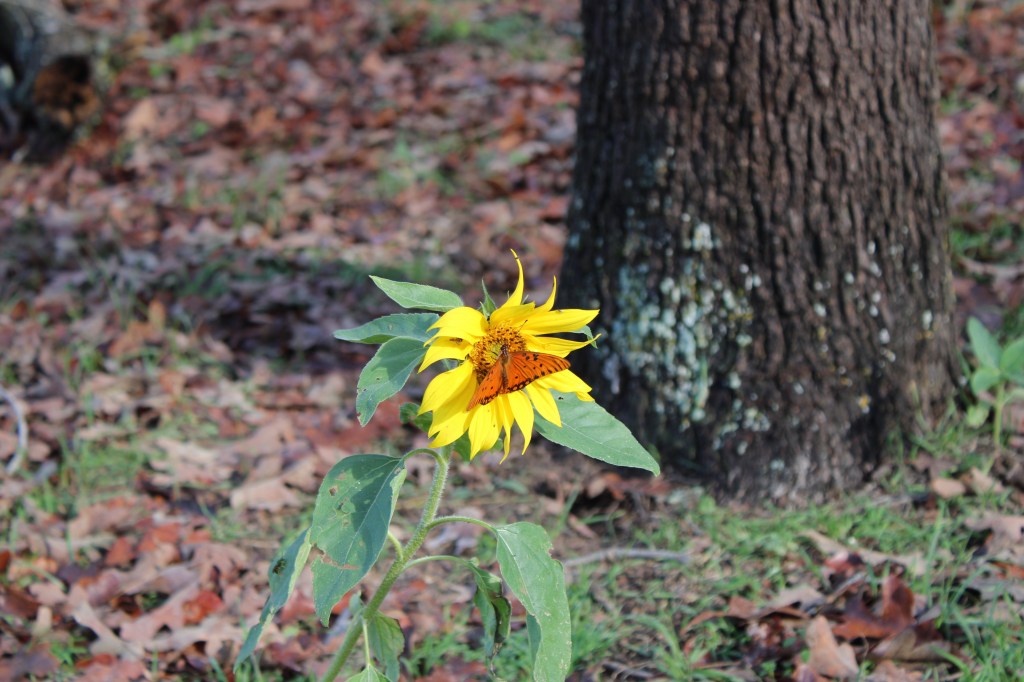
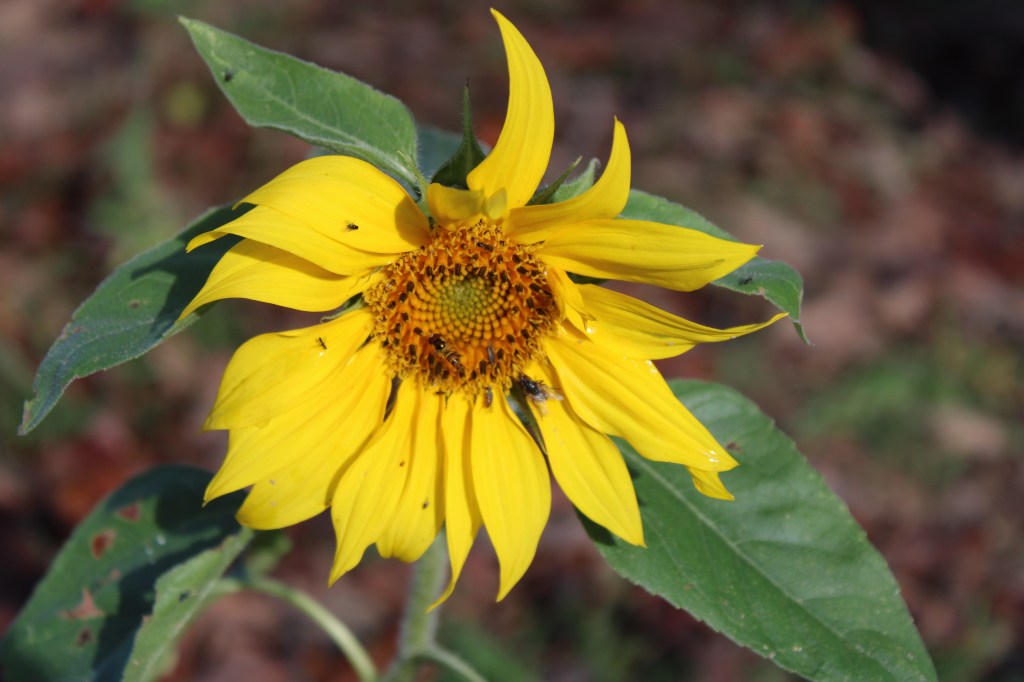
I found a little Black Oil Sunflower blooming that had been dropped by a bird. It was right beside one of my bird feeders. Nothing else blooming but that little flower.
Of course, the warm weather and rain has made many Gulf Coast Fritillaries wake up from their winter nap too early. But this one little flower held the hope of a much-needed sip of nectar.
The flies and bees were also trying to be first in line for a drink. I wish I had more for them.
Maybe they will be lucky and find more flowers in the fields around our home.
It is always amazing to see nature at work. Who are you gardening for?
The butterflies are still laying eggs and producing caterpillars here in November in Central Texas.
On my Passion Vine are Variegated Fritillary and Gulf Coast Fritillary caterpillars. The Gulf Fritillaries are more Orange, while the Variegated species is tan with spots along the bottom of its wings. They both use the Passion Vine as their host plant.
Gulf FritillaryVariegated fritillaryPhotos by Carolyn Henderson
I also have Pipevine caterpillars on the Pipevine plant.
Tons of activity because of the temperate weather right now.









 Nature Along the El Camino Real