Those of us in and around Milam County, Texas know there are more native mammals out in our area besides deer, cottontails, raccoons, opossums, and armadillos. But many aren’t easy to spot. I’ve never seen a porcupine, for example, but I know they’re out there. Occasionally we will spot coyotes, bobcats, or (very rarely) mountain lions. The most fun mammals we look for, though, are beavers and river otters.
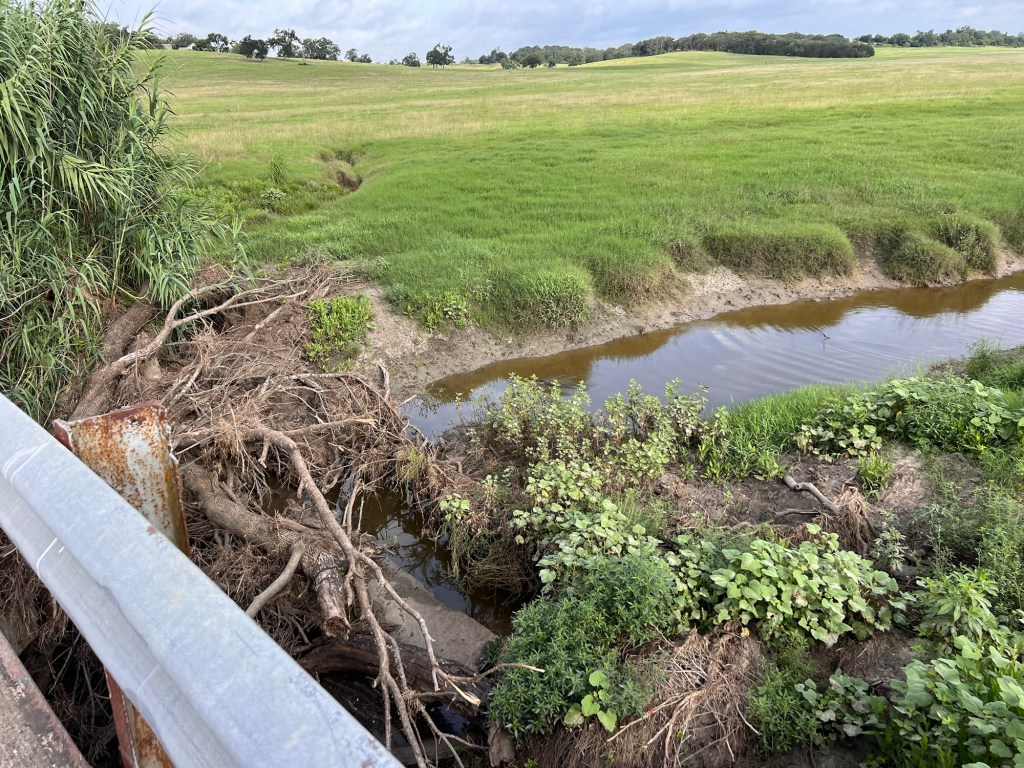
A likely sighting site, Walker’s Creek bridge on County Road 140, featuring: flood debris.
This morning I was doing my daily walk to the bridge and back, dreading the inevitable scattering of annoyed vultures (today both Black and Turkey) who have been patiently working on what appeared to be a deceased Holstein steer, which must have come a long way, since we have no Holstein cattle nearby.
Cow mercifully not shown. Zoom in. There are many vultures.
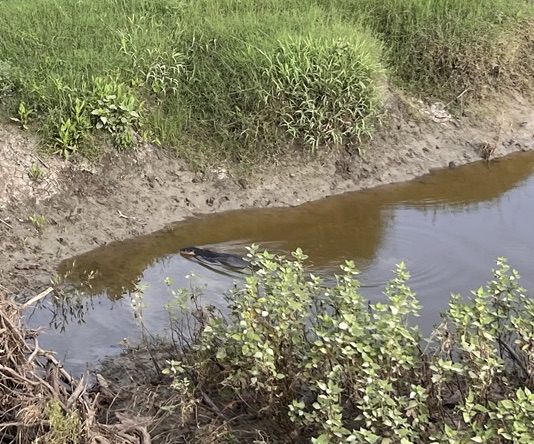
Sure enough, I scared the giant birds off. Then I noticed a head larger than that of a turtle or snake in the creek. Ooh! A mammal! I was instantly ready to snap a photo, figuring it would see me and exit.
Aha!
Sure enough, something brown and wet was exiting. Was it a beaver or an otter? I was ready to verify by checking its tail.
Looks skinny.
Yay! It was a river otter! How fortunate I was to see this water mammal! I’ve seen two swimming together here a few years ago, and one crossing our field after a big rain. That was very cute.
100% otter.
I didn’t take too many more photos, because I was enjoying the moment. But I was very happy to finally document one on iNaturalist!
Getting the heck away from me.
River otters are also called common otters (Lontra canadensis). As their scientific name suggests, they are found all over North America, except for a swath of territory in the center of the country.
Hmm.
They love to eat fish, crayfish, and turtles, but will also eat other small animals. They aren’t a danger unless you own a fish farm, which would lead to happy otters. River otters also love to play, which makes them very popular in zoos.
Not playing, getting away!
I’m glad we still have some otters here in Milam County, because they’re a sign of healthy waterways. I guess Walker’s Creek is pretty good other than pooping and dying cattle.
I’m still looking for a beaver, though I’ve seen evidence at a fellow Master Naturalist’s property nearby.
Bonus observations:
I saw a Northern Cardinal eating away at the berries of a nettle-leaf noseburn vine. more fell to the ground than went in.
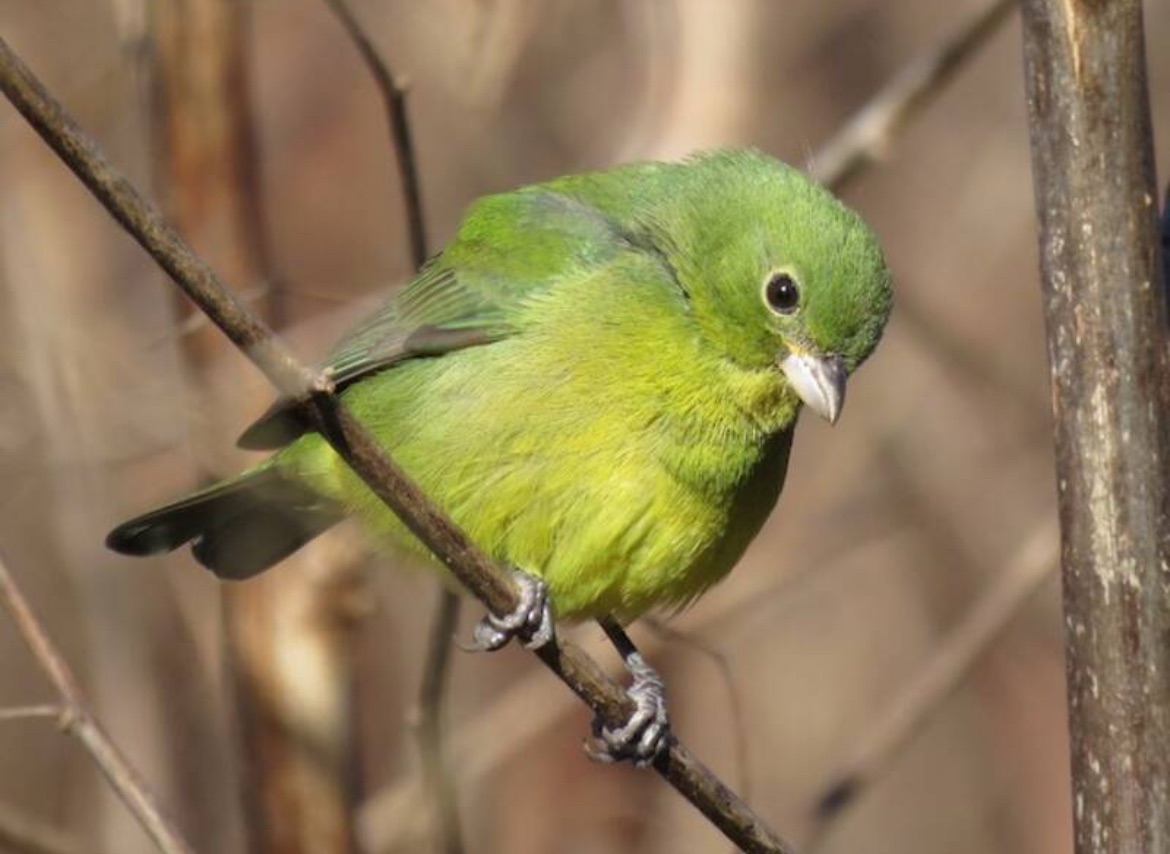
Yesterday I was swimming when I saw a small bird bathing in the shallow “beach” end of our pool. I figure it was a House Sparrow, but her breast was yellowish. Then she shook her wings. She was a Painted Bunting! I’d never seen one at the pool before!
Also yesterday I heard a Summer Tanager, and something chirped back. It was the female, for once not hiding. I’m always impressed with myself if I can ID a female bird of a species with drab females.
Nettleleaf noseburn Tragia urticifolia – photo by Sue Ann Kendall Female Painted Bunting Passerina ciris – photo by Lloyd DavisFemale Summer Tanager Piranga Rubra – photo by Don Danko
Yes, it has been raining lately. And yes, it has been HOT! So let’s talk about our wild friends during the hot summer.
At Sue Ann’s house, they got 8.11′ of rain last night. Frogs are very happy.Photo by Sue Ann Kendall.
We love to put out bird seed, and other goodies for our friends, but the most important thing is water. Sometimes the closest water can be a great distance for the animals to travel. This means that providing a close water source is immelsely helpful. Keeping fresh water nearby could save the life of a baby bird, a baby bunny, and all of the wild things.
A good example of water with a place to perch. Photo by Janice Carriger on Pexels.com
Another thing to remember is that birds need a perch to light on. An especially important thing in wildscaping is to provide an arbor, a fence, or even a cattle panel propped up. I have been quite successful in bringing birds to our place, so I know what they like, which is water, a perch, food, and some shelter near all of these items. Shelter can be an evergreen bush or small tree. Safety from cats should also be considered.
Be creative, like we have at the Milam Wildscape! Photo by C. Johnson.
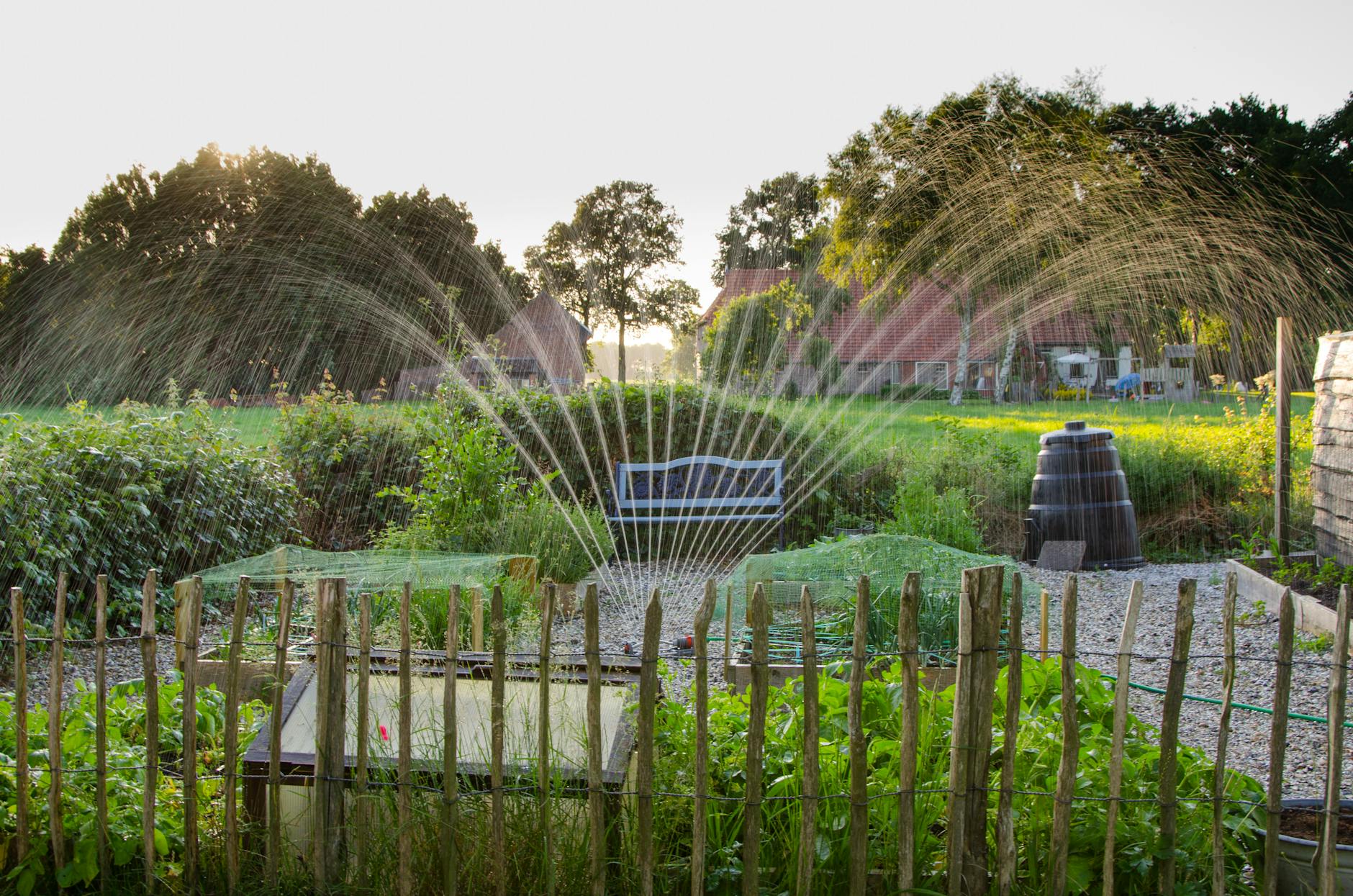
A sprinkler put out is heaven for my little hummers. I place the sprinkler near a fence lined with vines and they go crazy.
Maybe we don’t need as much rain as some of us got last night, but it is ALL appreciated. This is Walker’s Creek at County Road 140, now more like a river. Photo by Sue Ann Kendall.
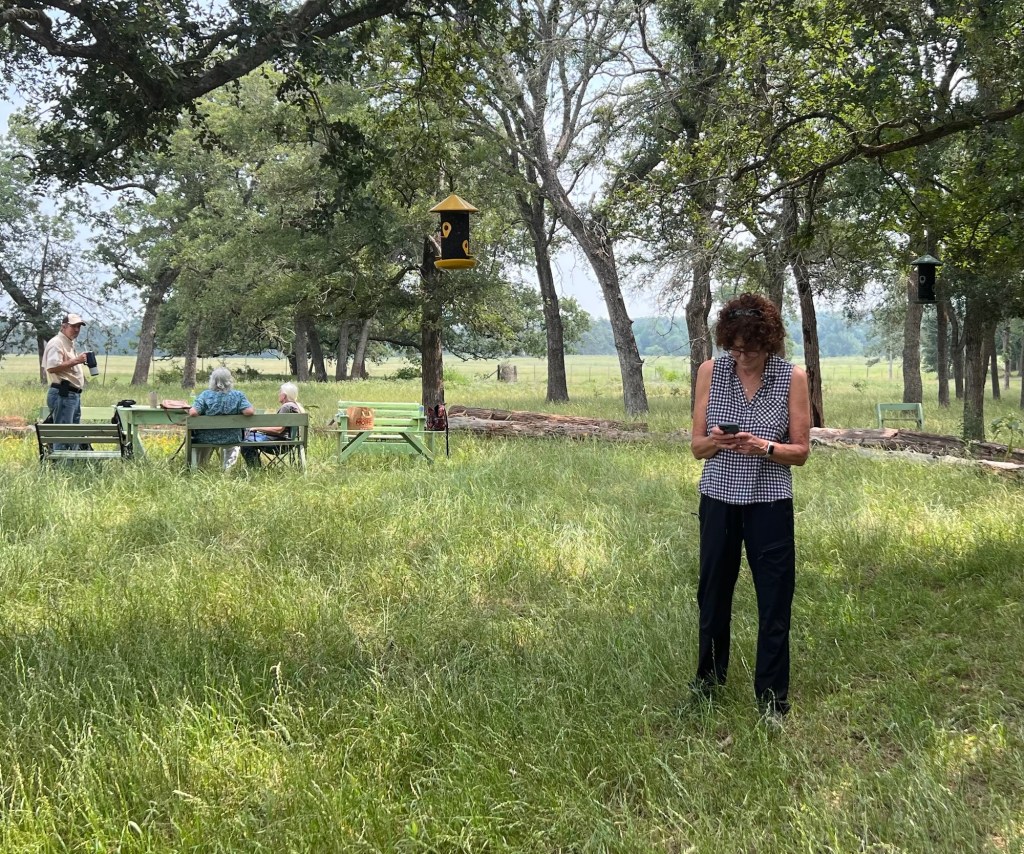
Today we had one of our first educational sessions at the Wild Wings Bird Sanctuary, sponsored by the El Camino Real Texas Master Naturalist chapter. Although there’s no denying the weather was toasty and humid, the attendees all learned about Merlin Bird ID and iNaturalist.
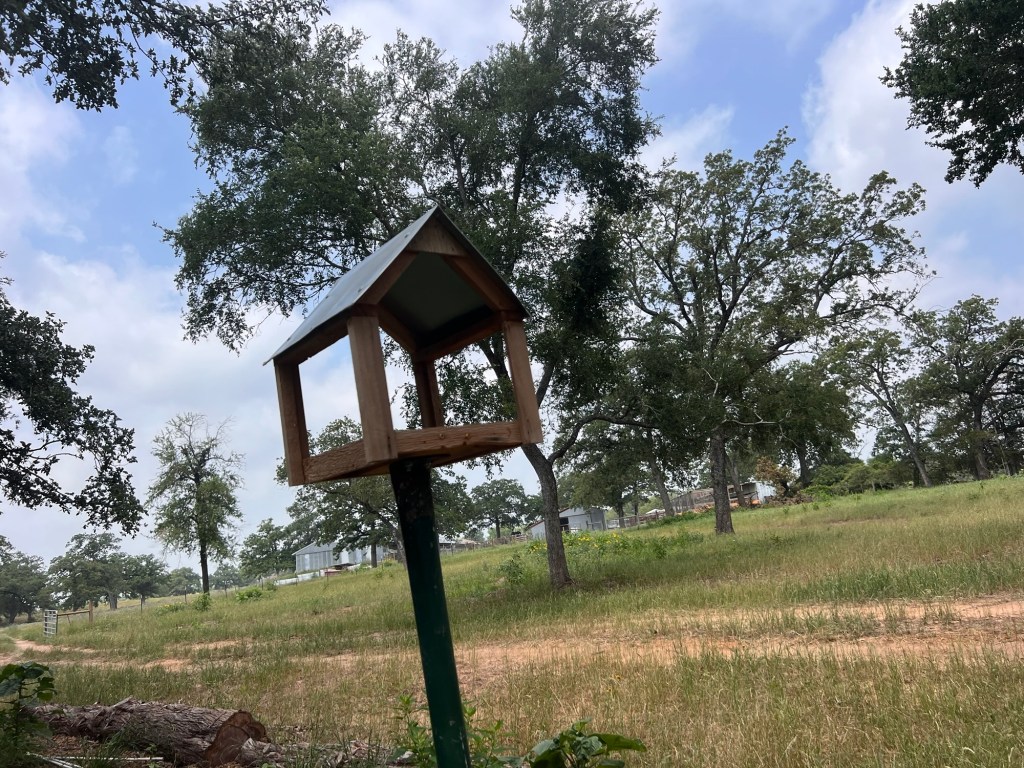
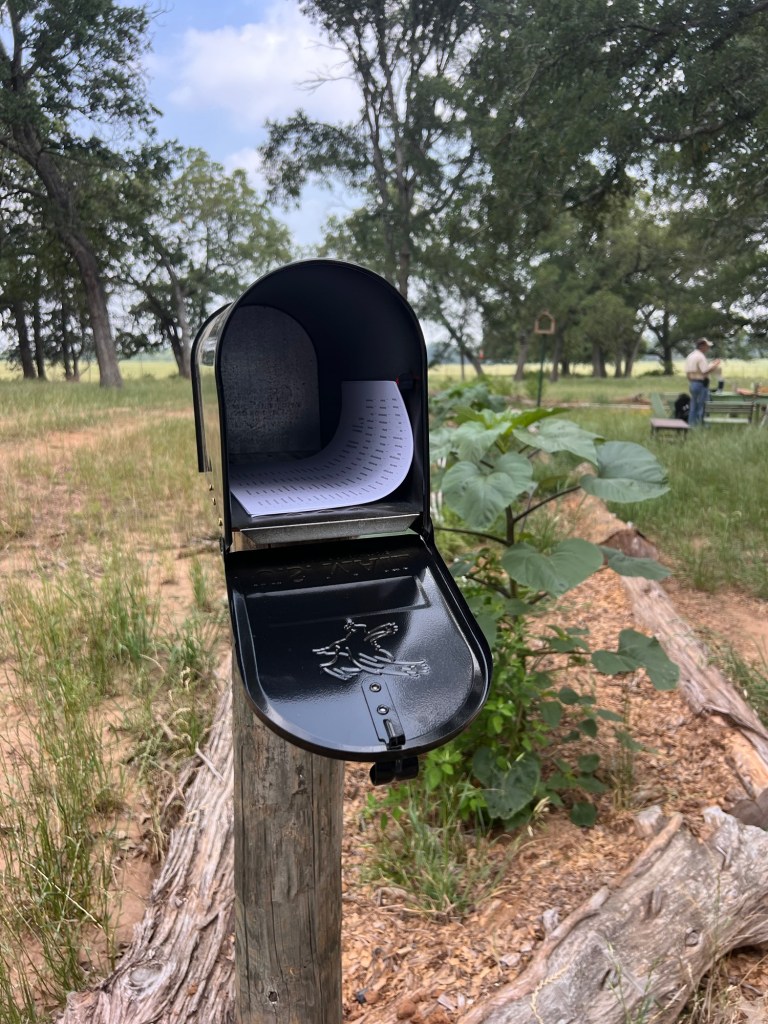
Practicing with MerlinMany wildflowers surround the Wild Wings Bird SanctuaryNew platform feederMailbox for things to shareThere’s a birds of Milam County checklist and some tools you can borrow in hereBonus: a Wheel Bug Arilus cristatus
I enjoyed leading the discussion, since I just retired as an adult educator and miss teaching people. I’m grateful for the opportunity to give back to the chapter.
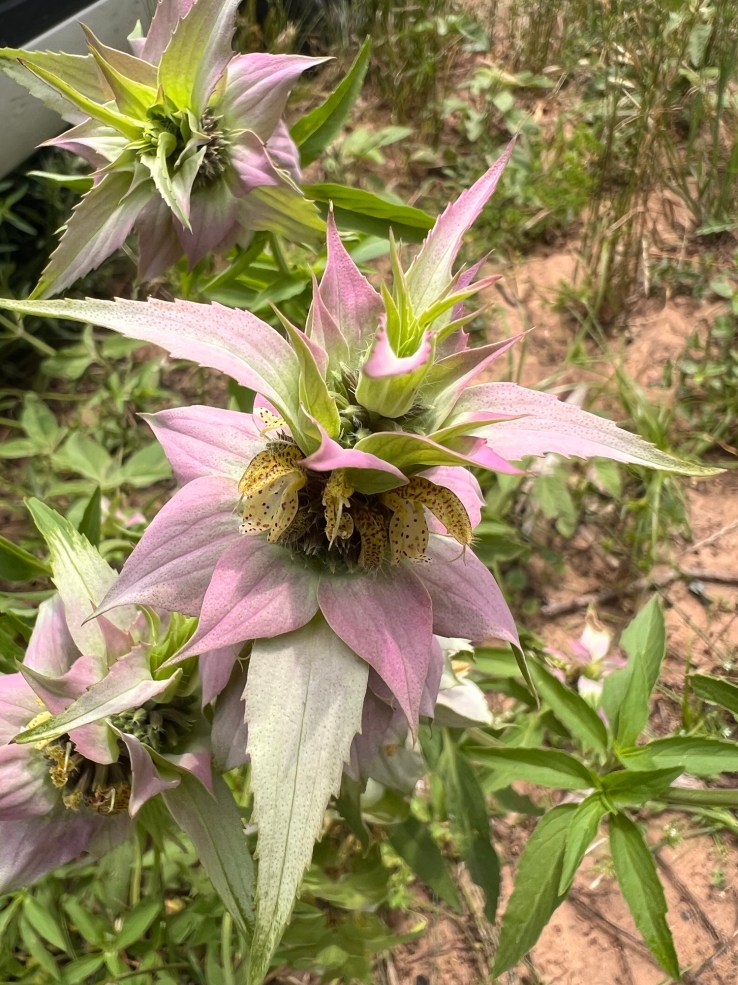
When I parked, I went next to this Spotted Horsemint (Monarda punctata). You sure could smell it!
Anyway, before we started, one of our members brought a baby bird she has been caring for to try to identify it. We enjoyed watching it eat and peep. No doubt it will soon be in the hands of All Things Wild or another rehab organization, but for now, the little Blue-gray Gnatcatcher or Mockingbird seemed in good shape. Interestingly, more than one of us tried to use Merlin Bird ID to identify it, but depending on the angle of the photograph (or something), different birds came up. On iNaturalist, my photo came up unambiguously Blue-gray Gnatcatcher, however. And looking at the bird, it seems more likely to be a Gnatcatcher than a Mockingbird or Phoebe. It will be interesting to find out how it turns out.
Getting a photo with the tail feathers seemed to help.
The class had a mix of learners, from people who were unable to access the App store to get either app on their phone to very quick learners to experienced helpers. I did my best to help everyone but always got stumped when I can’t remember their passwords for them (I can’t remember mine either, but have finally found ways to find them when I need them). I can help people later! Oh, and those with Android phones weren’t able to acquire the new iNaturalist, because it’s only out for iPhones, to the great consternation of some of our power users!
Merlin
The good news is that even some of the experienced people learned new features of Merlin Bird ID. Some of the most helpful information is kind of buried among menus and options with cryptic symbols. We had a lot of fun seeing what the most likely birds in the area around Wild Wings would be, and people practiced the step-by-step and photo ID features. I enjoyed showing learners how to get to additional information about birds they identify, such as migration patterns, songs and more.
Most important from a “citizen science” viewpoint, is that everyone learned how to save an observation to their life list. There were some very gleeful folks who started to build out their lists. Who doesn’t enjoy seeing a bunch of stars appear and the words “New Lifer!”? I sure enjoy it, even with 333 birds on my list (I travel a lot, so there are lots of East Coast, Colorado and Arizona birds). These observations go on eBird, where biologists and others use it to track patterns of movement, migration, and numbers. The more people record observations, the more information they will have.
My most recent birds. Can you tell it was migration time?
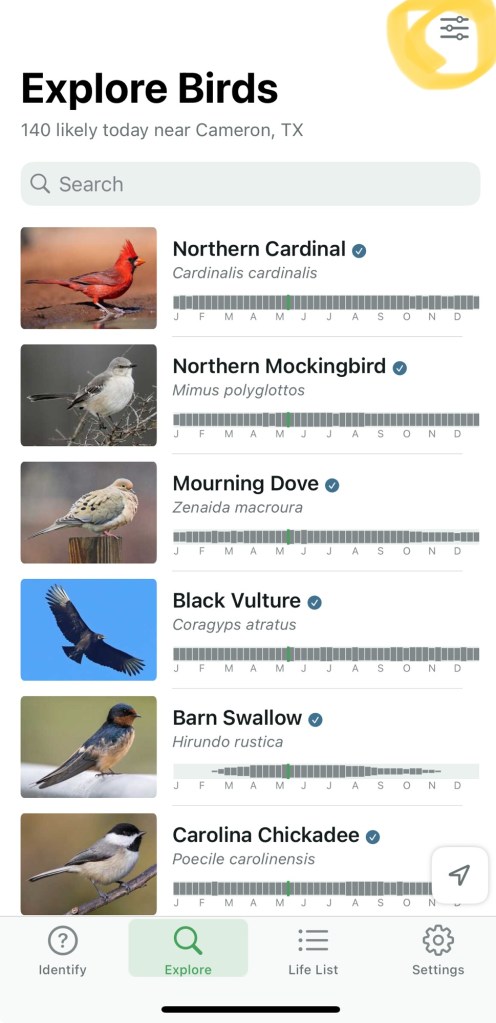
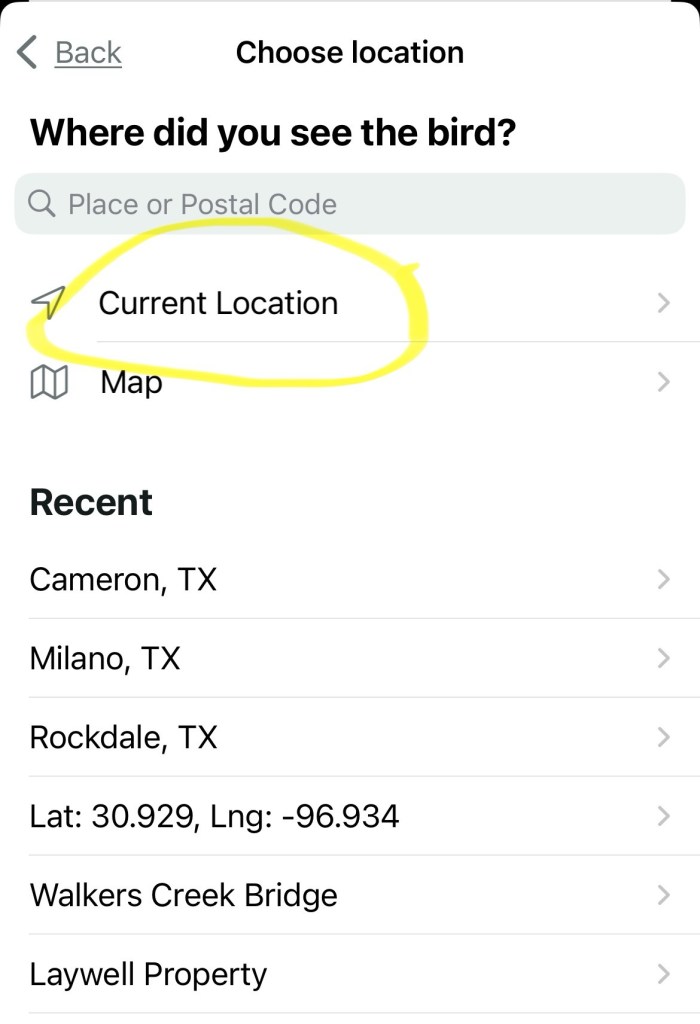
It’s important to remember that the birds identified by the AI software used by Merlin are not always accurate, as I’ve written about before. For example It’s less accurate if you don’t have it set to listen for birds where you are, too (I forgot to tell mine to stop listening for South Carolina birds recently, and only realized when a Texas bird I heard was missed). [I forgot to teach this part, so here are some instructions.] The setting to change locations (if you travel or something) is accessed by clicking the menu on the Explore (search) screen and clicking where it says “Cameron TX” on my version of the Refine Bird List screen (yours may differ). Then click Current Location (I usually leave mine on my house, which works fine for all our area). It will be stuck on your last location until you select “current location”
How to change your location in Merlin Bird ID
It helps to visually confirm the birds heard unless you’re familiar with it (I think most of us can confirm an American Crow) and to ensure that there isn’t another source for the call (Mockingbirds in my area do a great job with Eastern Phoebes, Eastern Bluebirds, and Belted Kingfishers, for example). Still, using Merlin is a great help for learning to do your own identification of bird calls and impress non-birders.
iNaturalist
Most of our group knows how to use iNaturalist on the computer and/or phone, but not many were familiar with the new iPhone app. So, I showed those who needed the app how to find it and helped get them started. The new app is quite different and has some interesting new capabilities, like using AI to identify what you’re looking at without taking a photo, identifying batches of observations and uploading them later (handy if you have limited bandwidth in the field), and grouping your photos before uploading (a little tricky but helpful).
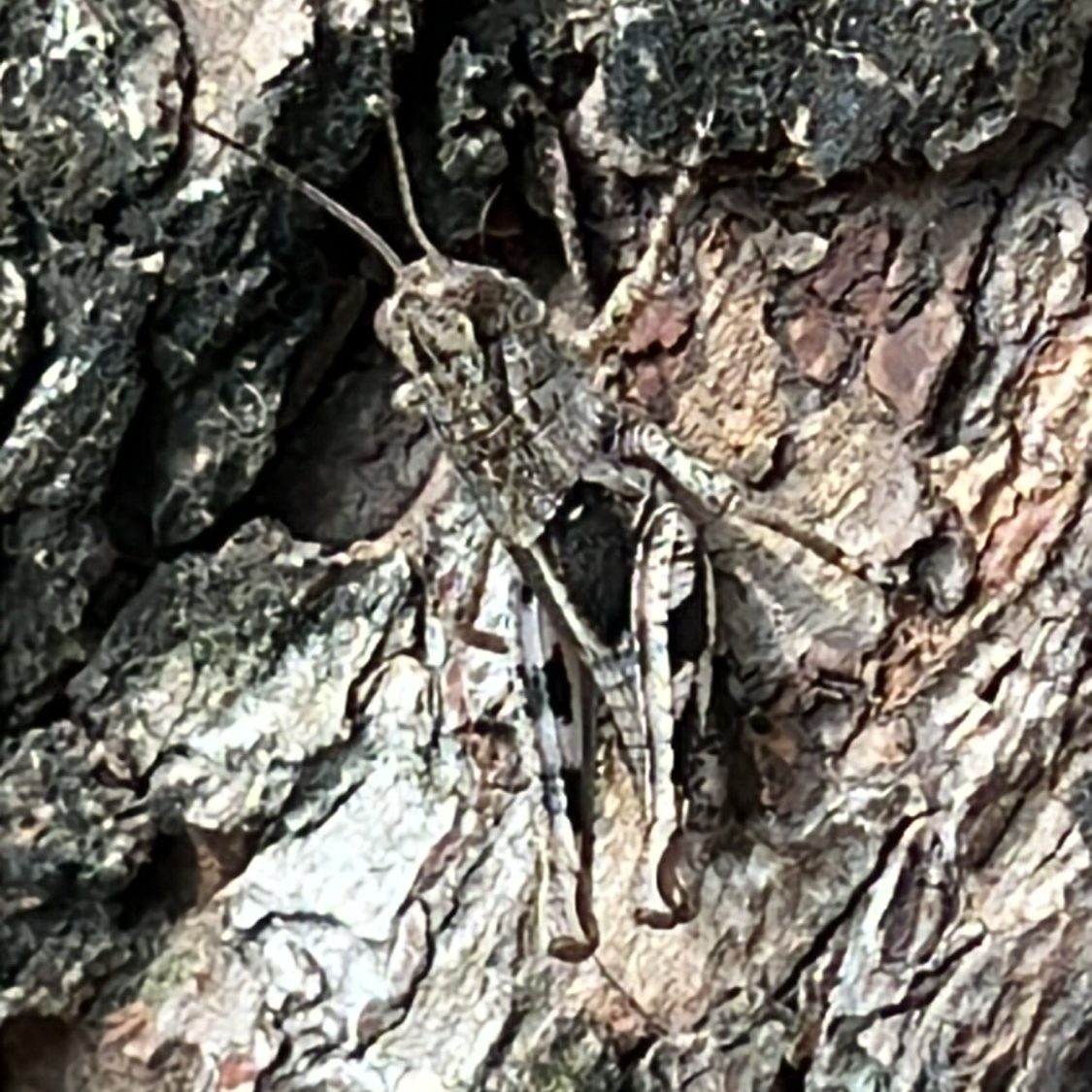
This Ponderous Spur-throated grasshopper sure blended in with the tree, but iNat got it!
I’d like to do another session on the updated iNaturalist when more Chapter members get set up and try it out a bit. But at one of us said to me, the best thing to do it just get it and make yourself use it until you figure it out. That’s what I did (it helps that I learned and taught applications for a living until just recently, so I’m a good software learner).
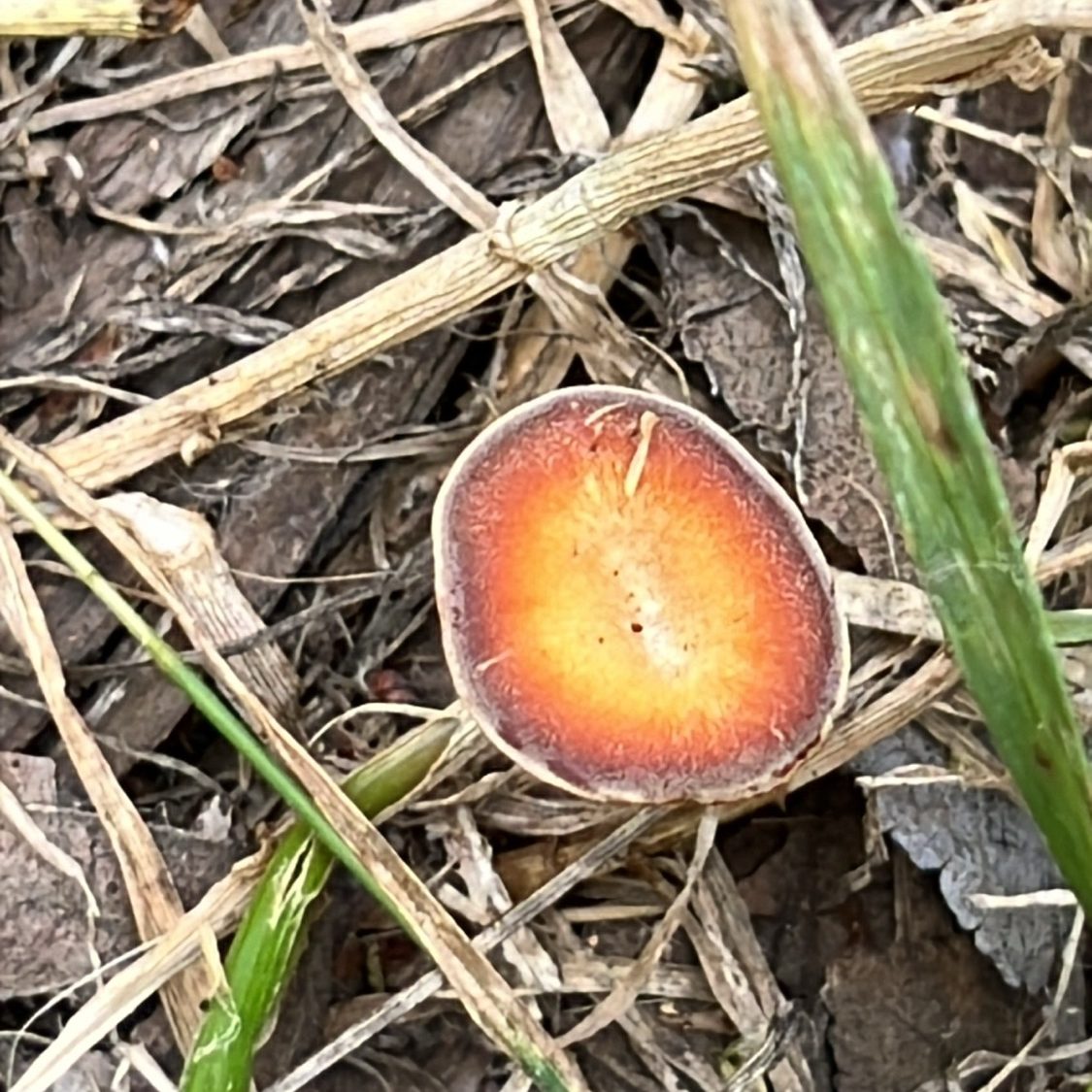
iNat has no clue what this fungus is. I should have gotten a photo from the side – rookie error!
I’m here as a resource for anyone with questions on this one. Send me an email or comment on this blog. Our usual source of vital iNaturalist information, Linda Jo Conn, is hampered by having an Android phone, but she’s your go-to on the computer app and the “classic” iNaturalist. Of course, iNat is working on that Android version, so it should be out soon, we hope.
Thanks as always to Ann Collins and Gene Rek for their hard work on Wild Wings, as well as to our bird sanctuary committee. They have kept the project on track and enabled us to start our educational programs.
Resources
New iNaturalist App for iPhone! This article provides more information about the new iNat app, and has a handy video on configuring it to behave a bit more like the earlier version, which is more like how people who do a lot of identification will want to use it. I highly recommend this if you can learn from text or video (some people prefer to be shown).
As Master Naturalists, we think every day is Earth Day, but today is the official day to honor and celebrate the planet where we and all the myriad lifeforms we share the planet with live. Please go out and do something to honor Mother Earth. Plant a plant, clean up some debris along a roadside, donate to your favorite environmental charity…something!
For Earth Day, the El Camino Real chapter has a gift for you. It will be helpful for those living in or visiting Milam County and the surrounding area, but works for most of Texas, too. It’s our Common Milam County Birds brochure! It features pictures of 35 of the birds you’re most likely to see in Milam County. We did our best to include photos you can use to identify birds you see, and are grateful to all who share their photos for nonprofit use on iNaturalist, because that’s where we got them. You can download the brochure and print as many copies as you’d like to share with friends, hand out at events, or display in your business.
We will have copies available at the Wild Wings Bird Sanctuary and any outreach events we hold, starting in May when the author gets back to Texas.
Female hummingbird on red yucca at the Hermits’ Rest Ranch in Milam County.
We would appreciate your feedback and ideas for improving the brochure.
We took a break from most of the projects at the bird sanctuary, but Gene has replaced the irrigation system, installed our benches, and kept the area mowed. The Reks and Ann Collins have been keeping the feeders loaded, and we’re happy to report hummingbirds are aware of this!
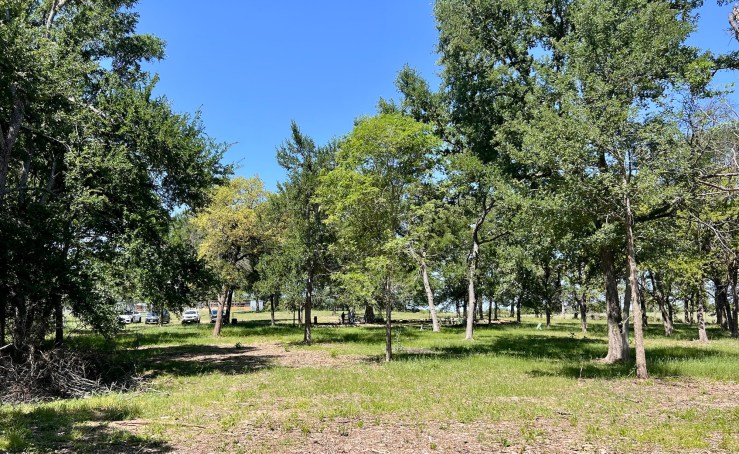
The sanctuary is all green and leafed out now.
Yesterday we held a well-attended Wild Wings committee meeting and divided up projects and tasks among the attendees. We are always looking for more helpers, so feel free to contact Ann if you have ideas!
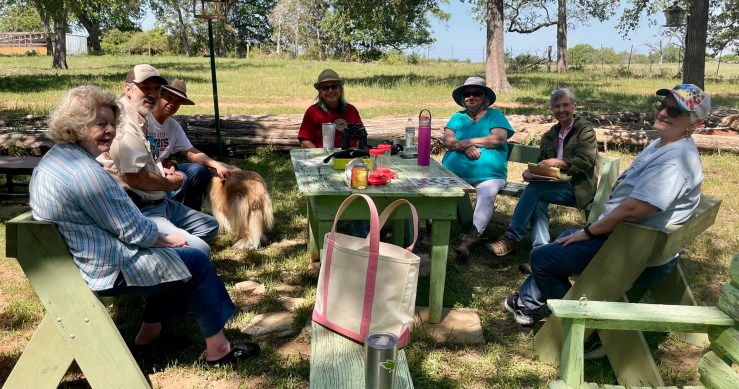
Making plans and enjoying the weather.
We now have a mailbox where we will store bird lists, brochures, and a guest book for visitors (which is being made by a bookbinder friend). It will be up soon, so look for it if you come by. We made a schedule for filling the feeders, so that more people will have the opportunity to help with that task, and most important, we tallied the birds we heard and saw at the sanctuary! Look for updated tallies in on our website in the next few days.
Most exciting for our visitors is that we have events scheduled! Here are some highlights:
April 26 join us during the day to participate in the iNaturalist City Nature Challenge event. We can help get you signed up as a participant.
May 17 our experts will provide a hands-on workshop in using Merlin Bird ID. It starts at 10am. Bring your phone!
In the autumn we hope to have a lichen walk, where Master Naturalist experts will share the fascinating variety found here.
Check this blog for more events!
We are also preparing visitor resources. I made one of the bird checklists we are going to have available, an alphabetical list of birds seen in Milam County. Some are common and some are rare. We will link to a PDF of it so you can see what birds you can find. Next will be a list arranged by bird type, which is preferred by experienced birders.
Our team has many talents to bring to Wild Wings!
After that I’ll work on a color brochure of the most common birds seen in Milam County. Wish me luck; I’m not a graphic designer but I’m the designated “computer person.” We selected 23 birds to share and are excited about the project.
Other items in the works are bluebird houses and signage, so our potential visitors can find us! Until then, visit our main website for hours and directions. This is a great time of year to enjoy wildlife in the countryside.
















 Nature Along the El Camino Real