The Bird and Bee Farm Wildscape continues to produce butterfly- and bee-attracting blooms this November and people to take a look at what our chapter does there.
Monarch on white butterfly bush
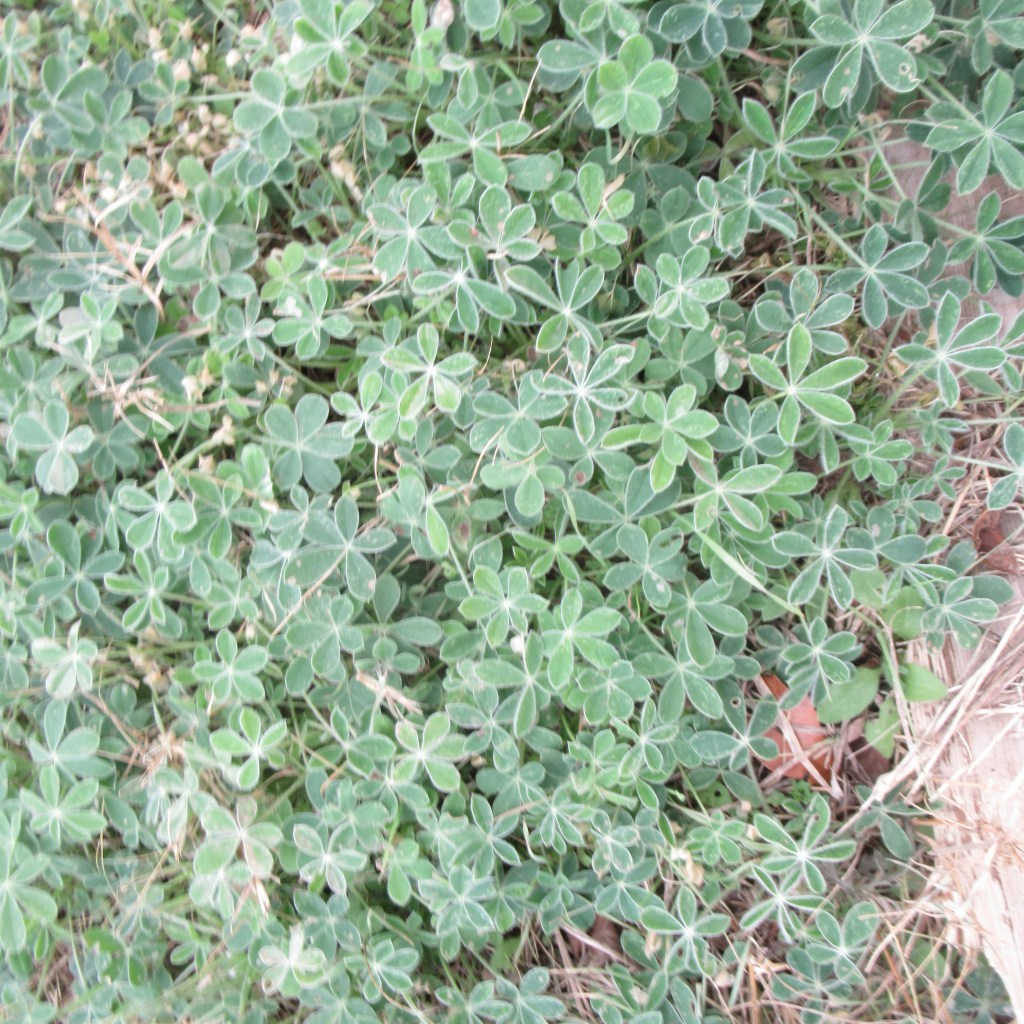
The purple and white Butterfly Bushes are still in bloom as is the Tropical Sage. Those two seem to be the favorites of the pollinating crowd right now. Tropical Milkweed is also in bloom, but it’s not desired by either butterflies or bees of the three varieties there last Saturday. Indian Blankets, roses, Turks Cap of two colors, lantana, and a mystery bloom are also putting out lots of flowers. See the picture of the mystery bloom and take a guess.
Mystery flower. No one seemed to know what it is. I have ID’d it on iNat
Giant Carpenter Bee coming off a Purple Butterfly Bush. I didn’t know I had taken a picture of it until I loaded the photos onto my computer.
Tropical sage
-Pink Turks’ Cap with berries. This was a very small new plant in April. Chicken poop works.
Family taking home plants and playing with the Donkey with Donna Lewis
Catherine Johnson working on the wildscape
Catherine Johnson, main manager of the Wildscape, has organized plant give-aways to anyone who wants to prep their own butterfly flower bed for next spring. It started last Saturday and will continue through Saturday, November 13, and Saturday, November 20. Hours are 9 to 12. Several people from out of town went home with Texas native plants for their gardens last Saturday. The Wildscape is on FM 334 between Milano and Rockdale.
More wildscape views
If you don’t want to plant them, you can help dig them up and distribute them to patrons for service hours.
Rio Grande turkeys, guinea fowl, and a hen or two.
Enjoy the flowers while helping the pollinators spring through fall next year.
By Michael Mitchell, Retired Game Warden and an El Camino Real chapter founder, now living in Austin
Michael Mitchell
Corona virus has sent tremors around the world, grounded a billion people, cost trillions, and killed millions. Originating perhaps in a wet market in Wuhan China, many people attribute the origin to an illegally traded wildlife animal. Even if an alternate human-caused theory is viable, the occurrence of SARS (2002 and 2003), Swine Flu (2009), MERS (2013) and other recent zoonotic diseases still demonstrate the enormous risk that illegally trafficked animals present to humankind.
Zoonotic diseases are ones which can be passed from animals to humans. The source animals are typically vertebrates. But zoonotic diseases are not something to sneeze at. Over 75 percent of new diseases discovered in the last decade are zoonotic. Frighteningly, 61 percent of all human diseases are zoonotic in origin. And it is estimated that there are currently 1,500,000 diseases in wildlife that we know nothing about.
I’m concerned that we will have an acceleration of zoonoses as populations grow, climate change looms, farming systems intensify, health systems strain, deforestation increases, antimicrobial resistance extends, and agricultural trade boosts.
These turtles could be sent anywhere in the world as part of the pet trade.
The exact wild animal, and the science linking the animal to the human outbreak with COVID, remains in debate. But the world’s attention should be drawn to the practice of illegal wildlife trafficking. The pangolin, for example, is the world’s most illegally trafficked animal. While the Corona virus has brought this to the world’s attention, more must be done as human lives, endangered species, and zoonotic disease risk are at stake.
The US has a role in all of this. It is one of the 176 countries involved in trafficking, often acting as a prominent destination of illegal animals. These days live birds and reptiles are the dominant US illegal imports. But we also have unusual problems that we create, such as a lack of corporate transparency in, say, Delaware corporations. We also tend to lead the way in, say, technologies (think of major online auction sites as an example) that inadvertently create marketplaces enabling trafficking. Fortunately the Coalition to End Wildlife Trafficking Online now consists of 47 member companies across the tech sector and is making progress in this lattermost area.
Wildlife trafficking is the world’s fourth largest transnational crime, lagging behind drugs, counterfeiting, and human smuggling. It generates something between $8 and 20 billion annually. The cost is very difficult to pinpoint. Over 7,000 species of plants and animals are impacted worldwide.
Visiting Africa to learn about wildlife trafficking
These wildlife challenges are widespread. In Africa we saw the last northern white rhino in 2018. But right here in Texas, we saw the last native San Marcos gambusia in 1983.
There are no moats around modern countries in our modern world. International conservation efforts must stop the devastation of species, such as pangolins, rhinos and elephants, birds, reptiles, timber, medicinal plants, and more. Over 250 non governmental organizations (NGOs) have called for a commercial end to wildlife trade in 2020. It’s not about one particular country…it’s all of us who are involved in a cycle of demand, trafficking, and poaching.
Game wardens are not the only people who should be alert to wildlife trafficking
Wildlife trafficking is big business. But the stakes for the world couldn’t be higher. The time to act is now, and the reasons are stronger than ever. I’m very proud of the work of Texas, United States, and other countries in fighting the problem. Here’s some things you might consider doing wherever you are:
Reduce meat consumption.
Become educated of the origin of our foods. Sources, locations, processes. From apples to chicken, from chiles to fish.
Become involved in sustainable food production, upholding animal welfare and a merciful death. Their health is our health.
Empower environmental agencies, institutions, and organizations.
Don’t just document the disgrace. Take action: if we are not part of the solution, we are part of the problem.
Children can get all the toys in the world, but they will always marvel at a living thing.
Establish environmental education at primary and secondary schools.
Work to bridge the gap between hunters and non-hunters, as well as those opposed to harvest activities.
Increase access to private lands.
Support private land conservation initiatives.
Maintain public lands.
Establish broad-based funding.
This is the kind of stuff that really makes me think. And weep. It reminds me of the old African proverb, “If you want to go fast, go alone. If you want to go far, go together.”
I was out this beautiful morning cleaning and filling my hummingbird feeders. I finished with that, then filled up the ant moat which the chickadees drink from.
I was so shocked to see a very green tree frog not making a move in the crutch of the shepherd’s hook.
I had done all that work and sprayed with a water hose, and it never moved. Boy was I both shocked and happy at the same time.
While I was happy, I bet it was scared that I was a predator fixing to get him or her. It was a “Barking Treefrog”. So wonderful to see.
Today was your lucky day, little one. A planet Earth person who loves nature was the one who found you. You made me smile. I guess we were both lucky today…
Fall is slowly arriving, and the leaves are starting to fall into our gardens.
Some of you are thinking, “How messy! I’ll need to rake or mow them up.”
I used to think like that, too, especially when I lived in the city. Now that I live in the country, I have learned better. My bad back has also learned to take it easier.
Mother Nature also has made those leaves fall for a purpose, to protect the new plants that will emerge in the spring and to protect little critters that live and sleep away the winter among the fallen leaves. Those are two good reasons to just let them lie.
Today (October 24, 2021), I walked through my garden to catch one of the last monarchs heading south, lovely and gentle as she had a little sip from a milkweed in my garden.
After I left the garden, I went over to the Celeste fig tree that has frozen back every winter, and has just put out the first edible figs ever! I was so happy. A little snack for me.
Remember, leaves are the baby blankets for next year’s new plants. So leave them….
Linda Jo Conn received special recognition Saturday night at the annual meeting of Texas Master Naturalists in Dallas/Ft Worth. She has reached a milestone of 4,000 service hours. She was in very tight company. Only one other statewide member qualified.
Congratulations to Linda Jo
The award included a dragonfly pin of brushed gold with a ruby in the center and a special pin and certificate from the office of the President of the United States.
The Presidential pin
In other categories, Eric Neubauer received recognition for reaching 250 service hours. All who received initial certification from the class of 2020 were also recognized (there were many statewide).
Eric stands as his name is called.
Larry Kocian was recognized for “109!” hours of service in the Texas Water Specialist program with TPWD. Kocian and Sandra Dworaczyk were both given recertification this year.
Good job!
I attended a 3-hour session on this program, and it looks particularly interesting. If we can get a group of three interested, they can take the class and gain certification. I have a connection to it if anyone is interested. If you’d like to find out more information, contact Melissa Felty, conservation education manager for TPWD, at Conservation Edu@tpwd.gov or go to the web site. The class counts as advanced training hours (8) and the service, which can be education, water testing, CoCoRaHs precipitation measuring, and other things, count as service hours for Texas Master Naturalist.
Yay for our folks!
The meeting had some very educational sessions. I went from water conservation, to wildscaping in the shade, to Chronic Wasting Disease, to iNaturalist advanced training, to Tarantula sex with live tarantulas in one day. That last one was particularly amusing to me, Eric, and the rest of the packed class. A few members gave play-by-play commentary. My favorite occurred on Saturday. It was an excellent program given by a fellow iNaturalist from the Blackland Prairie chapter on identifying trees. I now have a brochure to carry with me.
Award recipients
The meeting was educational, entertaining, and a great place to meet other TMNs. I came away with some good ideas for our chapter.
Oh, and by the way, the new TMN pin for recertification in 2022 is the Lightning Whelk.