I washed a pet bed and put it out to dry on a ladder. Wrens built a nest under it. The sun hits it directly part of the day. I have a fan and mister to cool them and debris underneath for protection.
The babies hatched and both parents are now feeding them.
First we have the Big Freeze, now we have the big heat wave and drought!!
I guess we need to be more careful about what we wish for. When it was cold, I wished for warm weather…
So I took a few photos around the house. It is bad. I didn’t even have the heart to take photos of my beautiful pollinator garden. I have tried to save it, but we also have to be smart.
Water for the birds, the big plants and trees. But we might just have to let the small stuff go. Zinnias will come back from the dried seeds you can harvest now. That will save some water.
This is a good time to learn from this weather event. Put out a sprinkler in the evening, the birds love it.
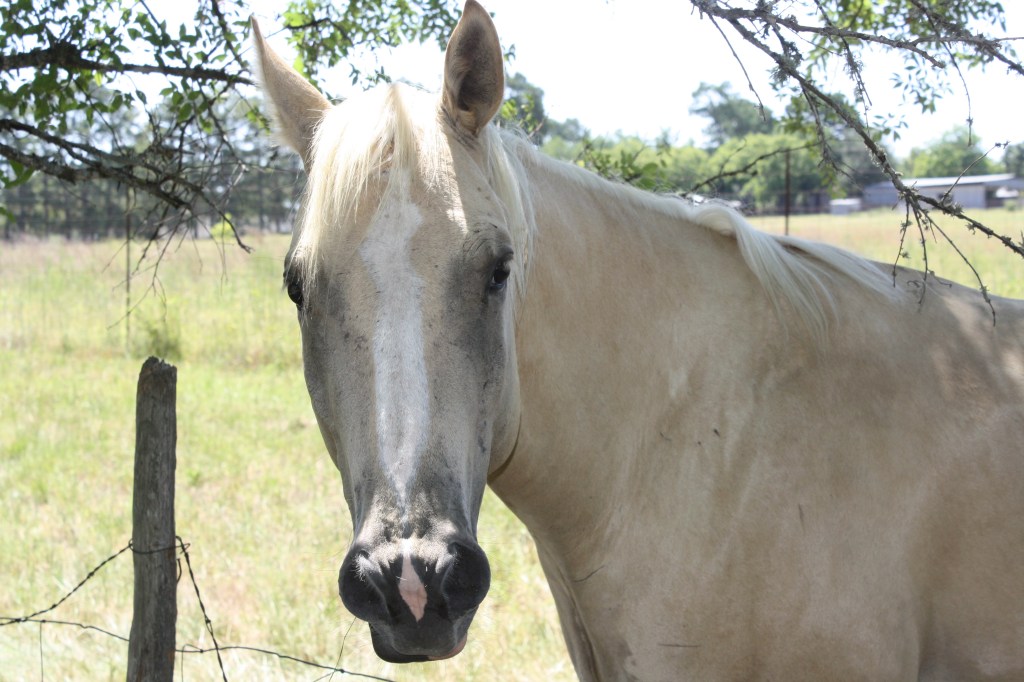
And on a happy note, here is one of my neighbor’s horses watching me put out the sprinklers. He always gets a carrot for helping me!
Take stock of WHAT is surviving instead of being so upset over the plants that do not make it. Next year we will know to plant more of the hardy things that made it.
We must always observe and revise our plans. Things change.
Last Saturday morning was a busy one for a small group of El Camino Real Texas Master Naturalists. The intrepid seven started out attending some previously girdled trees and finished by photographing everything they could find for the “Hotter than Hell BioBlitz” at Wilson-Ledbetter Park in Cameron.
Liz Lewis inspects girdled Privet.
Original girdlers of the invasive Glossy Privet Liz Lewis, Marian Buegeler, and I did some follow-up work on the trees we originally performed girdling on back in March. Marian was armed with a hatchet and I had a tree trimmer device to remove any new growth below the girdles. Liz directed.
Marian Buegeler prepares to take hatchet to Privet.
I was surprised to find the trees dying because an inspection a month ago didn’t really show any significant dying off. They are showing plentiful evidence of their demise now. In case you’re new to this subject, tree girdling is a method to kill trees without herbicides or chain saws. You can find directions on how to do it from the March blog if interested.
Privet dying
The drought and excessive heat may be hastening the death, but it’s all occurring above the girdle line, so the process works. We are now a little excited to see where they stand in late fall.
The only green grass was close to the water.
We then proceeded to photograph what was still alive in the drought/heat wave at Wilson-Ledbetter. We managed to get 208 photos of nature surviving the weather. “Birdladymilam” Ann Collins posted the most photos on the project page on iNaturalist. Eric Neubuer found the most of one species (Wolf spiders in case you weren’t sure). Organizer Linda Jo Conn, Marian, Victoria St John, Liz and I also contributed. Blooming flowers were sparse, but there were a lot of trees, vines and grasses along with spiders, and birds.
Pipevine Swallowtail looks for blooms in some very dry grass.
And it wasn’t hot that early in the morning.
Silver leaf nightshade was one of two blooms I found there.
The Milam Wildscape Project is stunning this summer. The Reks have kept the sprinklers going. We are starting to pot extra natives for Nature Days in the fall. Donna Lewis will be painting signs to identify plants. All Master Naturalists are welcome to visit- open and close the gate upon entering and leaving. Get hours for watering, straightening up-Nature Improvement in Public places, plus drive time. There is shade and a bathroom. Take home cut flowers- Cindy’s zinnias are spectacular! P
garden patrolInland sea oatsButton bushTrumpet vinedesert willowHeavy metal switch grass
Mike McCormick, considered the largest houser of Purple Martins in the area, shared his wealth of knowledge with the El Camino Real chapter of Texas Master Naturalist on Saturday, June 18. McCormick lives south of Buckholts in Milam County with thousands of Purple Martins and a few family members. He has been housing the birds for more than 40 years and has grown the number of seasonal residents steadily every year.
Purple martin house with adults waiting for fledglings to fly
There are approximately 65 Purple Martin houses at his place – all made by him. He’s also helped many others get started with some extra houses.
Up close of the three fledglings that haven’t decided to fly, yet.
ECRTMN visited at the optimum time. All the babies are starting to fledge. Members learned how to house them and keep them coming back. McCormick also clarified some untrue facts about the migrating birds. For example, a 6-foot-tall martin house works as well as a 12-foot-tall house.
Martins in flight
Thanks also go to Donna Lewis, organizer of the event, and Ms. McCormick, sister to Mike, who fed us and kept the cattle herded.
Donna Lewis, who organized the trip, speaks to attendees.Closeup of fledgling. McCormick put it back in its house.Mike McCormick handles a fledgling that wasn’t ready and landed on the ground. ECR member Victoria found it.McCormick’s handmade houses.Another of McCormick’s handmade houses.