by Carolyn Henderson
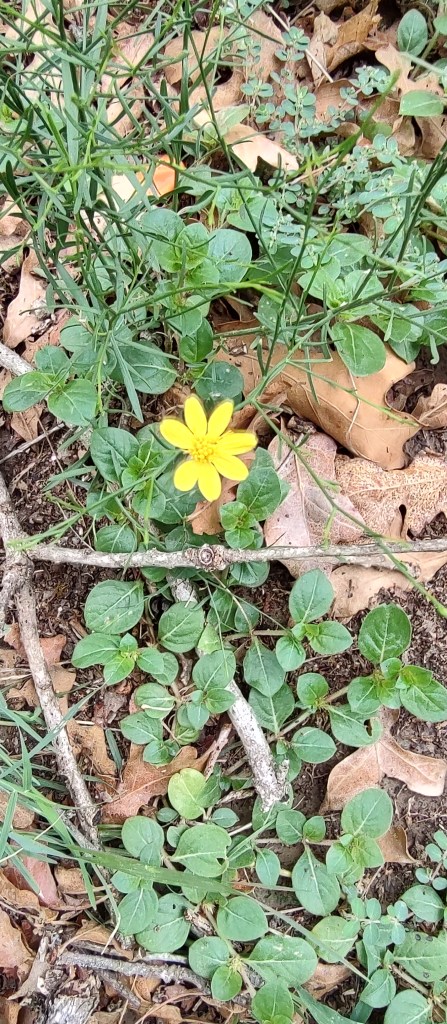
Turkey Tangle Frogfruit – why was that name given to the little bitty flower that grows close to the ground and seems to be able to survive anything? Some fellow iNaturalist.org users in the El Camino Real chapter of Texas Master Naturalist tell me that it used to be just “Frogfruit” until it was recently changed. No one I know seems to know why that occurred either.
I often wonder how words originate. For example, I’d like to know who designated that tall naturally occurring thing with a lot of fluffy greenery on the top half a “tree.” I’m not asking why there are trees (I’m sure many scientists could tell me), I wonder who chose that combination of letters to identify it to other people. I should point out that I have degrees in journalism and English, two subject which perpetuate a lot of word pondering.
I also have been curious about the adage about Texas Purple Sage “predicting” rain. It came to mind today because mine suddenly bloomed. I have frequently heard that Texas Sage blooms two weeks before it rains. Many people I know believe that to be a fact. My Texas Sage can cover itself in beautiful purple flowers very quickly and, often, many times a year. However, it always seemed to me, that mine blooms after it rains. It turns out that neither is exactly correct, but it’s not called the “Barometer Bush” for nothing.

The shrub is believed to be sensitive to barometric changes in the atmosphere. When humidity and pressure change to indicate rain favorability, the bush blooms – at least according to current study.
I went to the Google search site and typed in “Texas Purple Sage predicts rain.” I found that many people had pondered this adage, and some had researched it. Below are partial quotes from two articles I read on the topic.
Research was obviously needed, so I dug in. All the book and online references agreed nobody knows the answer for sure. I learned that while Texas sage does tend to bloom a day or two before rain, it can also bloom within days after a rain or just when conditions are optimal for rain to occur, even though rain may not happen. This curious response to weather probably is mostly due to the plant’s sensitivity and ability to detect humidity as well as change in barometric pressure.
So, what can you depend on? Only that Texas sage blooms sometime around a rain event — maybe. If you have a full-sun location that drains well, plant some and enjoy them. They are very pretty plants.
By Howard Garrett | Special Contributor, The Dallas Morning News
The detail behind the matter, however, is that while Texas sage tends to blossom a couple days before precipitation occurs, it really blooms when the conditions are optimal for rain. Actual rainfall may not occur, but the plant is sensitive to changes in barometric pressure and humidity, and therefore it blossoms.
By Spring Sault, Nature section, Hill Country News
Maybe it is predicting rain after all. Like all weather forecasts, it’s rarely spot-on accurate. What the Texas Purple Sage does do is bloom despite little rainfall and high temperatures, and it attracts bees, butterflies and hummingbirds in mass sometimes. (I hope you can see the video here to actually see that.) My Texas Sage took a hit from the Freeze of 2021 which required severe pruning. It is really growing now and blooming. I hope the bees smell it and show up.