Just last Thursday night I mentioned I hadn’t seen any Hogna ‘incognita’ for a while. The last time was December 31 to be precise.
Early Friday morning, I found out they were back!
I’m back!
Based on another’s similar experiences, this nap time seems to be true of the species, regardless of environmental conditions. Its close relative, Hogna antelucana, passed on napping and is now significantly larger. That’s a neat thing about a new species. Every little discovery about it can be a surprise.
Recently, while photographing wolf spiders scooped off of a lake beach, a strange tiny critter appeared in the bowl along with a spider. It was easier to photograph than ignore, and it was about as small as I could get with my camera.
I uploaded it to iNaturalist figuring it was a juvenile bug (Hemiptera) but was soon told it was probably a globular springtail (Symphypleona). A while later someone even made a species ID (Pseudobourletiella spinata). Try to say that quickly. No common name of course.
Now I’d heard of springtails during my TMN training, but globular springtails? I checked these out on iNat, and my observation was a county first for the species, and only the fifth in Texas. The others were from the Austin area and brown. Most in the U.S. were also brown, so I’m guessing than mine may have been the adult form. You can learn something new every day.
You’ll note the two pale shapes of the critter. They are simply reflections of my light ring which I built for my equipment so I could take consistent photos, cloudy or clear, day or night.
I usually take photos for identification, but occasionally there’s one that could hang on a wall.
Look at those eyes!
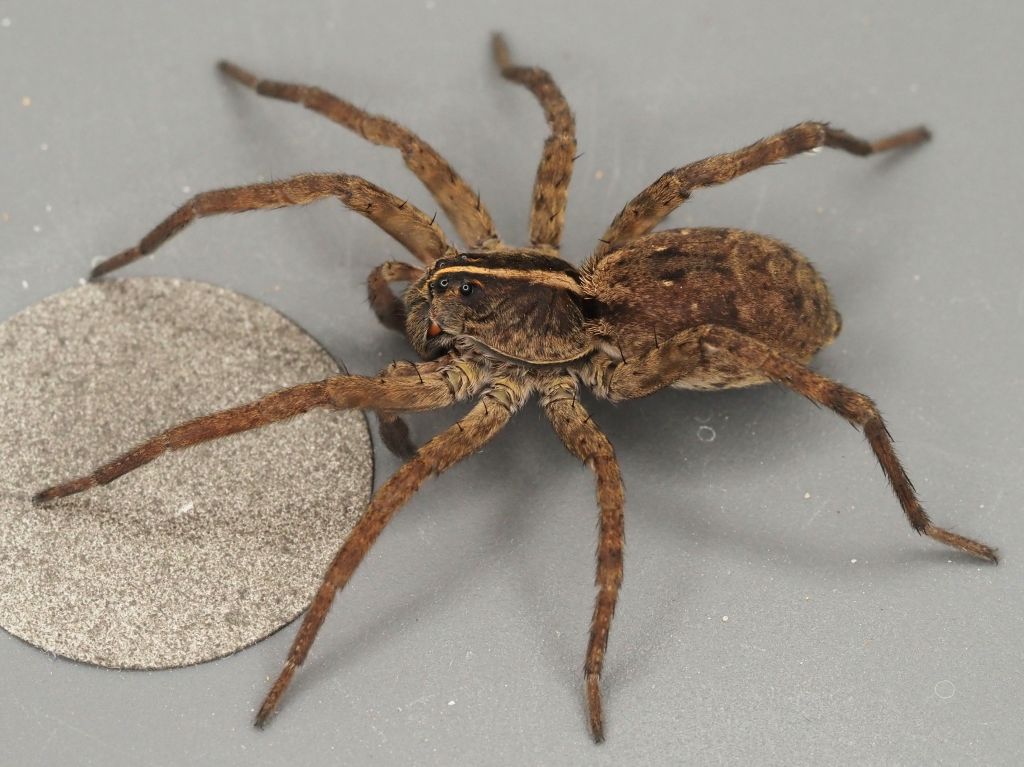
Most wolf spider species pass the winter as juveniles. Tigrosa georgicola is an exception and one of the larger species. I’ve generally had trouble identifying Tigrosa to species, mostly because I hardly ever encounter adults.
This winter I have two locations where I can more or less reliably find Tigrosa georgicola adults and am taking full advantage of it. The females must be keeping to their lairs since I usually find males, but at least I’m getting practice identifying one of the sexes.
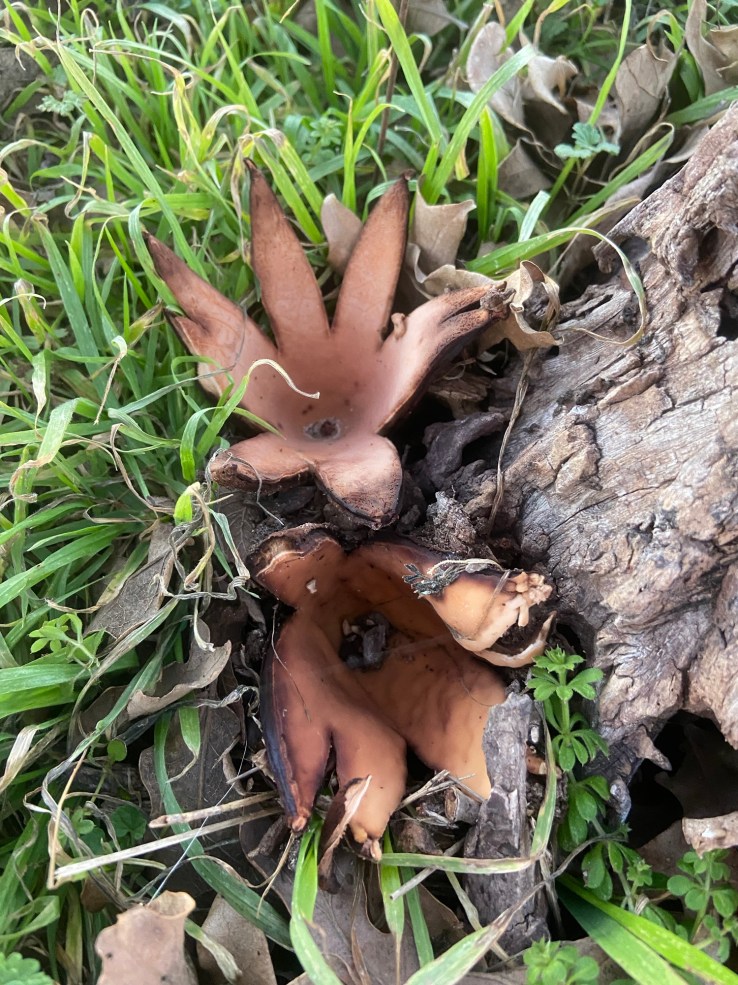
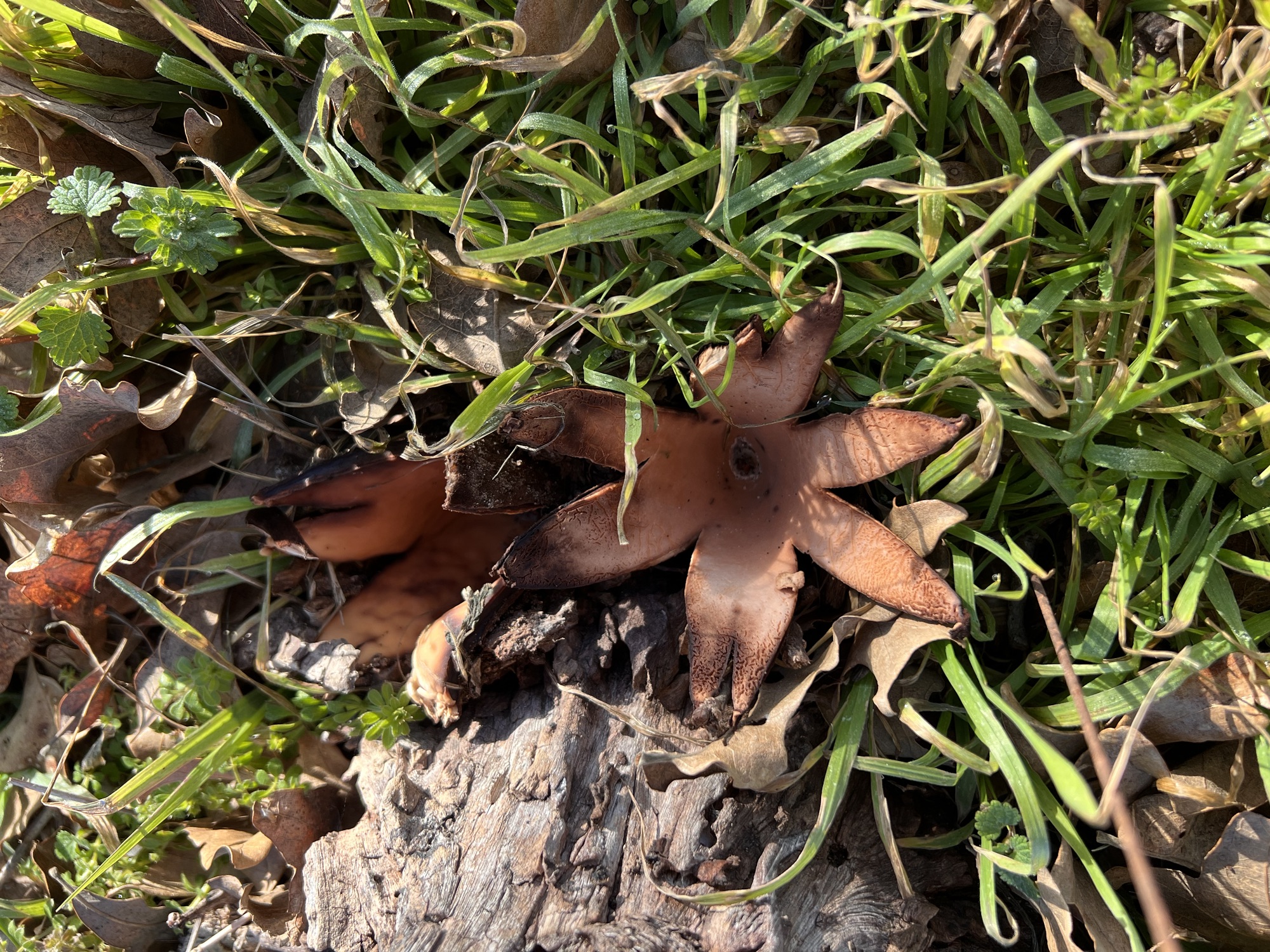
The State Fungus of Texas is the Texas Star (or Devil’s Cigar) (Chorioactis geaster). It’s not spotted often, so wheneever you see it, it’s newsworthy. When it was spotted for a second time at Inks Lake State Park last December, it made the news all over Texas. This is just one of the articles. There’s also an article on them in this month’s Texas Coop Power magazine. So, when my neighbor Vicki sent me a photo and asked me if I’d ever seen anything like this before, my heart skipped a beat.
I knew exactly what it was!
I told her it was rare and exciting. She looked it up, and we both geeked out over it for a while. The next day I went over to her property to get a look (I’d also hoped to pet her minature horse, but she was in the next pasture.) The mushroom was in a field of post oak trees, which confused me.
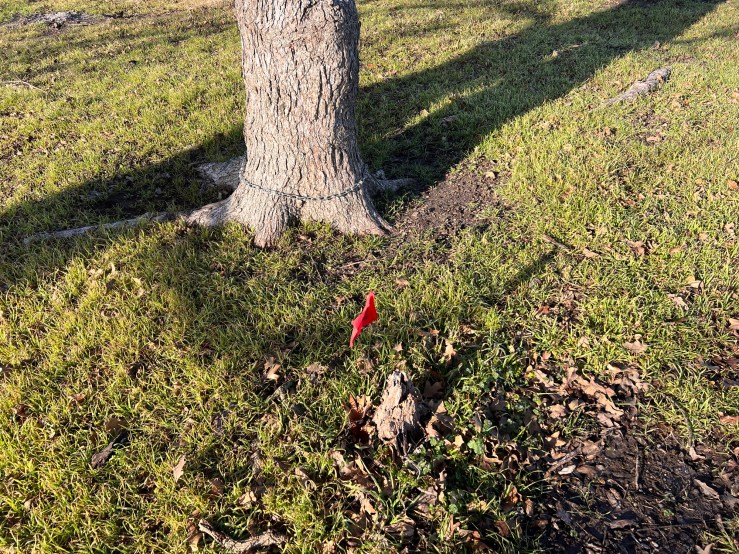
However, when I got closer to the spot where the Texas Star was located, conveniently flagged by Vicki, I saw it was exactly where it should be. It was right next to the stump of a cedar elm tree (that’s basically all we have, the oaks and the elms). We’d recently had a lot of rain, so it was fruiting right when it was supposed to.
There it is!
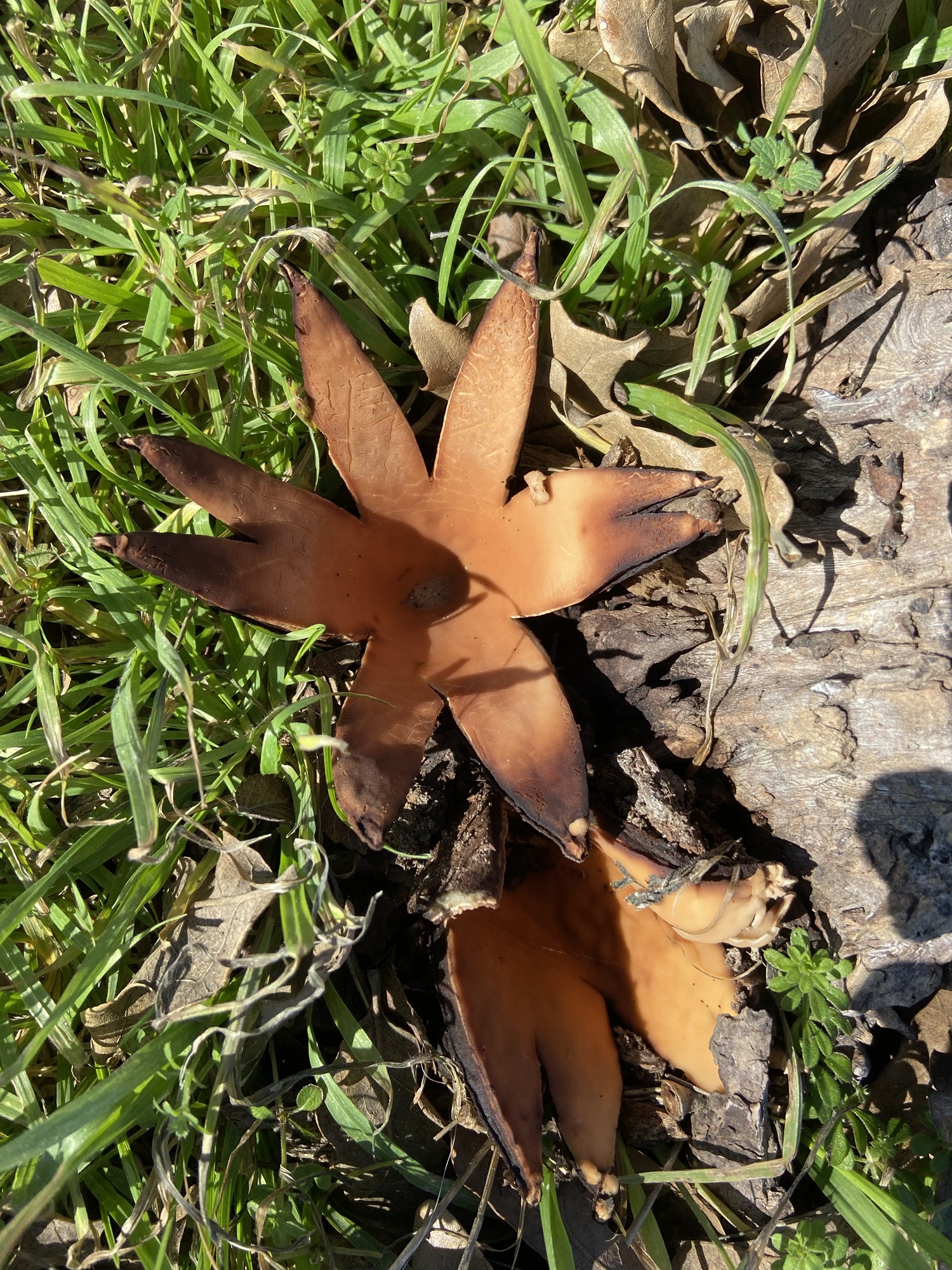
As soon as I got my own photos, I uploaded the observation to iNaturalist, where it was quickly confirmed. It had already burst its spores out, so we missed the exciting hissing sound the Texas Star makes, but it was fun to feel its leathery “petals,” and see if it smelled funny (I couldn’t smell anything). I looked around but didn’t see any more on her property. I also looked at the dozens of cedar elm stumps in my woods, but no Texas Stars have turned up.
It pretty much looks the same from all angles.
As I looked at the information on iNat and Wikipedia about the fungus, I learned a lot. First of all, I’m pretty lucky to live where it grows. It’s only found here in the middle of Texas and a small place in Japan. That makes me wonder if they are really the same fungus, but I’m sure professionals have looked into that.
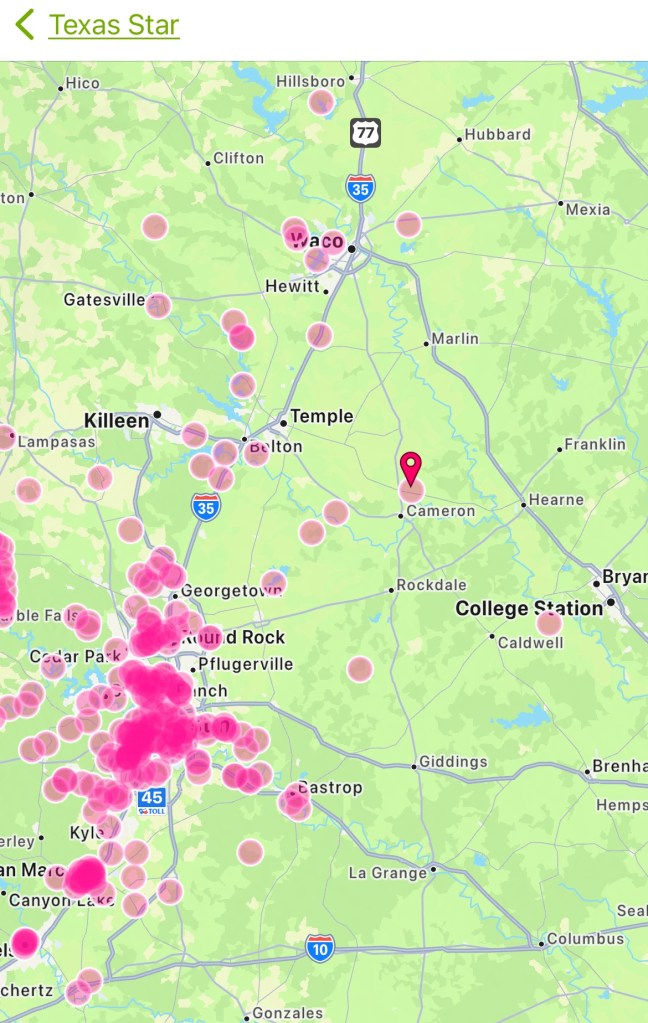
This iNat screenshot isn’t the whole Texas Star range, but it shows how few observations there are in this part of the world.
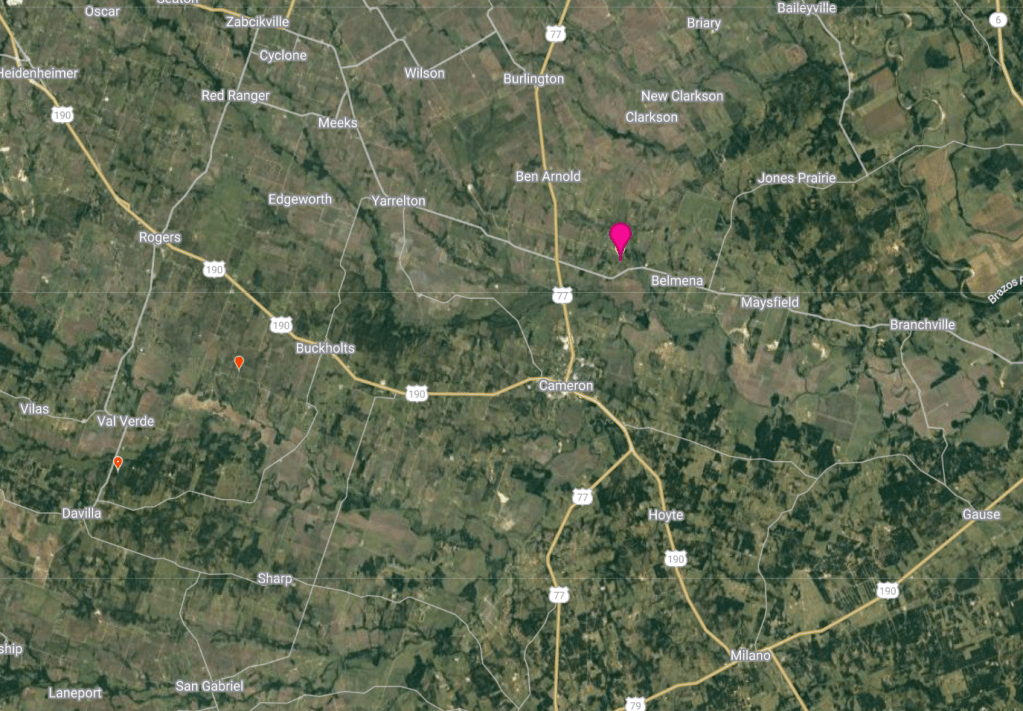
There were observations near Davilla and Buckholtz, but only the Davilla one was research grade, making my observation the second confirmed one in Milam County. And we are way to the east of its usual range. I was excited!
This map has most of Milam Couonty in it, and shows the three potential observations.
Keep on the lookout for these if you have decaying cedar elms (Ulmus crassifolia) and we have another nice rain (which I assume will happen soon). To learn more, read any of these articles:
Anyone remember planting the three Bur Oaks in Cameron parks last April? Two of the three are doing great.
About 10 members and friends planted them in Wilson-Ledbetter Park, Cameron City Park, and Orchard Park in honor of Earth Day. The trees at Orchard Park and Wilson-Ledbetter Park are growing, which indicates they will survive. Cameron City Park tree has mysteriously died.
Orchard Park
Both of the living trees were planted close to the bodies of water in each park, and then Liz Lewis and I proceeded to water them every week. They both survived a very heavy wind in a storm the day after we planted them. The wind bent both of them toward the ground. It practically laid the Wilson-Ledbetter Park Bur Oak on the ground. Michelle and Oscar Lopez and I went out to check on them and found it. We staked it upright to a degree. The top part is alive, but it really seems to be coming back from the ground.
Wilson-Ledbetter tree
The Orchard Park oak also was found leaning from the storm, and I pushed it back in place. Then the heat wave set in on the area. Liz and I took water to the three at least once a week. We used cat litter jugs to carry it. The City Park oak had lost all its leaves early on, but resprouted them in two weeks. I labeled that transplant shock. I was watering it once a week.
Orchard Park tree.
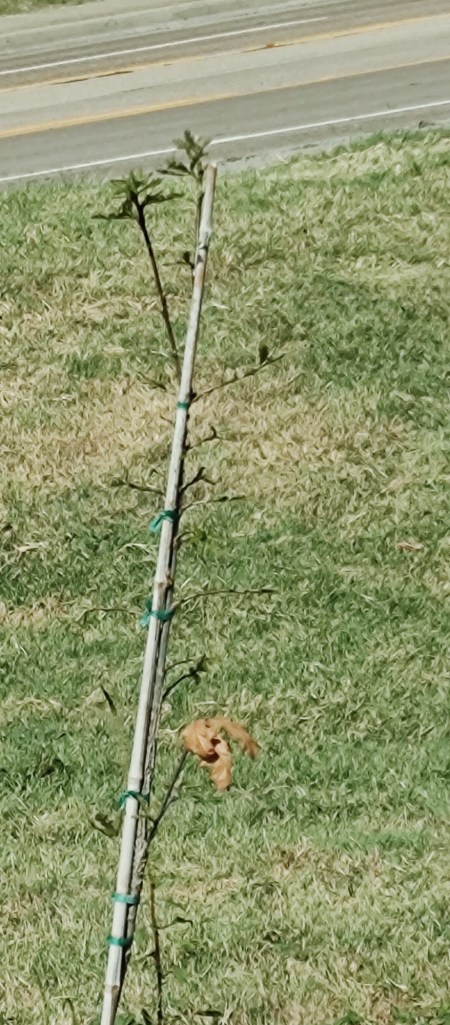
Later, I was told someone else (not a member) was watering the tree regularly. I drive by it frequently. It had green leaves on it until one day it didn’t. It was dead at that time. It is a mystery why it died. I have left it there for now, just in case it sprouts from the bottom like the Wilson Ledbetter oak has done.
City Park tree.
I’d like to plant Redbuds out a Wilson-Ledbetter, but it might be too much to water.
Note from Sue Ann Kendall: I had a bur oak in my yard in Round Rock. It lost its leaves each winter. Maybe that’s what’s going on in the City Park tree. If they all resprout in spring, do cut the sprouts from the base so the trees will have one trunk. If they don’t, encourage one trunk to regrow.






 Nature Along the El Camino Real