We have had the typical bumper crop of red berries in the yaupon (Ilex vomitoria) thickets of Burleson County again this year. Last year during the February 2023 cold spell these berries that contain hard seeds were consumed by legions of robins (Turdus migratorius). A mockingbird (Mimus polyglottos) that owns our front-yard and half the farm, fought thousands of these rest-breasted raiders trying to protect his winter food supply. He lost the battle, but survived to eat grasshoppers as the spring season warmed toward the heat of summer.
Today is the “Ides of March” 2024 and so far very few robins have ganged-up in the oak thickets of Edwards Ranch. I saw them in the woods along Sandy Creek in February, but they never touched the yaupon berries near the house. A sizable flock of cedar waxwings (Bombycilla cedrorum), however, have been staying about and gorging themselves on yaupon fruit for the last three days. These calm, gregarious birds allowed me stand at a distance of six feet and watch them pluck red berries from a 12-foot tall female yaupon. It required me to be completely still and lean into a tree trunk, while doing my best to impersonate shaggy bark. I watched predator eat prey. After eating berries for less than a minute the birds flew up into the height of a nearby bald cypress (Taxodium distichum), only to repeatedly return to the yaupon to continue the feast. The winged berry-predators were dropping seeds processed through their digestive tract to the fertile ground below.
Those waxwings were smiling. The yaupons, too, were smiling. As in every true symbiotic relationship, who is the master and who is the servant?
I’ve been using Merlin Bird ID since last summer to identify birds I hear. I’d used it before to identify birds I saw, but once I started the listening exercise, I was hooked. It’s such fun knowing what I hear around me, and it’s great training for birding without the app. My ability to identify birds by song is hugely improved. Plus, knowing what’s out there helps you know what to look for if you want to see birds.
Merlin interface.
Cornell Labs has done an amazing job developing this app, which you can download from the App Store in whatever kind of phone you have. I can’t imagine how much work it has taken to train the listening app on the sounds of all the birds around the world (you can get Bird Packs for wherever you happen to be).
I got Europe because I keep getting those weird IDs and wanted to read about those birds. Mexico is because I go to South Texas sometimes.
I’ve learned a few interesting things about Merlin that those of you who use it or are interested in giving it a try may benefit from.
One of the most common birds I hear.
1. Merlin will not identify domestic birds. My chickens can walk right in front of the phone and nothing registers. It also completely ignores my horse trainer’s guinea fowl, and didn’t pick up the turkeys at Bird and Bee Farm. However, it has identified wild turkeys, so I think the turkey thing was a fluke.
I’m a bird!
2. The app has trouble with birds who make sounds that are low in pitch. For example, it needs most doves to be really close in order for it to register them. Collared doves make a higher sound that it identifies more easily. And you have to be on top of an owl for it to be picked up. In the past week, I’ve heard entire owl conversations that didn’t get “heard,” both of barred owls and great horned owls. That’s why it pays to also be able to identify birds with your own ears!
I’m so subtle.
3. Crazy things can happen after a recording is interrupted. Two things that happen to me often will interrupt a recording: the phone ringing or me accidentally starting a video rather than taking a photo while the app is running. You can usually save the recordings, though I have lost a couple.
However, I’ve found that if I start the listening function again after an interruption occurs, Merlin’s decides I am not only in North America, but I’m also in Eurasia. I will be informed that I hear a great tit or a European robin, which is highly unlikely!
So, if you suddenly get an identification of a bird you’ve never heard of, be sure to click on the map for that bird, to be sure it has actually been seen in your area. Sure, occasionally birds are blown off course when migrating or after a storm, but most European birds stay in Europe (other than our biddies the house sparrows and starlings, of course!).
My husband’s haiku: Porch sparrow drama – fussing, fighting – very loud What are they saying?
4. Moving around is hard on Merlin. The app works best if you are standing still (or the phone is sitting on something) and the environment is not noisy. It’s amazing how loud you are walking on a trail or around your property. I live in the country, yet I realize now that it’s loud here. Loud farm vehicles and trucks, single-engine planes practicing their takeoffs and landings at the nearby tiny airport, our six dogs, the pool pump and waterfall, and air conditioning units all contribute. When camping, screeching children on trails and boats are hazards. So are waves, believe it or not. But if you stay still, Merlin’s does a pretty good on anyway.
Savannah sparrows looking for bugs
When I’m out walking, I usually pause if I hear an interesting bird, so the app can pinpoint what it is. My exercise app on my watch hates that.
Merlin Hints
Save fairly often. I try to go no more than 20 minutes or so before saving a recording unless there’s some great bird action going on. That minimizes your losses if the app crashes, which does happen occasionally.
Remember to report interesting birds you hear or see to Cornell Labs. It goes to e-Bird and provides useful research data. I don’t report every sighting. I doubt they are interested in the fact that I see vultures and house sparrows every single day. You can also upload photos. Occasionally I get one good enough to share.
Have some fun with the app and do your own research. I’m tracking what birds I hear at my house each month. It’s letting me know which birds are winter birds, which migrate, which show up in summer, and of course, what’s here all the time (vultures, house sparrows, cardinals, chickadees). Be sure to report each new bird you hear, so your life list on Merlin can grow. I have 192 birds since last September. Majestic that 193. A marsh wren showed up today. That includes birds I’ve seen while traveling, too.
Yep, we are in their range.
Conserve your phone battery. To make my battery last longer when on long hikes, I don’t keep my camera open at the tame time Merlin is running unless I’m actively taking pictures (remember, I also obsessively record plants and other life for iNaturalist). If I were planning to go out for a long time, I’d take a spare battery. I tend to run out of juice after around three hours.
Don’t become annoying. I have developed the habit of shushing people who talk when I’m “listening” through Merlin. I’m sure it irritates my spouse. People are important! I also don’t even TRY to use the app when on a group hike unless I hear something really cool and go hide to try to capture it. I was hilarious at the National Butterfly Center last October, as I lagged behind the Master Naturalists trying to hear exotic Mexican birds. I also find myself trying to be extra quiet any time I’m outdoors,because it’s become a habit. I whisper answers to questions and such. I am working on fixing that before my family stope talking to me.
I hope you get something helpful out of these hints. If I’m wrong about anything, let me know. Also, if you have additional insights or hints, tell me and I can add them to this blog post. I’m still learning!
Flowers attract insects that attract birds.
By the way, I’m not claiming Master Naturalist VT hours for any of this, since it’s on my own property most of the time, and that doesn’t count. I did count my time during the Great Backyard Bird Count, since that’s approved. I don’t claim hours when I’m camping or traveling, since I’m also usually making iNaturalist observations at the same time and don’t want to “double dip.”
[this is a revised version of a personal blog post]
Catherine shared these photos of sights at her home. Sue Ann Kendall has added identifications, which may be wrong, so feel free to correct!.
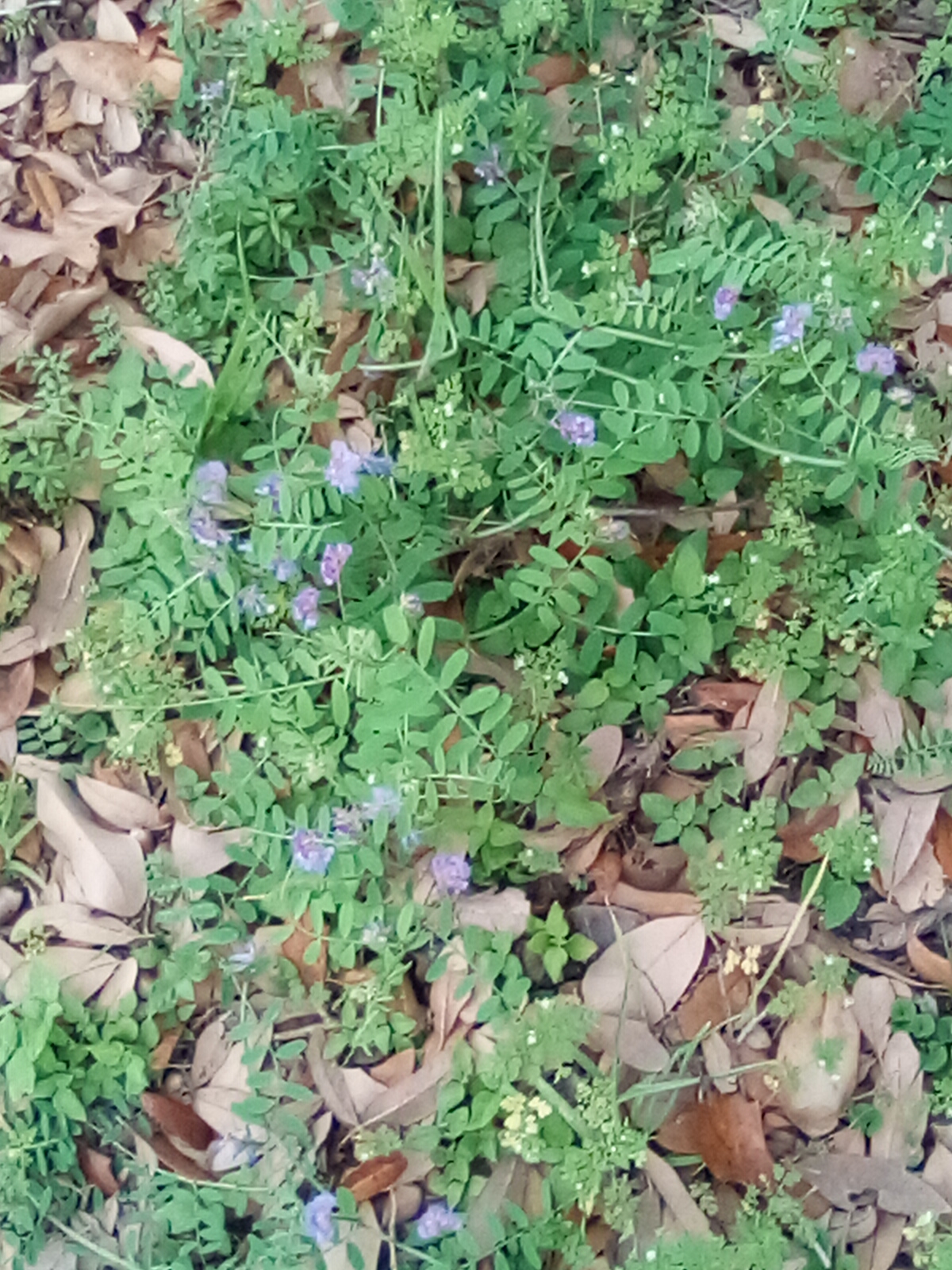
Southern dewberry (Rubus trivialis)Crow poison, catchweed bedstraw, among othersCommon vetch (Vicia sativa)Tiny bluet (Houstonia pusilla)Common dandelion (Taraxucum officinale)Cecropia moth (Hyalophora cecropia)This is the largest native moth in North America
I had a wonderful opportunity to introduce young people (and some adults) to observing nature and learning from it. On March 9, I was invited to help a Cameron Cub Scout pack learn how to behave in parks and what to look for when you’re out in nature. We went to Chalk Ridge Falls Park, which is in Belton, on the Lampassas River, next to the Stillhouse Hollow Lake dam.
River View
The park is a great place to take young people, because the trails are wide, there are safe stairs, and there are many different ecosystems represented (riparian, woodlands, and prairie). One caution would be that children have to be supervised, because the river has carved a pretty steep canyon that is NOT fenced off. Also note that while there are stairs down to the river, they are steep and would be difficult for anyone with physical challenges to handle.
There were twelve children in attendance, including a couple of siblings of Cub Scouts. There were plenty of helpful adults, as well, so I could concentrate on finding items of interest to show them. We talked about littering and damaging park property, since this public park has a litter issue. The Scouts hope to come back to do public service by picking up trash – it was their idea!
Checking out the bridge
We also talked about trail etiquette, such as not taking things from parks and staying on the path, which about 50% of the children were able to do. One thing I need to remember in doing this kind of thing is that nowadays many children will have attention-deficit disorders or may be on the autism spectrum, so it’s a good idea to present things that they all can benefit from. I did much better than I did last time I tried this, which led to a good time for all.
Since this is a city park, they probably expect kids to climb the trees.
Once the Den Mother and I showed the Scouts a few interesting flowers, bird nests, and pollen on tree catkins, the questions began. Some of the youngsters asked great questions about what they were observing or hearing (we heard a loud canyon wren, so I could explain that the park is the perfect habitat for them). I was asked about leaves, the berries on the cedar trees, how the seeds get in raccoon poop, and so much more. I was positively impressed at how much they got into the nature thing once they got started.
Exploringthe woodland and future wildflowers
Parents and grandparents also were paying attention and asking questions, and the Den Mother and I were surprised at how far we ended up going down the trail. They didn’t complain about being tired until we’d been out more than an hour. Speaking of going down the trail, the grandmother who came along was using a cane to help walk the trails. She initially said she’d just sit and wait when we went down some stairs to go over a bridge, but she got so interested in what her grandchildren were seeing that she made her way down and went the rest of the way with us. When we were finished, she said she was now ready to do squats. We got a good laugh out of that. But, that’s what being out in nature can do for you!
These stairs were in pretty good shape, though, and the grandparent made it.
Here’s what made the nature walk worth it to this Master Naturalist. One of the Cub Scouts had asked me many questions and was fascinated by flowering trees and berries. As we walked off from looking at some new thing, he turned around and ran up to me, with his little face aglow and shining black eyes. He exclaimed, “I love nature now!” He also wanted a photo with me when we left.
Here I’m showing them an oak gall
One of the young girls was also having a lot of fun. We got to the place where we were going to turn around, and some of the families had snacks. Her family had left theirs in the car, so they were going to go on back. She looked stricken and said to her mom, “But I want to stay here and continue this adventure!” I have to say I agreed with her. There was lots more to see, since there are many trails in the park.
Nice trails and plenty of resting spots
More than one parent mentioned wanting to come back and go further, without children. I think a field trip to do a BioBlitz here would be very worthwhile. I heard four types of wrens (before the children arrived) as well as other interesting birds, so it would be a good birding spot, too. Here are some of the things we saw.
I sure hope I can find more opportunities to lead nature walks. I think interpretation is my favorite part about being a Master Naturalist. I was so happy to see how much learning took place!
The rash of alien abductions in a certain sector of the Alligator Creek community has finally come to an end although they don’t know it yet. They have suffered being scooped up and moved through a series of examination rooms, often with bright lights, and being occasionally prodded for over two months now.
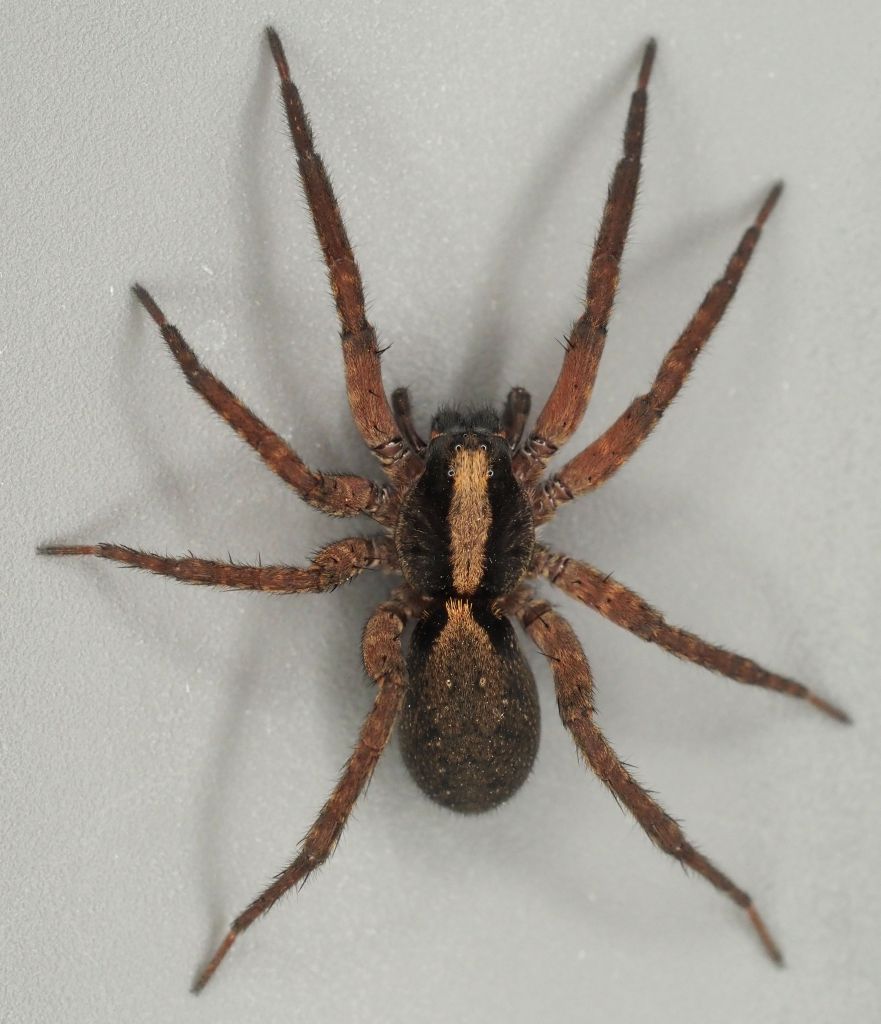
My earlier photos of Schizocosa perplexa weren’t good enough to do the species justice, so fixing that was on my project list for this winter. I started looking sooner, discovered the mid-juveniles in December and found they were easy to identify. Then I checked back whenever the weather was warm as the mating season approached. First the males became adults, and then finally the females just this week. Photos of a female are included here.
Whether they deserve a conservation status or not is unknown. They appear to have very specific habitat requirements, specifically wooded flood plains with long lasting vernal ponds. Substrate is important as I could only find them in two places in the Blackland Prairie part of the county. I’ve looked carefully in the Post Oak Savanna part and couldn’t find any. My local colony appears to have had a good year. The other colony in Milam County was gone this year. It may have been active earlier but by the time I checked it last week, the ponds were already dried up and the leaf litter well picked through by armadillos. The original specimen came from Garland, Texas, and iNaturalist observations suggest robust populations in the Dallas-Ft. Worth area. These observations lack underside views so the species can’t be confirmed. S. perplexa is also known to be in Ohio.
No spiders were harmed during this project and all are alive, free, and well at home unless they got eaten by a frog, armadillo or suffered some other misadventure.




 Nature Along the El Camino Real