Amazing Nature Walk for 2020 Class

Yesterday was the first field trip for our 2020 class and some tag-along Chapter members. We literally visited a field! What a beautiful field it was, however, and we are grateful to Nancy Webber for inviting us to share the property she has been managing as a wildscape for over a decade.

Heading out for the walk, Nancy explains how she manages her property.

After a bit of gawking at the beautiful off-grid home on the property, complete with huge cistern, solar panels, and blazing wood stove, Nancy led the class through the riparian area and meadows in her property, somewhere between Davilla and Bartlett. She presented so much information about her property, how they manage it, and what they do with it.

We had fun spotting prickly pear that they dug up and hung from trees to propagate no more, and marveled at how few mesquite there were. On the other hand, the possumhaw was glorious, and everywhere!

Not my best possumhaw photo, but you get the idea.

We saw and heard many birds, which was great fun to the birders among us. A ladderback woodpecker and American robins were highlights, though there were many more. We knew there were also plenty of raptors around by the evidence of many former mourning doves.

Former dove.

We had fun finding dens of some of the local mammals (one of which had an interesting musky smell), spider webs in trees and on top of holes, and even a grasshopper and a sulphur butterfly.

The spider just left before I could take the picture!

Another fun activity was spotting the cool things the property owners had done to honor the nature in the area, such as decorated trees, a “portal,” and an entire area featuring various bones hanging from the trees. It’s a great place to play “guess the carcass!”

The two hours flew by, since the weather was pleasantly cool and the mud wasn’t bad at all. A couple of us lagged behind as we got all involved in plant identification and taking photos for iNaturalist. We just can’t help it, plus one was a new one to us (fringed puccoon, pictured below). I think Ann Collins and I may have hooked one of our class members on our hobby!

I wish we could tour more property of our members, to see how they differ. Hope you enjoy my photos. I am sparing you most of my iNaturalist photos!

We all had a great time on our field trip!

February Chapter Meeting Draws a Big Crowd

The El Camino Real Chapter Meeting on February 13 really filled our meeting space. It was great to have to go upstairs and fetch more chairs for all the members, 2020 class students, and guests that came to hear Dr. Alston Thoms talk about the indigenous people who lived in the Milam County area from the time of the Mastodons until the present.

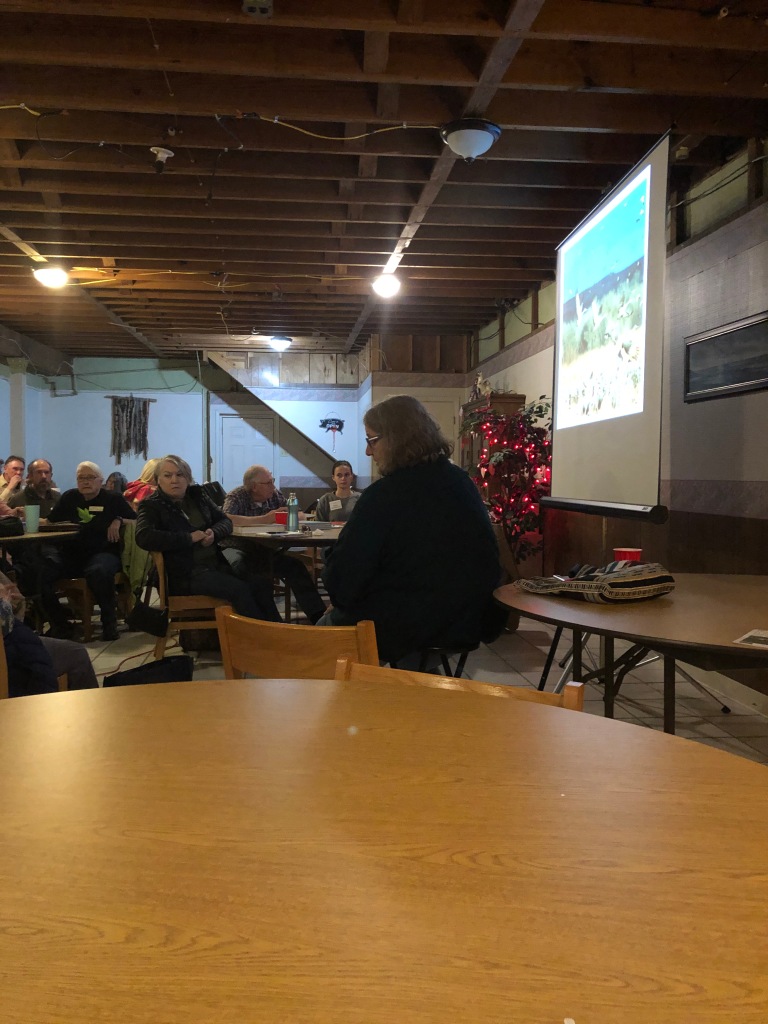
The Hermit Haus was filled with so many guests and members! Dr. Thoms is sitting by the center post.

He had a LOT of content to cover, and an hour definitely wasn’t enough to take in all there is to know about this topic. Luckily, the website at Texas Beyond History has lots and lots of additional information.

Dr. Thoms made a great opening slide show wit pictures of us and our meeting building on it!

We learned about the Coahuiltecan, Tonkawa, and Atakapa (Bedi) people who made their lives moving from place to place to follow the food spots they knew of. They primarily ate deer, which have been the primary food source for people in this area since people showed up. They were able to get many types of prey using spears, adl-adl, arrows and such, and they also ate lots of our native plants, even ones we don’t normally eat (like false garlic/crow poison, which is good roasted a long time).

Later on, other groups moved in, but there are still descendants of the Coahuiltecan people in central Texas, after many of them moved to the missions, like the Alamo (bear in mind, its main historical significance is being an early Spanish mission).

Dr. Thoms in May 2018, leaving his talk at our meeting in Milano.

Want to learn a little more? I summarized his previous talk on my personal blog, and we even had a newspaper article on his talk.

At the Chapter Meeting

Lisa Milewski happily gave Donna Lewis her bumblebee pin.

We had a lively Chapter Meeting after the talk. Our first recertification award of 2020 went out to Donna Lewis, who is the first to sport a bumblebee pin on her shirt! Donna does so much work for our chapter, including bringing in our guest speakers and leading meetings when the President is unavailable (like next month, when I have the nerve to have scheduled a vacation at meeting time!).

Liz gets her treasured certification certificate.

Liz Lewis (no relation), a member if the 2018 class, also got an exciting milestone award, as she received her initial certification. She’s now working on setting up the graduation dinner for our 2020 students.

Look at that cool lizard and happy Master Naturalist!

And finally, Linda Jo Conn presented Debbie Harris with the WOW iNaturalist award of the month for her photo of a Texas spiny lizard. Get those photos in, because Linda Jo is watching out for good ones!

We have lots of activities this month, so be on the lookout for more blog posts in the next couple of weeks!

What’s Up with Our Chapter?

Hello! It’s been such a busy time for the El Camino Real Chapter that we haven’t had much time to update you.

Marsha May sharing all her birding information.

First, our 2020 training class has been meeting the past few Thursdays, and it’s going very well! We have over ten class members, and every single one of them is bringing amazing talents and knowledge to our chapter. The classes have been attended by many of our current chapter members, too, because there is so much to learn.

For example, last week we had Marsha May, a renowned birder and former Texas Parks and Wildlife employee, who told us so many things about birds that even the most experienced birders didn’t know. (I learned how their lungs work, where there are two air chambers, so when they breathe out, it’s the air from the previous breath!)

The classes are a great way for current members to get Advanced Training hours and also get to know our new class members.

Coming Up

Next week is our February Chapter Meeting, which will feature one of our favorite speakers, Dr. Alston Thoms. He is an archeologist at Texas A&M University, and he will present a program about the original peoples who occupied the land around the Rancheria Grande here in Milam County. Knowing who lived here before us really puts the area into perspective.

A map of the Rancheria Grande, which was near current Gause, Texas. We have members who own property there. This image is from this Austin American Statesman article. The article would be great to read in preparation for the Chapter Meeting.

On the Saturday after the chapter meeting February 15) will be a wonderful field trip opportunity for our class members and current Chapter members. We will visit the property of one of our members, near Davilla, and get first-hand information on the flora and fauna in our area.

BioBlitz!

Our iNaturalist team (Linda Jo Conn, Ann Collins, and me) has set up the FIRST of our BioBlitzes for February 22. We will announce the location at the Chapter Meeting, and it will appear in our weekly email newsletter, so stay tuned.

What’s a BioBlitz? It’s where a group of people get together and record as many entries into iNaturalist in a set area that they can. We are planning to eventually cover all the parks in Milam County, which is a big job, but will provide wonderful data about our county for researchers. We’re excited!

Art by Sean Wall, on my wall.

Farther in the Future

Carlton climbs a fence.

Our Vice President, Donna Lewis, is working hard scheduling speakers for the 2020 Chapter Meetings. We’re excited to be able to announce that our friend, Sean Wall, will be joining us for the May 14 meeting. He’s an expert on wildcrafting, edible native plants, and using what you find in nature in all aspects of your life. For example, he painted this picture of my dog, Carlton, scaling our fence using pigments he found around him.

The Saturday after the Chapter Meeting, Sean will return to Milam County to lead a nature walk at the Hermits’ Rest Ranch, to see what kind of edible plants are growing in the fields, wetlands, and wooded areas there. The wildflowers should be pretty that time of year, too!

We hope to see you at some of our meetings and events. Our Chapter Meetings are open to the public, by the way!

Wildscape in Winter

I had a need to buy chickens last weekend, so I took the female members of my family over to Bird and Bee Farm to get them. The chickens I got were great, and you can read about them here. But my real point was to share how much has been going on at the Wildscape project over there. Much of the work is led by our own Catherine Johnson.

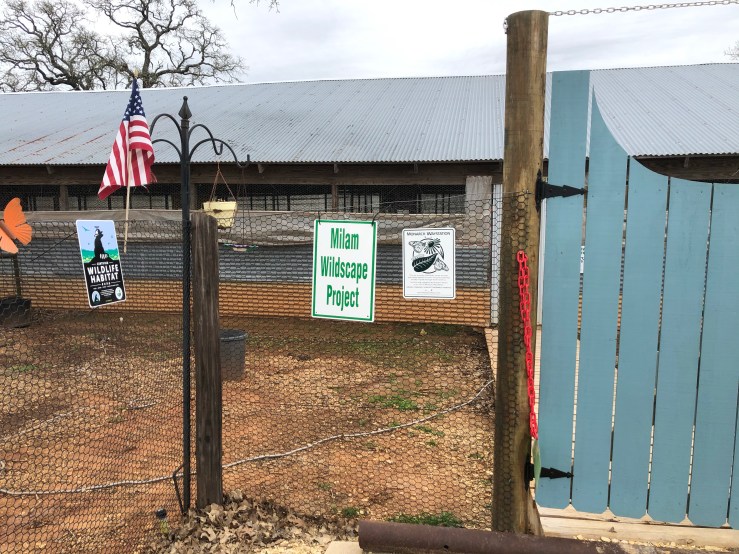
The entrance shows all their certifications. The chicken house is in the rear.

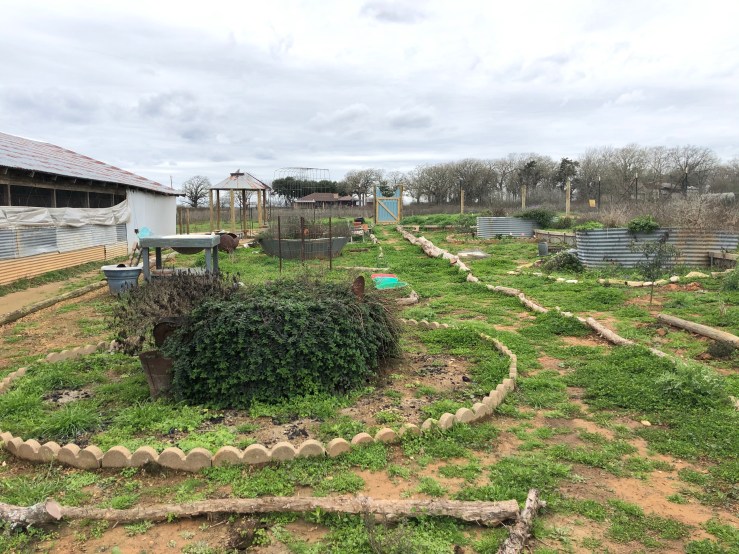
I was impressed that there was so much in bloom in the middle of January, and equally impressed by how charming the design of the project is. There are so many sweet surprises lurking among the recycled material being used to create planters, edging and decorations.

Many of our members are strong believers of practicing what they preach and recycling or re-using materials as much as possible, and a tour of the wildscape provides a lot of good ideas. All sorts of kitchen and farming implements have found their way into the beds.

Of course, there were kitties to provide natural pest control. Rodents love bird food, and kitties love rodents!

Lots of flowers!

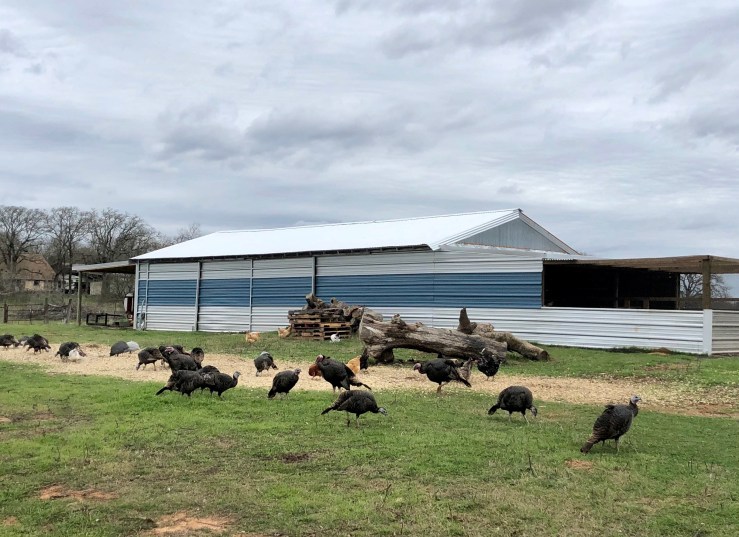
I also enjoyed watching the natural insect pest control in action as the guinea fowl and Rio Grande turkeys roamed the area.

Rio Grande turkey wants in the wildscape. Nope, it’s not for you.

It made me happy that Cindy Rek, one of the owners of the farm, used my guinea fowl photo to sell some of the guinea flock online! It’s great to be able to give back to folks who give so much to the community, our plants, and our animal friends.

Guineas and turkeys

Volunteer Opportunity at S. M. Tracy Herbarium

by Linda Jo Conn

Dale Kruse, curator at the herbarium at Texas A&M University at College Station, is in need of several volunteers on a regular basis to help with the new National Science Foundation digitization project. 

The S. M. Tracy Herbarium has thousands of vouchers that are to be included in the National Science Foundation digitization project.  At last count, there are over 360,000 vouchers in the S. M. Tracy Herbarium stored under strict environmental criteria.

Definition:  

voucher herbarium specimen is a pressed plant sample deposited for future reference. It supports research work and may be examined to verify the identity of the specific plant used in a study.

voucher specimen must be deposited in a recognized herbarium committed to long-term maintenance.

https://www.floridamuseum.ufl.edu/herbarium/voucher.htm
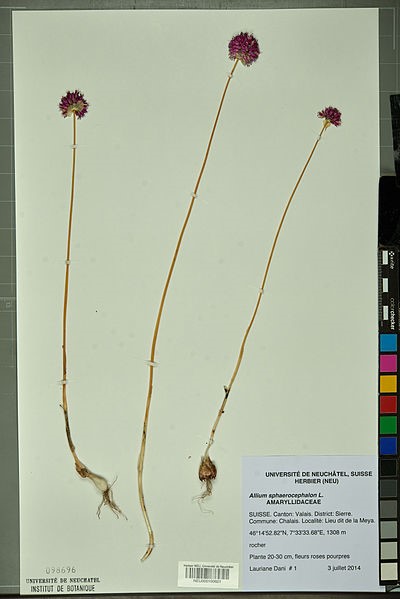
File:Neuchâtel Herbarium - Allium sphaerocephalon - NEU000100621.jpg
A typical herbarium voucher looks like this. (It is a dead flattened plant glued on a piece of special paper.)

The National Science Foundation digitization project involves the digital scanning of the vouchers in several selected herbariums in the United States including the S. M. Tracy Herbarium so that the uploaded images may be shared globally with all botanists and taxonomists. 

This volunteer effort at the S. M. Tracy Herbarium, located off of East University Drive in College Station, will involve several tasks, including:

  • Gluing dried, pressed specimens and their descriptive labels to special herbarium paper to create vouchers.
  • Re-gluing and / or re-enforcement of existing vouchers.
  • Computer activities such as data entry and digitization,
  • and other tasks as may be requested by Dale.
Result of the program will be digital images of the vouchers that look similar to this. 

The digital vouchers will then be uploaded into the National Science Foundation digitization project under the scope of the prestigious BRIT Herbarium in Fort Worth.

From there, the ultimate data entry will be accomplished using many volunteers including the existing Texas Master Naturalist volunteer effort project approved for the El Camino Real chapter under the Volunteer Management System (VMS) classification “Citizen Science Transcribing-Selections for BRIT”. 

To reach this final stage, tasks must be completed at the S. M. Tracy Herbarium.  If you are interested in volunteering on a regular basis at the herbarium, contact:

Dale Kruse
Curator:  S. M. Tracy Herbarium, Department of Ecology and Conservation Biology
Lecturer: Department of Range, Wildlife, and Fisheries Management
dakruse@tamu.edu                    
Herbarium: 979.845.4328

,