Ever since learning all about Houston toads last week, I’ve been wanting to find the toad currently hanging around our house in the Walker’s Creek community outside of Cameron. I was especially curious, because that toad has some BIG poop.
Yesterday, my niece sent me five pictures. It was a toad! I was already on my way home, so I got all excited. Must be a Master Naturalist thing.
When I got to the house, Kathleen showed me our new neighbor. She is one big mama Gulf Coast toad. She can’t be a dude toad, too big. She just hung around in the grass, and no dog was dumb enough to mess with her. (I have a feeling there are more toads by the house, judging by the nightly croaking.)
Very large toad. I didn’t pick her up for more ID, because I wanted her to continue to feel safe.
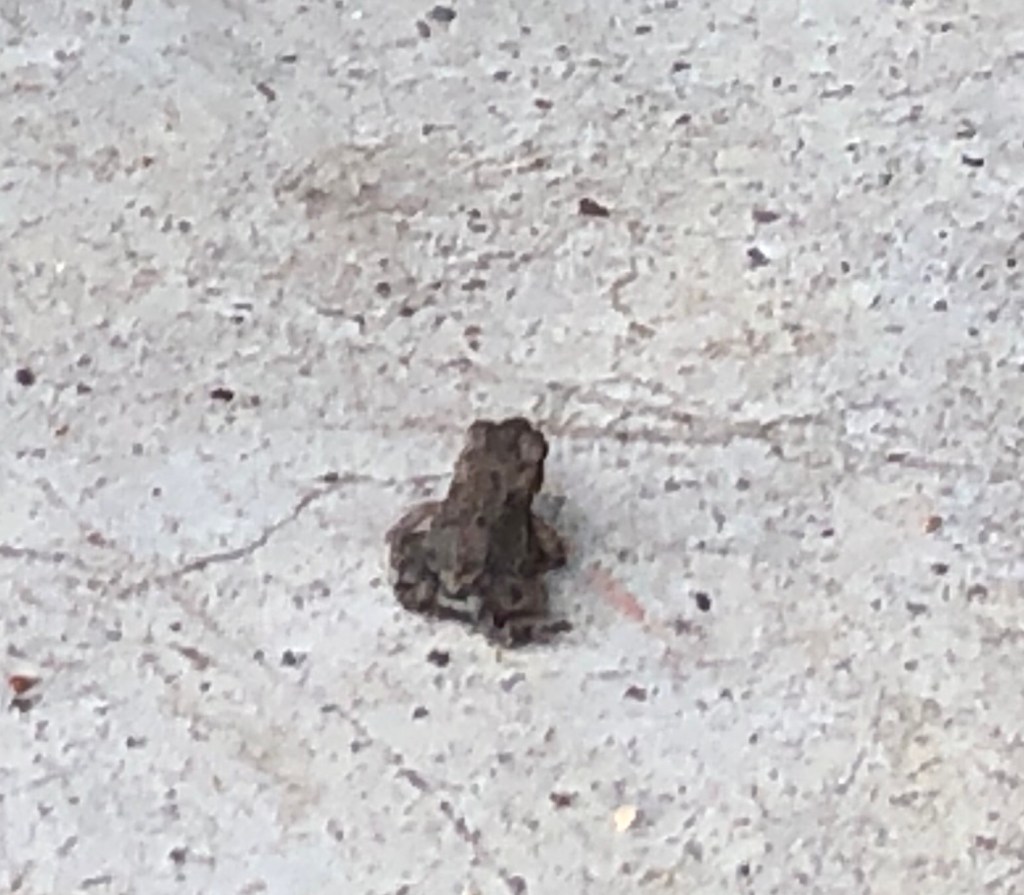
Later that evening, I was walking by the garage, which is near a little pond, when I saw something move. It was a fresh young toadlet!
Tiny toad up close.
This little fella is the opposite of Big Mama! As you can see, it’s smaller than a June bug.
Toad versus bug
I’m happy some of the pond tadpoles made it out and are heading for the big-filled world around our house and woods.
We had our first online Chapter Meeting last week, and while it wasn’t totally hitch-free, it went well enough that everyone enjoyed the advanced training and meeting, I think. We had nearly 30 attendees, which is a reasonable number for our chapter at any time!
Our speakers were Dr. Paul Crump (Herpetologist) and Dr. Elizabeth Bates (Conservation Initiatives Specialist) from Texas Parks and Wildlife. They graciously provided the WebEx link for the meeting, since we didn’t have our shiny new Zoom account yet (we do now, thanks to Mike Conner).
Throughout our state the habitats for many species are dwindling. @cameronrainer via Twenty20
Conservation of Rare Species
The first part of the session was about programs that exist in the US and Texas to protect endangered and rare species. It gets pretty complicated, since species can be listed as being of greatest conservation need at the federal level, state level, or both levels.
One thing that Dr. Bates stressed was the need to be pro-active about protecting these plants and animals. She encouraged landowners to take advantage of programs, such as Safe Harbor Agreements, to protect and enhance dwindling habitats. Something easy and rewarding that any of us can do is log sightings of rare and endangered species in iNaturalist. That way, researchers can see if they are increasing, decreasing, or staying the same.
For the second part of the presentation, Dr. Crump, who has worked with the Houston toad (Bufo houstonensis) for many years, provided an example of the work that’s been done to protect and expand the range of this Texas native. The Houston toad took quite a hit when one of its primary sanctuaries, the Lost Pines area near Bastrop, burned so badly.
Historic range of Houston toad (from presentation)
Crump shared maps of where the toad used to be found and its current range (which does NOT include Houston), which includes parts of Milam County. Later he did say that only five have been found here. The Houston toad is the only toad that’s found only in Texas, by the way. There are eight other toads found in this state, but the one we usually see is the Gulf coast toad.
We learned that these toads like to breed in bodies of water that aren’t permanent, perhaps because they are less likely to hold fish and turtles that would eat their eggs and developing tadpoles. They’ve bred in many ponds and such, though. Their most sensitve time is right after they crawl out of the water, because they need leaf litter to hide in, and they are easy to squish. Eventually they head out to sandy soil where they can hide by burying themselves.
The smaller males tend to live a year, while females take two years to mature, due to their size. Most only breed once. We are lucky that there has been some success breeding them in captivity and setting the little ones in ponds (it’s way too expensive to feed them to maturity; it requires mega-large amounts of crickets.
Male calling for a mate. From presentation.
It’s easy to tell a Houston toad from a Gulf coast toad if you know where to look. Houston toads have more freckles on their bellies and are quite green where their neck balloons out while they call. Gulf coast toads have a large cranial ridge that the Houston toad lacks, too. Their calls are really different, with the Houston toad being much higher in pitch. Basically, you’ve probably never seen or heard one.
But don’t let that stop you from looking, because the researchers need data on where they have been sighted! Crump and his colleagues would also love to have more participants in the Houston Toad Safe Harbor Agreement, which is a way for landowners to agree to protect their toad habitat.
If this doesn’t satisfy your curiosity, the slide deck from Crump’s presentation is available on our website, and there’s great information on the TPWD website as well.
Sami the dachshund found a copperhead by our back door. Yes, it is gone.
Sandy has fang marks on the black tip of her nose.
I have too many outdoor pets to worry about. We see more snakes because we are outdoor people. We have been lucky except for one year when we had 18 copperheads around our house.
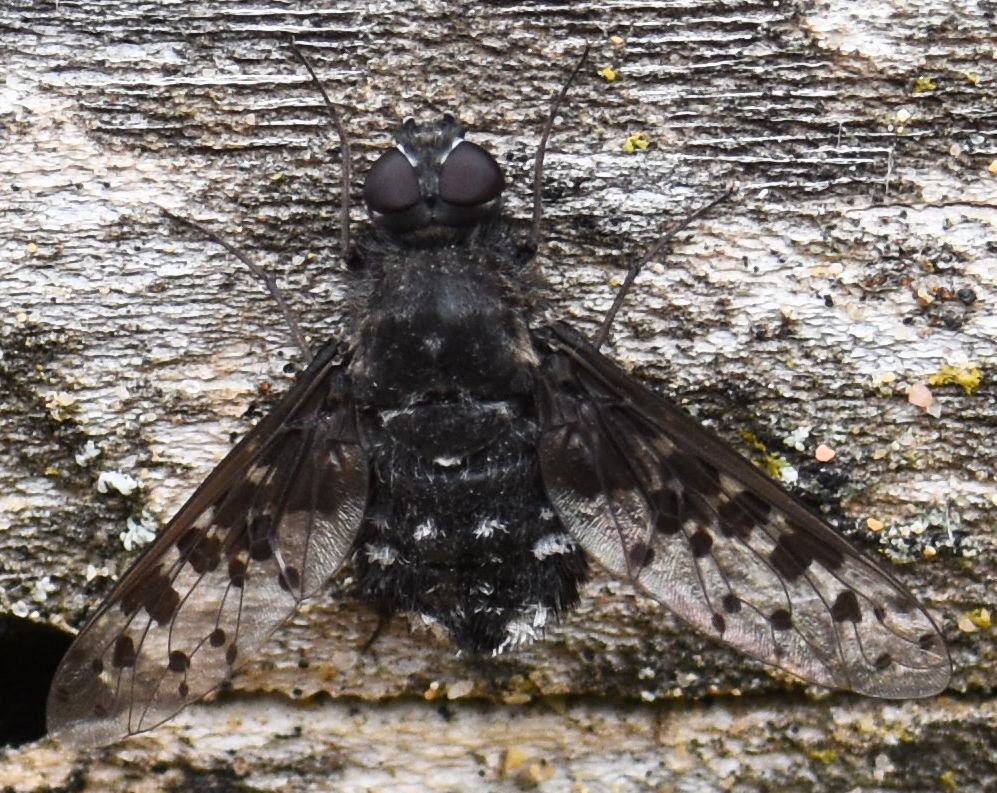
When I review my photos and decide what to upload to iNaturalist, the first thing I do is separate them into broad categories such as flies aka Diptera, and today was the day to work on that group. One was this shaggy, spotted fly found in a wooded area near Alligator Creek.
Sue Ann now declares this her SECOND favorite fly.
I don’t know my flies very well, and trying to identify one I’ve never seen before is like going down Alice’s rabbit hole.
There are so many different kinds of flies. A fair number don’t even have a single observation at iNaturalist, but I thought this one was distinctive enough and I might get lucky. Way down in the low double digit observation totals of Texas flies, I finally found one with similar spots. It was in the Anthrax genus which I’ve never encountered before.
The word “similar” is a dangerous one and it has burned me before, so the next logical step was to search the genus Anthrax in Texas. And what do you know, there was another nearly identical species down in the single digits! Now, how am I going to tell them apart?
The only consistent difference I could see was that the leading edge of the wing of one was solid black and alternated between black and clear on the other. Mine was the one with 7 observations, now increased to 8. The only other observations for this species in North America are four in eastern Canada, oddly enough.
I was hardly a fan of spiders, but circumstances have determined otherwise. The pandemic has kept me almost exclusively at home, and the Texas Blacklands appear to be excellent habitat for wolf spiders (Lycosidae).
In the past, getting identifications down to the species level almost always ended up in frustration, except for Rabidosa rabida. I have identified at least three other genera on my property, and there are likely to be more.
Rabid Wolf Spider Rabidosa rabida. Photo by the author.
This year, I decided to make observations of them as they grew up. My goal was to upload at least a hundred observations to iNaturalist before trying to identify them down to species level. I passed my goal by getting 23 in 43 minutes a few days ago.
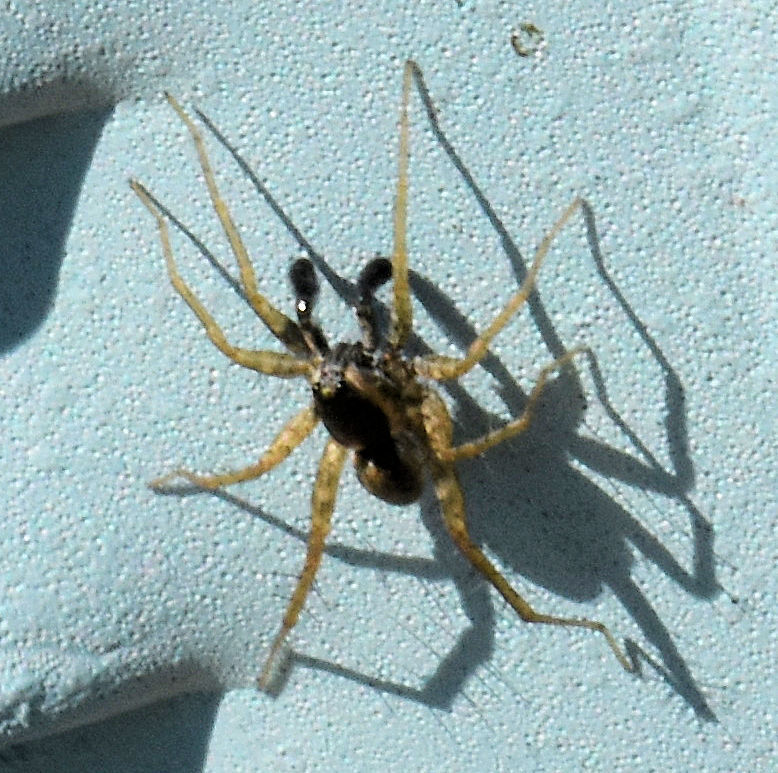
This Thin-legged Wolf Spider (Genus Pardosa) is a young one. Photo by the author.
Lycosidae are generally considered nocturnal, but this isn’t entirely true. Daytime hunting is hit or miss, but a combination of high humidity after a rain, temperatures in the high 70s, and cloudy skies apparently combined to bring them out in the middle of the day.
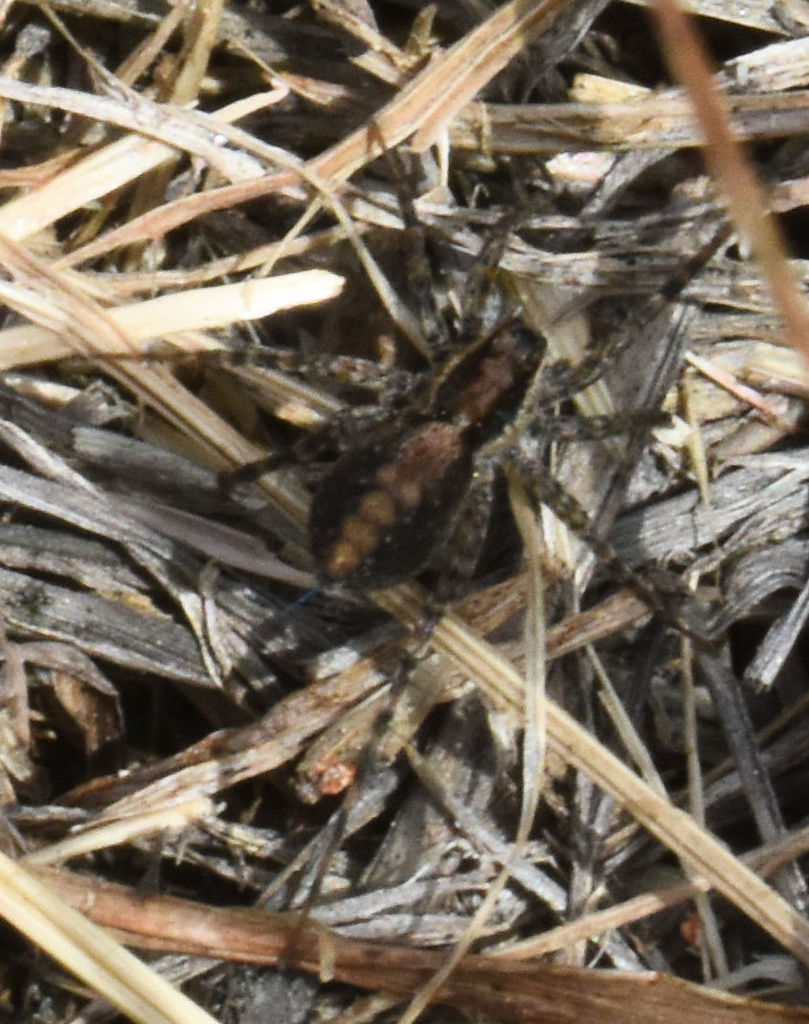
This one is not identified yet. Photo by the author.
There is also a matter of technique. I’ve found that closely cut grass next to high grass is the best place to look and photograph them. You can just walk around slowly and watch for movement, but many will escape into the high grass. If you lead with one foot along the edge of the high grass, this flushes more of them into the low grass where they can be photographed.
There is one particular species that is so well camouflaged it’s impossible to see unless it moves. Right now, they are mostly a half to an inch long including the legs, and they are old enough to identify the genus.
Brush-legged Split Wolf Spider Schizocosa ocreata. Photo by the author.
You may also see holes of various sizes in the ground. At present, many are probably Lycosidae burrows. They can be enticed out with a blade of grass, but I’ve found they disappear back down their burrows too quickly to photograph, making it a two person job whenever that becomes an option again.
My habitat is returning prairie on blackland with paths mown through the high grass. Confirmed genera: Hogna, Pardosa, Rabidosa, and Schizocosa. Other non-Lycosidae genera including Dolomedes are encountered.






 Nature Along the El Camino Real